Lisa Rose Wright's Blog
March 30, 2023
Round the World anti-clockwise (counter-clockwise) with author Simon Michael Prior.

I’m delighted to introduce one of my favourite fun travel memoir authors this month. Simon Michael Prior has not been writing all that long (his first book came out the same year as mine) but has already produced five cracking travel books with more on the way. If you’ve not begun his South Pacific Shenanigans series, then put this blog down and go find them, right now; they’re that good!

Hi Simon, thanks for agreeing to chat with me. Can you start by telling my readers a bit about yourself?
Hi Lisa! And good evening, Ladies and Gentlemen. It’s wonderful to be here to present this award for best actor, and the nominees are … oh, hang on, that was last week’s speech. Ahem. A bit about myself? Right. I’m Simon, I live in Australia and I try not to break anything. I’m a search-and-rescue skipper for the Australian Coast Guard, I support England and Australia at rugby and I write crazy fun travel adventure stories about my life lurching from chaos to disaster.
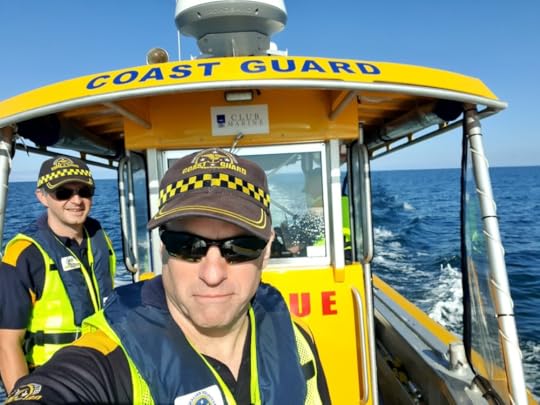
You certainly seem to be a danger to man and womankind in your books, Simon, which is partly what makes them so good. You’re a naturalised Aussie, though I like that you still support both sides at rugby. I daren’t ask what happens at England-Australia matches. You left the UK many years ago now, but is there anything you still miss from ‘home’? (And I know it’s not the sunshine ).
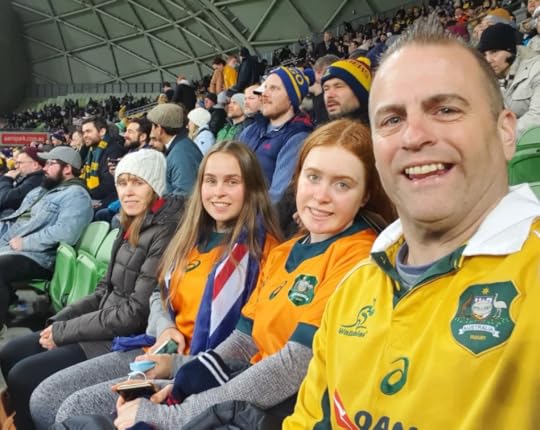
England. But Australia if they are playing anyone else! There’s one thing that every English immigrant to Australia makes it their life’s mission to find: a good curry like you get in every English High Street. Bonus points if it tastes like one from Bradford, Birmingham or Leeds. And y’know what? I haven’t found one yet. So I guess I must miss a good curry. But it’s not like I sit at home dwelling on my loss. That and those Muller Light apple desserts. You can’t get them here. I’m not going ‘home’ though for either.
I’m amazed that Melbourne doesn’t have fabulous curry houses. I can tell you that here in Galicia we actually have a genuine Bradford curry house recently opened. Sadly, I’ve not tried it yet as hubby hates spicy but I’ll let you know!
You’ve lived and worked in a number of places around the globe, as well as visiting many more (and I’m sure many of them do a fabulous curry). If you could live anywhere, without need of money or working, where would it be and why?
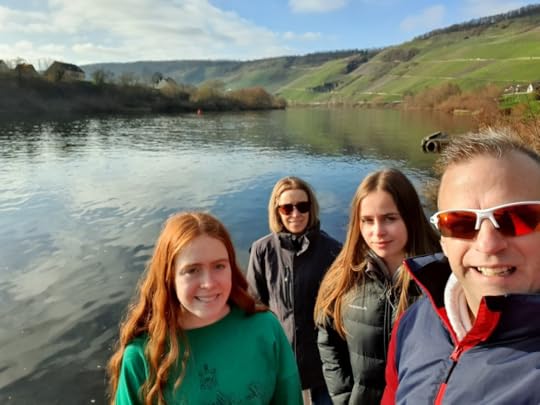
Simon and family in the Moselle, 2022.
Sorry Lisa, I’m going to cheat with this answer, because I’ve been planning just this, for when my long-lost reclusive great-uncle Hubert Farnsworth finally leaves me his billions. I’d rent The Regent Suite on the Seven Seas Splendor cruise liner. Yep, for US$11,000 per night, you too could travel to every country on the ship’s itinerary and luxuriate in 4,443 square feet of space with your own swimming pool, private dining space for twelve people and a grand piano. The downside to this plan? They probably wouldn’t have good curries on board either.
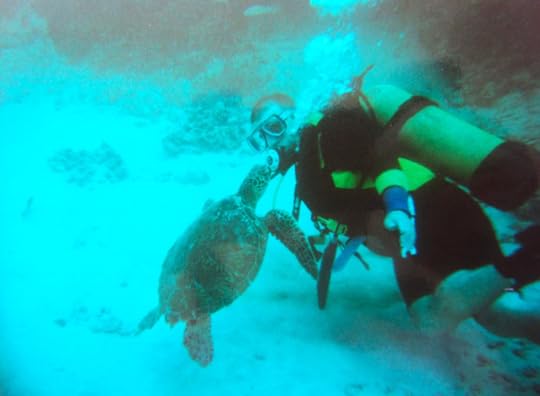
diving with turtles, and sharks!

Yeah, right! I look forward to the ‘crazy fun travel adventure’ about that particular trip, Simon!
Your South Pacific Shenanigans series are travel adventures worthy of Clive Cussler or Desmond Bagley (I’m showing my age, so please feel free to add in any adventure authors under the age of eighty). Obviously, your stories are all true, but they read like a novel. In fact if I hadn’t seen photos, I’m not sure I’d believe some of them were possible! I’ve read that the best non-fiction books grip the reader, just like a novel. How do you achieve this in a true-life story?
I suppose I need to give a serious answer to this question. Maybe three answers. Firstly, I read fiction. I analyse thrillers, crime stories, gee, someone even gave me some science fiction last week (aside: why is ‘science fiction’ called ‘science fiction’? I mean, we don’t call thrillers ‘thriller fiction’ or romance books ‘romance fiction’) ahem, sorry, back on track, and I work out what makes great stories so great. And the answer is: anticipation. Anticipation pulls you through the whole book to the end: what’s going to happen next? Was it the butler who killed Lord Farquar? Or was it Lady Farquar, when she discovered Lord Farquar’s affair? Who was Lord Farquar having an affair with? And is the butler actually their illegitimate son? Etc etc. Then, and this is where we segue neatly into my second answer, I work out what the reader’s anticipating. For instance, in the first book in the series, we’re never quite sure, all the way through: Are we going to find the Queen of Tonga, or not? And along the way, there’s a few other sub-mysteries we have to clear up, all of which add to the anticipation. And lastly, my third answer to your question, and this may seem odd for a travel writer, I write about people, not about places. The places form a framework to give the people a purpose, a meaning, but the people are the stars. Have a read of some of the greatest travel books written. Were Gerald Durrell’s books about Corfu? Nope. Corfu formed the framework, but his family, along with a host of Greek characters from all backgrounds, formed the story. In Peter Mayle’s books, Provence gave a setting, but the books are about restauranteurs, peasants, viticulturalists and tradesmen. Phew. That was a long answer. Can I grab a drink?
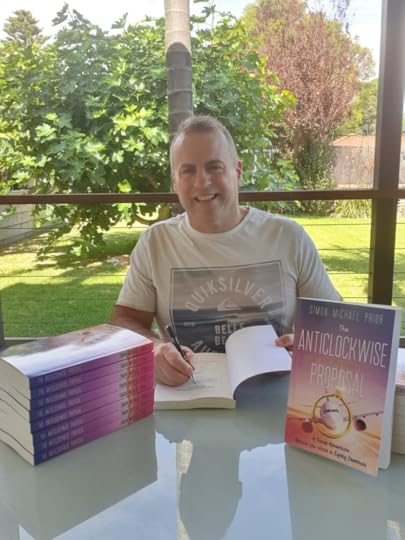
Simon, signing his latest book; The anticlockwise proposal
Yeah, help yourself. You deserve one after that comprehensive (and illuminating) answer. On the science fiction question (one of my other favourite genres), I guess calling them science books would sound like they were about Newton or something. Or science people are just more pedantic? Have you ever considered moving into fiction writing? What genre would you write in if so?
I read absolutely every type of fiction except horror (‘cos I get scared and hide behind the sofa) and erotica (‘cos I get scared and hide behind the sofa) and I’d love to have the imagination some of my favourite writers possess. If I honestly felt I had the capability, I’d follow in the footsteps of Frederick Forsyth and write political thrillers. Who can better the first line: ‘The man with ten minutes to live was laughing.’ ?
Excellent first line. My favourite is a Desmond Bagley one: ‘To be encumbered with a corpse is to be in a difficult position, especially when the corpse is without benefit of a death certificate.’
Out of all your adventures, what has been the scariest moment?
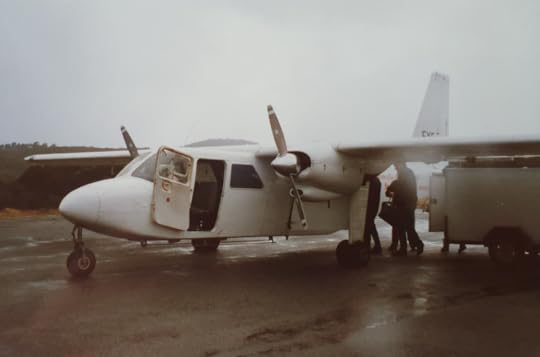
A tiny plane to Stewart Island, New Zealand
Oh, gosh, there’ve been so many. Scuba diving with huge bull sharks in Tonga, plummeting hundreds of feet in a tiny plane crossing the strait to Stewart Island in New Zealand (whose pilot died with his passengers on a subsequent run!), even playing my first gig to an unforgiving crowd who wanted to hear Kenny Rogers, all of these scenes have appeared in my books, but probably the time I’ve most feared for my life was in Dubai. I stood outside our hotel with Fiona and my twin daughters who were about eight at the time, trying to flag down a taxi. Almost immediately, a cab shot up to us across four lanes of speeding traffic, to an accompaniment of a car-horn symphony, and a Captain Ahab-type man with a massive Roman nose lowered the driver’s window. “Zjump in,” he said. “Hwhere hyou wanna go?” Anyway, Fiona and the girls climbed in the back seat and I sat next to him. For the next twenty minutes, as we swerved along the freeways at top speed, screeching around other drivers, missing their vehicles by inches, this taxi driver proceeded to give me a detailed blow-by-blow account of all the near-fatal car accidents he’d been involved in. The climax of this narrative was when he tapped the side of his nose and said “See zis nose?” Well I mean we couldn’t help seeing it; it was about the size of the sail on a toy boat. “Zis not my nose,” he said, his finger making a hollow doink-doink sound on the side. “Zis not my nose.” It transpired that during one of his more spectacular car crashes, his real nose had been sliced off, and had been replaced by an artificial appendage. The relief once we reached our destination and exited his cab could be tasted.
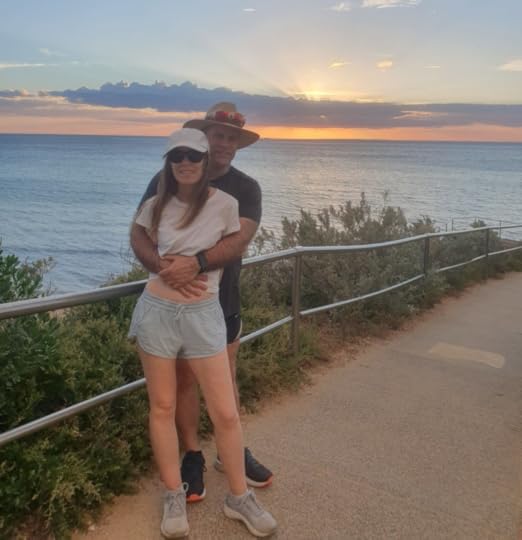
Brilliant! You’ve definitely had your share of adventures; I’m surprised Fiona travels with you at all! Your father was also an adventurer, wasn’t he? Your first published book is a memoir of your father’s letters home from New York as a young man. How did An Englishman in New York come about, and was this your first venture into writing?
I can clearly remember my first venture into writing. I was four years old, and I was very proud of a drawing I’d done at school for my father. Unfortunately, I’d spelt my name on it ‘NOMIS’ which, as my teacher didn’t hesitate to point out, rather took the shine off my achievement. But yes, An Englishman in New York was my first foray into professional writing. My father passed in 2014, and among his possessions I discovered this collection of letters sent by him to his parents, still in their original envelopes, bound with an elastic band. I opened them, and, although his writing was fairly impossible to decipher, I gathered that they were letters from his time studying in New York in 1948-9. I knew he’d lived there, but he’d never imparted any details. Reading some of the stories about cocktails with the Roosevelts and dinner with the Rockefellers, I realised the letters were an important historical snapshot of 1940s New York life, and if I replaced them in the box they’d come from, no-one would ever read them again. So I decided to turn them into a book. My father’s writing was so impossible to read, this took me another five years, then once I’d removed the family parts and other sections that really would interest no-one, I joined up with the Facebook group We Love Memoirs, whose members were invaluable in helping me publish. In fact, I think that you, Lisa, were my very first reviewer and I remember my jaw hitting the floor that anyone who hadn’t known my father personally could be interested in the book.

I remember being fascinated by An Englishman in New York. I think personal letters appeal to our voyeuristic side; it’s a shame that with the arrival of electronic mail, those precious memories will vanish forever. By the way, I once wrote a story where all the characters had names spelt backwards. I shall call you Nomis from now on.
I know you are always honing your writing skills. What sort book would you like to try and write which is different to anything else? I remember you talking of writing a book about a five-minute time period…that fascinates me.
I seem to have gained a reputation (not deliberately, may I add) for creating detailed scenes involving a lot of dialogue. One of my kind reviewers said I could probably make the act of eating an apple into an interesting story. So, yes, I have this goal to write an entire, full-length book about a five-minute period of time. I’m not sure yet if this will be fiction or non-fiction, and it’s queueing up behind several other projects I’m working on. As my mother used to say when I inquired about the contents of forthcoming meals: “wait and see.”
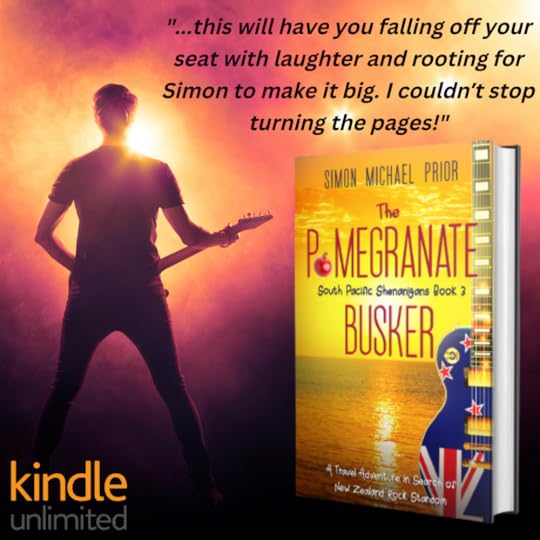
Ooo, dangling a carrot there, Nomis…or an apple!
I sincerely think that each of your books is better than the last, and that your talent as an author is immense. I know that you work hard at your craft, as well as being incredibly talented; do you have any writing tips for new authors? What resources have helped you grow?
Shucks! (as the Americans say, and hey, I’ve learnt the extent to which we’re two nations separated by a common language with my latest book’s title), you do flatter me, Lisa. I do work hard at my craft, if you can call it that. There’s a number of people I thank in every book’s acknowledgements who have been instrumental in teaching me, and I know I have masses to learn. I’ve bought several books about writing, watched countless videos and browsed through hundreds of online posts. If I was to give a new author one tip, it would be what I have pinned up next to my desk (because procrastination is my superpower), and it’s attributed to Jodi Picoult (I’ve read all her books, by the way. Very unusual style). It says: “You may not write well every day, but you can always edit a bad page. You can’t edit a blank page.” And as I’ve progressed through my books, I’ve discovered that the worse the first draft is, the better the end result. No idea how that works.

Ha! So true, about the editing, and the common language. The Anti-clockwise Proposal, Simon’s latest travelogue memoir, was published in February 2023 and is a corker. I’m not convinced the counter-clockwise proposal would have worked as a title (any more than a plum, zucchini and green bean tart would have for yours truly. Though it did teach me about our ‘two nations separated by a common language’, too.)
I still find it amusing that we both launched a round-the-world tale within a month of each other, without the other being aware. As a true clockwise girl, who can’t survive jetlag going the other way round the world, I have to ask; do you prefer anti-clockwise (counter-clockwise) travel? If so, why?
It's like the plugholes. Have you ever watched which way the water goes down in the Northern Hemisphere, then compared it to the Southern? I often wonder if that’s actually dependent on the shape of the sink, rather than the rotation of the earth. In fact, the vast majority of flights from Australia and New Zealand fly anticlockwise (your readers in the US, by the way, will think I invented this word – two countries separated by a common language!) as they stopover in places such as Dubai, Singapore, Bangkok and Hong Kong so you’re much more likely to fly anticlockwise than you are clockwise from here. And flying anticlockwise has the effect of lengthening your day. So you get to live longer too! Follow me for more zero-effort health tips.
Gosh, my readers are getting their money’s worth today, Nomis. Health, language and writing tips in one blog! By the way, watching water whizz down plugholes is a major preoccupation of mine when we go down under. I find it mesmerising.
Where next for Simon Michael Prior? You have a new series in the pipeline, I believe. Can you tell us anything about it?
I have a massive TBW (to be written) list. Massive. Currently I’m sitting on three half-written books. Not literally. That might be sore. What I think I’ll be releasing next is the first two in a goodness-knows-how-long series about travels with my family. I said, before we left, that I wasn’t going to write about these adventures, but we had so many chaotic disasters and mishaps the books are almost writing themselves. Then I’ve finished what will be the first in a future series about something completely different, suffice it to say we’ll meet an effeminate cabaret performer, a disgruntled Liverpudlian pizza-shop manager and an African prince all within the pages of book one. Oh, and Paul McCartney puts in an appearance too. Watch this space.
That’s far too many teasers, Nomis. You’ll have to get writing quicker, or clone yourself ‘cos I can’t wait to read these continuing adventures!
So, final question, then you can get back to writing. If you were to come back as an animal, what would you be and why?
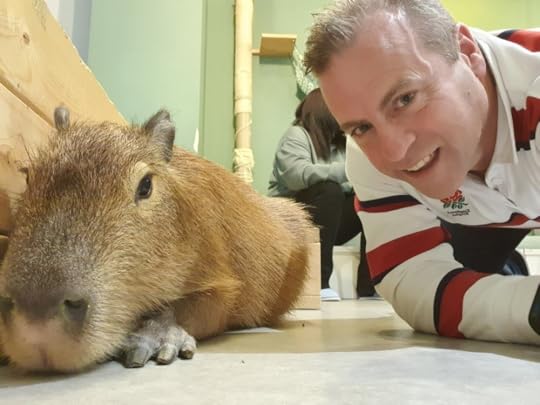
Easy. I’d be a Capybara. And if you want to find out why, you’ll have to wait for book two in the forthcoming series.
And that is a perfect cliff-hanger ending, folks! You can follow Simon Michael Prior’s adventures and sign up to his monthly newsletter HERE. Thank you, Simon, for being entertaining and informative. ’Til next time, here’s a Simon sunset.
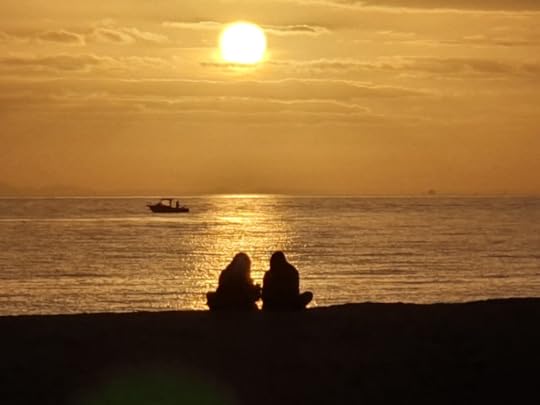


February 28, 2023
Photographic memories
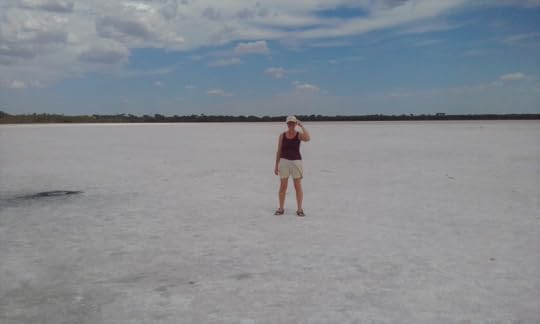
I think I have a photographic memory.
No, I don’t mean that I remember everything I read (I wish!), but that photographs are often the keepers of my memories. Photographs can invoke such strong recollections, not only visual ones, but of all the senses.
The photo above, of me standing in the middle of a dry lake in Western Australia, instantly takes me back to the heat, the flies and the incredible other-worldlyness of the Nullabor Plain. Standing actually in the middle of a lake, even one with no water in it, just a vast pan of blinding salt, was amazing.
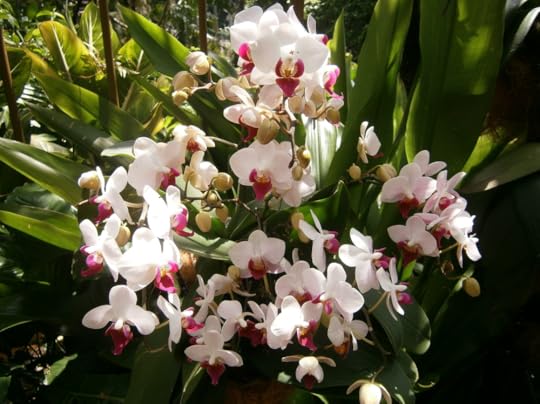
That trip really opened my eyes to the wonders of our incredible world, and looking through the photos I took transports me back there in an instant. Look at these orchids in Singapore. You can almost feel the tropical sunshine from here.
I’ve been doing a fair bit of looking through old photos the last month or so, finding my favourites of our 2019 round-the-world trip both to tip my memory for writing and to add to my album.
It was an interesting holiday...

Moscow in a snow storm
We left home in a blizzard, and we landed at Moscow airport in a snow storm. The white stuff seemed to bother the Russians not at all. They had no problems with snow on the runway. Just shovel it to the side. Pity the interior of the airport was not so organised that day.
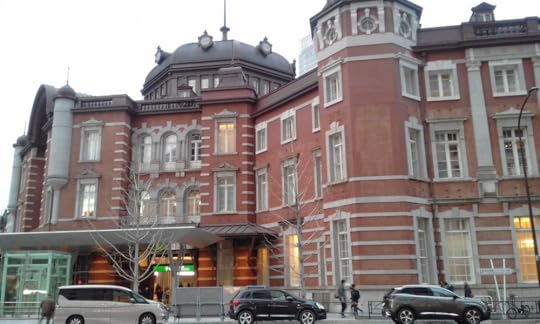
Tokyo
Our first sight of Tokyo, was the rather English-looking architecture of the red brick façade of Central Station (once we managed to find our way out). It seemed rather comforting and familiar somehow.
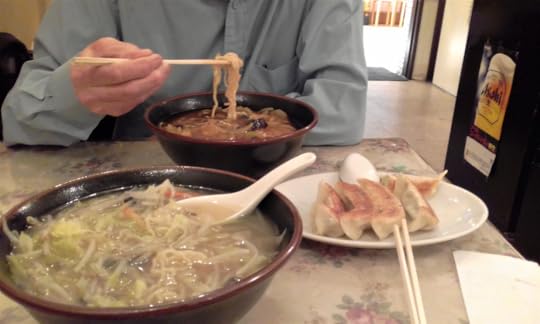
Our first Tokyo meal was not familiar at all. We’d had to use plenty of sign language to get our dinner, but the spicy noodles, soft dumplings and the musical lilt of voices talking in Japanese and slurping in time, more than made up for any language difficulties.
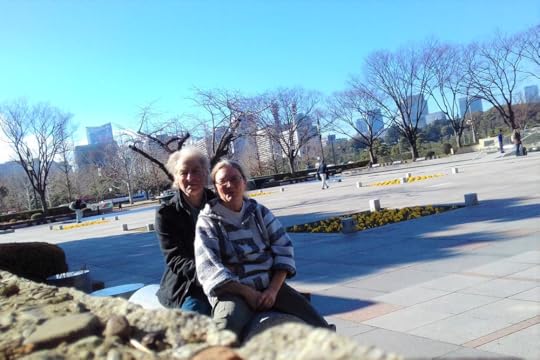
The warmth of a Tokyo winter was a surprise too, as we posed in the sunshine in this city park. I remember wishing I wasn’t wearing my fleece-lined boots and agave hoodie that day.
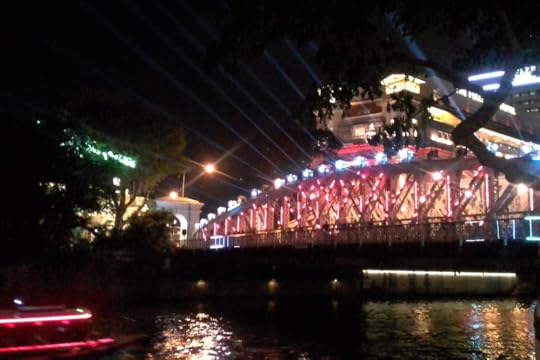
Singapore by night and day
Our next stop, Singapore, was an assault on all the senses, with steamy days and balmy nights. The Singapore i light show was a wonder of colour and sound.
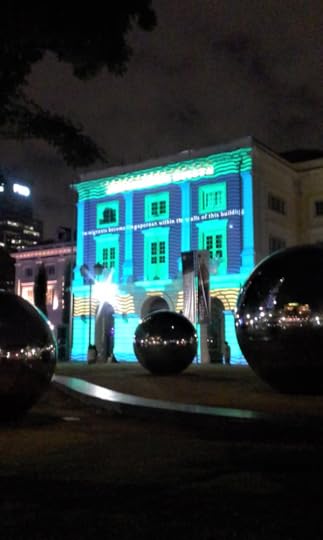
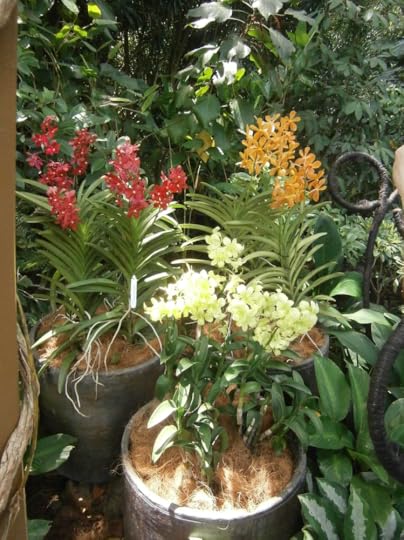
And the orchids in the botanic gardens assaulted my eyes with their variety.
Australia
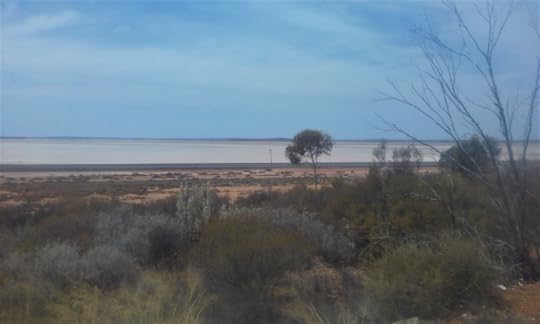
The Nullarbor Plain
Australia’s Nullabor plain assaulted the senses with its size and barrenness. Driving across its vastness, I’d never seen so much emptiness, though it was certainly not without trees, despite its name.
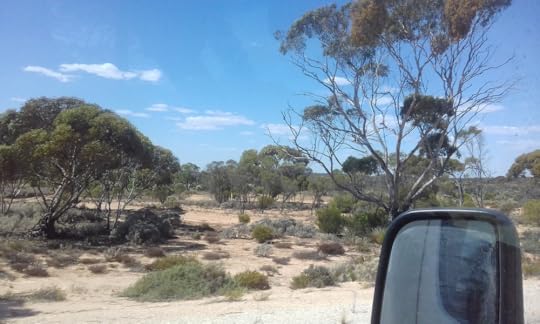
I came to love the peacefulness and these vast skies. Just as well as we were there rather longer than expected, what with one thing and another.
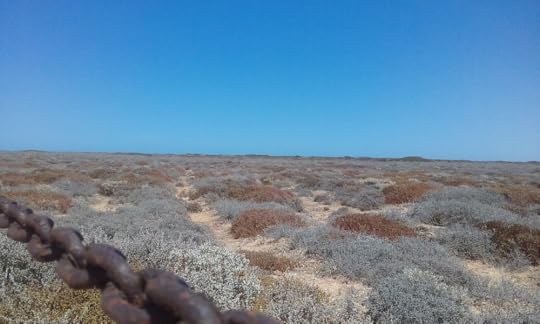
Chile
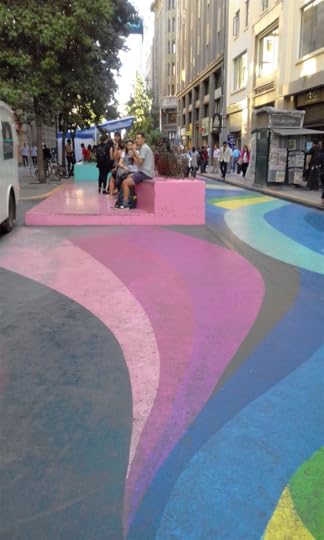
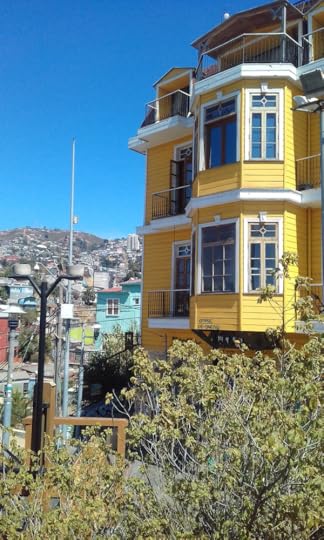
Santiago de Chile and Valparaiso were a riot of colour from the pavements to the houses themselves. Landing there an hour before we took off from Sydney was quite a feat.
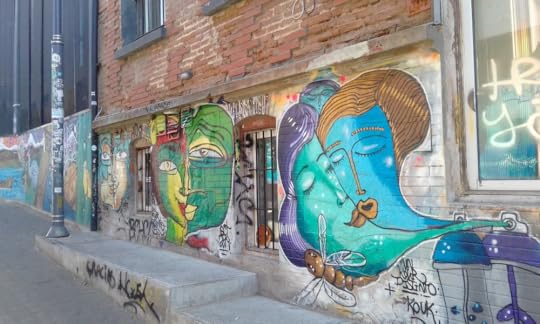
And where there was a blank space, the street art took over.
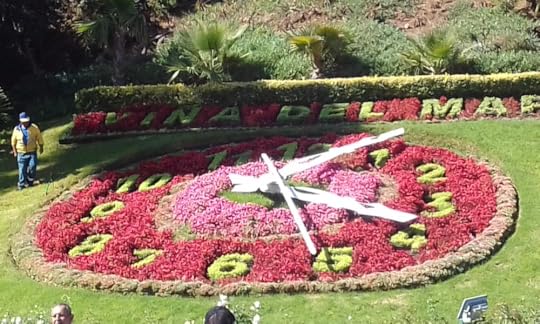
In Viña del Mar, even the clock was made of colourful flowers (and yes, it told the correct time too).
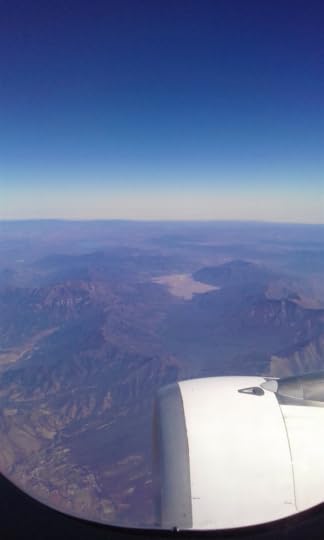
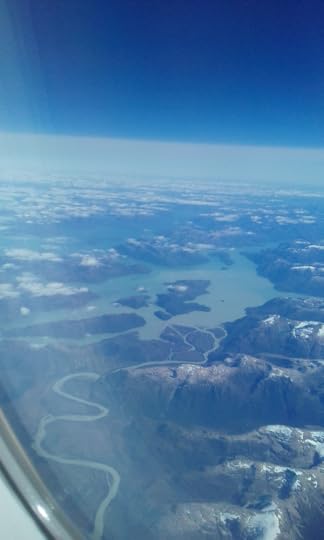
The end of the World
Seeing the mountains of the Andes from an aeroplane was simply stunning. Who needs seat-back entertainment when you have this view from your window.
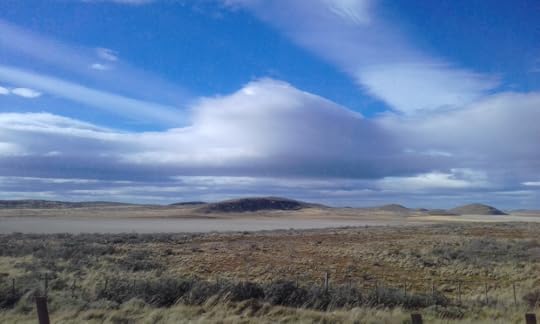
These photos of the fragile beauty of Patagonia and the Magellan straits still have the power to make me relax instantly, and to gasp in delight. Look at the size of that sky above, taken from a bus window on the bounciest journey ever.
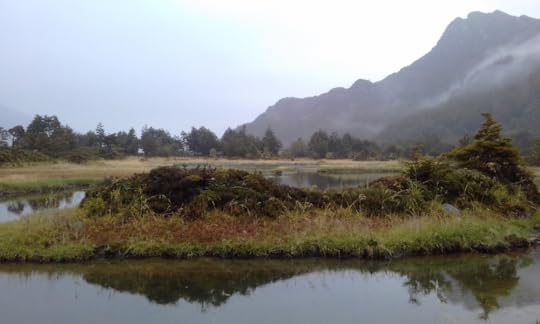
It was a different sort of barrenness to the Nullabor, full of life gaining a foothold in the most unlikely places. And our ship was small enough to cruise into the tightest spots. It looks like a toy against the background of mountains.
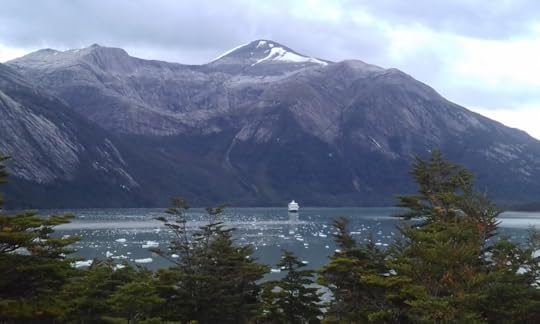
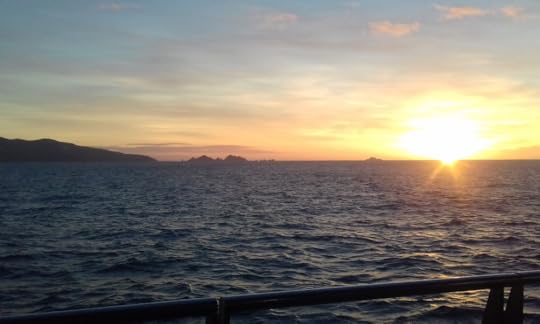
Here, fittingly, is our last sunrise of the trip, over Cape Horn, 'the end of the world'.
You can read of our adventures travelling around the world in my brand-new travelogue memoir Bento Boxes, Boomerangs & Red Foxes. On sale now as an eBook, paperback, hardback, and free to read with Kindle Unlimited.
,https://amazon.co.uk/dp/B0BTJ8PLYY
January 31, 2023
The many faces of our home in Galicia
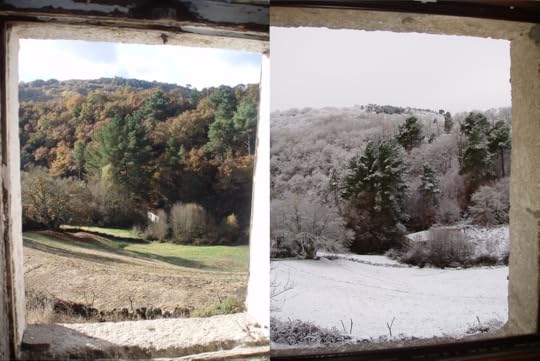
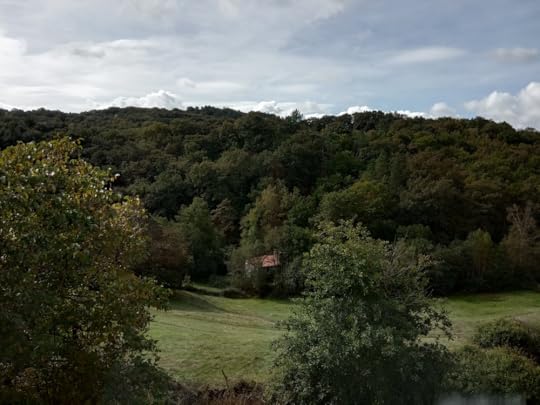
I love to photograph the different seasons here in Galicia and am so lucky to live in such a photogenic spot. I don’t even have to leave the house to find an ever-changing view. The two photos above were both taken from our bedroom window.
This small water mill on the river below the house is one of my favourite scenes to photograph year round as it captures so much of what I love about this place.
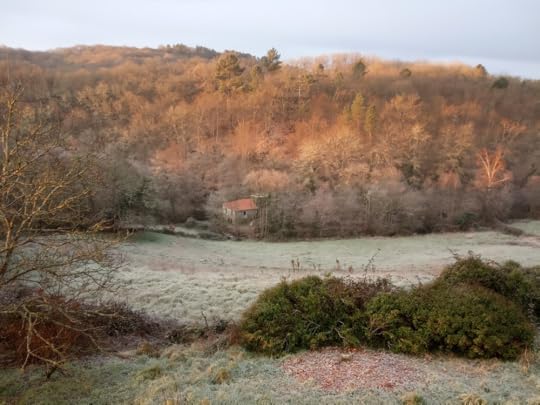
Here is the same view in January 2021, and this year, 2023, when we had record floods. Note how high the river is in the second photograph.
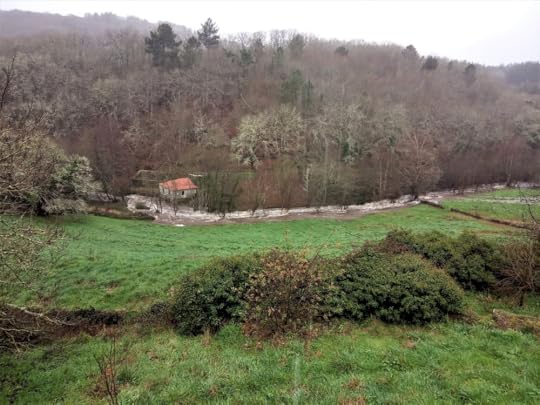
One of my city friends once visited and declared herself disappointed that the view was ‘just trees’. ‘But,’ I wanted to say, ‘what magnificent and ever-changing trees they are’. Here’s some more of my favourite ‘just tree’ pics.
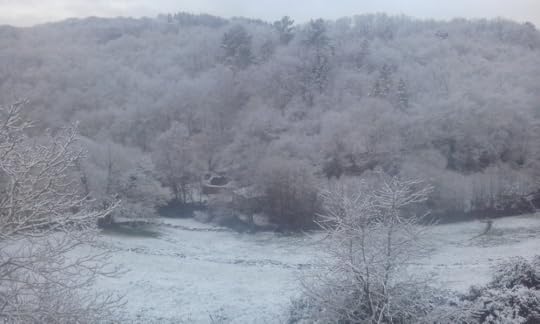
March 2017 was frosty. You can see the barn next to the mill has lost its roof.
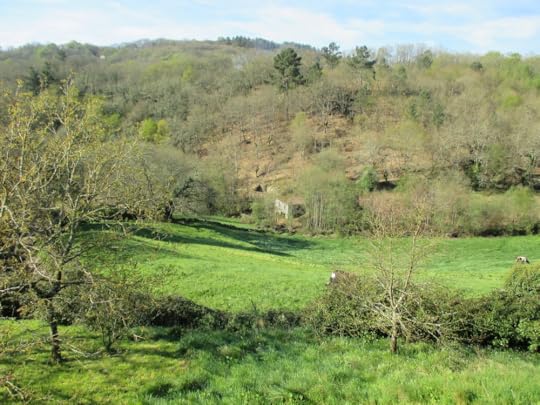
By April that same year, all was shades of spring.
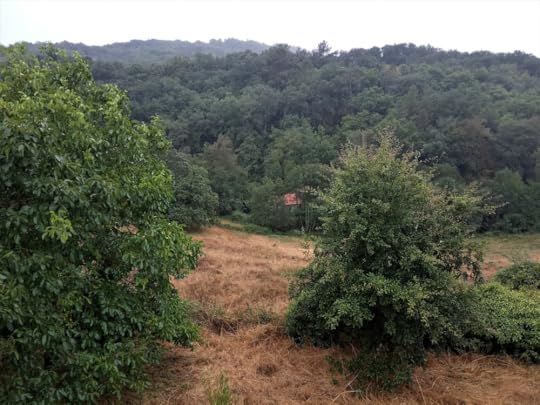
In August the trees are a wall of deep green, the field brown and bare, but by October, the trees are beginning to show their autumn colours, washed clean by the rains, the field once more green and vibrant.
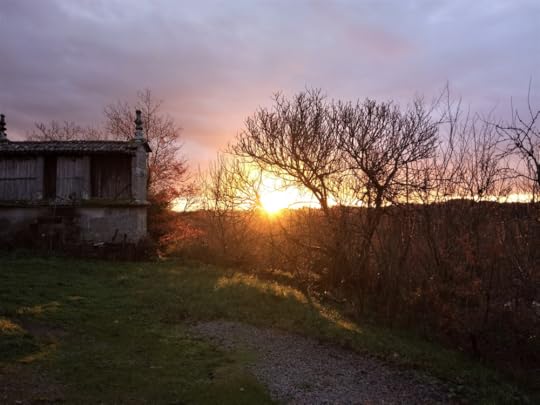
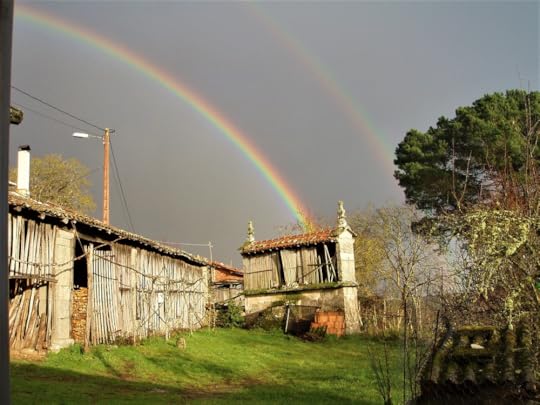
Another of my favourite photographic subjects is the view looking from our kitchen terrace towards the stone and wood built hórreo or grain store. Facing directly east from the house, this is the perfect spot to collect sunrises and rainbows,
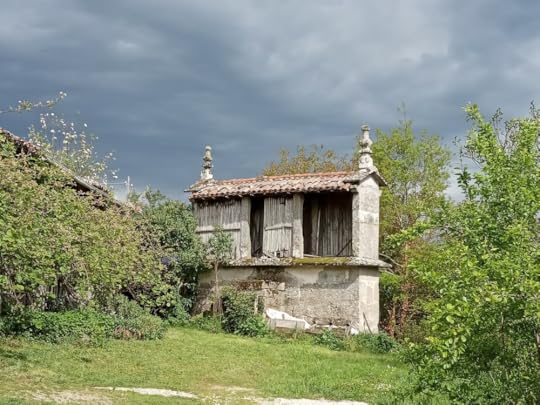
or the louring sky before a storm.
Galegos are almost as obsessed with talking about the weather as us Brits. Many a conversation begins with ‘Isn’t it hot/cold/humid/damp/wet? (delete as applicable). Perhaps it’s because we get so much weather here – after all, constantly saying ‘Isn’t it sunny?’ day in, day out would soon get boring. But also, I think, it’s because our glorious Galician weather is so erratic.
Here's some more photographs of the hórreo taken in February 2018 and in the same month in 2021. What a difference!
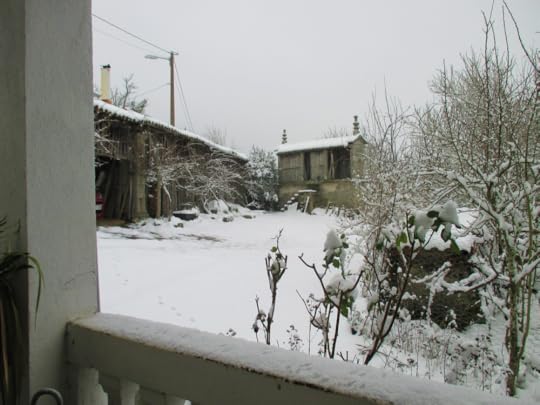
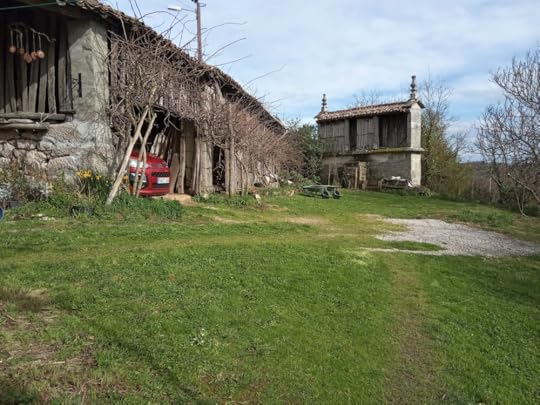
And here in July 2020 and 2021. Note the ‘lawn’ is still green in the damper 2021 summer season. I hope I managed to get the washing in before the storm!
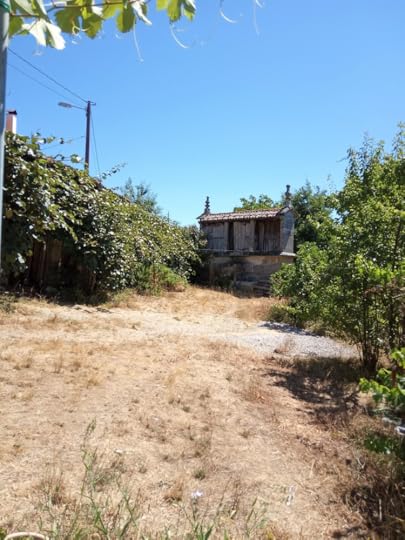
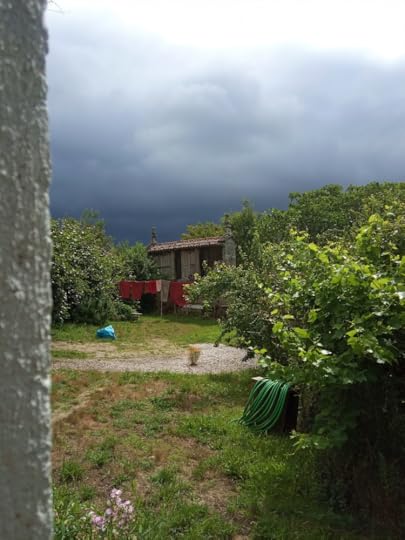
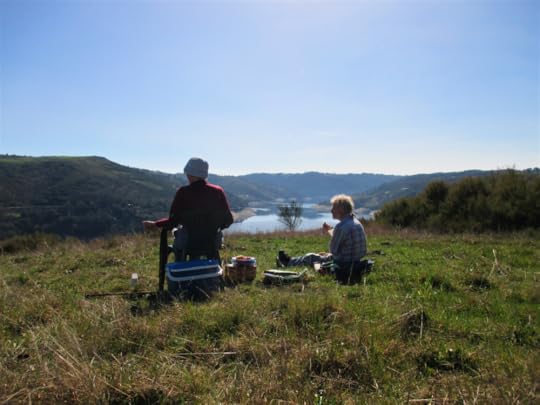
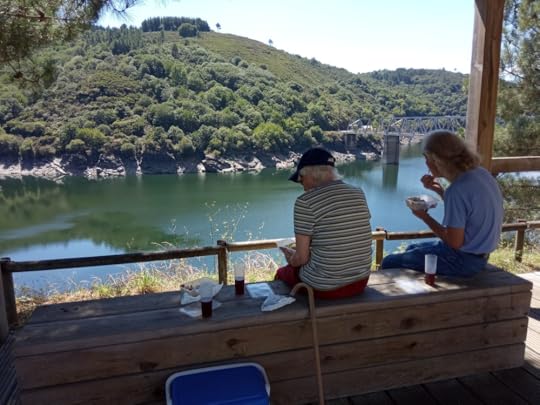
Seasons here don’t follow in any logical pattern. We can have picnics in February and in August with equal abandon. Both Mum and S removed their tops just after this February photo was taken as it was so warm on our hillside picnic spot, but I didn’t wish to subject my readers so early in the year.
Then there are the summer thunderstorms.
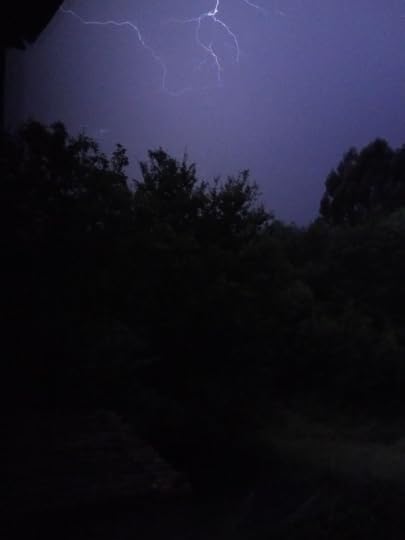
June and September 2021
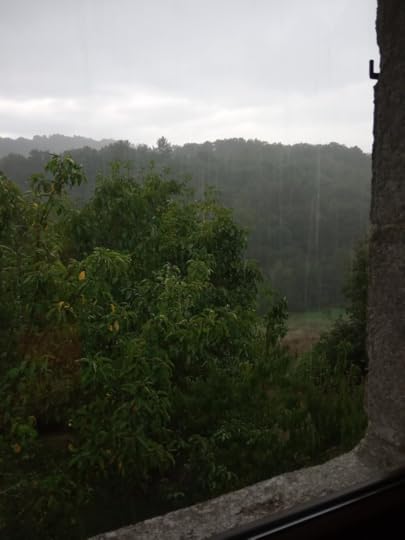
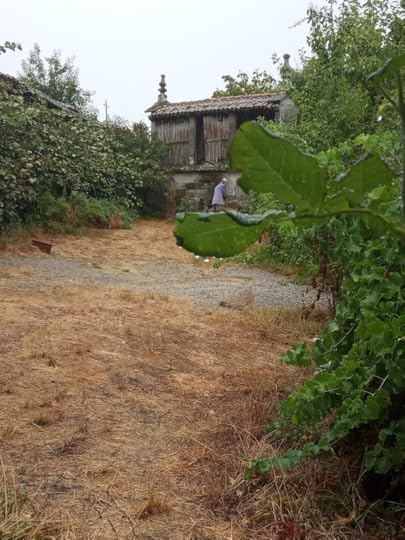
Note hubby, S, in this photograph, turning the compost in the August rain - our first that hot, dry summer of 2020.
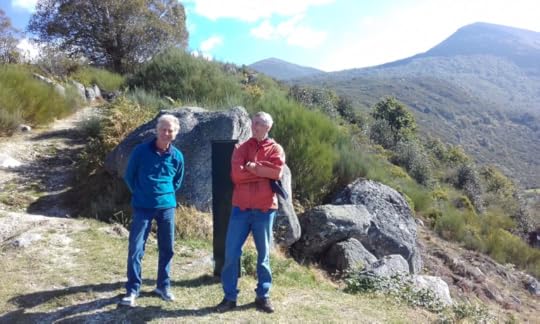
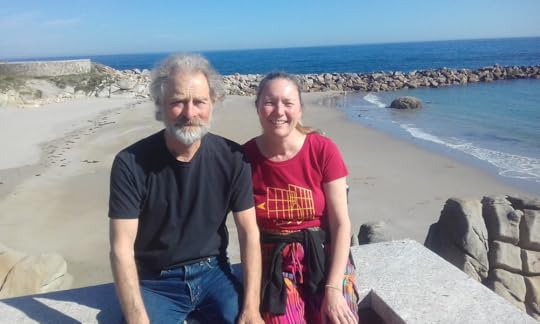
We can equally have sunshine for our holidays in autumn and spring. Here is hubby with his friend in the Lugo mountains in October 2018 and the two of us at the Lugo coast in March 2017.
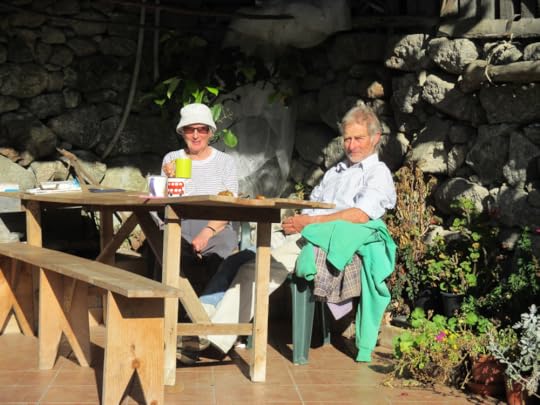
Or we can eat outside in November. Actually, we eat in this sunny spot in the garden year round. It faces south and is a perfect sun trap.
One week we can be in shorts on the terrace, the next needing waders (these photographs were taken a week apart in June 2021, but I think Mum knew what was coming, given her footwear in the first photograph).
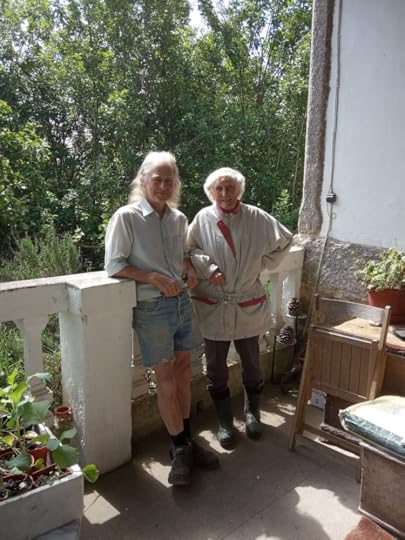
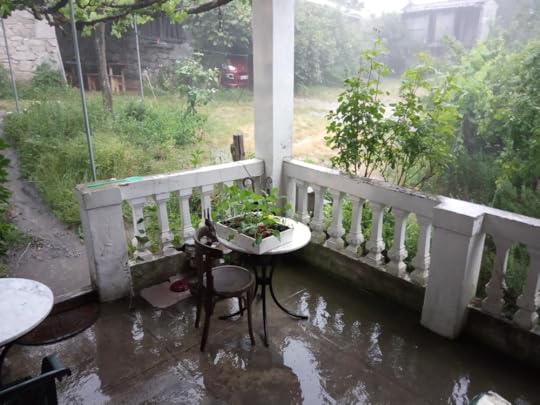
See the water lapping the edge of our terrace? Now we know why the previous owners added a step!
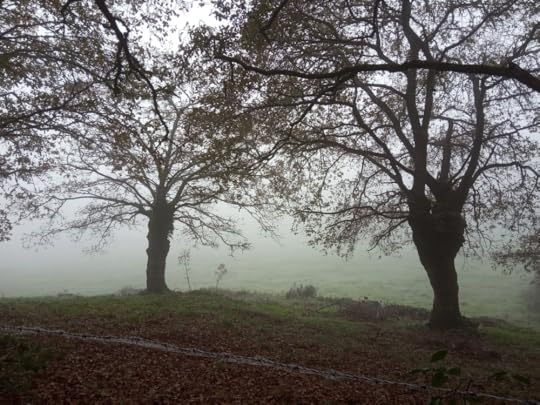
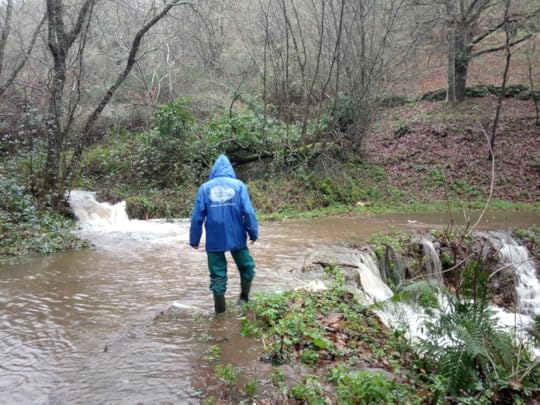
We can have fog for our daily walks in December and floods in January (the second photograph shows S attempting to cross the new river where once was a track, earlier this year).
Some of you will recognise this view of our house; it’s on my webpage, Twitter and Facebook sites, but doesn’t it look different in the February sunshine (2011) and January snow (2009)?
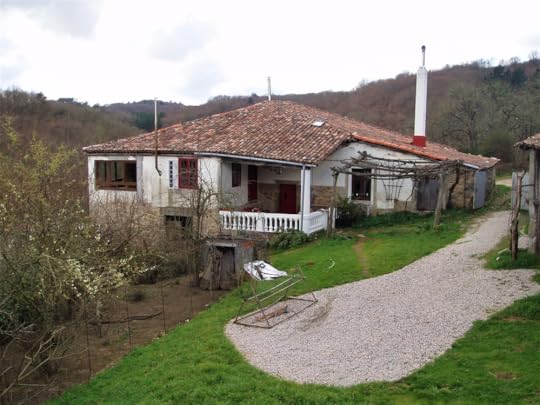
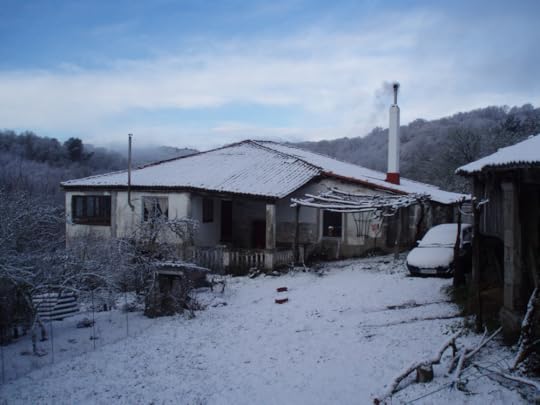
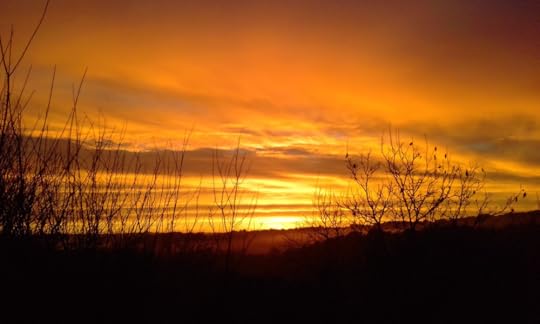
Of course all this weather means some fabulous sunrise and sunset pictures. I’ll leave you with my favourite of all time, a glorious golden sunrise over my allotment, taken in December 2016 (from the upstairs sunroom window).
January 1, 2023
Looking back on 2022
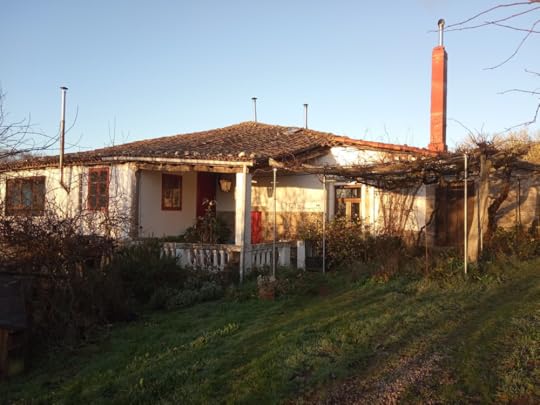
New Year is the traditional time for looking back on the year which is ending, and forward to the one just beginning. I’m looking forward to 2023, with another book due out in spring and so much to do in the garden. This past year has been one of mixed fortunes but so much beauty too. Here is my pictorial record of the year that was 2022 for us here in beautiful Galicia.
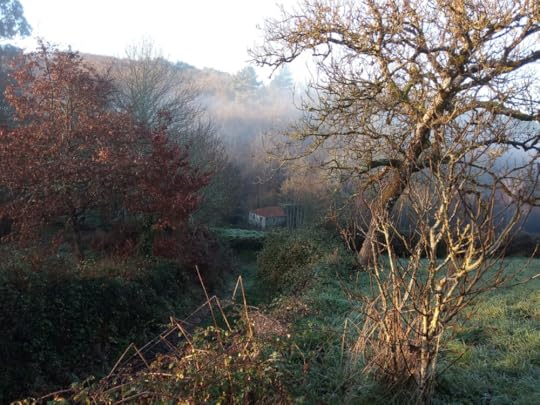
The mill at the bottom of the valley looks beautiful in the mist
January began dry, the winter scenery stunning in its browns and moss greens. Our Sunday walks were punctuated by leaves crunching underfoot and mists rising from the valley below us as we wandered the lanes.
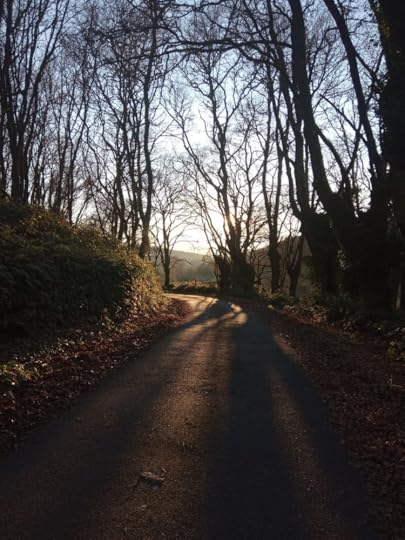
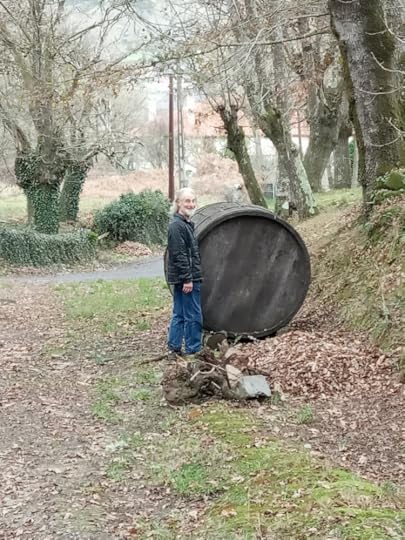
sunshine and wine barrels!
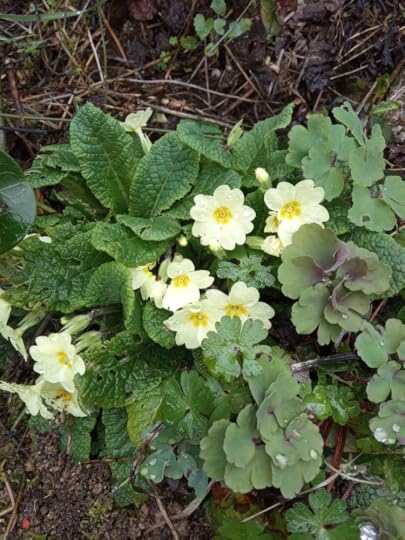
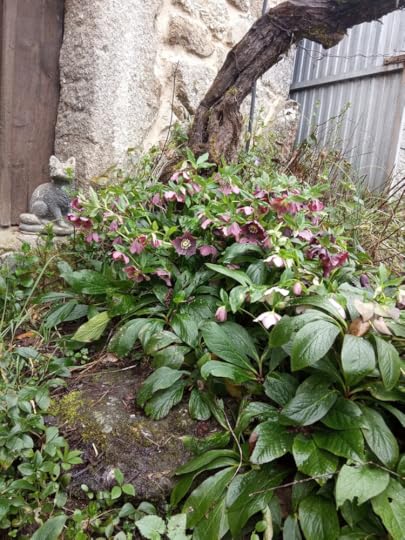
In February, early primroses and hellebores were already blooming in the garden when we returned from a lovely week’s holiday in the Canary Islands.
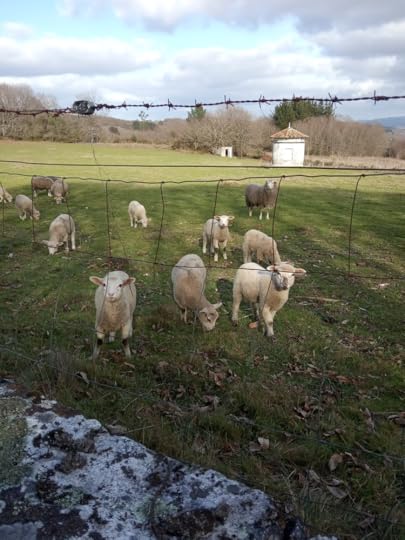
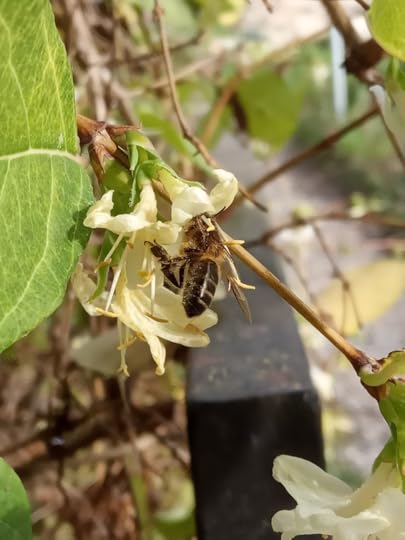
The local sheep had lambed, encouraging us that spring was on the way and bees were buzzing madly around my winter-flowering honeysuckle, eager for the early nectar.
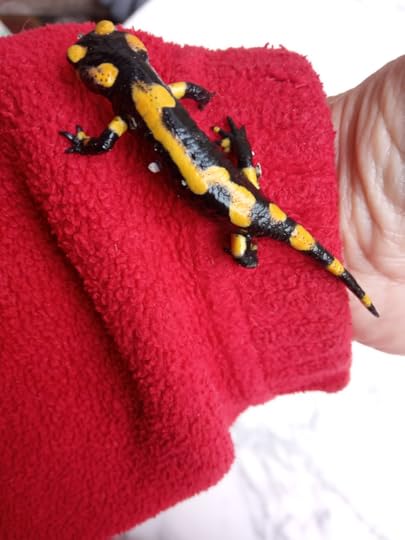
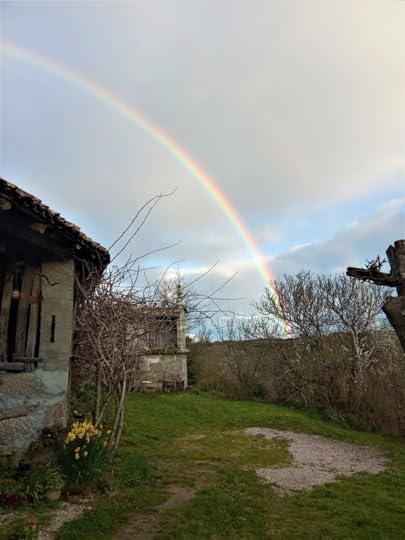
March rains brought out our handsome salamanders and spectacular rainbows over the hórreo.
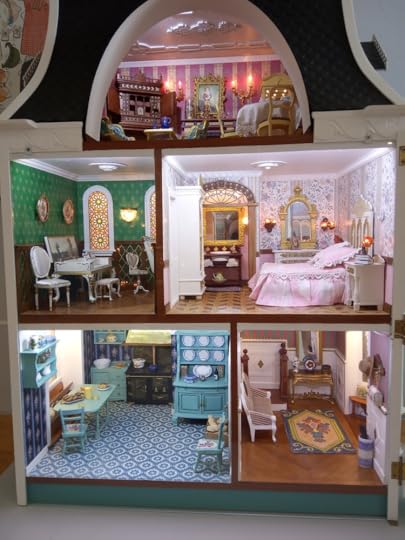
Mum’s treat for March was a visit to the Doll’s House Museum in nearby Monforte de Lemos. As a doll aficionado, this was a real joy for her. It is a beautifully kept collection and tea in the parador at the top of the hill rounded off her day nicely.
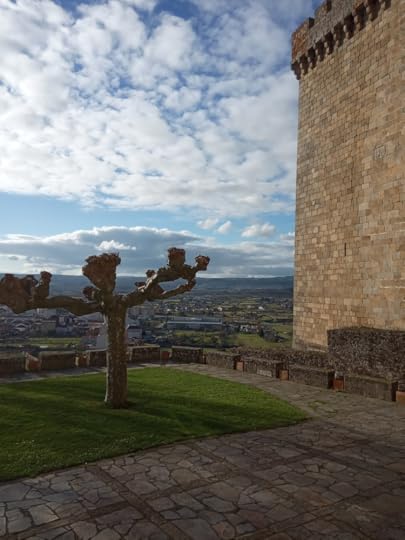
After a strange episode in late March, when S lost his short-term memory for a number of hours, he was diagnosed with dangerously high cholesterol. I decided a change of diet with far less saturated fats was called for, and more exercise.
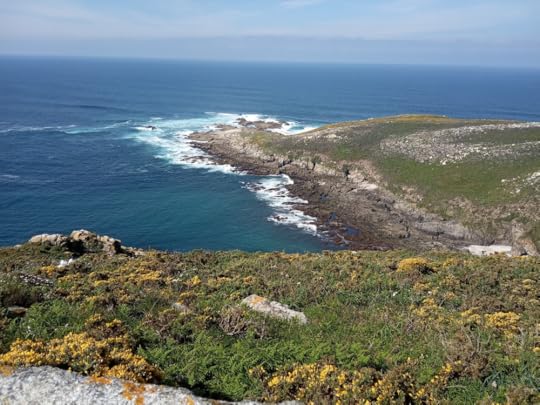
The stunning island of Ons
Although we are hardly sedentary, we didn’t do much sustained exercise. With Mum away for her holidays in the south of Spain, we took the opportunity to do more walking.
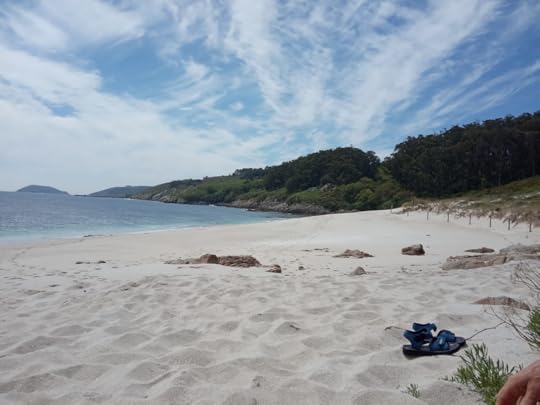
white sands on Ons
We had some incredible days out that April. From deserted white sand beaches on Ons to a walk along the river Miño in Ourense and another along the same river in Lugo, we dodged the raindrops to enjoy some of Galicia’s fabulous scenery and pondered on how lucky we are to live here.
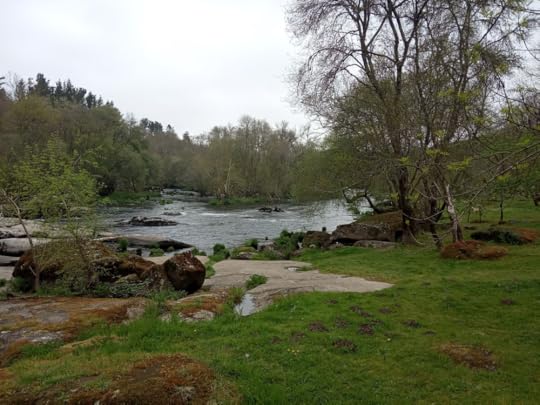
the Miño river in Lugo
If you are interested in some of the incredible scenery here in Galicia, my fourth travelogue memoir, Pulpo, Pig & Peppers – travels around Galicia, includes all these walks and many more places to visit.
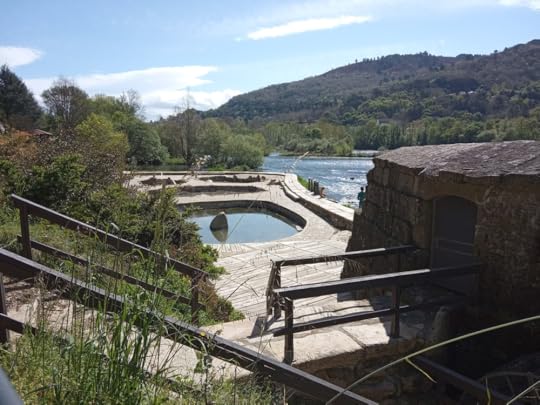
thermal pools on the Miño in Ourense
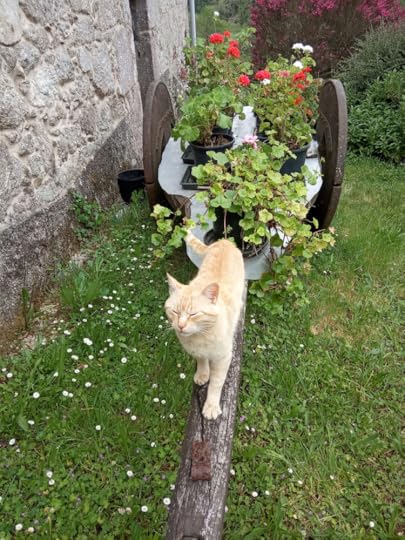
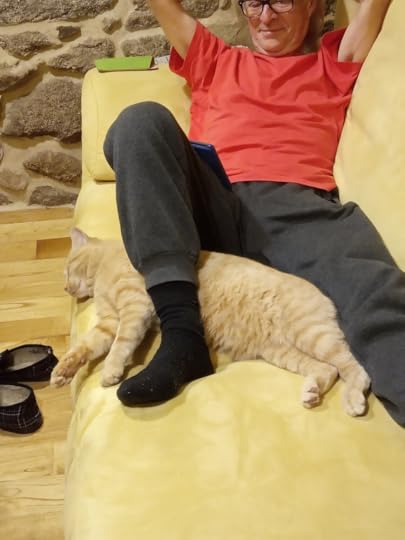
In May we gained a new member of the household when a handsome stray cat arrived on our doorstep.
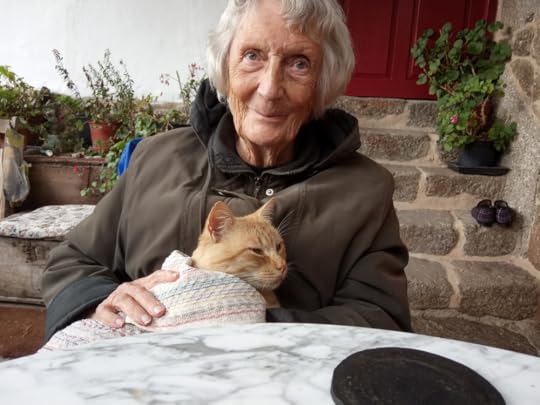
Called Laranxa (the Galego for orange) for his handsome colouring, Larry for short, soon made himself at home and is now a fully paid-up member of the family. From definitely not being a house cat, he is now content to spread himself around every room.
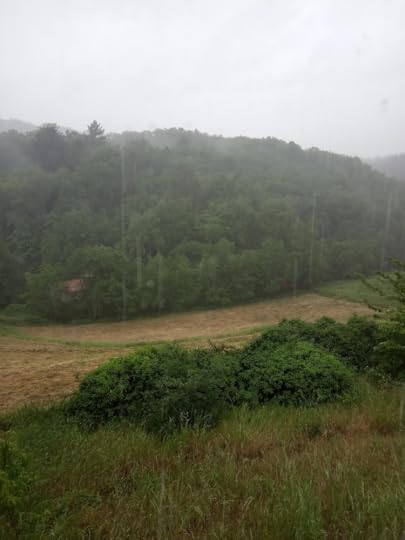
June produced both rain storms and brilliant sunshine.
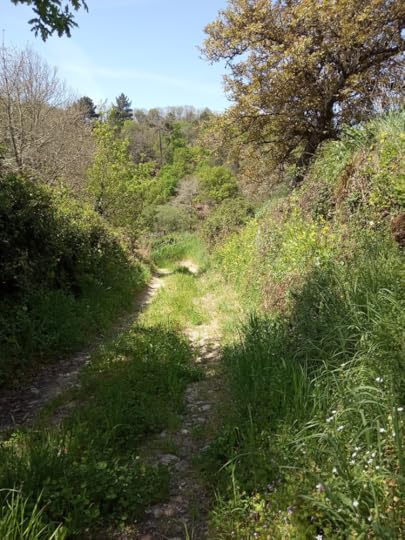
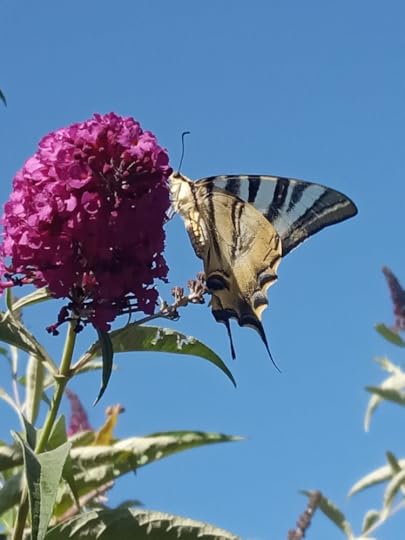
Our regular woodland walk was becoming more overgrown each week as the weeds outcompeted our boots. Since our neighbours retired from farming, the track is no longer grazed regularly by their cattle and I fully expect the area to revert to woodland in the near future. Our beautiful swallowtail butterflies will be happy.
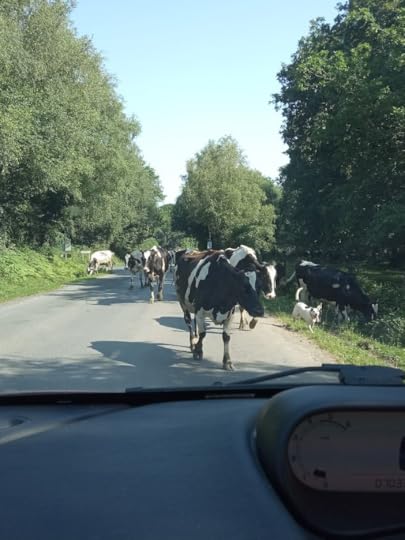
still enough cows for a traffic jam
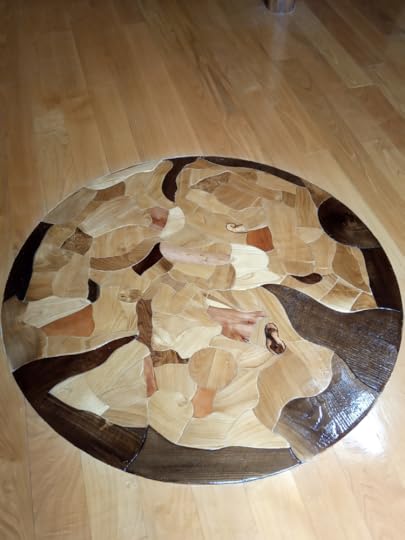
S had been working on his beautiful floor mosaic in our Big Barn, which was finally revealed. The wooden pieces are left over bits from our various projects around the house and outdoors, comprising oak, chestnut, cherry and many other oddments.
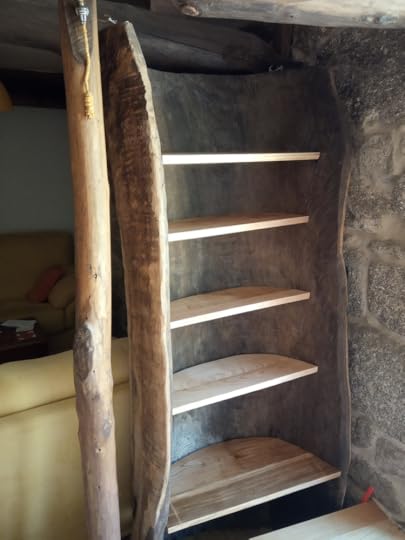
He had also been working at cleaning up an old salt box from one of our barns. This trough, hewn from the trunk of a single tree, would have been used to salt the pig carcasses in years gone by. Its use had long since ended when we discovered it in one of our barns, but the wood was magnificent and S enjoyed many hours trying to clean and sand it to a silky smoothness. It now has pride of place in our Big Barn as a bookshelf.
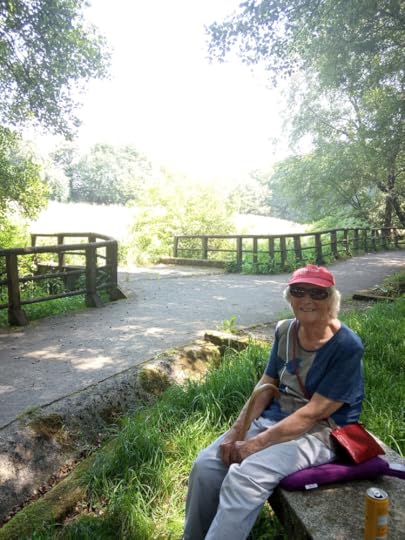
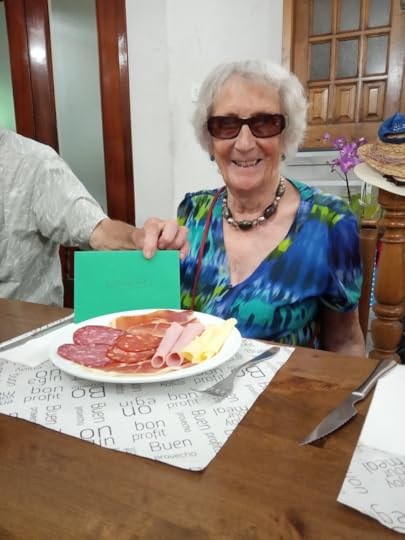
the birthday girl at 91
July sees two birthdays in this household.
Mum turned 91 on July 14th with a fabulous meal at one of our favourite restaurants, The Pitón. The staff spoilt her rotten and even came out to sing happy birthday.
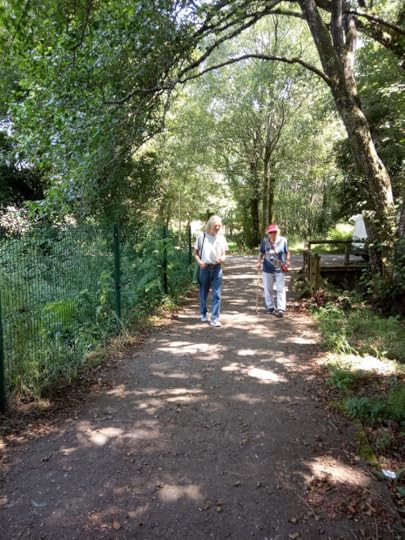
walks were curtailed, but there was cake
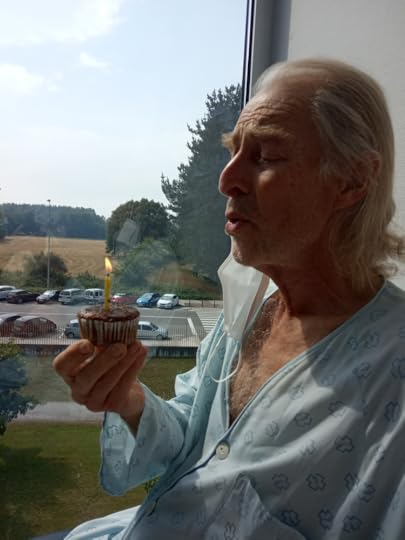
Unfortunately, S spent his birthday, just four days later, in hospital after a different 91-year-old, knocked him over during one of our ‘health’ walks. He sustained three cracked ribs and five days in our not so local hospital being well looked after. I took him a birthday cake and candle in, to the delight of the staff.
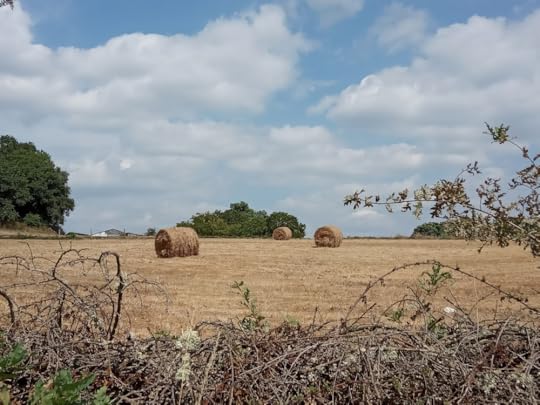
Although still sore and unable to carry on with his latest project (insulating the ceiling of our downstairs barns), by August we were able restart our walks. We did change our route though, to avoid roads and crazy elderly drivers.
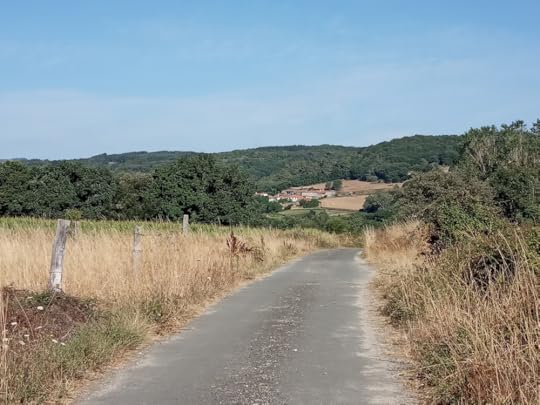
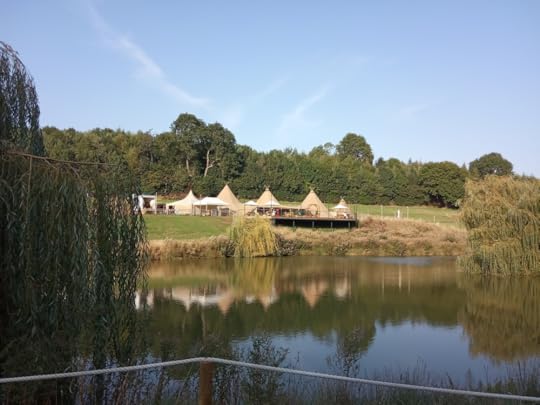
In September, we were all off to the UK for a family wedding in a beautiful setting near to Banbury.
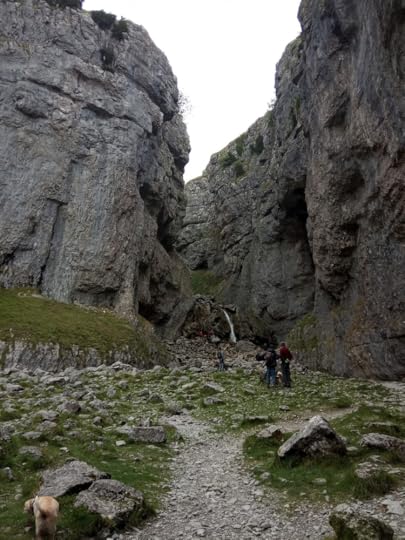
Mum went up to Scotland to spend time with family while S and I travelled the UK vsiting friends and places we’d never seen before.
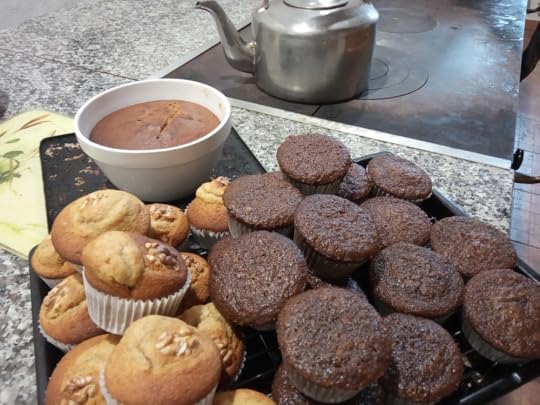
October meant relighting my lovely wood-burning cocina and plenty of cakes to eat in the warm kitchen.
We also had a surprise addition to one of our Sunday walks when Larry decided to tag along.
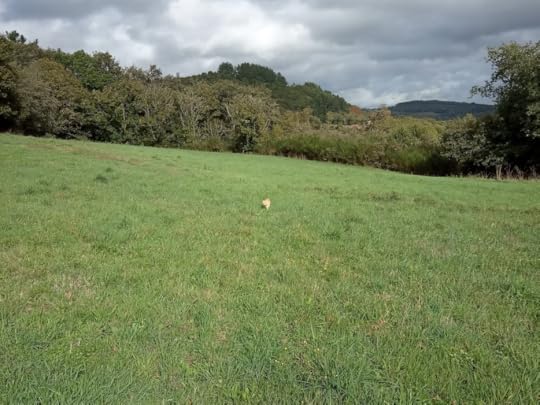
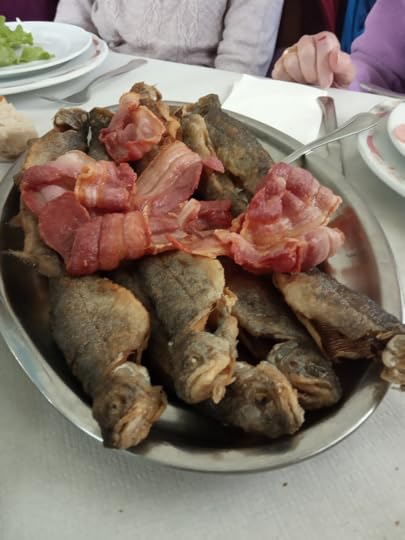
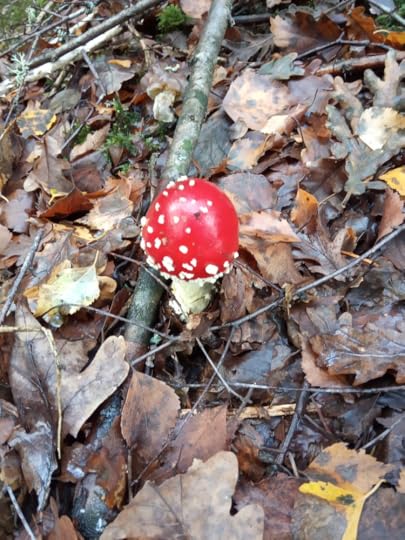
November saw us dining out and spying fungi on our walks (no, we didn’t eat this one).
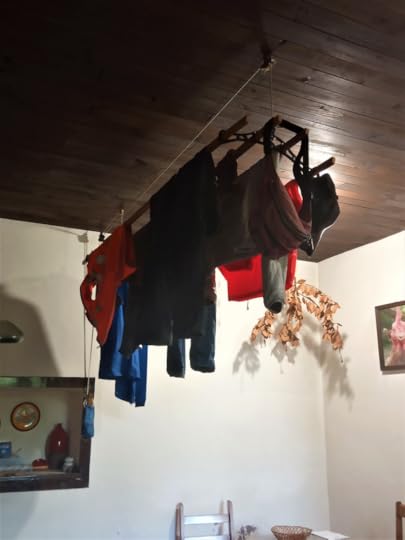
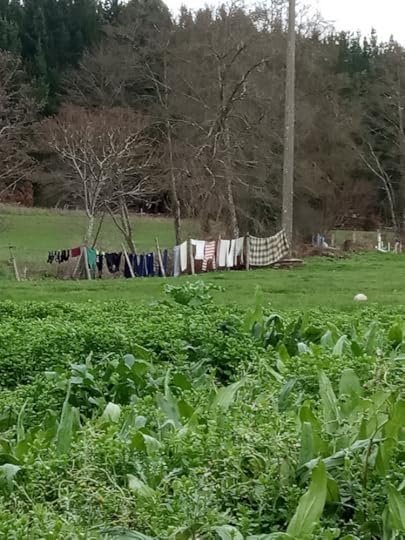
Our long hot summer weather finally broke with rain more frequent on our daily seven-kilometre walks. One day was so wet we had to strip when we got home. Though it seems a neighbour thought it a good time to hang the washing outdoors.
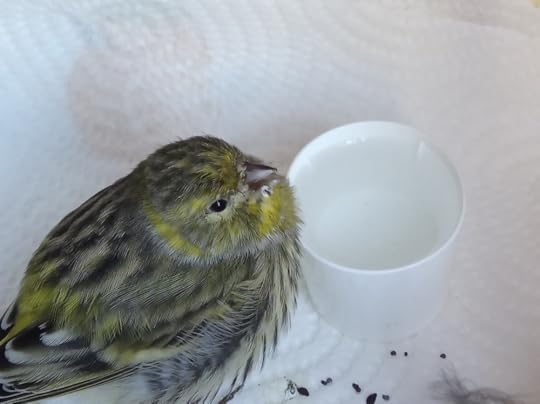
In early December I found this tiny serin on the patio, exhausted and unable to fly. Luckily, after a bit of TLC indoors in the Big Barn, he recovered and flew away down the valley.
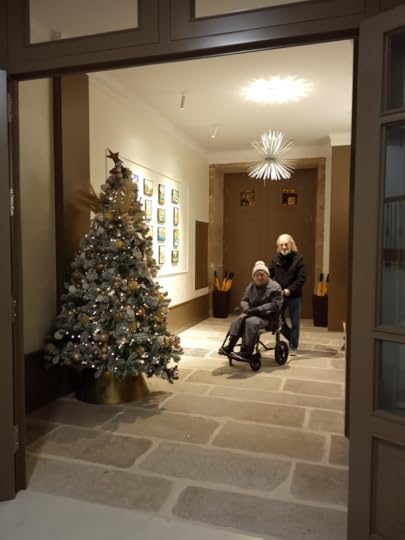
This year for Christmas, we had a change of venue for our celebrations. Instead of Lugo to the north of us, we headed south to Ourense. It was a good choice with an excellent meal at the Gran Muralla (great wall) Chinese restaurant and a lively pub crawl in the evening.
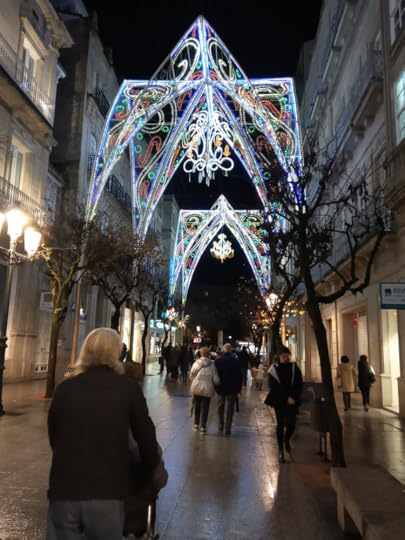
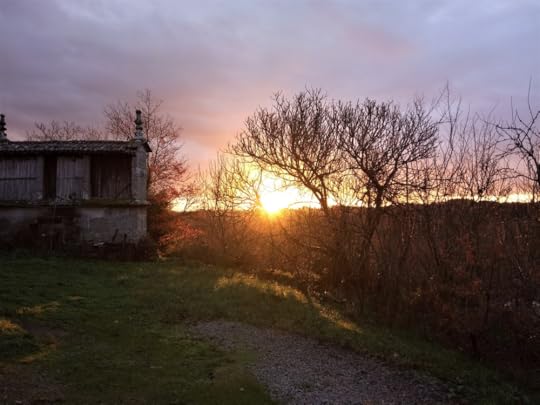
I wish you all a 2023 filled with beautiful sunrises,
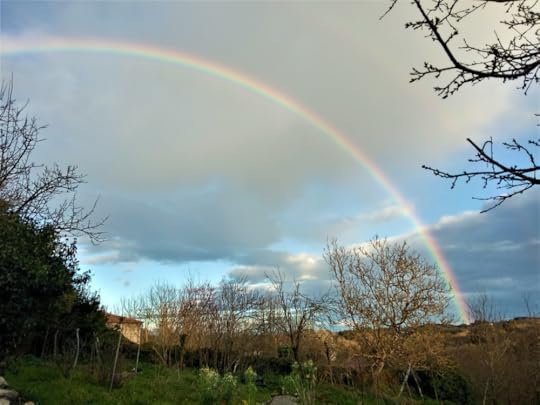
bright rainbows
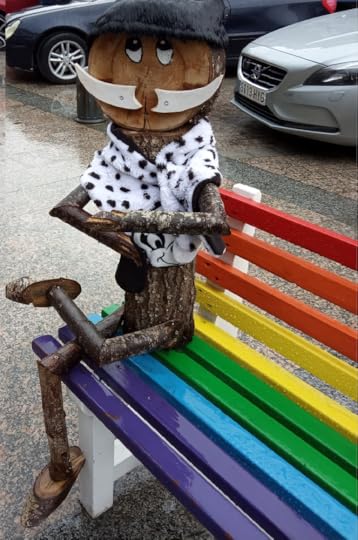
and plenty of colourful characters
November 28, 2022
Pups and puns, with writer Jacqueline Lambert
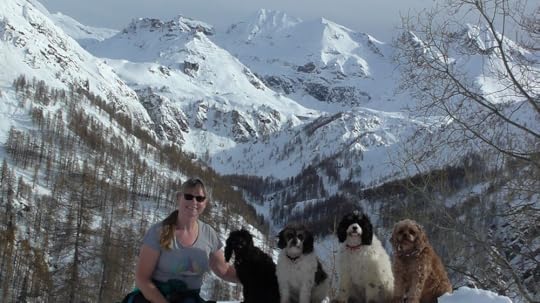
Jacqueline Lambert and the Fab Four on Monte Rosa, Italy
It’s about time I did another guest blog and who better than an author whose memoirs I’ve thoroughly enjoyed, Jacqueline Lambert.
If you enjoy travel memoirs with plenty of information, doggy fun, some truly dreadful puns, and a touch of political commentary, Jackie’s series, Adventure Caravanning with Dogs, is just what you’re looking for.
I’ve loved every one of Jackie’s books. From the UK to France, Germany to Romania, from lockdown in Italy to roaming central Europe post-pandemic, they are equal parts hilarity and serious description. I was lucky enough to receive an advance copy of Jackie’s latest book, To Hel in a Hound Cart, and can confirm this is another real treat. Hel is due for publication on December 9th; in the meantime, I had a chat with Jackie about being a permanent nomad, dogs, travelling, and the dreaded B-word.
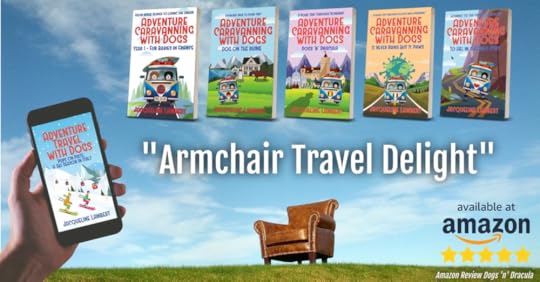
Jackie's books... I love 'em all
Hi Jackie – it’s great to talk to you, and I’m still hoping for a face-to-face meet here in Galicia one day. Many people dream of selling up to live on the road, but what is it really like to be permanent nomads?
Hi Lisa – thanks for having me! I hope we do succeed in meeting up in Galicia. After three failed attempts, Spain is still on our list…
Mark and I love the nomad lifestyle, but it is not for everyone.
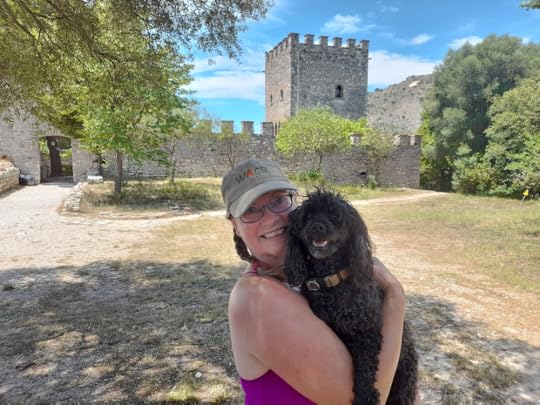
Jackie with Lani in Butrint, Albania
On the positive side, it is immensely rewarding. It is a life of unprecedented freedom. We can go where we want and spend our time doing more of what we love – windsurfing, skiing, cycling, and hiking with the dogs. Every day is different and filled with new people, places, and adventure.
Kai loves his dad, in Croatia
Compared with even the smallest house, we live in a small space, which means fewer possessions, but I found downsizing immensely liberating. I have absolutely everything I need, but I’m not weighed down by tons of STUFF. It took a while, but I have reached the Nirvana of knowing that there is nothing I could own that would make me any happier than I am.
However, life on the road is just that – it’s life, not one long holiday, and it can throw up many unusual challenges. In some countries, just solving everyday problems, such as where to buy essentials, can be difficult.
L: Yes, even finding some essentials in Spain is tricky, so multiplying that by many countries…
You’ve spent six years travelling in Big Blue with caravan Kismet and now your full-time home is The Beast, a converted six-wheel Volvo N10 ex-army lorry. How does travelling around in The Beast differ from your time with caravan Kismet?
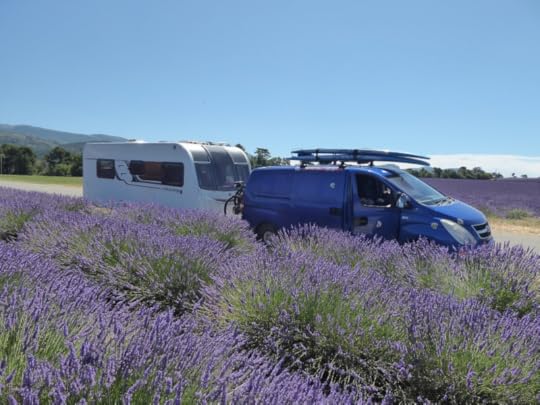
Caravan Kismet and Big Blue in Provence, France
J: The dream was always to tour in a campervan, until we realised that there ain’t no motorhome big enough to fit my man – or all our ‘toys’. My husband, Mark, is 6’6” (2 m) tall, and can’t stand up in most motorhomes. We also travel with four dogs, five windsurf boards plus all their sails and accoutrements, two 12ft SUPs (Stand Up Paddleboards), two bicycles, two dog trailers, four pairs of skis, and all our winter gear.
L: Wow!
J: Investigating motorhomes made us realise the advantages of a van/caravan combo. The disadvantages are that caravans are more suited to staying on campsites with water and electricity on tap. They are often banned from the free or low-cost motorhome parking areas (‘aires’) found in many European cities.
Caravans are also more of a fandangle to set up. We had to hitch, unhitch, wind legs up and down, fit hitch- and wheel locks, fill and empty external water and waste tanks, and remove heavy items such as pans, crockery, and tinned food before we could tow. In The Beast, everything is on board. We simply park up and everything’s already good to go. To break camp, we secure loose items and drive off.
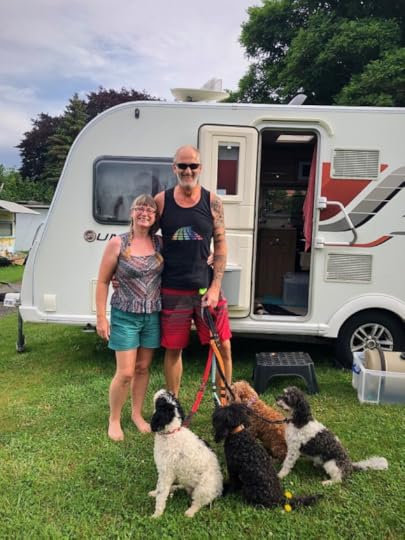
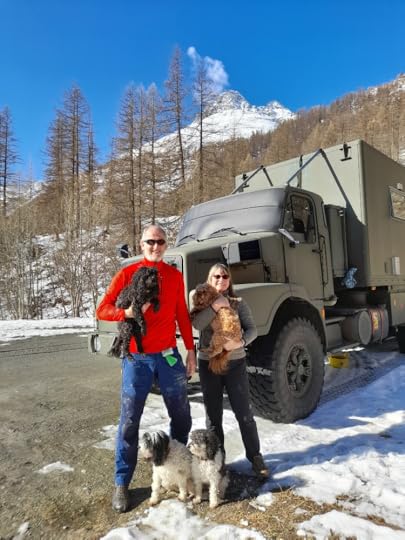
Jackie, Mark and the Fab Four with Kismet and (right) The Beast
The Beast is the manor house of motorhomes. At 10 metres long and nearly 4 metres high, she solved all our storage and space problems. We designed and built the interior ourselves: we moulded the sofa arms around our SUP boards, while the rest of our toys fit comfortably in the vast space beneath our larger-than-super-kingsized bed. Weight is not a problem – we still have 8 tonnes of unused capacity. As one German man said, “That leaves plenty of room for beer!”
Plus, most people love The Beast. She is very unusual and attracts attention. We have made many new friends because of her.
L: She’s certainly eye-catching, Jackie. We’ll have fun fitting her down our narrow lane when you visit! . You’ve travelled around a fair bit of Europe with both Kismet and The Beast. Where have you not been that is still on your wishlist?
J: Between us, Mark and I have visited six of the seven continents, and over 30 countries – but that still leaves a good few hundred to go.
We would love to tour in South America, particularly Chile, and anticipate spending a year in Georgia (the one in the Caucuses, not the US state). We bought The Beast to tour overland to Mongolia, although we’re waiting for the political situation in that part of the world to calm down.
L: I loved Chile when we visited. Mongolia should be fascinating. What is your favourite place that you’ve travelled to so far, and why?
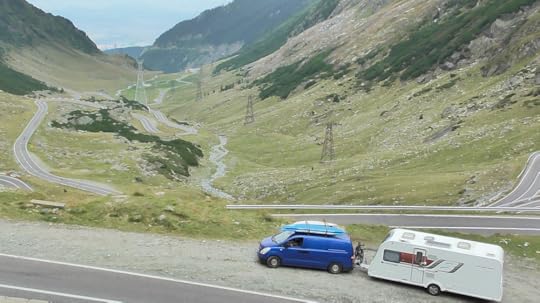
Romania is Jackie's favourite country. I can see why!
J: Romania is our favourite country. Partly because it was so unexpected – everyone told us we’d be kidnapped, robbed, scammed, attacked by wild dogs, wolves, and bears – if the vampires didn’t get us first. The scare stories were so horrific, we almost didn’t go.
Yet what we found was the most friendly, welcoming, and beautiful country, packed with history and pristine nature. We spent three months there and barely scraped the surface. I could live in Romania, and I can’t wait to go back.
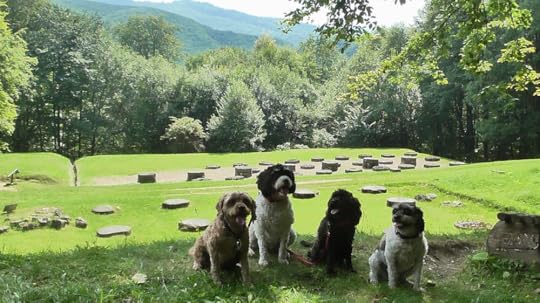
The Fab Four at Sarmizegetusa Regia, Romania
L: I think the Pawsome Foursome are the real heroes of your books. Tell us a bit about them. How do they each deal with celebrity. And do they have any quirks when you are on the road?
J: The lovely thing about dogs is that they take everything in their stride. Kai, Rosie, Ruby and Lani love the attention they get as VIPs (Very Important Puppies) but don’t let it go to their heads.
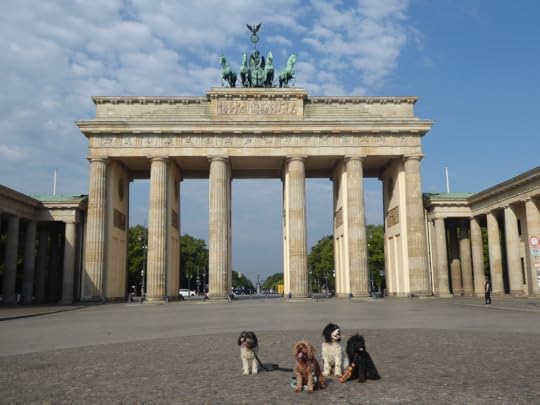
And at the Brandenburg Gate. How do you get them to pose like that?
The Fab Four are all Cavapoos – a cross between a Poodle and a Cavalier King Charles Spaniel. Poodles are deemed the second most intelligent dog breed after Border Collies.
Kai, our first born by about a week, is our little black-and-white boy. He adores his dad and is never happier than when he’s curled up with Mark. He’s a lover, not a fighter and secretly, we’re convinced he’s human. Kai is the Hawai’ian word for ‘the ocean’. Since Hawai’i is Mecca for windsurfers like ourselves, we thought it was eminently suitable.
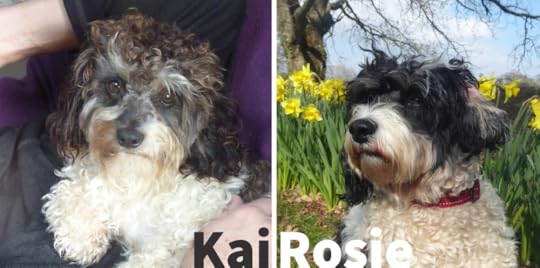
Rosie, our white-and-black girl, joined us to keep Kai company. Like me, she’s a Lancashire lass, and we named her partly for the red rose of Lancashire, and partly for the AC/DC song Whole Lotta Rosie because she’s bigger. Initially, we thought she was a bit of a porker, until we discovered she’s just crossed with a larger Poodle. Rosie epitomises how to get the most out of life. She is the sweetest girl, with a great sense of adventure. Rosie loves everything and everyone, and would never get into an argument. If someone wants to sit where she is sitting, she just gets up and moves without so much as a grumble. We can learn a lot from Rosie.
Princess Ruby is our little red girl. She came from the same breeder as Rosie, and is the reason we have four pups. Mark saw her and fell in love. I said that three dogs was ridiculous – until I figured that if you have one dog, you have a commitment. Another makes little difference, and she was very cute… Princess Ruby is highly strung and could definitely feel a pea beneath 20 mattresses. Yet despite this princess persona, she is a bog monster who will launch herself into any stagnant and stinking mire she can find.
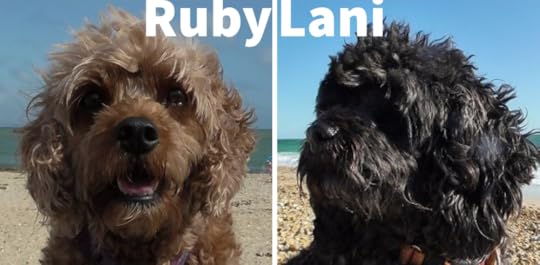
Lani, our little black girl, came along because Mark carried on looking at pups on the internet and saying things like ‘three is a bad number’. We both have two siblings, so we know about these things. Lani looks like butter wouldn’t melt in her mouth, but she is a naughty little minx in the loveliest and most endearing way. Like Cato in the Pink Panther films, she deploys unexpected stealth attacks on Ruby, and excels at shredding pants and socks.
L: They really are adorable, Jackie. But what are the challenges of travelling with not just one, but four furry friends (and a husband!)
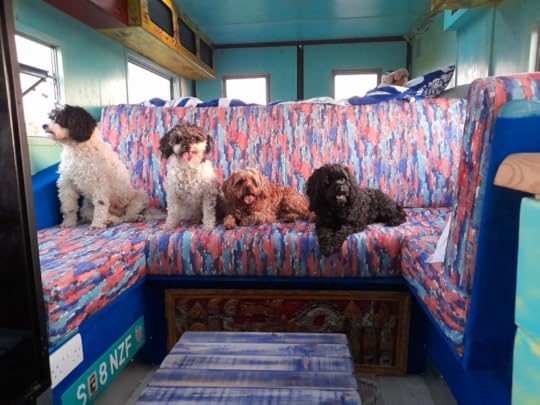
Their home, inside The Beast, remains constant
J: Travelling with four dogs is not a huge challenge. It follows much the same logic as dog ownership. One dog is a commitment. More than one is actually easier, because they keep each other company and don’t rely solely on you. Although we visit many different locations, their home – Caravan Kismet or The Beast – remains constant and familiar.
Travelling with dogs is a genuine pleasure – we’ve met so many people just because they want to come and say hello to the dogs.
Obviously, there is a cost involved. The dogs require paperwork and vaccinations to travel. We pay extra for their passage on ferries or the Channel Tunnel. Some campsites impose hefty dog charges – the worst we’ve come across was €8 per dog per night in Germany. I think that really translates as ‘dogs not welcome’.
Getting their favourite food is easy in Western Europe. It was more of a challenge in Albania and the rest of the Balkans, but not impossible. I have conducted vet visits in French, Italian, and German.
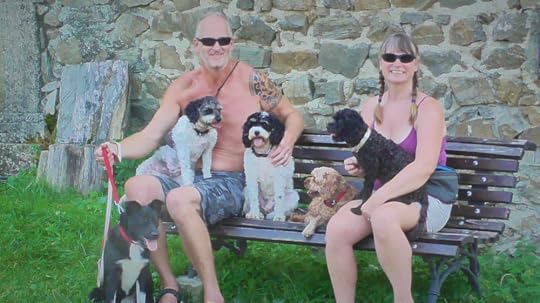
Travelling together is not hard, and there's room for extra love... Blade, a Romanian rescue dog
Travelling with my husband is not a challenge at all. Since we met, all we ever wanted was to be together full time. We are lucky that we want the same things, share the same passions – and rarely argue. This is essential when you live in a space just 7 x 2.5 metres – there’s nowhere to sneak off in a huff. Things inevitably go wrong when you travel, and we have found ourselves in some extremely stressful situations. Fortunately, we’re both very level and pragmatic, so rather than having a hissy fit, blaming each other, or having a row, we work together to appraise the situation and look for a solution.
L: Aw, that is sweet. We too have always lived and worked together. It makes for a much more relaxing life when you understand each other. And The Fab Four do everything you two do, it seems. They have been climbing, skiing, paddle boarding and have walked many beautiful trails. Is there any activity they’d really like to try?
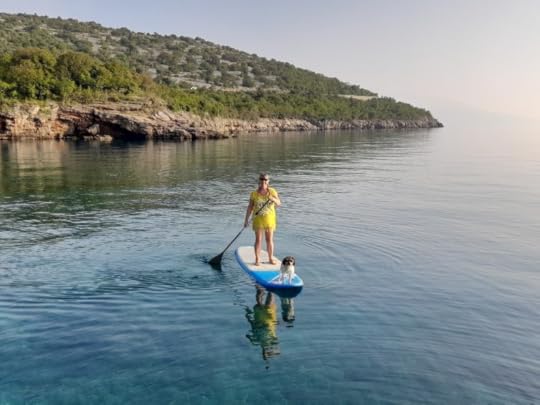
Jackie and Kai, paddle boarding in Croatia
J: We have bought an inflatable boat for when we visit the water castles of Lithuania, but after being pups on SUPs, I imagine they will take this in their stride.
L: Can you, at this moment in time, ever see yourselves settling down in a house again? Is there anything you miss having no permanent base?
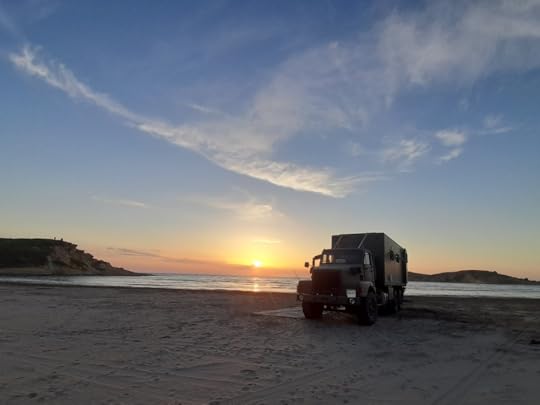
The Beast, wild camping at Vlore, Albania
J: When we set off in 2016, we intended to tour for three years, but we love it so much. We spent eight months in Italy during the first global lockdown, and a year in the UK for Britain’s second and subsequent lockdowns. Being grounded made us realise we’re not ready to settle in one place yet.
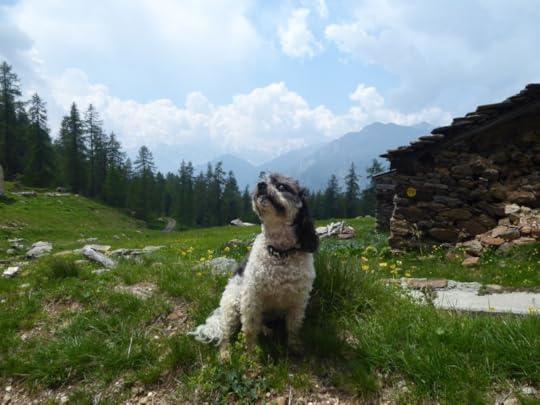
Kai in Monte Rosa where the family were locked down
L: I think lockdown was hard for so many people. We were incredibly lucky here in Galicia, as I think you were in Italy, in many ways. There are worse places to be stuck! Now, I have to ask, because for many Brits your lifestyle is now a pipedream; what issues have you faced, if any, from (shh, whisper), Brexit?
J: For many Brits, Brexit has put paid to their retirement plans. It has made travelling with pets much more difficult and expensive, and has also meant re-introduction of the outrageous mobile phone roaming charges that the EU outlawed. It caused us problems sourcing materials for our truck conversion, or made them considerably more expensive, because the process is now so onerous that many companies ceased import and export operations between Britain and the EU.
When Brexit ended freedom of movement, it removed the rights of British Citizens to live, work, or study in the Schengen visa-free area, which currently comprises 26 countries, but is set to expand. Without a visa, UK citizens are limited to a 90-day stay in each 180-day period in the whole Schengen area. Brexit spelled the end of extended motorhome tours of Europe, over-wintering somewhere warm like Spain, or spending a ski season in the Alps.
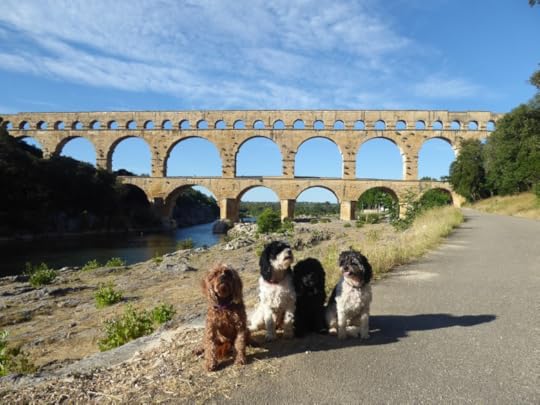
The Pups in France, Pont du Gard
An unforeseen consequence of Brexit is that it also affects our ease of travel to countries outside the EU. Some countries’ reciprocal agreements and online visas are set up with the EU, not with Britain. With Britain outside the EU, all bets are off.
Mark and I are optimists, however, and believe that there is always a solution.
We foresaw some of the problems that Brexit would bring to our lifestyle and took action. For example, we put The Fab Four on French pet passports, so each time we enter the EU, they don’t need expensive Animal Health Certificates that are only valid for four months. Sadly, obtaining pet passports in France is no longer an option for non-residents, although some other EU countries will offer pet passports without residency. UK vets can’t update EU passports, which means rabies vaccinations are best administered in the EU.
Italy refused our visa application, but some countries offer visas more readily than others.
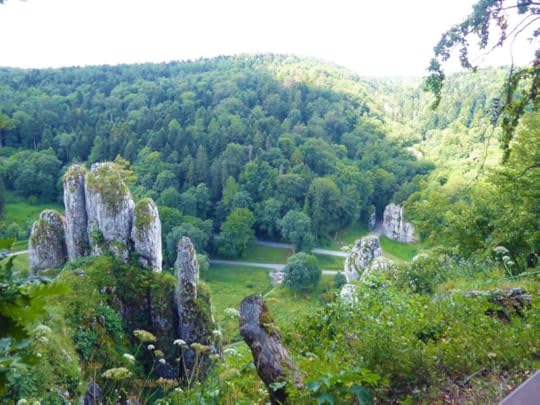
Glove Rock, Krakow gate, Ojcow, Poland
The Schengen Shuffle is also an option, and that is exactly what we did for this year’s Never Mind The Balkans Tour. We expended our 90-day allowance in France and Italy, then hopped into Albania and the Balkans until we re-set our Schengen clock. Sadly, the number of Shuffle stations is reducing. Croatia joins Schengen in January 2023, and in early December, we will learn whether Romania and Bulgaria have also been accepted. Previously, we could spend 90 days visa free in each one of these three countries.
L: Many people are still surprised that Brexit is having such far-reaching effects. I think many people are apolitical, or apathetic about politics. In your books, you don’t shy away from a touch of political commentary. That’s a brave move. Do you find it difficult to talk seriously in what is essentially a comedy memoir? Is it important to you?
J: It is brave, possibly foolish, since politics is inevitably a divisive subject. However, it does have a massive impact on us. For example, without Brexit, we would not have bought The Beast to drive to Mongolia. It changed our lives completely.
World politics also affects us hugely. Mongolia is off the table at the moment because it requires us to drive through Russia, which is at war with Ukraine. In addition, several other countries we would need to traverse are affected by the war, or are politically unstable in some other way.
As a travel memoirist, this makes some aspects of politics an inextricable part of my story. Travel broadens the mind, and I want my travel memoirs to do the same. I am very moved by the differences in privilege and lifestyle I witness when I travel and sometimes, I want to highlight this in my narrative.
I also see the effects of history repeating itself, which worries me. Some of the greatest atrocities in the world could have been avoided had there been enough people brave (or foolish) enough to call them out before it was too late.
I seek to be entertaining, rather than purely comedic, but sometimes comedy or entertainment is a very effective way to shine a light on injustice, prejudice, or disinformation and bring it to people’s notice.
As an author, I have a voice. I hope that, while they have a laugh and feel uplifted, my books may also give readers occasional pause for thought, or help to expand their view of the world as they travel with me, and see the world through my eyes.
At the recent Frankfurt Book Fair, Ukrainian President Volodymyr Zelenskyy ,,sent a message to authors, publishers and readers. “When people lack the knowledge, they can be manipulated more easily by politics.” He implored us all to, “keep writing about it, keep reading about it,” because, “knowledge is the answer.”
Sadly, it is often only ‘brave’ to express observations and opinions because of trolls and bullies. Speaking your mind is not a recipe for a quiet life. Yet, if that causes you to hold back, the trolls and bullies win.
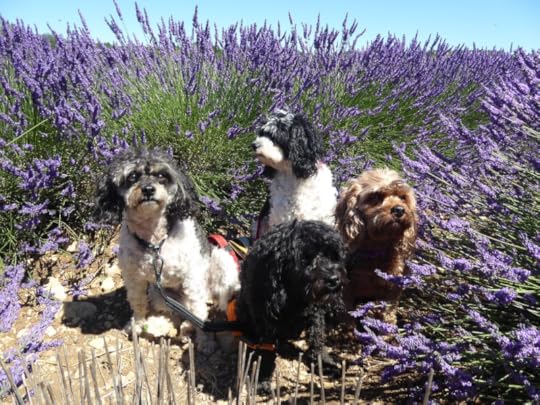
The Fab Four in Provence, France
L: I can’t see bullies getting the better of you, Jackie. Regarding your books, do you plan each one in advance, or are you a pantser who writes as the words pour out?
J: I am very much a pantser!
My writing is based on my life and travels, so I suppose the ‘plot’ is already there. However, ‘We went here and we did this’ does not a gripping read make. My approach to storytelling often comes out of the ether – sometimes the words do just pour out. When this kind of inspiration happens, I get the same thrill as I do from adrenaline sports such as windsurfing or skiing.
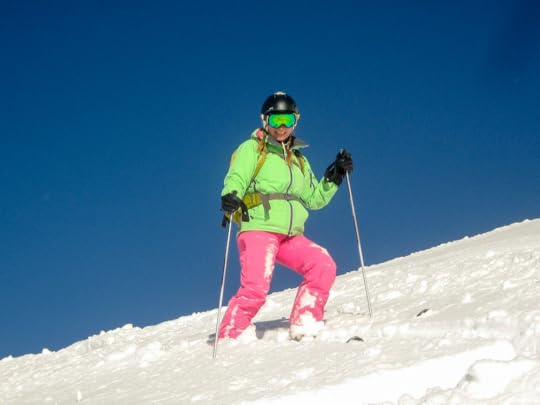
Jackie gets a thrill skiing, and writing
However, like most authors, refining and editing probably accounts for about 90% of my creative time. I can never look at anything I’ve written without wanting to tinker. The difficulty is knowing when you’re done. When what you’ve written is as good as it can be. To me, a beautifully crafted humorous sentence is one of the most satisfying things in the world.
L: And you do craft those sentences so well. I was rude about your puns earlier, but I’m actually intensely jealous that you can come up with these things. I’m hopeless. Have you always been fond of word games?
J: I can’t believe you said my writing is full of truly dreadful puns. Honestly, I have never been so proud…
L: Haha!
J: I absolutely LOVE words. I love how it’s possible to use them to paint such powerful pictures, and make people laugh. As English speakers, we have such an incredible language at our disposal. I once read that English gives us a vocabulary of 500,000 words to draw on, compared to 20,000 in French. I don’t know whether that is correct, but I do know that with its Latin, French, Scandinavian, German and even Indian roots and influences, English is a superlatively expressive language.
Clever, witty observation and satire are among my favourite forms of humour. I grew up with incredible wordsmiths, such as Kit Hesketh-Harvey, Ronnie Barker and Patrick Campbell. Maybe it was not normal for a twelve-year-old, but I would never miss Frank Muir and co. on Call My Bluff and still wish I’d written some of Tom Lehrer’s songs, such as The Periodic Table of the Elements.
L: Some great comic mentors there, Jackie. I bet they never had to write in a caravan with four dogs, though. What are the most difficult things about having to write whilst constantly on the move?
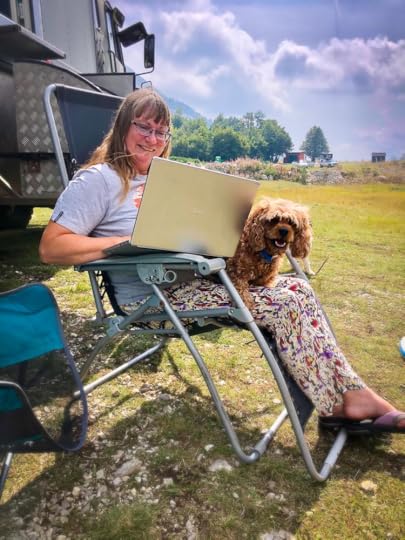
The challenges of writing on the move, in Montenegro
J: It’s the same problem that most writers face – finding time to fit writing around life.
I keep a travel journal, post on my blog at least once, if not twice a week, and also write posts and articles for other blogs and publications. My style of travel writing requires extensive research into the places we visit, and I am a perfectionist, so revising and editing is very involved and time-consuming.
I often wake early, and write for a couple of hours in the morning while Mark and The Fab Four doze. It’s a good creative time for me, since inspiration tends to hit at 4 a.m., so I also sleep with a pen and paper by the bed.
L: I should do that! I’m always waking up with an idea which vanishes before I find glasses and paper. Is there anything you miss about England when you are away? And is there anything from another country you would like to transplant to England that you think would improve it?
J: A cup of tea and a bath!
We carry vast quantities of tea. I can’t do without my cuppa. The bath I have to live without, although if I felt strongly enough about it, I suppose I could book myself into a hotel or spa.
The more I travel, the more I appreciate England (and the rest of the United Kingdom). It is beautiful, diverse, safe, and dog friendly.
It’s a national pastime for Brits to moan about the weather, but having spent several summers sweltering away in a Continental climate that hit 49°C in July, but can plummet to -30°C come winter, there’s a lot to be said for Britain’s temperate climate. Yes, it does rain, but at least it’s rarely so hot or so cold that you can’t go outside.
If I could transplant anything to England to improve it, it would have to be the Alps. Britain is a world-class hiking, SUP, and windsurfing location, but not so great for skiing.
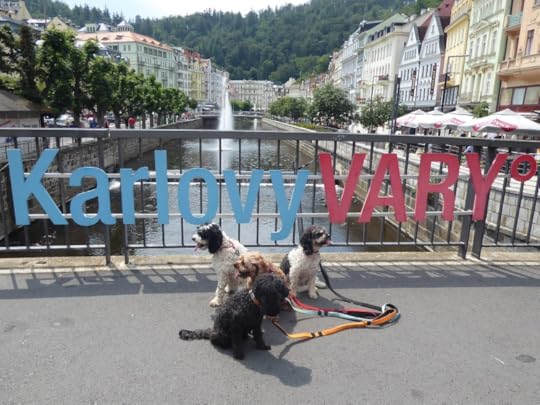
Where are we now, guys? Karlovy Vary, Czech Republic
L: Tea! Yes, a Brit essential. We import Yorkshire tea by the bucketful! And finally, if you yourself were one of The Pawsome Foursome, what sort of dog would you be, and what would your name be? Why?
J: Mark says he thinks I would be a Poodle – playful and eager to learn. He thinks my name could be Spes, the Roman goddess of hope.
L: I can see you as a curly headed poodle! Thank you, Spes, for being my guest.
Don’t forget, Jackie’s latest travel memoir, To Hel in a Hound Cart, will be on sale on December 9th and can be pre-ordered HERE.
STOP PRESS: The paperback of Jacqueline Lambert's new book, is live and available to order, right now!
If you want to know more about Jackie’s writing, and her nomadic lifestyle, you can follow her blog at www.WorldWideWalkies.com or on FACEBOOK. https://www.facebook.com/JacquelineLambertAuthor
You can also order Jackie’s books on Amazon Worldwide using this Universal Link: https://author.to/JLambert
October 30, 2022
Travelling around
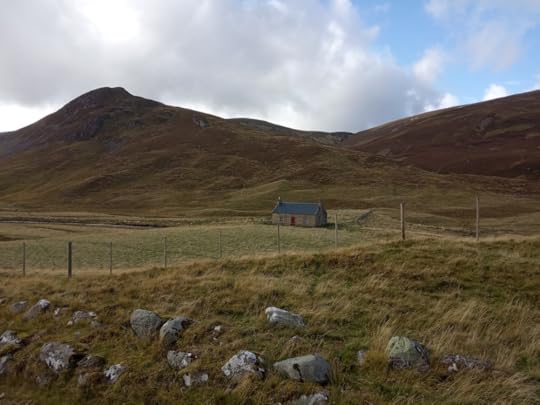
Glorious Scottish scenery
Anyone who has been following me on ,Facebook will know that we have now returned home from a mammoth, month-long trek around the UK. Over 6,000km later we are once more in our beloved Galicia. But what was our month away really like?
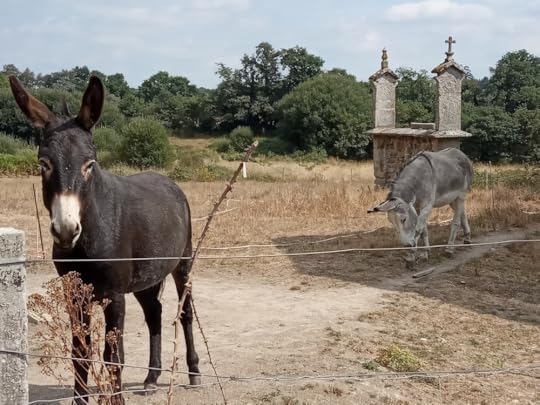
Galicia was hot and dry when we left in early September
As we drove off the ferry at Plymouth into a deluge, I wondered what changes we’d find here in the land of our birth. It was seven years since S had been ‘home’ and, other than a brief visit during a snow storm in 2017, I’d also not seen England for a while. Thinking back, I must be a weather goddess: rain, snow, hail, sleet seem to follow me every time I return. This year it rained every. single. time we had a long distance to travel!
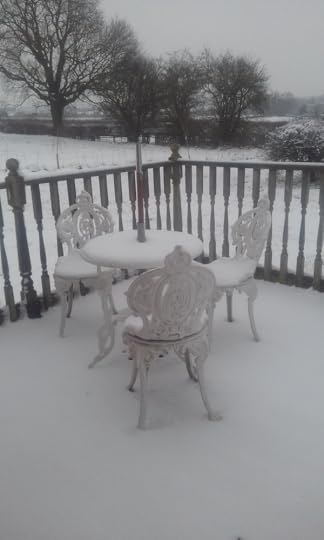
The last time I visited UK was in 2017
The traffic was busier than we are used to in Galicia. Even in our local city of Lugo (pop. 75,000) there is rarely a traffic jam, and Galician motorways are clear and virtually traffic free. In England, the windscreen wipers were clattering madly against the frame.
“We must get those checked; they’re driving me mad.” I spat, in time to the racket.
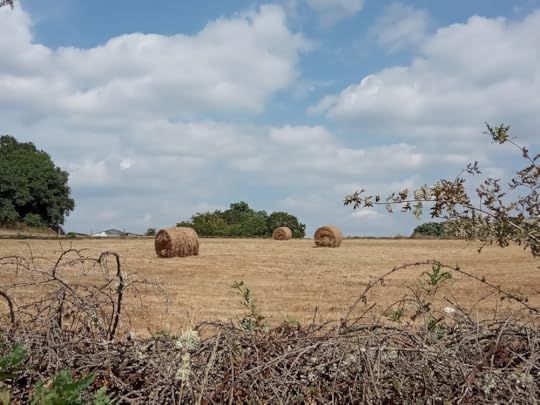
Galicia, in September (better than a photo of the rain)!
We’d left Santander in Northern Spain twenty-four hours earlier on a deceptively cloudy day. The air temp was 36ºC; a fact I discovered when I opened the car door for some air whilst endlessly queuing for the ferry. Ouch!
Here, the car dash currently showed the temp as 14ºC as we made our stop-start way along the heaving M5 motorway.
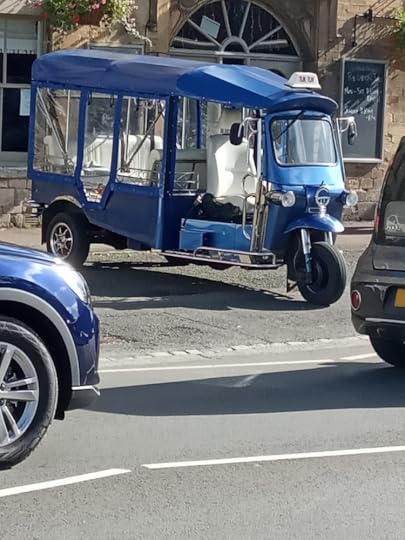
Traffic was busy, but I fancied this transportation
“Where is everyone going? It’s middle of the afternoon, does no one work in an office anymore,” I groaned.
Once on the narrow roads to our destination… “It says it’s a A road, honest!”
I was taken by a fit of nerves, twitching and gasping every time a too-close car passed the passenger side of our left-hand drive Spanish car.
“That was close”
“I’m in the ditch here, look!”
“I know but you were really close to that car.”
I continued to gasp and pull my knees in (how would that have helped?) all through the trip. To be fair S was the same when I was in the driver’s seat – still hugging the ditch.
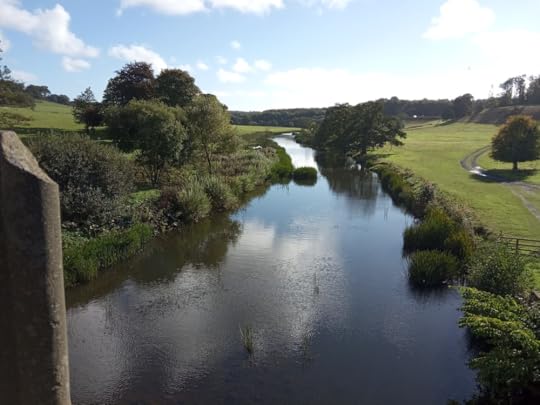
England was greener, and surprisingly picturesque
One of our first stops for coffee, bemused me totally. In Spain we have solo (a short espresso), cortado (the same with a dash of milk) americano or largo (a black coffee a tad bigger) or con leche (with milk).
In the Costa Coffee we were forced into on the motorway, the choice was overwhelming and frankly revolting at times.
“What is that?” I asked, pointing at a poster print of a large plastic cup with swirly cream and hundreds of thousands on top.
“I thought it was an ice cream,” said S, as I read ‘hazelnut caramel latte’.
I ordered Mum an americano.
“Small, medium or large?”
“Large please.”
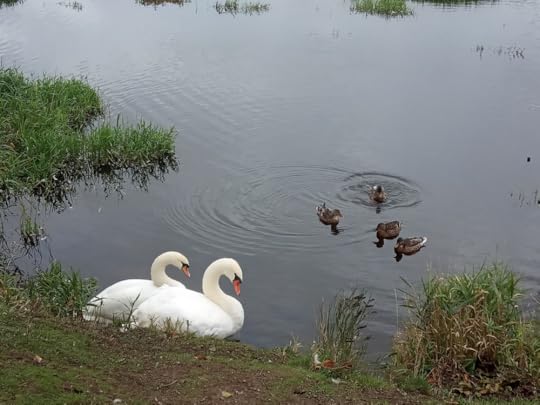
I forgot to photograph the coffee... the swans are infinitely nicer though.
Because, in Spain a small would be a thimbleful, medium a coffee cup full, and large, possibly, just possibly, a teacup full.
As I stood waiting (they’d not last two days in Spain, taking this long to pour a coffee) I grinned at the man next to me. His coffee was in a pint mug covered in frothy cream and sprinkles. I was getting a real coffee.
No, I wasn’t
This was not a teacup…this was a receptacle suitable for bathing a baby in. The ceramic stoneware basin had two handles and was full of brown liquid. Poor Mum couldn’t even lift it and I had to drink my tea before pouring a small amount into the empty (normal sized) cup for her.
“Is it okay?” I asked tentatively
“No, it’s horrid and bitter,” replied Mum.
Oh well, lesson learned. Better stick to tea, which at least we Brits do well.
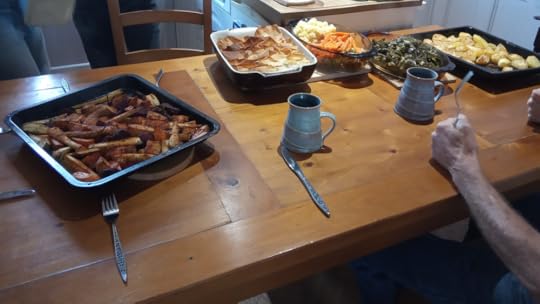
One of our first meals was made with home grown produce by our friend, Tony. Yum!
Food was far better than I remembered. Pub grub, especially, has moved on from scampi and chips and chicken in a basket. There was an amazing variety. The Lamb & Flag in Welney needs a shout out for one of the best Thai curries I’ve had, and there was a good selection of vegetarian and vegan options just about everywhere. The presentation was polished too, though the prices made my eyes water.
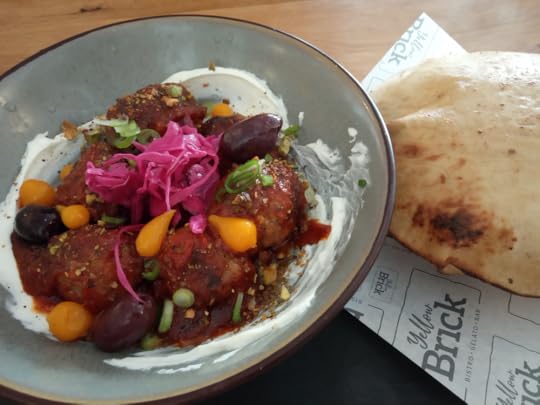
British food has come on in leaps and bounds
A beautifully presented single course was the price of a full, four course menú del día with bread, wine and water at home. Still, we were on holiday.
Even the lowly fish and chips now commands a high price, though the ones at Carlo’s in Alnwick would have been worth twice the twenty quid we parted with in some fancy restaurant. Mouth wateringly good, we scoffed the lot in our little bijou apartment.
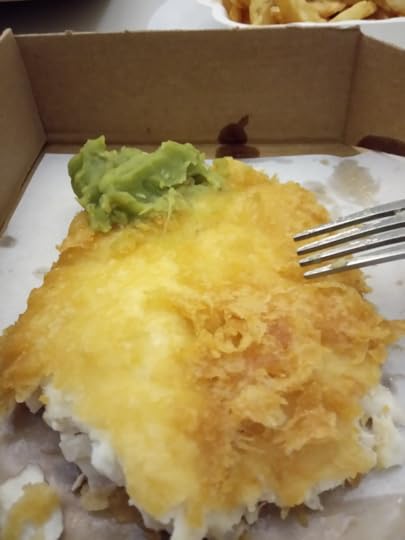
Possibly the best fish and chips in the country
Our accommodations were pretty good. Our first was an AirB&B place in Banbury. I’d never booked one before and was more than delighted with our home for a couple of nights whilst we attended my nephew’s wonderful wedding ceremony just down the road.
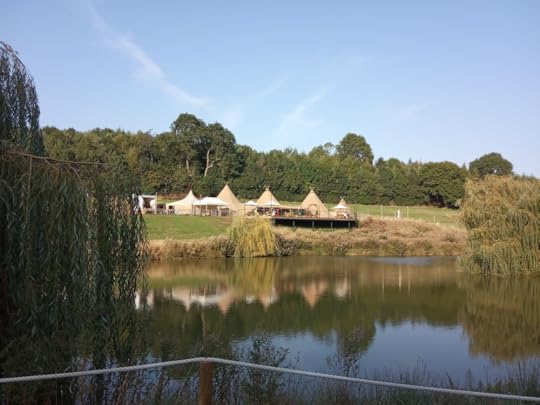
Stunning wedding venue near Banbury
Our bijou apartment in the very centre of Alnwick was a value-busting £38 a night. Though I could roll straight out of bed into the bathroom, and hand S his dinner without leaving the stove, it could not have been more convenient nor comfortable. We had a lovely week, exploring the area and taking long walks along the Northumberland coast (see September’s blog for more photos of those).
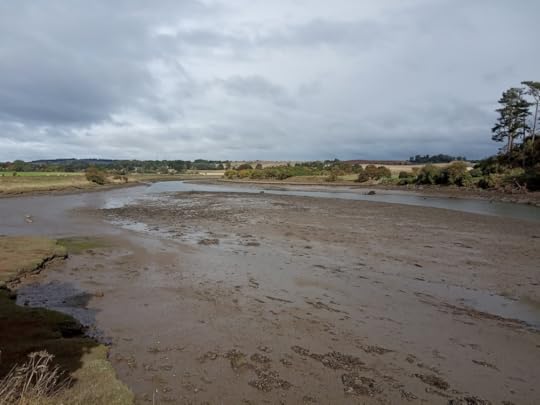
Alnmouth on the Northumberland coast
Most of our beds were with friends and family. We had a wonderful time, and hope they will all take advantage and allow us to return the favour here in Galicia.
For luxury, our one-night stay at Tigh na Ligh, in Perthshire, was a treat and a half.
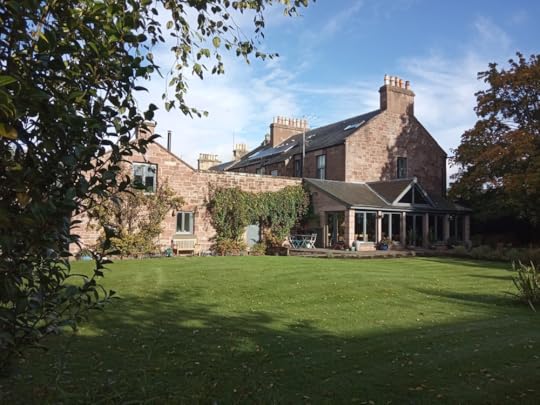
The beautiful Tigh na Ligh
This boutique type hotel has just six rooms and a wonderful personal service from Graham and Karen. Our breakfast next morning was the best of the trip with options including (but not exclusive to), full Scottish, porridge, eggs benedict, eggs and avocado, fruit and yoghurt, granola, toast and homemade jam. It was just as well Graham had kindly written out a couple of walking routes for us to take advantage of. We fair rolled out of the place.
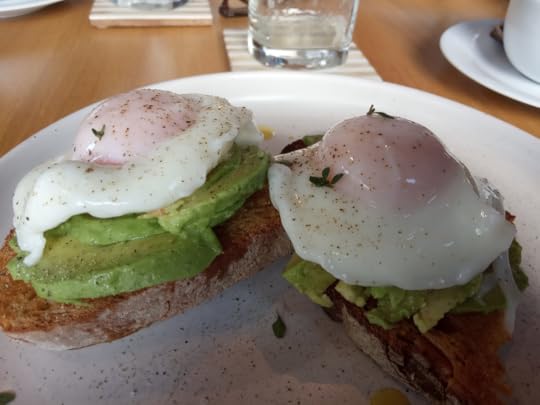
Tign na Ligh breakfast and a British pint for S, in Newark
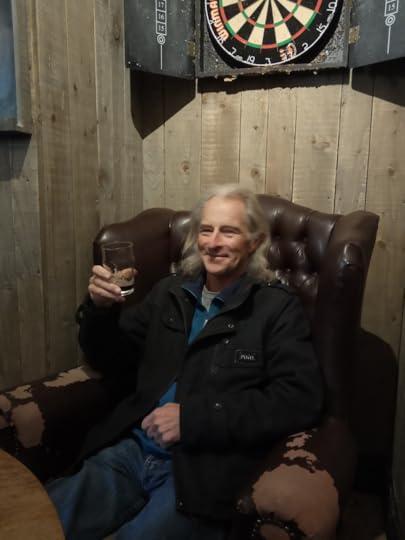
I do miss a real British pint in Spain. We are not lager lovers, preferring a good pint of real ale (or in my case, a half). I enjoyed the beers we had in Britain. The Ale Gate in Alnwick wins my award for best traditional pub, and the beers were perfectly kept. I was disappointed not to find a pint of mild on our travels, my beer of choice. S did – in the last pub we ventured into. It was served mouth tinglingly cold, though, so I’ve no idea what it tasted like.
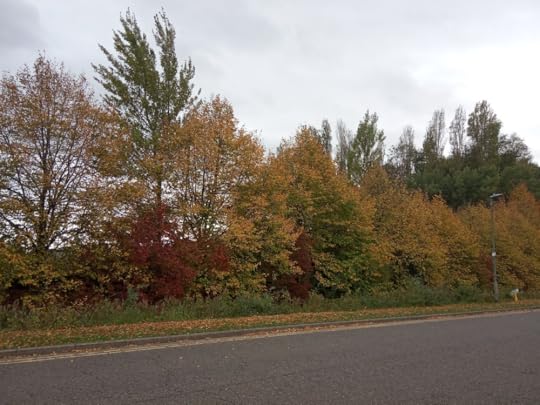
Autumn is beautiful, even by the roadside
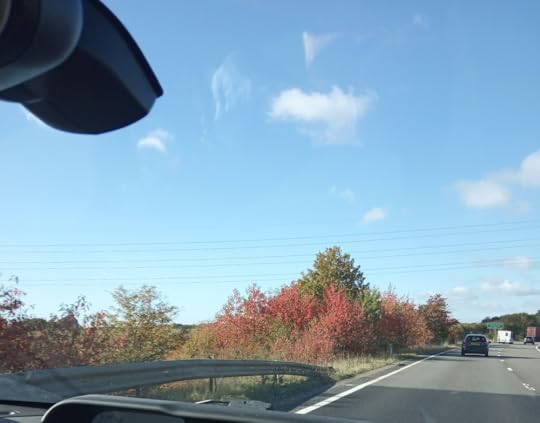
One thing I’d forgotten was how beautiful England can be in autumn.
As we drove along the motorway westwards, the road was lined with a plethora of trees in sunset gold, rich scarlet, autumn bronze and meadow green giving the metalled road a beauty out of keeping with the traffic on it.
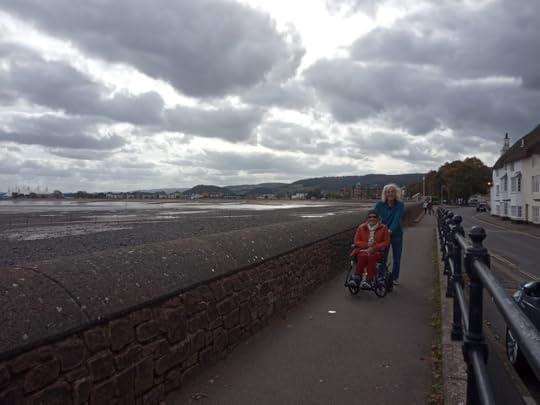
A last wander along the seashore before boarding
As we boarded our ferry home to Santander, I mused on an enjoyable month away, and on all the autumn jobs which awaited me back home. More on those next time!
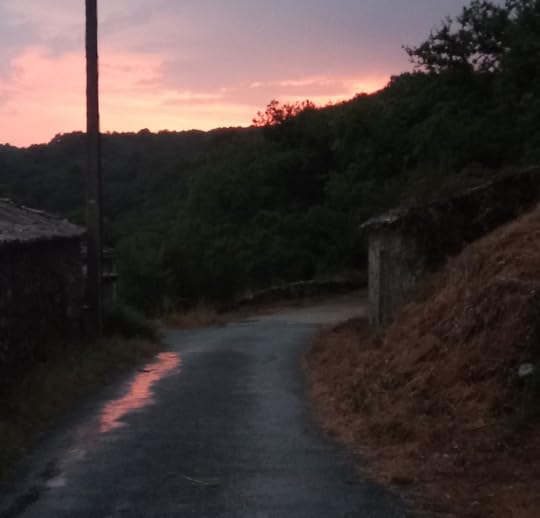
There's no place like home
September 30, 2022
Between castles and the sea
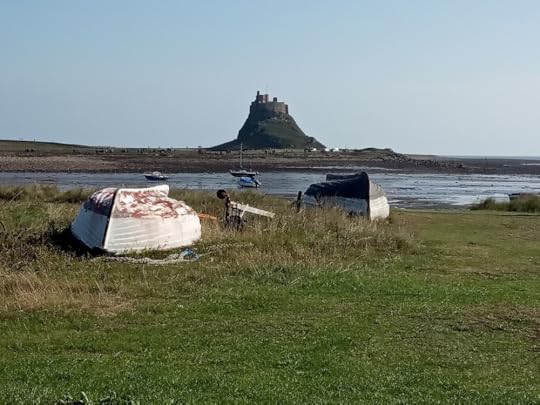
The castle on Holy Island, Northumberland
We’ve had a fabulous time exploring Britain this September. There is so much to see and do. Our last week was spent in Northumberland, England’s northernmost and least populated county.
We've walked six miles or more a day, through rain, sun, and cloud. We’ve discovered ancient castles, wide beaches, old railway lines and open vistas. Here are some of our favourite memories of the last week:
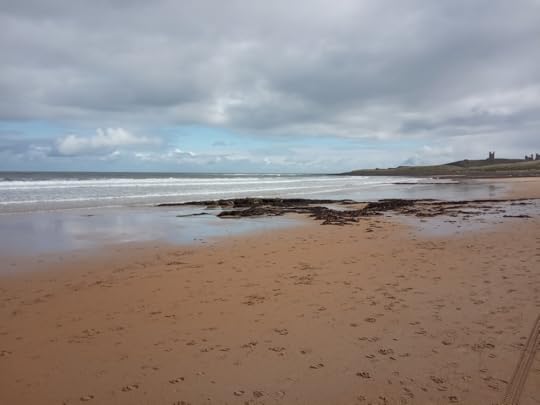
St Dunstanburgh castle from the beach
The Northumberland Coastal Path. This long-distance hike runs up the Northumberland coast and we took the opportunity to walk a few sections – returning via long sandy beaches to our start point.
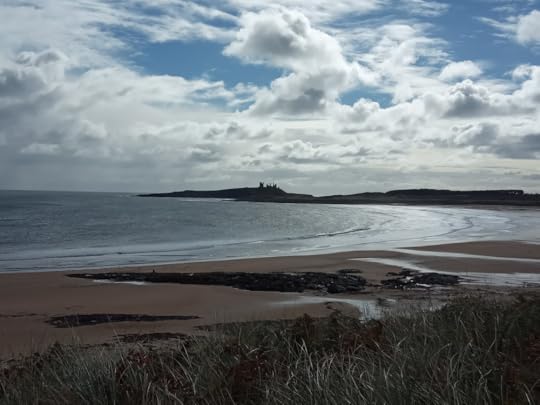
St. Dunstanburgh castle is a spectacular 14th century ruin, sitting on a windswept promontory overlooking the wild North Sea. The Northumberland Coastal Path passes right past the ‘front’ door. The wind blew us along and the rain thudded against our waterproofs. It felt like the setting for a medieval mystery.
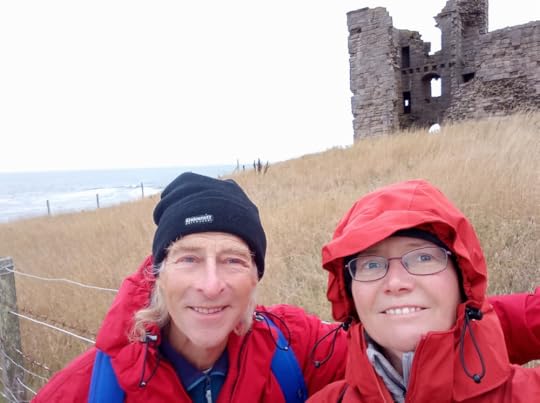
Rainswept but unbowed!
The beach huts near to Embleton are in one of the best spots I’ve come across. The lack of electric wouldn’t be an issue, but the water is also turned off in winter so they are a summer only hideaway. Pity as it would be amazing to experience a Northumberland winter here!
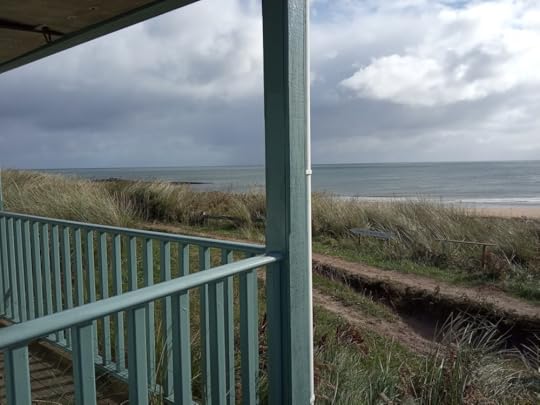
Some of these summer beach huts are for rent
Alnwick. Pronounced, in that peculiarly British way, as Ann-ick, Alnwick is an ancient town dominated by its 11th century castle and was our home for a week.
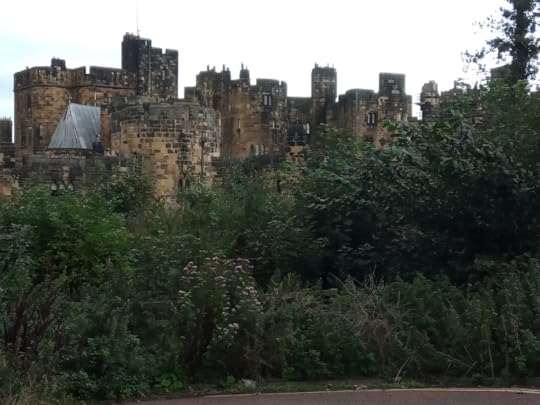
Alnwick castle has been used in many films including as Hogwarts in Harry Potter
Our favourite spots in town were Barter Books – one of the largest secondhand book shops in Britain and difficult to exit without arms full of books we have no space for in the overloaded car, and the Ale Gate pub. This latter has a fabulous six real ale pumps with a rapid turnover of brews meaning we could try a whole range in our short time in Alnwick.
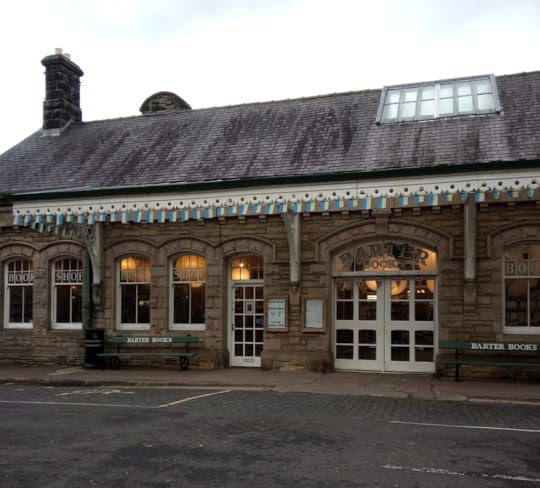
Try leaving Barter Books, in the old railway station, empty handed!
One of my favourite walks in Alnwick was around the Hulne Estate, just outside the town centre. We did a six mile loop through pasture, alongside rivers, and up a hill with views for miles. Along the way we spotted herons, ducks, deer, and more pheasant than I’ve ever seen. They wandered along the roadway, through the trees and under the fences with abandon.
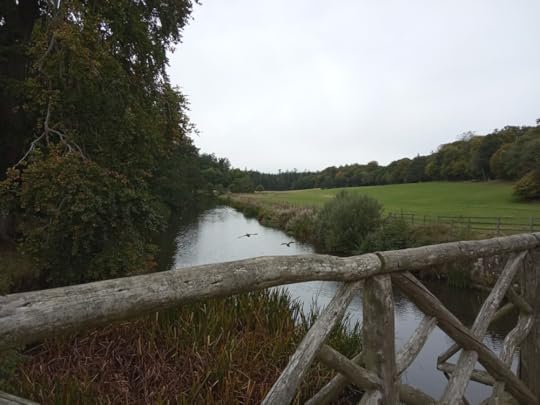
Hulne Estate owned by the Dukes of Northumberland
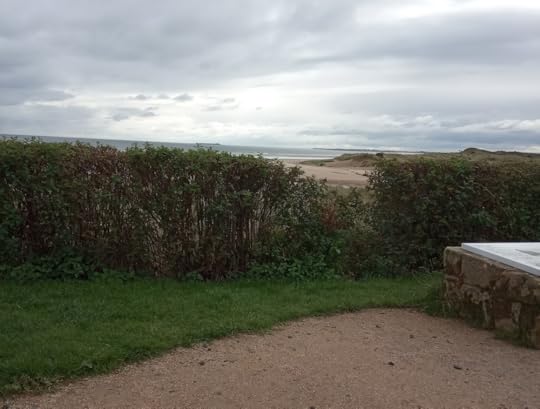
The old railway line into Alnmouth. Alnmouth sits, unsurprisingly, at the mouth of the river Aln and is a lovely small town full of pubs, cafes and shops. The beach sits invitingly at the end of the road with a few handily placed park benches overlooking the sea.
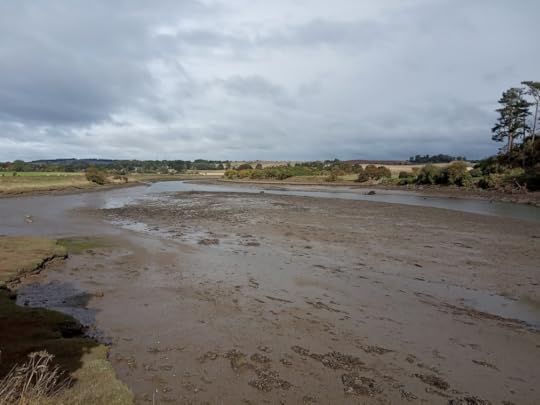
The mouth of the river Aln
Our walk began along the route of the old railway line from Alnwick, unfortunately subsumed and largely abandoned (there is a tourist train runs back and forward along a short stretch). It was a pleasant wander, despite the drizzle. As we reached Alnmouth, the rain hardened and we dashed into the Old School Gallery and Café. A look around and a decent cuppa later the sun was back so we sat on one of the benches looking out to sea for a while.
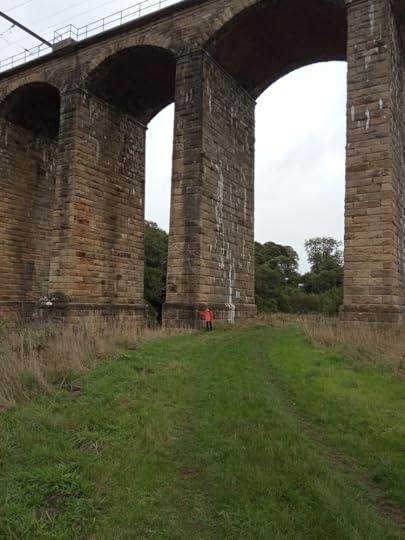
Our return walk was along the river and, bizarrely, the only part which was hilly… go figure! As we passed beneath the current mainlone railway viaduct, the rain came down once more. We cracked on, finally sheltering beneath the old railway bridge to nibble our butties. Not the most picturesque of spots but, hey!
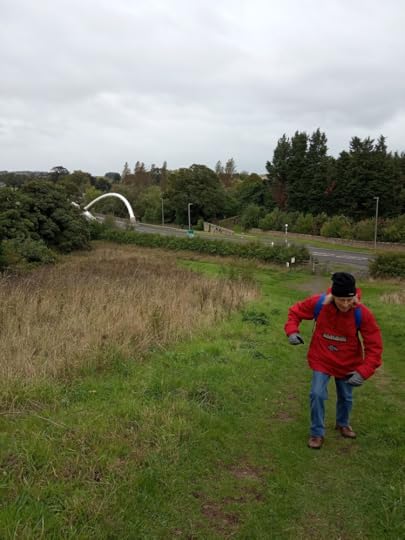
A hilly river walk and a tall viaduct to shelter beneath
Holy Island, or Lindisfarne, is well-known to anyone who has visited this coast. Cut off from the mainland at high tide, all traffic has to traverse the narrow causeway. Photos on the island show what happens when tourists disregard the warnings about safe crossing times. One photo showed a family sitting on top of their half sunken car, awaiting rescue. I wonder what the insurance company had to say about that?
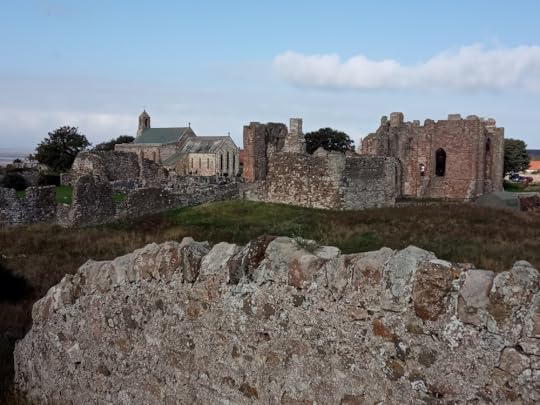
Lindisfarne Abbey
Our favourite spots in town were Barter Books – one of the largest secondhand book shops in Britain and difficult to exit without arms full of books we have no space for in the overloaded car, and the Ale Gate pub. This latter has a fabulous six real ale pumps with a rapid turnover of brews meaning we could try a whole range in our short time in Alwick.
August 31, 2022
Over the border
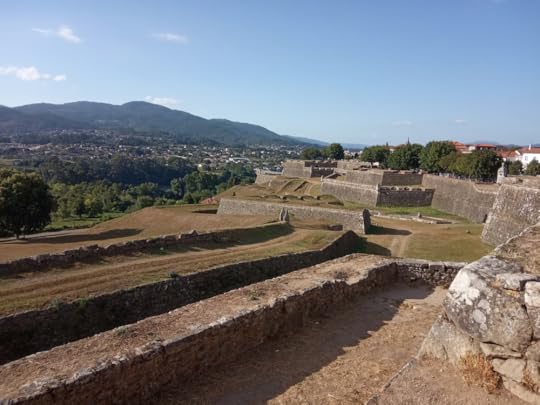
The Fortaleza de Valença
As you know, due to unfortunate circumstances, we didn’t make it to Tui last month for hubby’s birthday. Now, he is healing and we’ve managed to get out and about in August. One of our trips was to Valença, just across the river Miño/Minho in Northern Portugal.
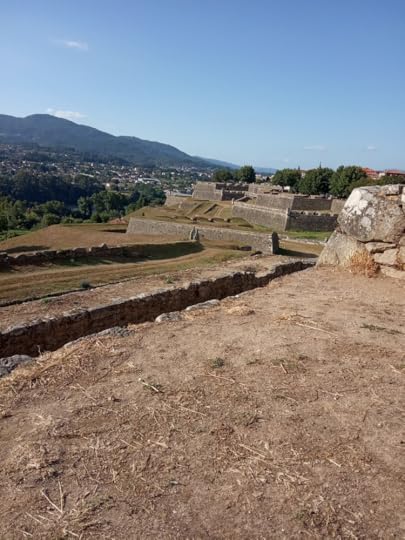
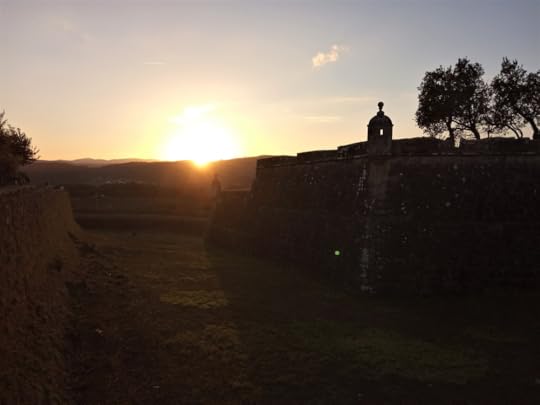
Valença is a wonderful place, full of history. The old town is contained within 600-year-old fortified walls, the Forteleza de Valença – but our first stop was the market…
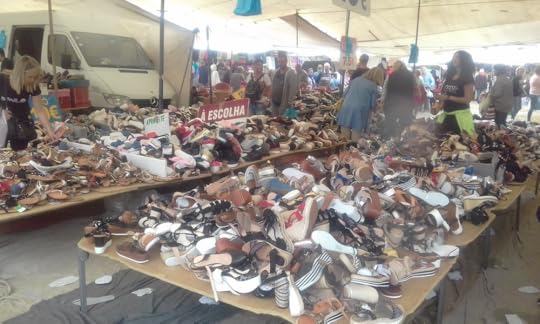
It was my friend who suggested a visit to Valença market, one of the biggest in the region, to find a wedding gift. On each Wednesday, come rain or shine, Valença market opens its stalls to hundreds of customers from both north and south of the border. We passed stalls with jamón and bread, stalls with plastic toys and furry barking toy dogs, yap yapping madly, bedding and towels, shoes piled haphazardly in teetering heaps, and clothes from kitchen aprons to ball gowns. There are also plenty of ceramics stalls, and that’s where I was headed.
“These cobbles are not wheelchair friendly, are they?” I said, as S bumped Mum along in her newly acquired vehicle.
She’d already had to get out of her chair to clamber over a metre high bund, half way across the car park (we, of course, had been forced to park at the furthest point from the action). She’d also had to climb a flight of steps up to the market itself as the long concrete wheelchair ramp was around 1 in 5 and had a huge step at the bottom. The cobbles rattled the chair and Mum’s back, and we had to keep hauling it out of the channels – thoughtfully provided to remove rainwater. Sadly, rainwater is something in short supply in Northern Portugal and Galicia this year so the ditches merely served to launch Mum from her seat across the cobbles.
Despite the boneshaking, Mum enjoyed poking and prodding the goods and I found the perfect gift – which I cannot reveal until it has been handed over to the party in question.
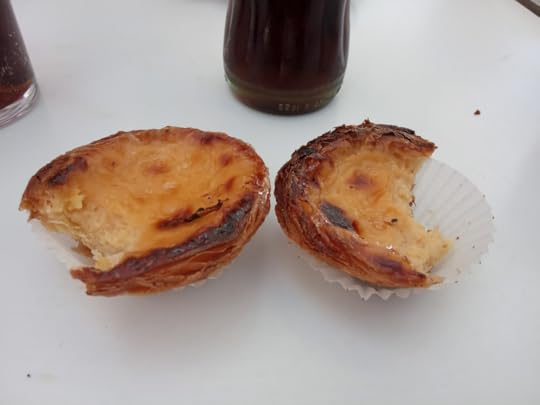
It had to be done...Portuguese custard tarts are delish!
We lunched at a busy restaurant near to the market. The menu was short, the waiter overworked and disorganised.
“Four soups, three beef and one pork please,” we asked.
He wrote the order down and vanished, returning some time later with paper place mats and three glasses. I’m not sure why, as there were four of us. Still.
A little while later, he reappeared to take our drinks order.
“Red wine and water, please. And another glass.”
He disappeared, only to re-emerge with drinks and our main meals.
“You can have the soup afterwards,” he said, mysteriously, plonking down the meat and potatoes.
“Soup for dessert? That’s different,” said S.
“I’ve had cherry soup. That would be a good dessert,” I replied.
“Melon soup is scrummy,” added my friend.
“I think I’d prefer it before dinner,” said Mum.
The food was good, the meat tender and flavoursome, but we were still a glass short.
“Why don’t you have a glass,” Mum asked S, looking worried.
“This is my glass,” was his reply. He lifted the wine jug to his lips, laughing.
We did get the fourth glass, after a time, but the soups remained elusive, dessert flavour or not. When the waiter brought the bill, I cheekily asked for a discount as we never received our starter. He simply laughed.
“I don’t think there ever was any soup,” observed my friend. “I didn’t see a tureen go to any other table.”
“Ha. I think you’re right. It was imaginary soup.”
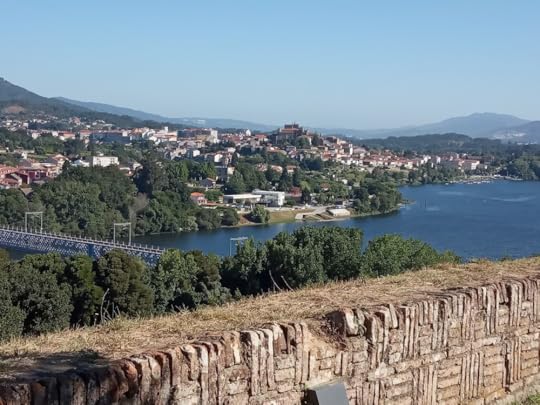
Tui castle, across the Miño
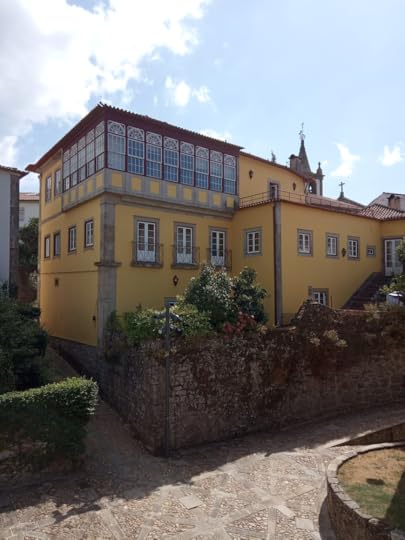
After lunch, and a good laugh at the mysterious invisible soup, it was time to check in. I’d booked a hotel within the old fortifications, overlooking the river Miño. Across the river was Tui, where we should have been last month, its large hilltop castle dominating the town. On the Portuguese side, the hefty fortifications hinted at earlier conflicts between the countries.
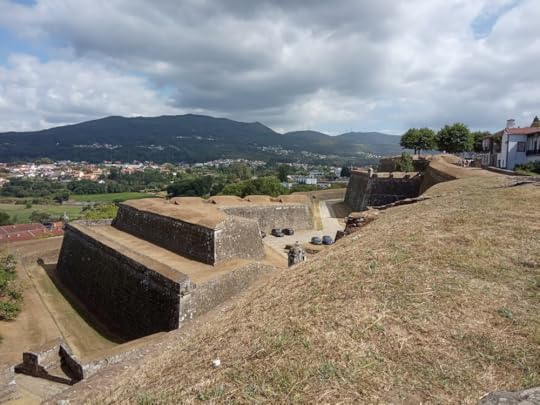
Impressive fortifications
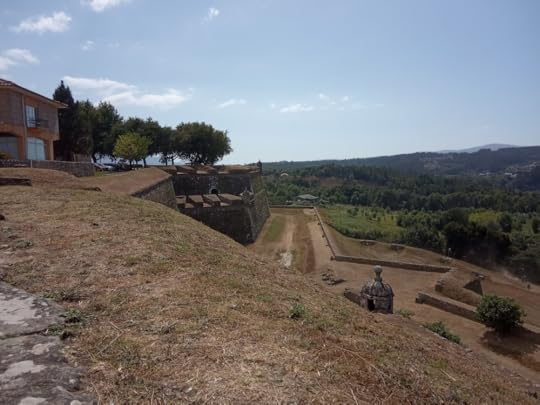
The only entrance to the Fortaleza de Valença, is via ancient stone gateways.
“It’s okay,” said my friend, “we used to make it through with the big van. We did have to fold in the wing mirrors though!”
There was a long queue waiting for the traffic signal to attempt the first of the entrances to the old hillfort. The deep gouges and lines of multi-coloured paint attested to the narrowness of the first arched gate.
S did a wonderful job of scraping through, without any scrapes on the car, and we entered the walled town.
It's a narrow squeeze
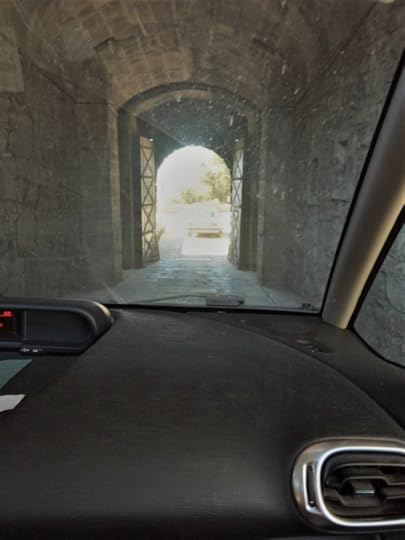
The narrow, cobbled one-way road wound anti-clockwise through busy streets towards the second, inner walls. Each of the two entrances into the Fortaleza consist of double arched, gated openings through the thick stone walls. Between is a covered part, just greater than a car’s length. It was full of sheltering pedestrians, who had stoically ignored the red signal to play chicken with the cars. The second set of gateways was narrower than the first and had a lovely bend at the far side. I later saw a car coming the other way, stuck, unable to go forwards or backwards and blocking the traffic. I would not have wanted to be him!
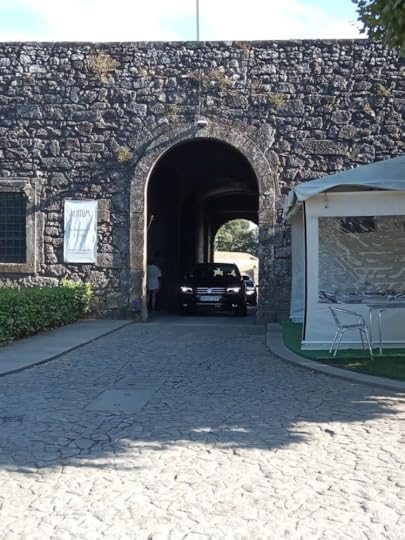
The only entrances into the old town
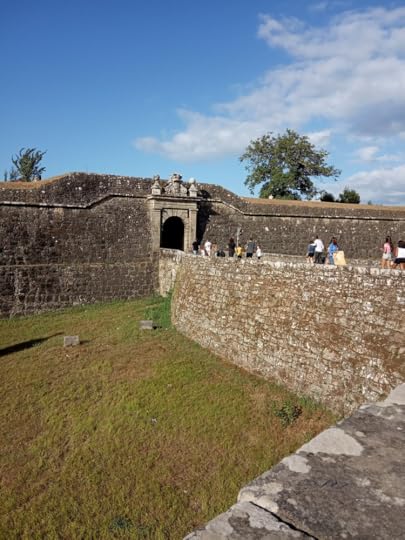
Within the second set of gates, the streets were, if possible, narrower and busier. August visitors thronged the usual tourist-orientated shops, whose goods spilled out onto the pavement. Beach towels flapped from railings and ‘antiques’, or junk, filled the space in front of the shops. People walked or pushed buggies along the centre of the road, or stood taking the obligatory selfies – oblivious to the traffic wending its way slowly past.
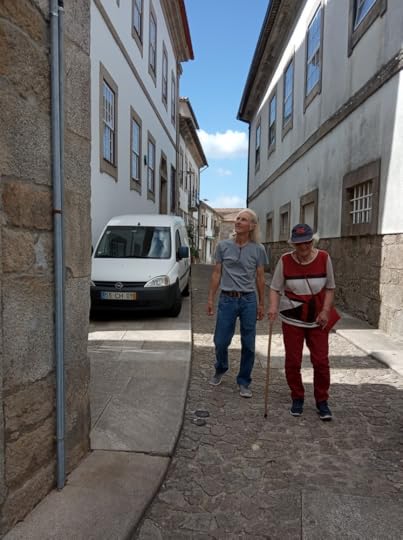
Hubby is feeling better!
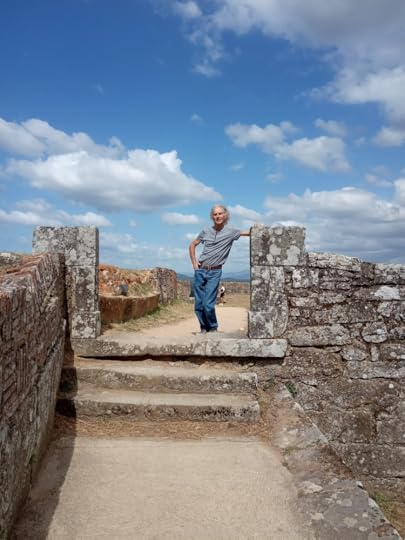
We took a stroll, after checking in. My friend did some essential clothes shopping (so she says!), whilst Mum, S and I sat at a table in the square, enjoying a free show from a talented busker.
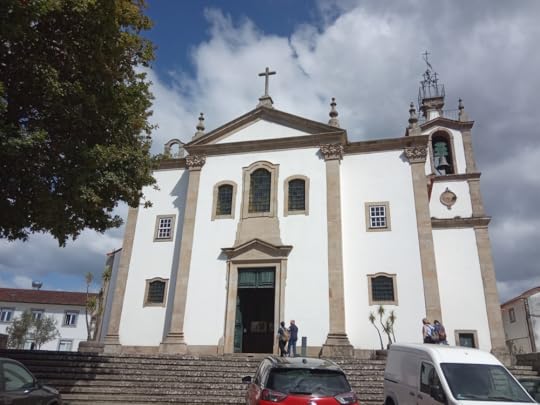
The café had been heaving, all tables taken, and Mum was flagging from walking. We’d already deemed the old town not to be wheelchair friendly. Cobbles and steep hills do not make for a happy mother, or pusher.
“Sit here, Mum.” I pulled out a lone chair, after checking with the table’s two occupants that it was free. I moved it away from the table and sat her facing the busker. Within less than a minute, the couple had vacated their table, leaving it free for us to commandeer.
“I count that a success, then.” I grinned.
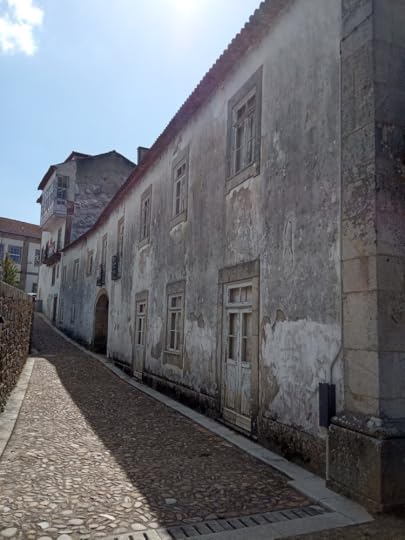
The one on the left is for sale...mmm
The waiter took an age to arrive, but we were happily listening to Ben E King, The Beatles, and Oasis.
A little while later, when the busker’s set had moved on to The Police and Dire Straits, our friend rejoined us, bags bulging.
“I love that frock,” I commented, pulling a green silk dress out of her bag.
“I got this scarf to go with it,” she said, showing Mum.
“I’d get you a drink, but they are not terribly good at noticing customers dying of thirst!” I said, waving my hand at a young waiter.
He lolloped over, cleaning cloth in hand.
“I wipe your table for you,” he said, collecting the empties.
I started to say it was our mess, but closed my mouth.
An hour later, after appearances by Michael Jackson, Bob Dylan, and the return of The Beatles for an encore, we signalled for the bill.
“That’s not right,” said my friend, handing over a fifty euro note. “I think he only charged for one round.”
“They have those fancy electronic ordering pads so it must link back to the till. I’m sure they’ll correct it there.”
“Or he’ll ask the other waiter,” added S.
It didn’t, and he didn’t. I felt slightly guilty about our reduced bill but decided our gain made up for our non-existent soup earlier.
“Swings and roundabouts,” I said. Then… “Run, Mum.”
Until next month, take care…
July 31, 2022
A blog about home.
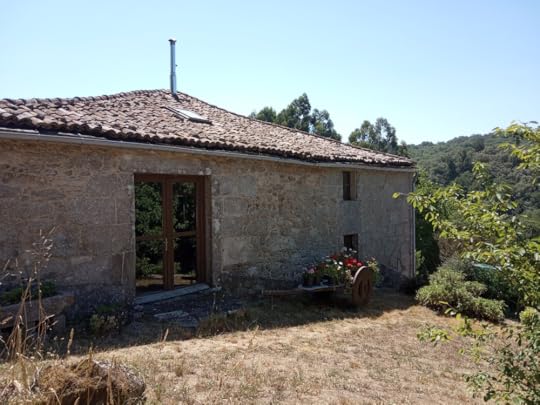
My July blog was going to be about our trip to Tui in the south of Galicia, a place we’d never visited – and still haven’t. Circumstances dictated that the trip didn’t happen this time, so my blog is about home instead.
To be honest, our back yard is one of the best places to be in Galicia in the summertime so I don’t mind a jot.
Home is best
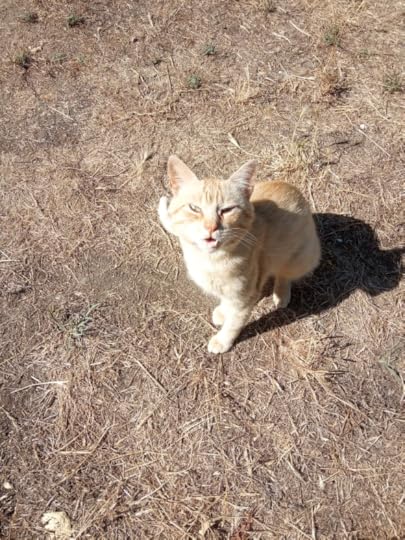
The green grass has long since disappeared in the summer heat, which means no mowing – always a bonus. It also means that Larry, our adopted orange cat, all but blends into the background of the straw dry ex-lawn.
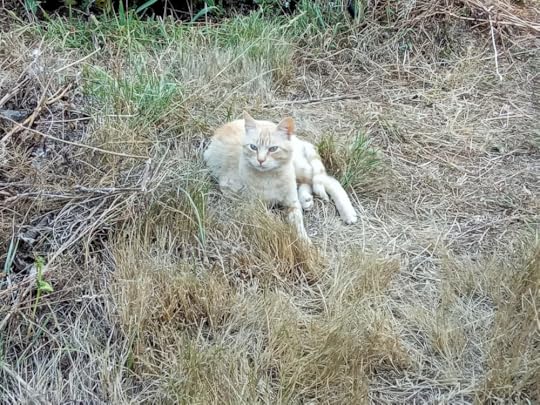
The greenery will come back with the rains, but for now the lawn is spiky and rough – and Larry coloured.
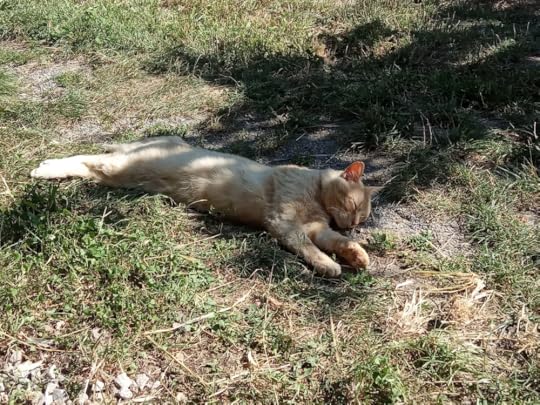
Although there’s no mowing to be done, there is plenty of watering. In this heat (now a pleasant 29ºC rather than the sweltering 38ºC of early July) the flower pots, the polytunnel, and the cabbages need regular injections of water. The thermometer in the polytunnel exploded some time ago, but I know it’s hot in there!
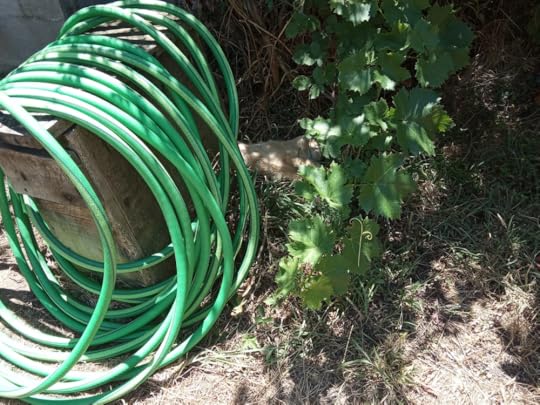
Spot the orange cat
Even the sun loving tomatoes need a little TLC in July.
The best time for watering is early morning or late evening, before the sun hits the plants, turning any water droplet into a magnifying glass to scorch the fruit or leaves. As our little valley runs east to west, the sun flows along it, meaning an early start (for me).
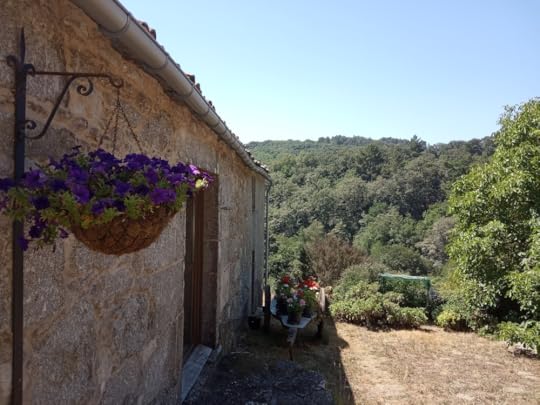
Its worth getting up early for these views
Larry enjoys helping me with the daily watering. He stalks around the allotment, jumping at crickets and trying to ferret out basking snakes, before collapsing in a heap for a wash.
Larry is the celebrity guest in my friend Alyson Sheldrake’s newsletter this month. He’s very excited to be interviewed by Kat, Alyson’s wonderful Spanish water dog, and asks that you go check it out (plus all the other incredible news and photographs in Alyson’s newsletter). Sign up ,HERE
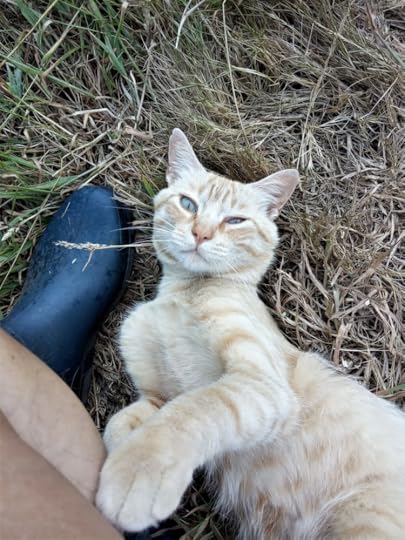
Final Larry pics... for now!
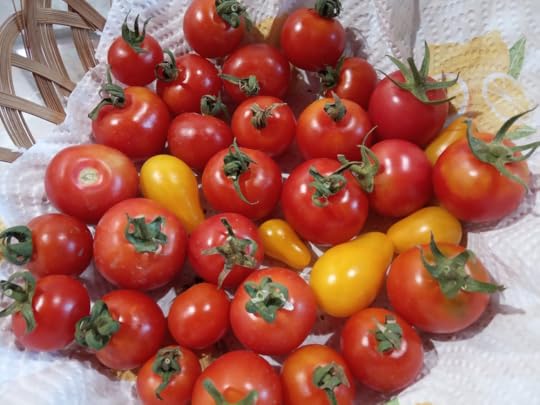
The allotment is flourishing this summer. After a rather damp June, a few cases of early blight meant I had to pull up a quarter of my tomato plants to stop the fungus spreading. The drastic measure worked and the sunshine dried up any lasting damage. The remaining 57 plants are growing well, the fruits ripening nicely.
I tend to keep seeds from one year to another so my tomatoes are always a surprise. Just the way I like it.
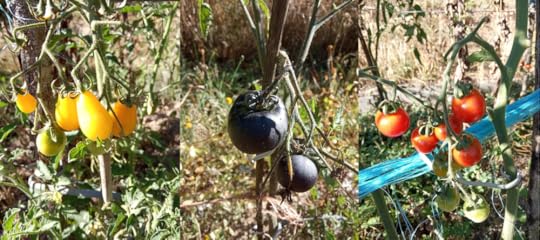
This year we have a plethora of deliciously sweet, yellow pear tomatoes. I also sowed the seeds from a ‘black’ tomato I bought in spring from our local supermarket. The plants have dark green leaves and the fruits are midnight black. I’m looking forward to trying those ones. My favourite tomatoes though are still the tiny cherry ones. Perfect for popping in the mouth straight from the bush. Yum!
Early tomatoes
I’ve been hearing from friends across the globe, and even across the same province here in Galicia, about the dearth of butterflies this year. Yet here, in my less than tidy garden, they seem to be thriving.
The meadow brown flew away but...
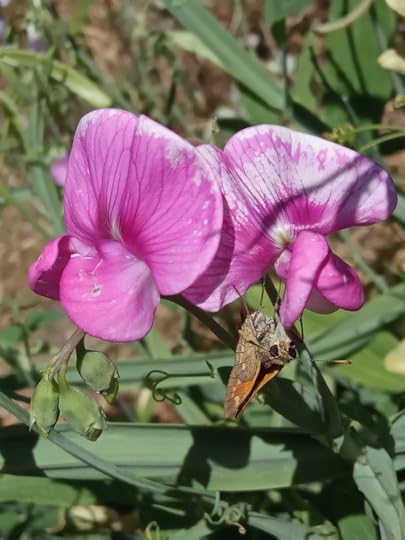
...there he is on the sweet peas, sticking his tongue out!
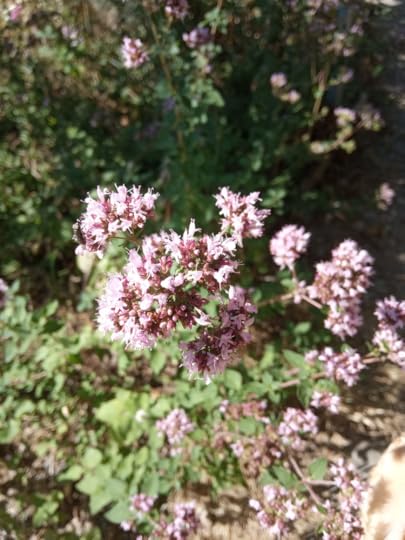
Tiny blues and meadow browns feed on my flowering oregano plants (I rarely use the leaves, but love the delicate purple blooms). Hoverflies and solitary bees join in the fun, rising in a cloud when I push past down the overgrown pathway. The tiniest of those bees disturb our lunch, whizzing in and out of the ancient woodworm holes in the old rickety table where we eat outdoors.
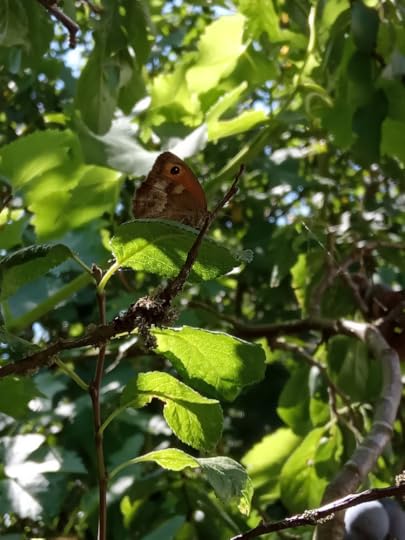
I finally tracked down that meadow brown, on a plum tree
On the allotment, the buddleia with its vivid purple racemes, attracts our largest fritillary butterfly, the queen of Spain fritillary, in droves (and in mating mode).
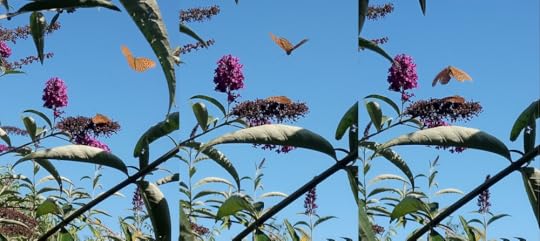
Queen of Spain fritillary coming in to mate
They flutter about as I water the strawberries in the shade beneath the spreading buddleia. A lone swallowtail butterfly, floats around, testing each bloom until it is satisfied.
I spent an inordinate amount of time racing round with my camera-phone to get a decent photo instead of watering the strawberries.
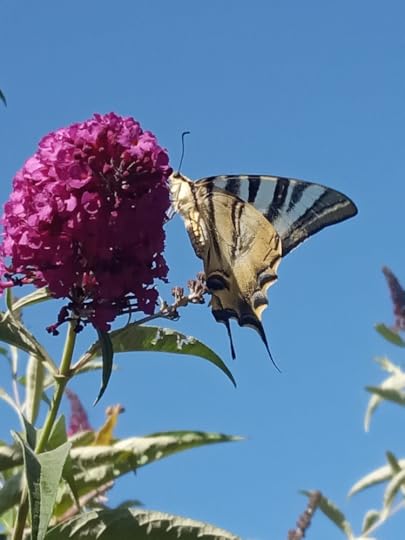
It was worth the dashing about to capture this beauty
Birds too are numerous this year. A parrot-like cawing heralds the arrival of a greater-spotted woodpecker in the walnut tree. I hope it’s not hammering a hole in it as this is the first time for four years we have nuts ripening! The bright hoopoes, pink breasted with black and white barred wings, poke amongst the dried leaves for leatherjackets. In the open fields, storks have meetings, all standing in a circle like bewigged lawyers. When they take off, they look prehistoric with their long wings and ‘S’ shaped neck. They are so numerous at one particular roundabout on our way to Lugo that we’ve dubbed it ‘stork island’.
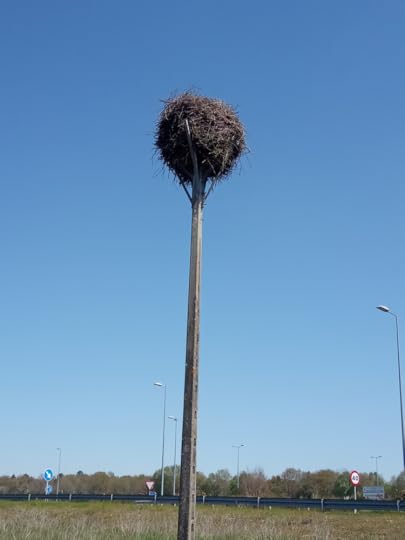
Numerous nests on 'stork island'
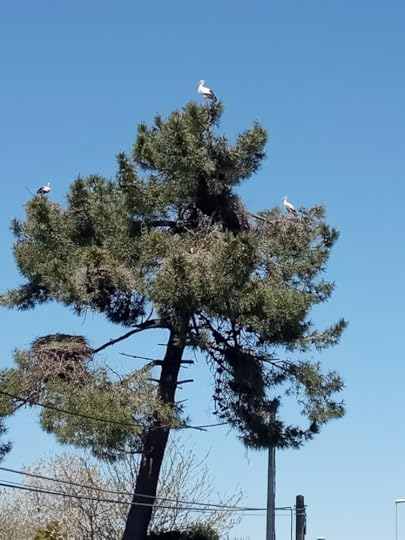
Buzzards circle too low over our chicken run, their plaintive cry chilling my blood. We have lost too many of our hens over the years to these hunters, but thankfully our current three girls are jet black and very quiet; almost invisible to aerial predators and a difficult target under the fruit trees. I hope!
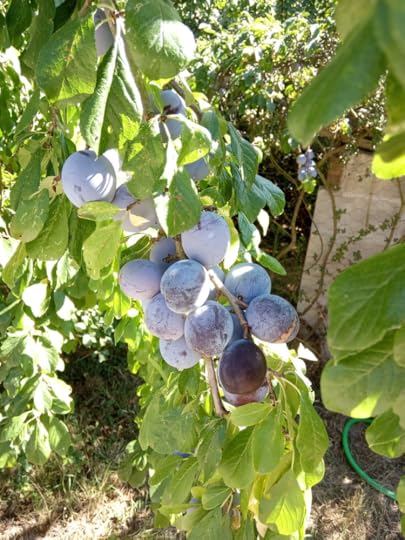
Those same fruit trees are full of ripening plums and greengages. If the blackbirds don’t peck them all, we will have a good crop. Already there are enough for breakfast, the sweet-sour tang delicious with my yoghurt and honey.
The blackbirds, which are as numerous as sparrows in England, stripped the cherry and fig trees before the fruit even turned colour. They are fast becoming a nuisance and I can’t cover a ten-metre-high fig tree! Four and twenty blackbirds baked in a pie is becoming a distinct possibility!
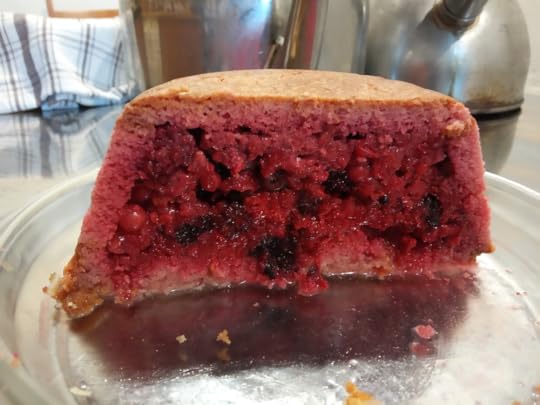
I did cover the raspberries, redcurrants and blueberries so they have given us a good haul. Most went on breakfast, the rest in the freezer for use in summer puddings (like this one, above, made with a sponge cake crust instead of the more usual stale bread), jams and pies.
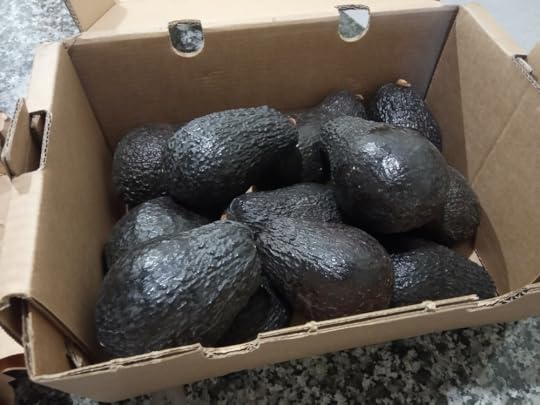
Organic avocados from Spain
Some fruits I can’t grow here, like bananas and avocados (I have grown four or five of the latter from seed but they always turn up their toes and die after a winter frost here in the hills). For these, I have discovered CrowdFarming. An organisation started in 2017 to directly connect organic farmers to consumers, there are now dozens of farmers in eight countries, selling and delivering fresh produce directly to the consumer. My avocados and bananas come beautifully packaged in sustainable cardboard boxes and are delivered to my door by UPS for around the same price as organic goods in the supermarket. If you’ve not discovered CrowdFarming yet, why not give them a go?
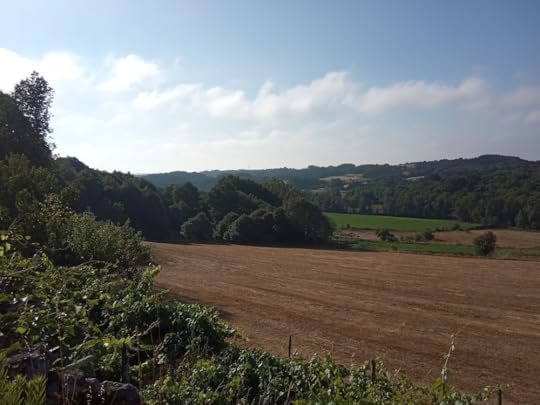
Home is a pretty perfect place to be
June 29, 2022
Working Away
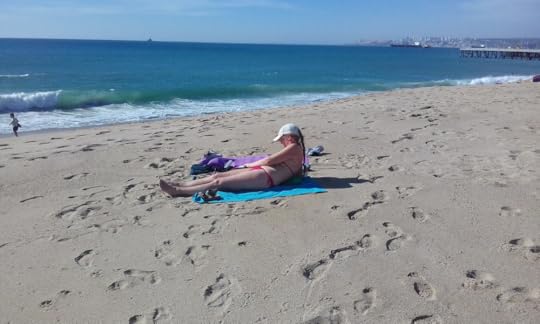
It's a hard life - Workaway, lazing on a beach somewhere
We discovered Workaway, or one of its sister organisations, back in 2007 when we first moved to Galicia. Many of our new acquaintances used one of the volunteer programmes, Wwoof or HelpEx, to find willing helpers to work for them in exchange for bed and board.
Our 'new' home needed more than a little TLC
It seemed a great idea and we met many lovely helpers, but we didn’t sign up as hosts. At that time our ‘home’ was a semi-derelict stone house with a leaky roof, missing floorboards, and no heating or hot water. It didn’t even have a toilet. Our house didn’t seem the sort of place a volunteer would wish to stay.
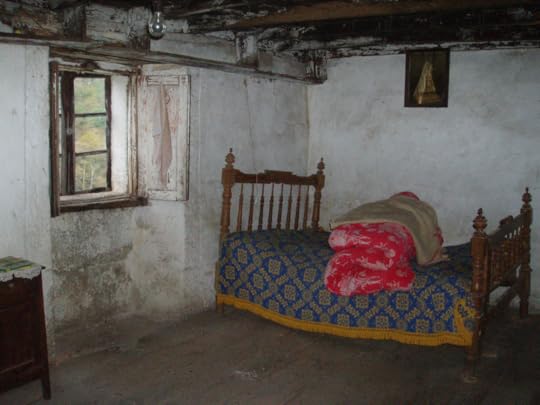
The bedroom facilities left a lot to be desired
Interestingly, since then, we have discovered many places with less salubrious conditions than our own A Casa do Campo. And have heard horror stories of volunteers treated like slave-labour, but that’s by the by. We carried on renovating our house, alone. And we did okay. Our home was not quite the vision it would be when we finished it, but it was getting more comfortable by the day, and we loved the area.
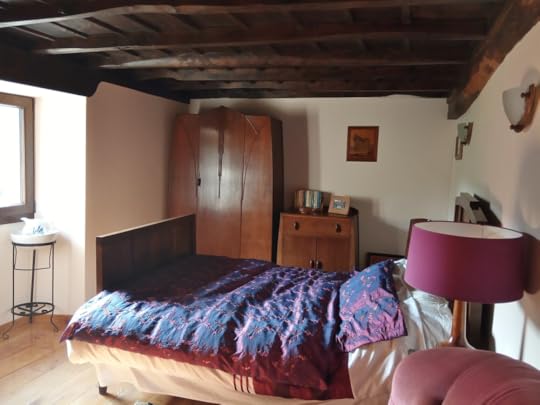
bedroom and outside were looking better
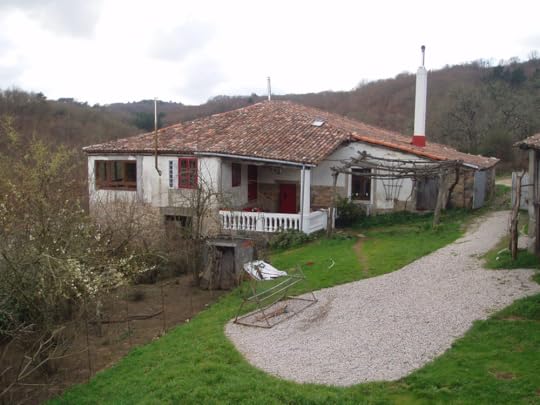
Then, in 2014, we bought a second derelict stone house to renovate. This one was for my mum, Iris; we had a schedule to work to, and an anxious parent to report to. We needed help.
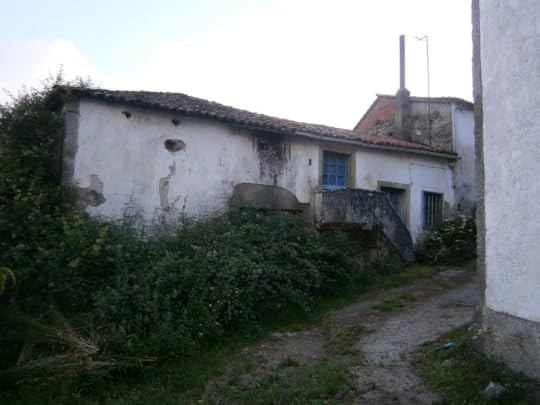
A Casita needed a LOT of work
Workaway.info was our first choice of organisation. I liked the set-up, their website, and the fact that it was free for hosts. We completed a profile, uploaded some photos which hopefully wouldn’t frighten off too many potential helpers and signed up. Our first workaway arrived in August of that year and our most recent, our 30th, left this week.
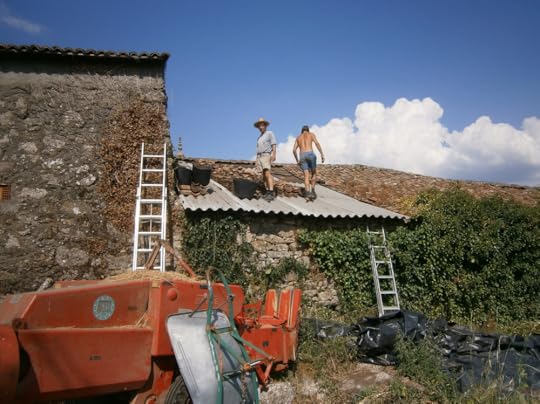
Our first Workaway was a dream...
Our first workaway was an Australian, full of good cheer and with a work ethic that was exactly what we needed in those early days. We worked hard, ate well, and visited some of our favourite places in Galicia along the way.
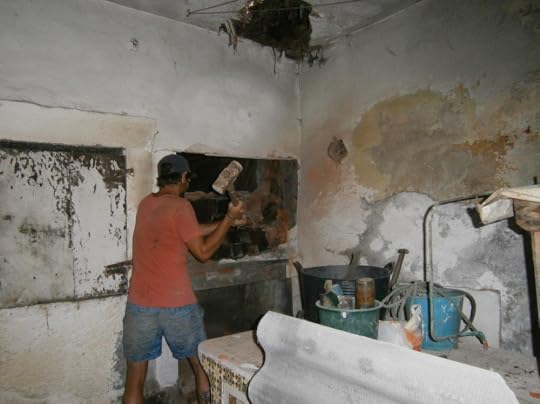
...And had the muscle we needed!
We have since had an eclectic mix of helpers over the years; from throughout Europe, the Americas, Australia and New Zealand.
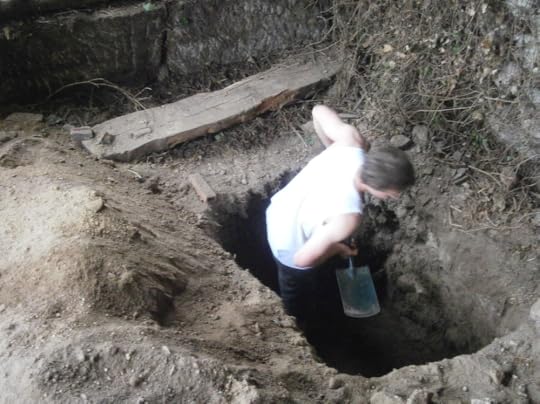
Our fabulous helpers did any job...
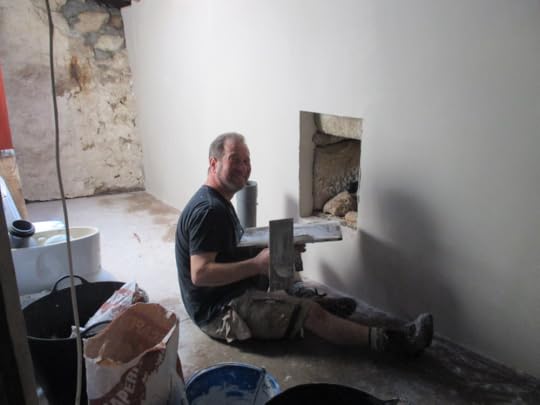
We have had real stars who helped our project to leap along and some who gave us a good laugh if nothing terribly concrete. We have had enthusiasm and practicality, occasional sullenness and lots of laughter. We’ve hosts vegetarians who hate vegetables and vegans who didn’t know they were vegan. We’ve had early risers and ones who stayed in bed until after noon.
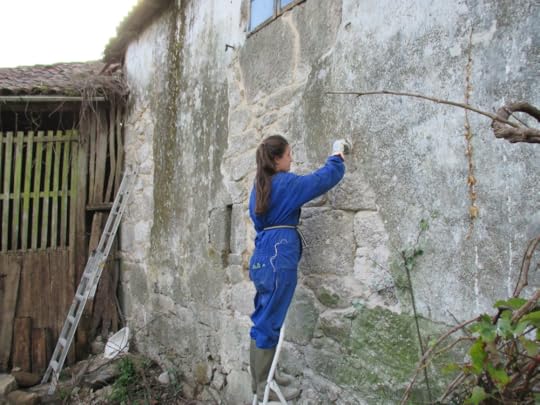
...and no job is too much trouble
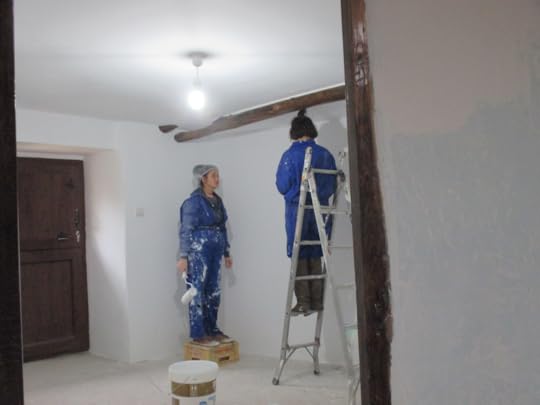
Our most recent helper was a fabulous lass from Argentina who made breakfast for Mum, empanadas for us all, and taught me to make a weird but surprisingly delicious meringue from aguafaba, or bean water.
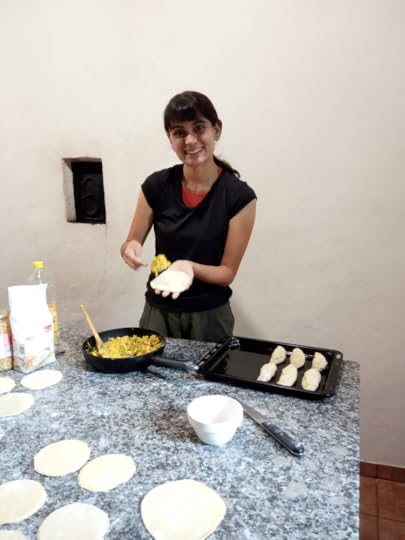
A chef as well as a helper
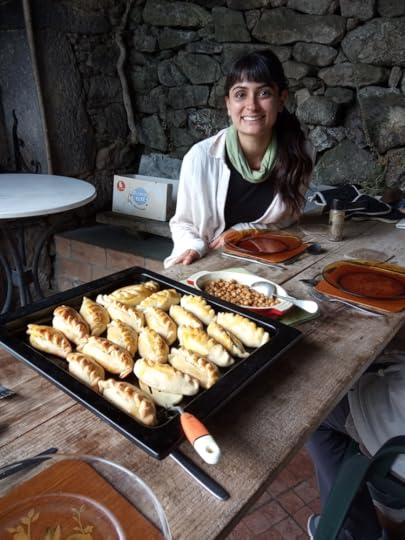
Some of you may have read about our adventures with our Workaway volunteers in my memoir about Mum moving to Galicia, Chestnut, Cherry & Kiwi Fruit Sponge. Mum has been living in her own cottage, A Casita, for seven years now, and our army of helpers made it all possible.
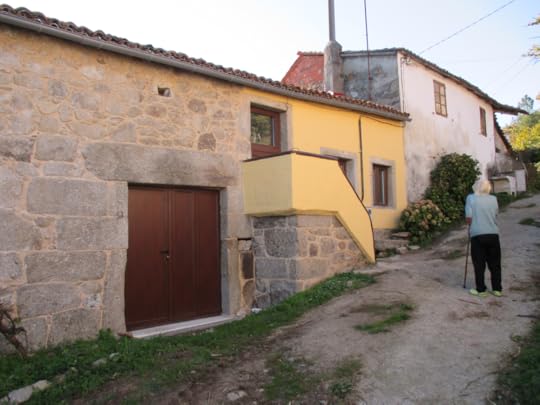
Mum loves her Casita Amarilla
What you may not know is that hubby, S, and I have also been on the ‘other side’ of the Workaway experience when we worked our way around the world in 2019.
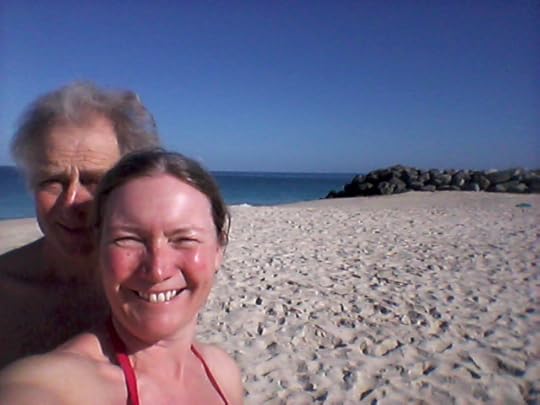
It was hard work this Workaway!
When we decided on a round the world trip for S’ upcoming 70th birthday, a logical way to keep the costs down and discover some of the places off the beaten path was to look at Workaway for ourselves. I completed a profile and a list of countries we were visiting then began to search for a host.
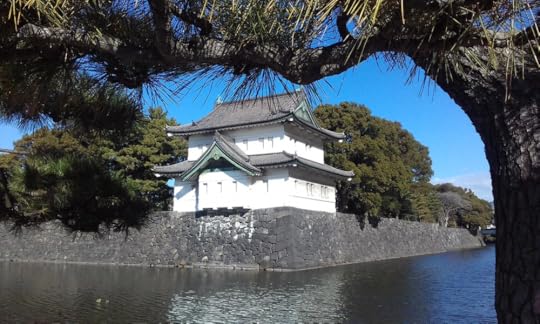
I fell in love with Japan
Our first workaway experience was in Japan, on the shores of lake Biwa. We fell in love with Japan and with the Workaway experience. Sadly, I have no photos of that time as my phone broke in Japan so I could take no pictures. Here’s a few S took of Japan.
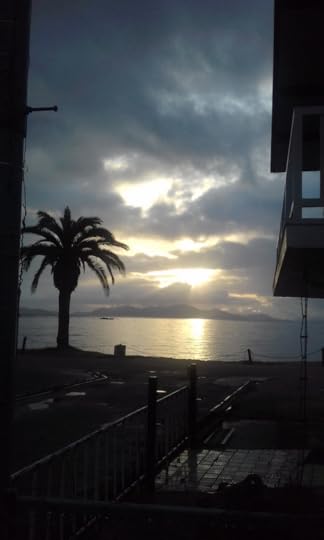
Lake biwa, Tokyo and snow monkeys
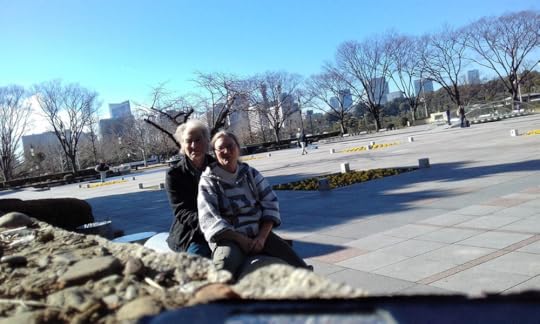
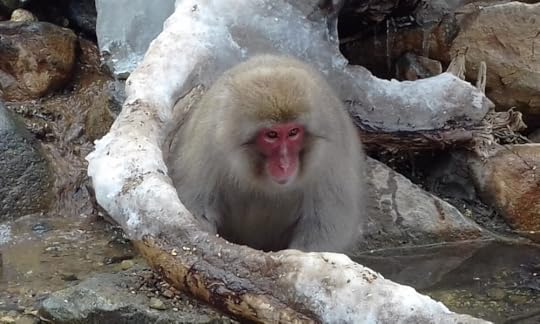
In Australia we Workawayed in Perth, in the Blue Mountains, and in a suburb of Sydney. We painted wardrobes and built huge metal structures, we repaired kitchen cupboards and shower rails. We visited glow worm caves, deserted beaches and botanical gardens. And we ate fabulous food cooked by our lovely hosts.
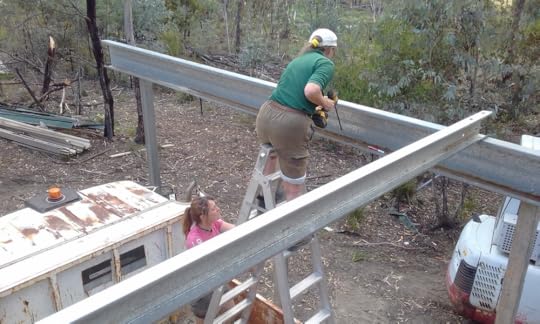
Just to prove we worked occasionally - me balancing on a beam
When I was first looking for Workaway placements in Australia, I was amazed how forward the Aussies were. Instead of waiting for helpers to contact them, as most places do, they contacted me, asking us to come and work for them. If I’d worried that, at 55 and almost 70, we’d be too old for people to take a chance on us, I was happily mistaken. We could’ve stayed a year in Australia with all the amazing offers we had and some were incredibly difficult to turn down.
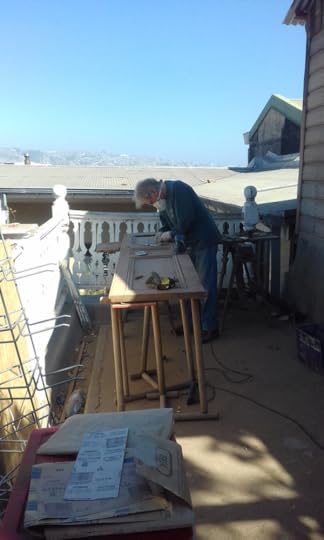
Workingaway in Valpo, Chile
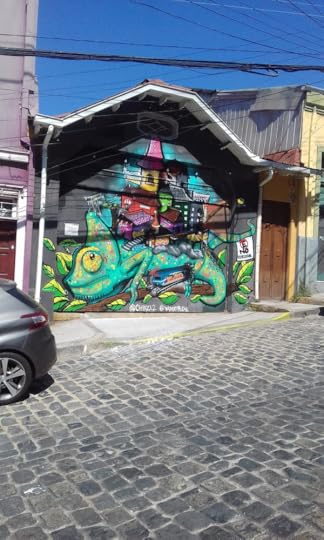
In Chile, we Workawayed at an old Art Deco style house near to a beautiful sandy beach and within a short, cheap bus ride of Valparaiso. Our hosts were interesting, and mainly absent, but we enjoyed the surroundings and the views across the harbour from our work stations. We also enjoyed discovering the local buses and the local empanada stalls where we could get supper for a dollar.
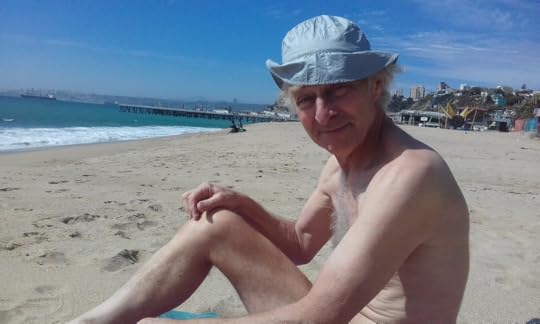
Beaches featured a lot in our Workaway experience
We enjoyed our Workaway experiences so much that the following year, when we decided to visit New Zealand’s North Island, we once again found hosts via Workaway. Those two placements, both near to Auckland but in totally different homes, ended up the best we could have hoped for. In New Zealand we discovered new friends, and old ones we didn’t know.
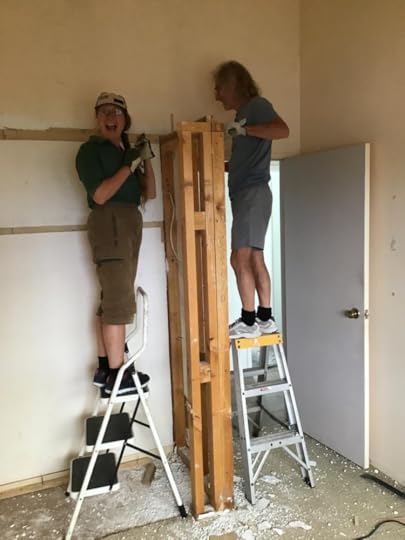
Our hosts nicknamed us Slugger & Slammer for our demolition skills
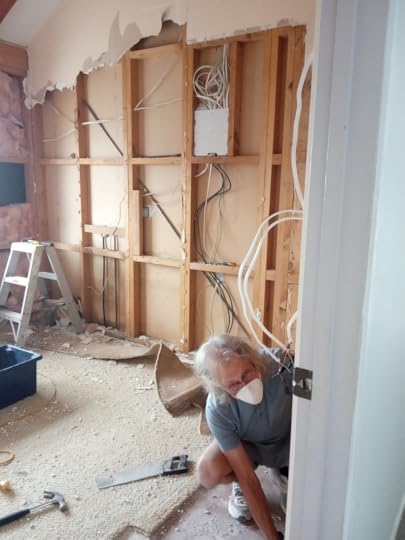
‘Slugger and Slammer’ demolished a beautiful home on a hillside (at the behest of the owner, I hasten to add), and built a porch on a pretty bungalow in a suburb. S managed to put a drill through his thumb, but I settled for getting thoroughly filthy knocking down walls. We left New Zealand on the last flight before the airports were locked down due to a new and nasty virus called Covid-19, which was closing down the world.
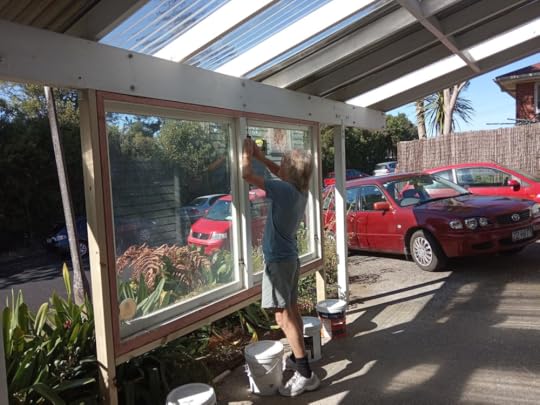
Building instead of demolishing, in Auckland, NZ
We have started taking Workawayers again, here in Galicia, after two years when it wasn’t possible. Our home is now cosy and bright and maybe one day we’ll even get to do more Workawaying of our own.