Bill Pence's Blog
May 1, 2026
11 New and Upcoming Music Releases You Might Be Interested In











2026 has already seen a number of excellent music releases, and there are more on the ways. Here are 11 of them that you might be interested in:
 The Commons Chapel – CXMMXNS
Worship collective CXMMXNS (Commons) was formed by Grammy Award and Dove Award-winning songwriters Ben Fielding and Reuben Morgan, two of the most influential writers in modern worship music. From their pens have come some of the most celebrated and widely sung anthems including “Goodness of God,” “Who You Say I Am,” “What a Beautiful Name,” “Cornerstone,” and “Mighty to Save” – songs sung by tens of millions of believers every week across the world. Birthed in Sydney, Australia, CXMMXNS is passionately committed to gathering worshippers worldwide and serving local churches with songs that everyone can sing.
The Commons Chapel is a full-length worship experience from CXMMXNS, capturing a fresh, intimate expression of congregational worship in a chapel setting. Recorded live with a gathered community, this project was created to serve the local church – especially worship leaders, teams, and congregations gathering in smaller rooms, where simplicity, unity, and presence matter most. Featuring new CXMMXNS songs, collaborations with CityAlight, and stripped-back chapel versions of widely sung worship songs from across the global Church, The Commons Chapel creates space for what matters most: the sound of the church singing.
I first became aware of Ben Fielding when he partnered with Chris Tomlin on the song “The First Hymn” in 2025. I was interested in this project primarily because it included CityAlight, one of my favorite artists. They contribute two songs here – “Stand Firm”, and “His Glory & My Good”. The entire project reminded me of CityAlight’s style of worship.
 Hope – Petra
Petra was one of my favorite bands when I was a new believer in the 1980’s and 1990’s, and I continued to follow their music through 2003’s Jekyll and Hyde. Hope is their first new album of all new material since Jekyll and Hyde. It is a mix of rock, mid-tempo songs, and ballads. The album sounds like classic Petra, with memorable hooks, strong guitar work from Bob Hartman, keys and synths from John Lawry, and powerful vocals from John Schlitt. The lyrics are scripturally based, as you can expect from Petra. Bob Hartman wrote, or co-wrote all of the songs.
 For Your Glory – Trip Lee and BRAG Worship
The latest from Trip Lee (pastor, author, rapper) is For Your Glory, from his new collective BRAG Worship. I’ve long enjoyed Lee’s music, teaching and books. This worship project is different from anything you’ve heard from him, and it’s very good.
The eight song EP is comprised of easy-going R&B sounds, with memorable choruses and samples a few classic hymns. Lee co-wrote and co-produced each song.
 Jamie McDonald – Jamie MacDonald
I first heard of Jamie MacDonald when she recorded a version of “God Did It” with TobyMac. She then appeared on “My Father’s World” on Chris Tomlin’s The King is Still The King album. She is currently opening for Phil Wickham on his Song of the Saints tour. Previously, she has sung background vocals for artists such as Zach Williams and Anne Wilson.
MacDonald has a soulful voice, reminding me of Ashley Cleveland, and many of these songs have joyful choirs supporting her. She wrote or co-wrote all of the songs on this debut album and worked with a number of producers, recording the album across several iconic Nashville studios.
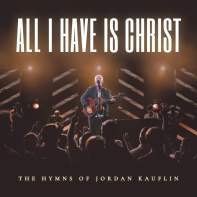 All I Have is Christ: The Hymns of Jordan Kauflin
Jordan Kauflin is a worship pastor, and writes songs for churches to sing, primarily with Getty Music and Sovereign Grace Music. This album of ten songs, each of which Kauflin wrote, or co-write, was recorded at the 2025 Sing! Getty Worship Conference in Nashville, and was produced by Nathan Nockels. The album includes a number of special guests, including Laura Story, CityAlight, Keith and Kristyn Getty, Bob Kauflin, and Bryan Fowler.
 Song of the Saints (Deluxe) – Phil Wickham
Song of the Saints by Phil Wickham was one of my favorite albums of 2025. Wickham is back with a massive 18 song Deluxe edition, bringing the entire Song of the Saints project to 34 songs. The Deluxe edition includes live recordings, collaborations, remixes, as well as songs that were not on the original album, such as “It Really Is Amazing Grace” (with Crowder), “Fear Has No Power” (Live), “It’s Always Been You (HGHTS Remix)”, “Psalm 8 (Hallé)”, and “Everyday Hallelujah”.
In addition to the Crowder collaboration, the new project features collaborations with Lauren Daigle, Brandon Lake, Elevation Worship, Jamie MacDonald, Cain, Chris Tomlin, and Michael W. Smith.
 The Long Surrender – NEEDTOBREATHE
This is NEEDTOBREATHE’s tenth studio album. It was produced by Dave Cobb, and recorded at Cobb’s Savannah studio. The 12 songs were written by Bear Rinehart, with one song co-written with John Luke Carter. The band released four songs in advance of the album release – “The Long Surrender,” “Highlands”, “Where You Call Home” and “Momma Loves Me,” featuring The Red Clay Strays.
 The Resurrection of the King – Tommie Profitt
Described as a year-round companion to Profitt’s The Birth of a King, the album features guest artists Phil Wickham, Crower, CeCe Winans, Jamie MacDonald and more. “He Arose” with Phil Wickham was the first song released. “There is Power”, featuring Crowder is another favorite.
 Long, Long Road – Ringo Starr
Ringo Starr returns with his second country flavored album produced by T Bone Burnette, following 2025’s excellent Look Up. The first single released is “It’s Been Too Long”. The album features appearances from Billy Strings, Sheryl Crow, St. Vincent and Molly Tuttle.
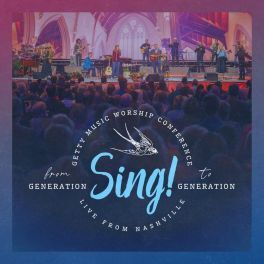 Sing! From Generation to Generation – Live at the Getty Music Worship Conference 2025
Keith and Kristyn Getty have been hosting the Sing! Getty Music Worship Conference in Nashville since 2017. After each conference they release an album containing many of the finest musical moments from the conference. Sing! From Generation to Generation features fourteen songs from the 2025 conference from a diverse group of artists, including CityAlight, Keith & Kristyn Getty, Matt Boswell, Matt Papa, Fernando Ortega, Cochren & Co, Sandra McCracken, the late Jubilant Sykes, and Dwan Hill and The Choir Room. The conference featured the voices of 7,000 from 27 countries celebrating God’s faithfulness across 20 centuries and teaching the coming generations through song.
 Forever Now – Switchfoot
To be released June 26.
Forever Now will be Switchfoot’s first full-length collection of new music in five years and follows the recent re-release of its 2003 album The Beautiful Letdown. The first single released was “Wake Up, Mr. Crow”.
These are 11 new and upcoming music releases. I hope you find something that you are interested in.


April 29, 2026
My Review of ‘A Great Awakening’
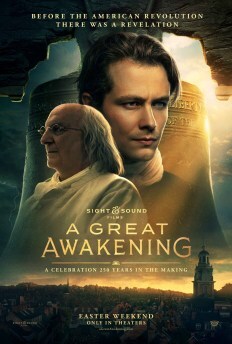 A Great Awakening – rated PG
****
This film tells the story of the unlikely relationship of Ben Franklin and evangelist George Whitefield, connecting that relationship to the Great Awakening, the American Revolution and the Constitutional Convention. The well-made and acted film was directed by Joshua Enck, who co-wrote the film with Jeff Bender and Jonathan Blair.
Franklin is played by John Paul Sneed. He was the tenth son of his father – his tithe. His father wanted him to be a pastor, but Franklin had no interest in that. He wanted to be a printer.
Whitefield is played by Jonathan Blair, one of the film’s writers. He was trained to be an orator, and had a powerful voice. While at Oxford, he met John and Charles Wesley. He was born again, and baptized, but most likely not by immersion as the film depicts.
Click on ‘Continue reading’ for more of this review:
Franklin was interested in a preacher he heard about who was drawing large crowds outdoors, after being banned to preach in a Church of England church. The two struck up a deep friendship as Franklin offered to print (and profit from) Whitefield’s sermons.
Whitefield would plead with Franklin to come to Christ and be born again. The film seems to infer that Franklin was saved, but I believe that is historically inaccurate, as Franklin was a deist. Franklin was the one however, that recommended that each session of Congress open with a prayer.
The story is told by an old Franklin to his grandson looking back on his relationship with Whitefield. The story is book-ended with scenes from the contentious Constitutional Convention, with George Washington, Alexander Hamilton and others. Liberty a main theme in the film, which shows Whitefield’s powerful preaching.
The film shows Franklin doing an experiment to see how far Whitefield’s voice carried when he preached. Franklin estimated that Whitefield’s voice could be heard by as many as 30,000 people outdoors.
The film also shows the flaws of its main characters. Franklin is shown as being unfaithful to his wife. The film reveals that Whitefield used slave labor to support his orphanage in Georgia.
Sneed and Blair were excellent in their roles. The film also had good sets, costumes and music. A Great Awakening is an excellent film that we thoroughly enjoyed.
April 27, 2026
What is a “Just War”?
 When a war breaks out, we want to know that the action was justified. So, when is it justified to use military force? In other words, when is war morally permissible? “Just War Theory” was primarily established by Augustine in the 5th century, and further developed by Thomas Aquinas in the 13th century. It is the Christian understanding of when war is morally justified, and how a morally justified war should be undertaken.
On a recent episode of The Briefing, Albert Mohler shared seven criteria that have to be met for a war to be just and justly fought. He stated:
Just Cause. There must be just cause. You can’t just declare war certainly aggressively on another nation because you want its territory. You have to have just cause. There has to be some defensive, basic defensive move that is made necessary in terms of the use of violence. Repelling an invader is legitimate. Invading another country because you want their goods is not legitimate.Legitimate Authority. Military action must be undertaken by legitimate authority. This means in the case of the United States, legitimate authority according to the legal precepts of the United States, the Constitution of the United States. Of course, that gets a little complicated.Right Intention. There must be right intention. This seems somewhat subjective. The intention in undertaking military action, the use of lethal force, it has to be driven by something that is righteous. Now remember, Just War Theory is about when war is just when it is justified, when it meets the demands of justice. When you’re looking at right intention, this means right as in righteous. It must be a righteous intention such as self-defense or protecting the innocent.Last Resort. It must be the last resort. Other things have to be tried. Negotiation has to be tried. Diplomacy has to be tried. Some nonviolent, let’s say, settlement of these differences ought to be tried. Now, the fact is, however, in a fallen world, sometimes not only is such a thing impossible, it’s made impossible by something like a surprise attack. This is what happened in the case, of course, of Japan against the United States in 1941. There really, at that point, was no question that military action was a last resort.Reasonable Hope for Success. There must be a reasonable hope for success. So that is to say, you don’t just throw armies into a certain death. You do not waste human life if there’s not a reasonable hope of success.Proportionality. There must be proportionality when it comes to military operations. That’s to say if one side shoots arrows, the other side doesn’t have the right to drop an atomic bomb. That’s an extreme example, but you get the point. There has to be proportionality.Establishment of a Just Peace. There must be the establishment of a just peace on the other side. The war must be fought by just means with the goal of achieving a just peace.In his teaching series “The Just War”, R.C. Sproul taught that while war is a result of evil, it is sometimes necessary to stop an aggressor and protect the innocent. He taught that Scripture permits war only when fought for right reasons by legitimate authority, acting as a “necessary force” to restrain evil.
In an article titled “When to War”, Ligonier Ministries stated that Just War Theory is based on two major elements:
All war is the result of evil. Before the fall, there was no strife between human beings. Yet the hostility evident immediately after Adam and Eve sinned (Gen. 3:12–13) has only multiplied as the human population has increased. Today, coveting power or resources produces most armed conflicts. Even the divinely instituted conflict against Canaan resulted from sin, for had the Canaanites not sinned, God would not have needed to judge their wickedness.Fighting in a war is not necessarily evil. Scripture gives us the right of self-defense (Ex. 22:2–3), and war can be self-defense on a grand scale. As Romans 13: 1-7 teaches, God gives the government, not private citizens, the authority to administer punitive justice. Wars can be declared only by governments, and thus, believers can join the army and defend their country against illegal assaults. This does not forbid preemptive strikes in the case of a clear and present danger, but preemption must be used very cautiously.Other caveats do apply. A nation should go to war only after all other attempts to resolve the conflict peacefully have failed (Deut. 20:10–15). There also is to be proportionality; the just party must endeavor not to harm non-combatants and must only respond to an attack in kind. For example, a nation should not use atomic weaponry against a poorly armed militia (v. 14).
The above is intended only as an introduction to Just War Theory. Until Jesus returns, there will always be wars. Christians want to know that those wars are just.
April 24, 2026
MUSIC REVIEWS and NEWS

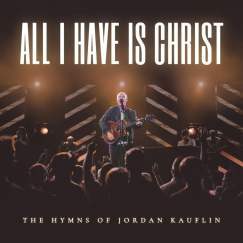 All I Have is Christ: The Hymns of Jordan Kauflin
****
Jordan Kauflin is a worship pastor, and writes songs for churches to sing, primarily with Getty Music and Sovereign Grace Music. This album of ten songs, each of which Kauflin wrote, or co-write, was recorded at the 2025 Sing! Getty Worship Conference in Nashville, and was produced by Nathan Nockels. The album includes a number of special guests, including Laura Story, CityAlight, Kristyn Getty, Bob Kauflin, and Bryan Fowler. The album includes four new hymns and six favorites that are sung by churches around the world.
In my reviews I usually list my favorite songs on the album. I’m not going to do that this time as all of the songs are excellent – well written and performed.
Below are a few comments about each of the ten songs:
Click on ‘Continue reading’ for:
More of this review and a review of Live from the Ryman by Wilder WoodsMusic NewsSong of the Week Lyrics ~ “Say So” by Jordan Kauflin and Bryan FowlerSanctus (Holy, Holy, Holy) – This song was written by Jordan Kauflin. It is a praise song to the Lamb who was slain.
Key lyric:
Name above all other names
King above all other kings
All of heaven cries,
“The Lord Almighty reigns forevermore!”
If God is For Us – This song, based on Romans 8, was written by Jordan Kauflin, Bryan Fowler, Matt Merker and Laura Story and features Laura Story. It features a triumphant chorus.
Key lyric:
What shall we say, but “Hallelujah!”
For none can take us from His love
He won’t forsake the ones He died to save
Yes, our God is for us
All I Have is Christ – This song was written by Jordan Kauflin, and features Keith and Kristyn Getty. He once was lost and if Christ had not loved him first, he would refuse Him still. The song features a powerful chorus.
Key lyric:
You bore the wrath reserved for me
Now all I know is grace
Oh Church, Come Lift Your Eyes – This song was written by Jordan Kauflin, Rich Thompson and Jonny Robinson, and features CityAlight. The song is an encouragement for those in the church to lift up our eyes to see the risen, reigning Christ, to look beyond our passing trials, to the Source of lasting life.
Key lyric:
His eternal kingdom cannot fail
And the gates of hell will not prevail
He will build His church until we rise
Christ Our Hope in Life and Death – This song was written by Jordan Kauflin, Keith Getty, Matt Boswell, Matt Merker and Matt Papa. The song, which is one of my all-time favorites, and hope to have sung at my funeral, features a triumphant chorus.
Key lyric:
O sing hallelujah!
Our hope springs eternal;
O sing hallelujah!
Now and ever we confess
Christ our hope in life and death.
Say So – This song was written by Jordan Kauflin and Bryan Fowler and features Bryan Fowler. It’s a song for the church to lift up voices and praise the Lord.
Key lyric:
If you’ve been redeemed, if you’ve been restored
Lift up your voice now and praise the Lord!
All nations and tongues, all over the world
Let the Redeemed of the Lord say so!
Come Unto Jesus – This song was written by Jordan Kauflin, Matt Merker and Laura Story. The song features Bob Kauflin, McKenzie Fuller and Megan Haughery. We are to bring our wounded hearts, broken and needy to Jesus, who is mighty to heal.
Key lyric:
Come unto Jesus.
Lay down your burdens, He is enough;
Come unto Jesus, rest in His love.
I Will Wait for You (Psalm 130) – This song, based on Psalm 130, was written by Jordan Kauflin, Keith Getty, Matt Merker, and Stuart Townend.
Key lyric:
I will wait for You
Through the storm and through the night
I will wait for You
Surely wait for You
For Your love is my delight
Come, O Sinner – This powerful song was written by Jordan Kauflin. The song, which features a cello, tells us that we can rejoice that through the death of Christ death is destroyed.
Key lyric:
Come, O sinner, come and mourn
For He bears the curse for all you’ve done
Come to Jesus (Rest in Him) – This song, based on Matthew 11:28-30, was written by Jordan Kauflin and Matt Merker.
Key lyric:
Are you weary, heavy laden?
Come and lay your burdens down
Jesus calls you, Jesus draws you,
Rest in Him
 Live from the Ryman – Wilder Woods
***
Wilder Woods is NEEDTOBREATHE’s leader Bear Rhinehart’s band. The name Wilder Woods comes from Rinehart’s two oldest sons, Wilder and Woods.
This album is from a March 29, 2005 concert, the last show on his tour, at the famed Ryman Auditorium in Nashville, the longtime home of the Grand Ole Opry. The album contains 17 songs, 8 of which are from Wilder Woods’ latest album Curioso, one of my favorites from 2025.
Rhinehart is an excellent live performer. I’ve seen NEEDTOBREATHE in concert, and the band has released several live projects. He delivers high energy and passionate performances of these songs. Maggie Rose joins Rhinehart on the song “Wild Fire”.

 “Say So” by Jordan Kauflin and Bryan Fowler
This week’s song of the week is “Say So”, written and performed by Jordan Kauflin and Bryan Fowler. The song is from the new album All I Have is Christ: The Hymns of Jordan Kauflin, recorded live at the 2025 Sing! Getty Music Conference in Nashville. Watch the performance of the song here.
Verse 1
We gather to remember
What the Lord our God has done
The kindness He has shown us
When we wandered from His love
He has led us back with arms of grace
He has turned our cries to shouts of praise
Chorus
If you’ve been redeemed, if you’ve been restored
Lift up your voice now and praise the Lord!
All nations and tongues, all over the world
Let the Redeemed of the Lord say so!
Let the Redeemed of the Lord say so!
Verse 2
What comfort to remember
How the Lord has ransomed us
In darkness, we were captives
‘Til He burst our bonds apart
He has triumphed over death and grave
He has turned our cries to shouts of praise
Repeat Chorus
Bridge
Earth and heaven
Join together
Come testify, say so!
Rise in worship
Raise the chorus
Come testify, say so!
Repeat Bridge
Chorus x2
Tag
Let the Redeemed of the Lord say so!
Let the Redeemed of the Lord say so!
April 22, 2026
BOOK REVIEWS and NEWS
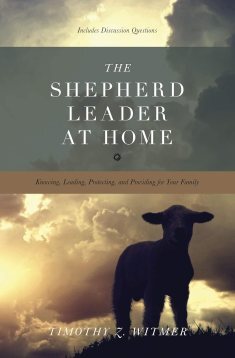 The Shepherd Leader at Home: Knowing, Leading, Protecting, and Providing for Your Family by Timothy Witmer. Crossway. 167 pages. 2012
*** ½
Timothy Witmer follows up his excellent book The Shepherd Leader, which was focused on the church, with a volume for the shepherd leader at home. He tells us that the purpose of the book is to help families by helping husbands and dads become loving shepherds of their families. The strategy is to apply the biblical shepherding categories of knowing, leading, providing, and protecting to leadership in the home. These shepherding functions represent four of the most fundamental human needs that God meets through those who lead families. Each of the four parts begins with an introduction showing its biblical rationale.
The focus is on all men who are called to lead their families at home. Throughout the book, the author shares many examples to illustrate the points he makes. The book is intentionally practical, personal, and heart-to-heart.
Click on ‘Continue reading’ for:
BOOK REVIEWS ~ More of this review…
BOOK NEWS ~ Links to Interesting Articles
BOOK CLUB ~ Tim Keller on the Christian Life: The Transforming Power of the Gospel by Matt Smethurst
I’M CURRENTLY READING….
Each chapter includes reflection questions that can be used either in individual study or in the “iron sharpening iron” context of men’s discipleship groups. The book includes an appendix containing resources for family devotions.
Among the many topics addressed in the book are marriage, communication, parenting, knowing your wife and children, practice of participation, leadership, commitment, submission, contentment, temptation, lust, discipline, and leading your family spiritually. I found the chapter on protecting your marriage to be particularly important for men today.
This is a well-written and helpful book on leading your family as a shepherd leader.
Here are a few helpful quotes from the book:
Knowing your wife in the comprehensive biblical sense includes a relational union that implies physical, spiritual, and emotional oneness.God’s design for your marriage is that you leverage your mutual and complementary gifts and strengths in his service.The number-one problem in marriage is communication.Perhaps the most significant way of growing in mutual knowledge as husband and wife is to develop a regular time of prayer together.Knowing your children is foundational to all the other shepherding functions as you seek to raise and nurture them in the Lord.When you show your children that they are a priority, you are setting a good example for them when they have families of their own.Shepherds of households will be held accountable for the care of their flocks at home.Your leadership must be motivated by a desire to see your wife grow in holiness and to assist her in fulfilling her God-given roles of wife and mother.The goal toward which we lead our children is that they come to know the Lord and follow him.As shepherd leader, you must take the lead in nourishing your family spiritually.We are all just one generation away from unbelief. It is our responsibility to pass the truth along to our children.Protecting your children is a major responsibility you have as a shepherd leader at home. The other shepherding functions lay the foundation for protecting your children.Our goal as we lead our families is to glorify God and to help them understand what it means to glorify the Lord in their lives. We do this by instructing them in the paths of righteousness.

 Won’t you read along with us?
Tim Keller on the Christian Life: The Transforming Power of the Gospel by Matt Smethurst
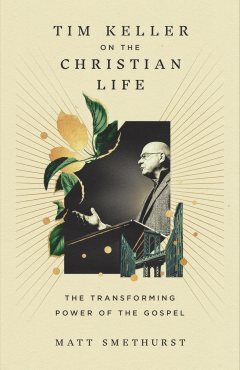 Pastor and author Timothy Keller (1950–2023) built a lasting legacy in Christian ministry, planting Redeemer Presbyterian Church and cofounding the Gospel Coalition. With sharp biblical insight that has shaped countless church leaders, along with counsel on the Christian life that has stirred and strengthened audiences worldwide, Keller’s teaching promises to influence generations to come.
Synthesizing Keller’s work topic by topic, each chapter of this book highlights a key aspect of the Christian life—covering his views on prayer, suffering, friendship, vocation, intimacy with God, and more. Written by pastor Matt Smethurst, Tim Keller on the Christian Life draws from Keller’s nearly 50 years of sermons, conference messages, and books to share practical theological insight that will galvanize leaders and laypeople alike.
As we complete our reading of this book, we finish up by looking at Chapter 8: The Painful Gift How Suffering Drives Us into God’s Heart and the Conclusion. Here are a few quotes from these sections that I found helpful:
When the subject matter is darkest, Keller’s teaching shines brightest.Suffering isn’t natural. It’s normal, but it’s not natural. It’s not the way things were originally designed to be.Even when we cannot fathom any good reasons for our pain, we rest in the arms of the only Savior who has scars. For us.The book of Psalms is an unparalleled resource for worshiping God through pain, for pressing divine truths deep into the heart “until they catch fire there.”Of all the things sufferers need, nothing is more essential than hope.Keller’s most eloquent testimony to God’s all-sufficient grace in suffering wasn’t a sermon or an essay, a seminar or a book. It was his death. He faced it with bravery and hope, and it was the most powerful message he ever delivered.Tim Keller was far from perfect. But he loved nothing more than pointing people to the Savior who is, and to the gospel that can transform your life.

April 20, 2026
Dave Kraft on Lifelong Learning
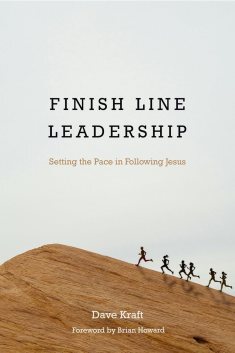 I’ve enjoyed reading Dave Kraft’s blog Leadership from the Heart for several years, as well as his three previous books. The latest book from the 84-year-old author, with fifty-five years of vocational Christian leadership experience, is Finish Line Leadership: Setting the Pace in Following Jesus. Recently, I read the chapter in the book on lifelong learning. I was amazed at just how much Kraft and I agree on this important subject.
Kraft tells us first that leaders are learners, and that when you stop learning, you stop leading. In the organization I worked at my entire career, we often spoke of lifelong learning, or that “school was never out at State Farm”. There was a significant emphasis on, and support of, continuing education, be it insurance designations, master degrees, IT industry certifications, etc. No matter what area of the organization you were in, you were encouraged to improve yourself and your value to the organization through continuing education.
Kraft mentions that his mother was an avid reader. My parents were avid readers as well. They always had a book nearby that they were reading. I think I got my love of reading from them, though neither my brother or sister are enthusiastic readers.
Kraft indicates that he has a goal of reading two books a month. My goal is two or three books a month. He reads almost no fiction, and focuses primarily on books dealing with leadership and church issues, areas I enjoy, along with professional development, theology, biography and sports.
Kraft writes that in the books he reads, he is on the hunt for leadership ideas and principles that he can apply to his own life and work, and share with other leaders and church leadership teams. I would agree with that, as well as writing book reviews to share with others what I learned by reading each book.
In addition to reading, he also mentions learning by listening to podcasts and attending conferences, two ways of learning that I enjoy as well. I like to listen to podcasts while walking our dog or just on my regular afternoon walk. My wife and I enjoy learning at conferences, and are regular attendees at the Ligonier National Conference, The Gospel Coalition National Conference and the Sing! The Getty Music Worship Conference.
Another area where Kraft and I agree is the importance of leaders being teachable. Kraft tells us that truly teachable leaders will not only allow, but also welcome others speaking into their lives—exhorting them, rebuking them, reproving them.
I can’t stress enough the importance of being a lifelong learner. I’ve been retired eight years as of this writing, and am still excited about learning.
What would you add about being a lifelong learner?
April 16, 2026
20 Leadership Lessons from Dan Hurley
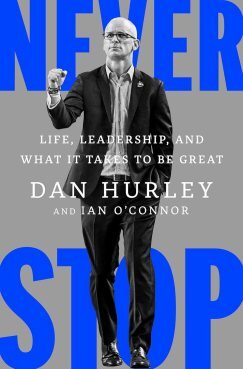 Dan Hurley is the head men’s basketball coach at the University of Connecticut. He won back-to-back NCAA championships in 2023 and 2024. He tells his story and shares his leadership philosophies in his new book Never Stop: Life, Leadership, and What It Takes to Be Great, written with Ian O’Connor. Read my review of the book here.
Here are 20 of Hurley’s leadership lessons from the book:
Teaching them to be disciplined, to grow their minds as students while also growing their games, to build great relationships and be passionate about life. That’s me caring about them.I wanted to teach as much as I could, as quickly as I could, mature them and get them ready for the big, bad world.It was always also about giving them the mental toughness they need to be successful.I try to be a role model for my players—in every way. I walk it before I ever talk it. That’s a big reason why I get the buy-in.You can’t appreciate your success until you realize it’s built on a foundation of failure.I started a book club for my players years ago.I wouldn’t be half the coach I want to be if I didn’t speak freely and frequently about my own struggles with mental health. Vulnerability shows strength.I don’t treat everybody the same. I coach my best players harder, hold them more accountable, watch them more closely than anybody else. If there’s a better leadership strategy than that, I’m not sure what it is.When a coach, or a program, prioritizes selflessness, as we do, it almost always has a catalyzing effect—it laces the whole group together tight.Yes, I’m demanding. What parent would want to send their kid to a coach who isn’t demanding?We will not ever lower our expectations, not for any recruit, not for any generation.Body language is so important when you’re the point guard or the quarterback. It’s also important when you’re leading an organization.I must have been a gladiator in another life. Because I coach every practice like it’s the last one I’ll ever coach. I show up for every game like I’ve never won a game in my life. Like I’ve never won anything.When I think back on the darkest times of my life, they’re united by one common theme: Either I didn’t have clearly defined standards for myself, or else I wasn’t living up to my own standards. Either way, those dark times taught me that standards are everything. And at UConn, it all starts with our standards.I don’t believe in compromising on standards, but I’ve had to learn to compromise on other things. Softer things, intangible things. Temperament, personality, that kind of stuff. I had to realize that compromising over personality isn’t compromising over morals or precepts or core values. That was a huge leadership lesson for me.Sometimes leadership means having the courage to change, and sometimes it means having the courage to resist change.I always think that part of being a leader is knowing exactly how hard you’re being on your people.Pushing players to the max should be the norm. And it used to be. But these days we’ve allowed people to grow soft. Which is ironic because life is only getting harder.Coaches should be demanding, and they should make their players tougher—give them the physical and emotional armor they’re going to need to survive and thrive in this world.I was no longer compulsively drawn to pure athletic talent alone. I looked deeper, thought harder, about the kinds of people I wanted around me, in the building. Coaches can overlook character issues for the sake of talent. And we weren’t about to do that.April 14, 2026
Leadership Lessons from Duke Basketball Coach Mike “Coach K” Krzyzewski

In 42 seasons as head men’s basketball coach at Duke, Mike “Coach K” Krzyzewski, a Naismith Hall of Fame coach, was a five-time national champion and NCAA record 13-time Final Four participant. No coach in Division I men’s basketball history won more games than Coach K’s 1,202. Coach K served as head coach at both Duke and Army West Point, finishing his amazing career with a 1,202-368 record, including a 1,129-309 mark at Duke.
Coach K also contributed significantly to USA Basketball. Beginning in 1979 he was a member of 21 USA coaching staffs, and teams with Coach K on the coaching staff compiled a 139-7 overall mark for an amazing 95.2 winning percentage. In the 15 international competitions he has been involved in as a USA head or assistant coach, those teams have captured 11 gold medals, two silver medals and two bronze medals.
What can leaders learn from Coach K? Fortunately, we can learn from the books he has written and from books others have written about him. I have read his books Leading with the Heart: Coach K’s Successful Strategies for Basketball, Business, and Life, Beyond Basketball: Coach K’s Keywords for Success, and The Gold Standard: Building a World-Class Team. I’ve also read Ian O’Connor’s biography Coach K: The Rise and Reign of Mike Krzyzewski. From these books here are 20 helpful leadership quotes from Coach K:
The only way you can possibly lead people is to understand people. And the best way to understand them is to get to know them better.Discipline is doing what you are supposed to do in the best possible manner at the time you are supposed to do it.Goals are important in leadership. They should be realistic, they should be attainable, and they should be shared among all members of the team.In leadership, no word is more important than trust.A leader has to have the courage to make a key decision in a split second. And then he has to have the courage to live with it afterward—whether it succeeds or fails. Because if he doesn’t, he’ll be afraid to make the next key decision.When a leader makes a mistake and doesn’t admit it, he is seen as arrogant or untrustworthy. And “untrustworthy” is the last thing a leader wants to be.A leader must be committed to helping people grow.My hunger is not for success; it is for excellence. Because when you attain excellence, success just naturally follows.The main job of a leader is to inspire.Integrity is nothing more than doing the right thing no matter who’s watching you.You have a choice. You can either change with the environment or you will eventually fail. A leader has to find a way to win.Effective teamwork begins and ends with communication.Dependability is the ability to be relied upon. To always be there trying to do your best.Progress is impossible if you only attempt to do the things that you have always done.Pride means ensuring that anything that you do, anything that has your name on it, is done right.Ambition alone is not enough. That ambition must be coupled with hard work for success to be achieved.Work is a necessity if you want to improve. It is the road you have to follow to become better.In developing teams, I don’t believe in rules. I believe in standards. Rules don’t promote teamwork, standards do.Leaders should remember that not all the good ideas have to come from the top, and they should be secure enough to change plans based on the input of the team.Self-assessment is not a thing that you do once in a while; it is something that should be taking place all the time.April 10, 2026
THIS & THAT: A Gathering of Favorite Articles and Quotes

Click on ‘Continue reading’ for:
More interesting article linksFavorite Quotes of the Week




April 8, 2026
FAITH AND WORK: Connecting Sunday to Monday
Faith and Work News ~ Links to Interesting Articles
Finding a Job That Fits. Are you in the right job? On this episode of Renewing Your Mind, R.C. Sproul gives practical guidance to help us seek a vocation where our gifts align with the motivation necessary to succeed.The Multitasking Myth. Reagan Rose writes “What I’ve found is that disciplining myself to finish one task before moving to the next isn’t just more effective. It’s actually more fulfilling.”Christlike Work in a Burnout Society. Kyle Tucker writes “In the malaise of modern work, God offers us a hopeful alternative. First Thessalonians 4:9–12presents a theology of work rooted in divine love, quiet ambition, and missional living.Three Myths About Aging In the Third Third of Life. Amy Hanson writes “I have found that the third third of life tends to be viewed the most negatively in culture. We are conditioned at a young age to see aging as a bad thing and something to avoid.”Click on ‘Continue reading’ for:
More links to interesting articlesThe Top 10 Faith and Work Quotes of the WeekWork and Leadership Book Review ~ The Gold Standard: Building a World-Class Team by Mike Krzyzewski with Jamie K. SpatolaQuotes from the book Working for Better: A New Approach to Faith at Work by Elaine Howard Ecklund and Denise DanielsServing Others Through Our Work. Russ Gehrlein appeared as a guest on the Embrace Our Callingpodcast, hosted by Marcus Mok, on Sunday, January 25. Russ and Marcus discussed several faith and work concepts found in Russ’s book, Immanuel Labor: God’s Presence In Our Profession, and life lessons Russ has learned throughout his career. Below is a partial transcript of their conversation, which has been edited for length and clarity. Read part one of this conversation or listen to the full conversation.Called to Lead. My book Called to Lead: Living and Leading for Jesus in the Workplace is available in both a paperback and Kindle edition. Read a free sample (Introduction through Chapter 2).How Are We Supposed to Rest on Sunday? Megan Hill shares several ways to rest with the Lord’s people on the Lord’s Day.Ground Rules for Gospel Greatness. Dave Harvey writes “What are the ground rules for gospel greatness? If we don’t answer that, we’ll keep swinging between two familiar ditches—despair and denial.”Building Relationship Through Storytelling: A Conversation with Jennifer Ware. What does real connection look and feel like in our closest relationships? On this episode of Working with Dan Doriani, Dan talks with counselor Jennifer Ware about Emotionally Focused Therapy (EFT), how patterns of connection and disconnection shape marriages and families, and simple practices couples can use to deepen their bond. Jennifer also shares about STL Storytell, a St. Louis-based live storytelling event that helps people process and share their stories in community. Dan and Jenn discuss what it means to be a good listener and how storytelling can help us break out of loneliness.A Leader Worth Following. My new book A Leader Work Following: 40 Key Leadership Attributes and Applications to Masteris available on Amazon in paperback and Kindle editions. Read a sample of the book (found under the book cover in the above link).How Do I Know If I’m Idolizing Work? Kaitlin Febles responds to the question “I work in finance. Besides having the gifts, opportunity, and desire to do this work, I also feel this is an area God has called me to work in. I really want to be excellent in it. But sometimes—OK, often—it’s hard to lay it down to focus on other priorities, like my family, my church, or my health. How do I know the difference between being diligent at work and making work an idol?”Why AI May Lead to More Work, Not Less. Jacqueline Isaacs writes “Christians ought not live in fear but should rather be at the forefront of utilizing new technologies to expand the possibilities of work in ways that allow more people to use their God-given gifts in service to others.”
Top 10 Faith and Work Quotes of the Week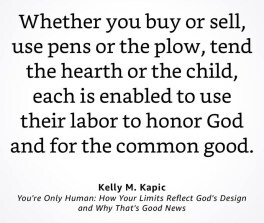
WORK AND LEADERSHIP BOOK REVIEW:
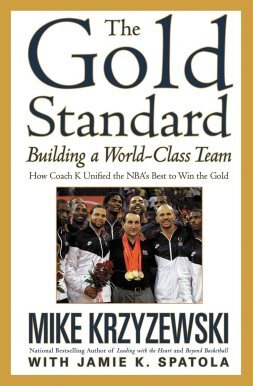 The Gold Standard: Building a World-Class Team by Mike Krzyzewski with Jamie K. Spatola. Business Plus. 274 pages. 2009
*** ½
This book is part diary of Duke basketball coach Mike “Coach K” Krzyzewski’s time as the coach of USA Basketball, culminating with the 2008 Olympics in Beijing, and part leadership lessons. He writes that he is often asked how he builds a team. This book is his response to that question.
This book is divided into “times” and “moments”, with each chapter devoted to a particular quality of time he feels is vital to team building. Within each chapter, he includes some of the moments that defined that time for the USA Basketball Men’s National Team.
The USA had once dominated international basketball, but by 2004, when they lost the semifinal game in the Athens Olympics to Argentina, that was no longer the case. The USA had lost its competitive edge in international basketball.
A new approach was needed. When approached to be the first head coach under the new National Team concept by Jerry Colangelo, Coach K readily accepted the commitment. This was a three-year plan leading up to the 2008 Olympic games in Beijing.
I enjoyed this book, the story about how he built his team, the three-year commitment he, his assistant coaches and players like Kobe Bryant, Lebron James and Jason Kidd made, and the drive to the Olympic gold medal in Beijing.
Here are twenty helpful leadership quotes from the book:
 Faith and Work Book Club – Won’t you read along with us?
Working for Better: A New Approach to Faith at Work by Elaine Howard Ecklund and Denise Daniels
Please join us in reading this book on faith and work.
From the Amazon description:
“In a world where workplaces are becoming increasingly diverse, Working for Better by Elaine Howard Ecklund and Denise Daniels offers a timely guide for Christians navigating the modern faith-at-work landscape. Drawing from over twenty years of research and personal insights, Working for Better presents a groundbreaking exploration of how to express Christian faith in professional settings without compromising beliefs or alienating others.
Through detailed studies involving focus groups, surveys of more than 15,000 workers, and interviews with over 300 individuals, Ecklund and Daniels identify five key tensions in the faith-at-work movement. With compelling stories and practical applications, Working for Better addresses the need for Christian workers and leaders to adapt to cultural shifts, offering guidance for a more redemptive presence at work. Each chapter concludes with thought-provoking questions for individual reflection or group discussion, making this book an essential resource for anyone seeking to integrate faith with their professional life. Whether you’re a Christian worker, workplace leader, or pastor guiding others, Working for Better invites you to consider how to flourish in a rapidly changing world.
As workplaces continue to evolve, the ability to maintain one’s spiritual values while contributing positively to the organizational culture becomes ever more crucial. Working for Better not only equips readers with the wisdom and tools needed to face such challenges but also inspires them to become agents of change, promoting a more inclusive and harmonious work environment.”
This week, we look at the Preface: Why This Book? Here are a few helpful quotes from the chapter:
One of the best ways we can live out our calling as Christians in the workplace is to radically embrace those who are different from ourselves.That is what you will find in this book: a research-based examination of how religion and spirituality enter the workplace, how American workers see the connections between faith and work, and how organizational leaders can understand and lead religiously diverse, faith-friendly workplaces.At the end of each chapter, we have provided some reflection questions. These questions will be useful to individuals or groups.In most chapters we also include questions that are designated for faith communities.