David Weller's Blog
April 25, 2026
5 Things to Notice in a New Class

There’s a lot going on when a new class starts. Warmers, getting to know you activities, relationship building - and that’s before the learning starts!
New teachers might walk in, introduce themselves, run a brief warmer, hand out a coursebook, and start teaching. Experienced teachers do something else. They watch closely.
Here’s what they’re watching for.
Thanks for reading Barefoot TEFL Teacher! Subscribe for free to receive new posts.
1. Who sits whereSeating choices are voluntary data. Students ...


April 11, 2026
How to choose between PPP, ESA, TTT, and TBL
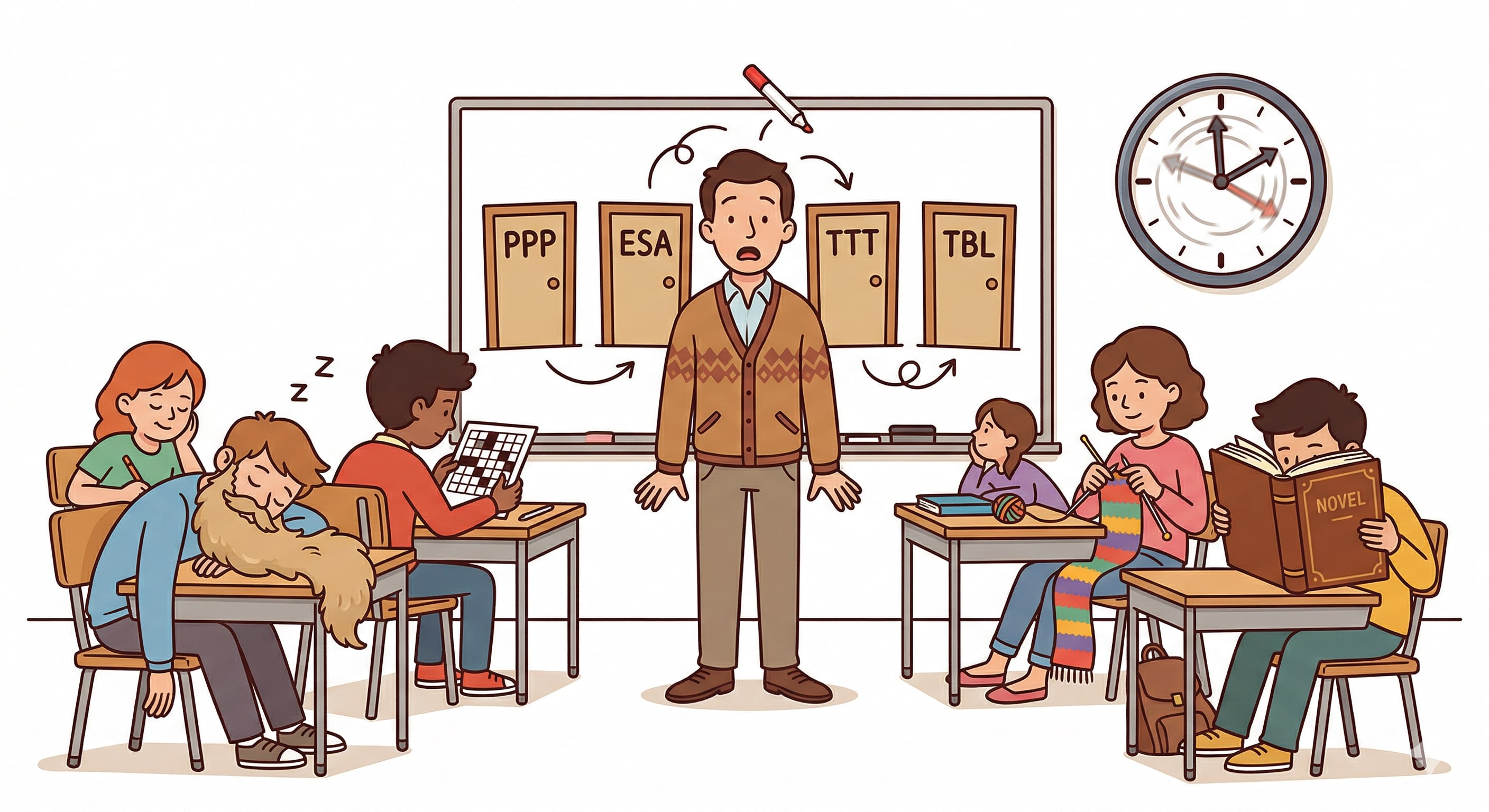
I remember sitting in a teacher training input session, notebook open, genuinely convinced that choosing the wrong framework would ruin a lesson. PPP felt safe but limiting. TBL felt exciting but risky. ESA felt like a compromise. TTT felt like cheating somehow - like I was admitting I hadn’t planned properly.
That was a long time ago. I’ve since planned and taught thousands of lessons, observed hundreds more, and trained teachers across a range of contexts. And the honest truth is that the frame...
March 28, 2026
Is Your Warmer Killing Your Lesson?
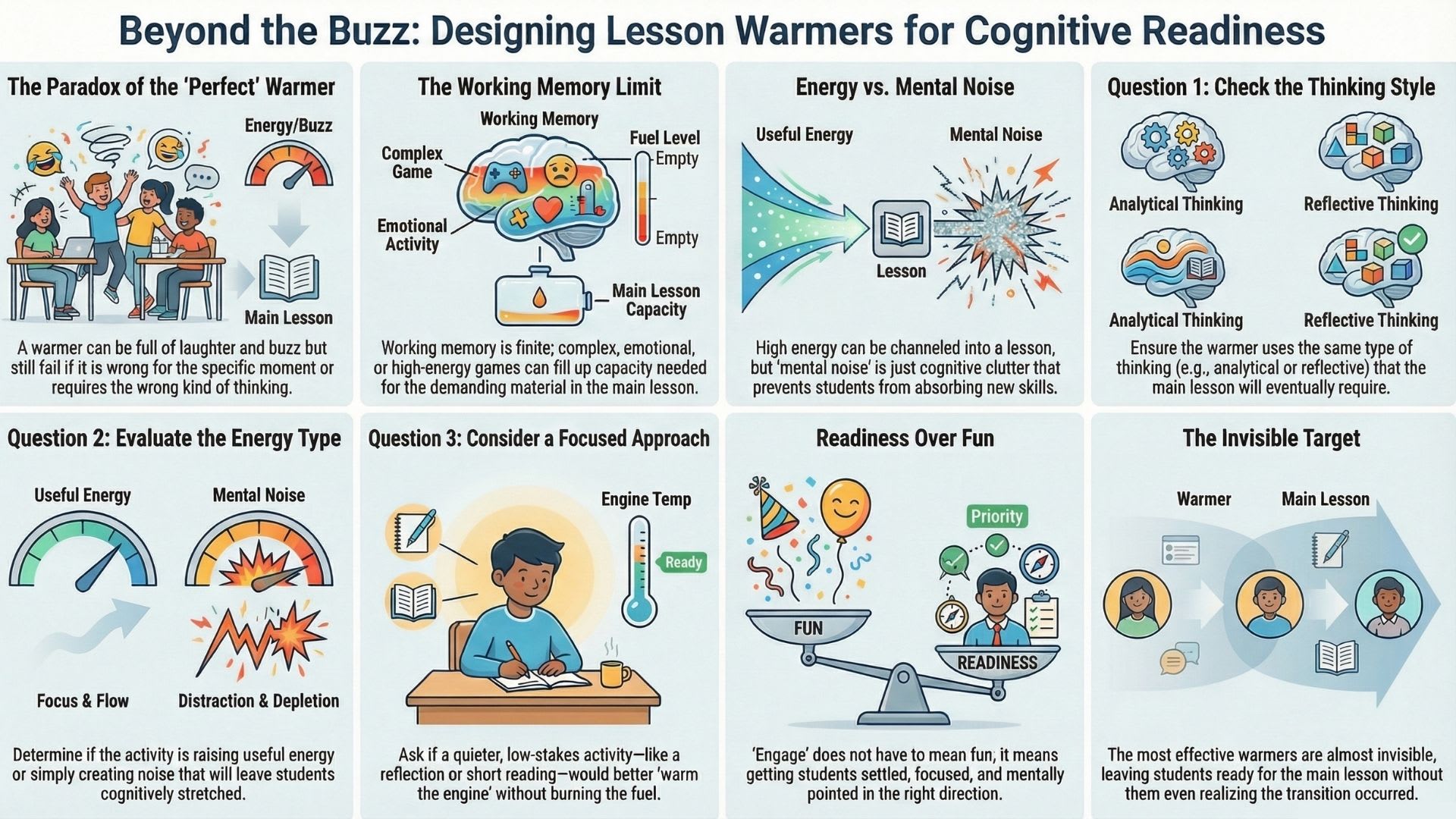
You’ve planned a fun warmer. Students are laughing, chatting, buzzing. Then you move into the main lesson - and it dies. Not because the warmer was bad. Because it was wrong for that moment.
This happens more often than teachers realise, and it rarely gets diagnosed correctly. The lesson gets blamed. The material gets blamed. Sometimes the students get blamed. The warmer - which everyone enjoyed - escapes scrutiny entirely.
What the ‘Engage’ phase is supposed to doThe logic behind starting with an...
March 14, 2026
New book: AI for Busy Teachers
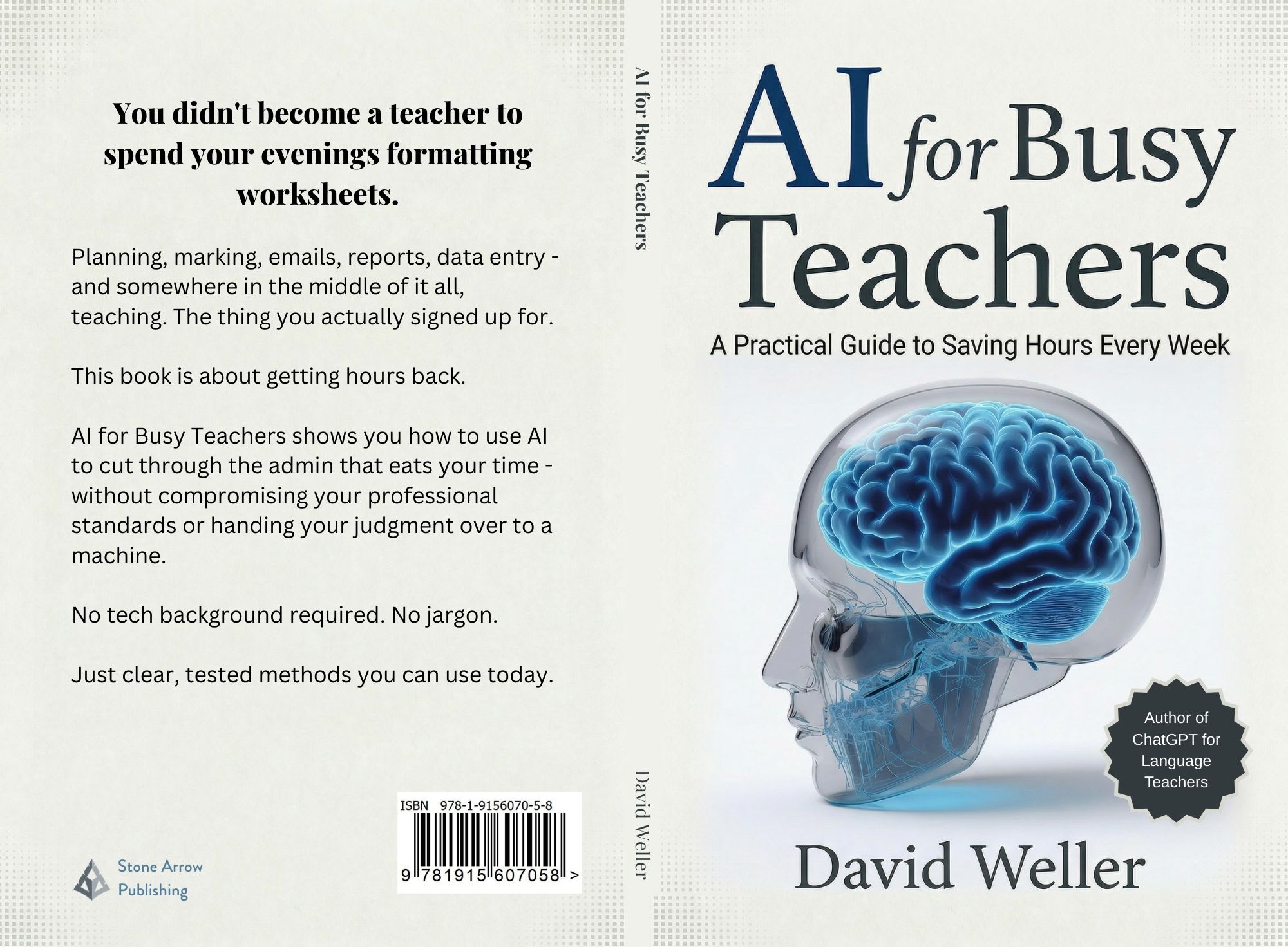 It’s out: AI for Busy Teachers
I’ve been writing this book for most of the past year, and I’ll be honest - I wasn’t sure it needed to exist.
There are already plenty of AI guides out there. Most of them are enthusiastic, optimistic, and written by people who seem to have forgotten what a school week actually feels like.
This one is different. Or at least I’ve tried to make it different.
AI for Busy Teachers is built around a single premise: you are already working too many hours, and AI can give som...
February 21, 2026
Don't Work Harder Than Your Students
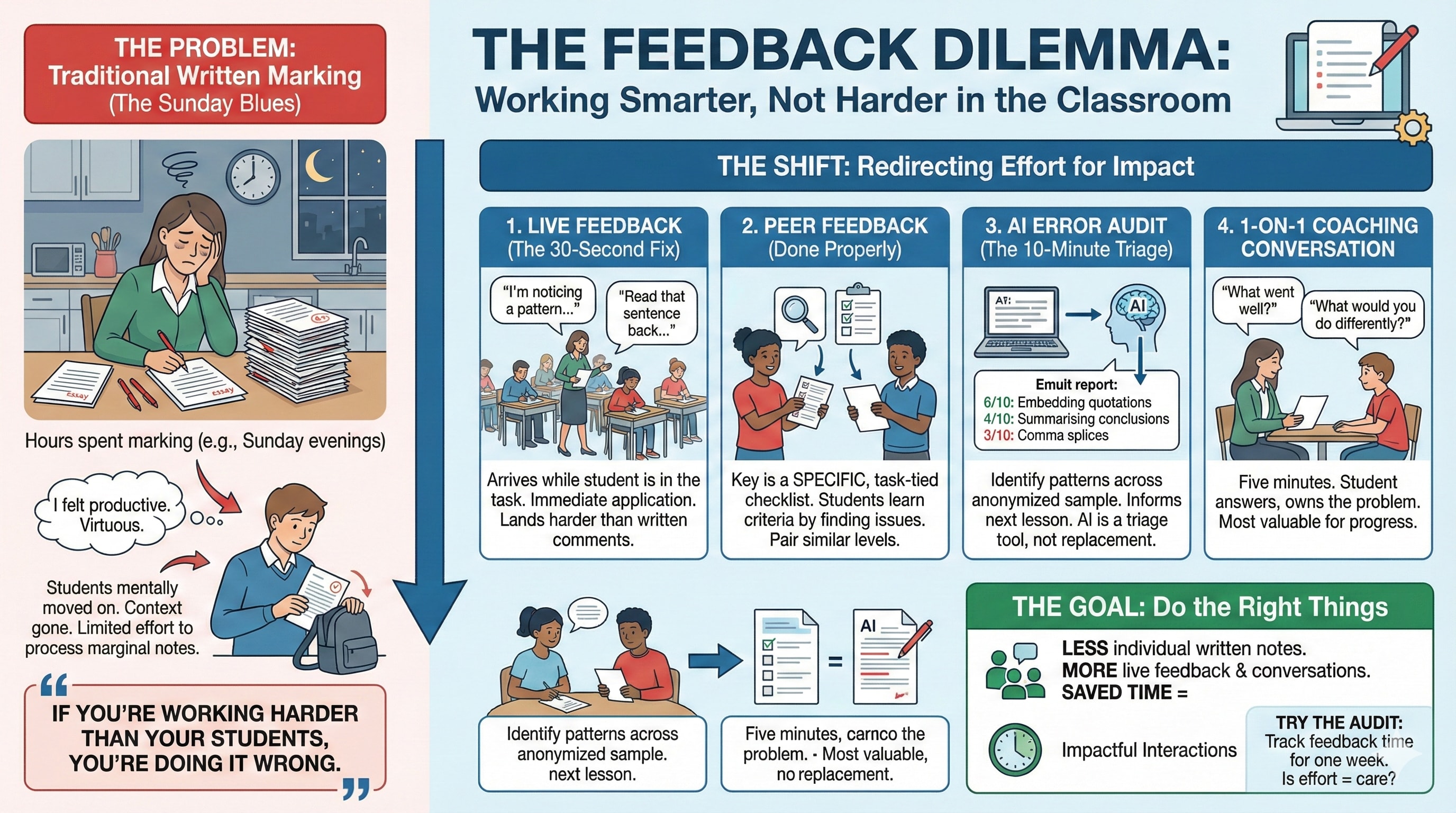
I used to spend Sunday evenings at the kitchen table with a stack of essays, a red pen, and the quiet resentment of someone who knows they should be watching television.
I’m talking two, sometimes three hours. Writing comments in the margins. Underlining things. Drawing little arrows. By the end I’d written more words than half my students had. I felt great.
And then on Monday, I’d hand the essays back and watch as students glanced at the grade, maybe read the first comment, then stuff the whole ...
February 14, 2026
How to Fall Back in Love with Teaching
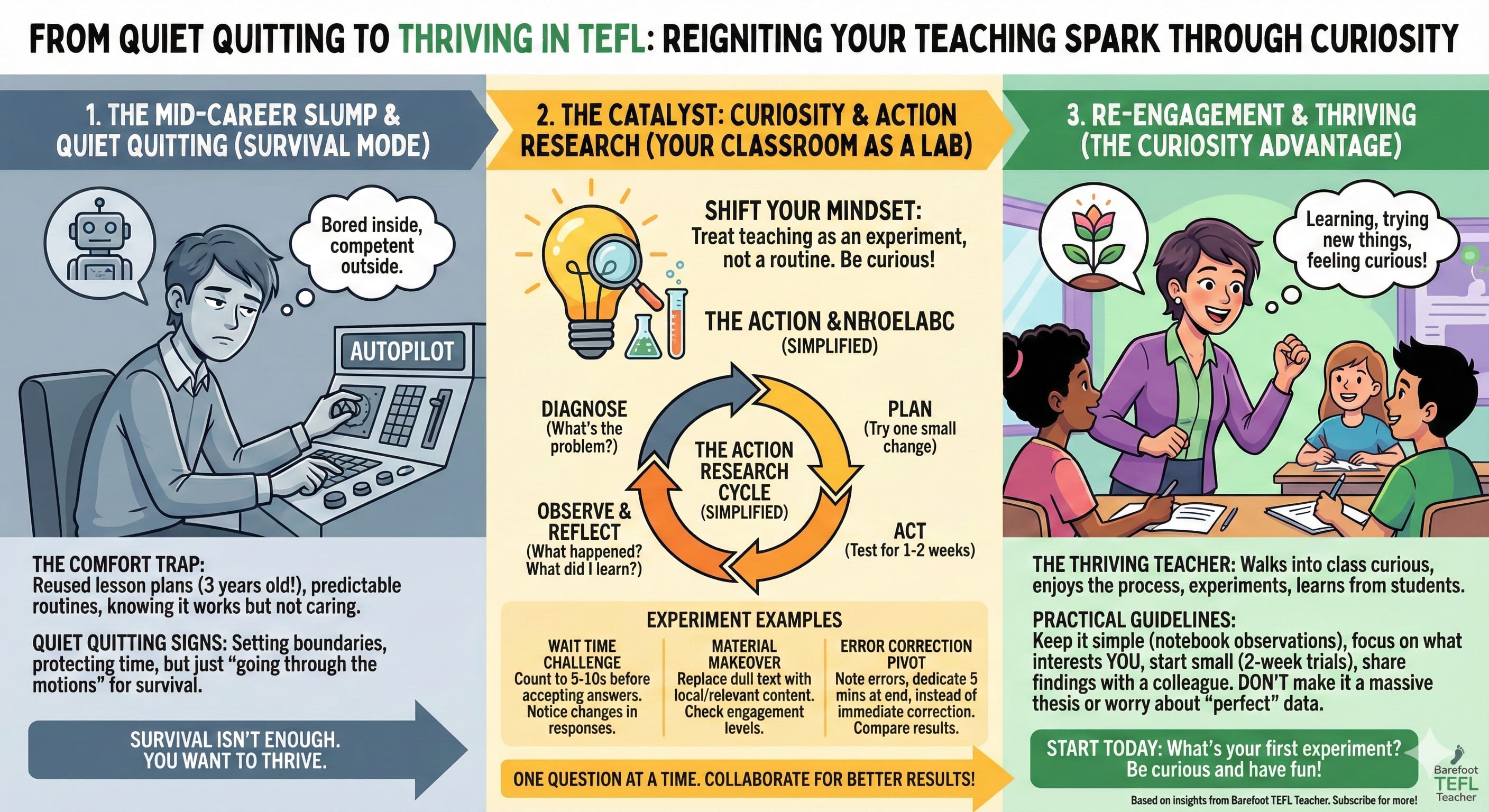
Back in June 2024, I wrote about the 9 signs of quiet quitting in TEFL. Teachers reached out saying “that’s me” or “that’s my colleague” or even “I didn’t realize I’d been doing this for five years already.”
What I didn’t talk about in that article is what comes next.
Recognising you’ve quiet quit is only half the battle. The real question is, what do you do about it? How do you go from autopilot to actually caring again?
You didn’t get into teaching to coast along. You got into it because at some ...
January 31, 2026
How to teach with task-based language teaching (TBLT)
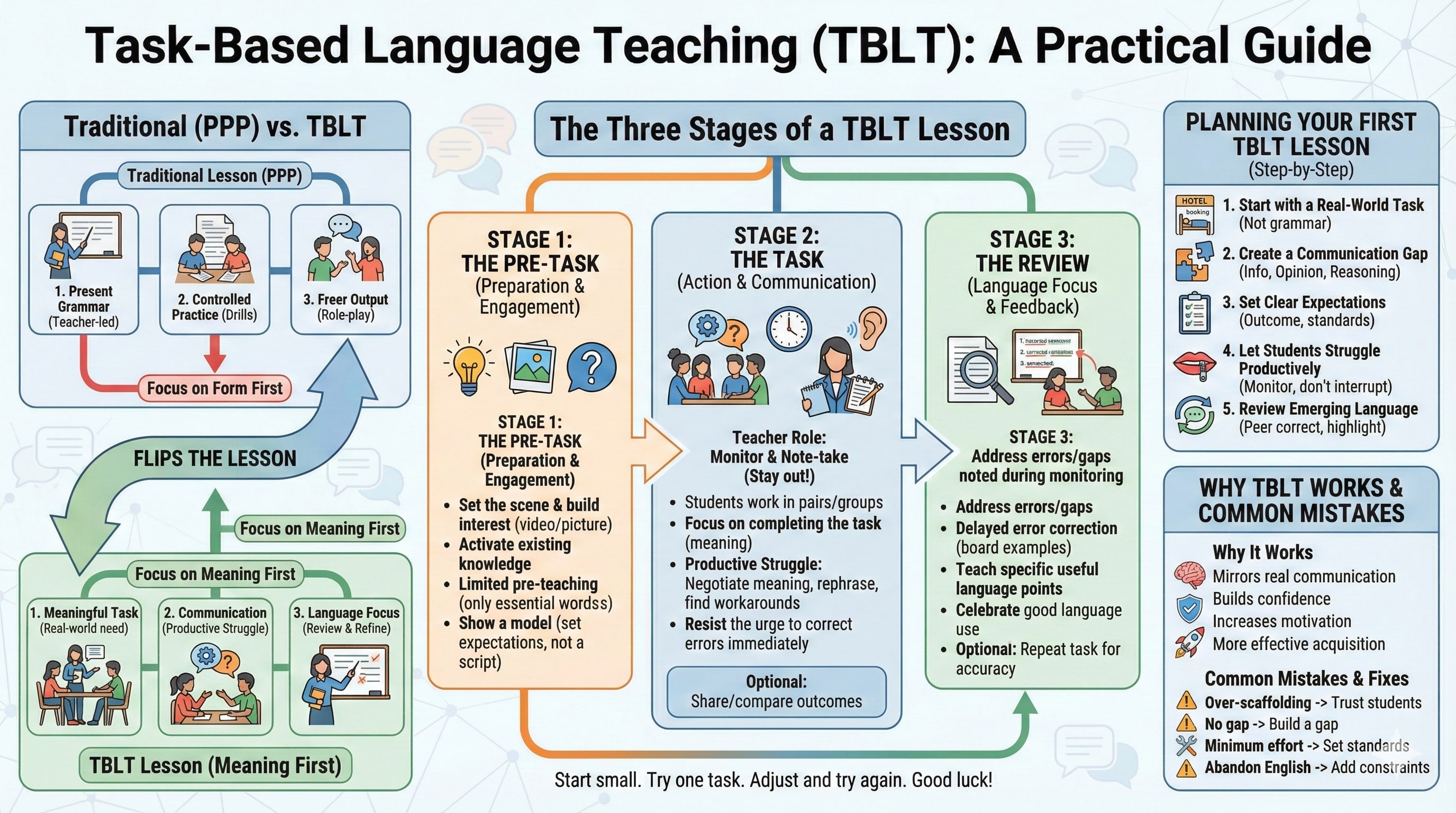
I remember the first time I saw task-based learning in action. I was observing a colleague’s class, expecting the usual routine - present some grammar, drill it, then maybe a role-play at the end. Instead, she walked in, set up a scenario, and told the students to plan a surprise party with a tight budget. Then she stepped back.
For the next twenty minutes, students argued, negotiated, compromised, and laughed. They were using English because they had to, not because the teacher told them to. Whe...
January 10, 2026
PPP vs ESA: When to Use Each
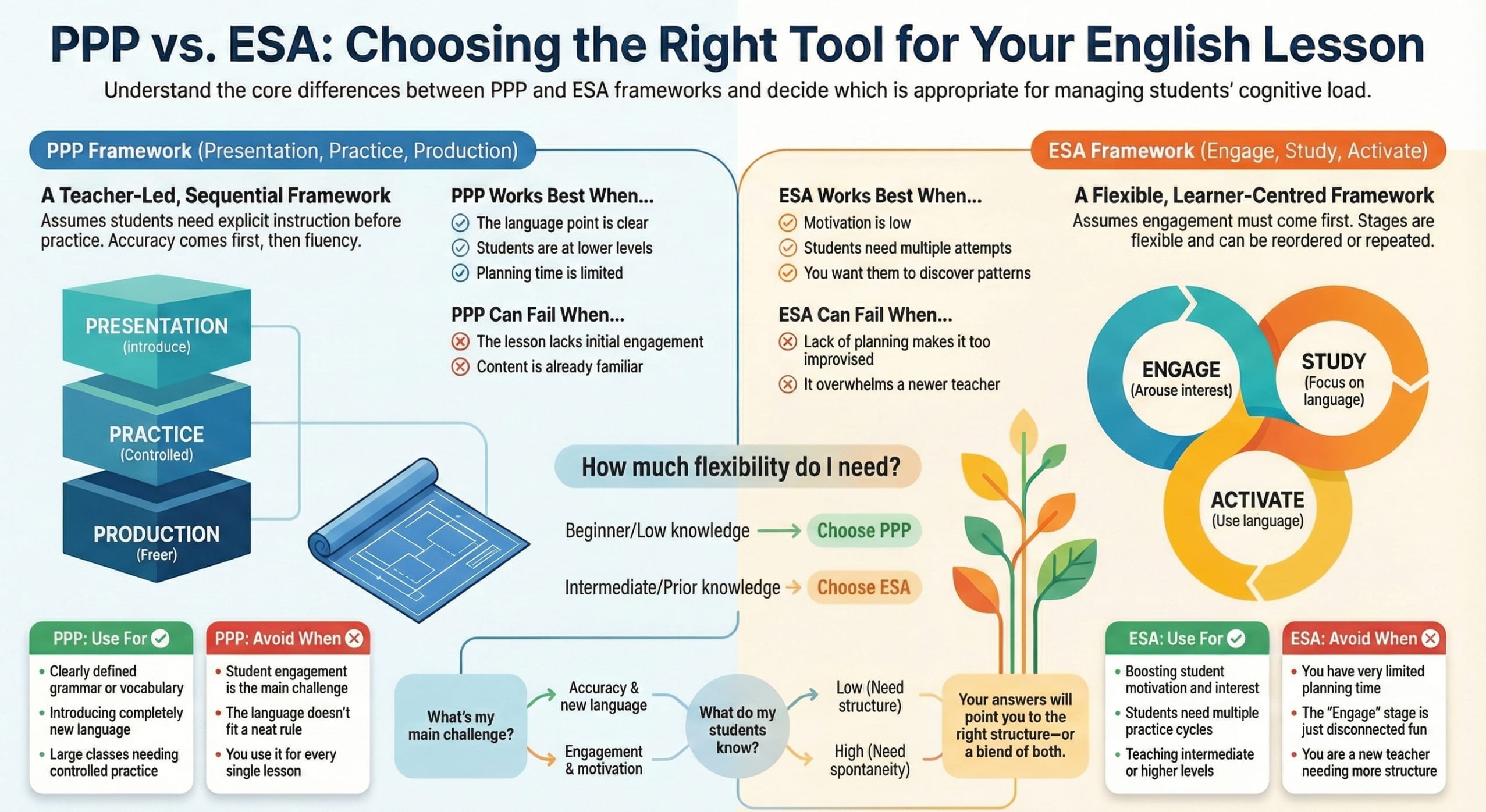
I spent years feeling guilty about using PPP.
My CELTA trainer made it sound like a relic from the 1960s. “It’s teacher-centred,” she said. “The research doesn’t support it.” I nodded along, scribbled notes, and then walked into my classroom in China the next day and used it anyway.
Because it worked. My students improved. The lesson flowed. I wasn’t scrambling.
So why did I feel like I was doing something wrong?
Here’s what I wish someone had told me back then: You do not need to abandon PPP or for...
January 3, 2026
How to Teach Reading Without Killing Motivation

We’ve all been there. You’ve found what you think is a great text. The topic seems interesting. The level looks about right. But ten minutes into the lesson, half your students are staring blankly at the page while the other half are reaching for their phones or dictionaries, ready to translate every single word.
Reading lessons can feel like wading through treacle. They’re slow. They’re often joyless. And somewhere along the way, between the pre-teaching vocabulary and the comprehension question...
December 13, 2025
The 2-Minute Lesson Plan
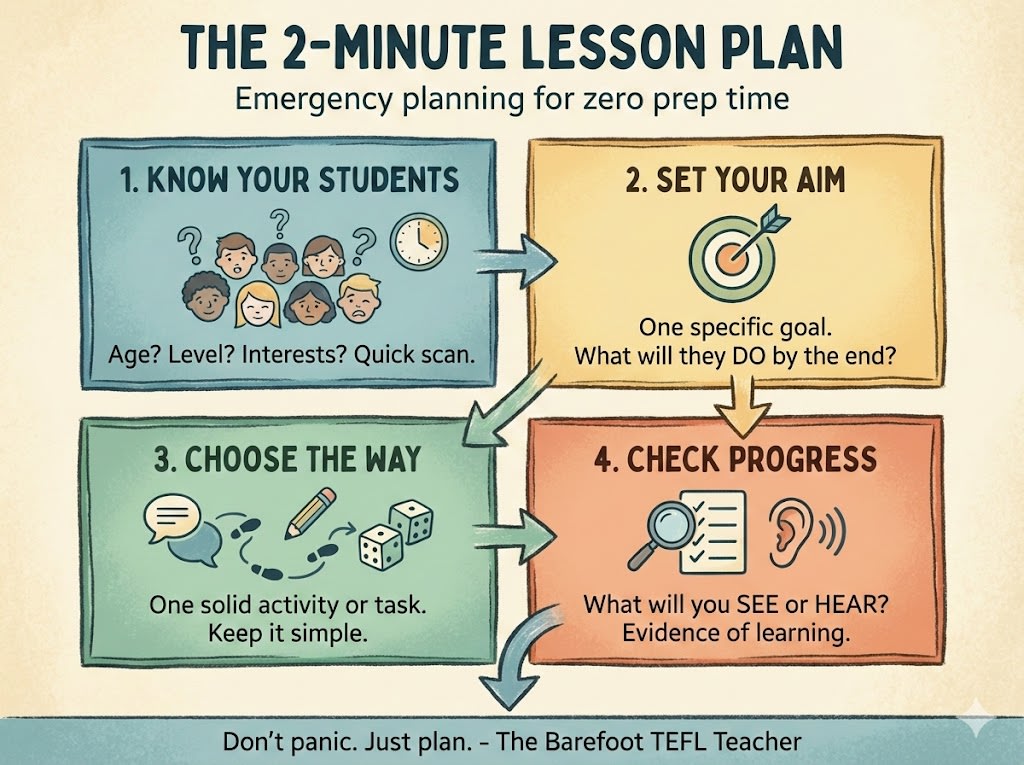
Every teacher eventually faces the nightmare of having to teach a class with zero notice.
A colleague calls in sick, a manager grabs you in the corridor, and suddenly you are told: “You’re teaching in Room 5 in two minutes. Level 2B.”
In emergencies like this, you do not need a written document. You need a mental framework.
Here are the four specific questions that will turn that panic into a proper lesson before you even reach the classroom door.
Thanks for reading Barefoot TEFL Teacher! Subscribe ...