Gina Fiametta's Blog
November 14, 2025
Being Haunted by That One Story
What if I told you I’ve been working on the same story for twelve years?
I’ve outlined and attempted to start this story multiple times, but it always fails. And whenever I try to explain the concept to someone, it’s too vague to describe. It lives in the back of my mind while I work on other projects, always searching for inspiration. I’ve collected images on Pinterest, made countless playlists, and drawn or designed its characters again and again. Pages of thoughts litter my inspiration notebook, going back generations of notebooks in my desk drawer.
I feel like Charles Muntz tracking the bird in the movie Up, when he tells Mr. Fredricksen, “Sometimes years go by without a sighting.”
By all rights, it sounds like a story I should give up on. If it’s so determined not to come to me, perhaps it isn’t meant to be. I’ve certainly waited long enough. Maybe the pieces just don’t fit together.
But I am willing to wait. The seeds of inspiration are so intriguing to me that I will write this story if it takes me my whole life. I’ll just write other things whenever the muse is silent.
This story was born from a handful of very specific ideas that won’t let go. But every time I try to intentionally flesh them out, I fall into the trap of over-engineering. I’m attempting to think my way out of a dreaming problem and end up spinning my wheels and exhausting myself without making appreciable progress. Every creative endeavor comes with its scraps that don’t make it to the final cut. But when you are disposing of the vast majority of what you create, it’s time to change up your strategy.
So I’ve resolved to let it take its time. I don’t try to summon it. I simply snap up the inspiration when it comes, write as long as I am able, and when I find myself grasping at straws, I close my notebook and return to my regularly scheduled writing.
It’s so frustrating to tell you about a story without being able to really tell you about it, and even more difficult and even embarrassing to try and explain why I’m still excited about it. There is nothing for you to grab onto. It’s hard enough to believe in my work when other people are cheering for me. It’s far more difficult to sustain a project this long on the life support of my own possibly ill-founded faith in the story I’m dreaming of.
So instead of making another disastrous attempt to explain the plot or describe the eight or so characters I already know pretty well, I will offer you some advice that you will hopefully never need. If you have a relationship with one of your stories that’s like this, here is what I have learned over the past twelve years.
Do let it marinate. The hard truth is that sometimes waiting is all you can do. Maybe you’re not at the point in your life when you’ll have the experience you need to understand these characters, or maybe some niche fact or idea is waiting to send you down a rabbit hole upon discovery. Let your story tell you what it needs and don’t be afraid to wait for it.
Don’t try to force it into existence. You can’t simply engineer or discipline your way out of an artistic problem. That isn’t to say that word counts and persistence don’t matter. It just means that when a story is stubbornly stuck, sometimes you need to step away and let the tangles loosen up instead of pulling them tighter with constant fussing.
Do keep writing. Write other stories, poems, articles—whatever you create, keep creating. If you save up your creative juices until that big project finally comes to you, you won’t have the discipline or experience to see it through.
Don’t let your stubborn story become an obstacle. Keep living your life and wait for the inspiration to come to you, not the other way around. The stories that are ready to go should come first. Shelve this one for now, put on your shoes, and keep walking.
Do create peripheral works if they strike you. Draw characters, listen to poignant songs, and write down whatever does come to you. Writing that floating bit of dialog or describing that one really important setting may just give you the spark you need to light your next step.
Don’t put this project on the calendar. I know, I know. Consistency is so important, and you’ve got to keep working. However, when a story reaches this level of stuckness, continuing to pick at it won’t do any good. Simply fill your schedule with other things and let your muse catch up to you when it’s done sulking.
Do describe what you already know about the story in as great of detail as you can. Sometimes it’ll lead you to a new discovery. I refer to this process as feeling for loose threads.
And one last Do: Take the time to listen to your gut when it comes to what matters and what needs to change. The roots of the story are the scenes and ideas that set your creative heart in motion, so don’t give up on those, but do be open to what little shifts in dynamic will let them work together more smoothly.
Obviously, since I haven’t finished this story yet, I can’t promise you that the above strategies will work. But I can tell you they’ve given me a degree of peace. I can keep making progress on other things while sustaining the hope that one day, I’ll have this story to show you, and you’ll know why it was worth it.
What’s making this particular story so damn stubborn is a question for another day. But for now, the hunt continues.
P.S. On a hopeful note, want to know what inspired me to write this article? That One Story paid me a visit this morning. The hunt continues!


October 14, 2025
My No. 1 Criticism of Literary Academia
Let me be clear about one thing: I loved getting my English degree. I loved my professors and how they helped me to sharpen my skills as a writer and a critical reader. I loved getting to have discussions with and learn from people who thought differently from me. Most of all, I loved being in a community of people who care as much as I do about the stories we tell.
That being said, I always felt as if literary academics and I were not quite on the same page (no pun intended). As the years have gone on, so has my struggle to put into words the exact divide that lay between us.
At first, I thought it was simply because they were academics. Perhaps I didn’t fit in because I wanted to go out into the world and write rather than study what had already been written. But a lot of academics write as well, and I enjoyed my studies alongside them.
Later, I thought it was because I write and read genre fiction (often said with a sneer by academic readers). My work wasn’t serious, complex, revolutionary, or literary enough (whatever the hell that means). I simply wasn’t high-brow enough to be on their level. There is a grain of truth in this; my focus is less on the techniques and tools that create the various effects used in writing and more on the story itself. Granted, technique and structure and how is exactly what we were supposed to be learning, but I was more interested in the resulting effect, the product, the story itself.
One of my biggest pet peeves can be observed in the difference in the language we use. If you’ve spent any time studying literature, you’ve probably become accustomed to hearing a story referred to as a “work” or “the text.” I’ve always hated this way of speaking, and I’ve finally managed to articulate why. Put simply, a “story” is alive, while a “text” is dead.
It would be obtuse for me to pretend I don’t understand why we referred to it this way. We were practicing the critical skills of observing the context, techniques, and effects produced by each piece in a detached way. Regardless of how the story itself made you feel, what was it doing? How and why was it doing that? And these are good questions to ask. But ultimately, I think it’s important to return to viewing the story for what it was, a world apart from ours, a work of art.
Let me put it this way. If you wanted to study butterflies, it makes sense that you would possess and examine a few preserved butterfly bodies so you could understand their inner workings in a way you couldn’t on a live specimen. But if you never spent time actually observing a living butterfly fluttering by and sipping nectar and doing all of the things a butterfly does, you would entirely miss the point.
I think that’s what we often do to stories in an academic setting. We spend so much time focusing on the revolutionary technique or critical reception of a piece that we forget what it was meant to be altogether. Yes, art has proven an excellent vehicle for social and political commentary, and certain writers have introduced waves new techniques, but never forget what brought all of us here in the first place, and that was to tell a story. Not to show how to tell a story, not to exhibit how adorably clever we are in our ability to tell a story in a new way, but to tell the story. To immerse you in a world not your own.
I remember my professors becoming frustrated with students for describing a piece as “relatable,” often demanding an explanation. Probably they wanted them to articulate how it was relatable, but I think they missed the point the student was trying to make, that they felt a connection to the story or a certain character. This was discouraged, as if it meant the student had lost their sense of objectivity.
But those same professors who encouraged us to look at literature more or less objectively would describe their reason for entering the field of literature using examples of entirely personal connections they felt to stories they had read. In practice, it felt like they were trying to divorce the study of literature from what had drawn all of us to study it in the first place.
What is the first purpose of humans telling stories? Connection. Sharing ideas and information. To quote William Nicholson, “We read to know we are not alone.” I once gave a speech on the research into experience taking, or the way in which reading changes how we relate to each other and the world around us. To study the objective, the observable change wrought by art, we find ourselves returning to the subjective, what art did for each of us. The “relatability” of it all.
At last, I’ve found the words to describe the forced or feigned objectivity that often characterizes the study of literature: the loss (or intentional eradication) of one’s sense of wonder. To be carried away by the emotional impact of a work was treated as amateurish. But the very word “amateur” comes from the word amare, which means “to love.” We inadvertently imply that the way to become a professional, to graduate from the position of an amateur, is to lose one’s love for their field of study. And what is more critical to art and human nature, the ultimate objects of literary study, than the ability to love?
No matter what anyone tells you, you do not gain professional prowess, dignity, or respectability by ditching your sense of wonder. You simply lose the joy that made you love your field in the first place, the very joy that gives your work life. That’s what turns a story into mere words on a page, and the difference between a chloroformed corpse and a butterfly.
September 14, 2025
My Writing Space Essentials
Writers are strange, often solitary creatures. And like all creatures, they require the correct habitat in order to thrive. Proper care and feeding can help your writer produce better quality and more consistent work, and though it cannot guarantee they will keep their butt in the chair and their hands on the keys, it can certainly help.
Specifically, every writer has his or her own hang-ups when it comes to their writing space. Here are some of mine!
PrivacyIt’s probably fairly typical for a creator to need a space that minimizes distractions and interruptions. But I also think it’s important to minimize feelings of self-consciousness. Maybe you’ve had this problem: Even if nobody but you is thinking about you, your inner editor manages to convince you everyone is judging your writing, which they can’t even see from across the room, and you freeze. Thus, nobody watching is a must in order to let the creative juices flow.
But I also need privacy for another reason that’s a little odd.
Ever since I was a little kid, I’ve had a weird Thinking Face—really more of a Thinking Posture. Whenever I was deep in thought, I’d stare into space, hold my hands up in front of me, and wiggle my fingers. It was weird enough that my mom later confessed she’d actually consulted our pediatrician about it. (He told her as long as I could bring myself out of it, it was probably fine. I was just deep in thought.)
Though I’ve managed to force myself to be more subtle, to the tune of keeping my hands down beside me instead of up in front (in elementary school I invited the classmate next to me to slap my hands if she saw me doing it) I still find myself looking like I’m having a seizure if I’m deep in thought.
I no longer judge myself for it, but I’m still sensitive to people startling me when I’m in that state, so even though no one really intrudes on my writing time, I need a closed door, or in my case, a curtain on the stairs behind me. It’s also why I don’t like to have my back to the door.
Vertical Spaces on Either SidePart of the reason I treated myself to a big executive desk a few years ago was so I could have room for my laptop and a notebook at the same time. The other reason was so that my cats would have room to sit and observe my writing without either stepping on my keys or fighting for one spot.
The desk is wide enough for a kitty loaf on either side and then some, but I also have a pair of high stools which they much prefer. Even if they mostly come to nap or occasionally headbutt me for pets, they like to be able to see what I’m doing.
Basic ComfortsI’m picky about a few aspects of my physical comfort. I overheat easily and like a nice cool temperature; I should get the instructions from medicine bottles printed on a t-shirt: “Store in a cool, dry place.” Conveniently for me, I currently live in a basement.
I like natural light during the day, so I open all the curtains, and at night, I close them so nobody can look in at or sneak up on me in the dark. I also switch from the big light to a lamp in the evenings. Cozy lighting helps me focus and not get distracted as easily.
My desk chair has to be comfortable enough not to make my legs go numb (I met some wooden library chairs with that problem when I was in college) and be low enough for at least my toes to touch the floor. I’m short, and having my feet dangle makes them feel restless and distracts me.
Emotional Support BlanketI often wear my fluffy ankle-length robe to write. Since it’s summer, it’s too hot for that, but I find that wrapping up in a light blanket from my shoulders to my feet makes me feel safe and even less self-conscious. Don’t ask me why. So now I have a lightweight blanket that lives on my desk chair. If I get too warm, I let it fall from my shoulders, but in general, I have it on for the feeling of emotional safety.
SuppliesAs far as what supplies to keep at my desk, my rule of thumb is to minimize reasons to get up. I stock tissues and hand sanitizer, and lately I’ve been keeping a cup of water with a lid and a straw with me. (Cheshire, my older cat, likes to daintily dip her paw into my water to drink out of it, and she’s admirably sneaky. Hence the need for the lid. As adorable as her little mitts are, they’re the same paws that dig in the litter box. No thank you.)
I keep a lens cloth for my glasses since I take my contacts out in the evening and can’t stand smudges obstructing my view. I’ve also got my inspiration notebook to jot down ideas for various projects and a smaller notebook for writing a to-do list, plus a stockpile of my favorite pens. (Okay, multiple stockpiles. All over the place. Like a squirrel storing nuts for the winter. And like said squirrel, I struggle to find them when I’m looking for them.)
I also have a few sticky notes laying about with reminders for myself, which currently include a list of names of characters and their specialties, a naming convention for a specific community, and the publishing schedule for my blog, Patreon, and newsletter.
AestheticThis is my favorite part of having my own writing space, but it can be a tricky balance to keep it from being distracting, especially since my tastes run decidedly maximalist. I keep inspiring knickknacks on the back of my desk and the shelves nearby so that if my gaze wanders, the creative juices keep flowing. I’m notorious for collecting decorative glass bottles and keys of various shapes and sizes, so those feature heavily. I’ve got a few odds and ends like a figurine of a raven perched on a branch, a filigree ship I got at a flea market, and an ornate sand timer I use to start writing sprints when I’m having a hard time focusing.
I’ve also got my two favorite candles and a lighter. Fittingly, their scents are named Autumn Walk and Haunted Forest. The former is bright and sweet, like a bright autumn day, and the latter is musky and dusky and mysterious. I’ve come to associate their scents with my stories, so sometimes I light them to give myself a push in the right direction.
Goals and RemindersI’m big on keeping inspiring quotes around, so I’ve got multiple canvases and decorations on the wall in front of me with such phrases. Examples include “Aut inveniam viam aut faciam. I shall either find a way or make one,” and “Create with minutes rather than grieving the wasted hours.”
I also have my heavily bedazzled graduation cap from college hanging up. I never planned to decorate my cap, but when my roommates were doing it, I decided to join in the fun. I found the perfect quote in the book Deep Work, which was the motto of a guild of stonemasons: “We who cut mere stones must always be envisioning cathedrals.” Meaning, the big projects are made up of lots of small and sometimes monotonous steps. The love we give to those small steps is what allows our work to culminate in a final masterpiece. That mentality was how I maintained grades I was proud of, and it’s how I justify the time it takes to play the long game of writing novels.
I also have a bulletin board hanging directly in front of me that’s meant to be a vision board. I can understand the power of visualizing what you want, but I’ve found myself feeling decidedly timid about doing so. I’ve printed some of my favorite writing-related quotes and made a couple of mock posters for events I could do someday as an author, but mostly it makes me feel self-conscious and like I’m looking at a very far-fetched to-do list. (To do: Print updated images and give it another go.)
So there you have it! That’s what my writing space currently looks like. What about you? Is there a particular snack you like to keep on deck? Can you not focus without your dog acting as a foot-warmer under the desk? Let me know in the comments!
August 14, 2025
Judging Books by Their Covers, Part 2: Things That Will Make Me Pick Up a Book Every Time
In spite of the age-old adage, we all have to find what we like to read somehow, and covers give you the first taste of a book. From the more obvious elements like the title and cover art to more subtle aspects like the shape, size, and even texture, the title is your handshake and the cover is your interview. And as any marketer will tell you, you don’t have more than a few seconds to either wow readers or kiss them goodbye. There are lots of books in this world, after all, and they don’t have time to give too many second chances.
I’ve already written about my top ten book icks, and now it’s time to show the other side of the story. Here are the top seven things that will make me pick up a book every time.
My Ideal Book FormatI’m just going to get straight to the point: my ideal book would be a used paperback, complete with foxing (that yellowish color books get with age—bet you didn’t know there was a name for it, did you?) and of course that seductive old book smell. (Seriously, they need to make a candle that scent. I’ve smelled multiple attempts, but so far none have appeased me.)
If you’re a book lover, I probably don’t have to tell you why all of these elements fill me with joy and recall memories of rainy afternoons spent luxuriously devouring half a book in one sitting. You know the magical thrill of walking into a bookstore and smelling those story-wrought pages. Combine that with your favorite hot beverage, and you’re set for the day. Mood = good.
There’s another aspect of old books, particularly paperbacks, that makes me feel at home, and that’s the sense of having comfortable, like-minded company in the ether as I read. When I bought my copy of The Silence of the Lambs, I knew it was going to be scary, so I needed company. I needed to see that someone else had been there before me and come out on the other side. So I wanted a used copy. I didn’t get my ideal paperback, but I was pleased with the result nonetheless.
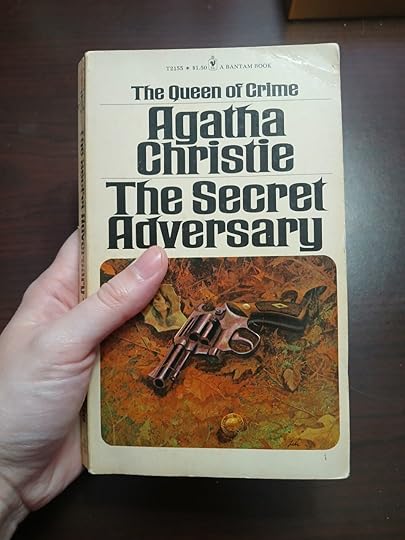
That sense of connection is even better when you know whose company you’re sharing. My grandfather posthumously introduced me to one of my favorite authors when my sister and I discovered his copy of Agatha Christie’s The Secret Adversary, which is still one of my favorites. It’s even dearer to me because it’s an interest I know we share, and that I own the very copy he pored over when he was alive.
You can keep your brand-new, perfect-condition copies; I want the ones that have a past, especially if it was shared with someone I love.
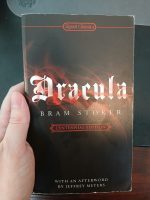
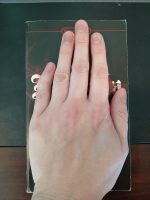
My sister and I refer to Signet Classics as the perfect hand-sized book. I measured, and they’re 4 x 7 inches, which is just about the length and width of my hand and ideal for carrying, reading, or holding close to your heart (if you know, you know). You could toss it in your purse or even stuff it in a cargo pocket in a pinch!
I can’t get enough of that perfect size. Something about it feels intimate and personal, like when you were a kid and there was a kid-sized shopping cart for you to push.
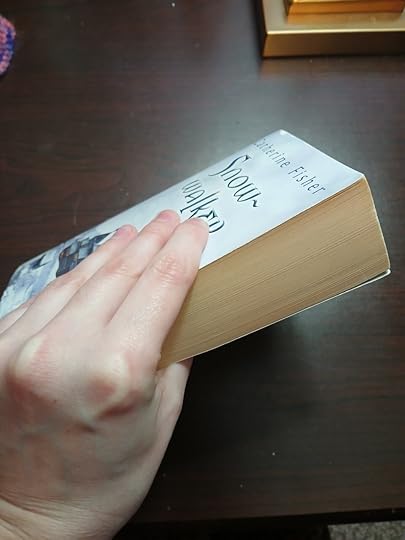
So this isn’t exactly about the cover, but it does have to do with the appearance of a book! Covers can be too big to be comfortable companions in the width x height dimensions, but when it comes to depth? Give me more, give me more, give me more! There’s nothing more satisfying than squeezing a book with a ton of pages with small or even tiny print, because you know you’ve got so many adventures ahead of you, all travel-sized for your convenience.
If you’ve ever thought hiring a cover artist would be a waste of money, this is your sign to reconsider. Visual artists have an eye for aesthetic and color that you don’t want to miss out on. Besides, why not support your fellow artists?
Specifically, I’ve found three aspects of color that can be relied on to hook my interest.
For a while, there was a trend toward an understated palette with black, white, gray, one metallic, and a pop of color, and I ate that up. Unfortunately, those covers were often paired with a stereotypical title (King of Blades and Darkness or whatever, you know?) so it didn’t always work, but I could at least appreciate the cover art.
Lately, I’ve been seeing more and more books come out with covers that are many bright colors, an explosion of color that still seems to come together, no doubt due to the skill of the artist. I know I’m not the only one whose brain is programmed for joy, and those wild and wonderful colors get me every time. I will at least pick it up and look at it.
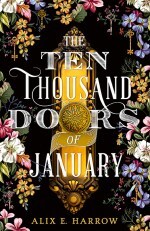
Finally, on a subtler note, many authors are opting for colored page edges. I’ve experimented with painting mine myself and haven’t yet committed to it, but it has definitely managed to connect me with a book before. I spotted Starling House in an indie bookstore because the edges of its pages were painted a rich purple, my favorite color! (Yes, I ended up buying it.) Others still opt for a pattern or design on their page edges, perhaps flowers or stars. Personally, if we brought back entire paintings hidden in the gilded edges of pages, I would be 100% behind it. Make my life beautiful, one boring surface at a time!
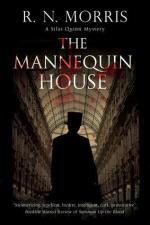
A Silhouette Walking Away From MeIt actually irritates me how reliably I will pick up a book with this cover art. I just find it so intriguing. Who is that person? Where are they going? I pay great attention to how they are dressed, as well as their surroundings. Since they are facing away, the usual sins and liberties taken with characters’ features can be avoided. If the colors are darkened and it looks like they’re going somewhere in secret? Take me with you!
Bonus points if the figure is wearing a top hat. (I have nothing to say for myself.)
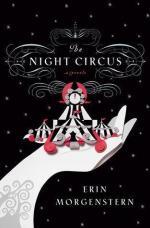
This item is entirely specific to me. Whatever gets you going, you know it when you see it, and you might be able to notice a pattern on your own shelves. For me, aside from the silhouette (which had to be its own item because it’s just so specific), my primary temptations are circus, gothic architecture and landscapes, and nautical scenes (think ships and lighthouses, not beaches).
I’m also drawn to any cover that simply strikes me artistically. Some of my favorite elements are scrolling/filigree, tons of detail, and a sense of movement. I love the kind of image that you could look at every day for a week and notice something new every time. I especially love if there are bits of stories visible in it, characters in different sections guiding your eye around the picture or interacting in intriguing ways.
Bonus points for any object that is so specific that it sticks in my memory or seems to point to a plot element. (Like a red leaf, for example!)
Indeed, what is in a name? A whole lot of promise, if you do it right.
My favorite titles have a few things in common: they’re unusual enough to catch my eye (enough of the Throne of Night and Sorrows trend), contain a clever turn of phrase, or sound like a story that makes me go, “I’ll write that if you don’t!” Sometimes, an entirely different premise leaps to my mind compared to what’s in the summary (and sometimes, I like mine better).

So what is your book aesthetic Achilles’ heel? Are there certain words that always capture your attention, or does a certain type of imagery have you in a choke hold? Let me know!
July 14, 2025
I’m Bad at Resting. Here’s What Has Helped.
I have a weird relationship with rest.
The pressures of guilt, anxiety, and the after-effects of busyness hum in the background like a constantly-running machine. Even on my days off, I often find myself sitting on the couch, unable to focus on the Restful Activity I’ve chosen, watching the clock like I’m still at work, and wondering if I’m resting productively enough. Somehow we’ve managed to turn rest into another obligation, another checklist item, and one we even try to multitask!
Trying to observe the Sabbath has further complicated how I feel about rest. Resting on the Sabbath is one of the Ten Commandments. So having been commanded to rest, we’ve got two choices: enjoy the break and understand it’s for our wellbeing and connection with God, or turn it into a chore. No points for guessing which one is easier to do, especially if you’re an anxious person.
Speaking of being anxious, if you have a mental illness that puts all your other worries on steroids, well, you’ve hit the trifecta of being bad at resting. (Join the club.)
You’re probably tired of hearing me talk about what it was like to have my day job absorb all of my strength and energy and what it did to my creativity. But my journey since then has taught me a lot about rest and the needs of a healthy creative mind.
Through trial, error, and a lot of stillness, I’ve compiled a list of some of the main factors that prevent me from resting, as well as the strategies that help me defeat them.
But first…
What qualifies as “rest”?My perception of rest used to be anything that would force me to sit still, like what you’d be allowed to do if you were on bed rest: watching TV, reading, playing video games, or napping.
But if you’ve ever found yourself restless and cranky after a day of doing those things, still feeling unfulfilled and resentful of the upcoming work week, you’ve probably asked yourself if rest is supposed to be something more.
In his book Flow: The Psychology of Optimal Experience, psychologist Mihaly Csikszentmihalyi suggests that particularly as adults, we’ve begun to organize our lives into two categories, working and lounging. Lounging involves sleep and mindless media consumption. But we seem to have forgotten how to participate in the third category, one at which we used to excel as children: play. Play is something we do for its own sake. Something that evokes wonder, curiosity, and fun. And it sounds like play may be what our resting lives are missing.
This take on rest may actually be biblical as well. My entire world was rocked when I heard my pastor point out that the translation of the word “Sabbath” is “stop and delight.”
Stop and delight. There is no guilt in that concept. There is true restoration and joy. It’s an invitation that opens up many more possibilities than trying to just sit still and be holy. (If you know, you know.)
But it’s not always easy to do. So without further ado, here are the top obstacles to good rest in my life and what has helped me combat them.
1. Decision fatigueI used to consider myself a control freak. It runs in my family. We each like things a certain way and can get irritated or distressed by small changes.
But while it’s true that I’m particular about certain things (needing to be left alone at the beginning and end of a day to let my own thoughts settle, for example) I’m finding that I’m not a true control freak. It’s not that I need everything to be perfect; it’s that a decision has to be made, and it often has to be made by me.
I’m also a highly conscientious person who wants to make the “right” decision, even in situations that might not have a “right” answer. Sometimes I just wish I didn’t think so damn much. I look at the people who seem to float through life, making enormous life decisions semi-spontaneously, and I envy them.
Some of this is my personality, but I’ve improved with practice. When I get overwhelmed by decision fatigue, I like to go for a long, meandering walk. I set no destination, no objective, and no real time constraints. I simply choose a park or neighborhood, or a coffee shop or museum I’ve never explored, and allow myself to wander.
Then I focus on allowing myself to notice things and stop if I feel like it. Whenever I’d usually push past something that piqued my curiosity because I’m too busy or I don’t know if the entire group I’m with would find it interesting, I stop and look. Path I’ve never explored? Pretty flowers? Little Free Library? Interesting display on a niche subject? Time to check it out.
It also helps, ironically, to attach myself to a true control freak friend and let them choose everything for the day. Activity? Your pick. Restaurant? I can find something on any menu. Something new caught your eye? I’m along for the ride. I can get lost in my own thoughts or conversation with my friend, and it’s a nice break from always being in charge.
2. Guilt resulting from an addiction to “being productive”Sometimes I get so hung up on whether I’ve been “productive enough” for the day that I engage in behaviors I’ve nicknamed “pseudo-productivity.” This includes trying to do more than one activity at once (even fun ones), keeping my laptop open next to me “just in case,” or comparing myself to other people who seem more productive than me.
Even during my downtime, I often feel like I “should” be doing more than one thing at once. I have to ask myself whether I actually want to do that and whether any activity I do would be more enriched if I gave it my full attention. This is also a matter of preference; some people enjoy doing six things at once, but to me it feels overwhelming. So I have to pay attention to my own feelings and accept that we’re different and that’s okay.
Ironically, feelings of guilt often lead me to waste time consuming mindless media, either to shut out my guilt and worries or because I feel guilty for sitting still and doing nothing! There are days when scrolling Facebook and watching cat videos feels fantastic, and there are days when it feels like I’m wasting my life and I feel progressively worse the longer I do it. I’ve had to practice asking myself whether I’m actually enjoying it or if I’m simply trying to drown out the noise. I’ve also found that there is great power in admitting to myself when I’m no longer having fun and just afraid of what to do next. It helps me break the spell, close the app, and stop wasting time doing something I don’t even find satisfying.
Under the influence of productivity guilt, it can be hard to even discern what you really want. I’ve found success in imagining that all my plans have been canceled, the chores are done for the day, and no one has any expectations of me. What do I want to do then?
Often I surprise myself. I just want to sip my coffee and stare at the trees. I want to go for a walk and not listen to music the whole time. I want to gaze out the window and let my mind wander. I want to go somewhere new without planning it to death.
Doing these things has been a game-changer. Ironically, nothing has been more productive for my creativity than allowing my mind to be still and fertile and seeing what ideas come bubbling up. I find myself making lots of lists on my phone so that I don’t lose any of these ideas and so that I don’t have to frantically do them all as soon as they occur to me.
3. Too much input, not enough outputDoes your mind ever feel like a room full of people that’s so crowded you can’t distinguish individual voices? Between work and home responsibilities, an endless news cycle, and constant social media and ads, I often feel like I’m drowning in input, even if it’s input I chose! Every headline I read, every video I watch, I feel more and more mentally congested. On top of that, my feelings in reaction to everything I’ve seen and heard start to build up, leaving me anxious and irritable.
We’re inundated more than any previous generation because of the constant access we have to all kinds of information. We don’t have to wait for the daily paper or tonight’s newscast; we just open our phone. That means we have to make a conscious choice to step away to process that information and develop our own thoughts.
Sometimes, the simple act of admitting to myself how I’m feeling about everything I’ve taken in over the course of a day (mentally, in writing, or even out loud) can offer relief from the pressure that has built up. Sharing those feelings with a trusted friend can be helpful, too, but sometimes I need to reflect on my own.
If I’ve been accepting input for a long time, it can take a while to unpack everything, making it difficult to sit still, pray, meditate, or sleep, let alone create or enjoy anything else. When that happens, I often find myself getting frustrated or even giving up trying to write for the day, then getting upset that I wasted the free time I had.
What I’ve found works better is to sit still and let whatever thoughts I have bubble up to the surface, then write them down and set them aside. If it’s a task that needs to be done, I put it on my to-do list for the next day. If it’s a worry, I describe it in detail and see if it has any merit. If it’s about an issue that was raised or an opinion that was expressed to me, I take some time to examine my feelings and determine my own opinion. After a while, the thoughts start to slow down, the bubbles start to clear, and I’m able to be truly still and at peace.
Want to hear some great news? The more often you consciously choose to slow down and allow your thoughts to catch up with you, the less intimidating they are each time. It’s like maintaining your cleaning on a schedule instead of waiting for chores to pile up till it’ll take you a week to get through.
4. Anxiety, whether clinical or over future eventsSometimes we try not to allow our thoughts to catch up with us because we know our greatest fears are hiding among them. “What will I do if…?” “How am I going to fix…?” “Am I doing enough for…?” This is another time that writing down what I’m worried about in as much detail as I can manage helps me to set it aside for the present. I also pray over it and hand it off to the One who is big enough to carry it.
Not everyone who has these thoughts has an anxiety disorder. But if you do, please do seek treatment, whether through therapy, medication, or whatever combination your doctor prescribes. I still get occasional thought tornadoes, which is what I call any cycle of worry that makes you feel trapped and unable to put it out of your mind, but my medication has done wonders for me.
5. Hyperconsciousness of being needed or observedI grew up exceptionally conscious of my own moods and those of my family members. My mom always noticed how I was feeling and wanted to fix any negative emotions, while my dad could go from happy to angry frighteningly rapidly and seemed to take any negative mood of mine as a personal insult. In my teens, it felt like they resented time I spent alone. So I developed a poker face for my feelings and a sensitivity to the moods around me, and whenever I was in the house with my family, I felt like I was in what I call “pending mode,” where I shouldn’t start an activity I’d be too deeply invested in, because they might want my attention and be unhappy to find me otherwise occupied.
Living alone for six years did wonders in helping me recognize those tendencies and learn to relax. Any chance I get to be totally alone, whether I’m on a walk or have the house to myself, is deeply restful because I can “rest my face” and not be hyper-aware of everyone’s emotions or how I’m being perceived.
You have to steal time to be alone. It’s the only way, and it’s necessary for your health. An hour alone can increase the quality of the time you spend with the people you love a hundredfold.
Do it for you!Don’t buy the lie that there are certain people who don’t need rest, or that needing rest is weak. We as humans need time to be still and simply enjoy life. Even if you’ve struggled to do this in the past, you can get better with practice, which is what I’ve been working on.
I hope these strategies help you as much as they’ve helped me. I wish you a clear mind and a peaceful heart, no matter what you’re facing.
June 14, 2025
Office Space (a Song Parody)
A parody of Taylor Swift’s “Blank Space” for the job search and workplace
Hey, I found you on LinkedIn!
We can talk about remote work.
Our pay is competitive.
Saw your profile and I thought,
“This one’s skills will help our case!
The job search is a desperate place.
How low can we keep her pay?”
Firm handshake, hopeful eyes
I can read you like a magazine
Dressed to impress, do or die
And I know the truth’s on Glassdoor
But hey, I’ll pretend
Our reputation’s on the mend
Our work culture means we’re friends
I’ll make you force a smile while you’re going off the deep end.
So it’s gonna be forever
Or it’s gonna go down in flames
You’ll pretend that it was worth it
While your life goes down the drain
We’ve burned out a lot of people
Only have ourselves to blame
We don’t give recommendations
Legal said to save face
Since you’re young, we won’t pay much
And the healthcare’s kind of shit
We’ll help you climb the ladder
Or lose your will to live
We’ve burned out a lot of people
Only have ourselves to blame
But you’ll still apply here, baby
‘Cause you got rent to pay
Smiling faces, welcome swag
The future promises incredible things
Free lunches, impressive stats
We want to hear your feedback
Find out what you want
Pretend to care for a month
But day to day, we’ll grind you up
Ghosting, lying, “just this once”
We’re committed to the problems we’ve made
Work late until it’s done
Keep you second guessing like
“You want to take your PTO?
Burden the team? The answer’s no.”
Complain and drink, but never go
‘Cause remember where I found you. There’s nowhere better, you know.
So it’s gonna be forever
Or it’s gonna go down in flames
You’ll pretend that it was worth it
While your life goes down the drain
We’ve burned out a lot of people
Only have ourselves to blame
We don’t give recommendations
Legal said to save face
Since you’re young, we won’t pay much
And the healthcare’s kind of shit
We’ll help you climb the ladder
Or lose your will to live
We’ve burned out a lot of people
Only have ourselves to blame
But you’ll still apply here, baby
‘Cause you got rent to pay
Nobody wants to work anymore now
Only want their paycheck, no more labors of love
Nobody wants to work anymore now
Only want their paycheck, no more labors of love
So it’s gonna be forever
Or it’s gonna go down in flames
You’ll pretend that it was worth it
While your life goes down the drain
We’ve burned out a lot of people
Only have ourselves to blame
We don’t give recommendations
Legal said to save face
Since you’re young, we won’t pay much
And the healthcare’s kind of shit
We’ll help you climb the ladder
Or lose your will to live
We’ve burned out a lot of people
Only have ourselves to blame
But you’ll still apply here, baby
‘Cause you got rent to pay
May 14, 2025
Mental Illness: Things I Wish I Had Known
I will not attempt to fit 29 years of a life marred by mental illness into a single blog article. However, in the spirit of Mental Health Awareness Month, I would like to offer up a few thoughts that would have benefited me immensely as I navigated my own journey. I didn’t learn these things until I’d suffered through years of pain, shame, and confusion, avoiding help because I feared judgment. But maybe I can ease yours by offering what I’ve learned.
If you’ve had even peripheral experience with mental illness, you’ve surely experienced your share of well-intentioned and negligibly researched advice on the subject. Here is a list of comments I heard, some of which scared me away from even attempting to talk to a doctor until I was an adult. I’ve included how I’d respond now, after earning a minor in psychology (which offered me the vocabulary to talk about my symptoms and realistic expectations about what might happen if I pursued treatment) and receiving treatment for over eight years.
I’m certainly not a doctor, nor am I offering medical advice. But from one patient to another, I hope this article feels like I’m placing my hand over yours and giving you the validation I wish I had had in some of my darkest hours.
“You have such a good life and so much to be thankful for.”Agreed and duly noted. But that doesn’t make your negative experiences any less real or valid. Good and bad coexist all the time. So the next time someone tries to use this phrase to invalidate your struggle with mental illness, advise them that they should focus on how grateful they are to not have a mental illness or know what it’s like.
“You can fight anxiety naturally by doing X, Y, and Z.”A healthy lifestyle with good nutrition, regular exercise, and sufficient sleep is objectively a good thing. However, it is not a substitute for treatment when you need it.
“Mental illness isn’t real. There isn’t a blood test for it.”There’s also no objective test to prove pain, but I bet you believe in that. So maybe we can agree that just because you don’t personally experience a problem, doesn’t mean it isn’t real.
As far as how a mental illness is diagnosed, I refer you to the Diagnostic and Statistical Manual. We’re currently on the DSM-5, or the fifth edition of this massive book. I assure you there is far more research and method than you’re imagining.
“You don’t want people to think you’re crazy.”I’m happy to report that “crazy” isn’t a real diagnosis. In my experience, it’s a word people use to degrade anything they don’t understand, extending well beyond mental illness.
You can’t control whether other people call you names, but you can decide not to be one of them.
You’re not crazy.
“Well, if that’s a disorder, then almost everyone probably has one.”It seems to me that a high prevalence of a problem is all the more reason to take it seriously and not get in the way of someone seeking treatment.
If you’re genuinely interested in the numbers, check out this article from the National Institute of Mental Health.
“Medication could mess with your brain.”It had damn well better.
If your brain is malfunctioning, treatment will alter how it’s functioning. That’s how we treat other organs, too. I don’t mean to invalidate your own fears, because any effect on the brain is serious business. But if the brain is where the problem is, then that’s what the solution should target.
“Psychoactive medication could change your personality.”It’s medication, not surgery. So if that happens, between you and your doctor and the people who know you, someone will notice you are not acting like yourself. Then your doctor can cross that medication off and try something different.
The fact that you may not land on the right solution on the first try is not a good reason to give up on treatment entirely.
“But we don’t even know how those medications work!”That’s true. But when you’ve suffered quietly for decades and something starts to help, you might be surprised how little you care. I’ll read the research when it comes out, but for now, I’d like to continue my monthly subscription to feeling better than I ever thought was possible, thanks.
And finally, a question I didn’t hear but definitely had deep down:
“What does it feel like to take medication for a mental disorder?”I’m sure this varies by diagnosis, type of medication, and by individual, so I will simply share my own experience.
I describe my medication in two ways: a non-stick spray for my thoughts and a life jacket for my mood.
As a child, I would get disturbed by either a scene in a movie or a thought that occurred to me, and it would stick in my mind and haunt me for months. It would distract me from every part of life and make me feel a sense of shame, which I tried to mitigate by “confessing” the thought to my mom. Sometimes I got so upset that I got sick or woke in the night with my pajamas soaked through with sweat. As I look back, the different eras of my life are colored by the obsessive thought that plagued me at the time, marking the months and years like so many rings in a tree. When one era finally ended, another would begin only days later.
With the help of medication, my brain feels like an attic that was once so cluttered that I couldn’t walk across it, but now I have tons of space to actually use it. The scary thoughts still occur to me, but they don’t sink in their fangs and continue to disturb me for months. (Hence the non-stick spray analogy.) What’s more, if something does get me down, it doesn’t take me months to come back up. I experience my negative emotions, and then I recover in a normal amount of time. Like I have a life jacket that allows me to bob back to the surface.
Here’s to Your Mental HealthMy experience may not resemble yours, and medication may not be the right treatment for you. But I hope you can take courage from what I’ve learned.
How you feel is relevant and real. It’s important to prioritize good mental health whether you have a disorder or are simply having a hard time. Like every other part of your body, your brain deserves the treatment of an expert to help you live your best life.
If someone in your life doesn’t believe you or isn’t taking you seriously, I’m sorry. That’s a horrible feeling. But it’s not your fault, and it doesn’t mean you’re wrong; it just means they’re fortunate enough not to know what mental illness is like. Be happy for them, but seek out treatment. Your doctor can help you figure out what you need. I recognize that the U.S. healthcare system is a nightmare, but there is help. Don’t stop advocating for yourself.
Life can get better than you ever imagined, and I want you to experience that. For me, seeking treatment has made all the difference in the world.
April 14, 2025
Judging Books by Their Covers, Part 1: My Top 10 Book Icks
We all do it. Unless you read every book on the shelf in order from left to right, you can’t not do it.
I’m talking about judging a book by its cover. And more than just its cover; this includes every first impression you get from a book.
As creators, we walk a tightrope between packaging our work in ways that seem to work and being different enough to stand out. So whether we chase trends or eschew them, we’re probably doing so in hopes of catching readers’ attention and holding it in the face of unimaginable competition.
But enough with the market trends and pressure from your agent (if you’ve got one of those, lol). Let’s just kick back and think about books from our perspective as readers.
I’ll go first. Not in any particular order, these are my top ten book icks.
Ick No. 1: Rough/Uneven Page EdgesI don’t know where this trend started, but I’ve never liked it. It makes it too hard to riffle the pages when you first pick the book up, and that’s a necessary getting-to-know-a-book move! Sometimes I even get faked out and think that a protruding page is coming loose when it was only a stylistic choice.
In all fairness, this effect could work if it was done in a leatherbound copy of Lord of the Rings or something, making it feel like a journal you’d get from a Renaissance fair. But for most books, I like my pages nice and smooth on my fingies, please and thank you.
Ick No. 2: Movie CoversIf a book gets made into a movie, it’s probably because enough people liked the original. SO LEAVE IT ALONE! Even if I liked the movie, I want the cover to stay the same.
This goes for plots and characters as well, but that’s another rant for another time.
I get it. If you’ve made a big/loyal enough following for yourself, you want to make it easy for people to spot your books on the shelf. But every time I see this done, I get thrown off, even if it’s a name that I know. Titles should be the main focus.
So if you want to make sure readers can find you, consider finding another way to trademark your books. Maybe a crest, a striking color scheme, or a signature printed on them.
But if you’ve made it big enough to be tempted to make your name bigger than your title, you don’t need to worry anyway, because you have devoted readers, and they will find you.
Ick No. 4: “FAMOUS AUTHOR Presents THIS AUTHOR”Authors supporting other authors? We love to see it! But getting faked out when you think your favorite author has published another book is just a dirty trick.
Want to draw attention to another author you love? Publicize your current reading list, review them on Goodreads, interview them on your podcast or blog, or bring them along on your next media blitz.
Just don’t do this nonsense. Because the reflexive response isn’t, “Oh, wow, FAMOUS AUTHOR likes them!” It’s “Oh, shoot, they’re NOT FAMOUS AUTHOR. disgust”
And I don’t think I’m alone in that response.
Ick No. 5: Not Making It Clear That a Book Isn’t CanonLet me make one thing clear: I’m all for fan fiction. I’ve found books I like written “in the style of” or intended as a sort of sequel to my favorites. All I ask is that you make it clear so I don’t get faked out. Seriously. Most of my favorite authors are dead, so when I think I’ve discovered a hidden work of theirs, I get super excited and then instantly disappointed.
This can be made clear in a number of ways, but the way that incurred my wrath most recently was seeing other authors using Agatha Christie’s characters with her signature printed on the cover as if endorsed by her. She died in 1976, so books that just came out couldn’t possibly have her express approval.
One more note on this subject: characters aren’t the only aspect of a book that make it sing. Authors have their own voices, and even if someone tries to imitate them, it’s not the same. Think about listening to a podcast. Just because you like to listen to true crime doesn’t mean you’ll love every true crime podcast. Podcasts come with tangents, and if you don’t like the host’s tangents, you won’t like their podcast, regardless of the subject matter. Voice matters, and so does personality.
Imitate if you like, but don’t label yourself as the genuine article.
Ick No. 6: Full Portraits of CharactersI don’t care whether it’s art or a photo; it’s always overtly inconsistent with the description the author gave. And we hate that.
Ick No. 7: Reviews Instead of a Summary Printed on the Back (Especially Reviews I Know You Paid For)Looking at you, Kirkus Reviews.
If I wanted someone to tell me what to read, I would ask them. But when I pick up a book, I want to know what it’s about. You wouldn’t expect someone to order a product without being able to read a description, would you?
Ick No. 8: Blindingly White PagesFortunately, I don’t see this one too often, but it’s an option when you’re formatting your book. I think I almost did it by mistake when I was getting ready to publish my first novel. I’m not sure what it’s called, but you know it when you see it. It reminds me of a dentist’s office: sterile, medical, and unnerving.
Ick No. 9: Overdone Title and Cover TrendsPublishers get excited whenever they see that something sells. But eventually it’s going to stop working when it’s overdone. For instance, titles like this or bland airbrushed faces that don’t even look like the characters.
Ick No. 10: Yes or No Questions as Taglines“Will they or won’t they?” Obviously they will, or this book is going to be a bummer.
It makes the plot so blindingly obvious that I no longer care. There are times when we want predictability, but there are other ways to indicate that. This pattern in a tagline is just a bad way to describe a book.
Remember, these icks are my own personal opinions. Read what you want, write what you want, and don’t take the trends too seriously.
But if you hate any of these, too, make some noise! Maybe the publishers will hear us.
March 14, 2025
A Fiction Author’s Modern Psalm
Preliminary notes on this piece:
Like many a biblical psalm, this one comes from a place of exhaustion and defeat. I’ve been over it again and again in my mind, wondering if it’s too despairing and pathetic to share, but I’ve concluded I will share it since the best and most effective pieces are the most vulnerable. If it’s not your cup of tea, feel free to scroll on. But I hope it will serve a similar purpose to the Psalms in the sense that although it appears haunting when you’re feeling joyful and hopeful, it’s the perfect piece to sit with you when you’re at your lowest, one that makes you say, “This person understands how I feel. I don’t have to pretend I’ve got it all together or that I even know where I’m going from here.” I felt foolish, hopeless, and exhausted when I wrote it, and I hope that if you’re feeling the same way, it offers companionship or even comfort.Historians can’t seem to agree on the meaning of the word “Selah,” which often appears in the biblical Psalms. Its roots suggest it may be a musical notation signifying either a rest or a rise in the music, while it is also related to words for “to lift up, to exalt” or even “forever.” This ambiguity suits the place where I am in my life and career. Am I called to stop or press on? Is this a momentary rest or is this what my life looks like from now on? I use Selah at the end of a phrase like in the Psalms, and it has come to feel like a declaration of “even so.” Whether I am pious enough to have placed my faith in God’s plan or am simply practicing radical acceptance, I cannot tell, but it feels like a prayer, and the acknowledgment of my situation offers a much-needed peace.I call out to you, Lord,
In this place where I am neither writing enough to be a full-time author nor working enough hours to be a part-time librarian, Selah;
Where I am neither established enough as an author to make a living nor making enough money to live on at my day job, Selah;
Where I am both doubtful of future success and numb to my previous accomplishments, Selah;
Where I have thrown away a promising career to achieve a dubious dream, Selah;
Where I am single as a Pringle when my castle in the air was founded upon a fiction career, a husband, and children, Selah;
Where my family still has faith in me but I’m so uncertain whether I’ll fail them that it fills me with nothing but guilt, Selah;
When I’ve chosen this life, but I don’t know whether this life has chosen me, Selah;
When the brilliant colors of my thoughts have muddied together into an uninspiring greige, Selah;
When in the midst of other writers, creators, dreamers, believers, lovers, aspirers, and achievers, I feel so desperately alone, Selah;
Where I stare Death in the eye and know not whether it is from across decades of toil or a single moment of surprise, Selah;
When I have so much to give and seem to possess a broken mailbox and an empty address book, Selah;
When I’ve left my Egypt and not yet seen my Promised Land, Selah;
When I’ve not yet tasted the manna or the quail and am desperately trying not to complain enough to earn 40 years of wandering in this desert, Selah;
While I lay out my sacrifices and those made on my behalf, waiting for the result as if for a verdict, Selah;
As I ask myself not whether I am a fool but whether I was meant to be one and whether it will answer in the end, Selah;
When I’ve learned enough to become an expert in my predicament but not in how to solve it, Selah;
When I haven’t given enough to achieve my dream but enough to be embarrassed if I don’t, Selah;
When the weight of all the people I will disappoint or who will shake their heads in pity if I fail becomes so heavy that I’d almost rather fail sooner rather than carry it any farther, Selah;
When my choice seems to be between a deathly life and a lively death, and I’ve cast the die, Selah;
When the truths told by those ahead of me are bitter, and I can offer no sweetness to anyone who comes after me, Selah;
When I may not have enough talent to succeed, but I definitely have enough to be a shame and a disappointment if I fail, Selah;
When I’ve given my life to light a flame that no one may ever see, Selah;
When I’m a disappointment to my father but not yet a worthy credit to my mother, Selah;
When I’ve made my last act of defiance to a life with no soul and have yet to learn whether it will be a triumph or a tragedy, Selah;
When the question is no longer what I will give my life to, but whether I will rest peacefully in my grave when I enter it, Selah;
When my attention and energy are expended in so many different directions that I can no longer stomach the smallest step forward, Selah;
When I’m not sure whether I’m bearing the weight of the world or this is what everyone goes through and I’m handling it exceptionally poorly, Selah;
When I don’t know whether I’m a voice of insight or a sniveling whine that cannot be forgotten soon enough, Selah;
When I don’t know whether God is calling me to move forward or to wait for either punishment or deliverance, Selah;
When I can’t think how to end this piece with a hopeful updraft, Selah;
Whatever I have left, I pour out.
God help me.
February 14, 2025
You Never Know Who’s Watching
To tell you the truth, I’m in a slump right now.
In fact, that might be a bit of an understatement. In the two and a half years I spent at my most recent full-time job, I came home so drained that I wrote almost no fiction at all. Since then, I’ve bounced back somewhat, but as often happens, I stalled out after the creative burst of October subsided. Between that and having an entire manuscript I don’t know how to fix, I’ve been pretty down for some time.
It’s more than just my writing. After quitting said job, I was able to find part-time work at a library, but nothing full-time ever panned out. Eventually, I was in such a tight spot that I ended up moving back to my hometown and leaning on the help of my family.
I won’t attempt to explain how frustrating that is for me. I’m an independent person, and not only did I leave my dream city and the sacred space of my apartment, it feels like I’ve lost so much of what I’d achieved. I feel numb most of the time, and days go by without feeling like myself.
However, giving in to despair has never gotten me anywhere good. So to renew my grasp on an “onward and upward” mentality, I want to share a recent moment of my fiction career that renewed my hope and sense of wonder, if only for a moment.
A couple of summers ago, my church held a day of casual TED-style talks where we could present for five minutes about anything we liked. It didn’t feel right to plug my book directly, but I wanted to share that side of myself in hopes of finding like-minded people and opening myself up to making friends. So I gave a talk about what readers could expect from my fiction, my interests and boundaries as a writer, and how my faith figures in.
I actually got the date of the talks wrong, so when my alarm went off while I was cooking dinner, alerting me that I only had about thirty minutes rather than a week to prepare, I panicked. I thought about bailing, but I didn’t want to miss the opportunity. So instead I came up with my topic on the way to the car, propping up a notecard on the steering wheel to jot down my main points before turning the key in the ignition.
I made it in time, and it went surprisingly well. People had good questions, and a few even ordered my book. I felt seen.
Years went by, and I had all but forgotten that cool experience. I didn’t stay in touch with anyone from the talks, though I could recognize a few, and I once more faded into the background, unsure how to sustain connections with my community.
Then one day I was meeting with a woman from my church to find other ways to get involved, and our conversation happened upon that day. She had been another of the presenters (I think her topic was karaoke) and she remembered my presentation.
Her next words were what arrested me. Her fifteen-year-old daughter, who had also given an excellent presentation that day, had been struck by the notion that writing a book and publishing it was something you could just do. Ever since then, this woman had found bits of stories scribbled on loose leaf paper all over her house, written by her children.
Further, this teenage girl had always been friendly and outgoing, but she was having a tough time fitting in at her new high school. Some kids were mean to her, and she found refuge in spending hours devouring book after book of fiction. That was exactly what my friends and I did at her age! And now she was creating her own stories.
This conversation gave me a glimpse of the hopes that often seemed so far away, because it showed that even though I haven’t even broken even financially, I’ve already begun to accomplish two of my most treasured goals as a writer: to secure a refuge for people who can’t escape their current circumstances, and to hold out a light in the darkness.
I was touched that my writing had inspired this girl. I was floored that the mere example of writing my own fiction had somehow set her free. It reminded me that sometimes the moments of our lives that leave the greatest impact are the ones we don’t realize mean anything to anyone but ourselves. You may not even know the good that you’ve done, but I hope you get to glimpse it here and there.
In the trophy room of my heart, that conversation occupies a top shelf.