Michelle Graff's Blog
May 6, 2022
Could the “Great Resignation” Transform the Human Service Industry?

News of the “great resignation” has sparked a renewed interest in retention strategies across all industries. The impact of this mass exodus has been felt by the human service sector. But let’s face it, this is not a new problem for social service industries. Child welfare, for example, has experienced high turnover, averaging 15-20 percent, for years. (See source) The root causes are much deeper than the pandemic.
Social service professionals, by nature of their work, experience secondary trauma making them vulnerable to symptoms of compassion fatigue. But research, mostly based on exit interviews, point to several other contributing factors. I would categorize the reason people leave in four areas.
Time pressures: High caseloads and unreasonable job expectations leave professionals with little time to do the basics, let alone focus on their own care and growth.
Lack of resources: This can include pay and benefits, but also includes tools, training, and supervisory support.
Feeling ineffective: Professionals are often frustrated with ineffective systems that they believe they have no power or voice to change. They do not feel like they are making a difference.
No clear path for professional growth: There is often little opportunity to develop and practice the skill sets necessary for successful career advancement.
The reasons for staying can be summed up in two words: purpose and connection.
So, strategies for retention should create meaning and connection, while addressing the above barriers. Now, more than ever, it is important to explore innovative solutions that provide helping professionals with:
Access to resources needed to do their job wellOpportunities to meaningfully contributeSpaces to connect and healPathways for career advancementAt Cultivating Human Resiliency, we design products and services for helping organizations and helping professionals to facilitate solutions.
OUR MISSION IS TO TRANSFORM THE CAPACITY OF HUMAN SERVICES TO CULTIVATE HEALING AND RESILIENCY
Explore our website to learn more about what we do and how we can assist you in your meaningful work.


November 19, 2021
Practicing Gratitude to Build Emotional Resilience

I have blogged about the benefits of gratitude before, but since it is National Gratitude month, I would like to take a deeper dive into the topic. I am sure you have heard that practicing gratitude has a myriad of positive effects. Research has revealed that gratitude benefits us in four spheres of wellbeing.
Physically: Gratitude has been shown to strengthen our immune system and reduce symptoms of illness.Emotionally: Gratitude has been shown to reduce symptoms of depression and increases feelings of happiness.Cognitively: Gratitude can shift our mindsets from a negative and scarcity bias and help our brain to identify solutions more easily. This can aide in problem solving and other cognitive tasks.Relationally: Gratitude has been linked to stronger relationships.In this blog I will explore why and how gratitude can benefit us emotionally and offer two gratitude techniques to reset and to strengthen emotional resilience.
Emotions as a protective response
In a state of emotional regulation, we experience the complexity of our emotions. We can discern the subtle nuances in a wide range of emotions that can feel both positive and negative. We can even experience two or more emotions at once yet differentiate between them.
But the survival brain likes to simplify the complex. When our brain detects that it needs a protective response, nuances and complexity get in the way. So, emotions are either numbed or they are clustered together.
When we are triggered into a fight response, emotions can cluster and surface as anger. Anger emotionally prepares us for a fight. It is a protective response that masks more vulnerable feelings, like indignation, frustration, fear, or shame. In survival mode, the ability to differentiate one emotion from the other is diminished. Often, it is difficult to distinguish the emotions of anger from the corresponding physical and cognitive responses. The source of our anger can also become generalized and difficult to identify. It can seem like everything makes us angry.
When we are triggered into a flight response, these clustered emotions surface as anxiety. Anxiety is another protective response that emotionally prepares us to flee. With anxiety, the nuances of our emotions get lost, making it sometimes difficult to pinpoint the source of our feeling. The anxiety becomes generalized. Like anger, it is difficult to distinguish the emotions of anxiety from the corresponding physical and cognitive responses.
Using Gratitude to Reset
Gratitude can be a reset strategy to calm our amygdala by shifting focus away from the threat and toward our internal or external resources. When we shift the focus away from the threat and engage the brain’s ability to identify the positive, we send a message of safety that calms the amygdala.
A simple way to do this is by using a gratitude technique that can be done anywhere at any time you feel a need for a little self-regulation. It is easy, just remember 3-2-1:
3- Using your external senses, identify three things you can see, hear, touch, smell or taste right now for which you are grateful. This is for grounding purposes so pick things that you can use one of your senses to appreciate. (It can be as simple as a beautiful color or the sound of silence.)2-Looking inward identify two things about yourself for which you are grateful.1-Think of your support network and visualize one person for whom you are grateful.The benefit of using gratitude in this way, goes beyond just helping us to self-regulate in the moment. Because of neuroplasticity, the brain can rewire our patterned responses to negative stimuli. With practice, expressing gratitude can help us to identify the positive more readily and increase our ability to self-regulate.
Building Emotional Resilience through Gratitude
When we practice gratitude to reset, we are engaging our cognitive resources. It does not necessarily make us feel grateful, at least not right away. In fact, gratitude should not be used to avoid uncomfortable feelings. Emotional resilience involves the ability to sit with an uncomfortable feeling without being triggered into a fight, flight, or freeze response.
Gateway emotions
Emotions, even the ones we categorize as negative, serve a purpose, and should not be thought of as bad. It is possible to feel frustration, shame, envy, worry and fear and still be emotionally regulated. But when we are regulated, we still can identify the different nuances of our emotions as well as differentiate their origin. This allows us to choose a response that is helpful instead of harmful.
Though we can feel a wide range of emotions while regulated, some emotions can become gateway emotions. This is when the emotion itself becomes a trigger for a protective response.
Learning to be grateful for our emotions, especially our gateway emotions, can empower us to face, not turn away from, these vulnerable feelings.
Practicing emotional gratitude
In my workshops, I use a gratitude technique that allows people to develop emotional gratitude.
I begin by helping them identify their gateway emotions. We all have different gateway emotions because we all have had different experiences. We also all have a different emotional vocabulary, and there are hundreds of emotional words used to describe the various nuances of emotions.
Try identifying the following five feelings using emotion words:
The emotion word for when I feel depleted. (Sad, mournful, dejected, sorrowful…)The emotion word for when I feel on edge. (Worry, confused, embarrassed, unsure…)The emotion word for when I feel ready to explode. (Frustrated, annoyed, resentful, pressured…)The emotion word for when I feel calm. (Peaceful, blessed, content, pleased…)The emotion word for when I feel connected. (Empowered, joyful, inspired, creative…)Next, write down the reasons why you are thankful for each of these five emotions.
Usually, it is easy for people to identify why they are grateful for emotions that make them feel calm and connected. It is more of a stretch to find reasons to be grateful for gateway emotions. But all emotions serve a purpose. For example, I am grateful for sorrow because it reminds me of my connection to humanity. When I feel sorrowful, I am more attuned to the sorrow of others. I am grateful for worry because it reminds me that I have people and things in my life that I care about. When I feel worried, it is an opportunity to take a precaution or practice letting go of the need to control the outcome. I am grateful for frustration because it is a signal that I need to step back. When I feel frustrated, I am motivated to reassess my goal and get more creative about my strategy.
We all have different windows of emotional tolerance. Practicing emotional gratitude helps us stretch this emotional range and embrace its complexity. Overtime, we learn we can feel sorrowful and grateful at the same time. When we acknowledge the benefit of our emotions, we also begin to recognize their temporariness. Instead of avoiding uncomfortable feelings, gratitude allows us to sit with the emotion until it gradually melts into something new. Ultimately, this improves our ability to choose a response instead of reacting. This is emotional resilience.
May 10, 2021
Compassionate Connections
 Why they are just as important as Self-care
The notion of “self-care” has been a popular response to compassion fatigue and burn-out. As I wrote in my previous blog, promoting self-care alone can be problematic. I proposed that maybe we should be focused more on “compassionate connections.” I wanted to follow-up on that thought.
In my book, The Compassion Fatigued Organization: Restoring Compassion to the Helping Professional, I write that compassion is the antidote for compassion fatigue.
Indeed, there is a growing body of research supporting the idea that compassion can have a positive effect on the compassion giver as well as the recipient. A compassionate response has been shown to both calm the threat response while triggering the reward system.
However, the idea of being more compassionate can seem counterintuitive to a helping professional experiencing secondary trauma and burnout.
The problem might be that, as helping professionals, we often think of a compassionate response as being able to fix something that is not ours to fix or not in our power to fix. This can cause boundary breaches that trigger unhelpful protective emotional and interpersonal responses.
So, we need to shift our thinking to acknowledge that a compassionate response can also be an empathetic presence. Offering an understanding ear, or just sitting with someone in their suffering can be profoundly healing. Compassion is about human-to-human connection, and these connections nourish the giver as well as the receiver.
Strengthening our compassion muscle involves exercising our ability to be empathetic and doing so in the context of healthy boundaries.
This does not mean we should not also be compassionate to ourselves. But self-care begins with seeing ourselves as recipients not just dispensers of compassion. We do not have to choose between ourselves and others. We practice self-care so we can respond compassionately to each other. So, it is important that the self-care practices we choose are nourishing and connective, not numbing.
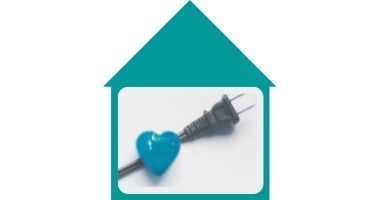
In my book, I use the analogy of a circuit breaker to describe compassion fatigue. A circuit breaker is tripped as a safety feature, temporarily shutting off the power to overloaded circuits. Your home is not out of power, you just need to unplug a few things and reset the breaker. Our threat response to compassionate work and secondary trauma can feel as if our compassion has been depleted. But just like a circuit breaker in our home, we need to reset and remember that compassion is renewable.
We do not need to conserve compassion; we need to restore its ability to heal and connect us.
April 12, 2021
Are you getting tired of hearing about self-care?
 You might not be alone.
The other day, while connecting with old friends, someone mentioned “self-care.” My friend, a middle-school teacher, indicated with a tone of exasperation that she was “so tired of hearing about self-care.” She went on to tell us that she is bombarded with emails from her school about how they should be practicing self-care as a response to the added stress of teaching in a pandemic.
I understood what she was saying.
It is true, self-care has become a popular mantra, especially among helping professionals. In fact, I have written a blog or two about it. But in my book, The Compassion Fatigued Organization: Restoring Compassion to Helping Professionals, I point out the pitfalls of relying on self-care alone to combat a compassion-fatigued culture.
I also encourage helping professionals to see themselves as recipients, not just dispensers of compassion. Practicing self-care and self-compassion is one way of doing that.
So, what could possibly go wrong with encouraging people to take care of themselves? Well, nothing, except that the message we send can feel less than genuine if it coincides with an environment that is otherwise not supportive. Even worse, sometimes the message implies something not so helpful. Here are a few of those implications that can feel not so compassionate.
Self-care is something you are not doing well or there would not be a problem. Most of us already know how to care for ourselves. So, the question is what is keeping us from thriving in our current environment. The barrier could be in our mindset, but there might also be external barriers involved.Self-care is an extra thing you need to do in addition to all the other things you are responsible for getting done. Well, that sounds exhausting. This is especially problematic in jobs where the work is never really done. Self-care practices are most helpful when they are woven into our existing routines including our professional life.Self-care is the best solution for resolving the problems of an overwhelming work culture. I hope we can all acknowledge that this is not the case. Though change can begin with us, organizational culture is the result of day-in and day-out interactions repeated over time. Positive solutions involve many people working together.Self-care is something you need to do yourself. The word self suggests that we are on our own. A truly supportive environment asks, “how do we care for each other?”In my conversation with my friends, everyone could relate to the frustrations with the self-care movement. Another friend asked a good question. What is another way to say “self-care” that conveys a better message? I suggested she try “compassionate connections.”
Why compassionate connections?
In my article, Numbing is Not Self-care, I write about what I called connective self-care. That is, activities that truly revitalize and restore us. Examples could be connecting with nature, our senses, our spirituality, or each other. Although connective self-care might be something we do by ourselves, we all need some time alone to regroup or reset, there is no denying the restorative power of relationships.
I have also written before about the benefits of social connecting and refer to it as a super resiliency. Because, from a neurological standpoint, we are all wired to connect to both survive and thrive. Connecting has been shown to improve both our physical and psychological well being. It helps us to emotionally regulate and can help alleviate both depression and anxiety. Connecting to others can also help us to restore a sense of safety, purpose and belonging.
Compassionate connections, that is responding compassionately to each other, has a two-way benefit. Research has shown that responding with compassion to the suffering of others benefits the giver as well as the receiver.
The best part about “compassionate connections” is it implies it is something we do together.
So instead of just encouraging self-care, what if organizations encouraged compassionate connections? Or better yet, what if they modeled compassionate connections?
As always. I would love to hear your thoughts…
January 8, 2021
Do Helping Organizations Experience Compassion Fatigue?
As the events of 2020 have turned our attention to helping professionals, compassion fatigue awareness is on the rise. In my book, The Compassion Fatigued Organization: Restoring Compassion to Helping Professionals, I examine the mindsets and response patterns that can lead to compassion fatigue in the individual. But compassion fatigue is not just a problem of the individual.
Organizations that serve traumatized people develop their own trauma histories, mindsets, and response patterns. In turn, this shapes organizational culture and the day-to-day experiences of the workforce. To change this trajectory, it is important to examine the impact of chronic exposure to trauma on organizations that serve those who have been traumatized.
Since organizations are made up of human beings, they develop in much the same way. What we know about brain development and how it is impacted by traumatic experiences can help us to understand how an organization can develop compassion fatigue.
Developmental drivers
The brain has two developmental drivers, the blueprint mapped by our DNA and our experiences throughout our life. Likewise, helping organizations usually begin with a purpose and a plan, but they are profoundly influenced by their experiences.
By design, these organizations are repeatedly exposed to the trauma of those they serve. As this exposure takes its toll on the individuals that make up the organizations, burned out staff, and constant turnover become ongoing challenges that add to the toxic stress of the environment.
In addition to the experience of secondary trauma and stress, helping institutions are vulnerable to and often experience primary traumatic events. This can include loss of programs, layoffs, and even the death or severe injury to an employee or client.
Developmental Goals
The brain is designed with goals to both thrive and survive. Likewise, most social service agencies or helping institutions have a stated goal or mission to serve the community in a manner that has positive impact. Programs and strategies are designed to realize their mission statement. However, to accomplish this goal, they must also achieve sustainability. That is, they must survive to serve another day. This unwritten goal of survival can become as much or more of a driver than the mission. This is especially true for organizations that live in a climate of constant external threat. Funding cuts, restrictive regulations, and external pressures to conform to flawed processes are all everyday challenges to organizations. Even other agencies that share the same mission can be viewed as predators in a world where there is competition for funding.
Interpretive Function
Like the human brain, organizations interpret data to help them achieve their goals. Much like individuals, organizations develop mindsets that are shaped by an experience with an unsafe world. Often these unspoken beliefs can contradict the professed organizational values.
These mindsets, in turn, can drive the agency’s response patterns. This can cause the agency to be profoundly more reactive then proactive.
The beliefs and practices of the people in the organization is what forms its culture. That is, the values and beliefs that are consistently demonstrated throughout the organization (These may differ from the values hanging on the wall.)
Function of Relationships
Relationships are as vital to the health and healing of an organization as they are to an individual. Organizational trauma histories also impact organizational relationships, both internally and externally. Relationship patterns can be a source of re-traumatization or they can be a source of healing. It is in these interpersonal interactions that we can see the symptoms of compassion fatigue take form.
In the same way the brain’s design impacts the individual, the above elements factor into the development of present-day organizational culture. Most helping organizations have a past that includes both primary trauma and secondary trauma. We must acknowledge that many also have histories of inflicting trauma and perpetuating institutional racism. These experiences, too, become embedded in the current culture. Failure to acknowledge any or all of these wounds leave workers to carry the burden of trauma they cannot even name.
Symptoms of a Compassion Fatigued Organization
Just as with individuals, recognition of the symptoms of organizational compassion fatigue is a core step in creating a compassionate culture. Below is a list of symptoms that are far from exclusive but can begin the process of organizational awareness.
Cognitive symptoms:
Scarcity thinking: Is the organization generous with its resources and does it prioritize making sure programs and staff have the resources they need to be successful? Or is there a constant pressure to find ways to cut expenses and make do with less?Finger pointing: Do leaders and staff step up to take responsibility for their part when things go wrong? Or is there a scramble to assign blame elsewhere?Failure to learn from mistakes: Does the organization embrace both successes and failures as learning opportunities? Or do they keep repeating the same mistakes?Fixed potential: Does the organization develop and inspire employees at all levels? Or does leadership see some as having fixed roles and capabilities?Denial: Do leaders have an accurate perception of the challenges their organization might face? Or are they unaware of the struggles of their employees and the needs of the community?Polarization: Do all members have a sense of ownership? Or is there a strong us against them mentality between management and frontline, different departments, and even staff and clients?Emotional symptoms:
Conflict: Are conflicts viewed as learning opportunities and addressed in a timely manner? Or do they go unresolved, allowing anger to fester?Fear: Do employees feel safe in the knowledge that they will be treated fairly? Or is fear the primary motivator?Emotional stifling: Are there healthy avenues for emotional expression? Or do negative emotions surface in the form of low morale, absenteeism, and high turnover?Numbing: Is leadership attuned to the emotional pulse of employees? Or is there a failure to validate this human response?Reactionary responses: Does the organization make value-based decisions guided by future expectations? Or do they react to situations based on past negative perceptions and emotions?Behavioral Symptoms:
Punitive practices: Does the organization encourage accountability through clear expectations, learning opportunities and choice? Or does it try to control behavior through punitive methods?Lack of transparency: Is information flow bidirectional, clear, and open? Or is needed information kept hidden?Lack of innovation: Does the organization support questioning and experimentation? Or are employees expected to blindly follow rigid procedures?Limited lines of communication: Is the leadership open to learning from all members of the organization? Or do they only value and rely on the opinions of an elite few?Disconnect: Do practices accurately reflect agency values? Or do the actions of leaders and practitioners routinely contradict professed values?Lack of purpose: Is there a clear connection between the work being done and the mission of the organization? Or do people wonder the purpose of what they are told to do?Just as we ask the trauma informed question “what happened to them,” when referring to individuals we serve, we must ask the same question when assessing the organization. The irony of all this is that organizations designed to facilitate a compassionate response to social problems, begin to feel like places that hold no space for compassion to thrive. But this is not an accurate reflection of an organization’s heart. It is merely a symptom of the same compassion fatigue experienced by the people it employs. The solution, therefore, lies in cultivating a culture of compassion.
To learn more about restoring compassion to helping professionals and organizations, check the book:
October 5, 2020
Compassion Fatigue and Covid
 How does the pandemic impact helping professionals?
Compassion fatigue is hardly a new phenomenon. Helping professionals have long experienced the impact of chronic exposure to secondary trauma and stress associated with their work. But circumstances created with the Covid-19 pandemic could be challenging compassionate helpers on a whole new level.
Compassion fatigue impacts those in helping professions such as nurses, first responders, therapists, social workers, teachers, and other professionals who work with people who have experienced trauma. It is our survival response to chronic stress and exposure to the pain and trauma of others. When the amygdala in our brain senses a threat, it triggers a stress response. Overtime, this can result in a myriad of symptoms such as anxiety, irritability, sleep and digestive problems, exhaustion and feeling emotionally depleted. With compassion fatigue, the perceived threat becomes the compassionate work we do.
But, when our threat response is triggered, we also become motivated to seek safety. Our means for doing so usually involve attempting to control our circumstances, connecting with others, or relying on our own internal resources. These actions can calm the amygdala and help to mitigate the impact of chronic stress. Unfortunately, these methods have been compromised by the current circumstances of the pandemic in the following ways.
Uncertainty: The past months have been plagued with uncertainty for all of us. Helping professionals are responding to contingency plans that change weekly. Often decisions are being made beyond their level of involvement. This severely limits their ability to gain a sense of control over their own environment.Isolation: Most helping professionals rely heavily on their coworkers to help them process their experiences. Colleagues provide a type of support and understanding that cannot be easily duplicated by those outside of the work. Physical distancing means limiting the ability to regularly connect to core support networks. Virtual alternatives help, but many helping professionals still feel the impact of increased isolation.Competency: When we see a problem that we know how to solve, our triggered amygdala receives a message of safety that calms our response. Competent helping professionals are now being asked to solve problems that stretch their former skill sets. Teachers are having to learn new ways to deliver online lessons; social workers and mental health providers have to assess situations from a distance; and health care professionals have been challenged to provide care while containing a virus they know little about. Though helping professionals in all sectors are rising to the occasion, they continue to face obstacles that can challenge their sense of competency.Though quality self-care is always important, combatting compassion fatigue requires a system response. Now more than ever it is imperative that we come together to support the helping professionals and organizations serving our communities.
April 9, 2020
Did you know that compassion can relieve stress?
There is no doubt there has been plenty of reason for anxiety in the last few weeks. Though some have responded with panic and greed, it warms my heart to hear of the many acts of compassion happening in our communities. People are sewing masks for health care providers or going out of their way to assist others in need.
Did you know that compassion is one of our best resources in a time of crisis? And it is not just because of what we are doing for others. There is a growing body of research supporting the idea that compassion can have a positive effect on the compassion giver as well as the recipient. One of its many benefits is relieving stress by calming the amygdala.
Our stress response is our brain’s way of responding to a threat. The amygdala relays messages throughout our nervous system to get ready to fight or flee. Hearing news about those suffering from covid-19 and the strain on our health care system can activate this stress response. When the amygdala sends out a stress signal, our body will respond accordingly. Chronic stress can cause sleeplessness, irritability, digestive problems and a host of other physical and emotional symptoms.
But when we choose to respond with an act of compassion, we change the response. The brain still detects the threat, but when we respond by planning to help others, we engage our prefrontal cortex. This sends a message back to the amygdala that everything is going to be okay, we can handle this. When we have the resources to cope with danger, the brain sees it as less of a threat. Instead, acts of compassion can trigger our reward system causing dopamine pathways to fire.
Compassion is like a muscle, the more we practice the stronger it becomes. While most of us need to stay at home, instead of focusing on the news, think of what you can do to help. It can be sewing masks for our essential workers, helping a neighbor, checking on the elderly or just practicing random acts of kindness to those in your household. Choose to respond with compassion for yourself and others and together we will get through this.
March 17, 2020
6 Ways to Practice Social Connecting While Social Distancing

I have written before about the many benefits of social connecting. I refer to it as a super resiliency! From a neurological standpoint, we are all wired to connect to both survive and thrive.
Connecting to each other improves our physical well-being. We now have much research evidence to show that social connectivity leads to longevity of life. In fact, isolation is as much a predictor of a shorter life as smoking, alcoholism, obesity or lack of exercise.
Our social connections also have a positive impact on our psychological well-being. They help us to emotionally regulate and have been shown to help alleviate both depression and anxiety. Social connectivity helps us to feel a sense of purpose and belonging, both powerful human motivators.
So, how do we ensure we are not depriving ourselves of this ever important need to connect during a time of social distancing? Here are just a few ideas for connecting safely.
Virtual Parties: Find some novel ways to make use of today’s technology. Host a movie night, where everyone streams the same movie from their home and chats via text. Host a paint night, where friends try to create the same painting at home and share pictures of the results. You can find painting tutorials online or stream an old Bob Ross episode. Start a book club and meet using a video conferencing app. My sisters, mother and I tried this once, we didn’t talk much about the book, but connecting was fun.
Community Service: Just because many aspects of our lives are on hold, doesn’t mean the needs in our community go away. Not all volunteer work requires group contact. Call a local community center or shelter and ask what is needed. You could deliver food items to shut ins, help clean or repair outdoor spaces, or organize a donation drive for needed items in short supply. Connecting to the community in this way can alleviate feelings of isolation and provide a sense of purpose that puts things in perspective.
Phone a Friend: Most of us will be using our phone more to stay connected to those we are closest to. But maybe this is an opportunity to reconnect to people we wouldn’t normally phone. We all could probably make a list of family and friends we don’t speak to on a regular basis for no reason other than time. Well, now you have an excuse to give some of those people a call. Make a list of old friends or relatives that might be delighted to hear from you and challenge yourself to calling one or two a week.
Be a Good Neighbor: I am fortunate to live in a neighborhood with front porches. We are accustomed to having porch to porch conversations that keep us connected to each other. Even if you don’t know your neighbors, now might be a good time to make an introduction. Stop and wave when you are both outside and ask how they are doing. Check on each other, especially the elderly. Let them know if you are making a trip to the store or if you have extra supplies of something. Creating a sense of community in your neighborhood keeps us all a little more connected.
Write a Letter: When was the last time you received a letter from someone? For me, I think it was college. Sure, it seems like an unnecessary thing of the past with so many other ways to communicate available. But I must admit that there is something special about receiving a card or letter in the mail. If a letter seems like too much of a challenge, how about a card? Check the calendar, there are lots of birthdays, anniversaries, graduations, and holidays coming up. Since we might not be able to celebrate in person, a tangible card is a way to convey a meaningful sentiment.
Nature Walks: Connecting with nature is a different type of connecting. I’m not suggesting that squirrels and trees can substitute human conversation. But, getting out in the fresh air and connecting to the living world around us can make you feel more a part of a shared environment.
Remember, social distancing does not have to mean social detachment. Now, more than ever we need to make the effort to connect.
What ways will you stay connected?
November 25, 2019
8 Ways to Develop Resiliency
Have you ever wondered why life seems so much more manageable for some people than others, even when their circumstances are similar? Let’s face it, life is rarely as easy as we would like it to be and coping with life’s ups and downs requires a fair amount of resiliency. So, how do you develop resiliency?
By resiliency, I am referring to the cognitive, emotional and relational skills needed to face challenges and even grow from the process. It is a topic about which I have written several articles. Building Resiliency requires shifting mindsets and developing and practicing new skills. Here are eight different practices you can consider that can cultivate your personal resiliency. ( I have included the links to the full articles.)
1. Practice patience: Patience is the deep breath between situation and response. It allows you to be deliberate instead of impulsive. But like all resiliencies it takes practice. Here are four helpful things to do while being patient.
2. Learn how to bounce back: Life is full of complications, disappointments and flops. Anyone who has ever tried anything has experienced an occasional stumbling block. Resilient people manage to persevere and bounce back from adversity.
3. Improve critical thinking: Our brain is designed to generalize and assimilate new information into what we already think we know. Unfortunately, this can result in a bias that can hinder our decisions and responses. Cultivating a resiliency towards brain bias takes skill and practice. Here are seven ways to improve your critical thinking skills.
4. Understand your emotions: Resilient people don’t avoid emotion. They understand that they are an important part of the human experience. They feel them and face them without letting them dictate their response. Here are some tips to help you better understand the role of emotions.
5. Exercise flexible thinking: This ability to think flexibly while problem solving is an essential skill in resilient people. It requires practice to look at things from a different perspective, but sometimes this is exactly what is needed. Here are four ideas to practice.
6. Express gratitude: The practice of gratitude has been shown to improve our well-being and shift our perception. Gratitude is a resiliency that can be developed, and it involves cultivating a habit through practice. Here are a few things to try.
7. Develop boundaries: Relationships are a fundamental part of being human. We are wired to connect with each other as a source of both healing and survival. Developing and communicating clear boundaries improves our relationships, facilitates functioning and increases the ability to navigate conflict. Learn more about this important resiliency.
8. Stay connected: Social connectivity is both a powerful resiliency and a life sustaining survival response. There are many ways to stay connected and cultivate this essential resiliency. Here are a few ideas.
Although, none of the above practices will result in a life without difficulty. Developing resiliency can help us navigate the challenging times and even become better for the experience.
July 16, 2019
Understanding Mind Traps

Self-awareness is a core skill set of any successful leader. Frankly, it is a core skill set for all compassionate human beings. Among other things, awareness begins by knowing our brain and recognizing our vulnerability to get stuck in the trappings of our own mind. Thus, removing barriers to manage relationships and make better decisions.
Thanks to advances in technology, sciences has been able to increase our understanding of the human brain. But, given that what we now know is only a fraction of what is yet to be discovered, we run the risk of over generalizing and over simplifying this tremendously complex organ. Ironically, we can attribute this tendency to what we know about how our human brains are designed to function. Over generalization is one of the many mind traps set by our brains, in which we often get stuck.
The idea that our brain takes short cuts that can lead us to faulty thinking is not a product of modern neuroscience. Fallacies or thinking errors have been recognized by philosophers and logic professors for centuries. But, new discoveries of just how our brain works leads to new insights into why our brain so often tricks us.
Don’t get me wrong, the brain is not just an unreliable trickster. It is incredibly designed to both survive and to thrive (that is to learn, grow and heal.) It functions in ways to achieve these goals within the world we live.
Surviving the world would be easy if we were all knowing and could rapidly process every bit of data available in any given moment. Though, be careful what you wish for. I am unsure this level of awareness would permit us to actually enjoy and appreciate the beauty of life. At least, I think it would make it difficult to get a good night’s sleep. So, the brain finds clever ways to achieve its goals with the information it has available.
First, when registering an interpretation of incoming data, the brain uses what it has previously learned. In fact, there are more neurotransmissions being sent from within the brain then the new information provided by the external experience. In other words, our interpretation of any given reality is based more on what we already think we know then what we are actually experiencing
Secondly, the brain does not like ambiguity. Our survival mode brain knows that what you don’t know can hurt you. In the absence of data, it tends to fill in the gap. This can lead us to jump to conclusions or over interpret meaning or cause and effect relationships.
The ability to selectively pay attention to what is important and fill in the gap for everything else can lead to two areas of distortions that can result in mind traps; the interpretation of data and the perception of time. I first want to address the interpretation of data through the processes of generalization and assimilation.
GeneralizationFrom our first moments of life, our brain is searching for patterns to make sense of the world. The data is stored as memory for later use. Some memory is encoded with emotions. This helps our survival brain to identify threats to determine what causes pleasure and what causes pain. Of course, the complex brain is not just built for survival and humans experience many more emotional nuances than just pleasure and pain. However, in survival mode, the brain generalizes and many emotions (shame, envy, anxiety, etc.) will be interpreted as threats.
This built-in inclination to overgeneralize threat serves a very practical purpose. Think of it this way, you could either mistake a harmless bush for a lion or mistake the hungry lion for a bush. The first mistake causes you to be needlessly cautious the second mistake causes you to be the lion’s dinner. Unfortunately, this negativity bias often casts a shadow over everyday decisions.
AssimilationExperiences help us to learn and grow. Both positive and negative experiences develop our world view or our working model of how we perceive the world to be. New experiences will be interpreted through the lens of this working model. We call this assimilation. Though it is possible for new experiences to challenge and reshape our world view, after a certain age it becomes easier to assimilate the new experience into what we already believe. This feature of our brain leads to something often referred to as confirmation bias. That is the tendency to use new information to support what we already believe and reject information that challenges our belief regardless of the weight, validity or content of the new data.
In addition to how we interpret data, the brain also develops perceptions of time.
Stuck in timeTime is a tricky thing to wrap our minds around because of its perpetual nature. We all experience time in past, present and future, but the present is temporary and fleeting. In survival mode, our perception of time slows down. This phenomenon is attributed to our brain hyper-recording sensory information when it detects danger. This perception can cause us to attribute too much weight to past experiences, especially if they are encoded with strong emotion. What happened in the past can feel very much as if it is occurring in the present. Additionally, we can easily forget the temporariness of the present. When things are unpleasant, it feels like it lasts forever.
Both these perceptions of time can cloud our ability to make decisions. An example of this is something referred to as the sunk-cost bias. This is the tendency to make decisions based on our past investment of time and money instead of considering the present situation and the likely future results.
Scarcity thinkingRelated to the perception of time is the tendency to view as finite, things that are replenishable. Past experiences of real or perceived deprivation create a scarcity mindset that can distort our view of what we need, want and deserve and how we measure fairness. We hold tight to the belief that everything is measured on opposing scales and if someone has more, someone else must have less. This view is often applied to the intangible and the replenishable, such as love, affirmation, compassion, forgiveness and mercy.
So how do we keep our brain from leading us to bad decisions?Knowing that these mind traps exist can help us to better identify when we are getting stuck by them. However, this is not always enough. Lasting growth and change come through forming new habits that help to rewire our brain’s responses. Here are a few simple practices that can build resiliency and avoid the trap.
Gratitude: Practicing gratitude can shift our perception from deprivation to abundance. Among other things, an abundance mindset carries the belief that we have, and we are enough. This mindset can also help us to battle persistent and unhelpful thoughts of shame, envy and anxiety.Mindfulness: Mindfulness is a set of practices that improve the ability to focus on the present increasing our awareness and accepting of the now. Benefits of these practice have been shown to include a reduction in rumination and emotional reactivity. There is even research showing that practicing mindfulness techniques can reduce sunk-cost bias effects.
Creative Thinking: Creative thinking is a method of exercising our ability to see things from a different perspective. Counteracting confirmation bias requires a deliberate shift in focus. If you believe something to be so, look for the evidence that it is not so. Actively seek information that disputes your conclusion. Make it a habit to ask yourself “what else might be the reason for this to happen?” Give yourself a chance to interact and dialogue with people who hold different opinions than your own. Think outside the box and consider all possible solutions.
Hope: This does not mean unrealistic Pollyanna thinking, but it involves not getting bogged down in disappointment and despair and embracing the potential of the next chance. Practice using phrases like “yet,” and “this time” to describe the situation implying that at some time you will be successful. Recognize that even if you did not achieve your desired outcome, you might have made some progress or at least learned what not to do. Acknowledging small successes keeps us focused in the right direction.
The more we learn about the brain and how the brain functions to achieve its goals, the more we understand how it can impact perceptions and beliefs and ultimately decisions and actions. This knowledge frees us to engage in practices to build resiliency and to become better leaders.