Sophia Nye's Blog
February 16, 2022
Vikings in Ireland: A Crash Course
See original post here.
Welcome back to the blog! Today’s post is all about Vikings! Since my upcoming series is set in 11th Century Ireland, Vikings are kind of a big deal. Entire books have been written on the subject of the Vikings in Ireland, so this is going to brush the surface of a complex and fascinating topic.
First, I’m going to explain a bit about the word “Viking” and some other alternatives that exist historically. Then we’ll discuss how the Vikings fitted into Irish society around the year 1000 (when my books are set). Finally, we’re going to look at some super interesting historical Vikings who show up in my books!
Vikings?
Okay, first and most importantly, we need to talk about the word “viking.” Yup, I’m that kind of historian. How people refer to themselves is so important, and we know that folks hailing from Scandinavia did not, in fact, self-identify as Vikings. So why do we use it to describe them now?
In Old Norse, the word vikingr is a noun and viking is a verb. Originally, they most likely described sailors, or anyone who went on expeditions by sea. Once raiding began in Europe, however, the terms shifted from fairly neutral to pirate-specific so that they became approximately the equivalent of our understanding of “pirate” and “to raid.” (Note that even this is an oversimplification. Scholars STILL debate the etymology of the word.)
So, in summary, in Medieval Scandinavian culture Vikings were pirates (from any culture).
In researching my new series, I wanted to create as immersive a setting as possible. I discovered that in Medieval Ireland several terms floated around to describe Vikings. Norse settlers were called Fin Gall, or “fair foreigners,” and Danish settlers were called Dubh Gall, or “dark foreigners.” Scholars still debate precisely what qualities these distinguish. In most of the annals written by Irish monks, one of these terms or simply “foreigners” is used to describe the Vikings on Irish shores. Norse settlers referred to themselves as Ostmen, which is what I use most often in my novels.
Vikings in Ireland ca. 1000 CE
By about the year 1000, Vikings had been present in Ireland for just over two hundred years. The earliest raiders came from Norway, though for a time the Danes crashed the party and there was a lot of fighting between the Danes and the Norse over control of the Viking settlements. When my series begins, there are several major settlements along the Irish coast that are, or very recently were, controlled by Vikings: Dublin, Waterford, Wexford, Limerick, and Cork.
Even two hundred years after the initial raids, relationships between the Norse and the Irish were–tense. Raids were ongoing, though less frequent. Battles raged. Alliances were made. Slaves were taken on both sides. It was, as my husband would describe it, a hot mess.
To me, it reads very much like two peoples with loads of bad blood and worse memories doing their best to coexist. Sometimes it worked, sometimes it didn’t. Most of the time was spent somewhere in between. At the outset of my series, Sitric Silkbeard (yes, that’s his name and no, I didn’t make it up) is the king of the Norse settlement in Dublin, sort of. The settlement changed hands numerous times in the past fifty years, and in 999 Sitric loses a bloody battle to Brian Boru, the High King of Ireland (kingship in Ireland is a whole different post). This loss forces Sitric to submit to Brian, meaning Dublin is nominally an ally to most of Ireland.
Something I really try to capture in the series is the incredible tension between the Norse and the Irish. Obviously, there were places where they coexisted peacefully. But most people alive in the year 1000 could remember losing a family member in a Norse raid or battle. King Brian himself lost at least seven siblings and his parents to warfare with the Norse. He’s not a huge fan, if you couldn’t guess, though he did form alliances when possible.
Vikings As Characters
Sitric “Silkbeard” Olafsson – Sitric was King of Dublin from around 995CE, when he would have been approximately 25 years old.
What History Tells Us: We know from historical records that Sitric did not like Brian Boru. He rebelled against him repeatedly, submitting only when backed into a corner. And then, of course, rebelling again.
Sitric In My Books: When I started working on the series, I intended for Sitric to be a side character, featured on page occasionally in later books. He strongly disagreed. The first full-length novel in the series (which I am drafting as we speak) opens with Sitric in one of my favorite scenes yet. He is the cousin of the heroine of the book, and one of her dearest friends. I have chosen to paint his dislike of Brian through the lens of his mother’s relationship with the king, which we’ll talk about shortly, aside from the more obvious political turmoil between them. As of now, I am fully planning to write a novella with Sitric at some point during the series.
Gormflaith ingen Murchada (Gormla) – As her name is very nearly unpronounceable to those unfamiliar with Gaelic, I Anglicize it as Gormla. Gormla was the daughter of an Irish king, married to Sitric’s father, Olaf, when she was very young–even for Medieval standards.
What History Tells Us: In my humble opinion, history has done Gormla a huge injustice, one I attempt to rectify in my writing. What we actually know of her is very little. We know her father was the king of Leinster. We know she married Olaf, King of Dublin, and bore him several children, among whom was our man Sitric. Historians estimate that she married Olaf when she was around 11 years old, and had Sitric when she was about 15. We also know that she had either a very short marriage or affair with Brian Boru, bearing him one son. She was possibly also married to the king of Meath, but historical accounts are unreliable enough to make historians question whether this marriage ever actually occurred. I also found an obscure bit of scholarship which hypothesizes (convincingly) based on a manuscript text that Gormla’s mother was a Norse slave belonging to her father (the king of Leinster).
Most early modern historians took this thrice-divorced daughter, wife, and mother of kings and turned her into something of a Jezebel. More recently, scholars have taken a new approach, doing their best to see the person behind all of the slander. I’ve taken it a step further, and even though she doesn’t have a major role in my books, I’ve fleshed out her character all the same.
Gormla In My Books: Gormla is the mother of Sitric, as well as his fictional sister Astrid, and the aunt of two of my protagonists. She’s also the ex-wife of Brian Boru and the daughter of a Norse slave. In my reimagining, Gormla is fiercely loyal to her family, particularly her brother (now the King of Leinster and enemy of Brian Boru) and her children. She had Sitric when she was young, and her vulnerability during that time in her life led them to form a strong bond. She attempted a marriage with Brian in the hopes of calming the political upheaval between their families, but they couldn’t manage to reconcile their differences enough to make the union work. I ignore her third marriage entirely, since it’s quite possibly the work of Medieval propaganda, and instead have her living in Dublin with her children.
Welcome back to the blog! Today’s post is all about Vikings! Since my upcoming series is set in 11th Century Ireland, Vikings are kind of a big deal. Entire books have been written on the subject of the Vikings in Ireland, so this is going to brush the surface of a complex and fascinating topic.
First, I’m going to explain a bit about the word “Viking” and some other alternatives that exist historically. Then we’ll discuss how the Vikings fitted into Irish society around the year 1000 (when my books are set). Finally, we’re going to look at some super interesting historical Vikings who show up in my books!
Vikings?
Okay, first and most importantly, we need to talk about the word “viking.” Yup, I’m that kind of historian. How people refer to themselves is so important, and we know that folks hailing from Scandinavia did not, in fact, self-identify as Vikings. So why do we use it to describe them now?
In Old Norse, the word vikingr is a noun and viking is a verb. Originally, they most likely described sailors, or anyone who went on expeditions by sea. Once raiding began in Europe, however, the terms shifted from fairly neutral to pirate-specific so that they became approximately the equivalent of our understanding of “pirate” and “to raid.” (Note that even this is an oversimplification. Scholars STILL debate the etymology of the word.)
So, in summary, in Medieval Scandinavian culture Vikings were pirates (from any culture).
In researching my new series, I wanted to create as immersive a setting as possible. I discovered that in Medieval Ireland several terms floated around to describe Vikings. Norse settlers were called Fin Gall, or “fair foreigners,” and Danish settlers were called Dubh Gall, or “dark foreigners.” Scholars still debate precisely what qualities these distinguish. In most of the annals written by Irish monks, one of these terms or simply “foreigners” is used to describe the Vikings on Irish shores. Norse settlers referred to themselves as Ostmen, which is what I use most often in my novels.
Vikings in Ireland ca. 1000 CE
By about the year 1000, Vikings had been present in Ireland for just over two hundred years. The earliest raiders came from Norway, though for a time the Danes crashed the party and there was a lot of fighting between the Danes and the Norse over control of the Viking settlements. When my series begins, there are several major settlements along the Irish coast that are, or very recently were, controlled by Vikings: Dublin, Waterford, Wexford, Limerick, and Cork.
Even two hundred years after the initial raids, relationships between the Norse and the Irish were–tense. Raids were ongoing, though less frequent. Battles raged. Alliances were made. Slaves were taken on both sides. It was, as my husband would describe it, a hot mess.
To me, it reads very much like two peoples with loads of bad blood and worse memories doing their best to coexist. Sometimes it worked, sometimes it didn’t. Most of the time was spent somewhere in between. At the outset of my series, Sitric Silkbeard (yes, that’s his name and no, I didn’t make it up) is the king of the Norse settlement in Dublin, sort of. The settlement changed hands numerous times in the past fifty years, and in 999 Sitric loses a bloody battle to Brian Boru, the High King of Ireland (kingship in Ireland is a whole different post). This loss forces Sitric to submit to Brian, meaning Dublin is nominally an ally to most of Ireland.
Something I really try to capture in the series is the incredible tension between the Norse and the Irish. Obviously, there were places where they coexisted peacefully. But most people alive in the year 1000 could remember losing a family member in a Norse raid or battle. King Brian himself lost at least seven siblings and his parents to warfare with the Norse. He’s not a huge fan, if you couldn’t guess, though he did form alliances when possible.
Vikings As Characters
Sitric “Silkbeard” Olafsson – Sitric was King of Dublin from around 995CE, when he would have been approximately 25 years old.
What History Tells Us: We know from historical records that Sitric did not like Brian Boru. He rebelled against him repeatedly, submitting only when backed into a corner. And then, of course, rebelling again.
Sitric In My Books: When I started working on the series, I intended for Sitric to be a side character, featured on page occasionally in later books. He strongly disagreed. The first full-length novel in the series (which I am drafting as we speak) opens with Sitric in one of my favorite scenes yet. He is the cousin of the heroine of the book, and one of her dearest friends. I have chosen to paint his dislike of Brian through the lens of his mother’s relationship with the king, which we’ll talk about shortly, aside from the more obvious political turmoil between them. As of now, I am fully planning to write a novella with Sitric at some point during the series.
Gormflaith ingen Murchada (Gormla) – As her name is very nearly unpronounceable to those unfamiliar with Gaelic, I Anglicize it as Gormla. Gormla was the daughter of an Irish king, married to Sitric’s father, Olaf, when she was very young–even for Medieval standards.
What History Tells Us: In my humble opinion, history has done Gormla a huge injustice, one I attempt to rectify in my writing. What we actually know of her is very little. We know her father was the king of Leinster. We know she married Olaf, King of Dublin, and bore him several children, among whom was our man Sitric. Historians estimate that she married Olaf when she was around 11 years old, and had Sitric when she was about 15. We also know that she had either a very short marriage or affair with Brian Boru, bearing him one son. She was possibly also married to the king of Meath, but historical accounts are unreliable enough to make historians question whether this marriage ever actually occurred. I also found an obscure bit of scholarship which hypothesizes (convincingly) based on a manuscript text that Gormla’s mother was a Norse slave belonging to her father (the king of Leinster).
Most early modern historians took this thrice-divorced daughter, wife, and mother of kings and turned her into something of a Jezebel. More recently, scholars have taken a new approach, doing their best to see the person behind all of the slander. I’ve taken it a step further, and even though she doesn’t have a major role in my books, I’ve fleshed out her character all the same.
Gormla In My Books: Gormla is the mother of Sitric, as well as his fictional sister Astrid, and the aunt of two of my protagonists. She’s also the ex-wife of Brian Boru and the daughter of a Norse slave. In my reimagining, Gormla is fiercely loyal to her family, particularly her brother (now the King of Leinster and enemy of Brian Boru) and her children. She had Sitric when she was young, and her vulnerability during that time in her life led them to form a strong bond. She attempted a marriage with Brian in the hopes of calming the political upheaval between their families, but they couldn’t manage to reconcile their differences enough to make the union work. I ignore her third marriage entirely, since it’s quite possibly the work of Medieval propaganda, and instead have her living in Dublin with her children.


August 9, 2021
Handfasting, Marriage, & Divorce in 12th C. Scotland
One of my beta readers asked an interesting question after reading my novella, To Love a Laird. Alec, the hero of the story, was already married once before. Does he need a divorce? How could he marry the heroine without special dispensation? Let’s find out!
If you’re not interested in the nitty gritty history and source material, skip to the fun part!
Here’s the History:
First, and most importantly, there aren’t many contemporary sources on the subject of how marriages worked (or didn’t, in our case). I found a few interesting articles, the best of which was a master’s thesis published on exactly this topic. You can find it here, if you’d like to read it yourself.
It’s important to know that Scotland, Ireland, and Wales all share a large portion of their cultural history, often referred to as “Celtic”. Traditions like handfasting, divorce laws, etc. often overlap. When there isn’t a lot of evidence for one of these regions, we can divine from what we know of the other two to fill in gaps. It would be hypothetical, but sometimes that’s the best we can do.
In Celtic culture, often multiple forms of marriage can be found. In Ireland, for example, men could have multiple wives through different types of marriages. Though divorce wasn’t sanctioned by the Church (except through annulment in rare cases), secular divorces could and did happen. Church and secular traditions functioned alongside each other, but separately. Scotland, from the limited sources we have, appears to have worked in a similar fashion.
Handfasting was intended as a trial marriage, lasting only a year and a day from the exchange of vows. Some sources claim that witnesses weren’t even required – it was made only between the two lovers. There are records of couples being handfasted and also betrothed, meaning they intend to be married within the ceremony of the Church following their successful handfasting.
Lynda Pinney Domino’s thesis (linked above) concludes that “The evidence, when considered as a body, is sufficient to conclude that such a custom [handfasting] did indeed exist in medieval Scotland and elsewhere in Britain.” She believes that it was practiced much the way we understand it today and also in variations regionally across the island.
Here’s the Fun:
Tradition claims that handfasting ceremonies were small, intimate affairs. There is a giant standing stone on the Orkney Islands with a great hole in the center. Legend has it that medieval couples would hold hands through the hole to make their oaths to one another.
Wedding ceremonies in the Middle Ages weren’t exactly the same as what we do now. Flowers were still common decorations. Who doesn’t love a bouquet of fresh flowers? But wearing white wasn’t a trend until the marriage of Queen Victoria in the 19th century.
Rings were typically made of gold, and in the Middle Ages people began inlaying them with gemstones. The exchange of vows hasn’t changed too much over the centuries, and who knows how different the words might have been from town to town!
So, Alec and Gillian were handfasted for a year and a day. She left him once the handfasting was through, thus releasing him from all commitments to her and allowing him to find the true love of his life, Nora. Alec married Nora, forever and always.
Check it out on my website
If you’re not interested in the nitty gritty history and source material, skip to the fun part!
Here’s the History:
First, and most importantly, there aren’t many contemporary sources on the subject of how marriages worked (or didn’t, in our case). I found a few interesting articles, the best of which was a master’s thesis published on exactly this topic. You can find it here, if you’d like to read it yourself.
It’s important to know that Scotland, Ireland, and Wales all share a large portion of their cultural history, often referred to as “Celtic”. Traditions like handfasting, divorce laws, etc. often overlap. When there isn’t a lot of evidence for one of these regions, we can divine from what we know of the other two to fill in gaps. It would be hypothetical, but sometimes that’s the best we can do.
In Celtic culture, often multiple forms of marriage can be found. In Ireland, for example, men could have multiple wives through different types of marriages. Though divorce wasn’t sanctioned by the Church (except through annulment in rare cases), secular divorces could and did happen. Church and secular traditions functioned alongside each other, but separately. Scotland, from the limited sources we have, appears to have worked in a similar fashion.
Handfasting was intended as a trial marriage, lasting only a year and a day from the exchange of vows. Some sources claim that witnesses weren’t even required – it was made only between the two lovers. There are records of couples being handfasted and also betrothed, meaning they intend to be married within the ceremony of the Church following their successful handfasting.
Lynda Pinney Domino’s thesis (linked above) concludes that “The evidence, when considered as a body, is sufficient to conclude that such a custom [handfasting] did indeed exist in medieval Scotland and elsewhere in Britain.” She believes that it was practiced much the way we understand it today and also in variations regionally across the island.
Here’s the Fun:
Tradition claims that handfasting ceremonies were small, intimate affairs. There is a giant standing stone on the Orkney Islands with a great hole in the center. Legend has it that medieval couples would hold hands through the hole to make their oaths to one another.
Wedding ceremonies in the Middle Ages weren’t exactly the same as what we do now. Flowers were still common decorations. Who doesn’t love a bouquet of fresh flowers? But wearing white wasn’t a trend until the marriage of Queen Victoria in the 19th century.
Rings were typically made of gold, and in the Middle Ages people began inlaying them with gemstones. The exchange of vows hasn’t changed too much over the centuries, and who knows how different the words might have been from town to town!
So, Alec and Gillian were handfasted for a year and a day. She left him once the handfasting was through, thus releasing him from all commitments to her and allowing him to find the true love of his life, Nora. Alec married Nora, forever and always.
Check it out on my website
February 24, 2021
Review of The Lord's Captive by Cecelia Mecca
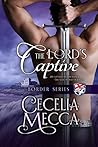 The Lord's Captive by Cecelia Mecca
My rating: 5 of 5 stars
This is a great enemies-to-lovers story. I felt that the characters spent a reasonable amount of time overcoming the inherent tension in their situations. They didn't simply overlook the fact that they were enemies to begin with, and it continued as a plot point long after they fell in love. I enjoyed the complexity of their relationship.
View all my reviews
October 26, 2020
Review of The Chief's Maiden by Cecelia Mecca
 The Chief's Maiden by Cecelia Mecca
My rating: 4 of 5 stars
I read this book because it was promoted as a free giveaway and I was looking for new authors to try. I have to say that I will absolutely be reading more of Cecelia Mecca's books! I haven't read any of the other books in the series, which is likely why I found the beginning a little slow. I'm certain many of these characters were introduced in earlier books, and I will be backtracking to read those. I'm particularly excited to read Catrina's romance after meeting her in this book.
That being said, it was easy to follow for being read as a standalone (by me) when it was actually Book 3 in the series. I was impressed that there were clearly complex story lines preceding this book and yet the plot was able to stand on its own two feet. Read as a standalone, it took a little while before the characters really popped for me and became their own forces within the story. Once they did, though, it really took off. It was steamy and sweet, and unlike many romances it didn't lose me at the 60% mark. I was curious enough as to how the plot would resolve that it pulled me through. The romance was well-developed and the side characters entertaining. It had a good mixture of tropes and innovations to keep everyone satisfied.
As a historian I enjoyed just how much historical detail she included. The heroine is a bibliophile, and Mecca's descriptions of the books loved by her characters were beautifully done. My biggest criticism is that I would've loved more similar descriptions of the rest of the setting, though I know many readers feel those bog down the story and slow the action. But, I'm a fantasy nerd as well as a medieval nerd so I like a good helping of both.
I have tried reading a number of newer Highland romances (I'm a life-long Julie Garwood follower), and this is the first one I not only finished within a couple of days, but also really enjoyed. I absolutely recommend reading this series - I know I will!
View all my reviews
October 22, 2020
Reader Recommendations
Hello Fellow Readers!
I am looking to amp up my reading game, and I need recommendations!
What are your favorite Scottish medieval books? Who are your favorite authors? I have read all of Julie Garwood's books. I don't particularly enjoy time travel books (except Outlander, of course).
Thanks, friends!
I am looking to amp up my reading game, and I need recommendations!
What are your favorite Scottish medieval books? Who are your favorite authors? I have read all of Julie Garwood's books. I don't particularly enjoy time travel books (except Outlander, of course).
Thanks, friends!