Brenda Lyne's Blog
August 9, 2024
Cardinals appear when angels are near.
A couple weeks ago, I took advantage of a lovely evening and went for a walk around my neighborhood. That's what we do in Minnesota -- beautiful weather comes at a premium and we don't waste it. Folks were outside mowing, barbecuing and walking their dogs. Kids were running and biking in the street. The playground was packed. It was glorious.
One house had their sprinklers going, and I noticed a lone male cardinal in a tree, basking in the shower, preening, and shaking water from his feathers. It was the best thing I'd seen all day. I tried to get a video, but I got a little too close. He noticed me and took off. I had to settle for a couple of grainy photos.
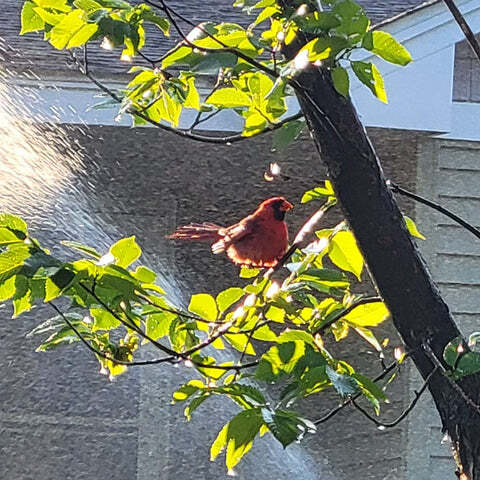
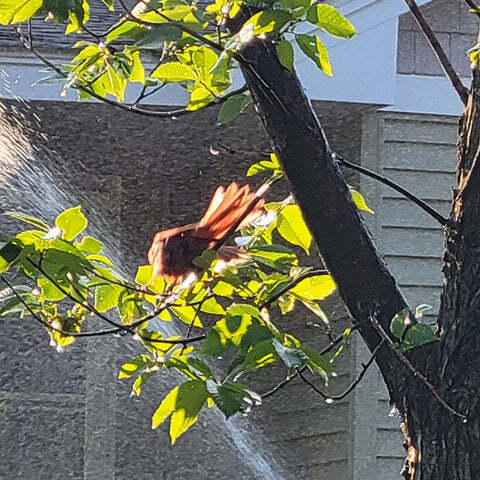
Cardinals are plenty in my part of the world, and usually I pay them no mind beyond admiring their fiery red color or their happy song. This day, though, as I watched this little fella enjoy his sprinkler bath, I was reminded of an old saying:
"Cardinals appear when angels are near."
This little guy has been on my mind ever since. Had I been visited by a departed loved one? I like to think maybe I had. I know I have a few angels watching over me.
It's also become clear to me that I'm going to have to put this in a book. Like, I don't see any other possible option. The timing is perfect, as I'm gearing up to start work on book #6. Don't be surprised if a cardinal makes an appearance.
It's true what they say: inspiration comes when you least expect it. Even on an otherwise unremarkable walk through the neighborhood on a beautiful evening.


July 19, 2024
The Real Places Behind Sister Lost
In a previous blog post I talked about the real-life story that inspired my haunted house mystery, Sister Lost. In this post I'll walk you through some of the real-life places that inspired the setting of this fan-favorite tale based primarily in north Minneapolis.
Lexie's house
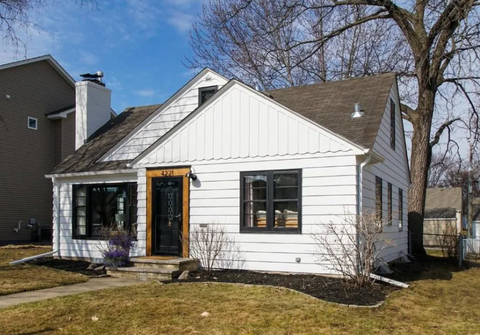
I'll be honest - when I need a house, the first place I go to find inspiration is the real estate website Zillow. When I started writing Sister Lost in 2020, I went there looking for the type of old Gothic mansions one usually associates with a haunted house. Instead I found this adorable bungalow in the nearby community of Robbinsdale. Seems like a perfect house for a young lady just starting to build a life of her own, doesn't it?
Ryan's house
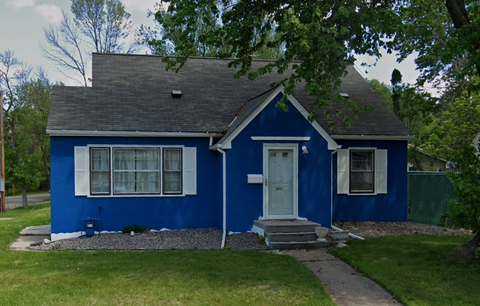
Ryan Laughlin, Lexie's next-door neighbor, is partially based on a guy I dated briefly not too long before I started writing the book. Ryan's house is 100% based on that guy's bright blue St. Paul bungalow. He bought this house for pennies on the dollar and spent two years renovating it himself (just like Ryan), with the intention of selling it for a profit. I never did find out why on earth he chose to paint the exterior stucco that crazy shade of blue.
Cuppa/Updo/The Apothecary
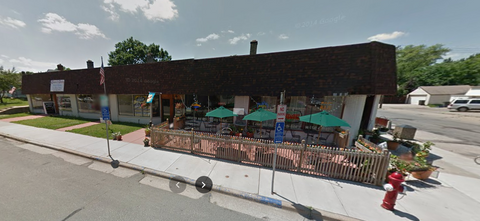
The urban neighborhoods of Minneapolis all have tiny little strip malls, and the Victory neighborhood on the north side is no exception. In the book, The Apothecary is a small independent pharmacy that had moved into a former pizza and pasta restaurant. There once was such a restaurant, called Papa's, in a tiny strip mall on the corner of 42nd Avenue North and Thomas Avenue North. It's long gone now, replaced by I'm not sure what, but I always thought a neighborhood pharmacy would be cute here. You can see where coffee shop Cuppa and hair salon Updo would be as well.
St. Austin's Catholic Church
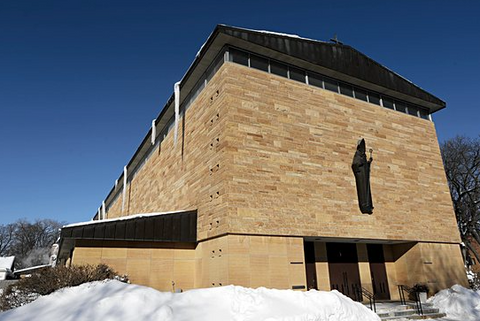
In the book, Cuppa is frequented by parishioners from nearby St. Austin's Catholic Church, and that's where little Melissa Ann Gilmartin's family worshipped. St. Austin is a real church, and it is just a couple blocks away from the tiny strip mall. Well, it was a real church - the congregation merged with nearby St. Bridget's and the building was closed in 2019. That was a bittersweet moment in my family; this was my dad's church growing up. My devoutly Catholic grandmother attended church here, my dad and his siblings attended school here through the eighth grade, and this building hosted several family and friends' funerals over the years. In fact, part of the reason I chose to set Sister Lost in this neighborhood was because of my family's connection to this church and this neighborhood. My dad grew up a mile or two away in Robbinsdale.
Lexie's workplace

The hospital where Lexie works as an operating room nurse is a real place - North Memorial Health Hospital, also located in Robbinsdale. Are you seeing a pattern yet?
Fun fact:
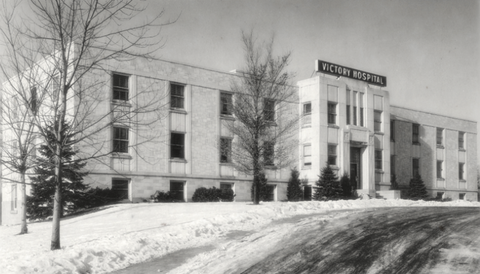
My dad was born here when it was called Victory Hospital and looked like this:
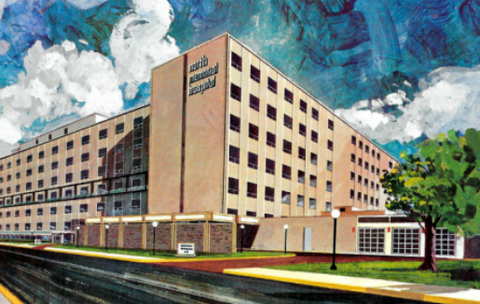
My brother and I were born here after it had grown substantially, the name had changed to North Memorial Hospital, and it looked more like this:
And my son was born on the mammoth campus shown in the first photo.
Family roots sure run deep, don't they?
Haven't read Sister Lost yet? Order it here, and happy reading!
June 23, 2024
My Greatest Inspiration (or, Why I'm an Author)
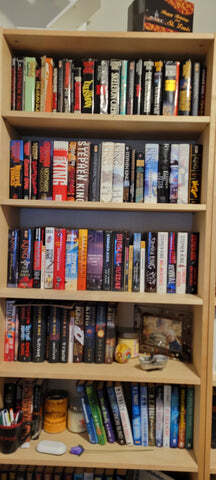
I knew from a pretty young age that whatever I chose to do with my life was going to involve words. I was a precocious child; I was reading billboards from the backseat of the car by age three, shocking my parents. I read The Monster at the End of This Book over and over until it fell apart in my hands at age six. I read my first Stephen King novel at age ten, and by age twelve I had read every single Stephen King novel on my parents' bookshelf. I was constantly writing stories, and made my first attempt at writing a novel at age thirteen. Writing has always been my way of exploring and understanding the world around me. I always knew I wanted to be a novelist.
I wanted to be the next Stephen King.
It took me a very long time to get there. Life and a terrible case of impostor syndrome kept getting in the way. I may have taken my time getting to the writing part, but I never stopped reading. I purchased and read every new Stephen King book as soon as it came out (I still do). I started collecting hardcovers of all of his books, prowling thrift stores and secondhand bookstores; they make up a substantial portion of my library now.
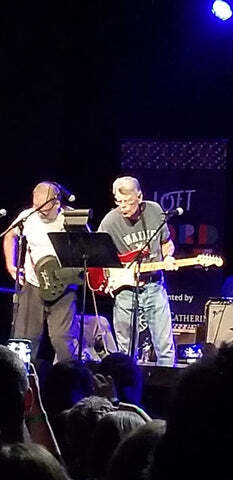
When Stephen King came to Minneapolis in 2019, you had better believe I was there. I took my parents and a friend to see him perform with his Rock Bottom Remainders band at the legendary music venue First Avenue. For the first time ever, books sold out First Avenue!
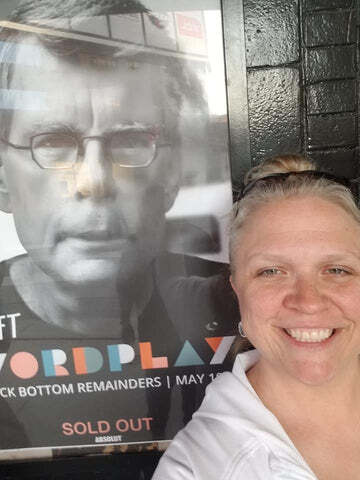
And then, the next day, I attended the Wordplay Book Festival and stood shoulder-to-shoulder with probably 2,000 other book nerds to hear him talk.
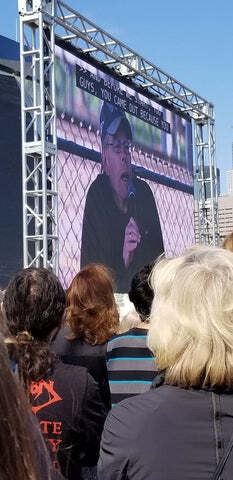
One thing he said that day that still sticks with me: "If I get them early, they stay with me." Which is absolutely true. I read my first Stephen King book at age ten and I've never stopped. More on the why behind that coming shortly.
Wordplay wasn't the first time I got to see Stephen King live and in the flesh. In late 2009, he visited St. Paul to promote his new book Under the Dome. Was I there? Damn straight I was there.

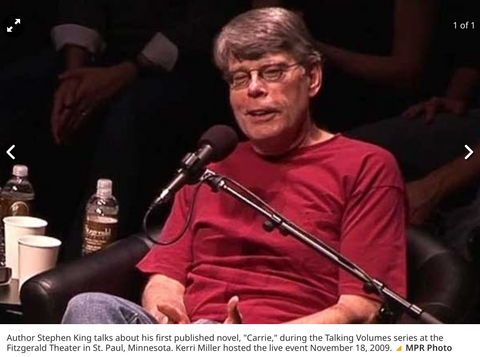
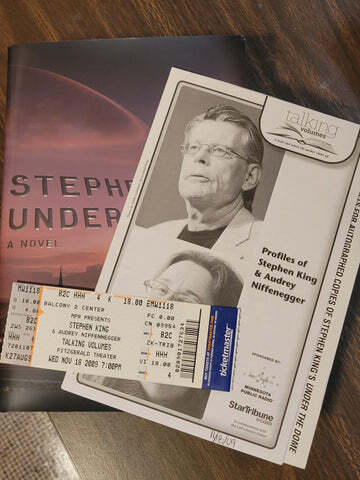
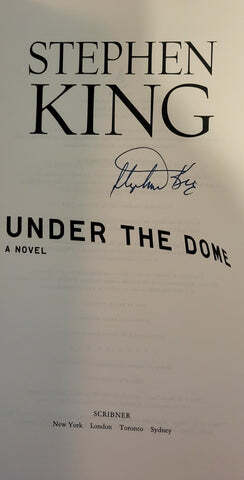
My mom went with me, and she won a drawing for an autographed copy of the book. That wonderful woman promptly gave it to me. It now lives in a waterproof plastic bag, safely tucked away in my safe. This may be my most prized possession.
So. What is it about Stephen King that hooked me early and never let go? Why is he now, and will always be, my hero?
His storytelling is unmatched. This man can take a vague idea and spin it into a crazy dynamic (and believable) story better than anyone else I've read.He is an astute observer of the human condition. His characters are well-developed and, most importantly, they ring true. They could be real people. I like the scary, but it isn't even really about that. It's about understanding and conquering the fears that people carry and face in their everyday lives. I think his stories help people do that. Me? Afraid of clowns? Not anymore.Stephen King is the world's most successful author, but he's still scorned in "literary" circles -- which I will never understand. There's this school of thought out there that genre fiction can't also be literature. Which I think is a complete load of horse manure. Who's to say that genre fiction can't be "serious," or explore difficult social or political issues? (Read his latest novel Holly and then try and make that argument.) For every literary snob who thinks plot-driven genre fiction is trite, I'll give you a reader (me) who thinks character-driven literary fiction is boring. My point: a story is a story, read what you like, and for God's sake let's lift each other up rather than tear each other down. We're all in it for the stories. Amiright?
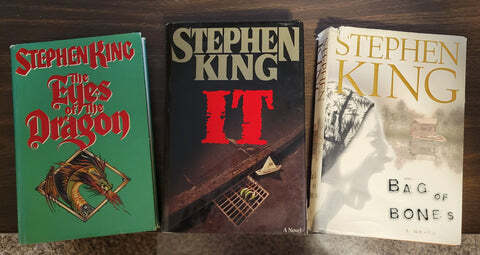
From L to R: my first Stephen King book, my favorite book of all time, and my second-favorite Stephen King book (and inspiration for my novel Sister Lost)
June 17, 2024
Life Lessons in the Garden
Every spring for the past fifteen years or so, I’ve gotten the crazy notion in my head that I should plant some seeds and grow some stuff. Edible stuff. Vegetables, mostly. There’s something about planting a seed and helping it grow that is infinitely satisfying. Writing mystery & thriller novels is my first passion; gardening is my second.

Any gardener will tell you that creating the ideal conditions for growing vegetables is very much a trial-and-error process. I’ve tried growing vegetables in large in-ground gardens, in garden boxes, in storage totes, in flower boxes, even in Home Depot buckets. Hell, I’ve even used pallets (that was a Pinterest-inspired mistake, although it looked really cool). A gardener could -- and often does -- spend oodles of time and money finding inventive ways to protect their garden from natural enemies like hail, frost, bugs (one year the Japanese beetles decimated my green beans; ask me how happy I was about that), rabbits, deer, chipmunks, and all the types of mold and fungi that can keep your plants from growing well.
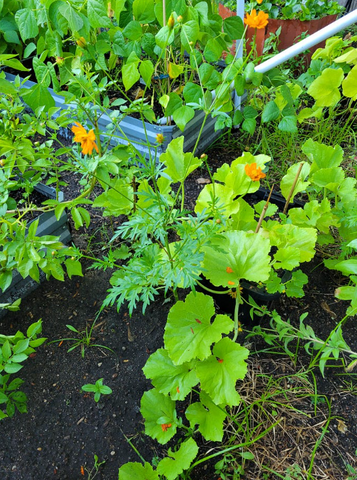
But the gardener’s #1 enemy? WEEDS. Oh my god, the weeds. These invasive plants are prolific, they are pernicious, I don’t know where they all come from and they are damn near impossible to control. I don’t care how much mulch you use. But control them we must, or they will steal light and nutrients from the legitimate plants and take over your garden — and then the world. At least, that’s the conventional way of thinking and the battle I’ve been fighting for entirely too long.
There has to be a better way. There just has to.
Last year I decided to conduct a little experiment: what if I could figure out a way to make it so my vegetable plants could live in harmony with the plants that we call weeds?
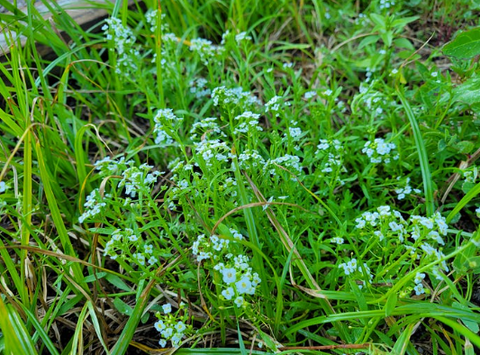
I have a good-sized garden plot in my backyard, and last year I decided I would plant vegetables in raised beds and spread wildflower seeds on the ground throughout the rest of the garden. I would keep the veggie beds weed-free, but let everything else grow as it may. I thought it would give the garden kind of a fun wild jungle aesthetic, and Lord knew it would be less work for me (less time weeding = more time writing books). Another bonus to this plan: wildflowers attract pollinators, which gardens need to thrive.
So that’s what I did. I had limited success the last two years because of extremely dry conditions. I was very sad. A gardener, much like a farmer, never knows what they’re going to get when it comes to weather.
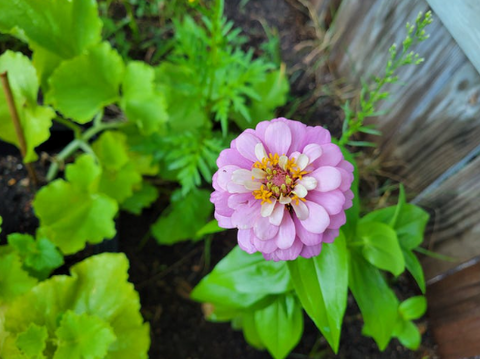
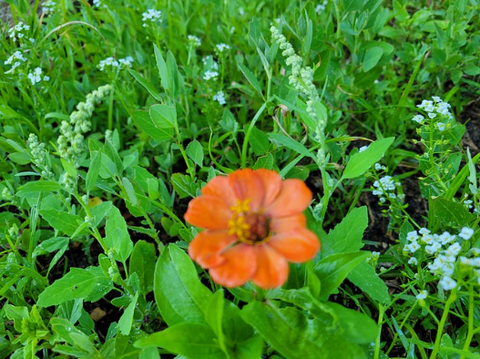
This year Mother Nature is apologizing profusely and making sure Minnesota gets more than its fair share of rain. It’s a whole different ballgame. The entire garden is thriving. Everything is living and growing together in harmony, just like I’d hoped. The wildflowers are blooming, and it turns out that some of the weeds have flowers too. My garden is a beautiful, wild place and it makes me happy — more than it ever has in fifteen years of doing this.
That got me thinking: maybe weeds are not really evil, just misunderstood. They’re just trying to survive like everyone else.
I’m sure there’s a life lesson in here somewhere. If I had to pick one, it would be this: when something in your life looks like a weed, don’t yank it and throw it away just yet. If you give it a chance, it might reward you with a really pretty flower.
June 9, 2024
The Real Places Behind Charlie's Mirror
In a previous blog post I shared why I chose to set my debut novel, Charlie's Mirror, in Wisconsin rather than my native Minnesota. But, as any fiction author will tell you, oftentimes the author's experiences are reflected in their stories. Here are just a few of the real places and real events from my life that inspired Sara Sullivan's journey through time.
Sara's house
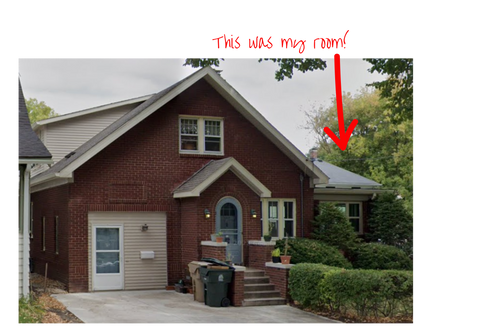
The story opens on protagonist Sara Sullivan's first morning as a brand-new homeowner. Her red-brick Cape Cod, just southeast of campus in the Greenbush neighborhood, is exactly the house I lived in during my junior year at University of Wisconsin-Madison. In real life it's a rental duplex; I shared the lower unit with two roommates, and a young couple lived in the unit above us. Oh my gosh, I loved this house. It was old, built in 1925, and utterly charming. The front door was painted green when I lived there.
Charlie's house
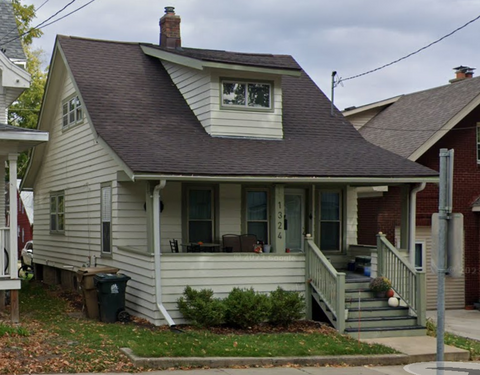
Charlie Anderson grew up with his grandmother, who lived in a home with a front porch. This house, in the same Madison neighborhood as the one I lived in, served as the inspiration for Ruth's abaondoned home with the rickety front porch:
Library Mall
Very much a real place, and a central gathering spot on campus. The preaching tower, the stage, and the fountain are real.
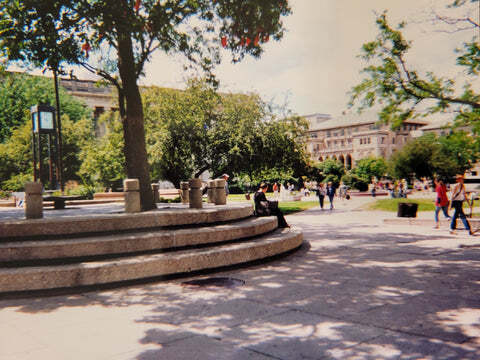
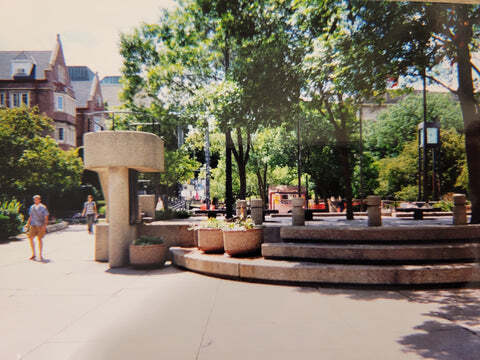
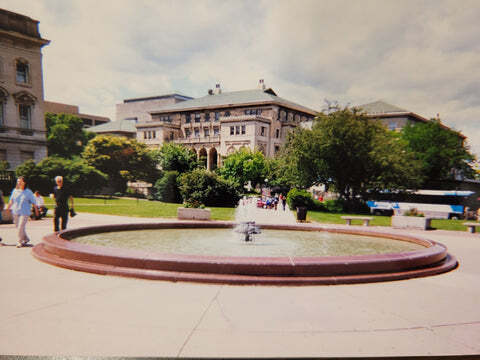
Well...they were real. I took these photos in the mid-2000s, long before Library Mall underwent a substantial renovation and the stage/preaching tower were removed. The Hagenah fountain still sits in its rightful place between Memorial Library and the Wisconsin Historical Society.
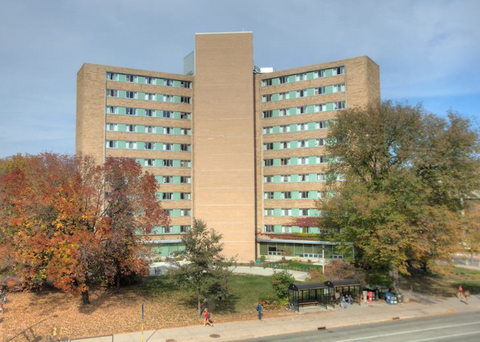
Chadbourne Hall
The dorm where Sara awoke to find herself in 1989 is also a real place. It still stands tall on the UW campus. I never lived here, though...the closest I got was Barnard Hall, right next door.
Porta Bella
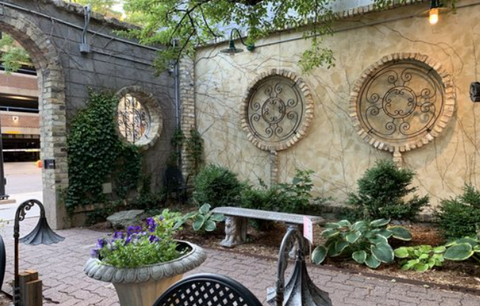
The Italian restaurant where Sara had her first failed date with Ben Packard is located just a few blocks from campus. Let me tell you, she was one lucky gal to be treated to dinner there; it was far too quaint and posh and fancy for my own college student budget.
Ready to experience Sara's and Charlie's adventures for yourself? Order your copy today!
May 29, 2024
Why I self-publish
He that deceives me once, its his fault; but if twice, its my fault. ~The Court and Character of King James, Anthony Weldon, 1651
Self-publishing wasn’t my original plan. As I put the finishing touches on Charlie's Mirror, my debut novel, I knew I wanted to publish traditionally so I could focus on the writing and let someone else with publishing chops handle everything else. Sounds easy, right?
Yeah, not so much.
The querying process was really hard for me. After north of 70 rejections for Charlie's Mirror, I was just about to throw in the towel when a small publisher expressed interest during PitMad in the fall of 2019. I submitted, and promptly received a proposal to publish. I read the contract thoroughly, did what I thought was some pretty good due diligence, and, seeing no real red flags, jumped at the chance.
It was a literal dream come true: my book was going to be published! For anyone to buy and read! Holy crap!
What I didn’t learn until much later is that thanks to the technology available these days, literally anyone can publish books and call themselves a publisher. Even if they don’t have a day’s worth of experience in the industry or any real business knowledge. Even if they have a history of starting businesses, pocketing every cent he could get his hands on, and leaving partners, associates, and customers holding the bag.
Let me introduce you to one such person: Robert “Robby” Coles, also known as Robert K. Martin, of Nashville, TN
Robert was the owner and proprietor of now-defunct City Limits Publishing — the shop that I signed with to bring Charlie's Mirror — my debut novel, my labor of love — to the masses. I could not have been more excited. CLP was new to the scene, and I had high hopes for them; I reasoned that they would be hungry to prove themselves, maybe willing to innovate and take a bit more risk, and I could only benefit.
The excitement didn’t last long. I’m a publishing novice, but I’ve been plotting and planning my author journey long enough to have a pretty good idea of how the industry works. For example, it typically takes at least a year for a traditional publisher to bring a novel to market. Robert told me he could do it in three months.
That was the first red flag. But I went along with it because my book was gonna be published!
I tried to keep a positive outlook as Charlie wound through the process, but I began to notice other troubling things: Robert was not very good at delivering on his promises and always had an excuse when confronted. The interior formatting of my book was unconventional at best, with giant spaces between paragraphs. The cover concepts he gave me were utterly inappropriate for the book’s genre, like this beaut here:
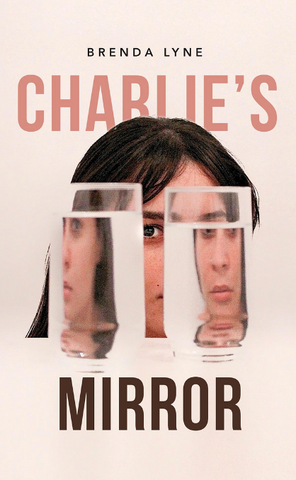
Does that look like it belongs on a time travel mystery involving a mirror and a bombing? No, I didn’t think so either. I don’t blame the artist for this one…I blame the guy giving direction who didn’t bother reading the book.
Don’t even get me started on editing. It took forever, and the feedback I received was minimal and looked more like a basic proofread than a down & dirty edit. I expected developmental feedback having to do some rewrites, like what happens with traditional publishers. Nope. Nothing. I reasoned this was because it was just so darn well-written.
All the while, with every question and concern I raised, Robert went to great lengths to make me feel like I was being difficult and uncooperative, impatient, trying to control his process.
It worked, because that book was my life’s work and I didn’t want to jeopardize its publication. He was more than happy to use that to manipulate me.
After Charlie hit the market with basically no fanfare in December 2020, the fulfillment problems began. And they were HUGE. Printing delays, shipping delays — it was a nightmare. People who ordered a copy of Charlie direct from CLP waited three to four months or more to receive their book. At first Robert blamed COVID and the USPS’ troubles over the holiday season. Then he just blamed USPS. And, if challenged by me or by my readers, he lashed out in anger. I’m still horrified by the way he spoke to paying customers.
By March, sales reports were coming late. Shortly after that, royalty payments stopped coming. Robert and I were in a constant state of conflict. I was beginning to realize that this arrangement was not working for me, and his efforts to isolate me and make me feel like I was his only problem author no longer worked.
In April, after yet another epic fight, he offered me the chance to get out of my contract. I think he was shocked when I took him up on his offer and terminated my contract for Charlie, and also for Sister Lost (he was going to publish that one too).
After that I needed to know if I truly was the only problem child on Robert’s rapidly growing author roster (in those seven months, he brought on nearly 40 authors. Yet another red flag). I began reaching out to fellow CLP authors, and before I knew it, I had surrounded myself with a couple dozen other authors who had endured the same abuse that I had. One by one they terminated their contracts with him. Desperate to stop him exploiting our work for his own personal gain, we approached Victoria Strauss of the industry blog Writer Beware. She published our story in June. Three weeks later his entire staff quit after not being paid for MONTHS. Three weeks after that CLP was out of business and Robert disappeared.
Now many of us are on our own paths, having decided to give this independent publishing thing a go. I've discovered that I enjoy having complete creative control over my work, and as a marketer in my professional life, I enjoy the challenge of building my base and my brand.
Other CLP victims are still trying to find their best path forward, but I have no doubt they’ll get there. None of us is inclined to let one mistake — signing on with a con/cheat/pathological liar to publish our life’s work — keep us down. We are authors, damn it…and we have stories to tell!
Why I self-publish.
He that deceives me once, its his fault; but if twice, its my fault. ~The Court and Character of King James, Anthony Weldon, 1651
Self-publishing wasn’t my original plan. As I put the finishing touches on Charlie's Mirror, my debut novel, I knew I wanted to publish traditionally so I could focus on the writing and let someone else with publishing chops handle everything else. Sounds easy, right?
Yeah, not so much.
The querying process was really hard for me. After north of 70 rejections for Charlie's Mirror, I was just about to throw in the towel when a small publisher expressed interest during PitMad in the fall of 2019. I submitted, and promptly received a proposal to publish. I read the contract thoroughly, did what I thought was some pretty good due diligence, and, seeing no real red flags, jumped at the chance.
It was a literal dream come true: my book was going to be published! For anyone to buy and read! Holy crap!
What I didn’t learn until much later is that thanks to the technology available these days, literally anyone can publish books and call themselves a publisher. Even if they don’t have a day’s worth of experience in the industry or any real business knowledge. Even if they have a history of starting businesses, pocketing every cent he could get his hands on, and leaving partners, associates, and customers holding the bag.
Let me introduce you to one such person: Robert “Robby” Coles, also known as Robert K. Martin, of Nashville, TN
Robert was the owner and proprietor of now-defunct City Limits Publishing — the shop that I signed with to bring Charlie's Mirror — my debut novel, my labor of love — to the masses. I could not have been more excited. CLP was new to the scene, and I had high hopes for them; I reasoned that they would be hungry to prove themselves, maybe willing to innovate and take a bit more risk, and I could only benefit.
The excitement didn’t last long. I’m a publishing novice, but I’ve been plotting and planning my author journey long enough to have a pretty good idea of how the industry works. For example, it typically takes at least a year for a traditional publisher to bring a novel to market. Robert told me he could do it in three months.
That was the first red flag. But I went along with it because my book was gonna be published!
I tried to keep a positive outlook as Charlie wound through the process, but I began to notice other troubling things: Robert was not very good at delivering on his promises and always had an excuse when confronted. The interior formatting of my book was unconventional at best, with giant spaces between paragraphs. The cover concepts he gave me were utterly inappropriate for the book’s genre, like this beaut here:
Does that look like it belongs on a time travel mystery involving a mirror and a bombing? No, I didn’t think so either. I don’t blame the artist for this one…I blame the guy giving direction who didn’t bother reading the book.
Don’t even get me started on editing. It took forever, and the feedback I received was minimal and looked more like a basic proofread than a down & dirty edit. I expected developmental feedback having to do some rewrites, like what happens with traditional publishers. Nope. Nothing. I reasoned this was because it was just so darn well-written.
All the while, with every question and concern I raised, Robert went to great lengths to make me feel like I was being difficult and uncooperative, impatient, trying to control his process.
It worked, because that book was my life’s work and I didn’t want to jeopardize its publication. He was more than happy to use that to manipulate me.
After Charlie hit the market with basically no fanfare in December 2020, the fulfillment problems began. And they were HUGE. Printing delays, shipping delays — it was a nightmare. People who ordered a copy of Charlie direct from CLP waited three to four months or more to receive their book. At first Robert blamed COVID and the USPS’ troubles over the holiday season. Then he just blamed USPS. And, if challenged by me or by my readers, he lashed out in anger. I’m still horrified by the way he spoke to paying customers.
By March, sales reports were coming late. Shortly after that, royalty payments stopped coming. Robert and I were in a constant state of conflict. I was beginning to realize that this arrangement was not working for me, and his efforts to isolate me and make me feel like I was his only problem author no longer worked.
In April, after yet another epic fight, he offered me the chance to get out of my contract. I think he was shocked when I took him up on his offer and terminated my contract for Charlie, and also for Sister Lost (he was going to publish that one too).
After that I needed to know if I truly was the only problem child on Robert’s rapidly growing author roster (in those seven months, he brought on nearly 40 authors. Yet another red flag). I began reaching out to fellow CLP authors, and before I knew it, I had surrounded myself with a couple dozen other authors who had endured the same abuse that I had. One by one they terminated their contracts with him. Desperate to stop him exploiting our work for his own personal gain, we approached Victoria Strauss of the industry blog Writer Beware. She published our story in June. Three weeks later his entire staff quit after not being paid for MONTHS. Three weeks after that CLP was out of business and Robert disappeared.
Now many of us are on our own paths, having decided to give this independent publishing thing a go. I've discovered that I enjoy having complete creative control over my work, and as a marketer in my professional life, I enjoy the challenge of building my base and my brand.
Other CLP victims are still trying to find their best path forward, but I have no doubt they’ll get there. None of us is inclined to let one mistake — signing on with a con/cheat/pathological liar to publish our life’s work — keep us down. We are authors, damn it…and we have stories to tell!
May 17, 2024
Why Charlie's Mirror is set in Wisconsin
As a Minnesota-based author, with four of my five novels set in Minnesota, I'm often asked why my debut novel, Charlie's Mirror, is set in Wisconsin. There's a reason for that!
In the spring of 1997, I was on the tail end of my sophomore year at the University of Wisconsin-Madison. I was a recent transfer from a smaller campus in the UW system, and I was enamored with this huge, old campus. I lived in Adams Hall, one of the first Lakeshore dorms to be built on the shores of Lake Mendota in 1926. Originally constructed as a men's dorm, it was (and still is) a charming old stone-clad building with a four stories and no elevator (which I'm sure has been corrected since then), in a part of campus filled with similarly historical buildings. My roommate Stacy and I had a room that overlooked the street and the parking lot, but some had lake views and others had courtyard views.
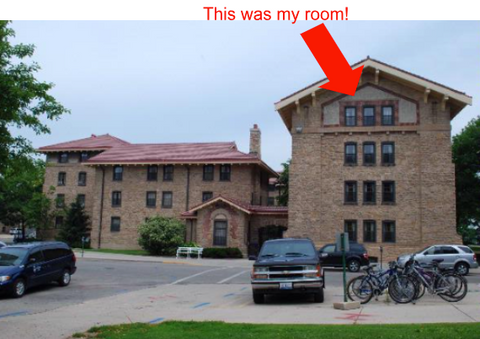
The age and the history of not only the Lakeshore but the entire campus fascinated me. I walked everywhere, saw all the historical monuments and buildings, and imagined what college life at UW might have been like twenty, fifty, a hundred years ago and more. These were the days before anyone really had a cellphone, when the internet came through the phone line at excruciatingly slow speeds (and the info available out there was spotty at best) -- so I used my imagination. And the first seed of an idea for what would ultimately be my very first published novel was born.
It would only take me 23 years to write it.
I'd been back in Minnesota for years by the time I finally sat down to write Charlie's Mirror. I could have decided to set it here. But to do that would have felt wrong somehow. My years at the University of Wisconsin were some of the best years of my life, and I wanted to honor that by having Sara and Charlie's stories take place there. Charlie's Mirror is, as a Wisconsin State Journal reporter best described it in a feature piece, my love letter to the University.
And I'm proud of it.
Haven't read Charlie's Mirror yet? Check it out here!
May 2, 2024
The Real Places Behind the Raegan O'Rourke Mysteries Series
Did you know that River Junction, Minnesota -- a key setting in the Raegan O'Rourke Mysteries series -- is based on a real place? It is! My constant readers may have figured it out by now, but I'll let you in on the secret as well: River Junction is a fictionalized version of Anoka, Minnesota. Anoka is an old river town located roughly 20 miles north of Minneapolis, at the confluence of the Mississippi and Rum Rivers.
In River Junction, the Rum River is called the Bourbon River. See what I did there?
Anoka is chock-full of history and interesting places, making it an ideal place to set a series of books featuring a fiery redhead with a complicated family life. Here are some of the inspirations for other places in the Raegan O'Rourke Mysteries series (in no particular order):
The Fortress (all 3 books)
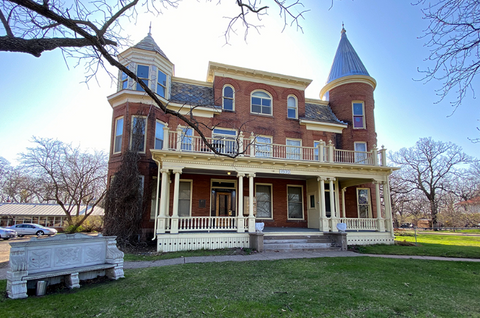
The longtime home of the nefarious Faust family, the Fortress is loosely based on the former Kline Sanatorium -- Anoka's first hospital, now a historic landmark. Imagine this lovely building clad in dark gray granite, and that's basically the Fortress.
Beananza (Angel Baby & Fool's Gold)
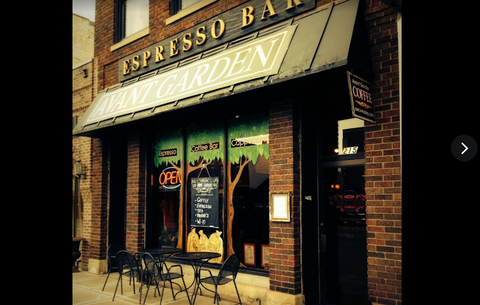
River Junction's happening coffee shop, which becomes a favorite of Raegan's, was actually inspired by two places:
Avant Garden, Anoka
and
Wise Acre Eatery, Minneapolis
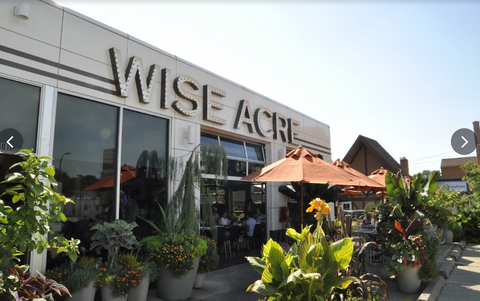
Note that Wise Acre Eatery is located in the same Minneapolis neighborhood as the home of Liam O'Rourke (Raegan's dad) - known as Tangletown.
Alex Blackett's house (Angel Baby)
There's a fantastic and rather mysterious old house on the eastern edge of Anoka that intrigues me, but I don't know its full history. It was built in 1895 in the Federalist style, and I can only guess it was the original farmhouse in the area. Someday I'll get over to the historical society and look it up.
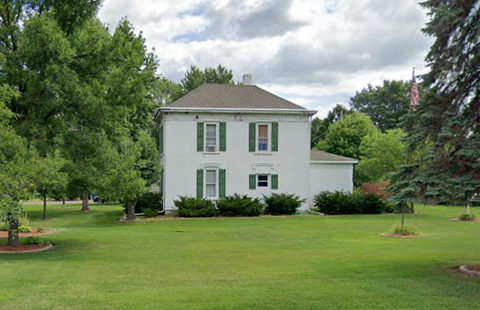
Of course, Anoka wasn't the only source of inspiration for places in my books. I've visited so many cool places and seen so many cool things on my travels; and sometimes they make it into my books too.
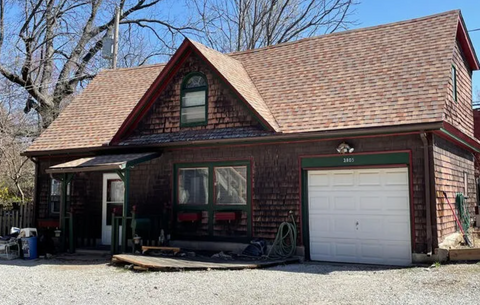
Mia Masterson's house (Angel Baby)
Mia lived in a converted carriage house next to Alex Blackett's house. The home shown above doesn't have a carriage house, but my bestie Sarah lived in one in Kansas City. I found it charming, and it served as the basis for Mia's little house.
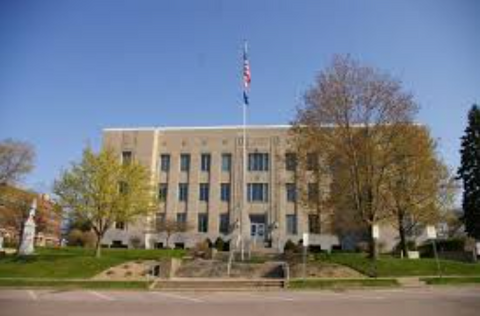
Kabetogama County Government Center (The Thirteenth Cabin)
In Raegan's first adventure, she meets Sheriff Chad Overton in a county government center originally built by the Works Progress Administration in fictional Agate Falls, Minnesota. This is a nod to all the WPA-commissioned structures that still dot the Minnesota landscape eighty years later, and based on the Goodhue County Government Center in Red Wing, Minnesota.
The Ainsley Mansion (all 3 books)
My bestie Kulani and I took an amazing trip to Maine back in 2019, and during a fun visit to Fort Williams Park in Cape Elizabeth, we stumbled across the fascinating ruins of the Goddard Mansion. This served as the loose inspiration for Raegan's family's ancestral home.
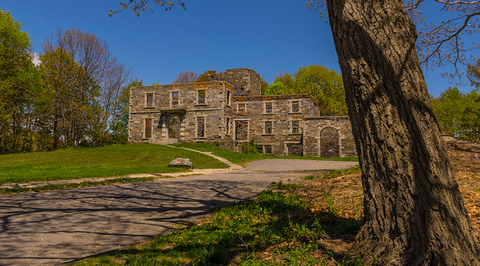
I'm glad to say that the Ainsley Mansion is in much better condition than the Goddard Mansion; it still has its roof!
If you haven't noticed by now, the concept of place is very important to me and you'll see that reflected in my books. The concept of time is another important element I like to explore. These things together form the core, the foundation, of our lives and our understanding of the human condition.
We look back to move forward.
Haven't had a chance to get to know Raegan yet? Check her out here! Her third adventure, Fool's Gold, is coming your way September 10, 2024.
April 15, 2024
To Pen Name or Not to Pen Name?
That is the question.
When I started out on this crazy author journey (for real…I had no idea what I was getting myself into until I was totally committed), I spent a lot of time thinking about whether or not I could use my real name on my books.
Authors use pen names for a variety of reasons. They allow the author to conceal his or her identity, and to write freely in the genre of his or her choice. There are numerous examples of women writing under a man’s name because it was the only way she could hope to get published; all three Bronte sisters started their careers as the Bell brothers. Others see their pseudonym as their alter ego, like Stephen King’s Richard Bachman.
My reasons really aren’t that glamorous. I’m not opposed to putting my real name on my books, but my given name is hard for people. It’s rare for someone who doesn’t know me to spell or pronounce my last name correctly. Using a pseudonym allowed me to find something unique that is easy to spell, pronounce and remember; and anything that’s good for my readers is good for me.
Because I use a pseudonym, I’m often asked the same two questions: why (which I talked about above), and how did I come up with my pen name? What was my inspiration?
That’s a pretty cute story, actually. When I was in the second grade, back in the early 1980s, my teacher gave us a project where each little eight-year-old in the class received his/her very own egg to take care of. The assignment was simple: take care of the egg like it’s a baby. Feed the egg. Change the egg’s diaper. Don’t leave the egg alone. Put the egg to bed. And most importantly…
DON’T BREAK THE EGG. Bring it back to school after one week, fully intact.
My teacher, Mrs. Brenda Kuester — who I thought was the most beautiful lady I’d ever seen, and who had the most beautiful name I’d ever heard — even took the class down to the Williams County (North Dakota) courthouse in Williston to stand before a real live judge and “adopt” these egg-babies. And you can’t adopt an egg-baby that doesn’t have a proper name.
Of course I was going to name my egg Brenda, after my beautiful teacher. Duh.
As for Lyne, well…"Lynn" was a wildly popular middle name for girls at the time, and I liked the sound — but I didn’t like the conventional spelling. Replacing that last N with an E made it so much more exotic and beautiful, just like my teacher. And my egg.
Thirty-some years later, when I was mulling the idea of a pseudonym, memories of the egg I “adopted” and the name I gave it all that time ago came flooding back — and I knew that I had found my pen name (even if “Brenda” sounds kind of old-ladyish to my much more experienced ears nowadays). It was easy to read, pronounce, and spell. And best of all, it was completely unique; getting a domain for my author website (brendalyne.com) was a piece of cake.
So Brenda Lyne was born.
And yes…I believe I did manage to make it through the full week with an intact egg. At least, that’s how I prefer to remember it. :)
I wish I could find Mrs. Kuester, tell her how much of an impact she made on my life that over thirty years later a memory from my time as a student in her second grade class would help me establish myself as a mystery fiction author. Someday, maybe. Someday.