P.S. Whatever's Blog
January 3, 2023
Middle grade books: The magical world of the tween
Too old to be a child. Too young to be a teenager. The tween inhabits a small transitional space between two worlds. No longer interested in little kid stuff but not quite ready to confront the tumultuous rollercoaster of teenage identity, rebellion, sexuality, and choices. Often, the tween is like Goldilocks seeking a bed that fits.
This is the age I find most fascinating. This is when kids are impressionable, often unsure of themselves, both longing to and afraid to spread their wings. They’re experiencing changes in themselves -- physically, mentally, and emotionally. They often fret about being accepted by peers. I recall my own tween years as a time of freedom meted out by the spoonful -- stingily, I thought at the time, although hypocritically appreciating the parental protection afforded.
This is the time of the practice run, when kids can experience events in their imaginations before they need to face them in the real world. And this is why middle grade books are so important.
Middle grade books vs. Young adult novels
While there are books that sit on the fence -- mine included perhaps -- there are definite distinctions between books for 8 - 12 year olds and YA fiction.
YA tends to be grittier, suitable for readers who have matured enough to contemplate trickier subject matter. These books are generally longer and more explicit than the ones for slightly younger readers. The Novelry offers a clear and concise description of the differences, so I won’t go into detail here. Instead, I’d like to share the reasoning behind my own tween writing choices and what reactions I hope to inspire in young readers.
My tween fictional heroine: Sam
“… a winsome tween protagonist…”—Kirkus Reviews
As the Kirkus reviewer points out, my character Sam has an awful lot of responsibility for someone her age. I deliberately loaded her up with worries, so that the real-life concerns that tween readers face might shrink by comparison. I also gave her plenty of faults. She stumbles, get angry, doubts herself, and makes mistakes. She is fully human and (I hope!) relatable for tweens.
The tween and teen years are a time of intense brain development, so it’s not surprising that the sunny disposition of the young child is often replaced by moodiness and unpredictability. Experts stress that positive communication and influences are critical during this period.
“Adolescents are not just going through the physical changes of puberty but also making neural connections between different parts of their brain, wiring it for the rest of their lives,” says Ron Dahl, director of the institute for human development at the University of California, Berkeley.
He goes on to say: “The dramatic learning isn’t necessarily cognitive in the sense of remembering facts and figures. It’s more about social development and forming an identity. Kids learn to calibrate their feelings and navigate uncertain social situations.”
In my books, I put Sam in situations that are uncertain indeed. She meets people very different than herself -- Boyo, for example, who has blue skin and communicates with fish by wiggling his fingers. She faces danger, both physical and social. She has to confront her own insecurity and learn how to trust her judgment. Sam’s experiences -- shared vicariously by the reader -- can help build confidence, calmness, and kindness. Positive messaging can wire the brain for an attitude of positivity.
The power of fiction
Multiple research studies confirm what we intuitively k
now: Stories shape our thinking and our lives. Stories have been the essence of human communication since the time of the cave.
Why are stories so powerful? Fiction allows us to see the world through another person’s eyes. It builds empathy. It also helps reader develop cognitive and analytical skills as the brain works to fill in details and “see” the story. And there’s a strong argument to be made that fiction may provide more important benefits than non-fiction, according to Harvard Business Review. After all, who doesn’t remember characters from their childhood reading? And still feel empathy for the protagonist’s challenges, years later?
Straddling two worlds with Cli-fi
Just as teens straddle the space between childhood and teenage worlds, my Under-Under World series bridges the real world with a fantasy paradise -- a depiction of what the real would could be. I thought this was a useful metaphor for the tween existence.
Unlike dark dystopian fiction, my youth climate fiction is based on hope rather than despair. Yes, there are hints at looming real-world peril, but always within context of positive actions that can be taken. Throughout the books, it’s young people who make a difference. They face danger but dig deep inside to find the courage to soldier through. They cement friendships that can withstand the turbulence around them. They see not only obstacles, but possibilities. They imagine different, better ways of doing things.
Kids have brains like sponges and absorb new, positive information more readily than adults. Because they have limited experience, they’re less attached to old patterns -- and that’s a good thing, because we as humans really need to change our ways, particularly in relation to caring for the planet we call home. Kids -- and tweens in particular -- can often show us the way.
Explore the Secrets of the Under-Under World tween book series CLICK HERE


June 7, 2022
Top 7 Ocean Facts for Kids
What better way to celebrate World Ocean Day than to learn a few quick ocean facts? Here’s our list of questions and answers, curated with kids in mind.
1. How deep is the ocean?
The average depth of the ocean is about 12,100 feet – a bit more than two miles. But here’s the deal: There’s a dent in the floor of the Pacific Ocean where it’s much, much deeper! It’s called the Mariana Trench, and at that point, the ocean is seven miles deep. Because it’s so deep, it’s completely dark. Temperatures are just above freezing. The water pressure is intense enough to crush you. And only bacteria and small invertebrates can survive at its deepest spot. How mysterious and interesting is that?
2. How big is the ocean?
Oceans cover 71% of the earth’s surface. And they contain a whopping 1.3 billion cubic km of water. To put that in perspective, ONE cubic km is 1000 metres long, 1000 metres wide, and 1000 metres deep. The human eye can see about 5 km – so that’s 200 times as far as you can see in any direction. And that’s for ONE cubic km, not 1.3 billion! And here’s another interesting fact. More than 70 percent of the earth’s oxygen is produced by the ocean and the tiny, microscopic plants that live in it.
3.
You’ve probably heard of the “seven seas” – but it’s hard to make the number add up to seven. There are four oceans – the Atlantic, Pacific, Indian and Arctic. Or five, if you count the Southern Ocean, as most countries now do. And how many seas? And what IS a sea anyway? Seas are smaller, and usually located where lands and oceans meet. There are about 50 seas in the world, although some are also called bays or lakes. Maybe we talk about seven seas because there are seven continents? Who knows!
Not only do oceans (and plankton) produce more than half of the world’s oxygen, but they also regulate the world’s climate by transporting heat from the equator to the poles. Oceans provide food – and not just seafood, but ingredients that show up in foods such as peanut butter. Oceans give us medicine. We travel on them, swim and play on them, and many people around the world work in jobs that depend on them.
5. What are the weirdest sea creatures?
Like beauty, “weird” is in the eye of the beholder. But here are a bunch of top contenders, thanks to National Geographic for Kids. There’s the Leafy Sea Dragon Fish that can fool predators because it looks just like seaweed. There’s the Red Handfish that walks along the ocean floor using fins that look a lot like human hands. And there’s the Wobbegong, a member of the “carpet shark” family. With tassels hanging from its body, the wobbegong looks like a ratty old piece of carpet. Weird, huh?
6. Why is there so much ocean trash?
Eight million metric tons of plastic are dumped in the ocean every year! If we don’t change this, there will soon be more plastic than fish. Where does all this plastic come from? Single-use plastic is a big part of the problem – plastic bags, bottles, straws, and wrappers. Wind, rain and floods can carry these lightweight plastics into the sea. Oil is another culprit– not just oil spills, but also oil from cars and trucks that washes from our roads into our oceans.
Container ships also dump pollution into our ports, and spew enormous amounts of greenhouse gas, contaminating the air as well as the sea.
7. How can kids help with ocean conservation?
The good news is that there are plenty of ways people – and kids!—can pitch in to help the ocean. The Kids Conservation Zone offers lots of educational info, videos, a downloadable colouring sheet, and games, including a rubbish hunt. Parents can get involved by signing the David Suzuki Foundation petition to protect coastal waterways. And anyone can contribute by saying bye-bye to single use plastic!
Kids can also get “ocean inspired” by reading Water, the first book in the Secrets of the Under-Under World series. Here, Sam worries about ocean plastics, loss of salmon spawning streams, and pollution. But she doesn’t give up. She and her friends battle to save the world’s water supply – and ultimately win.
LEARN MORE about Water now
May 16, 2022
Why are animals in fiction so fascinating?
Bring a puppy into any room and see how eyes light up. Show people an exotic animal – like a pelican or kangaroo – and they’re instantly hooked. Why the fascination with animals? I believe it’s because they’re both familiar and strange, kind of like humans in some ways yet utterly different. Animals in fiction might be intimate friends or mysterious creatures or even threatening predators. Animal characters, including the scariest ones, elicit a variety of delicious emotions, from the safe distance of the pages of a book.
Even the strangest beasts and bugs are like us in some ways. They all have a strong sense of self-preservation, as do we. They generally exhibit positive parenting skills, even if very different from ours in some cases – like rabbits that abandon their young early as a way of increasing their chance of survival. Some animals use tools to solve problems. And many of them have complex family and community relationships, with established “governance” rules.
Yet animals elude our human definitions. They will not speak to us nor explain their behaviour. City-dwelling wild animals live a secret life, right under our noses. What do they think of us? Do they think – as we define the term– at all? It’s hard to tell.
Fictional animals take this ambiguity away. They offer us the opportunity to wrap a narrative around animal behaviour – and we get to choose what we want that narrative to be.
Animals in stories – everything from best friend to terrifying attacker
Your animal hero might be very different from my animal hero. This is evident from best-selling books throughout the decades.
Some – like Beatrix Potter’s beloved Tale of Peter Rabbit – anthropomorphize bunnies and mice, dressing them in clothes and giving them tea parties. Almost the opposite approach is found in Jack London’s Call of the Wild. Here, a family pet “sheds the veneer of civilization, and relies on primordial instinct and learned experience to emerge as a leader in the wild.” Anna Sewell’s Black Beauty – one of the best-selling books of all time – breaks ground by presenting an autobiographical story told by the horse. But this is not about a horse dressed in jacket and trousers. The author’s goal was "to induce kindness, sympathy, and an understanding treatment of horses.” Her book sparked new concern about animal welfare and was credited for helping ban the cruel practice of the “bearing rein” that was painful and harmful to horses.
Charlotte’s Web, by author E.B. White, offers yet another cut into the relationship with – and between – animals. Here, the spider Charlotte exhibits cross-species empathy that helps save the pig Wilbur’s life. Yet, she is a true spider – she doesn’t’ apologize for killing and eating flies.
Finally, at the extreme end of the spectrum is the thriller/horror story, where animals terrorize humans in violent and unpredictable ways. There’s no better example than The Birds, Alfred Hitchcock’s film loosely based on a novel by Daphne Du Maurier. Here, a series of sudden and unexplained bird attacks holds an entire community hostage. And while not a heart-warming view of birds, it does acknowledge the intelligence of winged creatures – and the respect that these wild things should command.
Why animal stories matter more now than ever
According to Animals Around the Globe, there are now more than 16,000 endangered species threatened with extinction – a number that is climbing year over year. Topping the at-risk list are the Javan Rhinoceros, Vaquita, Mountain Gorilla, Tiger, Asian Elephant, Orangatan, Leatherback Turtle, Snow Leopard, Irrawaddy Dolphin, and Bluefin Tuna.
The WWF states that the loss of species is estimated to be between 1,000 and 10,000 times higher than the natural extinction rate – in other words, the rate that species would become extinct if we humans were not on the planet. Destruction of habitat, climate change, illegal hunting and trafficking, and the introduction of invasive species are clearly taking their toll.
I’m not naïve enough to believe that animal stories can magically change this situation. However, stories can build empathy – and they can prompt people to act. Fictional heroes– whether animal or human – can provide encouragement by demonstrating courage, conviction, and determination.
Animal heroes in Secrets of the Under-Under World books
When I started to write my books, I had to decide how human I wanted my animals to be. I adore Peter Rabbit, but my plot didn’t lend itself to that degree of anthropomorphism. And while I wanted some tension – a wee bit of scary – I definitely didn’t want horror. So I decided to let my animals act according to their individual natures, with a bit of human emotion and a touch of magic thrown in.
Here are the animal heroes I’ve introduced so far:
Cat – Gemini is one of the main characters in my series. She is a true cat– with sharp claws, excellent smelling and hearing, a fixation on her food bowl, and an exquisite ability to manipulate humans. (I have two cats of my own and adore the species. I respect cats in the same way audiences admire criminal masterminds who make buffoons out of those trying to catch them.)
Salmon – My first book, Water, introduces readers to the fish graveyard and to salmon who are sad because the freshwater streams where they hatched no longer exist – so they can’t complete their natural lifecycle. So yes, I’ve taken a few liberties describing the emotions of fish. And my fish can also communicate with select humans.
Raven – My mythical character – The Great Hildinski – often has a raven on her shoulder. These ravens are super smart. They often guide Sam and her friends to the passageway between worlds. They’re dignified birds, possessed of spiritual and psychic insight – suitable companions for the last survivor of a lost civilization.
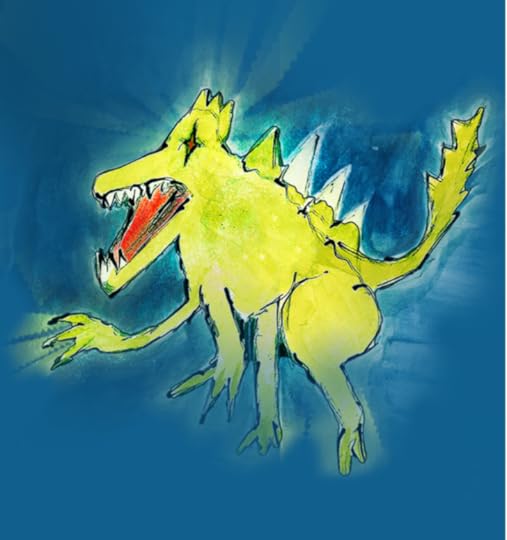
Slashasaurus – This guy is of course pure fiction. I wanted a dinosaur in my second book because I was intrigued by the notion of backwards evolution – the idea that climate change can actually pull us back into more primitive times. I gave my (fictional) Slashasaurus a bunch of deadly characteristics – but I also gave him the ability to change his nature when introduced to a kinder, gentler world.
Whale – Here, I’ve borrowed from Moby Dick. Because of the whale’s massive size, he’s able to rescue the kids from baddies who mean them harm. My whale speaks the same language as the fish so he can “talk” with some of my human heroes. This might seem like a big stretch – but there’s a case of one whale who tried to bridge the communication gap with humans, so who knows? Whales are sophisticated enough to sing a common song, so who’s to say that they can’t also sing to humans?
Elephant – I have a serious soft spot for elephants, particularly after visiting an elephant orphanage in Sri Lanka some years ago. Highly intelligent, social, and noble, these gorgeous animals are too often killed for their tusks, even today. Elephants are also frequently enslaved for the benefit of humans, as is the one in my book. With kind, sad eyes and real empathy, my fictional elephant is an evolved and heroic character.
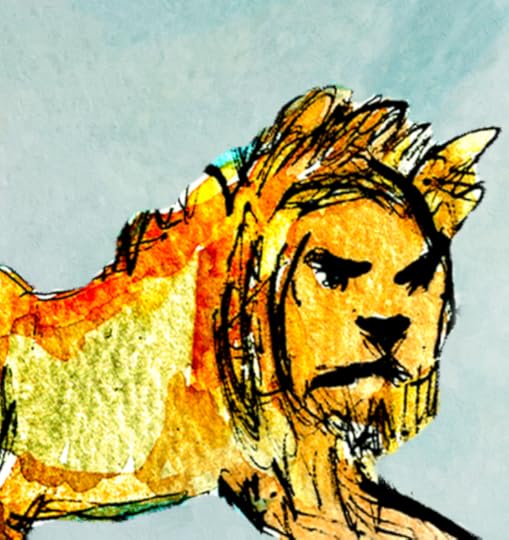
Lion, Giraffe, Monkey, Kangaroo, Emu, Penguin – All of these fabulous animals appear in the part of the world where they would be expected. Their behaviour is more true to life than humanized. Most of them make cameo appearances but in every case, they add a spark of pure animal joy.
Butterflies and other birds – These winged creatures can be summoned on command by The Great Hildinski. Often, they appear to mark an achievement or celebration. They also assist Sam in a variety of other ways, appearing when she needs them most. In my books, they’re part of the circle of friends. And why not? Who hasn’t felt a sense of connection with a hummingbird when she appears near your face and buzzes a hello?
,LEARN MORE about Creatures now
April 4, 2022
The latest addition to the dinosaur family: The Slashasaurus!
Ask any kid about the dinosaur family and you’ll probably hear a whole series of names: Brontosaurus, Triceratops, Velociraptor, T-Rex. But now there’s a new dinosaur in town – a fictional one called the Slashasaurus.
As its name suggests, the Slashasaurus is famous for its slashing ability. It can slash with its claws, its teeth, its tail, its spikes, and even its eyes. As we learn in Creatures – the second book in the Secrets of the Under-Under World series – this dinosaur might be the deadliest of them all.
What is a dinosaur really?
The term ‘dinosaur’ comes from the Greek deinos ‘terrible’ + sauros ‘lizard’. These “terrible lizards” came in many shapes and sizes. According to the American Natural History Museum, some weighed as much as 80 tons and were more than 120 feet long. Others were tiny, the size of a chicken. Some were meat-eating and walked on two legs while others were herbivores, walking on all fours. In total, there were about 300 types of dinosaurs and over 700 species.
These prehistoric reptiles ruled the land for more than 140 million years. Today, all that is left of them are the birds we see in the sky, descendants the type of dinosaur that successfully passed on its genes. All the other types are extinct (except in fiction, of course.)
Where are dinosaur fossils found?
At one time, dinosaurs lived all over the world – even in Antarctica, which was much warmer millions of years ago. Not all dinosaur species were alive at the same time, however, so they’re classified according to the era when they thrived: The Triassic, Jurassic, and Cretaceous periods.
The largest and most complete fossil discovered to date was found in Italy. Nearby, fossils of 11 other dinosaurs were also found. However, the widely recognized dinosaur capital of the world is Drumheller, Alberta – a town in the middle of the Canadian badlands. Here you’ll find “Tyra, the world’s largest dinosaur,” a reconstruction 4.5 times bigger than a real T-Rex. The Royal Tyrell Museum just outside of Drumheller houses hundreds of thousands of fossils and is a centre of palaeontological research, as well as a major tourist attraction.
Why do we find dinosaurs so fascinating?
According to paleontologist William Lindsay, “dinosaurs give you a real sense of the vastness of time.” (Hundreds of millions of years? What does that even mean?) Many are so strange looking that they seem the product of an overactive imagination – and yet, they were real.
Dinosaurs are often portrayed as vicious monsters walking the earth. And while they night attack humans on the modern-day cinema screen, movie goers can relax as they leave the theatre, knowing that they will never be attacked by these monsters on the street. Because dinosaurs no longer exist.
Dinosaurs spark sympathy because they’re extinct. They also provide a cautionary tale for humans who think that their rule on earth might last forever, even if they abuse their beautiful host planet.
Dinosaurs in fiction
Naturally, when we think of dinosaur stories, Jurassic Park comes to mind. But in the mid-19th Century, dinosaurs began making an appearance in fiction. In the early 20th century, dinosaur fiction stories such as The Lost World by Arthur Conan Doyle helped build an audience for this genre. Today, interest in these long-extinct reptiles is hardly waning – quite the opposite.
The 1960 American sitcom The Flintstones, featuring pet dinosaur Dino, was the first animated series to hold a prime-time slot on television. The 1993 movie A Dinosaur’s Story cemented the bond between fictional dinosaurs and children, as young Louie and Cecilia befriended dinosaurs escaping a fate in the circus. Today, dinosaur stories for preschoolers and toddlers abound, with more and more stories written all the time. Toys, puzzles, and games also often portray the beloved prehistoric reptile.
Dinosaur Fossil Eggs: Introducing the Slashasaurus
"Baby Yingliang" was the name given to the embryo found inside a 66+ million-year-old fossilized egg. The discovery of the fossil egg was made by in 2000 in southern China – and when scientists later examined the egg, they found the embryo inside. And just recently, five eggs have also been found in Brazil.
In my book, Creatures, dinosaur eggs are central to the story. A few frozen Slashasaurus eggs fall into the hands of The Sister, an evil old crone from a lost civilization who’s determined to destroy this world. She’s taking advantage of global warming to incubate the still viable eggs, adding a few tricks to speed up the process. It’s up to Sam and her friends to travel to every continent in the world to collect the magic antidote – before the dinosaur eggs hatch.
A blend of eco-fiction and fantasy, Creatures is full of adventure. It also addresses important coming-of-age issues: self-respect, confidence, trust, and compassion.
Long live the dinosaur story!
Fearsome, yet fetching. Mysterious and strange, but often lonely and in need of a friend. The dinosaur is one of the most fascinating and versatile subjects to fall into a fiction writer’s hands. Now, I’m pleased to add the Slashasaurus to the dinosaur family and the list of fictional reptiles who have gone before him.
Read more about Creatures here.
March 8, 2022
Fictional heroines: Why they matter
We’ve all heard the phrase “behind every great man is a great woman.” First coined in the 1940’s, the slogan was adopted by the feminist movement a couple of decades later and adapted in many ways since. Today – International Women’s Day 2022 – I’d like to suggest another tweak. Ready for it?
“Behind every great woman is a great (fictional) woman.”
Of course, not all the women who inspire others are fictional – far from it. And sadly, not all girls have access to books. But for many, many girls, fictional heroines blaze a bright trail to follow. They demonstrate positive qualities that they, soon-to-be-women, can emulate as they struggle to solidify their own identities.
Fiction moves readers on an emotional level, creating an impact that reaches far beyond intellectual understanding. According to psychologist and novelist Keith Oatley, stories “train us in the art of being human.” Oatley goes on to say, "we can start to extend ourselves into situations we have never experienced, feel for people very different from ourselves, and begin to understand such people in ways we may have never thought possible."
Girl power in middle schooler books
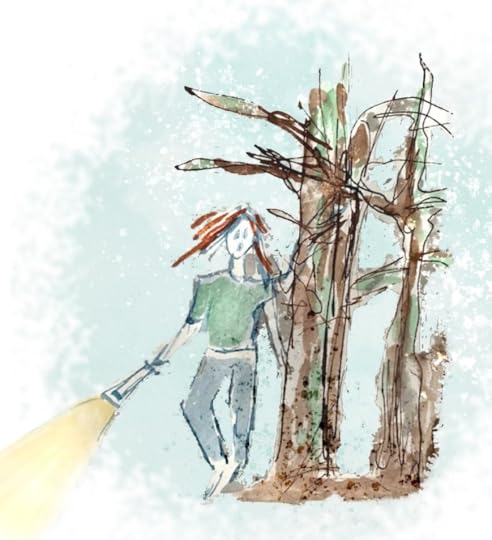
From classic fictional heroines – like Alice in Wonderland – to modern day protagonists, these heroines have traits in common. They’re often described as strong-minded, independent, plucky, spunky, and courageous. They stand up for themselves and for others.
It’s not surprising that these are the traits that are important, considering that girls must figure out how to succeed when the odds are often stacked against them. (Just as women in real life must do.) Fictional heroines must break free of stereotypes demanding that they be “nice” rather than assertive, “compliant” rather than bold, “followers” rather than leaders. They debunk the “princess” image that defines them as pretty, helpless creatures in need of a prince to rescue them from an imprisoning tower (and potentially introduce them to a different kind of captivity.) Heroines tell girls that they can be their own heroes, active agents making a difference in the world.
My fictional heroine: Sam
Even before I put pen to paper, I knew that Sam would be a girl, for all the reasons I’ve already touched on in this post.
And I knew what kind of girl I wanted her to be. I did not want her to be wimpy, but nor did I want her to be a superhero, imbued with special powers unavailable to the average girl. I wanted her to have fears and flaws, to struggle in situations that were not easy or obvious. I wanted her to be purposeful and courageous but also willing to be honest and vulnerable. So, I graciously gave her some of my own flaws to round out her character.
What makes Sam a little bit different from some other heroines is that her battle ground is the environment. Greta Thunberg is her rock star heroine (even though Sam herself was created when Greta was still a toddler and not the global activist she is today.) Sam’s quests are centred around protecting the world’s water, battling destructive forces, and respecting the needs of animals. She feels a sense of urgency and she’s willing to be uncomfortable to make a difference.
The Secrets of the Under-Under World books join a growing rank of climate fiction (Cli-Fi) books.
Celebrating girls, both IRL and in fiction
Today, we celebrate women and girls around the world who make a difference, big or small.
Stories are a big part of the education system. And education is a critical factor in providing opportunities for girls. It’s long been understood that the education of girls is key to fighting poverty, improving economies, and even combating climate change. Many not-for-profit organizations specifically support girls – including one of my favourites, I-Plan “Because I am a girl.” And of course, Malala’s own intiative: “Malala Fund is working for a world where every girl can learn and lead.”
Happy International Women’s Day 2022!
February 22, 2022
Stream daylighting: Sam's dream comes true
The lost streams of Vancouver (my home city) have captured imaginations for years – at least for those who are aware of these once vibrant waterways. Looking at the urban landscape, it’s hard to imagine salmon-bearing streams where houses and other buildings now lock arms, claiming all the space.
According to the City of Vancouver website, “Vancouver once had a vast network of natural streams and creeks. As the city developed and grew, many streams were buried under pipes, filled in, or diverted.”
These lost streams inspired me to write the first book in my Under-Under World series, Water. And I’m happy to say that today, there is a big push for daylighting streams. (For a great overview of Vancouver’s lost streams – including a map of where the streams once flowed – check out this Fraser Riverkeeper article.)
I first got interested in this topic 15 years ago when I learned that a friend was dealing with chronic basement flooding. Another neighbour explained that the cause for this flooding was a network of underground streams, buried beneath the city’s development. I shared this information with my friend Liz, an environmental science whiz. She gave me a scooter tour of Vancouver’s streams, showing me the ones that were in the process of being daylighted and others – once mighty salmon-bearing streams – that were still lost. No fishing pun intended, but I was hooked. The idea that there was a world underneath the world fascinated me.
This germ of an idea evolved into my book. I created a young protagonist – Sam – who, like me, wanted to see fresh, clean water instead of sad, muddy puddles. She found herself in a world that existed under our feet. And as part of her Under-Under adventure, Sam encounters fish who mourn the loss of their freshwater streams – with no place to spawn before they die.
Daylighting streams in Vancouver today
In recent years, the City of Vancouver has worked with volunteers to restore a number of Vancouver streams. The one I am particularly excited about is Tatlow stream – because this is the very stream that piqued my interest in the first place and led to the Secrets of the Under-Under World series.
The city plans to “create an ecologically diverse stream corridor in Tatlow and Volunteer parks… restore and enhance riparian and shoreline habitat for birds and other wildlife… and improve rainwater management.”
Recently, I had a chance to see the City’s progress. On my way to the beach immediately behind Volunteer Park, I noticed City personnel digging in the park. Curious, I asked what they were doing – and was told that they were conducting an archaeological study to make sure there were no issues that would get in the way of daylighting the stream. If all was good, they said, the stream could be restored as early as next summer.
The daylighting of streams is of course just one small step toward remediating the damage to our planet. But this kind of action is evidence that we can turn the corner, we can stop harming the Earth and start repairing it instead – if we want to. Sam believes that we can.
February 5, 2022
The backstory: About my children's fantasy book series
It all started with Devon. My goddaughter was 11 when I picked up a pen to start my first kids’ book. I wanted to write something for her as a way of staying close during those important preteen years. But…write about what?
I thought about stories that had impressed me when I was her age. While I read all sorts of stuff as a kid, the books that really stuck with me had an element of fantasy. The books I liked best weren’t sci-fi exactly, but ones that revealed the magical sliding door between fantasy and reality. In these books, kids are always the heroes. They face tough challenges, but they see the magic that adults simply can’t see. They struggle, learn life lessons, develop compassion, and overcome.
OK… so I decided to write a children’s fantasy book. But about what exactly? That’s when I learned that the little trickle of water in a park near my house used to be a salmon-bearing stream. My generous friend Liz took me around to other streams in the city, some of which had been rehabilitated to support salmon again. Pun intended, but I was hooked. In a future blog, I will let you know what is happening today with this stream. (Spoiler alert: I’m excited.)
The book that came out of all of this – the first in my series – is called Water, and is (not surprisingly) about the importance of fresh water. When I wrote this book 15 years ago, there wasn’t as much talk about water shortages as there is today. Sadly, since then, climate disasters have become far more common. This year, if you live in British Columbia as I do, you can’t help but be keenly aware of atmospheric rivers, raging floods, and deadly mudslides — following the severe drought, heat dome, and wildfires of the summer. Too little water, too much out-of-control water, people in remote communities up north living without clean drinking water… water problems abound.
My children’s fantasy books obviously contain an element of fantasy. For example, the magnetic train is fictitious, although frankly, it does seem like a pretty good idea. But the books use science as a jumping off point – and the health of the planet as a primary focus.
I’ll wrap this post by saying that I still believe what I believed as a child. Kids can see magic that adults simply can’t. And while I’ve created the Under-Under World for them to play in, it will be the kids of the world who will make magic happen.
What Is Cli-Fi For Kids? And Why Is It So Important?
“Cli-fi” is the abbreviation for climate fiction, fictional stories that deal with climate change in some way. Not surprisingly – given escalating worldwide anxiety about the environment – this is a rapidly growing literary genre.
But why fiction and not just fact? Stories are an age-old way of passing on wisdom and reaffirming values. When done well, fiction “sticks” and inspires. By identifying with story characters, readers can “see” new worlds, gain empathy, use their imaginations and grapple with dilemmas before they need to confront them in real life. Today, climate change stories are top of mind because we already see the effects of a changing planet: extreme heat, extreme cold, extreme winds, record-breaking flooding and rapid, unpredictable weather shifts.
A recent CBC “What on Earth” segment calls cli-fi “a growing literary genre that, at its best, can inspire hope and spur action.”
For kids, cli-fi books are arguably even more important. The purpose of these books is not so much to educate kids about climate change – they are already painfully aware of the problem. Rather, cli-fi offers examples of characters who are fighting to make a difference, and in doing so, provides a beacon of hope.
And if there’s one thing kids need today, it’s hope. A ground-breaking 2021 Nature Briefing survey of 10,000 young people in 10 countries points to overwhelming eco-anxiety, with nearly 60 percent of kids surveyed saying they are ‘very worried’ or ‘extremely worried.’ When asked how climate change makes them feel, the most common responses were ‘sad’, ‘afraid’, ‘anxious’, ‘angry’, and ‘powerless.’
Cli-fi provides an opportunity for kids to identify with young protagonists who are taking an active role in protecting planet Earth. At the same time, cli-fi can shine a light on scientific breakthroughs and accomplishments.
And when eco-books step a toe into the territory of fantasy – or land there with both feet – they might even inspire more innovation. Because what’s to say that something that has not yet been invented isn’t possible? Science fiction ideas that came true include 3-D printers, video calls, driverless cars and more, according to Stratostar research.
What makes good cli-fi for kids?
Like sci-fi, this newer genre must have a connection to science. But there are differences between the two types of fiction. Where sci-fi authors can invent entire universes, this is not entirely so with cli-fi. This genre must have climate change on Earth as bedrock even if it takes leaps from there.
Addressing the reality of climate change in kids’ books can be tricky. How does one include enough climate science to be motivating without being heavy-handed? And how to avoid sinking into doom and gloom, only adding to eco-anxiety?
The other aspect of cli-fi is of course fiction or fantasy. This is where writers get to spread their wings. This can also be a bit tricky, of course. The fantasy must be believable, in context of the science, but still contain the magic that kids love.
Finally, good cli-fi should be entertaining, like any other piece of fiction.
In my books, I tried to strike this balance by creating a fictional place – the Under-Under World – where scientists deliberately retreated to find solutions for the world above, with global warming at the top of the list. The Under-Under World is a pristine paradise, like Earth was before humans left their mark. The colony’s ruler is The Great Hildinski, the last survivor of an ancient civilization, who brings wisdom gained from the demise of her culture. The central conflict in the book is the battle for pure water – affecting both Under-Under and the world above.
All of the stories move quickly from “what is” to “what could be”. In an attempt to entertain and inspire, they blend environmental fiction with adventure and coming-of-age issues: self-respect, confidence, trust and compassion. Whether I’ve been successful in this balancing act in my books I will leave to my young readers to judge.
Why do I write fantasy eco-books?
Like many authors, I spent a good part of my childhood curled up in a chair with a book (and in my case, also a purring cat.) I read everything I could but found nothing as intoxicating as fantasy – that wonderful, invisible sliding door between one world and the next. So the fantasy part was obvious.
But as I embarked on writing this series, I found that I was actually even more interested in the science than in the fantasy. To put my stories together, I had to research subjects as diverse as salmon spawning to the magnetic quality of minerals to the moon’s orbit. I became an extremely late-blooming science junkie – although (full disclosure) I have absolutely no scientific qualifications and questionable aptitude. Just newly-sparked curiosity about endless possibilities.
Why books for 9 to 12 year-olds?
The Secrets of the Under-Under World series is intended for the preteen age group, partly because that’s the age my goddaughter was when I started writing the first book – backstory here (link to Blog 1) But I also believe that this is an extremely vulnerable segment. ‘Tweeners aren’t little kids anymore but nor are they teenagers. In this in-between zone of adolescence, the search for one’s own identify is key – and not always easily established, given peer pressure and other challenges.
For kids who are already struggling to find themselves, eco-anxiety could be overwhelming. My hope is that the notion of kids as heroes – overcoming obstacles, finding solutions, and leading the way – might offer some comfort and inspiration. And by gaining insight into the characters’ internal struggles and fears, they might feel less alone.
My cli-fi series for kids: What’s next?
Here’s what I’m planning for the Secrets of the Under-Under World series. Creatures, the second book in the series, will launch in Q1 2022. The third book, Time, is scheduled to launch prior to the end of 2022, followed by the final book in the series in 2023.
In the meantime, I’d love to hear your thoughts on cli-fi for kids. What do you think is important? How do you react to the themes I’ve raised in my book? How do you believe we can further inspire children?