Anna Jones Buttimore's Blog
March 1, 2025
Why Ambassador's Ambience is my Favourite Cruise Ship
Of all the cruise ships I’ve been on so far Ambience is my favourite. It might be because I have particularly happy memories of that cruise. Some dear friends were also on board, the weather was unseasonably warm, and my mum absolutely loved it and it was wonderful to spend quality time with her. She died suddenly and unexpectedly the following February so those memories are very precious and naturally that might have meant Ambience has a special place in my heart.
Setting all that aside as much as possible, however, Ambience remains my favourite ship. It’s an old ship with the usual old ship problems – lifts that don’t work well, unreliable air conditioning, and décor which shows its age in places. It also has some old-ship features I’d prefer not to have such as the necessity of table sharing and fixed dining, and in-person muster drills (although on Ambience, unlike Ambition, at least these take place indoors at your muster station.) So I know it’s not perfect. (I’d also prefer it to have a wrap-around prom deck and tiered aft like P&Os Aurora, or a solarium like Celebrity Millennium, but you can’t win them all.)
Here’s why she’s still my favourite ship:
It mostly sails from Tilbury, which happens to be my local port only a twenty-minute drive from my home. Tilbury is a small port with its Windrush history proudly on display and is quiet which makes embarkation quick and easy. I prefer no-fly cruises, not because I dislike flying (although it’s not my favourite thing to do) but because I like the convenience of no luggage limits and not having to deal with airports. There is lots of space throughout the ship. From the moment we boarded through the elegant and beautiful atrium, Centre Court, we never had a problem getting somewhere to sit, and the ship felt very spacious. (I compare that with my MSC cruise which always felt uncomfortably crowded and busy.) The drinks prices are extremely reasonable and the drinks package prices are better value than on some other lines, especially when you factor in that they include your daily gratuity. The mocktails are all delicious; we tried a new one each evening. The spa is free. That’s so unusual on a cruise ship. Ambience’s spa is right on the lowest passenger deck but that’s fine, I love nothing more than a steam room or a sauna wherever they may be. Ambition’s spa (also free) is at the top of the ship and features floor-to-ceiling windows. Treatments still have a cost, naturally, but I understand from those who are into these things that the prices are much lower than on other cruise lines and there’s less hard selling of products. There’s a large games room where we spent many happy evenings playing Dungeon Mayhem or doing a jigsaw puzzle, a library with lovely sea views, and a dedicated craft room. All these spaces seem to be pretty rare on modern cruise ships. I always look for a library on any ship as peaceful reading with sea views is one of the joys of life, and I love seeing what books other guests have left behind. Another thing I really appreciated about Ambience is what isn’t on board. There’s no art gallery and consequently no art auctions. I had always thought they were something of an anachronism until I took my art student daughter on a Celebrity cruise and she loved the gallery, spent a lot of time there, and was very excited at seeing some real Picassos. All the same, art galleries take up a lot of space that could be put to better use. I’m also thrilled that Ambience doesn’t have a large central casino like the first cruise ship I went on. Working in mental health and addiction means I am uncomfortable seeing people gambling. Ambience’s tiny casino is set off to one side in a quiet area of the ship and easily avoided, and her sister ship Ambition doesn’t have one at all. There are so many amazing activities. On my last sea day on Ambience I highlighted on the daily programme all the things I wanted to go to and it was just a sea of yellow. Book club, choir, enrichment talks, craft classes, knit and natter, demonstrations of towel folding, fruit carving and ice carving... I even had to miss a couple of things because they clashed with something else I wanted to do. I’m not into trivia or karaoke or traditional entertainment like watching people sing and dance (although I’m told by those who are that the entertainment on Ambassador cruises is excellent) but absolutely loved the book club, and the guest choir performed what they had learned in Centre Court at the end of the cruise which was just wonderful. Lots of these activities were led by members of the entertainment team and they were all lovely and happy to chat about their experiences on board. (They also greet guests outside the theatre after evening performances which seems a nice touch.) Theatre@Sea is, I believe, unique to Ambassador. Alongside the usual singing and dancing entertainment they have regular performances of plays and vignettes. The vignettes pop up in lounges and bars, and the one I saw on Ambition during a Christmas markets cruise was hilarious and brilliantly performed. Theatre is my thing, and I love that I can watch a play on board. Ambassador describes itself as having the “Friendliest welcome at sea” and while almost all crew on any ship will smile and greet you it does seem to be a little more than that on Ambience. Our cabin steward, Rusti, got to know us and always had time to chat. On embarkation day Mum and I went to the buffet, Borough Market (I know, rookie mistake, but it wasn’t too busy on this occasion luckily) and Lovely Jubbly (that’s what it says on his badge) smiled at me from behind the carvery station. When I told him I was vegetarian he stepped out from behind his counter and took me round Borough Market showing me all the options available to me, including the vegan counter. He asked our names, and whenever we saw him during the week he greeted us by name. He’s one of the characters on Ambience, very well known and loved, and his name is actually Ayok. There’s a very friendly and warm feeling on Ambience and you get the sense the crew really are happy to be there and are respected and appreciated by their managers. The food is excellent (although it has been on almost every cruise ship I’ve been on) with plenty of vegetarian options, and I had one of my favourite meals ever in the Buckingham Restaurant on that Ambience cruise. The afternoon teas are superb. I love the way Borough Market is set out, with individual speciality counters, and food is served to you which is much more hygienic. I also like that the cutlery is on the tables. Much easier than running back to get it all the time. Some of the spaces are just beautiful. I’ve already mentioned Centre Court, but I should also flag up the Botanical Lounge and the Observatory. Of course many cruise ships have impressive décor and sparkly staircases, but on Ambience it’s something very special. There are some quirky and fun things I really enjoy on Ambience. The lifts are all decorated with trompe l’oeil pictures, so you can step into a lift and find yourself in a stampede of horses, or a field of tulips. Admittedly these were there before Ambassador bought the ship so I have P&O Australia to thank, but I still appreciate it. I try not to use the lifts on cruises (helps keep the weight gain at bay) so it was my mum who told me she’d just stepped out of an ancient Greek temple. Another fun thing is the arrangement of nautical flags on the staircases. They all have meanings and reception can give you a key so that you can work out what the messages are. One other quirky thing I really appreciated once I figured it out – the entire ship is Wimbledon themed. From Centre Court and SW19 to the purple and green colour scheme, there are nods to Wimbledon in the styling all over the ship. I’m not a huge fan of speciality restaurants on cruises. I’ve already paid for all my food, so why should I pay an extra $70 (!) to dine at Le Petit Chef? (Looking at you, Celebrity.) Ambassador takes into account the fact that you have already paid for your food and the speciality restaurant prices are very reasonable. I think we paid £15 each to eat in Saffron, which is considerably less than we’d pay for a four-course Indian meal on land, and it was excellent, with some unusual and delicious dishes I’d not seen before. Again, I have another cruise line to thank, but I really like the cabin layout on Ambience. The way the room is organised means there’s a private dressing area which is great when you’re sharing a cabin with someone who isn’t your significant other. There’s also lots of storage incorporated in that clever design – I counted fifteen drawers. Ambassador still offers the traditional two cabin cleans a day, and cabin stewards still give you towel animals. These particularly delighted my mum, and she chuckled for ages over the monkey hanging from one of the hangers, so there’s a warm place in my heart for the fun towel creations. Another tradition Ambassador upholds which I don’t think any other cruise lines does now is the Baked Alaska Parade. On the final formal dining evening of the cruise Baked Alaska will be on the menu, and the wait staff will parade round the dining room with the Baked Alaskas held aloft, with sparklers on top, as guests wave their napkins and cheer. On that first cruise it was a complete surprise and a delight and really sealed a very special experience. It’s probably a fire hazard, which may be why other cruise lines don’t do it, but it’s a wonderful way to end a cruise.I will acknowledge that there are plenty of newer, glitzier ships. There are ships with hammocks on the balconies, water parks, and go karts. There are ships where the buffet never really closes, or there are fifteen different restaurants to choose from. There are ships where West End shows are performed, or where there is an ice-rink with skating shows each evening. I'll readily admit that Celebrity is more luxurious, and MSC World Europa was awe-inspiringly huge. But I'm still most excited to return to Ambience in a couple of months, and I've yet to find a cruise ship I prefer.


October 16, 2023
I went on the wrong cruise (and still enjoyed it)
I've always enjoyed seeing new places, but I'm not a fan of airports, packing and unpacking, or finding myself stuck somewhere boring, so it was as though the world had opened up to me. There are lots of places I've always wanted to see - Gibraltar, Santorini, Petra - and now that I know I can cruise there it's become 100% more likely that I will actually visit them some day.
The pandemic meant that our plans for our next cruise were put on hold, but that didn’t stop me watching cruise YouTube channels, looking through brochures, and planning where I would go. Through the same travel company I had used in 2019 I booked a 12-night Mediterranean cruise on Norwegian Breakaway, the sister ship to Getaway, for September 2023.
Changing plans
In March we cruised to Norway on P&O Aurora, a much smaller and more traditional adults only ship. We found we liked it much better. There was much more vegetarian food for me, it was less noisy and frenetic, and we enjoyed things like enrichment talks and craft classes which we hadn’t experienced on NCL. (Yes, we did see the Northern Lights.)
In June I went on a cruise with my Mum to the southern Norwegian fjords on Ambassador’s Ambience, another small British ship. I liked it even better.
I checked back on the NCL cruise I had booked and realised it was much more expensive than I’d remembered (or could currently afford), and that I felt NCL wasn’t a cruise line I wanted to go on again having discovered better options. So I contacted my travel agent to cancel it. I was told that if I did I’d lose my £1,000 deposit even though this was several months before the sailing date.
That’s a really high deposit and it was the agency’s policy to keep it, not the cruise line’s, but the only way not to lose it altogether was to tell my agent to book me another cruise and switch the deposit to that. Something shorter, and cheaper, but still the Mediterranean and at the same time since I'd booked the time off work. He suggested MSC World Europa. At half the price it seemed a good compromise and I was excited to try my fourth cruise line and see how it compared.
MSC World Europa
First impressions were good. Embarkation took less than ten minutes and the muster drill was a breeze. It’s a beautiful looking brand-new ship. We ate lunch in the buffet that first day with a stunning view over the World Promenade. There's a really big pool deck (and we never had a problem getting a sun bed) and lots of big hot tubs and additional pools including an indoor one. There was virtually 24/7 pizza (including for breakfast) and it was excellent pizza as you’d expect from an Italian cruise line.
 View from the buffet
 Breakfast pizza (cherry and white chocolate or chocolate and pineapple)
 The pool deck
The cabin was spacious with plenty of storage and the balcony was also a good size. I loved that it had the lights above the door to let the cabin steward know when you were in. Corridors were wider than on ships I'd been on before which made for less awkwardness when walking past other people, and the lifts were those ones where you enter the floor you want on the panel in the lobby and it tells you which lift to get into, so no asking “what floor?” to people who don't speak your language, or awkwardly leaning past people to press buttons. Oh, and all the lifts worked all the time. I particularly liked the panoramic ones in the World Promenade.
 World Promenade inside the ship. No, I didn't do the slide.
Vegetarian choices in the dining room and buffet were sadly pretty limited. One evening the buffet actually had a vegan sausage casserole on offer. They were great vegan sausages! But I only saw them on that one occasion and they never got offered at breakfast. The pool grill would do a vegetarian burger if asked but it took a long time to cook and it wasn’t a good one (basically mashed potato and vegetables breaded and deep fried). I think I’ve been spoiled on P&O and Ambassador. On P&O a good half the menu is vegetarian or vegan, and Ambassador has a vegetarian section in the buffet and a full vegetarian menu in the MDR.
There were a surprising number of smoking areas. The entire casino. The Lanai bar at the rear of the World Promenade. Half the pool deck. We’d frequently find ourselves settling down somewhere only for someone nearby to light up and we’d have to move.
The real problem
I’m not a party cruiser. I’m quite happy not to go to any entertainment venues ever during a cruise. I don’t need people singing and dancing or doing magic tricks or acrobatics, although occasionally I’ve been to an onboard show and enjoyed it.
My husband and I had brought our laptops hoping to get some work done. For him that means working on clients' accounts, and I am editing one book while writing another. This week off work was the perfect opportunity to make some headway on these projects. There was room for one person to work on a laptop in the cabin and since he was actually earning money Roderic got priority, so I took my laptop bag and went looking for somewhere with a table, a bar, maybe a power socket if I was very lucky, and some peace and quiet.
On other cruise ships this hasn't been a big ask. Vanderbilt's on P&O Aurora, and Aces & Eights on Ambience fitted the bill well. But on World Europa the entire ship turned into a party venue in the evening. Everywhere there was loud music, some sort of show, karaoke, or a silent disco, and there were huge crowds of people and no empty seats. After wandering the ship looking for somewhere quiet I retreated to the sanctity of my cabin with a can of Coke Zero and tried to arrange cushions on my lap on the bed to find a comfortable working position.
Not that I don’t like loud music. I love it, especially heavy metal and rock. But I want it at a gig I have chosen to go to, not on deck when I just want to watch the wake or chat to my husband. It would have been nice if there had been a library or even a quiet coffee shop somewhere.
It wasn't just in the evenings that there was constant buzz and noise. On the one sea day the pool deck became a nonstop entertainment venue with the crew talent show (they were great though, bless them), dance classes, the “MSC Olympics” which seemed to involve seeing who could splash the most in the pool, and an aerobics class. Judging from comments around me I wasn’t the only person who wondered why they couldn’t just let us all swim and sunbathe in peace.
The portsSo far it might sound as though I didn't enjoy the cruise, but actually I really did. There are two aspects to a cruise: the itinerary, and the ship. We chose the wrong ship, probably due to my haste not to lose £1,000, but the itinerary was great. Genoa was beautiful and full of character right from the start. It's where they invented pesto and focaccia, so naturally we had some.
 A Focacceria in Genoa
We've wanted to see Pompeii for a long time and it was incredible, much larger than I'd expected, fascinating, and very moving.
 This was a takeaway restaurant in Pompeii. They had 80 of them in the city. Sounds like a great place to live! (Until 79AD)
We did an excellent walking tour in Messina and enjoyed some real gelato, granita, and cannoli which were all delicious. And Malta was stunning - I enjoyed the craft village and Roderic enjoyed the aviation museum.
 Malta
MaltaThe weather was also perfect with not a drop of rain and temperatures in the mid-20s throughout. It was very windy in Marseilles but we had fun exploring on the land train.

What I learnedDon't book in haste! In my excitement to experience a big, new ship I should have stopped to ask myself whether it's really for me. I should probably also have asked my travel agent whether I could "bank" that deposit until a more suitable cruise came up. I won't use that particular travel company again.
 Christopher Columbus's toilet, Genoa
We flew to Barcelona the day before our cruise but our boarding time was early so we actually didn't get enough time to explore Barcelona. Next time I'd fly in two days before so that we can have a full day to explore. On the whole, though, fly cruises are not my favourite thing. A 20kg luggage allowance might just about be fine for a warm-weather destination but isn't going to cut it for anywhere cold or for longer itineraries. My cruise on Ambience was from Tilbury, 20 minutes from home, and with unlimited luggage. It was amazing to be at home and half-an-hour later be on the ship. (Ambience also had a laundry - on World Europa I was reduced to washing clothes in the sink which is not how I want to spend my holiday.) I will look for cruises from Tilbury or Southampton in future.
 In front of an iconic building in Barcelona - Primark
There's no such thing as a bad cruise. The ship might not have been right for us, but sitting on the balcony watching stunning scenery drift past is still one of my favourite things to do, and World Europa had the biggest balcony we've had.
 Sunset on the balcony
What I've mostly learned is that I am not a party person. I need a sedate, small, probably British cruise ship. Maybe, having celebrated my 55th birthday aboard MSC World Europa, I am finally old.

April 10, 2023
Eight Things I wish I'd known about Electric Cars before I bought one

Last September my husband and I bought an MG 5 LR EV Exclusive. That "LR EV" stands for "Long Range Electric Vehicle." Our first electric car.
I'd long been thinking that we were the ideal family for an electric car. We rarely drive long distances, we have our own driveway, and with three members of the family suffering from asthma we're keen to be part of cutting emissions. Hubby said he would have been okay with a hybrid, but that sounded like fence-sitting to me. With the price of a litre of diesel touching £2.00 at the time (US$8.40 per gallon) and the petrol crisis still fresh in our memories, I was keen to get away from the need to buy fuel at the forecourt.
Our diesel Kuga was approaching the end of its contract and it was time to choose a new one. So off we went to the Ford showroom and asked what electric cars they had. Only two: a Mustang (a sporty beast) or a Transit van. The Mustang looked very pretty, but wouldn't fit Roderic's hockey kit in the boot, and would be pretty cramped with our adult children in the back. Plus at £45,000 it was well out of our budget. And obviously we didn't need a van.
So at the beginning of September, on the recommendation of a friend (thanks Chris!) we went to the MG showroom, fell in love with the MG5, and bought one. We actually collected it the same month, two weeks before we had the charger fitted to the house which might have been worrying, but I discovered how little I knew about electric cars during those two weeks. Which is one of the reasons I'm writing this blog post.
1. You don't have to keep charging them and you can charge them pretty much anywhere
I think I imagined that an EV needs to be charging whenever it's parked. That you need to look for the charging point in car parks, and plug it in overnight every night. We picked up our car with a full battery and actually it probably would have gone the full two weeks without being charged while we waited for our charger to be fitted, but in the event we played safe and gave it a top-up charge at home anyway. How? We ran the cable in through the dining room window and plugged it into the ordinary wall socket, because you can do that. It takes a lot longer (about 24 hours empty to full) but it's handy to know that it can be done when necessary.
With a 250-mile range, we charge the car around once a week. A full charge using our Zappi charger takes around 7 hours so we usually just plug it in overnight. Neat safety feature - it won't start charging until you lock the car but you can't unplug it unless the car is unlocked.
2. They're all automatic, but that's fine
With the exception of a trip to America in my 20s I'd never driven an automatic car before and was a bit nervous about breaking over 30 years of driving habits. I even asked the salesman whether they had a manual one, but he told me that all electric cars have to be automatic because that's just how the engine works. I got used to it pretty quickly though, and although I occasionally reach for the gearstick when I'm slowing down, I love that it doesn't stall, or roll, or misjudge hills, and I never have to worry about whether I've put the handbrake on.
3. They're not quite completely silent after all
It's still weird that when you switch the engine on the display lights up but there is no accompanying "Whoooomph" sound. But it does make a sound when you’re driving. Apparently it’s been UK law since 2019 that electric cars must make a noise at low speeds. I think it sounds like a tube train, which is nice, because the Kuga sounded like a London taxicab, so it's an improvement. And of course, tyres on tarmac make a noise, as does air passing over the car. Having read the story about the Domino's motorbikes I had wondered what sound our car would make.
4. They're surprisingly powerful
One thing I noticed very early on is the sheer power and responsiveness. Anyone who has driven an electric car will tell you if you go back to an ICE (internal combustion engine) it feels very sluggish. There is absolutely no delay when you press the accelerator, the power is hefty and it’s instant.
On cold days the car also heats up more quickly than an ICE car. Rather than relying on sending heat from the engine to the occupants (the engine doesn’t get hot so it can’t), electric cars have a dedicated heater which needs less time to start making us toasty warm.
One fun side effect of the engine not getting hot is that on frosty days I can drive for half an hour and when I reach my destination there’s still frost or ice on the bonnet. It was weird the first time I noticed it.
5. You don't get range anxiety after all (or at least, I don't)
Any range anxiety I might have with the electric car is no different from with a petrol car. How much petrol have I got left? Should I fill up on the way home, or in the morning? Will it get me there or do I need to stop for petrol on the way?
If you are worried there are apps which tell you where the nearest charger is, whether the charger you need is available (there are different types but it's becoming standardised and our MG is on the most common type) and whether it is working. There are even reviews from people who've used it.
We've only done one long journey (in almost six months) which required charging away from home, and what we found is that the infrastructure really isn't ready yet. We stopped twice on motorway service stations and both times all the electric car chargers were in use. Since people generally stop for about an hour to charge their car (and the superfast chargers can charge up to 80% in an hour) we were facing a long wait. Fortunately both times we were able to get a charger fairly quickly, and in both service stations there was work going on to install what looked like around 30 new chargers.
6. They really do feel much cheaper to run
It cost us around 22p a mile to drive our Kuga, although obviously that varied according to diesel prices. The MG costs around 3½p per mile, as best we can work it out, but again that depends on electricity prices and when and where we charge it. But the big difference is that we're not having to pay out £200-£250 per month to fill the car at the pump. Obviously our electricity bills will go up, but not having that extra expenditure on diesel is feeling wonderful at the moment.
We were also told by the electrician who fitted our charger that it is possible to get it connected directly to the solar panels on our roof. We'd need a battery system and inverter first (and naturally they cost money) but at some point I hope we can be charging our car entirely from electricity we have generated ourselves, making it effectively free to run.
7. They're less likely to get stolen
Apparently electric cars are not a target for thieves. Most cars stolen to order are taken out of the country, and the countries they go to don’t have the charging infrastructure yet so there’s no demand for them. They also don't have catalytic converters to steal so that’s something else I don’t have to worry about.
8. There's a weird resistance and backlash
I’ve been really confused and surprised by how many people seem to object to electric cars. Every electric car advert I see will have angry face emojis, and people protesting that they’ll never give up their diesels. I’m completely at a loss to understand why, and when I stupidly get into arguments with these people they tend to say things like:
“It’ll lose value and be worth nothing in three years, you’ll find it impossible to sell.”
We have a seven-year warranty on the car and plan to keep it for all seven years, and possibly beyond. We paid £30,000 for it, so if we end up driving it for ten years that will have been £3,000 a year and I’ll be happy that we’ve had our money’s worth. Any trade in or sale value would just be a bonus.
“The battery will lose range and a new one is unaffordable.”
It might lose range – it hasn’t yet – but we’re happy to take that risk. And as with parts for all new cars, we can expect the price of replacement batteries to come down.
“You can’t drive as far as I can, especially in winter.”
True – the winter range is only about 180 miles, but we’re not people who would consider driving for longer than a couple of hours without a break anyway, and fast chargers can have the car back up to fully charged in about an hour – the time it takes us to stretch our legs, spend a penny, and eat Burger King while we scroll through our phones.
Petrol stations are already closing down. Many have installed electric car charging points because there are fewer and fewer ICE cars buying their fuel. The electric car infrastructure is getting better all the time (although not fast enough in my opinion) but the ICE car infrastructure is going away. Give it ten years and ICE drivers will be the ones getting range anxiety, and checking apps to see where they can next find a petrol station.
Interestingly, one thing we noticed on a recent visit to Norway was just how many electric cars there were. Almost every car that passed us in Tromso was electric. That’s in the artic circle, so they are the cold weather experts.
“It’s not really environmentally friendly: where does the electricity come from? Coal fired power plants, that’s where.”
It is zero emission, free to drive in the ULEZ, and once we get a battery and inverter system on our solar panels we can charge it directly from the solar panels on our roof, which feels to me like the very definition of environmentally friendly.
Meanwhile, our electricity comes from all sorts of different sources which currently we can’t control. Maybe some is from wind or solar, and some is from nuclear or coal. But that’s also true of the electricity for your house, so if you’re that worried about how your electricity is generated perhaps you should go off-grid.
The point is that electricity is a renewable resource. It’s not limited, like fossil fuel. It won’t run out. Heck, I generate it brushing my hair in the morning. We’re not depleting the earth’s resources by using it.
“It’s not environmentally friendly because of the lithium battery.”
Lithium mining is expensive and uses a lot of resources, and recycling lithium batteries is currently very difficult. Experts are working on this issue. However, I’ll give that argument more consideration when it’s made by someone who doesn’t own a mobile phone which contains a lithium battery.
“It’s out of the price range of ordinary people.”
Since there are, as yet, very few second-hand electric cars on the market, this argument may well have merit. You’re not going to pick up an old-banger electric car for £800. But new our car cost us £30,000 which is comparable with petrol cars the same size. Yes, Teslas are very expensive, but not every electric car is a Tesla.
“I wouldn’t have anywhere to charge it. I don’t have a driveway.”
This is the only argument I’ll accept. While I have known people who have bought electric vehicles and charged them only at public chargers, it’s not an easy way to manage a car. If someone genuinely couldn’t charge their car at home on the domestic rate, then that person may not be someone who should have an electric car. But that’s not us. We have a driveway and a Zappi charger.
Marjorie Taylor Greene, a US Republican politician, said, "Democrats...want to emasculate the way we drive and force all of you to rely on electric vehicles.” So maybe that “emasculation” is what it really is. Fragile masculinity requires a fossil-fuel burning smelly engine driving them along. But I challenge anyone who thinks horsepower comes from fossil fuel to drive an electric car and see how much more powerful they are.
I’d never go back to a petrol or diesel car.
June 21, 2022
The 3:16 Project: Genesis

To the woman he said,
“I will make your pains in childbearing very severe;with painful labour you will give birth to children.Your desire will be for your husband,and he will rule over you.”
Straight in with a really challenging verse. God is meting out the punishment to Eve of her disobedience in allowing herself to be tempted by satan into eating the forbidden fruit, and the punishment is pain and subjugation.
My church officially believes in the literalness of the creation story, but I don't know of many actual members who do. Most Christians I know believe the Bible has a lot to say about the "why" and "who" but not about the "how", and that the Genesis accounts actually do tie in with current scientific thinking on the "how". I tend to believe that anything in the scriptures is there for a reason, because of what it can teach us, and the account of Adam and Eve is no exception. They are a metaphor for all of humanity - it's tendency towards rebellion, its reliance on God and need for Him, and its messy awkwardness.
God's decree to Eve is in two parts:
1. Pain in childbearing
I was lucky enough to have extremely quick and easy labours with all three of my children so I feel I rather escaped this. Not that it was a walk in the park, but toothache is worse. However, for many women it is the most pain they'll ever experience, and many have lost their lives or their health giving birth to their children. It's interesting to note that everywhere else in the Bible the Hebrew word “etzev” is translated as "labour, toil, or work," but in reference to childbirth, it’s translated as “pain, sorrow, anguish, or pang.” Does God mean to childbirth to be painful, or just effort? Whatever, it's both.
2. Desire toward husband
Having just read about childbearing it's easy to assume this refers to sexual desire. That despite knowing that pregnancy and birth would be difficult for her, a woman is nevertheless cursed to long for her husband's embrace. In fact, I was all set to acknowledge this enlightened recognition of female sexuality, so often trampled and denied. But it turns out that's not what the original Hebrew meant at all. The New Living Translation more accurately renders this, "You will desire to control your husband, but he will rule over you.” This is about conflict in marriage, the end of the ideal of husband and wife as equal partners. One source I researched made this vital observation: "It is important to note that this judgment only states what will take place. God says that man and woman will live in conflict and their relationship will become problematic. The statement “he shall rule over you” is not a biblical command for men to dominate women." (How is a woman’s desire for her husband a curse (Genesis 3:16)? | GotQuestions.org)
How do I respond to this?I'm working on the assumption that I was led to all the 3:16s because there's a message in one, or all, of them for me. So what do I take from this?
I'm something of a feminist. I want equality for women, and despite great strides I don't think we truly have it yet, and we need to continue to fight for all women to be respected, recognised, and safe. So this punishment for Eve for being the most sinful, just because she was the first to give in to temptation, doesn't sit well with me. And it seems harsh. Pain and hard work in bringing forth the next generation, and conflict with her husband.
But there's more to it than that. Two other things which are unique about my church come to the fore here. First, we don't believe in original sin. Adam and Eve sinned, but that was just them; we don't believe that every human is born in a sinful state as a result. In fact, we believe children are innocent until they reach the age of accountability, generally believed to be around 8 years old, and do bad things entirely of their own volition. So Eve may have sinned in eating the fruit, but I didn't. The punishment meted out on her was for her alone, not the rest of us.
Second, we believe that it was necessary for Adam and Eve to eat the fruit. The church teaches that in the Garden of Eden they couldn't have progressed or had children (it's unclear as to why not, but since I believe the creation story is metaphorical anyway it hardly matters) and that they therefore had to change their situation and be cast into the lone and dreary world in order to fulfil their destiny and bring mankind into existence. So eating the fruit was a good thing because it moved us onto the next part of God's plan, the part where we all get to be tested, and to grow and develop and have experiences which challenge us and learn to follow God.
What I think I am learning from this verse is the following:God spoke to Eve. True, He didn't have a whole lot of other people to speak to, but he gave her attention, knew what she had done, and decreed what would happen as a result. I like to think that even with all the demands on His attention God can still say to me "because you have done this, I will do this." Of course, I hope it is things like, "Because you have been faithful in studying I will open up new knowledge to you," or "Because you have given your time generously I will bless your efforts" rather than allowing me to experience the natural consequences of my sins. He sees what we do. He responds to us as individuals.
The way things are is not necessarily the way they are supposed to be. Conflict between men and women is not something God wanted in His Eden, it is something we have introduced through our sin (our sin continues to result in conflict). The same is true of pain, and hard work. In fact, Eve's punishment is similar to Adam's in that his also involved hard effort and labour and sweat. But in the ideal world - heaven or Eden, you decide - there will not be pain, or toil, or conflict.Does this verse teach you anything I've missed? Do you agree with my assessment?
May 26, 2022
The 3:16 Project: Introduction

I haven't written anything on my blog for years. Initially this blog was to promote my books but I've got posts about every other subject under the sun here now, from running to my late cat to drag queens.
I think now I will use my blog as somewhere for self-expression. An online journal where I can put out into the world the things I want to say without the expectation that anyone will actually ever read it. A brain-dump, if you like.
One of the things I think I need to publish is my 3:16 experience.
A few years ago I went through a period of several months where the numbers 3:16 kept appearing. I'd wake up in the night and check the time and it would be 3:16 (and no, I didn't have any kind of alarm set). I'd check my watch in the afternoon and it would be 3:16. My new favourite song was 3 minutes and 16 seconds long. My habitual locker at the gym, when I finally looked at the number, was number 316. My best time on the card game app I like is 3 minutes and 16 seconds. That number was just popping up randomly everywhere in my life, often several times a day.
As a Christian I wasn't as freaked out by this as you might think. Evidently God was trying to tell me something, and had chosen this way to get the message across. The puzzle was, what message? Obviously I already knew and had fully embraced, memorised and taken to heart what is probably the most famous Bible verse: John 3:16 - "For God so loved the world that he gave his only begotten son that whosoever believes in him shall not die but have eternal life." What was I missing?
I confided in a friend who gave me the answer. "Maybe it's not John 3:16. Maybe it's another 3:16 elsewhere in the Bible. Maybe it's all of them. There's a message for me in one of those 3:16s, or perhaps in the combination of them.
As soon as I resolved to read and study all 66-ish 3:16s in the scriptures the weird 3:16s stopped happening. I'd wake in the night at 2:20, my new favourite song was 4 minutes and 12 seconds long, and I beat my time on the card game.
So that was all well and good, but then I forgot. Covid happened. A promotion at work happened. Life happened.
Last week I was staying with the same friend who had unravelled the meaning behind the repeated numbers. We were listening to a sermon given by her pastor in which he quoted 2 Timothy 3:16. And simultaneously we both remembered that I was supposed to be looking into the meaning of these verses. So I have resolved to do that, and will record my thoughts and findings here.
August 30, 2020
What's in a Name?

In a famous line from Romeo and Juliet, Juliet says
O Romeo, Romeo! Wherefore art thou Romeo?
Deny thy father and refuse thy name.
Lots of people think she’s asking where he is, but she’s actually asking, “Why do you have to be Romeo Montague?” Juliet is a Capulet, and the Montague and Capulet families are old enemies. Romeo’s name is a problem to Juliet, because it means they can’t be together.
Later in that same scene she says
What’s in a name? That which we call a rose
By any other word would smell as sweet.
She has a point. What we call things is largely arbitrary – it doesn’t change the nature or existence of the thing in question. In fact, everything has many names when we consider how many languages there are which might all have different words for that rose. I’ve had three surnames in my life but I’m still the same person.
So what’s in a name? Why are names important?
The folk tale Rumpelstiltskin, although popularised by the Brothers Grimm, is thought to be up to 4,000 years old. In it the mischievous imp threatens to make good on his deal with the princess to take her baby unless she can guess his name. Names have power and if she knows his name she will have power to drive him away.
Why do names have power? Because names are about our identity, our essence, our character. On a very basic level, they are how we recognise who and what everything is. Our names are such a crucial part of our identity that most of us don’t like it when our names are misspelled, misused – my husband is always Roderic not Rod - or mispronounced. Freud saw psychological meaning in the accidental distortion of a person's name. He noticed that aristocrats seemed to mispronounce their doctors' names more often than other people did. He interpreted this as one way the aristocracy had of keeping physicians in their place. I think that’s still true today. I’ve seen people who imagine they are in a position of power deliberately get the name wrong of someone they think is below them. In past days, masters would even choose to call their servants by different names, or their surnames, as a mark of their control over them.
Deliberately and consistently mispronouncing someone's name is disrespectful and demeaning. Kamala Harris, the US Democratic vice-presidential candidate, has regularly explained how her name is pronounced, and yet right-wing opponents seem incapable of saying it correctly. That's nothing short of subtle, intentional racism. It says, "You're not like us, you're not part of our group, you're different and odd and you don't deserve the minimal effort it would take to show you the respect of getting your name right." I urge anyone reading this to have enough respect for people to call them by the name they would like to be called, even if this requires some work on your part.
The name of the Saviour
The most important name of all is the name of the saviour, Jesus. As you know, “Christ” is not his surname but a statement of who he is. It means the same as “Messiah” – anointed one, chosen one – so it actually makes more sense to call him Jesus the Christ, or maybe “Christ Jesus”, in the same way that we’d say “Queen Elizabeth” or maybe “Elizabeth the Queen”. The word “Christ” is a statement of what he is, not his name.
As for Jesus, it means “rescuer”, “deliverer” or “saviour”. So when we speak of Jesus Christ we are talking about the one anointed, or chosen, to save. His name and title tell us exactly who he is and what he does for us.
The concept of the name of the saviour is woven through scripture. In this section, look at how many times the word “name” comes up:
And now, because of the covenant which ye have made ye shall be called the children of Christ, his sons, and his daughters; for behold, this day he hath spiritually begotten you; for ye say that your hearts are changed through faith on his name; therefore, ye are born of him and have become his sons and his daughters.
And under this head ye are made free, and there is no other head whereby ye can be made free. There is no other name given whereby salvation cometh; therefore, I would that ye should take upon you the name of Christ, all you that have entered into the covenant with God that ye should be obedient unto the end of your lives.
And it shall come to pass that whosoever doeth this shall be found at the right hand of God, for he shall know the name by which he is called; for he shall be called by the name of Christ.
And now it shall come to pass, that whosoever shall not take upon him the name of Christ must be called by some other name; therefore, he findeth himself on the left hand of God.
And I would that ye should remember also, that this is the name that I said I should give unto you that never should be blotted out, except it be through transgression; therefore, take heed that ye do not transgress, that the name be not blotted out of your hearts.
I say unto you, I would that ye should remember to retain the name written always in your hearts, that ye are not found on the left hand of God, but that ye hear and know the voice by which ye shall be called, and also, the name by which he shall call you.
(Mosiah 5:7-12)
I’ll unpack that a bit, since there's a lot in it.
Jesus’s name – his personal identity - is the only one that saves usWhen we are born again/saved/enter into a covenant with him, we take upon ourselves his name. It becomes our family name, if you will, and we must always be true to it, and remember it. If we do, we’ll be metaphorically at his right hand – his people, his familyWe will be called by that name, and by the name he gives us (we learn more about that in the temple) when our Father summons us. We need to learn to answer to it.We should, in all that we do at all times, remember, respect and honour that name.Those who do not adopt the family name of Jesus Christ are members of some other family and called by some other name.The Power of Christ’s Name
There is great power in the name of Christ. In John 14:13-14 Jesus tells his disciples “And whatsoever ye shall ask in my name, that will I do, that the Father may be glorified in the Son. If ye shall ask any thing in my name, I will do it.” Using the Saviour’s name signifies that his authority is behind the ordinance being performed, or that he is the intercessor for the prayer.
After the saviour’s resurrection, the apostles used the power of Jesus’ name to preach and to heal, including healing a lame man in Acts 3. When the Sadducees asked them in Acts 4:7, “By what power, or by what name, have ye done this?” they responded boldly, “Be it known unto you all, and to all the people of Israel, that by the name of Jesus Christ of Nazareth, whom ye crucified, whom God raised from the dead, even by him doth this man stand here before you whole.” They add, “There is none other name under heaven given among men, whereby we must be saved.”
We know, because the Book of Mormon tells us in 3 Nephi 18:19, that when we pray it must always be in the name of Jesus Christ, and must always be to the father. It is invoking the powerful name of Jesus Christ that carries our prayers – our intercessions – to the Father, because Jesus is the one who intercedes for us and puts us right with God. Everything we do when we gather together we do in his name.
Warnings about using Christ’s name improperly
“Thou shalt not take the name of the Lord thy God in vain; for the Lord will not hold him guiltless that taketh his name in vain.” (Exodus 20:7)
It’s important to note that the name of Jesus is not to be used lightly. By declaring the name of Jesus, we are associating ourselves with him, and that’s a serious matter. In Acts 19:13-17 the seven sons of Sceva “took upon them to call over them which had evil spirits the name of the Lord Jesus, saying, We adjure you by Jesus whom Paul preacheth. And the evil spirit answered and said, Jesus I know, and Paul I know; but who are ye?”
In Matthew 7:22-23 Jesus says “Many will say to me in that day, Lord, Lord, have we not prophesied in thy name? and in thy name have cast out devils? and in thy name done many wonderful works? And then will I profess unto them, I never knew you: depart from me, ye that work iniquity.” If we’re going to claim the name of Jesus, and use the power that comes with it, we must not do so flippantly or thoughtlessly. We must make sure we are worthy, reverent and respectful, and truly acting in accordance with the Saviour’s will.
Doctrine and Covenants 63:61 reiterates all this. “Let all men beware how they take my name in their lips.”
In other words, the name of Christ is not a magic spell. Saying his name does not give us any kind of spiritual power or benefit if we are saying it without doing the hard and serious spiritual work of repentance and relying on his grace to receive the spirit. In fact, saying his name without being moved upon by the spirit can actually condemn us. If we are going to use his name in our prayers, our ordinances, then we need to make quite sure that we are using it with due respect and reverence, and because we are acting with the Holy Spirit, and are fully in a relationship with Him whose name we utter.
The name of the church
Our prophet has recently asked us to use the correct name of the church - The Church of Jesus Christ of Latter-day Saint. His point is simple. The Saviour gave the church its name, and specifically said it should be named for him. When we call it “The Mormon Church” or “The LDS Church” we are leaving out the name of our Saviour. When we call ourselves Mormons we are suggesting that we follow Mormon. Mormon was a great guy, but I don’t worship him, I worship Christ. When we call ourselves Latter-day Saints we are likewise speaking about the people we are, not the person Jesus is to us.
A year or so ago I visited Thundersley Congregational Church, which is just about a mile from my home. In welcoming the visitors the pastor said, "We're Thundersley Congregational Church, but that's a bit of a mouthful so we like to call ourselves The Beacon." I thought, you think a three-word church name is a mouthful? Try having a nine word church name.!
Following President Nelson's admonition I thought about what my response would be when people asked about my faith, since I should no longer say "I'm a Mormon". I have decided that I will tell them that I am a Christian, and that I (usually) attend the Church of Jesus Christ of Latter-day Saints. I have, after all, been a Chrsitian since I was 14, and only joined the Church of Jesus Christ in my 20s.
Claiming for ourselves the title of Christian is in a very real way of taking the name of Christ upon ourselves. The full title of the Church isn’t an easy, snappy, soundbyte, but the word “Christian” tells the full story – that we follow Christ.
We need to more fully take the powerful name of Christ upon ourselves, own it, stand up for him, and for His church. We can state proudly that we are His sons and daughters and that we honour His name.
July 20, 2020
My Best Vegan Recipes

I've been asked for these so often I figured the best way to pass them along is just to dump the whole lot online. Most of them are also Slimming World friendly. Enjoy!
Vegetable Tagine
2 tsp each ground cinnamon and cumin
1 tsp each dried red chilli flakes, ground coriander, smoked paprika, ginger and turmeric
1 large onion, finely sliced
4 garlic cloves, finely chopped
1 tin chopped tomatoes
½ tsp sweetener
350 ml vegetable stock
200g each butternut squash, carrots and maris piper potatoes, peeled and chopped into bite-size pieces
1 tin chickpeas, drained and rinsed
Handful of dried apricots, cut into halves (leave out for syn free)
Couscous
Fry the spices with the onion and garlic. Add the tomatoes, sweetener, stock, vegetables and chickpeas and simmer for 30 minutes. Add the apricots and serve with couscous.
Veggie Burritos
3 sweet potatoes
1 onion
200ml vegetable stock
1 chilli, chopped
Tin of mixed beans (drained)
1 tbsp tomato puree
Fajita seasoning or other Mexican spices, to taste
Peel and chop the onion and peel the sweet potatoes and chop into small chunks. Fry in frylight for a few minutes with a little water if it starts to stick, then add the chopped chilli, spices, tomato puree, and stock. Cover and simmer for 10 minutes, stirring occasionally. Add the beans and simmer for a further 5 minutes until the sauce is thick.
Serve in a warmed wrap with homemade salsa, salad, sliced peppers and guacamole
Veggie Sausage Casserole
12 vegan sausages
6 potatoes, washed and cut into wedges
2 large onions cut into thick pieces
2 tins tomatoes
A good squeeze of tomato puree
1 red and one yellow pepper, deseeded and chopped
1 tin cannellini beans, drained
Mushrooms
Sweetener
Smoked paprika
Grill the sausages to brown them slightly. Put all the ingredients in the slow cooker and mix well. Cook on high for about 4 hours, or low all day.
Spiced Traybake
1 tsp ground cinnamon
2 tsps ground cumin
2 tbsps red wine vinegar
Butternut squash, peeled and cut into large chunks
Potato wedges
2 courgettes, thickly sliced
3 small red onions cut into wedges
Peppers cut into large chunks
In a large bowl combine the squash, potatoes, vinegar and spices. Spray a roasting tray with frylight, and bake for 20 minutes, turning occasionally. Add the other vegetables and bake for a further 15-20 minutes.
A traybake works well with many other vegetables, including parsnips, carrots, cauliflower. Another variation is to use Quorn fillets (not Vegan, but there are Vegan Quorn chunks) and rather than the seasoning and vinegar, use mixed herbs and the juice and zest of a lemon.
Curry Loaf
5 syns in entire loaf (for mango chutney)
1 tin Mazadar Chickpea Dahl or similar
1 packet vegetable rice
2 large tbsps mango chutney (or preferred egg alternative)
Curry powder
Cook the rice as directed on the packet, then stir in the dahl and chutney and add curry powder to taste. Press into a loaf tin and bake for 20-30 minutes until firm.
Spaghetti Sauce
1 red onion, chopped
2 cloves garlic, chopped
Half a jar of sliced black olives in brine (drained) – approx. 50g
Half a jar of capers in brine (drained) – approx. 30g
1 pack passata (500g)
Basil or mixed herbs to taste (plus salt and pepper)
Fry the onion and garlic for two minutes, then add the other ingredients and simmer for five minutes. Serve over pasta with a side salad. This is also nice with a handful of sweetcorn thrown in.
Chilli
1 large onion, chopped
2 garlic cloves, chopped
2 red chillies, deseeded and chopped
2 tsp ground cumin
½ tsp ground cinnamon
1 tsp smoked paprika
1 large sweet potato, peeled and cut into chunks
1 courgette, cut into chunks
1 can chopped tomatoes
200ml vegetable stock
1 can mixed beans, drained
1 can kidney beans, drained
Chopped peppers
Fry the onion, garlic, chillies and spices together for 2 minutes, then add the sweet potato, courgette, chopped tomatoes and stock and simmer for 15 minutes. Add the rest of the ingredients (and a little more stock if needed) and simmer for a further 5 minutes until thick.
For an easier and quicker version, fry the garlic, chillies and spices as before, but then just add 2 tins of mixed beans, a tin of chopped tomatoes and some vegetable stock.
Mushroom Bhaji
1 medium onion, finely chopped
3 cloves garlic, chopped
½ tsp turmeric
½ tsp chilli powder
1 tsp ground cumin
1 tsp ground coriander
¾ tsp salt
1 tsp tomato puree
8oz small mushrooms
Fry the onion until lightly browned. Lower the heat and add the garlic, turmeric, chilli powder, coriander and cumin. Stir and fry the spices adding approximately 1 tbsp water to prevent the spices from sticking to the bottom of the pan. As soon as this water evaporates, add a little more. Continue until you have fried the spices for approximately 5 minutes. Add the salt and tomato puree, mix well and add the mushrooms. Stir until the ingredients are thoroughly mixed. Sprinkle in approximately 2 tbsp water and cover the pan. Simmer for 10 minutes. The finished dish should have a small amount of sauce but should not be runny. If necessary, take the lid off and cook quickly until the sauce is thick.
Chickpea curry
1 red onion
1 clove of garlic
½ thumb-sized piece of ginger
1 red chili
1 tbsp curry powder
1 tsp cumin powder
1 tsp ground coriander
1 tsp ground paprika
1 400g tin chopped tomatoes
1 400g tin reduced fat coconut milk
1 400g tin of chickpeas (drained and rinsed)
1 tsp salt
½ tsp ground black pepper
small bunch of coriander
zest of ½ lime
juice of ½ lime
Thinly slice the onion and garlic and fry gently in frylight. Grate the ginger into the pan, thinly slice the chilli and add to the pan. Add the spices and cook for 30 seconds. Add the chopped tomatoes, coconut milk and chickpeas, salt and pepper. Chop the coriander and add to the pan along with the lime zest and juice. Simmer for 15-20 minutes until thickened.
Tatws Pum Munud
This is my adaptation of a traditional Welsh dish; the name means “five-minute potatoes” because it is so quick to prepare.
6 potatoes, thinly sliced
2 small leeks, thinly sliced
4 beetroot, peeled and thinly sliced
2 onions, thinly sliced
1 tin mixed beans
Vegetable stock
Layer the dry ingredients in slow cooker and add just enough vegetable stock to almost cover. Season well and cook on high for 3-4 hours or low all day.
Another version uses sliced potatoes, onions and Vivera bacon pieces layered in stock. This is closer to the original meat version of this dish.
Lentil cottage pie
1 large onion, peeled and chopped
1 carrot, peeled and chopped
1 courgette, chopped
Mushrooms, chopped
Sweetcorn or peas
1 tin green lentils, drained, or equivalent amount of washed and parboiled dried green lentils
1 tin chopped tomatoes
Vegetable stock
Marmite
Mixed herbs
Beef gravy granules (Bisto regular are vegan; check if using another brand)
6 potatoes, peeled and chopped
Handful of frozen cauliflower florets
Fry the onion, carrot, courgette and mushrooms for a few minutes, then add the tomatoes, lentils, sweetcorn/peas and a little vegetable stock and simmer for 10-15 minutes. Stir in two teaspoons of marmite, some mixed herbs, and season well. If it’s a little thin add a couple of teaspoons of gravy granules (while it’s still simmering) and stir well until it is thick enough to hold the potato topping. Turn into an ovenproof dish.
Meanwhile boil the potatoes for 15 minutes, and then throw in a handful of frozen cauliflower florets and boil for another five minutes. Drain and mash well, adding a little water if necessary. The cauliflower should mean you don’t need any butter or milk and makes a nice light mash. Use this to top the pie, spreading it round well, and bake at 180 for 15-20 minutes.
Paprika Potatoes
2 large onions, cut into thin wedges
2 large sweet potatoes, peeled and cut into large chunks
2 large potatoes, peeled and cut into large chunks
2 red peppers, deseeded and cut into chunks
3 tbsp paprika
300ml vegetable stock
4 tbsps natural soya or oat yogurt
Salt and freshly ground black pepper
Handful of roughly chopped fresh flat-leaf parsley (optional)
Spray a large frying pan with low calorie cooking spray. Add the onions, pepper and potatoes and cook for 5-6 minutes, stirring occasionally, and adding water as required to stop it sticking. Sprinkle over the paprika and cook for 1 minute. Add the stock to the pan and bring to the boil, then cover with a tight-fitting lid and simmer for 15 minutes. Allow to cool slightly.
Stir the yogurt gently into the mixture (if required – it makes it creamier but it’s still nice without it) and heat gently for 2 minutes. Season to taste, garnish with parsley, if using, and serve with rice and vegetables of your choice.
Easy Vegan American Pancakes
300g self-raising flour
1 tsp baking powder
1 tbsp sugar
1 tbsp vanilla extract
400ml plant-based milk
Whisk together flour, baking powder, sugar, vanilla extract and a pinch of salt. Slowly pour in the milk until you get a smooth, thick batter.
Heat a little of the oil in a non-stick frying pan over a medium-low heat and add 2 tbsp batter into the pan at a time to make small, round pancakes. You will need to do this in batches of two-three at a time. Cook for 3-4 mins until the edges are set, and bubbles are appearing on the surface. Flip the pancakes over and cook for another 2-3 mins until golden on both sides and cooked through. Serve with fruit, syrup, etc. of your choice.
June 21, 2020
Why You Should Go to Church (even if you're not religious)
I'm ahead of the curve because I've been attending church services on a regular basis for around the last 30 years. But you know, church is for life, not just for a crisis, and I fully endorse and recommend the church-going lifestyle, whatever your beliefs. Here's what it has done for me:It's given me a guaranteed loving and supportive community. In 2004 I moved from Wales back to England. Two weeks after moving in I threw a housewarming party and invited all the neighbours. One of them told me years later that she came to my party out of sympathy, since she feared I'd be sitting sadly alone wearing my party hat eating Doritos. To her surprise about fifty people were spilling out into the garden, washing up in the kitchen, playing with my children, and chatting and laughing. How had I made so many friends so quickly? Simple - I'd invited the church. I knew when I moved that I would be welcomed by a new congregation who were ready and eager to get to know me, love me, support me, and help me adjust to living in a new place. Wherever I go in the world I know I will find the same.
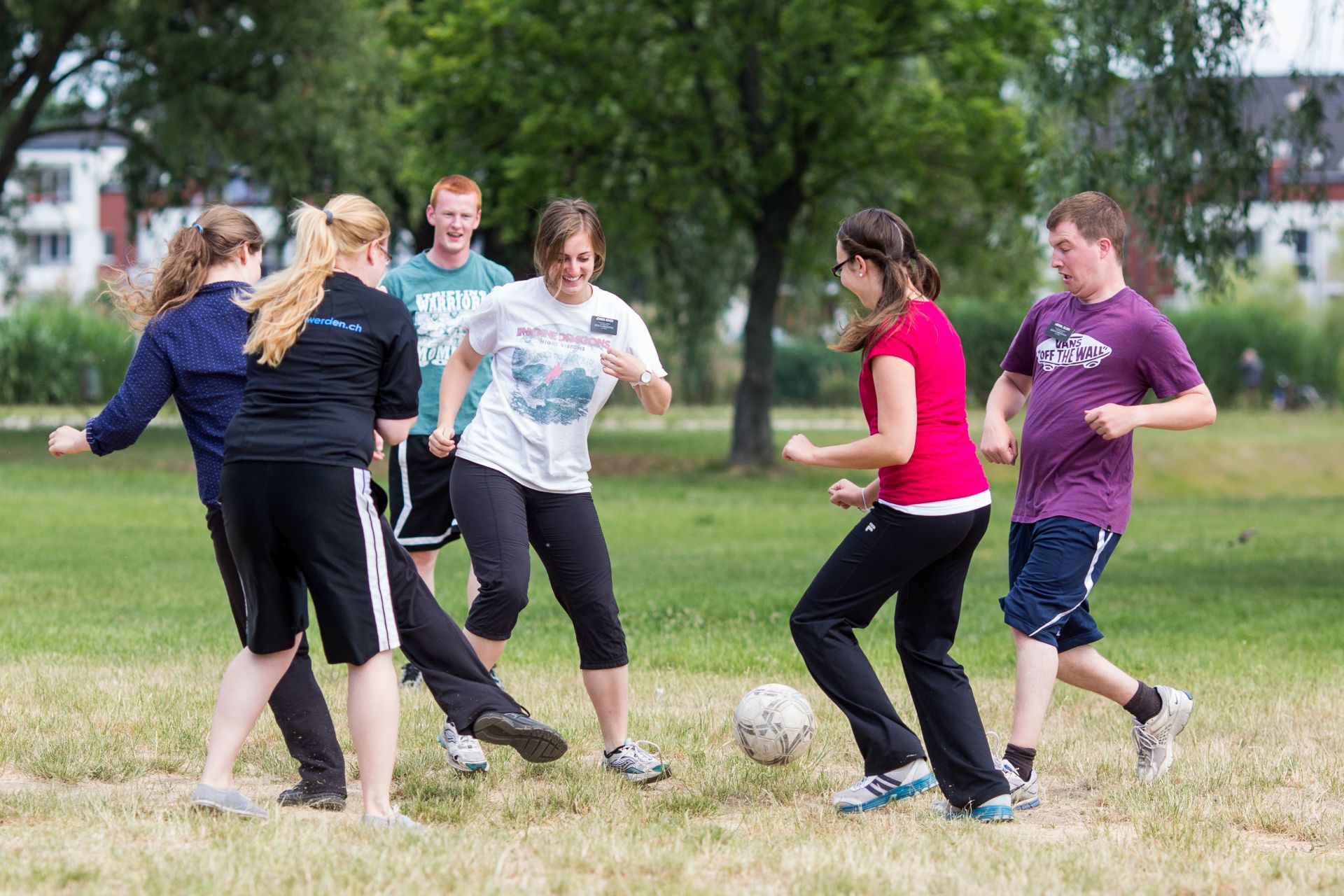
It's taught me life skills I might not have come by any other way. In my church there's no paid ministry; people are "called" to positions and given responsibilities and support where necessary to carry them out. Among many other things I've learned organisational skills (I took 40 teenagers on a weekend coach trip), diplomacy (from when I was public affairs rep) and public speaking. Because there's no paid ministry in my church we can all be called on to preach a sermon on a Sunday, and I do so about three times a year. I'm no longer nervous speaking in front of a large audience, having addressed 200 people in a supportive and loving environment on multiple occasions.
As well as all these incidental skills I've picked up through being given assignments, I have had actual lessons via the church, all for free. I've undergone a course on safeguarding, I'm currently learning British Sign Language (yesterday we learned to sign a hymn) and I've also had lessons on teaching skills and researching my family history. I've found the church's easy piano course (developed to ensure no congregation is ever without a pianist) far better than any commercial ones I've tried. If you're someone who likes to help others there's no better place to find structure to do that than church. Many churches are involved with provision for the homeless, for young families, and hundreds of other practical charitable causes, because churches are where you find a large group of people who actively want to reach out to others in their community. I think you'd be hard-pressed to find a church that didn't have at least one community charitable activity you could volunteer for. In the past our congregation has been involved in cleaning up parks and outdoor spaces, and currently we're working with a food bank.
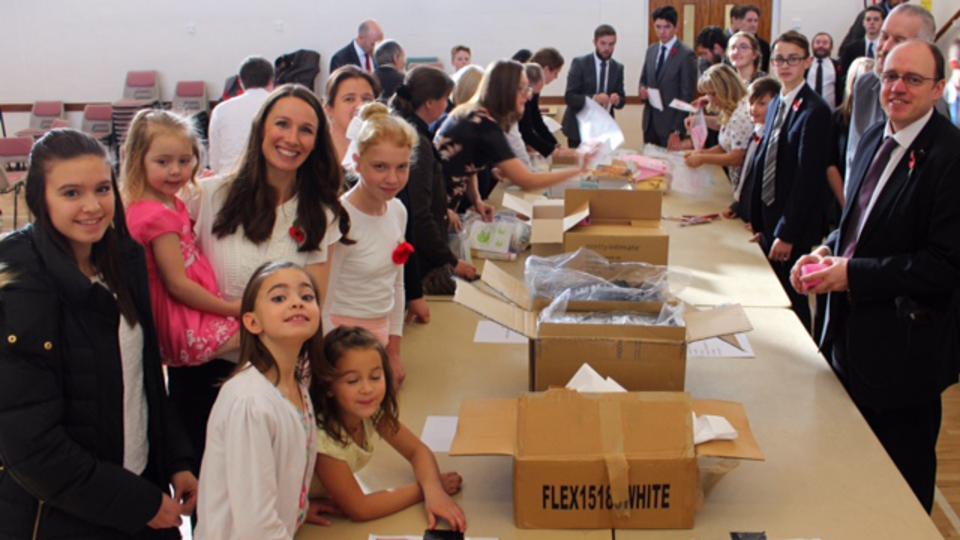
The church has given me opportunities I might not otherwise have had. My life's ambition was to be a published author (self-published doesn't count). I achieved that ambition through my church, but it's a long story so you can read how by clicking this link. In our church many young people choose to become missionaries at around 19 or 20, serving for eighteen months to two years, often overseas. As with everything, you are "called" to serve in a specific location rather than getting to choose. My husband was called to serve a mission in Russia in his early 20s and as a result is fluent in Russian which has been very beneficial in his career. I often think of a young man in our congregation who was called to Guam. He'd never heard of it, but when he returned after two years it sounded as though he'd had the adventure of a lifetime. How else would he ever have gone to Guam and had those amazing experiences?
Mindfulness, yoga, meditation - all forms of quiet introspection have been shown to be helpful in this time of crisis. But even before the pandemic hit and the calm assurance prayer gave me became the bedrock of my day, the self-care and self-evaluation I was taught from years of Relief Society (women's group) lessons has been so very beneficial that I wonder how others manage who don't spend an hour every Sunday (or every other Sunday now) with loving sisters learning how to be better people. I've learned how to forgive others and myself, I've learned to make peace with my past, I've learned better understanding and patience in times of difficulty, I've learned the different meanings of love and how to show it, and I've learned how to value myself with all my weaknesses and strengths. (If you're a man reading this, don't worry - I understand the men's group has similar lessons.)
One of the (several) quirks of my church is that's it's big on preparedness. For a long time our leaders have been encouraging us to have monetary savings and to store food, medicine and clothing against times of need. It also issues guidance on how to do that. (Another thing I've learned through church is exactly what the true shelf-life is of many food items.) I've not been particularly good at following that advice (see my use of the word "quirk", above) but in this current crisis it did mean that when lockdown hit and people started panic-buying, I was at least confident that we had enough food for a couple of months, and while everyone else was lamenting the lack of flour on the supermarket shelves I was looking at the two huge jars of wheat in my cupboard and getting out my grinder. (Wheat keeps indefinitely; flour doesn't.)
Admittedly this is something great I got out of my church attendance that is really a bit specific, but maybe the point here is that attending church helps you to look at things in ways you otherwise might not, or do things you otherwise might not consider which can be beneficial in unexpected ways.
I mentioned our church's missionary programme earlier. Missionaries are also called here, so I've had the chance to get to know people from all over the world, learn of their culture, and eat their traditional food. In just the past few years we've had missionaries from Saudi Arabia, China, Brazil, Germany, Romania, Japan, Portugal, America and New Zealand. It's really helped broaden my understanding of other areas and cultures, and asking them their stories is fascinating. One I remember in particular was a Dutch missionary who had once been a drug dealer and smuggler. He was caught by the authorities and in desperation he prayed that if God would help him he would give up his bad ways, turn his life around and dedicate his life to serving God. He was let off due to a procedural technicality, and was true to his promise.
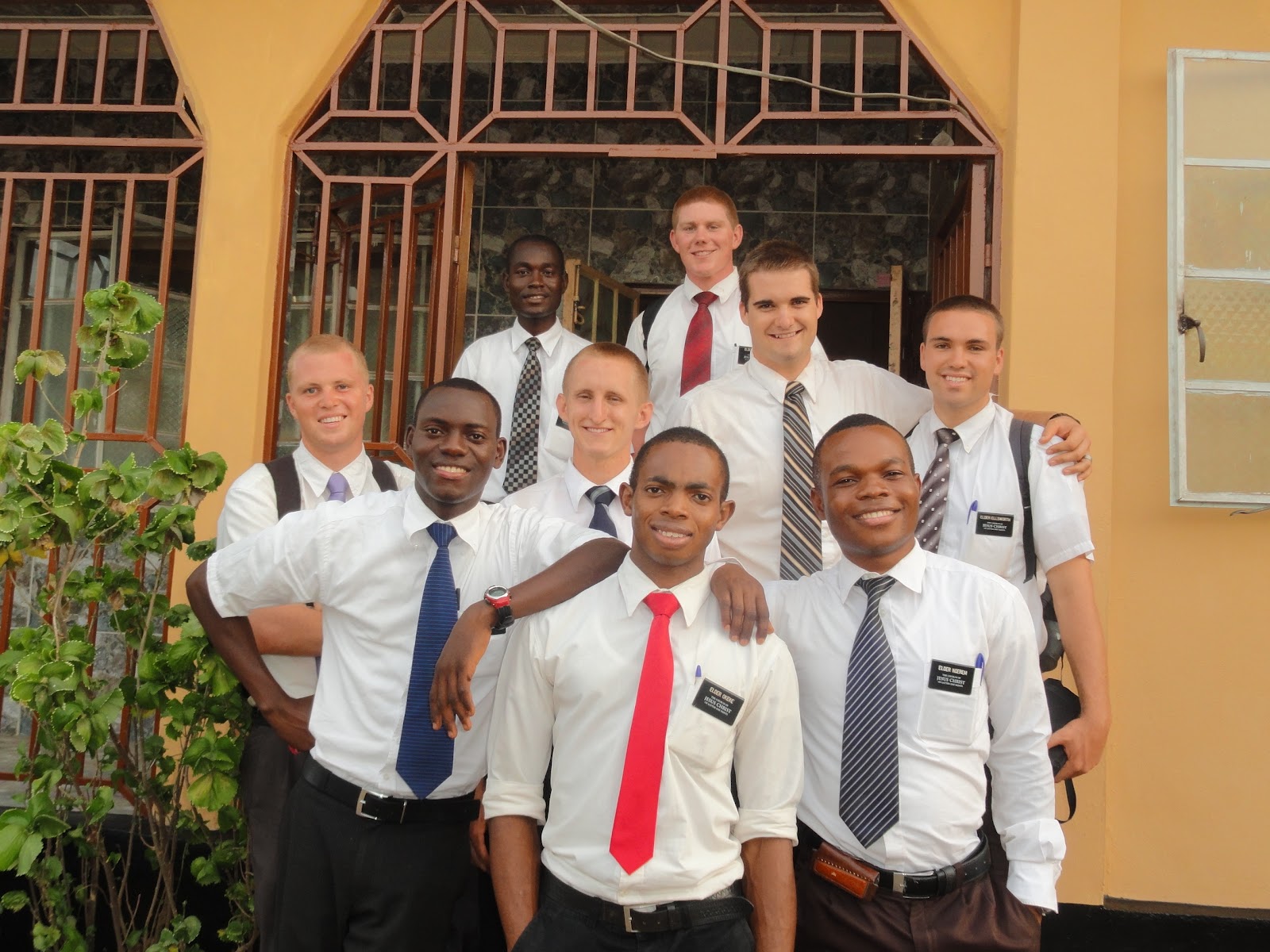
Even if the church you chose to attend isn't one which operates a programme like this, it's very likely that you will find yourself mixing at church with people from all sorts of different backgrounds, different perspectives, and with a wealth of life experiences they are happy to share. In our neighbourhoods, schools and jobs we tend to mix mostly with people who are like us. Belonging to a church community is a great way to broaden your horizons.
These are all reasons for attending church even if you're not religious, but I'd be remiss if I didn't mention that church attendance has given me strength, joy, hope, and comfort. It's my weekly reset and restore button. I have grown and developed my faith through being part of a church (among other things) and that faith means that I can be comforted with the knowledge that I am loved, that I can be with my husband for eternity, and that I will see my beloved Dad (who died in 2016) again.
I also met my husband at church, the two hours of free childcare each Sunday when the kids were small was wonderful, and I get free membership of Ancestry.com because my church owns it.Am I really suggesting that you should go to church even if you're an affirmed atheist? Not entirely, I'm just saying that church is so much more than somewhere religious people go to make themselves feel better about believing in weird stuff. No one is born with faith; most of us spend our lives on a journey of acquiring and developing it, and for many people it is becoming part of that body of people first which help them explore and investigate faith. So whether you're of a religious persuasion or not, why not check out a church livestream or Zoom today, and see how it can enrich your life.
April 25, 2020
How I got published - and how you can too
How I got published
In 1998 I wrote a terrible book. It was called "The Temple of Truth" or something similarly trite. My lifelong ambition was to be a published author, and having recently joined the Church of Jesus Christ of Latter-day Saints I had discovered that there was a thriving market for clean LDS-based literature. I thought that writing for this market would be an easy way to get my first book accepted by a publisher, after which a mainstream publisher would surely snap up my second manuscript given that I was already a published author.
For the record, I was wrong on both counts.
My terrible book landed on the desk of Covenant editor Valerie Holladay. She read it and wrote to tell me that my book was terrible, but that she thought my writing style showed promise and noted that I lived in Wales. Many Utah residents had ancestors from Wales, she told me, and would love to learn more about it. Would I consider writing a book set there? She even gave me a few pointers regarding a possible story.
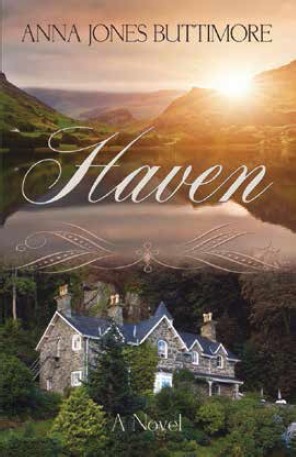
I was thrilled at this and wrote "In the Shadow of the Mountain", another terrible book, which was accepted and published as Haven in 2000 - more about the change of title later. It did very well (it sold 4,000 copies, if I remember correctly) and I was asked for a sequel, which I duly wrote and which also sold well. However, my third in the series was turned down by Covenant. I hadn't appreciated that being a successful published author didn't automatically mean everything you wrote was up to the standard required for publication.
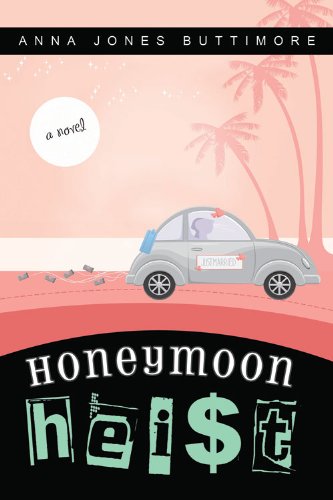
A bit of a fallow period followed (I was busy raising small children and ending a difficult marriage) but I did manage to get another book published by a different publisher (Honeymoon Heist published by Cedar Fort in 2011) and then was taken on by Walnut Springs Press with whom I have published another eight books. The most recent is Her Ladyship's Secret, a Regency romance. Although Walnut Springs is based in Utah and doesn't publish anything not in keeping with LDS values, these books are targeted at the general market.
Traditional vs. Self publishing
All these books were traditionally published. Ebooks didn't exist when I started writing so there was no real alternative to traditional publishing. Like everyone else, I sent my manuscript to a publisher (I have never used an agent, but if you're writing for the national market you will probably need to) and crossed my fingers that they liked my book.
You're probably aware that traditional publishing involves a lot of rejection. Harry Potter was rejected nine times. Many aspiring authors have hundreds of rejection letters and emails. I'm one of them - my publishers don't handle sci-fi or fantasy so I sent my fantasy novel, Kirk kills the King to over 60 agents and publishers and they all rejected it. A publisher has to be sure your book is so good, so original, so compelling, so brilliantly written, that it is worth the considerable financial risk they will take in preparing it for publication, printing and distributing it. Getting accepted by an agent is very nearly as difficult as getting accepted by a publisher. And the publishers and agents will be the first to admit that it's a pretty arbitrary business: your book could be great, but if it doesn't float that particular editor's boat the default position is "no". The standard of the query letter, especially in the US, can be as important as the standard of the book itself.
I have also self-published books. When Amazon launched the Kindle it made a whole new way of publishing possible - one without the agents, editors and publishers who previously served as gatekeepers to the rarefied world of publication. Now, anyone can publish anything, and the standard of the writing really doesn't matter.
I've self-published two books. The first, The Saved Saint, was written with a friend, Hellen Riebold. It's about religious conflict so we always knew we would have to self-publish it. My publishers wouldn't touch it because it is sometimes critical of the LDS church. Evangelical publishers wouldn't touch it because it is sometimes critical of Evangelical Christianity. Non-religious publishers wouldn't touch it because it's about religion.
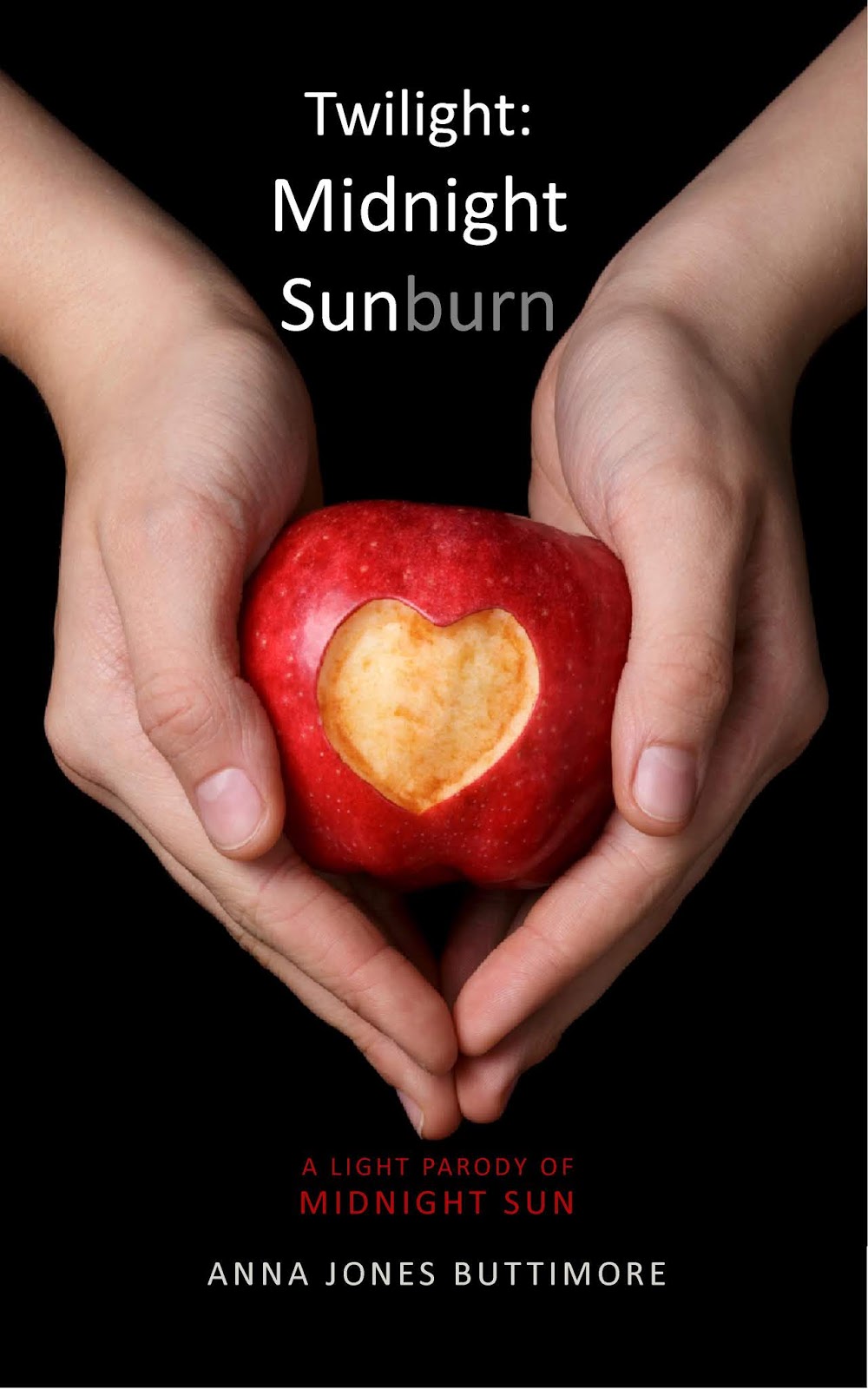
The second, Midnight Sunburn, is a parody of Twilight, and that had to be self-published because no publisher would risk the possible copyright lawsuits (I didn't even ask them). It's my most successful book and part of my routine each morning is to log on to KDP (Amazon's publishing arm) to see how many copies I've sold. At the moment it's averaging 3 copies and 500 KENP pages per day. It's always a thrill to see this evidence of people buying and reading my book (even though I don't get any royalties from it - they go to charity).
If you've written a book and are wondering whether to go for traditional publishing or self publishing, which would I recommend?
Traditional
Every
Time.
Why?
Yes, it's much harder to get published traditionally. Yes, you get more royalties from self-publishing (70% compared with 10-15%) and self-publishing gives you more control over your book. But if you actually want people to read your book you need to be published by a traditional publisher.
It's a sad fact that the vast majority of self-published books sell fewer than 100 copies, and those are generally to family and friends of the author. The Saved Saint bears this out. Despite our best efforts at marketing I think it's sold 10 copies in the seven years since we published it. Yes, there are exceptions, and there are examples of self-published books which went on to become bestsellers, but they are few and far between. Midnight Sunburn is one of those exceptions: to date it's sold just under 3,000 copies plus half-a-million KENP pages read, but it's an exception because it's capitalising on the success of another book.
Publishers work with distributors and actually get books into bookstores. Even in this day and age, that's much more likely to lead to actually selling books. They also have the connections and expertise to help you promote your book (although sadly the days when they did all the promotion for you have passed).
Publishers also have the experts on hand. I think editors are wonderful, and I can't stress enough how important good editing is. I have been very lucky to work with three excellent editors. Sadly Valerie Holladay died a few years back, but I will never forget just how much she taught me about my craft. She took my sorry excuse for a manuscript and turned it into a bestselling (for the market) book. She changed everything about it - from the title to the chapter divisions, characters' names, and huge swathes of the actual text. She even wanted to change my bio (I put my foot down at that).
I think this is what people mean when they talk about "keeping control" of their book by self-publishing: they don't want to go through that stage where someone they don't know rips through their book with a red pen and forces them to make changes or the deal's off. But I can't stress enough how important it is to get your book professionally edited. These people are the experts and they know how to make your book as good as it can be so that they can bring it to market. For me, having access to a professional editor is a bit part of what makes traditional publishing so great. (Shout out here to the amazing Linda, and Megan too, although I only worked with her on one book.)
Remember I said "experts"? Publishers also have access to great cover designers (shout out to Tracey), typesetters, publicists, and many others whose sole purpose is to make your book take the market by storm. If you self-publish you have to pay for these yourself. And you must, at the very least, pay an editor.
Then there's the respect factor. I wanted to be a published author. To me that meant I was a good enough writer that someone liked my book enough to offer to publish it. I think ten-year-old me with dreams of being an "authoress" wouldn't think self-publishing counted. If I didn't have a publishing contract (several, in the end) with an actual bona fide book publisher (albeit a small one) I don't think I'd feel able to describe myself as a "published author". In a world where literally anyone can get their book published easily, being traditionally published still says, "Actually, I am good at this."
Still want to self-publish?
Despite my extolling the wonders of traditional publishing, I know that I was extremely lucky to get published in the first place, and I know that an endless stream of rejection emails isn't for everyone. Many author friends have decided that self-publishing is their preferred option, and I do wish them every success. A few tips:
Get your manuscript professionally edited. I can't stress enough how important this is. And trust your editor. Yes, editing costs money, sometimes quite a lot, and you almost certainly will not recoup that in sales, but you want your book to be error free and actually good. Don't forget to have your editor check over your back cover blurb too.You don't need to get an ISBN - those are provided by Amazon (or the platform you choose) but you may need to get an ITIN for American tax if you book is going to be for sale in the US.If you can afford to, get a professional cover designer. They will do a far better job than you ever could.The easiest platform for self-publication is Amazon's Kindle Direct Publishing. There are lots of guidelines and explanatory videos on there. KDPs home page says that it takes just five minutes to publish your book. Don't let it. You need to take much longer than that to get it right - to ensure you have no widow or orphan lines, that your chapter headings align, and that your book looks professional.Set the right price. Self-published ebooks are generally cheaper than traditionally published books. While you can't offer your book free (except during a promotion) you should price it low enough to generate interest, but high enough to reflect its worth as a quality product.If you also want paperback copies to be available, be sure to order a proof copy. Again, it costs money, but it will help you to see what is wrong in your book.Have a marketing strategy in mind. I always find marketing really hard - it's just somehow not British to say, "I've written an amazing book and y'all need to buy it! Yay me!" Nevertheless, that's what you need to do right from the start to get people interested in your book. At the very least you need to line up people who will post reviews for you (usually in exchange for getting the book for free) and you need to share a lot of social media content.There is so much more I could say - in fact, I'm thinking of holding online workshops about writing and publishing. Let me know if that's something you'd be interested in. And in the meantime, good luck with your writing, and remember to enjoy it!
March 14, 2020
Please Judge my Book by its Cover
It's a Regency romance called "Her Ladyship's Secret" and here's the all-important blurb:
Thundersley, Suffolk, 1813: When Mr. Wilson, a travelling minister, arrives in the rural parish of Thundersley, Catherine Waters is intrigued by the man himself and by his connection to her reclusive and mysterious neighbour, Lady Forrester. Through Mr. Wilson, Catherine is drawn into the world of Thundersley Hall, where her cousin finds forbidden love.
After Mr. Wilson leaves Suffolk to continue his work elsewhere, the dashing village doctor, Mr. Davenport, is on hand to offer Catherine love, security, and help in uncovering the secrets that threaten to destroy all she holds dear. In the end it is Lady Forrester’s most closely guarded secret that could save Catherine’s family from ruin and allow her to hope for happiness.
And here's the cover:
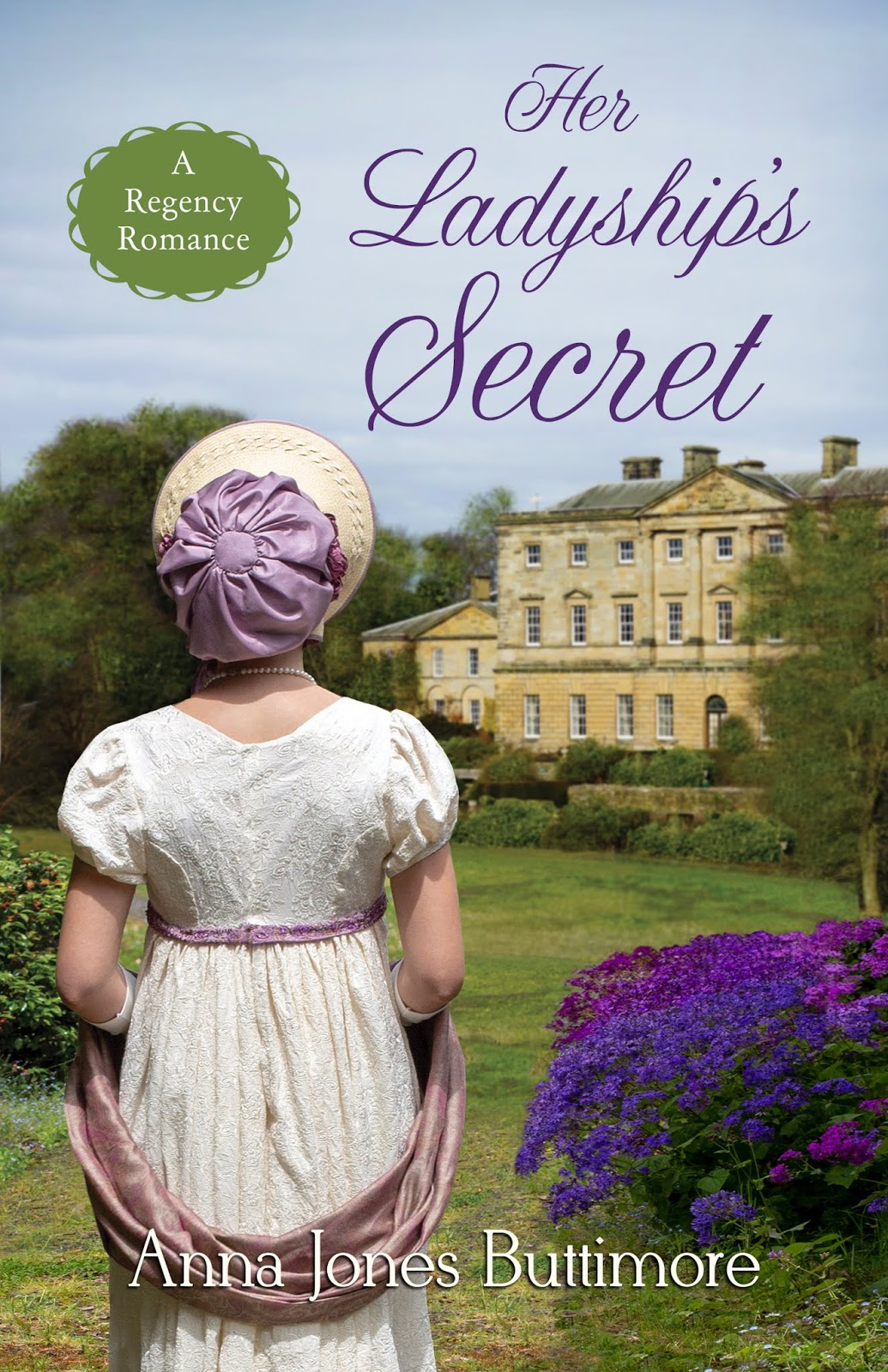
Isn't that just the most beautiful book cover ever? I absolutely love it, especially as the back cover picks up that beautiful purple. It shows my heroine, Catherine Waters, looking at Thundersley Hall, home of Lady Forrester. (Yes, I did name the fictional village after the village I live in.)
What makes me love it even more is this:

It's the cover of one of my previous novels, set in the same fictional village 130 years later during World War II. And that cover shows one of my heroines, Patricia Field, looking at Thundersley Hall. I love how it's the same building, and each cover is so evocative of the time, and the tone of the novel.
I'm just in awe of my amazing cover designer, Tracy Anderson. Thank you, Tracy.
I hope you'll think my story lives up to its cover - because the cover is stunning.