Angie Hyche's Blog
September 16, 2025
Tidy Up Your Contacts: Declutter your Digital Address Book
Decluttering our digital world is a task that tends to sneak up on us. Unlike stacks of mail on the kitchen counter or a mountain of laundry on the bed, extraneous digital information doesn’t catch our attention quite as readily. So it’s easy to ignore, to pretend it doesn’t exist, to assume it can just be handled tomorrow, or next year, or never. It’s not really bothering anyone, right? It’s not getting in the way of accomplishing daily routines or getting a good night’s sleep. So why bother taking time to deal with it?
Yes, it’s easy to ignore digital clutter, but as I’ve been slowly but surely working my way through different digital platforms, I’ve found the benefits far outweigh the small amounts of tedious work involved. While I’ve been fairly consistent with staying on top of email (it’s a constant battle—am I right?), I knew that information about my closest friends and family members was swimming in a veritable sea of old contacts that needed to be weeded out. It was time to take action.
 A Word about Guilt
Call me either slightly neurotic or a classic overthinker, but deleting a contact isn’t easy for me. As I pause to consider whether or not I should hit “delete,” I might start dwelling on how important that person was in my life twenty years ago, or what a great friend that person was to one of my children (who are now adults). But at a certain point, we have to accept that people go in and out of our lives; it’s a natural part of life. If we no longer have a reason to be in touch with a person, it’s acceptable to delete them from your contact list. In the age of social media and instant connectivity, if we really need to find someone in the future, there are multiple ways to do it. Don’t let guilt keep you from moving on.
Why Declutter Your Contacts?If you’re debating whether or not to go through your contacts, here are a few reasons why it’s a good idea to prioritize getting your digital address book up to date:
Save time. When your contacts are organized and updated, you can find the person you're looking for much faster. I certainly don’t want to take time to scroll through hundreds of contacts with outdated information, and I bet you don’t either.
Avoid embarrassment. Suppose you need to text or call someone, but you haven’t been in touch for a long time. If your information isn’t up to date, you could contact someone else with a similar name and have an embarrassing conversation. Awkward!
Narrow your focus. By deleting contacts you no longer need, you can put more focus and energy into the people and relationships that are most important.
Create space. Do you ever feel like your digital world is just one big chaotic mess? Cleaning out contacts will help you feel more in control of your digital life.
My ProcessAlthough I could have accomplished this mission on my phone, I decided to use my laptop so that I could easily choose multiple contacts at a time. Since I use Gmail, I logged into my Google account to access my contacts (my contact list on my phone is already connected to my Google account).
I’m so glad my husband Eric was at home at the time. When I got to a name I didn’t recognize, I read it aloud to him. If he recognized the name (usually if I didn’t know the name, he didn’t either), he would tell me what he knew about that person. I worked my way from A to Z, deleting old contacts as I went.
While you’re working on your contacts, be sure to perfect the contacts that you’re keeping. Google makes it easy by flagging contacts that need to be merged and fixed under a “Fix and Manage” header.
My NumbersWhen I began, I had 921 people in my contacts list. I’m not sure I’d ever paid attention to that number before. It seems a bit mind-boggling. I’m willing to bet a few of you are now checking their contact list to see how your numbers compare to mine. Feel free to share. Anyway, 921 is a lot of people!
I deleted 342 of them, giving me a new total of 579. It’s been a few months since I finished this purge. Looking at my contacts list now, I have 617. So obviously, I’ve added a few since then. This just goes to show that it’s an ever evolving list as we connect (and disconnect) with more and more people.
Reflections and DecisionsI couldn’t believe how many names I didn’t remember. As a former business owner and a person who’s been active in many different communities, I guess I shouldn’t have been surprised. It makes me feel fortunate that I’ve been able to connect with so many people.
After finishing, I made a few decisions:
I need to repeat this process more frequently. I’m planning on revisiting it either every six months or once a year at the least.
When I meet someone and enter their contact information, I plan to make a note of how and when I met them, or at the very least include a business name or the name of the group through which we connected.
Even though this task wasn’t the most fun way to spend a couple of hours, I knew that I would reap some benefits from completing this procrastinated task. And honestly, as is usually the case, it didn’t take me nearly as long as I thought, and I can already tell the difference.
I’d love to know your experience with your own contact list. Do you have a regular habit of going through it? What has worked or not worked for you? If you’d like, share your thoughts.
Decluttering your contacts isn't just about deleting names; it's about reclaiming control, saving time, and focusing on the people who truly matter. So take a deep breath, open your contacts, and start tidying up. Your future self—and your sanity—will thank you. Here’s to an uncluttered and simplified digital life!


June 23, 2025
Unsubscribe and Thrive: A Practical Approach to Email Minimalism
“Where did all these email subscriptions come from? I don’t even remember signing up for most of these!”
Can you relate? It’s easy to get overloaded in a sea of promotional emails, newsletters you never read, and updates that only add to your digital stress. Without taking intentional steps to prevent the influx, just like physical belongings, digital clutter has a tendency to accumulate.
In November of 2024, I finally decided I’d had enough and that I was ready to drastically decrease the number of email subscriptions I was getting. Although it seemed easier and quicker to just delete emails as they came in, I knew that in order to make a significant impact, I’d need to take the time to unsubscribe instead of just deleting. I decided to keep a record of my efforts because I was curious about how many subscriptions I had, and because I wanted to write about my experience. In this blog, I’ll share my results and the practical steps I took in hopes that it can help you achieve a more manageable inbox.
The Experiment BeginsBeginning on December 1st, 2024, I started looking carefully at each email delivered to both of my inboxes. I had two different email addresses at the time, and I was trying to convert to using one email address for everything, so this was a good time to make that change as well. I kept records for both email addresses for the entire months of December 2024 and January of 2025. I made a list of the email subscriptions that I unsubscribed to, as well as those I wanted to continue to receive. In some cases, for the email subscriptions I wanted to continue to receive, I needed to unsubscribe from one address and subscribe from the other. The overall process was a bit complicated and time-consuming, but it was well worth the time invested. My email inbox is so much easier to handle now.
When making a decision about which subscriptions to continue to receive and which to unsubscribe to, I asked myself the following questions:
How and when did I begin to get these emails?
How often do I read them?
Would I miss them if I unsubscribed?
Are they adding value to my life?
My NumbersThe number of emails I unsubscribed from was much higher than I anticipated. During that two month time period, I unsubscribed from a total of 142 email newsletters. I chose to remain subscribed to 24 newsletters, only 7% of my original number.
Since the end of January 2025, I continue to ruthlessly unsubscribe. New email newsletters pop up all the time, most of which I never chose to receive. For example, if I order from an online company and have to provide my email address, I was automatically added to their newsletter, even if I hadn’t indicated a desire to get it. Many times, I had no idea how a company got my email address in the first place.
Although this two month effort was very helpful, it didn’t take me long to realize that unsubscribing is an ongoing process. When I receive a new newsletter, even though it seems easier to just quickly delete the email, I try to take the additional second or two to unsubscribe so that I won’t be back in the same situation anytime soon.
One Click Unsubscribe (with a Caveat) Unsubscribing isn’t a difficult process. Usually, it requires only a single click. In fact, with email programs like Gmail, unsubscribing doesn’t even require opening the email because the email program contains a feature embedded directly within the email interface that lets subscribers instantly opt out of mailing lists with a single click. In addition, the one-click unsubscribe rule is part of the CAN-SPAM Act, a federal law that regulates commercial email, requiring senders to provide recipients with a clear and easy way to opt-out of future emails with a single action. But there’s a caveat. Have you ever unsubscribed from an email list, only to continue receiving emails from this same company? How does that happen? Many businesses have multiple email lists. If you unsubscribe, you may have only unsubscribed from the specific email list that email was associated with instead of unsubscribing from all of their email lists. For instance, you may have unsubscribed from a company’s Daily Deals newsletter but still be signed up for the Monthly Updates newsletter. If a business has multiple email newsletters, you’ll have to go to the next step to be sure you unsubscribe from every newsletter. Then you’ll probably be asked why you’re unsubscribing. Then they may ask you if you’re sure about it. Feel free to ignore these last questions. Just get out of there. Now It’s Your TurnReady to take control of your email? Take time to unsubscribe. I promise it will be time well-spent.
April 8, 2025
My Digital Declutter: Lessons Learned
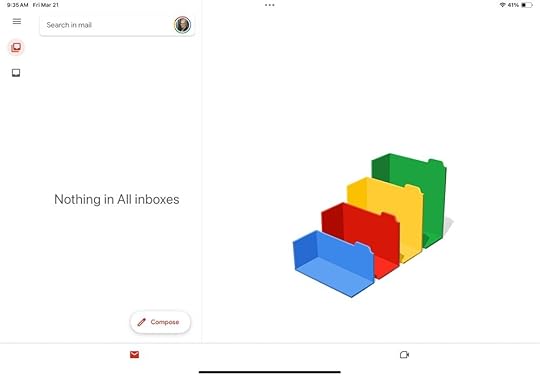
Inbox Zero: It really happened! Alas, it didn’t last long.
The Struggle is RealEmail is relentless. It’s a beast that resists all attempts to be tamed. Every once in a while, you might get a brief glimmer of hope. On one glorious day, you might spend some time decluttering your inbox, and after a long struggle, you break out in a happy dance as you joyfully announce that you’ve arrived at the coveted status of Inbox Zero for the first time in who knows how long. You feel an enormous lifting of your spirits, and you breathe a sigh of relief. You might even snap a quick screenshot of your achievement and share it on a social media post. An empty inbox sits in front of you. Yes—you finally did it!
Alas, the celebration doesn’t usually last long. Five minutes later, that beautifully empty inbox gets flooded by a slew of emails, spoiling your joy and reminding you that the beast is back on the prowl. Oh well, it was nice while it lasted. At least you had five minutes to celebrate.
Sound familiar? Most of us can relate to this continual battle. We may be so discouraged that we just throw up our hands and accept it as a necessary evil. The good news is that there are measures we can take to slow down the influx of emails and to bring order to our email folders, as well as to other parts of our digital world.
My Digital Decluttering ExperimentAt the end of 2024, I started doing some digital decluttering, a task I usually complete once or twice a year. I decided that this time, I wanted to be more thorough with the task and more intentional about recording beginning and ending numbers as well as insights I gained during the process. With a nod back to my nerdy science days, I considered it an experiment of sorts.
To put things into perspective, this isn't a story of rescuing a digital disaster. As a professional organizer, my email was manageable, my contacts were mostly up-to-date, and my files had a semblance of order. But I decided to do a 'light' declutter anyway, and I found a surprising amount of digital dust bunnies. My digital life was definitely in need of improvement, and I’m so glad I took the time to work on this often-neglected area. The work has definitely been worth it.
Simple Steps Coming SoonIn my upcoming blog series, I'll be sharing the real, unfiltered truth about how even a 'tidy' digital life can benefit from a good decluttering. I’ll share practical tips that can make a real difference. I want to give you hope, no matter your starting point and even if you feel completely out of control. And I want to inspire you to take a closer look at your own digital habits, even if you think you’ve already got it under control.
So be on the lookout soon for the first blog in this new series. If you’ve got a specific question or area you’d like to make sure I address, either comment here or email me and I’ll be sure to include it in the blog, or to send you the answer.
Here’s to an uncluttered digital future for all of us!
February 19, 2025
Lessons Learned from Feasts and Famines
In late January and early February, I gave four presentations in nine days. The presentations were on four different topics to four different groups, three in person and one virtual. It was a LOT of work to develop and to deliver this many presentations, and having them in such a short period of time was a challenge. Since writing about my experiences helps me process and learn from them, I decided to take a few minutes to glean some useful takeaways and to share them.
To be clear, four presentations in nine days isn’t the norm for me. I titled this blog “Lessons Learned from Feasts and Famines” for a reason. It’s not unusual for me to have several months in a row of presentation famine with nothing scheduled and no promising leads. After a time of famine, when event planners approach me with speaking opportunities, I’m tempted to say “yes” to any prospect without proper discernment. In fact, saying “yes” without discretion was one of the factors that led to the recent feast.
If you’re a speaker, you’ll be able to relate to the specifics of my recent circumstances. If not, my hope is that you’ll still find value in what I share. We can all relate to having busy seasons, to the nuances of working with a group on a project, and to choosing wisely (or not) about what to say “yes” to and what to decline.
Following are a few lessons I learned from an inordinately busy presentation season:
For any activity you’re considering saying “yes” to, clearly define what you hope to gain from it. In my first few years as a business owner and speaker, my goal in delivering presentations was gaining new residential and business organizing clients. Once I shifted to a primary focus on writing and speaking and I was no longer working in homes and businesses, my focus understandably changed.
Now I’m concentrating more on my message. After spending years working with clients and seeing how their clutter negatively affects them (as well as recognizing my own invisible clutter), I’m on a mission to help people eliminate the clutter that distracts them from their priorities. I’ve loved this shift, and it’s enabled me to enjoy my time with an audience even more. I thrill in seeing people engaged in the discussion, making insightful comments and asking questions that show they understand the value of the teaching. When attendees really “get it” and report back to me that they’ve made changes in their habits that have improved their lives, I know that this is the best possible reward for my time. If I’ve made a difference to one person in a crowd, no matter its size, it’s worth every minute I spent preparing.
There is immense value in knowing what you can handle and what puts you over the limit. In my situation, I realized that just because I could do four presentations in nine days didn’t mean I should. In addition to understanding what “too much” feels like, defining your “sweet spot,” or the appropriate amount of activity where you can function at your best, is extremely helpful.
Having experienced a range of speaking activity, I believe that one to two presentations a month is my sweet spot, my “just right” amount where I’ve got work to do but I don’t feel overloaded. Now that I’m clear on that standard, when potential opportunities come my way, I can make a better decision. Better decisions mean not only better self-care, but better quality work and better outcomes for my audience, a true win-win.
For one of my recent presentations, I had asked questions and visited the venue to make sure I knew what the meeting space looked like, what was provided for me and what I needed to bring, how much time would be needed to set up, and all of the other specifics. I was confident I had prepared sufficiently.
There was one detail that caused me some concern. The meeting room was extremely bright and had three windows without curtains. Since I would be using slides, I told the employee showing me around that I was concerned about the level of brightness in the room. I was afraid the audience wouldn’t be able to see the slides, which were essential for this particular topic. The employee reassured me that she would set aside some materials to cover up the windows and would have those ready for that morning. However, when I asked the employees who were there on the morning of my presentation, they weren’t aware of this and had no idea whether anything had been set aside.
A last minute call to the house manager revealed a mix-up in communication, and apparently that detail was my responsibility. After a frustrating ten minutes of frantic searching and a solution that partially worked, I was able to project my slides and go on with the presentation. By that time, I had lost 10 minutes of my presentation time, and the success of the presentation was only possible because I had a patient and understanding audience. I will be much more thorough in the future about making sure every detail is finalized.
In my first few years as a business owner and speaker, I routinely gave presentations without any expectation of monetary compensation. The opportunity to speak to a group about my business, to make connections, and to possibly gain new clients was enough for me. But after several years as a speaker, I began to feel differently about compensation because I understood the value of my time and expertise as a professional organizer, author, and speaker. Now I make no apologies for establishing a minimum compensation. For me, the absolute minimum compensation is that I’ll either be able to sell my books or that I’ll receive a speaker fee (ideally both). I make no apologies for this now, even if I have to turn down an opportunity because a group can’t meet this requirement.
For most presentations, promotion is a combination of the efforts of several different people or groups, which may include an event planner, a sponsor, the venue itself, and of course, the speaker. It’s tempting to assume that with so many individuals or groups working on promotion, an event will be marketed well and that attendance will be good. But I’ve learned the hard way that the level, quality, quantity, and timing of promotion varies drastically from group to group. In short, I can’t count on anyone’s efforts besides my own. If I work as if all of the marketing is up to me, then anything else is just a welcome surprise.
This last lesson is a slightly embarrassing one. As a professional organizer, I hate having to admit that I’m notorious for leaving things behind wherever I go, including presentations. Now I know that I need to make a list of what I bring with me and to look around thoroughly before I leave. A forgotten HDMI cable and an adaptor created an unnecessary errand for me during this busy time.
Conclusion:These "feast and famine" experiences are common for many professionals. My hope is that sharing these lessons learned will help you navigate your own busy seasons with greater clarity and intention. Whether you're a speaker, a project manager, or simply someone trying to balance multiple commitments, remember the importance of defining your goals, knowing your limits, and advocating for your needs. By implementing these strategies, you can create a more sustainable and fulfilling work life, one that allows you to thrive without sacrificing your well-being.
January 4, 2025
It’s Been a Great Ride

In the summer of 2016, I took a giant step of faith and began a professional organizing business, Shipshape Solutions. It was my last foray in a string of dissimilar but fulfilling careers. Little did I know all the twists and turns that decision would create.
My plan was to get the training I needed, and then to help people declutter and organize their homes and businesses. I started writing a blog right away, knowing that many business owners used a blog as a tool to let others get to know you as a business owner and to learn about the services you offer.
The newspaper column beginsWithin a few months, I began to wonder if the material I was writing would be valuable to readers of my local newspaper, the Kingsport Times News. I reached out to the appropriate editor, and thankfully I was given the opportunity to begin a regular column. My first article appeared in the Times-News in January, 2017. Now, in January of 2025, this final article is #120, spanning eight years.
For the first six years of my business, I worked with hundreds of clients in the Tri-Cities area, helping them declutter and bring order to their homes, their businesses, and their lives. I found the work extremely rewarding, and I loved sharing my skills to help improve others’ lives.
Changing focus: two books and a podcastOver time, however, my primary passion shifted. While I enjoyed the work of organizing with clients, the writing and speaking began to occupy more of my mind, and I shifted my focus. After delivering a presentation for a church group called “The Spiritual Implications of Clutter,” I knew there was much more to learn about the connection between faith and organizing. That presentation eventually became my first book, Unholy Mess: What the Bible Says about Clutter (published in 2020).
A few years later, I met Liana George, a former professional organizer who was writing a trilogy of Christian novels about a professional organizer. Liana had been collecting ideas for a devotional book on decluttering and organizing for 10 years. She wanted to write a devotional but was looking for a co-author. Liana and I hit it off right away and started writing. In January of 2023, we started a podcast, and in June of 2024, Scrivenings Press, a Christian publishing company, published our devotional book. The podcast and book are titled Uncluttered: Shaping Your Heart & Home for What Matters Most.
What’s next?Now it’s time for a new phase of my journey. In retirement, I will continue limited speaking for groups (community groups, churches, book clubs, etc.), and I’m working on a few writing projects. But I will no longer provide organizing services or write the newspaper column.
I’m so grateful for the opportunity to contribute to the newspaper over the years. It’s been a joy to share my passion for decluttering, organizing, and simplifying our lives. I especially enjoy speaking with readers of my column or my book or podcast listeners, whether they reach out by email or speak to me in person.
Although I’m no longer writing a column, I have a wealth of materials to aid you in reaching your decluttering and organizing goals. And most of them are free.
ResourcesMy books:In Uncluttered: Shaping Your Heart & Home for What Matters Most, Liana and I delve into the timeless wisdom of God's orderliness, revealing how it extends far beyond mere tidiness. Through poignant personal anecdotes, Scripture, and practical advice, this four-week devotional invites readers to embrace the beauty of simplicity. Whether you're a seasoned organizer or a clutter connoisseur seeking solace, Uncluttered provides a roadmap to a life of harmony, purpose, and joy. And ultimately, making room for what matters most. This book is available on Amazon in paperback and ebook.
Unholy Mess: What the Bible Says about Clutter: Do you feel empty even though your life is full? Have you lost the ability to focus on what really matters because your home, your schedule, and your mind are cluttered with the insignificant? Do you long for a deeper relationship with God that isn't crowded out by the unholy mess you've accumulated? Then this book is exactly what you need. Reading Unholy Mess will empower you to find the simplicity that lies beneath the clutter, to rekindle your passion for God, and to enjoy a peaceful and ordered life. This book is available on Amazon in paperback, ebook, and audiobook.
Free resources: My podcast:In the Podcast section of my website (angiehyche.com), you can find links to either the video (YouTube) or audio recordings of every episode of the Uncluttered podcast. The focus of the podcast is the connection between faith and organizing. Liana and I talk about not just how to be organized, but why it’s important, from a biblical standpoint, that we leave the chaos and clutter in our lives behind.
My website (angiehyche.com):In the Blog section of my website, you can find every newspaper column I’ve written, beginning in 2017. They’re in list form on the website in chronological order, beginning with the most recent. You can also search by topic by clicking on the keywords at the top of the section.
The Video section of the website is a resource for organizing of all kinds. Most of the videos are from Daytime Tri-Cities, a local talk show on which I was a monthly contributor for several years. Others are taken from podcast guest appearances or other sources.
In the Resources section of the website, there are several helpful lists, including donation and recycling tips, as well as a recently expanded list of some of my favorite podcasts and books on decluttering, organizing, simplicity, and habit change.
It has been an absolute delight sharing my passion for decluttering and organizing with you all these years. Thank you for your unwavering support and for allowing me to be a part of your journey. I wish you all the best in your continued efforts to embrace an organized life. May your homes (and lives) always be a source of peace and joy.
December 7, 2024
Simplify Christmas: Your Guide to a Stress-Free Holiday
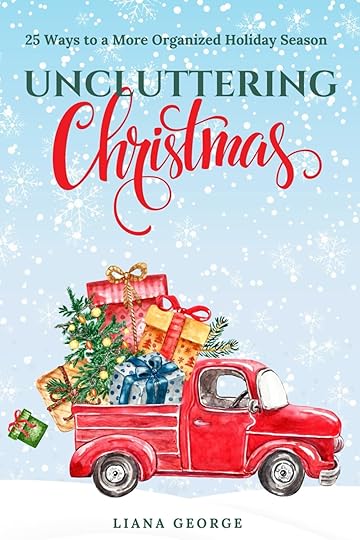
It’s beginning to look a lot like Christmas! Depending on whether you relate more to Buddy the Elf or to Ebeneezer Scrooge, you’re either thrilled about the hustle and bustle of the season or dreading the flurry of activity. The holiday season promises joy, peace, and togetherness, but sometimes what it actually delivers is increased stress and exhaustion.
If you’re one of the many who long for a more peaceful holiday season, Uncluttering Christmas: 25 Ways to a More Organized Holiday Season is exactly what you need. This new book by my friend Liana George shares practical advice to help you declutter your holiday and rediscover the true meaning of the season.
Liana and I recently co-authored the book Uncluttered: Shaping Your Heart & Home for What Matters Most, a book of devotionals which was published in June. When Liana told me she was working on a book about uncluttering Christmas, I couldn’t wait to check it out and to share it.
I’ve got a complicated relationship with Christmas. As a child, Christmas was a magical season filled with delights. As a young adult and young married, I threw myself wholeheartedly into the holidays. I loved everything about it. I would have gotten along well with Buddy the Elf if he’d been around then.
But somewhere between my 30’s and my 50’s, all of that changed. Everything seemed more complicated. I wasn’t great at managing my time or prioritizing what really mattered. Christmas became synonymous with anxiety and never-ending to-do lists. Remembering the true meaning of the season sounded good in theory, but never happened in practice. Can you relate to my struggles? How I wish I’d had this book to help me!
Following are the book’s Amazon description and the first chapter:
Amazon description:“What if you could simplify Christmas?
Feeling weary from the holiday hustle and bustle? Imagine a Christmas filled with warmth, connection, and genuine holiday spirit—a season where you feel present, peaceful, and fully immersed in the magic around you.
In Uncluttering Christmas: 25 Ways to a More Organized Holiday Season, you’ll find inspiration to clear away the chaos and focus on what truly matters. Through personal anecdotes and heartfelt tips, this guide invites you to simplify and savor the Most Wonderful Time of the Year.
From organizing gifts to planning meals and honoring cherished traditions, Uncluttering Christmas equips you to create a holiday that’s joyful, meaningful, and beautifully uncluttered.”
Chapter 1: Christmas Cheer, Priorities Clear: Focusing on What Matters“As long as we know in our hearts what Christmas ought to be, Christmas is.”
—Eric Sevareid
“Have you ever paused, amidst the holiday rush, to ask yourself what you really want your Christmas season to look like? It’s easy to get lost in the never-ending cycle of shopping, decorating, and running from one event to the next. But what if instead of just trying to survive the holidays, you took a moment to intentionally design the kind of Christmas you truly want?
A few years ago, I found myself overwhelmed by all the holiday demands. I was checking things off my list, attending events, and trying to make everything “perfect,” but deep down, I wasn’t feeling the joy. One evening, after a long day of errands, I sat down and asked myself a simple question: What if I let go of the things that don’t really matter? That small shift in mindset changed everything for me. I realized that instead of adding more to my holiday plate, I needed to start letting go of the unnecessary.
The first step toward a more peaceful, purposeful Christmas is not just about determining priorities—it’s about simplifying. Consider taking a step back this year, and instead of adding more activities and traditions, ask yourself: What can I remove? The less cluttered your schedule and mind are, the more room you’ll have to truly enjoy the things that matter most.
If you live with loved ones, this is a great conversation to have as a family. Set aside some time together to talk about the things that have filled your Christmas calendar in the past. Which activities brought real joy? Which ones felt like obligations or distractions? By collectively deciding what to let go of, you can reclaim the meaning of the season and free up time for what’s truly important.
Take some time to reflect and write out your answers to these questions:
What do we love most about Christmas? What moments bring us the most joy?
Which traditions feel meaningful, and which feel like we’re just going through the motions?
What obligations can we let go of to create more space for peace, rest, and connection?
How can we intentionally focus on what matters most—whether it’s family, faith, or acts of kindness?
By removing the things that don’t serve you, you’ll be left with more time, energy, and focus for the things that do. It’s not just about organizing or planning; it’s about simplifying in a way that allows you to experience the true spirit of Christmas without the stress and overwhelm.
So instead of making a longer to-do list, consider making a ‘not-to-do’ list. Be intentional about what you don’t want to include this year and commit to only saying yes to the things that align with your values and bring you joy. The more you simplify, the more space you’ll have for the moments that make Christmas special.”
Taking the time for the family conversation that Liana recommends in the above excerpt could be a game-changer. Make sure everyone can contribute to this critical discussion. Many times we participate in a myriad of activities during the holiday season just because we’ve always done them, not because they’re truly adding value to our lives.
I’ve found that some of the most meaningful moments are the unplanned ones. A free evening with everyone gathered around the tree watching a holiday movie, sipping hot chocolate, or just reading quietly could be exactly what you need for some much-needed peace and togetherness.
I hope you find these ideas helpful and that this holiday season is your best one yet. I’d love to hear what you learn from the book and how it improves your Christmas. Drop me an email and let me know (angie@shipshape.solutions).
Here’s to an uncluttered Christmas!
November 2, 2024
Empower Your Kids: Teach Them to Be Organized
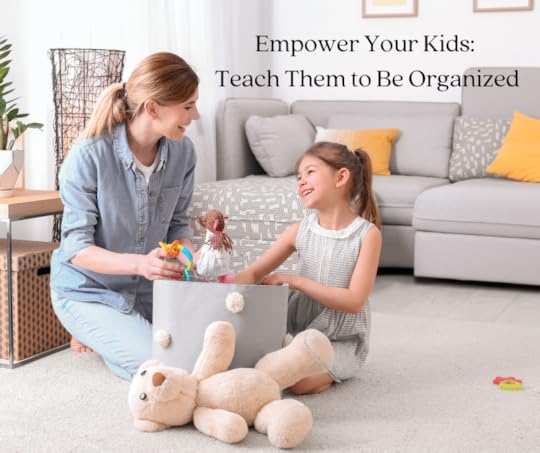
Do your child's belongings seem to multiply overnight? Are you constantly tripping over toys or searching for lost items? If so, it’s time to introduce them to decluttering and organizing. These important skills can help children develop a sense of order, responsibility, and self-sufficiency, all of which will serve them well throughout their lives.
While it might be tempting to assume they’ll learn to declutter and organize at school, these disciplines are best learned at home. As a parent, you’re in the perfect position to teach them how to be responsible for their belongings and their spaces. In this article, you’ll learn key concepts and specific techniques for teaching your children how to declutter and organize.
My children are grown, so it’s been a while since I’ve had the opportunity to do this kind of teaching at home. I wanted to get a fresh perspective from someone with young kids. Corey Willis of Hey There, Home (heytherehome.com) is a mother of two kids who offers virtual courses on decluttering and decorating. Her blog post, “Kids’ Room Organization: How to Teach Your Kids to Declutter,” is filled with wisdom and practical tips. With Corey’s permission, I’m sharing some of her tips.
I couldn’t agree more with Corey’s assertion that “Kids’ room organization is so much easier in a clutter-free space, but we've got to teach them to declutter first.” Her daughter, who was seven years old when this was written, was a self-professed collector of everything, and when asked her to clean her room, she stuffed things anywhere she could find. It was time for a more thorough inventory, to let some things go, and to put things in order.
After spending a day working with her daughter in her room, there were two big takeaways. Now when her daughter cleans her room, she says it goes much quicker because there’s not as much stuff and she knows where everything belongs. She plays in her room more and keeps it neat mostly on her own because she’s proud of what they accomplished. These are monumental wins!
Wouldn’t it be wonderful if the same could be said of your home and your children? If you follow Corey’s steps (the same steps I followed with my own children and with clients’ children) and continue the work of maintenance, you’ll see big results. Plan to dedicate one day per child, working together in their room going through all of their belongings, one container, drawer, and box at a time. Depending on their age, you may need to break the work up into smaller periods of time.
Talk about the power of donations.
Most kids are natural givers. Help them remember how excited they are when they get a new toy, and explain that there are children who don’t get to have this same experience because of their circumstances. When you come across a toy they no longer play with, help them imagine the joy it could bring to another child.
Include your child in the decision-making of where to take the donations, and let them accompany you when you donate. There are many great options for donations, including thrift stores, shelters, churches, family run daycare facilities, preschools, social services, and more. Getting your children involved changes this task from a dreaded chore into a family project.
Teach them two questions.
When your child is making a decision about an item, they can ask themselves these two questions:
Do I use it (or play with it)?
Do I love it?
These are the same questions I recommend for everyone. But what should you do if they love and want to keep everything they own? What if everything is special? That’s why the next step is so crucial. And it’s my favorite part of the process!
Make a place for everything.
We all have limits. When we keep too much, we end up with clutter. We need to choose what to keep based on making sure that it fits in the available spaces in a way that keeps them functional. If it doesn’t fit, then we have two choices. Either we get a bigger space (a bigger room, a bigger house, or a storage unit, none of which I recommend). Or we accept our limits and admit that there’s simply too much stuff for the space we have. It’s as simple as that.
Let the storage containers (boxes, bins, drawers, containers, etc.) set the limits. Help your child understand they can only keep what fits in the storage containers you’ve chosen. This will force them to make tough decisions about what to keep. The space is the decider, not you.
For example, suppose you have a piece of furniture with cubes, each of which has a container for a category of toys. If one of the baskets is the container for toy vehicles, then only the vehicles that can fit in the container can be kept. With the container empty, spread out all the vehicles your child owns. Have them choose their favorite and place it in the container. Then they can choose another one they like, and keep on going until the container is full.
Whatever doesn’t fit into the container will need to be either donated or put away in another location. While you could consider implementing a toy rotation system if you have available space, keep in mind that whenever a holiday or a birthday rolls around, there will be an inflow of new toys.
Use this same process for every category of belongings. Establish a place for everything, put items in that place and label clearly (use pictures for young children), and continue until you’ve gone through everything in their room.
Set up a maintenance schedule.
Once you finish, decide how order will be maintained. Define and demonstrate exactly what you mean by “clean up your room.” When and how often will this need to be done? How will you adjust when the child receives new items? Hint—use the same process, knowing that in order to fit in the new items, some old ones will need to go.
Celebrate your success.
Rejoice in your accomplishment, and praise your child for their cooperation and generosity in donating belongings. Celebrate by doing something fun together.
Conclusion
Teaching children to declutter and organize is an investment in their future. Empower your children to take control of their belongings, create a space that reflects their personality, and embrace the joy of a clutter-free life.
October 5, 2024
What to Do with Dead People's Stuff (Part 2)
Imagine this: a family gathers to divide their grandmother's estate. A beloved heirloom, a dining room table and chairs, becomes the center of a heated dispute. Such conflicts are not uncommon when dealing with the possessions of a loved one. This article offers practical advice on how to navigate these sensitive situations and ensure a fair distribution of belongings. In addition, you’ll find my recommendations for maximizing the value of a deceased person's belongings.
What If a Family Has Trouble Working Together?Most of the time, when a person dies, there are multiple people who need to weigh in on decisions. Sometimes the process is relatively simple, and decisions are made easily without conflict. But often the decisions are complicated and include disagreements. Multiple people usually means multiple opinions, and individuals may have different expectations about what specific belongings they will receive or how funds from the sale of items will be split.
In this situation, a service like FairSplit can be invaluable. FairSplit was specifically designed for the tasks associated with a move, estate division, downsizing, or divorce where people need to decide who gets what, what can be sold, donated, etc. They’ve been helping families with these sticky situations since 2010. Their tagline, “Divide Things, Not Families: Your proven system to list and divide personal property between heirs” explains their mission well.
FairSplit offers free shareable inventory questions that can be used to create a centralized place to list, organize, and share information about the contents of a home. By having the inventory online, the process is transparent, efficient, and accessible for all, not requiring everyone to gather to make decisions. They also offer several paid packages which include help from an experienced administrator. You can find out more about their services on their website, fairsplit.com.
By the way, I don’t have a relationship with this company and don’t benefit financially from someone using their services because of my referral.
What If a Family Needs to Make Money?There are many available options to recoup money from a deceased loved one’s belongings. They range from time-consuming DIY options to completely hands off alternatives for those who choose not to do the work themselves.
Garage SaleConsider a garage sale in a situation where there are a large amount of items that are not extremely valuable and the family has the time and people to conduct it. Garage sales are quite time-consuming, but depending on how well they’re publicized, they have the potential to sell a lot of items rapidly. Since you’re dealing with not-so valuable items, you may choose to simply donate items that don’t sell. You can have a thrift store pick up the items or transport them yourself.
Online SalesListing and selling items online can be a good alternative to a garage sale. Keep in mind that these methods can still be time-consuming and complicated unless you want to hire someone to handle the sales in exchange for a percentage of the sale. With any of these options, the work requires these steps at a minimum: opening an account, posting the items (including a detailed description, photograph, measurements, and a price, which requires research), and responding to inquiries. Depending on the method, you will need to either welcome interested buyers into your home or meet them at a neutral location, and you might need to package and ship the items. Depending on the platform, you may also have to deal with returns and refunds. Each of these actions can be laborious.
Facebook Marketplace is an excellent option for selling larger items (like furniture) and for selling locally. Poshmark is best for selling clothing and fashion accessories. Etsy is a good choice for selling crafts, jewelry, and creative work. Ebay is optimal for selling a wide variety of items. If you’ve got a large amount of items, the amount of time required for online sales may be time-prohibitive. There are so many other tasks that must be attended to when someone dies, and online sales may simply be too much to handle.
Estate SaleAn estate sale is an ideal choice for a large estate, one with valuable items, or when the process of selling a loved one's belongings is too physically or emotionally difficult. Estate sales can be done by the family, but many families choose to hire a company to handle the details of sorting, pricing, arranging, displaying, advertising, running the sale (including security at the event), disposing of unsold items, and cleaning up. Because professionals have experience pricing and selling valuable items, you may end up making more money on high value items.
Estate sale companies generally charge a standard commission rate of 30-40% of sales. Before they agree to take on a client, they'll typically provide a gross sales minimum. This means that the total value of all the items to be sold must meet or exceed that value.
Companies usually meet with the family (or ask for photos of valuable items) so they can decide whether the estate has the potential to generate their minimum amount. In terms of workload for the family, usually all that is required is that family members remove any items they want to keep before the sale. The estate sale company does everything else.
In my experience with clients, those that have employed an estate sale company have been happy with their decision. They viewed the commission rate as a small price to pay for the time they saved and the peace of mind of knowing the details were being handled by a professional. If you’re considering an estate sale, start by talking to an estate sale professional. They’ll be able to guide you in your decision.
ConclusionIn order to choose the optimal approach, determine the types of items you’ll be selling, their condition and value, available resources (in terms of time and people who can help), and your own preferences. If possible, include every stakeholder in the decision-making. You may want to consider a combination of selling methods to maximize returns and minimize stress. Prioritize research, patience, and effective communication throughout the process.
My first article on this topic explained how to decide what to keep and not to keep, how to honor your loved one’s memory regarding their things, how to give yourself grace and time to make the decisions, how to think ahead about your own belongings, and much more. You can find that article on my website, shipshape.solutions. Feel free to email me (angie@shipshape.solutions) with questions.
September 7, 2024
What to Do with Dead People's Stuff
In a world where possessions often define us, what happens to the things that belonged to someone who is no longer here? Are we obligated to keep them, or is there a more meaningful way to honor their memory? The question of what to do with a loved one's belongings can be a complex one, filled with both sentimentality and practicality.
In this final article in my series, Categories of Clutter, I’m focusing on items left behind by a loved one who has died. Deciding what to do with someone’s belongings after they die can be extremely difficult and emotionally charged. Since most of us will find ourselves in this situation at some point, my goal in this article is to equip you with the tools you’ll need.
Principle 1: There are no rules.As I always said when beginning work with a client, “It’s your stuff, your decision.” In this case, although these belongings didn’t originate with you, they’ve been placed in your care. So you get to decide.
Depending on how well you knew the person or how recently the person died, you may be grappling with powerful emotions. While some things may be easy to let go, others may simply be too difficult right now. Give yourself grace to make the decisions when you’re ready.
Principle 2: Be sensitive to others.Although your loved one’s belongings may have been placed in your care, you may not be the only one who needs to give input into the decisions. Be sure to include anyone whose input is appropriate. Be wise and thoughtful in your conversations. Families have been torn apart in arguments over a dead person’s belongings.
Principle 3: Separate the memoriesWe may struggle to let an item go because of the memories that we associate with the item. But we have to remind ourselves that the memories aren’t literally attached to the object. The memories exist independently, “stored” in our minds and in our hearts. We don’t have to hold onto the object to hold onto the memory. There are other ways we can preserve the memory without keeping the objects.
We could take a picture of the object and put the picture in a physical or digital frame or use the picture as a screensaver. We could write or record a story about the object. If we can’t use or display the object as is, we could transform it into something we can use or display.
Principle 4: Know your limitsOur space is limited, and our house isn’t supposed to be a museum. We need to prioritize holding onto things that are useful to us now or that we will need in the future. By limiting what we keep, we can restrict our collection of sentimental items to a manageable level.
Let the space make the decision by defining a particular number of containers, shelves, drawers, etc. Decide how much space in your home you can dedicate to this category, and then choose the most special items until that space is full.
Principle 5: Honor your loved one by using (or displaying) the itemsDon’t relegate items left behind by a deceased loved one to the depths of your attic, basement, garage, or storage unit. Figure out a way to use or display them if possible. You’ll get a lot more joy out of actually using your grandmother’s ceramic dish as a serving piece than you ever would out of keeping it boxed up. Isn’t that why she made it anyway—to be used?
In the case of a collection, if you can’t use or display all of the items, try keeping a small subset and letting the rest go. Some examples include saving a few pieces of a china set, one doll from a collection of Madame Alexander dolls, or one piece of jewelry from a collection of antique jewelry. Then you can let the rest of the collection find a use somewhere else.
Principle 6: Honor your loved one by giving the items a new lifeSometimes it’s helpful to ask a few questions about what your loved one would want.
Would my loved one want me to keep this out of guilt?
If my loved one knew there were people in need who could be helped by this item, would he/she want me to donate it?
If your loved one was a giving person, he/she would probably want you to pass it on to someone less fortunate. This very act would honor your loved one’s spirit of giving.
Principle 7: Consider the future of your own itemsBefore leaving this topic, I believe there’s a deeper question that needs to be explored. Let’s flip the equation and consider what will happen to our own belongings when we die.
We might imagine that when we die and our loved ones are making decisions about our belongings, they will be grateful for what we saved because they’ll be able to use many of the items and they’ll make a lot of money selling the valuable items we collected over the years. But in the majority of cases, the truth is that very few of the items left behind are actually needed or wanted, and the value of the belongings is much less than what we think. In addition, our loved ones likely don’t have time to do the work involved to sell any items that do have value. While estate sales can be helpful and yield some income in certain situations, many items left behind may end up being donated or removed by a junk removal company, and your loved ones will have to pay for that service. This may seem harsh, but if you have ever had to deal with someone else’s things after their death, you understand completely.
I strongly encourage you to consider your own belongings and to make a plan for them now. The longer you wait to deal with your accumulated possessions, the more difficult the process will be. Any time and thought you put into this now will be much appreciated by your loved ones who will be handling what you leave behind.
August 3, 2024
Clutter Crossroads: Inspiration or Regret?
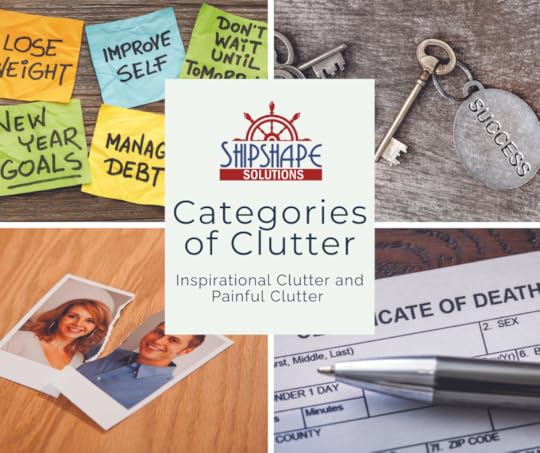
It’s time to talk about clutter again! Clutter, be it the physical clutter of unnecessary stuff, clutter in our calendars and to-do lists, or clutter in our minds is a topic I never tire of discussing. All clutter, regardless of the type, is a distraction. The reason I’m so passionate about it is because I’ve seen firsthand in my own life and in my clients’ lives that eliminating clutter enables us to live in a way that is most aligned with our priorities. There is freedom and clarity in letting go!
For the last few months, I’ve been writing a series of articles about categories of physical clutter. So far I’ve written about the following clutter categories: homeless, informational, practical, identity, and aspirational. In this article, I’ll discuss inspirational and painful clutter.
By the way, if you’d like to read the other articles in the series, you can find them all on my website, shipshape.solutions. While you’re there, you can also subscribe to my monthly newsletter, check out my speaker page, find information about my books and my podcast, and enjoy more free resources.
Before diving in, I’d like to again thank my friend Julie Bestry of Best Results Organizing in Chattanooga for the inspiration for this series. Her blog is one of the best in the business! You can find her website at juliebestry.com.
Inspirational ClutterWhat are inspirational items?An inspirational item is anything that is intended to help us improve and to live according to our values. Usually these items center around words or messages. Ideally, when we look at or use them, we’re inspired to be a better person.
The variety of things that could be included in this category is huge. With a quick Google search on “inspirational gifts,” I found all of the following: signs, notepads, jewelry, candles, pens/pencils, candles, shirts, coasters, posters, knick knacks, greeting cards, blank journals, bookmarks, stress balls, river rocks, coffee mugs, and many more. With a quick walk around my home, I see a few examples in my living room, including motivational books and signs that say “Love” and “Gratitude turns what we have into enough.”
Other examples of inspirational objects include self-help and personal development books, spiritual/religious books and recordings, or notes from a presentation or conference. There are also digital versions, such as a meditation app or an uplifting photo.
How do they become clutter?Because the purpose of these products is to help us improve, it may feel noble and right to own them. Who doesn’t aspire to be a better person? Shouldn’t we all? But it’s very possible and common for these objects intended to inspire us to become just more clutter in our homes. Consider these examples:
A mug with a quote that no longer reflects your current values
Notes from a conference that you haven’t viewed in years
Blank journals you’ve never written in
Signs that make you feel inadequate or that have been hanging up for so long that they’ve become background “noise”
A motivational book gathering dust on your bookshelves
How can we let this clutter go?Use this overall principle: Choose fewer messages, only those that resonate with your goals right now and that actually inspire you. Let the rest go so that someone else can enjoy them.
Painful ClutterWhat is painful clutter?Items that could be characterized as painful or sad clutter are things that bring up bad memories because they’re associated with people who hurt us or with difficult times. I’ll admit that when I first saw this clutter category on Julie’s list, I thought, “Who keeps things that are painful?” But when I read on, I realized it’s more common than I thought.
What are examples of painful clutter?Letters, photos, or other memorabilia from a past relationship or a difficult period of life
Proof of past mistakes: a failed test, a poor job evaluation, a rejection letter from an employer, a publisher, etc.
Don’t forget about digital examples like a nasty email from a colleague or a photo of someone who hurt you
Why do we hold onto it?We may think that keeping an example of our own mistakes will prevent us from making them again or will encourage us to do better next time. Or we may feel we should keep them as a way of punishing ourselves. While it’s not impossible that these objects could motivate us in a positive way, it may be more likely that they’re dragging us down into more guilt and shame. Only you know how the objects are affecting you. Be honest about whether they are helping or hurting.
When it comes to items that remind us of people who hurt us, we may keep them because we fear that if we let it go, it will symbolize that the person is no longer responsible for what they’ve done. Nothing could be further from the truth. Letting it go just may prevent you from constantly reliving the angst you feel every time you come across it. And that sounds much more healthy.
How can we let this clutter go?I can’t phrase it more strongly than Julie did in her blog, “The more we can downsize, repackage, and yes—if necessary—hide painful clutter, the more quickly we can regain our emotional strength and resilience.” This category may be the most private and difficult one to make decisions about. If you uncover things that resurface deep scars that still need healing, don’t hesitate to get help if you need it. Go gently with yourself, and prioritize your mental health and wellness.
Although each of the categories in this clutter series is different, the same principles apply. To decide if something is clutter, I most frequently recommend asking two questions about it: Do I love it? and Do I use it? But you can simplify by using one question: Does this add value to my life? If the answer is no, the item is clutter, and you’re better off without it.
My next article, the final one in this series, will discuss nostalgic or sentimental clutter. It will be published in the Times News and Johnson City Press on Saturday, September 7th and will appear on my website soon afterwards. As always, feel free to reach out by email (angie@shipshape.solutions) with questions or comments.