
Laura Harrington's Blog
July 15, 2016
Houston Grand Opera, 1999 Boston Lyric Opera, 2001 Music: Tod Machover
Based on Tolstoy’s last novel, Resurrection tells the story of the spiritual awakening of Prince Nekhlyudov, who in his youth seduced a young serving girl, Katerina Maslova. She becomes a prostitute and later, when she is on trial for poisoning a lover, Nekhlyudov is on the jury that unjustly condemns her to prison. The Prince decides he is responsible for the turn her life has taken and becomes obsessed trying to make amends, even following her to Siberia. He devotes his life and his fortune to freeing her. Prefiguring the Russian Revolution, Resurrection is a story of courage and redemption.
“A milestone and a noble achievement” —National Public Radio


April 25, 2016
Hello world!
Welcome to WordPress. This is your first post. Edit or delete it, then start writing!
November 10, 2014
The Mass Cultural Council’s Commonwealth Reading Series
Don’t miss the final two events in the 2014 Commonwealth Reading Series, taking place this week! The series highlights MCC Artist Fellows/Finalists in literature.
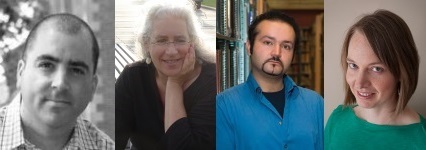
New Art Center, in conjunction with MCC Painting Fellows/Finalists Exhibition
Tuesday, November 11, 2014, 7 PM, 61 Washington Park, Newtonville MA
Featuring:
Denise Bergman
Joseph Fazio
Kate Leary
Mehdi Okasi
Emily Ross
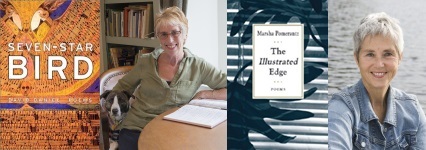
Cultural Center at Rocky Neck, co-sponsored by the Gloucester Writers Center
Thursday, November 13, 2014, 7:30 PM, 6 Wonson St, Gloucester MA
Featuring:
David Daniel
Ann McArdle
Marsha Pomerantz
Special guest: Laura Harrington
Both readings are free and open to the public.
Learn more about the Commonwealth Reading Series.
Images: (L to R) Joseph Fazio, Denise Bergman, Mehdi Okasi, and Kate Leary (not pictured: Emily Ross); cover art for SEVEN-STAR BIRD by David Daniel, Ann McArdle, cover art for THE ILLUSTRATED EDGE by Marsha Pomerantz, and Laura Harrington.

October 10, 2014
What We Don’t Talk About When We Talk About War
This talk was written for an AWP Panel which took place on March 8, 2013, under the auspices of CONSEQUENCE magazine.
My fellow panelists: Catherine Parnell, Siobhan Fallon, George Kovacs, Bob Shaccocis
What do we know about the wars we are waging? The vast majority of us can choose not to pay attention, as if this choice is similar to choosing what toothpaste to buy or what television program to watch. What role does our distraction play in these conflicts? If we aren’t watching, can we be held responsible? When a war can last longer than a decade and requires neither our attention nor our participation, what does this do to our national identity? What do the words civic responsibility and service and sacrifice mean to those of us living in America now?
My personal life and my writing life have been deeply impacted by what we don’t talk about when we talk about war.
My father taught me a profound respect for silence. A navigator/ bombardier in WWII, he came home and had a nervous breakdown, and never talked about his experiences. I have been deeply influenced by my father’s silence, both its limitations and its extraordinary strength. He showed his devotion not by spilling his secrets, but by shielding me from them. In addition, he sparked a lifelong curiosity and empathy. He gave me the most profound gift you can give a writer: he taught me to pay attention to all that is not said, to be alive to the mysterious silences that surround us. And he inspired me to try to give voice to that silence.
As a playwright I’ve written about war for much of my career: from the warrior saint, Joan of Arc, to Napoleon in exile on St Helena, from the destruction of the library in Louvain, Belgium in the first days of WWI, to four very young survivors encountering each other in the last days of the Civil War. I’ve even written a comedy about Civil War re-enactors who get their fondest wish and fall through a hole in time.
Did I reach anyone? Enlighten anyone? Does anyone in America want to go to a play about war, no matter how well you craft the story? Maybe not. Imagine this scene: Husband and wife at breakfast table. She says, “Honey, let’s go see that play about water boarding.” Actually she won’t get to suggest seeing that play because no one will produce that play.
What’s a playwright to do? If the medium you are working in is hostile to the difficult subject that obsesses you, do you retire? Retool?
On commission I wrote a thirty-minute, one-act, one-woman musical – Alice Unwrapped – about a 14-year-old girl whose father is MIA in Iraq. She copes with this crushing uncertainty by using duct tape and Kevlar to create a homemade version of the armor she imagines her father is wearing. Plus combat boots. Plus a bike helmet. And goes to high school in this outfit. All while trying to take care of her little sister and manage her mother who won’t leave the bedroom.
The revelation was how “relatable” this kid was. Audiences laughed and cried with Alice, and recognized her deep sense of honor as she tried to take care of her family in her father’s absence. I seemed to have found a new key to writing about war. Put a kid center stage, have her cope with missing her dad, and all the other challenges of growing up, all while the war acts as the unseen protagonist.
My inspiration, or compulsion in writing Alice Bliss, was to tell the stories we never hear, the stories we sweep under the rug, the ones we label “collateral damage.” My challenge became: how do we lift that which we prefer to ignore into the spotlight and make it absolutely unforgettable?
This is the task of the artist, in whatever medium we choose.
I learned that there’s an invisible army in our midst. An army of mothers, fathers, sisters, brothers, wives and children of soldiers who are deployed. According to the Department of Defense, only 37 percent of military families live on military installations; the remaining 63 percent live in over 4,000 communities nationwide. Your community and mine. They live around the corner, down the street, in the house next door, in the apartment above or below us.
There are more than 1.7 million military children and teens scattered across the country. They feel proud and angry and confused and frightened and worried and every other emotion that is part of growing up. But each emotion is amplified by the war and every fear it raises, and how achingly personal and specific that fear is to each one of those children.
Most of us have the luxury of thinking the war is distant; these children do not. They live with this war, day in and day out; they wake up with it, they fall asleep with it; it is woven into the daily fabric of their lives. They are expected to carry on at home and at school, to pretend that they do not have a parent who is risking his or her life, to pretend that they are not consumed with worry, that their daily life is not affected by this absence.
These children –- our children — are staring down a long year of a parent’s deployment or re-deployment, living with the fact of a father or mother in harm’s way, a euphemism we all accept even though it mocks the harsh reality of every soldier’s experience. To those fighting, and those at home waiting and praying, what occurs during deployment goes so far beyond the word “harm” as to be ludicrous. And we are not even talking about the long lasting “harm” of post-traumatic stress, or the shockingly high incidence of loss of limbs. This is part of our fuzzy language, fuzzy thinking, fuzzy policy, which creates a vague sense of unease amongst the general populace, but does nothing to goad us into action.
How can we share the burdens of this war more equitably? Should we take a page from WWII, and adopt compulsory military service, higher taxes, gas and oil rationing, War Bonds, Victory Gardens, scrap and metal collections?
Perhaps because we live with the illusion that our current conflicts cost us so little, we shrug our shoulders, turn a blind eye and allow it to go on and on and on.
These burdens should be shared by everyone in our country. And, I would like to argue, by men and women writers alike. Do we give equal time and more importantly, equal weight, to men and women writing about war? And if not, why not? How does the storyteller impact not only the conversation, but our attitudes and beliefs about war?
Here’s what I’ve noticed recently about books about war. Men, since they have been on the front lines longer than women, get the battle scenes while the battles at home are relegated to the back-burner. We need to acknowledge that the risks of war are shared by everyone involved, both those deployed and those at home. When a father or mother is killed, a family is fractured. Forever. And how best to experience and understand the nature of that fracture than through the family’s eyes? Yet we see this part of the story –- the collateral damage as experienced by wives, children, parents, etc. — as secondary to the main event. What if we reversed the way we look at this?
Let me get specific. There are several wonderful books that have been written in the past year about the Iraq war which are getting a lot of play. I’m thinking of Ben Fountain’s Billy Lynn’s Long Half Time Walk, Kevin Powers’ The Yellow Birds, David Abrams’ Fobbit. Last year it was Sebastian Junger’s War and Karl Marlantes’ What It Means to Go To War. In newspapers and online, these books are often written about together, the authors are sometimes interviewed together (recently Fountain and Powers in the NY Times). This is all great. I am a fan of these books.
But it’s fascinating that the books written by women about the Iraq war are rarely mentioned at all, and as far as I have seen, never mentioned with the men’s books. This is not just my novel, but also Siobhan Fallon’s You Know When the Men Are Gone, Kristin Hannah’s Home Front, Johanna Trollope’s The Soldier’s Wife, to name a few.
This is disturbing to me for several reasons. Leaving the probable sexism aside, all of these books deal with the costs of war in one way or another; but the women’s books deal with the costs that we rarely see and almost never talk about, the costs borne by women and children.
Celebrating the male experience of war, intentionally or not, celebrates war, and is in the great literary tradition of glorifying the power of personal sacrifice in the theatre of war.
I believe that this is a larger story than just which books garner attention. It’s a story about how we think about war, how we imagine it and talk about it, and how we perpetuate myths of heroes and anti-heroes alike.
When Life Magazine published photographs of the fallen soldiers following Hamburger Hill in Viet Nam, it was instrumental in turning the tide against the war. When the NY Times, this fall [2012], published the photographs of the US dead, there was no public outcry whatsoever.
Until we can hear the stories of all who are impacted by war, soldiers and civilians, the families who are left behind, the families who are inadvertently caught in the struggle, we are lying to ourselves. We prefer the shine of brass, the extraordinary design of drones, the comforting flaunting of our military might. Writers can lift the curtain, expose the flimflam, push us to engage.
What will awaken us to this legion of hurt among our own service men and women, their children and families, whether they are serving abroad or coping with physical and emotional wounds at home? What will awaken us to the unspeakable destruction of land and life wherever we are dropping bombs? Does the entire nation have a hurt locker where we hide this war and its costs?
What would happen if we were to open that hurt locker and look inside?
What would happen if the book in your hands brought these questions into the light and these characters into your heart?
September 2, 2014
Alice Bliss is the All Community Read at St John’s Prep, Danvers, MA
St John’s Prep has chosen Alice Bliss as their all-community read. 1500 faculty, staff, students, parents and alums will read Alice Bliss. I will be at the school for 4 days this month, meeting with the community in a variety of settings.
Today I met and spoke to the faculty as they prepared to begin their school year. I shared the story of my journey writing Alice Bliss and then fielded a series of smart, thoughtful questions. It was a true pleasure to be in the room with so many gifted and dedicated teachers.
It is a dream of mine to have this book adopted for curriculum use.
August 17, 2014
Alice Bliss on the Boston Globe Best Seller List
This came as a total surprise. I have no idea how this happened – perhaps my publisher can shed some light on this – but there’s Alice Bliss. Am I dreaming?
PAPERBACK
FICTION
1. Americanah. By Chimamanda Adichie. RANDOM HOUSE.
2. Gone Girl. By Gillian Flynn. RANDOM HOUSE.
3. Lowland. By Jhumpa Lahiri. VINTAGE.
4. (tie) Orphan Train. By Christina Baker Kline. HARPER.
4. (tie) The Fault in Our Stars. By John Green. PENGUIN.
6. The Signature of All Things. By Elizabeth Gilbert. PENGUIN.
7. Me Before You. By Jojo Moyes. PENGUIN.
8. The Valley of Amazement. By Amy Tan. HarperCollins.
9. The Alchemist. By Paulo Coelho. HarperOne.
10. Alice Bliss. By Laura Harrington. PENGUIN.
February 10, 2014
Book Love 2014 – Win 20 Books
[image error]
A group of fabulous authors have banded together to give away 20 books!
In order for you to enter simply email me at catherinemckenzieauthor@gmail.com.
In order to win all 20 books, you must add them to your Goodreads to-read list by clicking the link next to each book (you can add books to your Goodreads to-read list by clicking on the button just below the book’s photo on Goodreads). The more books you enter the more books you will win if you are picked. You can only win all of the books if you add them all to your to-read list.
There will be 1 winner for every 250 entrants. US and Canada only. Contest runs till February 16, 2014.
Here are the books you can win:
1. HIDDEN by Catherine McKenzie (click to add to your to-read list)
2. THE FABLE OF BING by Tim Sandlin (click to add to your to-read list)
3. THE MOON SISTERS by Therese Walsh (click to add to your to-read list)
4. THE THEORY OF OPPOSITES by Allison Winn Scotch (click to add to your to-read list)
5. THE BLESSINGS OF THE ANIMALS by Katrina Kittle (click to add to your to-read list)
6. THE GIRL WHO FELL FROM THE SKY by Heidi Durrow (click to add to your to-read list)
7. THE SHADOW QUEEN by Sandra Gulland (click to add to your to-read list)
8. STUDIO SAINT-EX by Ania Szado (click to add to your to-read list)
9. ORPHAN TRAIN by Christina Baker Kiline (click to add to your to-read list)
10. EMPRESS OF THE NIGHT by Eva Stachniack (click to add to your to-read list)
11. SEDUCTION by MJ Rose (click to add to your to-read list)
12. THE SHORTEST WAY HOME by Juliette Fay (click to add to your to-read list)
13. THE UNFINISHED WORK OF ELIZABETH D. by Nichole Berner (click to add to your to-read list)
14. THE PAINTED GIRLS by Cathy Marie Buchanan (click to add to your to-read list)
15. LIFE DRAWING by Robin Black (click to add to your to-read list)
16. ALICE BLISS by Laura Harrington (click to add to your to-read list)
17. THE COMFORT OF LIES by Randy Susan Myers (click to add to your to-read list)
18. GLOW by Jessica Maria Tuccelli (click to add to your to-read list)
19. LEAVING HAVEN by Kathleen McLeary (click to add to your to-read list)
20. SEA CREATURES by Susanna Daniel (click to add to your to-read list)
Mercer Foundation Residency for Alice Bliss, the musical, at Goodspeed Musicals
We’ve just completed a new draft of the musical in an intense weeklong residency at Goodspeed Musicals in East Haddam, CT. We are working to get ready for our first workshop at Playwrights Horizons in NY in April. We wrote three new songs and a new opening and opening number. We finally, I hope, cracked the back of Act Two. My collaborators, Jenny Giering, composer, and Adam Gwon, lyricist, are a dream to work with.
We all got sick during our week so missed the evening check ins with the 4 other teams in residence who were working on their own shows. A disappointment to be sure. But we made it to the final evening where each team presented a song for an invited audience.
We did have a chance to spend some time with one other team, Dan Messe and Nathan Tyson, who are adapting the film Amelie with playwright Craig Lucas. Got introduced to Dan’s band, Hem, which you should know about too.
Here’s a link to one of Hem’s gorgeous new songs: http://www.hemmusic.com/sound
To read more about this unique residency program, the only one of its kind to support writers during the creation of new musical theater work, click here: http://www.broadwayworld.com/connecticut/article/20-Writing-Teams-Announced-for-Johnny-Mercer-Writers-Colony-at-Goodspeed-Musicals-20130114#
January 22, 2014
Jack Kerouac Writer in Residence
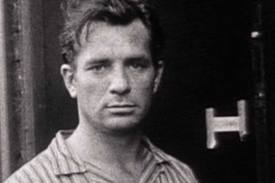
I am delighted to have been selected as this year’s Jack Kerouac Writer in Residence at the UMASS Lowell. I will be teaching playwriting starting Monday, January 27th, 2014. Excited to meet and work with a new group of students. Very glad to be part of this wonderful department for a semester. I follow some great writers to this post.
The UMass Lowell Jack Kerouac Writer-in-Residence Program hosts an author as a guest in the University community to write, teach, and offer a public reading, usually during the spring semester. The Program is hosted by the English Department, and funded in part by John Sampas, Executor of the Kerouac Literary Estate, and the Provost’s Office.
Past Writers in Residence
2013: Susan Conley
2009: Gigi Thibodeau
2006-2007: Major Jackson
2005: David Hancock
2004: David Daniel
2003: Elizabeth Cox
2002: Jill McCorkle
2001: Andre Dubus III
September 9, 2013
Let’s Play
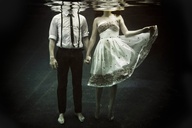
I’ve been teaching introduction to playwriting at MIT for many years. It never gets old. Because wherever we are in our writing, as professionals or students, we are always facing a blank page. Every new beginning is simultaneously fraught with danger and risk and full of excitement. I take my job seriously. I have a detailed syllabus, lesson plans and assignments that crescendo in their level of complexity, but I also teach my students to play. Perhaps it would be more exact to say that I encourage them to play; I exhort them, push them, and invite them to play. I even tell them that I will reward them for playing and taking chances. I believe that we learn more and have more fun with glorious failures than tepid successes.
My students are from Bangladesh and Russia, from Palo Alto and New York City, from Orlando, FL and Westwood, MA. One freshman is an aerospace and physics double major and is also a professional magician. Yes, you read that right: Prestidigitation. Other students’ majors (many of them double) include Astro Physics and Russian, Chemistry and Physics, Linguistics, Mathematics and Materials Engineering, Aeronautical Engineering and Computer Science.
At the end of every semester I give my students one final assignment. It took me awhile as a teacher to come up with this assignment, but I now know that this is the most important assignment of the year. I ask them to read through all of their work for the semester (they write one ten-page play or scene a week) and write a one-page self-assessment, addressing any or all of the following questions: What were your goals coming into the class? Did you meet them? Exceed them? Do you have new goals upon leaving the class? Did you develop a writing practice? Did writing every week change the way you write and think about writing? Did reading and seeing plays impact your own writing and if so, how? What surprised you about playwriting? What surprised you about your own writing? Did you struggle? Did you have fun? Did you take risks?
I wanted to share a few quotes from my students’ self-evaluations. So here’s to beginners and beginner’s mind and showing up and facing the blank page, the courage to dare to be foolish, the courage to attempt what seems impossible. And the joyful rewards of play.
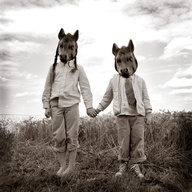
“Walking into the class I definitely never thought I’d end up writing puppet shows about sheep and llamas.”
“The fact that this class emphasized playfulness and experimentation really helped it not be so intimidating…. This gave me the freedom to write something a little silly, but a lot of fun.”
“Of all the writing classes I’ve taken, this has been the only one to have a weekly deadline. I found this extremely helpful in banishing writer’s block.”
“Writing every week was quite difficult initially, but once I realized that no idea was too silly to pursue, it became significantly easier. After that it became a playground I went to once a week to create whatever suited my fancy.”
“Through my plays I explored my ethnic identity, my understanding of God, and even my “craze” about shoes. I went out of my non-risk-taker comfort zone. I delved into the playing of playwriting.”
“Sometimes I still get nervous about having others judge my writing, especially when I’ve become emotionally invested in whatever characters I’ve created, but for the most part it’s been a real confidence booster. Apparently my inner critic is wicked harsh, harsher than I realized.”
“Being required to write a new play every week has definitely forced me to be less worried and critical of my first drafts and has helped me overcome the dreaded blank page. I’ve noticed in my other classes that I’ve become more capable of getting my thoughts down on paper quickly without constantly having to go back over a sentence multiple times before I can move on to the next sentence.”
“I loved and hated six lines, [a weekly in-class writing exercise] for being so constrained, but for giving me a sandbox to mess around in. I experimented with magic, with implausibility, with life and death, love and betrayal. I found out I like to write about other worlds and about science. I became more confident as a writer, an actor, an editor. I learned a lot about process. Most importantly, I learned to play.”
“Writing something – no matter how terribly it might turn out at first – is always going to be better than sitting around and waiting for inspiration to strike.”


