K.A. Hough's Blog
January 12, 2022
Local Newspaper Nails It
After a short phone interview about Ground Control and the “process” I used to write it, I wasn’t sure what to expect. But the author of this piece sees me pretty clearly, I think!
Click on the image to read the whole article.
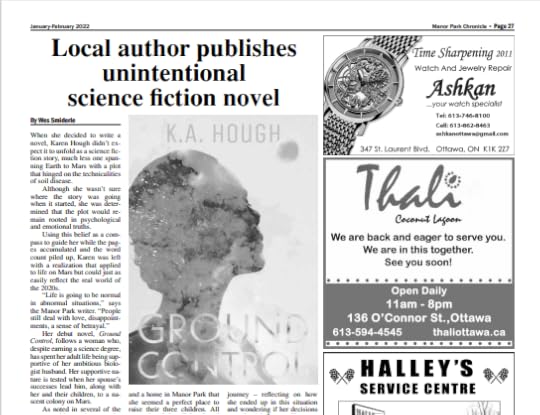
Image and link credit: https://manorparkcommunity.ca
I’m available for interviews, signings, and readings. Please contact me for my availability.
The post Local Newspaper Nails It appeared first on Karen Hough Writes.


December 17, 2021
New Anthology from Sley House Publishing
Do you love chills, thrills, and feeling uneasy?
It has been my sincere pleasure to work with the staff at Sley House Publishing on their inaugural anthology of genre fiction, Tales of Sley House 2021. These fifteen stories were chosen from many, many submissions, with priority given to current students of creative writing.
It’s always fun to work in a group of editors, and I had a great time debating the strengths and merits of the stories we chose, then working with five new authors to get their stories publication-ready. From the weird to the macabre, mysterious to the horrifying, there’s tales of strange creatures and stranger characters, some of which are downright disturbing. If this collection of short stories leaves you feeling unsettled… well, good!
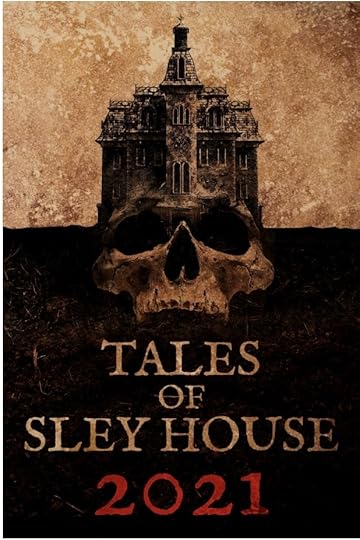 Tales of Sley House 2021, Edited by K.A. Hough and Trevor Williamson,
is available now at major retailers
This also marks the first of my “official” editing credits, hopefully the first of many. If you do pick it up (as an e-book or paperback), don’t forget to leave a review on Goodreads!
If you’re looking for an editor or more information about my services, contact me here.
The post New Anthology from Sley House Publishing appeared first on Karen Hough Writes.
November 10, 2021
One-Line Wednesday
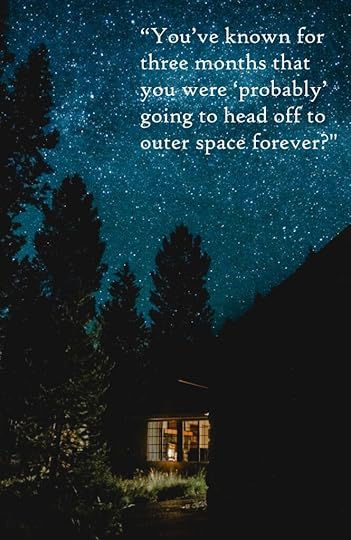
https://www.lightsoutink.com/ground-control
The post One-Line Wednesday appeared first on Karen Hough Writes.
August 22, 2021
What is Home?
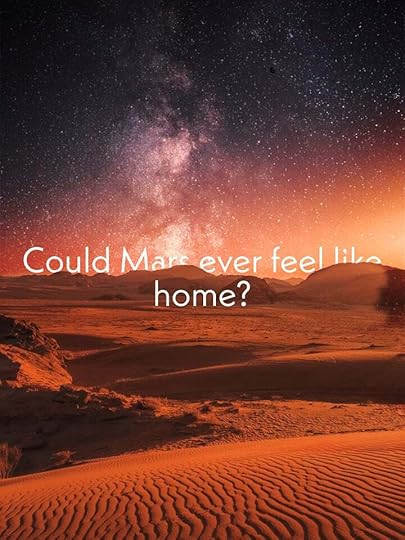 If not a new city or country, why not a new planet? (Image credit: K.M. West Creative)
Home is a concept that most people understand, but it’s not the same for any two of us. Whether it’s where you hang your hat, where your favourite people are, or whether it’s the house that your family has lived in for generations, such a familiar term has a different meaning to everyone.
As an expat that will be returning to the motherland this summer (fingers crossed!), to a house and a street that I barely got to know before we left, but to a city where friends and family are close by, my own concept of home will be shifting again soon.
But where am I really from? Where’s home?Until I turned 15, I moved every two to three years, so home was wherever my family lived at that time. When people ask me where I’m from, it’s easier to just say I’m nomadic, a navy brat: I was born on one coast, spent six years on the other (in two, three-year intervals), and have bounced around in the middle the rest of the time.
We moved to my adopted hometown when I was 15, and my parents are still there, though they left for a while when I was in university. I lived there for 15 years in a row, but left it again as an adult with a family of my own, twice now; so, I guess it counts as home? I hope to return there this summer. But forever? I’m not sure.
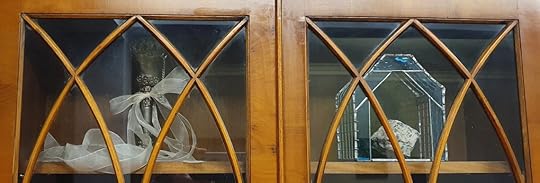
Precious memories have travelled with me and hold a place of honour in each of my homes. (Image credit: author’s own)
Most fiction stems from lifeI’ve had so much time to consider home over the last two years of writing and editing Ground Control. My protagonist, Sarah, is trying to come to terms with leaving her home. She’s leaving Earth—the largest concept of home possible right now—but also her house (that she’d only lived in for two years), and her parents, who still live in the house she grew up in, in another city, a home that she really left fifteen years before.
Sarah thinks about her kids, and how she wants them to have a home. She looks back to her own childhood and the joy she remembers of riding her bike and feeling the wind in her hair, playing outside on summer nights till the lights came on, climbing trees, and spinning round and round until you fall down on the grass and the whole huge sky whirls around your head. These are things that I remember from when I was little, and things her children will never know: they’ll grow up inside a biodome on Mars. She struggles with deciding which mementos to bring along: collections of photos? Which trinkets will capture the places she’s left behind?
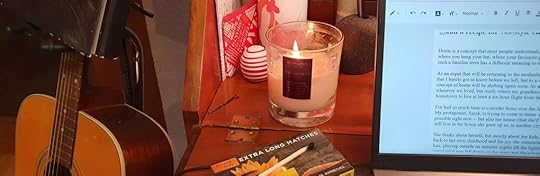
My guitar, my candle & my lipbalm always make my office more MINE. (Image credit: author’s own)
Her journey, and mine, when I think of it, follows the change that happens when you get ready to leave a home: from loss and regret, to the thought of adventure and a new life, to acceptance that wherever you end up, in whatever becomes your community, eventually becomes home again.
These themes also come to play in my next novel, which is underway, where the elements of Cate’s home—family, friends and community—are far different than they first seem (but stay tuned).
Join my newsletter for updates on my books.
The post What is Home? appeared first on Karen Hough Writes.
July 26, 2021
Writing-Specific Research
Novel-specific research is like wedding planning or pregnancy. Nobody else wants to hear about it.
Writers are known to have suspect search histories. We are also famous for “talking through” our writing issues. My running group contains a fantastic cross-section of careers, cultures, educational qualification, backgrounds and perspectives, and aside from our families, jobs, hopes and dreams, what else do we have to talk about while we run six to ten miles, three times a week? Writing-specific research can start with a simple conversation.
How it began
“I’m researching soil diseases,” I explained to Micki, another writer, while panting up the hill behind her. I’d been trying to find a good way to kill off an entire spaceship full of people.
“I found it!” I crowed to her the next week, same hill. “The bacteria that kills my beets is a real thing! And it can be triggered by what happened on board already! Everything is falling into place!”
The problem was, at the end of the day, nobody I know (not my writer friends, running friends, friend-friends or any of my children) wanted to hear me talk about plant pathogens. They just didn’t. Novel-specific research is like wedding planning or pregnancy. Unless you’re the one getting married or having the baby, nobody else wants to hear about it more than once.
Read the rest here.
http://karenhoughwrites.com/2021/07/w...
July 25, 2021
Writing-Specific Research
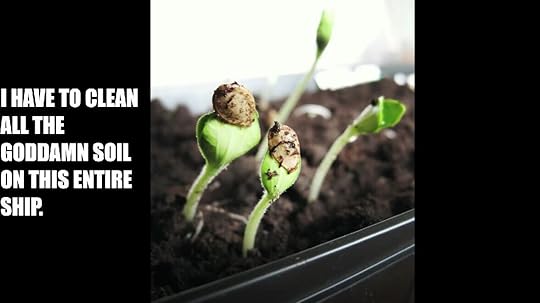 When the FBI knocks down my door because I’ve been researching how to use beets as murder weapons, “I’m a writer!” is a solid defence, isn’t it?
Writers are known to have suspect search histories. We are also famous for “talking through” our writing issues. My running group contains a fantastic cross-section of careers, cultures, educational qualification, backgrounds and perspectives, and aside from our families, jobs, hopes and dreams, what else do we have to talk about while we run six to ten miles, three times a week? Writing-specific research can start with a simple conversation.
How it began“I’m researching soil diseases,” I explained to Micki, another writer, while panting up the hill behind her. I’d been trying to find a good way to kill off an entire spaceship full of people. “I found it!” I crowed to her the next week, same hill. “The bacteria that kills my beets is a real thing! And it can be triggered by what happened on board already! Everything is falling into place!”
Novel-specific research is like wedding planning or pregnancy. Nobody else wants to hear about it.
Turns out, almost every “fictional” premise I dreamed up to throw at my protagonists was (with some tweaking) somewhat plausible. In my excitement, however, I got carried away. In trying to create a life-threatening condition, it grew out-of-control (yay!) to the point that it could no longer be killed (boo!) and my crew was in serious danger (yay!) with literally no chance of survival (boo!). The other problem was, at the end of the day, nobody I know (not my writer friends, running friends, friend-friends or any of my children) wanted to hear me talk about plant pathogens. They just didn’t. Novel-specific research is like wedding planning or pregnancy. Unless you’re the one getting married or having the baby, nobody else wants to hear about it more than once.
My scientist husband (there “may” be some autobiographical details that made it into Ground Control) told me that it was my own fault for creating something so malevolent, and to either make it less insidious or choose a different pathogen. “Just make it something you can kill off.”
“You don’t understand.” I patiently explained that it wasn’t just that I didn’t want to rewrite my entire book, but that I didn’t create this pathogen. It mutated because of space radiation and microgravity, and I just wrote it down.
Start with GoogleWhatever you’re writing, be it an article or a novel, you will need to perform research, unless you’re WIP is completely anecdotal. Generally, the more thorough research you do (and, depending on how naturally you can weave your learnings into your piece; this is a fine balance), the more realistic your scenario will feel.
I have an entire spreadsheet of links to the various objects, settings and programs in my novel, with short summaries beside each. Some are about NASA’s real programs, others about actual cobblestone streets in Copenhagen. Most of them concern my plant pathogen: some from government agricultural and horticultural sites, others for gardeners, and about fifteen from referenced scientific studies. It’s fun stuff.
Did I mention that nobody wants to talk to me anymore?
The voice of experienceAnother writer friend, who is not only a publisher and author (with four very successful novels under her belt), but also a great listener and generous with very useful advice. I mentioned my plant-bacteria-in-space issue to her, and she responded immediately. When writing her second book, she told me, she reached out to the Canadian Institute of Nanotechnology. The scientist she spoke with was happy to chat with her, give her feedback on the pages that concerned nanotechnology and gave her suggestions for future books!
Obviously, she’s brilliant. Not only did she stop me from trying to bounce plant-pathogen solutions off of her, she focused my efforts onto someone else.
What did I have to lose? I went through my folder of bacterial soft rot research (page turners, every one) and found the names of two Canadian scientists who had recently given a presentation that was posted online. With the wonders of the internet and a public listing of government email addresses, I was ready to send the email within minutes.
I kept it light — when you’re asking for advice on how to control a mutated plant pathogen on a spaceship, you have to be a little self-deprecating — and respectful, and asked if there was any way I could ask either of them a few questions, or if they could refer me to someone who would be willing to talk.
One of them responded to me within two hours, and set up a call the next morning.
The callAll the internet research in the world won’t get you the same insight as an hour-long conversation with your expert.
I prepped my list of questions.
I had the incredible opportunity to ask for clarification and bounce what-ifs off a real-live expert in my pet pathogen, and add a new level of research and plausibility to my novel… while talking to someone that actually wanted to talk to me about bacterial soft rot! I didn’t want to mess it up.
I tell you, it was amazing.
He not only talked me through, in detail, the known ways this pathogen spreads, but also several real ways to manage it: naturally, with genomic sequencing or with nanotechnology. And he was enthusiastic about it! In 50 minutes of conversation, I had learned enough to recover a bit of hope. It might be possible after all to save thousands of (fictional) lives.
It comes down to this: if I had just used my imagination and made up a solution, it would have fallen flat with my intelligent readers. And, if I had called the expert before doing preliminary writing-specific research, it would have been a waste of time for both of us. Because I had done my own digging, though, I entered the conversation already with a basic understanding of the disease, its propagation and management — stay with me here — in short, enough knowledge to identify what I didn’t know, and what questions to ask my expert. He even offered to read over what I wrote to make sure it rings (somewhat) true.
My adviceDo your research first, enough that you can converse intelligently on the subject.Prepare your questions. Figure out what you’re missing; know what you don’t know.Don’t be creepy. Be transparent: tell your expert where (specifically) you got their name and contact information.Be humble, respectful and grateful. An expert is giving you the gift of their years of experience. Send them a thank you. Put them in your acknowledgements.Enjoy the conversation. Chances are, your expert will be excited to share their knowledge with you. And hey, you’ve finally found someone — maybe the only other person on Earth — interested and passionate about your thing, which saves your friends and family from this sort of conversation with you, at least for the afternoon.What has been your strangest writing-specific research topic? What was your expert interview like?
Love to write? Love to read about writing? You might want to read my post on Writing by Discovery.
The post Writing-Specific Research appeared first on Karen Hough Writes.
June 21, 2021
I Didn't Want to Write a Book About Space Travel
So, I wrote a somewhat-science-fiction-but-mostly-women's-fiction book about a woman who travels to Mars.
It's not hard science fiction (though the science checks out), and I honestly never wanted to write a story that involved a spaceship. In fact, I was embarrassed about it for quite a while.
This is how it happened:
Ground Control grew out of a single idea (as all stories do). I had recently moved across the Atlantic, following my husband for his job, and frankly, I wasn't happy. I wasn't happy about moving, about leaving friends, family, career, my house... and I was trying to give myself a shake, to say, Get over yourself, because people move all the time, and it wasn't forever. I was able to go home for a visit, to stay in touch over technology... so I should really just stop feeling sorry for myself.
But what about, fifty, eighty, one hundred years ago, when people would embark on a move like this, from which they would never return. There are so few 'Goodbye forevers' in today's world, and I wanted to write about one of those. My choices, then, were to change everything, set it in the past, or send Sarah to a place that she literally couldn't get back from. And, after a little bit of preliminary research, yep, Mars.
Again, I didn't want to write science fiction. I couldn't tell friends what I was working on without wrinkling my nose and waving my hands around when I said 'spaceship' or 'Mars.' But, the story grew. The research panned out, and the science in the book (most of it) is actually fairly accurate (and even interesting to some people!). I was much more excited about plant pathology than space travel, which says something about me, but I'm not sure what.
Anyhoo, the story took over, the characters did what they wanted to do, even if they wanted to be cold, selfish, detached... I really had no control of any of this. This is also probably a metaphor for my life. But my characters came to life, and helped build a story that I hope resonates with people: 'trailing spouses' who tag along on someone else's ambitions, children of military members who picked up and moved every few years, and anyone who's questioned who they are, where they're going, and what they want to do with their lives.
There's something to be said for just letting it happen, but then again, we all need to find our own direction in life, whatever it is.
And that's how I wrote this book.
June 8, 2021
Review of Ground Control on ThinkingTooLoud.org

The first review of Ground Control was a good one.
Your first review sticks with you, gets in your head. It lingers.
Your first review makes you feel terrible, or like a million bucks, or like a fraud, sometimes all three. I’m torn between the second two. Each reader responds to each book in their own way. What resonates with one person won’t affect another, and as such, each review is personal, and speaks not only about the book they read, but the person who read it.
This is perhaps a self-preservatory way of saying, “It’s not me or my book, it’s you.”
But, my first review was kind, lovely, informative and flattering. I felt both, of course you loved it, and oh dear, you’re just writing that in pity. But, it’s a good review. It warns people away (if they read reviews before buying, they wouldn’t expect a pure science fiction novel and give up in disgust halfway) and pulls in those who are looking for, well, the story that I wanted to tell.
So, thank you for your kind words, and your beautifully quotable: “We are creatures made to unfold over time and Hough produces characters of fascinating origami.”
Read it on GoodReads or on Mari Stewart’s site, ThinkingTooLoud:
Book Review: Ground Control
(You do have your copy already, don’t you? Well, you can order it here.)
The post Review of Ground Control on ThinkingTooLoud.org appeared first on Karen Hough Writes.
April 28, 2021
Little Edits Make a Difference
I think that’s going to be my new catchphrase: “little edits make a difference.”
I was a guest on a podcast yesterday (and you should totally listen to it, not because of me, but because of the wonderful podcast host and his other weekly guests – it’s called the Sample Chapter Podcast, and they talk books, writing and life, but not necessarily in that order) and as I was waxing poetic about editing, I realized just how much I love editing.
There are lots of great storytellers out there that can’t write very well. That’s not a bad thing, because it gives pickily pedantic people like me a job. If you’ve got a great story, I can help clear away the rubble and polish it up so that it truly shines. (So let me!)
And then I mentioned how oddly passionate I am about editing and picking apart sentences and paragraphs to my own editor —who suffers with me, I assure you — and she suggested I make some short little videos about self-editing. These are little tips and tricks to help organize your work, improve your writing, and make your work better, but it does not preclude the need to hire a proper editor for your work, especially if it’s something long or important, like a novel you’re self-publishing, or if the proper editor you’re thinking of hiring is me.
But, until you want to hire me, why not take a look at my Little Edits Episode 1: Kill Your Darlings. It’s a good start.
Link to Episode 1 of Little Edits on YouTubeNote: I can’t promise there will be many of these, or even more of these, but enjoy this one, at least.
The post Little Edits Make a Difference appeared first on Karen Hough Writes.
April 20, 2021
The Cranky Book Reviewer read The Southernmost Star
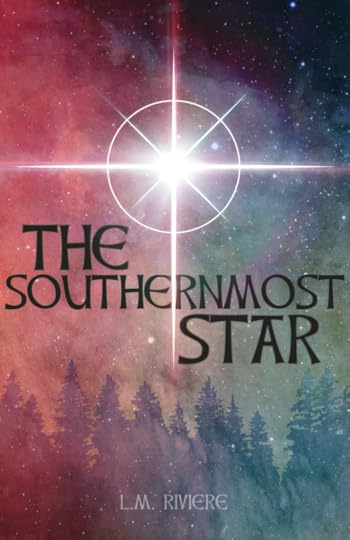
The Southernmost Star by L.M. Riviere
My rating: 5 of 5 stars
I was lucky enough to be an early reader of The Southernmost Star.
Note: I’m trying to avoid spoilers for the series, so this review may come out more oblique and complicated than it needs to be.
The Southernmost Star is the second book in the Innisfail series, and picks up the action from The Sons of Mil (also an excellent read).
Riviere builds on the characters she brought so fully to life in The Sons of Mil. We are reunited with Una, Ben and Rian, and get to know so many more personalities. Through their adventures and unique voices, the author reveals new layers that show each of them to be conflicted and flawed. Love them or hate them — and you WILL have strong feelings for these characters — Riviere renders each character with such humour and realism that they thrum with life on the pages she’s written, even the supernatural beings.
The settings and fight scenes are also vividly, exquisitely described, from streams to castles, clearings to brothels, without weighing down the story. You can see, smell and taste the world she has built so skilfully. From the intrigue that brewed during The Sons of Mil rises more political power plays, more unexpected entanglements and fierce battles, more seduction and betrayal, and so much more heart.
Can you tell how much I loved it? As I now wait for the final installment in the series, I still don’t know who I’m rooting for.
I’ve written many, many cranky reviews, but this one isn’t very cranky, is it? Deal with it — I loved this book. The only thing I’m cranky about is having to wait for the next one to be written!
View all my Goodreads reviews here
The post The Cranky Book Reviewer read The Southernmost Star appeared first on Karen Hough Writes.