Kate Bracy's Blog
January 25, 2026
Widow
 Photo by Dương Hữu on Unsplash
Am I a widow?
My wife died 10 months ago, and I am struggling to make this term apply to me. It’s not that I am not lost in the wrenching flood of grief. I am. I am reminded a hundred times a day that I cherish and miss her. The empty gray recliner that she enjoyed for only a couple of months. The pile of sympathy cards on the black credenza in the living room. Mail that comes addressed to her. Her portrait on my rosewood dresser. Her voice in my head, reminding me that she is here and that she loves me.
I accept this anguish as my current reality. It is the word “widow” that stops me short. According to Oxford University Press, a widow is “a woman who has lost her husband by death and has not married again.” It helpfully adds, “The word comes (in Old English) from an Indo-European root meaning ‘be empty.’” “Empty” rattles around my heart and is confirmed by her side of the bed, no one riding shotgun on the way to the grocery store, one plate to wash after dinner, no text notifications encouraging me through my day.
I look back at our “changes in marital status” and at the personal and cultural norms that had to be acknowledged, then challenged, then changed. The norms didn’t define our relationship, but they determined what alternatives were available to us.
In 1984, Anne and I fell irretrievably in love. It came out of nowhere. I was married and she was recovering from a brutal divorce. We were not “looking.” But after a weekend retreat on Lake Superior, we were drawn irresistibly toward one another.
First, we thought it was a “new best friends” situation. But as it became increasingly compelling, we finally had to admit that we wanted only to be together. In every way. We had no idea what that even meant. Neither of us had ever been in a love relationship with a woman, and neither identified as queer or lesbian. Still… This overpowering need and desire to be together led us forward. We did not know how to do this, but we would not be deterred.
We bought a house as “roommates” and raised my two daughters (her children being grown and out of the house). We were not “out” and wouldn’t have known what that term meant. We had no queer friends, and we worried that we might lose our jobs or our children might be discriminated against through no fault of their own. So we carried on as “friends.” We never so much as held hands in front of the kids or when in public. We did not confide in friends or colleagues. We made it up as we went along, and we read everything we could get our hands on that would help us understand.
As the years went by, we loosened up. We came out to our families and our close friends. We widened our circle to include queer friends. We stopped being coy when people asked us “how we were related.” Because there was no socially sanctioned way to validate our union, we simply decided to choose each other every day. And so we did. Every day we chose each other. Not because we had signed a contract. Not because a church had blessed it. Not because our culture would even accept it. But because we could not conceive of living without each other.
It was hard to find a model for creating the life we wanted to live together. About three years in, we experienced something that became our metaphor for every challenge we faced in our relationship. A friend of ours conducted workshops in the Dromenon. (“Dromenon” is from the Greek for “path,” and the workshop was a ritual walking of the labyrinth modeled on the one on the floor of Chartres Cathedral in France.) We decided to attend her workshop, and it forever changed how we saw our life unfolding in front of us.
The workshop began with a brief introduction. Next, we all took deep breaths and centered ourselves, then stated what we hoped to gain from walking this path. Finally, it was time to walk. The room was quiet, with some soft music — maybe Pachelbel? — playing. Everyone focused on their own experience.
Anne went into the labyrinth first. As she slowly made her way, I waited a polite amount of time before following. I stepped onto the path and just proceeded, slowly and deliberately. I felt my socks on the canvas course. There was the music, and the smell of burning sage hanging in the air. We had learned that this labyrinth was not a maze. You cannot get lost, and you cannot hit a dead end. You just stay on the path, even if it isn’t making sense to you, and you will get where you’re going.
The experience of walking the pathway — especially with another person — is that you seemingly come and go with and without each other. Sometimes you are right next to each other, walking in the same direction and at the same pace. Suddenly, one of you is led off to another quadrant of the circle, and you can’t even see each other unless you try. Then, suddenly again, you are walking toward each other, passing one another and continuing on your way. And so it goes, again and again. Close, not close. Parallel, then in opposing directions. Finally, after some time, you end up in the center. Anne was standing quietly in the center when I joined her. We stood there, noiselessly acknowledging each other and sharing the moment of calm and stillness. After a few contemplative moments, Anne re-entered the labyrinth and began the journey back to the starting point.
We repeated the entire experience, unhurried and silent. Together, not together. Parallel, then at opposite ends. We were walking in the same direction, we were walking in different directions. We were close to each other and we were far apart from each other. At last Anne was back at the beginning and stood waiting there for me. Calm. Patient. With a beautiful smile. I joined her and we turned toward the labyrinth together, bowed our thanks, and ended the walk.
Afterward, Anne said that the physical experience of walking the Dromenon with me was very powerful for her. From that time on, whatever was going on in our relationship — whether we had a rough patch, or were especially close — she would say, “I’m thinking about the Dromenon.” And we would talk about where we were and what we needed. With that as our guide, we found our way through 41 years, six houses, two states, five grown children, many grandchildren, surgeries, arguments, moments of incredible beauty, and periods of deep and nourishing closeness.
After being together 31 years, we were finally able to be legally married, and so we did. But after so many years of playing by our own rules, all the English words for marriage seemed foreign, or even wrong. Spouse? Wife? We had to practice even saying them. We had to — wanted to — apply them to ourselves. So we became “wives.” We were each other’s “spouse.” Still, though there was now a contract, we decided to choose each other every day. Years of differentiating between “needing” and “choosing” had taught us how to make each day a reminder of our great good fortune in being able to opt in again and again. We accepted the labels “wife” and “spouse,” but we continued to make it up as we went. We still chose “us.”
Now there is this new term: widow. I must apply it to myself, whether Oxford University wants me to or not. Having never counted on measuring my status by society’s rules, it feels wrong in my mouth. At first, it brings to mind old, white-haired women bent over in a “C” shape and leaning on canes. It seems like an involuntary relegation to the “what do we do with her” pile of humanity.
As time goes on, I reconsider. I find a more enlightened version of “widow.” It legitimizes the years of intimate partnership. It legitimizes this loss. It opens doors — legal, emotional, and spiritual — to a future by myself. I try it on like one of Anne’s cable sweaters that still hang in the closet. It warms me unexpectedly because it means that we belonged to each other.
My dear Anne has now returned to where everything begins. As I was when we walked the Dromenon, I am a few steps behind her. It is left to me to finish this path. Remembering the labyrinth, I reassure myself that I cannot get lost, and that I will end up where I’m supposed to. With each step, I will try doing it with as much equanimity and kindness as Anne did.
I will call myself a widow as I walk because it finally fits. It is my way of telling her that I still choose “us.” Fingers crossed that she is waiting there. Calm. Patient. With that beautiful smile.
 Photo by Ben Mathis Seibel on Unsplash
Sign up here to receive our free weekly newsletter featuring the best of Crow’s Feet.
[image error]Widow was originally published in Crow’s Feet: Life As We Age on Medium, where people are continuing the conversation by highlighting and responding to this story.


January 24, 2025
Building a “Safe Room” in My Life and Heart — Inauguration Thoughts
 Photo by Nik on Unsplash
When my daughters entered their mid-teens and I understood that bad decision-making was probably on the horizon, I adopted a mantra that I repeated for them in every applicable circumstance. It went like this: My love for you is unconditional and forever. There is nothing you can do that will make me not love you. My resources, on the other hand, are completely conditional. I will not pay for, or invest in, anything that I do not see as “In Your Best Interest.” Full stop.
What followed were many discussions as to whether I would or would not pay for a decision they made. Whether it was a college course they were not going to get credit for, an auto repair, or a trip to visit a boyfriend, it had to pass the test. Yes, I would always love them. No, I was not paying for that.
I head into the Trump administration with a similar mindset. I did not vote for this, I do not approve of anything he ran on, and I will not pay for or invest in anything that is not in the best interest of people I care about, including myself.
I will continue to love the people in my life and world whom I have always supported. My love is unconditional. My resources, however, are completely conditional. I will make my decisions over the next four years based on what I think is in the best interest of my chosen people and values.
Energy and Attention ResourcesI will spend my energy and attention in areas where there is a chance for Return on Investment.
This will include any media I consume. My attention will be spent on independent media that trade in truth and complexity, not sound bites and clicks.
I will not spend energy listening to Trump supporters either complain about his actions or celebrate them. I am practicing saying, “Yeah, I did not vote for that, and I don’t support it. Have a nice day.”
I will not engage online or in real life with people who want to make the case that this is good for the country. It’s not. He’s not. Again, have a nice day.
I will use my energy and attention as part of The Opposition. (I like “opposition” rather than “resistance” because it implies agency and not just reaction.) I will oppose egregious actions by writing to my legislators, posting on this blog, demonstrating if I feel called to do so, stating my progressive values in any context where they are being disparaged.
I will use social media sparingly. I’ve already cancelled my X account, and am poised to do so with others if my feed becomes a swamp of zero value to me. If social media keeps me connected to my tribe, I’ll allow myself limited time. If not, I’ll cancel. (I know how to block, and I’m not afraid to buh-bye the energy vampires.)
I will invest my energy and attention in things with terrific ROI. Walking the dog, watching movies with my wife, hanging out with my grandchildren, conversations with my daughters, quilting, writing, traveling, dancing, and spending time with hilarious, openhearted friends. I will teach writing to middle-schoolers and talk on the phone with distant buddies.
I will read novels when I should be working.
I will sleep as much as I need to.
Financial ResourcesSince I feel that the corporate media have betrayed us entirely by sanewashing and downplaying the danger of Trump, they will not be on the list. I have unsubscribed to major newspapers. I have signed up for substacks and newsletters of independent journalists who do not whitewash the facts and who reflect my values.
Understanding that tariffs and deportations will raise the cost of just about everything, and knowing how this administration deals with pandemics (Bird flu, anyone?) I will invest in whatever I would have trouble getting parts for when that pesky old supply chain is disrupted again. This includes a new, reliable car (also good ROI for traveling in relative safety from other people’s microorganisms). Any devices I was going to replace in the next couple of years I will buy now, since Chinese goods (and they are all Chinese goods) will be overpriced, if we can get them at all. It’s the right time for home repairs and comfortable furniture, since I don’t anticipate leaving the living room most nights.
What I used to spend on newspapers and clothing, I will invest in those organizations protecting the people I care about. Planned Parenthood, The Southern Poverty Law Center and the ACLU are on the list. Local food banks (If we can’t afford the $20 eggs once the flocks are wiped out, how will marginal families?). Nonprofits and volunteer groups that refuse to capitulate to the Trump agenda will be in the running for my money.
At least until they take away my Social Security.
Spiritual ResourcesTo survive the next several years I will commit to only spiritual practices that nourish me. This includes meditation and yoga, natch. But also walks in nature, time with friends who are also walking the middle ground with as much grace as they can muster, and group gatherings celebrating healing, not hating.
I will follow Christian writers who have not taken the “Christ” out of their worldview. I will follow Buddhist writers and teachers who show me how to deal with today — this moment of today.
I will listen to music that reminds me who I am. That stirs emotions and sensations that I may or may not be able to name. I will dance to this music like no one is watching — because no one will be watching. (You’re welcome.)
I will share my spiritual energy with people who come into my day, as needed. An ear for the bank teller, a smile for the toddler in the grocery cart in front of me, a book recommendation for a yoga friend.
I will share my anxieties with my therapist, and she will spin that straw into spiritual gold.
And when my vigor flags, I will withdraw and replenish.
My “Safe Room” will not be made of concrete and lumber, but, if I build it strong, it will allow me to survive the disastrous conditions that I see barreling toward us.
How about you? Will you be building a safe house for yourself? Please tell me in the comments about your blueprint for survival. Let’s trade ideas and help each other thrive.
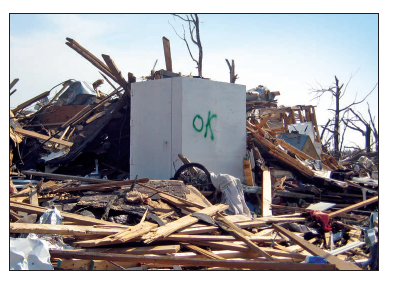 Photo credit fema.gov[image error]
Building a “Safe Room” in My Life and Heart — Inauguration Thoughts was originally published in The Left Is Right on Medium, where people are continuing the conversation by highlighting and responding to this story.
November 13, 2024
Where Do We Go From Here?
 Image by author, via CanvaI started by going to the bank
Anyone who has read my work or knows me in real life knows my politics. I’m an unapologetic liberal Democrat, so election night was a dark deja vu of the 2016 election, and I spent most of Wednesday toggling between ‘numb’ and ‘sobbing.’
As I said in one of my media posts, “It’s like finding out your cancer is no longer in remission.”
But life goes along, and today I had to go to the bank.
I was trying to start an Estate Account for a small amount of money that I received from unclaimed funds for my dad. This process of exploring and claiming funds has taken over a year and has been purgatorial. (Filings with courts, requesting death records, getting signoff from family, and many, many notorizations from this bank.) In the end, after endless hoops jumped and “T’s” crossed, I had the whopping sum of $65.87. Not only was it paltry, but I had to put it into an account so I could disperse the funds and then report back to the court. Sigh.
As I explained this all to the bank employee, she looked at the documentation and she looked at the amount on the check. She sympathized with my longsuffering journey, but she sat up and her posture became officious. The kind of energy people have when they have to tell you an official, “no.” I braced for some version of, “Unfortunately, we are unable…”
Sure enough, the amount was too small for them to go through the formal process of initiating an account. I asked her what else I could do. After checking with her manager, she reported that they could authorize cashing the check to be put into my personal account. This whole claiming process has been like trying to figure out Martian jurisprudence to me, so I checked with the people who had helped me find and claim the funds. We all agreed it was worth a go to get this money out of the claiming queue. So I did that — cashed it and put it into my personal account. I’ll use that one to “disperse” the funds.
I thanked her for her help.
While I was at it, I wanted to deposit some money in my account to cover the cost of the safety deposit box I have at that bank. It’s really the reason I have the account at all.
After I wrote the check for deposit, the bank lady pointed out that I had written the wrong date. I had put “October” instead of “November.” Up until this time she had been kind and polite, but extremely formal and professional. She was on her side of the desk, and I was on mine. When she pointed out my mistake, I crossed out the date and put in the right one. I heaved a great sigh and felt my shoulders drop in surrender.
I said, “I’m sorry. My brain doesn’t seem to have accompanied my body today. There is a fogginess and numbness that reminds me of 9/ll — I felt ‘unreal’ that day too, and it seemed like there was something big and dark at work and I was just a little pawn wandering around in it. I’m not sure if it’s the election, or the terrible accident I passed coming over here, or the deer that jumped in front of my car as I left my house. But for some reason, I can’t seem to make my gray matter join my current reality. It’s probably mostly the election. I’m trying to recover.”
Now, clearly, this is not how I usually talk to bank employees. It’s a testament to my unplugged state of mind. I knew it sounded crazy, or loopy, and I blathered it all at her anyway. When I mentioned the election, she stiffened visibly.
“Crap,” I thought, “She is a Trumper.”
A little embarrassed at how much I had said, I put my checkbook back into my purse. Time to leave.
She looked back and forth, checking to see if her colleagues were listening. She leaned forward and whispered, “I have a trans kid.”
The air between us loosened up and softened.
“I teach at the alternative middle school,” I said. “These are home-schooled kids with all sorts of backgrounds. Trans, special needs, learning problems, social anxiety.” I thought about the little band of characters that I taught writing to two days a week. Quirky and dear. Ranging from brilliant to struggling, all of them doing their earnest best.
“I’m worried for my students and my grandkids,” I said.
“I’m worried for my child, too. They are twenty-two and just moved out to another state.”
I asked her what her child’s name was, and she told me.
“Thoughts and prayers,” I smiled, meaning it.
She closed her eyes, inhaled and nodded.
There we were, just two women sitting together scared for our young ones.
I asked if I could give her a hug.
She hopped up and came around the desk. She hugged me like I was a lifelong friend she hadn’t seen in years. That hug said that we were on the same team and that we were in for some stuff.
I told her to take good care of herself. She wished me the same.
Something turned in my heart as I walked to the car. Something warm passed through my body and began to clear the fog.
We must continue to see each other. There is work for us to do. We must form an invisible web to protect the children and to shift the balance. The odds are long, but we have to try.
I stopped for ice cream on the way home from the bank.
We’re going to need our strength.
 Painting by Laura Hudson, from author’s personal collection[image error]
Where Do We Go From Here? was originally published in Age of Empathy on Medium, where people are continuing the conversation by highlighting and responding to this story.
October 19, 2024
Project 2025 for Dummies
 Illustration by Tom Haney. Used with PermissionTheocracy 101
A tiny bit of history, then a list, then a summary
“Mandate for Leadership, The Conservative Promise,” also known as “Project 2025” is the Trump plan for Day One of a second term. It is a blueprint for Theocracy — if Christian Nationalism is your jam, this 900-page fascist manifesto is for you. Because it’s real, and because most Americans see it as dangerous, let’s take a stroll through the highlights.
First of all, whatever the Orange One says in public, he was part and parcel of making this document. While he denies that he knows anything about it, it was authored by his cronies at The Heritage Foundation, and he is mentioned in it over 300 times. (He has a tremendous capacity to completely forget anyone or anything that is currently in disfavor — think, E. Jean Carroll, Jeffery Epstein, or anything asked in a deposition.) Project 2025 is, as Tim Walz summarized, Orange Boy’s “game plan.”
A Little HistoryThe first “Mandate for Leadership” was used by Reagan, beginning in 1980. We have The Heritage Foundation to thank for Reagan’s undoing of middle-class prosperity and the villainization of regulations. It’s where we got the modern version of “Trickle Down Economics.” (Have you been trickled on yet? No, me either.) Reagan took the ‘mandate’ part quite seriously because nearly two-thirds of “Mandate’s” 2,000 recommendations were adopted or attempted by the Reagan administration.
Fun fact: “Trickle Down Economics” was also known in an earlier iteration as “Horse and Sparrow Economics.” The idea was, if you overfeed a horse, there’s enough oats in manure for the sparrows. We are the sparrows.
Why the Heritage Foundation posted Mandate 2.0 on their website, frankly, is a mystery to me. Maybe their mistake was in having the hubris to publish the nine hundred pages and expect that people would rally ‘round. Maybe their mistake was to be so focused on returning to an imaginary White Fantasyland that they forgot that not everyone thinks of those as “The Good Old Days.” Whatever they were thinking, they laid out loud a plan that seeks to rob us of consent in every way possible, giving it to scared white boys who think they’re the boss of us.
A Partial ListHow will I harm thee? Let me count the ways. Here are just a few of the ways that Project 2025 will change our world and punish us. Choose any one of these topics to see how America the Beautiful will get uglified.
Executive Privilege: All Hail the King!Tens of thousands of government employees will be fired, and replaced with party loyalists. No longer will we need scientists for science positions or experienced leaders running federal departments. If you pledge loyalty to Dear Leader, that’ll be good enough. And it seems that by “Dear Leader” they mean Donald J. Trump, who is mentioned in the plan numerous times. (And, of course, should he be deemed incompetent/demented/ batshit crazy via the 25th Amendment, then we’re talking President Vance — who has even closer ties with the Heritage Foundation. Quelle surprise!!)
Body Autonomy/Reproductive CareAbortion care would be limited, and draconian state-by-state restrictions would be upheld. The safe choice of using mifepristone would be eliminated, and there would be criminal penalties for mailing medication or equipment to people (read: doctors) who might use them to perform abortion care. The plan eliminates access to emergency abortion care under the Emergency Medical Treatment and Active Labor Act and would increase “abortion surveillance” to scare pregnant people who might seek abortion care. Women seeking emergency contraception via the “morning after pill” will be out of luck if they can’t pay out of pocket, because that would no longer be covered by insurance.
Without access to safe abortion care and contraception, as one Facebook meme explained, “Rapists can choose the mother of their children.”
Social SecurityThe plan would cut benefits and raise the retirement age. Yeah, we all want to work more years for less benefit, don’t we? Republicans have been waiting to get their hands on the social security money since Roosevelt introduced it. Here is their chance.
HealthcareBoth Medicare and Medicaid benefits would be reduced — way to take care of our oldest and most impoverished. While the ACA isn’t referenced by name, every Republican politician in DC has tried to recall and diminish healthcare availability since Obama succeeded in getting it passed. Have a preexisting condition? Tough bounce. Death and disability to the riffraff who can’t afford concierge care.
Middle Class IncomeMore taxes and no overtime pay. No student loan forgiveness, and forget about help with childcare or eldercare. (Two birds: when he finally gets to retire at eighty-six, let Grandpa move into your house and watch the kids. What could go wrong?)
Global Climate ChangeNot only does the plan recommend nullifying the Biden executive orders addressing climate change and pull us out of the Paris Agreement, but it also suggests that we “eradicate climate change references from absolutely everywhere” Shhhh. Let’s not talk about our upcoming demise. Too scary.
Oh, and let’s repeal regulations that curb emissions. While we’re at it, we can downsize the EPA and abolish the National Oceanic and Atmospheric Administration (NOAA), which the project calls “one of the main drivers of the climate change alarm industry.” Forecasting hurricanes and tracking weather catastrophes will be a thing of the past. Who needs to know when a devastating storm is heading your way? More waterfront property, amiright?
EducationFree and rigorous public education is the bedrock of citizenship. But the authors of Project 2025 have other ideas. The Department of Education will be eliminated for starters. Per AmericanProgress.org, The plan suggests that we “redirect taxpayer dollars intended for K-12 public education to fund private and religious schools for the wealthy; roll back Title IX, which prohibits discrimination based on sex; eradicate Head Start; block student debt cancellation programs and increase monthly payments for student loan borrowers; censor anti-racist curricula that teach tolerance in schools; and eliminate school nutrition programs, particularly for children experiencing food insecurity during the summer when they lack access to school meals.”
Yep, you read that right. Let’s fire teachers, stop feeding kids, and make it almost impossible to get a quality education. In fact, kids under their plan won’t need an education at all, because we’ll just put them to work for the overlords.
People of Color, LGBTQ folks, other disenfranchised peopleAs for our fellow citizens who are people of color, Project 2025 would eliminate diversity, equity and inclusion programs from throughout the federal government and in universities. (If we don’t create opportunities, we can pretend these people either don’t exist or don’t deserve to be visible in any meaningful way.)
P2025 is pretty clear that transgender people don’t deserve human rights. Any gender identity beyond biological sex is rejected, by, as Forbes pointed out, “reinstating the ban on transgender Americans serving in the military, prohibiting public school educators from referring to students by anything other than their birth name and pronouns without parental permission, and ensuring no federal funds are used to provide gender-affirming care.” It doesn’t explicitly outlaw same-sex marriage (yet), but supports “nuclear families” that include a “married mother, father, and their children,” and would restrict laws that bar discrimination on the basis of sex to exclude sexual orientation and gender identity. It’s a recipe for a “Discriminate at Will” culture that would surely be supported in the courts.
A Christian GovernmentIn defining family as “a married mother, father, and their children” this plan suggests that definitions should “maintain a biblically based, social science–reinforced definition of marriage and family.” It references a Christian-heavy agenda by offering to pay for the religious education of children, and by opening the door for religious organizations to get more government money through Small Business Administration loans. We can do this by changing those pesky eligibility criteria! Voila! More money for our holy few.
Discussing the plans for the Department of Labor, the document suggests a communal day of rest for society because “God ordained the Sabbath as a day of rest”. In other words, let’s make the Christian worldview a federal law. Also, let’s make Sunday the Sabbath for all our citizens, except for “employers with a sincere religious observance of a Sabbath at a different time.” I wonder how we will legally define, “sincere”? Christians to the front, so we can redefine our “God-given rights to freedom.” (I would ask, “Whose freedom?”) And speaking of the Sabbath, let’s make an exception for that “no overtime” thing, and pay time and a half to everyone who has to work on Sunday, mkay?
Also in the chapter on the Department of Labor, Jonathan Berry tells us that “The Judeo-Christian tradition, stretching back to Genesis, has always recognized fruitful work as integral to human dignity, as service to God, neighbor, and family,” also claiming the Biden administration “has been hostile to people of faith.”
There are frequent references to “woke” policies, as villainous choices, and yet “woke” is not defined. I hear this underlying insistence on a Christian worldview as “Our government should be run by conservative lackeys who will pressure our citizens to exercise OUR faith as WE define it or they will have no standing.” Very Talibanesque, oui?
The forefathers were very clear about the separation of Church and State for exactly this reason. It is a distorted violation of all that they intended.
Summary:The Heritage Foundation, which achieved monumental success with one demented president, is trying hard to achieve it again with a second. As before, they want all wealth in the hands of a few White guys, all governing done by dictator sycophants, and this time they are trying hard to kick the women to the curb.
If fascist, exclusionary oppression is your comfort zone, P2025 might be for you. If you enjoyed Hurricane Helene, and her brother Hurricane Milton, P2025 hears you! If you’ve always wanted to live under a king, now’s the time.
If, on the other hand, freedom and equality, body autonomy, and decent pay are your deal, VOTE. If you’d like children to be safe in funded public schools, and all voters to be able to cast ballots, VOTE. If you need your overtime, your healthcare, or your Social Security, VOTE. If you have, or were raised in, a family that was not a “married mother, father, and their children,” VOTE. Or even if you’d just like to see the United States become a more perfect union, VOTE!!
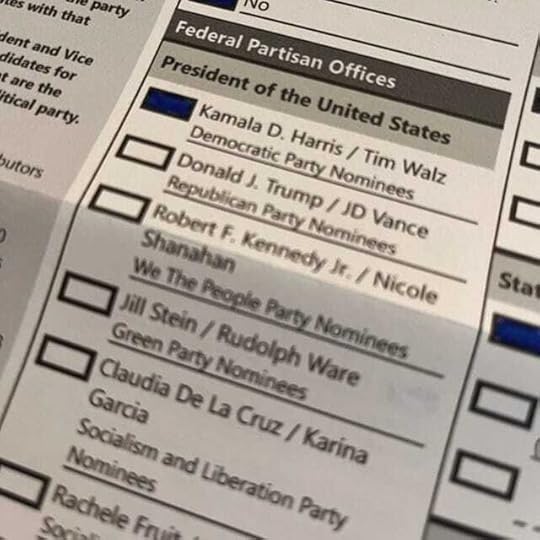
There is so much more that we could explore. I know this doesn’t do 900 pages of fascist planning justice, but it is a small taste to whet your appetite for voting in the 2024 election. If you are the curious type, here are a few resources you might like: Wikipedia, Forbes, Zeteo, The Kettering Foundation, The Guardian, and The Center for American Progress. Or if you are just a reading junky, and want to get every nuance, word for word, here is Project 2025 in its entirety.
** Caution. **This is not a drill. This is a PLAN. Just at January 6, 2021 was a dress rehearsal for whatever happens this January, Project 2025 is just an early version of the push for a theocratic America. Expect that it will shape-shift a hundred times. It will be disguised and renamed, and its authors and their clones will work for generations to make it the American Reality. The Heritage Foundation has been trickling down its ideas for decades, and they will continue to spend money and energy until the last woman and person of color is properly subdued. Or until we lose our breathable atmosphere.
Whichever comes first.
[image error]Project 2025 for Dummies was originally published in The Left Is Right on Medium, where people are continuing the conversation by highlighting and responding to this story.
August 7, 2024
Tim Walz is Everything I Miss About Minnesota
 Image created with PhotoLab Pro
Growing up in a conservative, rural community in Northern New York, I understood that we were always second in line. I was used to accepting our lot as Not-New-York-City and I was raised on large helpings of “don’t-get-uppity.”
From that town of twelve thousand, I moved to St. Paul, Minnesota, where I was planning to get a master’s degree and return home to practice nursing and teach. Ha! Once I got a taste of midwestern free-to-be-me-ness, I knew I wasn’t going back.
I lived in Minnesota for sixteen years. I moved there right out of nursing school and found myself in a land of freedom and respect. It took me a while to understand this crazy mix of “everyone-gets-a-slice-of-the-pie” and “mind-your-own-business.” It was a world where people mattered, and where you left your neighbors alone, but helped them when they needed you.
From running a small adolescent health clinic on the East Side of St. Paul to working in the State Health Department teaching nurses how to do child physicals, I learned that in Minnesota you put your values to work every day.
And what were those values? I was happy to know that they were aligned with my own. To my surprise and relief, I saw that:
Children matter. They deserve to eat, to be protected, to have healthcare, to be educated by caring teachers, and to have families that loved them.
Immigrants are welcome. As one of the major resettling areas for Hmong families, and later for Somali families, Minnesota taught me that it’s our American responsibility to help folks in other lands who are facing crises or extinction, and that once they are on their feet they will enrich our cities and neighborhoods. My children went to an urban school full of children of all colors and backgrounds. They loved it. I loved it. They learned so much more than the school curriculum.
Families deserve support. Minnesota had a child tax credit, which I needed while I finished school. Health care was available, and there was money set aside for families who had children with disabilities.
Education was important. I earned a Master’s Degree and did a fellowship in Adolescent Health at the University of Minnesota. I qualified for a lot of student support and graduated with zero student debt. I used every bit of that education to serve and teach others from the minute I graduated until I left the state.
We help each other. There was a mentality of minding your own business, but helping when it counted. Whether it was getting your tractor out of a ditch, or snow-blowing your sidewalk when you had the flu, neighbors pitched in.
We find solutions that work. As a government employee for many years there, I was in countless meetings and on many committees. Unlike anywhere else I’ve ever lived, there was no “planning to plan” time-wasting jockeying for position and spending hours talking about how to approach an issue. Instead, there was a refreshing roll-your-sleeves-up, “let’s get this party started” vibe. We created solutions that worked for the population we were serving. Not showy “cutting edge” solutions that got attention, but bottom-line actions that made a difference in as little time as possible. It was a joy, and I always felt like the team got ‘er done.
We don’t pretend. I miss the plain-spoken calling out of bulls%t that was the norm. No fancy pantsy talking around an issue. We could disagree, but we weren’t in the business of sugar-coating our ideas with deceit or double talk. And we somehow managed to stay civil and good-natured, even when we had vastly differing opinions.
We have fun, but not at other people’s expense. Minnesota is the Bob Newhart of states. There was a self-deprecating quality that kept things light, and yet kept them real at the same time. (See “We don’t pretend” above.)
Nothing reminds me of that “Minnesota Sensibility” that I miss so much as seeing Tim Walz as the vice president nominee. This guy is the perfect combination of those Midwestern values that line up with mine. He’s served in the military, taught school, raised a family, spent years in the legislature, and governed a state. Not too shabby as qualifications to represent us all.
I expect he will bring that Minnesota “roll-your-sleeves-up-and-get-something-done” practicality to the office of Vice President. He will look for solutions that serve the common good. He will see people from across the aisle and across the globe as neighbors and fellow human beings. How refreshing!
He’s not going to put up with any right-wing shenanigans, and he’s going to call out bullshit as he sees it. He’s going to lead by example, without getting a big head.
Imagine a country where children don’t go hungry and people treat each other with respect. Where we can laugh at ourselves and still get things done. Where we can face our problems and find working solutions, and where we find the balance of being kind to each other and leaving each other alone — to live our lives as we see fit without hurting each other.
I miss Minnesota. My kids missed it when we moved West. I like to think Tim Walz will give the whole country a taste of that Minnesota groundedness that opened my eyes to possibility so many years ago.
Kudos Kamala! You picked the right guy for these times.
Kudos Tim! Show everyone how things can go right for a change.
Time for me to get my yard sign? You betcha!!
[image error]Tim Walz is Everything I Miss About Minnesota was originally published in The Left Is Right on Medium, where people are continuing the conversation by highlighting and responding to this story.
July 21, 2024
Harris It Is — Now It’s Up to Us!
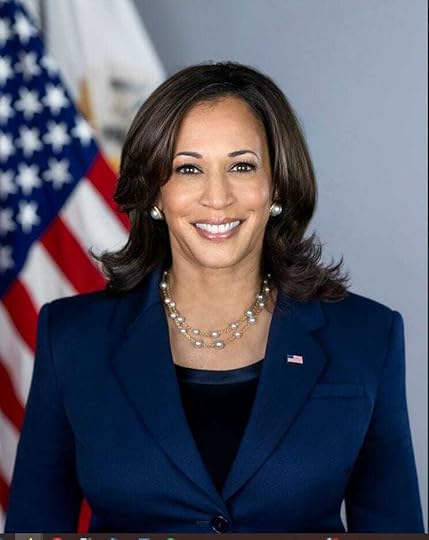 Official White House Portrait of Kamala Harris
Joe Biden stepped down today as a candidate for president. I type this heaving a great sigh for a great man. He is moving aside, endorsing his vice president, Kamala Harris.
He has done what he thinks is best for this country. He is not getting into the weeds on it. And he is quickly tossing his support to a well-qualified candidate who is ready to govern.
Now it’s our turn.
It’s our turn not to take this historic move, and mash it into some sort of self-sabotaging fight for party purity and universal appeal. As Joe did, we need to set aside our druthers (if they are other than her) and get behind Harris. She is qualified. She is experienced. She is oh-so-competent. And she has her running shoes on.
Now the former guy is the old man. And not only old, he is a fraudulent, grifting rapist bent on “retribution” as well as the poster boy for “Project 2025.” He is endorsed and boosted by the media, corporate CEOs, and even tech bros. Why? Because he cares only about rich boys, and those are some of the richest boys.
Surely we can turn now to focus on the lying, aging, felonious enemy of the middle class who is the Republican Nominee. That alone should give us a way forward.
This is our chance to shine for once. To stop the public back-biting and say “yes” to a woman who can continue to steer the ship into historic economic recovery without leaving you and me behind.
Why should we? Because she has tirelessly (and without media coverage) championed all the things that we, as progressives, say we care about.
· Women’s reproductive rights
· Voting rights.
· Immigration policy. (Yes, google it.)
· Gun safety legislation.
· Increasing the minimum wage.
· Health care for the most vulnerable among us.
· Union membership.
· Support for Ukraine.
· And so much more.
For once let’s step up to the plate as a single and powerful force. There’s no time for scrapping among ourselves and processing. Get a Harris bumper sticker and doorbell for all the blue down-ballot candidates in your community. Or donate $5 to someone. Or talk to your neighbor or your brother-in-law about how Project 2025 takes away veterans’ services and Social Security and raises the retirement age. (Or any of the other thirty ways it promises to gut our futures.)
If we were Ridin’ with Biden, we can be “On the Vice Squad!” Or you can “Pair Us with Harris!” or we can claim we want to “Finish the Job for Middle America!” or any catchy phrase that the DNC comes up with. Put it on your front lawn, and show up in November.
We can do this together. We can swallow our reservations (for once). We can, as I said here, “Vote for Democracy!”
No one captures it as well as Politics Girl, so if you want to know why we should get behind Harris now and fiercely, here you go.
https://medium.com/media/1f5e1e1ed5327353a6d3eaf61b9bec2b/hrefWe need to be as willing to do the hard stuff as Joe Biden has been. He saved us once, and this time it’s up to us.
[image error]Harris It Is — Now It’s Up to Us! was originally published in The Left Is Right on Medium, where people are continuing the conversation by highlighting and responding to this story.
July 8, 2024
Do Progressives Want a Future? Then Start Voting Like a Republican!
 Photo by frank mckenna on UnsplashTear a Page Out Of the Republican Playbook
Since the mainstream press has decided to promote a lying felon for our next president because they get more clicks and sponsors when he is spewing lies and assaulting people, we will need to take a fresh approach to being Democrats.
Note: This is only a fresh approach for our side, because Republicans have been using it for decades with good effect.
Ready? Repeat after me: “I’m voting for democracy.” That’s it. That is our mantra, no matter what the press or the felon (or any of his followers) tosses our way. I’ll offer some alternatives later if you get bored with that mantra, but it’s really all you need. Here’s why.
In 2016 the conversations with Republicans went like this:
Your boy is a rapist. “Yeah, but I’m voting for the court.”
Your boy is a fraud. “Yeah, but I’m voting for the court.”
Your boy failed at every business he ever touched. “Yeah, but I’m voting for the court. Besides, what about her emails?”
And guess what they got? Yep. The court. The corrupt, Federalist, Fuck-Democracy court.
The mainstream media are NOT reporting that a seventy-eight year old narcissistic candidate can’t put a coherent sentence together, can’t walk a city block, waves to people who aren’t there, holds the Bible upside down, lies with every breath, sold out to our worst enemies, is a convicted felon, has zero family support, mixes people up, stole and hid our most sensitive documents (I haven’t seen ONE comparison to the Rosenbergs), incited an attack on our Capital during the transition of power, is ushering in Project 2025, cozies up to autocrats, dodged the draft, worships Hitler, or that people who worked with him found him to be dangerous, stupid and vindictive. Where are THOSE stories? (Oh, not enough clicks for you? Okay, let’s let him flush our country and history down the toilet. Forget I asked.)
Today’s conversations with Republicans are similar.
Your boy was twice indicted. “I’m voting for a theocracy.” (They don’t actually say this, but it’s what every response means.)
Your boy is a child rapist. “I’m voting for a theocracy.”
Your boy is a convicted felon. “I’m voting for a theocracy. God forgives our sins.”
Your boy is a liar. “I’m voting for a theocracy.”
Their strategy worked before, and unless we tear a page from their book it will work again.
All these calls for Biden to “step aside” are part of their plan. WHY ARE WE LISTENING?? Now, if we were sheep, that might be a good plan. But we are not.
Sigh. Another sigh.
If we were sheep, Biden could step aside and turn things over to the highly competent Harris, and we would say, “Thanks, Joe! Let’s vote for Harris!!!” But let’s be honest with ourselves: Democrats will not do that. We will say, “Thanks Joe! Now, who do we want?” And what will follow is a shit show of defeat, while we wrangle about progressive purity and wash our freedoms down the well-deserved sewer system of autocracy/theocracy.
We know this about us. We need time to PROCESS. We need time to COMPARE/CONTRAST. We need time to ARGUE IN PUBLIC. We need time to FIND TINY FAULTS IN EACH OTHER’S PAST. And while we do that, the Orange One’s minions will be “voting for theocracy.” Because, God. And because, you know, “her emails.”
And then we will have bibles in schools and women in the kitchen and a burning planet and a plummeting economy.
So, my lambs, this is the way to victory. This is what we can do so that we can argue among ourselves another day. To EVERY objection from ANYONE about who is on the ticket — which is likely to be Biden, but could be anyone — we say, “I’m voting for Democracy.”
Whether it’s Biden, or Harris or whoever is at the top of the blue ticket after the mayhem that the Democratic Convention promises to be, we stop adding nuance to ANY conversation. We have one line. Practice it now with me. “I’m voting for democracy.”
Them: “Harris was an anchor baby.”
Us: “I’m voting for democracy.”
Them: “Your boy falls asleep when he’s talking.”
Us: “I’m voting for democracy.”
Them: “Make America Great Again!”
Us: “I am. I’m voting for democracy.”
See. It’s a simple assignment. One line to learn. You can do this. We can do this.
Okay, I know us. We get bored with simplicity. We get impatient without nuance. For those who want advanced election 406, here are some alternatives when they say, in whatever language, “Your candidate sucks!”
Us:
“I’m voting for bodily autonomy.”
“I’m voting for an expanded court.”
“I’m voting to preserve Social Security.”
“Have you read ‘Project 2025’? No? Well I’m voting for fuck that.”
If it gets heated, and they shake a fist or promise to pipe bomb your daycare, drop back to the basics. “I’m voting for democracy!”
Ignore the Russian bot Twitter trolls. Ignore CNN, ABC, MSNBC, FOX, OAN, CBS, All Polls, NBC, and especially the NYT.
If we want the chance to squabble among ourselves another day, vote like a Republican. Just this once. Being right is not nearly as much fun as an expanded court. Please join me.
I’m voting for democracy.
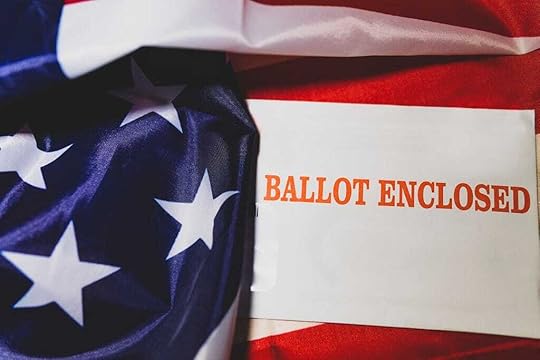 [image error]
Do Progressives Want a Future? Then Start Voting Like a Republican! was originally published in The Left Is Right on Medium, where people are continuing the conversation by highlighting and responding to this story.
June 29, 2024
Did You Think Biden Sucked at the Debate?
 This nurse probably sucks at debating. But she saves 100% of her patients. (Photo by Irwan on Unsplash)
I was a nurse manager for many years. I hired many people and I fired a few. For anyone who lamented the June debate between Joe Biden and Donald Trump, I have two pieces of wisdom for you, and a requisite demand.
Pay attention. Your rights and our future depend on it.
First Wisdom: Bragging is Inversely Related to PerformancePeople who brag about themselves and/or lie are NEVER the best performers. You can take that to the bank. (Or HR, as you would soon discover.) I interviewed tens of candidates for nursing positions. Clinical work, psychiatric work, and management work. The ones who regaled us with superlatives about their expertise were often desperate for the job. (Want a real eye-opener? Ask, ‘What’s the biggest work mistake you ever made, and how did you handle it?’ then sit back and listen. Follow it up with ‘What would you do now in the same situation?’) If a candidate was too eager to tell us about how many lives they had saved or what amazing clinical skills they had, it had “Red Flag” written all over it. But, on an interview form, how do you justify turning away such an “outstanding” nurse?
Litmus Test: Check Their References.When you talk to the people who have worked with a candidate, you learn to hear between the lines. If a former supervisor is vague or uses cliché phrases to describe their work, dig deeper. Tell them what the job is and ask whether this person would be a good fit. Ask for specific examples of the candidate’s work that was impressive. Next, insist on getting at least two “peer references.” People who work with someone know whether they have the stuff or not. Ask whether they would look forward to working with that person again. Listen for the tone as well as the words. If they don’t call you back, that speaks for them.
Second Wisdom: What Does the Job Require?Look for the skills required by the job, not the skills required for the interview. We did not need a PhD nurse to start IVs at the bedside. (You want to know what technique we NEVER used to interview nurses? We never used “Formal Debate” as a technique for finding the best nurse. “Why not?” you ask? Because YOU DON’T HAVE TO BE A GOOD DEBATER TO BE A GOOD NURSE!) There is approximately ZERO overlap between debate skills and good nursing judgment. I did not give a shit whether the nurse in front of me could win a point over another nurse in a formal debate. I DID care whether they could manage a sick patient competently, whether they knew when to call in additional help, and whether they knew the signs of danger to the patient’s well-being. If they prided themselves on deriding and antagonizing their colleagues, they were exactly the sort of nurse we did NOT want on the team.
Litmus Test: Watch them workThe gold standard for choosing a competent person is to walk beside them as they do their job. Are they asking the right questions? Are they skilled at the clinical tasks? Can they answer your (or the patient’s) questions easily and knowledgeably? Watching someone at work is the best litmus test for whether they know what they are doing and are doing it skillfully. (If you can’t observe the nurse at work, have a checklist of skills when you do the reference check. Ask the previous supervisor whether they have observed the candidate doing each of the essential skills.)
Interviewing Presidential CandidatesAs anyone in management knows, hiring is relatively easy, but firing can be next to impossible. Best to save yourself the HR headaches and hoop-jumping necessary to get rid of a bad performer by doing some careful scrutinizing up front. I’m going to fall back on my decades of experience interviewing nurses. There are two candidates in front of me. I want to compare them so that I make the right decision.
One of them lies and brags and tells such outrageous stories about what a hero he is that audible alarms are going off as I look at his resume. Let me see, he’s been in the field for about eight years. He has no formal training in governance or policy. I see many failed businesses, multiple lawsuits, multiple convictions (not going to pass the background check, are you Candidate One?) A history of sexual assault. Mishandling a global pandemic with many deaths on his watch. Suspicious ties to oligarchs and autocrats. (I’m not leaning toward this guy.) Let me check his references. Oh. Only four of his forty-four previous colleagues would agree to work with him again, including his vice-president. Several professional organizations have issued formal warnings that he is a danger to our country. (Makes note on interview form.) Fortunately, I have had the opportunity to observe him at his work. He is unkempt, comes in late, uses up his vacation time with golf trips, doesn’t seem to understand the daily reports, and in his last job took home a lot of private records, which was against the law, refusing to give them back. (I fired a nurse for that once.)
And what does my nursing eye see when I look at this candidate? He sits before me alone. His family has not accompanied him to the interview. He is an aging, obese white male who tends to perseverate when he is in conversation. His diet is non-nutritive and he exercises little if at all. He is a heart attack waiting to happen. I will send him for further evaluation, right from the interview. I doubt he could run if an emergency occurred that required his attention — for example, malcontents storming government buildings trying to hang office holders. Could he run for his life? Doubtful.
The second candidate has been in the field for over fifty years. He has held jobs in entry-level work as well as high-level management. He is reliable and conscientious, according to the records available to me. Does not overuse his sick and vacation time, shows up early and works late, making high-level decisions. Works effectively with others and can field any question I toss at him about his past experience. I have observed his work and he has accomplished more in four years than 90% of his predecessors. He studies the daily reports and understands the implications of the information. He calls in advisors and experts and does not try to second-guess them, although he does make final decisions and takes responsibility for them. He has the well-being of team members and constituents in mind when making far-reaching decisions. He is respected and admired by everyone working with him and they would continue to work with him in a heartbeat. He can pass a background check!
My nursing observation is that he is an aging white male who is in good health. His vital signs are within normal limits for his age, and he eats a nutritious diet and exercises regularly. I note some motor delays. His walking and speech show some deterioration from his previous performance, but he answers questions directly and on topic. He has a marked stutter, which does not hamper his ability to express his thoughts, although it seems to worsen when he is under direct attack.
What will I not use in my decision-making for this high-level position? Formal Debate. I have seen these candidates debate, and it did not help me in my decision. Of course, we all love it when our favorite lands the bon mot at just the right moment. When they turn to the other and blast them with a winning point, especially when we agree with the point. Yes. A flood of dopamine!!! There was no dopamine at the June debate. Only pain. Anger. A fair amount of wincing, and a lot of lying.
Requisite Antidote: A Final InterviewThis is a crucial position central to the well-being of our country and our planet. While I might wish I had other candidates to choose from, these are the two before me. Therefore, before making this far-reaching decision I want one more interview. In fact, I demand it, and so should you. We are the hiring committee for this pivotal role.
I want separate televised interviews with both candidates to last two hours each. The interview should be done by someone fearless and well-informed. (Perhaps Hillary Clinton or Michelle Obama would be available.) It should be wide-ranging and on point, and candidates should be required to answer the questions as asked. Possible areas of inquiry would be past record, policy details for the next four years, and underlying principles for decision-making. No questions are off the table. No soft-ball dropping-a-topic-when-it-gets-too-hot. Direct questions on behalf of the millions of voters who are part of this hiring process.
Each candidate would be interviewed alone, in a quiet studio and may bring whatever notes they like. (Open book tests are my preference, in school and in life.) Ask both the same questions, and give them the questions in advance. Let the American people see who each of these candidates is when they are forced to focus on substance, not performance. Who they are alone in a room with the big questions.
One candidate would probably balk at this and refuse. The other would probably see his opportunity and make some great television.
There is approximately ZERO overlap between the skills to debate and the skills of governance. I want real answers, not performative bullshit.
Give us an in-depth interview on real-life governance. Then we will feel like we gave each candidate a fair chance to show us what they offer.
That way we can hire the one we think is up to the job.
 Photo by Aaron Burden on Unsplash[image error]
Did You Think Biden Sucked at the Debate? was originally published in The Left Is Right on Medium, where people are continuing the conversation by highlighting and responding to this story.
May 26, 2024
When Your Characters Insist That Their Story Has Legs
Once upon a time, about a decade ago, I wrote a long, heartbroken blog and placed it anonymously on OpenSalon. The response was immediate, and suddenly there were comments and ‘likes’ in numbers I had never enjoyed. It made it to the front page of OpenSalon (OS), and then, briefly, on Salon.com. Whoa! The story had definitely hit a nerve. I was excited and gratified and I couldn’t show it to a soul, because, you know, “anonymous.” About three days in I got a private message on OS from a New York agent asking if I would consider making this a memoir. She loved the voice and she loved the story.
Are you kidding?!?
Of course I called her, using my secret anonymous name, and she told me what my memoir could offer. (By then I had Googled her and found that she had represented some very famous people and their memoirs.) I felt like Lana Turner being discovered at the Schwab’s soda fountain. Oh, yeah. I was doing this. When fate drops a break on your keyboard, you’d better snap it up. Snap I did.
With the help of the agent I wrote a book proposal and outlined the memoir. I wrote a first chapter and submitted it to her. She liked it. She said she would shop it around.
Then, of course, you wait. She went to all her usual publishing contacts. She pitched hard. She came up empty. It turns out that if you are offering the memoir of a very famous person, they are all ears. Relative unknown with no publishing history, not so much.
She called me with the bad news. No one would chance it with an unknown memoirist. (Ugh. Deep breath.) “But we would love to sell something of yours. Do you have any other ideas?”
Are you kidding?!?
I was loaded with them! I worked up a few and sent them back. One of my ideas was to tell the original story as fiction instead of memoir, but from a different point of view. She liked it. “Send me the first three chapters.”
I sat down and outlined the story. I began the first chapter and something happened that you probably won’t believe unless you’ve written fiction yourself. I was telling the story from a bystander’s perspective, a secretary named Melanie. Well, Melanie saw her opportunity, grabbed the story, and ran with it. I spent the next two months just trying to keep up with her. My outline changed, my timeline changed, my head exploded. Melanie was in the driver’s seat and she was not giving it up, thank you very much!
Sprinting along behind her, I wrote Mel’s story. I met all the people in her world. They were interesting and hilarious. And flawed and traumatized. And real. I sent the first three chapters to the agent and she said, “Yes! Send me the manuscript when you finish!”
I finished the manuscript — all of Mel’s story including the one I had hinted at in my heartbroken original blog post. And I waited. I did not eat or breathe for several days, until finally the agent emailed me.
“I did not expect you to be such a good story teller.”
Um… Thanks?
“Here are some changes I think would strengthen your story,” and she listed several points. Okay, I’m good with constructive criticism. I made the changes and sent the manuscript again.
Then, of course, you wait. You wait for that call. You wait for that thumbs up or thumbs down. You try not to get your hopes up, but you get your hopes up. Again.
The call came. The agent said, “There is an editor from Simon & Schuster who loves your book. She wants to buy it.”
I was at work among cubicles. I resisted the urge to whoop. “Really? Oh, thank you!!” I whispered.
“But,” she continued, “you will have to be willing to make some changes. So keep an open mind when you talk to her. She’s going to call you this afternoon.”
Are you kidding?!?
“Yes, I’ll make changes. If she wants me to insert a vampire into it, I’ll find a way to do it. Or whatever it takes.” (These were the days of the Twilight frenzy.)
The editors name was Kate. She sounded about twelve. She loved my book.
“So let me tell you that I really don’t like first person narrative, and I’m not a fan of prologues or the epistolary style, so I was not looking forward to reading this. I took it home on the weekend, and I read it straight through. I finished it up here in my office on Monday. I was sitting at my desk and I was hiccup-crying! [Be still my heart! Someone who reads manuscripts for a living was hiccup-crying at my book??] My office mate asked ‘what’s going on over there’ and I said, ‘It’s this story. I think we need to buy it.’”
My heart raced. Are you kidding?!?
She had interesting questions. Would I be willing to make some changes if the committee required them? (Yes.) Did I miss my characters once I finished the story? (Yes.) Did I have a dream about this book? (Yes. I want to see it become a movie or a mini-series.) She would take it to her committee that week. Was this a good number for me? (Yes.)
And then, of course, you wait. And wait. And you try not to get your hopes up, but you get your hopes up. And, finally, it was the agent who called and said that they had passed on it.
Are you kidding?!?
They passed on it! But she was hiccup-crying!! Deep sigh. They passed on it. No reason given.
The agent said there are no more publishers to try. She offered to put it on Amazon, as a self-published novel. “We have a small division in our agency that handles these works. Did I want to sign on?”
Mel, my protagonist, elbowed me. Yes. Yes, let’s just get this out there!
The small division’s name was Ivan. He formatted my book and I paid a teenager to create a cover. Finally my story — Mel’s story — was in the world. It stayed in the world for several years. I entered it into every “Independent Publishing Award Contest” I could find. It won seven of them. My family and friends bought the book and they loved it. (Of course they did.) It got great reviews on Amazon, but not too many. The agent took ten percent of the profits, and sent me the rest.
Two years ago the literary agency closed their small division. (Perhaps Ivan moved on or was promoted. They didn’t say.) and sent the files back to me. I would need to put it back on Amazon myself, with a new ISBN number. They washed their ink-stained hands of my story.
Not one to go down without a fight, I asked another agent whether she would look at it. “Yes,” she said, “but get it edited professionally first.” She gave me a name.
I paid that editor to tell me all the places I went wrong. All the small changes that would make it awesome. I spent weeks making every change she suggested. I reworked the plot in small ways, I corrected errors. Mel was whispering in my ear. Don’t let our story go!
[image error]Photo by hannah grace on UnsplashI sent it to the second agent. She liked it. A lot. But it was “too long to sell.” At least, too long for a first-time novelist. Did I want to try to cut it by a third and resubmit?
Are you kidding?!? (No.)
Mel and I were daunted. Put-it-in-the-drawer-and-have-a-little-cry-and-then-ignore-it-for-months daunted. I told Mel that I needed to move on. I needed to write the second story that has been in my mind and heart for a decade. Mel said, Get THIS ONE back up on Amazon and we’ll let it go. You will be free.
I found a custom publisher here on the island where I live. She does not publish fiction, but she agreed to look at it. She liked it. A lot. Yes, she would help me get this back on Amazon. I paid her money and she took it from there. New cover, new format, proofread and finalized. She emailed me often for input. I emailed her often with gratitude. She solved each issue as it arose, and didn’t annoy me with the details.
(When she asked for my Amazon password so she could enter the work, I said, “If I see any suspicious purchases…” She said, “I know! This will be awesome!” We laughed.)
She set the story up on Amazon and it was (finally) back in my hands. Relief flooded through me. Having read it carefully as I looked over the drafts, it was clear to me again that Mel’s story deserves this bump into the bibliosphere. I hope you’ll take a look. She and her band of colorful dear ones are all crossing their fingers. (And if you read it years ago, you might want to see how the characters are doing, and what changed in their story.)
You’ll find it here.
Mel is finally smiling. And I am finally free to move about the keyboard.
Now, of course, we wait. Do I dare to get my hopes up again?
Are you kidding?!?
[image error]My Crazy Novel[image error]When Your Characters Insist That Their Story Has Legs was originally published in The Memoirist on Medium, where people are continuing the conversation by highlighting and responding to this story.
December 12, 2023
My Christmas Card Address List
It’s time for my yearly ritual of sending holiday greeting cards. Over the years, I have not become more parsimonious about the cards I send, but rather more expansive. No saving all the freebie cards sent by organizations I contribute to. No looking for after-Christmas sales of boxes of cards — which leads to sending Rudolf puns and “Feliz Navi-DOG” cards for several years in a row, thinking “Yes, they were cheap, but what was I thinking?” (Though there have been years when I was glad to have both sets of bargain cards.)
Nope. Now I order lovely photo cards with plenty of room for text on them. I prep the cards with carefully selected pictures representing my year and spend time writing the message — hitting just the right note of optimism and nostalgia as I recount the year’s events for the letter inside. I have the envelopes printed with our return address so that when the cards are delivered to our door it’s an efficient little assembly line of holiday spirit. A small note on each card, wishing something good for the coming year. I peel off the address label, and another little winter bird is ready to fly to its recipient.
By the time I’ve finished, I feel rich. Rich in connections and people who would care to hear from me. Rich in memories and hope for the coming year. I am filled with amazement at the various factions of my life that come together — writing friends next to clogging friends next to cousins and colleagues and neighbors, not to mention most immediate family. High school classmates sit in the pile next to commuting buddies. And, I’m convinced, everyone would like everyone if I had a way to bring them all together. But this will have to do.
[image error]Photo from Author’s collectionI promise trips to see people, dinners for local friends, and other “this year for sure!” aspirational plans. I remind people that I am thinking of them through their crazy or lonely or grieving time, so they know I understand that holidays can be hard and that I am still here — call anytime! I tell people what I appreciate about their photos on Facebook or the recipe they sent me months ago. I find a hundred ways to say “I see you. I love you. I’m glad we are connected.”
The condensed version of all this is making the address list itself. There is the crossing off and the adding on. The “will I or won’t I?” of friends who have fallen away, or shown their colors as harmers more than helpers. So many reasons to remove them from the fold. There are the hangers-on, who were on my parents’ list and added in when Dad came to live with us. (Dad is gone, and I fret each year over whether his friends look forward to hearing about our family, or have trouble remembering who we even are.) There are the dear souls we’ve lost this year (a cherished mentor, a long-ago lover, a dear and former mother-in-law) and I pause when I highlight those names. They will not hear about our trip to Minnesota. They will not see how much the grandkids have grown. They are beyond that now, as I will be one day. I ponder this as I move each name to the bottom page — the “Do not send” page that I keep at the end because I cannot bear to let even their names be lost.
But, too, there are new ones, added to the “Send” pages. New friends who seem like old ones, newly discovered relatives (thank you Ancestry!!), and colleagues who’ve reconnected after years — even traveling over to our island to visit.
And last, there are the changed addresses. One who finally moved to Michigan because it was always home. One who moved into a senior living place and who may not know us next year. Another who finally made good on that retirement plan to be somewhere warm. My daughter’s friend who has moved back here to be near family. So many changes. Life moving on. Life changing constantly.
The list is a blunt reminder that “this, too, shall pass.” But for today, for this holiday season, for this moment in my lucky life, we are connected. I cherish the bonds and the life that has afforded them. I will finish this list, mail the cards, and wait eagerly to hear from those who send out their own accounts of another year on the planet.
This ritual cleansing of the list is my treasure. It is the breath of life. The breathing in of new friends and dear ones. And the breathing out and letting go of those who are no longer in my world. As I have written before, it is a ritual that invites me to acknowledge the time passing and to treasure those who are still in my circle. It is a pause: This is what has happened. This is who we are this year. This is what we carry forward into next year.
May the coming year bring us closer to peace and closer to one another. May we find a way to remind each other that life is better because we have circled, for whatever small time, in each other’s orbit.
Happy Holidays. Write soon.
[image error]Photo by Mathyas Kurmann on Unsplash[image error]My Christmas Card Address List was originally published in Crow’s Feet on Medium, where people are continuing the conversation by highlighting and responding to this story.