Robert Hart's Blog
August 31, 2024
A snippet from an upcoming novella
My current Work in Progress (WIP to writers) is an SF novel with the working title Myr. Whilst that progresses (I'm in the first draft of Chapter 6), I found I needed more and more of the 'back story' of this accidental, isolated human colony. Before I knew it, I was outlining a novella to provide that background. The novella's working title is The Periclese (the name of the shipwrecked colony ship).
I'm writing this in parallel with Myr. Chapter 1 is nearing completion, but earlier this month I had to write something about 'smells' as homework for the writers group I'm in. I immediately started thinking about what it would be like to be the first human to take a breath of the air on a new planet ... and the snippet below from a later chapter is the result.
You can read the snippet if you join my Patreon.
Robert
Brisbane, Australia.
I'm writing this in parallel with Myr. Chapter 1 is nearing completion, but earlier this month I had to write something about 'smells' as homework for the writers group I'm in. I immediately started thinking about what it would be like to be the first human to take a breath of the air on a new planet ... and the snippet below from a later chapter is the result.
You can read the snippet if you join my Patreon.
Robert
Brisbane, Australia.


July 28, 2023
Through different Eyes a PageTurner finalist!
I'm delighted to announce that my latest novel Through different Eyes is a finalist in the 2023 PageTurner Awards.
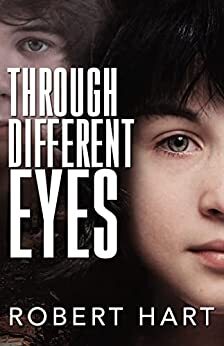
Standby for further news!
Standby for further news!
June 2, 2023
Teenage Spies
*** Warning - this blog contains a spoiler ***
Through different Eyes has its main character - Colette - acting as an agent of the Australian government, spying on migrants from the eastern Bloc during the Cold War of the 1960s. I was concerned this was a bit improbable. But I discovered my art was imitating life.
During my research into Brisbane in the 1960s, I came across a memoir telling the story of the family of an ASIO agent. ASIO is the Australian Security Intelligence Organisation - the Australian equivalent of MI6. Written by one of the daughters, this tells the story of how her father used his children in his ASIO activities in Brisbane.
Admittedly, this activity was principally targeting potential Chinese agents rather than those from the eastern Bloc, but I was flabbergasted that a parent would put his children into a potentially dangerous situation - unlike Col's situation where she is blackmailed and has no choice but to comply.
In case you're interested, the book is With my little Eye by Sandra Hogan and it's available on Amazon.
Through different Eyes has its main character - Colette - acting as an agent of the Australian government, spying on migrants from the eastern Bloc during the Cold War of the 1960s. I was concerned this was a bit improbable. But I discovered my art was imitating life.
During my research into Brisbane in the 1960s, I came across a memoir telling the story of the family of an ASIO agent. ASIO is the Australian Security Intelligence Organisation - the Australian equivalent of MI6. Written by one of the daughters, this tells the story of how her father used his children in his ASIO activities in Brisbane.
Admittedly, this activity was principally targeting potential Chinese agents rather than those from the eastern Bloc, but I was flabbergasted that a parent would put his children into a potentially dangerous situation - unlike Col's situation where she is blackmailed and has no choice but to comply.
In case you're interested, the book is With my little Eye by Sandra Hogan and it's available on Amazon.
February 24, 2023
Colette wins Editors' Choice award!!!
I nearly fell off my chair this morning while reading my emails...
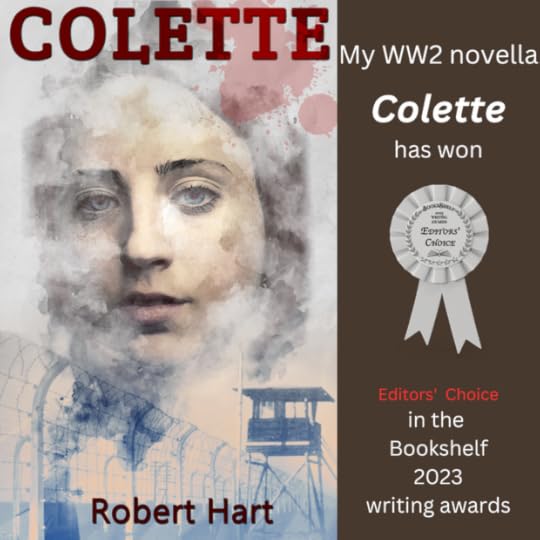
Colette has won an editors' choice award in the 2023 Bookshelf writing awards.
This means it made the finalist list! Now - this is not like hitting #1 on the best seller list, but it's still amazing for this new writer!
And now you have even more reason to go and read it!
I'm still a bit dazed, but I need to get to work and finish formatting Through different Eyes for publication.
Watch this space for the cover reveals coming soon!
Colette has won an editors' choice award in the 2023 Bookshelf writing awards.
This means it made the finalist list! Now - this is not like hitting #1 on the best seller list, but it's still amazing for this new writer!
And now you have even more reason to go and read it!
I'm still a bit dazed, but I need to get to work and finish formatting Through different Eyes for publication.
Watch this space for the cover reveals coming soon!
February 11, 2023
Reviews can be humbling
My new World War II novella Colette has been out for less than a month and it's garnering great reviews on many platforms beside Goodreads.
Reading reviews is can be an emotional ride for an author. Putting your writing out there is dangerous: you are asking people to read your work and they are free to comment on it as they see fit. While five star reviews are great, the reviews I treasure most are the thoughtful ones that provide insight into why a reader liked the book ... and what they found problematic. These reviews drive my writing forward.
Thank you to all my readers - and most particularly to those that leave a review.
Reading reviews is can be an emotional ride for an author. Putting your writing out there is dangerous: you are asking people to read your work and they are free to comment on it as they see fit. While five star reviews are great, the reviews I treasure most are the thoughtful ones that provide insight into why a reader liked the book ... and what they found problematic. These reviews drive my writing forward.
Thank you to all my readers - and most particularly to those that leave a review.
January 10, 2023
Only 17 days to go!
There's only 17 days to go until
Colette
is release and I'm getting excited.
People are loving the cover and the reviews are excellent!
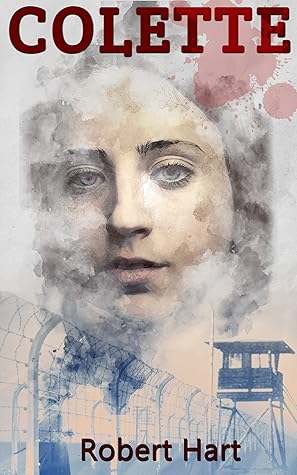
I hope you've marked it 'to read' and pre-ordered your copy! I'm looking forward to hearing what you think.
By the way, you can sign up to my fortnightly newsletter where I chat about bookish things, my life ... and my cats.
People are loving the cover and the reviews are excellent!
I hope you've marked it 'to read' and pre-ordered your copy! I'm looking forward to hearing what you think.
By the way, you can sign up to my fortnightly newsletter where I chat about bookish things, my life ... and my cats.
January 8, 2023
How Colette came to be
Although some characters, places and events in
Colette
are real, Colette Roberts is complete fiction. She initially occurs as a brief mention in my first novel
Through my Eyes. Again.
and then again in the upcoming sequel
Through different Eyes
. It was that latter mention that led to this story. I needed to visualise a scene which is retold by Mutti Frida – and so I wrote the opening scene of the novella. This allowed me to then write the retelling that occurs in
Through different Eyes
.
Then something strange happened: this girl stood at my shoulder, asking me to tell her full story. For about two weeks I ignored the request before returning to that first scene and starting to fill in the story. This required some considerable research – picking up from where Mrs Henderson’s Limp had taken me as I need much deeper knowledge for a story that spans nearly five years.
The Special Operations Executive (SOE) was established by Winston Churchill with the express aim of setting occupied Europe ablaze through sabotage, assassination and encouraging resistance to occupation. There were several ‘sections’ (basically departments) and the section responsible for action in occupied France was known as Section F – and Maurice Buckmaster was its head.
For Colette I needed details of how agents were recruited and trained, the various training locations, how the codes worked (and changed) during the progress of the war, the special equipment used by agents – not just their radios, the way agents were delivered into Europe by parachute and light plane and on and on. There is a multitude of information on-line and several good books. For those interested in the codes used by the SOE, I strongly recommend Between Silk and Cyanide by Leo Marks – it is a fascinating read and not just for cypher geeks. Radio operators were not all women – but the SOE preferred female radio operators as it was felt they were more focused.
The SOE also knew that the average time to capture of a radio operator in France was about six weeks. Apart from the constant risk of betrayal, the Nazi’s operated a sophisticated listening system, aimed at rapidly triangulating unauthorised radio transmissions. If they were fast enough, they could catch an operator before they had time to pack up an move: a deadly game of cat and mouse. Operators knew this and aimed to keep messages short – but that was not always possible.
I needed what I wrote to be as accurate as I could make it – and not just for the story’s sake.
Forty-one Section F women served in occupied France during World War II. Sixteen of them died in that service, almost all executed at one or other concentration camp, including Ravensbrück – the only all-female Nazi concentration camp. My story needed to represent the reality that these women experienced: from completion of a successful mission to capture – and what followed. To aim any lower would be a disservice to them.
In part, this story is my tribute to those courageous women who went willingly into the darkness of occupied Europe. Women who were prepared to purchase fascism’s defeat with their own lives.
I have visited Europe many times and on one such visit, after prevaricating for years, I finally summoned the courage to visit a concentration camp – Dachau, near Munich. Even in the bright sunshine of a summer’s day, it is a bleak reminder of humanity’s darkest abilities. In the crematorium a plaque commemorates four SOE girls, executed there on 12th September 1944. Amidst all the deaths that occurred there (an estimated 50,000) it was that plaque and those deaths (Yolande Beekman, Madelaine Damerment, Noor Inyat Khan and Elaine Plewman) that undammed my tears.
What started out as a few sentences for a scene in Through different Eyes took on a life of its own and even stole time from that novel – both writing and research time.
Then something strange happened: this girl stood at my shoulder, asking me to tell her full story. For about two weeks I ignored the request before returning to that first scene and starting to fill in the story. This required some considerable research – picking up from where Mrs Henderson’s Limp had taken me as I need much deeper knowledge for a story that spans nearly five years.
The Special Operations Executive (SOE) was established by Winston Churchill with the express aim of setting occupied Europe ablaze through sabotage, assassination and encouraging resistance to occupation. There were several ‘sections’ (basically departments) and the section responsible for action in occupied France was known as Section F – and Maurice Buckmaster was its head.
For Colette I needed details of how agents were recruited and trained, the various training locations, how the codes worked (and changed) during the progress of the war, the special equipment used by agents – not just their radios, the way agents were delivered into Europe by parachute and light plane and on and on. There is a multitude of information on-line and several good books. For those interested in the codes used by the SOE, I strongly recommend Between Silk and Cyanide by Leo Marks – it is a fascinating read and not just for cypher geeks. Radio operators were not all women – but the SOE preferred female radio operators as it was felt they were more focused.
The SOE also knew that the average time to capture of a radio operator in France was about six weeks. Apart from the constant risk of betrayal, the Nazi’s operated a sophisticated listening system, aimed at rapidly triangulating unauthorised radio transmissions. If they were fast enough, they could catch an operator before they had time to pack up an move: a deadly game of cat and mouse. Operators knew this and aimed to keep messages short – but that was not always possible.
I needed what I wrote to be as accurate as I could make it – and not just for the story’s sake.
Forty-one Section F women served in occupied France during World War II. Sixteen of them died in that service, almost all executed at one or other concentration camp, including Ravensbrück – the only all-female Nazi concentration camp. My story needed to represent the reality that these women experienced: from completion of a successful mission to capture – and what followed. To aim any lower would be a disservice to them.
In part, this story is my tribute to those courageous women who went willingly into the darkness of occupied Europe. Women who were prepared to purchase fascism’s defeat with their own lives.
I have visited Europe many times and on one such visit, after prevaricating for years, I finally summoned the courage to visit a concentration camp – Dachau, near Munich. Even in the bright sunshine of a summer’s day, it is a bleak reminder of humanity’s darkest abilities. In the crematorium a plaque commemorates four SOE girls, executed there on 12th September 1944. Amidst all the deaths that occurred there (an estimated 50,000) it was that plaque and those deaths (Yolande Beekman, Madelaine Damerment, Noor Inyat Khan and Elaine Plewman) that undammed my tears.
What started out as a few sentences for a scene in Through different Eyes took on a life of its own and even stole time from that novel – both writing and research time.
December 16, 2022
Is it a prequel, a sequel or what?
Many stories these days are part of a series and we all know what is meant by a prequel and a sequel - and a standalone. With these, there is an explicit placing of the story in the series timeline. But what do we call a story that takes place entirely within the time frame of another story? Or one that is contemporaneous with another related story, even if the stories don't touch until later in the series?
My new novella Colette , available in paperback and launching on 28th January 2023 as an ebook (pre-orders on Amazon), is a case in point. It is contemporaneous with Mrs Henderson's Limp and is also a prequel to Through my Eyes. Again. The main character, French/English Colette is referred to in Through my Eyes. Again. and also in the upcoming sequel Through different Eyes . That upcoming novel (watch out for it in 2023) takes place almost entirely within the time frame of Through my Eyes. Again. telling the story of Col and Mutti Frida from when they disappeared from Will Johnstone's life in late April 1964.
Colette is thus a parallel story to Mrs Henderson's Limp and a prequel to Through my Eyes. Again. The four stories are all related - and the epilogues of Colette and Through different Eyes describe the same event - but through different eyes.
I suppose the four stories populate and define a "universe" in some way - but one that has diverged into an alternate timeline sometime after 1945. Perhaps the defining moment for that split is when Will Johnstone's consciousness is transported into his twelve-year-old body (October 1962) at the opening of Through my Eyes. Again.
But placing these stories in a universe leaves unsolved the problem of how to describe them. In a way, these stories mirror life. We are all the central character in our own story but a subsidiary character in the story of those people entwined, however loosely, in our story.
In that sense, prequel and sequel seem to lose their relevance.
My new novella Colette , available in paperback and launching on 28th January 2023 as an ebook (pre-orders on Amazon), is a case in point. It is contemporaneous with Mrs Henderson's Limp and is also a prequel to Through my Eyes. Again. The main character, French/English Colette is referred to in Through my Eyes. Again. and also in the upcoming sequel Through different Eyes . That upcoming novel (watch out for it in 2023) takes place almost entirely within the time frame of Through my Eyes. Again. telling the story of Col and Mutti Frida from when they disappeared from Will Johnstone's life in late April 1964.
Colette is thus a parallel story to Mrs Henderson's Limp and a prequel to Through my Eyes. Again. The four stories are all related - and the epilogues of Colette and Through different Eyes describe the same event - but through different eyes.
I suppose the four stories populate and define a "universe" in some way - but one that has diverged into an alternate timeline sometime after 1945. Perhaps the defining moment for that split is when Will Johnstone's consciousness is transported into his twelve-year-old body (October 1962) at the opening of Through my Eyes. Again.
But placing these stories in a universe leaves unsolved the problem of how to describe them. In a way, these stories mirror life. We are all the central character in our own story but a subsidiary character in the story of those people entwined, however loosely, in our story.
In that sense, prequel and sequel seem to lose their relevance.
April 3, 2021
The story behind the cover
I’ve been asked by a few people about the cover of Through my Eyes. Again. as it’s a bit different from the ‘usual’ modern covers. A cover is the ‘hook’ that first attracts a reader and so it needs to be well baited with elements that hint at the story. The cover was designed by Chris Pink.
The overall design of the cover echoes an East German propaganda poster from 1970 by a Deutsche Demokratische Republik (DDR - communist East Germany) artist, Klaus Bernsdorf. This was found by Chris during his research and this influenced in the cover design.
Initially we planned to use the poster on the back cover and our echo on the front. I got in touch with the German Historical Museum in Berlin, trying to track down copyright. They were very helpful and were able to locate the name of the artist, but could not trace an address. As the copyright had returned to the artist when the DDR ceased to exist with the reunification of Germany, that meant we could not use the poster itself without breaking copyright. Work on the back cover continues - but it will only be needed if I decide to produce a print edition. (I have acknowledged Klaus Bernsdorf’s work as the inspiration for the cover design in the front pages of the book.)
The novel is mostly set in Herne Bay and Beltinge, in the county of Kent in the UK during the Cold War in the early 1960s; I felt the cover should reflect this time and location. Herne Bay is a seaside town on the north Kent coast and used to have one of the longest 19th Century piers in Europe. Initially, I thought we could use an image of the pier. However, neglect, fire and storms have practically destroyed the entire structure and I couldn’t find the right picture from earlier times. As a result I went looking for some other landmark.
On the Herne Bay seafront, close to what was the entry to the pier, is a clock tower. After considering various options with Chris, I decided that this was an appropriate landmark for the top part of the cover.
One of the important characters in TMEA is a child that grew up in the city of Leipzig in what was then East Germany, before escaping to the West a few weeks before the start of the novel. As with all German cities during World War II, Leipzig suffered extensive damage from bombing by the RAF and US Army Air Corp - and was then fought over in the closing stages of the war. The lower picture is of part of Leipzig in 1945.
Finally, Chris came up with the idea of eyes of different ages - picking up the time-slip element of the novel.
The overall design of the cover echoes an East German propaganda poster from 1970 by a Deutsche Demokratische Republik (DDR - communist East Germany) artist, Klaus Bernsdorf. This was found by Chris during his research and this influenced in the cover design.
Initially we planned to use the poster on the back cover and our echo on the front. I got in touch with the German Historical Museum in Berlin, trying to track down copyright. They were very helpful and were able to locate the name of the artist, but could not trace an address. As the copyright had returned to the artist when the DDR ceased to exist with the reunification of Germany, that meant we could not use the poster itself without breaking copyright. Work on the back cover continues - but it will only be needed if I decide to produce a print edition. (I have acknowledged Klaus Bernsdorf’s work as the inspiration for the cover design in the front pages of the book.)
The novel is mostly set in Herne Bay and Beltinge, in the county of Kent in the UK during the Cold War in the early 1960s; I felt the cover should reflect this time and location. Herne Bay is a seaside town on the north Kent coast and used to have one of the longest 19th Century piers in Europe. Initially, I thought we could use an image of the pier. However, neglect, fire and storms have practically destroyed the entire structure and I couldn’t find the right picture from earlier times. As a result I went looking for some other landmark.
On the Herne Bay seafront, close to what was the entry to the pier, is a clock tower. After considering various options with Chris, I decided that this was an appropriate landmark for the top part of the cover.
One of the important characters in TMEA is a child that grew up in the city of Leipzig in what was then East Germany, before escaping to the West a few weeks before the start of the novel. As with all German cities during World War II, Leipzig suffered extensive damage from bombing by the RAF and US Army Air Corp - and was then fought over in the closing stages of the war. The lower picture is of part of Leipzig in 1945.
Finally, Chris came up with the idea of eyes of different ages - picking up the time-slip element of the novel.