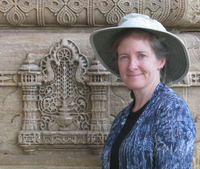
Hello readers! I'm an archaeologist based at UCLA where I use my background of global field research to identify the things that make human societies and settlements distinct.
How did I start studying cities? Many years ago I moved to Manhattan after living in a small town while I was a graduate student. That move was electrifying and made me think about what it meant to be an urban person. The move dovetailed with new research that I was undertaking in India, so that I became lucky enough to study something that I loved and wanted to find out more about. There are two books that came out of that process. One book is A Prehistory of Ordinary People, which looks at how and why humans are so good at multitasking. The other is Cities: The FirsHello readers! I'm an archaeologist based at UCLA where I use my background of global field research to identify the things that make human societies and settlements distinct.
How did I start studying cities? Many years ago I moved to Manhattan after living in a small town while I was a graduate student. That move was electrifying and made me think about what it meant to be an urban person. The move dovetailed with new research that I was undertaking in India, so that I became lucky enough to study something that I loved and wanted to find out more about. There are two books that came out of that process. One book is A Prehistory of Ordinary People, which looks at how and why humans are so good at multitasking. The other is Cities: The First 6,000 Years, which looks at the way that cities both past and present are places where people connect with each other in a dynamic and energizing way. Even though we all recognize that cities have some disadvantages, they've become the dominant form of population center because of the great nexus of economic, educational, and entertainment options that they offer.
In the Cities book, I wanted to have a conversation with readers and let them see how they can decode their own cities just as archaeologists decode the material traces of the past. I’d love to hear from you about your journey!...more
Monica L. SmithWords are the most powerful human invention. While objects can be in limited supply, ideas carried by words can spread far and wide. We all have at le…moreWords are the most powerful human invention. While objects can be in limited supply, ideas carried by words can spread far and wide. We all have at least one language that we were born into and that we can speak and write clearly and that can channel our thoughts. Sometimes that is channeled just to ourselves in a journal or as a series of notes, and sometimes they are broadcast to the world. With the internet, any of us can reach a global audience to observe, celebrate, and persuade others. (less)
Monica L. SmithSometimes a big blank page is a bit much. Try writing on little scraps of paper, or on the notepad on your phone, or scribble a thought on the back of…moreSometimes a big blank page is a bit much. Try writing on little scraps of paper, or on the notepad on your phone, or scribble a thought on the back of an envelope. (less)
Reader Q: What's the first thing that you do when you're in a new city?
Let’s get something to eat! There’s nothing like the prospect of setting down your bags and anchoring your new sense of place with some local cuisine. There’s a little hotel that I stay at in Bangkok that has an amazing pad thai, and they’re kind enough to make it available at all hours. After a long flight and an intense taxi
Read more of this blog post »