Brian Larson's Blog
October 5, 2026
Five Free Ways to Support a Friend (Me!) and “The Afterparty”
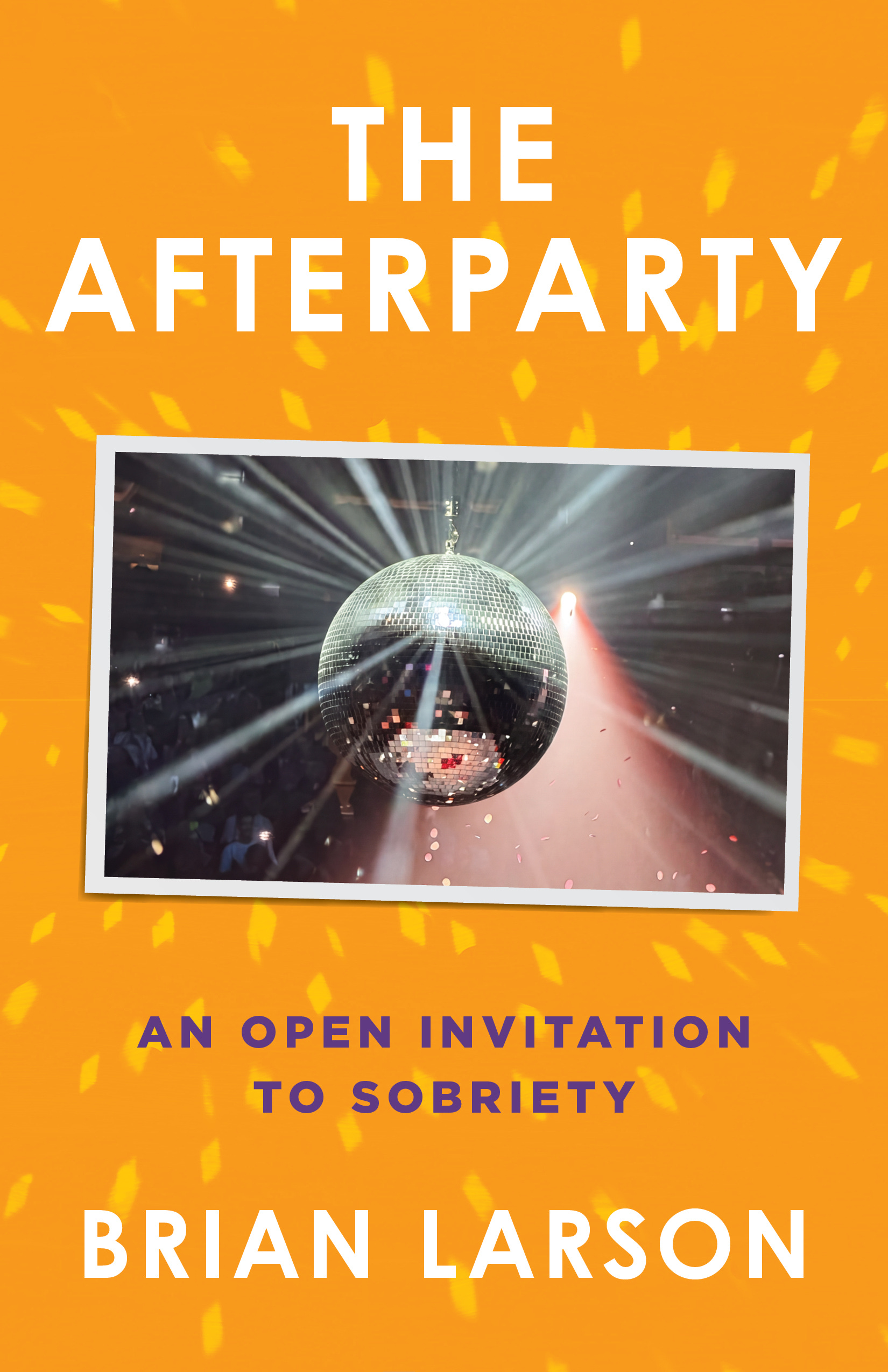
Over the past couple of weeks, especially since PEOPLE revealed the cover of my memoir, “The Afterparty: An Open Invitation to Sobriety,” I’ve gotten a lot of very kind messages.
“What can I do to support?”
“How can I help?”
“Happy to connect some dots.”
First: thank you. Seriously.
Second: I have an answer.
I was at a book launch recently where the moderator did something incredibly simple. At one point during the event, they flashed a few QR codes onto the projector and asked the nearly 50 people in the room to take out their phones and do a handful of small things to support the author.
No purchase required. No elaborate street team or traveling galley. No asking everyone to buy twelve copies and build a small fort out of them.
Just a few clicks.
And I thought: oh. This is actually very smart.
So, for everyone who has asked how you can help “The Afterparty” find its readers before it comes out on May 4, 2027, here are five completely free things you can do.
 1. Add “The Afterparty” to your Goodreads “Want to Read” shelf
This one takes approximately ten seconds.
Open “The Afterparty” on Goodreads
How to do it:
Log into Goodreads.
Open the page for “The Afterparty: An Open Invitation to Sobriety.”
Click Want to Read.
That’s it.
It creates a visible signal that readers are interested in the book before publication, and it also means “The Afterparty” is sitting there on your virtual bookshelf waiting for May.
2. Follow me on Amazon and save “The Afterparty”Find “The Afterparty” on Amazon
On the book page, you can tap the heart/save icon if it appears in your version of Amazon.
Then click my name, Brian Larson, beneath the book title to visit my Amazon author page and hit Follow.
Both are free.
Following an author also means Amazon can let you know when that author has something new coming out, which, in this particular case, I am very much hoping will be a book involving a disco ball.
3. Follow along on InstagramIf you somehow found this Substack without encountering my Instagram first, hello! Hey! Welcome!
Follow @brian.reads on Instagram
That is where I share a lot of the day-to-day journey toward publication, along with books I’m reading, podcast conversations, author interviews, event news, and whatever else is happening in my corner of the book world.
And when you see an important “Afterparty” milestone, a new endorsement, an event announcement, an interview, publication news, sharing it to your Story, reposting it, or sending it to a friend is an enormous help—and trains the algorithm gods to hopefully smile upon me.
4. Subscribe to “The Sober Millennial”Subscribe to “The Sober Millennial”
If you are currently reading this in your inbox, congratulations: you have already completed one of the five.
No further action required.
For everyone else, there is a free subscription option, and this is where I write more personally about sobriety, books, belonging, publishing, queer life, and the increasingly surreal experience of watching “The Afterparty” go from years of notebooks to a document on my laptop to an actual book that other human beings will soon be able to hold.
5. Tell one person about the bookThis might actually be the most meaningful one.
You do not need to make an Instagram Reel.
You do not need to become an unpaid member of my publicity department.
You certainly do not need to accost strangers in bookstores.
But if, while reading something I share about “The Afterparty,” you think:
I know someone who might need this.
Tell them.
Maybe it is a friend who is sober.
Maybe it is someone who is sober-curious.
Maybe it is someone beginning to question their relationship with alcohol.
Maybe it is a queer person who has never quite seen themselves reflected in traditional recovery stories.
Maybe it is simply someone trying to figure out how to build a life they do not need to escape from.
Send them the title. Forward them this newsletter. Share the PEOPLE cover reveal. Send them one of my posts.
Books have always traveled person to person. I do not think there is any marketing campaign more powerful than someone saying to a friend, “I saw this and thought of you.”
Want to go one step further?There are a few other ways to help, too.
You can request “The Afterparty” at your local library. Library requests are free, and many library systems let you suggest upcoming titles online.
You can preorder a copy through your favorite independent bookstore, or preorder one for someone you think might connect with the book.
And whenever there is a major milestone between now and May 4, a new interview, a tour date, an endorsement, a big piece of coverage, you can repost it or send it along.
None of those things are expected. They are simply ways to help a book travel a little farther.
EXTRA CREDIT: Help “Shelf Care Society,” tooThere is one more completely free thing you can do.
If you listen to my podcast, “Shelf Care Society,” a rating or review helps other potential listeners understand what the show is and whether it might be for them.
On SpotifyOpen “Shelf Care Society” on Spotify
Spotify currently allows ratings, but not written reviews.
On the Spotify mobile app:
Open the “Shelf Care Society” show page.
Tap the three dots (•••).
Select Rate show.
Choose your star rating.
If you do not see the rating option, you may need to listen to an episode first.
And while you are there, hit Follow if you haven’t already.
On Apple PodcastsOpen “Shelf Care Society” on Apple Podcasts
Apple makes this one a little less obvious.
Open the show in the Apple Podcasts app.
Scroll down until you reach Ratings & Reviews.
Tap the stars to leave a rating.
Tap Write a Review if you would like to leave a few words, then submit it.
If you are not sure what to write, tell people what you like about the show, mention a favorite guest, or name the episode that made you a regular listener.
And, really, thank you.There is something very strange about spending years writing a book and then reaching the stage where your job becomes repeatedly reminding people that the book exists.
I am incredibly grateful that so many of you have instead come to me and asked, “What can I do?”
You absolutely do not need to do all of these things.
Do one. Do three. Do none and just keep reading.
But if you have a spare minute and want to help “The Afterparty” make its way toward the people who might need it, now you know exactly how.
The disco ball is up.
Thank you for helping me fill the room. 🪩


September 22, 2026
I Accidentally Photographed the Cover of My Own Memoir
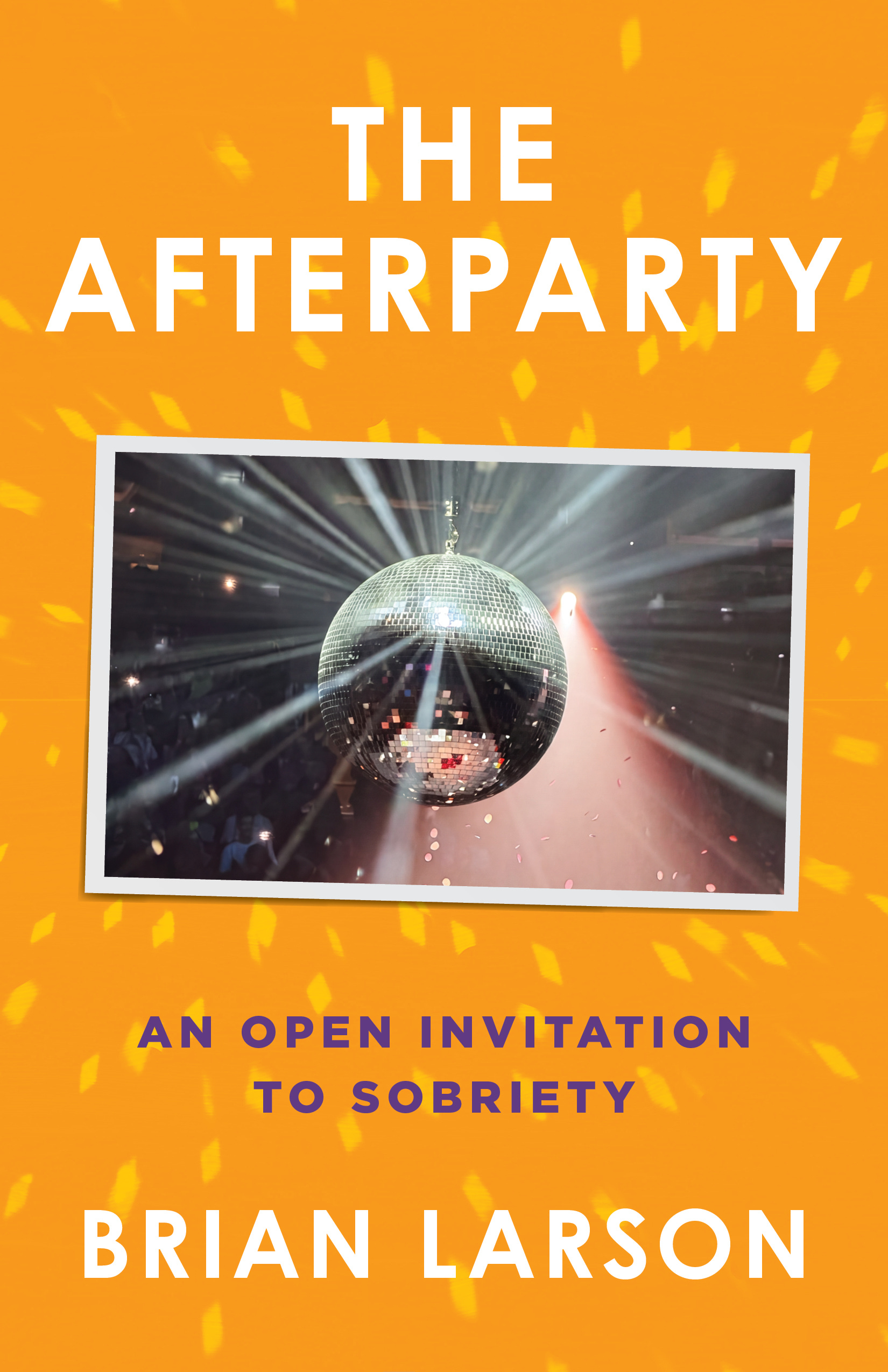 Cover Design: Carlos Esparza
Last time, I told you how The Afterparty went from a completely different title to thirteen prospective covers and, eventually, the one that finally felt like my book. But I left out the strangest—or what I prefer to think of as kismet—part: the photograph on the cover was already sitting in my phone. I just didn’t know it was book cover material yet.
Pre Order "The Afterparty" Now
Apparently, I’ve spent years photographing disco ballsDisco balls had already become a kind of accidental motif while I was writing and editing The Afterparty. I saw them everywhere: at Broadway shows, at concerts, at clubs, in people’s parlors, on television, hanging above restaurants, suspended over dance floors. Whenever I saw one, my phone came out.
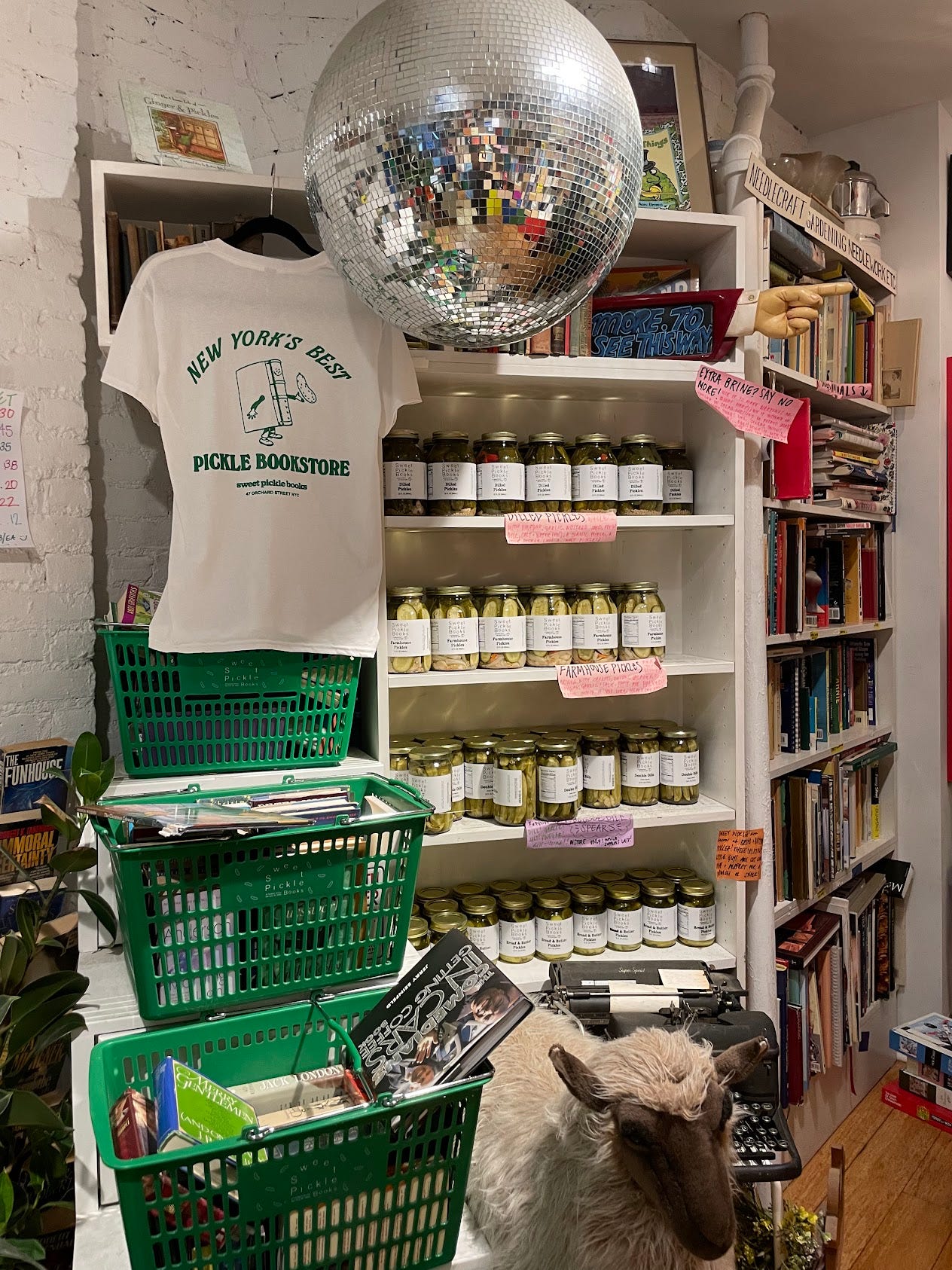 Sweet Pickle Books in Manhattan
I wasn’t consciously gathering material for a future book cover. I just liked them. They felt joyful and a little ridiculous and completely irresistible. A disco ball is made from broken fragments of glass, reassembled into a new art form that catches the light and casts spells of its own. I’ve always thought of it as a kind of kintsugi for the soul: proof that shattered pieces can become something dazzling without pretending they were never broken.
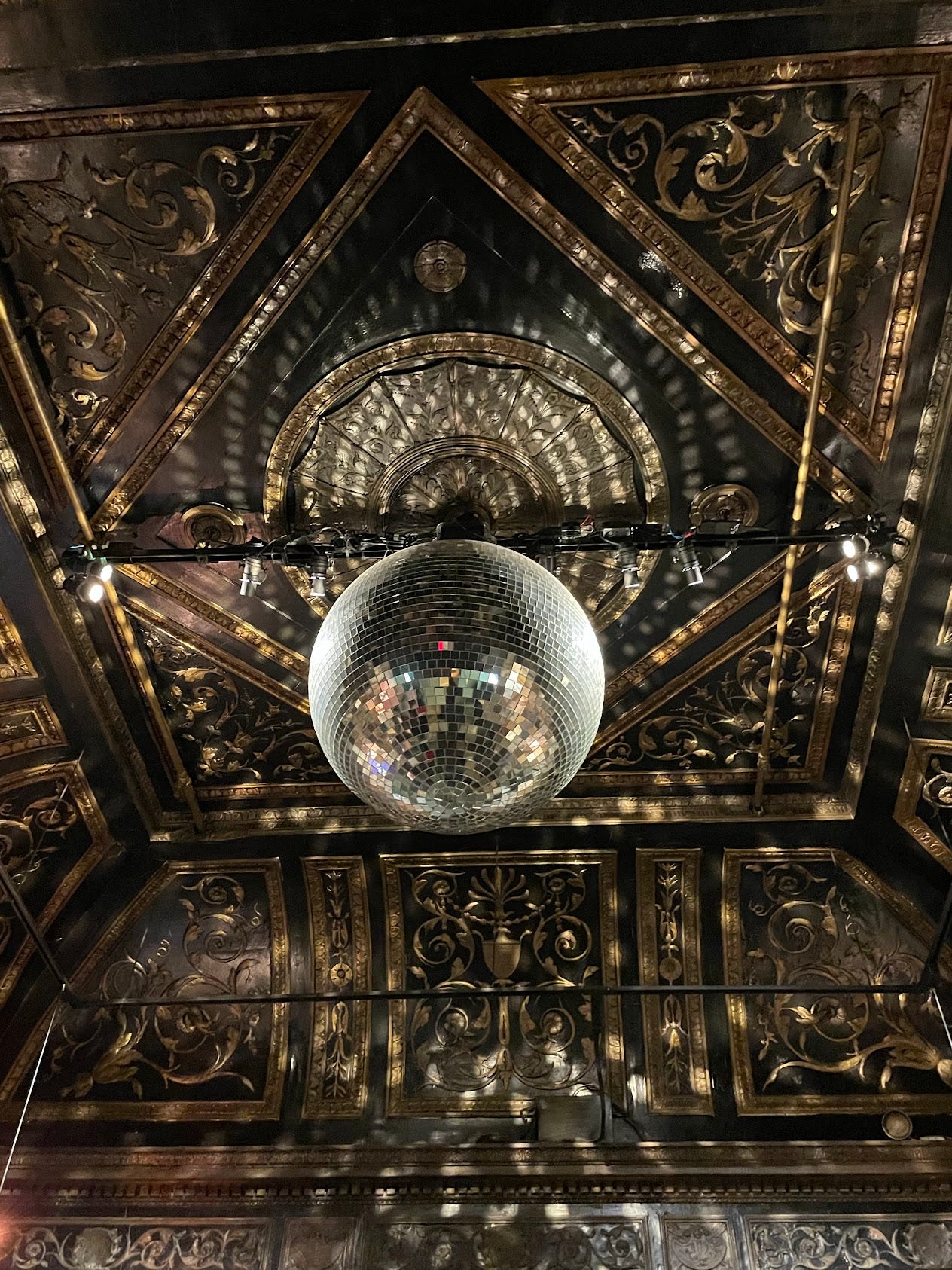 Studio 54 Disco Ball
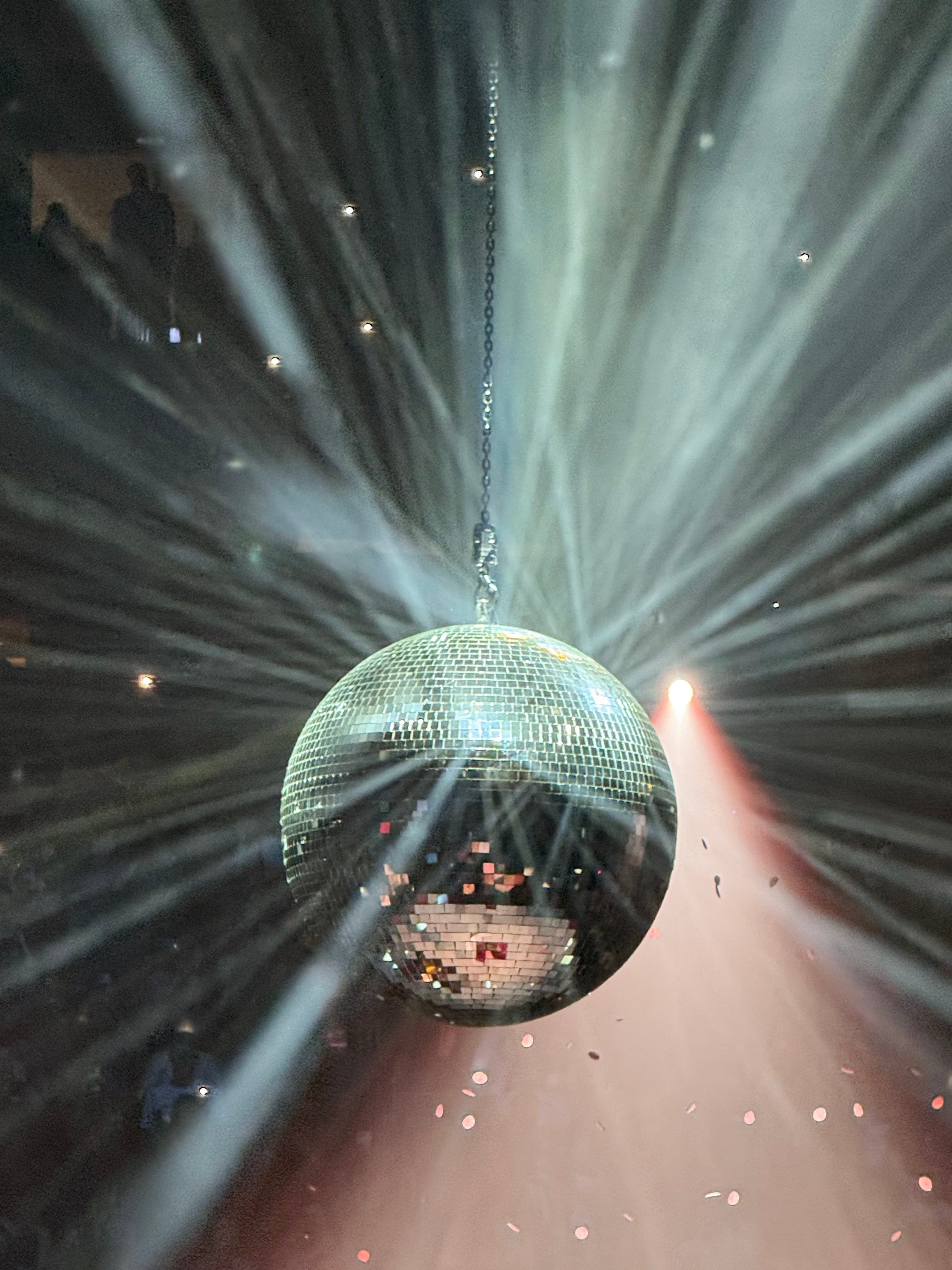
Then, as my publishing team got deeper into the cover process, we needed an image that could actually be cleared for use and hold up at print quality. Rather than immediately licensing a stock photograph, I wondered whether I might have taken one myself. So I opened Google Photos and typed “disco ball.”
Nearly 2,000 results populated.
It was like accidentally opening a portal into my own life. I started scrolling, and each disco ball took me somewhere.
There I was dancing at the Pink Flamingo in Rio de Janeiro. There I was at a Broadway show at Studio 54. There were concerts and clubs and vacations and parties. There were disco balls I barely remembered photographing until the image appeared and suddenly I could remember exactly who I was with, what the room looked like, and what was happening in my life at the time.
Because so much of that archive overlapped with the years I spent writing this book, the images became little timestamps: Here is where I was when I was figuring out that chapter. Here is who I was becoming when I rewrote that section. Here is a night when I was sober and dancing to Robyn and not thinking about the fact that I was sober and dancing to Robyn.
Enter Kylie MinogueOf those nearly 2,000 photographs, one kept pulling me back. I had taken it at Kylie Minogue’s Tension World Tour at Madison Square Garden in April 2025.
I should probably disclose here that I am a very big Kylie fan, and this is not a recent development. Years ago, when I was a student at Boston University, my best friend Sophie and I somehow managed to sneak backstage during Kylie’s Aphrodite Tour at Agganis Arena. I will leave the exact mechanics of this adventure out of the permanent record, but somehow we found ourselves backstage, playing with a few of the props before eventually being serenaded by the princess of pop herself.
To a younger Brian, this felt approximately as plausible as being invited onto a spaceship.
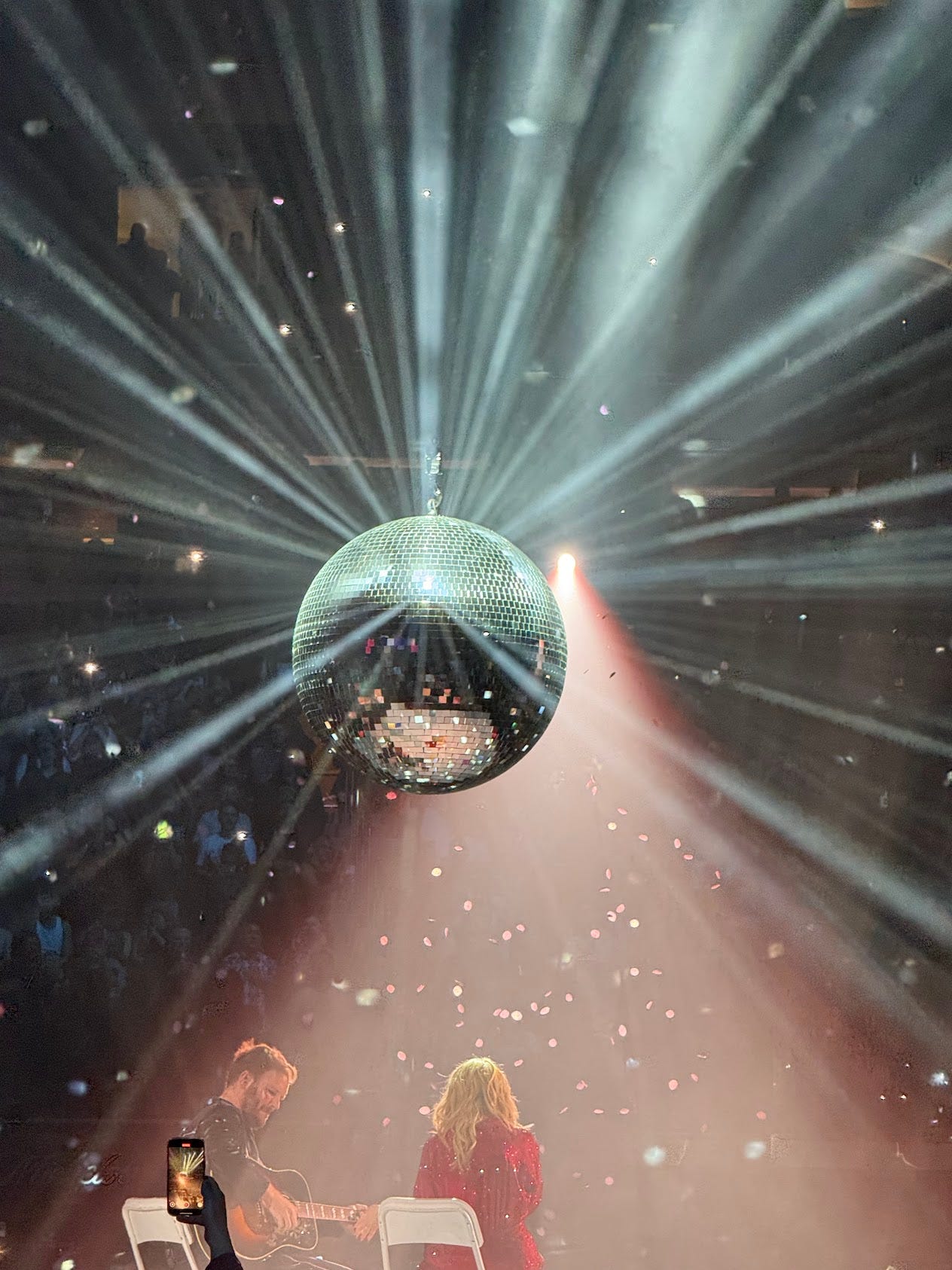 The Disco Ball That Made It To The Cover
Over a decade later, there I was at Madison Square Garden, sober, watching Kylie again. Above the crowd was this disco ball, and I snapped a picture. I had no idea when I captured this moment I was photographing the cover of my first memoir. Yet, that is the image you see now.
The beams emanating from the disco ball capture something I remember viscerally about being on a dance floor: that slight disorientation when the light is moving across hundreds or thousands of bodies at once. For a second, everyone is illuminated. Then everyone disappears again. Then the light finds you.
When I look at the image now, though, I see something else, too: liberation.
Sobriety doesn’t have to look sterileFor a very long time, the visual language around sobriety seemed to communicate deprivation. Everything felt muted, serious, clinical. The message, even when it wasn’t intentional, often seemed to be: the fun part is over now.
That wasn’t the book I wanted to write because that hasn’t been my experience of getting sober. Sobriety has given me more access to my life, not less.
I still go dancing. I still go to concerts. I still stay out too late sometimes. I still love ridiculous pop music and Broadway theaters and rooms where the lighting is questionable and someone has decided that what this space really needs is a giant mirrored ball hanging from the ceiling.
The difference is that I remember it. I am there for it.
That is what I wanted the cover to communicate: not sobriety as loss, but sobriety as liberation. Not the end of the party, but an invitation to a different one.
That is The Afterparty.
My mother, creative directorI am enormously grateful to Carlos Esparza and the entire Broadleaf team for sticking with the process until we found it—the book’s cover. And I am grateful to the frankly absurd number of people I consulted along the way: close friends, family, writers, readers, publishing people, the sales team at Barnes & Noble, indie booksellers, people who understood design, and people who knew absolutely nothing about design but knew when something made them want to pick up a book.
And, of course, my ultimate truth-teller: my mother.
There is no focus group quite like showing your mother thirteen prospective covers. One illustration earned, “What is this? A warehouse? In Brooklyn? But, Brian, you don’t even like traveling to Brooklyn!”
Another: “You can do better. Tell them your mom said so if they ask.”
And my personal favorite: “Hmm. It’s giving sad girl at the disco when you want Spice Girls on rollerskates under a disco ball.”
Reader, she was right.
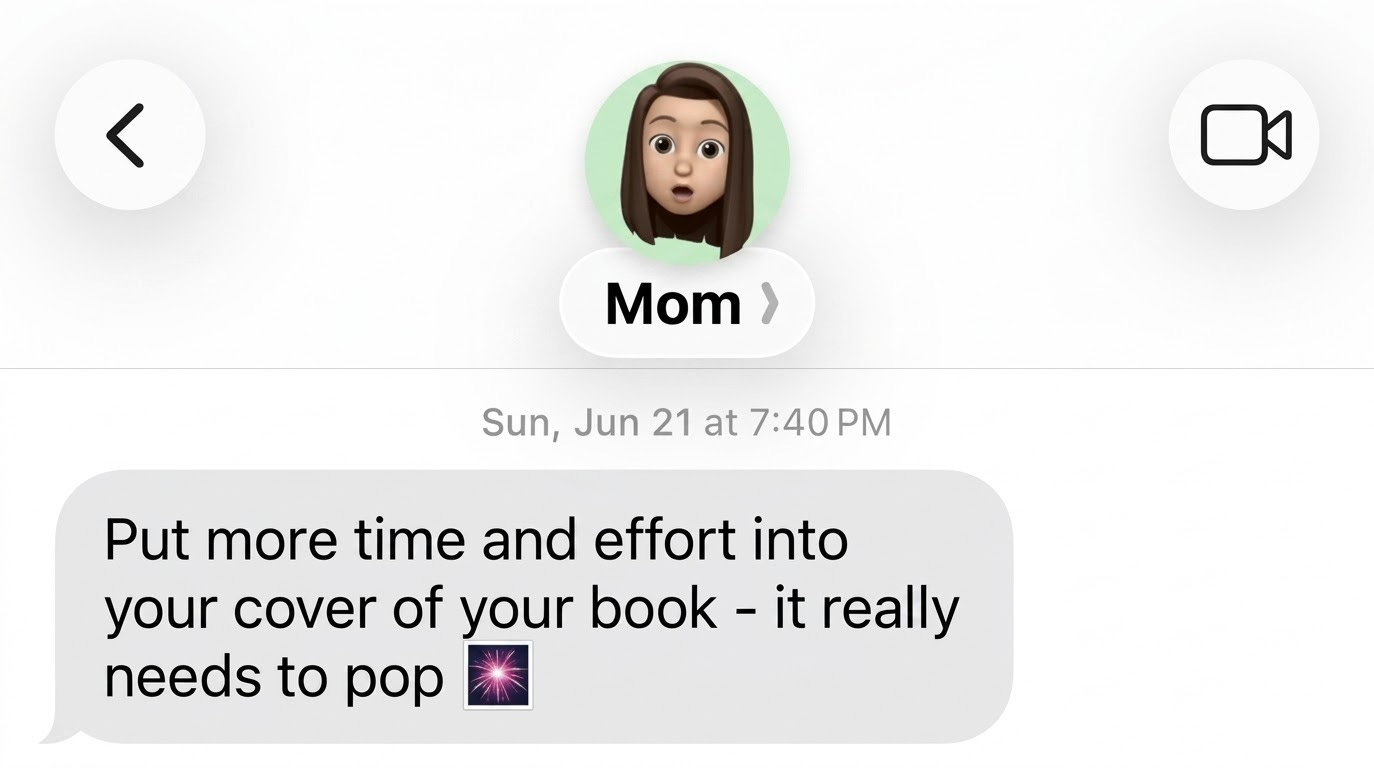 Mama Larson Knows Best
That became the strange little challenge of the entire process. I didn’t want a cover that merely looked beautiful. I didn’t want something cool but mournful, stylish but distant, tasteful to the point of disappearing. I wanted energy and movement. I wanted the visual equivalent of someone opening the doors and saying: Come in. There is still music playing.
And then People said yesThere is one more layer to this that makes the whole thing feel particularly surreal: People magazine revealed the cover.
I grew up reading People. More accurately, twelve-year-old Brian used to abscond with my mother’s copies of People, disappear into the bathroom, lock the door, and read them for an amount of time that almost certainly concerned my family. This was usually done somewhere between episodes of The Simple Life.
It was 2003 and 2004. Jennifer Aniston was on the cover. Britney was everywhere. Celebrity relationships unfolded week by week. Red carpets were treated like matters of international importance. I consumed all of it.
But underneath the celebrity obsession, I think there was something else happening, too. I loved stories about other people’s lives. I loved being let into worlds beyond my own.
At twelve, I couldn’t have understood the circuitous route my own life would take. I certainly couldn’t have imagined that one day I would write a book about being gay and getting sober, or that the book’s cover would appear in the same publication I was stealing from my mother’s grocery bags from Market Basket. I definitely couldn’t have imagined that I would be the one emailing People to ask if they wanted to reveal it.
But I did.
I emailed People’s Books Editor with my pitch, and she and the People team said yes. I am so grateful for the generosity of that yes.
There is something about it that makes me think about that kid in the bathroom with the magazine. He was trying to figure out a lot of things he didn’t have language for yet. He was beginning to understand that there were ways to live in the world he hadn’t been shown. He was looking for people he recognized, even if he didn’t know yet what recognition felt like.
And now, somewhere, I hope there is another version of that twelve-year-old Brian reading this cover reveal on their phone. Maybe they’re gay. Maybe they’re questioning their relationship with alcohol. Maybe they aren’t either of those things and simply feel a little strange or lonely or unsure of where they’re supposed to fit.
The world can feel disconnected and impossibly loud. Books made it less so for me, and they still do.
If seeing this cover, reading this story, or eventually picking up The Afterparty makes someone feel a little less alone inside all that noise, then every draft, every edit, every cover iteration, every email, and every photograph of a disco ball will have been worth it.
You’re invited to The AfterpartyThe Afterparty: An Open Invitation to Sobriety will be published on May 4, 2027, and it is available for preorder now.
You can preorder wherever you normally buy books: Barnes & Noble, Bookshop.org, Amazon, your favorite indie, or directly through your local bookstore. In fact, walking into your neighborhood bookstore and asking them to preorder a copy is a wonderful way to support both this book and the booksellers who make literary communities possible.
And if you do preorder it locally, send me a note. I would genuinely love to keep track of where The Afterparty is headed.
Maybe, together, we can turn bookshelves around the country into one very large, slightly nerdy discotheque.
The disco ball is already up. Consider this your invitation.
I’ll meet you on the dance floor very soon. 🪩
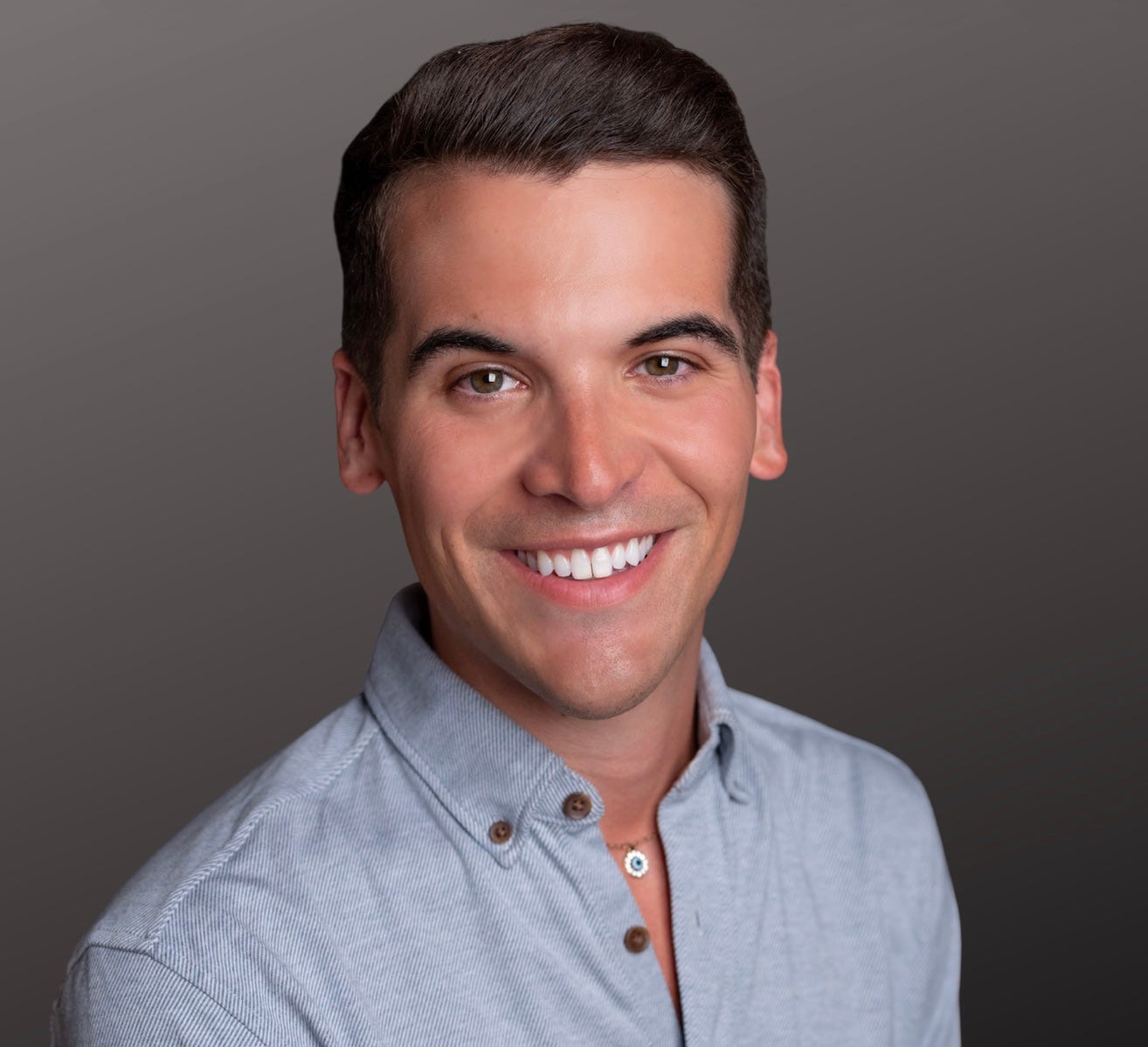 Photo Credit: Michael Dekker
September 17, 2026
My DEBUT Book Has a Cover. It Took Thirteen Tries to Get Here. [COVER REVEAL]
My memoir, The Afterparty: An Open Invitation to Sobriety, has a cover.
More importantly, after 13 iterations, my memoir has a cover that feels like my book.
And, in a sentence that still feels completely surreal to type, The Afterparty: An Open Invitation to Sobriety is officially available for preorder, and its cover was revealed earlier this week by People magazine.
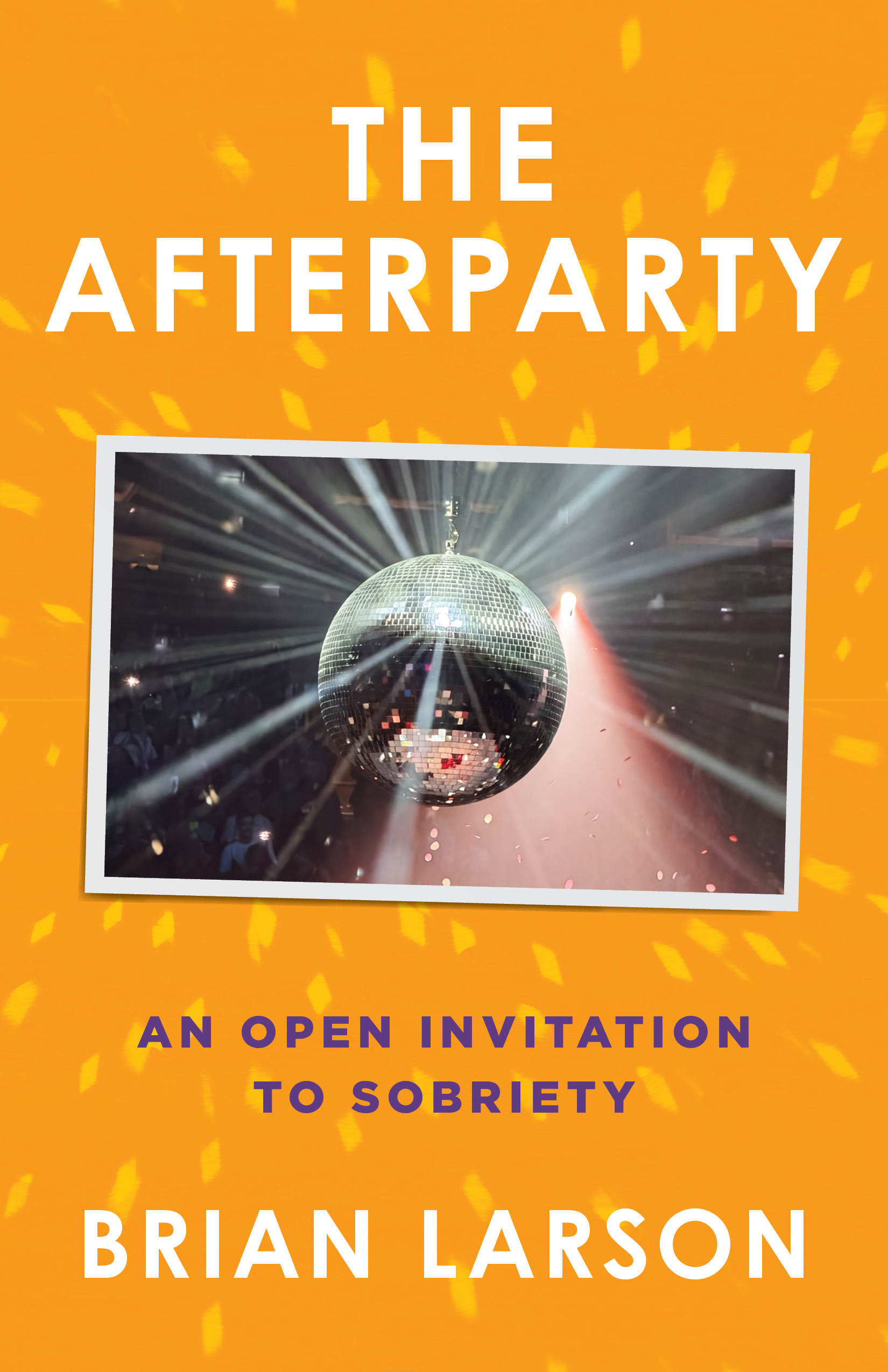 Cover Design by Carlos Esparza
I promised I would bring you, dear reader, along for the journey to publication, and a cover is a huge part of that journey.
We are often told not to judge a book by its cover, which is good advice for books and probably for people, too. But covers do matter. They are an invitation, a first impression, a piece of visual storytelling, and one of the many ways a publisher helps a book find its readers. And, if you go a layer deeper, they also offer a small, fascinating look inside the publishing process: the conversations, experiments, A/B testing, revisions, instincts, compromises, and occasional moments of certainty that happen long before a book reaches a shelf.
I should disclose that there isn’t some enormous PR machine operating behind the scenes, pulling levers from behind a curtain like the Wizard of Oz. This push has mostly been me: sending emails, following up, asking questions, occasionally being a polite nuisance, and relying on the relationships I’ve built over years of trying to become a better writer, a better reader, and someone who advocates ceaselessly for books and the people who make them. That makes this moment feel especially personal, because the road to this cover has been every bit as collaborative, scrappy, and meaningful as the path that brought the book here in the first place.
Before The Afterparty, there was A Second Coming OutTo really understand the cover, I have to take you back to discussions around the book’s title. Ok, get into the DeLorean, we’re going back a bit in time.
For a long time, this book had a completely different name: A Second Coming Out. I’m explaining how the title came to be because it helped me understand the book I was writing, even as I was writing it. The title became a kind of frame for the story, clarifying what belonged inside it and what I wanted readers to feel when they encountered it.
I loved that title. My former agent, Ashley Hong, first sold the proposal under that name, along with roughly two chapters of what would eventually form the backbone of the book. And before anyone worries about the phrase “former agent,” Ashley and I are still besties. She has since moved to the editorial side of publishing, in-house at Penguin Random House, and remains one of the people I trust most when it comes to books and navigating publishing-landia.
Nonfiction book proposals are strange little creatures. They’re part book, part business plan, part manifesto, part crystal ball. Mine contained an overview of the project, information about the audience I imagined reading it, comparable titles, an author bio and platform section, a word I still cringe at, a marketing plan, chapter summaries, sample chapters, and all the other material meant to convince a publisher not only that you can write the book, but that this particular book should exist in the first place.
Buried among all of that was a section called “Alternative Titles,” and I HATED writing it. The titles weren’t bad, necessarily, but I was already emotionally married to A Second Coming Out. I thought it was clever. I thought it created intrigue. And I was already imagining readers asking themselves: What does a second coming out mean? What happens when you’ve already come out once and then discover there is another truth about yourself that you have to name publicly?
For me, first it was coming out as gay. Years later, it was coming out as an alcoholic. The title made perfect sense inside my own head, but publishing has taught me something important: the reader should not have to live inside your head to understand why they might want your book.
The proposal had been on submission for all of two days when Broadleaf, my publisher, entered the picture. There was already an offer on the table, and Broadleaf’s would arrive later that night. Right before my editor, the lovely and talented, Shari MacDonald Strong, and I ended our call, she said there was one more thing she wanted me to think about: the title.
“What if the book were called The Afterparty?” she asked, politely.
She told me that, after meeting me, The Afterparty seemed to capture my enthusiasm for the book, the subjects it tackled, and, with a bit of a wink, all the fun and “voiciness” contained in those sample chapters. I remember getting off that call and turning the title over in my head.
The Afterparty. THE Afterparty. The AFTERparty. The AfterPARTY.
Suddenly, A Second Coming Out felt like a title you had to solve—or one that took a bit of time to percolate in the brain. It wasn’t bad, and I still think it’s clever, but it asked the reader to do a little too much work before they’d even opened the book.
The Afterparty didn’t need decoding. Everyone understands a party. Everyone understands what it means for the music to stop, and there is something inherently interesting or intriguing about what happens afterward.
More importantly, I realized that the book I wanted to write was ultimately a celebration. It is about addiction, yes. It is about grief and identity and shame and difficult things we sometimes have to excavate when we stop numbing ourselves. But I never wanted sobriety to feel like punishment on the page. Rather, I wanted to write about the life that becomes possible afterward.
The party after the party.
From there, it was kismet.
Thirteen covers later...If naming a book is strange, putting a face on it is even stranger.
The final cover of The Afterparty was designed by Carlos Esparza at Broadleaf. Getting to the final cover required real collaboration, a couple of Zoom calls, many emails, and, on my end, more than a few trips to bookstores where I wandered around staring at tables and shelves like a person conducting extremely niche market research.
I wanted to understand what made me reach for a book. What popped on a table? What disappeared? What still caught my eye when only the spine was visible? What looked beautiful at full size but became unintelligible as a thumbnail on a phone? What felt like a memoir without looking like every other memoir? I even asked some excellent booksellers at McNally Jackson in the Seaport for their advice!
By the time the design team landed on the final version, we had gone through thirteen cover iterations. We experimented with the title rendered in neon lights. We tried the disco ball sitting on the floor. We explored bodies awash in color, almost absorbing into one another like some kind of mind meld on a dance floor.
Some were beautiful. Some were interesting. Some were close. But none was a cover that was “covering.”
That became my slightly ridiculous measurement throughout the process. I kept telling everyone that I would know when the cover was “covering.”
And then it did.
You’re invited to The AfterpartyThe Afterparty: An Open Invitation to Sobriety will be published on May 4, 2027, and it is available for preorder now.
You can preorder wherever you normally buy books: Barnes & Noble, Bookshop.org, Amazon, your favorite indie, or directly through your local bookstore. In fact, walking into your neighborhood bookstore and asking them to preorder a copy is a wonderful way to support both this book and the booksellers who make literary communities possible.
And if you do preorder it locally, send me a note. I would genuinely love to keep track of where The Afterparty is headed.
Maybe, together, we can turn bookshelves around the country into one very large, slightly nerdy discotheque.
The disco ball is already up. Consider this your invitation. Meet you on the dance floor! 🪩
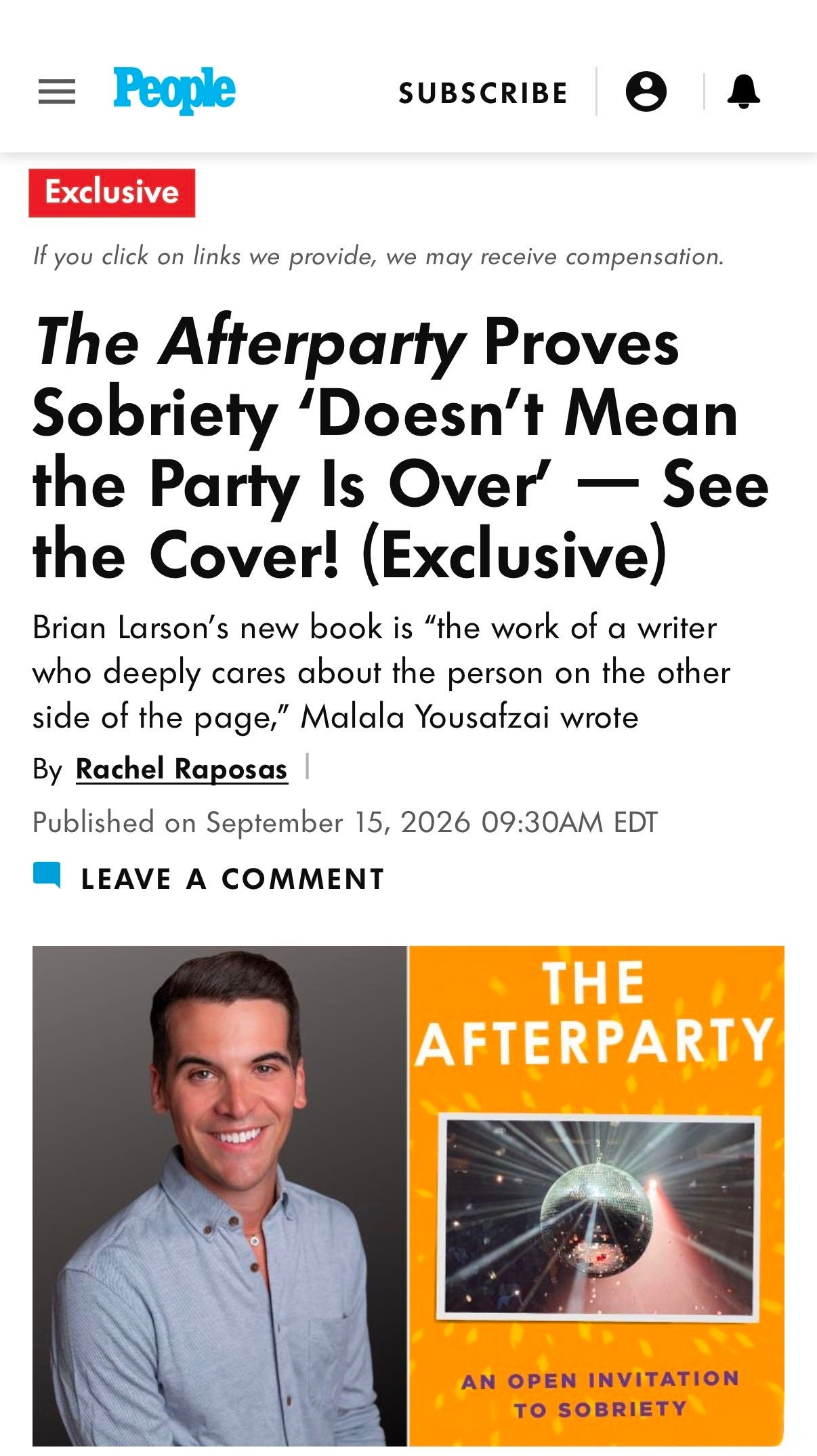 THE AFTERPARTY: AN OPEN INVITATION TO SOBRIETY
July 22, 2026
Why I Never Wanted to Become a Book Influencer
The first literary agent I ever signed with gave me a piece of advice that changed my career.
“You should start posting your book reviews publicly.”
She wasn’t telling me to become an influencer.
In fact, I don’t think either of us imagined that word would become attached to what I was doing.
I was already writing long reviews after finishing books, texting recommendations to friends, and talking about literature with anyone who would listen. She simply suggested I move those conversations into a public space. Maybe, she thought, other readers would connect with them, too.
So I created @Brian.Reads on Instagram.
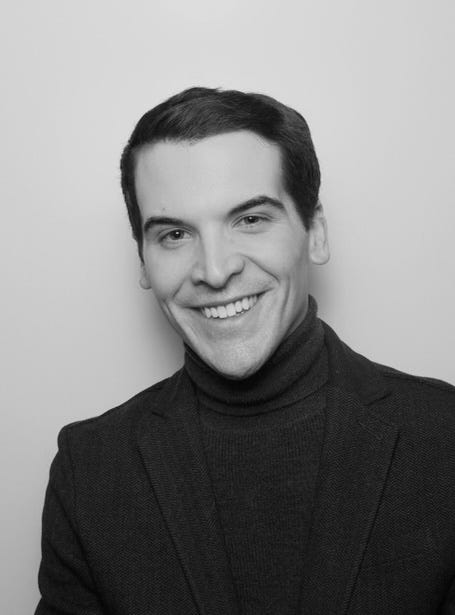 @Brian.Reads
The account wasn’t born with a business plan. It certainly wasn’t created because I thought I’d one day interview bestselling authors, host a podcast, or somehow end up running a book club with RuPaul. It existed for one reason: I wanted to share the books I genuinely loved.
That distinction has mattered every day since.
I wasn’t trying to tell people what not to read.
I was trying to help them discover what to read next.
Over time, the account evolved. I highlighted debut authors whose work deserved more attention. I celebrated upcoming releases that genuinely excited me. I revisited classics I’d somehow missed in my twenties, or books I never got around to reading in high school.
Reading In Cold Blood, Giovanni’s Room, and Midnight in the Garden of Good and Evil wasn’t about checking literary boxes. Those books helped me find people who were searching for the same thing I was—stories worth falling into.
And I learned something that has become the foundation of everything I’ve built since.
Readers aren’t just looking for books.
They’re looking for someone whose taste they trust.
That’s much harder to build than a large following.
I’ll never forget reading The Correspondent by Virginia Evans for the first time.
The advance reader copy featured a silhouette of the protagonist, Sybil, sitting at her desk writing letters. I started the novel around 8 p.m., expecting to read a chapter or two before bed. Instead, I found myself reluctantly turning off the light, still thinking about the story. So I set my alarm for 4 a.m., crept upstairs to the small communal library in my apartment building, and finished the book before getting ready for work.
By the final pages, I was a mess.
I messaged Virginia that same day. From that moment on, I couldn’t stop talking about the book.
I recommended it on Instagram. I talked about it on national television. I mentioned it in conversations with producers, publishers, and anyone who asked me what they should read next. I loved building a relationship with Virginia and her publisher, Crown, over the months that followed.
One of my favorite moments was watching each new printing arrive.
First, it read National Bestseller.
Then USA Today Bestseller.
Then, earlier this year, #1 New York Times Bestseller.
Every time Crown mailed me another edition with a new accolade printed across the cover, I felt this little burst of joy. Not because I had anything to do with writing such an extraordinary novel, but because I’d been lucky enough to witness what happens when a remarkable book finds its readers.
Virginia was also one of the very first guests to say yes to appearing on Shelf Care Society.
Watching that journey reinforced something I’ve come to believe about books.
Readers don’t just consume them.
The best readers become advocates.
I feel that same excitement beginning to bubble up again with Ben Reeves’s debut, Everything Was Beautiful and Nothing Hurt.
It’s my favorite book I’ve read this year, and I think about it almost every day.
The USPS employees at my local post office are probably tired of seeing me walk in with another stack of Media Mail packages, each containing a copy of the novel and a handwritten note explaining why I think the recipient needs to read it.
Maybe that’s what being a creator means to me.
Not convincing people to buy a book.
Being so moved by one that you can’t help but share it.
For a long time, I resisted the word influencer. Honestly, I still cringe a little when someone introduces me that way.
I prefer creator.
Maybe it’s semantics, but “influencer” suggests the goal is influence itself. “Creator” reminds me that my job is to make something useful, thoughtful, or entertaining. If influence follows, wonderful. It should be the byproduct, not the objective.
One decision I made early on shaped almost everything that followed.
I don’t post negative reviews on my social media.
People often assume that’s because I’m trying to stay diplomatic.
That’s part of it.
The publishing world is astonishingly small. Throughout the course of a year, I’ll almost certainly cross paths with that author, their editor, their publicist, or their publisher at a bookstore event, a conference, or over drinks after a panel.
But that’s not the primary reason.
Every book that makes it into the world is the result of years of work by an extraordinary number of people. Authors, of course. But also editors, designers, copyeditors, marketers, publicists, sales representatives, printers, warehouse staff, booksellers, librarians, and so many others whose names rarely appear anywhere near the cover.
A book isn’t just written, it’s constructed over time with input from many, many people.
Even if a book doesn’t work for me, I can’t ignore the amount of care, hope, and labor that made it possible.
I’d rather spend my energy talking about the books I love than convincing people to dislike the ones I don’t.
Would my platform have grown faster if I’d leaned into outrage?
Probably.
The Sober Millennial is a reader-supported publication. To receive new posts and support my work, consider becoming a free or paid subscriber.
I’ve watched friends build enormous audiences with videos like:
“Five books I loved and five books I hated.”
“Books you should avoid at all costs.”
“The most overrated novels ever written.”
It works.
Social media rewards disagreement. Rage fuels comments. Comments fuel engagement. Engagement tells the algorithm that people can’t stop interacting with the content, so it serves it to even more people.
That’s the flywheel.
The algorithm doesn’t necessarily reward the most thoughtful content.
It rewards the content people can’t stop reacting to.
And here’s the uncomfortable truth.
Sometimes the creator making those videos doesn’t even believe what they’re saying as strongly as the title suggests. They know certainty performs better than nuance. Outrage outperforms curiosity.
I chose a slower path.
Looking back, I’m grateful I did.
Because the platform eventually became something much bigger than Instagram.
It became the foundation for Shelf Care Society, where I’ve had the privilege of sitting down with authors, artists, and changemakers like Malala Yousafzai, Dr. Nicole LePera, Jodi Picoult, André Aciman, R.F. Kuang, Cole Brauer, Matthew Quick, and many others.
 Shelf Care Society by @Brian.Reads is available wherever you listen to podcasts
It led to speaking engagements, television appearances, relationships with publishers, friendships with authors I once admired from afar and, perhaps most surreal of all, a book deal of my own.
Ironically, none of those opportunities came because I tried to become an influencer.
They came because I kept showing up as a reader.
That’s the distinction I wish more aspiring authors understood.
Building a platform is valuable.
Building a personal brand can become a trap.
One asks:
How can I connect with readers?
The other asks:
How can I get people to pay attention to me?
Those questions sound similar.
They’re not.
The first builds trust.
The second builds dependency on attention.
Writing requires long stretches of invisibility. It asks you to disappear for months, sometimes years, while you wrestle with ideas no one else can see yet.
Algorithms hate that.
Communities understand it.
If you’re an author wondering whether you should become an influencer, my answer is no.
Become someone readers trust.
Share what genuinely excites you. Celebrate other writers. Champion great books. Recommend the overlooked debut. Reread the classics. Participate in the conversations you want to exist.
Build a community.
The readers will find you there.
Looking back, my agent was right.
She never told me to become an influencer.
She told me to become more visible.
There’s a difference.
One is about attracting attention.
The other is about finding your people.
I found mine through books.
July 19, 2026
What Really Sells Books?
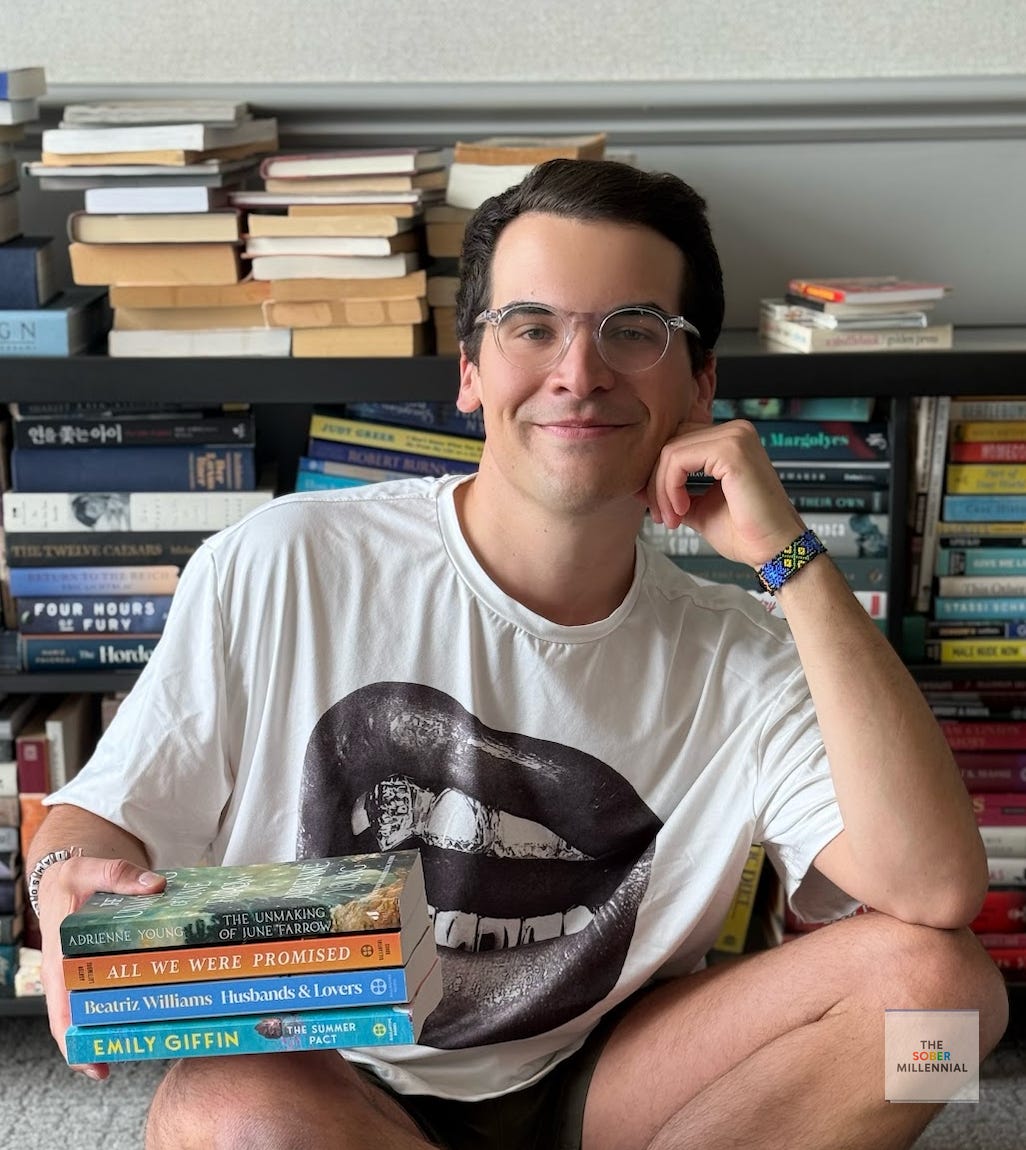 @Brian.Reads on Instagram and TikTokWhat Really Sells Books?
The straight answer is: I do not know.
I am not sure anyone does. If publishing had developed a reliable formula for turning a book into a bestseller, every lead title would earn out, every celebrity book club pick would dominate the charts, and no beautifully written novel would disappear three weeks after publication.
Still, after three years of straddling the influencer and author worlds, I have learned a thing or two about what puts wind in the sales of a book.
Before we go any further, I think it is important to distinguish between fiction and nonfiction, as well as between debut authors and established ones. Selling the sixth novel from an author with a loyal readership is a different exercise from introducing an unknown novelist. Selling a celebrity memoir is different from selling a practical guide written by someone with a modest but highly invested audience.
What I have learned the most about over the past year is the particular challenge in front of me: selling a debut nonfiction book.
My memoir, The Afterparty: An Open Invitation to Sobriety, comes out next year. That means I have entered the strange runway during which a book is finished, but the work of finding its readers has only begun. I am watching everything differently now. Every platform, podcast invitation, bookseller conversation and email signup has become part of a larger question:
Welcome to Influencer-landiaHow does a person move from knowing that a book exists to spending roughly $30 to own it?
I spend a good amount of time in what I call Influencer-landia, a panopticon where every post can be measured and none of the social media channels carry quite the same weight.
My main channels these days are Instagram, my podcast, Shelf Care Society, Substack, LinkedIn and, more recently, Facebook.
Facebook has surprised me. Over the past year, the platform has increasingly rewarded creators for publishing content there, while Instagram’s financial incentives have been less consistent. More importantly for my book, Facebook has introduced me to a substantially different audience.
About 70 percent of my Facebook followers are between 45 and 60, and the audience skews heavily female. My Instagram audience is much younger, with about 80 percent below the age of 40, and is divided more evenly across genders.
Over the coming months, I am curious to see whether Facebook becomes a primary engine for preorders and sales of The Afterparty. My hypothesis: It will become a primary engine.
Although the book is written through a queer lens, because, hello, it is me, I suspect much of its commercial audience will resemble the traditional book-buying public: largely female and somewhat older. That audience tends to read more frequently and has the disposable income to purchase a hardcover book.
I also want The Afterparty to find a meaningful place in the sobriety sphere. Addiction does not discriminate. Reading habits and book-buying behavior, however, are not evenly distributed.
I am grateful that I wrote the book without trying to reverse-engineer an imaginary consumer. I did not sit down and ask what a 52-year-old suburban reader might tolerate from a gay man writing about sex, addiction, shame and reinvention. I wrote the book I needed to write.
Now I have to help the people who may need it find it.
Those are different jobs.
Who Is “Women’s Fiction” For?I recently had a lively conversation online with my nearly 60,000 followers about the category of “women’s fiction.”
What is it, exactly?
The Women’s Fiction Writers Association defines it as a layered story driven by the protagonist’s emotional journey. It may include elements of mystery, speculative fiction, romance, historical fiction or almost any other genre.
That definition makes sense on the level of craft. On the level of marketing, however, the category often appears to mean something looser: books that publishers believe women are especially likely to purchase.
The conversation with my followers quickly revealed the problem. Readers mentioned books about family, identity, marriage, friendship, motherhood, ambition, grief and reinvention. In other words, books about human existence.
Why are those subjects categorized as women’s fiction when a man’s emotional journey is more likely to be called literary fiction?
There is no broadly used corresponding category called “men’s fiction.” A sprawling novel about male friendship, disappointment, marriage or middle age is allowed to be literature without announcing the presumed gender of its customer.
I understand why the category exists. Publishing is a business, and categories help sales teams pitch books, bookstores shelve them, media outlets assign coverage and readers find stories they are likely to enjoy. Women have also long been among the most active readers, book buyers and book club members. It would be disingenuous to pretend the industry does not organize itself around that reality.
But I suspect the label is moving toward expiration.
Readers are becoming increasingly comfortable moving between prescribed genres. A person may read romantasy on Monday, a presidential biography on Wednesday and an experimental novel on Saturday. The most interesting reading communities online are often built by people whose taste cannot be reduced to their age, sexuality or gender.
As readers, we should be suspicious of any category that tells us who a book is for before we have even opened it.
A Following Helps, but Trust SellsSo, what actually sells books, Brian?
A following on Instagram certainly helps, particularly when that audience is already interested in the subject of your book.
But follower count alone is an almost meaningless number.
A following matters when people have come to trust your opinions. It matters when they know more about you than the smile in your profile picture. They have watched you struggle, change your mind, celebrate, fail, and try again. They believe that when you recommend something, there is a person behind the recommendation.
For a nonfiction author, this relationship can be especially important. Readers are not simply evaluating the book’s premise. They are evaluating whether they want to spend several hours in the author’s company.
Facebook can extend that relationship to a different demographic. Substack can deepen it.
Substack is particularly valuable because it allows an author to collect email addresses and speak directly to the people most invested in the work. Algorithms change. Platforms disappear. Reach rises and falls for reasons that have nothing to do with the quality of what you made.
An email list is a group of people who have deliberately opened the door.
Those subscribers are often your ride-or-die supporters. They preorder. They attend events. They recommend the book to their friends. They are the people who notice that publication day has arrived without being reminded by an Instagram Story that disappears after 24 hours.
 @Brian.Reads on Instagram and TikTokEvery Book Needs Its Devotees
I will also say the quiet part aloud: a book needs its five or ten devotees.
These are the people who understand you, understand the book and are willing to evangelize on its behalf.
Not in a preachy or transactional way. They are simply so excited by the book that talking about it becomes natural. Ideally, they also have channels through which that enthusiasm can travel.
I would not evaluate these people strictly by follower count. Once someone has more than roughly 5,000 engaged followers on a platform (usually called a “micro-influencer”), a passionate recommendation can travel well beyond the audience already following them. Algorithms reward posts that inspire comments, saves and shares. Genuine excitement is legible, both to people and to platforms.
The key word is genuine.
You cannot manufacture a devotee by adding someone to a publicity spreadsheet six weeks before publication.
You cultivate these relationships over time. Join their podcasts. Read and support their work. Send a handwritten note with the advance copy. Give them attractive and useful social assets, rather than expecting them to photograph a brown padded envelope in terrible lighting. Offer a few books for a giveaway, when your budget permits it. Make it easy for them to share their enthusiasm without dictating what that enthusiasm must sound like.
Over the past few years, I have been able to throw my weight behind perhaps three or four books each year.
These are the books that make me say: Oh my God, everyone I know needs to read this.
Sometimes the book comes from a famous author. More often, it is a debut novel or a nonfiction book that lights up my mind so completely that I want to do what all great booksellers do. I want to hand-sell it.
In my case, that may mean literally giving copies to friends, inviting the author onto my podcast, posting about it repeatedly or placing it directly in the hands of someone I know will love it.
That type of advocacy is difficult to price because it is not a single post. It is sustained belief.
There is a popular marketing idea that a consumer must encounter a product seven or more times before purchasing it. I initially thought Book Riot had offered a similar formula for books, with fewer encounters required when the recommendation came from a highly trusted source.
But the Book Riot survey I found reached a more interesting conclusion: for most respondents, it was not really about the number of times they encountered a book. Context, timing, trust and the quality of the recommendation mattered more.
That feels true to me.
A single recommendation from your best friend may sell you a book. Eleven generic digital ads may not.
Thanks for reading The Sober Millennial ! Subscribe for free to receive new posts and support my work.
Publicity Creates RecognitionPublic relations is another tool that can shift substantial quantities of a book when wielded correctly.
The right podcast appearance can introduce an author to thousands of listeners who already care about the subject. A collaborative social post or well-edited video clip can extend that appearance far beyond the original episode.
We live in a clip economy. A 45-minute interview may be the source material, but a 45-second moment is often what travels.
Traditional media can still matter enormously. NPR coverage can reach an older, highly engaged audience that already turns to NPR for cultural recommendations. Its Books We Love project alone includes thousands of titles selected by staff members and trusted critics.
Major book club selections can transform a book’s trajectory because they combine three things every author needs: attention, trust and a reason to participate now.
Newspaper and magazine coverage can provide credibility. Regional television can build local recognition. Morning shows, late-night appearances, radio interviews, newsletters, literary festivals and live events all create additional points of contact.
These appearances may not each generate an obvious spike in sales. Think of them as the whipped cream on the sundae. They make the book more visible, more familiar and more likely to receive a second look when someone sees it at a bookstore.
The difficulty is attribution.
A person may hear an author on a podcast, see the jacket on Instagram two days later, read an essay by the author the following week and finally purchase the book during a visit to an independent bookstore. Which appearance made the sale?
Probably all of them.
Booksellers Still Matter MostThen there are booksellers.
The American Booksellers Association now says it supports more than 3,700 independent bookstores. That is an extraordinary network of people who can rally around a title, place it on a table, add a handwritten staff recommendation and put it directly into a reader’s hands.
Trust me, booksellers are constantly inundated by publishers and sales representatives asking them to bet big on particular titles.
But what makes booksellers different is that many of them actually read the damn book.
They discuss books among themselves, often months before publication. They remember which customer loved a particular memoir or abandoned a certain novel after 50 pages. They understand that the person asking for “something uplifting” may not mean uncomplicated, and that the reader requesting “a book about sobriety” may not want a clinical addiction manual.
A supportive bookseller network is worth his/her/their weight in gold.
These relationships are also cultivated over time. Visit independent bookstores when you travel. Purchase books from them. Attend their events. Follow their social media accounts and engage meaningfully. Learn the names of the people working there. Ask booksellers what they are reading rather than immediately telling them what you wrote.
Offer to sign stock when your book is available. Send a thoughtful note. Thank the event staff. Promote the store when you appear there. Order books through independent stores even when clicking a giant online retailer would be marginally easier.
Do not arrive only when you need something.
What Usually Does Not Sell BooksWhat am I leaving out?
Ads, for one.
Social media advertisements can generate awareness, video views and website traffic. They can be useful for retargeting people who have already visited an author’s page or interacted with related content. But the path from an ad impression to a book purchase is long and difficult to measure.
Imagine seeing an ad for a memoir on Instagram. Perhaps you watch three seconds of the video. Two weeks later, you hear the author on a podcast. A month later, you notice the book at Barnes & Noble. Then your friend recommends it.
The ad may have planted the first seed, but the sales report will not explain that.
Books are also relatively low-cost products with relatively narrow profit margins. An author can spend hundreds or thousands of dollars serving advertisements without selling enough additional copies to recover that cost. Impressions are not purchases. Views are not readers.
Some authors use “traveling ARCs,” in which one advance copy moves from reader to reader. Each participant reads the book within a set period, posts about it and mails it to the next person.
This can be a clever option when a publisher provides very few advance copies. It can also create a sense of community around a book.
In practice, however, the process can become onerous. A reader has to finish the book on schedule, package it, visit the post office, pay for shipping and trust that every person after them will continue the chain. One delayed reader can stall the entire project. I have not personally seen traveling ARCs move the needle on many titles in recent years.
And hiring influencers to promote your book?
No. Just no.
As my dad says, “The time to make friends is not when you need them.”
A large following does not guarantee that an influencer reaches your reader. View counts do not tell you whether the audience buys books. A person who receives a check to mention your memoir may produce a polished post, but viewers can usually tell when the excitement ends with the contract.
You are placing several bets at once: that you selected the right influencer, that the algorithm serves the post, that the audience trusts the recommendation, that they care about the book’s subject and that they are willing to purchase it.
Sometimes it works. Often, it is an expensive prayer.
I love my fellow influencers, but unless you already know that a particular person is one of the book’s natural evangelists, buying an endorsement rarely makes sense to me.
Build the connection along the way, and build it earnestly.
Personally, I am unlikely to accept an ARC directly from an author who has never followed or engaged with my work before appearing in my inbox to ask for coverage. I know many of my counterparts feel similarly.
The outreach feels artificial because it is artificial. The author does not know what I read, what I care about or whether my audience is remotely suited to the book. They saw a follower count and an email address.
That approach does not make me curious about the book. It makes it easier to disregard.
Use the Platforms as LaboratoriesOne of my favorite tools on Instagram is Trial Reels.
Trial Reels allow creators (usually with at least 10,000 followers) to show a video to non-followers first, without immediately placing it in front of their established audience. Meta introduced the feature as a way for creators to test new formats and topics with people who do not already follow them.
For me, Trial Reels are a sandbox.
I can test content, fonts, hooks, captions, subjects and styles as I pivot from being known primarily as a book influencer and podcaster toward becoming an author in the sobriety and self-help space.
What makes someone stop scrolling?
What makes them share a story about sobriety with a friend?
Which ideas generate thoughtful comments rather than passive views?
When a Trial Reel performs well, I can share it with my existing audience. By then, the content arrives with evidence that people outside my immediate community already find it valuable. That social proof can inspire more engagement, which introduces the video to more people.
That is the flywheel effect of a content machine.
The purpose is not merely to go viral. Virality without relevance can attract thousands of people who will never buy the book.
The purpose is to refine the language that helps the right people recognize themselves in the work.
The Author Is the First BooksellerUltimately, the author is the book’s first and best salesperson.
Have your elevator pitch ready. Know how to describe the book without reciting the jacket copy. Be able to explain why you wrote it, why it matters now and who might find something useful inside it.
Be generous with your time. Support fellow authors. Attend events where you are not the person onstage. Engage with booksellers, podcasters, journalists and book influencers whose work you genuinely appreciate.
Talk about your book with enthusiasm, but do not make every conversation a hostage situation.
People are more inclined to support someone who participates in the literary ecosystem than someone who appears at publication time carrying an empty basket and asking everyone else to fill it.
So, what really sells books?
Not one platform. Not one media appearance. Not one influencer. Not one advertisement.
Books sell through accumulated trust.
They sell because a bookseller puts one into a customer’s hand. Because a friend sends a late-night text saying, “You need this.” Because a podcast listener hears an author articulate something they have never been able to name. Because a newsletter subscriber has followed the journey from proposal to publication and feels invested in the outcome.
They sell because five or ten people believe in the book loudly enough that other people begin to believe in it, too.
The frustrating answer is that none of this guarantees success.
The hopeful answer is that the most valuable parts cannot be bought at the last minute. They are built through years of showing up, reading generously, contributing to the community and becoming a person whose recommendation means something.
Perhaps what sells books is not reach.
Perhaps it is the number of people who trust you enough to reach for one.
Thanks for reading The Sober Millennial ! Subscribe for free to receive new posts and support my work.
July 2, 2026
What Happens After You Write the Memoir: A Year Out From My Memoir, "The Afterparty"
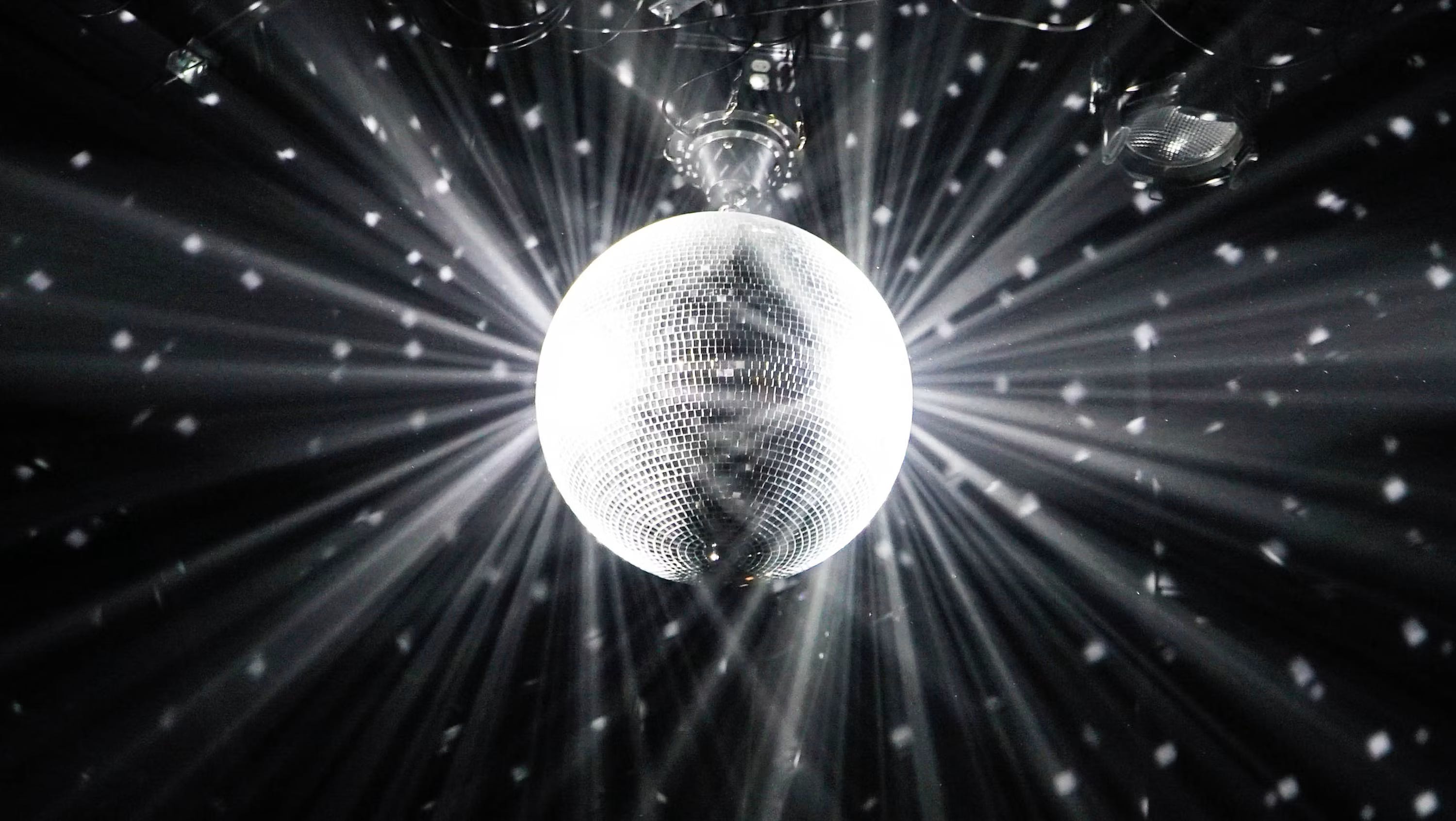
We are about a year out from the publication of my memoir, The Afterparty: An Open Invitation to Sobriety, which feels both impossibly far away and alarmingly soon.
A year sounds generous until you start breaking it down into copyedits, interior layouts, cover conversations, blurbs, PR meetings, podcast interviews, event wish lists, book tour dreams, book tour stomach knots, and the very normal activity of sitting alone at your desk wondering if one comma has just changed the emotional landscape of an entire sentence. Which, for the record, it can.
Thanks for reading The Sober Millennial ! Subscribe for free to receive new posts and support my work.
I have learned many things during this stage of publishing, but one of the most important is this: a comma is not just a comma. A comma can soften a sentence, sharpen a sentence, flatten a sentence, redirect a sentence, or make you stare at the ceiling for twenty-two minutes while asking yourself, “Is this still what I meant?”
I did not realize how powerful and delicate the written word could feel until I entered the nitty gritty of copyedits.
I also learned what “STET” means. And I have used it abundantly.
For those who have not yet had the pleasure, STET (a Latin word meaning “let it stand”) is the writer’s way of saying: actually, please leave this exactly as it was. It is a tiny word with enormous emotional range. Sometimes STET means, “I see the rule of grammar you are applying, and I respect it.” Sometimes STET means, “The rhythm matters more to me here.” Sometimes STET means, “I promise I know this sentence is weird, but the weirdness is the point.” And sometimes STET means, “If we move this comma, I fear the whole memory loses its pulse.”
Copyedits have made me more aware than ever that writing is not just about accuracy. It is about tone, breath, and the sentence sounding like the person who lived it.
That feels especially true in memoir.
When you write about your own life, you are not simply reporting what happened. You are trying to get close to the texture of it. You are trying to capture not only the event, but the emotional weather around the event:
What did it feel like to be there? What did you know then? What do you know now? Where were you lying to yourself? Where were you protecting yourself? Where were you surviving? Where were you becoming?
That is the strange double vision of memoir. You are both the person in the scene and the person trying to understand the scene. You are actor and director—and, to a certain extent, screenwriter. Or, as I have started thinking of it, you are the quasi-omniscient, mostly reliable narrator of your own life. Mostly.
And unlike fiction, where you can invent the hallway, the argument, the door left open, the family secret, the narrator’s blind spot, in memoir you are working with what was. But you are still building a book and making choices. You are still shaping scenes, pacing revelations, cutting what no longer belongs, and finding the emotional logic beneath the chronology.
I think a lot of people imagine writing a memoir as a linear act. You sit down, begin at the beginning, tell the truth, and arrive at the end transformed.
That has not been my experience.
Writing this book has been less like walking a straight road and more like excavating a house I built in my head, while someone keeps turning the lights on in rooms I forgot existed.
There have been memories that arrive in full paragraphs at inconvenient times. In the shower. On the subway. While making coffee. While trying to fall asleep. Once, in the middle of a Broadway show! And even in the middle of a perfectly normal Wednesday, when suddenly some small detail knocks on the door and says, “Actually, I belong in the book.”
Even now, after developmental edits, after major restructuring, after cutting entire chapters, after bringing the manuscript down from around 110,000 words to about 83,000, the past still finds ways to reintroduce itself.
The few times this has happened late in the process, I have been careful to tell the reader directly. I say, in essence: in an earlier version of writing this book, this part was left off the page.
I want readers to understand that omission is part of memoir, too. Not always because something is being hidden. Sometimes because the writer was not ready (my memory is not a filing cabinet!). It is more like weather. It moves. It changes pressure. It returns when it returns.
That has been one of the great surprises of this process. Publishing has forced me to keep listening.
A book can be “done” and still be alive.
At the same time, there have been parts of this process that feel very much like the classic publishing fantasy. The kind of thing I dreamed about before I knew how much Microsoft Word markup would be involved.
I have been getting interior design layouts back for the book, which is surreal. There is something deeply strange and moving about seeing your words begin to look like a real object—a book—and not just a manuscript you have stared at until your eyes crossed. A book with pages and structure. Hopefully, a book that someone might one day pick up in a store, hold in their hands, flip through, and decide to take home.
Oh! And yes, I have also seen first rounds of cover designs.
I went into the cover process with one very clear idea of what I wanted the book to look like. Let’s just say it involved a disco ball and a neon sign.
I still love that idea, obviously, because I am me. But the funny thing about publishing is that you are constantly being asked to remain open. To your editor’s vision. To your designer’s vision. To the market. To what a book can signal from across a room. To what might invite the right reader in.
Some of the other cover designs have really surprised me. They show promise in ways I did not expect. I am trying to hold my original vision and my curiosity at the same time, which is a very adult sentence I resent having to write.
But this whole process has been an exercise in openness.
The book is about sobriety, yes, but more specifically, it is about sobriety as an invitation. Sobriety as liberation rather than loss. Sobriety not as the end of the party, but as the beginning of a different one.
For a while, I worried about saying that out loud.
I had this fear that people would hear “sobriety” and immediately retreat into politeness, discomfort, or even judgment. I worried they would think the idea was too niche, too personal, too heavy, too earnest. I worried they would ask, either out loud or silently, “Is this really life-changing?”
And the answer I keep finding, over and over again, is yes.
People are receptive. More than receptive, actually. People are hungry for a different way to talk about sobriety. They are hungry for a conversation about sobriety that is not built entirely around rock bottom, shame, spectacle, or deprivation. They want language for what happens after. They want to know what becomes possible. They want to know if joy comes back and if they can improve their lives.
Of course, there are also the occasional ridiculous follow-up questions.
And the answer is always the same: you will just have to read the book.
But even those questions remind me why I wrote it. We still have such limited scripts around sobriety. We still treat it like a punishment, a confession, a phase, a failure of moderation, or a dramatic reveal. I wanted to write into the much larger, stranger, more beautiful truth of it like the ordinary mornings that become miracles precisely because you are awake for them (and not hungover).
This year, I have also been taking time to celebrate my sobriety each day. Not always in a grand way. Sometimes celebration looks like a walk or noticing, with real tenderness, that I am still here. That I built a life I once did not know how to want. That seven years of sobriety is not just a number, but a series of choices, one after another, many of them quiet, many of them invisible, all of them adding up to a life I am so proud of.
That is the part I keep returning to.
Sobriety did not only give me a book. It gave me the life in which I could write one.
And now the book is making its way out into the world in stages.
Blurbs are beginning to roll in, and each one makes me cry.
I mean that sincerely. Every time someone takes the time to read what I have written, digest it, sit with it, and send back a blurb that is thoughtful and so, so generous, I am undone. It is one thing to write alone. It is another thing to realize the work has reached someone. It feels like a pinch-me moment every single time.
People have asked me who I reached out to for blurbs, and the answer is: a lot of different people. Fellow authors. Memoirists. Novelists. Social media personalities. Booksellers. Celebrities. People whose work shaped me. People whose voices I trust. People who understand sobriety, liberation, storytelling, queerness, self-reclamation, or some combination of all of the above.
My motto has been simple: if the outreach is sincere, the worst they can say is no.
And honestly, no is not fatal. No is just no.
But sometimes, someone on your “dream blurb list” says yes. Sometimes they say yes and then send back words about your book that make you cry at your kitchen counter. I don’t every want to forget these moments.
Another major milestone: I am planning to give a copy of the book to my mom for the first time this week. This is huge for me.
My mom has always been one of my first readers. In a different life, she could have been a copy editor. She is precise, thoughtful, and lovingly ruthless in the way only a mother with a sharp eye can be. But with this book, I knew I needed to hold it close for longer. I needed to keep working until the very end. I needed to add and delete chapters. I needed to make sure the shape was right. I needed to understand what I was really trying to say before I handed it to one of the people who knows me best.
I am excited for her to read it. I am also incredibly nervous.
It is a lot about me, which is a hilarious thing to say about a memoir, but still. There is something uniquely vulnerable about giving your life, arranged into chapters, to someone who was there for so much of it. Fortunately, she is one of my best friends. Still, I wanted the book to be as right as I could make it before she read it.
That might be one of the tenderest parts of this process. The book is public, eventually, but first it becomes intimate in all these new ways. Your agent reads it. Your editor reads it. Your early readers read it. Potential blurbers read it. Your family reads it. Publicity teams read it. PR firms read it before deciding whether they want to come on board.
Which brings me to another behind-the-scenes piece of this year: I have been interviewing different PR firms to potentially represent me and the book ahead of release.
Those conversations are ongoing. A lot of firms book out six to eight months in advance, and many ask to read the manuscript before agreeing to come on board. It is another reminder that a book is both art and an object moving through a system called “Publishing.”
I have been putting together my own dream list of podcasts, TV shows, conferences, and industry events I would love to be part of from about three months before publication through the end of next year. It is exciting. It is also terrifying.
Just thinking about book tour puts a knot in my stomach. Not because I do not want to do it. I do. Very much. I want to be in rooms with readers. I want to talk about the book. I want to have the conversations I know this book can open. But book tour is also travel, logistics, vulnerability, performance, hotels, trains, airports, bookstores, calendars, and the emotional whiplash of asking people to come hear you talk about the most personal thing you have ever written.
My hope is that my years of banking Marriott and Amtrak points will finally reveal themselves as part of a larger spiritual plan—at least for the initial East Coast run.
And somehow, in the middle of all this, I am continuing to write.
I completely revised my debut novel, a locked-room thriller set on New York City’s Governors Island. I have been working on that book for close to four years. Four years! There were times when I thought it would never click and wondered if the book was teaching me patience against my will.
But revision, like sobriety, has a way of humbling you into the work.
You show up. You look again—and, again. You cut what is not working. You try to tell the truth more cleanly. You eventually stop trying to rescue every sentence. And finally, you let the book become the book it was trying to be.
I am also getting ready for season two of my podcast, Shelf Care Society, which starts in a couple of weeks. I will be welcoming Matthew Quick, author of The Silver Linings Playbook, onto the podcast to discuss his memoir, Dad, Love Me. It is a book about sobriety, but also about family, masculinity, healing, and mental health. I hope it becomes part of the larger conversation around sobriety and mental health, because it deserves to.
Over the next few months, you will also hear and watch conversations with Cole Brauer, the history-making sailor who became the first American woman to race solo, nonstop, and unassisted around the world; Min Jin Lee; André Aciman; R. F. Kuang; Jodi Picoult; Richard Russo; and two debut novelists who have written two of my favorite reads of the year.
There is also one podcast episode I filmed recently with someone whose name I cannot say, because I signed not one, not two, but three NDAs.
All I can say is that it felt like a fever dream, and I am still not entirely sure it actually happened. You will likely be able to watch it later this summer. More on that in the coming months, once the NDA spirits permit me to speak.
So this is where I am, about a year out.
The book is written, but still becoming.
I am celebrating sobriety, protecting sentences, learning the power of STET, looking at covers, reviewing interior pages, gathering blurbs, talking to PR firms, dreaming up tour stops, preparing for my mom to read the book, revising a novel, recording a podcast, and trying to remain open to the unexpected.
Lately, I have been thinking a lot about the Rumi poem “The Guest House,” particularly the opening idea: this being human is a guest house. Every day, something new arrives.
That feels true of publishing. It feels true of sobriety. And it also feels true of writing a memoir.
A joy arrives. A fear arrives. A ridiculous follow-up question arrives. A blurb arrives. A comma arrives and ruins your afternoon. A memory arrives late and asks to be let in. A cover design arrives that is not what you imagined, but might be what the book needs. A public conversation arrives before you feel ready. A private moment with your mom and the manuscript arrives before the public ever sees it.
The work, I think, is to welcome as much of it as possible.
To entertain them all.
To keep the door open.
To trust that this, too, is part of the afterparty.
xo
Brian
P.S. Feel free to send me a note here or at brianlarson.reads@gmail.com if this resonated with you, or if there’s a podcast, event, bookstore, or reader community you think I should know about as The Afterparty makes its way into the world.
Thanks for reading The Sober Millennial ! Subscribe for free to receive new posts and support my work.
April 30, 2026
Cecily Mak on Going Alcohol-Free, Finding Clarity, and Living "Undimmed"
Cecily Mak joins Shelf Care Society for a deeply thoughtful conversation about alcohol-free living, unwanted habits, and the clarity that becomes possible when we stop dimming ourselves. Cecily is the author of Undimmed: The Eight Awarenesses for Freedom from Unwanted Habits, a founding General Partner at Wisdom Ventures, a breast cancer survivor, mother of two, and an advocate for a more honest public conversation about alcohol and health.
In this episode, Brian and Cecily discuss how her thirty-day experiment to go alcohol-free changed her life, and how habits like drinking, scrolling, overworking, or staying constantly busy can become “dimmers” that keep us from fully feeling and fully living. They also talk about family history, AA, meditation, found time in sobriety, Big Alcohol, breast cancer, and why Cecily’s Eight Awarenesses offer a more spacious and compassionate path toward freedom.
This is a conversation for anyone who has ever wondered what might become possible if they stopped reaching for the thing that helps them escape and started listening to the life waiting underneath.
April 20, 2026
Kerry Docherty on "Selfish" & The Permission to Want More
What does it really mean to be “selfish”… and why are so many of us afraid of it?
This week on Shelf Care Society, I sit down with Kerry Docherty, co-founder of Faherty and author of Selfish, a sharp, deeply personal memoir about unlearning the roles that keep us small.
We start where the book does: on a therapist’s couch, where Kerry and her husband are negotiating Kerry's salary. From there, we unpack the invisible contracts so many of us inherit around marriage, work, ambition, and worth and what it takes to break them. We also discuss "soul contracts"!
In this conversation, we get into:
Why “selfish” might be the most misunderstood word in personal growth
The cost of being the reliable one in every room
How ambition shifts when you stop performing for approval
What it looks like to rewrite your role inside a marriage, a family, and a business
The uncomfortable decisions that actually change a life
This is a conversation about telling the truth, even when it disrupts everything around you.
April 14, 2026
Tayari Jones on "Kin" & Letters & The Bonds of Family
What do we owe the people who made us?
This week on Shelf Care Society, I sit down with Tayari Jones to talk about her stunning new novel, Kin, an Oprah's Book Club selection.
Tayari has a way of writing families that feel both intimate and expansive. In Kin, she turns her attention to legacy and inheritance through the lives of two girls, Niecy and Annie, and the bond that connects them across time. I take a shot at providing an overview of Kin—and Tayari reacts!
We discuss what it means for a novel like Kin to resonate at this moment, and why stories about family, history, and inheritance continue to find us exactly when we need them.
April 7, 2026
Liz Tran On Why Your "Agility Quotient" (AQ) Might Matter More Than Your IQ
What if the thing that determines your success isn’t how smart you are, but how quickly you can adapt?
This week on Shelf Care Society, I’m joined by Liz Tran, executive coach and author of AQ: The Agility Quotient. We talk about why agility is becoming the defining skill of our time and how to build it in a world that rarely slows down.
Liz shares how AQ shows up in your career, your relationships, and your identity, especially in moments when everything you thought was stable begins to shift. We get into reinvention, letting go of outdated versions of yourself, and learning how to move forward without a clear roadmap.
If you’ve been feeling stuck or sensing that your life is asking something new of you, this conversation will meet you there.