Leah Brewer's Blog
June 2, 2025
The Enduring Impact of Our Actions and Choices


May 12, 2025
Daughters of the King
February 1, 2025
Uncovering the Truth About True Love
As we welcome February, I find myself reflecting on a lesson I shared at a Ladies' Retreat. It was such a meaningful experience that I will break it down into two or three posts to share with all of you! The lesson title was "God is Love."
I understand that we may feel love for many things during our time on this earth: other people, animals, objects like gifts from loved ones, or a new vehicle we’ve had our eye on for a long time. However, I tell you that the most important thing we can know about love is that God is Love!
“Beloved, let us love one another: for love is of God; and every one that loveth is born of God, and knoweth God. He that loveth not knoweth not God; for God is love. In this was manifested the love of God toward us, because that God sent his only begotten Son into the world, that we might live through him. Herein is love, not that we loved God, but that he loved us, and sent his Son to be the propitiation for our sins. Beloved, if God so loved us, we ought also to love one another.” 1 John 4:7-11
God is love! This simple yet profound truth highlights the importance of love in our lives. Love constrains, uplifts, holds, and drives us.
Love is the driving force in a Christian's life. True love nurtures kindness towards others' imperfections and shows charity towards their faults. While we do not condone sin, we forgive and forget past offenses when repentance occurs. We should overlook differences and shortcomings, ensuring our actions and attitudes remain free from sin.
“Put on therefore, as the elect of God, holy and beloved, bowels of mercies, kindness, humbleness of mind, meekness, longsuffering; Forbearing one another, and forgiving one another, if any man have a quarrel against any: even as Christ forgave you, so also do ye. And above all these things put on charity (or love), which is the bond of perfectness.”
Col. 3:12-14
Have you ever considered love’s importance in our lives? The Bible is clear!
“And now abideth faith, hope, charity (or love), these three; but the greatest of these is charity” (or love). 1Cor.13:13
“Follow after charity…” (or love) 1Cor. 14:1
“And above all things have fervent charity (or love) among yourselves: for charity (or love) shall cover the multitude of sins.” 1Pet. 4:8
Think about these facts:
Love isn't always perfect, is it? It isn't a fairytale or a storybook. And it isn’t what most people think it is. Love is learned and cultivated, and it doesn't always come easy.
Love is overcoming obstacles. Love faces challenges and triumphs. Love is fighting to stay together, holding on, and never letting go.
Love is a short, simple word, hard to define, and impossible to live without.
The psychological pain of being ignored or replaced activates the same region of the brain that responds to physical pain.
It is a scientific fact that you can actually die from a broken heart. This condition is known as Broken Heart Syndrome.
Scientists have found that being in love causes a couple’s heartbeats to synchronize.
Hugging someone you love reduces stress instantly.
It is a scientific fact that thinking of a loved one, looking at their picture, or holding their hand helps alleviate pain.
It’s no wonder you were on His mind when Christ was on the cross.
You were at the center of His thoughts.
His love for mankind, for you, for me, kept Him there!
“For God so loved the world, that he gave his only begotten Son, that whosoever believeth in him should not perish, but have everlasting life.” Jn. 3:16
“But God commendeth his love toward us, in that, while we were yet sinners, Christ died for us.” Rom. 5:8
“In this was manifested the love of God toward us, because that God sent his only begotten Son into the world, that we might live through him. Herein is love, not that we loved God, but that he loved us, and sent his Son to be the propitiation for our sins.”
1Jn. 4:9-10
Truly, love is the driving force of all life and, most importantly, the Christian life. So, as we think of love during February, let us ensure we don't leave God out. If we want the truth about true love, we must look to Him first!

November 26, 2024
Getting Past the Thorns: Keatyn’s Lesson
Paul looked back at his past with gratitude, not with regret or blame. He could have easily harbored resentment for how he and Silas had been treated in Philippi, but he chose not to. Remember that they were accused of promoting unlawful customs, as noted in Acts 16:21? If you continue reading, you'll find that they were beaten severely and thrown into jail."I thank my God upon every remembrance of you, always in every prayer of mine, making request for you all with joy, for your fellowship in the gospel from the first day until now,"
"Then Peter came to Him and said, "Lord, how often shall my brother sin against me, and I forgive him? Up to seven times?" 22 Jesus said to him, "I do not say to you, up to seven times, but up to seventy times seven. 23 "Therefore the kingdom of heaven is like a certain king who wanted to settle accounts with his servants. 24 "And when he had begun to settle accounts, one was brought to him who owed him ten thousand talents. 25 "But as he was not able to pay, his master commanded that he be sold, with his wife and children and all that he had, and that payment be made. 26 "The servant therefore fell down before him, saying, 'Master, have patience with me, and I will pay you all.' 27 "Then the master of that servant was moved with compassion, released him, and forgave him the debt. 28 "But that servant went out and found one of his fellow servants who owed him a hundred denarii; and he laid hands on him and took him by the throat, saying, 'Pay me what you owe!' 29 "So his fellow servant fell down at his feet and begged him, saying, 'Have patience with me, and I will pay you all.' 30 "And he would not, but went and threw him into prison till he should pay the debt. 31 "So when his fellow servants saw what had been done, they were very grieved, and came and told their master all that had been done. 32 "Then his master, after he had called him, said to him, 'You wicked servant! I forgave you all that debt because you begged me. 33 'Should you not also have had compassion on your fellow servant, just as I had pity on you?' 34 "And his master was angry, and delivered him to the torturers until he should pay all that was due to him. 35 "So My heavenly Father also will do to you if each of you, from his heart, does not forgive his brother his trespasses."
"And be kind to one another, tenderhearted, forgiving one another, just as God in Christ forgave you."

October 21, 2024
Help When Grief Lingers
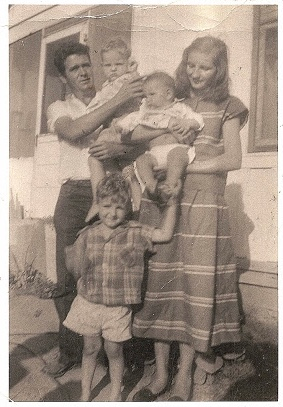 Mama, Daddy, and three of my brothers
September 21, 2024
Reflecting on Keatyn's Lessons: Part One
In my novel Keatyn’s Journey, the protagonist, Keatyn Griffin, starts off as miserable, hateful, and selfish. She has allowed her past hurts to mold her into a person she no longer recognizes. Despite this, she is unable or unwilling to let go of the hatred that rules her heart.
Tragedy sends Keatyn home to Pensacola Beach, where she meets Gareth Davenport, a determined preacher who knows what it is to face life's struggles.
When Keatyn agreed to a Bible study with Gareth, she only wanted to learn how to be happy. However, Gareth was more interested in teaching her about God. He believed that if she turned her heart over to her Heavenly Father, she would find the happiness she longed for.
He asked Keatyn if she believed in God. When she said yes, he then asked why she thought Christ died.
Let’s turn to Romans 5:8:
“But God demonstrates His own love toward us, in that while we were still sinners, Christ died for us.”
Keatyn acknowledges that God loves her, but she still feels abandoned.
Gareth turns to John 16:33:
“These things I have spoken to you, that in Me you may have peace. In the world you will have tribulation; but be of good cheer, I have overcome the world.”
He reminds her that we will experience suffering in this world, but that does not mean that God has abandoned us or that He does not love us.
WHAT DRIVES US: LOVE
We must understand that love is the driving force of all life, especially the Christian life.
Why?
Because of the example we have from our Creator. From the beginning, we see God’s love.
We were created in His own image (Gen. 1:26-27, 2:7)
Everything He created for us and gave us showed his abundant andperfect love. (Gen. 1:27-31)
He provided everything we would ever need.
Gave us right to the tree of life.
Surrounded us with unmatched beauty. Gave us dominion.
Fellowshipped with us, walked with us, and loved us as His own!
Even in the Garden, when we turned away from Him, rejected Him, and sinned against Him.
God showed his great Love, Mercy, and Grace by not striking man dead then and there.
Think about it: before the foundations of the world were laid, you and I were on the mind of God! He loved us, spared us, and made provision for us!
Again, have you ever wondered Why?
Why does God love us?
1 John 4:8 explains … because God is love.
Stop and bask in that for a moment!
God loves us ... because God is love!
He doesn’t love us because of our looks, intellect, health, wealth, or anything elsewe have or possess.
God loves us because He is love. Not because of anything special on our part.
And God’s love was not merely a feeling of love toward us. Feelings without action are not love! “Herein is love” - God sent his Son to be the atoning sacrifice for our sins. God did something for our problem.
Make no mistake about it—we had a sin problem and were rightfully condemned! God did what we could not do: He atoned, made reconciliation, brought us back into fellowship with Him, bought us back from the evil one, and paid sin's wages! God did what was needed! God did not do what He needed. God did what we needed. God provided Blood sacrifice, Blood Atonement!
The cross of Jesus is the model of love!
Love is not what television and movies show. What the world presents as love is a shallow counterfeit of what God says is true love.
Read what John says next in verse 1Jn. 4:11.
“Beloved, if God so loved us, we also ought to love one another.”
We are called to show others the love shown on the cross—real love. Jesus is the model we are to follow.
Notice the word “ought” in verse 11. We ought to love another since this is the way God loved us.
Ought is an interesting word because it speaks to obligation and purpose. Birds ought to fly. Fish ought to swim. The sun ought to be bright and hot. These things are given a purpose that they ought to do. Love is our purpose! Love is what we were created to do.
We miss our purpose when we do not love God and others as we should! We are like a fish trying to walk when we do not love. Without love, we are denying what we are created for. We are not functioning in accord with our purpose.
Do we see what God is telling us? We were not created to love ourselves! We were created to love God and one another. This is our purpose, our mission: to have the kind of love that God demonstrated, the love that Jesus modeled on the cross.
BACK TO KEATYN'S STUDY
Keatyn agreed with Gareth. She understands that God loves her more than she could even comprehend.
Gareth knows that Keatyn is holding hatred near to her heart. He understands that she has not forgiven her father, Myles Griffin, for the loss of her mother.
Gareth declares that God’s love is so great that He suffered the loss of His Son on the cross, which teaches us about forgiveness.
Keatyn wasn’t sure what he meant.
Gareth explains that forgiveness is a sort of loss. He tells Keatyn she has to lose her feelings against those she thinks wronged her to have them back in her life.
This is when Keatyn became very emotional and ended the Bible study.
What about real life? What about you and me? Are we holding on to a grudge or seed of hatred that has caused us to lose who we are? Has it caused us to become angry?
If you answered yes, then it must be dealt with. Keatyn had a choice, and so do we.
We can follow Jesus' example and show love, kindness, and forgiveness or hold onto that seed of hatred. We can wallow in our disgruntled and unhappy state until the very end. It’s up to each individual.
For me, I choose happiness. I decide to wake up with a smile and a light heart.
What about you?
Go back through the verses we just covered and read them slowly. Bask in what they mean. Then, determine to be happy. To be a loving individual who puts others before self.
This will change your life.
It did mine.
Many Blessings,
Leah

August 30, 2024
It's Time to Take a Stand!
Oded, A Man of Faith, Stands Alone Against Many
Lesson Text: 2 Kings 16 and 2 Chronicles 28
A wicked king and a kingdom divided—sounds like a movie, doesn’t it? Well, this was no movie, but I bet movies have been made based on this account.
When Rehoboam, Solomon's son, ascended the throne, the kingdom split into two. After Solomon's death, Rehoboam, his son, came to Shechem to be pronounced king of Israel.
Jeroboam and all of Israel went to Rehoboam with a condition for serving him as king. They wanted him to make their labor easier, which Solomon had made difficult. Rehoboam asked for three days to think about their request.
Rehoboam checked in with the older men first. They advised him to give the people what they wanted so they'd be loyal to him. But Rehoboam wasn't into that. He wasn't elected - he was a king by birthright and could rule however he pleased. Then he turned to his childhood buddies, and they egged him on to embrace a tyrant style of dictatorship.
On the third day, Rehoboam told the people he planned to increase their workload instead of reducing it. He said that those who didn't work hard would be whipped with the cord of scorpions.
When Israel heard Rehoboam's harsh words, they rejected him as king and rejected the house of David. David was no longer alive, and they did not feel the need to remain loyal to one of his oppressive sons.
So, all of Israel, except for the tribe of Judah, rejected the house of David and made Jeroboam king.
Rehoboam's personal desires outweighed sound advice from the older councilors. Look at the mess he made because he refused to listen to guidance! His actions have had long-lasting consequences.
Keep reading to see how the actions of one man impacted so many people and how this relates to us today.
King Ahaz and his Deplorable Example
Fast forward many years and kings to a man named Ahaz. He reigned as the king of Judah for sixteen years and was known for his idolatrous practices. He not only burned incense to idols but also committed the horrific act of sacrificing his own children to these false deities. His sacrilegious rituals took place in high places, on the hills, and under every green tree. His egregious behavior set a horrible example for his people.
Because of his actions, God delivered him into the hands of another nation. In 2 Chronicles 28:5 and 2 Kings 16:5, we learn that the Lord God allowed King Rezin of Syria to defeat King Ahaz and take many people as captives to Damascus.
Then, King Pekah of Israel, the nation that was once one with Judah, defeated King Ahaz in another fierce battle. If Rehoboam had listened to the elderly men so many years before, these two nations would have been one. These people were blood! They shared history. They shared ancestors. Even so, Israel attacked Judah without any care that they were of the same people.
Why?
The Lord suffered Judah to be slain by Israel “because they had forsaken the Lord God of their fathers” (2 Chronicles 28:6).
In this battle, Judah suffered a devastating loss of 120,000 men in just one day! Along with defeating the soldiers, King Pekah and his army captured 200,000 women and children from Judah and took them captive, along with much spoil, to Samaria.
In 2 Chronicles 28:9-10, we see that a prophet of the Lord named Oded was in Samaria. He went out before them that came to Samaria with their captives and spoils, not to relish in the victory but to confront them. Alone.
He said, “Look, because the LORD God of your fathers was angry with Judah, He has delivered them into your hand; but you have killed them in a rage that reaches up to heaven. And now you propose to force the children of Judah and Jerusalem to be your male and female slaves; but are you not also guilty before the LORD your God?” (NKJV)
He stood fearlessly before them, his unwavering faith in God giving him the strength to confront the army alone. He admonished them for their sins and transgressions, conveying that their slaying and capturing of the people of Judah had deeply displeased God. Oded, undeterred by the risk of being killed, demanded that they release the captives taken from their own brethren, warning that the fierce wrath of the Lord loomed over them.
Witnessing Oded's bravery, other princes of Israel rallied alongside him, daring to oppose the army and prevent them from bringing the captives any further, for they had already greatly offended the Lord.
They rightly accused the group of planning to compound their sins and transgressions, as their offense was truly grave, and the anger of God was intense against Israel. As a result, the armed men left the captives, and the spoils to the leaders and the people assembled there.
The people who had followed Oded in standing up for what was right then clothed the captives, gave them food and water, put the weak and old on donkeys, and carried them to Jericho as free people.
How this applies to us today
Do we close our eyes and ears to the plight of those around us, thinking that we are somehow better? Do we think to ourselves, “They should have made better choices in life” so we can feel good about ourselves? Do we take comfort in our little happy space, oblivious to things and the plight of those around us?
Many live in a virtual world where life seems to be just peachy. Social media and the internet are not necessarily bad things, but they can be if our lives revolve around them. We need to shut our computers, lay our phones down, disconnect from our tablets, and look at the world around us.
It’s time to open our eyes to the direction the world is headed in and to the plight of the poor, the needy, the vulnerable, the lonely, and the downtrodden around us; it’s time to have compassion and get involved. It is time to make a difference. This doesn’t have to be some grand thing. We should focus on making a difference how we can, where we can, and when we can.
Let’s look at 6 simple ways we can make a difference:
Go to a nursing home and ask the administration if there’s anyone there who rarely gets visitors. Then, introduce yourself and get to know the person(s). Take 15-30 minutes out of every week to drop by and say hello. Paint their nails, brush their hair, and be a friend to them.
Spend 30 minutes a week writing get-well/encouragement cards. Drop them off at the hospital. Mail them to the sick/bereaved/the homebound/those who miss services.
Get involved with Operation Gratitude. Ask a few friends (kids are great) to write thank you cards to our soldiers who are deployed far from home. Spend 30 minutes a week writing these cards. Ship them weekly or monthly. Send a small box of snacks with a personal prayer for them.
Volunteer to read for 15-30 minutes per week to people at your local Senior Citizens Center. Find out the one(s) who have needs and help with groceries/medicine, if you can. Ask the church to help you in this endeavor. Ask friends you work with to help. A few dollars can go a long way!
Visit our elderly. Find out if there’s anyone in your neighborhood or from church who is lonely, homebound, or struggling in some way. (Medicine, groceries, etc.) Take them a basket of muffins, cookies, a card of encouragement…etc. Spend 15 minutes getting to know them. Make this a weekly occurrence.
Mentor a foster child or someone who has lost a parent. Be there for them. Listen. Show love and care for them. Study the Bible with them.
Do you see how easy it can be for us to follow Oded's example, even today? We should have faith in God to do those things that will bring honor and glory to His Name. We don’t have to stand up to an army. But we do have to stand against evil in the world.
Take a stand, make a stand, even if you are alone!
Blessings,
Leah

July 11, 2024
The Servant's Journey
Lesson Text: Genesis 24:1-67
In Genesis 24, we encounter a pivotal moment in Abraham's life. At the age of one hundred forty, he was old and well-stricken, yet the Lord had blessed him in all things. This context is crucial to understanding the weight of his decisions and actions in the following passages.
In verse 2, we see Abraham speaking to the eldest servant of his house. The servant, though unnamed, was not just any servant. He was Abraham's eldest servant, entrusted with the rule over all Abraham had. His role was not just to manage the house and its affairs but to carry out significant tasks on behalf of Abraham, as we will see. Based on Genesis 15:2, this person is Eliezer.
Abraham requests that this servant journey back to the country from which Abraham came to find a wife for Abraham’s son, Isaac. Abraham, driven by a deep paternal love and care, adamantly insists that Isaac should not marry a woman from the land of Canaan. His determination stems from his desire for Isaac to marry someone from his own kindred, ensuring his future is secure and blessed. This was so important to Abraham that he made the servant swear he would not take a wife for Isaac from the daughters of the Canaanites.
We see the servant ask questions of Abraham to ensure he understood what to do if the woman he found was not willing to leave her home and come to the land of Canaan. This tells me that the servant realized the importance of his task. Abraham tells the servant that he is free from his oath if the woman is unwilling to follow him.
The servant, having sworn to Abraham, embarked on a journey that would shape the future of Isaac. He took ten of Abraham’s camels and set off from Hebron, traveling to Mesopotamia and the city of Nahor. This journey, filled with anticipation, leads us to the pivotal moment at the well where he encounters Rebekah.
The servant travels to Mesopotamia, stopping at a well to water his camel. It is here that we see this servant pray to God. He prays for God to show kindness to Abraham and that the woman who comes to the well and gives him and his camels drink will be the one God has chosen for Isaac.
A maiden named Rebekah comes to the well and does all that the servant had prayed. He knows she is the one God had intended for Isaac. Rebekah was the daughter of Bethuel, who was the son of Milcah and Nahor. Nahor was Abraham’s brother. This means that Rebekah comes from the people (kindred) that Abraham was so determined for Isaac to marry.
The servant gives Rebekah gold and asks if he could lodge at her father’s house. Rebekah shows kindness and hospitality to the servant by letting him know that her family would be willing to accommodate him at their home.
The servant tells Rebekah’s family all about Abraham and why he is there. He asks them if Rebekah will be allowed to go. Rebekah’s father believes God has blessed the union and permits Rebekah to leave with the servant.
Overwhelmed with gratitude and humility, the servant immediately bows down, thanking God for His answer. He expresses his gratitude by offering Rebekah and her family many costly jewels, which reflects his deep reverence for God's providence.
Rebekah agrees to leave with the servant the following day. The family blesses Rebekah and seems to understand the importance of her marriage to Isaac concerning God’s promises. The servant and Rebekah meet up with Isaac, and he and Rebekah get married. Verse 67 tells us that Isaac loved Rebekah.
The servant kept God at the center by praying to Him and thanking Him for being with him. This is what I call a great example! Like this servant, let us pray to God and keep Him at the center of all things. May we pray for His will to be done in our lives. Let us be obedient to Christ, knowing what He would have us to do by delving into the pages of His Word.
Let us study like the Bereans we read about in Acts 17:10-12:
“Then the brethren immediately sent Paul and Silas away by night to Berea. When they arrived, they went into the synagogue of the Jews. These were more fair-minded than those in Thessalonica, in that they received the word with all readiness, and searched the Scriptures daily to find out whether these things were so. Therefore many of them believed, and also not a few of the Greeks, prominent women as well as men.”
Let's embrace the Word eagerly and delve into the scriptures to confirm our salvation. It's our responsibility to ensure our own salvation. Don't rely on someone else to tell you you're saved – know it yourself!
Isn't your soul worth it?
Many Blessings,
Leah

February 1, 2023
Rapids of Life
My oldest brother, Rob, lived in Blessing, Texas, when I was a kid. One summer, when we were around twelve, my sister-in-law drove to Arkansas, picked my niece and me up, and took us home with her for the summer.
Oh, it was a grand adventure! I met my nephew for the first time. I spent time with family, and I’m thankful I have those memories.
I mostly had a great time, but some moments weren’t so great.
Even though I didn’t care for everything that happened, I have no choice but to take the good with the bad and tuck those things away in my treasure box of memories.
Isn’t it funny how life works like that? We have access to many amazing pleasures and things that bring us joy, but we also have trials and tribulations. What matters is how we react when (not if) they come our way. Do we realize that we all must face unpleasant, painful, and scary things in this life? Do we understand that we can still have untold joys, even with the painful realities we must sometimes face?
That makes me think of what James wrote to the Christians that faced trials and more hardships than we could even imagine. His purpose was to make the Christians wake up and realize their sinful state. He wanted them to know they had to get past the worldly mindset and focus on what really mattered: God.
James 1:2-4
“My brethren, count it all joy when you fall into various trials, knowing that the testing of your faith produces patience. But let patience have its perfect work, that you may be perfect and complete, lacking nothing.”
Today, we must accept the things we face and continue working towards our end goal: Heaven. Even when trials, hardships, financial difficulties, disease, and sickness hit close to home, we must keep going.
Now I wouldn’t go so far as to say that trip brought trials and tribulations, but I would say that some things were painful. Unfortunately for me, I had to take those things and deal with them so I could have the joy of the other things!
What could I be talking about? Let’s go through a few of the things that happened, as I remember them.
The first painful memory includes me and a pack of fire ants. Yeah, I called them a pack. Because those suckers came at me like a pack of wild animals. Go with me back to a sunny day in Blessing, Texas, and picture little Leah deciding to lay on a blanket in the backyard.
HA! Wrong! I wasn’t watching like I should’ve been. My mind must’ve been on getting some sun and relaxing!
Of course, I must wonder about us today. Are we watching as we should be? Or do we go through life just looking to relax?
Matthew 24:42-44
“Watch therefore, for you do not know what hour your Lord is coming. But know this, that if the master of the house had known what hour the thief would come, he would have watched and not allowed his house to be broken into. Therefore you also be ready, for the Son of Man is coming at an hour you do not expect.”
I one hundred percent did not expect fire ants to light me up that day. I’d never encountered anything but regular ants, so I was shocked.
Pay attention to your soul - don't be shocked on judgment day!
Another not-so-great memory has to do with another type of fire. My skin! Okay, let me explain. We decided we would go to the beach, and like almost everyone back then, my niece and I rode for an hour+ in the back of the truck. In lawn chairs. Yes, we did.
Those fire ants had NOTHING on the sun.
We had our minds on playing in the awesome beach waves and lost sight of almost all else. We didn’t care that our skin sizzled like an egg. We were having FUN!
Not so much when we got home. That. Was. Miserable.
Don’t lose sight of what is the most important part of life. Getting to heaven.
Colossians 3:2
“Set your mind on things above, not on things on the earth.”
Those twelve words say it all. If we all set our minds on God, the world would be happier!
The last memory I’ll bring up is one of my all-time favorite memories (okay, I have a bunch, but this ranks in the top 5 of forever). Rob agreed to take us camping, and I had the time of my life!
We swung off ropes into rapid water that my mama would’ve passed out if she’d known. We camped. We ate. We simply enjoyed being alive.
But then my niece and I talked Rob into letting us float down the river on tubes. Alone. Well, not completely alone – we had an extra innertube with an ice chest on it.
We thought we were big dogs! Things went great for a while. Then we heard a loud noise. It was a waterfall. Yes. A waterfall. Not a super tall one, but a waterfall, nonetheless.
We went down it because we had no choice. Our tubes went flying in different directions! Before we made our way back to one another I got sucked under a boulder that jutted out of the water. Thankfully a woman stopped and helped me. Without her, I’d probably still be there trying to escape!
Rob felt so guilty for letting us float the river alone. But honestly, we didn’t give him much choice. At least I know I didn’t because I was determined to do it.
As I compare this to my spiritual life, I realize there are times when I need to slow down and think about consequences before I act. I’d dare say we all have those times!
Galatians 6:7
“Do not be deceived, God is not mocked; for whatever a man sows, that he will also reap.”
In spiritual matters, we all need to slow down, think things through, and determine if what we’re involved in will bring glory to God or not. Then, decide with that in mind.
I’m so thankful for the woman who tried to help me get unstuck from the boulder. I wish I could thank her as an adult. Ultimately, I had to work hard to free myself. The water was too strong for her to pull me out, but she coached me and worked with me until I was free!
That makes me think of the noble Bereans when Paul and Silas taught them in the synagogue. The Bereans listened to what Paul and Silas had to say, and then they acted on their own!
Acts 17:10-11
“Then the brethren immediately sent Paul and Silas away by night to Berea. When they arrived, they went into the synagogue of the Jews. These were more fair-minded than those in Thessalonica, in that they received the word with all readiness, and searched the Scriptures daily to find out whether these things were so.”
Don’t be too proud to accept a helping hand, but always look to the Bible for your final answer. Not what man says. Strive to be like the Bereans, who heard the Word and then studied it for themselves. They seemed to understand they were responsible for their own salvation. Not the preacher. Not a Bible class teacher. They were!
I don’t think the kind woman would’ve left me there, but I realized I had to listen to what she said and then work to free myself from the boulder. Today, we must work to understand what God expects, and then we must act on it.
My friends, please take time to immerse yourself in God’s Word so you are not shocked on the day of judgment. I was ignorant of fire ants, sunburn, boulders, and waterfalls, but thankfully, it only cost me a few very painful bites and a severe burn.
Don’t let the rapids of life and your ignorance cost you your soul. I have the memories of my youth that I treasure. I promise you don't want your memories to echo throughout eternity.
In Christian Love, Leah Brewer

***This is not a picture of where we were.
November 14, 2022
Book Recommendation
Good day, fellow readers!
You know what helped me deal with recovery after Ovarian Cancer? First and foremost, God helped me through. Without Him, I shudder to think of what would’ve happened. My family and friends were amazing. I didn't have to lift a finger except to read! I tell you what, this girl was well taken care of!
But those moments where I was piled up in my recliner, resting…well, you better believe I had a book by Christy Barritt on my Kindle pulled up. I bet I read every Lantern Beach book she put out during those three months!
I also believe her books are what pushed me into writing. I’d picked up a pen and paper several times over the years but never made it past the first chapter until after my surgery.
Christy Barritt’s books were light reads that made me smile. Some of them were a little scary, even (and I loved it)! They helped me forget I was waiting for results to see what cancer stage I had. They helped me deal with the fact that I had to go to my daughter’s wedding in a wheelchair and that other (wonderful) ladies were doing what I had planned. I’m thankful for those ladies and those books – both helped me in more ways than I can say.
So today, I recommend you grab a coffee or hot cocoa and start with Hidden Currents!
Love,
Leah