Patricia Raybon's Blog
July 23, 2022
BEAT THE HEAT & WIN PRIZES: Crazy4Fiction’s Summer Book Bash Giveaway Runs July 25-30th

My new life as a mystery novelist takes me to intriguing places. This week, I’m taking a virtual visit to my hometown Denver where Annalee Spain, the amateur detective heroine in my historical mystery novel All That Is Secret, travels to find out who killed her beloved but estranged father.
If you travel along, you can win a fab All That Is Secret Prize Pack as part of Crazy4Fiction’s Summer Book Bash featuring four Tyndale House authors, including yours truly. (See links and info below.)
But first, let’s visit Denver with Annalee who–if you recall from her story–received a cryptic telegram calling her home to Denver to solve the cold-case mystery of her taken father. Now that she has solved the crime, she’s taking a summer hiatus to host a summer book club in Colorado.
If you could meet her in real life and join her for an afternoon reading a good book, I know you’d really love getting to talk books with her. But since Annalee can’t join us in-person, I’ve come up with some ways you could have a little book bash of your own, inspired by my Annalee in All That Is Secret.
Here’s a quick peek around Denver where Annalee begins to unravel the mystery of her father’s murder. First stop: Denver Union Station.

Step into Denver’s Union Station and the stunning Great Hall will invite you into the spirit of the city’s past. First opened in 1881, the impressive train station was the largest building in the West, signifying the importance of train travel to the growing region.
In my mystery novel, Annalee Spain has a harrowing return to Denver after arriving by train to Union Station. Things are much different now as the Denver landmark is a cultural hub and a “crown jewel” of the city–a home to world-class dining, shopping, and the award-winning Crawford Hotel, all revitalizing and transforming Denver Union Station far beyond its early beginnings.
Now, let’s join Annalee on her next stop: Denver Botanic Gardens.

First opened in 1951, Denver Botanic Gardens–with its prominent conservatory in central Denver–has become the nation’s most-visited botanic gardens. As noted by Denver historian Tom Noel: “From an original collection of mostly native plants, it has expanded to include plant material from all over the world in more than forty different gardens. Behind the scenes, DBG is also a research institution with scientists using the collections and field studies to learn more about topics such as biodiversity, conservation, and sustainability.”
A popular and beautiful site, Denver Botanic Gardens is visited year round for its plethora of glorious horticultural exhibits, planting beds, gardens and “living plant” displays.
From this site, Annalee will go to the next stop during the Summer Book Bash: Denver’s historic Five Points Neighborhood and the Rossonian Hotel

When Annalee’s pastor sweetheart, the Rev. Jack Blake, promises to take her to Denver’s Rossonian Hotel for dinner and dancing, she’s a bit shocked. But the Rossonian is a landmark in Denver’s historic Five Points Neighborhood–even listed on the National Register of Historic Places.
At the time of All That is Secret, it was known by its original name, the Baxter Hotel. I used the Rossonian name in the novel to honor what the hotel became–“one of the most important jazz clubs between St. Louis and Los Angeles,” according to the Denver Public Library’s Western History Collection.
Today, the hotel is set for a renovation to include a ground-floor restaurant, a basement jazz and music venue, and a fourth-floor addition with floors two through four to contain boutique hotel rooms at the historic location. (Photo by Brittany Werges used by permission.)
So, where does Annalee take us next? To one of Denver’s most iconic outdoor spaces — Denver’s City Park. A year-round gathering spot for Denver’s many outdoor-loving residents, the park offers a relaxing urban oasis for rest and recreation. So, let’s go!

Denver’s City Park with the downtown Denver skyline and the Front Range of the Rocky Mountains in the background.
Annalee’s Summer Book BashTheme: A Mystery Lover’s Friendship & Fun Tea
The food/drinks: In an oversize picnic basket, Annalee has packed mini cucumber and cream cheese sandwiches, seedless green grapes, sliced carrots, a chilled thermos of sweetened herbal ice tea and, for dessert a plate of lemon squares dusted with powdered sugar. She has also brought along some Passenger Train Nibbles including mixed nuts, cashews, Jordan almonds, and candied mints.
The music: Annalee’s musical tastes range from classical to jazz to gospel. to popular and Broadway tunes. On her playlist is Samuel Barber’s “Adagio for Strings,” Duke Ellington’s “Take the A Train,” Carl Orff’s “O Fortuna” from Carmina Burana, Aaron Copeland’s “Fanfare for the Common Man,” Judy Garland’s “You Made Me Love You” and “His Eye is on the Sparrow” sung by Lauryn Hill. (Check out the Book Club Kit for All That Is Secret to access Annalee’s amazing musical playlist.)
The setting: The front porch of the Black American West Museum and Heritage Center (Five Points) in the restored home of Dr. Justina Ford, the first African-American female doctor licensed in the State of Colorado.
Book Bash Giveaway!To help you celebrate Annalee’s fun afternoon, Crazy4Fiction at Tyndale House is giving away an “All That Is Secret” Prize Pack that includes a signed copy of All That Is Secret, a Sherlock Holmes detective-themed notebook, and a magnifying glass necklace. Giveaway is open from July 25 through July 31. Click on the photo below to enter!

And don’t forget! Check out Crazy4Fiction’s site to be entered to win the grand prize, including a signed copy of each participating author’s latest book, a Kindle e-reader, and a Crazy4Fiction tote bag! The grand prize giveaway opens on July 29, at the end of the Book Bash tour.
In the meantime, be sure to check out all the stops along the way for unique and fun giveaways on each author’s blog! Thanks and have a fun Book Bash week!
The post BEAT THE HEAT & WIN PRIZES: Crazy4Fiction’s Summer Book Bash Giveaway Runs July 25-30th appeared first on Patricia Raybon.


May 13, 2021
Letting God Lift Up Your Head

Me? Dragging? That’s not my usual state (and maybe not yours). Most days, I can talk myself off a cliff, lift myself up, move from feeling down by turning my back on trouble, and turning my heart to God.
But a couple of weeks ago, I was dragging—needing help and knowing it. So, you can guess what I finally did. Laying in bed, I told my churning mind to shut down the noise and stop the infernal clatter.
Finally, then, I could hear God’s Spirit whisper. I am your Lifter.
There’s a song about that, of course. Later, in fact, when I wrote a short post on Facebook about our Lifter God, several friends replied by mentioning the song—and how much they love it.
Sitting on the side of the bed, however, I didn’t sing the song. I looked inside my Bible for the Scripture:
“But you, LORD, are a shield around me,
my glory, and the lifter of my head” (Psalm 3:3).
This is faith talk. Real deal. The kind we need when watching the news or hearing bad news, and that news sends us diving under the covers. Yet again.
For, David, such moments meant not burrowing under those covers. Instead, he countered his despair by speaking praise. “I lie down and sleep,” he reminded himself, “because the LORD sustains me” (v. 5). Though tens of thousands assailed him, “I will not fear” (v. 6).
When was the last time you or I has spoken such confidence in God? Ignored that our actual heads–which weigh, for the record, between 10 to 11 pounds (4.5 to 5 kg) on average–aren’t a light matter to deal with, especially if we’re feeling low.
Or, are we looking to other things to lift us? Popularity, praise from people, personal achievements, earthly barometers–fashion, fame, frivolity, or fun–carry us above the strains of life?
David, as king, could have all of such things. What he learned to count on, however, is the true Lifter. Feeling low, he could step back and ask the Lord for a pick up that actually worked.
Watching the news, indeed, I’ve started just turning it off more times than not–spending more time, instead, seeking the presence of our shielding, glorious, Lifting God.
Is that escapism? Or, like David, am I giving myself more time to meet God with hope? To say this:
“God, You’re lifting me high—far above confusion, drama, drudgery, worry, insults, and injustice of life.” Not to ignore trials, but to get closer to You, because You can handle it.
Up there, talking to God, our trials are smaller. We can see our way clear—to Him and His might–but also to see ourselves. We’re not the failures we’ve called ourselves, or the less than others that we’ve wrongly measured ourselves.
So, letting God lift our heads isn’t just to feel better. Instead, lifted high, we gain new perspective.
Lifted by God we’re reminded that all’s not lost in our fight for a better world, both for others and for ourselves.
Lifted by God, instead, we can sing to Him–thanking Him for what he already has done, and for what he already knows that we need, seeing by faith that He’s already providing it.
Then listen. What a glory! This same God is singing over us. Why? Because He loves us. A whole lot.
 Patricia Raybon, an award-winning author and novelist, writes top-rated books and essays at the intersection of faith, race and grace. A writer at Our Daily Bread Ministries and DaySpring’s (in)courage community, she writes to fight for our joy in Christ in a challenging world.
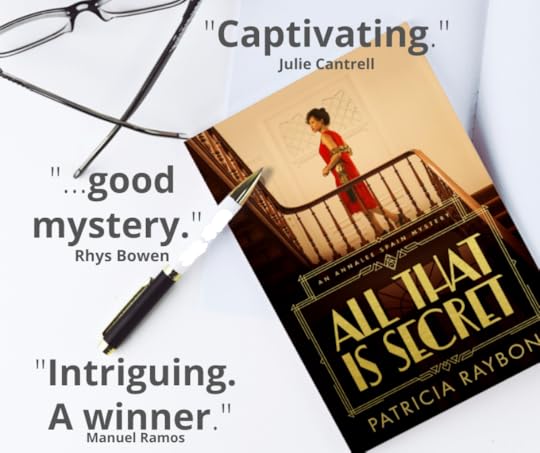
On the fiction side, she’s excited to announce the debut of her historical mystery series about a young theologian solving murder and crime in Colorado’s 1920s Klan era. All That Is Secret is set to releases Oct. 5, 2021, from Tyndale House. “Readers will be hooked from the first line…Captivating.” (Julie Cantrell, New York Times bestselling author.)
Pre-order now and save. Thank you for helping me tell booksellers that this is a book to watch.
ALSO, MY GIFT TO YOU: A FREE PRAYER GUIDE
To travel along on my Faith Journey and get monthly joy — and receive my free download — “The Busy Person’s Guide to Hearing God” — just click here.
Photo Credit: artawkrn at unsplash
The post Letting God Lift Up Your Head first appeared on Patricia Raybon.January 16, 2021
When the Madding Crowd Are Your Relatives

I sent a message to email friends recently. Then, I deleted it. I was trying to say something wise and woke about the insurrection at the Capitol Building.
My comments weren’t adding much, so I hit delete, shutting my mouth long enough to hear something far more valuable—a verse of scripture, Psalm 138:7. I’d explored it this week’s in Our Daily Bread. Writing of God, I’d cited David’s words saying:
“You stretch out your hand against the anger of my foes” (vv. 7 niv).
Reading it, I put down my microphone (or bullhorn?) to share not my so-called “wisdom” but God’s real hope.
FRET NOT EVIL MEN
So, here’s the Lord’s calming reminder, an echo of David’s thoughts in another of his songs, the empowering Psalm 37:
“Fret not yourself because of evildoers;
be not envious of wrongdoers!
For they will soon fade like the grass
and wither like the green herb.” (vv. 1-2 esv)
Instead:
Trust in the Lord, and do good;
dwell in the land and befriend faithfulness (vv. 3).
This “soft” response may feel insufficient in the face of enraged mobs committed to domestic terrorism. But as psalmist David declares: Trust God. Do good, too.
Then our more perfect union, which never has been perfect, might arise?
THE MADDING CROWD
 But what if the madding crowd, to use British novelist Thomas Hardy’s phrase, are your own relatives? The duped folks following QAnon and other off-the-wall conspiracy theories? The enraged people engulfed by disinformation campaigns which, as some say, may be the work of Putin and his henchmen eager to see America devolve into chaos?
A scary thought. Your own relatives? Good gracious. Storming the Capitol, wrongly equating Jan. 6th with the revolution of 1776?
Or, if they didn’t travel to Washington, did they stay home to wreak havoc in their own communities, homes and families?
THEN, GIVE THEM TO GOD
David, whose relatives were as noisome and troublesome as anybody’s, knew of which he spoke. It’s instructive, indeed, that he doesn’t waste his energy on anger at the madding crowd (those forever decried by Hardy in “Far From the Madding Crowd.”)
Instead, David’s psalms turn his focus, and his people problems, back to God.
Commit your way to the Lord;
trust in him, and he will act.
He will bring forth your righteousness as the light,
and your justice as the noonday (vv. 5-6).
Indeed:
Refrain from anger, and forsake wrath!
Fret not yourself; it tends only to evil…
…But the meek shall inherit the land
and delight themselves in abundant peace (vv. 8,11).
SO, PRAY?
Indeed. It’s prayer time. Big time. If ever people needed prayer, we saw them last week on our TVs and phones—banging on Capitol Building doors, but also on willing hearts. Saying what?
Help me. I’m lost. I’m confused. I’ve been duped. Lied to. I’m confused. Not a few will end up in jail, indeed—still fuming and believing they’re the martyrs and heroes.
In the photo above, a Metropolitan Police Officer begs for his life amid insurrectionists who threatened to “kill him with his own gun.” Appealing to their humanity, he yelled, “I have kids!”–prompting a few to wake up and help him.
And who’s turning in misguided folks? Family members. Thousands of “anguished Americans,” according to the Washington Post, “are turning in friends and family for their alleged involvement in the Capitol riots, contributing to more than 100,000 tips submitted to the FBI,” most submitted through the FBI’s web form.
One young woman turned in her mother, sorrowfully realizing things were “this far gone…it felt like a death, honestly.” Reading over her mom’s Facebook page, she cried over her insurrection photos and pro-Trump messages.
If that’s you and your family, the FBI awaits, indeed. But what else to do?
HELP GOD HEAL
What, indeed, if God is waiting on us? His reluctant prayer team? Waiting for us to pray for the raging and angry. For folks who want to hurt and kill the rest of us.
Waiting on us to drop to our knees, praying for folks who look like enemies? But they’re family?
As Thomas Hardy showed in his novel, “Far From the Madding Crowd,” the quiet rural regions seemed free from strife, but they spawned folks just as dangerous and misguided as any in a roiling city.
That irony invites us, therefore, to take our worries about madding people—and everybody else, including ourselves—to God. To repeat clear-eyed David:
Commit your way to the Lord;
trust in him, and he will act.
He will bring forth your righteousness as the light,
and your justice as the noonday (vv. 5-6).
Don’t believe it? Let’s try praying for the madding crowd, especially if they’re family members, folks drowning in rage and confusion. Put down our own wisdom and run to Him, letting him shape how we help.
Then watch God work. He’ll change more hearts than we can imagine. Starting with ours.
Patricia Raybon is an award-winning, best-selling author of books and essays on faith, race and grace — including I Told the Mountain to Move, My First White Friend, and her best-selling One Year devotional, God’s Great Blessings. She’s a regular contributor to Our Daily Bread Ministries and DaySpring’s (in)courage blog, and contributes often to Compassionate Christianity and to In Touch Ministries’ In Touch Magazine.
GET YOUR FREE PRAYER GUIDE
 To travel along on Patricia’s Faith Journey — and receive her free download — “The Busy Person’s Guide to Hearing God” — just click here.
Any Scriptures quoted, unless noted otherwise, are the New Living Translation of the Holy Bible.
Photo credit: Shannon Stapleton/Reuters
The post When the Madding Crowd Are Your Relatives first appeared on Patricia Raybon.October 6, 2020
Can Black Life Take a Break?

A white friend asked me recently to write about black lives—and why they matter—for her blog. I said no. Not this time. Not again. Not when people are still honking horns and driving into protesters and screaming.
Besides, I’m tuckered out, I told her. Weary from the fight. Worn out on the battle. As Fannie Lou Hamer, the civil rights icon, put it, “I’m sick and tired of being sick and tired.”
Why? It gets wearying trying to convince friends and neighbors that, while all life matters, black lives matter now because, for too long, we didn’t. Moreover, people should say exactly that: Black lives matter. Say it out loud. I’m Black and I’m proud. Is that so hard to just say?
For too many people, it is. So, I did an odd thing. I said, nope. Not this time. I’m taking time off.
And that was a first for me. After living while Black since birth—and writing while Black for my entire adult life—I said wait a minute. I’m stepping off stage for a sec to sit myself down.
To stop writing, speaking, talking, blah-blah-blahing. Because, after doing all of that, has enough changed? In fact, it hasn’t.
My conclusion sounds cynical and hopeless, and I despaired to stay in such a place.
So, I decided to compose this little essay—to test myself, to feel how I feel. But sharing it meant finding a relaxing photo to go with it. So, you know what happened. I struggled to find a picture of a Black person taking a break.
Protest photos? Angry photos? Desperation photos? They’re all over the place.
But the photo I finally found, at the top of this post, was taken where? In my town? In yours? Nope. It’s from—wait for it—Auckland, New Zealand. Yep. I had to go that far (with thanks to Diana Simumpande at Unsplash) to find a restful Black image.
Then this past Sunday, something shifted. During a virtual Sunday school at my church, I heard a message that transcended every frustration I’d been feeling. The topic?
God’s hope.
Of all things.
Our class leader, an impassioned Bible teacher, was teaching from the Book of Lamentations. That’s the take-no-prisoners book whose name sounds like a sucker punch. And a lot of it is. As the prophet Jeremiah, the probable author, anguished about Judah’s sorrow, with its capital Jerusalem vanquished and its people exiled to Babylon:
“Her filthiness clung to her skirts…her fall was astounding” (Lamentations 1: 9 niv).
On and on Jeremiah wails—sounding not unlike some of us these days, including me.
The big surprise, however, is that before this book ends, Lamentations becomes not just a book of wailing, but Jeremiah’s classic treatise on hope. Yes, of all things.
It’s ironic because Judah’s hard-hearted people hadn’t paid a penny’s worth of attention to Jeremiah’s desperate plea: Turn back to God. But they didn’t.
So God’s wrath met them. “He has aged my flesh and my skin,” the prophet wailed, “and broken my bones” (Lamentations 3:4 nkjv). He has “torn me in pieces…broken my teeth with gravel, and covered me with ashes” (vv. 11-16).
And yet? God is good. Or, as Jeremiah suddenly woke up and declared:
“Therefore, I have hope” (vv. 21).
The “therefore” has to do with what Jeremiah did. He finally recalled Who God is—yes, loving, good, merciful, kind and compassionate. Just for starters.
Talking in Sunday school last week about Jeremiah’s reckoning moment, our little group did exactly what Jeremiah did. We recalled God. Despite this long, long, long pandemic lockdown. Despite our struggle to find respite. We remembered our God. He is still good.
Then, we shouted hallelujah!
Jeremiah breaks it down like this:
“Through the Lord’s mercies we are not consumed,
Because His compassions fail not.
They are new every morning;
Great is Your faithfulness.
“The Lord is my portion,” says my soul,
“Therefore I hope in Him!” (vv. 22-24).
Talk about a turnaround. Jeremiah speaks what I’d neglected to do: to recall what God has always done—shown His mercy and compassion despite it all.
Our Sunday school pastor put it this way:
“Even when things are bad, they could be worse—but they’re not. Because of the Lord’s mercies, we are not consumed or destroyed. Why? God is sustaining us!”
So, when my Black life gets weary—and your life gets discouraged or confused—we can look to the Lord’s goodness to get going. Again. But, will you go with me?
If so, here’s the good news: He goes with us.
Patricia Raybon is an award-winning, best-selling author of books and essays on faith, race and grace — including I Told the Mountain to Move, My First White Friend, and her best-selling One Year devotional, God’s Great Blessings. She’s a regular contributor to Our Daily Bread Ministries and DaySpring’s (in)courage blog, and contributes often to Compassionate Christianity and to In Touch Ministries’ In Touch Magazine.
GET YOUR FREE PRAYER GUIDE
To travel along on Patricia’s Faith Journey — and receive her free download — “The Busy Person’s Guide to Hearing God” — just click here.
Any Scriptures quoted, unless noted otherwise, are the New Living Translation of the Holy Bible.
The post Can Black Life Take a Break? first appeared on Patricia Raybon.
July 4, 2020
Finding the Way Forward

A lady carrying a sack of small American flags stuck one into the grass on our front yard. Then onto the next yard. Then the next. This has happened every Fourth of July for decades.
It’s her group’s attempt to show “love of country” and American pride. Watching her work her way down the block, however, I don’t feel pride. I’m not sure I feel American — or know what that means anymore. I do, however, feel a certain resolve. Especially for finding our way forward.
Indeed, a week ago, thousands protested in my city (Aurora, Colorado), decrying the death of Elijah McClain, yet another unarmed black man — who wasn’t breaking the law — after a violent take down by police.
On TV last night, meanwhile, the American president gave his latest divisive speech at a Mount Rushmore monument, built in the indigenous Black Hills, by a sculptor with ties to the Klan.
Then, this morning, we awake to a Fourth of July where the refrain “with liberty and justice for all” is, to many in America — as the late author James Baldwin explained to film historian Ken Burns — “a very bitter joke.”
I wish these things weren’t true — that, instead, we lived in a country where sticking an American flag on a lawn is a simple expression of patriotism because all is right with our nation and world.
Instead, much is wrong. And we know the long list. No need to review the despair.
Our question, instead, is where do we go from here? Yes, to correct our whitewashed history. To dismantle our systems of injustice. For white friends to stop saying “but I’m not racist” and to become anti-racist. For black friends — and people of color and others on the margins in America — to be granted equal dignity, justice and opportunity.
Surely, change comes with taking off blinders and getting educated. I tried to offer that in a Facebook post after protests in Minneapolis — and also during other turning points in recent weeks.
I even cited Japanese American citizen, Fred Korematsu, who went to court to defy his detention in an American internment camp during World War II. It’s history many Americans still don’t know.
I also posted about the economic “incentives” that drive much racial injustice in the U.S.
Other posts followed, including my most shared — on the brutal police take down that left Elijah McClain brain dead here in my Colorado town.
But what could I offer today that would bring hope? To me? To you? To a nation ground down by too much bad sin, old denial and sour pain?
To people worried more about burning buildings than brutalized bodies, who label protesters “anarchists” and “the left wing mob” — instead of seeing all of us as fellow citizens, struggling to find a courageous way to common ground.
For an answer, I humbly turn to Paul. In the apostle’s last recorded epistle, he appeals to his young pastor Timothy. Paul is aware, indeed, he’ll soon be killed by an unjust enemy — his own government. Held in a cold Roman prison, Paul laments:
“The first time I was brought before the judge, no one came with me. Everyone abandoned me” (2 Timothy 4: 16). He cites the indifference of others to him, even telling Timothy of his need for a coat.
It’s a sad lament and his honest words — revealing the depth of this great missionary’s pain — pierce our hearts.
Yet in this last benedictory letter, Paul’s closing thoughts after his astounding ministry, he offers words that move us today from despair to resolve:
“But the Lord stood with me” (Romans 4:17).
Despite wrongs. Despite persecution. Despite this broken and fallen and cruel world. The Lord stood with me, Paul declares — and, today with us, the Lord STILL stands.
As Paul said, God “gave me strength so that I might preach the Good News in its entirety…and he rescued me from certain death.”
“Yes, and the Lord will deliver me from every evil attack and will bring me safely into his heavenly Kingdom. All glory to God forever and ever! Amen” (vv.18).
With this same bold assurance, we find His way forward at this moment of reckoning in our nation and world.
Recognizing, indeed, that correction is overdue, we can give up. Or we can stand. Stand boldly, indeed. Why?
The Lord stands with us. As we move forward, let’s stand, too. Boldly. How? Forever in Him.
Patricia Raybon is an award-winning, best-selling author of books and essays on faith, race and grace — including I Told the Mountain to Move, My First White Friend, and her best-selling One Year devotional, God’s Great Blessings. She’s a regular contributor to Our Daily Bread Ministries and DaySpring’s (in)courage blog, and contributes often to Compassionate Christianity and to In Touch Ministries’ In Touch Magazine.
GET YOUR FREE PRAYER GUIDE
To travel along on Patricia’s Faith Journey — and receive her free download — “The Busy Person’s Guide to Hearing God” — just click here.
Any Scriptures quoted, unless noted otherwise, are the New Living Translation of the Holy Bible.
March 28, 2020
Feeling Fearful? Don’t Forget to Praise God
Don’t wait. Don’t forget. Not a minute. Not a second. Instead, praise God now. If you and I wait to praise God until after this pandemic — or after something earthshaking and amazing or miraculous happens — we’ve got the wrong order. Praise come first.
Before the victory. Before the storm passes over.
Doubt that?
Paul and Silas, in their classic Bible praise story, were bound in chains in the dungeon of a jail — their bodies bruised and bloodied by their jailers. But they still lifted their voices to praise God.
And what an odd sound. Praise in a jail. Sung by two beaten, bloodied prisoners. It’s not logical.
Not logical, too, during a pandemic. As a Washington Post-ABC poll, said this week, 7 in 10 Americans say the outbreak is a source of stress, and 1 in 3 say it’s causing “serious” stress. (Further, 7 in 10 Americans are worried “they may catch the disease.”) Worldwide, with the grievous toll of sick and dying climbing, the fear is real. A matter of life and death.
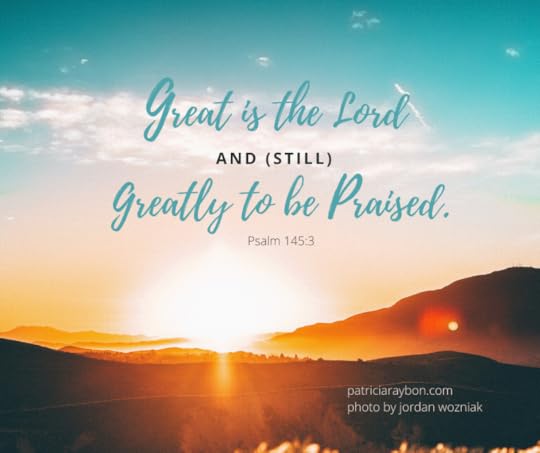
But as the psalmist declared, “Great is the Lord and greatly to be praised” (Psalm 145:3 kjv).
And Paul and Silas? Their situation was dire. Yes, life and death, indeed.
Yet as the book of Acts records, as the apostle and Silas praised God, the earth shook (Acts. 16:36). “And the prison was shaken to its foundations. All the doors flew open, and the chains of every prisoner fell off!” (v. 26).
Praise is power, indeed. It shakes off what holds us — unshackling the prison of stress, anxiety, desperation, and fear afflicting so many now. But praise comes first.
When we’re bound — by stress, prison, pandemic or any problem — in the midst of that pressure, it’s hard to remember we should praise God first, not after it’s all conquered, cleaned up and defeated. But while it’s happening, praise God — yes, in advance. That is the proper order of praise.
In fact, the word “praise” (which in Latin means “prize”) shares a root with the Latin word for “preposition.” As we recall from grammar lessons at school, a preposition is the word that comes before the main thing. Such words hold the “before” position — the preposition — setting up the main topic.
In our spiritual lives, praise sits in that same place. It holds the preposition, setting up God’s power, ushering in His Holy Spirit — so He can move in our hearts, circumstances, and lives.
And no prison chains — and no pandemic — can tie down that power.
As Jesus declared, “In this world you will have trouble. But take heart! I have overcome the world” (John 16:33 niv).
So, don’t wait for your chains to fall or your prison walls to crumble — or a virus to be defeated. Praise God first. Right now. Despite our circumstances.
Praise Him for being God. For His mercy. For His deliverance. For His hope. For His blessing. For His healing power. For His keeping grace. For His empowering Spirit. For His conquering right hand.
Then stand back.
Your prison walls are coming down!
Patricia Raybon is an award-winning, best-selling author of books and essays on faith and grace. This reflection was adapted from her best-selling One Year devotional, God’s Great Blessings. She’s a regular contributor to Our Daily Bread Ministries and DaySpring’s (in)courage blog, and contributes often to faith-based publications and ministries, including Compassionate Christianity and to In Touch Ministries’ In Touch Magazine.
GET YOUR FREE PRAYER GUIDE
To travel along on Patricia’s Faith Journey — and receive her free prayer guide — “The Busy Person’s Guide to Hearing God” — just click here.
Any Scriptures quoted, unless noted otherwise, are the New Living Translation of the Holy Bible.
166
March 13, 2020
God’s Your Guardian
Right after 9/11, my big sister Lauretta, who’s a psychologist — a licensed psychotherapist — shared great advice. “Turn off the news.” No, don’t bury your head in the sand. She wasn’t saying that. But stop obsessing — about the tragedy, the deaths, collapsed buildings, downed airplanes, all of it.
And you know where this is going. As the world battles the COVID-19 outbreak, where will we put our trust? On the nonstop news, with those crawl lines rolling ad infinitum under every broadcast?
Or will we put our trust in God?
“He’s your Guardian,” says Psalm 121 — and to that promise we’re clinging tight. But if we do, will God save us?
IS HE ENOUGH?
Such questions aren’t academic these days, especially if you grew up — as Lauretta and I did (and some of you) — before vaccines for dreaded diseases. Polio, measles, chicken pox, mumps. They raged through a neighborhood or school like fire.
As sisters, we both came down with all of these scourges except polio. But my husband, during his childhood, watched close friend Henry (filmmaker Henry Hampton) contract polio, leaving Henry with a severe limp on one side of his body for the rest of his life.
YET HE STILL GUARDS
To protect Dan, a powerful gamma globulin shot was administered to boost his immunity — so massive it temporarily knocked him out flat.
But what about God? He still guards, He still watches, Dan declares now. “Before I even knew Him, He was watching.”
I reflect on God’s guardianship today, thinking not just about Dan — and Henry, Lauretta, me, and our generation — but about 19th Century British evangelist Charles Spurgeon. During London’s great cholera epidemic of 1854, Spurgeon nearly worked himself to a frazzle serving the sick and dying and grief stricken while pastoring his overwhelmed congregation. As he said:
“All day, and sometimes all night long, I went about from house to house, and saw men and women dying, and, oh, how glad they were to see my face!”
But finally exhausted, physically and mentally, he felt “that my burden was heavier than I could bear, and I was ready to sink under it.”
NO PLAGUE SHALL COME NIGH
Dragging himself home after yet another funeral, he noticed, “as God would have it,” a humble paper pasted in a shoemaker’s window, written in “bold good handwriting” with these words:
“Because thou hast made the Lord, which is my refuge, even the most High, thy habitation; there shall no evil befall thee, neither shall any plague come nigh thy dwelling.”
Words from another strong psalm — this one Psalm 91.
GOD STANDS GUARD
A bell went off reading it. Cholera killed 23,000 people in Great Britain in 1854. As it raged, however, what it didn’t afflict was Spurgeon’s mind. God stood guard there, protecting Spurgeon’s thinking.
(Clear thinking also led London physician John Snow to see that contaminated water from the River Thames was causing the cholera. As soon as he convinced a London local council to remove the handle from a pump in Soho, the deadly epidemic ended immediately.)
For Spurgeon, for sure, focus on God steadied his faith. As Eugene Peterson’s Message declares:
“God’s your guardian.” Indeed. “Right at your side to protect you…God guards you from every evil, he guards your very life.”
Therefore, “He guards you when you leave and when you return,
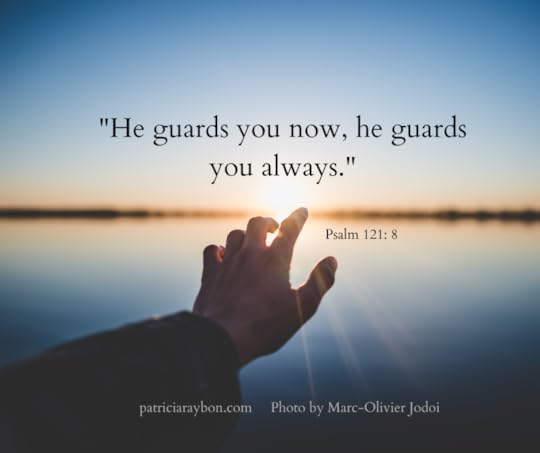
he guards you now, he guards you always. (Psalm 21: 5-8)
Sure, this Song of Ascent was written to encourage Israel’s pilgrims as they climbed the dangerous hills to worship in Jerusalem.
The deep truth of it, however, is that God as their guardian kept the lid on their frazzled, fearful, worried heads. He’ll do the same for us today.
And coronavirus? God is more than enough. So, he offers not our phones to grab first thing in the morning, but His Word to hold close. Not our worries to stir up and glorify, but His blessed assurance to trust. Helping us have faith, but not act foolish. To sanitize but stay sane — avoiding crowds, but staying close to Him.
HE GOES WITH US
When? Now and always. How? When we go out and come in. His promise:
He’ll go with us. Keeping our heads on straight, our eyes focused on Him. Then what do we see? Even in times like these?
He is all we need.
Patricia Raybon is an award-winning, best-selling author of books and essays on faith and grace — including My First White Friend, I Told the Mountain to Move, and her best-selling One Year devotional, God’s Great Blessings. She’s a regular contributor to Our Daily Bread Ministries and DaySpring’s (in)courage blog, and contributes often to Compassionate Christianity and to In Touch Ministries’ In Touch Magazine.
To travel along on Patricia’s Faith Journey — and receive a free copy of her “Busy Person’s Guide to Hearing God” — please click here.
Any Scriptures quoted, unless noted otherwise, are the New Living Translation of the Holy Bible.
664
February 4, 2020
Facing Our February Fears

Well, it’s been quite a month. Yes, already. I was pondering this on this first week of February, stewing a little over the galloping pace of the year – and at the hard things already in it. You know the list. Kobe Bryant, impeachment tension, coronavirus, Super Bowl, J-Lo, Iowa voting, your drama, my drama.
Indeed, on a small scale, in my corner of the world, we had 70 F temps on Sunday – and today? Icy snow and barely 10 F.
Then, I looked outside our kitchen window after dinner. The sky a couple of nights ago was a shimmering testimony. Yes, glowing anyway. Despite news. Yes, singing anyway. Despite politics and tragedy and more. If we look up, anyway, the heavens give us this to remember:
“The earth is the Lord’s, and everything in it,
the world, and all who live in it.” Psalm 24:1 niv
When David wrote that psalm, his world was in turmoil, too. As Israel’s new king, he’d faced a murderous Philistine army. True, the Lord intervened, saving him. “The Lord did it!” David exclaimed (2 Samuel 5:20). Then, more drama ensued. (You can read the whole story in 2 Samuel 5-6 chapters.)
SO, KEEP ON DANCING
It ends with David dancing before the Ark of the Covenant as he led it into Jerusalem, dancing “with all his might” – in fact, with such abandon that Saul’s daughter Michal, looking down from her window, was “filled with contempt for David” (2 Samuel 6:16).
And what did David do?
He praised God more.
It’s a vital response. Or, in times of crisis, as American journalist Mike Wallace recently asked, “How do you pack your kids’ lunches…check the air on your car’s tires?” Especially if you’re feeling afraid? Or scared or anxious?
Indeed, should you organize, march, mobilize, rally people to vote? “Or, do you gather for a neighborhood barbeque, head to the church social, take a walk through the woods with your partner?”
Wallace offered a great answer. “You do all of these things.” As he said, “Even during World War II, there still was a World Series. Even during Vietnam there were school plays. Even after 9/11 there was time for coffee with a friend.”
More than all, we trust God. Fearing no man or anything else. Here’s the Lord’s reminder from the prophet Isaiah:
“Don’t be afraid, for I am with you.
Don’t be discouraged, for I am your God.
I will strengthen you and help you.
I will hold you up with my victorious right hand.” (Isaiah 41:10)
And that is how we face our fears in February. Or in any other month. We dance like David. Praise like Paul. Believe the prophet’s report. Follow the hope of Christ, held up by His victorious right hand. As He said:
“Take courage.” Indeed. “I am here!” (Matthew 14:27)
So, look up. He’s still on the throne.
Patricia Raybon is an award-winning, best-selling author of books and essays on faith, race, and grace. She’s a regular contributor to Our Daily Bread Ministries and DaySpring’s (in)courage blog, and contributes often to Compassionate Christianity and to In Touch Ministries’ In Touch Magazine.
To travel along on Patricia’s Faith Journey, please click here.
Any Scriptures quoted, unless noted otherwise, are the New Living Translation of the Holy Bible.
72
January 1, 2020
Loving God Right in 2020

Not just half way. Not fingers crossed. Not looking over my shoulder—whistling in the dark, tiptoeing around fear, doubt and uncertainty into the New Year.
Instead, as 2020 begins, I propose this one thing.
Love God Right.
That’s what I wrote at the top of my 2020 Goal List. I scratched out “Be Pleasing to God.” Which isn’t a wrong pursuit. As the Bible says, don’t neglect “to do good and share with those in need” for such sacrifices “please God” (Hebrews 13:16). Which matters for certain.
But as this New Year starts, and I set down my life goals for 2020, I simply hear Jesus. He is saying:
Love God Right.
That’s what He urged the questioning Pharisees. They dared ask of Christ which commandment is best. His answer rings down through the ages. The best law? It is this:
Love God. Right.
With all our hearts, souls and minds (Matthew 22:34-38). Then everything changes for the best. Our new year. Our plans. Our dreams. Our families. Our calling. Our answering. Everything we have. Everything He has to give us.
Want all that and more? In 2020?
Love Him right.
And what does that mean? At least three things:
Believe God More. Especially for Who He is. Sovereign, powerful and right. How did David put it? How great thou art! “For there is none like you, and there is no God besides you” (2 Samuel 7: 22 ESV). If I just believe that, every year–and every tomorrow–will be its greatest.
Worry Less. Just rest in God. Stop trying to fix things. To manage things. To prove things–or to prove myself. Instead, let’s rest in Him–abiding in His Word. Then after resting, we can do this:
Love Others Right. Meaning just this: obey God’s commandment. How did the Lord say it?
“Love your neighbor as yourself” (Matthew 22:39-40). That’s the second law that He said matters most.
Just love folks. Red and yellow, black and white. They are precious in His sight.
Remember that song?
In 2020, I commit to sing it. To live it out, too. But first? Help me, Lord, to love You.
Patricia Raybon is an award-winning, best-selling author of books and essays on faith, race, and grace. She’s a regular contributor to Our Daily Bread Ministries and DaySpring’s (in)courage blog, and contributes often to Compassionate Christianity and to In Touch Ministries’ In Touch Magazine.
To travel along on Patricia’s Faith Journey, please click here.
Any Scriptures quoted, unless noted otherwise, are the New Living Translation of the Holy Bible.
Photo Credit: Jon Tyson @ unsplash
164
February 4, 2019
Letting God Fight This Battle

It was Saturday and I wasn’t watching the news. No, not listening to a governor not resign over a blackface photo from 1984. So I didn’t hear him admit he darkened his face “a little bit” for a dance contest that same year, wearing a Michael Jackson costume. “I had the shoes, I had a glove. I used just a little bit of shoe polish on my cheeks, and the reason I used a very little bit is because – I don’t know if anybody’s ever tried that – but you cannot get shoe polish off.”
No. I didn’t listen to that. (Or that he won that dance contest.) Nor did I listen when a CNN newsman say the nickname “Coonman” appeared in a Virginia Military Institute yearbook for this same Virginia leader.
No.

I couldn’t listen because these insults just hurt. Not everyone understands that. This Virginia governor’s wife started to smile, as if it was funny, when he talked about applying blackface to mimic Michael Jackson.
Her look reminds us of the TV news host who declared blackface “OK’ when it’s sported for Halloween.
It’s an ongoing nightmare, however, when in 2019, some of us still find ourselves explaining this problem – yes, still bemoaning all the ways Jim Crow buffoonery has been used to demean the dignity of those whose skin is darker than white.
And yet? While reflecting on the hurt of this practice, and the tragic racial history of our country – and on the debate over the Virginia governor to just resign already – I finally saw what I did need to hear:
This is not our battle.
It’s our God’s.
I surrendered to the fullness of that while stewing, yet again, over this latest insult. Who among us, indeed, can’t recall the long record of hate in our nation — across every spectrum — in movies, songs, frat house parodies, jail cells, courtrooms, work places, school houses and, yes, in Halloween costumes, all ridiculing the dignity of dark skin by making fun of it.
Can we even calculate the harm it has done? Not just in emotional trauma and stolen opportunities — but by splintering our culture, relationships, minds, spirits and hearts.
Today, however, I reflect on hope — indeed, on a little devotional I wrote recently on keeping our eyes not on our troubles, but on God. Yep, I can write devotional-y stuff like that going and coming.
But I didn’t listen close enough to what I said. Don’t look at our troubles. Instead, focus on the One who fights them. A boatload of Bible folks died to teach us that. Thus, we now have a choice:
Keep stewing on these crazy-making incidents. Or focus on God. And His healing power. And our right to step into His mighty deliverance and receive it.
For help, here’s a short Bible story. You may know it well. It’s about a King Jehoshaphat – who’s having a terrible, horrible, no good, very bad day. Enemies are amassing like flies. Yep, the Moabites, Ammonites, “and some of the Meunites” have come to wage war on this overwhelmed king (2 Chronicles 20: 1-25).
Looking at their force, Jehoshaphat’s spirit sinks. He’s flat-out terrified. Begging God for help, Jehoshaphat orders everyone in Judah to begin fasting. Then Jehoshaphat prays. “O LORD!” (vv. 6-12).
And you know that kind of praying. God, help me. This unendurable blackface mess and this Jim Crow trauma and this systemic injustice and…
It’s long, these prayers of ours. So was Jehoshaphat’s desperate prayer. But God hears. Indeed, Heaven opens. Then look: the Spirit of the Lord arrives. Yes, our help.
Indeed, He’s here now. And He understands. And He knows. Moreover, He sees. Indeed, He speaks through a man, Jahaziel – whose name means “God sees.”
“This is what the Lord says,” Jahaziel declares. “Do not be afraid! Don’t be discouraged by this mighty army, for the battle is not yours, but God’s” (vs. 15 nlt).
In fact, says Jahaziel: Stand still – and “watch the Lord’s victory” (vs. 17).
Believing that, Jehohshaphat called singers to sing praises before the battle – which fizzled because the enemies turned on each other. (Yep, it’s a great story.)
And blackface? And “leaders” blacking up and thinking it funny? And Jim Crow trauma? And systemic injustice? And governors who don’t understand?
God’s got this.
Sounds cliche? Perhaps. Or we can surrender the fight by singing our Lord’s praises – following Him to victory. And then? We eternally win.
Patricia Raybon is an award-winning author of books and essays on faith, race and grace.
To travel along on Patricia’s Faith Journey, please click here.
Any Scriptures quoted, unless noted otherwise, are the New Living Translation of the Holy Bible.
Photo Credits: Miguel Bruna @ unsplash; Parker Michels-Boyce for The New York Times
10