Debby Handman's Blog
April 26, 2026
What Feminine Empowerment Books Don’t Tell You
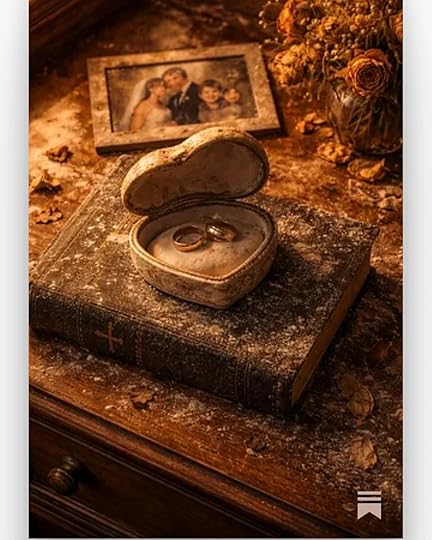
 Leaving was Right. It Still Cost Me Everything
My marriage ended because my husband had an affair. He refused to stop. I had no choice but to leave him. It was what everyone told me to do. It was the right thing to do.
But… that didn’t mean I was entitled to a happy ending.
I remember walking through my house, an apparition of my former self. With each creak of the floorboards, my back tightened into painful knots. When I disciplined the kids or set boundaries, my voice felt tremulous and weak, a wisp of warm breath in cold air. The walls were quiet. There was no one to back me up.
At night, I missed his presence, the soft, steady breathing that had quietly anchored me into sleep. I missed having a husband.
Leaving a marriage is never easy, not even when you’re justified in doing so. One of life’s hardest lessons is that there is a cost in doing wrong and a cost in doing right. In the real world, right and wrong are rarely clean lines. We are human—flawed, messy—and divorce is the embodiment of that mess.
Betrayal was at the center of my decision to leave, but the pain of infidelity forced me to face the fears of the unknown. If I left my marriage, what would be waiting for me?
I already knew the answer.
A lot of struggle. A lot of suffering.
This is what the feminine empowerment books don’t tell you. Choosing to leave your husband, even one who is cheating on you, carries a cost. You might regain your dignity, but you may also lose your financial stability, companionship, comfortable routines, the family unit, your sense of belonging, even parts of your identity. The list goes on.
Continue Reading Continue ReadingWhat it means is this: if a woman decides divorce is the best option, it is only because she cannot stand who she will become if she stays.


April 19, 2026
Three Rules for Surviving the Ruins
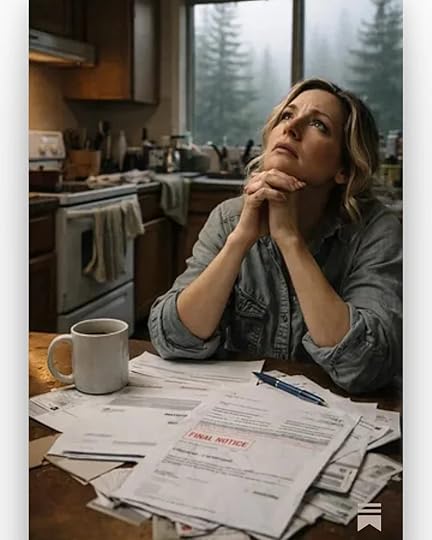
I threw up into the toilet the night my husband told me he was having an affair.
After a few hours of processing his confession in a state of disbelief, I started shaking. I was confused. My mind seemed fully intact, but my body seemed to have a mind of its own. I was lightheaded. I needed to lie down, but then I was hit with nausea. I ran to the bathroom and knelt at the foot of the toilet bowl gripping its sides. I vomited over and over again till there was nothing left. My body continued to shake with violent spasms. I was exhausted.
The tile floor at the foot of the toilet looked as inviting to me as the softest feather bed. My face and chest felt like they were on fire. I desperately wanted to feel the cool of the tile on my cheek. I spread out on the bathroom floor and brought my knees to my chest.
I didn’t pray. I didn’t call out to God. In the fetal position, I rocked back and forth to ease the spasms and cried.
I didn’t know it then, but this was grief.
He came for me, his presence as heavy and impenetrable as river mist. It didn’t just settle over me, it seeped into my very pores.
By the time you reach middle age, he is no stranger. At least, he is no stranger to me.
Grief is the companion of trauma and loss, and we cannot move through the world without his presence. The moment we choose to love, to care, we open ourselves to the pain of losing. It leaves us with a haunting question:
How do we move forward when we lose what matters most?
The reality is that we will move forward whether we want to or not. As a minister in the field for over twenty years, I have watched grief transform people. Some emerge forever embittered. You can see the anger carved into their faces, expressions frozen in a permanent winter of pain.
Others come out different—softer, kinder—as if they looked the reaper in the eye and reached a certain understanding with him. Some even learn to laugh again, because the reality of death has made the gift of life all the more precious.
Emily Dickinson explores this in her poem, Because I Could Not Stop for Death. She portrays Death as a polite, civil companion sitting beside her in a carriage. They travel through childhood, middle age, following the path of the sun:
We passed the Fields of Gazing Grain –We passed the Setting Sun –
As the ride continues, the mood shifts. The speaker is dressed in gossamer—the gown of the dead—and driven toward a “House that seemed / A Swelling of the Ground.” The poem reminds us that from the moment our lives begin, death rides with us. His presence shapes the human experience, and every experience must eventually end.
Our cultural coping mechanism is to do the opposite of Dickinson: we simply don’t think about it. We focus on the “good times” and ignore the dark passenger in the carriage. This works perfectly well until grief plops in your lap, uninvited and aggressive, leaving you woefully unprepared.
This is why we need these three rules. If we know grief is inevitable, we must be prepared. Think of these rules like carrying a navigation device through a large and dangerous city; do not walk through life without the tools to find your way.
Read the Full Article Read the Full ArticleApril 12, 2026
The Slurpee and the Apology I Never Got
 The Missing Sorry
There was one thing I needed from my husband after the affair—and he refused to give it to me: an apology. “I’m sorry. I was wrong. What I did was deeply wrong.”
I wanted a genuine apology. I waited for a long time for that apology. It never came.
Now, I wonder what might have happened if I had received it. Would we still be together? I will never know. I lived for years in the silence of that missing “sorry,” trying to maintain my dignity while my world was in ruins.
The Battle of the SlurpeeI started my teaching career in a logging community in Oregon nearly 20 years ago. As a new teacher, I was given the majority of “at-risk” students. Although they were 9-12 graders, many could hardly read or write. I learned quickly that by forming relationships and showing interest in their lives, we could form a rapport. I could usually get kids to work with me. Riley was the exception.
The first day of class, he wrote sexually inappropriate comments about me on his desk. I was horrified and humiliated. My fragile authority and years of training reduced to one word—a word more appropriate for animal behavior in a cattle yard. I felt cheapened and humiliated.
I wrote a referral; he was given a detention.
He was not really sorry.
Despite a school rule, he continued to come to class with a 32oz soda, gulping it noisily while I tried to teach grammatical structure. I was trying to pick my battles, but the anger was building. I sort of hated the kid.
My rage was building and it reached a boiling point. He brought a 64oz Slurpee to class—a drink the same size as his desk! I had to restrain myself from crashing out. Even as I tried to teach the other students, I couldn’t stop picturing his stupid face and hearing his ridiculously loud slurping while I introduced parts of speech.
I knew it for what it was: a not so subtle attack on my authority.
I had enough! I grabbed the Slurpee and threw it in the wastebasket.
“Your time to drink a Slurpee was during lunch! I’m done. I am just done!” I yelled in his face.
His anger matched my own. “You c@#t!” he screamed. “You f#$%ing c@#t!”
In my whole life, no one had ever called me the “See You Next Tuesday” word. I was stunned. He bolted from the room and the rest of the class watched in wide-eyed silence. You couldn’t have heard a pin drop.
Read the Full ArticleApril 10, 2026
The Peace That Wasn’t Peace
When I first learned of my husband’s affair, I was not able to fully process the enormity of the consequences of his betrayal. Only after a few years of living through the fallout did I realize how nearly every facet of my life had been impacted. My challenge was not only to survive it, but to come out the other side without descending into bitterness and anger. It was not easy.
In the first few months of betrayal, I longed to return to the past, the days when we were happy and harmonious. I lied to myself, believing that counseling and ceaseless striving on my part could repair the damage to my self-image, my family, and the peace that had been stolen from me and my children.
Even before the divorce, I found that my ex was still adamant about being a part of my life. He would call and text and come over unannounced even after we had argued and officially separated. Sometimes it was difficult to get him to leave. He tried to maintain the same banter with me, almost like he too wished we could turn back the dials of the clock and return to that simpler time. I had tried to set up boundaries, but wavered. I wanted to make everything all right again too, more than anything.
But it felt dishonest. A grenade had detonated our lives; we couldn’t pretend it never happened. As a Christian who had been taught to seek forgiveness when wronged and to see mercy as ultimate righteousness before God, I saw his attempts at emotional closeness as a sign of repentance. I wanted him to be sorry for what he had done, to believe that he wanted to make what he destroyed whole again, but I had mistaken repentance for normalization.
Read the Full ArticleApril 6, 2026
No Pretty Bow
Toward the end of my dying marriage, I was paying the concealer tax just to survive the day. Every morning, I spent twenty minutes layering three different brands under my eyes to hide the dark circles of a sleepless marriage. I wasn’t just hiding grief; I was protecting myself. I was protecting a brand. I was the Pastor’s Wife, the Teacher of the Year (not really, but I aspired to be) and I was terrified that if the pews saw my exhaustion, the whole “House on Sand” would finally give way.
Everything collapsed when my husband confessed his affair. The details when they came to light were so horrible, I can still remember the tang of bile in my mouth. It was the taste of a life unhinged, my stomach revolting even before my mind had fully processed the trauma of betrayal.
When The Pretty Package Goes Up in Flames“Why?” It was the first question I posed when my marriage and all the packaging that came with it burst into flames right in front of my eyes. How could the God who loved me allow the foundation of my life to crumble?
There are so many things I know now that I didn’t know then. At that time in my life, I couldn’t have grasped the idea that my life might one day feel better, even single and unmarried. For the woman I was ten years ago, it seemed a fate worse than death. Yet now I look at that woman differently. She wanted to be happy, but her whole life was built around pleasing others—creating an image of herself that felt admirable and “ministry-ready“ rather than cultivating honesty and peace before God.
Continue Reading the Full Article Here
I Couldn’t Look In the Mirror After My Divorce
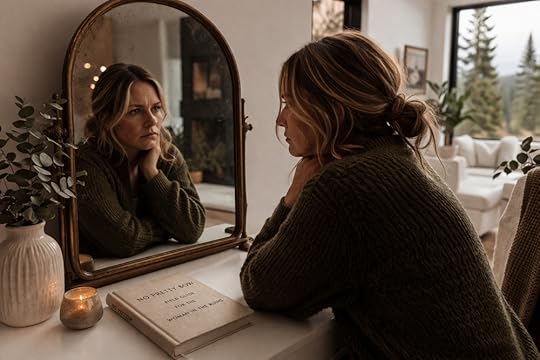
After my divorce, I couldn’t look in the mirror without wondering what was wrong with me.
For at least a year, every time I caught my reflection, I hardly recognized the woman staring back. All I could see was someone who had been cast aside by the person who was supposed to love her the most. She looked ugly. Unlovable. Replaceable.
Blaming myself was easier than facing the complexity of infidelity, betrayal, divorce. It gave the pain somewhere to land.
When it came to my appearance, my femininity, my sense of desirability, I came out of my divorce with the confidence of a flea. I could not scrub myself clean, not from divorce and all the failure and rejection it embodied. On the worst days, I’d look in the mirror and think, No wonder you’re single. No matter what I wore, how much makeup I applied, or how much coffee I drank, I couldn’t shake the feeling that something in me was fundamentally not enough.
Those thoughts don’t stay contained. When I let them wander unchecked, I stopped showing up. I didn’t have the energy to invest in other people because I felt too awful about myself. One thought followed me everywhere: Of course you’re alone. Just look at you.
The world feeds those thoughts. Everywhere I looked, I saw a curated version of life that I didn’t fit into. From Facebook to Hollywood a litany of perfect bodies, perfect families, perfect vacations. It was hideous. It felt like everyone else had been invited to a party I didn’t even know existed.
And I believed it.
Read Full Article HereMy Essays have moved to Substack.
March 29, 2026
The Mist and the Masonry: Finding Wisdom in the Rebuilding
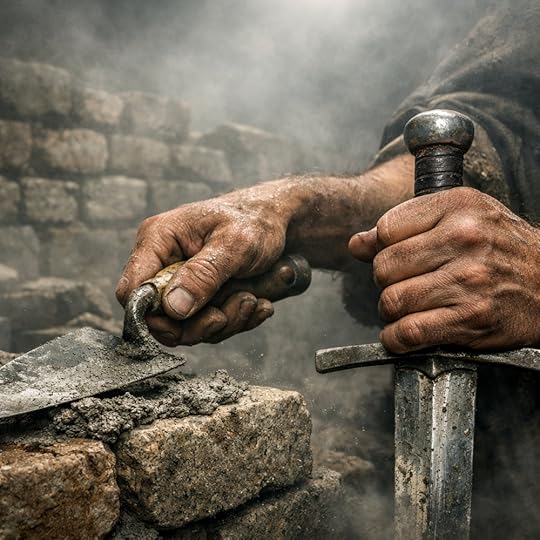
hands of craft and battle
In the first few months after separating from my husband, my house felt surreal, too quiet. My thoughts were louder than the room. The pictures on the wall, the furniture we chose together, the house itself was a monument to a life that no longer existed. I wish I could tell you that post-divorce life is easy, but it isn’t.
There’s a book by Stephen King about a mysterious mist that moves into a small American town. The fog becomes a presence, descending upon the village and seeping into every corner—an unescapable, oppressive force that distorts reality itself. The fog spawns dark creatures, and the human beings living in it begin to sour as it seeps not only into the atmosphere, but inside of them. The people turn on each other, intent on destroying one another as the fog alters their thinking. They become the very monsters they once feared.
The fog destroys clarity. Its heaviness is so palpable you can almost taste it. Its goal, it seems, is to turn people angry and bitter. The people begin to believe the fog is everywhere, that the world has come to an apocalyptic, violent end.
This is how it felt at first after my divorce. The reality of my pain was ever-present. I would start laughing with a friend and then the fog would press in. I would be grading papers and the intrusive thoughts would return. I had to fend off the attacks of my own mind—the lies that I was unworthy, undesirable, that somehow this was what I deserved.
The goal after divorce, or after any kind of trauma, is to not descend into the darkness of your own thoughts. It is all too easy to become angry, to turn that anger outward or inward, to blame the world or yourself. But the goal is not to blame. The goal is to heal, to recognize that there is something to learn even in the worst of our experiences.
When I left my marriage, I had chosen correctly. My husband had confessed an affair. He told me he was stopping it, but he didn’t. To stay would have meant the loss of my dignity, the loss of truth. I would have had to pretend every day that he wasn’t doing the things he was really doing. It was not a life I could live, and it likely would not have lasted long even if I had tried.
Yet, just because it was the right choice didn’t erase the pain. In some ways, it made it worse. I believed that if I did the right thing, I should reap the rewards of doing the right thing.
This is sometimes the shocking revelation of the justified: being right doesn’t make it hurt less. It does not lessen the struggle. In fact, it can make the injustice feel sharper, more personal. Why am I in so much pain when I’m doing the right thing?
Self-governance is a concept I believe in, and when we’re in pain, our training in self-governance—our patterns of survival—can steady us. We focus on today rather than allowing intrusive thoughts to take over. I will wake up and get dressed in the dark. I will go for a walk. I will make a nutritious meal for my kids even as my hands tremble. I will go to work and stay busy. It was hard, but it was a place to begin.
Rebuilding your life after collapse is a concept well worn in ancient texts, especially the Bible. The Jewish people became the forerunners of resilience, their small territory constantly under siege. The Old Testament is a series of narratives revolving around home, siege, exile, return, and rebuilding. It is the story of a people who understood that survival itself can be a form of spiritual growth, and that God can be found even in the process of rebuilding.
Just as the mist in King's story spawned monsters, Nehemiah faced 'monsters' of his own, men who used mockery and lies to destabilize his efforts to rebuild the temple. Nehemiah was a Jewish official in the Persian court. He was given permission to return and rebuild the walls of Jerusalem after the Babylonian exile. It was an exciting time, but one of extreme vulnerability. The Jews were still under Persian rule. The Persians were more permissive, but they were still in power. Enemy forces surrounded Nehemiah and his efforts, including Sanballat the Horonite, Tobiah the Ammonite, and Geshem the Arab. These figures engaged in psychological warfare, mocking the rebuilding effort: “What are these feeble Jews doing?” They belittled the work: “Even a fox climbing on it would break down their wall.” Geshem accused them of plotting rebellion against the Persian king, calling their motives and integrity into question.
The fog descends and attacks us. We question our ability, our work, our purpose. And if we listen, we can lose our will to rebuild, to grow, to move forward. The voices that surround us can become the voices within us.
“Those who carried materials did their work with one hand and held a weapon in the other.”— Nehemiah 4:17
Self-governance is the awareness of these threats and the preparation for them. When you are vulnerable—after divorce, grief, or trauma—the rebuilding of one’s life requires wisdom. Recognizing the forces that seek to destroy our confidence, belittle our efforts, and question our integrity. We build with a tool in one hand and a defensive weapon in the other.
Nehemiah uses the Hebrew word melakhah for “work” in this passage. It is not abstract. It is daily, intentional labor. The word banah, to rebuild, carries the larger vision—the restoration of what was lost. But melakhah is where we live. It is the work of survival, and it must be protected.
After tragedy, we are all in a process of banah and melakhah. We are rebuilding what was lost in the hope that it will be stronger, more resilient, more whole. In the meantime, each day is melakhah—the daily work, the quiet fight for stability and meaning.
Self-governance is the act of holding both: the tool and the weapon. The work of rebuilding and the defense of it. This is why healing cannot be rushed. It must be built, and guarded, one day at a time.
I used to wonder why being "right" didn’t make the silence of my home feel any less heavy. I know now that the truth didn't come to rescue me; it came to give me the materials to rebuild. The silence isn't an empty void anymore. I can hear the sound of my own work, one brick at a time. The fox can mock the wall all it wants. I’m not looking at the fox. I’m too busy rebuilding.
Stay for the RebuildingThe fog eventually lifts, but the walls are built one day at a time. Subscribe to receive Debby’s weekly reflections on resilience, self-governance, and the quiet dignity of starting over.
Email Address Sign UpWe respect your privacy.
Thank you!Debby Handman is a former minister (M.Div), educator, and single mother writing from the misty crossroads of faith and survival in rural Oregon. She is the author of the acclaimed novels House on Sand and The Gamb ler’s Wife , and her upcoming release, House of Broken Vessels.
March 22, 2026
They Said the Church was Safe—but it Wasn’t
Marriage is terrifying at its core. We are most afraid of being known—and not being loved. After years of searching for the right person, you finally find the one who presumably wants to spend the rest of their life with you, and you feel the same. But after years of togetherness through every season of human stress, there is no mystery left. You’ve seen each other without makeup and in stained sweatpants, fat, thin, out of shape, stressed over problems at work, arguing over dirty dishes at the kitchen sink. When the masks are removed, we are completely vulnerable in front of each other, and we don’t always like what we see.
Will they still love me when they really know me?
Or am I only lovable in pieces?
Divorce is our worst fear incarnate. He or she has seen everything about me and decides they want out. After really knowing me, they say, I chose wrong. I don’t want to be with you anymore.
It may be a simplistic framing, but it captures something essential about being human: our deep-seated fear of being rejected when we are most vulnerable. I have lived it and survived it.
The church provides a spiritual form of marriage. Before the altar, in the colored light of the stained-glass windows, believers can remove the veil and finally be fully known in a room of witnesses. But if we are rejected, uncared for, or neglected after laying ourselves bare, it leads to a spiritual divorce. You went to a place you hoped would be safe, a place where you would be loved and protected, and the opposite happened. You were hurt, abused, or mistreated. It is the reason why nearly half of American Christians are now unchurched.
Read the Full Article I sat down to talk a bit more about the stigma of divorce in our churches and why it feels like a 'special stamp' of failure. You can watch that hereDebby Handman is a former minister (M.Div), educator, and single mother writing from the misty crossroads of faith and survival in rural Oregon. She is the author of the acclaimed novels House on Sand and The Gambler’s Wife , and her upcoming release, House of Broken Vessels.
America’s Quiet Divorce

“We are most afraid of being known and not being loved.” — Brené Brown
Marriage is terrifying at its core. In a marriage we are finally known. After years of searching for the right person, you finally find the one who presumably wants to spend the rest of their life with you, and you feel the same. But after years of togetherness through every season of human stress, there is no mystery left. You’ve seen each other without makeup and in stained sweatpants, fat, thin, out of shape, stressed over problems at work, arguing over dirty dishes at the kitchen sink. When the masks are removed, we are completely vulnerable in front of each other, and we don’t always like what we see.
Will they still love me when they really know me?
Or am I only lovable in pieces?
Divorce is our worst fear incarnate. He or she has seen everything about me and decides they want out. After really knowing me, they say, I chose wrong. I don’t want to be with you anymore.
It may be a simplistic framing, but it captures something essential about being human: our deep-seated fear of being rejected when we are most vulnerable. I have lived it and survived it.
The church provides a spiritual form of marriage. Before the altar, in the colored light of the stained-glass windows, believers can remove the veil and finally be fully known in a room of witnesses. But if we are rejected, uncared for, or neglected after laying ourselves bare, it leads to a spiritual divorce. You went to a place you hoped would be safe, a place where you would be loved and protected, and the opposite happened. You were hurt, abused, or mistreated. It is the reason why nearly half of American Christians are now unchurched.
The quiet divorce of Christians from the church is a sad story, and one that is gaining momentum. Paul tells us in Ephesians that husbands are to love their wives as Christ loved the church, a sacrificial love, agape, that centers on what is best for the other. It is not dependent on performance or worthiness. Most of us are desperately seeking this kind of love, yet in many churches, seekers encounter something very different: a performative culture, and leaders who use their sheep for their own gain rather than loving and shepherding the flock.
Performance culture is the quiet economy of quid pro quo. It rewards those who already have something to offer—the rich, the talented, the healthy, the beautiful. If you are seen as having little to offer, you become invisible. When this mentality shows up in holy places, it doesn’t just disappoint. It wounds. The seeker goes looking for God and instead finds something transactional in its place, a marketplace in the place of the altar.
If I am being honest, I no longer enter any human space with my heart on my sleeve. You can call me cynical, but I am older and no longer naive. I do not expect to experience agape love as a daily norm, even among fellow Christians. If I encounter sacrificial love, even in moments, I consider myself blessed. I am also not naive about myself. We have all sinned and fall short of God’s glory as Paul tells us in Romans. In other words, how can churches ever be a safe place if we’re all so, so… human?
Perhaps it isn’t Bibles we should be bringing to church, but boxing gloves. This exposes the real question: Do we have the right to be vulnerable in a church?
When we trust people with our secrets, we must hope they are spiritually mature enough to carry that weight. Many are not. True spiritual sharing grows out of trust over time. Christians must practice discernment; we can be loving while still recognizing that entrusting certain people with our vulnerability would be unwise. Jesus told his followers to be as innocent as doves and wise as snakes; we are told to carry discernment with us at all times.
Church hurt is real. According to a recent LifeWay poll, one out of three Christians has left a church due to disenchantment with leadership. In Ezekiel, the prophet condemns the false shepherds: “Ah, shepherds of Israel who have been feeding yourselves! Should not shepherds feed the sheep?” The word “shepherd” comes from the Hebrew word ra’ah—care, provision, protection, and presence. It is the same ra’ah the Psalmist promises when he says, The Lord is my shepherd. The sheep do not earn this care. Ra’ah is the natural calling of the shepherd and it flows from him like water from a stream.
That is the standard.
The shepherd calling is the same calling of a marriage partner. It is the calling of the church. The spouse is called not just to be present, but to care deeply, to shape their life around the care of their partner.
Yet we live in a world where the spouse betrays and the shepherd neglects. The standard often feels just out of reach.
But Ezekiel does not end there. He promises hope for the scattered. God says He Himself will search for His sheep. He will not abandon them.
Despite my own failed marriage and fair amount of church hurt, I do not believe we should give up entirely on the idea of safe places. If the church is indeed our spiritual home, we must remind ourselves that homes can be safe and loving even when parents aren’t perfect. Mistakes can lead to wisdom when parents are committed to what is best for their children. It is care, not perfection that makes the difference. The church too can be flawed, but still be a home and a good one. A good home is worth fighting for. Leaving a church is no easy matter and shouldn’t be. But this is also true:
If there is no evidence of ra’ah—no real care, no protection, no willingness to carry the weight of others, and little evidence that this will change—then it is not what it claims to be.
And you are allowed to leave.
The problem is not that we long for too much. It’s that we too often settle for too little.
Debby Handman is a former minister (M.Div), educator, and single mother writing from the misty crossroads of faith and survival in rural Oregon. She is the author of the acclaimed novels House on Sand and The Gambler’s Wife , and her upcoming release, House of Broken Vessels.