
Hal Arnold's Blog: Pave the Way!
September 14, 2021
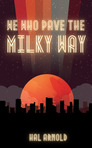
Why I Wrote We Who Pave the Milky Way
We Who Pave the Milky Way is the culmination of the emotions of ten years of my life. Every time I was angry, sad, or happy, I put my pen to the paper and wrote the stories of Jacob, Samuel, Saul, Emmanuel, Jana, Derrick, Wei, and many more. Writing this book was the most terrifying and thrilling experience of my existence. Through each character, I created people who I loved and respected. My foggy, dissociated feelings, my anxiety and my anger at the disappointments of a life in which I didn’t feel like I had any control, became the beginning emotions for my characters and the unfortunate people of Yalk.
At first, the people of my novel were just ways to express feelings I felt unsafe to communicate to the others around me in any other way. Where Jacob was representative of my anger, anxiety, and willpower Emmanuel was representative of my conflicted, ever-changing self, and Ana was a desire to want back the childish and the impossible. The longer I wrote, the more my characters developed and became more than singular emotions and needs. In many ways, I think this is representative of my own mental and emotional growth occurring over the ten-year writing span of my novel.
Some parts of the novel happened as accidents. For a long time, I had no intention of writing the novel I have, let alone the trilogy quickly following. We Who Pave the Milky Way started out as a desire to write a short story in which the unwatched children of a society unknowingly exterminate their own kind. This idea became the base for Jana’s part of the memory stream, and shortly after, the idea of an unnamed character and a “Historian” followed.
Equally, there was no deep intention put behind the naming of “Jacob” who was originally given his name as a placeholder so I could continue writing. The name was chosen originally as a joke because I believed it to be the most cliché name for a male main character. This joke of mine became the bane of my existence as I could no longer call him anything else.
The rest of the story, however, was not strewn together with so little attention. The crafting of the characters and their twists and turns was done lovingly and painfully as I pulled them in different directions toward the inevitable conclusion of the novel and the trilogy. I made every sentence with a desire to seem authentic in terms of the reactions of the characters and the descriptions of the events in a high science-fiction scenario. In many scenes, I have cried for the pain of the characters or become angry with their actions. There were scenes that left me empty for days, namely the final scene with Candace and Derrick. Which was written originally to communicate my own experiences of abandonment. I was critical of Candace, who could not love her broken spouse unconditionally enough and didn’t notice when her own husband had disappeared. I was also critical of Derrick for not having the strength to take on the responsibility of her love but instead chose to be self-destructive and ruin both of their possible happiness.
There was also a lot of joy in writing this story. Many names of beloved friends were mixed into the names of planets, people, and cities. These special people were those who I admired and many of which were those who first encouraged me to push through my publishing anxieties. I hope, too, that anyone reading this will have such an inspirational group of people to feed you when you’re in a creative frenzy and don’t remember, get you out of your room when you haven’t seen daylight in over a week, and will talk to you long into the night.
I wrote this book first in the hope that people who are feeling oppression from any place will see there is a point to fighting back, whether that’s because you’re suffering from mental illness, abuse, lack of acceptance, ableism, or racism. I wrote it secondly hoping people will realize advocating change is better than doing nothing even if your results will end up fruitless. We can’t pretend things are good enough “as is” when so many people are still being lost to these important issues. To the former people, I hope you, too, can fight off your “Lovindians” as I continue to fight off mine.
At first, the people of my novel were just ways to express feelings I felt unsafe to communicate to the others around me in any other way. Where Jacob was representative of my anger, anxiety, and willpower Emmanuel was representative of my conflicted, ever-changing self, and Ana was a desire to want back the childish and the impossible. The longer I wrote, the more my characters developed and became more than singular emotions and needs. In many ways, I think this is representative of my own mental and emotional growth occurring over the ten-year writing span of my novel.
Some parts of the novel happened as accidents. For a long time, I had no intention of writing the novel I have, let alone the trilogy quickly following. We Who Pave the Milky Way started out as a desire to write a short story in which the unwatched children of a society unknowingly exterminate their own kind. This idea became the base for Jana’s part of the memory stream, and shortly after, the idea of an unnamed character and a “Historian” followed.
Equally, there was no deep intention put behind the naming of “Jacob” who was originally given his name as a placeholder so I could continue writing. The name was chosen originally as a joke because I believed it to be the most cliché name for a male main character. This joke of mine became the bane of my existence as I could no longer call him anything else.
The rest of the story, however, was not strewn together with so little attention. The crafting of the characters and their twists and turns was done lovingly and painfully as I pulled them in different directions toward the inevitable conclusion of the novel and the trilogy. I made every sentence with a desire to seem authentic in terms of the reactions of the characters and the descriptions of the events in a high science-fiction scenario. In many scenes, I have cried for the pain of the characters or become angry with their actions. There were scenes that left me empty for days, namely the final scene with Candace and Derrick. Which was written originally to communicate my own experiences of abandonment. I was critical of Candace, who could not love her broken spouse unconditionally enough and didn’t notice when her own husband had disappeared. I was also critical of Derrick for not having the strength to take on the responsibility of her love but instead chose to be self-destructive and ruin both of their possible happiness.
There was also a lot of joy in writing this story. Many names of beloved friends were mixed into the names of planets, people, and cities. These special people were those who I admired and many of which were those who first encouraged me to push through my publishing anxieties. I hope, too, that anyone reading this will have such an inspirational group of people to feed you when you’re in a creative frenzy and don’t remember, get you out of your room when you haven’t seen daylight in over a week, and will talk to you long into the night.
I wrote this book first in the hope that people who are feeling oppression from any place will see there is a point to fighting back, whether that’s because you’re suffering from mental illness, abuse, lack of acceptance, ableism, or racism. I wrote it secondly hoping people will realize advocating change is better than doing nothing even if your results will end up fruitless. We can’t pretend things are good enough “as is” when so many people are still being lost to these important issues. To the former people, I hope you, too, can fight off your “Lovindians” as I continue to fight off mine.


Pave the Way!
Writing tips and updates on the writing of the Pave the Way Trilogy.
- Hal Arnold's profile
- 8 followers

