Robin Merle's Blog
September 18, 2026
Is Working Hard Good?
That sounds like a naïve question with a predictable answer. How could it be otherwise?
There’s a cliché that goes around about women believing that if they work hard enough, they’ll get promoted. I’m sure that belief isn’t limited to women. Clichés are truths. While we may think we’re savvy enough to debunk that myth, we’re still working 24/7 to do more and get ahead. When we’re told we’re no longer needed by the company after all that hard work and intellectual capital built on our shoulders, it’s a shock.
When companies change direction — leadership, ownership, strategy — performance doesn’t guarantee a place in the new world. Entire departments built with your sweat equity can be wiped out in favor of a new business line.The most dramatic recent example is Allbirds, which transformed from a shoe company into an AI company. Hard workers who’d given the company everything lost their jobs anyway — not for lack of effort, but because the ground shifted under a business they couldn’t have out-worked.

Balancing Hard Work and Identity Preservation
This is one of the toughest lessons to learn while you’re still in the embrace of a company.
Hard workers are programmed to swim upstream, to put their jobs above all else. They become part of the “groupthink” of corporate culture — organizing the team-building retreats, helping write the list of corporate values. All of this serves the business. Maintaining emotional distance from the Kool-Aid table takes deliberate focus.
Here’s what I’d tell someone inside, especially if they’re starting to feel the ground shift:
Allow others to take over when you need a break, and withhold judgment when the work is sufficient but not outstanding. Unless it’s mission-critical, you can ease up.Last week I took a nap in the middle of a workday. Someone else picked up where I left off. When I checked back in, the work had gotten done. Not at the level I would have delivered it, but done. Nothing had collapsed. I had allowed myself to let go of my self-importance.
Turn in your martyr’s badge. I remember listening to a woman on stage talk about an event she’d coordinated for a nonprofit’s campaign launch. At one point, she broke down crying, saying she’d started sleeping at the office and neglecting her family. I thought, “Why is she telling us this story? Is it to teach us what we should do or shouldn’t do? Or is she seeking praise and empathy?” Being a work martyr has never held any appeal for me. Focus on the horizon beyond the urgency.Resist being pulled in by the magnet of hell. This is the swirl of gossip, politicking, and predictions of total failure should the crisis of the moment continue. I’ve been in enough of those desperate conversations to know they never changed the outcome — only my mood. It’s hard work being in the pull of that magnet, but useless. And it won’t guarantee your position in the company.
Practice talking about yourself without mentioning what you do for work. Someone asked a friend of mine recently what she did outside of her job, and she noticed how long it took her to answer. That pause told her something.
If you’re surprised by how few other topics or hobbies come up when you’re asked, be intentional about adding to that list and recognizing that you do have a life outside of work. The list helps you remember who you are, your breadth and depth as a human, which is essential when you’re in the throes of someone else’s deadline or crisis.

Invaluable to Myself
After that nap, I was told that I’m invaluable. Clearly, it had nothing to do with how hard I worked—or hadn’t. Maybe I’d said a few choice words at a meeting that made everyone nod.
I’ve learned to hear that word differently than I used to. Being called invaluable is a compliment about a moment, not a guarantee about a future.
I am, however, invaluable to myself. That’s the distinction worth sitting with. The company’s assessment of my worth can change with a new CEO or a bad quarter. My own assessment doesn’t have to move with it.
It’s in our nature to want to be recognized for our hard work. When we’re not, we become bitter. If we want a buffer against the deep, dark feelings of anger and disappointment, one of the skills worth honing is defining ourselves outside of our jobs. This goes to my recommendation to practice talking about yourself without mentioning what you do for work. This will help you build strong resilience muscles.
What else can you do? It’s worth reclaiming and restating your value to yourself as often as possible. Unlike the company, you never get to lay yourself off. Nobody else is coming to tell you what you’re worth. Reclaim it, restate it, and stop waiting for permission to believe it.
The post Is Working Hard Good? appeared first on Robin Merle.


July 23, 2026
The Gift of Clarity
There is a certain kind of brain fog, rage hangover, or mucky despair that settles into your psyche after you’ve lost your job. You’re aware that you’re not in a balanced state of mind — the neutrality you practiced, and thought you’d mastered, to get through those last toxic workdays has collapsed. You’re exhausted and can’t think straight. Rumination keeps tugging you back into woulda-coulda-shoulda. How do you get out of this gloom swirl?
Take a vacation. Leave the area.
Permission Slips
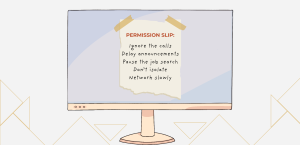
The eerie loneliness that sets in that first day when you’re no longer tied to your role can morph into a sense of panic to do something! This is especially present when it’s fed by emails, texts, or calls from your colleagues, expressing their shock and digging for answers about what happened. Allow me to give you permission for what you don’t have to do.
You do not have to answer those calls. You need to distance yourself psychologically. This is much easier to do when you’re out of reach.You do not have to write explanatory messages to anyone, or perfect your post for LinkedIn to announce that you’re moving on. If you decide to do this months later, it will still be read by your followers and you’ll be able to write a better, calmer message, I guarantee you.
You do not have to begin your job search, or your marketing of yourself. I administer a Job Readiness Assessment to the professionals I coach through their career transitions. Even those six months out are not fully ready to jump back into the market. Grieving and reshaping your identity takes time.
You do not have to hide in your home, feeling stigmatized, surrounded by all the technology that reminds you of your ex-job. You’re not as alone as it feels — everyone I interviewed for my book, Involuntary Exit, had either been fired or knew someone who had been let go.
You do not have to jump immediately into the big arena of networking. If you can’t stand idly by, start by information seeking — not asking for jobs — to help you figure out what you want and don’t want in your next role. As business coach Bob Cooper says, “We are rarely given the chance, with such clarity and immediacy, to question how we have been spending our hours and how we will manage our lives from this point forward.”
This Is Not Lost Time
This is not unproductive, lost time. This is found time for you to—forgive the pun—find yourself again. You won’t know what you want next and why you want it if you’re simmering in a stew of self-recrimination or intense hatred or blame-fixing, all related to your ex-job. Imagine you have just been transported to another part of the country where no one knows you, people are friendly, and you’re surrounded by forests of trees—those beautiful, nonjudgmental gateways to clarity.
Forest Bathing
The Japanese have promoted this form of mental meditation and de-cluttering since the 1980s. Called shinrin-yoku, forest bathing is a government-backed public health program to reduce stress and promote wellness.
I recently came back from a vacation that primarily consisted of hiking miles through the magical, mystical coastal Redwood forests with an unexpected result. The urge to organize took hold of me. It started with my digital files. Not getting enough, I wrestled the apps on my phone into folders.
This wasn’t exactly meditative but it did raise my awareness that the need for order could only mean one thing: a cry to eliminate the mental clutter — the piles of assumptions that led to more assumptions rather than clarity.
Clarity can be peaceful. Like thousand-year-old trees defying assaults of nature and man — standing tall with their canopies in the clear sky. Still. Just still, in peace.

“Clarity-Bathing”
Clarity-bathing means asking questions that wash away assumptions. “Why am I doing this? Do I need this? Why couldn’t I move? Why do I think I can’t . . . ” (fill in the blank).
It’s not the to-do list or the what’s-wrong-with-me list. “Why didn’t they call me back? What do they expect me to do now? Why did they fire me?”
Those kinds of questions put the answers in someone else’s hands.
There’s a reason why people flock to the Redwood forests or take the pilgrimage along the El Camino Trail or move about their landscape of choice. The escape from mental clutter and emotional habits that live in your ergonomic chair in front of a screen is necessary.
Three days into a vacation, the sighs of release, like pressurized gas from a tire, help lift your eyes from the dirt trail in front of you to behold the forest through the trees—again, apologies for the pun.
Sustaining Clarity
Back home, my husband walked up to me as I was sitting in my favorite chair, reading. He told me to close my eyes and open my hand. He gave me a stone — the one I’d pressed into his palm on our last day in the coastal Redwoods, streaked with wild white lines like breaking waves. “Feel the ocean,” he said. “You can feel it. You’re right back on the beach.” And I was.
Maybe next year, we’ll exchange leaves? What sounds funny is serious stuff. It’s the gift of clarity.

The post The Gift of Clarity appeared first on Robin Merle.
June 22, 2026
Fired? Even the Wisest People Get Blindsided
When Scott Pelley was fired from 60 Minutes, I was heartsick. I had listened to that sonorous voice tell us the truth about the news for years. When I listened to him bare his soul on an interview with The Daily about what happened, my spirits sank.
Pelley spoke of the company as a family. He assumed his value was appreciated. It didn’t occur to him that he could be fired for doing what he called “the right thing.” He was a Loyalist to his core.
His feelings became a big, puffy cumulus cloud obscuring the facts of the situation. If a wise journalist like Scott Pelley cannot see the facts clearly, we regular citizens should give ourselves grace for feeling blindsided.
The Trauma of Identity Loss
If you were fired from an organization that felt like family, where you believed your work mattered, you’re not alone in feeling betrayed and shamed. Getting fired from a long-term role, where you’ve anchored your identity for decades, is a traumatic event. A therapist once cautioned me against using the word “trauma” for something as “ordinary” as a job loss; that word, she said, should be reserved for big “T” trauma, like PTSD. But hearing Scott Pelley cry during his interview made me reconsider.
Acknowledging that this is a trauma gives you permission, if you need it, for the grieving that follows. Minimizing is what we do when we’re in pain. We push the sadness and grief away instead of sitting with it. It takes time to realize that denying pain takes more energy than feeling it.
Pelley’s grief over losing his work family is the same grief most of us feel who have been Loyalists for the better part of our careers.

Installing Your Own Surge Protector
How do you take preventative steps so that you’re not wounded that deeply again? Trust, one of the core values needed for connection, has been fragmented. If only it were possible to attach a surge protector to your emotions so the next lightning strike would be rendered powerless. There is one way to begin reducing your vulnerability: reframe your purpose so it is not solely anchored to your career.
Reframing Your Purpose
It’s natural — and encouraged — to say your work gives you purpose. The average person spends 90,000 hours at work over a lifetime, according to experts. The logic follows that you should find ways to make work as meaningful and satisfying as you can. Even in my hierarchy of career needs, I put finding purpose at the top of the career pinnacle.
I’d like to adjust that. I’d like to give us allowance to think that maybe our jobs aren’t the source of our purpose, or at least not the only source.
On “Fixable,” the podcast hosted by Anne Morriss and Frances Frei, Emily Durham — known on social media as “Emily the Recruiter” — makes a good case for not allowing your career and your job to define the meaning of it all. This is contrary to the current push to find your passion and your purpose in your next role. Maybe your passion and purpose lie outside of your career.
Investing your identity, purpose, and passion in one basket is something you’d probably never consider if you thought of this as a financial strategy with diversified products.

An Opportunity to Reassess
As traumatic as your loss is, over time, you will be able to reassess. My hope is that you’ll emerge with a new set of positive beliefs about your future and the power to change your course, so that it is newly meaningful and beneficial to you. Growth, opportunity, hope. Hold on to that.

The post Fired? Even the Wisest People Get Blindsided appeared first on Robin Merle.
May 26, 2026
I’m a Role Model. How Can I Leave?
When you’ve spent years building something real—a team, a culture, a track record—and then the ground shifts beneath you, the hardest question isn’t whether to leave. It’s how you exit—because everyone is taking notes.
Here’s what happened to Anna.
New leadership came in and Anna was suddenly being second-guessed on her major decisions. It took another month for her to be reorganized away from the center of power. That power core didn’t look anything like her either. She had been a pioneer, one of the few women to grow her division’s revenue by 65%, and women throughout the company looked up to her as someone who knew how to win and lead. She fell hard.
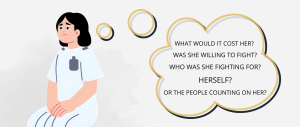
Anna was heartbroken. She was known for team-building. She wanted to establish her people as thought-leaders. Now, she and her plans were being shelved. What would this mean for her reputation? More important, did she want to stay and fight it out? And for whom? For herself? Or for the people who believed she’d lift them as she rose? Some of them were the sole supporters of their families. Some of them were in her pipeline for succession. Was she even thinking about this the right way?
Put on Your Oxygen Mask First
Cliches like this are truths. You’re no good to others if you’re too weak to lead. Leaders—those close to the power center—know when it’s time to go. It’s part of their strength as someone who is realistic not just about survival, but success.
When you leave, you will be modeling skills that are rarely, if ever, taught. Being savvy about exiting at the height of a soon-to-be downward spiral is an essential lesson to model.

The Cost of Staying
Chances are, your team already knows you’re pushing your agenda uphill. They hear your frustration when you report back to them after a meeting with the new regime. But choosing to remain in a toxic situation for the sake of your crew could be your undoing.
Still, it hurts. It hurts when you leave a team. It stings when your strategies and plans are trashed or resurrected as someone else’s, or when you can see the mistakes that will be made and try, without success, to warn them. But you need to inhale and reframe your focus. Your focus is your value.
Disconnect Deliberately
Once you realize that they don’t deserve your expertise—it’s not that they don’t want it—they don’t deserve it, you’re on the side of self-growth. Your emotional independence from the people and the future of the organization is key, and perhaps the most difficult line to hold. Think of it this way: you’re role modeling how to demonstrate your value. You’re role modeling self-assurance and, of course, leadership. Here are tips to bear in mind as you navigate this vulnerable, messy professional chapter:
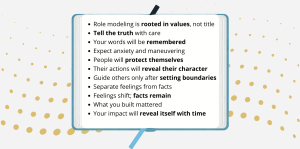
Your status as a role model isn’t tied to your positional power. It’s rooted in your values and how you relate to others as a human being.One of the most courageous acts you can carry out is telling the truth about why you’re leaving and how you’ve arrived at this difficult decision. Your words will be remembered and repeated, so choose carefully. Don’t be surprised by the anxiety that fills the room, or by the immediate maneuvering that follows, as people realize they need to find new allies even as they arrange your goodbye party. They’re still working for the company, and you know they need to protect themselves. How they do it will tell you more about their character.You can continue to help and guide your crew, but only after you’ve drawn boundaries to separate your feelings from the facts that led to your decision. While your feelings will shift, the facts won’t.Everything you built had an impact. The future will reveal this in ways you can’t predict now, but that will sweeten your next success.
You know how random and hurtful a shifting of power can be. If you’re lucky, you’re still in touch with a former boss or mentor who managed it, survived, and is thriving in a new world of opportunity they wouldn’t have known otherwise. If you’re not in touch, this is a good time to reach out. No matter how much time has passed, they’ll answer. And someday—sooner than you think—someone will reach out to you.
The post I’m a Role Model. How Can I Leave? appeared first on Robin Merle.
April 21, 2026
Why Losing Your Job May Be the First Time You Get to Write Your Own Story
“How do I position myself?” is a common question among the newly freed. This is often followed by a request to look at a LinkedIn profile and resume. But true professional positioning — the kind that leads to greater satisfaction — isn’t about resume bullet points. It’s about identity, narrative, and motivation.
Below the Checked Boxes
On the surface, you can and should make lists of the skills, characteristics, and differentiators that can be applied to another role or a different field. This is the first step. It’s an important exercise because it reminds you of your value and what you’ve accomplished. For people who have been let go — either unexpectedly or through a planned reduction in force — being reminded of your self-worth is critical.
The second step happens below the checked boxes. It’s more difficult, since it involves identifying the qualities that make you different from anyone else. These are hard to articulate, especially if you’ve been striving to be the headliner of someone else’s story. Here are some clues. They involve the way you think about things, the way you express yourself, and the stories that hold your life together and make you want to get up in the morning to create another day.
We Are the Stories We Tell
The clues to our deeper identity live in our narrative. We are all compilations of stories. That’s why a skills inventory feels like something is missing. Here’s the kicker: when you’ve been fired, your story — the one you’ve been telling about who you are and what you do every day — gets abruptly terminated. The job ends and the plot stops. It’s why your list of attributes feels hollow. It doesn’t include room for the new storyline you’re about to write.

The Mirror Problem: Why the People Who Know You Best Can Hold You Back
The people closest to you will be the first ones you turn to for advice. They have shared the pressures, the stakes, and the forces behind your ambition. Their comfort and understanding are essential as you grieve your loss. They mean well. But family, longtime colleagues, spouses, and partners have a fixed version of your story and unconsciously enforce it. The story they know is the one you’re no longer living.
When they are enraged on your behalf — standing up for you as the best Senior Leader of That Soulless Place — they’re already describing a chapter that has passed. Once you lose your job, you’re in a career transition. This means you get to write a new story. If you’re at the stage where you’re wondering, “How do I position myself?” you’re acknowledging that you have an opportunity to dig deeper and begin to trust what you’re unearthing.
Interviewing Yourself
Here are a few questions worth sitting with. They are clues to your new story.
What problems do you find yourself solving even when no one asks you to?Which stories from your career do you tell most often — and what do they reveal about what you value?When have you felt most like yourself at work? What was actually happening?What have you always been the unofficial expert on, regardless of your job title?When have you talked someone out of a bad idea — and what did you see that they didn’t?What would you do differently if the audience were you, not your boss?

The Pause Between Chapters
The structure that told you where to be, what to solve, and how to measure yourself is gone. Psychologists who study job loss describe this as an identity disruption — not a weakness, not a failure of resilience, but the natural consequence of losing something that was deeply woven into how you understood yourself. The disorientation is not a malfunction. It is the space where the old story loses its grip. Before you update your LinkedIn profile, take a pause long enough to have honest, nonjudgmental conversations with yourself. The signals pointing to your next chapter are already there.
The Author Was You All Along
Being fired — or knowing it’s coming — is the moment when you stop being a character in someone else’s narrative and become the author of your own. There’s no role to perform, no title to shoulder, no organizational plot to follow. The checked boxes describe what you’ve done. The new story you’re writing is about who you actually are. It takes time. It may take someone else — a coach — to help you excavate the clues. But here is what I know from every person I have ever worked with who has been fired: not one of them, looking back, would trade the moment that felt like an ending. It turned out to be the first sentence of a much better story.

The post Why Losing Your Job May Be the First Time You Get to Write Your Own Story appeared first on Robin Merle.
March 9, 2026
An Honest Audit
People who have been suddenly let go from a job invariably look back for the signs that the end was near. While we never know the exact moment when the decision about our future with the company was made, we can retrace the signs that all was not well.
Jennifer said, “I just knew when she walked into my office on her first day and didn’t even sit down. She announced who she was, gave me a dismissive nod, and left. I thought I could outlast her. I was wrong.”
Steven said, “They brought in a guy I was supposed to supervise and gave him a title equal to mine. A year later, I was extraneous.”
Leila said, “A new leader showed up and he was just horrible. He wanted us to call everyone in our CRM to thank them on his behalf because his other whacko, bankrupt company had done this and he loved it. Not good.”
These are flashing red lights.
But there’s another category of signal we often ignore.
Listening to Yourself
When was the last time you checked your own feelings about your role?
Maybe you’ve been through one too many leadership transitions. Maybe you’ve outgrown the job but haven’t admitted it. Maybe you no longer believe in the mission—or the way it’s being carried out.
Maria said, “I’d been coasting for a long time before I was let go. I knew it. When new leadership came in, I didn’t even try to manage up.”
Preet told me, “My mourning started a year before I was let go. There were always new people, the same discussions, the same issues. It was exhausting.”
Grace said, “I’d been acting out for over a year. I couldn’t keep my mouth shut when it was clear to me the organization wasn’t focused on public welfare. It was focused on money—above all else—and we’re a nonprofit.” Grace was shown the door.
Whether the flashing lights are around you or within you, something is trying to get your attention.
That’s when it’s time for an honest audit.
This isn’t meant to frighten you. It’s meant to steady you. Being honest with yourself is the first step toward change.
The Audit
This exercise starts from the ground up.

Take Stock of the Business
Begin with the organization itself. What is changing?
Write down everything you know: new leadership at the executive or board level, personnel shifts throughout the company, changes in hiring practices and policies, a new revenue model, a revised strategic plan, mergers or acquisitions. Change is part of growth. The question isn’t whether change is happening. The question is how it affects your role—positively, negatively, or in ways you don’t yet understand.
Seeing the full picture in one document matters.
Take Stock of the People
Now look at the human dynamics.
What feels different? Have you been excluded from meetings you once attended? Are routine approvals stalled? Is communication slower, less informative, more guarded? Are consultants suddenly evaluating budgets and functions? Has acknowledgment of your work diminished? Has the organization quietly drifted back to your predecessor’s methods?
Notice patterns so you can begin to understand the story they’re telling you.
If you want another lens, look at your boss’s network. Who do they elevate? Who do they trust? What backgrounds do they favor? Then compare that to what you value. Take what you uncover as information, not judgment.
Look for Patterns
Step back and ask: What do these changes suggest?
Where is power consolidating? Where is energy flowing? Where are decisions being made—and where are they not?
Write down what you see.
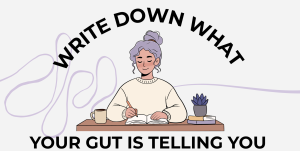
Then write down what your gut is telling you.
If you’re stuck, run your notes through AI for synthesis. It won’t tell you your future, but it may help you see the themes you’ve already sensed.
Reflect
Take quiet time to process what you’ve uncovered. Writing helps. Speaking your thoughts into your phone helps. Hearing yourself articulate the situation often clarifies what you’ve been avoiding.
Don’t catastrophize. Nothing has changed but your awareness.
Then ask yourself one clear question:
Is this an opportunity to try something new—or do I want to replicate my role somewhere else?
Re-Affirm
Now shift the focus back to you.
List your skills. Your differentiators. Your values. The environments where you’ve thrived. Knowing what you value helps you find a culture that will value you in return. Ground yourself with simple affirmations that are reminders of your successes:
“I am great at what I do.
“I lead others to achieve and grow.”
“I make a difference.”
Clarity for your Next Move
Begin unlinking your identity from the job. Develop an external focus where you carve out time to cultivate relationships with people outside your firm and explore opportunities. For example, think about how you might parlay your niche experience for companies you know need your expertise. Putting yourself first helps you disconnect from the drama and narrative of the current role. No more skulking. No more wondering. No more gossip as reconnaissance. Even incremental progress will help you gain strength and relief from trying to unsee what is in front of you. You’re drawing up the papers. You get custody of your future.
Reclaiming Authorship
An honest audit isn’t about predicting the future. It’s about reclaiming authorship.
Whether the job is leaving you or you’re leaving the job, clarity restores your footing. And footing—steady, self-directed footing—allows you to move forward without panic.
An honest audit doesn’t force change. It prepares you for it. And preparation is power.

The post An Honest Audit appeared first on Robin Merle.
February 17, 2026
Triggers, Diminished by Time
I went to NYC to celebrate a friend among enemies. The reception was overflowing with colleagues I was truly happy to see—alongside a few whose past behavior had left its mark and who stirred up memories I’d rather not revisit: the ones I call the Triggers.
Instead of wearing detour signs, the Triggers embraced me with suffocating hugs and hellos and began a talk track that was missing only the canned laughs. They had clearly delivered their script many times. It was about them and their new, big dream featuring them. As I watched their animated performance, what I heard instead was the trash talk about me that I wasn’t supposed to know about. I could imagine them saying those words as easily as they were spouting their talk track now between sips of burnt breakfast coffee. They looked the same, but I knew too much.
The Beauty of Time Passing
So how did I feel when I heard them speak? Was there a sense of betrayal? Anger? A flicker of the old charge?
Yes—but barely.
On a scale of 1–10, I’d give it a 1.
It was as if the triggers had morphed into artifacts—historical, culturally bound. Impotent. I had a new level of comfort with betrayal. I didn’t have to perform to hide it. I wasn’t interested in their stories anymore. I had moved on.
This is what it will be like for you, once you have moved on to another stage of your life that is percolating with new people, new ideas, and maybe even new locations. The past power structures and movements of former colleagues will no longer be the main event of your narrative. This is hard to believe if you’ve just been let go and are still in shock.If you’re about to be let go and are dealing with negotiations that bring out the ugliest of corporate machinations, it will likely be impossible for you to imagine having a brave new world where heartbreak isn’t the daily currency. And yet, in time, what feels unbearable now will lose its grip.

Three Levels of Exposure
Seeing the people who let you go, actually seeing them at an event, is the toughest challenge of all. Against all logic, you expect them to register on their faces the knowledge of how they treated you. You don’t expect them to ignore you, or worse give you a hug and say how nice it is to see you.
Hearing about people who have gone on to continue their bad leadership elsewhere is still painful, but at least it’s not a tactile, in-your-face-at-a-party painful.
Having to ask someone for a reference or a favor who has done you wrong takes a solid amount of fortitude and compartmentalization. You know who they are. Others don’t. You must put the ugly truths in a soundproofed mental vault for the time it takes to get what you want. Later, you can open this and scream to your heart’s content but you got it, didn’t you, you got what you needed.
Habit of Mind
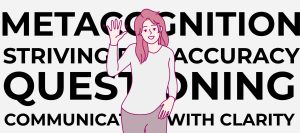
This is a lovely phrase a friend of mine uses when she speaks about change. It’s been defined as “knowing how to behave intelligently when you don’t know the answer.” (Harvard Graduate School of Education.)
Core Characteristics: They include patterns of intellectual behaviors, such as thinking about thinking (metacognition), striving for accuracy, questioning, and communicating with clarity.Purpose: The goal is to develop critical, creative, and self-regulated thinking skills that allow individuals to navigate, adapt, and act effectively in the face of ambiguity.
Doesn’t that sound like a beautiful pathway to a trigger-less existence?
The Work Shows
Years earlier, before I had done the work of recognizing and tackling triggers, I might have been tangled up in swirls of anger and resentment for hours after running into an old non-friend. I would have called my go-tos to say “I saw that piece of crap who acted like nothing had happened when he knows exactly how badly he behaved. And do I think it affected his day at all? Absolutely not. So why is it affecting mine?”
That’s no longer the call-and-response.
My day in NYC ended with the comical news that one of my former bosses had written a book about his own separation from his job and how he was grieving. I looked up the book on my phone, thinking, this can’t be real, but of course it was.
My BFF asked, “Was that triggering for you?”
“Not at all,” I said, smiling. “It was being promoted with another book, Why You Suck as a Leader.” We burst out laughing. My new habit of mind, in its pursuit of accuracy and clarity, filed the entire day under one word: karma.

The post Triggers, Diminished by Time appeared first on Robin Merle.
January 18, 2026
What is Exile Energy? And What Does it Have to Do With Job Loss?
You’ve had an involuntary exit. For the first time in a long time, maybe since childhood, you feel different from other people—cut off from a system that supported and validated your value.
Understand the Emotional Churn You’re In
Psychologically, this churn of sadness, alienation, and self-blame has a name: exile energy. In Internal Family Systems (IFS) therapy, exiles are the parts of us that carry our most painful emotions and memories—shame, fear, worthlessness—often rooted in earlier losses or moments when we felt rejected or unsafe. Other parts of our psyche work hard to push them out of awareness so we can function, move on, and get through the day.
But when a job loss strips away structure and belonging, those exiled feelings can surface. What you’re experiencing is real–and powerful enough to stall motivation or any movement forward. It can help explain why you may find yourself scanning for small slights or signs of exclusion, as if your body is on high alert for threats to belonging.
Notice the Collision Between Your Inner World and Corporate Reality
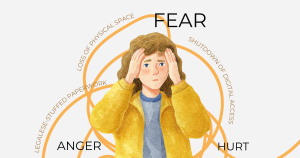
The contrast between your inner disorientation and the company’s clean break could not be more stark. You’ve just been told you are no longer wanted. Then comes the shutdown of digital access, the legalese-stuffed paperwork, the loss of physical space.
Where, exactly, is the time to honor your emotions?
It’s your time to take. Ask a grounding question: What just happened here? Allow yourself the time to face the anger, fear, and hurt that are fueling exile energy—so wherever you go next, you’re not dragging a storm behind you, but traveling with fair winds.
R eset the Journey Before You Choose the Next One
Facing the anger and sadness and working to regain a sense of yourself outside of who you were at work can help you imagine a next chapter. This chapter will be shaped by your experience, wisdom, unique differentiating qualities, your interests and activities. We are more, much more, than our jobs and titles.
Rediscovering yourself can happen in several ways:
Change your environment. If travel is possible, even briefly, it can be detoxifying. Familiar routines fade, mental space opens, and feelings begin to separate from facts.Write toward meaning, not bitterness. Recall a good day at work to reconnect with your impact. If that feels impossible, write about who you are when work isn’t the center. The goal is to face and unburden yourself of negative emotions.Collect inspiration on purpose. From anywhere—books, conversations, overheard phrases, music. Let new thoughts interrupt old loops.Protect sleep and nourishment. Sleep deprivation feeds anxiety and depression, intensifying alienation. Self-care isn’t indulgent; it’s stabilizing. Be social with curiosity. Talk not only to close friends but to people you rarely had time to know. These interactions often restore a sense of possibility.
Finally, don’t be discouraged by the time it takes to understand what this next journey is really asking of you. For many, it’s a slow, deliberate rebuild that leads them back to a feeling of belonging, often with a new community.

Signs You’re Carrying Exile Energy (and What Helps)
You might be carrying exile energy if:
You feel oddly ashamed talking about what happened—even when you did nothing wrong.You’re hyper-alert to small slights or silences.You feel busy all day yet strangely stuck.Nights are harder than mornings.Well-meaning invitations irritate you more than they should.
What helps (gently, not aggressively):
Changing scenery—even briefly.Writing to remember who you are outside the job.Prioritizing sleep as emotional first aid.Talking with people who see you as more than your last role.Slowing down before launching into the next plan.Letting resilience take the shape it needs, not the one you think it should.

The post What is Exile Energy? And What Does it Have to Do With Job Loss? appeared first on Robin Merle.
October 28, 2025
The Unbearable Lightness Of Time On Your Hands
One of the first, most unexpected realizations after job loss is this: you have no schedule. Yesterday, you were battling for 15 minutes of free time after back-to-back meetings, but now you’re hungry for structure in a sea of free time. You anticipated the financial gut punch. But this? You didn’t see this coming.
The Science of Losing Your Rhythm
Researchers have studied the disruption of a work schedule and its effects. In their article, Consequences of Routine Work Schedule Instability for Worker Health and Wellbeing, D. Schneider and K. Harknett uncover all kinds of mental mayhem. Psychological stress, poor sleep, greater unhappiness. Their research focused on hourly workers, but the truth applies to everyone: a predictable routine is key for emotional well-being.
The Hidden Community in Your Calendar
People generally move in herds once they leave home—cars on highways, crowds on subways, groups at gyms, markets, and offices. Remote work softened that rhythm a bit, but even then, we stayed synced in our digital flocks.
When you suddenly fall out of step—no commute, no colleagues, no Slack pings—it’s disorienting. FOMO flares. You realize your community wasn’t just social; it was structural. It was built into your schedule—the one your company created for you, or you built for them.
Rediscovering Your Everyday Tribe
Do you even have a community anymore? Yes—but it looks different now. Communities aren’t confined to corporate departments and divisions. They exist in our small, daily interactions: the people at your gym, the volunteers at the food pantry, the dog walkers who nod as they pass. Each brief connection punctures the loneliness balloon and quiets the endless reruns of your “ex-job” highlight reel.

Becoming the Architect of Your Own Days
Try these simple shifts to bring rhythm and structure back to your days.
Move the small things that used to sit in the margins of your busy life to the center of your page. Schedule them—your morning walk, your gym time, cooking an actual meal.Reorganize your space. Remember when everyone cleaned their closets during the pandemic? It was oddly satisfying. Structure disguised as productivity—and you won’t always have this much time to indulge in it.Challenge yourself with one new experience a day or each week. It could be as small as learning something about the natural world or walking through a new neighborhood. Little moments matter.If you once mastered meeting agendas, make one for yourself:
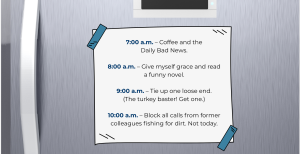
My point: even a little structure helps you feel seen and found—rather than invisible and lost.
Making Peace With the Shift
Relish this as a precious time to think and reflect. As executive coach Bob Cooper says, “We are rarely given the chance, with such clarity and immediacy, to question how we have been spending our hours and how we will manage our lives from this point forward.”
This is your time. Reclaim it. Arrange it to your benefit.
The post The Unbearable Lightness Of Time On Your Hands appeared first on Robin Merle.
September 23, 2025
How Long Does It Take to Find a New Job?
Clarity, self-awareness, and strong relationships can make the journey meaningful—and lead you where you truly want to go.
The Hidden Factor: Self-Awareness
Most of us believe the time it takes to complete our job search depends on the factors we read about the most: economic conditions, the industry and role we seek, our experience, and our job search methods. True, all of these elements play a role. But, the hidden factor that stands between us and our next job: our self-awareness and emotional fortitude to act on it.
Consider Jess’s story. Jess had been working for a fast-paced tech company, driven by a founder who was heavy on excess and light on integrity. As the Chief Marketing Officer, she found herself telling a story that she no longer believed. It took her a year to realize that not only did she want to exit the company, she wanted to exercise different skill sets and values. In short, the same trajectory at a different company would make her unhappy.
Bonus tip: Jess fed her job history, her passions, her volunteer work, her anxieties, and her must-haves for quality of life into AI and asked for different options. She also prompted, “What else do you need to know to fill in the gaps?” The result was a surprise! She’s making a complete shift from pursuing a corporate role to a clinical role.
Knowing What We Want—and Don’t Want
Clarity is a powerful motivator. When I ask people what they want in their next role, the top answers are rarely compensation or title. The #1 want? Recognition of value.
As for what people don’t want: toxic leadership tops the list.
Self-awareness about what drives you to bitterness and what envelops you with happiness is a first step in what I’ll call the emotional design of your work. It helps you make confident decisions. You’ll recognize the qualities that energize you and the conditions that drain you. That knowledge becomes your compass.

The Power of Relationships
Research shows that 70–85% of roles are secured through referrals and warm introductions. Here are a few real-world examples:
“I’m in a women’s group, and when one of the leaders learned I’d been let go, she offered to introduce me to…”“A board member who was always my advocate put me in touch with…”“I’ve been friends with a recruiter for years, and she connected me with a position that was about to open…”“My neighbor works at a company I’ve always admired, and she arranged a conversation with one of her colleagues…”
Not every conversation leads to a job, but each one sparks reflection. They help you refine your path, reset your expectations, and define the role you truly want. And that matters: jobs consume 90,000 hours of our lives. We don’t get those hours back.
Seeking Purpose
At a certain point in our careers—often after we’ve secured financial stability—the idea of purpose begins to matter.
In the past, jobs were simply a means of remuneration. Today, they’re deeply tied to our identity. That’s why it’s so difficult to come to terms with our loss. It’s not just a job. It’s who we are that’s gone. How you define meaning is worth exploring—whether through journaling, conversation, or new experiences—as it helps you imagine what could come next.

So, How Long Does It Take?
It depends—on everything we’ve just explored and more. Reports suggest the average job search lasts 4–6 months; others put it closer to a year or longer. Each of us will have a different experience.
But here’s the upside: in the process of searching, we learn an extraordinary amount about ourselves. The lessons—about resilience, clarity, and purpose—are invaluable.
Even in uncertainty, that growth is priceless.

The post How Long Does It Take to Find a New Job? appeared first on Robin Merle.