Bryan M. Christman's Blog
February 19, 2024
Announcing Two YouTube Channels for my Books
Hello, and thanks for visiting my blog. For the time being I am using two YouTube channels for information regarding my books: where to get them at discounted prices, videos regarding their content, and a providing a forum for questions and discussion.
One channel is for my first book, “The Gospel in the Dock.”
The other channel is for my ongoing four-volume series “A Kierkegaardian Reading of Mark.”
I hope you will find your way there, subscribe, and participate.
Many thanks,
Bryan M. Christman


May 15, 2022
Lewis and Kierkegaard as Missionaries to Post-Christian Pagans
https://theology.worldea.org/evangeli...
February 22, 2022
November 26, 2021
November 3, 2021
August 19, 2021
April 12, 2021
Merold Westphal’s “Faith Seeking Deconstruction”
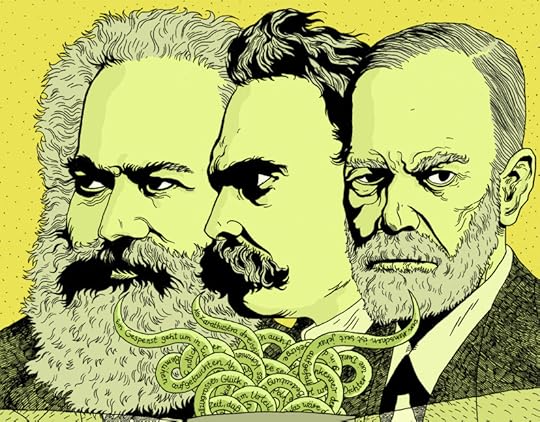
Merold Westphal is one of my favorite philosopher/theologians for a very good reason, namely that he “deconstructed” his faith without losing his faith. Following is a rare bit of narrative that he provides regarding his journey in what I call “faith seeking deconstruction.”
“I, too, grew up in the context of a rather narrow, rigid and exclusionary “party line,” that of Protestant (dispensational) fundamentalism. But there was one important difference, in respect to which I take myself to be fortunate. For instead of a “system” without the classic texts it was supposed to present, I got a “system” that included an emphasis on reading and even memorizing the Bible for myself. So I had read it from cover to cover several times before I even got to college. Through my own reading and with the help of others who were better readers than I, I gradually discovered that the “system” was not a mirror image of biblical truth, simply identical with the faith “once delivered unto the saints” (Jude 3), but one human, all too human interpretation among others. I learned the fundamental facts of descriptive hermeneutics before I ever heard of Heidegger, Gadamer, and Ricoeur. Though I am no longer at home in the horizons within which my faith was born, I am grateful for the emphasis within it on both the Bible as divine revelation and on the centrality of scripture in the life of the believer and the church.”
(Merold Westphal, “The Joy of Being Indebted” in “Gazing Through a Prism Darkly: Reflections on Merold Westphal’s Heremeneutical Epistemology, edited by B. Keith Putt, p. 178.)
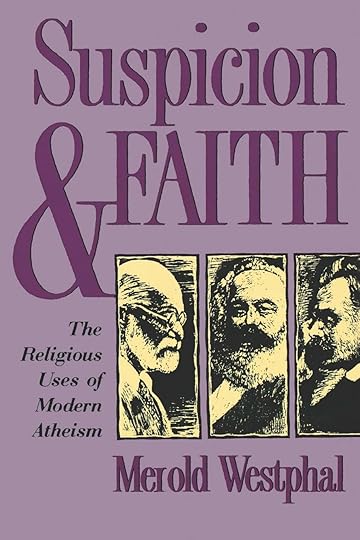
The book “Suspicion and Faith” is an interesting example of Westphal’s approach to the Christian faith. The book finds an appropriate “deconstructive” but faith building “religious use” of the modern atheism of the three “masters of suspicion” Marx, Nietzsche, and Freud. Westphal says “because their critique of religion is so deeply biblical, in spite of their own unbelief, Freud, Max and Nietzsche can help us to recover the meaning of the biblical critique of religion. The Spirit that speaks to the church also blows where it will. Is it possible that the Spirit would speak to the church through its worst enemies?” Westphal goes on to say that “we can more clearly see the powerful parallel between Marx, Nietzsche, and Freud, on the one hand, and Amos, Jeremiah, Jesus, James and Paul.” (Suspicion and Faith, p. 12)
Many years ago I coined a phrase “if the prophetic shoe fits, then wear it.” Westphal seems to have the same use of “prophetic words” and summarizes that “the first task of Christian thinkers as they face the likes of Marx, Nietzsche, and Freud is not to refute or discredit them. It is to acknowledge that their critique is all too true too much of the time and to seek to discover just where the shoe fits, not “them” but ourselves.” (Suspicion and Faith, p. 16)
In our “age of deconstruction,” one has to wonder whether the key difference between the all too common narrative of deconstruction unto unfaith, and Westphal’s deconstruction unto faith, is of following the pre-modern (and post-critical Westphalian) way of “faith seeking understanding” or the modern/postmodern way of “understanding seeking faith.” The order seems to make all the difference. And the difference enabled Merold Westphal to propose “a serious and sustained reading of Marx, Nietzsche, and Freud as a Lenten penance.” (Suspicion and Faith, p. 3) Perhaps the church would see less deconstruction from faith if it promoted faith seeking deconstruction within the ancient biblical framework of “faith seeking understanding” including “penance.” For having one’s “spiritual director” include the likes of “Amos, Jeremiah, Jesus, James and Paul” seems a way to also receive direction from the likes of Marx, Nietzsche, and Freud without losing one’s faith.
Bryan M. Christman @ The Point of View of My Work as an Author, 2021.
April 7, 2021
“The Gospel in the Dock” and “God in the Dock” by C. S. Lewis
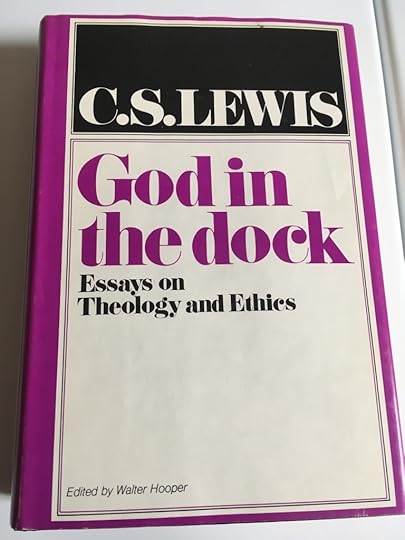
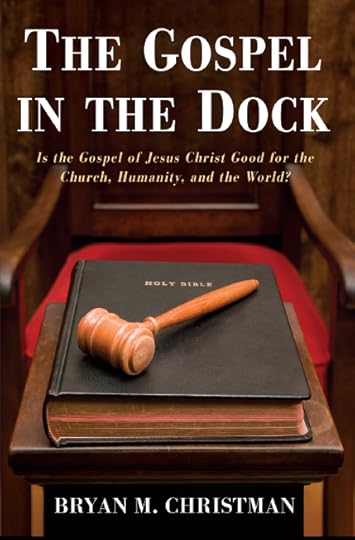
C. S. Lewis famously penned the phrase “God in the Dock” and proposed that there was a “great divide” between ancient and modern humans in that our ancestors would have rightly seen themselves “in the dock” before God, while we moderns have placed God there before us. But what if what God’s love most desires for us, the gospel or “good news” of the only way of life for humanity, has been “in the dock” before us from the time of Adam and Eve? And what if it is also the case that the gospel is often “in the dock” as though it is not good, even for the church?
My book, “The Gospel in the Dock,” builds upon and expands the “life and death” stakes Lewis proposed by demonstrating that the gospel way of faith itself, has been placed in the dock by us and in many ways ruined our relationships with God, with our own selves, with one another, and even with the natural world itself which we are meant to “steward” for its good. In these pages the reader will discover why the gospel that requires faith is good news, but why we so tragically default to our divisive and self-destructive ways.
“The Gospel in the Dock: Is the Gospel of Jesus Christ Good for the Church, Humanity, and the World?” by Bryan M. Christman is due to be published by Wipf and Stock in the fall of 2021.
March 3, 2021
The Gospel “Eucatastrophe”
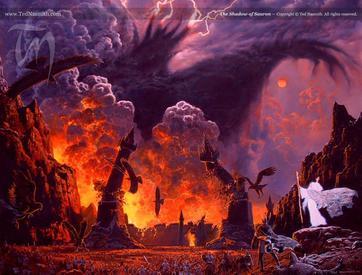
Out of a “perfect storm” that seemed to promise only perfect destruction came God’s new creation in Christ, because the “hurricane that is God” was “reconciling the world to himself in Christ.” The realist-fiction writer Flannery O’Connor would simply call this unexpected return for violence “grace,” while the imaginative high-fantasy writer J.R.R. Tolkien would, true to character, linguistically embellish that “sudden and miraculous grace” as a “euchatastrophe,” compellingly combining the blessed word “eucharist” (to give thanks) with the cursed word “catastrophe.”
(An advance excerpt from “The Gospel in the Dock.”)
“The Resurrection is the euchatastrophe of the story of the incarnation.” J.R.R. Tolkien, The Tolkien Reader, 88.
February 22, 2021
The Point of View of My Work as an Author

Soren Kierkegaard disclosed his gospel “point of view” aimed at “reintroducing Christianity into Christendom” after he had written most of his books. Though there is an almost “infinite qualitative distinction” between my writing and the genius of Kierkegaard’s, this post and webpage are simply to indicate my “point of view” for books I am writing, beforehand.
I hereby declare a “five-year plan” for six gospel books, aimed at kindling reality to burn with the good news of Christ for readers. Altogether, it is an attempt to consciously foster the life experiences that Walter Brueggemann calls disorientation and new orientation, in response to human life that already “lives and moves and has its being,” in that reality of God into which we have been thrown because of the incarnate person and reconciliation of Christ.
Shalom.