Ryan Ginard's Blog
February 6, 2024
THE END OF THIS CHAPTER…
I got a big milestone notification from WordPress this week and while it made me feel a great sense of pride, on reflection, I felt i have achieved everything I could with this medium and it was just time to focus on other things.
The blog was inspired by my first interaction with VR at the Clinton Global Initiative back in 2015 and has now been ticking over for 6 years now – spurring 2 books and countless conversations about what the future of philanthropy might look like.
Since my first post on August 13, 2017 – titled ‘Asks of the Future: Selling Browsing Data to Fuel AI’ through to what is now quite an apt final piece in talking about compassion fatigue, I am truly honoured by those that interacted with it, shared the content, and both were open to – and challenged – my thinking.
Top 3 performing posts were on VR, Vision Mapping & Strategic Phasing, and ChatGPT.
My top 3 personal posts (that profoundly changed my thinking through the process) were on Vision Mapping, Refactoring, and funding replication efforts.
Some other stats below & here’s to the refocused work ahead. You can still follow my work and/or connect with me via my personal website www.ryanginard.com, LinkedIn or via Fundraise for Australia.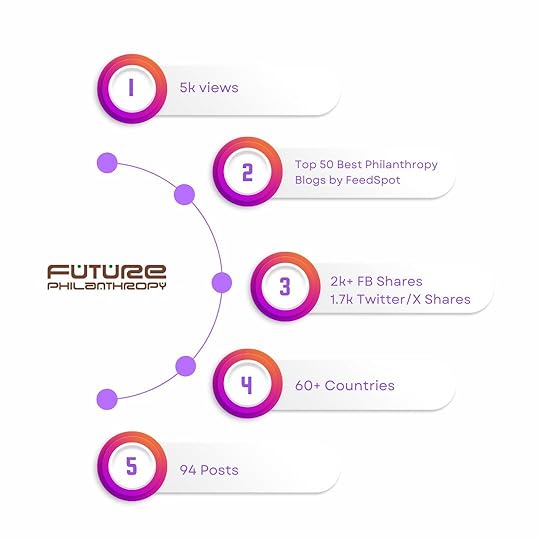


December 15, 2023
Addressing Compassion Fatigue Beyond Those Year End Asks
It’s the end of the year, time to take that well deserved break and reflect on the year that was and refresh for the year ahead. Except that’s never the case as a fundraiser in this weird and warped industry we work in, where we are expected to have ‘coverage’ in our offices just in case a random donor walks in and decides to walk into the office unannounced and hand over a $25k check on New Years Eve (there might be a hall pass for this year though given that that day falls on a Sunday this year).
The pervasive issue of burnout in the workplace is well-documented, with research consistently highlighting its detrimental impact on employee well-being. High job demands contribute to extreme burnout, resulting in psychological distress, fatigue, depression, and anxiety. The consequences are significant, as job-related stress ranks as the nation’s leading workplace health concern. The alarming findings of Mind Share Partners’ 2021 “Mental Health at Work Report” underscore the widespread negative impact, with 84% of respondents citing workplace conditions affecting their mental health and 76% reporting symptoms of mental health conditions.
Employees in nonprofit organizations face an elevated risk of burnout, presenting a complex issue to tackle within the sector. Surveys indicate that half of nonprofit employees are burned out or on the tipping point, with mental health professionals experiencing burnout rates as high as 72%. The unique challenges in the nonprofit sector, such as modest salaries, heavy workloads, and high emotional demands, exacerbate the problem.
From a fundraising perspective, the urgency to meet annual revenues, end-of-year fundraising goals, and campaigns—particularly within a few weeks after #GivingTuesday—frequently prompts individuals to make significant personal sacrifices. Moreover, compassion fatigue, the emotional and physical fatigue resulting from chronic empathy use when working with suffering clients, adds to the strain. This phenomenon is particularly evident in nonprofit and social work, where employees face emotionally taxing situations regularly. As burnout remains a pressing concern, addressing these challenges becomes imperative for the well-being of nonprofit staff.
And yes, it feeds into the retention stats we continue to highlight as a critical and prevailing issue for our fundraising talent. We know that this is acutely felt in our sector and is now spiraling. In 2005, the voluntary annual turnover rate for nonprofits was 3.1%, higher than that of
business (2.7%) and government (1%). A decade later, that number vaulted to 14 percent.
Furthermore, in a report by the Young Nonprofit Professionals Network (YNPN), more than 90% of leaders surveyed credited burnout as the main reason for leaving the sector.
An interesting white paper on nonprofit burnout from the 24/7 text based mental health support company Counslr dropped into my inbox on #GivingTuesday this year, and I was offered the good fortune of firing a few questions off to their Founder and CEO, Josh Liss.
Counslr is a digital mental health company founded in 2019 and provides users with unlimited access to live text-based support from licensed counselors with their mission being to better reach the traditionally unreachable people in organizations, who need help but don’t seek it.As you know from previous posts and my book, I’m a sucker for text based solutions – feeling it is more trusted than other forms of communications and that it still remains quasi-anonymous.
The absence of face-to-face contact can enable users to disclose information earlier and in more detail, make it easier for users to talk about embarrassing, honest, and sensitive issues. And on both ends, allows folks to edit their own messages before sending them, avoiding any potential awkwardness if they stumble over their words or react in an uncertain way.
So I asked Josh what were the key findings from your report that he would lift up with a degree of urgency for the nonprofit sector? And importantly, what surprised him?
He quickly pointed out that traditional employee benefits like EAPs, where employees are often given a fixed number of subsidized mental health support sessions before they are hit with out-of-pocket fees, and where it can take weeks to actually get an appointment with a provider, leave a lot to be desired, and historically go underutilized due to these friction points.
“Counslr’s immediate and significant usage was a clear demonstration that if you make mental health support truly accessible, people will address their day-to-day issues, instead of
avoiding them and potentially allowing them to grow into larger issues.
“The three largest hurdles most people face when seeking mental health support are cost, inconvenience, and stigma (usually some combination of the three). To better serve their
staff, nonprofit leaders should audit the mental health resources they currently provide, and assess whether they do a sufficient job at breaking down these hurdles. If they don’t, leaders should consider alternative resources which better address these hurdles” he said.
As I mentioned earlier, the report was released on #GivingTuesday which begins a fundraising sprint towards the end of the year, so what advice should we be giving nonprofit staff to ensure they don’t burn out?
My feeling is that this rests largely with leadership, so I was interested to hear from Josh around what they need to start looking at in this area as part of strengthening staff retention efforts.
“Nonprofits are built around a shared mission, which is only achievable if the people pursuing
that mission are willing and able.”
Josh also agreed that funders should be looking at this in how they structure their grants too. Whether that is part of the ‘full cost’ of how nonprofits are funded is a question for another day but his sentiment was that [by] “Supporting those who support others should be thought of as
paramount when funders consider how to maximize their donations.”
Finally I was interested to know from his perspective as a service provider what his fears for the sector are in 10 years if mental health and nonprofit burnout continue to be overlooked?
Josh succinctly put that “If I had to identify one primary fear related to nonprofit burnout, it would be that organizations with important missions cannot recruit and retain the people needed to carry out their missions. We absolutely must ensure that those who take care of others are taken care of, otherwise the “invisible safety net” which society has grown accustomed to having, will cease to exist.”
But despite these warnings, the good news is, the data shows you can improve the well-being of your team and mitigate some of the negative effects. But you must be willing to listen and then lead with radical empathy. Caring is an important first step, but it is just a start. We must take the responsibility of fostering a healthy workplace culture (online and offline) seriously in the nonprofit sector.
So rest up, refresh and come back to the office in the new year by putting that reflection time into proactive approaches back in the office to tackle this issue before it becomes a much more dangerous epidemic in our field.
December 10, 2023
Can Philanthropy Help City Surpluses Shape City Vibrancy?
The term “surplus” in the context of government finances refers to a situation where the government’s revenue exceeds its expenditures during a particular period. When a government has a surplus, it means that it has more money coming in than it is spending.
Over the years this has become a very binary yardstick of strong fiscal management, something that continues to define governments and how they are traveling.Yet, over time that test – to me anyways – has lost some nuance, and when you drop down a couple of jurisdictions, and more specifically city councils, it is lost further due to that yardstick being defined by the 3 R’s (rates, rubbish, and roads).
The nuance I mention (while totally over simplified here), is that there is no real discussion of how those revenues beyond taxes, employment and commodities prices, and on the other edge of the coin, budget savings and underspend.
I really see this as something that is stifling the creativity of councilors and the departments that serve their constituents. It’s fostering a crisis of courageous leadership and potentially leading to different interpretations of what growth means to local communities, as infrastructure spend cannot be at the expense of city character (excuse the pun) and the reasons why we choose where to live.
Governments aim to manage their finances in a way that ensures stability, economic growth, and the ability to meet public needs. When a government consistently generates surpluses, it also gives the ability to those councils to save for future needs or pay down existing debt.
These are necessary approaches, but more critically should be foundational ones. So that begs the question, should cities have a bigger risk appetite for building revenues beyond the norm, and is philanthropy a partner or complement?
Who’s Your City?
I recently revisited the book “Who’s Your City?” by Richard Florida when meandering through my thought process around this topic seeking to understand the impact of location on personal and professional success. My three takeaways were as follow:
Place matters for personal and professional fulfillment – Florida highlights that the choice of where to live is a crucial decision affecting not only career opportunities but also overall life satisfaction. Different cities offer varying levels of economic opportunities, social connections, and cultural amenities, influencing individuals’ well-being.
Creative class and urban prosperity – Florida talks about the “creative class”, a group of professionals in knowledge-intensive fields such as technology, arts, and sciences. He argues that cities fostering an environment conducive to the creative class will experience economic growth and prosperity. He suggests that cities should invest in amenities and policies that attract and retain these creative individuals.
The Role of Diversity and Tolerance – Florida emphasises the importance of diversity and tolerance in urban environments. Cities that embrace diversity and create inclusive communities are more likely to attract and retain a talented workforce. This diversity contributes to the overall vibrancy and innovation of a city, making it an attractive place for individuals seeking a dynamic and open-minded environment.
It is clear that each city has its unique strengths and challenges that shape its character. Having lived in the US for the past 12 years before returning home to Australia this was evident in a number of places – tech with the bay area and Austin, bio-tech with San Diego, arts and entertainment in LA, fashion and finance in NYC the list goes on. I have distilled this into the following (especially as it has shaped my own thinking for what opportunities can exist for Australian cities);
1. Innovation
American cities, particularly Silicon Valley, are globally renowned as hubs for innovation and technology. The concentration of major tech companies and startups fosters an environment of continuous technological advancement and attracts top talent from around the world.
American cities also embrace a strong entrepreneurial spirit and culture. Cities like those I mentioned above, have vibrant startup ecosystems, encouraging risk-taking and fostering a culture of innovation. I talk about places like Tulsa, Oklahoma, quite frequently that are having an intentional focus on reimagining their cities with this at their core.
But let’s not forget they have large consumer markets – the sheer size of the American market can provide businesses with significant opportunities for growth and scale. This potential for expansion can attract dynamic entrepreneurs and businesses.
Having some of the world’s leading universities and research institutions in your backyard is also super helpful. Cities with prominent academic centers often become focal points for cutting-edge research, technology transfer, and the development of intellectual capital.
2. Cultural diversity
Melting Pot Mentality: American cities, especially metropolitan areas, are known for their cultural diversity. This diversity often leads to a rich tapestry of ideas, creativity, and cross-cultural collaborations, contributing to a dynamic urban environment.
3. Finance (and access to it)
Cities like New York are global financial centers, playing a pivotal role in the international economy. The concentration of financial institutions, venture capital firms and global corporations can contribute to a dynamic and forward-thinking business environment.They can also incentivise, recruit, and ‘relocate’ talent to its shores.
4. Urban renewal and development
Adaptive Reuse: Some American cities have been successful in implementing adaptive reuse strategies, revitalising old industrial areas and repurposing them for modern uses. This dynamic approach to urban planning can contribute to a sense of innovation and vision.
5. Policy innovation
Policy Experimentation: Some American cities have been at the forefront of experimenting with innovative policies, whether in sustainability, transportation, or social initiatives. This willingness to experiment can contribute to a perception of civic dynamism.
The perception of civic dynamism can vary based on specific criteria and this is no more evident than when I mentioned comparing cities in both the U.S. and Australia. But while this is scalable there, is it at least replicable here?
The thing that can’t be forged is that of cultural diversity which we do have as a multicultural society. The other four, except finance, can be patterned on moving forward.
What is needed first and foremost is leaders with a broader vision of holistic community development. By ensuring access to essential goods, promoting economic growth, and fostering community empowerment, local governments can play a pivotal role in enhancing the overall well-being and resilience of their communities, and nurture its vibrancy.
Cities need to be innovative here, especially when understanding that the business sector in Australia is dominated by SMEs (small and medium enterprises). In fact, 97.3% of all businesses in Australia (or around 2.5 million) are small businesses (0-19 employees) and a further 2.5% are medium businesses (64,559), employing 20-199 employees.
With one in three new small businesses in Australia failing in their first year of operation, two out of four by the end of the second year, and three out of four by the fifth year. How can councils not only increase revenues but also ensure the benefits of a local economy not only remain, but continue to thrive?
City Revenues and Investments
Of course there is a hook here and something that threads all my abstract thinking together. The first was from a friend back in California who was elected at the last election to become the City Treasurer for La Mesa, and incorporated city based in San Diego County with around 60,000 residents.
When he ran for City Treasurer, he promised that we would make MORE MONEY for La Mesa without raising taxes or cutting services. And that’s exactly what he has done, earning over $2 million in 2023, with new investments including government agency bonds and corporate securities averaging over 5% returns.
Treasurers serve four-year terms and earn an annual salary of about $7,000 which is a pretty good ROI for the community. The great thing here is that Matt celebrated and articulated how he did it through his quarterly reports to council.
I thought this was pretty cool, he didn’t just say the city was running a surplus, he described how and why this was important to no doubt build trust with the community but also to show that councils can be much more than a tax and spend entity.
I don’t know if it was the algorithms or frequency illusion that I then stumbled upon the story of something happening over 9000 miles away in Western Australia with a city council buying a local IGA.
It was so successful that they are now setting up a local real estate investment co-op to put real estate assets into the hands of the community permanently, to preserve the local services and businesses they value (while giving local investors a modest annual return).
While this was a small purchase for a small township (approx 775 residents) there are plenty of key reasons why city councils might consider such moves in the future.
1. Economic Development:Job Creation: Acquiring small businesses can stimulate local employment opportunities. By maintaining or expanding the workforce, city councils can contribute to economic growth and stability within the community.2. Local Economic Circulation:Retaining Profits Locally: When city council’s own things like the local IGA, the profits generated circulate within the community. This can have a multiplier effect, fostering economic development and creating a positive feedback loop of local investment.3. Community Empowerment:Local Ownership: City councils can promote community empowerment by ensuring that essential businesses are locally owned and operated. This not only enhances a sense of community pride but also encourages a more active and engaged citizenry.4. Community Access to Essential Goods:Promoting Healthy Lifestyles: City councils can use their influence to encourage supermarkets to offer a variety of healthy food options. This aligns with public health initiatives, addressing concerns related to nutrition and diet-related illnesses.Addressing Food Deserts: IGA’s are often vital for communities lacking access to fresh and affordable groceries. City councils can ensure that all residents have convenient access to essential goods, promoting food security and improving overall health. I wrote about this in Future Philanthropy when discussing the importance and benefits of The Jacobs Center for Neighborhood Innovation in the diamond neighborhoods of San Diego.5. Control Over Pricing and Quality:Affordable and Quality Goods: City councils can influence pricing and product quality to ensure that residents have access to affordable and high-quality goods. This is especially important in economically disadvantaged areas and of course when we are still seeing price gouging in a cost of living crisis.6. Strategic Urban Planning:Addressing Urban Planning Gaps: Even if there wasn’t necessarily a supermarket that the council could acquire, it can still incentivise them coming to the community so that it can be strategically placed to fill gaps in urban planning, ensuring that neighborhoods have well-distributed access to grocery stores. This can contribute to a more balanced and sustainable urban development and go someway in stopping rapid gentrification (think family owned vs a Wholefoods or in Australia’s case a Woolworths Metro).7. Social Cohesion:Community Gathering Spaces: The areas around small supermarkets often serve as community gathering spaces – a great example is actually at one of our local IGA’s in Ainslie, ACT when they celebrated their 60th year serving the area. City councils can foster a sense of social cohesion by supporting activities and initiatives that encourage interaction among residents.Philanthropy – the perfect partner to deploy place based capital…
Ah yes, the philanthropic angle (of which there are many). I have spoken about a few things in this space – the postal service as a new banking pillar, philanthropy buying debt to drive greater social mobility and generational wealth building, and also helping nonprofits create products in addition to its services. But I wanted to talk here about social impact investing especially with a place based lens.
Social impact investing from this perspective involves directing financial resources toward projects and initiatives that aim to address specific social and environmental challenges within a particular geography or community. In this context, investors, ( including local governments or philanthropic organisations), prioritise investments that create positive, measurable changes in the well-being and sustainability of the specific area, emphasising the unique needs and opportunities of that particular place.
I’ve always seen city councils as a great place to pump prime deal flow for local investment. By actively seeking partnerships with local nonprofits, businesses, and community organisations, and being able to convene diverse committees to review and vet proposals, councils can encourage a steady influx of investment-worthy projects that align with both community needs and the council’s impact objectives.
In short, City councils should actively explore partnerships with philanthropic organisations to engage in local impact investing initiatives. By collaborating with philanthropy, councils can leverage additional resources to address pressing social issues within their communities. These initiatives can include projects that directly impact residents’ quality of life and will no doubt present themselves as intersectional opportunities aligning with foundations missions. It also allows city councils to tap into the diverse skill sets and perspectives of both sectors, fostering a more holistic and sustainable approach to community development.
Such initiatives can enhance the council’s reputation and trust among residents, local businesses, and potential investors. As the positive impacts of these projects become visible, residents may experience improved services, reduced tax burdens, and enhanced infrastructure. This, in turn, creates a cycle of community support and engagement.
Philanthropy is the perfect blueprint for forward thinking cities – they showcase a forward-thinking approach to governance, seeding new solutions, while simultaneously managing fiscal responsibilities for the benefit of the entire community. And the good thing is that all it takes to kick start these projects is a small but brave carve out of the annual budget for innovation, or a reimagination of ‘Lord Mayor’s (charitable/community) Funds’ which have traditionally supported local organisations in a ‘confetti’ approach to support, one noble in its efforts but could be much, much more if applied in a future focused way.
December 7, 2023
Shaping New Trajectories For Impact- The Case (and Benefits) of a Futurist in Residence For Philanthropic Foundations
Traditional grantmaking approaches are changing. The vehicles through which funds are being invested are changing. Philanthropy is transitioning from funding as a charitable transaction to one with a social justice lens at its core. To adapt to this paradigm shift, the sector is going to need new voices, experiences, education, training, and expertise when it comes to executing these dynamic new takes on how we support programs and projects looking to deliver real impact for those they serve.
And it’s not just the type of staff that will need to change. It’s also the jobs that support the work.
Futurism is all about understanding the current trends and seeing how they can be applied in the future. But to do this you need to have a thorough grasp of the sector’s current position and be able to identify where gaps still exist.
Gaps don’t have to be in skills either. They can exist in ways of thinking and a certain kind of experience and wisdom that can help organisations think beyond the status quo. I’ve always been curious about this through a start up lens and particularly the role of an Entrepreneur in Residence (EIR).
An EIR is an individual who temporarily works within a venture capital firm, startup incubator, or an academic institution to offer entrepreneurial insights, mentorship, and strategic guidance. This role is typically assumed by experienced entrepreneurs or industry experts who have a track record of success in starting, growing, or managing businesses.
So how might that work in philanthropy, particularly a modern, future focused organisation looking to transform their work in a systems led way?
Well, there is only one person I could think of turning to and that is fellow philanthropic futurist, and current Futurist in Residence of the Robert Johnson Wood Foundation, Trista Harris.
As Futurist in Residence, Trista helps the foundation track emerging trends and imagine how to harness those trends to increase health equity. She is working with the team to diversify their networks, strengthen their grantmaking processes, and build a healthier future.
So I sent over a few questions for Trista as I sought to make sense of this potential game changer of a position for other large philanthropic organisations.
RG: What have you been up to since your book FutureGood came out and what sustained outcomes have you seen in the field as a result of you publishing such a transformative and optimistic blueprint for change?
TH: My work has really exploded in the past 5 years, and it’s almost impossible to talk about that without mentioning the Covid-19 Pandemic. Most of my work in 2018 and 2019 was convincing audiences that I was speaking in front of what the future looks like rather than the present. People listened but believed it was a long-term problem that they would pay attention to later. Then 2020 happened with both the pandemic and the racial reckoning and it was clear that social sector leaders would need a new set of tools to manage the volatility. Futurism was one of those critical tools.
I offered free scenario planning sessions to help nonprofits and foundations develop plans tied to the pandemic in very early 2020 and also gave away free copies of the FutureGood book to ensure that people that worked in the sector could use futurism tools to navigate this huge challenge.
My consulting firm grew exponentially after 2020 as foundations and nonprofits understood that they needed a new type of flexible and future-focused strategy to harness this volatility and that is what we provide through our visioning work.
RG. It has been 5 years since you graduated from the Minnesota Council of Foundation and set up your own consultancy shop. What have been the biggest learnings from this transition and ensuing impact from that change in focus?
TH: I took a leap of faith to start FutureGood, not knowing where the journey would lead. In October 2023, I celebrated the 5 year anniversary of this decision. I’m just filled with immense gratitude and pride for the incredible impact I, we, have had on more than 10,000 leaders of nonprofits and foundations.
When I embarked on this mission, the goal was clear: to help build a more beautiful and equitable future for all. Little did I know just how crucial this mission would become. In these past five years, our world has undergone significant societal and racial transformations, highlighting the urgency of this work.
Now, more than ever, people are recognising the importance of having a clear roadmap to a better future. The challenges we face may be daunting, but they also present us with incredible opportunities for positive change. The future doesn’t just happen to us, we create it with the decisions we make today.
RG. How did the Futurist in Residence role come about with the Robert Johnson Wood Foundation?
TH: The Robert Wood Johnson Foundation has long been at the forefront of future-thinking in philanthropy. Their Pioneering Ideas for an Equitable Future team actually spends their time creating and exploring hunches and experimenting with ideas that will impact the foundation in the future. I met Lori Melichar, who leads the Pioneer team, at the PopTech Conference and I was so excited when I heard that her team was focused on using futurism tools at her foundation. That was something I had been advocating in the field as a philanthropic futurist. We stayed in touch and when I launched FutureGood, they had a need for additional futurism expertise on their team. My role as Futurist-in-Residence was within that Pioneering Ideas team – I was their first Futurist in Residence and they were my first client. Together, we collaborated and grew. At the time, we were unsure what that relationship would mean or look like, so I am grateful that we were able to work together to explore futurism in philanthropy.
RG: What have been the top 3-5 outcomes from your time in this role?
TH: During my time as Futurist in Residence, I was able to help the team strengthen and better integrate their equity lens for their work. Futurism tools can amplify and accelerate current disparities if you don’t have a strong equity lens for your work so it is critically important that your futurism and equity frames reinforce each other.
Secondly, my time on the team coincided with both the pandemic and the racial reckoning. With the pandemic, we spent time looking through previous grants in things like contract tracing and the spread of misinformation to determine which of those former grantees would be critical during the early days of the pandemic. We also dug into the future of public health and the future of nursing to understand what supports were needed during this time.
When it came to racial reckoning, at that time, I lived in Minnesota and could bring insight into what was happening on the ground and how grassroots organisations were envisioning a more beautiful and equitable future.
On the personal front, being a part of this team exposed me to many researchers and nonprofits that were working on the cutting edge of health and building a culture of health. I could bring those insights and relationships to other foundations that I was working with.
RG:. How could other foundations and organisations for change benefit from establishing a similar role?
TH: A Futurist in Residence is really an expert in strategic foresight – someone who can analyse trends in relation to the work your organisation is doing. They not only help you see what’s most likely to come next, but they also help you to shape that narrative. Wouldn’t it be better to shape the trajectory of the work you do? This is why everyone can benefit from bringing a futurist into the organisation. Just as we seek to be proactive instead of reactive with our personal health, futurists offer that insight to organisations.
RG: What continues to be your north star in this line of work and what is the future you are seeing/hoping to see?
TH: Hope is my north star. I want to see a world where there is hope. Obviously there are A LOT of problems – racism, wealth concentrated in the hands of the few, war…we know that. But we also live in a moment of great hope. Today, my fellow humans and I have the greatest chance of living long healthy lives, of receiving medical treatment, of accessing education. It can – and it MUST – be better. But on the innovation side, progress is steaming ahead. I want all the people who do good for a living to see their dreams on the horizon and to believe they can get there. It’s not a fantasy; we really can create the future we want to see. I just want to get that message out there.
So there you have it, having a futurist in residence can be a real strategic investment for foundations and innovative social enterprises seeking to proactively navigate an uncertain future, foster innovation, and ensure sustained relevance and impact in an ever-changing world.
Thanks again to Trista for sharing her experiences and thinking to help shape this post. She is someone who has truly pioneered philanthropic futurism over the past five years and shown folks like me that there is a space for them in organised philanthropy and nonprofits through championing the ideas of tomorrow (and in unison with the social sector) to tackle the defining issues of our time.
But it would be remiss of me to conclude there and to share a little more insight for those who are no doubt curious as to what the advantages for your organisation should you seek to appointing your very own Futurist in Residence;
Anticipating Trends and Challenges:
Strategic Foresight: Futurists excel at analysing current trends and extrapolating potential future scenarios. This foresight enables organisations to anticipate challenges and opportunities, allowing for proactive planning rather than reactive responses.
Shaping Strategic Decision-Making:
Informed Decision-Making: A philanthropic futurist contributes to informed decision-making by providing insights into the potential long-term impacts of current actions. This helps foundations align their strategies with future trends, ensuring relevance and resilience.
Innovative Problem-Solving:
Creative Solutions: Futurists bring a creative and innovative mindset to problem-solving. They encourage thinking beyond the conventional and challenge existing paradigms, fostering a culture of innovation within the organisation.
Adaptability to Change:
Agility and Flexibility: In a rapidly changing world, having a futurist on staff helps us become more agile and adaptable. They assist in developing strategies that can withstand unforeseen challenges and capitalise on emerging opportunities.
Enhancing Long-Term Vision:
Future Focused Development: Futurists contribute to the development of a long-term vision for the organisation. This vision goes beyond reactive short-term goals, providing a roadmap for sustained success and impact in an ever-evolving society.
Integration of Equity and Inclusion:
Applying an Equity Lens: A futurist can help foundations consider the potential impact of future trends on marginalised communities, so they can strive for more inclusive and equitable outcomes.
Strengthening Stakeholder Relationships:
Thought Leadership: Having a futurist in residence enhances the foundations thought leadership. This can attract stakeholders, partners, and collaborators who value an organisation’s forward-thinking approach and commitment to addressing future challenges.
Identifying Emerging Opportunities:
Early Opportunity Identification: Futurists are adept at spotting emerging opportunities that others might overlook. This early identification can help position the foundation as a pioneer in its field.
Shifting (& Shaping) Cultures:
Innovation Culture: By encouraging continuous learning, experimentation, and openness to new ideas, they inspire teams to think creatively about the future. A futurist thus contributes to fostering a culture of innovation within the organisation.
Maximising Social Impact:
Social Responsibility: Futurists often bring a deep sense of social responsibility to their work. Their insights can guide organisations toward decisions that not only benefit the bottom line but also contribute positively to society and the environment.
###
Trista Harris is a renowned philanthropic futurist who advocates for the use of futurism to address critical community challenges worldwide. Her groundbreaking work has been featured in Forbes, CNN, The New York Times, The Chronicle of Philanthropy, and many social sector blogs. Trista is the President of FutureGood, a consultancy that helps visionaries create a better future. She has authored two books – How to Become a Nonprofit Rockstar and FutureGood.
Trista has dedicated her entire career to the social sector, starting at the age of 15 as a summer parks assistant. Prior to her work at FutureGood, she served as President of the Minnesota Council on Foundations, a thriving grant-making community that awards over $1.5 billion annually. She was also the Executive Director of the Headwaters Foundation for Justice and a Program Officer at Minnesota Philanthropy Partners.
A strategic foresight expert certified by Oxford University, Trista holds a Master of Public Policy degree from the Humphrey School of Public Affairs at the University of Minnesota and a Bachelor of Arts from Howard University. Trista is a board member of Tides, a philanthropic partner and nonprofit accelerator focused on creating a world of shared prosperity and social justice. She is also a corporate board member for Arts + Rec, an entertainment venue that showcases local creatives. Trista has served on the Minnesota Super Bowl Host Committee and the Governor’s Council on Law Enforcement and Community Relations, which was established following the police shooting of Philando Castile.
November 30, 2023
REPORT GETS US TO THE START LINE, THE SECTOR NEEDS TO GET US TO THE FINISH
The long awaited draft report from the Productivity Commission’s (PC) Inquiry into Philanthropy was released last night at 10:30pm with expectations high for change especially as we embark -together as a sector – on a journey in helping reach the audacious goal set by the government to doubling giving by 2030.
At this juncture, 6 months away from the final report, it was clear that the committee were keen to support this journey. but by giving the parts to make the car, not a new car with a full tank of fuel.
My initial thoughts steeled around, well, there is no way we can double giving with just these recommendations, unless we pin our hopes on our nation’s ultra high net worth donors and/or their children that will benefit from the estimated about $3.5 trillion in assets that will change hands by 2050.
It’s ironic that UBS, which counts half the world’s billionaires as clients, released a report today which found that $150.8 billion was inherited by 53 heirs over the 12 months to April, exceeding the $140.7 billion accumulated by 84 new self-made billionaires over that period.
It is clear that we are starting from the back of the grid as it were, but at least the report has gotten us to the track, because while we all expected the shiny new regulatory objects, we have to be realistic and say that the sector was messy and it was in need of a major tidy.
There is a reason the PC called it the Future Foundations of Philanthropy report. Because sustained growth cannot be built on a weak base. After I got to sleep at 1:30am this morning and with a bit of reflection this morning, I found the report solid, with a genuine focus to improve outcomes for donors, charities, taxpayers, and the broader community.
BACKGROUND
The Australian Government, striving to double philanthropic giving by 2030, tasked the Productivity Commission to take a look into the state of the sector. This involved analysing motivations for philanthropy in Australia, evaluating existing policies, and considering potential changes, with a focus on the benefits and costs to the community.
Informed by extensive stakeholder engagement, the Commission proposed practical reforms to enhance policy settings governing philanthropy, and will seek additional feedback on the report through submissions, consultations, roundtables, and public hearings until the deadline on February 9, 2024.
The Commission, guided by 275 submissions, 106 consultations, and 7 roundtables, plans to finalize its report in May 2024 following additional submissions and public hearings in February 2024.
The draft recommendations provide tangible ways for the government to enhance philanthropic support in Australia. And many of them can and should be adopted by them. It is important to note here that this is yet another ‘generational’ inquiry in nearly 30 years of Commonwealth nonprofit reform reports (with a concurrent review into the NFP sector being undertaken by the Department of Social Services who are looking to forge a new blueprint for charities across a myriad of issue areas).
Professor Emeritus Myles McGregor-Lowndes from QUT summarised all the major recommendations from the key national inquiries into the charities and NFP sector over the last 30 years as well as the Henry Review of Taxation. Myles notes in his review, “In these reports alone, I counted over 160 recommendations, with 21 implemented, 113 unimplemented, and 33 partial or no longer applicable implementations.”
I think this must have been at the back of the Commissioners minds as they were quick to point out that they had developed a framework to assess where there is a role for government to support philanthropy and where policy changes are truly needed. This assessment was based on the expected benefits and costs to the community of different forms of government involvement in philanthropy and informed by the field.
The framework also considers that the policy settings to encourage philanthropy require trade-offs such as giving potentially going down overall with tax credits instead of deductions – basically a lot of change for little benefit.
THE SET UP…
The report came in at 388 pages and summarised in a 51 page overview.
Many of the recommendations were baseline setting measures which strengthened regulators such as the ACNC and ATO, but also calling for the same entities to create more value for the public from the data collected – we are talking improving the ACNC charity register, collecting and publishing additional data on ancillary funds, corporate giving, volunteering and charitable bequests.
The motivations here were to enable greater donor choice and ensure that regulation continues to support trust and confidence in charities. On a positive note there seemed to be a renewed effort to dispel the nonprofit overhead myth and the true costs of service delivery.
The report included some great statistics from a range of organisations and captured these in various boxes which included draft findings, key recommendations and information requests. The stats on the price of giving and who gives (overview p 11-12) and also the stats derived from the GoFundMe submission in the larger report are food for thought especially around giving platforms – a space that was seen as the changing face of giving but not an arena for government to enter.
THE KEY STUFF…
DGR Status – Determined that reform is needed to simplify the DGR system and direct support to where there is likely to be the greatest net benefits to the community. If adopted, the Commission’s draft recommendations would mean that more charities overall would be able to access tax-deductible donations. The report did not recommend any substantive change to personal income tax deduction.
The Commission proposed a comprehensive overhaul of the DGR system applying a principles-based framework to assess and improve the DGR system. Where increasing access to DGR status attracts additional donations, supports new charities and spurs innovation and dynamism, it would also lead to a more vibrant charitable sector, providing further benefits to donors and beneficiaries over the medium to longer term. It is expected that the number of charities with DGR status would increase from about 25,000 charities to somewhere in the range of 30,000 to 40,000 charities.
New First Nations Foundation – Calls for the Australian Government to support the establishment of an independent philanthropic foundation controlled by – and for the benefit of – Aboriginal and Torres Strait Islander communities to enhance the arrangements linking philanthropic and volunteer networks and funding to Aboriginal and Torres Strait Islander organisations.
New Oversight Body – Recommended that the Government establish a National Charity Regulators Forum with state and territory regulators to create a more formalised regulatory architecture. Establishing this Forum would build the necessary regulatory architecture so relevant regulators can easily collaborate to help prevent and manage regulatory issues, and coordinate their response in the event of large-scale misconduct. There are examples of other regulatory forums, such as the Council of Financial Regulators, that would serve as a useful model.
Increased Competition and Payouts – Licensed trustee companies are targeted due to the consolidation of players in the space. This includes information about arrangements for switching providers or charging fees, particularly for funds held in perpetuity. Has similar vibes to when former Treasurer Wayne Swan tackled the complexity around switching banks – this might be a shift in thinking, potentially having the sector seeing auxillary funds and charitable trusts as charitable bank accounts.There was also mention here around increasing payouts from these funds increase 1% and timeframes for those payouts being sped up to ensure funds make their way to charities in a timely fashion – which has been the center of much debate in the U.S. around Donor Advised Funds.
Super Bequests – this was interesting. Given the campaign led by Philanthropy Australia to change this space with significant tax changes, the PC only recommended to ensure potential donors could directly donate from their super funds rather than through their estates. It looks like the PC did some modeling that showed it wont fly for reasons that included the tax benefits individuals currently receive over its lifecycle.
…AND THE REST
National Campaign – The PC felt there was insufficient evidence that a national campaign to increase giving would be effective or receive a net benefit to the community. If any one was at the Philanthropy Summit at Australian Parliament House a few weeks ago, they will see this as a big set back for that campaign (one which would have been difficult to run in the face of a true cost of living crisis).
Professional Advice – Chapter 10 is where lots of work/ideas need to occur. This is where the case for the government having a role in building capacity for fundraising and facilitating access to philanthropy can occur. The key here will be how to engage financial advisors while not creating too much of an incentive that will see rogues enter the sector and/or compromise fiduciary responsibility.
Tax Deductions vs Credits – It is clear the PC wants to have a broader sector wide conversation here. They undertook preliminary econometric modelling to understand how Australian taxpayers change their giving behaviour in response to tax incentives. They also want to explore the benefits of matched giving as an alternative to deductions.
CONTROVERSY!
What would a report be without something that is going to ruffle a few feathers. The draft report suggested that they do away with the basic religious charity designation – meaning that churches and other religious groups will no longer avoid answering financial information questions in its Annual Information Statement, submit annual financial reports (regardless of its size), and comply with the ACNC Governance Standards.
FUNDRAISING SPECIFIC TAKES
There wasn’t much here for the fundraising profession, but that isn’t to say the PC won’t go there in the coming months. Reading between the lines there is groundwork there for government having a role for fundraising and facilitating access to philanthropy, but we will need to colllectively make a case for strengthening and professionalising the field in the form of firmer proposals and a compelling case for support (luckily that’s what we are good at, right?)
CONCLUSION
This report was about setting the field up for success, not a get (rich) resources quick scheme. I think that was a safe bet and essential step as our sector matures.
One thing that needs to occur now is a tapering of expectations around the doubling of giving by 2030 call. While we should continue working towards that goal, we need to think how we get to that total in a sustainable way, one where campaigns don’t get us to the finish, and see it snap back to original levels shortly thereafter.
This report is thorough, for that there is no doubt. It could be deemed safe, but you don’t just turn on the fundraising faucet as it were and expect billions to flow into the communities.
The report importantly frames philanthropy as giving, and an opportunity to carve out new habits in donating time, talent, and treasure. This approach will also ween us off government support, or at least the notion that its government’s job to do certain things. Government is there to help forge systems change, it’s up to our field to inform that change and move from the traditional forms of social triage and being a safety net for government cuts, towards a community motivated to tackle some of the defining issues of our time.
I can see the report also calling in big philanthropy, not calling them out. This will be a key plank to progress and I would like to see some institutions take these recommendations and think about ways they can support their adoption so we don’t see another report lift up recommendations only for them to remain just that.
There is much more to be done, many pages of the report to be still pored over, but I’m excited about what we can achieve with all of the right pieces, not a piecemeal sector that has stymied great ideas for our work to scale.
October 30, 2023
Data Mining For Donors – A Visual Journey Towards Transformative Gifts
The final article from a series of engaging posts as part of International Data Week 2023. This article was co-written with Tim Paris, CEO at Dataro.
For all the talk of big data, how many fundraising shops truly have the capacity to use it in a way that could find innovative new ways to secure the resources to tackle some of the most critical issues of our time? This might be the case for larger entities sitting on multi-million dollar endowments, but even then, they are focused on securing only the largest of gifts at the top of what is becoming more of a rapidly growing flagpole than that of a traditional pyramid. As we continue to see rapid growth in this digital age, small to medium organizations continue to double down on the status quo with limited capacity software supporting a glut of frontline annual fund fundraisers, and advancement staff with visualization tools that simply highlight outputs rather than outcomes.
This is a missed opportunity given that tech exists now that can identify new patterns that could determine a totally different approach to identifying people who can have a transformative effect for these organizations. The origins of explaining data were not initially applied as a term as they are today, but more of an adjective on how to tackle a problem. This drift in interpretation has ultimately affected the social sector’s approach, with folks selectively using data sets to reaffirm their own symbolic reasoning and process in achieving its revenue goals. So what could our sector do to revamp its approaches by using new tech to add nuance to donor behavior?
We decided to reach out to one of the best in the business, Tim Paris at Dataro to learn more and who right away shared that “Data visualization is a wonderful thing.”
Taking inspiration from some of his favorite data visualisers in David McCandless and Nathan Yau, who teach us that even the most data illiterate person, can learn to understand data with a good visualization.
That’s what he has ultimately set out to do at Dataro, where they use machine learning, a complex statistical technique, to predict the future behavior of donors and help charities run better fundraising campaigns.
“We think there are huge benefits to this approach, so we wanted to make something we could share, which shows-off the enormous value of data in this sector.
“What we landed on is a story about how different people give at different times of the year. Let me show you!”
The animation shared by Tim below shows donations given to a single charity throughout a calendar year. The data is actually a simulation of 5000 representative donors for a particular charity (showing you all the data would not be feasible in a single animation). Each circle represents a single donation, with bigger circles representing bigger gifts. The date on the top left shows you when the donation was made. As the animation starts you will notice donations spread out from an initial ‘pool’ of money which gets smaller as each donation is collected into one of 12 main categories of charitable giving. These include Regular Giving (monthly gift subscriptions), Appeals (specific asks at different times of the year), and Workplace Giving (gifts taken directly out of a monthly pay cheque). Now, click below and watch what happens!
So what did you see? Here are the key take-aways we think this visualization shows:
1. The huge value of commitments (like regular giving and workplace giving). These gifts just keep coming, non-stop and make up a very large percentage of total donations.
2. The power of a major gift. Major donations (over $10,000) can have a sizable impact on the overall results of an appeal campaign. These gifts dwarf some of the other donations around them.
3. Appeals ask donors to dig deep. Appeal asks are generally for a specific campaign or cause that is contemporary. Although it seems like a consistent flow of donations across the year, these donations are actually based on roughly 4 specific and targeted campaigns in the year.
Data visualization allows everyone, regardless of technical expertise, the ability to relate and understand data, but given there is no sector-wide agreement on what it means to be data literate, it makes it difficult to measure and teach.
For nonprofit organizations, it is important to focus on how data can support their mission, and the critical skills and abilities needed for success. By focusing on data literacy and the specific skills and abilities needed for success, nonprofit organizations can become more confident in their ability to use data analytics effectively and achieve their missions.
So keep on experimenting to skill up and sooner rather than later you will be able to utilize your data to identify that diamond in the rough.
October 29, 2023
Four Ways We Can Leverage Text Data for Social Justice and Good.
Part of a series of engaging posts as part of International Data Week 2023. This article was written by Dr. Alexandra Pittman, Founder & CEO of ImpactMapper.
By 2030, it is estimated that at least $12 trillion market value will be unlocked through progressing on the SDGs around the world. Data on social impact and SDGs is growing at unprecedented rates.
As a sector, we are sitting on mountains of unanalyzed data, the majority of which is text. We must unlock insights hidden in text data to be successful and drive funding to the most impactful solutions. But how do we do that and at scale in secure ways?
First, create structured databases with different types of data.
The biggest barrier to understanding what is working in the philanthropic, investment and corporate sectors is the inability to process massive amounts of text data in an efficient and meaningful way. To start you need to create structured database for analysis. Identify key documents and excel files and pull out key sections of text, impact metrics, financials, and structure them into one master database to be analyzed. For example in a UNDP evaluation on gender equality and women’s empowerment and gender mainstreaming that I was the methodologist on, we created a master database combining all of the results from the internal UNDP results management database that had been collected over a five-year strategic planning period and also including outcomes and stories that we collected from field visits in different countries. Merging these two datasets and aligning the data with the UNDP country office that the results were connected to allow for a more robust blend of qualitative and quantitative data tied to the country as well as funding streams for gender equality. Creating comprehensive social impact databases and ensuring they are clean and ready for analysis is one of the most important and often overlooked steps in data analysis. Next we were ready to analyze the data.
Second, develop coding taxonomies and use software to apply to the text data and surface social impact insights.
Within this text data, incredible social insights and trends reside if you apply systematic qualitative data analysis and coding techniques. You can create codes for example, that help you to surface the process and outcomes of a social change progress to understand better what is working and what is not, e.g., positive and negative contextual conditions, strategies that are working or not, outcomes being achieved or thwarted, and lessons learned or recommendations.
There are two types of coding strategies that you can apply to text: inductive coding and deductive coding strategies. Inductive coding is when you create codes or identify thematic trends from the text data itself, so you are surfacing and aggregating trends from the text up. This is useful if you want a comprehensive picture of all of the outcomes that grantees are contributing to. We do this type of work with our clients at ImpactMapper when a foundation or organization is at a stage where they want to understand all the results and challenges grantees are facing. It is often done at a time when a new strategic planning or theory of change process is beginning so they have rich and comprehensive insights to guide the strategic reflection process.
Deductive coding is conducted when you already have established a taxonomy or coding structure. You then look for these codes and themes in the text, code the relevant text, and then aggregate trends. Most of the clients we work with use a deductive coding strategy because they already have a theory of change or strategic plans with indicators they want to track in a dataset. For more on applying qualitative coding techniques to philanthropic and nonprofit data, see this manual I wrote for foundations.
Third, apply qualitative analysis techniques to track data trends and make better decisions.
Once you have your dataset, you are ready to analyze it. It is most likely that you will want to use software to do so, like ImpactMapper as it makes coding, aggregating, and charting the trends easy. There are also other tools that many people use such as NVIVO or Atlas.TI (for only qualitative data analysis), Dedoose, or even Excel at the most basic level. But ImpactMapper is tailored specifically for the analysis needs of the philanthropic and impact investment spaces, allowing for financial, quantitative metrics, and qualitative data to be analyzed together.
To give an example of the power of coding qualitative data, I will continue with the UNDP evaluation example above. In this case, I developed a coding framework to measure the quality of the gender results gathered, called the Gender Results Effectiveness Scale (GRES). The scale aimed to assess the level of gender transformation and to assess the extent to which UNDP had achieved the objectives stated in their 5-year Strategic Plan and Gender Strategy of moving forward gender responsive and gender transformative outcomes. Too often in gender equality work, people treat all results the same, but that is not the case. The GRES allows groups and evaluators to speak in more granularity about results; for example, is the result primarily focused on counting the number of men or women (gender targeted), or is it truly moving to shift power and gendered social norms in communities or institutions (gender transformative)? The GRES gave operational definitions for gender blind, gender negative, gender-targeted, gender-responsive, and gender transformative results. Our team then coded each result in the database we created according to these five GRES areas and aggregated the results across the four strategic plan areas: Governance, Poverty Reduction, Crisis and Recovery, and Energy and Environment. The results showed that the majority of UNDP’s work in that 5-year period was gender targeted except for the Governance work, which was gender-responsive. This data was not on track with the strategic plan goals and allowed the Independent Evaluation Office at UNDP to start embedding a more directed and specific strategy and developed toolkits and trainings to support gender-responsive design and evaluations, thus strengthening how the agency responded and prioritized gender results in the future. This example illustrates how coding qualitative data surfaces critical trends for philanthropy and international development that can lead to better and more targeted interventions and better allocation of resources.
The future of qualitative data analysis lies in applying machine learning and artificial intelligence (AI) and automating the coding of text data.
Fourth, reflect on using AI to scale the tracking of social impact trends, being mindful of privacy and security risks, and supporting the development of more equitable models
Examining our relationship with social impact data and ensuring that social justice principles are embedded within software products is essential for the future of philanthropy. This is especially true given the rise of generative AI tools in our daily lives. Conversations around data security, privacy and equity, the use of predictive technologies, and artificial intelligence are becoming increasingly important in the social impact and philanthropic sector.
With the entrance of generative AI and Chat GPT, a wave of excitement has taken over the potential of applying AI to philanthropic data. While there is promise, one caution is that many of these models have been developed and trained on biased and discriminatory data that replicate biased assumptions in their prediction or recommendation models and systems. For example, just a few days ago researchers from Stanford Center for Research on Foundation Models (CRFM) Stanford Institute for Human-Centered Artificial Intelligence (HAI) released a study that tested ChatGPT and the more advanced GPT-4, both from OpenAI; Google’s Bard, and Anthropic’s Claude and found all four were giving false and biased medical information related to Black people based on stereotypes related to thickness of skin, kidney and lung function and a range of other issues. If this data was used to make medical or health decisions it could have disastrous consequences. And indeed we know that racially biased data like this has been used to make medical decisions in the past. For example, in 2019 an algorithm determining healthcare risk and the need for extra medical care in the US, was found to be racially biased, making recommendations for the extra care of white patients over black patients. This recommendation bias stemmed from the algorithm being trained on data that focused on previous patients’ healthcare spending. This data is a very poor indicator of actual healthcare needs in the US, given the privatized healthcare system, unequal distribution of financial wealth, and structural racism in the country1. The fact that biased medical recommendations in AI is still a problem after a lot of news coverage and many other similar cases is a significant issue. Philanthropic literacy in AI is key as is investing in tools that combat the biased algorithms that are the status quo today.
There is also a significant need for greater AI literacy in the philanthropic sector in terms of data security and privacy. Researchers at Stanford also just released this excellent report2 and created the Foundation Model Transparency Index ranking 10 open source and private AI companies3 on their transparency on multiple factors, including the model makeup in terms of data, labor, and computing power needed; model details, such as size, abilities, and risks; and use, distribution and geographic reach. The results of the research found that not one company scored more than 60% on the Index, underscoring the lack of transparency about the models, its uses, and risks.
Philanthropists need to invest more time, money, and intellectual resources in this area of understanding their software tools and their limitations and risks in addition to the benefits.
Philanthropies need to examine the software tools they are currently using. It is important to understand privacy settings, who data is being shared with, what and how the data will be stored, who has access, if it could be shared back out to the public and in what form, if there are opt-out features to not share your data for training purposes, in addition to understanding the underlying AI models.
When choosing to use AI tools, it is also important to check the inclusiveness of the database the model was trained on. It is essential to ask how and what data was sourced, whose voices were included or not in training databases to develop models, how much data was biased or discriminatory, or coming from diverse perspectives, etc. ImpactMapper is at the forefront of doing this work equitably with its pilot funding from Malala Fund, which we are now scaling up with other donors. You can read more about the potential of inclusive and equitable AI for the sector, here Leveraging data science and AI to promote social justice, sustainability and equity. The focus on building technology with an equity focus includes reaching out to girls and women, social justice activists, LGBTQIA+, people of color, people living with disabilities, other minority groups, to ensure these voices lie at the base of training data that models and algorithms are built on, instead of relying on out of the box solutions from big corporations, many of which have been shown to have gender and racial bias built into their algorithms.
Girls, human rights, social justice, and climate activists’ voices are included in the training databases that we are building at ImpactMapper as part of our pilot work with Malala Fund, deepening equitable AI work in the philanthropic and impact sectors. Along with ImpactMapper, there also are many other exciting initiatives bringing equitable insights into the AI space from researchers and data scientists around the world, such as the A+ Alliance (Alliance for Inclusive Algorithms), AI for neurodiversity, the Data and Feminism Lab at MIT, Stanford Institute for Human-Centered Artificial Intelligence (HAI), Berkman Klein Center at Harvard, AI4SP.org, Alexander von Humboldt Institute for Internet and Society, and Ethics in AI at Oxford to name a few. These will be important places to watch and fund.
In sum, there is significant untapped potential in the vast amounts of text data related to social change and impact around the world. Now is the time to direct more resources to ensuring the software tools and models that are being built are equitable, transparent, and values-aligned in to truly accelerate social change, justice, and equity.
See https://nihcm.org/publications/artificial-intelligences-racial-bias-in-health-care ︎ See 2023. Rishi Bommasani, Kevin Klyman, Shayne Longpre, Sayash Kapoor, Nestor Maslej, Betty Xiong, Daniel Zhang, Percy Liang. The Foundation Model Transparency Index. ︎ The 10 companies assessed were: OpenAI (GPT-4), Anthropic (Claude2), Google(PaLM2), Meta (Llama2), Inflection (Inflection-1), Amazon (TitanText) ,Cohere (Command), AI21Labs (Jurassic-2), HuggingFace (BLOOMZ;ashostofBigScience), 20andStabilityAI (StableDiffusion2). ︎
October 25, 2023
Shifting the Data Paradigm: Illuminating the Equity Lens in Data Collection and Analysis
Part of a series of engaging posts as part of International Data Week 2023. This article was co-written with Meena Das, Founder from NamasteData.
A number of years ago, when I participated in racial equity training as part of my role within Philanthropy California, I appreciated the resource libraries on race that were shared with me, finding them to be quite helpful to both my personal and professional development. Most of these resources extended themselves to books and literature on the history of race, as well as strategies and guides to help discuss race and implement more inclusive policies. They also included a list of consultants who could help advance the discussion further—because, as you may already know, diversity isn’t just a box you tick.
Lately, I have seen an explosion of these resource libraries, especially with the elevation of race as a key focal point of civic discourse. Companies are also now seeing the importance and value of lifting up the discussion as part of their corporate citizenry. This two-speed approach—those who have been doing this work their entire careers, and those just joining the conversation—has already seen big changes to the status quo across both business, sport, and the social section due to an exertion of informed influence.
It has taken centuries to realize the profound impact of people’s actions on the laws, approaches, and attitudes toward race. It has been data that has helped us understand it, and will be the key to understanding the impact of our actions to correct some of the injustices baked into our systems and compounded over generations.
I am also concerned that by the time we make progress socially the issue will have inevitably accelerated due to tech and the unconscious biases that once coded become layered on with further coding, and machine learning, whether AI driven or reinforced.
And these issues and ensuing approaches that drive change at the grassroots level are super complex ones to solve, especially when it comes to the data that highlights what they are actually fighting for. Given so many small nonprofits don’t know where to start when it comes to managing the data they have, how can we use our data effectively and efficiently? And how do we make sure it’s being used with an equity lens? If you’re struggling with this, definitely give this episode a listen!
Meena Das, Founder & Philanthropy Analytics Consultant at NamasteData focuses her work on grounding data and analytics solutions for nonprofits in the ideas of equity and inclusion and so it was a no brainer to have her discuss her goals for the sector as we explore a variety of issues during International Data Week.
It was an opportune time as well given Meena was at a self-described “phase in my heart where equity data feels overwhelming.”
She shared a story of a board that led a community house she volunteered for a few months ago asking her to guide them in their data collection as they transitioned into a new system. They blocked time and decided to create time for collective thinking.
“When we met, we started to talk about how to quickly move all the existing and new data into their newly subscribed system. We spoke of the possibilities and limitations of their new system, intentions with the data, and gaps in what happened in the past vs. what needs to happen in the future.”
Where it became overwhelming for her was when the conversation turned into:
quickly confirming if all missing values could be filled with some proxy (for example, for missing date of birth, proxied with 1/1/1900).thinking if the last two years’ demographic surveys could be aggregated to fit the new system’s categories.finalizing the storage location of data points from past surveys that do not fit into the new system.They were real problems, agreed. But they were also about very real people – whose identities were not all alike to fit into the neat boxes the systems had.
“Somehow, the conversation that night became more about satisfying the new system than about centering, say, a 75-year-old Russian woman who is learning to speak English as part of the “English for Immigrants” program or a 21-year refugee from Afghanistan who is now learning to build necessary documents needed to find a decent job in North America.”
That night, data became overwhelming to Meena because:
She could not hear people with power and responsibility question this “system-first” tone,She could see too many “quick decisions” made around the table – with no clear intention of documenting the many assumptions that passed around the table,Most importantly, she could not find a good reason for the rushed timelines other than “well, this is urgent…”Meena was very clear here that she wants more than that for you and her.
“I want to actively identify, acknowledge, challenge, and address colonial practices with data that affects you, me, and people like us. Because without that, I fear you and I will continue to be part of a system that can perpetuate inequities of those data practices.”
Meena wanted to use this time to explore more with us some concrete indicators of how system inequities are perpetuated in our data practices. Sharing ten ways data colonialism can manifest across 3 main pillars of our regular approaches:
1. During Data Collection
When applying selective samplingFor example, say you are collecting data on crime rates in the city. If the data is primarily collected from neighborhoods predominantly inhabited by minorities, the results can be skewed to imply that these communities are more prone to crime. This selective sampling can perpetuate harmful stereotypes and influence policy decisions that disproportionately affect these communities.
When the context is omittedFor example, consider employment statistics that show a higher percentage of a particular ethnic group in low-wage jobs. Without the context that this group has less access to quality education and career opportunities due to systemic barriers, the data can perpetuate the false narrative that they are less skilled or less ambitious.
When underrepresentation/overrepresentation in data is ignoredFor example, in clinical trials, minority groups are often underrepresented. This lack of diversity can lead to medical treatments that are less effective for these groups, perpetuating health disparities.
2. During Data Analysis
When confirmation bias gets applied based on existing knowledgeThere may be a tendency to analyze data in a way that confirms pre-existing discriminatory beliefs, thereby reinforcing these views rather than challenging them. For example, ignoring socio-economic factors and equitable distribution of opportunities to confirm existing assumptions.
When using a misrepresented/mistranslated story from the data to prove a point of viewFor example, public campaigns highlighting data showing a decrease in overall crime rates while ignoring the increase in hate crimes push a narrative that policies are effective.
3. During Data Management
When access to data is restricted or hidden behind paywallsFor example, data on police violence may be withheld from the public, making it difficult to hold law enforcement accountable.
When data is manipulated without documenting the underlying assumptionsFor example, creating no documentation of how multiracial identities are collected, counted, and analyzed, including in the reports how a group may be increasingly becoming multiracial.
When the “why, why now, and what happens next with data” is not sharedFor example, when collecting data from communities, especially marginalized communities, it is only expected to have a good response rate and bias-free data without offering why certain identity data points are of interest and what the collection would mean for those communities.
When the data is only used as a means to “pat on the back” without creating real accountabilityFor example, suppose a nonprofit is interested in diversifying its donors. In that case, work must be done around understanding how the culture and staff must broaden knowledge and action for inclusive space to bring diverse donors (instead of looking at new technologies to scale outreach to new communities quickly).
Yes, data can be overwhelming. To know how it (data) can be used to favor inequitable distribution of privileges, alter or remove stories, and affect perceptions of reality – all that can be overwhelming.
But Meena was also hopeful. Hopeful that with collective knowledge and individual accountability, you and I will find our voice at those tables where data is trimmed and manipulated so we can ask – “Who bears the responsibility for the consequences of those undocumented assumptions around data?”.
“It’s time you and I own our relationship with data for the sake of those systemic inequities around us.” Meena shared to sum up our conversation ever so eloquently.
For all of the angst and anguish through the past few years, this is the chance to make a stand, draw a line in the sand and say, “enough.” Enough excuses, enough defaulting to “there isn’t enough data.” This should be the sector’s chance to benchmark change across issues such as civic engagement, participation, funding, advocacy, organizing, economic development, research, power, communications, networks, leadership pipelines, partnerships, and policy. This isn’t a race to wokeness. This is about understanding the issues, how to be a real ally, and how to move your work forward for the benefit of your neighbors and your community at large. It’s easy to curate a list of ten influential books. It’s harder to identify a Black-owned bookstore and take the time to go there and seek recommendations. It’s easy to join a committee to discuss these issues. It’s harder to cede power and ambition and instead elevate new voices into leadership roles. It’s easy to make a donation to an organization. It’s harder to volunteer your time to head down to an organization and listen to those with lived experiences.
How will you show up for your community?
October 22, 2023
Unlocking Hidden Value: Data on Nonprofit Balance Sheets
Data holds significant value for nonprofits, offering a wide range of benefits and opportunities for these organizations. But does it hold a monetary value beyond the ROI of informing fundraising, or will it ever?
I wrote about personal data marketplaces soon becoming commonplace online in my book Future Philanthropy a few years back. The premise here was how could we facilitate the selling of data to interested parties so you were in control of your data and had the ability to choose what and who you want to sell your information to.
The angle here was around smarter asks, personalized impact platforms for individual giving and of course shifting power back to the individuals who have been mined of their online interactions for corporate profits who make no secret that their business model is a ‘data play’. Get VC funding, accrue data, sell said data, and scale.
The social sector (as does government) sits on troves and troves of data. Much of which people would pay considerable amounts for. The data collected around social programs could help unlock solutions to innovative new approaches to solve some of the most entrenched ills of our time.
However I’m not going to approach it from a sales angle. I’m looking at this purely through an asset based lens, and once we can calculate an asset we can then leverage a whole range of opportunities to scale impact. This is the new concept behind ‘infonomics’ (a new discipline introduced by Gartner) which measures and monetizes company information as an asset.
In business, the balance sheet meticulously details an organization’s assets, liabilities, and capital at a specific point in time. It’s a financial snapshot that reveals the health and value of a company.
Assets are typically tangible items like machinery, buildings, or vehicles. Yet, surprisingly absent is the modern-day asset of which we can’t stop talking about – data. Data, which has become the lifeblood of contemporary organizations as I mentioned above, is not recognized as a tangible asset, and its omission from balance sheets raises a series of questions.
Nonprofits, much like our for-profit counterparts, are not exempt from this conundrum. We, too, deal with massive amounts of data, albeit in the pursuit of our missions.
AT&T’s decision to include customer lists, a master data element, on its balance sheet for $2.7 billion in 2011 is a noteworthy example of the potential for it to be captured as a nonprofit asset too.
KPMG have identified this opportunity too, pointing out that data-savvy companies with an enterprise data function and data science professionals on staff currently have a book value twice the market average.
Essentially, organizations are beginning to value their data the same way they value their assets and ff they do, they can expect two additional benefits:
Stronger foundations to monetize the information they have. In the event of a future merger or spin-off, having good visibility on data as an asset will be another element used in the valuation of the entity and its brand (in addition to traditional criteria such as EBITDA, client base, revenue growth etc.).The ability to shape a strategy and secure investment to protect these assets when it comes to risks such as data leakage or cyber attacks. Business leaders will also recognize the value of these data assets when getting insurance to protect them against the same risks.Imagine the benefits that this could yield for nonprofits – leveraging that data value to secure a loan for a new education center, strengthening trust with funders and government to drive more trust based philanthropy and multi-year grants is just the start:
Transparency: Providing a better view of the nonprofit’s money and valuable assets, including data.
Better Financial Reporting: Nonprofits can show the full value of their resources, which can help when they’re asking for money or support.
Smarter Resource Allocation: Knowing the value of their data helps nonprofits make more effective decisions about where to spend their money, especially on things like data security and management.
New Partnerships: Organizations might be more interested in working with nonprofits that show they have valuable data.
Stronger Funding Applications: When applying for grants, having data on the balance sheet can make nonprofits look more appealing to grantors who want to support organizations with strong resources.
Future Focus: It shows that nonprofits understand the long-term value of their data, encouraging them to take good care of it for years to come.
Smarter Choices: Knowing the value of different data helps nonprofits make better decisions about how to manage and use their information.
Financial Resilience: Data can be a source of money or security in tough times. This helps nonprofits adapt to challenges.
Supporting Good Decisions: Recognizing data’s value encourages nonprofits to make decisions based on facts and evidence, which can lead to better results.
Legal and Ethical Responsibility: It makes nonprofits more careful about how they use data, protecting them from legal problems and ethical issues.
In the end it’s like saying, “We value our data, and we’re using it to do good things.” Which is a pretty powerful statement given our current assumptions and attitudes to the social sector.
Yet, while data is considered one of the most valuable resources for nonprofit organizations there are still a few hurdles to navigate which bear a common resemblance to adopting nonprofit tech in the first place – demystifying it, and in this case unwrapping the enigma itself!
In the world of finance, any asset worthy of its place on a balance sheet must bear an identifiable fair market value (FMV). While the gist of this post is to flag data as an asset with monetizable potential, thow to we attach a precise dollar figure to both the cost of data management across its lifecycle – from origination to consumption – and the benefits it brings to the organization.
Think about it this way: vehicles and buildings usually have a clear, unchanging value that everyone agrees on. But data is different. Its value is tricky to pin down because it changes a lot, and there are lots of things to consider when deciding how valuable it is. This makes it hard to put data on financial records.
Also tangible assets depreciate as they age, gradually losing value over time. In the case of data, assets may appreciate or depreciate as they age, depending on their type and context. For example, master data, which represents essential business entities like customers and products, tends to gain relevance and value over time, particularly when shared across an enterprise.
I acknowledge that I am no accountant and that we could go on and on about acquisitions, whether programs were created in-house, NGO brands etc. One thing I do want to harbor on though is just our approaches to data.
Data, when inadequately protected, can swiftly transform from an asset into a substantial liability. Although tangible assets can also become burdens, the rate at which intangible assets like data shift from assets to liabilities is significantly higher.
As someone who came from the political world, of course I’m talking about the case of Cambridge Analytica, a company heavily reliant on data, which filed for insolvency and ceased operations within two months of the Facebook data breach issue. Data, even when perceived as an asset, can rapidly evolve into a potential legal and financial dumpster fire.
So to place data assets on balance sheets, organizations, including nonprofits, must surmount these formidable challenges. While data monetization has significantly matured in recent years, the pivotal first step in data’s journey toward earning a rightful place on balance sheets lies in assigning a dollar value to these assets.
As data assets continue to play an increasingly crucial role in nonprofit operations, successfully integrating data’s value into balance sheets becomes an imperative. It represents an acknowledgment of data’s vital role in their missions, one that transcends traditional accounting conventions. It can also show our worth and impact in ways we have struggled to share from a financial standpoint, needing to tell the stories of impact through those that have benefited from it.
September 25, 2023
THE ROLE OF CRITICAL FUNDRAISING IN MOVEMENT BUILDING
One of the most important aspects of the inaugural Fundraise for Australia (F4A) cohort was its diversity. The experiences, the backgrounds, and the sectors and those they served. Jonathan O’Brien was one of the individuals who participated and someone who you might not necessarily see as your traditional frontline fundraiser, but you will definitely see as a doer. He saw fundraising as a way to unlock additional movement building to help drive more awareness and policy outcomes for YIMBY Melbourne.
Coincidentally, the YIMBY (Yes In My Backyard) movement is similarly characterized by its diverse membership, consisting of people from various backgrounds, including renters, homeowners, urban planners, developers, and housing advocates. They share a common belief in the importance of housing affordability and accessibility.
I’m no stranger to the YIMBY phenomenon having spent the past decade in California which was deemed the birthplace of the movement, and in fact, several of my friends created the YIMBY Democrats of San Diego (the first of such groups to form) and have worked for the California YIMBY organisation (we actually connected one of them to Jonathan as part of our mentoring program). For context, California has among the highest rents in America and as this movement gained traction, it saw cities like San Francisco adding 307,000 jobs, but building fewer than 40,000 new housing units, according to State of California estimates between 2010 and 2013.
The YIMBY movement began to gain traction in Australia in the mid-2010s. While it’s challenging to pinpoint an exact date for its arrival, it became more prominent as a response to housing affordability and supply issues, particularly in major cities like Sydney and Melbourne. These cities, like many other urban centers around the world, experienced rising housing costs and concerns about housing accessibility.
The YIMBY movement in Australia, as in other countries, advocates for policies and initiatives that make it easier to build new housing and increase housing supply to address affordability issues. It also aims to encourage urban development that promotes sustainability and accessibility, including transit-oriented development. They often engage in grassroots activism, participate in public discussions, and work to influence housing policy. That all costs money to run, something that is not lost on Jonathan but is actually a point of tension, something he leaned into and explored during his time with F4A.
“I end up conflicted around a lot of fundraising. Taking the example of the incredible work my team does with YIMBY Melbourne—the reality is that, for us, money would be a luxury rather than a necessity. We’re in a situation where we can either raise six-figure amounts that would let us pay staff, or we shoot for a more modest ~$10-20k annual turnover and do everything we need to do off the backs of volunteers. The delta between these two amounts of capital is enormous, and I’m not necessarily convinced that our output would scale to the same extent.
And then I look at where I direct my own money and I think: yeah, no, people should direct the lion’s share of their money to something like Against Malaria Foundation, definitely, way more than to YIMBY Melbourne. This is why we are much more interested in in-kind support, memberships, and small donations than we are in large gifts.”
Jonathan shared that he is a writer and data communicator which are some of the key elements of what makes a successful fundraiser. At the end of the day, fundraising is all about storytelling, and explaining impact, with funds being the outcomes of great conversations with those inspired and compelled to give to advance the cause.
Jonathan is in essence a critical fundraiser and this is a good thing for our sector, it’s something that the fundraising think tank, Rogare advocates for more of.
“I’m sort of troubled by fundraising as a sector, because the incentives create a massive risk of organisational bloat. You raise funds that either have to be spent immediately, regardless of whether the infrastructure for good expenditure is there, or you end up sitting on massive endowments like Wikimedia or the university sector, which have these massive piles of capital that aren’t really feeding the core mission. And yet the fundraising teams will continue asking for money.”
This is a healthy conversation for the sector to have, especially as it is in the midst of a Productivity Commission Inquiry into its effectiveness and future.
But you see, Jonathan is not naive here. He is also quite pragmatic noting that ‘you can do a lot with very little. But you can’t do anything with nothing.’
On a personal level, Jonathan gives ten percent of his income to what he deems effective charities (via The Life You Can Save), and has for a few years now. He also gives his time and smaller amounts of money to other causes on top of that.
He is also the co-creator of data advocacy project The Beige Index, and was the Founding Creative Director of Brisbane arts organisation and venue House Conspiracy. I would encourage you to check both of those endeavors on his personal website linked below.
Jonathan has a unique drive about him and is deeply passionate about creating a vibrant future for all. He espouses his values through what he sets his mind to and that pragmatism I mentioned earlier? That is complementary to a healthy optimism for us to get things right. ”The world gets better every single day. That’s going to keep happening and I can’t wait (…to see what that looks like.)”
“I think directing funds to research and development is important, such as energy, energy storage, pharmaceuticals, and so on is important. There’s risk there because most research will return a null hypothesis or a very incremental finding, which may not justify the capital outlay. But it’s probably important to do.
I focus on effective charities with my giving because I want to ensure my giving is as effective as possible, which I suppose is a low-risk approach. I guess my actions speak louder than words here.”
So what kind of leadership does that speak to? Jonathan adds that he is enamoured by those “Doing the work. Being in the trenches. Lifting up your team and helping them get it done. Being honest as much as possible and being willing to learn when you’re wrong.”
I really enjoyed watching Jonathan’s journey as part of the F4A pilot and having those skills will hold him in good stead in his career especially as YIMBY Melbourne continues to grow more from its grassroots foundations.
###
Connect with Jonathan O’Brien today:
LinkedIn – https://www.linkedin.com/in/jonobri/
Personal site – www.jonobri.com
YIMBY Melbourne – https://www.yimbymelbourne.org.au/
This profile highlights new and emerging fundraisers in Australia as part of our goal to inspire 1000 individuals to consider a fundraising career. If you know of anyone doing great work or believe someone deserves to be highlighted in this way then please nominate them. If you believe this ultimately speaks to you, please, please nominate yourself.
To nominate an individual to be featured, please fill in the quick contact form here. Individuals don’t need to be specifically in organized philanthropy either – we hope to cover all facets of the ecosystem from planned giving to programming, from fundraising to IT, from nonprofits to activism or those that simply have a passion for giving back and are standing up to showcase their values through our field.
To nominate an individual to be featured, please fill in the quick contact form here.