Alan Frost's Blog
January 18, 2022
Chicklit Cafe Review of A Most Unusual Friday Knight - 5 Stars
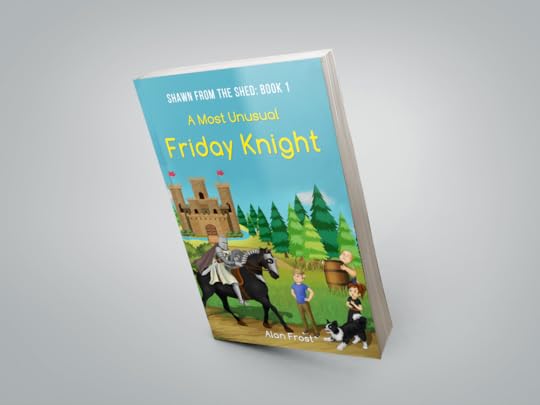
Happy to have received a great review for A Most Unusual Friday Knight. It is a much needed boost to finishing up the sequel in the Shawn from the Shed series, tentatively titled "Time Travelers of the Caribbean". Writing book 2 has been a bit more frustrating than writing book 1, but with any luck, I should have the first draft ready in a week or so.
You can find the full review here: https://chicklitcafe.com/2021/12/07/a-most-unusual-friday-knight-by-alan-frost/
Excerpt:
A Most Unusual Friday Knight is a fantastic start to the ,time-travel , fantasy and science fiction series, Shawn From the Shed. Its memorable characters and impactful lessons will resonate with young readers. A Most Unusual Friday Knight (Shawn From the ShedBook 1)by Alan Frost comes highly recommended by Chick Lit Café.


January 13, 2022
Review of Nolyn, by Michael J. Sullivan
This is a review for "Nolyn" the first book in the new fantasy series titled "The Rise and Fall" by bestselling author Michael J. Sullivan. The review is a five minute podcast, but a brief summary is available below.
https://www.youtube.com/watch?v=Z2gtUZwK03s&ab_channel=AlanFrost%28author%29Brief summary: Overall an enjoyable read set in a world with very rich lore. The plot is interesting and compelling, but at times a little predictable and forced. The characters are mostly well-written and engaging, but not on the same level as Michael J. Sullivan's previous work (in particular the Riyria series).
Nolyn is set in the world of Elan, about 1000 years before the Riyria Revelations series and Riyria Chronicles series and about 800 years after the Legends of the First Empire series. It is intended to be a standalone read, but new readers would definitely benefit from starting in order of publication, i.e. with the Riyria Revelations.
Rating: 4/5
December 25, 2021
What Would You Do? - A Dilemma About History in Children’s Fiction
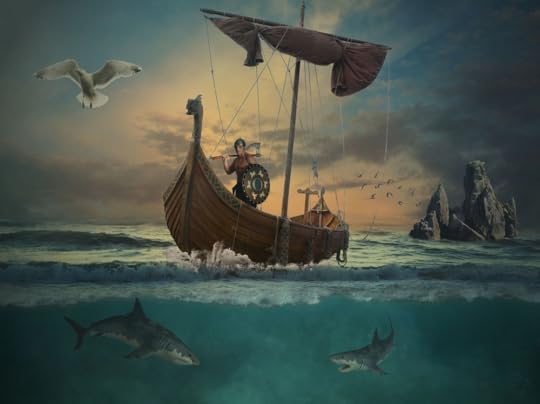
I came across something very interesting a few weeks ago, which reignited a debate I had been having with myself ever since I started writing children’s fiction. I learned that so much of what we think we know about the Vikings is total bullshit. And keep in mind, I have lived in Denmark most of my life, so I am not talking about Hollywood or video game Vikings, with their horned helmets and two-handed swords. I am talking about the concept that almost all Scandinavians have.
I will get back to how I came across this information in a bit, but for now let me just explain why this had such an effect on me. My middle grade series (Shawn From the Shed) involves time travel. In the first book, the characters travel to medieval England. In the second, soon to be released, book, they travel to a different time period. For both, I had to really debate with myself about how much artistic freedom I had. How much of it should be “real” history vs the setting that kids expect and want to see. Hollywood routinely makes a butchery of history, but their films and series are hugely successful.
In the end, I decided to stick with a generally realistic setting. Now, please understand, my age group is 8-12 (and likely the younger end of that spectrum), so naturally I simplified many things and I took a few liberties. I also do not have anything gruesome, no killing, limited violence (with no bloodshed) etc. But I decided early on that I was not going to butcher history. I wanted the kids to have a better understanding of the past once they were done, not a worse one. So, overall, I tried to stay true to a kid-friendly historic setting. This was not always easy because reality is rarely as entertaining, flamboyant, or fair as fiction.
And here is my dilemma. My plan was to send them to the Viking Ages in one of the next sequels. Seemed like a perfect setting. It was something I thought I was fairly familiar with, and it is a setting kids love… what could go wrong? Well, how about the notion that we are using the word Viking all wrong? Or that the mere concept of “Viking” was a construct of the 19th century to bolster a fading national identity?
I recently came across a book by Danish historian Anders Lundt Hansen. The Danish title of the book is “Sølv, blod og kongemagt – Bag om vikingemyten”, and it deals with the myths that everyone, including native Scandinavians believe about the Vikings. I won’t go into detail, and I would highly recommend this book – though right now it does require knowledge of Danish. However, the basic idea that the Scandinavians were Vikings seems to be wrong. Viking was a word meaning pirate, which was something a few Scandinavians engaged in. Moreover, the “Viking” culture that we often see, with brave warriors that laugh in the face of death, is also not based on actual history but rather on sagas of incredibly dubious historical accuracy. Nor was the success of the “Vikings” due to the fact they were just inherently tougher and better than everyone else.
And just in case you are wondering if perhaps these claims are false, the first thing I did was call up a friend of mine who is also a Danish historian. He not only confirmed this but began throwing so many more facts and issues to back up our erroneous notion of the “Vikings” that I genuinely regretted asking him in the first place. I would share my friend’s name, but I cannot risk that one of you contacts him and ends up on the receiving end of one of those lectures. No deserves that. No one.
So, this got me thinking. What should I do about my future book? If I present an accurate depiction of the Scandinavians (and even refrain from using the word Viking in the traditional way), the setting will seem unfamiliar and wrong, to both kids and parents. But if I present a classic Viking setting, then I would be entirely dishonest.
The closest I have come to a conclusion is that either I show a true (albeit kid-friendly) depiction of those times, or I never send them there at all.
So what would you do if you were in my shoes? Drop me comment and let me know.
December 10, 2021
How NOT to Write a Novel, Part 2 of 2: What You Should Do Instead
First, if you have not read Part 1, I encourage you to do so. It outlines my extremely ridiculous misconceptions about writing as well as the unnecessarily complicated and almost comically delusional process I went through to write my first book. In this section, I am going to jump straight to my mistakes and what I should have done differently.
The one thing I do want to repeat here is that my experience is not with the book I currently have published, i.e. the middle grade time travel story titled “A Most Unusual Friday Knight”. My first book was a YA modern fantasy novel titled “The Slayer, the Seer, and the Dream Stealer”, which I plan to release in early 2022. This is relevant because the YA book is way longer and more complex, making it a particularly bad choice as the debut novel for a novice writer.
(Some of) My Mistakes
I grossly underestimated the necessary language skills. I thought that because I had always been very strong at writing non-fiction I would quickly adapt. I couldn’t have been more wrong. Writing in a way that makes a scene vivid and evokes an emotional response is a very hard skill to master. I jumped into the deep end of the pool without even checking if there was water down there. Without having read fiction in years and with no practice writing, I embarked on writing a relatively long YA novel (about 100k words in its first draft) with a complex plot. This is like the equivalent of skipping the tricycle and the bicycle and jumping straight on a Harley Davidson. I grossly underestimated the difficulty of creating and keeping track of a complex plot. To those of you who have not tried it, I cannot emphasize enough how easy it is to lose track of things as you write. I don’t care if you are genius; there are just too many things to remember if you aren’t organized – like plot development, plot twists, character evolution, relationships between characters, etc. I failed to realize exactly how hard it is to spot issues with your own writing. Sometimes they were critical to the story, other times they just make me look stupid. These sorts of mistakes ranged from typos and missing commas to the time when I forgot that my character was already in the room or when her clothing changed from one scene to the next – these being actual errors spotted by my beta readers.I did not involve others early enough. And when I say “others” I mean qualified people – not your mom and your best friend. We are talking proofreaders, editors, beta readers, or just “regular” readers who are in your target market and who will give you an honest opinion. I let too much time lapse between writing sessions – often months. This meant that every session had to begin with me having to re-read everything so that I would remember all the details. It was like re-discovering the story each time, and it made it very difficult to continue ideas that I had had in the previous session.
What You Should Do Instead
If I could go back in time, I would do things very differently. In the end, writing is no different than any other difficult job or endeavor – it requires learning, dedication, and endless practice. Below, I will outline the key steps. These will be shown sequentially, but in reality there will be overlap between the different stages and, at times, you may need to move backwards.
1. Assess: You need to start by understanding what it takes, what you can currently do, and how you can acquire the right skills. This should be tied in directly to the type of book you want to write (e.g. age group, genre, etc.).
2. Learn: The amount of work you need to do here depends on the previous step. How is your mastery of grammar? Do you know how to write modern fiction? What sort of language are you expected to use for the type of book(s) you intend to write?
The internet is a treasure-trove of valuable information, and there are also courses and books on writing. Arguably the most important thing is to do a lot of reading. Audio books work just as well, but the point is you have to expose yourself to good books. They don’t have to be exactly the sort of thing you plan to write, but I would recommend that you focus on modern fiction. Lord of the Rings is nice and all that, but it is hardly a good example of how you should be writing.
3. Practice: This is a step that you never really stop doing, but early on you need to do it a bit more consciously. Basically, you need to write a lot. You could write short stories, write individual practice chapters for your main book(s), collaborate with a friend and build a story together, etc.
4. Get feedback: Don’t be shy about sharing your work with people who will give you an honest opinion. You can also share it with your friends and family, but usually they’ll be nice, and that doesn’t help. Once again, the internet is a very useful tool because it is so easy to share content, find a writing buddy, or get a beta reader. You could even enter a competition and see how it goes.
The most important thing here is to take the feedback without getting defensive or hurt. It’s a learning experience, and if it means you have to practice more or go back to the learning step, then so be it.
5. Plan: The importance of planning varies massively from writer to writer, so you will have to experiment and see what works for you.
I know that for myself, I need a lot of planning. I use character description sheets for my cast, and I map out the whole plot, from A to Z. I usually start with a very short summary, then I expand it.
For the short middle grate story “A Most Unusual Friday Knight” that meant 2 pages of scribbles (it’s always in handwriting because I like to do this while lying down – preferably outside). For my longer and more complex story “The Slayer, the Seer, and the Dream Stealer” that meant about 3-4 pages – with lots of revisions. Since this is a modern fantasy story involving an alternate world, it also meant lots of notes (and many many hours of revision) on the mechanics of the world and the magic system.
Finally, I make more detailed descriptions of the next 2-3 chapters that I am about to write. They are usually a paragraph or two long. I also have a multitude of text files with notes and reminders.
6. Execute: Now it’s time to have a real go at writing your book. You may already have written bits and pieces while you were practicing, but now you have a plan, and everything has to come together. The one piece of advice I can give here is don’t be afraid to make drastic changes if you realize it would improve the plot. It’s hard to look at 100 pages of writing, which took blood, sweat, and tears to produce, and realize you have to edit half of it – or even worse, start over. But if it improves things, then do it.
7. Revise: Whatever you do, don’t send your work out for feedback completely unpolished. If you do, your readers might not be able to get into your story. You also risk that much of the feedback will focus on the glaring problems that you could easily have corrected. Even worse, if you are hiring people, this could be money down the drain and/or higher prices.
8. Language services and feedback: Now you really should look into getting help from professionals and others in the industry:
Beta readers: These people will read through your book and comment on it. They will mention if the writing has problems, but they are not proofreaders. Nor are they editors. Typically, you will get comments here and there with their thoughts (like if something was inconsistent, if they particularly liked or disliked something, if something doesn’t make sense, etc.), and they will also include a general summary of what they think works and what doesn’t. Just keep in mind that beta readers aren't necessarily trainined in any way, so treat their advice as a guideline. Proofreaders: These people will check your work for spelling, grammar, and basic language issues. Editors: There are different kinds of editors, and I won’t go into detail on that here. Very briefly, a developmental editor looks at the plot, characters, and other major aspects of your book. A copy editor focuses on the actual writing, e.g. style and flow, on a much deeper level than a proofreader.
You have to be the judge of what you think you need. I only used beta-readers, and that was probably not the best choice. I was, however, fortunate for two reasons. First, I am a translator/proofreader by profession, so I had an advantage when it came to editing the language. Second, I was lucky enough to come across a beta reader who was very competent and highly educated, and she offered very deep advice and critique – bordering on the realm of the developmental editor.
9. Revise: Now you need major revisions and lots of them. You will likely also need to go back and forth between step 8 and 9, getting feedback on the revised material. As I wrote in part 1, you will need to revise your stuff until you can’t even stand the sight of it.
Well, that’s it. If you are planning to write a book, then I hope I haven’t discouraged you too much, but it’s important to realize the voyage you are embarking on. To be honest, I am not sure I would have done it if I knew what I was getting myself into. I am glad I did though. Good luck.
November 28, 2021
How NOT to Write a Novel, Part 1 of 2: My Misguided Approach to Writing
When I first sat down to write a novel, I was a moron. There, I said it. I made every mistake in the book – no pun intended – and I was arrogant in thinking that because I could write a killer academic article, marketing text, or other kind of non-fiction I could easily transition to fiction.
There are two parts to this blog post. In Part 1, I talk about my misconceptions and then outline my rather embarrassing approach to writing my first book. Part 2 will be about the specific mistakes I made and what I should have done differently. Please note that this deals only with the writing and creative process, not with publishing and marketing.

To begin with, I should point out that the book that I have currently released, “A Most Unusual Friday Knight”, is not the first thing I wrote. The first novel I wrote is titled “The Slayer, the Seer, and the Dream Stealer”, and it will likely be available in early 2022. This is of some importance because the latter is a YA modern fantasy novel with over 95,000 words and a complex plot, while the former is a children’s middle grade book with less than 25,000 words. My point is that I really jumped into the deep end of the pool, not just because of the size of the book (which does matter), but also because of the complexity of the story.
My MisconceptionsHere is the process I envisioned back when I started many years ago:
1. I would do some writing.
2. I would revise said writing.
3. I would share the writing with a few friends and family.
4. They would point out a few things, but mostly they would love it.
5. I would be ready to publish.
It even looks absurd to me when I read this, but it really is what I thought it would be like.
How I Eventually Wrote a BookI had an idea in the back of my head. It was something that was based on a world or parallel existence that I had cooked up as a child. I had been going through rough times back then, and so I imagined this wonderous place, which I could go to when I closed my eyes to sleep at night. Then, over the years, the early beginnings of a story began to emerge around this world. At some point in my early 30s (I am currently 46), I decided to write a book.
So, completely undeterred by the fact that I had not read fiction in years, I booted up my PC and started to write. I figured it would take some practice, but I would learn as I go. I wrote a few pages. Then I put them aside for a few months, came back, read them, and was surprised to find that they were pretty bad. Worse than I had expected.
I revised the text, added bits, and repeated the process several times over a few years. Same outcome. Now, I was beginning to see two general problems. First, there was too much description and too little action. Second, the writing was too cold and simply failed to elicit enough of the desired emotional response. Frustrated, I started over and eventually worked my way to about 50 pages, and then I put them aside once again. At this stage, the plot was also starting to be difficult to handle, and I had no outline from which to work.
A long time passed before I returned to writing. I read through the 50 pages and two things happened. First, I had to admit that I was no good at writing fiction. That was a hard thing to do because I had always been a good writer. Back at university (where I studied business administration), I was the guy who edited everyone’s stuff. Later I had a site on a business topic called knowledge management, which became one of the leading sites on the subject – and to get it there, I wrote content that was equivalent to a text book and I also published a paper. Meanwhile, in my day job, I worked as a translator and proofreader, so without any exaggeration, I was spending my days doing nothing but reading, writing and revising – but never fiction. I worked with business, law, IT, and bunch of other dry subjects. Even marketing, which requires flowery descriptions and a fair share of utter BS, is nothing like fiction. The second thing that happened was that I realized that the story was too disorganized. I had an idea of where I wanted to go, but the path there was too unclear. So, with a very heavy heart, I threw it all away. I had to start clean.
All in all, I had spent nearly a decade scribbling and revising on and off, before I decided to learn how to write. The only time I had ever learned about creative writing was back in school, which for me meant the 80s. Not only was I rusty, but things had changed, and modern fiction had moved away from the passive descriptive style I had been taught. So, I did two things. First, I started learning about modern writing. I realized there were so many things I did not know – even something as basic as correctly writing and punctuating dialog. The second thing I did was to start reading fiction again – or more correctly, I started listening.
As a translator, I was spending all day reading stuff, so at the end of a workday, the last thing I wanted to do was to read more words. That was one of the main reasons I had not read a fiction book in many years. Audio books were the savior here. With audio books, I could listen to the story while out for a walk, biking, or lying around on the beach. For about half a year, all I did was listen to audio books, read about modern writing, and practice.
Finally, so many years after my initial decision to write a book, I was ready to give it a real shot. This time, the first thing I did was outline the plot. It started with a very general outline, followed by a more detailed description of what I wanted to do in the next few chapters. This was meant to help me stay organized and consistent, but it had the unintended effect of giving me new ideas. Some major changes came about from this relatively simple process because I could visualize the whole story and see where interesting twists could be added. It even resulted in the introduction of a major character, which changed the dynamics of the plot entirely.
It took me over two years to finish a first draft. To say the road was bumpy would be a massive understatement, but this time I could “feel” what I was writing, and I could compare it other books I had read.
Then I passed the book on to a set of beta readers. I was biting my fingernails waiting for the response since no one had read any of my stuff yet. I had decided to avoid the whole friends and family thing since you can’t really trust what they tell you anyway. To my great surprise, the response was very positive. However, it was not without criticism, both plot-wise and language-wise, and it really underlined the importance of having several sets of eyes examine your work. I recall being so surprised by some of the inconsistencies they spotted – things that were glaringly obvious, but which were somehow invisible to me because I had written the damn thing.
I did a couple of beta reader rounds, followed by extensive editing each time. Writing a book is a funny thing because you start with this story that you love and is important to you in some way, then you feel excited as you write it and see it take shape, but by the end, after endless revisions, you are sick to your stomach of reading your own work.
At the end of the day, I ended up with a book that I am happy with, but it took so long that I was legitimately “young” when I started, and now I am well into middle age. Had I approached things with a little more humility, a little more curiosity, and a lot more patience, it would have taken a fraction of that time. In the next part, I will talk about the specific things I should have done differently.