Lisa Hoffman's Blog
June 7, 2024
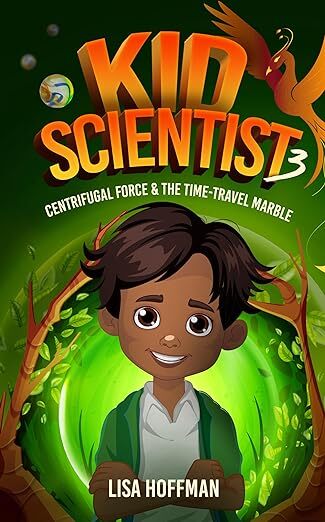
Science Kids 3 Release
Hey friends, I have just released the 3rd book in the Science Kids series. Here is the cover.


May 26, 2024
Read-aloud of my book Science Kids: Chromatography Superhero
Hi STEM friends, this is a read-aloud of my book, Science Kids: Chromatography Superhero, which is available on Youtube:
Read-aloud of my book Science Kids: Chromatography Superhero
The book is available for purchase:
Amazon US: Science Kids: Chromatography Superhero US
Amazon Australia: Science Kids: Chromatography Superhero AU
This book is designed for early years educators to read before doing the chromatography experiment with their class. As a kindergarten teacher, I have used this book with many 4 and 5-year-olds, and they love it!
You can use this video in class to show how technology can be used to share stories with a wider audience. Additionally, you can discuss the animations I added to enhance the story. Ask questions like, "Why do you think the author added the paper, water, and pen to this part of the video?" to encourage children to think about digital storytelling.
At the end of the book, there is a teacher's guide that includes:
* A description of the chromatography experiment
* Background knowledge about chromatography
* Real-world applications of chromatography
* A printable page for children to draw and reflect on what they see in the experiment
Once the experiment is done, you can place the completed pages in their folders and display the beautiful color chromatography experiments around the room. This way, the children can proudly show their parents how cool their class is!
To visit my author page and see the other STEM books I have written for the early years sector, click: https://shorturl.at/I8dKT
Read-aloud of my book Science Kids: Chromatography Superhero
The book is available for purchase:
Amazon US: Science Kids: Chromatography Superhero US
Amazon Australia: Science Kids: Chromatography Superhero AU
This book is designed for early years educators to read before doing the chromatography experiment with their class. As a kindergarten teacher, I have used this book with many 4 and 5-year-olds, and they love it!
You can use this video in class to show how technology can be used to share stories with a wider audience. Additionally, you can discuss the animations I added to enhance the story. Ask questions like, "Why do you think the author added the paper, water, and pen to this part of the video?" to encourage children to think about digital storytelling.
At the end of the book, there is a teacher's guide that includes:
* A description of the chromatography experiment
* Background knowledge about chromatography
* Real-world applications of chromatography
* A printable page for children to draw and reflect on what they see in the experiment
Once the experiment is done, you can place the completed pages in their folders and display the beautiful color chromatography experiments around the room. This way, the children can proudly show their parents how cool their class is!
To visit my author page and see the other STEM books I have written for the early years sector, click: https://shorturl.at/I8dKT
March 5, 2024
Extra section for Kid Scientist 2
Don't you hate it when you realize you have left out a portion of the book that you wanted to include? Note to self: add this section into Kid Scientist: Chromatography & the Aquarium Gateway.
In another part of the galaxy, a little octopus made its way along the golden sand of an unused island, heading straight for a palm tree. Instinct guided it there. It was part of their ancient ritual to deposit their ink at the base of palm trees every full moon. The palm trees only existed in their unique form because of the ink they placed there.
The little octopus looked up at the shifting colors moving up the trunk of the tree. Its changing hues were beautiful. Its own body could do something similar. It too could change colors, transitioning from one set of tones to another.
The little octopus smiled as it watched its black ink drop from its tentacles into the sand at the base of the trunk, observing it disappear through the grains. It knew that its roots would absorb the ink soon and decided to stay and watch.
At first, the trunk looked black, but soon it changed into dark blue and purple hues. The chromatography palm trees were one of nature's masterpieces. They formed a natural spectacle at night because only the smallest particles of ink slowly made their way to the top of the trunk and out into the leaves. Up there, the last and smallest color particle the octopus offered merged with the leaf's chlorophyll, and together they absorbed the rays of the sun. This caused the leaves to glow throughout the night.
"And the way the Atlanteans harvested the different pigments from the tree for their pearls, well, that was more than clever," the little octopus thought as it began to move back toward the water. As it tentatively touched its tentacle into the water, it wondered if the rest of the cosmos was just as marvelous as this world.
Perhaps it should find out.
Kid Scientist: Chromatography & the Aquarium Gateway
In another part of the galaxy, a little octopus made its way along the golden sand of an unused island, heading straight for a palm tree. Instinct guided it there. It was part of their ancient ritual to deposit their ink at the base of palm trees every full moon. The palm trees only existed in their unique form because of the ink they placed there.
The little octopus looked up at the shifting colors moving up the trunk of the tree. Its changing hues were beautiful. Its own body could do something similar. It too could change colors, transitioning from one set of tones to another.
The little octopus smiled as it watched its black ink drop from its tentacles into the sand at the base of the trunk, observing it disappear through the grains. It knew that its roots would absorb the ink soon and decided to stay and watch.
At first, the trunk looked black, but soon it changed into dark blue and purple hues. The chromatography palm trees were one of nature's masterpieces. They formed a natural spectacle at night because only the smallest particles of ink slowly made their way to the top of the trunk and out into the leaves. Up there, the last and smallest color particle the octopus offered merged with the leaf's chlorophyll, and together they absorbed the rays of the sun. This caused the leaves to glow throughout the night.
"And the way the Atlanteans harvested the different pigments from the tree for their pearls, well, that was more than clever," the little octopus thought as it began to move back toward the water. As it tentatively touched its tentacle into the water, it wondered if the rest of the cosmos was just as marvelous as this world.
Perhaps it should find out.
Kid Scientist: Chromatography & the Aquarium Gateway