Bruce Mitchell's Blog
March 28, 2022
A Dark and Stormy Night of Terror – 1915
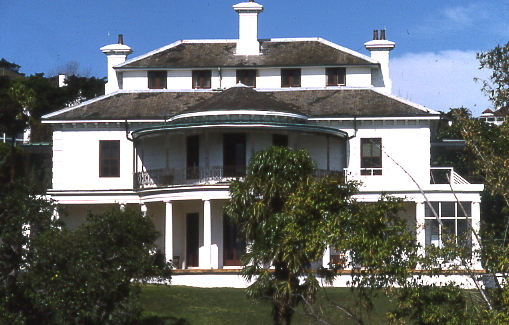
Strickland House is a former residence and convalescent home in Vaucluse, an up-market suburb overlooking Hermit Bay in Sydney Harbour. In chapter 9 of ‘Breaking Lucky’, it’s called ‘Strickland House’, where Cath Thornton serves an internship as part of her final year of medicine at Sydney University. Cath unwittingly stumbles into a web of murder for profit, spun by the evil Dr. Hugo Sainsbury and the equally sinister Matron Dewhurst, Sainsbury’s sister.
The climax comes when Detective Henry Wong races his 1913 Triumph TT motorcycle to save Cath’s life; twisting through harbourside S bends at breakneck speed. Wong confronts the evil doctor, but it is Cath who becomes the heroine, taking out the Matron with a rather unusual weapon.
I love creating strong women characters, and Cath is certainly one. Beautiful, smart, somewhat stubborn, and with a low threshold of tolerance for fools, Cath’s indeed a force of nature.
Join me in places that beckon you back.
The post A Dark and Stormy Night of Terror – 1915 appeared first on Bruce Mitchell Author.


December 28, 2021
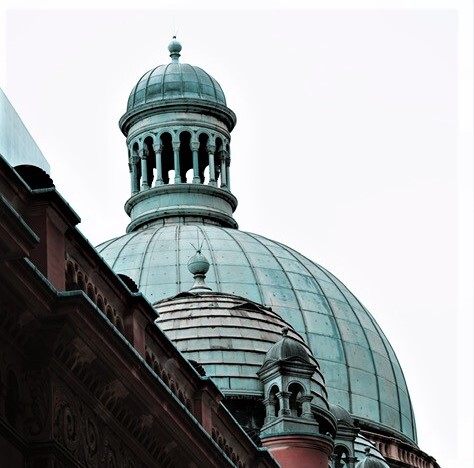
The Garden Palace, Sydney.
The 19th Century was a time to marvel at the world’s technological advancements; steel manufacture, mechanised mining, steamships, locomotives, the early motor car, even the first attempts for man to fly. As a result, it became fashionable for nations to display their industrial marvels in exhibitions; England held one in 1851, followed by France and the US.
Into this arena came Australia. We didn’t really have much of an industrial base, and we were a long way from anyone who did; but we decided to ‘throw our hat into the ring’, as we say Downunder. The Royal Botanical Gardens in Sydney was chosen to be the site of a grand building to hold the ‘Sydney Exhibition’ (we were still a bunch of separate colonies in those days).
The Palace opened in September 1879, just in time for the exhibition. The dome was 100 feet (30.4 metres) in diameter and 210 feet (65.5 metres) in height. The building was over 266 yards (244 metres) long, with 4.5 million feet of timber, 2.5 million bricks and 243 tons of corrugated iron. And to top it off, it was built in nine months.
The ‘Garden Palace’, as it was proudly named, housed Australia’s first ever hydraulic lift (elevator), and attracted over a million visitors from all parts of the world. Sydney installed its first ‘steam tram’ to ferry visitors around. It was so popular it became the first tramline for what was to be one of the largest tram networks in the world.
But just as the Garden Palace blossomed quickly, sadly, it disappeared even quicker. Three years after its opening it burned to the ground in 1882. Arson was suspected, but no charges were laid. The only remains of the building are its carved sandstone gateposts and wrought iron gates, located on the Macquarie Street entrance to the Botanical Gardens. A 1940s-era sunken garden and fountain marks the former location of the Palace’s dome.
When I first read about the Garden Palace I was blown away by its size, and the fact that today, hardly anyone would be aware it existed in such a popular leisure area as the Botanical Gardens. So, I wrote it into my crime thriller “Dare the Dark”, out on Amazon. Join Detective Liam Kennedy as he does battle in the darkness of the Garden Palace with a crazed serial killer dubbed “Doctor Hacksaw” by the Sydney press. There will be a reckoning in the darkness!
Photo – Tony Dinh
The post The Garden Palace, Sydney. appeared first on Bruce Mitchell Author.
December 10, 2021
Caddie
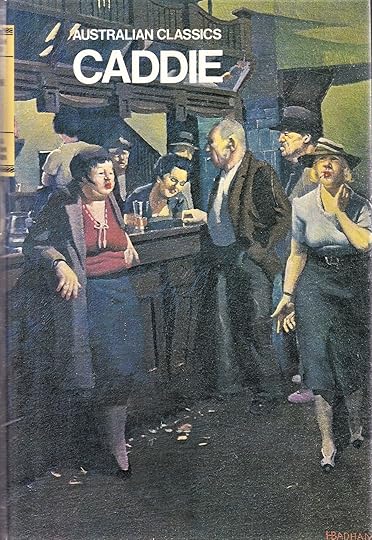
Inspect the dust cover and inside pages of this book, and you won’t find the author’s name – a very rare occurrence in the publishing world; but the woman who wrote “Caddie”, in her own words, “didn’t want to be pitied.”
In March 1945, novelists Dymphna Cusack and Florence James were holed up in the Blue Mountains, west of Sydney, putting the finishing touches on their own novel, “Come in Spinner”, which would also become a classic. They’d hired a small cottage complete with housekeeper and cook, so they could concentrate on their writing. The housekeeper’s name was “Caddie”, a local middle-aged woman, and in the following weeks, Caddie told them of her life and the struggles she’d been through as a single parent during the Depression.
Cusack and James were touched by Caddie’s story, and urged her to put it in writing. Caddie was an unassuming woman who considered her life to be no more or less interesting than most of the battlers who lived through those years, but her two women novelist friends (as they soon became) were insistent, and offered their services as reviewing editors.
Over the following years, while Cusack and James travelled the world publicising “Come in Spinner”, they’d receive a battered, hand-written manuscript from Caddie and mark it up for changes, posting it back to the Blue Mountains for another re-write. Finally in 1951, they received a final note with a flat statement: “Take it or leave it. I can’t do another thing on it.”
And so “Caddie” was published, and became a best seller with several re-prints and a full-length feature film. It’s a story told with beguiling honesty, and a clarity that only comes with life itself. Brought up in a shack on a railway camp and escaping to Sydney as a young woman, Caddie endures an unloving marriage and bears two children before escaping into the back-streets of the inner city to care for her kids single-handedly.
Caddy had grit, and grew up quickly at a time when jobs were scarce and people went hungry most nights. I found myself following her ups and downs; urging her on from the sidelines, as if I was there beside her. I found my copy of the hardcover book on eBay, but have since seen it on Amazon in eBook format, where lo and behold, the author’s name is listed as “Catherine Edmonds”. I recommend this great read!
The post Caddie appeared first on Bruce Mitchell Author.
December 6, 2021
I’m headed for the first century CE (or AD..)
Way back in September 2019, when I was trying to come up with a new IG post, an idea for a story popped into my head, involving two renegade gladiators being hunted by the Roman Empire. That series of posts continued until April 2020, and drew quite a following, and I vowed one day I’d write the book. Well, I’ve started the research, and hope to commence writing early in 2022. The people who followed that series of short stories will recognise the title – FLAMMA! and I’m so excited to start work on the book! More to come soon! Check out those posts on @brucemitchellauthor.
The post I’m headed for the first century CE (or AD..) appeared first on Bruce Mitchell Author.
September 24, 2021
The Birth of ‘Dare the Dark’
My first book ‘Wide Sky People’ was never planned; it just ‘happened’ after I’d done some research on my family’s history back in 2015. One afternoon I sat down at my desk and started typing a scene that had been in my mind for some time: what was it like for my great-great grandfather Michael Mitchell when he arrived from Ireland with his family in 1841? Eighty thousand words later, I stopped.
So after ‘Wide Sky People’ was published, a whole new world of writing opened up to me. I was excited by the possibility of writing more about the history of Sydney and its inhabitants; and since my writing style leant toward fast paced action and adventure, what better way to follow up but a crime thriller? And so Dare the Dark was born. Writing a serial killer story with multiple suspects was a real challenge, and forced me to become far more organised and disciplined in my approach.
The two main protagonists, Liam Kennedy and his sidekick Henry Walsh are kind of a ‘Butch and Sundance’ pair, with their dialogue at times peppered with side cracks at each other. I also wanted strong female characters, and Mary Kennedy and Victoria Chen are just that. Mary has a high profile part to play in catching the murderer, and Victoria becomes embroiled in the machinations of a Chinese criminal organisation.
As a student of martial arts for many years I enjoyed including a few scenes of violence with oriental martial arts, including a Japanese sword-master in self-exile from the Meiji Restoration reforms in Japan at the time. There are other sub-plots woven through the story, which comes to a climax in the ‘Garden Palace’ building that once stood in the Botanical Gardens – a magnificent edifice that would be a landmark today if it hadn’t burned to the ground in 1882.
I hope you enjoy the book. If you do, please leave a review on Amazon!!
The post The Birth of ‘Dare the Dark’ appeared first on Bruce Mitchell Author.
September 13, 2021
Favourite Books
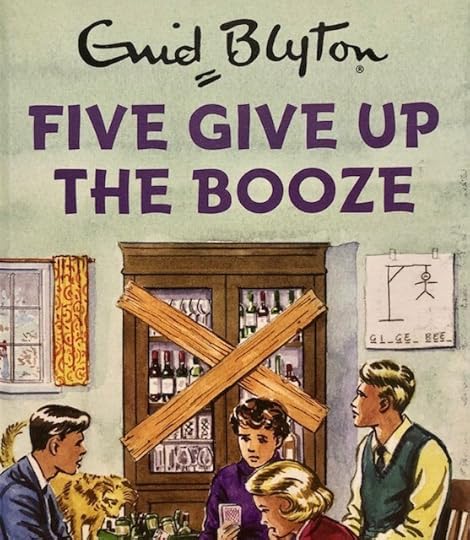
I came across this ‘spoof’ book in a bric-a-brac shop a while back. For those not familiar, Enid Blyton (1897-1968) was a pioneer in children’s and young adult literature. ‘Famous Five’ books were all ripping yarns and jolly hockey sticks written in the 1940’s. Terribly British and terribly proper. Poor old Enid would turn in her grave if she saw this cover!
Which brings me to favourite books. Here’s ten of mine in no particular order, to start the ball rolling:
The Wind in the Willows – sheer childish escapismThe ‘William’ series – English schoolboy adventuresThe Moonstone – The first detective novel ever written, I believe.Catch 22 – Anti-War novel. Hilarious and shocking in equal measureThe Harp in the South – Ruth Park classicA Gentleman in Moscow – Amor Towles – love this bookAll the Light We Cannot See – Anthony Doer. Intriguing WW2 storyThe Little Paris Bookshop – Nina George – ethereal story with a beautiful feelThe Three Musketeers – Dumas classic in old FranceThe Ninja – Eric Van Lustbader – east meets west in a cracker of a novelOk I’ll shut up now. Let’s hear yours!!!
The post Favourite Books appeared first on Bruce Mitchell Author.
August 28, 2021
On Changing a Book Cover
My second book ‘Breaking Lucky’ is something of a problem child. Well, actually, I’m the problem. It was the first time I’d self-published and I was a babe in the woods, particularly when it came to the cover. If you hop over to ‘My Books’ you’ll see the latest of three BL covers, and hopefully the last. It’s taken me this long to realise that a series should have a common ‘look’ about it, so to be consistent with ‘Wide Sky People’ I chose another painting; a favourite of mine from Arthur Streeton, one of Australia’s great impressionists. The scene is the northern headland of Sydney’s Coogee Beach, where the Thornton family runs a pub up the hill in Randwick.
Streeton’s works are no longer under copyright, but anyone taking a photo of the work has copyright on that, so I paid a fee for its use and did the design myself on a free site called ‘Canva’, which is fairly easy to operate when you get used to it. Amazon generously enables one to change a cover at will, and provides good support for the novice. These days with ‘print on demand’, a bookseller doesn’t print the book until it’s sold, so no more warehouses full of books.
A cover can cost anywhere between $20 and $4,000 depending on quality and design, but designing one’s own is inexpensive and not really difficult, and I’m only just getting started!
The post On Changing a Book Cover appeared first on Bruce Mitchell Author.
August 18, 2021
Is the Devil in the Detail?
One of my few vivid memories of high school was when Mr. Meadows the English teacher complained that I had “too much imagination.” Apparently I became carried away with a story I wrote for homework involving my own private tropical island, a couple of flying saucers and a nuclear submarine. I may have just finished reading a James Bond book; they were my passion for a while.
In hindsight, it was an odd comment to be aimed at a 13-year-old boy, but I suffer no long-term damage. When I first started writing, my imagination sometimes got the better of me and I’d use too many words; I still have to keep tabs on that tendency.
I recently came across an “Australian Classic” written in the 1940’s, which made me realise that writing styles change tremendously with the times. Here’s an excerpt descriptor passage:
“Aunt Edith was not like Beryl. She was tall and stout and wore a whitish-grey powder that made her rather puffy face look like bread rising. She had moles too. Little bubbles of pale flesh that had risen here and there, on one her chin, one at the end of her left eyebrow, and the doyen and elder of all moles, with a little spout of grey hair to it and a superior position of command near her right eyelid. When Aunt Edith gave an order, this elder mole leapt up, as if to say “At Once”, and the attendant moles looked meek and inconspicuous, as if they feared Aunt Edith might have them removed. Her hair was grey and elaborately coiled on the top of her head, puffed out over little pads to make it look thicker as had been the fashion in Aunt Edith’s youth. Her dress was grey silk, beautifully cut and girdled with a waistband of black and white beads that hung in front like some strange rosary and clicked as she walked.”
Phew! These days an editor would take to that paragraph with a chainsaw. The book was interesting but I couldn’t finish it. Don’t get me wrong, many would delight in the above; it’s certainly witty in approach and paints a vivid picture.
So I’ll keep minding Mr. Meadows and be sparing with my adjectives, and if I find myself using 115 words to describe moles and facial hair, I’ll pause to reflect.
The post Is the Devil in the Detail? appeared first on Bruce Mitchell Author.
August 6, 2021
On Killing Off a Character
I don’t know about you, but I become quite attached to my characters. We create them, nurture them, add a flaw here and there (maybe), and see them safe through all types of perils. One might ask why they need to die at all; why don’t they all live happily ever after? Think about all the famous characters that live forever: James Bond, Phryne Fisher (Miss Fisher’s Murder Mysteries) Lisbeth Salander, (The Girl With the Dragon Tattoo), and one of my favourites, Inigo Montoya (The Princess Bride). All were originally created in books, and they never died. I’m a fan of eternal heroes, and I’m not much bothered with giving them flaws. I guess I’m something of a ‘Peter Pan’.
Readers also become attached to our characters, if we do a good job creating them. There’s a character in ‘Wide Sky People’ named ‘Galu’, an Aboriginal Gundungurra man who saves young Michael Thornton’s life. He only appears for about ten pages in the book, but a reader once berated me for not bringing him back into the story. She said she was sure he’d re-appear, and was mightily disappointed when he didn’t (you can’t please some people…).
The first time I killed a character was also in WSP. It was time to wake the story up a bit with a good old fashioned tragedy, so I threw Margaret Thornton under a runaway horse and cart. She was just a teenager, and you know what? I became a little emotional about it, and almost brought her back to life. But I figured that if I got emotional, so would the reader, and that’s a good thing, as long as the story goes through a brief period of mourning with the reader.
I’m 75% through the third volume of the Thornton series, and just killed off a major protagonist (This could develop into a habit). I was a little more hard-headed this time; he had a good run across volume 2 and 3, the story was well advanced and there was a great opportunity to make him a hero in death. I hope the readers will see it the same way when I publish it…..
May your heroes fly forever!
The post On Killing Off a Character appeared first on Bruce Mitchell Author.
August 1, 2021
It’s character-building….
How do you create your characters? Do you model them on someone you know? A movie you saw, or maybe the way you’d like to be? I suspect there’s a tendency for most writers to weave a little bit of themselves into their characters.
Whatever the case, there’s no doubt in my mind that vivid characters, whether good or evil, are key to grabbing the reader, and it’s something I try to focus on. My first book, ‘Wide Sky People’, is loosely based on my own ancestors, but their characters are of my own making. The main protagonist, Mick Thornton, is the ‘strong, silent type’, and as I was writing, I thought of one of my favourite actors, Liam Neeson. That helped me visualise Mick and shape his character accordingly. His wife Cate was cast somewhat in the mould of Katherine Hepburn in her role as ‘Mary Kate’ in the movie “The Quiet Man” (1952). She’s a strong, feisty woman. Incidentally, John Wayne plays the lead character, Sean Thornton, which is where the ‘Thornton’ name came from.
I usually write a profile of the personality of each main character, and refer to it when I’m writing. This comes in handy when I’m figuring out how that character would react in a certain situation, to make sure I’m being true to his/her profile. I use a well-known personality definer called the “Myers Briggs Personality Type” that’s been around for years. Here’s an example of one of my profiles:
“Catherine Thornton. Daughter of James and Sarah. Born Orange 1887. Physical: A striking girl. Light chestnut hair and sparkling blue Nordic eyes. Facial features dominated by a strong, determined chin. When she smiled, which was often, it was like a summer sunrise. Personality ESTJ – Extroverted, Sensate (i.e. Observant), Thinking and Judging). Seriously smart. Does not suffer fools. Driven and particular. Strongly loyal and determined. Detail oriented, outgoing, decisive, determined and organised. A force to be reckoned with.”
It’s possible to use these personality traits to identify character flaws, which writing experts always talk about as being important to use. For example, Cath, being highly driven, can sometimes ignore everything and everyone around her when she’s on a mission to achieve her goals; often to her own detriment.
I haven’t got this whole character thing sorted out yet; sometimes I get too carried away with the story and forget to focus more on characters – that’s one of my many flaws. Happy writing!
The post It’s character-building…. appeared first on Bruce Mitchell Author.