Edison McDonald's Blog
July 6, 2023
The Farm Bills Implications for People with Disabilities
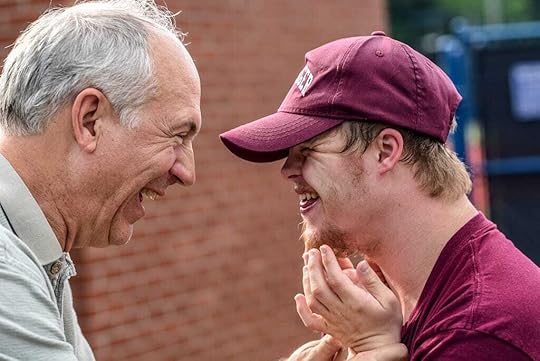 Photo by Nathan Anderson on Unsplash
Over 60 years ago, the De-Institutionalization Movement started to bring people with disabilities into the community. Yet still, access to true community inclusion is a dream for many. You can’t be included in your community if you can’t get to life-saving care because of inadequate transportation infrastructure, or you can’t work because you don’t have broadband, or there’s no housing in town that is accessible. People with disabilities want to live everywhere, but they only can if we ensure our communities are accessible now. We must take bold strides forward to ensure in this Farm Bill, we protect SNAP, expand access to rural broadband, invest in our transportation infrastructure, build housing that isn’t just affordable but accessible, improve our food-making process, and improve employment opportunities.
First, for those unfamiliar, the Farm Bill is one of the largest pieces of comprehensive legislation in the U.S. It covers a broad array of policies spanning agriculture, food policy, rural access, and more. Historically, this bill brought together rural and urban communities by offering important benefits for both communities. In particular, the key program for urban communities is Supplemental Nutrition Assistance Program (SNAP). This is the main policy that people consider beneficial for people with disabilities. SNAP is the largest program in the domestic hunger safety net. In 2021 SNAP was about $111 Billion and served more than 41 million people. (Center on Budget and Policy Priorities) This is vital as people with disabilities are significantly more likely to live in poverty and, thus, more likely to utilize SNAP. Without this support, many people with disabilities would struggle to secure adequate nutrition.
But beyond SNAP, many key portions of the Farm Bill exist for people with disabilities.
Rural Broadband If you are one of the “42 million Americans have no access to broadband,” (Campisi) and you have a disability, you may have to move to access vital services. For instance, if you have a 3-hour drive to your Occupational Therapist, you must see once a week. Maybe, you can do it sometimes, but if it’s every week, that’s a different story. The best immediate solution is expanding access to Telemedicine for remote care. However, that only works if there is access to rural broadband. Whether for telehealth, work, education, or community inclusion, the Farm Bills Rural Broadband funds are essential. Now, there is a new requirement for Electronic Visit Verification (EVV) that requires broadband access. That means that even basic Day and Residential Services can be challenging to access without broadband. Luckily the Farm Bill has significant support for rural broadband.Transportation Digital access is vital, but sometimes you must do some things in person. When that happens, you need a well-designed, accessible transportation system. Unfortunately, ours is severely lacking. Over 6 million people with disabilities lack access to adequate transportation. (Bureau of Transportation.) For people with disabilities, frequently, this means scheduling visits weeks ahead of time. Imagine thinking, “I need to go to the bank,” but being unable to do it for weeks. The Farm Bill has significant funding to help build that infrastructure.Housing One of the larger topics bubbling to the surface for the disability community is accessible housing. This is particularly pressing as many of the USDA’s 515 Loans will be paid off in the next ten years. Disability advocates have called for affordable housing that is also accessible. We can’t have either without proper leveraging of the 515 program. For a person with a disability, that may mean they have to sign up for a years-long housing wait list. We can’t create true inclusion as is required by the Olmstead v L.C. Decision without accessible housing in all communities. That can only happen if we have the rural development funds that ensure all communities are accessible.Health People with disabilities have significantly higher rates of co-concurring conditions. Part of the problem stems from how the system grows our food. From high calories to spiking levels of nitrate over-saturation, there are many dangers to the health of people with disabilities. We also see the need for more support for healthy food supports and education. Several sections in the Farm Bill could help remedy these issues. We could increase funding for cover crops, buffer strips, technical assistance, etc. There are also funds to help provide better health education that could help to mitigate some of these issues. The problem is that they aren’t focused.Employment One piece that the Farm Bill hasn’t built in is improving equitable access to employment. Employment is critical to social inclusion, economic self-sufficiency, and quality of life. “In 2022, 21.3 percent of persons with a disability were employed, up from 19.1 percent in 2021” (Bureau of Labor Statistics). The Farm Bill has a unique opportunity to leverage its existing funds to expand access to employment for people with disabilities broadly. As our nation deals with record-low unemployment, we need to pivot. Inversely the disability community has historically been significantly underemployed. This creates a tremendous opportunity for us to evolve our workforce to be more inclusive truly.The pure economic benefit of such a fiscally large program is another factor we must recognize. This is an opportunity to leverage those dollars to be more inclusive and offer more potential employment across the board. As we look to bring people with disabilities into the workforce, we must ensure that all economic sectors participate in a more inclusive environment. By adding requirements or extra incentives to hire people with disabilities, we could tremendously impact access to competitive integrated employment opportunities. This can be done with shifts to pre-existing programs like Rural Business Development Grants or the SNAP Employment and Training program.Building Self-Employment For those more entrepreneurial individuals, you could help eliminate barriers by increasing disability-specific technical support for programs like the Beginning Farmer and Rancher Development Program (BFRDP) and the Outreach and Assistance for Socially Disadvantaged and Veteran Farmers and Ranchers program. We could also improve partnerships with Vocational Rehabilitation entities.Improving Connections While we have a world that now feels very connected, it’s astounding how many connections are missed for people with disabilities or in markets. For instance, trying to get unique crops grown by a person with a disability, like regenerative tomatoes, maybe a challenge. This is where we could better utilize the Farmers Market and Local Food Promotion Program.As we seek a more inclusive world, we must ensure that we have all voices at the table during Farm Bill debates. We must take bold strides forward in this Farm Bill to ensure we protect SNAP, expand access to rural broadband, invest in our transportation infrastructure, build housing that isn’t just affordable but accessible, improve our food-making process, and improve employment opportunities as we seek a more inclusive world. How can you make a difference? Contact your members of Congress by going here https://www.congress.gov/members/find-your-member
Works Cited
Bureau of Labor Statistics. “Persons with a Disability: Labor Force Characteristics — 2022.” Bureau of Labor Statistics, https://www.bls.gov/news.release/pdf/disabl.pdf. Accessed 5 July 2023.
Bureau of Transportation. “Transportation Difficulties Keep Over Half a Million Disabled at Home.” Bureau of Transportation Statistics, 21 November 2012, https://www.bts.gov/archive/publications/special_reports_and_issue_briefs/issue_briefs/number_03/entire. Accessed 5 July 2023.
Campisi, Natalie. “42 Million Americans Still Don’t Have Access to Broadband Internet — Forbes Advisor.” Forbes, 26 May 2023, https://www.forbes.com/advisor/personal-finance/millions-lack-broadband-access/. Accessed 6 July 2023.
Center on Budget and Policy Priorities. “Policy Basics: The Supplemental Nutrition Assistance Program (SNAP).” Center on Budget and Policy Priorities, 9 June 2022, https://www.cbpp.org/research/food-assistance/the-supplemental-nutrition-assistance-program-snap. Accessed 5 July 2023.
[image error]

December 26, 2021
How to Solve the Rural Organizing Crisis?
Traveling across the plains of Nebraska, I frequently watch as the snow whisks through dried cornstalks. Knowing the ground may be hard…
October 22, 2021
A Key Solution to our Staffing Crisis is People with Disabilities
There are a lot of conversations going around about having a hard time finding people to work for them. It’s frequently blamed on this…
October 19, 2021
In-Person is Done: Long Live Hybrid
I love driving. It’s a time to think, a time to process, and gain a better understanding of the world. I frequently drive across the state…
September 28, 2021
How our Elections Aren’t Accessible
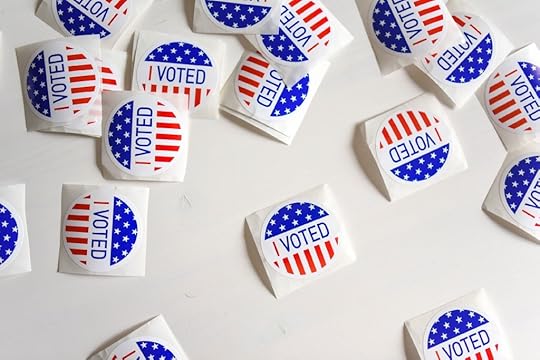 Photo by Element5 Digital on Unsplash
A common refrain in the disability community is, “Vote like your life depends on it. Because it does.” For people with disabilities, many of whom frequently have medical bills exceeding $100,000 per person per year, the only payor that can ensure they stay alive is through state and federally funded Home and Community-Based Services. Even your best private insurance coverage frequently won’t cover what you need. Access to food through Supplemental Nutrition Assistance Program (SNAP), heat for your home through Low Income Home Energy Assistance Program (LIHEAP), and basic necessities through Social Security Disability Insurance (SSDI) is the only way to ensure you can stay alive. Not to mention, getting anywhere frequently depends on public transportation programs. Communicating with people requires broadband access. Going into buildings requires accessible spaces that are all regulated by governmental entities. With all of these critical decisions dependent upon what your elected officials decide, people with disabilities have a bigger stake than almost anyone in who those elected officials are.
Despite this importance according to a 2016 election by Rutgers University. Voter participation among people with disabilities has gone down over the past two presidential elections — from 57.3 percent in 2008 to 56.8 percent in 2012 and 55.9 percent in 2016. This may be because according to an October 2017 study by the Government Accountability Office (“GAO”), nearly two-thirds of the 137 polling places they inspected on Election Day in 2016 had at least one impediment to people with disabilities. At the program I monitor here in Nebraska at 235 polling locations, we found 171 violations of various accessibility laws. That means in a substantial majority of polling places, people with disabilities can’t vote. While we’ve worked with Senators, our Secretary of State, and local elected officials to improve this, there is still a long way to go.
So what does this look like?
You have a wheelchair and try to go into a polling location but in the parking lot, there is no ramp or a bad ramp (not 36 inches wide).You have a wheelchair and try to go into a polling location but in the parking lot there is poorly maintained parking your chair can’t get acrossYou try to go in the door, but the door isn’t 32 inches wide, so your wheelchair doesn’t fit.You get to a polling location and are told that you can’t vote because you have an intellectual or developmental disability. This is misinformation. Unless a judge has explicitly taken away your right to vote, then all citizens have that right.You don’t have full dexterity in your hands, so you can’t grasp, pinch, or twist a handle.A poll worker asks for your Photo ID, but you don’t drive, so you don’t have a photo ID (in states with ID requirements)Most of us value the privacy of the ballot box. But many polling sites don’t have private ballot boxes for people in wheelchairs or who have to use a particular machine to help Vote.There is a long line, and you are only able to stand for short periods, you have to get back home for a treatment, or you use a walker, and a long line isn’t an optionThere are special machines to help people with disabilities fill out their ballot, but frequently they aren’t turned on, the poll workers won’t have the key to turn them on, or they malfunction.The polling location does have an accessible door, but it’s locked, and instead, only inaccessible doors are openWith these barriers and more, is it wonder why we have such a low percentage of people with disabilities voting? We need to correct the wide-ranging stigma and pervasive misunderstandings and ensure these disenfranchised individuals can access their right to vote.
[image error]September 20, 2021
Our Tax Dollars Support People with Disabilities… Right?
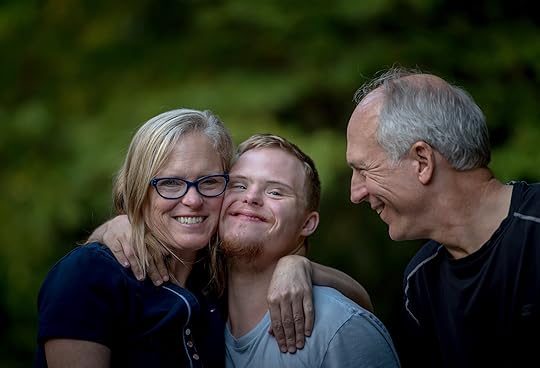
Many people with Intellectual and Developmental Disabilities (IDD) do not get the support they need in the United States
September 17, 2021
Organizing in Faith Communities
Within community organizing, a key piece has been ignored by so many. That piece is communities of faith. Being a Christian (Presbyterian), a former Youth Group Director, a former church elder, having worked for the National Presbyterian Church, graduate with Political Science and Religion degrees, a faith organizer, a political staffer, a community organizer, and broadly involved community member this status quo concerns me.
We forget that Jesus was, at the base, a community organizer. He advocated for the poor, the sick, children, those of different ethnicities, and the downtrodden. Fighting the powers of big money, flipping the tables of injustice, leading to a revolution that overturns one of the largest empires in history. Christians are at base a powerful community for reform that we have allowed to slip away.
So below, I will provide a few tools to help you as you start to organize in faith communities around the issues you are working on.
Tools for Addressing Pastors- When addressing pastors, it’s important to keep in mind their backgrounds. Normally, in mainline denominations, these are well-educated people with advanced degrees and training in theology, pastoral ministry, and Christian education. When addressing them, references to theologians, scholarly work, and well-backed research is vital. Logical and well-researched discussion helps to inform their decisions and actions. If you can provide these resources, it is far more likely they will be willing to help you.
It is also important to remember they need to work at keeping a diverse community together, and sometimes it is difficult to speak out on issues. In this modern-day community where it is far too easy for people to not go to church or move to a different faith community, pastors are constantly nervous about losing individuals. So help to offer them cover. Examples include citing support from a national entity, bringing more people to their church, helping to publish a positive news story about them, and bringing other pastors in the community to the table.
Sermon Pitching- We have a great deal of training on pitching stories to reporters, but a closely related tool would be to help transition the narrative via sermon pitching. Pastors constantly need to come up with, so they frequently need new sources and new perspectives. If you help them write a good sermon and provide quality resources (academic, biblical, societal, etc.), they may be more likely to preach on it.
Connecting the Story- There are also many trainings on storytelling, but bringing that to churches seems to be different. To be good Christians, we have a calling to act Christ-like. We need to join those who are trying to feed the hungry, heal the sick, and care for the children. Frequently, this is precisely the kind of story that will bring a church to care.
Tangibles- Although faith communities may prioritize less clearly tangible benefits than many institutions, we may see it still never hurts to remind them of the clearly articulated benefits. At a certain point, churches can’t do their job without members, money, publicity, etc. The more they have, the more that they can do. Jesus sometimes would go to just one person, but there were also times where he would preach to the multitudes. It’s hard for them to hear God’s word if significant groups of people aren’t there.
Biblical References- Biblical stories and quotes are important. We have to tie our message to a Biblical base text. That said, it is important to look at the context in regard to historical-critical thinking. Keep in mind that all of these translations were brought together by different people with diverse purposes (I tend to recommend looking at the New Revised Standard Version). Various historical events have influenced how the texts we now call the Bible came together. The Council of Nicea is a big one to keep in mind (go look it up on Wikipedia). This was basically a convention where the leaders of the time came together and said that the current books of the Bible are important while they rejected others.
Theological References- Merton, Augustine, Aquinas, Calvin, Luther, Knox, Bonhoeffer, Barth, Moltmann, Cox, McFague — pick one start reading. It’s always helpful to have a quote from one of these folks up your sleeve.
These are a few basic tools to help you begin to understand how to work with faith communities. I will be releasing follow-up articles to provide tools to start conversations with a local pastor or faith leader. If you ever need any help with these, please call me at (402) 802–1109.
[image error]September 10, 2021
Community Organizing During Covid
Community organizing has become radically different nearly overnight. We went from in-person, to entirely virtual, to now some sort of new hybrid depending on the latest stage of the Covid Pandemic. While there are still many things that work the same, there are also many things that have radically changed quickly. I wanted to offer some of the lessons I have learned working with various organizations that serve a variety of communities.
Embrace the Change. You are converting an airplane as you are flying it. You have also been doing so for a long time at this point. The things that have worked in the past may work, or they may not. Don’t be afraid to try something and fail (even things that have failed in the past may work now). There is no one with more pandemic organizing than anyone else.Brevity to Beat Zoom Fatigue. Zoom was a fantastic tool that went from a technology some were adopting to a worldwide standard overnight. Now we have all logged hundreds or thousands of hours in Zooms and are tired of it. In the face of this, the best thing a lot of times is to cut a meeting short when it doesn’t need to go on. Or even considering canceling if there isn’t much content.Leverage Trusted Sources and Influencers: In many ways, we have always had those key community members who bring legitimacy, trust, and extensive networks that will quickly spread information. However, now those folks frequently look a bit different. For instance, in the pandemic, we have seen grassroots leaders who set up local social media resource pages that have become trusted sources of information. These folks can be some of the most effective tools in your arsenal. Sit down with these key players early on, recruit them to your side, and talk to them regularly.Email and CRM: It is no longer optional to have a top-of-the-line email program, and really even those organizations who try to manage a list with Excel instead of a quality integrated CRM are barely scraping by. A well-developed email list is powerful and can enable you to connect quickly and broadly with both volunteers and your larger audience. That said, with almost everyone doing email in some way now, you need to find your unique voiceAuthenticity: In so many ways, Covid has been a catalyst for change that was coming anyway. One of these major shifts is that with so much information coming at you, people want information that will feel authentic and genuine. Content that feels scripted and pre-planned gets lost. So keep it unique and let your voice really shine through.Phone Calls: While phones have long been a key part of community organizing, they are now more critical than ever. As people want a more direct connection, phone calls are often more welcome if you are willing to just chat because people feel so disconnected from society.Texts I was skeptical of the role of texting in community organizing for a long time, but in the last few years, it has become an invaluable tool. With the super high read and response rates, it’s a great way to have some sort of actual interaction with a person. You can also actually interact with so many people. This is great, especially for senior leaders or candidates, as people will be surprised when you respond that it is actually you.Facebook Live. This is another piece that was heading this way pre-pandemic. The importance of video content is now so undeniable. What I like about Facebook Live (more than Youtube for instance) is that with Facebook Live, you get: an extra bump in natural reach, you have an easier time interacting with people live, you can connect to events to help remind people, it’s automatically recorded in a fashion that is easy to share for viewing live or later.Social Media Infographics People are overwhelmed and exhausted. They have so much information at their fingertips they can’t handle it. I think it’s important to get out a good shareable graphic that can help to get a manageable bit to people quickly and clearly.Keep At It. I don’t care who you are. This is hard. You will struggle at points, but persistence is so crucial.If you need help as you are working your way through these issues, please reach out to me at 402–802–1109, and we can chat about the issues you are facing.
[image error]Political Diseases
Why people hate politics
I’m a political scientist, but today I want talk about diseases. The political world is filled with all sorts of strange, yet powerful diseases that can wreak havoc on the political world. People think if you just ignore politics it’ll go away, however that is not an option. No matter who you are where you live politics affects you. It doesn’t matter if you’re an elevator mechanic, secretary, car salesman, teacher, an independently wealthy millionaire, or anything else you can imagine. It determines what you can do, where you can do it, what things will cost, if you can live, what you can eat, and so much more. So no matter who you are these diseases matter to you. The diseases of which I speak our slacktivisim, whacktivism, and candidate brain.
Activism a noun meaning “the policy or action of using vigorous campaigning to bring about political or social change,” is frequently manipulated and bent by those who claim to be part of the mission. Slacktivists remove the action part of the vigorous campaigning to bring about political or social change. They prefer to argue at dinner tables, wear witty T-shirts, or argue on the safety of the Internet. They have become such a large group that people frequently make jokes about these people referring to them as “activists”
The danger that they bring to society is this frequent confusion with real activists, leaders, and community organizers. Slacktivists leave people feeling disheartened to find that the people they’re looking to are unwilling to do the work. Therefore, they’re unable to create real change. This in turn leads to more people who feel frustrated about the political system. They then use this as an excuse to disengage, and simply make brief witty statements at the dinner table instead working to create change in their community.
The second disease I am referring to is whacktivism. They take the “vigorous” to “vicious” or just plain “strange” Now think of your grandpa proclaiming, “The end of the world is nigh!” Well that’s whactivism. Grandpa might have dementia, but he also might really believe our political atmosphere is going to create a chain of events that ends the world. Whactivists take things to extreme. They’re the radicals. They make headlines because this approach gets people’s attention. The Westboro Baptist Church is a perfect example. Listening to these standpoints leads to a great sickness among us — extreme polarization, even scaring people away from participating entirely. They claim purity but ignore the vital role of reality. As a society we listen frequently to the most extreme perspectives from the most extreme people. It has led to a continuing divulgence into such extreme polarization that many do not even want to be involved.
Now the third disease is probably the most frequently satirized; it’s candidate brain. Candidate brain takes smart, savvy, reasonable people and makes them do really stupid things. It doesn’t matter how much experience or knowledge you may have, you do end up making silly mistakes. Frequently it is by vanity. Smart people who believe in research and science based evidence move late in the game towards yard signs (That are statistically not or barely significant. Depends what study you read but its still very little) They can also get lost focusing on something very few people care about like someone’s endorsement, a particular statement, what happens at a party, a small typo, what they are going to wear, etc.
These three diseases make the world want to ignore the political realm. Imagine if we eliminated or even tempered these diseases? Perhaps without slacktivism, whacktivism, and candidate brain people would not be quite so cynical about getting involved in their community. Perhaps the world could be a bit better place if we find a path to eradication of these diseases. For now let’s just begin by identifying what they are and recognizing that they should have no place in our modern political system.
Originally published at https://www.linkedin.com .
[image error]September 9, 2021
Pros and Cons of Using a Fiscal Agent
Here in Nebraska, we have faced massive storms leading to tremendous amounts of damage. Luckily as our University Fight Song says “We’ll all stick together, in all kinds of weather, for dear old Nebraska U.” And private donor efforts have taken off. One individual raised $230,000 for relief efforts… then came a call from the Attorney Generals office… and over 100 calls asking about the legitimacy of his efforts.
These are obviously laudable efforts, but there is an excellent solution to these issues. It’s called using a fiscal agent. A fiscal agent is an agreement to use another organization to handle the funds raised for a cause. Typically, this is a non-profit who has their 501 c 3 Status that is willing to work with you on your designated project. I have worked on many projects where I have used an organization as a fiscal agent I have also worked for the organization which acted as the fiscal agent. I wanted to put together a little bit about my experiences and what you should be thinking about as you consider this type of arrangement.
Pros
Easy and Quick. Using a fiscal agent is typically done because you need to react quickly and don’t have the time to apply for your non-profit, tax-exempt status (called a 501 c 3 tax exempt status) which can sometimes take 6 months.
Formal. Having a formal structure to go and work through gives you the benefit of making donors more comfortable. They will have to report to a board, produce a Form 990 tax report, they will probably have an audit, subject to review by other entities, and they have had time to build a relationship of trust.
Less Hassle. I’ve helped file the forms to create a non-profit, and it is a pain. It takes a lot of time and run around. Typically unless you know you are going to be bringing in $25,000, I do not tend to recommend setting up a non-profit. It’s usually easier to hire an attorney or CPA to do that for you, but that is costly.
Taxes. By using a qualified non-profit, you can take advantage of their tax exempt status in your efforts. It also qualifies so that your donors can give you money.
Grants. One of the most common reasons for using a fiscal agent is because a granting entity will require it. Even if it is not required a granting body will be far more likely to award you the grant if you have an organization you work with.
Infrastructure. Having the benefit of infrastructure can be huge. These could include accounting software, staff, chapters, volunteers, email lists, facilities, etc. This massively increases the ability of the funds that you have raised to be helpful.
Cons
Lose Control. The most substantial downside is that by using a fiscal agent, you lose control. Ultimately, the entity that you are working with has control over the funds. I’ve experienced this, and it is frustrating.
Credit. Sometimes the non-profit entity will take all the credit for the work that you have done. If you are doing this for the good of the cause, then that doesn’t really matter. However, frequently people will be frustrated if they are not credited for their work.
Flexibility. With the benefits of increased structure also comes the limitations structure places on you. For instance, if you want to stop a coal plant from coming to your part of town and use a fiscal agent that is a 501 c 3, then you wouldn’t be able to give that money to help elect a city council member who might prevent the coal plant from getting their building permit.
With all of this, I still recommend that you consider consulting with your attorney and/or a CPA. Ultimately, this will be situational. If you need someone else to chat with, please feel free to shoot me a message, and I’d be happy to provide some guidance.
Published ByOriginally published at https://www.linkedin.com .
[image error]