Tim Eichenbrenner's Blog
September 14, 2026
Tuesday Thoughts: Reading and Writing: Who Needs Them?
 “To learn to read is to light a fire; every syllable that is spelled out is a spark.”
—Victor Hugo
Imagine scores composed but never heard, paintings created but never viewed, books written but never read. At least for the latter, it happens. Illiteracy is a major problem in today’s society.
Literacy is defined as the ability to read and write. While the two skills were once partnered with “arithmetic,” it appears that’s no longer the case. Students are not being challenged to read books, and they’re no longer taught to write in cursive . . . or to write at all. I’m painting with a broad brush here, and I hope you and your children/grandchildren, and the schools they attend, are exceptions.
Today’s students have moved on from Cliff Notes to alternatives like SparkNotes and LitCharts. They read excerpts, they’re fed analyses of texts, or they go to AI and ask for summaries of books they’re supposed to be reading. The result? High school graduates are entering college with no concept of what it means to sit down and read an assigned book.
In her November 2024 article in The Atlantic, Rose Horowitch discussed the problem of students at elite colleges who are unable to read a book. “High-achieving students at exclusive schools like Columbia can decode words and sentences. But they struggle to muster the attention or ambition required to immerse themselves in a substantial text.” Their professors have had to accommodate them by assigning short segments or excerpts of books. Otherwise, everyone would fail the course. Remarkable!
While I don’t have statistics specific to writing proficiency, it stands to reason that individuals who don’t read also don’t write. Do our children know how to write a note, much less a letter? Do they know how to address an envelope? Let’s face it, even adults have drifted away from letter writing toward digital communication like email and text.
Some sobering statistics from the National Literacy Institute:
• 21% of U.S. adults are illiterate.
• Of the 79% who are literate, 54% of adults read below a sixth-grade level.
• Worldwide, the U.S. ranks 36th in literacy.
• The illiteracy problem costs the U.S. as much as 2.2 trillion dollars per year.
Older adults read more than younger adults. This likely reflects the fact that the older population was educated “back in the day,” when reading and writing were emphasized more than they are today. Overall, however, the numbers are dismal. While women read more than men, a 2025 report from the National Endowment for the Arts reported that fewer than half of adults, both women and men, surveyed in 2022, had read a book that year. Adults can make their own decisions about how they spend their time, but our children need to be taught the ability to read and what it can mean for their lives.
In the U.S. and particularly worldwide, poverty is directly proportional to literacy. Consider your employment, your profession. Could you perform your job if you were unable to read and write proficiently? Would you have even gotten the job?
Before I close, allow me one plug for an often unmined gem in our country: the public library system. Our libraries are replete with books of all genres. With your own online account, you can search for and select the book you want and then pick it up at the library. If you prefer ebooks, they can be loaded onto your device. And it’s all available free of charge. I don’t think they even charge late-return fees any longer!
September is National Literacy Month, a time to focus on the importance of literacy. Perhaps it’s providential that it comes on the heels of our mourning of Dolly Parton’s death, and our heightened awareness of the work her foundation does in getting books into the hands of hundreds of millions of young children.
That’s an effort all of us should champion. It starts with one book in two hands. So, grab a book and read, and then pass it along!
Pixabay image courtesy of hermann
The post Tuesday Thoughts: Reading and Writing: Who Needs Them? appeared first on timeichenbrenner.com.


The Correspondent (Virginia Evans; 2025)
Sybil Van Antwerp is a woman of letters, literally. She values communication via letters and typically eschews less personal communication forms like texts and emails. In return, she cherishes those letters her recipients send back to her. Through her writing, Sybil discovers herself and reconnects with friends and family members, connects to well-known individuals, and heals family relationships.
Virginia Evans’s The Correspondent is not your typical novel. Rather, its a collection of correspondence between her protagonist, Sybil, and her many family members and friends. Sybil’s recipients are numerous, and Evans jumps from one to another, so pay attention and  be prepared to go back and refresh your memory of the last letter written between the two.
But all in all, this is a joyful and heartfelt novel that is hugely entertaining. I highly recommend it.
reviewed September 2026
The post The Correspondent (Virginia Evans; 2025) appeared first on timeichenbrenner.com.
August 31, 2026
Tuesday Thoughts: We Will Always Love You
 “I always count my blessings more than I count my money. I don’t work for money, never did.”
—Dolly Parton
We’ve lost a legend, a country music icon, a national treasure. My words today, but words frequently used by many others to describe Dolly Parton after her recent death.
Had aliens in a spaceship landed in Nashville and walked in on one of her performances at the Grand Ole Opry, what would they have thought? A caricature of what a female country singer would look like? Maybe. But not us. She was Dolly.
We accepted her because we’d grown up with her always looking that way. The many wigs, the fake eyelashes, the glitter, and that figure . . . well, I won’t speculate on how she got it or maintained it! Parts of Dolly were necessarily performative. She knew what her fans expected of her. She started as country, but successfully crossed over to pop, and then expanded to movies, television, and books.
To borrow from Senator Edward Kennedy’s eulogy of his brother Robert, we shouldn’t idolize or enlarge in death beyond what Dolly Parton was in life. A prolific songwriter? Yes. A classic country singer? Of course. Financially successful? Definitely. Despite the opening quote, she was a shrewd businesswoman.
Whether you thought Dolly was cute, counterfeit, or campy on the outside, she had qualities of the heart we should all sit up and take notice of; emulate, even. To wit:
• You likely know the story. She was born to a dirt-poor family living in a Tennessee log cabin in what we southerners call a holler, her mom’s obstetric bill paid with cornmeal. She wore homemade clothes and endured teasing at school, but she realized she had the gift of music that could take her out of poverty. She started writing songs and singing as a child, and left for Nashville when she graduated high school.
• She never forgot her roots. She took ownership of a theme park and turned it into Dollywood, located just miles from that aforementioned holler. The park provided jobs for eastern Tennesseans, hundreds of millions of dollars for the local economy, and entertainment for local, national, and international patrons.
• She was a renowned philanthropist, donating millions in support of Tennesseans ravaged by the Smokey Mountain wildfires some ten years ago. She donated money and support to Vanderbilt University’s research on the Covid 19 vaccine. But what Dolly, daughter of an illiterate father, was most proud of was the creation of Imagination Library, a foundation that has donated over three hundred million books (and counting) to young children around the world.
• People close to her say she was a genuinely nice person. As a Christian, she believed we’re all God’s children, and we should treat each other with love and kindness, just like God treats us.
• She was comfortable in her own skin. In interviews, she often said, “It takes a lot of money to look this cheap.” My favorite quote of hers was her response to an interviewer’s question as to how long it took to do her hair. Dolly replied, “I don’t know; I’m never there when they’re doing it!” Classic! To be sure, Dolly was unacquainted with pretentiousness.
Yes, we’ll miss Dolly, but she’ll never be long-forgotten. Rumor has it that her final song will release in twenty years, on the hundred-year anniversary of her birthday!
May you rest in peace, Dolly. Now go to your eternal reward and sing with the choir of angels!
(Pixabay photo courtesy of couleur.)
The post Tuesday Thoughts: We Will Always Love You appeared first on timeichenbrenner.com.
August 17, 2026
Tuesday Thoughts: Friends: Old, New, and Forever
“It is one of the blessings of old friends that you can afford to be stupid with them.”
—Ralph Waldo Emerson
Lately, I’ve written a few posts about friendship and loneliness. Perhaps it resonates with us more as we age and have time to reflect on our lives. So, I decided to walk the walk and not just talk the talk. Two cases in point.
My wife and I recently returned from a Canadian Rockies trip with three other couples. One couple we’ve known for decades, the other two for just a little over two years—four people we didn’t know existed three years ago. We shared laughs, meals, and adventures together as great friends. More importantly, we created new memories and solidified friendships we’ll cherish for the rest of our lives.
Shortly after our travel party returned from Canada, my sister and I journeyed to Lake Gaston, a beautiful body of water that crosses the North Carolina-Virginia border. This is an annual outing to the lake house of our childhood friends who lived next-door to us. We grew up together. Other family members were there with us, but the four of us who were neighbors have known one another longer than we’ve known anyone else still alive.
We spent time together laughing, eating, and reliving old memories, some of which go back almost seventy years. (Seventy—really?) Distance prohibits us from getting together more often than just this one time a year, but those few days of reconnecting are very special.
And, yes, at times we were stupid with each other, or maybe “silly” is a bit less impolite. The point is: Those of us with hair could afford to let it down, without judgment!
While it’s true the two experiences differed from each other, their value was similar. Don’t we need people in our lives with whom we can share the past, as well as people with whom we can create new memories? Both equally enrich our lives and ward off the specter of loneliness, an insidious force that’s been shown to lead to physical and mental health disorders.
It’s been said, and I believe it to be true, that “people come into our lives for a reason, for a season, or for a lifetime.” Think about it. We work alongside others, but jobs come and go. Staffs change. People move on. Likewise, we make friends for a season of childhood, high school, or college, but we lose touch with most of these folks. People get busy and go their separate ways.
But, friends for a lifetime. Ah, that’s the “sweet spot.” Whether we’ve known them for decades or just a few years, we refuse to let them go. After all, friendships are more valuable than any of our personal assets.
Is there someone missing in your life with whom you need to reconnect? Maybe today will be the day! And when you find them, hold onto them tightly!
The post Tuesday Thoughts: Friends: Old, New, and Forever appeared first on timeichenbrenner.com.
August 3, 2026
Tuesday Thoughts: Who is My Neighbor?
“It’s good to remember that in crises, natural crises, human beings forget for a while their ignorances, their biases, their prejudices. For a little while, neighbors help neighbors and strangers help strangers.”
—Maya Angelou, American poet and civil rights activist
Imagine this: A fella drives into his neighborhood, hits his garage door remote, makes his way into his garage, hits the remote again, and goes into the house through an interior doorway. He orders dinner via a food-delivery app, opens his computer to catch up on “social” media scrolling, and eats the dinner the faceless driver leaves on the front stoop.
He falls asleep while watching television and then wakes up long enough to stumble his way to the bedroom. The following morning, he gets ready for work, walks into the garage, hits the remote, and drives away. The next day: same thing. Wash; rinse; repeat.
It’s not hard to envision such a scenario, is it? Maybe you live in a neighborhood where this happens every day. A neighborhood where just about the only folks seen outside are those walking their four-legged friends. Sadly, this is the state of our community today. How ironic that the technological advances that have made our lives much easier have also made our lives less enriched. This is especially true for young adults in this post-Covid world.
In an article by Axios writer Josephine Walker, she cited the following statistics: From 2012 to 2025, the percentage of adults from 18 to 29 years of age who speak to their neighbors at least a few times a week dropped from fifty-one percent to twenty-five percent. It’s at fifty-six percent for senior adults but, for all Americans, the percentage dropped from fifty-nine percent to forty percent.
What difference does it make? Glad you asked! Clearly, the more isolated we become, the less we interact with others. We subject ourselves to what we see on television, hear on podcasts, and read online. The information coming in is often tainted by confirmation bias; that is, we seek out those thoughts and opinions that reaffirm our own. The opportunity for exchange of ideas, consideration of other opinions, and readjusting our own, is lost.
Just as important, when we don’t interact with our neighbors, we miss a chance for friendship. In a blog on friendship I wrote a few months ago, I cited the U.S. Surgeon General’s 2023 report that loneliness is a major health risk in today’s society. It’s linked to mental health disorders, early death, heart attack, and hypertension.
In the Gospel of Luke, upon hearing Jesus admonish him to love his neighbor just as he loves himself, a lawyer asks Jesus, “And who is my neighbor (Luke 10:29 NIV)?” What follows is the well-known passage about the Good Samaritan. First a priest and then a Levite pass by a man naked and nearly beaten to death by robbers. He’s left for dead . . . until a Samaritan stops to assist him and then arrange for his care. In that day, Jews looked down on Samaritans as scum of the earth, making Jesus’ final point even more salient: Just as the Samaritan showed mercy on a stranger, we are to do likewise.
Okay, hopefully, we won’t encounter a neighbor lying beaten and naked on a neighborhood road, but the point is obvious. Maybe we’ve prejudged the “Samaritan” next door, and see no reason to engage them in conversation. But couldn’t that be the very person who becomes a trusted friend—someone we could count on in the midst of a crisis?
There’s no way we’ll ever know if we never speak to each other.
The post Tuesday Thoughts: Who is My Neighbor? appeared first on timeichenbrenner.com.
July 22, 2026
The Proving Ground (Michael Connelly; 2025)
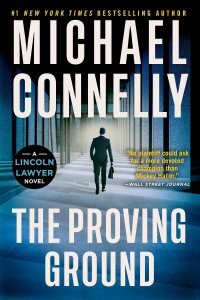 In Michael Connelly’s The Proving Ground, former defense attorney Mickey Haller, aka the Lincoln Lawyer, changes his stripes and becomes a public litigator. The case: The parents of a teenage girl, killed by her ex-boyfriend after he was told to do so by an A.I. bot, sue Tidalwaiv, the A.I. company. The boy actually becomes enamored with the A.I. posing as a jealous lover. The question at hand: Is an A.I. company responsible for the intelligence it creates and, if not, what’s to protect any of us from the power of that intelligence? That question holds true especially for children and teens, whose brains’ frontal cortexes are not fully developed.
Fans of Connelly’s Lincoln Lawyer books will enjoy Mickey’s new approach to the law and will love this one!
reviewed July 2026
The post The Proving Ground (Michael Connelly; 2025) appeared first on timeichenbrenner.com.
July 20, 2026
Tuesday Thoughts: Dare We Dream a Possible Dream?
“Opportunity is missed by most people because it is dressed in overalls and looks like work.”
—Thomas Edison
Perhaps you, as am I, are still troubled by the statistics I cited in my June 23rd blog regarding U.S. citizens’ views of our country. Clearly, we live in a nation where a significant percentage of people don’t appreciate the blessing it is to be an American. That’s especially true for our young adults.
If there are two words that best characterize the U.S., perhaps they are “freedom” and “opportunity.” Clearly, some of us were born into circumstance much more conducive to success than others were. Some “won the lottery” simply by having responsible parents, economic advantage, and favorable living circumstances. Others were not so fortunate.
Yet there’s no denying the fact that birthright citizenship in the U.S., regardless of how and where we start, affords us a myriad of possibilities and a measure of freedom that so many people in other parts of the world could only dream of.
The American experience is replete with stories of rags to riches success. Some we know because the subject is a public figure. Many more go unknown—successfully laboring in obscurity save for those closest to them. Some examples:
• Consider two U.S. Senators from South Carolina: Tim Scott and the late Lindsey Graham. Sen. Scott was raised in severe poverty by a single mom who worked double shifts to provide for the two of them. She insisted that he place a premium on his education, and apparently she “held his feet to the fire.” Sen. Graham grew up in a single room behind his parents’ saloon/restaurant. The family of four boiled water on the stove to use for bathing. He was the first in his family to go to college. Suspend your political persuasions if you must. These stories are bigger than politics. They speak to American gumption, a pull-yourself-up-by-the-bootstraps approach to life.
• You may begrudge Jeff’s bank account ending in zeros as long as the Amazon, or you might not think Taylor’s all that swift, but consider their stories. Bezos and his then-wife started his mammoth business by boxing books in their garage and taking them to the post office to mail. As a young teenager, Swift traveled from radio station to radio station and venue to venue, playing songs she’d written and handing out demos.
• Another, perhaps more relatable story, is that of Tony Barzar. Forty years ago, he started his blue-collar career at Costco. His nest egg now makes him what’s known as a Costco millionaire. How many other stories are there of everyday Americans who brown bag it to the job, day in and day out, for their entire work career, and are the better for it?
The common threads throughout these stories are discipline, hard work, a certain stick-to-it-ness, and the belief in one’s ability to make the most of the opportunities afforded them . . . and what country better than America makes such success possible?
Certainly not all, but many young adults suffer from a disease known as “Entitlement.” They’ve grown up soft, with things handed to them, and have no idea what hard work is, and what’s required of someone to be truly successful. When they fail, they have no idea how to rebound. No wonder they’re unhappy. Someone or something has to take the blame, so they choose to disparage our country. That’s disingenuous.
Often, the cure for that disease is a kick in the seat of the pants. When we work for things, when success comes from self-initiative, it feeds on itself and is appreciated much more.
The last existential threat to our nation was the Second World War. Few remain who fought in it. From our country’s inception through the subsequent two-hundred years, men and women were periodically called to step up and defend it. How often are those sacrifices overlooked? How easy it is to take our freedoms and opportunities for granted.
We just celebrated our country’s glorious semiquincentennial As we stand on the shoulders of those who made our lives as Americans possible, maybe we should each take a moment, look toward the heavens, and thank God for His providence; then, look down at the ground and thank Him that we’re standing on U.S. soil.
The post Tuesday Thoughts: Dare We Dream a Possible Dream? appeared first on timeichenbrenner.com.
July 6, 2026
Tuesday Thoughts: When Sports Unite Us … and Teach Us
“Sports has the power to change the world. It has the power to inspire. It has the power to unite in a way that little else does. It speaks to youth in a language they understand.”
—Nelson Mandela, social activist and former President of South Africa
If the television ads are to be believed, my wife and I are the only two people in the world not watching the World Cup. I’ve got nothing against soccer, I just didn’t grow up with it. When I was young, if I heard the word “soccer,” I interpreted it as meaning to punch the arm of the girl who sat in front of me in school. You know: the one who made straight A’s and always broke the curve.
But there’s no denying the fact that people around the world are watching the World Cup and displaying their national colors and their civic pride for their respective countries. And I love it.
One can downplay the importance of sports until the proverbial cows come home, but there’s no denying they capture our attention in a vicarious and pleasurable way few other things can accomplish.
Witness the recent NBA champion New York Knicks. That team got on a run and blistered their way to a title for the first time in fifty-three years. Did you see the reaction of New York City citizens? A city that markets itself as a melting pot finally acted like one. Young or old, rich or poor, Democrat or Republican, black or white—none of it mattered. There was dancing in the streets . . . literally! A shared sense of pride.
Do you remember the 1980 U.S. men’s hockey team’s defeat of Russia to win the gold medal? Even those of us who thought “icing” only referred to something on cakes celebrated that feat. I suspect that since that win, not one of those teammates has ever gone into a bar and paid for his drink.
Say it’s just a game or consider it silly that grownups are playing kids’ games. Advocate for the far greater importance of academic pursuit if you will (and I would), but ask yourself this: Who will be remembered longer by their classmates, Fernando Mendoza, who quarterbacked Indiana to their national football championship, or the student who graduated number one at the university? I’m not saying that’s right, it’s just the way it is.
Of course, the “elephant in the room” is the parent who places way too much emphasis on his or her child’s athletic accomplishments, sometimes at the exclusion of other activities that make for a well-rounded child. But that’s a hot topic for another day.
More importantly, and perhaps a more cogent argument, is the fact that sports are a metaphor for life. Consider the following quotes:
• “Excellence is not a singular act but a habit. You are what you do repeatedly.”—Shaquille O’Neal
• “Talent wins games, but teamwork and intelligence win championships.”—Michael Jordan
• “Champions keep playing until they get it right.”—Billie Jean King
• “You miss one hundred percent of the shots you don’t take.”—Wayne Gretzky
Notice how easy it is to apply these quotes to non-athletic events. These well-known athletes have all gone on to success outside of sports. I suspect they’ve used the same principles in their business endeavors that they did on the court or ice. Sports teach us the importance of preparation, and then teach us to win graciously and lose honorably. That alone argues for their importance, for we all win some, but lose even more often, in life.
So, when you don the red, white, and blue, tune in to the Cup, and chant, “USA, USA, USA,” do so with excitement, anticipation, and pride. Enjoy the games and the U.S.’s run.
Heck, I might even sneak a peak!
The post Tuesday Thoughts: When Sports Unite Us … and Teach Us appeared first on timeichenbrenner.com.
June 22, 2026
Tuesday Thoughts: Is This the Land That We Love?
“God bless America, land that I love. Stand beside her, and guide her, through the night with a light from above.”
—from “God Bless America” (words and music by Irving Berlin)
I suspect most of you would respond “Yes” to today’s title. Sadly, not all Americans would agree. This being my last post before our nation’s 250th birthday, I want to address some articles I’ve come across.
A recent Associated Press poll of almost twenty-six hundred U.S. adults reported only twenty-five percent of them consider the U.S. to be superior to all other countries, while forty-four percent feel the U.S. is one of the world’s greatest countries.
Forty-four percent of 18- to 30-year-olds regard other countries as better than ours, while only twenty-two percent of those over age 60 feel that way. Furthermore, fifty-one percent of those polled believe the American dream no longer holds true—a number skewed by the young and those who identify as Democrats or Independents.
The Hill reported on a Quinnipiac poll of thirteen hundred U.S. adults showing twenty-two percent of us are not proud to be an American—thirty-seven percent of 18-to 34-year olds and seven percent of those 64 and older. Fifty-seven percent say the democratic system is not working—sixty-five percent of Republicans say it is and seventy-four percent of Democrats say it isn’t.
My hunch is those latter numbers would be reversed if we were in a season of Democrat control of the White House and the Senate. Such is the bias of our political parties. For those who think democracy is a terrible form of government, Winston Churchill would agree, as he once said that it is, “except for all those other forms that have been tried from time to time.”
Clearly there’s a trend: Younger adults are much more dissatisfied with our country than are older adults. I’m no sociologist, but I suspect much of that is due to the way our young adults were raised. I’m painting with a broad brush, but they seem to feel more entitled and less motivated than older generations. In a sea of opportunity, they seem rudderless, often completing high school or college with no idea of what they want to do.
Other contributing factors include the decline of the nuclear family, a diminished emphasis on faith, and less emphasis on the importance of education. In a WSJ article recently posted in the Free Expression newsletter, Matthew Continetti reported that seventy-seven percent of Gen Zers were unable to explain the significance of the Fourth of July. Seriously?
If that bothers us, imagine the angst it causes our veterans, our families who lost loved ones in the defense of our country, and our founding fathers, who must be turning over in their graves.
Clearly, the elephant (and donkey) in the room is politics. It’s likely that only our members of Congress, their immediate families, and their family dogs believe they’re doing an admirable job . . . and the dogs are wavering! Most of those polled believe our politicians on both sides of the aisle serve out of self-interest, not the public’s. Maybe we’re too quick to pin blame on them, but the offices they hold demand the highest level of accountability and productivity.
Interestingly, CNN recently reported that those of us registered as Independents, or Unaffiliated, is at an all-time high of forty-seven percent. That constitutes a plurality, and it means that most Americans probably fall about midway between the right and the left. They don’t subscribe to the histrionics and hand-wringing of either side. They would love dialogue, compromise, and productive work from those we elect and pay to represent us.
So, what to do with all this information? My evil twin would tell the disgruntled not to let the door at the airport or seaport terminal hit them in the fanny on their way out of the U.S. The better angels of my nature, to borrow from President Lincoln, would say, “Do something about it other than complain.”
Parents need to re-establish and emphasize the importance of their children’s education, including American history, warts and all. They need to demonstrate to their kids their belief in American exceptionalism by what they do and say. Screen time and content need to be monitored. It’s highly unlikely our kids are watching videos or reading things that positively portray basic American values. In families who subscribe to faith as existential, they need to get back to their version of “church,” and take their kids with them. Those who don’t subscribe to faith in God should at least rethink it.
Grounded by parental guidance and fortified by a good education, our kids will mature into better-educated and well-informed young adults, giving them the chance to lead lives of significance. My hope is they will depend on trusted news sources, engage in their civic and faith communities, and get involved in our political process, even if it’s only to cast an educated vote.
We’ve fumbled the ball in America, and allowed our society to deviate from what the founders envisioned for our country. But it’s not too late to recover that fumble and change the direction of the game. Indeed, God has blessed America, but He’s also ceded to us, as U.S. citizens, the responsibility of sustaining that blessing.
What better time to get started than on our nation’s 250th birthday?
The post Tuesday Thoughts: Is This the Land That We Love? appeared first on timeichenbrenner.com.
June 8, 2026
Tuesday Thoughts: When Life Hands You Pickles, Think Pickleball!
“In pickleball, the only thing better than winning is laughing with friends.”
—from PICKLELAND
One of the newly-found pleasures in my retirement is the game of pickleball. I’m certain most of you have heard of its immense popularity. According to a report in Axios, it’s actually the fastest-growing sport in America. What started as a dialed-back version of tennis, inspired by ping pong and badminton, and geared toward retirees, has now become a national phenomenon.
I’ve thought about the game’s rules, etiquette, and competition, and it strikes me that pickleball is a metaphor for a good way to live our lives. Stick with me here, please.
Most players acknowledge that the game is more fun when played as doubles, not singles. In doubles, each partner counts on the other to help cover the court, and being in just the right spot when needed. Is it not the same in life? Don’t we count on our friends and family members to be there for us when we need them the most—when we’re in a pickle (see what I did there?)? Life, after all, is best lived with help from, and the company of, others.
Often times, there are more players than court space to accommodate them. In that event, players rotate in and out so that everyone has an equal shot at participating, regardless of their level of play. In life, shouldn’t everyone have the opportunity to become involved with something greater than themselves? Give everyone a chance, and then let their skill level—that is, their strengths—determine where they best fit in on the “court” we call life. There’s no reason inclusion has to exclude meritocracy!
In pickleball, foul language is discouraged. While there’s no penalty for said language (thank goodness!), a player will get rightfully-deserved looks and comments when he or she lets a choice word slip. Bad language, paddle tossing, and uncalled-for arguments are simply poor etiquette. How much better would our lives be if we strove to eliminate such talk and behavior?
There’s no line judge, head judge, camera, or instant replay in pickleball. You call the shots in or out on your side of the court, and your opponents do the same on their side. Honesty, trust, and benefit of the doubt come into play. Oh, if that were only the case in our everyday lives! From the highest level of government to the privacy of families’ living rooms, we need, and should be able to count on, adherence to those virtues.
Regarding the elephant in the room—the injuries: Yes, as in all sports, there are injuries that force a player to sit out, rest, and recuperate. In life, sometimes we need to do the same—take a “time out” to simply rest and reflect. As the psalmist quoted God, “Be still, and know that I am God (Psalm 46:10 NIV).”
In “sandlot” pickleball, the game’s as much about the joy of fellowship with other players as it is the final score. Good thing, because players at my age usually forget who won the game before they even get home from the court! We compete and play hard, but the fact that we have fun is what draws us back to the court. In life, wouldn’t it be nice if we valued the effort and fun along the journey, just as much or more than the final outcome?
Finally, if you’re physically able, but you haven’t tried the game, I hope you will. Don’t sit it out and miss the fun so many people are enjoying!
The post Tuesday Thoughts: When Life Hands You Pickles, Think Pickleball! appeared first on timeichenbrenner.com.