Mike Trigg's Blog
March 30, 2026
A Book on Friendship
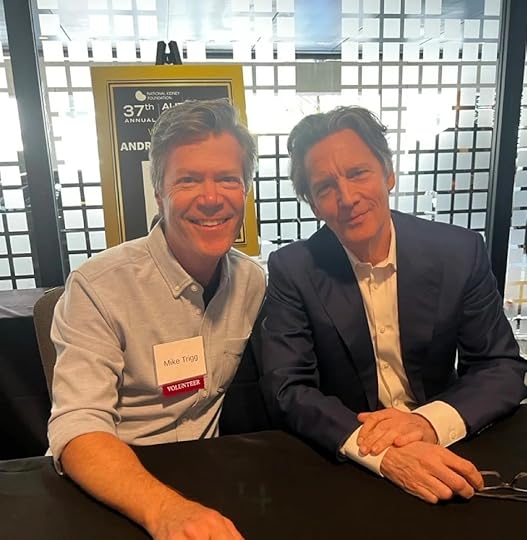
Andrew McCarthy and me at his signing table at the National Kidney Foundation Authors Luncheon.
I had the opportunity on Sunday to volunteer for the National Kidney Foundation’s 37th Annual Authors Luncheon. It’s a wonderful event that I’ve attended in past years, providing a forum to meet and hear from bestselling authors while raising hundreds of thousands of dollars to address kidney disease—a cause close to my heart through my wife, Leslie, and the amazing work she’s been part of at Outset Medical.
This year featured an incredible slate of authors, including Tayari Jones, author of Kin and An American Marriage; Megha Majumdar, author of A Guardian and a Thief and A Burning; Maya Shankar, podcaster and author of The Other Side of Change; and Andrew McCarthy, actor and author of the new book, Who Needs Friends. My role for the day was to assist Andrew McCarthy—from navigating the venue to managing the book signing queue.
I was looking forward to meeting Andrew McCarthy. For anyone my generation, his movies during the 1980s, including Class, St. Elmo's Fire, Pretty in Pink, Less Than Zero and many others, are seminal, culture-defining, nostalgia-inducing films. Beyond acting, McCarthy has also been a prolific producer, writer, and, particularly director, including on Orange Is the New Black, The Blacklist, Gossip Girl, and .
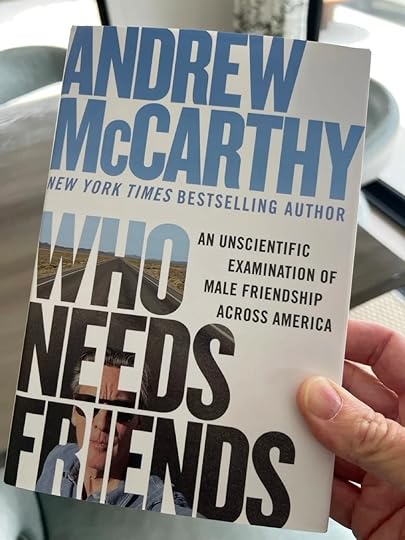
What I didn’t fully appreciate is McCarthy is also an excellent author. In preparation for the event, I read his early-career memoir, Brat: An '80s Story, a fascinating chronicle of the personal highs and lows of his rise to fame as part of the so-called “Brat Pack.” He is also an accomplished travel writer, having published the travel memoirs, The Longest Way Home and Walking with Sam, about his adventure hiking the Camino de Santiago with his son.
McCarthy’s latest release, Who Needs Friends, which just came out last week with Grand Central Publishing, is a thought-provoking read on the state of modern male friendship. Spoiler alert: it’s not good. The book combines a cross-country road trip with personal stories of reconnecting with lifelong friends. As he progresses across the country, McCarthy conducts an “unscientific examination” of the state of American male friendships by interviewing people he meets along the way.
For me, and I suspect for most self-aware men, McCarthy’s story hit close to home. As a gender, we men are generally not good at nurturing our friendships, frequently falling out of touch with even our closest friends. We don’t see our current friends as often as we’d like. We don’t form new friendships easily. We don’t rely on our friends for emotional support. And our social circle of friends is shrinking.
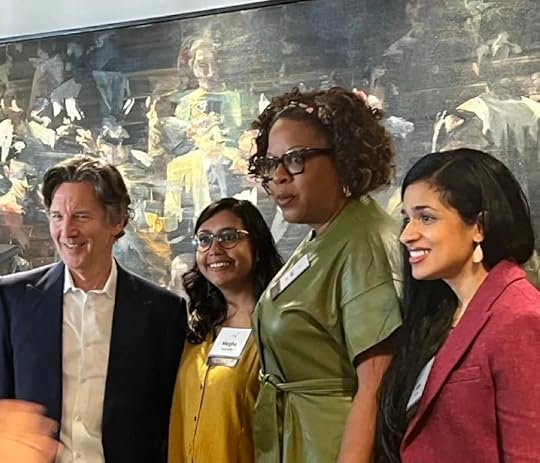
Featured authors (L-to-R): Andrew McCarthy, Megha Majumdar, Tayari Jones, and Maya Shankar.
The Survey Center on American Life found that, over the last 30 years, the percentage of men who reported having five or more friends declined dramatically, from 55 percent to 27 percent. While the percentage of men reporting “no close friendships” at all skyrocketed fivefold, from 3 percent to 15 percent over that time. The problem is even more pronounced among men under age thirty, 28 percent of whom report having no close social connections. This loneliness epidemic also presents a growing public health crisis, decreasing lifespans due to everything from mental health issues and cognitive decline, to impaired immune response and increased cardiovascular risk.
Reading this book inspired me to follow McCarthy’s example and proactively reconnect with dear friends of my own with whom I’ve lost touch. It has reminded me that finding time to invest in friendships, both old and new, is of critical importance. And it has me looking ahead and contemplating how I can sustain those friendships as I age. I encourage you (especially if you are a friend of mine!) to give it a read or a listen—McCarthy also narrates the audiobook—and gain renewed appreciation for the importance of friendship in your life.


March 2, 2026
Speaking at Kepler’s
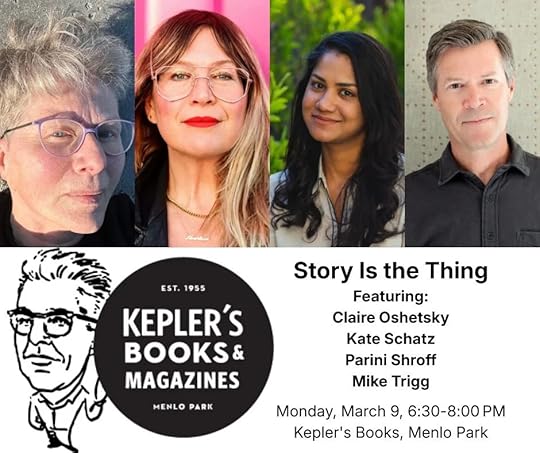
I’m thrilled to share that I will be making my first appearance ever at my local bookstore, Kepler’s Books, on Monday, March 9 from 6:30-8:00 pm as part of their reading series, Story Is the Thing.
I will be one of four Northern California fiction writers who will be reading from our latest novels, in my case Burner, and answering questions.
The other featured authors are Claire Oshetsky, author of Evil Genius, an exuberant, brutally hilarious novel about a young woman’s insatiable quest to carve her own path. Kate Schatz, author of Where the Girls Were, her electrifying historical novel set in 1960s San Francisco. And Parini Shroff author of The Bandit Queens, about a group of women in India who band together to outwit criminals and no-good husbands.
More information and free registration on the Kepler’s site. I will also be sharing an update on my forthcoming novel, Outage. Hope to see you there!

February 27, 2026
In AI’s Crosshairs
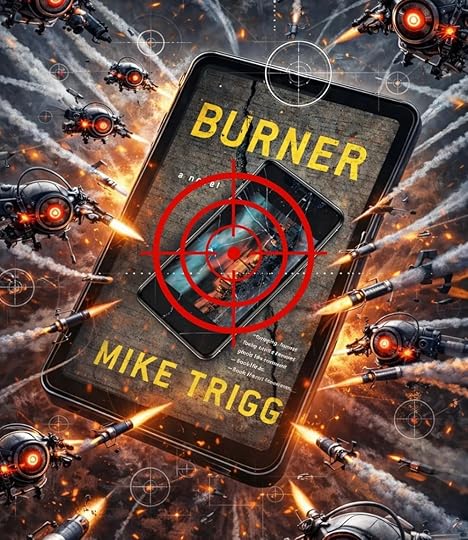
Like everyone who has an email account, I receive a lot of spam. But last summer I received a personalized message about my novel Burner that caught my attention. The message was specific, referring to character arcs, storylines, and themes. It was insightful and flattering, highlighting aspects of my work I’m most proud of, and was clearly, it appeared to me, written by someone who had not only read but thoroughly enjoyed my novel.
The next day, I received a similar email, also from a Gmail address, offering to “amplify the reach” of my novel with “targeted visibility” and “strategic positioning.” Although the pitch was different, the obsequious wording and specific details sounded familiar. Little did I know this would be the tip of the iceberg.
Soon, famous authors were taking time out of their busy lives to reach out to me personally. From Lucy Foley who would “love to hear more about what you’re working on” to Emily Henry who found my novels “truly inspiring” to Dave Eggers hoping to “share and learn from each other.” Even Michelle Obama said it would be a “privilege to connect with a fellow author whose work I admire,” and Agatha Christie came back from the grave to invite me to showcase my book in her posthumous newsletter Author Manuscriptia in order “to reach a wide engaged audience.”
As laughable as these scams quickly became (which I wrote about at the time and was recently covered by The New York Times), what hasn’t been funny in the months since is their sheer volume and persistence. To-date, I have received upwards of 1,000 of these emails, typically 5-10 every day, rarely flagged as spam, all from Gmail addresses, all with highly personalized messages targeting me and my novels, and all obviously AI-generated.
Unsurprisingly, I’m not alone. The Writer Beware website uncovered an entire crime ring of AI-driven marketing scams that target authors. According to the site, the scams typically revolve around four categories:
General marketing/PR offers (e.g. publicity campaigns, Goodreads promotions, Amazon optimization, etc.);
Impersonations of book clubs offering to “spotlight” an author’s work;
Private review “communities” with alleged readers who will provide Amazon reviews for “tips”;
The aforementioned author impersonation scam to engage authors in paid editing or marketing services.
What is perhaps most disconcerting about this attack is how impossible it is to stop. The perpetrator could be a network of people using AI. It could be an individual using AI. Or it could be an army of AI bots acting autonomously based on publicly available information about me and my books. These operations no doubt originate off-shore, well out of the reach of U.S. law enforcement—as if U.S. law enforcement would do anything anyway. Furthermore, these scammers operate in plain sight, empowered by the platforms of big tech companies. Amazon fails to prevent the scraping of data on authors’ books, not to mention the proliferation of fake reviews. Meta allows public profile information on Facebook and Instagram to be harvested for targeted emails and AI-generated posts to proliferate. Google enables scammers to create Gmail addresses with names like agathachristieauthor@gmail.com and blast outgoing messages. And, of course OpenAI’s ChatGPT is used to micro-target personalized messages by the thousands.
Within the publishing world, as in every industry, AI is provoking a lot of anxiety, and lawsuits. Much of that concern has centered on the prospect of an onslaught of books authored by generative AI engines, resulting in a tsunami of junk submissions to agents and editors, an even more flooded market of books for publishers, and an encroachment on their livelihood for authors, not to mention a violation of their existing copyrights.
As concerning as the prospect of AI-authored novels is, I believe the real threat to authors, and, frankly, all of us, is the exploitation of AI for spam, scams, and manipulation. Almost two years ago, I wrote an article for Writer's Digest that predicted the biggest threat to authors from AI would not be how content is generated but in how it is discovered, something I labeled Discovery Bias. That future is one I see unfolding before our eyes.
What makes writing and reading literature such a uniquely human endeavor is being hijacked by AI bots. Whether it’s driven by unscrupulous publishers, deep-pocketed authors, or offshore book marketing scams, AI is being used to tip the publishing scales toward those willing to abuse it. AI-generated messages are filling our inboxes, clogging our social feeds, and flooding reader review sites. The biggest threat to authors is not copyright violation or remuneration, but a world in which the primary vehicle of book discovery—authentic, word-of-mouth reader recommendations—can be faked, monetized, and exploited at a massive scale. Not only are authors the target of scams, but we are also vulnerable to AI-generated extortion, in which funds are demanded not for positive reviews but to avoid negative ones.
Meanwhile, the tech platforms we authors rely on are too busy building out their own AI capabilities to bother putting safeguards in place to prevent such abuses. In this day and age, it’s impossible to sell books without Amazon, discover them without Google, or promote them without Facebook, Instagram, or Goodreads. But the human-to-human online forums we rely on are becoming increasingly compromised by AI every day. The frightening reality for many authors is an impossible choice between being coerced to participate in this AI-driven madness or risk being left behind.
July 31, 2025
Golden Age of Fraud
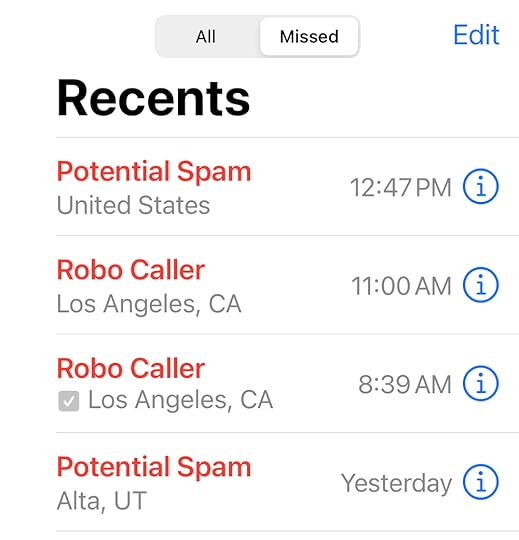
Source: My iPhone.
Recently, I received a very nice email about my debut novel, Bit Flip. It was a detailed and thoughtfully crafted message, saying the book “really caught my attention,” particularly its “portrayal of the tech world’s seductive illusion and the moral price of ambition” that felt “both timely and deeply personal,” concluding that it was a “truly impressive work!”
In my momentarily flattered state, I assumed this message was sent by a legitimate reader and was about to reply with a gracious thank you. Then I noticed another eerily similar email in my inbox, also sent from an anonymous Gmail address. Then another similar message arrived, and another, and another after that—each unique but all using the same obsequious language in an attempt to lure me into a response.
If you are a published author, or perhaps run a small business, or maybe you’re merely a human being with an email address or mobile phone, you recognize what this was: one of the dozens of fraud attempts most of us receive every day. But these are no longer your parents’ phishing scams. Unlike the promised inheritance from a Nigerian prince, online fraud today has become far more personalized, sophisticated, and pervasive—aided, like everything, by AI.
In short, online fraud is rampant.
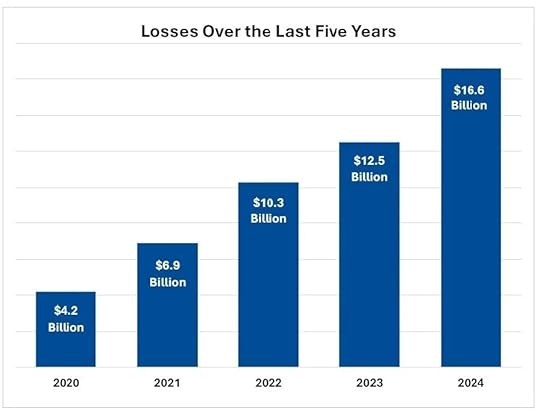
Source: FBI Internet Crime Complaint Center, https://www.ic3.gov/
A recent survey by the Pew Research Center found an astonishing 73% of U.S. adults have been the victim of an online scam or attack, spanning every age, ethnic, and income group. The cumulative financial impact of all that fraudulent activity was $16.6 billion in 2024 alone, according to the FBI’s Internet Crime Complaint Center, and that’s just what is reported. The actual number is certainly much higher due to the embarrassment often felt by victims. The same Pew survey found 74% of victims never report the crime to law enforcement.
Even more jaw dropping than the size of that number is its rate of growth, a 33% increase from 2023 and a 4X increase since 2020, making it one of the fastest-growing sectors of the economy. At that rate, online fraud will be a $68 billion problem by the end of the Trump administration, roughly the size of Alaska’s entire GDP. That’s a big problem.
If you consider broader trends, it’s no surprise online fraud has reached epidemic proportions. The conditions are ripe for what I sarcastically refer to here as a “Golden Age of Fraud.” These conditions include:
Easier Perpetration—Conducting a convincing scam used to be difficult, expensive, and time-consuming. Not any more. Fraudsters can use the same tools as legitimate businesses—including no-code platforms to build websites, cloud computing for storing stolen user data, and real-time payments from Zelle to Bitcoin for seamless financial transactions—to fool even the most savvy consumers and businesses. These tools have taken the friction out of fraud.
Better Personalization—The key to a good scam is making it believable, and personalizing it (as my book scammer did) makes targets more susceptible to belief. AI tools are making it easier by the day to do this, including everything from custom-tailored pitches using generative AI to voice, image, and video deepfakes impersonating family members or business colleagues. Modern scams exploit trust in the people we know.
Broader Reach—Scale is another critical component of an effective fraud scheme. If only 1% of targets fall for the scam, it’s not worth doing if you can only reach 100 people. If, on the other hand, you can reach 100 million people, you have one million successful victims. Digital platforms, borderless connectivity, and low operating costs all enable fraudsters to dramatically expand their reach.
User Confusion—Modern consumers as well as businesses (particularly small businesses) are ill-equipped to keep up with the pace of technical change, creating new vulnerabilities for fraud. As legitimate businesses implement more and more counter-fraud measures, such as two-factor authentication, text-based account alerts, and automated purchase updates, it becomes more and more difficult to distinguish between legitimate commercial activity and fakes.
Lack of Enforcement—Online fraud is incredibly hard to prosecute because the perpetrators are frequently operating across international boundaries. Does anyone think China or Russia or Iran will cooperate with US law enforcement in cyber crime investigations? Furthermore, at a time when we need it most, our own internal law enforcement and regulatory oversight organizations are being slashed. The Trump administration is cutting funds to the Cybersecurity and Infrastructure Security Agency (CISA) out of a self-serving desire to curtail that organization’s attempts to stem the spread of election misinformation, and current FBI Director Kash Patel seems more interested in pursuing imagined internal enemies than protecting Americans from cyber crime.
The net of all this is the depressing recognition that conditions are perfect for online fraud, and that it will only get worse before it gets better, if it ever does. Even though 79% of Americans feel online fraud is a major problem, the current administration seems unwilling or unable to safeguard us. Consumers and businesses need to be more vigilant than ever to avoid financially devastating scams. Unfortunately, as is often the side effect of our lives led online, with that vigilance comes less trust, more confusion, and greater cynicism in human kind. In the meantime, don’t answer those unrecognized numbers on your phone.
June 30, 2025
AI Imposition

AI-generated image, courtesy of Canva.
My two worlds of technology and literature feel increasingly on a collision course over the matter of Artificial Intelligence. It’s a moment in which the single biggest foreseeable sea change in both industries is the same thing: AI. But the perspective in each industry is completely different.
I attended my favorite writers’ conference, ThrillerFest, last week in New York City. During one of the panel discussions in which several top agents and publishers were describing the overwhelming crush of book submissions they receive, I asked if any of them had considered using AI to help with the problem. The answer across the board was no, with some more skeptical about the technology and others more open to it but only if it proved to be useful.
Of course, if this question was asked in a tech conference in San Francisco, the answers would have been a resounding and unanimous yes. Indeed, several AI tools already exist that are specifically designed for manuscript analysis, including Studio Vi, ProWritingAid, and Authors.ai. I haven’t personally used any of these and am not endorsing them, merely noting that many companies are trying to solve the problem. I doubt even these companies themselves would claim the technology can currently replace a human agent or editor, just as AI cannot replace a human author. Examining the human condition is the essential joy of reading great literature. And AI as it exists today is fundamentally derivative, not truly creative and inspirational.
That said, it seems inevitable that AI will find utility in the publishing world. It’s hard not to compare AI to past technologies that have changed publishing. We submit manuscripts by email or QueryTracker instead of the old SASE. We manage edits using Track Changes in Microsoft Word rather than a red pencil. We research topics, characters, and settings with Google searches and maps, not by traveling the world. We read books on Kindles and iPads, and listen to them on audiobook, not only the printed page. If past technology adoption curves are any indication, AI will eventually become widely used in all aspects of publishing—particularly at the rate the technology is evolving and the degree to which Big Tech companies are integrating AI into their offerings.
In many ways, it’s difficult to draw a clear line between “using AI” and not. If you compose emails in Outlook or Gmail and use the now-ubiquitous type ahead feature to complete a sentence, are you using AI? If Microsoft Copilot prompts you with its little double blue line that a word is repetitive, punctuation is incorrect, or sentence is too wordy, are you using AI? Even the dedicated novel-writing app, Scrivener, has hooks for AI-assisted writing.
Furthermore, do we have a choice not to use AI? Increasingly, it is being imposed on us. Within a matter of months, AI has been baked in by default to nearly every technology we use, from the aforementioned word processing, to Google searches which almost universally present “AI Overviews” at the top, to Apple Intelligence on our iPhones (or Gemini if you’re an Android user). Technology companies are diabolically good at driving technology adoption—integrating enhancements into their latest mandatory updates, burying changes to their practices in their terms of service that are a condition of usage, optimizing their user interface to get you to click on a new feature.
This tendency is particularly the case when the tech industry is in an arms race, as is the case with AI. To explain their motivation in simple terms, AI “learns” from feedback loops, so the more humans who use an AI algorithm for a particular use case, the faster it learns and the better it gets. Driving it all is the underlying existential paranoia held by every Big Tech company that if they fall behind in the AI arms race, they are doomed. This belief, that AI is a zero-sum game, has the largest tech companies investing billions in new AI infrastructure and offering $100-million comp packages to top AI engineers. Whether we like it or not, AI is being imposed on all of us.
So what is an author, agent, editor, or publisher to do? My sentiment, in a nutshell, is to let the technology run its course. Don’t believe the hype, and don’t fret the worst-case scenarios. AI won’t destroy the publishing industry, but it will definitely change the publishing industry, as have past technological changes. Be open to select uses of AI that offer you productivity gains (in addition to generating custom images, one of my new favorites is researching comp titles), but resist it where it is clearly an agent of evil and certain to fail (e.g. write me ten best sellers in the style of James Patterson). One of the most powerful yet pernicious aspects of technology is its inexorable march that can border on coercion. But if you stay even-keeled and open-minded, the benefits are usually worth the pain of change.
October 31, 2024
Truth Is for Suckers

Hip, hip hooray for spreading misinformation. (Photo credit: New York Times)
Over a decade ago, I hosted a blog about the Green Bay Packers. It was fun. My schtick was to attempt to be humorous, but I did one fully satirical post about Packers players complaining about their throw-back uniforms. That post, which to me was so obviously fake, garnered thousands of views—more than 10 times my normal readership—with many fans admonishing the players for not respecting Packer tradition.
As I scrambled to remove comments, ensure the satire was understood, and avoid a libel lawsuit, I realized the experience was a stark lesson in the wisdom of Mark Twain’s famous quote: “A lie can travel halfway around the world while the truth is still putting on its shoes.”
In an age of instant, global, AI-generated interconnection, that quote may need updating to “A lie can take laps around the solar system while the truth is so slow it’s lost all relevance.”
This predilection for believing and spreading misinformation is just how our brains are wired. As I would later witness first-hand at a major social networking site, fake content simply triggers activating emotions—anger, fear, disbelief, outrage—better than truth. Let’s face it, truth and facts are boring. So much so, we don’t even notice them. In an era of sensory overload, attention is the most valuable commodity. And it is the outrageous claims, off-color jokes, and bold-faced lies that catch our attention. Any content you’ve seen that has “gone viral,” there’s a good chance it’s at least sensationalistic, if not outright misinformation. The problem is, those same posts are the most profitable for social media platforms like X and Facebook, which have no interest in truth. Serving only engagement, eyeballs, clicks, and profit—and, in the case of Elon Musk, an overt political agenda.
Which brings me to the election. With voting already underway, the polls show a statistical dead heat between Donald Trump and Kamala Harris.
I would love for this election to be a contest of ideas, policies, and platforms. Unfortunately, it is more likely to be decided by misinformation. Trump’s refusal to participate in a second presidential debate vs Harris shows he is much more comfortable in forums where his inflammatory statements and outright untruths will go unchecked, propelled forward by adoring crowds, internet memes, unmoderated social media sites, right-wing talk show hosts, and the conservative media echo chamber.
As I’ve clarified before, I’m not anti-Republican or anti-Conservative. Our bipartisan democracy needs and deserves equal and opposing ideologies to govern in a way that will benefit the majority of Americans. What I am against is political polarization, particularly when that polarization is driven less by differing ideas and more by misinformation, algorithmic reinforcement, foreign interference, debasement of other human beings, demonization of elected officials, erosion of our institutions, and disregard for the rule of law.
Plenty of partisans on both sides are guilty of such acts to advance their political agenda, but Donald Trump could not exist as a viable political candidate without an extensive counter-narrative based on “alternative facts.”
For the sake of brevity, recapping all of Trump’s lies here would be impossible. Further, it’s irrelevant. His supporters have repeatedly shown they don’t care. Either, they fully believe his untruths. Or, for the more rational ones, they admit he’s a pathological liar but find it an amusing joke. Or dismiss it as bravado. Or embrace it as an acceptable means to an end of getting a Republican back in the White House.
But to support Trump at this point—to actually cast your vote for him to be re-elected as President of the United States—requires belief in an elaborate series of lies.
For starters, you have to believe the 2020 election was stolen.
You have to believe Trump’s claim that he “had nothing to do” with the January 6th Capitol riot.
You have to believe that the bipartisan House Select Committee on the January 6 Attack chaired by staunch conservative Liz Cheney that concluded “Donald Trump purposely disseminated false allegations of fraud” to illegally overturn the election is actually the “Unselect Committee of political Hacks and Thugs.”
You have to believe that voter fraud is rampant and Democrats are allowing in immigrants to “steal” the election.
You have to believe that Kamala Harris wants “open borders” to allow “murderers and rapists” into our country.
You have to believe CBS News, CNN, the New York Times, Wall Street Journal, and all other “lamestream” media outlets are “fake news” and can be ignored.
You have to believe that the lifelong prosecutors who have brought criminal charges against Trump are serving some nefarious political agenda rather than the law.
You have to believe that the jury of your peers who found Trump guilty of 36 felonies are all corrupt.
You have to believe that Russia and other foreign governments have not attempted to interfere in our democracy.
You have to believe that Republican Special Counsel Robert Mueller’s investigation was a “witch hunt” and a “hoax.”
You have to believe climate change is also a “hoax” but, on the plus side, will result in “more oceanfront property.”
You have to believe that CDC officials are “idiots” and that the “Chinese flu” vaccines contain microchips and alter your DNA.
You have to believe that the dozens of women who have accused Trump of sexual misconduct, including E. Jean Carroll who won a court case against Trump, are “fabricated.”
You have to believe Democrats have a secret gender reassignment program in which “your boy leaves for school, (and) comes back a girl.”
You have to believe the more than 200 prominent members of former Republican campaigns for Bush, McCain, and Romney who signed an open letter saying that “re-electing President Trump would be a disaster for our nation” are betraying their party rather than having the courage to stand up for their ideals.
You have to believe all the former members of Trump’s administration—including Vice President Mike Pence, Chief of Staff John Kelly, National Security Advisor John Bolton, Director of National Intelligence Dan Coats, Secretaries of Defense Jim Mattis and Mark Esper, White House Communications Director Anthony Scaramucci, White House Press Secretary Stephanie Grisham and dozens of others—who declare him unfit for office are lying, corrupt, or incompetent.
You may even believe that Kamala Harris paralyzed a woman in a hit-and-run accident, top Democrats are part of a pedophile sex trafficking ring, Democrats can control the weather to create hurricanes and steal Republicans’ land, and immigrant families in Springfield, Ohio are eating people’s pets.
In short, the only “truth” you believe is whatever comes out of Donald Trump’s mouth. Fealty to Trump and perpetuation of his fabrications have become a litmus test for the Republican Party. Dissent is not tolerated. And those who dare challenge him are excommunicated. But this is a man who has shown again and again that he is unable to distinguish truth from a lie. He will repeat, re-tweet, and outright invent any story that he believes advances his political interest. And, sadly, many of his followers seem disinterested in the truth. It’s so much more fun to fire off an indignant and insulting tweet.
What actually makes America great, what distinguishes us from autocracies around the world, is we have institutions. Separate but equal branches of government that are more powerful than individuals, entrusted to make, execute, and interpret the laws that govern our country. Yes, our government can be slow, bureaucratic, and even inept at times. But for over 200 years, those institutions have functioned effectively, determining the truth, administering justice, and facilitating the peaceful transition of power—not always perfectly, but always attempting to form a more perfect union.
Which brings me to the biggest lie of all.
The same people who would discredit our institutions, disparage our elected officials, threaten judges and jurors, tear down our independent media, harass relief workers, disrespect law enforcement and our military, vilify immigrants, discourage fellow citizens from voting, and question the integrity of our elections, are the ones who claim most fervently to love our country. They wrap themselves in the branding of patriotism without upholding any of our nation’s ideals. Real Republicans, real Conservatives, know better. I’m sure this post and others I’ve written might offend some friends, family, and colleagues, who consider me biased. For that, I’m sorry, but this election is too important to remain silent.
Further, I fear the biggest lies of this election cycle are still waiting to be told—the “little secret” Trump alluded to “when the race is over.” Trump is clearly laying the groundwork to claim anything other than his victory will be proof of a “rigged” election.
If you truly love this country, then you must believe in truth, even when it’s uncomfortable. You must believe in justice, even when you don’t like the outcome. You must uphold our institutions and the rule of law. And you must cast your vote for what is right. Don’t let truth be for suckers.
September 30, 2024
Losing (Middle) Ground

Photo credit: Aaron Kittredge
I spend a lot of time worrying about political polarization. My latest novel, Burner, is about political polarization. My next novel is also about political polarization. Though I did not intend it to be the focus of this blog, here too I find myself compelled to write about political polarization often—particularly leading up to an election with politically polarizing messages dominating our airwaves, mailboxes, inboxes, and SMS.
One of the paradoxical aspects of writing about political polarization is it can often feel like doing so exacerbates the problem. Partisans on both sides naturally feel it is the other side causing the polarization. To even point out misleading, abusive, or outright reckless rhetoric by a candidate is immediately dismissed as biased. Rationalizations like “both sides are just as bad” or “all politicians lie” or “the media is biased” are wielded to justify the most egregious political claims (see Springfield, Ohio), but ultimately have the effect of diminishing our faith in democracy and truth itself.
That said, at the risk of sounding biased, the blunt reality is Donald Trump is the most polarizing political figure, perhaps in American history.
In fact, nobody else is really close. Presidential scholars regard Trump as more polarizing than Nixon or Clinton—even more than Lincoln, who presided over a civil war. Trump is polarizing not only between parties, but within his own party. Within his own administration. Within prior GOP administrations. Within his own family. Trump’s very existence is defined by polarization. He pathologically vilifies his enemies, real or perceived. His divisive rhetoric knows no restraint.
I understand the temptation to simply vote by party allegiance. If Biden had not dropped out of the race, I probably still would have voted for him because I largely agree with his agenda, policies, and people running his administration. In a normal election with a normal candidate, I would have no problem with a Republican voter who toes the party line. I can even understand single-issue voters, most commonly anti-abortionists or proponents of high-income tax cuts, who may disagree with much of what Trump represents, but vote for him to achieve that single issue. In 2016 or even in 2020, I wouldn’t have begrudged these voters.
We are well past that point with Donald Trump.
With just over a month until the election, this is my final plea for anyone still inclined to vote for Trump to reconsider your choice. Of course, I encourage you to vote. Vote for every single Republican up and down the ballot. Just abstain from voting for Trump.
You may think Kamala Harris is too liberal. You may even find her position on certain issues objectionable. But she is the only candidate even trying to reach across the aisle, trying to be a president for all Americans, trying to govern the whole country. Even if you can’t cast your ballot for her, just don’t cast it for Trump.
Although cloaked in patriotic bunting, spoken up by exuberant cable news hosts, and propelled by internet memes, deep down we all know Donald Trump is unfit for office. A vote for Trump is a vote for chaos, for division, for polarization. Maybe that’s what you think you want—a take-no-prisoners, scorched-earth battle against the deep-state liberal elites. But that’s the rhetoric of polarization. That’s the narrative to rile up the base. That’s not what our country needs. We need to come together. We need to govern from the middle, recognize all that we have in common. We need to believe in truth, and justice, and our institutions.
Politics in this country cannot become a blood sport, waged by gun-toting extremists with “Fuck Biden” flags on their pickup trucks. If you vote for Trump, you are part of that mob. You are willfully ignoring reality. Turning a blind eye on a defeated president who would incite an insurrection at our Capitol rather than give up power. Pretending his conviction on 34 felony counts and indictments for election interference and document handling are somehow meaningless. Disregarding the people closest to him who can attest first-hand to his incompetence, corruption, and autocratic tendencies.
If you believe in our Constitution, if you are a true conservative, I urge you to regain your moral compass and purge this man from the Republican party. Stop being against everything and be for something. Stop doubling down on what is dividing our country, and start helping to regain a common ground. It requires compromise from both sides, but it is also the definition of democracy.
August 31, 2024
The Opportunity Harris is Missing

I was an early supporter of Kamala Harris for president. She was my top choice in the 2020 Democratic primary, and I was disappointed to see her drop out of the race relatively early. I was also disappointed that, after donating to her campaign, I was inundated with solicitations—and wrote about that at the time.
So far, the main difference I’ve noticed between the 2020 campaign and 2024 is the volume of solicitations is even greater, and not only on email but by text message as well. I estimated then that I received an average of 1.8 emails per day (and almost no texts). That volume now seems quaint compared to the approximately 7-10 daily emails and 10+ daily text messages I’m receiving.
I know this isn’t unique to Harris. Every candidate for every office of both parties is guilty of the same over-solicitation. And I know I could at least try to unsubscribe, although one’s contact information these days is shared across so many interest groups, political committees, and PACs that avoiding the onslaught is nearly impossible.
That said, what bothers me most is that I can’t help but feel the Harris campaign is failing to take advantage of a unique moment: genuine voter enthusiasm for her presidency.
The situation Kamala Harris finds herself in is virtually unprecedented: a late entrant in a U.S. presidential campaign who carries none of the baggage of a bruising primary fight. As the sitting Vice President, she is well-known, with four years of being “presidential” (one of the most important yet hard-to-define criteria of a successful campaign), but also enjoys a relatively clean slate, without deep-seated, preconceived notions (see Hillary Clinton). Furthermore, she’s running against a deeply unpopular, disgraced former president who is a convicted felon.
Her situation couldn’t be more ideal. As a result, and in no small part because she presents a choice that is anybody but Trump or Biden (or Kennedy), she has experienced a surge in popularity and polling numbers that has Donald Trump on his heels.
Yet, despite those beneficial circumstances and undisputed momentum, all I have heard in the literally thousands of emails and text messages I’ve received from Harris/DNC/DCCC/etc is the same message I heard in 2020: donate, donate, donate.
The missed opportunity? Harris’s supporters are ready to give in other ways. They are ready to organize. They are ready to display their support. They are ready to get out there and canvass. But there is none of that in the solicitations I’ve received. No resources. No collateral to share with neighbors, families, or friends. No community events, rallies, or meet-ups. Not even a damn yard sign, lapel pin, or bumper sticker.
Granted I live in California, so my experience might be different if I lived in a battleground state. But the failure of her campaign to channel her support into other constructive avenues besides “give me more money” is deeply disappointing, particularly given the surge of donations Harris has recently enjoyed. The answer, it seems to me, is not more money, it’s more mobilization. And that mobilization can be done with the same apparatus that is currently being applied solely to fundraising.
Maybe this will change. There is still time before the election. Still an opportunity to translate voter enthusiasm into something greater than a self-perpetuating, conflagration of cash demanding more cash. To be clear, regardless if I receive 100 more solicitations every day between now and the election, she will still get my vote. But that may not be true for every voter, particularly those ephemeral, undecided, swing voters. And it risks alienating the very support she needs to win.
August 22, 2024
Tips for Author Reviews on Amazon
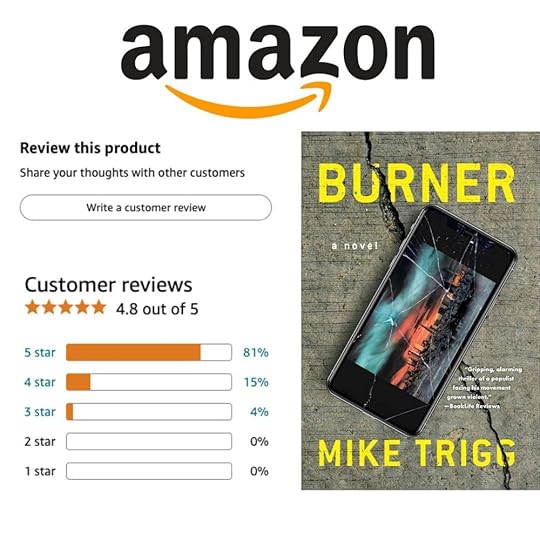
Like most authors, I’m a huge fan of independent book stores. Nothing beats that intimate, eclectic, community atmosphere for discovering a new book, attending an author event, or meeting up with a friend for a coffee—and, contrary to the narrative, many book stores are thriving. But, also like most authors, the majority of my book sales are on Amazon. So getting both quantity and quality of Amazon reviews is important—not to mention the best thing readers can do to support their favorite authors.
Unfortunately, Amazon reviews can be a bit of a black box. Almost every author I speak with is frustrated by how difficult it is to get legitimate reader reviews, let alone the vagaries of the Amazon review process. Readers are frustrated too, many of whom are mystified when their thoughtfully-crafted reviews never appear on the site.
Although Amazon has posted guidelines for customer reviews and rankings, they face a challenging problem: fake reviews. Many authors are approached by shady operators offering paid reviews. I’ve even heard stories of fraudsters attempting to extort money from authors by threatening to flood their page with negative reviews. So I appreciate Amazon at least attempting to enforce a review process that ensures authenticity—even if one of the factors they most heavily consider is whether the reviewer purchased the book on Amazon.
So, for my friends, followers, and readers who have asked about the best way to write a review for any of my books on Amazon, I put together this:
Top 10 Tips for Writing an Amazon Book ReviewWriting a review on Amazon is fast and easy. But there are some common objections, questions, and problems people raise, particularly those who have never posted a review for any product on Amazon. Here are my top 10 tips to assuage those concerns:
“I don’t know what to say.” — This is an easy one: say whatever you think. Amazon values authenticity, as do other prospective readers (and authors themselves!). So whatever you want to say is the right thing to say. Just explain what you liked or disliked. Be respectful, but be honest.
“Will the author ‘like’ the review?” — For independent authors (those who most need reader reviews!), many of the reviewers may know the author personally. Even if not, a reviewer can often feel sensitive critiquing someone else’s work. While it’s important to keep your review constructive, most authors I know want honest reviews. In fact, being specific and respectful in your comments can help other readers find books they will like. Imagine sitting down with the author for a cup of coffee and telling them politely what you think.
“I submitted a review, but I don’t see it.” — This is one of the most common problems reviewers encounter. Amazon has an automated and human review process to discourage “fake” reviews. So sometimes it takes a while for a review to appear live on the site. The more sincere, truthful, and trustworthy your review, the more likely it is to get approved. Reviews are also much more likely to get approved if you are logged in to Amazon as yourself, and have spent at least $50 on Amazon in the last 12 months. If it still doesn’t appear, it’s possible the post violates Amazon’s community guidelines (the biggest of which is creating, editing, and removing reviews in exchange for money). Usually, if you give it a few days, it will appear.
“Do I have to give it 5 stars?” — Definitely not. Give the book the number of stars you think it deserves. Obviously, authors always appreciate 5-star reviews, but I’d much rather have someone take the time to post any review, even if a 4 or 3 or 1, than no review at all. Again, it’s useful to be specific. If giving a book one star, don’t just say “it sucks,” say what elements of the story, plot, characters, etc. didn’t resonate for you.
“I don’t have time” — Yes, you do. If you really don’t want to compose a written review, you can simply give the book a star rating. It takes two seconds. Click on the “Write a customer review” button, give it a star rating, click “Submit” and you’re done.
“Do I need to buy the book on Amazon?” — No, anyone can post a review. But Amazon does give preference to “Verified Purchase” reviews (when the review is posted by someone who purchased the book on Amazon and “paid a price available to most Amazon shoppers”), approving them faster and featuring them more prominently. While this policy can be seen as self-serving for Amazon, it is also the most effective way of discouraging pay-for-review schemes.
“Can I post anonymously?” — You can (by clicking the “Edit” button next to your name at the top of the page), but I don’t recommend it. Although Amazon allows you to change your reviewer name from your default user name, in my experience such reviews are more likely to be flagged as fake and never appear on the site.
“What if I haven’t read the book yet?” — Besides a review, the best thing you can give an author is simply to read their work. Between e-books and audiobooks, it’s easier than ever to get through your “to-read” list. Obviously, Amazon has no way of knowing if you have truly read a book or not, but your review will be less helpful to prospective readers if you haven’t read the book yet.
“Do I have to write something long and literary?” — No. Amazon recommends reviews be at least 20 words, but that’s nothing. Nobody is judging you for misspellings or grammatical mistakes. PS, have you seen the internet? ;)
“I hate Amazon. I support indie bookstores.” — Look, I get it. Authors and readers love to hate Amazon and all the ways it has changed the book industry. I support my local indie bookstores whenever I can. But the reality is Amazon drives the vast majority of sales for every book title. And, unlike a local store, authors can advertise their books on Amazon to drive sales. And having lots of high-quality Amazon reviews helps those ads convert.
So if you’ve read something you loved or want to support an author, but haven’t yet written a review, hopefully this list helps. Feel free to add comments with additional concerns or recommendations for effective Amazon reviews below. Happy reading (and reviewing!)
July 23, 2024
Biden Did What Trump Would Never Do

Biden vs Trump. Senility vs Criminality. The choice nobody wanted.
It has been quite a month for the Democratic party. After Biden’s disastrous debate performance in which he appeared to be cognitively impaired, subsequent uprising within his own party urging him to drop out of the race, serious charges of document mishandling by Trump being summarily dismissed, an assassination attempt that cast Trump as the hero of his own action movie, and a triumphant Republican National Convention, the month culminated with Biden announcing he would not seek reelection with just over 100 days for Kamala Harris, his endorsed replacement and presumptive nominee, to organize a successful campaign. Tough time for the Democrats.
It’s difficult to identify an historical precedent anything close to everything that happened in July. That said, it also answers half the question I and many other Americans have had during this entire presidential campaign cycle:
How did we get here?
Is this really the best we can do, where our choice for President of the United States is between senility and criminality? A Gallup poll in April found that 29% of voters (and 42% of independent voters) felt neither Biden nor Trump would be a good president.
Only one party has done something about that.
Before continuing, I should clarify that, while I’m a registered Democrat, I consider myself a moderate. I have worked on Capitol Hill for both a Republican and a Democrat. Like many centrist Americans, I’m socially progressive but financially conservative. I am a firm believer in women’s right to choose, LGBTQIA+ rights, and equality for all Americans regardless of race, religion, ethnicity, gender, disability or any other dimension. I’m also a firm believer in reduced deficit spending, a balanced budget, smaller government, and lower taxes (specifically, a more equitable tax structure). I believe corporations drive our economy, create jobs, and incentivize innovation, but also avoid paying their fair share and create vast wealth inequality that has gone unchecked. I believe investing in education, job training, health care, and child care are investments in our collective prosperity, but need to be structured in a way we can afford. And I believe many of our biggest challenges can be addressed with common-sense, centrist policies that the majority of Americans support, rather than the extremist policies and rhetoric that characterize our polarized political climate.
Back to the election, as messy, tardy, and tumultuous as the transition from Biden to Harris at the top of the Democratic ticket has been, at least it happened. Prominent elected Democrats and top progressive donors felt they could express their concerns about Biden without fear of recrimination. Biden, for his part, heard the criticism and made what was undoubtedly the toughest decision of his political career to do what is right for his party and his country and step down.
Contrast that with Trump. Privately, many Republicans from party leadership to average voters have deep concerns about Trump as the Republican candidate. According to Pew Research, 59% of registered voters lack confidence that Trump would act ethically in office. Trump lost the 2020 election, incited an insurrection in the aftermath of his defeat, and has been convicted of a felony with more criminal cases on the horizon. Any one of these realities would have long ago torpedoed the prospects of any other presidential candidate in history. They would have done the honorable thing and dropped out. Bowed to a new candidate. Passed the torch to a next generation.
Yet, can anyone ever in a million years imagine Trump dropping out of the race?
Not only do Trump’s enormous ego, pathological narcissism, and complete lack of integrity make such a move unfathomable, but any suggestion of it would be relentlessly ridiculed by Trump and his sycophantic followers. The Republican party has been caught in the clutches of the Trump cult of personality for too long. Held hostage by the fear that he is their best hope of victory, the best way to mobilize their base, the best cover for a party platform that is deeply unpopular—and that may be the case. Yet, no one within Republican leadership would dare voice their concerns about Trump. Dissent is mercilessly punished. Those who act with integrity rather than loyalty are excommunicated. That is the definition of autocracy.
Democracy is messy sometimes. It requires disagreement and compromise. But the defining trait of the American experiment is that our leaders derive their power from the people, not through fear, taunts, and threats. It’s too early to know if the voters who wanted neither Biden nor Trump will turn to Harris as the alternative. Most polls so far show Trump still leading. But the Republican Party deserves a candidate at the top of the ticket who represents true conservative values in every regard and conducts themselves with integrity, respect, and honor always. And the American people deserve a choice between ideas, not egos.