David Farrell's Blog
August 27, 2026
Soon to be releaesed memoir
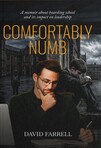
My upcoming memoir explores the impact of institutions on leadership. It comprises four principal components.
1) My formative years: lifestyle and colonialism.
2) Boarding school syndrome. (ABCD). Abandonment. Bereavement. Captivity. Dissociation.
3)A half-century of leadership in school and commerce.
4)The Last of the Boomers. Positives and Negatives.
1) My formative years: lifestyle and colonialism.
2) Boarding school syndrome. (ABCD). Abandonment. Bereavement. Captivity. Dissociation.
3)A half-century of leadership in school and commerce.
4)The Last of the Boomers. Positives and Negatives.


Soon to be releaesed memoir
My upcoming memoir explores the impact of institutions on leadership. It comprises four principal components.
1) My formative years: lifestyle and colonialism.
2) Boarding school syndrome. (ABCD). Abandonment. Bereavement. Captivity. Dissociation.
3)A half-century of leadership in school and commerce.
4)The Last of the Boomers. Positives and Negatives.
1) My formative years: lifestyle and colonialism.
2) Boarding school syndrome. (ABCD). Abandonment. Bereavement. Captivity. Dissociation.
3)A half-century of leadership in school and commerce.
4)The Last of the Boomers. Positives and Negatives.
July 31, 2026
Where the Birds Don't Fly - Aotearoa
“My home is here, where the birds don’t fly. Like them, I live without trepidation—not just for myself, but for my family. Rose and I did all that was possible. We did very well, if I may say so.
I sleep at night, contented, always thankful for this gracious nation. A whānau (family) like no other. I hope our kindred never take their freedom for granted and are always thankful for how New Zealand helped us.
Thank you, Land of the Long White Cloud, people of the oceans, our Aotearoa.” - Rorke Wilde, Where the Birds Don’t Fly.
I sleep at night, contented, always thankful for this gracious nation. A whānau (family) like no other. I hope our kindred never take their freedom for granted and are always thankful for how New Zealand helped us.
Thank you, Land of the Long White Cloud, people of the oceans, our Aotearoa.” - Rorke Wilde, Where the Birds Don’t Fly.
June 6, 2026
Review by Barbara Sumner
Just finished The Chameleon by David Farrell. While not an adoption story, it explores identity, belonging and the search for self in ways that may resonate deeply with many readers.
Richly written and emotionally layered, it brings a turbulent time in Southern Africa vividly to life through memorable characters and a powerful sense of place.
Thoughtful, immersive, and highly recommended.
Review by Barbara Sumner, academic, author of On Human Adoption, and filmmaker from New Zealand.
The Chameleon
Richly written and emotionally layered, it brings a turbulent time in Southern Africa vividly to life through memorable characters and a powerful sense of place.
Thoughtful, immersive, and highly recommended.
Review by Barbara Sumner, academic, author of On Human Adoption, and filmmaker from New Zealand.
The Chameleon
May 30, 2026
Book #4
Was a real doozy to write.
This nonfiction work presents experiences at an all-boys boarding school, highlighting leadership parallels.
Considering Boarding School Syndrome: Abandonment, Bereavement, Captivity, and Dissociation and the hidden “3 Es” of leadership: Empire, Entitlement, and Elitism.
Thank you to everyone who submitted their boarding school and leadership stories.
This nonfiction work presents experiences at an all-boys boarding school, highlighting leadership parallels.
Considering Boarding School Syndrome: Abandonment, Bereavement, Captivity, and Dissociation and the hidden “3 Es” of leadership: Empire, Entitlement, and Elitism.
Thank you to everyone who submitted their boarding school and leadership stories.
May 22, 2026
Leadership Today
Social media always fascinates me.
More so of late with the furore of artificial intelligence, or AI, as people now call it.
Or more to the point, how it refers to itself.
Like everything in life, without trust there can be no future.
The social networking services that do not determine truth from fiction are already in decline.
Without people, what is the point of AI?
Self-proclaimed leadership is the same.
In writing my latest book on leadership, I have spoken and worked with many who consider themselves leaders.
Most of them also relate to AI because it removes the human element.
Just as they have done whilst sheltering behind their leadership label.
Most boast of their success in profits, investment returns, improved processes, and technology.
This book delves into this predicament and its link to academic institutions.
All create a manifestation of dissociation from what matters: people.
More so of late with the furore of artificial intelligence, or AI, as people now call it.
Or more to the point, how it refers to itself.
Like everything in life, without trust there can be no future.
The social networking services that do not determine truth from fiction are already in decline.
Without people, what is the point of AI?
Self-proclaimed leadership is the same.
In writing my latest book on leadership, I have spoken and worked with many who consider themselves leaders.
Most of them also relate to AI because it removes the human element.
Just as they have done whilst sheltering behind their leadership label.
Most boast of their success in profits, investment returns, improved processes, and technology.
This book delves into this predicament and its link to academic institutions.
All create a manifestation of dissociation from what matters: people.
November 22, 2025
My passion is writing.
It’s fascinating, daunting, funny, frustrating, engaging, and above all rewarding - for the soul.
I refuse to be a writer where I view the industry as the problem. That I am deserving of success and artistic recognition without putting in the hard yards. The writing world owes me nothing.
Choosing to be an author. I understand that this business involves risks, and success requires effort, time, and money. Success is being involved in all aspects of the industry, from writing to editing, marketing, and the rest.
For the price of a coffee, readers buy my work and just maybe leave a review or star rating.

I refuse to be a writer where I view the industry as the problem. That I am deserving of success and artistic recognition without putting in the hard yards. The writing world owes me nothing.
Choosing to be an author. I understand that this business involves risks, and success requires effort, time, and money. Success is being involved in all aspects of the industry, from writing to editing, marketing, and the rest.
For the price of a coffee, readers buy my work and just maybe leave a review or star rating.
November 13, 2025
Thank you readers
Thank you all for your support in purchasing My African Rose. The third and last novel in The Wilde Collection. If I can bother those who have read it for a few minutes of their time to leave a star rating and / or a review. Much appreciated.
Christmas hols are on their way.
David Farrell
Christmas hols are on their way.
David Farrell
October 22, 2025
Excerpt - My African Rose
The world is going through another of her transitions, just like those we have witnessed before. Not something new or more evil than past growth spurts.
The universe carries on.
It’s our responsibility to create our own path towards our goals.
Time does not wait; nor are we owed anything. - Rorke Wilde (My African Rose)
We make of it as we will.
Never give up.
That is why we are here.
My African Rose
The universe carries on.
It’s our responsibility to create our own path towards our goals.
Time does not wait; nor are we owed anything. - Rorke Wilde (My African Rose)
We make of it as we will.
Never give up.
That is why we are here.
My African Rose
October 1, 2025
NZ Booklovers review
David Farrell’s My African Rose is the third instalment in The Wilde Collection, yet it stands strongly on its own as both a love story and a chronicle of post-apartheid South Africa. Set against the turbulence of the mid-1990s, the novel weaves personal romance and national history into an intimate portrait of resilience, identity, and survival.
At the heart of the book are Rorke and Rose Wilde, newlyweds who leave behind their corporate careers to purchase and run Cobblers Bar and Grill, a tavern in a mining town south of Johannesburg. The couple’s venture into entrepreneurship is far from idyllic. Their new business quickly becomes a microcosm of the fractured society around them, where minor slights erupt into violence and underlying tensions of race, gender, and belief expose the raw edges of a country still finding its way after apartheid. Farrell handles these shifts with sensitivity, ensuring the wider political backdrop never overshadows the intimacy of his characters’ lives.
Thematically, My African Rose grapples with questions of love, loyalty, and perseverance in uncertain times. Farrell explores how relationships, whether romantic, familial, or communal, become sites of hope and endurance amid instability. The violence that infiltrates Cobblers is not just pub brawling but a reflection of the deep social divisions in South Africa’s new democracy. Yet the novel avoids cynicism. Instead, it presents love and connection as acts of defiance against despair.
Farrell’s style blends memoir-like immediacy with novelistic detail. His prose is straightforward yet evocative, conjuring the sensory reality of pub life - the noise of music, the tension in the air before a fight, the comfort of familiar faces. The use of nicknames for troublesome patrons adds a surreal, almost folkloric quality, highlighting the absurdity and unpredictability of everyday conflict. This balance of realism and imaginative flourish keeps the narrative engaging and accessible.
Perhaps the real significance of the novel lies in the way My African Rose situates a deeply personal narrative within a national story of transition. By focusing on an ordinary couple in an extraordinary time, Farrell captures the texture of South African life beyond the headlines of politics and sport, although events such as the Springboks’ 1995 Rugby World Cup victory and the growing pains of majority rule echo in the background. The book contributes to a body of work that examines the intersection of love, community, and political upheaval, while retaining a grounded, human focus.
Farrell offers readers a moving exploration of how ordinary lives are shaped by extraordinary circumstances, making this a compelling and meaningful conclusion to his trilogy.
Ultimately, My African Rose is both tender and unflinching. It celebrates the endurance of love while acknowledging the fragility of stability in a society still healing.
Reviewer: Chris Reed
My African Rose
At the heart of the book are Rorke and Rose Wilde, newlyweds who leave behind their corporate careers to purchase and run Cobblers Bar and Grill, a tavern in a mining town south of Johannesburg. The couple’s venture into entrepreneurship is far from idyllic. Their new business quickly becomes a microcosm of the fractured society around them, where minor slights erupt into violence and underlying tensions of race, gender, and belief expose the raw edges of a country still finding its way after apartheid. Farrell handles these shifts with sensitivity, ensuring the wider political backdrop never overshadows the intimacy of his characters’ lives.
Thematically, My African Rose grapples with questions of love, loyalty, and perseverance in uncertain times. Farrell explores how relationships, whether romantic, familial, or communal, become sites of hope and endurance amid instability. The violence that infiltrates Cobblers is not just pub brawling but a reflection of the deep social divisions in South Africa’s new democracy. Yet the novel avoids cynicism. Instead, it presents love and connection as acts of defiance against despair.
Farrell’s style blends memoir-like immediacy with novelistic detail. His prose is straightforward yet evocative, conjuring the sensory reality of pub life - the noise of music, the tension in the air before a fight, the comfort of familiar faces. The use of nicknames for troublesome patrons adds a surreal, almost folkloric quality, highlighting the absurdity and unpredictability of everyday conflict. This balance of realism and imaginative flourish keeps the narrative engaging and accessible.
Perhaps the real significance of the novel lies in the way My African Rose situates a deeply personal narrative within a national story of transition. By focusing on an ordinary couple in an extraordinary time, Farrell captures the texture of South African life beyond the headlines of politics and sport, although events such as the Springboks’ 1995 Rugby World Cup victory and the growing pains of majority rule echo in the background. The book contributes to a body of work that examines the intersection of love, community, and political upheaval, while retaining a grounded, human focus.
Farrell offers readers a moving exploration of how ordinary lives are shaped by extraordinary circumstances, making this a compelling and meaningful conclusion to his trilogy.
Ultimately, My African Rose is both tender and unflinching. It celebrates the endurance of love while acknowledging the fragility of stability in a society still healing.
Reviewer: Chris Reed
My African Rose