Riley Chance's Blog
September 10, 2026
Changes fall short for author
A Palmerston North author believes changes to a government fund that pays people with books held in libraries don’t go far enough to fairly compensate writers.
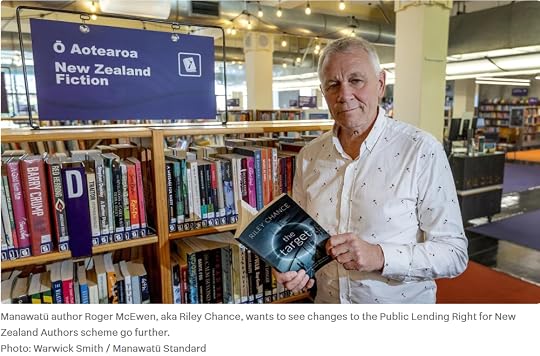
Internal Affairs Minister Brooke van Velden last month announced changes to the Public Lending Right for New Zealand Authors scheme, lowering the eligibility threshold so more authors would be compensated for the use of their books in libraries.
Previously 50 copies of an author’s book had to be available across libraries to be paid by the Government scheme. Now it has been lowered to 30 copies and about 170 extra authors are expected to be included.
Roger McEwan, who writes under the pen name Riley Chance, welcomed the changes but wanted them to go further.
“It’s tinkering around the edges. It’s not nothing but it’s not really anything.”
He said the fund was created in 1972, starting at $1 million, and although it had increased to $2.4m now, it hadn’t been adjusted for inflation. If it had kept pace with inflation he believed it should be $17m, from which he would receive about $2500 a year to cover costs such as proofreading or cover design.
About 60 copies of his books were in libraries, earning him a few hundred dollars a year. The scheme only covered physical books, not e-books or audiobooks. McEwan believed they should be included because they were popular ways for people to read or listen to books today.
He said lowering the threshold would only share the same amount of money among more authors, “cutting the pie into smaller pieces”.
In a statement, van Velden said during engagement about the fund, people were aware the size of it was not under review and 77.1% of respondents supported the idea of lowering the eligibility threshold.
“The changes made reflect what we heard from authors and I am pleased to be delivering on them.”
She said the work was intended to be about what was achievable in this parliamentary term.
“That meant that broader changes, such as expanding the scope to include digital books, were not part of this review, as it would take more time to develop and implement.”
She said she had been clear her priority was to ensure the existing money was used in the best way.
“These changes strike a balance by broadening access, while also ensuring the fund remains sustainable.”
The New Zealand Society of Authors chief executive Jenny Nagle welcomed the change, but said it was less than the society had been advocating for, and it was still waiting for the recommendations of a 2022 report to be implemented. She said the government was taking goods and services and not compensating the property owner.
“It means authors are the ones paying for most of that access and the small fund that [Public Lending Right] distributes has not met inflation, giving authors an annual pay cut. In this digital age, when over one-third of library borrowing is digital editions, there is no compensation for that at all.”
Van Velden referred the Manawatū Standard to a statement by the Library and Information Association of New Zealand that welcomed the changes as a balance between improving equity and maintaining a sustainable, practical scheme.
“Lowering the threshold will provide greater access for emerging authors, authors from smaller or independent publishers, regional authors and those writing for specialist or local audiences who may not previously have met the eligibility threshold.”


New Zealand should have compulsory voting
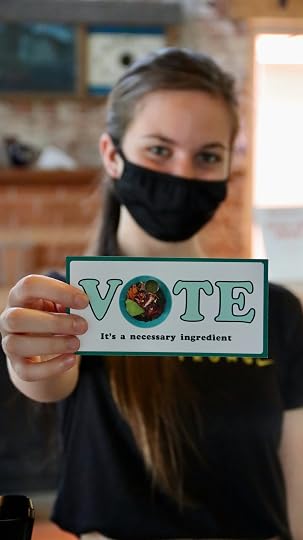
Photo by Manny Becerra on Unsplash
New Zealand used to pride itself on having a healthy democracy. We have free elections, proportional representation and a highly trusted electoral system. But there are two obvious weakness
1. We let donations turn it into The Democracy Game.
2. We don’t require people to participate.
It’s the participation I’m writing about here.
Given the current polls, the election result is impossible to forecast, but what I can confidently predict is that over 500,000 enrolled New Zealanders will not vote – in 2023 it was 655,094.
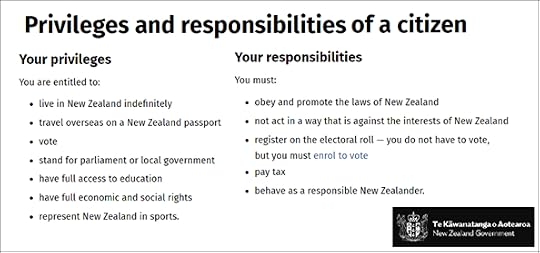
Source: www.govt.nz – Privileges and responsibilities of a citizen
New Zealand requires eligible citizens and residents to enrol, but voting itself is voluntary. At the 2023 general election, just 78.2% of enrolled voters cast a ballot. That means more than one in five enrolled New Zealanders stayed away. When you add the estimated 200,000 of eligible voters who aren’t enrolled, well-over three-quarters of a million eligible voters failed to vote in 2023.
Having more people involved in the election through voting can only strengthen our democracy, which isn’t as robust as we might like to think. Making voting a civic responsibility, rather than a privilege, might be a step in the right direction.
We should change that and the obvious model is Australia.
Australia introduced compulsory voting for federal elections in 1924, following a dramatic fall in turnout. In 1922, only 59.4% of Australians voted. At the first federal election after compulsory voting was introduced, turnout jumped to more than 91%.
A century later, the results remain remarkable. At the 2025 Australian federal election, turnout was expected to be around 90%, compared with New Zealand's 78.2% in 2023.
And compulsory voting in Australia is not quite as draconian as the phrase suggests. Australians are legally required to attend an election and vote, but they retain complete freedom over how they vote. Nobody can force them to support a particular candidate or party. If they have a valid reason for not voting, they can explain it to the Australian Electoral Commission.
That distinction matters. Compulsory voting is not compulsory political enthusiasm. It is compulsory participation in the democratic process.
There is a powerful democratic argument for this.
Under voluntary voting, participation is not evenly distributed. Some groups are much more likely to vote than others. In New Zealand's 2023 election, turnout among 18–24-year-olds was 74.2%, while turnout among voters aged 70 and over was 84.9%. Turnout among Māori voters was lower again, at 70.3%.
That matters because governments respond to the people who vote. ACT would love to disenfranchise as many people who don’t vote for them as possible - young people, prisoners etc. He commented not long ago that, “compulsory voting resulted in all sorts of weirdos being voted in”. They’re behind you, David!
If politicians know that certain groups are less likely to turn up on election day, there is an obvious temptation to concentrate political attention on people who reliably do. Compulsory voting removes much of that distortion. Every section of society becomes part of the electorate that politicians have to persuade.
Australia's experience is compelling. The Australian Electoral Commission notes that compulsory voting produces consistently high participation and that one argument in its favour is that governments and opposition parties must consider the interests of the whole electorate, rather than simply those most likely to vote.
You might think the Australian public would be keen to see it repealed, but that’s not the case. Through numerous opinion polls and Australian Election Study survey data, support for compulsory voting hovers around 70 percent. Compare that to the 54 percent of New Zealand voters who chose to keep MMP at the 2007 referendum and you get an idea of its popularity. I’ll leave it to Australians more knowledgeable about the outcome of their elections to judge whether their century old system has resulted in voting in “too many weirdos”.
But democracy already imposes civic obligations. We pay taxes. We obey laws. Some citizens perform jury service. We accept these obligations because they underpin a functioning society. Voting once every three years is hardly an unreasonable burden.
New Zealand should follow Australia's example. Make voting compulsory, keep the ballot secret and completely free, provide sensible exemptions, and let voters decide exactly what they want to do with their ballot.
Democracy works better when everyone has to turn up.
Australian Electoral Commission — Compulsory voting
Australian Electoral Commission — 2025 election participation
NZ Electoral Commission — 2023 election report
NZ Electoral Commission — voter turnout statistics
Parliament of Australia — compulsory voting and Australian democracy
Parliament of Australia — history of compulsory voting
August 11, 2026
Changes to the PLR Scheme Fall Well Short
Photo by Annie Spratt on Unsplash
Most New Zealanders have never heard of the Public Lending Right (PLR), yet they benefit from it whenever they borrow a book by a New Zealand author from their local library.
The idea is straightforward. Libraries allow books to be borrowed for free, which can reduce potential sales for authors, so the Government pays authors a small amount based on how many of their books are held in public libraries. It is a sensible idea and I, like many authors, love that my books are available to borrow – I wrote them to be read.
Unfortunately, the scheme, created in 1972 with $1 million, has remained mired in the 1970s – e-books and audiobooks are not recognised.
The fund itself has been hollowed out by inflation. Although it has increased to $2.4M, and that may sound significant, if it had been inflation adjusted it would be closer to $17.8M. If a New Zealand library book was worth $1 under the scheme in 1972, that same payment is worth only about 14 cents today.
To put that into perspective, if MPs had accepted the same inflation-adjusted erosion imposed on the PLR, Brooke van Velden (the current minister responsible) would not be earning more than $300,000. She would be receiving something closer to $48,000.
Despite organisations such as the New Zealand Society of Authors pressing for change, and a full review of the system being undertaken in 2020 (which identified all the required changes), the scheme has become a can that successive ministers have kicked down the road.
This year, unexpectedly, Brooke van Velden decided the scheme needed to be reviewed before she leaves Parliament after the November election. Consultation documents were hurriedly prepared and sent out. Having written numerous articles and sent requests to the Minister, you might expect that I was encouraged, if not excited, but the minister ruled out any increase in funding.
As a result, the changes announced are, at best, underwhelming. A reduction in the number of physical copies an author needs held and an administrative mechanism to deal with errors if the scheme makes a mistake. Whatever the review cost, it wasn’t worth it.
The situation says something larger about how we value creative work in Aotearoa. Writing is only one example. For many artists, a few thousand dollars can be the difference between continuing their work or quietly giving up.
While over this side of the Tasman we debate administrative tweaks, Australia significantly increased its corresponding fund in 2023 and in May 2026 announced additional funding to “ensure authors are paid for the free use of their work in Australian public and educational lending libraries.” Australia isn’t just leading us in arts funding, it has lapped us many times over.
Properly funding creative work strengthens the society we live in. It shapes how we understand ourselves as a country. Our stories, our identity, our voice. We celebrate the cultural icons of the past while often providing limited support to those creating today’s culture.
There is a persistent belief that funding the arts is a luxury, or worse, a drain on the economy. It is neither. Most artists are not wealthy. The money they receive is spent locally on rent, food and services, circulating back through communities.
Aotearoa New Zealand is not a company, and the idea that it should operate like one has misinformed decades of political thinking. The pursuit of Government surpluses as an end in themselves – and the media’s often gullible acceptance of that logic – has allowed the failed austerity thinking to embed itself in our conscience.
It is definitely time for a change of thinking.
People have asked me whether it’s worth my time and effort speaking out about the PLR funding – will it make any difference?
Maybe it will. Maybe it won't.
But there is one thing it does achieve. It makes it harder for this minister, or the next one, to stand up in Parliament and say, "I've received no complaints about the size of the fund."
July 26, 2026
The Future of AI Isn't Inevitable
“The threat of AI is more about the threat of large groups of people with little stake in the future and less to lose”— Riley Chance
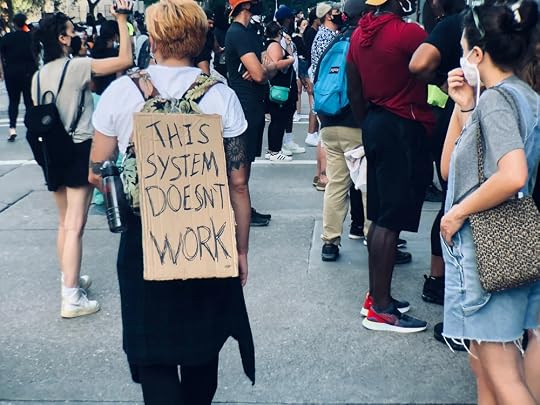
Photo by Tarun Girish on Unsplash
Artificial intelligence (AI) has become the topic everyone seems interested in, yet few truly understand and I include myself in that group. Depending on who you read, AI is about to cure disease and solve climate change or wipe out jobs and destabilise democracy. I have my doubts that it will be as consequential as those at either extreme suggest. I started my working career as a computer programmer, and the old saying, "Garbage in, garbage out," still applies no matter how fast the garbage is processed.
I do agree with the so-called experts that AI is no longer a future technology. It's embedded in medicine, finance, science and everyday work. As one report puts it, AI is shifting from "experimental technology to everyday infrastructure." The future has already started.
So what happens now?
Researchers disagree sharply on how fast AI will advance. Some believe human-level systems could emerge within a decade. Others warn that today's rapid progress may hit limits. Uncertainty seems to be the only real consensus.
Work will change, but the deeper issue is power. Marx's philosophy has never been more important to understand. The sad part is that it has rarely understood, especially by politicians.
AI will reshape jobs across the economy, just as the wheel, electricity, oil and computers did. The IMF estimates that a large share of roles will be affected, especially in advanced economies. Most won't disappear, they'll evolve. This has been the pattern since humans first discovered they could improve their lives through innovation.
The bigger concern is who benefits (cue Marx). Some warn, quite rightly in my view, that the economic gains will concentrate in the hands of those who own the technology. That should surprise no one when we've already seen a handful of questionable individuals accumulate extraordinary wealth through the tech sector. The challenge, as it already is today, will be inequality. The real threat from AI is not the technology itself but the prospect of creating ever-larger groups of people with little stake in the future and less to lose.
In New Zealand, we have the spectacle of Peter Thiel attempting to build a bolthole in the remote South Island. If he thinks he'll be welcomed with open arms, he may be in for a rude shock. Kim Dotcom, who I would argue is a far better person than Thiel (admittedly a very low bar), is likely to be extradited to the United States, and I can't imagine many New Zealanders taking to the streets in protest.
That makes AI's hardest problems political. In many respects, AI needs capitalism to flourish, but it may also accelerate demands for a more socialist (that just means thinking about all citizens) approach to distributing wealth. Capitalism's boom-bust-move-on method has one fundamental limitation on a planetary scale: there is nowhere left to move on to. Dreams of the Moon and Mars remain, for now, the stuff of science fiction.
AI has made it effortless to generate convincing fake images, voices and videos. Misinformation can now be produced at industrial scale. When truth becomes harder to verify, trust itself becomes a political battleground.
Governments around the world are scrambling to regulate AI as quickly as it advances. The OECD's Expert Group on AI Futures highlights the core issues: bias, surveillance, accountability, job displacement, misinformation and democratic resilience. These are all human problems, unless, of course, you don't care about people.
AI is a tool, just like a hammer. It exists to help humans do things better than they could without it. If we remember that - or perhaps relearn it for the thousandth time - I think we'll be fine.
July 14, 2026
Democracy doesn't disappear overnight …
Every election reminds me that democracy is something we - citizens - value, but rarely stop to think about. We seldom debate policies and politics, often ending up in social media echo chambers, where our views are reflected back to us. Then we cast our votes and trust that the system will do the rest.
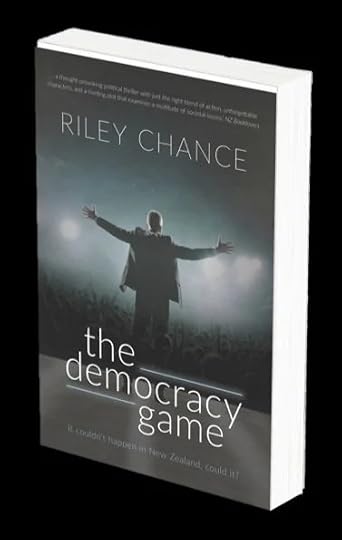 A thriller that asks uncomfortable questions
The Democracy Game is a fast-paced New Zealand political thriller that exposes the fragility of democratic institutions. Set in New Zealand’s near future, it imagines how democracy might be manipulated. Not through military coups or violence in the streets, but through technology, information, money and carefully orchestrated decisions.
It's fiction, but the questions it raises were relevant before the 2023 election, and they’re even more relevant today..
Why read it now?Election campaigns encourage us to think about the future of our country. The Democracy Game doesn't tell you what to think or who to vote for. Instead, it invites you to consider how easily democratic systems can be influenced, and if its possible to control New Zealand’s democracy.
About the bookThe Democracy Game is a thriller designed to engage and keep you turning pages. It combines authentic New Zealand settings with political intrigue, suspense and believable characters in a story that feels uncomfortably plausible. Whether you're fascinated by politics or simply enjoy intelligent thrillers, this is a novel that will stay with you as we edge towards this year’s election.
Could it happen here?That's the question at the heart of The Democracy Game.
Check it out from your local library (if it’s not there, politely ask them to order a copy)
Buy a copy from your favoutire bookstore (if they don’t have it, get them to order a copy)
July 12, 2026
NZSIS vs GCSB: Who Are They and What Powers Do They Have in New Zealand?

Photo by Chris Yang on Unsplash
If you've read a political thriller set in New Zealand (one of mine, for example), you've probably come across references to the New Zealand Security Intelligence Service (NZSIS) or the Government Communications Security Bureau (GCSB). Their names are often used interchangeably and they are frequently portrayed as shadowy organisations operating behind the scenes, collecting intelligence and protecting national security.
But who are they really? What powers do they have? And how much do they affect everyday life in New Zealand?
While researching my novels, I've spent time understanding how New Zealand's intelligence community operates. As with any political thriller, the challenge is separating Hollywood myth from reality.
Two Agencies, Different RolesAlthough they are often mentioned together, the NZSIS and the GCSB perform quite different functions.
The NZSIS is New Zealand's domestic intelligence and security agency. Its role is to identify and investigate threats to New Zealand's national security. These threats include:
Terrorism
Espionage
Foreign interference
Violent extremism
Activities that threaten New Zealand's democratic institutions
Unlike the Police, the NZSIS is not primarily concerned with investigating ordinary crime. Instead, it focuses on gathering intelligence that helps the Government understand and respond to security threats before crimes occur.
The GCSB has a different focus. It specialises in signals intelligence, cyber security and information assurance. In simple terms, the Bureau helps protect New Zealand's communications and information systems while also collecting foreign intelligence through electronic means.
The GCSB works extensively in cyber security, assisting government agencies and organisations responsible for New Zealand's critical infrastructure. Its responsibilities have grown significantly as cyber attacks have become more common and sophisticated.
What Powers Do They Have?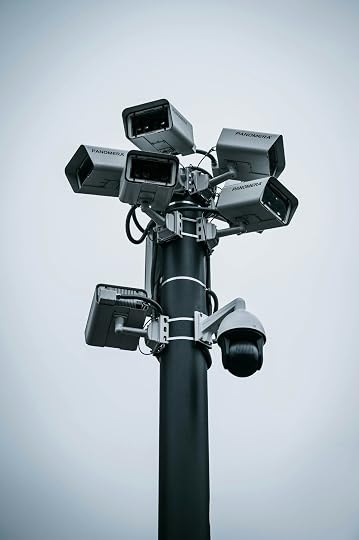
Photo by Milan Malkomes on Unsplash
Neither the NZSIS nor the GCSB has the powers of a police force. If intelligence suggests criminal offending has occurred, it may be passed to agencies such as New Zealand Police or other appropriate authorities.
Both agencies operate under the Intelligence and Security Act 2017, which gives them significant powers, but those powers are not unlimited. Depending on the circumstances and the appropriate legal authorisations, the agencies may be able to:
Gather intelligence relevant to national security.
Use surveillance techniques in authorised investigations.
Access certain communications or electronic information where legally permitted.
Work with overseas intelligence partners.
Assist other New Zealand agencies in protecting national security.
Many of their intrusive powers require an Intelligence Warrant. These warrants involve multiple levels of approval and oversight, recognising the balance between national security and individual rights.
Type 1 Intelligence Warrant
This is used when the activity directly relates to:
A New Zealand citizen, or
A New Zealand permanent resident.
A Type 1 warrant must be approved by both:
The Minister responsible for the intelligence agency, and
A Commissioner of Intelligence Warrants (a retired High Court judge or serving judge appointed to the role).
Type 2 Intelligence Warrant
This is used when the target is not a New Zealand citizen or permanent resident and can be issued by the responsible Minister alone.
The warrant authorises specific activities that would otherwise be unlawful, including:
Intercepting communications (phone calls, emails and messages).
Conducting surveillance.
Searching premises.
Entering private property.
Searching computers and electronic devices.
Installing or using surveillance devices.
Collecting documents or other intelligence.
Using covert or assumed identities in some circumstances.
The warrant is tailored to the operation. It doesn't automatically grant every available power.
Who Watches the Watchers?Several mechanisms exist to provide oversight and accountability. The Inspector-General of Intelligence and Security independently reviews the legality and propriety of the agencies' activities. Parliament also maintains oversight through the Intelligence and Security Committee. In addition, the agencies are subject to legislation governing privacy, human rights and the lawful exercise of their powers.
No oversight system is perfect, and debates continue about where the balance should lie between security and privacy. Those debates are an important part of any healthy democracy, and governments around the world continue to grapple with where the appropriate balance should be struck.
For me, the key point is that intelligence agencies exist to serve their citizens and should never be turned into a force used against those same citizens. History provides plenty of examples of governments stepping over that line, which is why democratic oversight matters.
Researching My NovelsGood political fiction depends on believable institutions. When writing, I want the intelligence aspects of the story to feel authentic, even though my books are fiction and set in the near future. An engaging plot is more important than pedantically sticking to what is "meant" to happen.
I haven't asked either the NZSIS or the GCSB for a tour of their facilities, or to speak to someone about how they operate. I expect those requests would never be granted for obvious reasons. Instead, I focus on understanding their responsibilities, their legal powers and the constraints under which they operate.
I write fiction to encourage readers to ask questions for themselves, such as:
How much surveillance is acceptable?
How should intelligence agencies be supervised?
What safeguards should exist to protect civil liberties?
How should governments balance openness with secrecy?
There are no simple answers, but it is important that citizens remain engaged and maintain control over how these agencies operate in Aotearoa New Zealand. As technology continues to reshape society, those questions are likely to become even more significant. For writers of political fiction, they provide fertile ground for storytelling.
Further ReadingIf you're interested in the themes explored here, you might also enjoy reading about the real events that inspired The Target, including New Zealand's unsolved Trades Hall bombing, and the research behind the novel.
Phil Pennington of Radio New Zealand keeps an excellent watch on developments in this area. Recently, he wrote about the Police seeking expanded surveillance powers and the debate surrounding those proposals - Police powers law to be tweaked, implementation delayed
June 29, 2026
How The Target Was Inspired by New Zealand's Unsolved Trades Hall Bombing

Trailer for a cold case documentary about the Trades Hall bombing
History doesn't often give us answers. It gives us questions.
Sometimes those questions refuse to stay buried.
For me, one of those questions began on 27 March 1984, when a suitcase bomb exploded inside Wellington's Trades Hall and killed caretaker Ernie Abbott. More than forty years later, no one has ever been convicted of the bombing. It remains one of New Zealand's greatest unsolved crimes.
People often ask where the idea for The Target came from. They usually expect a simple answer. The truth is far more interesting.
I've long admired the role trade unions have played in improving wages, workplace safety and workers' rights. That interest naturally led me to the Trades Hall bombing, an event that has fascinated me for decades. But what struck me most wasn't simply that someone planted a bomb. It was that an act of political violence serious enough to kill a man could slowly fade from our national memory.
I began wondering what would happen if a similar attack occurred today. How would the police respond? What role would the New Zealand Security Intelligence Service play? How would politicians react? How quickly would misinformation spread across social media? How much surveillance would the public accept in the name of security?
Those questions eventually became woven into The Target.
An Event That Shouldn't Be Forgotten
On 27 March 1984, a suitcase bomb exploded inside Wellington's Trades Hall building. Ernie Abbott, the building's caretaker, was killed when he opened the case. Despite an extensive police investigation, no one has ever been convicted of the bombing.
Today, many New Zealanders know little about the incident. It receives only passing mention in our history, yet it remains New Zealand's only fatal domestic bombing and one of the country's most enduring unsolved criminal investigations.
From Research to Story
I never begin writing a novel with a plot or a detailed outline. Like Stephen King, I start with interesting characters, place them in interesting situations and then I start writing to discover what happens next.
Research runs alongside the writing. I read contemporary newspaper reports from 1984, revisited political commentary from the period and tried to understand the social climate in which the bombing occurred.
The Trades Hall bombing happened at a fascinating moment in New Zealand history. Trade unions were powerful organisations, political divisions ran deep and the country stood on the brink of enormous economic change. New Zealand was about to leave the Muldoon era and enter the sweeping reforms that became known as Rogernomics.
The bombing wasn't simply an isolated criminal act. It occurred during a period of profound political, economic and social tension. Understanding that context helped shape the world in which The Target unfolds. As we build towards the 2026 general election, the environment is eerily similar to 1984.
Why Political Fiction Matters
I've always been interested in stories that entertain while encouraging readers to think. A thriller should keep readers turning pages, but it can also ask difficult questions.
Political fiction occupies an unusual place because it allows writers to explore real issues without claiming to predict the future or rewrite the past. The events of The Target are fictional, as are its characters and plot. But the concerns explored throughout the novel: public trust, surveillance, misinformation, political influence and the role of trade unions are very real.
Throughout history, acts of political violence have altered the course of nations. New Zealand likes to think of itself as being immune from that kind of violence, but history suggests otherwise.
Visiting the Past
One of the unexpected pleasures of writing The Target was discovering just how much material still exists. Photographs, newspaper reports, political commentary and archival records all helped bring the period to life.
The former Trades Hall itself has also become a place where visitors can learn about both the bombing and the wider trade union movement. Standing in the building gives the story a tangible reality that no amount of reading can quite replicate.
From Cold Case to Contemporary Thriller
At first glance, The Target is a fast-moving New Zealand political thriller. It features journalists, intelligence officers, politicians, police investigators and ordinary people caught in extraordinary circumstances. Beneath the suspense, however, lies the same question that first drew me to the Trades Hall bombing. What happens when violence is used to change society?
By setting The Target in a near-future New Zealand, I wanted to explore how familiar institutions might respond when confronted with an event capable of shaking public confidence. How resilient are our democratic institutions? How much freedom are we prepared to surrender in exchange for security?
Bringing Research to Square Edge

Riley Chance holding a photo of front page of 1927 Newspaper - part of the display - dominated by the Trades Hall bombing
Writing a novel is often a solitary process, so it has been immensely rewarding to share some of that journey through my display at Square Edge Arts Centre in Palmerston North.
The display includes newspaper clippings, historical material, photographs and research that helped shape The Target. Visitors can trace the path from a real unsolved crime to a contemporary political thriller, seeing how history gradually evolved into fiction.
One of the pleasures of talking with visitors has been discovering how many people either remember the bombing or are surprised to learn it happened at all.
Many leave wanting to know more about the real event as much as the novel itself. If fiction encourages readers to become curious about New Zealand's history, then it has achieved something beyond entertainment.
Why the Story Still Resonates
The Trades Hall bombing remains unsolved and will probably stay that way. Yet unsolved mysteries endure because they continue asking questions that history cannot answer. As readers follow the investigation, they are also invited to think about democracy, political power, public trust and the forces that continue to shape Aotearoa New Zealand. If the novel sparks conversations about our history as well as our future, then it has done exactly what I hoped it would.
If you're interested in the real history behind The Target, explore the photographs and research from my Square Edge display, read the media coverage discussing the novel's connection to the Trades Hall bombing, or explore my website to learn more about my writing.
You can purchase The Target through my website, from Bruce McKenzie Books or get your favourtite bookstore to order you a copy.
March 23, 2026
Social Media must be Legislated
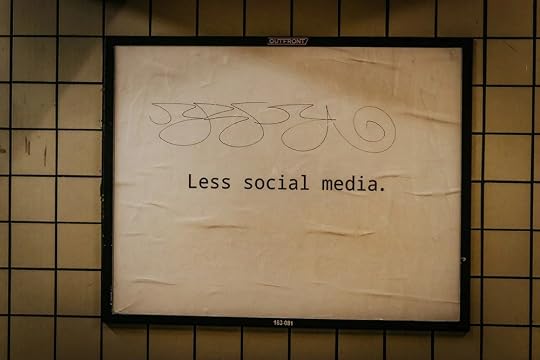
Photo by Jon Tyson on Unsplash
Social media is not a harmless, everyday product. These platforms have been designed to shape how people think, interact, and understand the world. Yet they operate with fewer safeguards than industries that pose far less risk. A system that can amplify harassment, misinformation, and harmful content to millions should not be given a free pass simply because it is widely used and can afford a murder of expensive lawyers.
We, society, know how to handle risk in other areas of life. We don’t allow unsafe cars onto the road and tell drivers to “be careful”. Vehicles must meet strict safety standards, pass inspections, and can be recalled if faults emerge. Medicines are not sold freely without testing, dosage controls and regulatory approval. Even food producers must meet hygiene standards before their products reach the public. In each case, society accepts a simple principle – if something can cause widespread harm, it must be subject to careful regulation.
Social media, along with illegal drugs, has escaped that principle. Its harms are less visible than a car crash, but no less real. Algorithmic amplification can push extreme content, harassment can be coordinated and relentless and young users are often exposed to material they are not equipped to process. These are not edge cases - they are built into how the platforms function.
I recently read a BBC article - Meta and TikTok let harmful content rise after evidence outrage drove engagement, say whistleblowers.
“The algorithm offered content creators a "path that maximizes profits at the expense of their audience's wellbeing.”
Let’s be honest, none of us should be shocked. If environmental protection legislation were as feeble as the legislation governing social media, companies would dump their used sh!t everywhere. Whether it’s nicotine companies, polluters or social media platforms, their goal is to maximise profits and get societies to clean up their mess.
Some Governments are beginning to catch up, and they are being fought tooth and nail by the platforms using their obscene profits. The UK’s Online Safety Act imposes legal duties on platforms to reduce exposure to illegal and harmful content, particularly for children. Australia has gone further, introducing minimum-age rules for social media, with enforcement measures that place responsibility on the platforms themselves. The BBC recently reported on how these changes reflect growing concern that leaving safety to companies has not worked.
But legislation is still uneven, incomplete and largely reactive. It is being written after years of damage rather than before. That puts users, especially younger ones, in the position of being test subjects in a live experiment. No other high-impact product would be allowed to scale globally under those conditions.
The comparison to other industries is not rhetorical. We ground planes until faults are fixed. We recall defective products. We shut down unsafe buildings. In each case, inconvenience is accepted because safety comes first. Social media, by contrast, continues operating while its risks are debated. Zuckerberg and co can be dragged into the US Congress’s spotlight, but nothing happens, especially under Trump-like Governments which abound.
Until proper, enforceable standards are in place – standards that address design, accountability, age protections and harm minimisation – the ethical stance is to avoid using the platforms. I refuse to use them.
Ask yourself this question – if you knew your favourite restaurant abused its employees, would you keep going?
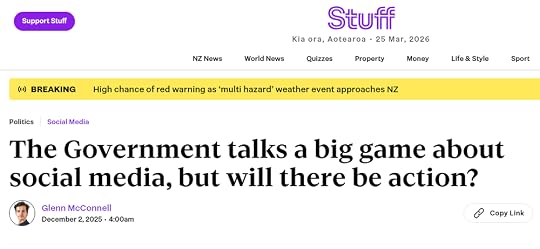
The current New Zealand Government is, like the media has reported, talking a big game - but will anything change? As a citizen you do have power (what is often termed agency). You can write to your MP and ask what they intend to do about making Social Media safe.
I’m often asked whether my campaigning (notably against the Public Lending Right) will make a difference. Maybe. Maybe not. But what it does stop is the minister being able to stand up in Parliament and say, “I’ve received no complaints about social media.”
November 25, 2025
Brooke and the PLR leave me lost for words
Seriously.
Being lost for words isn’t good for an author. Words are what we do!
First, Brooke replied to my last polite request with an equally polite, “It’s not on the work programme”, suggesting I talk once more with the staff at the National Library – they won’t be thrilled to read that.
In response to the complete lack of action I took up my metaphorical pen to vent my umbrage. I started four times but couldn’t come up with anything new to say. Have you ever tried debating with a bouncer who thinks you’ve had one too many? It felt similar … I imagine.
The legislative changes required to knock off some of the rough edges from the PLR will take little work. Take an example from the earth-shattering amendments made in 2024. 'In regulation 10(3)(a) replace "30 November in that year" with "15 November in that payment year"'.
The 2024 amendments to the PLR changed nothing. They were an illustration of Weber’s idea of bureaucracy’s self-perpetuating inertia. Picture a dog trying to dig a hole in a marble floor to bury a bone – plenty of motion but zero progress.
As for talking to the staff at the National Library, there’s no point – they will be pleased to read that! They work for Brooke, not for me or for New Zealand authors. If I asked them what the best way to get under Brooke’s skin would be to spur her into action, they wouldn’t answer.
The outcome from all the endeavour focused on modernising the PLR, including a massive and expensive review, is the status quo. In the face of this, most people would be tempted to give up, but I’m reminded of George Bernard Shaw.
The reasonable person adapts themself to the world; the unreasonable one persists in trying to adapt the world to themself. Therefore all progress depends on unreasonable people.
I wear my unreasonableness with pride.
My second speechless moment came a few weeks after I received my annual "Dear Riley, it’s not good news" email from the PLR scheme, detailing how many books they estimate I have in public libraries. I have three eligible books with counts of 40, 42 and 21, equalling a Christmas payout of $0.00. At least I don’t have to think about what I’m going to spend it on.
I’m not one to complain, but … The count for my latest book of 21 was so far away from my records that it stood out like the proverbial. I complained.
For those who don’t know how it works, the number of books is determined by a survey “in accordance with the advice of the Statistician”. If you follow the links in the legislation, the “Statistician” referred to is the Government Statistician – the chief executive of Statistics New Zealand.
I would expect a statistical survey conducted under the watchful eye of Statistics New Zealand to be robust, and any recount of my books to move counts by at most a few copies. The result of the recount for my three books was 50, 47 and 45.
I was again lost for words.
First count total – 103. Recount total – 142. In technical terms, that’s a statistically significant result. In lay terms, what the … If their counting were that unreliable at an election, we’d be alarmed. We might even discover that we’d elected the wrong government. Just saying.
And 50 is even more significant. One of my books, tired and sweating profusely, somehow cleared the Trump-esque wall that keeps the majority of authors below the payment threshold. This is how I imagine it happened.
PLR Person 1: “Jesus, Chance is complaining about the count – again!”
PLR Person 2: “Make one of his books fifty, that’ll shut him up.”
PLR Person 1: “Oh, alright.”
And it did shut me up … for a minute.
I don’t have the raw data to calculate a standard error, so I asked AI for an estimate. After a screed of calculations, the takeaway was that the uncertainty is large.
The following advice can be found on the PLR website:
… you may find your title count is (frustratingly) 49.
It should read:
… you may find your title count is (frustratingly) between 23 and 75 which we estimate as 49.
They go on to say, “To maintain the fairness of the fund, we can’t increase counts to meet the threshold for payment.”
I don’t have a clue what the first part of that sentence means. The fund is a social construct which is already demonstrably unfair and, as politicians have fiddled while it has been devoured by inflation, drained.
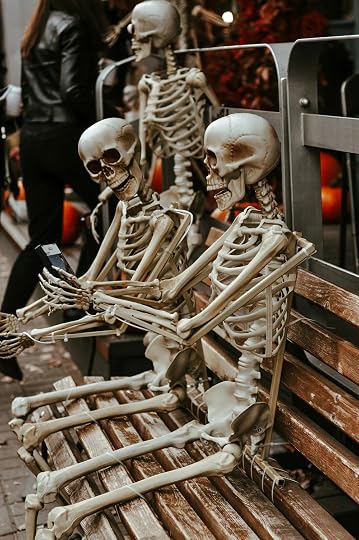
I need to say that I empathise with everyone involved in running the PLR, my struggle to have it changed is not personal. The buck stops (and is covered in dust and cobwebs) on Brooke’s desk. Everyone I have met along the way has been patient, helpful and kind.
That leaves the question – what to do next?
For those who remember the statue of Nick Smith, the then environment minister, on the footpath outside of the Christchurch ECan office, I’d like to build something similar. I would locate it next to the entrance to Parliament and call it – Waiting for Brookot.
October 23, 2025
Combining the Fermi Paradox with the Cassandra Complex
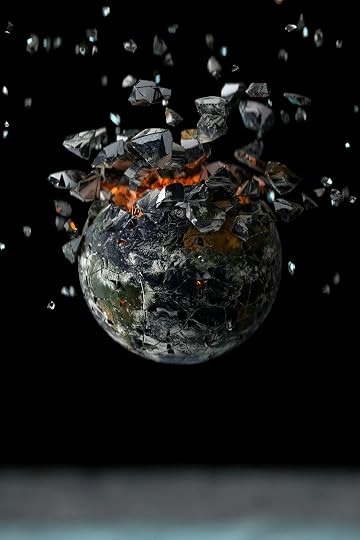
Photo by 愚木混株 Yumu on Unsplash
When the Roman Empire fell, it took with it a myriad of advanced technology and the human species entered a period referred to as The Dark Ages. To most of us living today, the idea that the civilisation we live in – the cities, the societies, the knowledge – could be lost and that we again enter a low-tech, dark world is ludicrous. Yet, most of us also know it has happened before and, when you consider Pol Pot’s maniacal goal to take Cambodia back to Year Zero (a pre-industrial, classless society), it can happen if you have mad men (they’re usually men – Argentina being the latest to elect a male stark-raving lunatic to power) in control.
Previously, knowledge existed in people and printed material. Now it exists in people and, more often than not, as electronic data. Previously books were burned and lost. Now, without electricity …
Massive changes in societies, in civilisations, are more obvious in hindsight. We live in a world that assumes tomorrow will be the same as yesterday – give or take. When we push this logic to the nth degree, society will never change - give or take.
Yet societies do radically change. Civilisations fall.
The Fermi Paradox takes its name from Nobel Prize-winning physicist Enrico Fermi, who supposedly made his observations during a casual lunchtime conversation in 1950. It runs like this …
Given that our solar system is young compared to the rest of the universe — roughly 4.5 billion years old, compared to 13.8 billion — and that interstellar travel and communication is achievable given enough time – Earth should have been visited, or communicated with, by aliens already.
Fermi asked - why haven’t they made contact?
He doubted that there were no advanced enough civilisations. In our galaxy alone there are approximately 100 billion stars.
One theory that offers a solution, named after its proposer, is the Fermi Paradox.
As civilisations progress and develop the advanced technologies needed for space travel and communication, they also develop technologies that can annihilate themselves. Here, on the third rock from the sun, at some point in the last century we passed the milestone of enough nuclear weapons to destroy human life on earth. If you're in doubt, read Nuclear War - A scenario.
Given the massive timescale we are talking about, this theory projects that, if we had the means to investigate, we would find the ruins of millions of civilisations on planets throughout the universe.
That brings us to the Cassandra Complex, which will be familiar to many, especially climate scientists. In Greek mythology, Cassandra was given the gift of prophecy, but was also cursed by the god Apollo so that her true prophecies would not be believed.
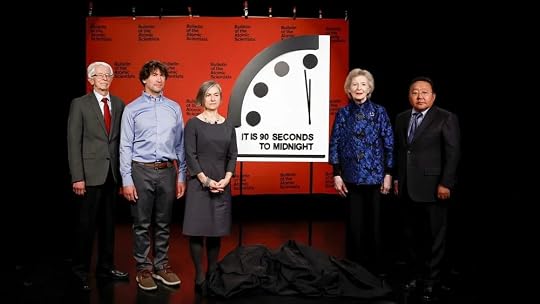
Currently, the Doomsday Clock is 90 seconds to midnight – midnight represents the moment at which we will have made Earth uninhabitable for humanity. If the picture below isn’t a beautiful (possibly the wrong word) illustration of the Cassandra Complex, I don’t know what is.
https://edition.cnn.com/2023/01/24/world/doomsday-clock-2023-climate-scn/index.html
There is a huge body of evidence that shows that the planet is heating up, and this is caused by humans. Despite the odd dissenting voice (crank?), this is generally accepted as true. But, in true Cassandrian style, its impact is yet to be truly believed by those responsible for running the majority of countries. The future so many scientists (and others) are warning us about sits outside our government’s ability to comprehend - they can’t look any further forward than a budget cycle (one year) or an election cycle (3-5 years). In this timeframe they are prisoners of the logic of the status quo logic – that tomorrow will be the same as yesterday.
I don’t believe climate change, in and of itself, will not result in the wide scale loss of knowledge that will usher in a new dark age - a nuclear war would absolutely! But when the Earth’s temperature rises, when resources (food, fresh water, land) become scarce, when societies demand that their leaders secure their countries future – at any cost - having ignored the voices that tried to avoid the situation (Cassandra), that’s when the spectre of the Fermi Paradox will become apparent.