Alena Orrison's Blog
April 24, 2025
Special Book Announcements
Earlier this year, I announced that Natural Disaster would receive a new look. Well, it’s here! If you’re on my email list, you’ve already seen the news. Look at this cover! Isn’t it gorgeous?
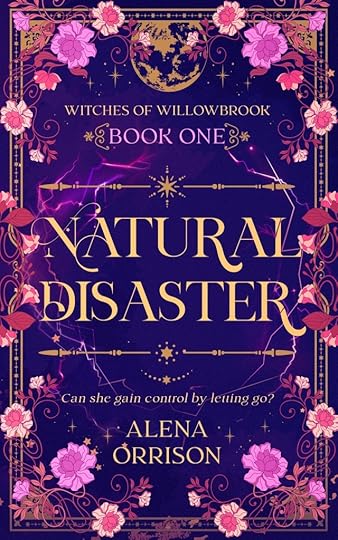
While I still love the original cover, this is more on point for genre. All proceeds from the original cover went to Ukraine refugees, directly through the cover designer who lives in a nearby asylum country.
In legacy, the OG ND cover:

And, a quick update on Suspended Matters: The releas...


January 26, 2025
Book Updates
2024 was wild. I did a lot: adventured, learned, played, worked. There were some challenges, some more difficult to overcome than others; some I’m still working through. But one thing I did figure out is that I am still putting my writing secondary to others’.
When I take on editing jobs, I focus on them and barely write. My goals and desires get pushed to the side. I’ve decided to change that for 2025 and moving forward.
Even though I wasn’t writing as much as I wanted to, I was doing m...
March 24, 2024
Allowing Spring to Carry Me
It’s been a while since I’ve made a blog post. Last summer, I was insanely focused on getting my book finished and published. That was a huge accomplishment! Since then, life has found a way to get in the way of my writing goals. Book 2 will be delayed, and that’s okay.
This last winter saw a host of family obligations and medical needs, so I basically disappeared from the rest of the world for a few months. Now, with the sunny weather starting to peek in, I feel like I can make plans again....
May 24, 2023
Hurry Up
In acknowledgment of May as Mental Health Awareness Month, I’d like to offer you some perspective on busyness.
I take my four-year-old granddaughter to the library program every week. A couple of weeks ago, she asked me if there were any books about hurrying. Naturally, I asked the children’s librarian. If you follow me on social media, you know I think librarians are magical creatures. What they don’t know, they can find out and they recommend books you might not have discovered otherwise. ...
April 12, 2023
Draft Complete – Natural Disaster
About two weeks ago, I finally finished the first draft of my novel, Natural Disaster. It’s been years in the making as I navigated becoming an editor, grandmother, and many other big life changes. My son sparked the idea for this book when he said something off-hand, and that moment appears in the book, albeit changed to fit my story.
Writing an entire novel is very different from writing articles, short stories, and even serial stories. It requires longer focus and going deeper into charac...
April 10, 2023
Draft Complete
About a month ago, I finally finished the first draft of my novel, Natural Disaster. It’s been years in the making as I navigated becoming an editor, grandmother, and many other big life changes. The idea was sparked when my son said something off-hand, and that moment does appear in the book albeit changed to fit my story.
Writing an entire novel is very different from writing articles, short stories, and even serial stories. It requires longer focus and going deeper into character psyches....
March 28, 2023
A Difficult Task – Natural Disaster
While writing my upcoming novel, Natural Disaster (releasing in October!), I’ve decided one of the most challenging things was writing a sibling relationship. I grew up as an only child, despite having three older sisters. They are all quite a bit older than me, so I never really had a close relationship with any of them.
My protagonist, Jessica, has an older brother. Evan is, in many ways, her best friend. They were always close as children but also had many moments of arguing and even disl...
March 14, 2023
Quick Update
I’m struggling to juggle all the things lately, and felt an update here was long past due.
I am almost booked for editing for the rest of this year. I have one or two slots and can maybe work in a smaller project, but that’s it. I will probably start booking for 2024 in the fall, so please reach out soon if you’re interested in any of my services.
On the writing front, I am almost finished with Natural Disaster. Then the real work begins with editing, beta readers, and more editing. And ...
January 23, 2023
How to Self-Edit
The term “self-editing” is a bit of a misnomer. You cannot effectively edit your own work the way a professional editor would. However, there are certain things you can do to improve your novel before sending it off to an editor. Editors and writers often refer to this as a “cleaner” final product.
The first step is to put your work away for a period of time. This allows you to come back to it with fresh eyes. I recommend at least two weeks, but longer is better. When you don’t see your writing for a while, you can look at it from a higher perspective and catch things you may have missed before. When you edit, be sure to read your work aloud. This helps to catch errors you may have missed when reading silently.
Next, look at your grammar and punctuation. This is an area where you can quickly improve your novel. Use a grammar checker if you need to, but pay attention to common mistakes that you make.
Finally, pay attention to your dialogue. Is it natural and realistic? Does it advance the plot? If not, cut it out or rework it until it does.
By following these steps, you will have a better chance of catching errors and improving your story or article before sending it off to an editor.
1) Read your novel out loud.When you’re editing, it’s essential to catch as many errors as possible. One way to do this is to read your writing out loud. This will help you catch errors you may have missed while reading in your head.
Reading aloud can help you catch grammar, punctuation, and spelling errors. You will also find any awkward phrases or sentences that make little sense. This ensures the piece is easy to read and flows well. Reading aloud can also help you get a sense of the pacing and flow of your novel.
An alternative to reading your work out loud yourself is to use a program that will read to you. The computer doesn’t give any inflection to the words and will only read what is there. Sometimes our minds can fill in missing words even when we are staring right at the sentence.
Giving your written piece a read-through out loud may help catch those pesky errors you were otherwise missing.
2) Print out your work and edit with a pen or pencil for a fresh perspective.There are many ways to edit, but one often-overlooked method is using a pen or pencil. This can be a great way to have a different view of your writing.
Printing out your manuscript can be tedious, but having a physical copy to edit is worth it. Using a pen to mark your thoughts and changes on the paper can also be freeing as it feels less permanent than editing digitally.
Take your time as you edit so that your final product is as clean as possible. Don’t hesitate to make significant changes if necessary. Remember, you’re the one in charge of your novel!
3) Use different colored highlighters or pens to mark various edits.If you’re editing your own work, using various colors to mark different edits is helpful. For example, you could use yellow for grammatical errors, green for spelling mistakes, and blue for errors in sentence structure. This will help you keep track of all the various edits needed and make it easier to fix them later on.
It’s also a good idea to list all the changes you need to make so you don’t forget anything. This way, you can go through your piece and make all the changes one by one. More on that below.
Editing your novel can feel intimidating. Using different colors to mark various edits makes the process a little easier.
4) Create a master list of all the edits you need to make and refer to it as you edit each section.One of the most helpful steps in self-editing your writing is to create a master list of all the edits you need to make. This list should be comprehensive, detailing everything from simple grammar and punctuation fixes to more significant issues like plot holes and inconsistencies. Referring to the list as you edit each section will help you stay on track and ensure that you’re making the necessary changes to create a clean final product.
Start by reading through your novel from start to finish, making a note of every issue, no matter how small, that you come across. It may be helpful to keep a running list on your computer or in a notebook so you can jot down your thoughts as you go. Once you’ve finished your first pass, go through your list and categorize the edits by type, such as “grammar,” “spelling,” “plot,” etc. This will help you focus your editing efforts and you can be confident nothing is missed. (Pro tip: I make a list when I’m editing for a client, so I know this works!)
Once you have your master list of edits, it’s time to go through your manuscript again, making changes as you go. For each edit on your list, take the time to fix the issue in the corresponding section of your novel. This methodical approach will keep you from getting bogged down or lost in the editing process and ultimately lead to a much cleaner final product.
5) Take a break after completing a round of edits.After you’ve worked on your writing for a while, it’s difficult to see it objectively. You may have gotten so used to your story and characters that you can’t see their flaws anymore. Taking another break will give you some distance from the material.
Setting your work aside for a week or even a month before looking at it again is helpful and gives you enough time to forget some details and approach the material with a more critical eye. It can be tempting to want to keep working non-stop, but give yourself time to step away and recharge.
Once you’ve taken a break, read through your story or article again and see if any areas need further attention. Having someone else read it and give you feedback is also a good idea. This can be a beta reader, a friend, or even a professional editor. Getting a critique from someone else can help you see your writing in a new light and identify any areas that need improvement. I usually put my work aside while beta readers are working on it and don’t look at it until they give their feedback.
6) Enlist the help of beta readers or a professional editor before self-publishing.When you finish writing a book, it can be tempting to jump immediately into self-publishing. However, before hitting that publish button, get feedback from beta readers or a professional editor.
Your novel is probably your baby, and you’ve spent a lot of time and energy crafting it into the story you want to tell. But that doesn’t mean it’s perfect, and chances are there are still some errors, plot holes, or inconsistencies you haven’t been able to see because you’re too close to the material. That’s where beta readers and editors come in.
Beta readers are typically other writers or avid readers who will read your book and provide feedback for free. This can be a great way to get initial general feedback on your story. If you don’t know any writers or readers who might help, there are often online communities or forums where you can find beta readers.
A professional editor will not only point out errors and inconsistencies but also helps you tighten up your story, suggest ways to improve pacing or characterization, and help you make your work the best it can be. If you’re planning to self-publish, it’s definitely worth investing in a professional editor.
Ultimately, it’s up to you to take the feedback you receive from beta readers or your professional editor and use it to improve your novel before self-publishing. But getting that outside perspective can be invaluable.
7) Use editing software like Grammarly or ProWritingAid.One of the best ways to catch errors and improve your writing is to use editing software like Grammarly or ProWritingAid. These programs can identify issues with grammar, spelling, and other aspects of your writing. They also provide suggestions on how to fix these issues.
Editing software is a great way to catch errors you might not notice. It can help you improve your writing by providing suggestions for fixing issues. If you’re unsure where to start, Grammarly and ProWritingAid are great options. But the software will not take the place of a human editor. I always recommend playing to your strengths. If you have a good grasp of grammar and storytelling, it might be sufficient to use a program to fine-tune your work. But if you struggle with sentence structure and revising, consider the cost of hiring an editor.
Although it may seem daunting, self-editing your novel can be a relatively straightforward process if you approach it methodically and with a critical eye. Following these tips ensures that your final product is clean, polished, and ready for publication.
January 22, 2023
Writing Prompt
What’s your dream job?
My dream job has always been to be an author. Being an editor is just the cream on top. I love doing both and I am so blessed to be working my dream! What is your dream job? Are you working towards it or have you given up? It’s never too late to start.