Elizabeth H. Cottrell's Blog
March 29, 2026
What I Didn’t Know
 Beyond etiquette to deep connection
NOTE FROM ELIZABETH: I am so honored to have this guest post from my friend Jill Strachan and am enormously grateful she was willing to share her experience of loss and healing after the sudden and unexpected death of her partner, Jane.
I am sometimes asked if it’s necessary to write to those who have sent us expressions of sympathy. While it’s not required, Jill discovered there were unexpected gifts in doing so. Her story speaks not only to the healing power of a note, but also to the myriad forms of connection we humans can cultivate and call on in the various circumstances of our lives.
It took me five months to finish writing upwards of 150 notes by hand. I’m not bragging but trying to explain why I did this and to describe the gift which arrived as a result of completing this task.
Jane, my vibrant partner of almost thirty years died unexpectedly five months ago. She was sixty-three and just shy of retiring and taking on new projects and travels. I found her when I returned from a morning of errands, our dog Freddy by her side. Just like that, my life transformed in every way.
Jane was the brightest of stars, she shone wherever she was planted. During her youth in South Dakota and years abroad in the US Peace Corps in Malawi and work in the Czech Republic, she soaked up her surroundings and the people she met. She became chief financial officer for several non-profits and did a stint at The Washington Post wanting to know more about the newspaper business world. She met Katherine Graham in the elevator one day and I am sure after the encounter, Ms. Graham knew she had met a special person. She was a gifted musician, and her glorious alto voice graced the choral groups she joined. Her joyous laugh resounded wherever she went, embracing its recipients. As my partner, she was devoted and we weaved together a loving, fun relationship which suited us both.
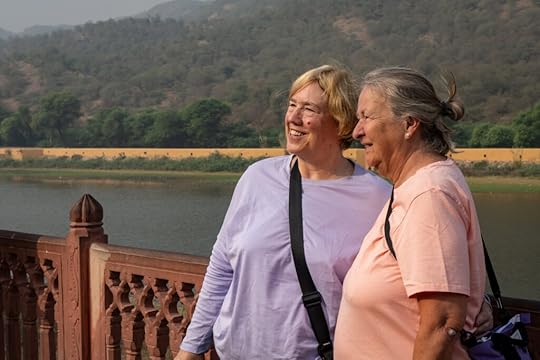 Jane Hoffman and Jill Strachan
Photo courtesy of Nancy Powell
Almost immediately after her death, condolences arrived in the form of flowers, phone calls, and emails. Then began a steady stream of sympathy cards and handwritten notes. People know what to do in this situation.
During my life, I have written letters, notes, long-winded emails to replace letters, and sympathy notes. If the person who died had a special place in my life, I tried to catch that connection with my words. But, not unusually, no one ever wrote me back. I understand the silence. Grief is profound and often takes charge, interfering with the rhythm of life and its regular duties.
It is not required that a response be issued for notes and gestures of condolence. Even so, when it came to Jane, I wanted to respond. I also needed to respond. I knew there was a deep well of sorrow at her departure which individuals shared with me. Hence, my tally of 150+ notes.
I began with people who had donated to the suggested memorial non-profit organization which Jane and I supported and where we had discovered abundant community. I used a postcard with a color picture of us on one side with words expressing gratitude. The other side provided space for a handwritten message and the recipient’s address. I would write anywhere from two sentences to five, trying to keep my handwriting legible, perhaps the most difficult part.
Writing these notes brought immense comfort. Describing Jane in differing ways, I could be funny and sincere in my portrayals, resulting in memories which could lead to a shared connection.
The gift for me was discovering I could also freely return friendship, love, and consolation to the person who had written to me. Composing these notes provided additional consolation as I chose words personal to the recipient.
I didn’t know this when I started writing. I know it now and I am swept away in the realization of the healing power carried by a few words.
About Jill Strachan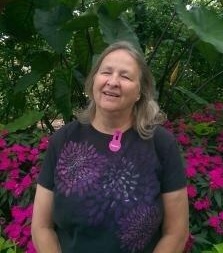
Jill P. Strachan left behind successful grant writing for the pleasures of creating nonfiction, traveling with her partner Jane, playing tennis, and walking her dog. Her career in arts and association management spanned 40 years. She holds a PhD in the History of Religion and sings in “Not What You Think,” an a cappella group offering songs of social justice with a side of humor.
Jill has authored two books of memoir:
Waterfalls, The Moon and Sensible Shoes: One Lesbian Life Boundaries Borders Crossings: One Lesbian Life 2.0You can find my review of each under its Amazon listing. These are affiliate links.


March 21, 2026
Spring Is Here: Renew Your Four Essential Connections
Yesterday, March 20, was the Spring Equinox—the first official day of spring in the Northern Hemisphere—when the sun crosses directly over the Earth’s equator, giving us nearly equal hours of daylight and darkness.
And with it comes the unmistakable imagery of the season:
Light after dark. Warmth after cold. Wakefulness after sleep.Sap flowing. Leaves greening. Flowers blooming. Birds nesting.Longer days. Shorter nights. Spring rain on warm earth.Life rising from the ground. Resurrection. Rebirth.These images echo through all four of the essential connections of the Heartspoken life. Here’s how spring can renew each one—along with links to earlier posts that explore these themes more deeply.
Connect with GodOur relationship with God has its own seasons. Right now, the church year is nearing the end of Lent—that reflective, penitential season—and moving toward the remembrance of Jesus’s death and the glorious celebration of His resurrection on Easter Day.
If you find yourself in the grip of a spiritual winter, take heart. Think of that tiny seed buried in the cold, dark ground. It doesn’t stay there. It pushes upward, breaks through, and bursts into light. Your spring is coming too.
Are You Freezing in the Midst of a Spiritual Winter?Nature Connects Us With GodConnect with SelfSpring is a perfect time to check in with yourself. There’s a reason the tradition of spring cleaning has endured for centuries: after a long winter of closed-up rooms, we crave a fresh start.
But don’t stop at the physical. Try a little spiritual spring cleaning too. What thoughts, grudges, or burdens have accumulated over the winter that no longer serve you? Toss them out. Breathe the fresh spring air and open yourself to beauty, hope, and inspiration.
Spring Cleaning Can Blast You Out of Winter’s Black HoleDecluttering Isn’t Just for Closets and InboxesConnect with OthersAs the weather warms and draws you outside, let it draw you back toward the people who make your life richer and more meaningful. Call someone today and make a plan to get together. Better yet, write a letter and mail it. There is no better season to reach out than one that’s all about new life and new beginnings.
We’re Stronger TogetherConnection Is Love in ActionConnect with NatureThis is the perfect time to reconnect with the natural world, because after weeks of dull dormancy, every single day brings visible change.
Pick a place—a deck chair outside your door, a daily walk to the mailbox, a nearby park bench—and pay attention. Watch the buds swelling into leaves and flowers. Notice the animal, bird, and insect activity. Listen for the sounds of the season: spring peepers cavorting in a nearby puddle, birdsong as they seek a mate, the first lawnmower of the year rumbling to life. Breathe in the fragrance. Even the rain smells different now.
My “View from the Bench” series — as it changes through the seasonsHave You Seen These Signs of Spring?Which of your four connections needs the most renewal this spring? I’d love to hear — leave a comment below.”
Step outside into the sunshine today, even if you still need a jacket.
Take a deep breath and pause to give thanks for being alive.
______________________
If reflections like these nourish your spirit, I’d love to stay connected. Join the Heartspoken community using the form below and receive inspiration for your four essential connections — delivered straight to your inbox.
February 18, 2026
Daily Lenten Haiku 2026
Haiku is an ancient Japanese form of poetry consisting of seventeen syllables in three lines of five, seven, and five. In a mysterious way, the strict limitation sometimes evokes stronger expression.
I was inspired in 2025 to write daily haiku after reading Emily P. Freeman’s haiku in her Lenten Collection for her Quiet Collection app. The practice was so meaningful that I have continued it this year.
Lent begins on Ash Wednesday and continues until Holy Saturday (the day before Easter). The total number of calendar days in that span is 46 days. However, there are six Sundays during Lent. Because each Sunday is considered a weekly celebration of the Resurrection—a “mini-Easter”—they are not included in the penitential 40-day count.
Ash WednesdayAnd so it begins
You have felt so distant, Lord.
Dare I beg you now?
I take a deep breath
It’s Lent. I will ask boldly:
Make your presence known.
Lent Calls
With so much upheaval in the world, I find myself entering the season of Lent already on my knees praying for so much that is entirely out of my control. I revisit and share this post—and one of my few attempts at poetry below—in early Lent each year in hopes that you, too, will find it a season to pause and turn inward. That still small voice of God’s Holy Spirit is waiting for us.
Lent as a church seasonLent begins with Ash Wednesday and ends with Easter. It consists of 40 weekdays, observed by Christians as a penitential and devotional preparation for Holy Week and Easter Sunday’s remembrance of the death and resurrection of Jesus Christ. It is also a liturgical commemoration of the 40 days Jesus spent in the desert before starting his public ministry.
Lent as a personal pilgrimageGrowing up in the Episcopal Church, it was traditional to give up something we enjoyed during Lent (e.g., chocolate or dessert or meat on Fridays). In recent years, though, I prefer to use the time to take on a new discipline: a book study, additional daily prayer time, a retreat. I write more often in my prayer journal so I can be intentional about my connection and conversation with God. I try hard to adopt the mindset of using whatever I take on—or give up—as a reminder to focus on God, not just as a self-improvement project. Even small changes to my daily routine can trigger a reminder of God and give me an opportunity, however brief, to commune with Him.
Lent is a time to slow down and step away from the hustle and bustle of daily life. According to Merriam-Webster, the word derives from Old English “lente” meaning springtime, but I wonder if it doesn’t also have the same roots as the French word “lent” which means “slow.” Many times in his life, Christ himself modeled for us the importance of seeking the slower pace he found in solitude. This intentional time for communion with God was essential to his ministry. It is surely essential for us too.
Lent has long moved me. I find my sensitivity to Spirit quickens at this time, primarily, I’m sure because I make the space for it. I write very little poetry, but in 2003, Lent inspired me to write Lent Calls, and I share it with you here. I wish I could say I have progressed spiritually from the tug of worldly demands I was feeling when I wrote it, but alas I still fall far short of where I’d like to be in that regard.
Below the poem is the beautifully illustrated rendition done by my incredibly talented friend Lynne Crumpacker. If there is sufficient interest, I will get it printed on quality paper, ready for framing. Please let me know using the contact form on this site’s Get In Touch Page if you want to be put on a no-obligation list to be notified if printing and pricing are decided.
Lent CallsLent calls to me again . . .To do what?Like Martha, I tend towards doingDoing is something I understand Chairing a committee Taking food to the sick Reading the Bible Lent calls to me again . . .He wants more of me than I’ve ever given More than Lenten study More than giving up dessert More than extra church services Lent calls to me again . . .He wants more of me and I’m frightened Frightened of losing control Frightened of letting go Frightened of what He might ask me to do if I really listened Lent calls to me again . . .I feel a yearning, a tugging towards something more Whispers of a love unimaginable Glimpses of a relationship unshakable Tastes of a water so clear and sweet that my thirst is slaked forever Lent calls to me again . . .A step is all I can manage, Lord A hand extended A head bowed A conscious placing of myself on your Potter’s wheel Lent calls to me again . . .Help me with the hard part, Lord Help me surrender Help me abandon myself to you Help me reconcile myself to you Lent calls to me again . . . Here I am, Lord Elizabeth Herbert Cottrell Heartspoken.com © 2003 “LENT CALLS” by Elizabeth H. Cottrell, illustrated by Lynne CrumpackerPin this:
January 29, 2026
Planning a Book Club Discussion of Heartspoken?

If your group is reading HEARTSPOKEN: How to Write Notes That Connect, Comfort, Encourage, and Inspire, I’ve put together a free reader’s guide to make your conversation easier—and more meaningful.
I’ve had the pleasure of joining several book clubs while they discussed the book, both in person and on Zoom. Those conversations have been thoughtful, lively, and deeply human. If you’d like me to join your group, just let me know through my contact form.
Designed for book clubs. Free to download:
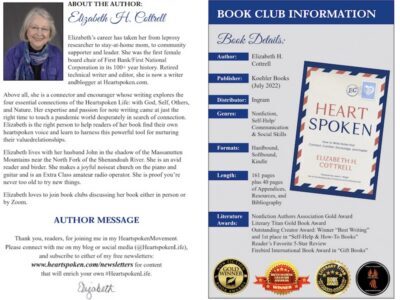 Download the Heartspoken Reader’s GuideInside the Free Reader’s Guide
Created with designer Peggy Easterly of Imag Grafx Design & Print Studio, this printable reader’s guide gives your group everything you need in one place:
A concise synopsisHighlights and key ideasAn author messageTestimonials from readersTen discussion questions that go beyond “Did you like it?”Print it double-sided, fold it into a booklet, and bring it to your next meeting—or share it with your members ahead of time.
Click the button below to download the Guide.
Download the Heartspoken Reader’s GuideJanuary 19, 2026
Recommended Stationery for Legacy Letters
 A practical guide on what to look for and what really matters
Legacy letters are written with a longer horizon in mind.
They are meant to be kept, reread, and discovered years from now by children, grandchildren, or others who want to understand what mattered to you.
When people ask what kind of stationery is best for this kind of writing, I offer this reminder:
The goal isn’t luxury.
It’s intention, writing comfort, and durability.
The right paper makes it easier to sit down, begin, and stay with the words. And it respects the fact that these letters may outlive us.
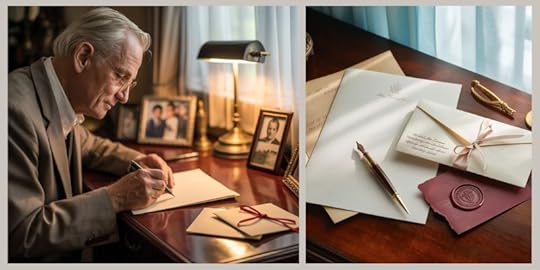
Below are several well-established stationery lines I often recommend for legacy letters. Each has a long-standing reputation, consistent quality, and options suitable for longer writing sessions—including lined paper for those who appreciate visual guidance. Prices vary widely.
Choosing PaperBefore focusing on brands, a few qualities matter more than anything else:
Paper that ages wellHeavier paper—especially with cotton content—tends to resist yellowing and brittleness.Writing comfort
A smooth surface reduces hand fatigue and makes longer letters more pleasant to write.Readability
Light ruling can be helpful for older writers or anyone who wants steadier spacing.A sense of care
Paper chosen for its quality and feel often encourages more thoughtful reflection.
Here’s a one-page summary guide to download and print
Choosing Paper for Legacy Letter – One-Page DownloadRecommended Stationery LinesCrane & Co. (United States)Crane & Co. has produced fine paper for generations and is known for its classic, understated style. Their stationery is widely regarded as suitable for long-term keeping. For more than a century, they have been the primary supplier of paper for:
U.S. currencyDiplomatic stationeryPresidential and White House paper goodsWhile the White House does not publish current procurement details, Crane’s role as a federal supplier and the look and feel of White House stationery strongly suggest continuity with this tradition.
What I like about it:100% cotton optionsSubstantial paper weightDignified appearance and quality feelBest forFormal legacy letters, milestone reflections, and letters meant to be preserved with family papers.
Clairefontaine Triomphe (France)Beloved by writers who value ease and flow, this paper is exceptionally smooth and comfortable for extended writing.
What I like about it:Excellent writing comfortAvailable in blank and lined formatsConsistent quality across retailersBest forLong narrative letters, family stories, and memoir-style writing.
Available through fine stationery retailers such as Goulet Pens, JetPens, and Atlas Stationers, as well as directly from Clairefontaine.
G. Lalo (France)G. Lalo paper has a refined, traditional feel and is often beautifully boxed. Writing on it feels deliberate and ceremonial.
What I like about it:Elegant laid finishesCoordinated paper and envelopesA strong sense of traditionBest forLetters written on meaningful dates or legacy letters intended as gifts.
Original Crown Mill (Belgium)Known for cotton paper and tissue-lined envelopes, Original Crown Mill offers classic materials without stiffness.
What I like about it:Cotton paper with a tactile feelLined envelope optionsThoughtful craftsmanshipBest forWriters who appreciate traditional correspondence materials and subtle structure.
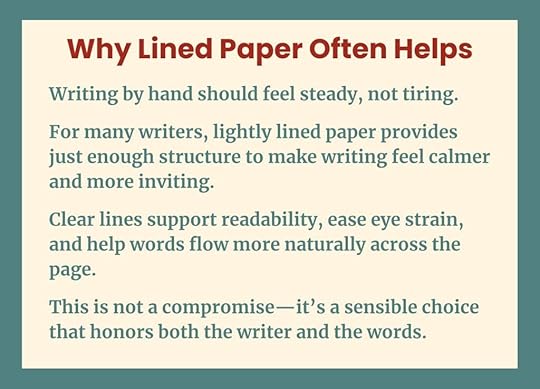
Lined Paper for Comfort and ReadabilityMany older writers—and anyone writing longer letters—find lined paper more comfortable. Light ruling offers visual guidance without dictating the pace or voice of the letter.
Most of the stationery lines listed above offer lined options, particularly Clairefontaine Triomphe and select Crane & Co. papers. These are especially well suited for legacy letters because the lines are clear but unobtrusive, and the paper remains pleasant to write on, even over longer sessions.
When choosing lined paper, look for:
Medium or wide line spacing rather than tightly ruled pagesLines that are visible but not darkAdequate margins to prevent crowdingIf you fall in love with an unlined paper, a removable lined guide sheet placed underneath can provide the same benefit.
 Accessible and Everyday Options
Not every legacy letter needs fine cotton paper.
Stores such as Paper Source and The Stationery Studio offer attractive lined and unlined papers at moderate prices, including optional personalization for those who want a name or return address quietly printed.
Office-supply and general retailers also carry simple lined writing paper suitable for practice drafts, group projects, or letters written more frequently. The key is choosing paper that feels pleasant to write on and sturdy enough to last.
A Note About EnvelopesIf possible, choose matching envelopes from the same line. When purchasing separately, look for:
Heavier paper that resists creasingLined interiors for privacySizes that allow minimal foldingAn envelope doesn’t need ornament—it simply needs to protect what matters.
A Final ThoughtThe most meaningful legacy letters are not written on “perfect” paper. They are written on paper that makes it easier to begin…and easier to continue.
If lined paper helps you stay focused, use it.
If cotton paper slows you just enough to choose your words carefully, that’s a nice feature.
Your descendants will remember the “voice” in your words far longer than the stationery.
But good stationery honors that voice.
January 4, 2026
Pine Woods Give Up Their Winter Secrets
 This article was originally accepted and published in the “Slice of Life” column of Elan Magazine on January 8, 2019. I bring it out each winter to remind everyone not to let cold weather keep you indoors.
Go to the winter woods: listen there, look, watch, and ‘the dead months’ will give you a subtler secret than any you have yet found in the forest.
~ William Sharp (writing as Fiona Macleod), Where the Forest Murmurs
The freezing temperature takes my breath away as I step outside for a winter walk up into our pine woods. The crunch of my boots in the snow is so loud I’m unaware, at first, of any other sound, but as I stop and lean against the rough bark of a Loblolly Pine, I hear much more.
The soughing wind has a voice all its own. Anyone who has grown up near pine trees remembers this sound with keen longing. It’s sometimes a soft murmuring, but it can become wild and menacing in high winds.
Though its needles are exquisitely adapted for most winter weather, I see scars on my tree where ice-laden branches have broken off in the past. High above, a squirrel scolds from a nest built in the crotch between two branches.
I notice some fur stuck to a broken piece of bark where a white-tailed deer has used the tree as a hide-scratcher. And yes, there’s a narrow deer trail leading off into the underbrush. On a nearby trunk, I see another raw place where a buck has rubbed its antlers, trying to scrape off the fuzzy coating. I wonder where the deer go when it’s dark and cold?
As I stay still, I notice the canopy is not quiet at all, but abuzz with bird flutter and chatter. I catch glimpses of a cardinal’s flashy crimson and the cerulean spark of a Blue Jay. The Downy and Red-bellied woodpeckers are good at camouflage, but their distinctive drumming gives them away. The tiny Black-Capped Chickadee chitters its alarm call.
The fresh snow is tailor-made for the winter sleuth. Scratches, markings, and footprints are all evidence of winter activity. There’s the distinctive print of a rabbit’s feet. I can see where the neighbor’s dog came through looking for something to chase. Unidentified tracks lead to little holes burrowed into my brush pile, the perfect hiding place for tiny, scurrying creatures. I wouldn’t dare poke my hand in any of them.
The cold has seeped through my boots, so I mosey inside for some hot chocolate. But now, when I look out the kitchen window towards the pine woods, I no longer see just trees bending in the wind. It’s a beautiful ecosystem filled with nature’s secrets, waiting to be discovered by those hearty enough to venture outside in the winter.
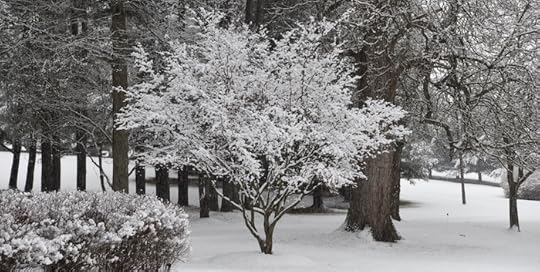 Riverwood yard in Virginia’s Shenandoah Valley. The edge of the pine woods begins to the left.
 Male cardinal in nine-bark shrub
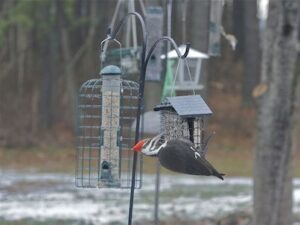 Pileated woodpecker on the suet
Don’t let the cold keep you from enjoying your connection with nature. Bundle up and get outside. What can you see that’s unique to winter where you live?
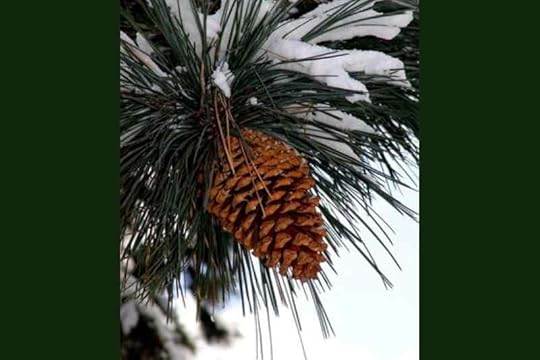
Photo credits: Pine cone: Galina Barskaya. Other photos: John A. Cottrell, Jr., M.D.Pin this:

November 5, 2025
Life Lessons From The Autumn Trees
 Note from Elizabeth
As autumn paints the landscape around us, I’m delighted to welcome my sister, Sarah C. Albritton, as this week’s guest at Heartspoken.com. Sarah is a gifted intuitive executive coach who has spent her career helping leaders uncover their deepest truth and lead from that authentic place.
In this lovely reflection, she captures two themes dear to Heartspoken: Connection with Nature and Connection with Self.
I hope you’ll pause with her message, perhaps under a canopy of changing leaves, and ask yourself the questions she poses at the end. I’d love to hear any insights you discover in the comments below.
The Chlorophyll HustleIn the quiet transformation of fall, trees reveal a truth we can carry into our own lives: sometimes we’re hiding the most beautiful parts of ourselves beneath what I call the “chlorophyll hustle”—going green to photosynthesize, produce, and blend in with every other tree on the block like we think the world demands. But those trees are full of vibrant reds, yellows, and oranges the whole time, just waiting beneath the mask. We’re like that too—full of colors that only come forward when we have the courage to let them.
There’s a reason we call someone “still green” when they’re new to a school, job, team, or community, regardless of age. They’re figuring out the chlorophyll hustle of that particular forest. And here’s where it gets interesting: no matter where we are in the overarching season of our life, we can be in different mini-seasons all at once. Golden and experienced in your career while simultaneously green and striving in a new relationship. Authentic voice dialed in at work but over-performing “green” when joining a new board. One part blazing color, another still learning which way the light comes through.
In our early seasons, focusing on growth and fitting in makes sense—doing the photosynthesis of life, achieving, stretching toward the sun. We love a green forest, don’t we? All seasons have their beauty. But as we settle into deeper self-knowing, we feel that tug to relax the green and let our true colors emerge. The most magnetic leaders I know stopped trying to lead like someone else and started leading like themselves—quirks, unconventional approaches, and all.
The invitation of AutumnEvery autumn is a fresh invitation from our tree elders to check in:
• Where am I still hustling green when I could be blazing gold?
• Where am I leading from someone else’s playbook instead of my own?
What lies beneath is often where the real beauty lives. Be green when you must, but don’t forget the true prize happens when you let your unique colors shine through.
About Sarah C. Albritton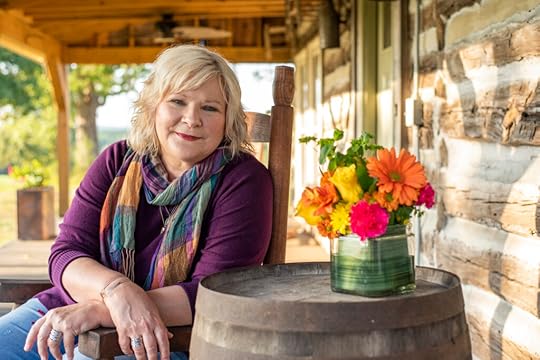
I’m Sarah Albritton—an intuitive truth-teller, elite leadership consultant, and a living invitation to the truest, boldest version of you. For over three decades, I’ve walked alongside senior leaders, teams, and visionaries worldwide, offering something few others can: an unwavering presence, loving truth, and a direct channel to the transformative wisdom within themselves.
Website: www.sarahcalbritton.com
Instagram and Linkedin: @sarahcalbritton
PHOTO CREDITS
Top photo: John A. Cottrell, Jr., M.D., Shenandoah Valley, Virginia.
Bottom photo created in Canva using stock photography
October 13, 2025
A Few Words That Made a Story—and a Connection
 Note from Elizabeth
When my favorite brother-in-law, Andy LaRowe, told me about his young granddaughter’s accomplishments as an author, I knew I had to share this with you.
_______________________________
Sometimes the most meaningful connections begin with the simplest words.
When nine-year-old Julia Arabelle Barton’s grandfather (“Pops”) told her that writing a story was easy—all she had to do was start with “Once upon a time” and end with “and they lived happily ever after”—he wasn’t offering a formal lesson in storytelling. He was offering something much more powerful: encouragement.
She took him at his word, and the results were amazing!
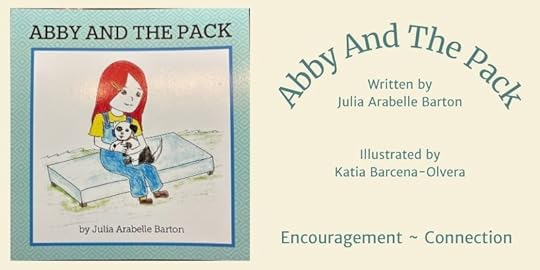
Julia’s story became Abby and the Pack, a sweet tale about a girl and her sheepdog who ran off into the woods. In her search for him, Abby finds three other dogs who need love and a home. Along the way, she made friends with a squirrel, a fox, and a bear. It’s a story filled with kindness, loyalty, and the joy of caring for others—values that clearly run in her family. Her proud grandfather had the story printed through Shutterfly, turning a young girl’s imagination into a keepsake book.
Encouragement can transformEncouragement, when spoken at the right moment, can change the way we see ourselves. It can turn hesitation into confidence, fear into creativity, and a passing thought into a published story. Julia’s grandfather didn’t just teach her how to begin a tale; he helped her believe she could write one.
Words of encouragement are a form of connection—heartspoken messages that tell others, “I see you. I believe in you.” They cost nothing but can mean everything. A teacher’s note, a friend’s kind comment, a parent’s proud smile—all can become the moment someone decides to take a chance, start a project, or share their gift with the world.
It makes me wonder how many stories, songs, and inventions have been born because someone spoke a few encouraging words at just the right time.
Heartspoken takeaway:Encouragement is one of the simplest yet most profound ways to connect. It doesn’t have to be elaborate or planned. Sometimes all it takes is a gentle nudge—like “Once upon a time”—to help someone discover what’s already inside them.
Stories like this remind us how connection begins—with listening, believing, and a few kind words.
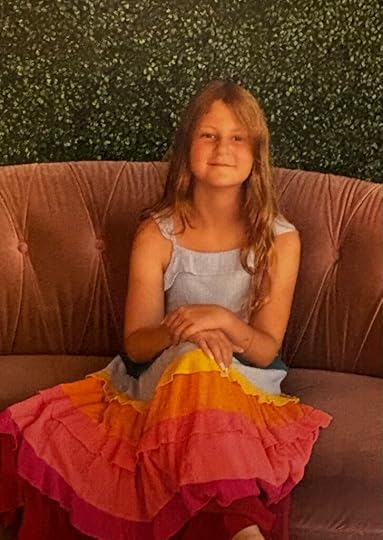
About the AuthorJulia Arabelle Barton was nine years old when she wrote this book in 2024. She lives in North Carolina. She loves animals (especially her dog Buzz Lightyear), storytelling, and spending time with her family. Abby and the Pack is her first book—and perhaps the first of many!
 About the Illustrator
Katia Barcena-Olvera was a sophomore at Salem College when she illustrated this book in 2024, working on a degree in Business and Technology. Her playful, heartwarming illustrations bring Abby’s story to life and perfectly capture the spirit of friendship and love that shines through every page.
_______________________________
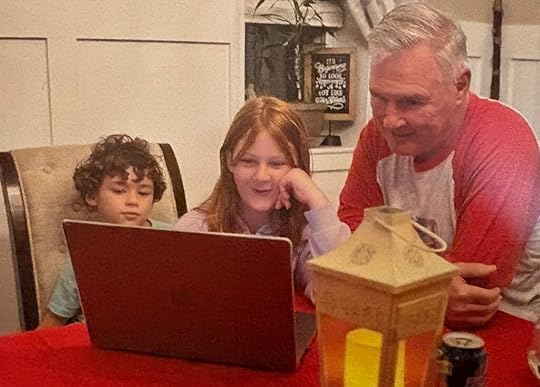
ABOVE: The author with her brother and “Pops”
October 1, 2025
Book Review: The Correspondent, by Virginia Evans
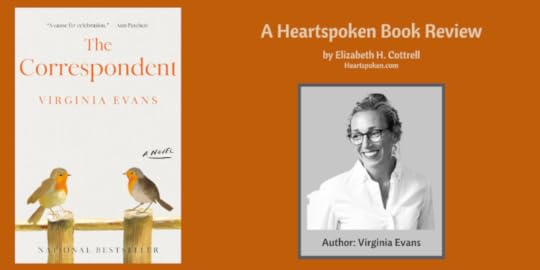
The Correspondent: A Novel
by Virginia Evans
Published 2025 by Crown
Imagine discovering a life not through scenes or dialogue, but through the letters a woman has written—to friends, to strangers, to herself. That’s the spell Virginia Evans weaves in The Correspondent.
Protagonist Sybil Van Antwerp has always turned to letters to understand her life and the world around her. Each morning, she dedicates time to writing letters and emails—to her brother, her closest friend, a university president, and even to authors like Joan Didion and Larry McMurtry, sharing her candid reactions to their books. There is also one mysterious recipient she often addresses, though those letters are never sent.
For years, Sybil’s many roles—daughter, mother, grandmother, wife, divorcée, lawyer—have given her life a sense of fullness and satisfaction. But threatening letters from someone in her past compel her to revisit a painful chapter in her life. Confronting these memories forces her to face the unsent letters, and she comes to see that forgiveness is the only way to move forward.
An epistolary novelThe Correspondent’s entire story unfolds through letters and emails—written by or received from—Sybil. It’s like opening her private mail and getting to know her and her correspondents intimately. I loved Sybil’s own take on her life of letter writing:
“Imagine, the letters one has sent out into the world, the letters received back in turn, are like the pieces of a magnificent puzzle… Isn’t there something wonderful in that, to think that a story of one’s life is preserved in some way, that this very letter may one day mean something, even if it is a very small thing, to someone?”
I marveled at the author’s ability to bring characters richly to life through their correspondence with Sybil. She avoids clichés, creating nuanced, multidimensional figures rather than the stock characters of formulaic fiction.
A few quibblesSome reviewers felt the chronological pieces of correspondence, the slow reveal, and the sheer number of correspondents made the book disjointed. I don’t share that criticism, but it helped me to keep a running list of characters and their relationship to Sybil. I read it on Kindle, and I imagine the Audible edition—with its 17 distinct voices—might appeal to some.
The author describes her own approach as adding pieces to a jigsaw puzzle, with the full picture only revealed near the end. The conclusion was both satisfying and true to the characters, and I felt well rewarded for my careful reading.
In The Correspondent, Evans gave me more than just a novel. She reminded me why I treasure the enduring power of letters: they hold our lives in fragments, and when pieced together, reveal a story that is both intimate and universal.
NOTE: This review was originally published in the November, 2025 issue of Mountain Courier
Order your copy today:
The Correspondent: A Novel
by Virginia Evans
Thank you for supporting my work through these links!
**********************
Photo credit: Post photo created by Elizabeth Cottrell using Canva and book cover image. Author photo and book cover photos taken from the book’s official Amazon listing.