Yoav Ilan's Blog: Science + Fiction
June 28, 2025
GALILEO VS. ECCLESIASTES
On my way to the whiteboard, I realized that everything is repeating. That I’m stuck in an ever-looping setting. I halted and slowly started putting the lid back on the marker.
“Jonathan, you were about to demonstrate the scalability of our architecture—are you with us?”
Michael and I made a quick eye contact, and for a moment I noticed he was sweating and that he felt this sale, very much like his sweat, was dripping away from his grip. All the faces around the table, all on the side of the prospective customer, started to perk up in anticipation. At last, something was breaking the endless afternoon boredom. Something that will speed up the passage of time toward 5 pm.
“Jon, are you alright …” Mike’s voice shivered slightly as he reached for the water pitcher. I think only I could tell, but I wasn’t sure if he was going to offer me a cup. He certainly could use one.
The Chief Something Officer, a large aging corporate buff whose name I didn’t get and who definitely was the big cheese in the room, took off his reading glasses and tried to stab me with his flimsy pink eyes. I ran my gaze around the table, glimpsing the minions. Pale characters, bleary-eyed, embalmed in their $300 middle-management suits. They were pulled out of their monotonous work-day. Not a bad deal for them. They get a two-hour pastries and coffee break while watching yet another software vendor dancing for them. They also get to throw questions at us during the show. The questions, like small marbles, will bounce on the floor while Michael the salesman and Jonathan the supporting engineer embark on a tango whose sole purpose is to avoid slipping. If we survive a few more meetings like this, an installation, a pilot, and probably a couple of golf games, Michael may be able to sign them on a big fat licensing deal.
And it happened before, time after time.
And it’s happening right now in a million conference rooms.
Right now, a million engineers are approaching whiteboards and talking in generalities about the technology they represent.
A million bored suits are asking them random questions.
A million aggressively groomed salesmen will remove imaginary crumbs from their sharply ironed shirts, will crack open a smile exposing two teeth more than necessary, and will phrase a diplomatic answer based on half-truths and fine-tuned bullshit.
A million engineers will drag themselves after a million salesmen who will invite a million decision makers to eat something, drink something, and promise something.
A thousand salesmen will have thousands of slender, ample-breasted escort girls visit the rooms of thousands of decision makers. Perhaps two thousand.
And it will also happen tomorrow and the day after that. A million actors will accurately repeat their lines. Only a few will try to color their day with a little bit of jazz—but one cannot really beat the classics.
One engineer had to stop. One engineer put the marker down on the table and walked toward the window. He opened it and leaned out, looking at the Philadelphia sidewalk, thirty-stories down. The suits stood up. Everything grew very quiet.
“Jon …? Uh, can you …”
I turned away from the window. They all stood around me, keeping a safe distance. The silence kept me calm. Big Cheese was the only one still sitting. Quickly I jumped toward the table and grabbed my laptop. With my other hand, I started to loosen up my tie.
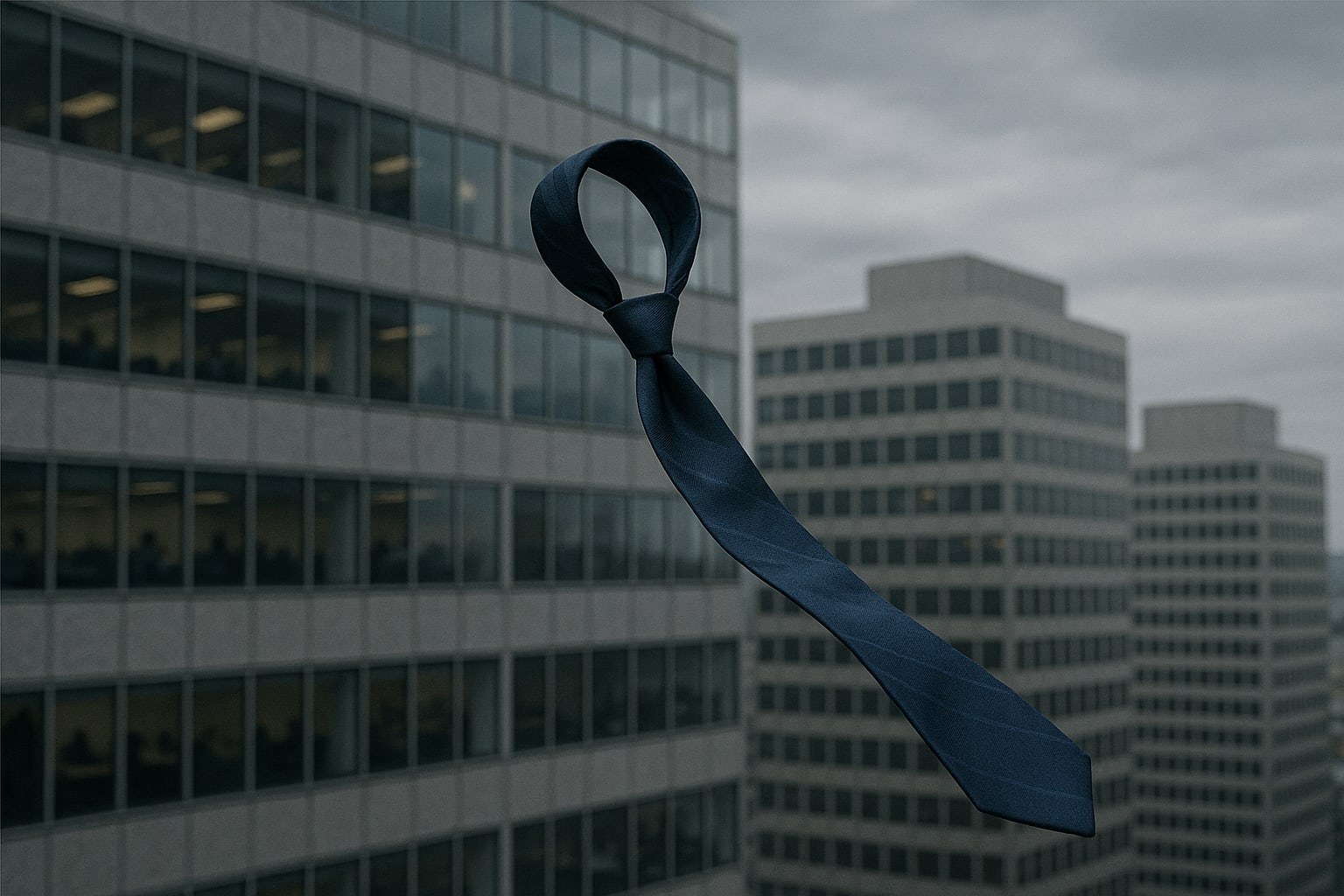
“Gentlemen, like Michael was saying, our system architecture is indeed the bleeding edge in grid computing. No other company can provide a technology that scales up as cost effectively,” I said, knotting my best tie around my laptop and returning to the window.
“However, like any other shitty product that exists in the market today, it’s not gravity-proof. It will not survive 32.2 feet per square second.”
My arm was full length out of the window, the laptop swinging at the end of the tie.
“What that means is that for every second that goes by, the speed of my falling computer will increase by 32.2 feet per second. The beauty here is that it doesn’t really matter if it’s my laptop, Michael’s phone, or even our competitor’s server. Gravity accelerates everything equally regardless of the positioning, brand, quality, or the cost of our fine product. Galileo is such a marketing buzzkill …”
Michael was not able to reach me before I let go. Trying to calculate its impact speed, I counted the seconds until my expensive hardware smashed into concrete. Its faint shattering barely cracked the silence.
The silence broke only once I was standing out in the hallway, pushing the elevator button. Big Cheese started to laugh out loud, and his entourage followed him with their weak, nervous chuckles. For some reason, his laugh rung in my ears even after I put a distance of several blocks between me and the building.


February 16, 2025
Benchmark: GPU vs. Fly

Here’s my Sunday morning thought experiment that I had to get out of my system: How does the modern advancement in AI stack up against nature? Recently, some doomsayers have been warning us that the singularity is around the corner. Can I put some numbers on this?
So, how do we benchmark machines against biological brains? Since I’m not going to set up a neuroscience and AI lab before lunch, the next best thing is to search the internet for existing experiments that are well-documented and follow the same general principles.
I chose reinforcement learning applied to a simple task: based on sensory input, take the correct path and receive a reward. With the aid of AI, I found two research papers that fit the bill.
1. Training Fruit Flies to find sugar while navigating a tubes structure – Rest Is Required to Learn an Appetitively-Reinforced Operant Task in Drosophila
2. Training AI agents how to fly in a simulated 3D space – LARGE BATCH SIMULATION FOR DEEP REINFORCEMENT LEARNING
Obviously, neither study was originally motivated by what I’m looking for; nevertheless, they contain the data I need. From both, I can extract a key metric: the time required for training. These fundamental data points are enough for a quick back-of-the-envelope calculation to estimate the energy required for these comparable tasks.
ResultsIt turns out that with the proper mix of training sessions and rest, it takes 2 to 3 days to train a fruit fly to take the correct turn and go down the tube with a sugary reward at the end. In contrast, a massive 64-GPU cluster requires 72 hours to train AI agents to recognize safe paths in 3D space.
So, practically the same time. Interesting. Energy analysis is pretty straight forward:
GPU:
Let’s use the spec for NVIDIA Tesla V100:
Maximum power consumption: 300W or 0.3 KW.
Daily consumption: 0.3 KW × 24 hours = 7.2 KWh.
64 of these bad boys: 64 × 7.2 KWh = 460.8 KWh
Running for 3 days: 3 × 460.8 KWh = 1,382.4 KWh
Fly:
Daily food consumption: 0.8 milligram sugar, or 0.0008 gram.
Sugar has 4 kcal per gram. Therefore 0.8 milligram => 0.0008 g *4 = 0.0032 kcal
Over the course of 3 days: 0.0032 kcal × 3 = 0.0096 kcal
Conversion to kWh:
1 kcal = 0.001162 kWh
0.0096 kcal × 0.001162 kWh/kcal = 0.0000111552 kWh
GPU’s energy / Fly’s energy = 1,382.4 / 0.0000111552 = 123,924,268.503
Simply put, GPU technology requires approximately 124 million times the energy needed to train a fly on similar tasks.
To visualize this, it's like comparing the distance from Earth to the Sun to the height of One World Trade Center.
This tells us that in order to scale meaningfully, our approach to computer hardware must radically change. We need to keep emulating nature. Harnessing the potential of biological brains remains in the realm of science fiction. The mentats from Dune may be the most well-known example. In Ex Machina, Ava has “wetware” in her skull. My favorite is Nightwings by Robert Silverberg—this novella is practically poetry.
April 1, 2024
The Cyril Report — 1002
Local date: April 1, 2024.
Location: NYC, Midtown East, Bauman Rare Books.
Maureen, the manager of this establishment, confuses resentment with the menacing notion caused by the extended exposure to my presence. That’s a typical human error. Humans… everything has to be mapped to their narrow spectrum of emotions. The universe is far richer and more complex, but this is something humanity would only realize (if they do) once they Puzzle Out.
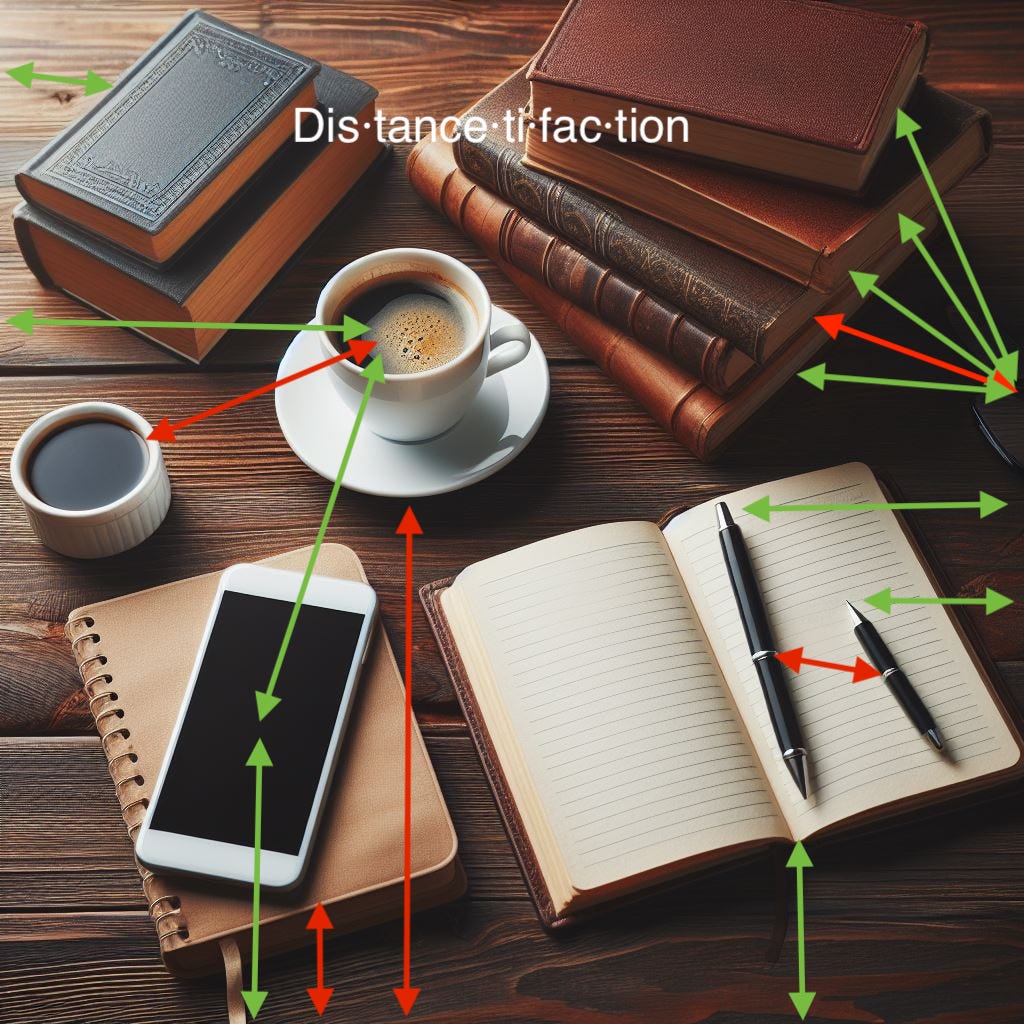
Ironically, the animosity between us is rooted in a misunderstanding that is based on this very human shortcoming. Maureen still loves to throw soft-bullying stabs at me every time she passes by and pretends to accidentally push items on my table a few inches away from Optimum.
‘Oh sorry ‘bout your Feng Shui Cyril! I hope your dissatisfaction won’t last long.’
It’s distancetification, you green-eyed simpleton ape.
It is my fault. I should have stuck to protocol and aim to blend in. Instead, I chose to educate a single human about a key sensation she never heard of. Back then she moved my perfectly salted coffee three inches to the left, making room for the book I was looking for. I attempted to explain. I even jotted the definition on a napkin:
Dis·tance·ti·fac·tionnoun:
Definition: the wholesome notion of satisfaction resulting from placing an object at the proper distance from oneself and other objects.
“Placing the coffee mug half an inch to the right from the middle of the table put me in perfect distantification.”
One would expect civilized gratitude, instead I earned the title ‘weirdo’ and a lifetime supply of whispers every time I visit. The whispers are usually exchanged with her fellow students who also major in English Literature. Young sapiens males normally seek the company of Maureen. They find an excuse to hang by her counter and ask for rare titles. Their stares and giggles don’t bother me. I’m immersed in my mission. Curiously enough, this month's focus is also influenced by a similar human misreading. Very much like a spoiled arrangement of wrongly-distanced items, pop culture missed the mark on some genres, depleting their potency. The best example is the concept of the multiverse. Once celebrated as one of the most intriguing sub-genres of science fiction, it has become a boring, predictable parlor trick. Perhaps of all of the science fiction blunders on this planet, this one is the most maddening. It feels like a bad case of missed opportunity to create the perfect distantification. Multiverse, parallel relatives, multi-dimensional travel, alternate time tracks—every which way the names morph—this literary device offers the most open-ended setup. Authors dabbling with multiverse concepts have virtually no bounds except for their imagination. Sadly, they are falling short. A glaring example is the comics industry, led by Marvel and DC, that created multiverse platforms, enabling the rehashing of the same characters and similar stories in perpetuity. Recently the MCU took the concept to the next level, abusing it to death. In a plausible multiverse there are endless possibilities, and thus infinite opportunities to tell new stories. Instead Marvel is using it to tell the same story with the same characters over and over again. It is also used to solve any continuity issues and plot loopholes. Greed is clearly being prioritized over creativity.
While the abuse of the multiverse concept reaches new lows, there are still glimmers of hope in modern creations, such as Rick and Morty. The writers of the show boldly push the boundaries of infinite realities and possibilities, leading to thought-provoking concepts. Although written as a comedy, these ideas are imaginative and on par with high-quality science fiction. I have marked three novels that handle this fascinating area as it deserves. Each one does so by taking a completely different approach, proving once again that striving for originality pays off.
The Chronicles of Amber, Roger ZelaznyThis uniquely original work by Roger Zelazny was first published in 1970 still delivers a fresh original take on parallel worlds, that is organically weaved with human motivations and struggles throughout the plot. It was easy for me to feel an immediate affinity to the protagonist, Corwin, since like me he is not human, but then again he is human as they come. Corwin, Prince of Amber is very flawed and power-hungry, driven by the fierce competition with his siblings, over the control of Amber, the one real city. Every other reality is a projection or some aspect of Amber. The proper term used by Amberians is Shadows of Amber. Corwin is a charismatic storyteller, it’s hard not to get addicted to his voice from the first instance when we meet him waking up in a sketchy private clinic in New York, suffering from amnesia, and throughout his epic journey. Corwin’s brothers and sisters are as cunning and driven as he is, each in their own way. Their family relationships have evolved over hundreds of years to a complex balance of power. Maybe the best quote that describes these relationships is a comment Corwin makes about someone (from The Guns of Avalon, the second book): "I trusted him like a brother, that is to say, not at all."
Perhaps the element that keeps The Chronicles of Amber so relevant is the genius framework Zelazny created, one that describes the multiverse and its infinite realities as Shadows cast by Amber. This framework makes the reader a part of it too, as yet another Shadow. It is somewhat similar to the effect in The Neverending Story, in which the reader is pulled into the epic and becomes one of its characters. Now, more than fifty years after its debut, The Chronicles of Amber is still entertaining and gripping. We the readers are just Shadows reading about the original that casts us. That is what makes the stories of Amber timeless and relevant for every planet.
Picoverse, Robert MetzgerThe novel approaches multiverses from a hard science fiction perspective. The narrative establishes a foundation by presenting fictional theoretical physics in a manner that seems plausible to the lay reader. Metzger does a commendable job of maintaining the consistency of this fictional science, ensuring a cohesive story and a highly enjoyable reading experience. In Picoverse, universes are manufactured—initially by accident, then deliberately, and ultimately uncontrollably.
I must admit that the reason this book resonates so well with me might be the fact that I’m a visitor to this world, assigned to assess it. Similarly some of the characters in Picoverse are also masquerading as humans, aiming to blend in the local society while pursuing a broader agenda. The multiverse framework in Picoverse is hierarchical. A universe is being cloned from and within a bigger universe, all way down and all the way up.
Transcending up and down that ladder is done by interesting characters, whose motivations and agenda are driven by their particular position in the multiverse ‘totem poll’. This topology is the perfect setup for an exciting adventure, and Mr. Metzger is taking full advantage of. Picoverse is an uplifting page turner. Well, for humans, it may feel somewhat alarming. But then again they will most likely brush off the concept as nothing more than a pure work of fiction. Well, Mr. Metzger, no the multiverse doesn’t work like that, but please keep pushing your creativity, you are getting closer.
Dark Matter, Blake CrouchFirst, let’s kick the elephant out of the room: the science behind Dark Matter is based on the popular misconception of the observer in quantum mechanics. The story surfs the waves of this mistake and the fallacious role of consciousness in physical outcomes. However this doesn't take anything from the novel. Dark Matter is not a physics textbook, it’s a science fiction novel. As such, its science doesn’t need to be real; it must be consistent. And consistent it is—Crouch masterfully weaves a narrative that adheres to his science and lets the reader buy into his framework. This enables you to focus your attention on the human story and moral dilemmas. Dark Matter dramatizes the many-worlds interpretation of quantum mechanics, which posits that every decision splits the universe, allowing every possible outcome to exist in its own parallel reality. The plot is propelled by a device that enables the characters to traverse the infinite branches of reality. Crouch cleverly centers on one protagonist—Jason Dessen, a Chicagoan and washed-out scientist. Jason is torn from his world and loved ones and thrust into another version of Chicago where he is successful and famous, but his family doesn’t exist. Getting back home becomes an intense odyssey, during which Jason must navigate the multiversal funhouse mirrors of different Chicagos in an impossible struggle to return. In a multiverse where every decision branches out into reality, Jason’s journey confronts him with regrets, what-ifs, and the strangest versions of everything he holds dear. It’s a well known fact—though not on Earth—that the many-worlds interpretation is false. However, this kind of thought experiment will help humans Puzzle Out the correct interpretation.
I plugged these three books into our cultural neural matrix (conveniently disguised as my smartphone). Now it is calibrated and will effectively identify any fresh multiverse concepts that may pop out in literature, no matter how many times Maureen nudges my ‘phone’ away from Optimum.
Here are the links to the books Cyril reported on:
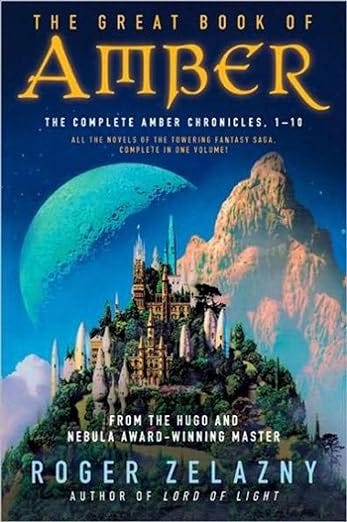 The Amber Chronicles, Roger Zelazny
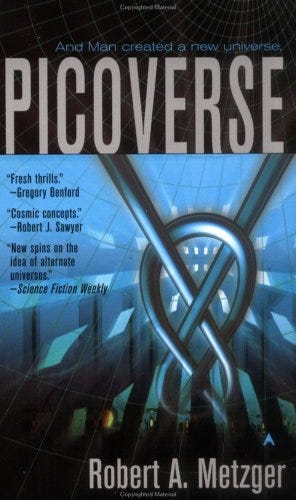 Picoverse, Robert A. Metzger
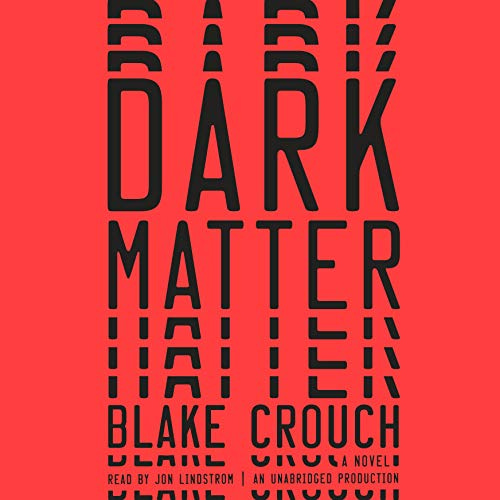 Dark Matter, Blake Crouch
From Yoav Ilan:
 The Path of Most Resistance
The Path of Most Resistance and Other Stories is a collection of short science fiction stories, ranging across wide spectrum of sub-genres and setups — From Silicon Valley to the far reaches of space. It’s available in several formats including audio, narrated by Ray Porter.
February 29, 2024
The Cyril Report
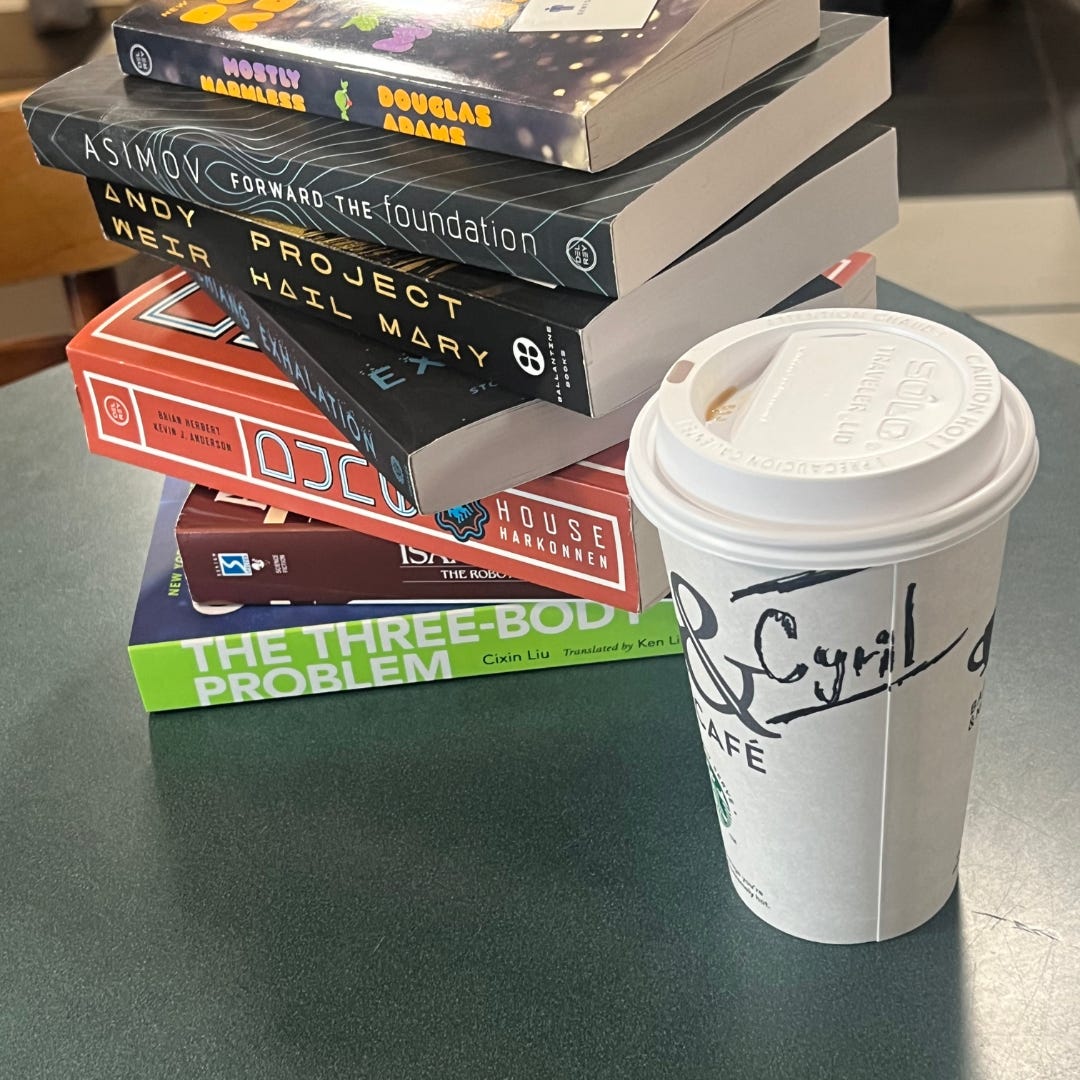
Local date: February 29, 2024.
Location: NYC, Union Square, Barnes & Noble
My setup: a shaky small one-legged table. There is a pile of books I gathered, covering about half of its surface. Next to them, there is a paper cup with ‘Cyril’ written on it. ‘Cyril’, of course, is for the benefit of the barista; she won’t be able to pronounce the rest of the syllables in my name, two of which are beyond the frequencies her human ear can pick up. Earth, for the most part, is addicted to coffee, a beverage I find tolerable if supplemented with at least 3 teaspoons of salt. The convenient part is that when I tear these useful paper sachets and pour the salt into my drink, it looks exactly like someone who adds sugar — a perfectly normal human behavior.
Oh, humanity. They almost get it right, like their coffee, and then they lose their grip. They stumble upon the right path and almost Puzzle Out, just to get derailed from it at the last minute and end up in a civilization-grade impasse. From day one in this assignment, it seems like sapiens are drifting away from getting their science fiction right. Like most civilizations, they got off to a good start: beginning with myths to explain what they don’t understand. Then, right on cue, came their industrial revolution that ushered science into pop culture and literature. Enter the Golden Age of Science Fiction, which was followed by outstanding new waves in the 60s and 70s. Even a few decades after these, the momentum carried on nicely—easing into the 2000s—just to end up at… well, now. Not too long ago, in order to get my project on the right track, I surveyed a handful of young humans I recruited at Starbucks. In exchange for picking up the tab of their vile sugared morning drink, they had to sit with me for a few minutes and answer a single question: What is science fiction? Fair trade. For them, that is—they actually like to drink that.
If only there were a proper word in English (the prominent language over here) that describes the level of frustrating ignorance that was manifested in the answers I was given. I would use such a word to express my dismay to my recruits. Instead, I follow protocol and keep quiet. The best example was delivered by a scrawny young man who used a tone way too confident for his frame: ‘In Sci-Fi, gadgets and futuristic tech provide the characters with superpowers, abilities, and stuff. In Fantasy, it’s done with magic. Both are dope.’
My booming silence made him spill something called latte on his shirt and dash out. In fairness, the silence only boosted the usual effect my eyebrows have when a sapiens gazes at them for too long, realizing that there are indeed only two of them, although it didn’t seem so just a second ago.
I don’t blame the young ape, nor his generation. By no fault of their own, they were born into a cultural reality that is inflated with low-tier superheroes, space operas that lack any understanding of space, and endless fantasy franchises that feel like the lame clones of each other. They have no clue that their storytelling has regressed back to its pulp-magazine stage, and in some cases, even all the way back to ancient mythologies. Can anyone expect them to know that science fiction is not just a genre but the very cultural vehicle that upjets civilizations until they Puzzle Out? How can they discover the effect of Imagination Innovation Resonance that inspires a generation of thinkers and doers to create technologies that elevate their world, getting them closer to their childhood tales? They make it a little more science and a little less fiction. This forces a new generation of writers to push themselves further and imagine a world even more fantastic, which will inspire yet a new wave of innovators. And so it keeps resonating until the civilization is Puzzled Out.
I have to dig deeper into various Earth cultures to determine if they can still get back on the path that will lift them up, that will make them puzzle out the universe. If indeed Puzzling Out is still a valid possibility, then there are repercussions, but this is not my department.
On a more positive note, I think I’m onto something. This has been my focus this last month: short stories, what happened to them? They got diluted and became a rare breed in the genre. This may be explained by the Sci-Fi economy on this planet. At the beginning, science fiction writers were motivated to write short stories. That was a good way to catch a break; you submit your story to a magazine. If it was picked up, this could be the stepping stone for a Sci-Fi writing career. Today, on the other hand, with the overwhelming abundance of content, new writers are driven in the opposite direction: write a series. Invest in a good concept, comprehensive setup, and produce your first novel. So, now your foot in the door is not a short story but a fully developed book, introducing a whole new world and ending with several loose ends and a cliffhanger. The lucky authors whose debut novel gets some attention can leverage it and keep writing sequels, creating a series. The economy of this is favorable; every sequel utilizes the initial investment in world-building, requiring less innovation and smaller mental labor of creating new concepts. These days, new authors are inspired by the likes of Harry Potter, The Hunger Games, and the Bobiverse. Gone are the days that an editor would invite you to contribute to an anthology, a commitment that would stimulate your creativity and drive you to push the boundaries of your imagination.
The saddest aspect of this is that sometimes a well-crafted short story can carry greater value to the reader than a book or even a series. Not all short stories, of course, but those that were able to introduce a novel concept and weave it with compelling narrative and good storytelling. When done just right, such a story will keep evolving in your mind longer than a book and longer after you finish reading it. Did humanity lose this type of mental gift? This is key for Puzzling Out. I have to be on the lookout, scanning new releases while seeking the right pattern. To help identify this pattern, I gathered 7 short stories that form the baseline for the signals I seek:
Surface Tension, James BlishBlish did not come up with the concept but was the one to coin the term Pantropy, which is a fresh approach to space colonization: instead of terraforming alien planets to support human life, humans are modified by genetic engineering to fit any planet. Surface Tension tells the story of a stranded crew of an Earth ship that was forced to create a new generation of microscopic aquatic humanoids, their only chance of passing on their genes. The new generations of these micro-humans, while oblivious to their origin, possess all of the powerful traits of sapiens, like curiosity and the drive for exploration. They embark on a fantastic discovery mission to find out what lies beyond their world. The story makes the readers to rethink the causality of humanity's origin and leave them with an impulse to Puzzle Out the universe. Dear Mr. Blish, you were getting too close for comfort.
What Can You Say About Chocolate Covered Manhole Covers? Larry NivenThis is a story about a group of exceptionally smart individuals who are going through a set of intelligence tests. They do so casually; however, the exercise leads them toward an unexpected turn. In a way, this is a story about Puzzling Out. Of course, this is not exactly how our Puzzling Out works, but this is the direction some sapiens should consider. The stakes are high.
Divine Madness, Roger ZelaznyThis piece is a potent brain snack about time manipulation. It is delivered through a powerful tale of sorrow and regret. After reading Divine Madness sapiens tend to reflect on their life choices and the turning points in their journey that diverted them.
The Little Black Bag, Cyril M. KornbluthThere are several concepts packed into this gem: time travel, consequences of natural selection on modern humans, and the effects of advanced technology where it should not exist. Sounds crowded, but remarkably, it all ties together neatly into a cohesive tale of human greed and benevolence flying at each other’s face when 'too soon' becomes 'too much.' Humanity should take note of this one. I will be monitoring.
Not Final! Isaac AsimovThe setup for this short is the looming threat from a dangerous alien race (alien to humans). The story is a clear demonstration of the not-too-obvious relationship between theoretical science and practical engineering. The solution concludes Not Final! with a punch that will inspire all scientists and engineers to push themselves beyond what they perceive is possible. I’ll be watching closely to see if more stories like this start spawning at some point, as this could introduce a tipping point in humanity’s journey.
What’s Expected of Us, Ted ChiangThis is a delightful thought experiment on free will. While the device described in What’s Expected of Us does not address the implications of quantum mechanics and is opinionated about cause and effect, the whole narrative works nicely and will resonate in your mind for a while. Also in the minds of humans.
The Egg, Andy WeirThis piece, less than 1,000 words, is one of the best examples of the awesome power of short stories. After five minutes, the reader will ponder the meaning of life, the meaning of death, god, and the universe. Humanity will be seen in a whole new light. The strongest signal for the significance of The Egg is its popularity. It has been translated into 30 languages and has had several adaptations. I’m on the lookout for similar signals.
Our system is now calibrated for this pattern and will alert me when similar signals are detected in new literature anywhere on the planet. My focus for the following month is on a few profound science fiction novels. I will report my findings here at the same time.
Here links to the books Cyril mentioned, most of them are in the public domain, available for free:
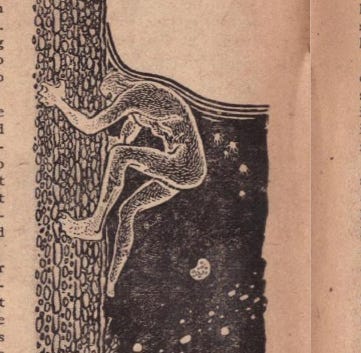 Surface Tension, James Blish. This story is available in the public domain, as part of the archived Galaxy Science Fiction Magazine. You can get it for free here (read online or download a PDF). Blush’s collection of stories about Pantroy The Seedling Stars is available on Amazon marketplace.
 What Can You Say About Chocolate Covered Manhole Covers? Larry Niven. The story is available in more than one anthologies by Larry Niven, that includes many more great short stories, like in N-Space and All the Myriad Ways.
 Divine Madness, Roger Zelazny. It’s available for free at the Jan 2018 issue of Lightspeed Magazine. You can get it in more than one collection from Zelazny, such as Power & Light.
 The Little Black Bag, Cyril M. Kornbluth. The story is in the public domain. One of the good places to read it for free on episode 429 of Escape Pod (also in audio!). This and more from Kornbluth are available at The Best of C. M. Kornbluth.
 Not Final! Isaac AsimovNot Final! Is available for free on the archived Astounding Magazine. It is also included in this great anthology by Arthur C. Clarke Time Probe.
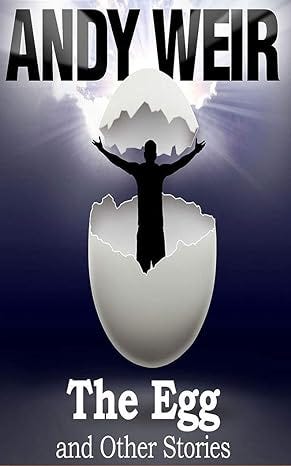 The Egg, Andy Weir. The Egg was originally published on Andy Weir’s website GALACTANET and it’s available there for free. It’s also available on Audible in the collection The Egg and Other Stories.
From Yoav Ilan:
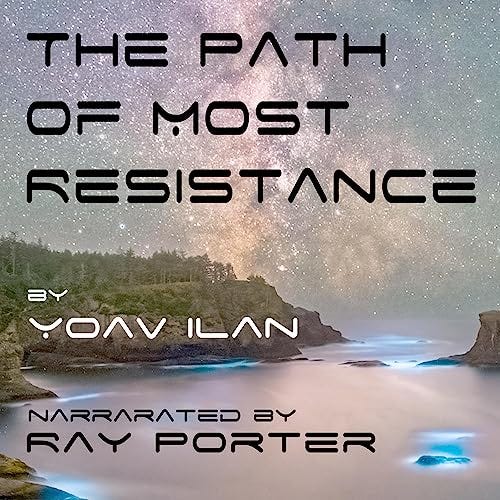
The Path of Most Resistance and Other Stories is a collection of short science fiction stories, ranging across wide spectrum of sub-genres and setups — From Silicon Valley to the far reaches of space. It’s available in several formats including audio, narrated by Ray Porter.
From other authors (mostly freebies):Free Sci-Fi & Space Opera Spring 2024
Thanks for reading Sience + Fiction! Subscribe for free to receive new posts and support my work.