Kenneth Maher's Blog
July 27, 2023
Decoding Deception: Putin's Influence on Biden's Ukraine Policy
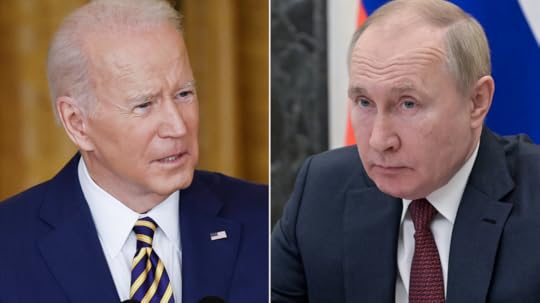
International politics can often feel like a captivating drama, filled with plot twists and devious strategies. In the latest episode, we witness a game of deception orchestrated by Russian President Vladimir Putin, aimed at outmaneuvering President Joe Biden and deterring the United States from engaging directly against Russia in Ukraine. Deception has long been a weapon of choice in the game of international politics. Throughout history, leaders and strategists have employed various tactics to mislead their adversaries, altering their decisions and ultimately shaping the course of events.
First, we can look back at one of the most successful deception operations during World War II. Operation Fortitude, executed by the Allies in the lead-up to the Normandy landings, serves as a prime example. The goal was to convince Adolf Hitler and the German High Command that the main Allied invasion would occur at Calais, not Normandy. The Allies created an elaborate ruse, including a fictitious army led by General George S. Patton, deceptive radio traffic, fabricated orders, and even dummy equipment to give the impression of massing forces. The campaign aimed to sow confusion and convince Hitler that any potential invasion of Normandy was a diversionary tactic. It successfully diverted German forces and played a crucial role in ensuring the success of the D-Day landings on June 6, 1944.
Fast forward to the present, and claims of a similar deception campaign orchestrated by Vladimir Putin's Russia have emerged—the objective: to dissuade President Joe Biden from significantly bolstering support for Ukraine. The former KGB officer has been utilizing the fear factor associated with nuclear weapons to create uncertainty and unease. By effectively rattling his nuclear saber, Putin aims to dissuade Biden from taking more forceful actions to support Ukraine.
Biden's belief in Putin's deception campaign, particularly the fear of Russia's potential use of nuclear weapons, has seemingly influenced the hesitancy of both the United States and NATO in providing significant military support to Ukraine. The specter of nuclear conflict creates a precarious situation that decision-makers are reluctant to escalate. However, this hesitancy favors Russia, allowing them to maintain the upper hand in the conflict. The success of Putin's deception campaign can already be seen as hindering Ukraine's ability to resist Russian aggression. Biden’s gradual approach to supplying weapons and training to Ukraine’s military has enabled Russia to maintain control over regions it seized in Donbas and Crimea.
The lack of robust support from the United States and NATO may weaken Ukraine's position, emboldening Russia to further assert its influence in the region. This author argues that the US and its NATO partners should be much more aggressive in aiding Ukraine and be bold enough to call Putin’s nuclear bluff. The current stalemate on the ground can be broken by leveling the playing field. Biden and the leaders of the other NATO countries should provide air support, both close air and fighter jets. Given the time to train and get Ukraine pilots in the battle, the US and NATO allies must directly participate against Russian forces. Putin must be made to understand that using a nuclear weapon would trigger an overwhelming response from the West against Russia. As the failed Prigozhin mutiny demonstrated, Putin would likely back down if faced with a credible direct threat. While Biden continues to play Putin’s deception game, the war will drag on with more and more lives lost. As Putin believes, the result will be a faltering of Western support for Ukraine, thereby handing Putin victory.
Kenneth Maher earned an M.A. in Russian Area Studies and served as a U.S. Army military intelligence officer. He is also the author of "Wind of Change: An American Journey in Post-Soviet Russia." To learn more, follow Kenneth's blog at www.kennethmaherauthorbooks.com.


June 2, 2023
The Missing Voices: Contemporary Russian Literature and the Shadows of the Past
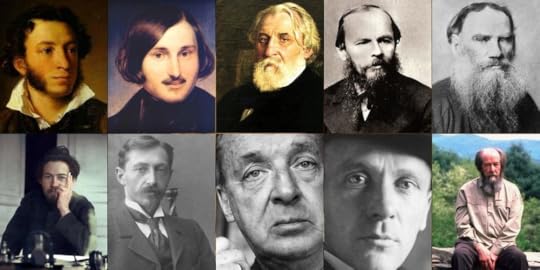
Russian literature has a rich and storied history, producing some of the greatest literary works that continue to captivate readers around the world. From the luminaries of the Tsarist and Soviet periods such as Tolstoy, Dostoyevsky, Pushkin, and Solzhenitsyn, Russian literature has often served as a vehicle for political opposition and social commentary. However, when examining the contemporary literary landscape of Russia, it becomes apparent that there is a dearth of great writers comparable to those of the past. This raises questions about the influence of the Putin era, the reluctance of modern Russian writers to produce critical literature, and the impact of historical repression on literary creativity.
Throughout Russia's history, literature has played a crucial role in reflecting and challenging the prevailing political and social order. In the Tsarist era, writers like Pushkin and Tolstoy used their works to critique the autocratic regime, shed light on societal inequalities, and advocate for social change. Similarly, during the Soviet period, authors such as Solzhenitsyn and Pasternak defied censorship and used their writing to expose the flaws and injustices of the communist regime. The power of literature to inspire and mobilize the masses cannot be overstated, and its influence on shaping public opinion and political discourse has been profound.
The repressive regimes that Russia has endured throughout its history undoubtedly had an impact on the emergence of great writers. The Tsarist autocracy, marked by censorship and strict control over intellectual dissent, fueled a sense of rebellion among artists and intellectuals. The Soviet period, characterized by state-sanctioned ideology and censorship, gave rise to a breed of writers who were willing to challenge the regime at great personal risk.
In contrast, the Putin era has witnessed a shift in the dynamics of literary expression. The Putin regime has proven to be effective at repressing dissent and stifling opposition. The consolidation of power, control over media outlets, and the suppression of independent voices have created a challenging environment for writers. Unlike the Tsarist and Soviet governments, Putin's administration has skillfully utilized a combination of legal mechanisms, state-controlled media, and targeted intimidation to maintain control and silence dissent. Despite the increase in censorship and restrictions on freedom of speech, the emergence of influential writers critical of the regime has been limited. This raises the question of why modern Russian writers seem to be more reluctant to produce literature that openly challenges the authorities.
Fear undoubtedly plays a significant role in the apparent lack of critical voices in contemporary Russian literature. The tightening grip of the state on media and artistic expression has created an atmosphere of self-censorship and caution among writers. The fear of repercussions, both personal and professional, can stifle creativity and discourage authors from delving into sensitive political and social issues. The potential consequences, such as loss of publishing opportunities, imprisonment, or exile, may outweigh the desire to challenge the status quo.
The influence of money in the Russian publishing industry is another factor that may contribute to the absence of prominent critical voices. Similar to other market-driven societies, commercial success often takes precedence over artistic integrity. Publishers may shy away from works that could potentially jeopardize their relationships with the authorities or disrupt their access to lucrative markets. This commercialization of literature may be discouraging authors from taking risks and addressing sensitive topics that might not align with popular or government-approved narratives.
May 10, 2023
Lehane's New Release Captures the Zeitgeist of '70s Boston
So, I just finished reading "Small Mercies" by Dennis Lehane, and, although not the author’s best work, I have to say, the story is engaging and instructional. This book is a gripping and emotional journey that kept me interested from start to finish.
The story follows several families living in the working-class neighborhood of South Boston during the tumultuous period in 1974 concerning the forced busing of high school students between black and white neighborhoods. A murder of a young black teen by suspected white kids is the centerpiece of the plot, which Lehane uses to highlight the many challenges faced by historical and cultural biases and prejudices. The characters are all flawed and human, making them easy to relate to and root for throughout the book. As a native of South Boston, whose parents left the neighborhood as a result of the busing, I had a personal connection to the story and could see certain people I grew up with in the characters Lehane describes.
LeHane's writing is top-notch, and he does an excellent job of creating a vivid and gritty portrayal of life in life in 1970s South Boston. The dialogue is sharp and realistic, and the pacing is just right, keeping the story moving at a steady clip without ever feeling rushed.
What sets "Small Mercies" apart, though, is the story's emotional depth. LeHane tackles some heavy themes, including racism, hopelessness, addiction, loss, and redemption, and he does so with a sensitivity and grace that is truly remarkable. The characters' struggles feel genuine and heartbreaking, and the moments of hope and triumph are all the more potent for it.
Overall, I would highly recommend "Small Mercies" to anyone looking for a powerful and engaging read. LeHane is a master storyteller, and this book is a testament to his skill and talent. So, go ahead and give it a read - you won't be disappointed!

April 21, 2023
Putin's Perfected Police State
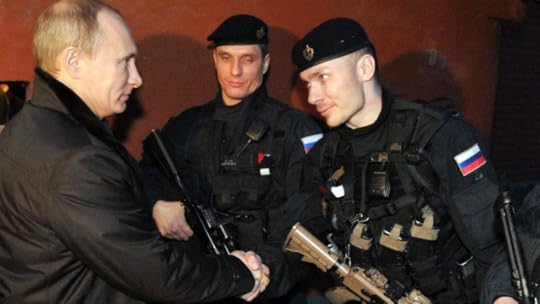
The Russian parliament recently passed a law that now makes treason against the state a life sentence, harking back to the days of the USSR. Putin’s government has been cracking down on civil liberties for years, with laws that criminalize criticism of the government and the army and impose heavy fines and prison sentences for those who violate them. The government has increased pressure on NGOs and independent media outlets, forcing them to register as "foreign agents" or face closure. The country is now reverting to its history under the Tsars and Soviet Union, with its authoritarian rule, lack of civil liberties, and the establishment of a police state. Putin's government continues to work on perfecting the police state that has been evolving in Russia for over a century.
Under the Tsars, Russia was characterized by a highly centralized government that tightly controlled all aspects of public life. The state secret police, the Okhrana, was given almost unlimited power to suppress any opposition or dissent, and they operated outside of the law. The Bolsheviks replaced this system after the Russian Revolution and continued the tradition of using secret police and harsh repression to maintain their grip on power.
The Soviet government, which ruled Russia for most of the 20th century, continued along the path to a perfect police state, using a combination of propaganda, secret police, and forced labor to keep the population in line. The KGB, the successor agency to the Cheka and NKVD, was notorious for its brutality and used a vast network of informers to spy on the population.
After the collapse of the Soviet Union in 1991, Russia underwent a period of political and economic liberalization. However, this period was short-lived, and soon the government began to move back towards authoritarianism. Putin, who took power in 2000, has been steadily building up a new totalitarian regime, using a combination of propaganda, secret police, and repression.
The mass protests that occurred during the presidential election campaign in 2011 shocked Putin. The Russian leader saw firsthand the potential risk of allowing open political dialogue and dissent. Since then, Putin’s government, learning from the mistakes of past regimes, is using new technologies and tactics to maintain control. The internet, which was supposed to be a tool for democracy and free speech, has been heavily censored in Russia. The government uses sophisticated methods to block access to content it deems dangerous. The government has also been using social media to spread disinformation and propaganda, effectively shaping public opinion.
The war in Ukraine, and its ineffective execution, has only amplified Putin’s need to complete the construction of his police state. The Russian people must be vigilant and fight against this trend or risk sliding back into the dark days of the past. Opposition to Putin will be challenging, with many leading Putin critics, such as Navalny, serving long prison sentences and an exodus of hundreds of thousands of men who opposed the war in Ukraine. Given NATO’s reluctance to militarily confront Putin, the best hope might be that the long-term impact of economic sanctions convince some in the Russian president’s inner circle that a change is necessary.
April 2, 2023
A Great Aid for Russian Learners
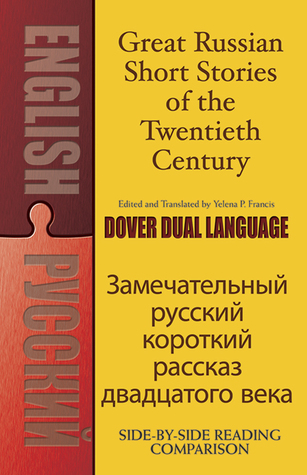
"Great Russian Short Stories of the Twentieth Century: A Dual-Language Book" is a fantastic collection of Russian short stories that provides an excellent opportunity for readers to explore the works of some of the greatest Russian writers of the twentieth century. The book is compiled and edited by Yelena P. Francis, who has done a remarkable job in selecting and organizing the stories. I give her a great deal of credit for the success of this book.
One of the most impressive features of this book is its dual-language format, which provides readers with both the original Russian text and the English translation side by side. This feature is handy for those who are learning Russian or for those who want to compare the original text with its translation. The translations are excellent, and the editor has taken great care to preserve the original Russian text's style, tone, and meaning.
The book includes short stories by some of the most prominent Russian writers of the twentieth century, such as Anton Chekhov, Ivan Bunin, and Alexander Solzhenitsyn, among others. The stories cover a wide range of themes, from love and romance to war and politics, and provide readers with a fascinating insight into the Russian psyche.
As an author of a Russian history book and someone who speaks Russian, I appreciate the quality of the translations and the selection of stories included in this book. Overall, I highly recommend this book, giving it five out of five stars.
March 23, 2023
Podcast Discusses Russia in the 90s
In the March 23rd episode of the podcast "Inside the War Room," host Ryan Ray talks with author and former intelligence officer Kenneth Maher about his book: "Wind of Change: An American Journey in Post-Soviet Russia." The conversation touches on a wide range of topics concerning American and Russian perceptions at the end of the Cold War as well as reasons for today's once again chilly US-Russia relations.
For anyone interested in US and Russian history and politics, the episode will enlighten and amuse you. You can listen to the podcast on Ray's website: Inside the War Room. It is also available on Spotify and Apple Podcasts.
[image error][image error]March 19, 2023
A Deep Dive into Putin's Rise
If you're interested in understanding the ins and outs of modern-day Russian politics, then you should definitely pick up a copy of Giuliano da Empoli's "The Wizard of the Kremlin." This book provides an in-depth analysis of how Vladimir Putin managed to consolidate his power and become one of the most influential figures in the world. His main character, Vadim Baranov, is a fictional close Putin advisor who recently resigned from the Kremlin chief’s inner circle. Baranov discusses his experience with Putin with a journalist he met who shares Baranov’s admiration for the well-known Russian dystopian novel of the 1920s, “We.” Da Empoli's writing style is engaging and easy to follow, and he does an excellent job of breaking down complex political concepts into simple, understandable terms.
One thing that I particularly appreciated about this book is that it doesn't shy away from discussing controversial topics. Da Empoli doesn't hesitate to delve into the more unsavory aspects of Putin's rule, such as his suppression of political dissent and aggressive foreign policy. However, the author also recognizes that Putin's popularity among Russians stems from his ability to restore a sense of order and stability to a country plagued by chaos in the aftermath of the Soviet collapse. Baranov recounts a discussion with Putin in which the Kremlin leader justifies Stalin’s continued popularity in Russia because Stalin sent millions to labor camps and not despite that fact.
Overall, I found "The Wizard of the Kremlin" to be an insightful and thought-provoking read. Whether you're a casual observer of Russian politics or a seasoned expert, there's something in this book for everyone. Highly recommended!

February 24, 2023
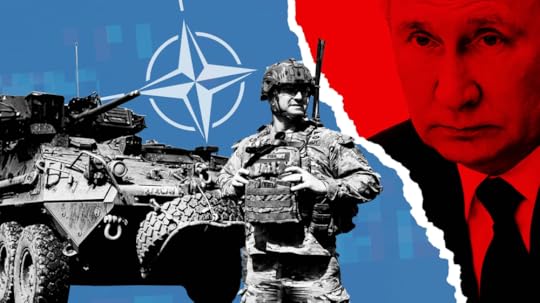
Time for Direct NATO Involvement in Ukraine
As the war in Ukraine has reached its first anniversary, NATO’s strategy in the conflict has led to a stalemate on the ground, which appears to have no foreseeable end. Over the past twelve months, Ukrainian forces have performed valiantly against far superior numbers of Russian troops and equipment to hold, push back, and regain territory after the initial invasion. However, we have reached a point where further significant advances by the Ukrainian army will require more sophisticated long-range weaponry, which its allies in NATO continue to hesitate to supply. With Russia in the throes of its spring offensive, the risk of serious Russian gains grows daily, threatening a reversal of Ukraine’s, and subsequently NATO’s, futures in the war. The time has come for NATO to end this conflict and restore peace and stability in Europe.
Since the beginning of the invasion, the US and its NATO allies have hesitated to provide Ukraine with the weapons necessary to repel and defeat Russia. American and European leaders continue to express the fear of a direct confrontation with Russia, which, it is argued, would lead to another world war. Since 2008, this reticence to confront Russia has played into Putin’s hands and has only emboldened him. The Kremlin leader has masterfully used the threat of nuclear weapons to keep the West at bay. The Kremlin’s current official line and Russian propaganda already characterize the war as an existential struggle for Russia against the West (i.e., the US and NATO). Despite small pockets of domestic opposition, there is little hope of convincing most Russians otherwise. More direct NATO involvement may help Putin in the short term with military recruitment, but longer term, the risks to the West would be negligible. There are greater advantages to shortening the war, which could accelerate the end of Putin’s regime, which is taking advantage of the hostilities to propel Russia back on top of the global stage. Historically, Russia has constantly desired to be a great power. Although not proceeding as expected, the Ukraine war has allowed Russia the illusion of being a superpower on par with the US, harking back to the USSR and Cold War period. The West’s/NATO’s actions are perpetuating this myth. Russia’s military defeat would burst this bubble and prevent Russia from future threats. Russian history has shown that military defeats have had significant negative consequences for Russian leaders. Misadventures in the Crimean War, Russo-Japanese War, First World War, and Afghanistan dramatically changed the fate of St. Petersburg and Moscow regimes.
The US and NATO’s hesitation is giving Russia time to adjust its domestic production of war materiel and find other sources of supply to allow it to prolong its military operations. Economic sanctions imposed on Russia have not been comprehensive and are slow to take effect. Meanwhile, the Russian government is learning to do without western production inputs and establishing alternative supply chains with Iran, North Korea, and China. So far, China has shied away from supplying lethal assistance as part of its unlimited partnership with Russia, but that soon may change. Greater Chinese support would allow Russia to plug its current logistics problems, thus making victory for the West/Ukraine more tenuous.
Judging by history, Putin is correct that time is on his side. One of the key disadvantages of democracies is brief patience with war. The US and European nations have shown stiff resistance to Putin’s invasion, but cracks are already appearing in Europe and the US. NATO members such as Hungary, more politically aligned to and energy-dependent on Putin’s country, have yet to fully embrace the strong line against Russia. In the US Congress, the new Republican majority in the House of Representatives is critical of blank-check support for Ukraine and even has an influential isolationist/pro-Putin faction. The longer the war drags on, and the more money and equipment are spent, the wider these fissures are likely to become. Another disadvantage of democratic systems has been a reluctance to proactively engage against threats, preferring to wait until armed conflict is unavoidable or thrust upon them. The resulting conflict becomes much more costly regarding lives, treasure, and damage.
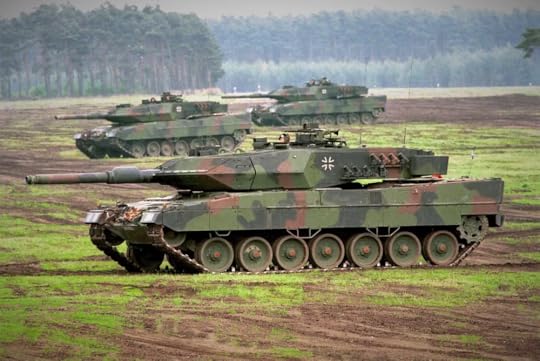
Germany, arguably the principal benefactor of the post-WWII security system, has expressed consistent reticence for progressive support for Ukraine. The nation’s Nazi past and long-established commercial relations with Russia have influenced its decisions. Chancellor Olaf Scholz’s government did agree to allow its Leopard II battle tanks to be made available to Ukraine, but only after protracted discussions and immense pressure. The Berlin government will agree to Ukraine’s request for fighter jets. Providing more lethal military aid could be a way for Germany to atone for its authoritarian past, showing that the nation is ready to fight against the current fascist regime in Europe actively. Another factor hindering more direct German involvement is the unready state of its armed forces. Recent evaluations of the Bundeswehr have identified major deficiencies in training and equipment, with one report characterizing the Bundeswehr as undeployable. Active involvement in Ukraine could bring to light these shortcomings and embarrass the German government.
France also has appeared slow to meet Ukraine’s combat needs. French President Emmanuel Macron has preferred to focus on diplomacy with Vladimir Putin. Since 2014, Macron, in partnership with Angela Merkel and now Olaf Schultz, has been a key backer of diplomatic efforts to settle the Ukraine crisis. Macron’s continued communication with the Kremlin has annoyed and angered Kyiv. One can remember Macron, before Russia’s invasion, shuttling back and forth to Moscow, playing to Putin’s ego and seeming to make the Kremlin leader take the French president less seriously. Part of France’s hesitation for direct involvement may be the country’s poor military performance in western Africa. Over the past decade, French troops have deployed to several countries in the Sahel to help battle militant groups. The overall results for France have not been promising, with several African nations requesting French withdrawal and even replacement by Russia’s Wagner Group. Macron has a longstanding goal for France to replace Germany as the key player in Europe. His reliance on diplomacy rather than military prowess has so far been insufficient. A more significant French military role in Ukraine could be used to propel France’s standing among EU nations.
The United States, Ukraine’s biggest supplier of armaments, has also been slow to provide advanced weaponry to Kyiv. The imposition of a no-fly zone over Ukraine may have prevented Moscow from invading in the first place. The continued hesitancy to provide Ukrainian forces with major weapon systems prolongs the conflict. The Biden administration’s gradual approach likely reflects America’s fatigue with multiple military deployments since 2001. The Republican party, historically hawkish on Russia, is still grabbling with the effects of Trumpism, which professes an almost apologetic, if not supportive, stance towards Russia.
President Biden and NATO officials describe the war as a contest between liberty and democracy versus authoritarianism. They add that Russia’s invasion also violates the basic tenets of the UN charter and threatens the entire international order. This would seem ample justification for the US and its NATO allies to intervene directly to push Russia back to its 1991 border with Ukraine. NATO found the atrocities occurring in Kosovo sufficient to use military force against Serbia in the mid-1990s. Putin’s war constitutes a much graver threat to European stability and the broader global order. So, what is different this time? Putin’s talk of deploying nuclear weapons. The Kremlin leader consistently broaches this subject to play into western fears of a nuclear war. Most experts agree, however, that the actual risk of a Russian nuclear attack in Ukraine is minimal. Putin understands that crossing the nuclear threshold risks ending any remaining international and domestic support. The US and NATO countries should be more willing to call Putin’s bluff and make clear that using a tactical nuclear weapon would lead to a comprehensive military response against Russian territory.
Direct involvement could include several elements. If the US and NATO allies are wary of sending ground forces into Ukraine, air defense support and a no-fly zone should be imposed over Ukraine. Such support would level the playing field for Ukrainian ground forces and civilian infrastructure against Russian missile and air attacks. A step further could be direct air support for Ukrainian ground forces from NATO fighter jets and other aircraft such as A10 Warthogs. This would likely require the elimination of Russian air defenses in occupied territory and Russia itself. The appearance of NATO aircraft in the skies over Ukraine would be an imposing sign to Russian forces and could further degrade their morale and effectiveness. NATO air support of a Ukrainian offensive might be enough to drive Russian forces out of the occupied regions. If this proves insufficient, or Russia responds by further escalation (conventional or nuclear), NATO ground and naval assets could be brought into action. Russian forces will be removed from Ukraine’s territory, and the goal of bringing the conflict to a rapid conclusion will be achieved. The result will be less loss of life and expenses. A quick end to the conflict will reduce the risk of a truly global conflict. The international order will be restored, sending a strong signal to other autocratic regimes that military adventurism will be swiftly countered.
Kenneth Maher earned an M.A. in Russian Area Studies and served as a U.S. Army military intelligence officer. He is also the author of "Wind of Change: An American Journey in Post-Soviet Russia." To learn more, follow Kenneth's blog at www.kennethmaherauthorbooks.com.
February 17, 2023
Vodolazkin Novel Gives New Take on Russian History
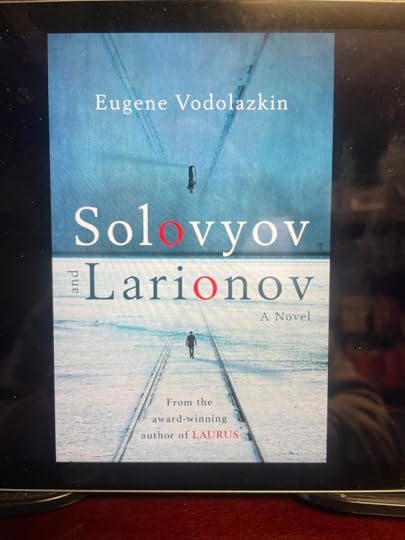
"Solovyov and Larionov" by Eugene Vodolazkin is a novel that explores the lives of two main characters, Larionov and Solovyov, who are vastly different in age, experience, and perspective. General Larionov, having died some years earlier, had lived through some of the most significant moments in Russian history and serves as the dissertation subject for the young historian Solovyov, who seeks to understand the past through the lens of the general’s personal experiences. Throughout the novel, Vodolazkin expertly weaves together the stories of these two men, creating a rich tapestry of history, memory, and commonality.
General Larionov was a stoic and reserved figure who lived through the Bolshevik Revolution, World War II, and the fall of the Soviet Union. Solovyov, on the other hand, is a young and idealistic historian in the Russia of the early 1990s who wants to complete his research on the famous general. By rotating between Larionov’s memoirs and Solovyov’s current actions, Vodolazkin draws out the parallels between their lives, highlighting the similarities and differences between the two men and the eras in which they lived.
As Solovyov reflects on Larionov’s life, he begins to see history not as a collection of dates and events but as a living, breathing thing shaped by the people who experience it. Vodolazkin skillfully shows how the past is never truly past but continues to shape the present in profound and unexpected ways. Ultimately, "Larionov and Solovyov" is a novel about the power of memory and how history continues to shape our lives long after the events have passed.
"Solovyov and Larionov" is a powerful and poignant novel that explores the connections between the past and the present and the similarities between two men separated by decades of experience. Vodolazkin captures the complexities of Russian history and how it continues to shape the lives of ordinary people.
February 7, 2023
Can German Tanks Atone for Fascist Past?
Recently there has been a lot of debate regarding Germany's hesitation to provide tanks to Ukraine. The Ukrainian government has been asking for military support from their allies in light of ongoing conflict with Russian-backed separatists in Eastern Ukraine. However, the German government has been reluctant to provide lethal weapons, including tanks, due to concerns about escalating the violence. Only under severe pressure from its allies and a U.S. commitment to send Abrams tanks did Germany finally relent.
Germany has a troubled history in the 20th century, including its association with authoritarian and fascist regimes. However, it has since become a leading voice for human rights, democracy, and stability in Europe. The country has been one of the main benefactors of the post-WWII security structure, allowing it to become the main economic power in Europe. This position of leadership requires the country to take decisive actions in the face of ongoing threats to the security of the region.
The conflict in Ukraine triggered by Russian aggression is one such threat. The annexation of Crimea and the ongoing violence in Ukraine pose a significant challenge to the region's stability and the security of Europe as a whole. In light of this, Germany needs to take a firm stance in support of Ukraine and the principles it upholds.
By providing battle tanks to Ukraine, Germany would send a message that it stands with those fighting against oppressive regimes and working to uphold freedom and democracy. Furthermore, it would demonstrate that the country is willing to take an active role in preventing the current fascist regime in Europe under Putin from attaining political goals via violence. In this sense, providing tanks to Ukraine could be seen as a way for Germany to make amends for its past submission to fascism and to work towards a better future for all.
In conclusion, while Germany's past association with fascism will always be a part of its history, it should not prevent the country from taking a strong stance against Russian aggression and supporting Ukraine in its time of need. Providing heavy weapons to Ukraine would be a meaningful step towards this goal and would demonstrate Germany's commitment to a peaceful, stable, and democratic Europe.
Kenneth Maher earned an M.A. in Russian Area Studies and served as a U.S. Army military intelligence officer. He is also the author of "Wind of Change: An American Journey in Post-Soviet Russia".