M. Phoenix's Blog
March 31, 2026
Why I Write Dark Stories… And Why I’m Not Sorry About It
I didn’t realize this about myself until my husband asked, “Are you obsessed with death?”
Don’t get me wrong, I like to think that I’m quite self-aware, but I truly didn’t realize how dark my books can get. Not in a way most dark romance or dark fantasies do, though. Not spicy or alluring. But… heavy.
And to answer my husband, no, I’m not obsessed with death. (Okay, maybe a little.) But darkness has always appealed to me. (I’d like to think it’s the Scorpion in me.) I’m going to be honest, though. It’s not always me who dives deep into these darker themes.
My Characters Have a Mind of Their OwnMy characters, mostly, just bleed on paper on their own. They spill their traumas and their coping mechanisms onto the page before I can stop them and force them to see the light or make it all fun. It just happens–and sometimes, I don’t have any power over it.
What Xavier’s Trauma Made Him DoFor example, let’s take Xavier from Let It Fall. I wanted to make him flawed and villainous. And he was. But he was mostly rough around the edges, unable to process the things he’d been through, the trauma he carried, the walls he built around himself. He was a very complex character to write. It’s messy, the way our brains work, the way we decide to do things, the way we react to our triggers. It’s not pretty. And I didn’t want to sugarcoat it.
He self-harmed because he was human and needed the pain he felt inside to leave marks on his skin. He was obsessive because Giselle was the only thing left in his world to protect–the only light he had. He was abusive because abuse was all he’d ever known. He was someone in the process of losing his mind entirely… and he did.
It was beautiful–rough, messy, bloody, uncomfortable, and entirely human. He made me cry, and he did it all himself. He wrote his own story. He knew what he was doing, and he couldn’t stop. And that’s peak human experience.
An Excerpt From My WIPSimilarly, my WIP is a dark fantasy. Let me share a small detail from this world. After dying an untimely death (I see you rolling your eyes, Husband.), Emery ends up in Visterrenum as a second chance to complete her life. Here, her trauma is physically realized. She burns on touch.
Here is a little excerpt of her conversation about this:
Grandma remains silent for a moment. “You’re not the only one who suffers, my love.”
I grit my teeth. “I know I’m a disappointment—”
“I didn’t mean that. You’re my pride, Emery. All I’m saying—” She licks her lips. “—is that everyone who ends up here carries trauma. It’s why they’re here. It’s why this is a second chance. It’s why we burn.” She pauses, then says softly, “It’s physical here because we tend to put more effort into healing wounds that we can see and ignore the wounds of our hearts.”
Why Do My Stories Have Darker Themes?My stories tend to discuss darker themes because darkness is honest. It doesn’t fabricate the truth or how raw some feelings can be. Darkness is beautiful because we all have it inside us. Sanitized stories don’t serve readers who are living through hard things. And I want to talk about it all. I want my readers to feel the raw emotions of my flawed characters. I want my readers to feel heard and understood.
I will never apologize for having darker themes in my writing, because if I don’t write it, it’d consume me whole, and because I’m writing for the reader who needs the dark and wants to be seen, not the one who wants to avoid it.
Subscribe to get exclusive sneak peeks of my WIP, bonus content, and blog posts.


February 24, 2026
Should Artists Speak Out on Political or Controversial Topics? | Munazza Bangash
When I was young, I remember seeing my dad watch the news every single day. It’d bore me, and right there and then, I made a decision. Like many kids do, I decided never to be the adult who’d fill her days with news of the world.
And then I grew up and started following the journey of a political leader who I was sure would make history. I vowed never to feel shattered over a public figure, but all hopes were lost when it came to him. My belief in his loyalty toward my country was unwavering. And even though I didn’t know him personally, I cried like a baby when he was dealt a rough hand. Safe to say, I had become my father, and I had let the world news affect me.
Then I saw things far worse. The world fell apart. Things we’d been reading in dystopian novels became a reality. We saw the controversies becoming a reality. We all realized first hand how utterly helpless we were. We could do nothing against the injustice happening in the world.
We raised our voices. We got things banned. People told us, “This doesn’t work.” But we knew it was better than doing nothing at all. Because, yes, maybe it wouldn’t work. Maybe all of the social media posts and the bans and the raising of voices were all in vain… But the silence would’ve eaten us all alive.
With the rise of social media, we’ve been getting exposed to the horrors of the world. We tend to think that all these horrific things are happening in our age only. Nevertheless, these have been prevalent for as long as humans have walked the Earth. The only difference is that the news often didn’t reach every corner of the world before.
And I get it. It gets overwhelming. There was a time when I actively scrolled past reels that showed oppression or cruelty of any kind. I’d never switch on news channels. I’d walk out of conversations discussing these topics. Because it was disturbing and tiring. My heart couldn’t handle the realization that I was, in fact, nothing and had no influence or power over anything. And that kind of helplessness leaves you… changed.
But it wasn’t just this. With social media, the cancel culture took root. Somehow, public disgrace was frowned upon but also normalized if it was on social media. Which, in some ways, worked for the best, but with time, it got out of hand. People were canceled on mere accusations without them having the right to explain themselves.
It planted a fear in me. I had much to talk about, many opinions I kept buried in me that I wanted to say, but with the acceptance of being helpless at the injustices of the world and the fear of being looked at the wrong way kept my mouth zipped up.
And then I realized… I was an artist. I had a pen, and that gave me a voice. A platform.
I often question if artists should engage in controversies. I wonder if it can harm their career. Does it even make a difference? And what I’ve understood over time is that being an artist is a form of rebellion. It gives you a voice, something that solely belongs to you. Your art influences people. It moves them. And so, I believe, using your art to bring attention to issues is far more effective than screaming about it. Not to say screaming doesn’t work.
But does it?
I am unsure if an artist should publicly engage in controversies. However, I believe the best way to really put your point across is through art. I am a writer. I feel grateful that I can pen down my thoughts. I am able to get my point across through my books, blog posts, and social media content.
But most of all, my books.
I don’t think I have a voice strong enough to make a change as me. Not through my social media content nor through my blog posts, because that’s still me talking. But through my books, I feel like I can change perspectives. I can use words to convince and bring attention to areas where all eyes should be. Through a fictional world or a single quote, I have the power to make the reader go, “Oh…” Whatever it may be, I believe, as an artist and through my words, I have the outlet to shift mindsets.
Not just the fact that I can, but that I have a responsibility toward my readers. Because I do want them to leave my book inspired and changed, and if that happens, I’d consider myself blessed.
What do you think? Should artists engage in controversies publicly?
I don’t mean to say that they should never speak up about anything, but isn’t losing the audience counterproductive? If your audience consists of people who agree with you (through your public display of opinions), then putting your point across through art makes no difference. You’ve already lost the ones who’s mind you needed to change.
Let me know in the comments. What is your take on this?
See you in the next one.
Should Artists Speak Out on Controversial Topics? | Munazza Bangash
When I was young, I remember seeing my dad watch the news every single day. It’d bore me. When I was very young, I made a decision. Like many kids do, I decided never to be the adult who’d fill her days with news of the world.
And then I grew up. I started following the journey of a political leader. I vowed never to feel shattered over a public figure. Even though I didn’t know him personally, I cried like a baby. This happened when he was dealt a rough hand. Safe to say, I had become my father, and I had let the world news affect me.
Then I saw things far worse. The world fell apart. Things we’d been reading in dystopian novels became a reality. We saw the controversies becoming a reality. We all realized first hand how utterly helpless we were. We could do nothing against the injustice happening in the world.
We raised our voices. We got things banned. People told us, “This doesn’t work.” But we knew it was better than doing nothing at all. Because, yes, maybe it wouldn’t work. Maybe all of the social media posts and the bans and the raising of voices were all in vain… But the silence would’ve eaten us all alive.
With the rise of social media, we’ve been getting exposed to the horrors of the world. We tend to think that all these horrific things are happening in our age only. Nevertheless, these have been prevalent for as long as humans have walked the Earth. The only difference is that the news often didn’t reach every corner of the world before.
And I get it. It gets overwhelming. There was a time when I actively scrolled past reels that showed oppression or cruelty of any kind. I’d never switch on news channels. I’d walk out of conversations discussing these topics. Because it was disturbing and tiring. My heart couldn’t handle the realization that I was, in fact, nothing and had no influence or power over anything. And that kind of helplessness leaves you… changed.
But it wasn’t just this. With social media, the cancel culture took root. Somehow, public disgrace was frowned upon but also normalized if it was on social media. Which, in some ways, worked for the best, but with time, it got out of hand. People were canceled on mere accusations without them having the right to explain themselves.
It planted a fear in me. I had much to talk about, many opinions I kept buried in me that I wanted to say, but with the acceptance of being helpless at the injustices of the world and the fear of being looked at the wrong way kept my mouth zipped up.
And then I realized… I was an artist. I had a pen, and that gave me a voice. A platform.
I often question if artists should engage in controversies. I wonder if it can harm their career. Does it even make a difference? And what I’ve understood over time is that being an artist is a form of rebellion. It gives you a voice, something that solely belongs to you. Your art influences people. It moves them. And so, I believe, using your art to bring attention to issues is far more effective than screaming about it. Not to say screaming doesn’t work.
But does it?
I am unsure if an artist should publicly engage in controversies. However, I believe the best way to really put your point across is through art. I am a writer. I feel grateful that I can pen down my thoughts. I am able to get my point across through my books, blog posts, and social media content.
But most of all, my books.
I don’t think I have a voice strong enough to make a change as me. Not through my social media content nor through my blog posts, because that’s still me talking. But through my books, I feel like I can change perspectives. I can use words to convince and bring attention to areas where all eyes should be. Through a fictional world or a single quote, I have the power to make the reader go, “Oh…” Whatever it may be, I believe, as an artist and through my words, I have the outlet to shift mindsets.
Not just the fact that I can, but that I have a responsibility toward my readers. Because I do want them to leave my book inspired and changed, and if that happens, I’d consider myself blessed.
What do you think? Should artists engage in controversies publicly?
I don’t mean to say that they should never speak up about anything, but isn’t losing the audience counterproductive? If your audience consists of people who agree with you (through your public display of opinions), then putting your point across through art makes no difference. You’ve already lost the ones who’s mind you needed to change.
Let me know in the comments. What is your take on this?
See you in the next one.
September 26, 2025
Read Let It Fall
“I give up,” he whispered, then closed his eyes, took a deep breath, and shook his head. “Not yet.”
He sat on his bed, the moonlight seeping through the slightly parted curtains behind him, his right hand holding a rusty old knife over his left arm. Another job done. A piece of his soul bartered. A hefty amount earned. He blinked, and a warm tear wrote a eulogy on his face, leaving a trail of memories in its wake.
The knife didn’t tremble under his firm grip. The older cuts tingled.
His eyes traveled around the room. A photograph hung on the wall in front of him. He stared at the thin blonde woman who cradled a little girl in her arms. He could picture a boy smiling at them behind the borrowed camera, ready for his turn that never came.
A faint smile—was it there?
Like a well-practiced dance routine, his eyes snapped from the photograph to the painting on the opposite wall. The violence it depicted had drawn him to the art the first time he’d seen it.
In a jungle under the full moon, a pack of wolves feasted on a lifeless deer. A woman in white hid behind a tree, watching wide-eyed. It was apparent to him that she’d never witnessed something so cruel, though it was completely normal for the wolves. They were predators. Hungry. Lustful. The deer lay motionless with its blood pooled beside it.
And a golden eagle sat quietly on a branch of the same tree, observing. He stared at it. Had it tried its best? Shaking his head, he looked down at his arm and sliced open his skin. How else could he show the scars inside his soul? Nausea gripped him, his head lulled, and the darkness took over.
He woke the next day with sunlight irritating his eyes. He squinted down at his red-stained shirt and then at his arm. The blood had dried on it.
Blinding dreams. Deafening screams. He was sick of it.
The lady in white would’ve tried to run, he assumed, the wolves catching up to her. The eagle would’ve charged at the beasts, tearing at their eyes. The woman might have died, the eagle wounded, but everything came down to a simple objective—the wolves were made an example of.
Chapter 1Thirty minutes.
Giselle had been waiting thirty minutes in the club, and there was still no sign of Chris. Apparently, he’d gone to get a drink for himself, which was odd because they were already seated at the bar. She thought he’d gone to sulk in a corner because, back home, his Rock had lost to her Paper. As always. Stakes had been high. Giselle had wanted to try one last time to find him a girl, and he’d wanted to stay home to finish his employee report. Rock, Paper, Scissor was the only way to decide. And naturally, she’d won.
But it’d been too long, and worry was starting to settle in. Her heart hammered for a moment, but she brushed it off. He was a grown man who could handle himself. And if he’d decided to ditch her because of the bet he’d lost, she’d strangle the sore loser at home.
This was the final attempt, though, she reminded herself, and if he dared to reject one more girl of her choosing, she was ready to give up on him and his I-suck-at-relationships attitude entirely.
Music blared, and the ground vibrated as her eyes traveled across the heated dance floor. Bad Blood by Taylor Swift started playing, and she sang along as her fingers drummed her thigh over her loose, blue jeans.
Someone grabbed her shoulder from the side, and with a little jump of her heart, she spun to her left.
“What—Are you drunk?” she bellowed over the loud music. A few people turned to give them a fleeting glance.
Giselle held him by his shoulders as Chris stumbled on his step.
“Not my fault.” He hiccupped and then laughed at himself. She cringed at the smell, then sighed in defeat, letting him go.
“Chris,” she said with a steady voice. “Why did you drink?”
“Not my fault!” he repeated, looking at her as if she’d lost her mind, then frowned innocently. “You know I don’t drink.”
“What happened, then?”
“I just wanted to forget,” he said. He squinted his brown eyes as if trying to focus.
Her brows knitted. “Forget what?”
He stared at her, his eyes doing that usual double-blink at her. “I… I couldn’t… I…”
She shook her head in confusion. “What?”
“I don’t understand how Paper can beat Rock. It’s so stupid.” He raised his finger to her nose, flicked it, and grinned.
Giselle stared at him ridiculously.
A drunk Chris defeated the purpose of being at the club, as ironic as it was, because this state seemed to strip him of all his charms. And as bad as he already was at relationships, this was an additional blow to any advancements she wanted him to make today.
Chris sat on a stool beside hers, both hands in his lap. He turned toward the bar behind them and gestured for the bartender to come.
He said, “A tequila shot, please.” She gaped at him, and he shrugged at her. “It’s Sunday tomorrow.”
Giselle turned to the bartender as well. “He will not be having any more of that.” The man raised his hands in surrender and moved on to the guy clad in purple, who licked a slice of potato and took a shot, his whole body vibrating at the impact. She cringed, asking herself why anyone would ever want to do that with a potato, then ignored him and turned to Chris. “It’s Friday tomorrow, not Sunday. And are you serious? We’re here to find you a girl—”
“Which I don’t want.”
“You can’t be single for the rest of your life!” she almost whined.
“It’s really not that serious, Pigtails.”
She huffed. “Don’t call me that. And do you plan on never dating? Because, frankly, you don’t seem too eager…” She gasped mockingly. “You’re gay. We can look for a guy, instead, just say the word.”
He flicked the air beside her head a few times, then said, “Aha!” when he managed to hit her forehead. “It’s not like I’ve never dated.”
She rolled her eyes. “Yeah, you have, and it has always ended up in a disaster.”
“Maybe girls don’t like nice men,” he mumbled.
“Someone thinks too highly of themselves,” she mumbled back.
He ignored her. “I already have a girl, you know,” said Chris, “and she’s enough.”
She met his eyes with her narrowed ones. “I find that hard to believe. Who’s the lucky lady?”
His lips twitched up. “You.”
Her lips stretched in a warm smile that turned into an amused one. “Very funny. With words like these, girls will swoon all over you. What’s sexier than a man flirting with his best friend instead?” She scrunched up her nose at him.
He was right, though. It really wasn’t that serious. Maybe she wanted to make sure Chris had a girlfriend, she reasoned, was so he could finally ease up to the idea of her relationship with Xavier. It had been a year since they’d started dating, and Chris still hadn’t warmed up to him.
He scoffed at her exclamation. She grinned as her eyes moved around the packed room of partiers once again to see if any girl looked single enough for Chris.
Since his past relationships had all been disastrous, this had become a game for them in recent months. Whenever she was bored, she’d find ways to set him up with someone, though it never worked out how she wanted. Chris was set on denying dating any girl Giselle chose for him.
They’d exhausted all the other social locations; this club was the last place she’d brought him to. If this failed, she was giving up.
Red caught her eye again as she searched the mass. A girl sat alone in the farthest corner of the club. The entire time Giselle had sat there, waiting for Chris, the girl in red kept herself immersed in her phone, looking bored and uninterested in her surroundings.
“Chris?” she called, distracted by the girl she didn’t want to lose sight of.
But he was more distracted than she. “Hmm?”
“Check out that—” She paused, her face scrunching in disgust. “What are you doing?” He held the slice of potato. The same one that the man in purple had licked…
He smiled widely. “Congratulating a potato on getting a role in Toy Story.”
“Chris!” she scolded, stifling her laughter. Unbelievable.
“What?”
“Focus!”
“On what?” Throwing the potato away, he looked at Giselle with raised eyebrows. “What?”
She sighed and snapped her fingers in front of his face, trying to gain all his attention. “I found you a girl, mister.”
“Where is she? I can’t see her,” he said. “Are you sure you’re not imagining her because you’re so drunk?”
She pursed her lips.
“Wait a minute!” He gasped. “She’s invisible, isn’t she?”
“Chris. Never. Ever. Ever. Ever—”
“Look this gorgeous?” he cut her off, “Impossible!”
“—ever,” she continued, “drink again.”
Ignoring the look he gave her, she jumped off the stool and walked toward the lady, clicking her white heels against the wooden floor. The woman in a red cocktail dress sat poised on the sofa. She held a glass of margarita stylishly in one hand and scrolled away on her phone with the other. Her curls were defined and tied back into a high ponytail. Giselle wished she also had such gorgeous hair.
“Hey!” Giselle invited herself across the table on the sofa opposite hers.
She looked up at Giselle with her almond eyes, put down her phone, and pursed her red lips. “Can I help you?”
Giselle had it all planned. “You see that guy over there?” She pointed in Chris’s direction, who, thankfully, wasn’t making a fool of himself.
“The one wearing purple robes?” she asked, placing a hand on her chest in horror.
“What? God, no. The one with the black jacket.”
Chris stood leaning against the bar and casually typed something on his phone, unaware of the girl on his right who kept giving him suggestive glances. Giselle smiled at how handsome he looked. His dark hair was styled into his usual pompadour, clothes fitted his muscular body, and his sharp jawline adorned with a soft stubble got more prominent every time he looked around the club.
“Oh yeah,” she said. “What about him?”
“Well, you see, he’s very shy. He wanted me to ask if he could buy you a drink and that the said drink won’t end up splashed on his face.”
The girl chuckled and sipped from her glass. “Is he your brother?”
“My best friend.”
“You play matchmaker for him a lot?”
Giselle grinned. “Never works, I assure you.”
The girl bit her lip and waited momentarily before saying, “Not serial killer, right?”
“Would I tell you if he was?” Giselle winked.
“Is that so?”
Giselle flipped her straight hair back with a smile. “Giselle,” she said, extending her hand as if that was explanation enough.
“Oh, Abigail… Or Abby, whatever.”
“Beautiful name.” A beat of awkward silence passed, then she said, “So…?”
“What’s his name?” Abby asked, glancing at him once.
“Chris.”
“Okay.” She nodded. “Sure. Ask him to come over if he’s interested.”
Giselle gulped. Drunk Chris was not impressive. Drunk Chris knocked things over. Drunk Chris talked to potatoes.
She cleared her throat, then said, “He’s shy and, uh, wants to take you out… Would you mind giving me your number instead?”
Abigail looked at her with an eyebrow raised. “If he doesn’t act, honey, he’s not worth it.”
“Oh, he acts.”
Abigail raised both her eyebrows.
Giselle cleared her throat. “I mean, I know that because we’ve been friends since forever. But I assure you, he’s daddy material.”
Abby pursed her lips, her eyes bulging slightly, and then the corners of her mouth twitched up.
Giselle’s entire existence stopped at the realization, a buzz of embarrassment running through her body. What did I just say?
She licked her lips. “What I meant was… What I wanted to say was…”
Abigail chuckled. “It’s okay. But I’m not handing out my number unless he has the guts to ask for it himself. For all I know, he stammers when he talks.”
Gisell’s smile fell. She wanted to call her out on it or defend Chris but bit her lip instead, still awkward at the words she’d uttered earlier. “Right. One sample of male species coming right up.”
Before Abigail could say anything else, she hurried toward her best friend.
“Hello!” Chris greeted her with a wiggle of his eyebrows.
“You have to ask her for her number. Right now,” she said to him over the loud music.
Chris merged his brows. “Who?”
“I’ll take you to her.” She was sure Abigail was looking at them, so she had to play it cool.
He looked at her as if she was crazy. “I’m going nowhere.”
“Please, please! I already talked to her.”
“Giselle, life doesn’t have to be so complicated…” he slurred.
“Okay, first of all, you will keep your speech to a minimum. Second, you will act shy because that’s how I pitched you.” Chris opened his mouth to, no doubt, protest, but she spoke over him, “And third, you will be a gentleman who asks for a lady’s number at a club, and then we’ll be out.”
His eyes sparkled at the last sentence. “We go home?”
She smiled smugly. “Only after you do exactly as I say.”
“I get her number, that’s all?”
“And you’ll call her and go on a date, of course!”
“Not happening, Cupid.”
She folded her arms, and as her last resort, she started rambling, “It’s rude not to call. And maybe you’ll like her. She’s so sweet! She’s got the prettiest hair. And I’ll look ridiculous if you don’t. For me, please? As my birthday gift.”
He smirked. “Your birthday is on the twenty-fifth of April next year.”
She wondered how he could remember that, considering how drunk he was. “Early birthday present?” She gave him her best puppy-dog eyes.
“I hate you,” he muttered and pushed off the bar, sliding his phone into the back pocket of his pants. Sighing, he gestured for her to lead the way.
“Really?” she squeaked.
“Only because you’re rambling like an idiot.”
Grinning, Giselle grabbed his arm and led him to the girl in red. She hissed at him when he stumbled a little, earning a ridiculous what-have-I-done look from him. When they sat down with Abigail, he suppressed most traces of intoxication surprisingly well.
He asked for her number, his charms turned on, and all his claims of sucking at relationships went down the drain. At one point, Giselle noticed Abigail blushing as Chris kissed her on the hand, being the gentleman he was, before they headed out of the club. They had agreed to meet on the coming Sunday over lunch, and she considered that a success.
I can go to Petrichor tomorrow, she thought after pushing him into the passenger seat of his car, much to his dismay, and getting in the driver’s seat herself, and Chris might just warm up a fraction more to the idea of Xavier.
July 5, 2025
Launching Moon Birch Literary Services
Ghostwriting for Authors | Tell Your Story With Moon Birch

You’ve carried this story for years. Maybe it started as a memory, or a sentence you couldn’t shake. Maybe it’s a character who’s lived inside your head longer than some people have lived in your life. You’ve imagined the ending. The heartbreak. The scene that would make someone weep at 2 a.m.
But the pages are still blank.
You don’t know how to start. Or you started once and never found your way back. Or you’ve written the whole thing, but something’s missing, and you don’t know how to name it.
And now you’re wondering: Do I need help? Do I really deserve to write this story?
Let me stop you right there.
Yes. You do.
You don’t have to do it alone.
As the founder of Moon Birch, I’ve worked with writers who are overwhelmed, grieving, recovering, rebuilding. Writers who are bursting with ideas but have no time or emotional bandwidth to sit down and structure a novel. Writers with incredible voices who just need someone to bring order to the chaos. Writers with stories to tell but life doesn’t give them a moment of respite.
And often, the question isn’t just “How do I write my book?”
It’s “Is my story even worth telling?”
My answer is always: Absolutely.
Your story matters. You matter.
What I Do at Moon BirchMoon Birch offers professional, compassionate ghostwriting and editing services for authors who need more than a grammar check. I specialize in emotionally-driven fiction, stories with grief, longing, identity, and characters who feel like they’re stitched together with both beauty and pain.
Here’s how I can help:
Ghostwriting
You give me your idea. It can be messy, half-said, unfinished. I help you turn it into a full-length, publishable novel with your voice at the center.
Developmental Editing
You’ve written your draft, but something feels off. I go in with a careful hand and help you rebuild structure, deepen character arcs, expand the word count, and bring the story’s emotional core to life.
Line Editing & Emotional Polish
You want the prose to sing. You want it to hurt and heal and hit in all the right places. I help shape your sentences with rhythm, clarity, and truth.
Basic Editing
The book is entirely written, and you want a thorough grammar check, errors fixed, punctuation handled, and all that. I help you polish your work.
Proofreading & Beta Reading
Want a writer’s first impression on your book (and missed errors fixed)? Get your book proofread. Want a reader’s first impression before hitting Publish? Beta Reading it is!
Critical Analysis
Because sometimes, you don’t need a red pen, you need someone who listens. Someone who says, “This is beautiful. Keep going.” Or someone who says, “Here’s what I think can be improved.”
Why I Do ThisBecause I’ve been the writer sitting at rock bottom. Because I know what it’s like to bleed into a story when everything else in your life is breaking. Because I believe in stories that don’t fit the mold. And because I know how difficult traditional publishing is. The process of querying, alone, is exhausting.
And more than anything, I believe in you.
You’re allowed to ask for help.
Writing a novel doesn’t have to be a solo act. You’re not cheating by hiring a ghostwriter. You’re not less of a writer for working with an editor. You’re building a team around your vision.
If you’re ready to finally tell your story… If you’re scared but still curious… If something inside you whispers, “What if I could do this?”
I’d be honored to work with you.
Let’s Talk.
Your words matter. Your story deserves to be heard. And you don’t have to do it alone.
Contact me through Moon Birch.
Whatsapp: +92 334 371 9173 (Please mention Moon Birch in your message.)
Email: Munazzabangash@outlook.com (Please mention Moon Birch in subject.)
July 2, 2025
Why I’m Not Rewriting My Debut Novel | Let It Fall
There was a time I swore I would. I even told people.
After Let It Fall was published, I thought it was perfect. I couldn’t read it for the 98th time, so I decided to hit publish. But after some time passed and some reviews poured in, I promised myself I’d return to it someday. Clean it up. Cut the fat. Smooth the pacing. Fix the typos. Add all the things I didn’t know how to do the first time.
But now, standing where I am, after working in a publishing house and with more experience, more clarity, and maybe just a little more softness toward the girl who wrote it… Now I know. I’m not rewriting Let It Fall. Not ever.
I wrote it when I was zero.
No job. No savings. No emotional safety net. No editor. No industry friend telling me what to fix or how to structure it. No one to go through the book. No one to design a cover or teach me how to navigate KDP. Just a Word document and a version of myself that was bleeding onto the page because she didn’t know what else to do with the pain.
There was no plan. There was just Xavier, standing in the dark with a knife. Giselle, unable to cry. And Chris, the light I needed but couldn’t find anywhere else, waiting in the background, loving her anyway.
It was not polished. It was not perfect. But it was mine. And it was all I had.
I know it’s flawed. I know.
There are scenes I’d handle differently now. Some chapters stretch longer than they need to. Some dialogues I’d like to clean up. Some switching of tones happens. There were moments I didn’t know how to pace or breathe or trust myself to slow down. But that’s because I was surviving while writing it. I remember the words pouring out of me. The tears falling down my cheek.
“It broke me. It crippled me. It left me to the mercy of self-harm because nothing else helped. Not even you.”
— Xavier
There’s no editor’s pen in the world that could’ve revised what I was living through. And that’s why I won’t touch it.
I didn’t write it to be read.
I wrote it to survive.
Some people read Let It Fall and see Chris as the sad boy in the background. But I know better. I wrote him because I needed someone in my life to stay, even when I was unreachable. I wrote him because I was Giselle. Because I’d been Xavier.
“Loving you is not a transaction. I will always be here for you even if you don’t love me back, Giselle. Loving you is a part of me.”
— Chris
Chris stayed. Even when she didn’t ask. Even when she was breaking. Even when she forgot how to speak.
“I don’t know how to feel anymore. I keep trying, but it’s like something in me broke. I can’t put it back together.”
— Giselle
That quote still makes my hands tremble.
Because it was me. It was my voice.
This story is a snapshot.
Let It Fall is messy. It’s jagged. It reads like someone holding on by a thread, because that’s exactly what it was.
“So, she accepted the grief as it flooded her. She let it consume her and understood that this was the first step of the ladder toward healing.”
— Narration
I didn’t know what healing looked like when I wrote that line. I only knew what drowning felt like.
And if I rewrote the book now, with my steadier hands and clearer mind, I’d lose that version of me. And she deserves to exist. She deserves to be read and remembered. She wrote a book when she had nothing else.
So no, I won’t rewrite it.
I’ll leave the typos in the places where I ran out of breath. I’ll leave the pacing where my grief dictated it. I’ll leave Xavier’s hopelessness and Giselle’s refusal to see what was in front of her and Chris’s unwavering presence exactly as they are.
“He draped his coat over his arm and watched her walk away with one hand holding her clutch, the other holding up her gown from the side. He let his smile fall, feeling the tightness of his chest grow. Letting go of the breath he’d been holding, his lips tucked down, tears blurring his vision, and he felt his heart snap inside his chest.”
That scene didn’t come from imagination. It came from memory. I remembered what it felt like pretending to smile and counting minutes when you’d be allowed to let your lips tuck downward. I remembered the exact moment you let out that long-held breath and feel the crack inside your chest. I remembered the exhaustion of trying to hold on just long enough for the other person to feel okay.
And if that’s not enough reason to leave it untouched, I don’t know what is.
Let It Fall is not a love story. It’s a story about what love looks like when everything else is falling apart. And I don’t want to change a single word of it.
Not because it’s perfect. But because it’s me.
June 30, 2025
Debut Author Emotional Romance | The Wounds Behind Let It Fall
I didn’t write this book to be read. I wrote it because it was eating me alive. Because the characters showed up before the plot did. Because Xavier was standing in the dark with a knife in his hand and too much pain in his chest that he didn’t know how to process. Because Giselle couldn’t cry anymore, and Chris… Chris was the light I didn’t know I needed until I created him.
Let It Fall isn’t entirely about love. Not really. It’s about ache and grief and silence. It’s about the pain you carry when your chest still rises and falls, but everything inside feels like it’s already gone. Like a void. Like darkness. Like you don’t know how to stop breathing, but you also don’t know how to live…
Xavier: The Edge of a BreakdownXavier came first. And when he did, he came bleeding.
He was never written to be hated. He was written to be understood. Or maybe not even that. Maybe just seen. As he was. Messy. Violent. Desperate. Hurting.
He says things like: “I want it to stop. I want the screaming to stop. I want to stop.”
And he means it. Every word. Writing Xavier was like sitting in a room with someone who didn’t want to live but couldn’t figure out how to die either. His scenes didn’t feel fictional. They felt remembered.
I remember a reader come up to me and say, “You did Xavier dirty.” And in that moment, I wanted to say a lot. I wanted to say that it was all I had at that time. That it was the only way out I could see. That I didn’t know how to quiet the mind any other way.
Giselle: The Girl Who Doesn’t CryGiselle is layered grief. Giselle’s grief sometimes hard to relate to by many people. The world tells you you’re lucky to be alive. You try to see all the positive things. And you try to remain hidden. And cry in silence. Because Giselle’s grief is the kind that gets called “dramatic” when it shows.
She’s numb. Detached. And when people ask why she can’t love them back, she doesn’t know how to explain it.
“I don’t know how to feel anymore,” she says. “I keep trying, but it’s like something in me broke. I can’t put it back together.”
She’s the part of me that forgot how to ask for help. The part that survived loss by pretending nothing happened. Giselle is exactly how I reacted when faced with loss. Her grief is what cost me years and year of my life because I didn’t know how to process it all.
Chris: The Light I NeededChris was never supposed to be the main love interest. But he showed up and refused to leave. He kept loving her even when she was unreachable. He stayed when everyone else walked out. He became the kind of character I needed to exist when I was trying to survive.
“I’ve loved you from the moment I saw you. Even when you loved someone else.”
He’s soft, but never weak. He’s quiet, but never passive. He’s the kind of love that doesn’t ask to be returned. He just wants her to breathe. He just wants her to thrive. He knows her to the strands of her hair. He knows the different versions of her smile.
And when she says she doesn’t know how to love him back, he doesn’t flinch. He says: “Loving you is not a transaction. I will always be here for you even if you don’t love me back.”
That’s Chris. That’s the light I wrote into the dark.
Let It Fall: A Debut That Hurt Before It HealedI’m a debut author. And Let It Fall is not a safe book. It’s not polished. It’s not sweet. It’s a scream buried under soft sentences. Every chapter came from something real: a memory, a fear, a version of myself I’ve tried to bury.
It’s an emotional romance, yes. But more than that, it’s a love letter to the ones who stayed. To the ones who hurt. To the ones who didn’t know how to keep going but did anyway.
If You’ve Ever Been Xavier, Giselle, or Chris…This book is for you.
If you’ve ever tried to outrun yourself, if you’ve ever loved someone who couldn’t feel it, if you’ve ever whispered “I’m fine” with a blade in your hand or someone else’s name on your tongue, Let It Fall might feel like home.
And if you’ve ever needed someone like Chris, someone who loves without asking, stays without demanding, waits without expecting, he’s waiting for you in these pages.
Let It Fall is not a love story. It’s a story about what love looks like when everything else is falling apart.
Read it here. And maybe, break a little with me.
June 28, 2025
Unrequited but Still Loving | Chris from Let It Fall
(Guest Post)
There’s something uniquely devastating about loving someone who doesn’t love you back.
Not with cruelty, not even with neglect, but with the kind of gentle disregard that only long-standing friendship can offer. You’re always there. But you’re never it.
Chris, in Let It Fall, is that kind of heartbreak.
He’s the best friend in a best friend romance. The emotionally complex male character who knows her down to the hour she stopped drinking coffee. The man who’s loved Giselle for eighteen years, and still has to sit quietly while she chooses someone else.
“I’ve spent my entire life waiting for you. Just waiting… Wondering when you’d realize what you meant to me… Praying for you to understand my feelings… Contemplating when to kiss you at the perfect moment so you’d remember it for the rest of your life.
…My world revolves around you, Elle.”
If you’re searching for fiction that explores unrequited love, this is it.
The Pain of Watching Her LeaveChris is not bitter. He doesn’t sabotage her happiness. He doesn’t confess his love to win. He confesses it because it’s eating him alive.
“I’ve loved you from the moment I saw you. You were in your pigtails and wore a pink frock… I loved you when we played in the rain, when you scraped your knees, and when we watched cartoons. I loved you when you cried in my arms, and even when you loved someone else.”
It’s the kind of slow burn romance with angst that doesn’t end in triumph. It ends in ache. The long, drawn-out kind that seeps into your bones.
And yet… he never stops loving her.
What Makes Him UnforgettableWhen Giselle finally realizes it—when her lips tremble and she whispers, “I love you, Chris,”—he doesn’t even believe her.
“No, I don’t want you to say something you’d regret later. Trauma does that. It’s okay…
Loving you is not a transaction. I will always be here for you even if you don’t love me back.”
Because that’s who Chris is. The kind of man who doesn’t ask for love in return, even after offering his entire heart.
Unrequited Love in Fiction, But Never UnfeltThe thing about unrequited love in fiction is that it often mirrors real heartbreaks. It reminds us of the times we waited. Hoped. Stayed. Even when we weren’t seen.
Chris sees Giselle through every breakdown. Every death. Every moment of collapse. And even when he confesses—when he says “I don’t remember not loving you”—he still steps back, lets her choose.
If you’ve ever been the one who loved in silence, if you’ve ever been the best friend instead of the boyfriend, the almost instead of the always, Chris will break you.
But maybe that’s the point.
Maybe unrequited love isn’t about being chosen.
Maybe it’s about loving anyway.
Looking for books with emotionally intense characters, best friend heartbreak, and painful but beautiful love stories?
Let It Fall is waiting for you.
October 27, 2024
From Pen Name to the Real One | Author MB
I thought it was time for a little update in the news section! I’m excited to share that I’ve officially changed my author name from M. Phoenix, which graced the cover of my first publication, to Munazza Bangash—my real name.
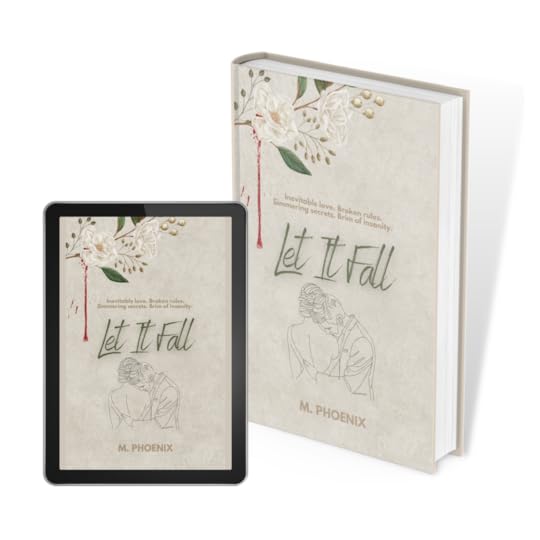
I wanted to take a moment to explain why I initially chose a pseudonym and why, after much reflection, I’ve now chosen to embrace my real name. Here’s why!
Honestly, I’m feeling a mix of nerves and happiness right now. I’m almost at a loss for words… but if there’s one thing I’m certain of, it’s this: I’m proud. Proud of the journey, the persistence, and the sheer effort it took to write and publish my first novel. With a zero budget, I faced a lot of challenges, but I never let that stop me—and I’m incredibly proud of how far I’ve come.
So, there you have it—Munazza Bangash it is!
Here’s what’s next on the to-do list:
Republish Let It FallFinish the first draft of my next bookJoin me. I share my writing journey, tips for authors, bonus content, and giveaways.
October 20, 2024
How Trauma Can Shape Your Characters | Let It Fall
Trauma not only shapes how we perceive our world but also how we act within it. It translates into our fears, actions, and words. Same goes for the characters in a book. In Let It Fall, each character’s progress is tied to their inner turmoil…their grief, trauma, and mental health struggles. Today I want to talk about two such characters from my book; Chris and Giselle.
Compared to a more prominent character who struggles with his mental health throughout the book, these two characters seem healthy. But everyone has their baggage, right? I read a quote somewhere that said, “Just because they carry it well, doesn’t mean it’s not heavy.” That resonated with me a lot, and it is a perfect example for Chris and Giselle.
On the surface, it might seem that these two characters don’t have much to worry about, but the kind of actions a person takes tells a lot about the silent struggles they’re going through. It’s not different for these characters either. Basically, you can not write characters without inner turmoil.
If we look at the real world, not a single person can be found without their fair share of worries. Not a single person can be found with zero struggles. Kids worry about homework and being bullied, teens worry about peer-pressure and identity, adults worry about responsibilities and leaving a mark, elderly worry about their legacies and what could have been, and so on. Forgive me, that was a vague generalization, but isn’t it true? Every person who walks this Earth is troubled about something.
For Giselle, grief over her mother’s death defines what her relationships are going to be like. Because of what she’s been through, she remains vulnerable yet resilient, and a little afraid of losing her loved ones. She tolerates no toxicity because life’s too short to endure that. When it comes to Chris, his emotional wounds influence his attachment to Giselle. The fear of losing her to someone else is what his inner conflict looks like. After losing his parents, he’s afraid to lose the only good thing in his life; his best friend. He spends sixteen years silently in love with her, afraid that if he tells her how he feels, he’d lose her.
Trauma, in many ways, is what influences the actions and behaviors of these characters. These backstories make the characters deeply human and complex. Their struggles are not just plot devices. They are elements that mirror real-world experiences. If you’re a writer, read on to learn how these elements can be incorporated into your stories.
1. Use Trauma as a Foundation for GrowthCharacters who have endured trauma are weighed down, the burden affecting every decision they make. As a writer, you must allow your characters’ actions to be guided by their past traumas. It can be hesitation in relationships, being indecisive, or feeling unworthy of love or appreciation or friendship. And then throughout the book, subtly heal their traumas from unbearable to manageable, and give them a character arc that is only noticeable when looked closely. This can add much depth to the narrative and make your story stand out.
2. Let Mental Health Struggles Reveal VulnerabilitiesNo one is perfect. To make your characters more relatable, make them flawed. A character’s mental health struggles can be used to reveal vulnerabilities here. Chris, for example, is deeply afraid of losing Giselle to someone else, so he keeps his feelings to himself and emotionally isolates himself. His struggle with self-worth and emotional scars make him relatable. Using inner monologue or small actions instead of dramatic outbursts can make the readers understand the characters more on a personal level.
3. Show Recovery as a Process, Not a DestinationLike we discussed before how we can use trauma to influence the character arcs. But it can’t be black and white. When it comes to the mental health struggles of your characters, you can’t just make them disappear by the end of the story. After the lessons are learnt, your readers may see a visible improvement in your character’s mental health and choices, but a completely healed version of them may seem unrealistic. It can be that they manage their struggles better. That they learn to carry it well…
4. Use Symbolism to Reflect Internal StrugglesYou don’t have to say it outright what the character is going through. Sometimes imagery gives a poetic feel to the narrative. For example, in Let It Fall, imagery like the wolves attacking a deer or the rain-soaked cemetery reflect the characters’ emotional states. Giselle visits her mother’s grave under a downpour. It serves as a metaphor for her overwhelming grief. If you’re a writer, try incorporating symbolic elements in your scenes. You can use settings to subtly echo the mental state of your characters.
5. Ground Your Characters in RealityIf you’re writing about mental health and trauma, you know it’s not easy. It requires sensitivity and authenticity. When Giselle’s father died, her reaction of running into her room and locking herself up was directly mirrored with how I’d reacted to the news of my father’s untimely demise. My characters in Let It Fall face real, raw emotions that don’t always have easy solutions. They struggle, fall, and rise again, just as real people do…just as I did. As a writer, try to avoid romanticizing mental health struggles. If you can not relate, fortunately, then research real experiences, listen to people’s stories, and deal with these topics with empathy. That’s the only way to make your characters’ reactions, choices, and thoughts more realistic and relatable.
To Sum it UpIf you’re looking to make you characters more human, more flawed, and more relatable, trauma and mental health battles can be your way to go. In Let It Fall, the struggles my characters face lead to conflict, as well as, growth. By giving your characters emotional complexities, you can make your narrative rich and layered and something that resonates with readers.
And remember that the goal isn’t to resolve these struggles perfectly in the end. The goal is to show the beauty in resilience and the strength that is found in imperfection.
…
If this post was helpful to you in any way, please don’t forget to leave a comment. I love hearing from you.
Question: If you were writing a book (or if you’ve written one), what would be (or is) your be your main character’s trauma that guides his/her actions?
Read Let It Fall on Kindle Unlimited!
Subscribe today to get password-protected content, updates, and bonus chapters right into your inbox.