R.L. Geer-Robbins's Blog
April 18, 2026
Dark Ethics: The Hepatitis Studies at Willowbrook State School
The post contains some affiliate links
Friends
Ah, the 1950s—when poodle skirts were in style, rock ‘n’ roll was taking over, and ethical boundaries in medical research were, well, more like loose guidelines. The Willowbrook State School, originally established to provide care for children with intellectual disabilities, became infamous not for its care but for its controversial hepatitis studies.
Strap in; it’s going to be a bumpy ride through a chapter of medical history that feels more like a horror movie script than a legitimate scientific inquiry.
Unfit to BreedIn the early 20th century, many U.S. states passed laws allowing the sterilization and institutionalization of individuals labeled as “unfit” to reproduce, often rooted in pseudoscientific beliefs. These laws were influenced by eugenics, a movement that aimed to improve the genetic quality of the human population. Proponents of eugenics claimed that certain traits, such as mental illness, low intelligence, and even criminal behavior, were hereditary.
For example, the widely circulated book “The Passing of the Great Race” by Madison Grant argued that the “Nordic” race was superior1 and needed to be preserved through selective breeding.2
Additionally, many states enacted sterilization laws targeting individuals deemed unfit, including those with mental disabilities or those living in poverty. The infamous Buck v. Bell Supreme Court case in 1927 upheld the constitutionality of sterilizing individuals without their consent, with Justice Oliver Wendell Holmes Jr. infamously stating, “Three generations of imbeciles are enough.”
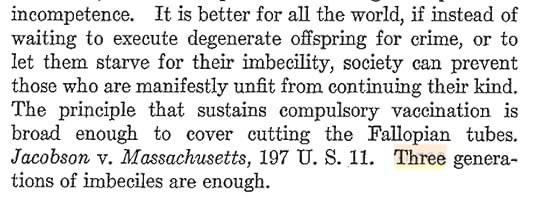 U.S. Reports: Buck v. Bell, 274 U.S. 200 (1927). U.S. Reports: Buck v. Bell, 274 U.S. 200 (1927). | Library of Congress
This case exemplified the prevailing belief that societal problems could be solved through genetic control, reflecting a deep-seated fear of perceived societal degeneration. Such pseudoscientific theories not only justified inhumane practices but also deeply influenced public policy, leading to the sterilization of tens of thousands of individuals across the country.
A School for the “Defective”When Willowbrook first opened its doors, it was touted as a progressive approach to caring for children deemed “defective”—a euphemism that reflects the era’s unfortunate language. The state envisioned a facility that could house around 4,000 residents.
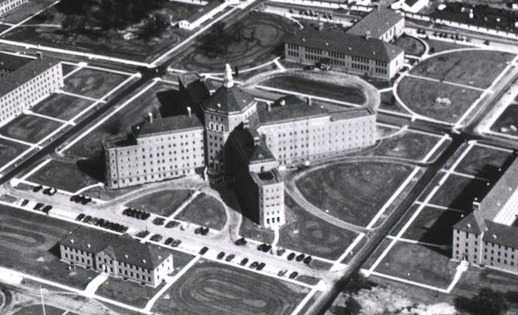 The Willowbrook State School. Credit: U.S. National Library of Medicine (NLM): Images from the History of Medicine
Fast forward to 1965, and the place was holding over 6,000 children—a number that could only be described as optimistically ambitious, if not downright delusional.
To manage a large number of residents with limited resources, some harmful practices emerged. One such practice involved the use of “Cripple Carts”—originally designed for residents with physical disabilities, like Spina Bifida, who couldn’t use wheelchairs. At Willowbrook, these carts were repurposed to allow a single staff member to transport multiple residents at once. Consequently, residents were often crammed into these carts and left in dayrooms for hours, receiving little stimulation or care.3
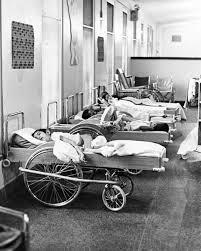 Photos courtesy of William Bronston, MD. Willowbrook State School, Staten Island, NY
During Governor Nelson A. Rockefeller’s administration, specifically in the 1971–1972 fiscal year, the budget for the New York State Department of Mental Hygiene, which oversaw Willowbrook, was cut by $20 million. This funding reduction had a devastating impact on the institution’s operations and staffing.
The overcrowding led to dangerous living conditions. Staff members, overwhelmed and undertrained, often resorted to neglect rather than care. Many kids suffered from untreated illnesses, and the emotional trauma of being confined in such an environment.
 Photos courtesy of William Bronston, MD. Willowbrook State School, Staten Island, NYWhat is Hepatitis A, and where did it come from?
Hepatitis A-like illnesses have been around longer than most of our favorite historical figures—about 5000 years, to be exact. Yes, that’s right, this virus has some serious staying power! Hippocrates, the original medical influencer, got in on the action in the 5th Century BC, giving us the charmingly named “benign epidemic jaundice.”4 Sounds like a delightful picnic, doesn’t it?
Epidemics of jaundice made quite the splash in Europe during the 17th, 18th, and 19th centuries—presumably because the growing and increasingly crowded populations had nothing better to do.
Meanwhile, British Military Hospitals in Germany kept meticulous records from 1761 to 17635, chronicling the troops’ attempts at camaraderie through a delightful array of ailments. The soldiers enjoyed fevers, jaundice, vomiting, diarrhea, abdominal pain, and, for the truly adventurous, the occasional fatality.
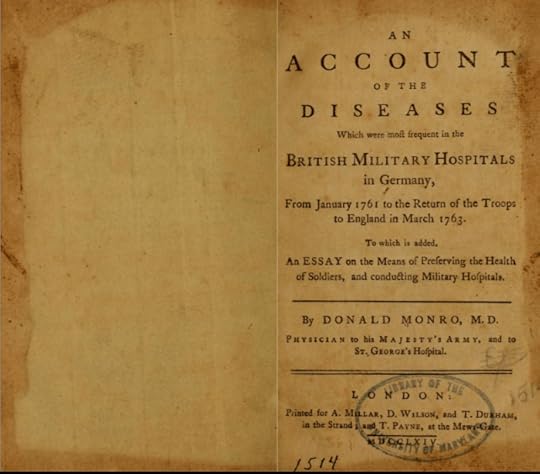 By Monro, Donald, 1727-1802
It wasn’t until 1973 that Hepatitis A finally got the recognition it deserved, officially breaking away from its Hepatitis B sibling and claiming its spot as the Hepatitis A virus (HAV).
Epidemic jaundice during World War II was largely characterized by a significant outbreak of serum hepatitis (hepatitis B) in 1942, all thanks to a rather unfortunate incident involving contaminated yellow fever vaccine. Over 50,000 U.S. troops found themselves under the weather, and investigations revealed that the source of this viral vacation was the use of human serum in the vaccine’s production. Talk about a hazardous side effect! It seems that, amid wartime, a little quality control went out the window, leading to an uninvited guest in the barracks.
Can you survive?Now, if you’re young and sprightly, you might get lucky with few or no symptoms at all. For those who do develop symptoms, you can expect a wait of two to six weeks, like a really inconvenient lottery. When the fun begins, it typically lasts about eight weeks, featuring a lovely lineup of nausea, vomiting, diarrhea, jaundice, fever, and abdominal pain. Who knew your liver could throw such a party?
About 10–15% of you may even get to enjoy a sequel, with symptoms returning within six months. For the elderly, there’s a rare chance of a dramatic finale: acute liver failure.

As for how you can catch this charming virus? It’s usually a foodborne affair. Just think of it as a game of culinary roulette, where consuming food or drinking water contaminated with infected feces could land you a ticket. Undercooked or raw shellfish are prime suspects, but don’t forget that close contact with an infectious person also counts.
Key Reasons for Choosing Willowbrook?Hepatitis A6 was virtually a rite of passage for new arrivals at Willowbrook, with nearly all residents contracting the virus within months of their admission.7
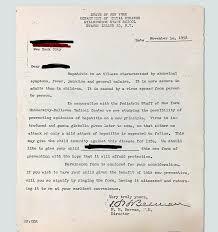 The College of Staten Island Archives and Special Collection
Researchers like Dr. Saul Krugman8 viewed this grim situation as a unique opportunity, considering it a natural laboratory to study the disease’s progression and develop vaccines. The irony of using human lives as experimental subjects was apparently lost on them. The extreme overcrowding and deplorable hygiene allowed the virus to spread with alarming ease. Willowbrook was less a school and more a petri dish for disease progression.
New children admitted to the institution were intentionally infected with hepatitis, often through horrific methods like ingesting infected fecal matter through chocolate milk9 or receiving injections.
The methods used to recruit children for this study were, shall we say, less than transparent. Parents were often pressured into giving their consent under dubious circumstances. For instance, when the main school halted new admissions in 1964 due to overcrowding, parents were informed that there were openings in the hepatitis unit—if their children were willing to participate in the study.
Approved Testing“The choice to administer the hepatitis virus to patients at Willowbrook was not made lightly,” Dr. Krugman stated in a 1958 paper published in the New England Journal of Medicine. This decision came after the research protocol received approval from state, university, and federal review boards10—a reassuring step, one might think. The researchers even chose to follow the World Medical Association’s Draft Code on Human Experimentation, because who doesn’t appreciate a good guideline? Even if it’s not followed to the letter.
Dr. Krugman believed that if a child contracted hepatitis after being injected with protective antibodies, they would simply experience a mild case of the virus. In his view, this was a win-win: the child would get a brief encounter with hepatitis and emerge with long-lasting protection against more serious infections in the future.
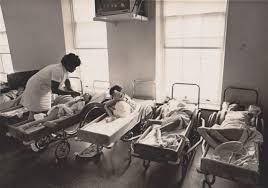 Photo from the College of Staten Island’s collection of Eric Aerts photographs of Willowbrook State School.
To this end, doctors tested gamma globulin injections as a potential—albeit ethically questionable—protective measure, treating the children more like lab rats than human beings. Researchers justified their actions by arguing that since the children were likely to contract the virus anyway, intentionally infecting them in a “controlled” environment would ultimately be more beneficial.
However, the reality proved to be far messier. The inability to identify which children were infected, combined with their constant interaction as part of their therapy, made isolating carriers impractical. After all, managing the spread of an infectious disease is notoriously challenging, even under the “most carefully controlled” conditions.
The Aftermath: Lasting EffectsAs each trial wrapped up, Dr. Krugman published the results in prominent medical journals, including the New England Journal of Medicine, the Lancet, and the Journal of the American Medical Association. Since the initial publication, these experiments have sparked controversy within the medical community.
In 1966, renowned medical ethicist Henry K. Beecher highlighted Willowbrook in his article “Ethics and Clinical Research,” condemning it as an unethical clinical experiment. He concluded that “there is no right to risk an injury to one person for the benefit of others.”
The studies resulted in a significant number of children contracting hepatitis. While some children recovered, many faced lasting effects that were not fully understood at the time. Chronic health issues, including liver damage and developmental delays, were common outcomes.
And what about the psychological toll? The stigma associated with mental disabilities, combined with the trauma of being treated as a lab rat, likely left lasting emotional scars. It’s a dark irony that a place meant for care turned into a breeding ground for ethical violations, leaving many children with a sense of abandonment and distrust in a system that was supposed to protect them.
Legal Consequences: The Absence of Accountability
Carabello recalled his time there with horror, describing in detail a memory he had never previously shared: “They used to give out cookies and candies but throw it on the floor and watch the kids get down on the floor and grab at it… I never told anybody that. I remember that horrible day. It happened. It happened.” For years, he had suppressed it: “I tried to block it out of my mind. I never talked about it, never told nobody about it.” His recollection, shared only decades later, reflects the extent to which everyday humiliations were normalized and left unaddressed.
Liu, E. (2025). Willowbrook State School: Institutional Abuse, Medical Ethics and the Rise of Disability Rights in the United States. Critical Debates in Humanities, Science and Global Justice, 5(2), 85–102.
When the Willowbrook experiment made its grand entrance into the public eye, it was like watching a train wreck in slow motion—only instead of just one car derailing, it was an entire fleet of ethical violations. The media got wind of it, thanks to intrepid journalist Geraldo Rivera, who decided that exposing the conditions at Willowbrook was a more pressing assignment than, say, covering celebrity gossip. His 1972 exposé showcased the appalling realities of the facility, turning what was once a quiet scandal into a full-blown public outrage.
In the wake of the uproar, the powers that be scrambled to make some changes. Suddenly, the concept of informed consent went from a vague suggestion to a more serious requirement. Researchers could no longer just wink at participants and say, “Trust me, it’ll be fine!” Instead, they had to ensure that participants—and their guardians—fully understood what they were signing up for.
Institutional Review Boards (IRBs) began popping up like mushrooms after a rainstorm, ready to oversee research projects and ensure that ethical considerations were given more than a passing glance.11
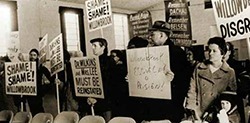 Courtesy the New York State Office for People With Developmental Disabilities (OPWDD)
Meanwhile, the disability rights movement seized the moment. Willowbrook became a rallying cry for advocates who were tired of seeing individuals with disabilities treated like unwanted house guests. The fallout from the scandal lent momentum to the deinstitutionalization movement, which aimed to shift care from large, overcrowded facilities to community-based settings.
As the dust settled, the ethical landscape of research began to shift dramatically. The Willowbrook studies served as an unintentional blueprint for the development of ethical standards in research, culminating in the Belmont Report—a document that emphasized respect for individuals, beneficence, and justice.
So, were there any repercussions for the researchers involved? The short answer is: not much. Despite the ethical violations and the suffering inflicted on vulnerable children, no one was charged with a crime. The studies were conducted under the guise of scientific research, and the lack of informed consent was largely overlooked.
Final ThoughtsThe hepatitis studies at Willowbrook serve as a haunting reminder of a time when ethics were tossed aside in the name of progress. While the 1950s may have been a decade of innovation, it also highlights the importance of informed consent and ethical standards in research. As we reflect on these dark chapters of history, let’s ensure they never become the punchline of a joke again.
After all, if we can’t learn from the past, we’re doomed to repeat it—hopefully with fewer children involved in the process.
To watch Geraldo Rivera’s original 1972 report, click here.
Until next time… keep reading and stay caffeinated.Subscribe below to stay up to date on myths, legends, mysteries, and the chaos of history.
By continuing, you accept the privacy policyFacebookThreadsInstagramAmazonX
If you’re looking for your next favorite read, I invite you to check out my series, The Raven Society. This spellbinding historical fantasy series takes us on a heart-pounding journey through forgotten legends and distorted history. Uncover the chilling secrets of mythology and confront the horrifying truths that transformed myths into monstrous realities. How far will you go to learn the truth?
The Writer and The Librarian (Book 1):
Signed copies at:
https://rlgeerrobbins.com/product/the-writer-and-the-librarian-the-raven-society-book-1/
Explore more blogs here:
April 4, 2026Operation Paperclip: America’s Dark Science Fair ProjectThis post contains some affiliate links Friends, Between 1945 and the 1960s, the U.S. government welcomed over 1,500 German scientists and … April 1, 2026Overcoming Stigma: Alice Ball’s Fight Against LeprosyAlice Augusta Ball, a pioneering chemist, developed an injectable treatment for leprosy in 1915. Despite her groundbreaking contributions being credited to … March 26, 2026Unveiling MKUltra: The Dark Legacy of Mind Control ExperimentsThe MKUltra program, initiated by the CIA in the 1950s, explored unethical mind control methods, raising significant ethical concerns about informed …Footnotes:
Pagen14- “Whatever may be its intellectual, its literary, its artistic or its musical aptitudes, as compared with other race, the Anglo-Saxon branch of the Nordic race is again showing itself to be that upon which the nation must chiefly depend for leadership, for courage, for loyalty, for unity and harmony of action, for self-sacrifice and devortion to an ideal.” ︎Page 60- “When it becomes thoroughly understood that the children of mixed marriages between contrasted races belong to the lower type, the importance of transmitting in unimpaired purity the blood inheritance of ages will be appreciated at its full value and to bring halfbreeds into the world will be regarded as a social and racial crime of the first magnitude.” ︎About | Willowbrook Mile | College of Staten Island Website ︎Georgios Pappas, Ismene J. Kiriaze, Matthew E. Falagas, Insights into infectious disease in the era of Hippocrates, International Journal of Infectious Diseases, Volume 12, Issue 4, 2008, Pages 347-350, ISSN 1201-9712, https://doi.org/10.1016/j.ijid.2007.11.003 (https://www.sciencedirect.com/science/article/pii/S1201971207002123) ︎An account of the diseases which were most frequent in the British military hospitals in Germany, from January 1761 to the return of the troops to England in March 1763. To which is added, An essay on the means of preserving the health of soldiers, and conducting military hospitals : Monro, Donald, 1727-1802: Free Download, Borrow, and Streaming : Internet Archive ︎Hepatitis A is a highly contagious, short-term liver infection caused by the hepatitis A virus (HAV). It spreads mainly through fecal-oral transmission, often via contaminated food, water, or close personal contact. While it can lead to acute symptoms such as fever, jaundice, and fatigue, the good news is that most people recover fully without any lasting liver damage. So, while it’s a nuisance, it’s generally not a long-term health threat! ︎ More recent estimates put the risk of a child contracting hepatitis at Willowbrook at 30 to 50 percent. Master 5.4 – Willowbrook Hepatitis Experiments ︎Krugman was the first to distinguish hepatitis A from hepatitis B, and made great strides in describing their different characteristics and behaviors. ︎Willowbrook’s Hepatitis Study – The Aggie Transcript ︎The Willowbrook hepatitis experiments (mid-1950s–1970s) were approved by the New York State Department of Mental Hygiene, with additional sponsorship from the Armed Forces Epidemiological Board and review by federal authorities. ︎Willowbrook State School: Institutional Abuse, Medical Ethics and the Rise of Disability Rights in the United States | Published in Critical Debates in Humanities, Science and Global Justice ︎
Sources:
Welcome to the Pennhurst Memorial & Preservation Alliance
The Discovery of Hepatitis Viruses: Agents and Disease – PMC
Willowbrook case brought needed national reform « Access Press
The Hideous Truths Of Testing Vaccines On Humans
Historical Path of Discovery of Viral Hepatitis — HMSR
The horrors of Willowbrook State School – silive.com
The post Dark Ethics: The Hepatitis Studies at Willowbrook State School appeared first on Chasing History.


April 4, 2026
Operation Paperclip: America’s Dark Science Fair Project
This post contains some affiliate links
Friends,
Between 1945 and the 1960s, the U.S. government welcomed over 1,500 German scientists and engineers through Project Paperclip. Their mission? To work on cutting-edge projects like guided missiles, jet and rocket engines, aerodynamics, aerospace medicine, and submarine technology.
The hope was that these experts would provide a competitive edge in the aftermath of WWII and throughout the Cold War. As time went on, many of these German specialists seamlessly integrated into American military, industrial, and academic roles, often vanishing into the fabric of U.S. innovation.
The downside to this endeavor? Many of these scientists and engineers had deep ties to the Nazi regime, with some being members of the Nazi Party, SS, or SA officers. Disturbingly, several had even played roles in overseeing the atrocities committed in concentration camps.
The Setup: What is Operation Paperclip?In the aftermath of World War II, the U.S. found itself in a bit of a pickle. The war was over, but another one was cresting on the horizon- The Cold War. On 19 July 1945, the U.S. Joint Chiefs of Staff launched Operation OVERCAST to kickstart the American military’s pursuit of advanced rocket technology. Supervised by the Department of War’s assistant chief of staff, G-2, the initiative was initially aimed at hastening the end of the Pacific war. To achieve this, G-2 turned to its Alsos personnel, who compiled a list of German experts deemed essential for leveraging and enhancing Germany’s rocketry advancements.
The Alsos teams, made up of Army intelligence officers and U.S. citizen-scientists, had been active in Europe since 1943, tracking down and capturing key individuals, facilities, and materials of scientific interest. Once selected, the German scientists and technicians were assembled at Fort Standish1 (later renamed Fort Strong) in Boston Harbor, where they remained under military custody for processing and interrogation.
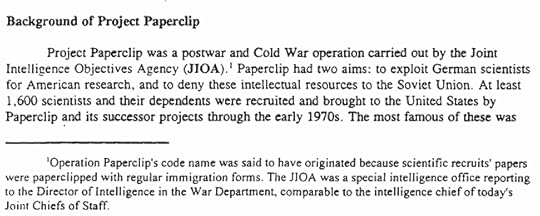 1995 Memorandum to the Members of the Advisory Committee on Human Radiation Experiments. 16385196.pdfWhere Did we Hide Them?
 As postwar downsizing led to the closure of Fort Strong, the scientists were relocated to Fort Hunt, Virginia (code-named P.O. Box 1142), and then to Mitchel Field, New York2. Faced with a personnel shortage in G-2, by 1947, a small liaison team was established at the Army’s New York Port of Embarkation to meet incoming scientists, process them at Mitchel Field, and assign them to their new roles.
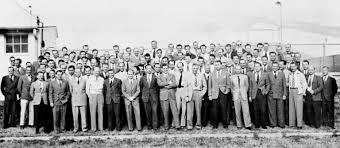 Over 100 German scientists on the Von Braun Rocket Team gather at Fort Bliss, Texas in 1946, including Wernher von Braun, Ludwig Roth, and Arthur Rudolph.
 Photograph by Donaldson Collection/Getty Images
In total, thousands of German scientists and engineers were interviewed by Army interrogators, resulting in short-term employment contracts for over six hundred technical specialists. These experts went on to work at various Army, Air Force, and Navy installations across the U.S., including Fort Bliss in Texas, Redstone Arsenal in Alabama, and Wright Field in Ohio.
Who Came to Dinner?Let’s take a look at some of the special guests who made their way to the U.S. courtesy of Operation Paperclip:
 Walt Disney (left) and Wernher von Braun. (Image credit: NACA)Wernher von Braun:
 Wernher von Braun had quite the resume: a party member, SS officer, and casually involved in the grim production of missiles using concentration-camp labor3—just a regular day at the office for him and a few of his associates. The U.S. Army, in a stunning display of selective memory, decided to keep those little details classified and whisked von Braun and about 125 of his colleagues off to Fort Bliss, just outside El Paso, Texas.
There, these German experts helped Americans launch V-2 rockets, while also being handed the delightful task of developing an experimental cruise missile. Because, you know, nothing says “welcome to America” like missile development! By 1950, von Braun’s team was relocated to Redstone Arsenal in Huntsville, Alabama, where they became the beating heart of the Army’s nuclear-armed ballistic missile program.
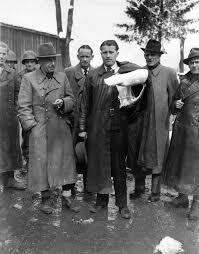 Wernher von Braun and several of his staff surrender to the 44th Infantry Division, 7th Army. In the center is von Braun, with his arm in a cast due to an automobile accident, 03 May 1945.
In his downtime, von Braun transformed into a media darling, passionately advocating for spaceflight in magazines and on TV (to include a Disney appearance)—because if you’re going to have a dark past, you might as well sell some hope for the future, right? Then, in a plot twist worthy of a Hollywood script, after the Soviets launched Sputnik in October 1957, von Braun and his now-thousands-strong German-led team (most of whom were naturalized Americans) helped launch the first U.S. satellite, Explorer I.
By 1960, von Braun’s division of the Army Ballistic Missile Agency was handed off to NASA4, a shiny new civilian space agency. The Huntsville Germans, many freshly minted as American citizens in 1954-1955, went on to spearhead the development of the Saturn rockets that ultimately took Americans to the Moon in 1969.
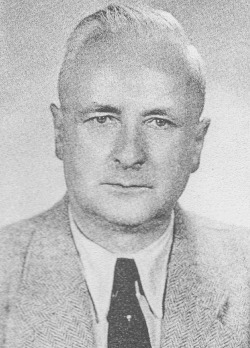 Walter Schreiber – Walter Schreiber | World War II Database
Walter Schreiber:
Walter Paul Emil Schreiber (1893–1970) was a German medical officer and brigadier general (Generalarzt) in the Wehrmacht Medical Service, known for his expertise in epidemiology.5 Despite his involvement in Nazi-era human experimentation, he was brought to the United States under Operation Paperclip. Schreiber played a notable role as a witness against Hermann Göring at the Nuremberg Trials6 before defecting from the Soviet zone to work for the U.S. military.
Schreiber faced serious accusations regarding his involvement in unethical medical experiments on concentration camp prisoners, including those at Ravensbrück and Dachau. He was alleged to have assigned doctors to carry out these experiments and authorized funding for them. After escaping Soviet captivity, he worked for the U.S. Counter Intelligence Corps (CIC) at Camp King as the camp physician for the POW Interrogation camp in Oberursel, Germany.7
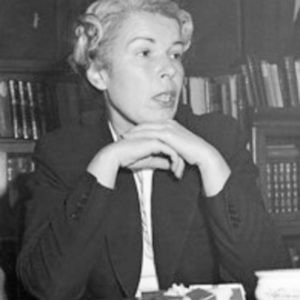 Mildred E. Gillars (née Sisk), aka “Axis Sally” during one of her interrogation sessions at Camp King. Photo by anonymous (date unknown). Baatz/AP.
In 1951, Schreiber was brought to the United States, with his wife, son, a daughter, and mother-in-law, through Operation Paperclip, where he contributed to the U.S. Air Force School of Aviation Medicine at Randolph Air Force Base in Texas.
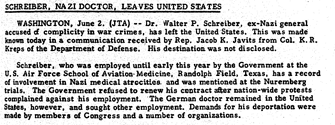 Jewish Telegraphic Agency Bulletin – June 3, 1952
However, following a 1952 New York Times report and subsequent public outcry linking him to Nazi war crimes, the U.S. Joint Intelligence Objectives Agency arranged for his departure, leading him to emigrate to Argentina.8
 Dr. Hubertus Strughold in an early chamber designed to simulate the conditions in space. Luis Marden/National Geographic Stock
Hubertus Strughold:
Known as the “father of space medicine,” Strughold made significant contributions at the USAF School of Aerospace Medicine (USAFSAM) and NASA, focusing on space suits and environmental safety. However, his legacy is shadowed by heavy criticism for his involvement in Nazi medical experiments during World War II.
He participated in a 1942 conference that delved into human experiments at the Dachau concentration camp, where inmates were subjected to gruesome lethal freezing and low-pressure tests.9 In these chilling experiments, primarily Polish and Soviet POWs were locked inside a portable pressure chamber constructed by the Luftwaffe, designed to simulate the effects of freefalling from high altitudes without oxygen. Out of the 200 test subjects involved, a staggering 80 were killed outright by the experiments, while the remainder met their grim fate at the hands of the SS.
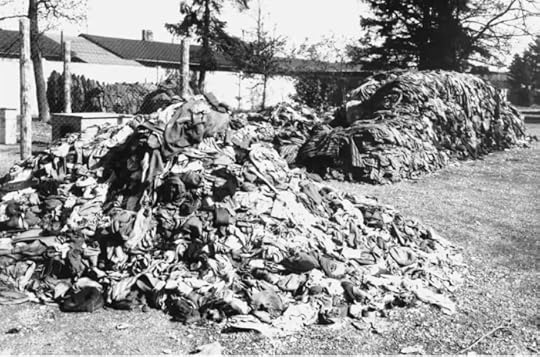 This pile of clothes belonged to prisoners of the Dachau concentration camp, liberated by troops of the U.S. Seventh Army. Slave laborers were compelled to strip before they were killed.
Corbis/Getty Images
After relocating to the U.S. as part of Operation Paperclip, Strughold was hired by the U.S. Air Force, where he helped launch a rhesus monkey into space and worked on pressurization systems for astronauts. During his tenure with the U.S. Air Force and NASA, Strughold was the focus of three separate U.S. government investigations regarding his suspected involvement in war crimes committed during the Nazi regime.
1958 Investigation: The Justice Department conducted an investigation that ultimately found no derogatory information against him, fully exonerating Strughold.1974 Inquiry: A second investigation by the Immigration and Naturalization Service was launched but was later abandoned due to a lack of evidence.1983 Reopening: The Office of Special Investigations reopened his case after several years but withdrew from the effort following Strughold’s death.After he passed away on 25 Sept 1986, Strughold’s alleged connections to the Dachau experiments became more widely recognized, especially after the release of U.S. Army Intelligence documents from 1945, which identified him as one of those sought by U.S. authorities as war criminals.
The Impact on U.S. Science and MedicineNow, let’s get to the juicy part: how did these former Nazis influence American science and medicine?
Rocket Science:Operation Paperclip had a profound impact on rocket science, particularly through the contributions of renowned scientists like Wernher von Braun. These experts brought with them advanced knowledge of propulsion systems and rocket design, which significantly accelerated the United States’ space program. Their expertise in developing and launching V-2 rockets during World War II translated into key advancements for American missile technology and space exploration. This foundational work laid the groundwork for the development of the Redstone and Saturn rockets, which ultimately enabled landmark missions, including the Apollo moon landings.
 This image of a V-2 rocket being prepared for launch was found in the pocket of a German prisoner. The U.S. military undertook Operation Paperclip to bring Nazi rocket technology to the United States after World War II.
In addition to technical expertise, the integration of these scientists into American aerospace initiatives fostered a culture of innovation and collaboration within NASA and the broader defense community. Their experience with high-stakes projects and complex engineering challenges helped streamline processes and improve project outcomes. By leveraging their skills, the U.S. not only advanced its military capabilities but also asserted itself as a leader in space exploration during the Cold War. The successful deployment of satellites and human spaceflight missions, culminating in the moon landing, stands as a testament to the critical role these scientists played in shaping the future of rocket science and aerospace technology.
So, next time you look at the moon, just remember—there’s a Nazi’s fingerprints on that lunar module!
Medical Advancements:
The knowledge gained from unethical experiments allowed the U.S. to advance in trauma medicine and aerospace medicine. While the ethical implications raise eyebrows, the advancements in these fields cannot be denied. It’s like using a cheat code in a video game—morally questionable, but hey, you beat the level!
Some scientists played a key role in developing vaccines and treatments for infectious diseases by utilizing insights gained from wartime research. They made significant advances in understanding drug interactions and therapies, especially in high-stress situations like military operations. There were also innovations in trauma care and emergency procedures that enhanced survival rates for combat injuries, along with improvements in field medical practices, including quicker assessment and treatment methods for wounded soldiers.
Military Technology:
Researchers contributed to advancements in jet propulsion, radar systems, and aerospace engineering, significantly improving aircraft performance and combat readiness. The development of new materials and manufacturing techniques also enhanced the durability and efficiency of military equipment. As a result, the U.S. military was better equipped to face emerging threats, ensuring a technological edge that would define its strategic posture for decades. It’s almost like a twisted version of “The A-Team” where the bad guys become the heroes.
 Swept wings on aircraft like the English Electric Lightning exist thanks to scientists obtained during “Operation Paperclip”. Source: Mike Freer/Wikimedia Commons
Yet another delightful innovation we can thank “Operation Paperclip” for is modern helicopter technology. Sure, there were prototypes before World War II, but it was Anton Flettner who really took the idea and spun it into something that could actually fly. Under Kaman’s watchful eye, Flettner helped create the iconic HH-43 “Huskie,” which became a star of the Vietnam War—because nothing screams “victory” quite like a flying machine that could drop in with style amidst chaos.

Kaman Aircraft is still around, and guess what? Their intermeshing rotor helicopters are still among their biggest exports, proving that some innovations are just too good—not to mention too noisy—to fade away. Oh, and let’s not forget Flettner’s “Flettner motor.” This quirky contraption was meant to boost some transport vessels, and now it’s being looked at for sustainable shipping.
Other AdvancementsAnother gem we can credit to “Operation Paperclip” is the P-N junction. Yes, that little slice of genius is at the heart of everything from transistors to integrated circuits, making it one of the most pivotal electrical inventions ever. So, in a way, you can thank a few ex-Nazis for your LED lights—because nothing says “progress” quite like illuminating your home with the remnants of questionable ethical decisions!

Another charming invention that sprung from “Operation Paperclip” is the dot matrix printer. Yes, you heard that right! Brought to life by Fritz Karl Preikschat, this relic still clunks along today—though mainly in the depths of dusty storage rooms. A real multitasker, Preikschat also dabbled in hybrid cars, inventing an early version of regenerative braking systems. Unfortunately, while he snagged a patent, his design was never prototyped or commercialized.
 The Moral Dilemma
Let’s not sugarcoat it: the U.S. was making some seriously questionable choices by recruiting these scientists. The ethical implications of using knowledge gained from horrific acts are enough to keep you up at night. But in the grand scheme of things, the ends justified the means, right? Or at least that’s what they told themselves while sipping coffee in their Pentagon offices.
While the government may have convinced itself that the technological advancements justified the moral compromises, this rationalization highlights a troubling precedent that ethics can be sidelined in the name of national security.
By employing former Nazis, the government risked alienating the very citizens it aimed to protect. If the public had been fully aware of these scientists’ pasts, it could have led to widespread outrage and a significant decline in trust towards the government. Many Americans were kept in the dark about the backgrounds of these scientists, raising ethical concerns about transparency and accountability. The lack of disclosure reflects a broader issue of government responsibility to its citizens.
Investigations often shielded these individuals from accountability, as seen in the 1958 Justice Department inquiry that exonerated Strughold despite his connections to war crimes. This selective approach underscores a troubling willingness to prioritize expediency over justice. The government’s decision to withhold or downplay information regarding these scientists’ pasts further complicates the ethical landscape. The delayed release of documents revealing their involvement in Nazi atrocities reflects an effort to maintain a favorable narrative.
Final ThoughtsThe legacy of Operation Paperclip serves as a stark reminder of the moral complexities inherent in national security decisions. While it may have led to significant advancements in technology and military capability, it also raises critical ethical questions about accountability, human rights, and the lengths to which governments will go to achieve their goals.
In the end, we welcomed some of the brightest (and darkest) minds into our scientific community, proving that sometimes, history is stranger than fiction. So, as we marvel at our technological achievements, let’s raise a glass to the morally ambiguous past that helped shape our present. Here’s to science—where the lines between good and evil are often as blurred as the ethics behind them!
What do you think? Did Operation Paperclip go too far, or was it a necessary evil for progress? Let me know your thoughts!
For an amazing discussion on this topic, please click here to watch From WWII to the Space Race: The Story of Project Paperclip hosted by the Museum of Jewish Heritage.
Until next time, Keep Reading and Stay Caffeinated.For those who want to explore more:

Our Germans: Project Paperclip and the National Security State. Exploring the vicious bureaucratic rivalries that erupted over the wisdom, efficacy, and morality of pursuing Paperclip, Our Germans reveals how some Paperclip proponents and scientists influenced the perception of the rival Soviet threat by volunteering inflated estimates of Russian intentions and technical capabilities.
Subscribe below to stay up to date on myths, legends, mysteries, and the chaos I call my life.
By continuing, you accept the privacy policyFacebookThreadsInstagramAmazonXIf you’re looking for your next favorite read, I invite you to check out my series, The Raven Society. This spellbinding historical fantasy series takes us on a heart-pounding journey through forgotten legends and distorted history. Uncover the chilling secrets of mythology and confront the horrifying truths that transformed myths into monstrous realities. How far will you go to learn the truth?
The Writer and The Librarian (Book 1):
Signed copies at:
https://rlgeerrobbins.com/product/the-writer-and-the-librarian-the-raven-society-book-1/
Explore more blogs here: March 26, 2026Unveiling MKUltra: The Dark Legacy of Mind Control ExperimentsThe MKUltra program, initiated by the CIA in the 1950s, explored unethical … October 28, 2025Unveiling the Bilderberg Group: Conspiracy Theories and RealityThe Bilderberg Meeting, founded in 1954, gathers 130 leaders annually under confidentiality, … October 8, 2025Unveiling Skull & Bones: America’s Secret SocietyEach year, fifteen of Yale's most promising seniors receive a tap on … Footnotes:Fort Standish was a coastal defense fort located on Lovell’s Island in Boston Harbor, Massachusetts. Completed in 1907 and active until 1947, it played a crucial role in defending Boston from enemy ships during both World Wars. The fort featured gun batteries, a minefield, and later, anti-aircraft guns to enhance its defensive capabilities. Today, Fort Standish is part of the Boston Harbor Islands National and State Park︎Mitchel Field, located in Long Island, New York, was a vital administrative hub and processing center for the U.S. Army Air Forces in the immediate postwar era. It played a significant role in Operation Paperclip by overseeing personnel management, logistics, and intelligence activities related to the recruitment of German specialists. ︎Some of the advanced technologies developed between 1944 and 1945 came at a horrific cost, built by imprisoned workers under duress—and it cost thousands of lives. Take the V-2 rocket, for instance: more than twice as many Allied prisoners perished while setting up the factory and producing these weapons than the number of Allied civilians and soldiers who were actually hit by them during rocket attacks. “Wonder Weapons” and Slave Labor | National Air and Space Museum ︎In 1960, President Eisenhower made the bold move of transferring his rocket development team at Redstone Arsenal from the Army to the freshly minted National Aeronautics and Space Administration (NASA). Their main mission? To whip up some colossal Saturn rockets. This change of scenery landed von Braun in the hot seat as the director of NASA’s Marshall Space Flight Center and the chief architect behind the Saturn V launch vehicle—the superbooster that would ultimately blast Americans to the Moon. Wernher von Braun – NASA ︎“Epidemiology is the scientific study of how diseases and health-related states are distributed, caused, and controlled in specific populations. It is a data-driven field of public health that investigates patterns of illnesses, identifies risk factors, and applies this knowledge to manage or prevent health issues like outbreaks and chronic diseases.” What Is Epidemiology? | NIDCD ︎Nuremberg – Document Viewer – Extracts from the testimony of Walter Schreiber in the International Military Tribunal, concerning biological warfare ︎Walter Schreiber | World War II Database ︎In Argentina, Walter Schreiber took on the role of a general practitioner, essentially becoming a country doctor in the community of San Carlos de Bariloche, where he settled. He spent his later years practicing medicine away from the spotlight, living a quiet life until he suddenly passed away from a heart attack on September 5, 1970. ︎Nazi Science — The Dachau Hypothermia Experiments | New England Journal of Medicine ︎Sources:
DVIDS – News – Operation OVERCAST Created to Recruit German Scientists (19 JUL 1945)
Wernher von Braun and the Nazis | American Experience | Official Site | PBS
Evil Doctors and Scientists From World War II
https://ir.library.oregonstate.edu/downloads/x346dd29w?locale=en
Operation Paperclip, and Essay by Medical Student Elizabeth Adams
Nuremberg – Hubertus Strughold
Operation Paperclip – Warfare History Network
The post Operation Paperclip: America’s Dark Science Fair Project appeared first on Chasing History.
April 1, 2026
Overcoming Stigma: Alice Ball’s Fight Against Leprosy
This post contains some affiliate links
Friends,
As you sit on the edge of your narrow cot, the weight of despair presses down on you like a heavy shroud. The pain from the lesions on your skin feels like fire, and each day blends into the next, filled with isolation and longing for a life once lived freely among friends and family. The whispers of fear and stigma surround you, leaving you feeling like a ghost in your own body, a mere shadow of who you once were.
Just as you begin to lose hope, a figure appears in the doorway—Dr. Alice Augusta Ball, her presence radiating warmth and determination. With a confident smile, she holds out a vial of liquid that glimmers with promise. “I have a treatment that could change your life,” she says, and in that moment, you feel a flicker of hope ignite within you, as if the miracle you’ve been praying for has finally arrived.
In the annals of medical history, few stories resonate with the themes of innovation, perseverance, and the struggle for recognition as much as Alice Augusta Ball’s. At just 23 years old, in 1915, Ball developed a groundbreaking injectable treatment for leprosy (Hansen’s disease) that would remain the most effective remedy for nearly three decades. Despite her monumental contributions, her legacy faced significant challenges, including a colleague’s theft of credit. Today, we celebrate her achievements and the impact of her work.
A Family of TrailblazersAlice Augusta Ball was born on 24 July 1892 in Seattle, Washington, as the second of four siblings. Her family was notable for its accomplishments and community involvement. Her father, James Presley Ball Jr., was both a newspaper editor and a lawyer, contributing to the city’s intellectual and cultural landscape. Meanwhile, her mother, Laura Louise, was a talented photographer, known for her artistic eye and ability to capture life’s moments.
Alice’s grandfather, James Presley Ball Sr., was a distinguished photographer and a pioneer among African Americans in the field, known for his innovative use of the daguerreotype process. Growing up, Alice often watched him skillfully mix chemicals in his darkroom, an experience that ignited her passion for chemistry. This early exposure to the art and science of photography laid the groundwork for her future scientific pursuits, inspiring her to explore the transformative power of chemistry.
The Challenge of LeprosyLeprosy, or Hansen’s disease, is caused by the bacterium Mycobacterium leprae. Historically, it was the ultimate party crasher, known for causing severe skin lesions, nerve damage, and a whole lot of social isolation.
 Spinalonga Island, Crete, Greece, Where People with Leprosy Were Segregated.
The first known documentation dates back to ancient India around 600 BC1, but it really knew how to make a splash in the Middle Ages when it became synonymous with fear and stigma. Think of it as the original “social distancing” champion—only it didn’t come with hand sanitizer or a Netflix subscription.
So, what should you look out for? Early signs include skin lesions that might not sound too bad until you realize they can lead to numbness and loss of feeling. Imagine waking up one day and realizing that your fingers are now more like limp noodles! Other symptoms include thickened skin, muscle weakness, and a charming little habit of making your nose look like it’s gone on a permanent vacation.2
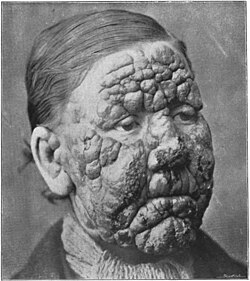 Man with Leprosy. Public Domain
File: An introduction to dermatology (1905) nodular leprosy.jpg
Back in the day, treatments were about as effective as a chocolate teapot. Options included everything from herbal remedies3 to mercury4 (yes, that mercury) and even the unholy trinity of medieval medicine: bloodletting, prayers, and a sprinkle of “good luck.”
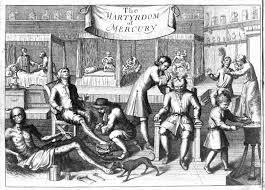 Open Archaeology. 2. 10.1515/opar-2016-0003.
While leprosy itself isn’t typically deadly, it can lead to serious complications if left untreated. Think of it more like a really bad roommate that you can’t get rid of—sure, it won’t kill you, but it’ll ruin your quality of life! The real danger was the stigma and social isolation, which often left patients feeling like pariahs in their own communities.
Born to ShineAlice Ball graduated from Seattle High School in 1910, where she dazzled everyone with her exceptional scientific talent. Following her passion, she enrolled at the University of Washington, where she earned dual bachelor’s degrees in Pharmaceutical Chemistry (1912) and Pharmacy (1914).
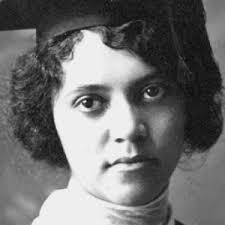 “I work and work and still it seems that I have done nothing.”
Dr. Alice A. Ball, a quote from her high-school yearbook
But Alice didn’t stop there! In 1915, she made history by becoming the first Black woman and the first individual to earn a Master’s degree in Chemistry from the College of Hawaii (now the University of Hawaii). Her academic prowess shone brightly as she co-authored a research paper with a professor, which was published in the prestigious Journal of the American Chemical Society.
Alice’s achievements didn’t just end with her degrees; she also became a trailblazer in academia. She was the first woman and the first African American to teach chemistry at the College of Hawaii, paving the way for future generations of scientists.
The ‘Ball Method’: A Breakthrough TreatmentDuring her research in Hawaii, Ball focused on chaulmoogra oil, a traditional remedy used for leprosy. Recognizing its limitations in oral form, she sought to develop an injectable version that would enhance its efficacy.5
This groundbreaking technique, known as the “Ball Method,” involved isolating the ethyl esters of fatty acids in the oil, making the treatment easy to inject and readily absorbed by the body. It marked the first effective treatment for leprosy, successfully alleviating symptoms and halting the disease’s progression.
 Alice Ball’s Lab at the University of Hawai’i.
Alice Ball’s groundbreaking work had the potential to revolutionize the lives of thousands of patients living in leprosariums worldwide, including those at the Kalaupapa settlement on the Hawaiian island of Molokai. Established in 1866, this isolated settlement saw the Kingdom’s authorities forcibly relocate over 8,000 individuals diagnosed with leprosy, declaring them legally dead (Senthillingham).6
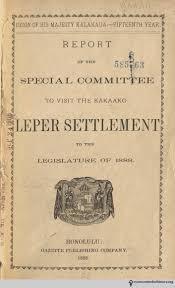 Cover of
Report of the special committee to visit the Kakaako Leper Settlement to the Legislature of 1888
, 1888.
Cover of
Report of the special committee to visit the Kakaako Leper Settlement to the Legislature of 1888
, 1888.Equipped with little more than a shovel, a blanket, and a few livestock, the first group of exiles at Kalaupapa faced harrowing challenges. Over the initial five years after the settlement’s founding, they endured a shocking 46% mortality rate. To make matters worse, if these patients had children during their confinement, those children were forcibly taken away and placed for adoption, adding to the heartbreak of their already devastating circumstances.
A Legacy Under SiegeIn 1916, just a year after her groundbreaking discovery, Alice Ball fell seriously ill. While the exact cause remains unclear, some sources suggest she may have been exposed to chlorine gas during her lab work. Tragically, she passed away at the young age of 24, before she could finalize her research and publish her findings.
Click here to read Alice A. Ball’s Thesis.
Dr. Arthur Dean, the same individual who initially sought her expertise, took it upon himself to publish her work under his name. This act is widely regarded as one of the most egregious cases of scientific credit theft in history). He refined her methods and began issuing papers on the treatment, all while neglecting to acknowledge Ball’s crucial contributions. In fact, he presented this work as his own invention, dubbing it the “Dean Method.” At the time, he was the dean of the college and later became the university president.7
For decades, Dean basked in the accolades for developing the first effective treatment for leprosy, with medical journals, textbooks, and historical accounts crediting him for a breakthrough that was, in truth, Ball’s achievement. While the scientific community celebrated Dean as a medical pioneer, Alice Ball’s name faded from history. This erasure is particularly tragic given the intersectional discrimination she faced as both an African American and a woman in the early 20th-century scientific landscape.
Restoration of Her LegacyIn 1922, Dr. Harry Hollmann, a U.S. public health officer in Hawai‘i, published an article detailing how he had sought out the young chemistry instructor to leverage her expertise in extracting the essence of the chaulmoogra tree. He referred to her innovative process as “Ball’s Method,” and his efforts helped restore Alice Augusta Ball’s rightful place in history. As Paul Wermager notes in a chapter for They Followed the Trade Winds: African Americans in Hawai‘i, Hollmann’s work “rescued Alice Augusta Ball from the charnel houses of history, giving her the credit she deserved for her remarkable achievements.”
Wermager describes the article as a crucial piece of a “giant jigsaw puzzle with pieces scattered everywhere.” For years, he has diligently researched the details of Ball’s life, emphasizing that her significance extends far beyond the Mānoa campus. “She was far ahead of her time and is likely the first African American to be published in the Journal of the American Chemical Society,” he asserts. The journal featured articles co-authored by Ball in 1914 and 1917.
Remarkably, the treatment she developed was so effective that three years after her death, 78 patients were able to recover and return home from the leper colony at Kalaupapa on Moloka‘i.
Final ThoughtsIn 2007, the University of Hawaii Board of Regents posthumously awarded Alice Ball their Medal of Distinction in recognition of her exceptional achievements and significant contributions to the university, the state, and the world. This prestigious medal is proudly displayed at UH Mānoa’s Hamilton Library, alongside her portrait.
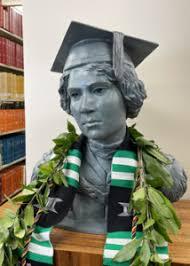 A bronze bust of Alice Augusta Ball. (Photo courtesy of the University of Hawaii)
Additionally, Alice Ball Day was proclaimed in 2000, designating February 29 as a day to honor her legacy. This date falls during Black History Month, just after Kalaupapa Month in January and before Women’s History Month in March, ensuring that her remarkable contributions are celebrated and remembered.
Alice Ball’s innovative treatment for leprosy transformed the lives of many and laid the groundwork for future advancements in medicine. As we reflect on her remarkable achievements, let us commit to ensuring that the contributions of all pioneers in science are celebrated and remembered. Alice Augusta Ball’s legacy is not just a story of medical advancement; it is a testament to resilience, innovation, and the enduring impact of those who dare to challenge the status quo.
Until next time, Keep Reading and Stay Caffeinated.For those interested in learning more:

The Colony: The Harrowing True Story Of The Exiles Of Molokai. Beginning in 1866 and continuing for over a century, more than eight thousand people suspected of having leprosy were forcibly exiled to the Hawaiian island of Molokai — the longest and deadliest instance of medical segregation in American history.
Carville’s Cure: Leprosy, Stigma, and the Fight for Justice. The Mississippi River between Baton Rouge and New Orleans curls around an old sugar plantation that long housed one of America’s most painful secrets. Locals knew it as Carville, the site of the only leprosy colony in the continental United States, where generations of afflicted Americans were isolated―often against their will and until their deaths.
Subscribe below to stay up to date on myths, legends, mysteries, and the chaos I call my life. By continuing, you accept the privacy policyFacebookThreadsInstagramAmazonXIf you’re looking for your next favorite read, I invite you to check out my series, The Raven Society. This spellbinding historical fantasy series takes us on a heart-pounding journey through forgotten legends and distorted history. Uncover the chilling secrets of mythology and confront the horrifying truths that transformed myths into monstrous realities. How far will you go to learn the truth?
The Writer and The Librarian (Book 1):
Signed copies at:
https://rlgeerrobbins.com/product/the-writer-and-the-librarian-the-raven-society-book-1/
Explore more blogs here:
March 18, 2026The Mysterious Life of Anne of Cleves: A Royal Marriage Gone Hilariously WrongAnne of Cleves, married to Henry VIII for political reasons, turned her … March 8, 2026Women of Valor: The Unsung Heroines of the Vietnam WarEight women are honored at the Vietnam War Memorial, showcasing their diverse … March 7, 2026The Tragic Tale of Julia Pastrana: A Life on DisplayJulia Pastrana’s haunting tale exposes society’s grotesque fascination with the "different," reminding …Footnotes:
The newly-discovered skeleton was buried around 2000 B.C. in Rajasthan, India. In Hindu tradition, burial is a rarity reserved for those of high respect or those deemed unsuitable for cremation. This includes outcasts, pregnant women, children under five, victims of magic or curses, and individuals with leprosy. For lepers, their skeletons were interred within a large stone enclosure, filled with vitrified ash from burned cow dung—the most sacred and purifying substance in Vedic tradition. This practice reflects a unique blend of reverence and ritual in dealing with those marginalized by society.︎The bacteria that causes leprosy grows very slowly. It may take up to 20 years after contact with the bacteria to develop signs of the disease. ︎Traditionally, Chaulmoogra oil was extracted from Hydnocarpus wightiana seeds and consumed internally, externally, and eternally. Unfortunatly, Chaulmoogra oil may cause nausea, vomiting, and diarrhea if taken orally due to possible cyanide poisoning. Leprosy injections caused severe pain and abscesses, while topical applications can irritate the skin. ︎During the late 15th century, mercury became a dominant treatment for syphilis in Europe.Syphilis and leprosy had similar symptoms and often coexisted, so treatments for one disease were commonly applied to the other.
︎It was Ball’s deep understanding of organic chemistry that enabled her to overcome the challenge. She made chaulmoogra oil effective by isolating the oil’s active compounds and modifying the chemical structure to make it suitable for injection. ︎While some sources cited in search results refer to this as a specific, possibly misremembered, or phonetically cited term (such as Senthillingham), the historical practice is formally recognized as civil death due to legal exile. How Stigma Distorts Justice: the Exile and Isolation of Leprosy Patients in Hawai`i – PMC ︎Alice Augusta Ball: The unrecognized chemist behind a breakthrough leprosy treatment | EPIC Emerging & Pandemic Infections Consortium ︎Sources:
Earliest Known Case of Leprosy Unearthed | Live Science
Oldest case of leprosy found in 1st century tomb | UCL News – UCL – University College London
What are the symptoms of leprosy?
Mycobacterium leprae: A historical study on the origins of leprosy and its social stigma – PMC
Leprosy: A nearly forgotten malady – Hektoen International
The Bioarchaeology of Leprosy: Learning from the Past | International Textbook of Leprosy}
Hawaii | Books, Health and History
Women Who Had their Work Stolen From Them by Men
The post Overcoming Stigma: Alice Ball’s Fight Against Leprosy appeared first on Chasing History.
March 26, 2026
Unveiling MKUltra: The Dark Legacy of Mind Control Experiments
The post contains some affiliate links
Friends
In the dimly lit confines of a sterile laboratory, you find yourself strapped to a chair, your heart racing in uncertainty. Unbeknownst to you, you are an unwitting participant in the CIA’s clandestine MKUltra program, a dark initiative that sought to unlock the secrets of the human mind through ruthless experimentation.
As the cold needle pierces your skin, delivering a potent dose of LSD, reality slips away, replaced by a kaleidoscope of nightmarish visions. Shadows danced around you, whispering secrets you can’t grasp, while the scientists observed from the shadows, their eyes gleaming with the promise of control.
In that moment, you became a pawn in a sinister game, caught in the crosshairs of ambition and madness, as the boundaries of ethics blurred into oblivion.
The MKUltra program, often shrouded in secrecy and conspiracy, represents one of the most controversial and chilling chapters in the history of U.S. intelligence.
Origins of MKUltraProject MKUltra kicked off in April 1953, a brainchild of CIA Director Allen Dulles who, in a fit of Cold War paranoia, decided that if the Soviets and Chinese were playing mind games during the Korean War, the U.S. might as well join the fun.1 Organizing the whole shebang was the CIA’s Office of Scientific Intelligence, which fancied itself as the nation’s mad scientist lab.
Their mission? To whip up some covert mind-control and interrogation techniques that would make even the most committed conspiracy theorist raise an eyebrow.
Key Players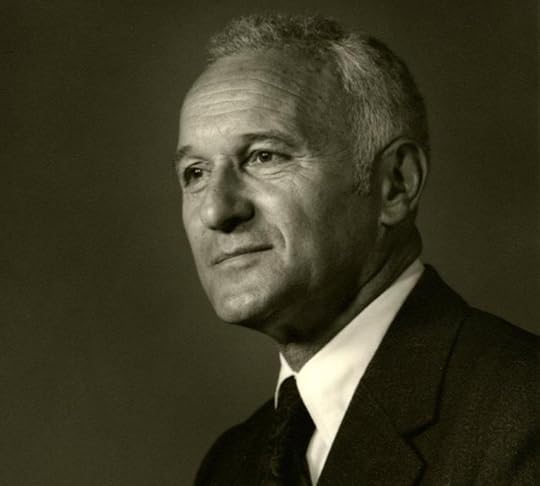 CIA staff photo of Sidney GottliebDr. Sidney Gottlieb
 The visionary chemist Sidney Gottlieb was the CIA’s master magician and gentle-hearted torturer—a true “poisoner in chief.” As the ringmaster of the MKUltra mind control project, he orchestrated brutal experiments from the shadows of secret prisons scattered across three continents.
With the flair of a sinister alchemist, he concocted pills, powders, and potions designed to kill or maim without leaving a trace, some even aimed at foreign leaders like Fidel Castro. In a plot twist worthy of a spy novel, he even employed prostitutes to lure unsuspecting clients into CIA-run bordellos, where they unwittingly became subjects of mind-altering drug tests.
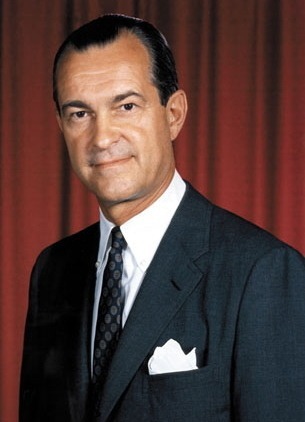 Richard Helms- Official portrait c. 1966–72Richard Helms
 In 1953, while donning the hat of Assistant Deputy Director for Plans, Richard Helms laid the groundwork for a “special funding mechanism” aimed at sensitive research into the murky realms of biological and chemical materials for altering human behavior.
As Helms ascended the ranks of the CIA, he became a key sponsor of these ethically questionable endeavors, granting Sidney Gottlieb, the head of MKUltra, the kind of top-level approval that felt more like a ‘license to kill’ than a research mandate, allowing Gottlieb to operate with minimal oversight in his quest to crack the code of the human mind.
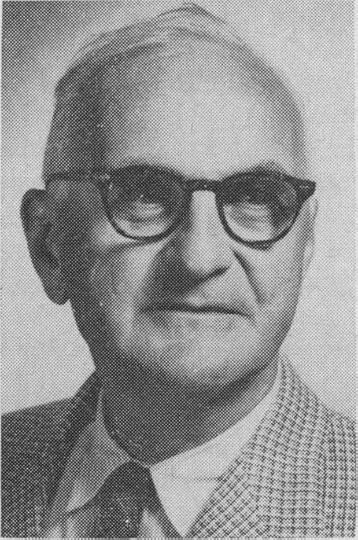 Cameron, c. 1967Dr. D. Ewen Cameron
 Dr. D. Ewen Cameron, a prominent psychiatrist with a flair for the ethically questionable, was recruited by the CIA for Project MKUltra’s Subproject 68 between 1957 and 1964. Stationed in Montreal, he became the agency’s go-to guru for mind control, employing a range of unethical “psychic driving” techniques that read more like a horror movie script than legitimate psychiatric practice.
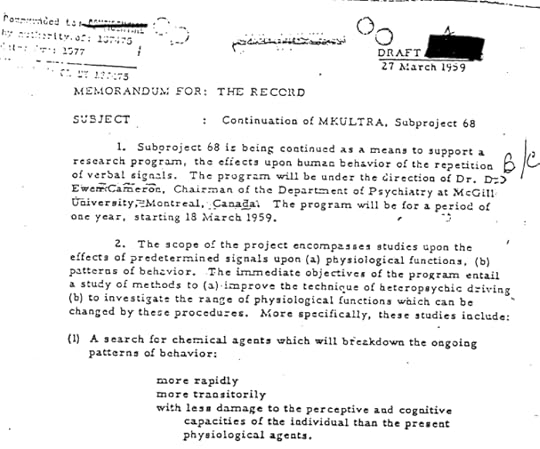 Continuation of MKULTRA. Subproject 68 – CIA.Gov
His toolkit included LSD, sensory deprivation, and intensive electroconvulsive therapy, all administered to unwitting patients who thought they were receiving treatment, not becoming unwitting subjects in a dark psychological experiment. Cameron’s experiments aimed to ‘depattern’ patients—essentially wiping their memories clean like a chalkboard—before replacing them with new ‘driven’ patterns.
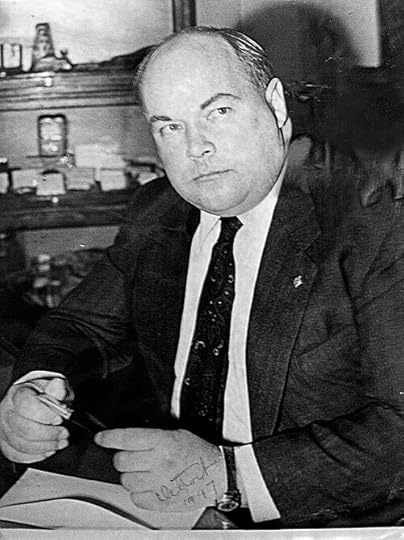 George Hunter White, 1947.George Hunter White
George Hunter White was no ordinary Federal Bureau of Narcotics (FBN) agent; he was an undercover CIA operative who took center stage in the sordid theater of Project MKUltra, particularly in its infamous sub-project, Operation Midnight Climax. Operating under the cheeky pseudonym “Morgan Hall,” White worked directly under CIA chemist Sidney Gottlieb, diving headfirst into a world where ethics took a backseat to experimentation.
His mission? To test the effects of LSD and other mind-altering substances on unsuspecting “unwitting” American citizens. Picture this: clandestine bordellos in San Francisco, where White would serve drinks laced with drugs, all while observing the chaos unfold from behind a two-way mirror. For him, it was a twisted blend of science and voyeurism, as he watched the bewildered subjects spiral into altered states of consciousness. In the name of national security, White turned the streets into a playground for psychological experimentation.2
Methods of Mind ControlMKUltra’s approach to mind control was diverse and often unethical. Here are some key methods employed:
LSD Experiments“Blasting away the existing mind” was the audacious mantra of MKUltra’s director, Sidney Gottlieb, who theorized that high doses of LSD could effectively wipe a subject’s memory and personality clean.3 The idea was to create a blank slate—a void into which a new mind or personality could be implanted, as if the human psyche were nothing more than a computer hard drive ready for reformatting.
In the early 1950s, Gottlieb orchestrated a jaw-dropping acquisition, arranging for the CIA to cough up $240,000 to purchase the entire global supply of LSD.
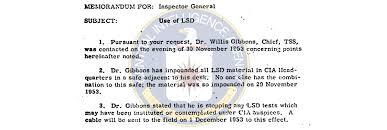 Sidney Gottlieb’s CIA Personnel File, 1983 Deposition Testimony
In a chilling twist, the CIA secretly administered LSD to thousands of individuals without their knowledge or consent, blatantly flouting the Nuremberg Code, which established ethical standards for medical experimentation.4 The unwitting subjects of these experiments included a disturbing mix of CIA employees, military personnel, doctors, psychiatric patients, prisoners, drug addicts, and ordinary citizens, all caught in the crosshairs of a grand, unethical experiment.
James Joseph “Whitey” Bulger was the boss of the largely Irish Mob in Boston from the 1970s through the 1990s, found himself volunteering for what he believed was a noble experiment aimed at finding a cure for schizophrenia while he was incarcerated. For over a year, he was dosed with LSD daily, all under the guise of research. It soon dawned on him that this had nothing to do with curing mental illness.5
Reflecting on his harrowing experiences, Bulger described them as nothing short of horrific. He grappled with the feeling of losing his sanity, an ordeal that pushed him to the brink. In his words, “I was in prison for committing a crime, but they committed a greater crime on me.”
HypnosisIn the early 1950s, the CIA launched Project Artichoke6, a covert operation aimed at developing more effective interrogation techniques during a time of heightened Cold War tensions. Among the various methods explored, the use of sodium pentothal7, commonly known as a “truth serum,” and hypnosis played significant roles in the agency’s quest for information.
Sodium pentothal was employed to lower inhibitions and encourage subjects to divulge sensitive information. The idea was that by reducing resistance, interrogators could extract confessions or insights that might otherwise remain hidden. This approach raised ethical questions about informed consent and the potential psychological and physical harm to participants.
In addition to sodium pentothal, the project also delved into the use of hypnosis. Researchers believed that hypnosis could enhance suggestibility, making individuals more amenable to interrogation techniques.
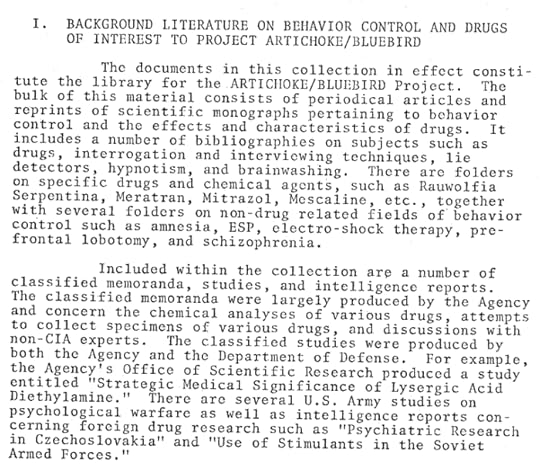 DESCRIPTION OF NEWLY DISCOVERED PROJECT ARTICHOKE/BLUEBIRD MATERIALSSensory Deprivation
 Sensory deprivation was a central component of Project MKUltra, employed as a coercive technique aimed at breaking down a subject’s mental state and inducing dependency. Often combined with drugs and isolation, this method involved blocking sight, sound, and touch to create extreme psychological vulnerability, making individuals more susceptible to interrogation or mind control experiments.
Subjects were often isolated for extended periods to remove external stimuli. This isolation frequently coincided with forced drug-induced sleep or hallucinations, amplifying the psychological effects of sensory deprivation.
Researchers, notably Dr. Ewen Cameron during the Montreal experiments, used methods to cover patients’ eyes, ears, and skin. By removing sensory input, they aimed to induce disorientation and confusion. “Depatterning” was part of a broader, unethical protocol intended to dismantle existing thought patterns.
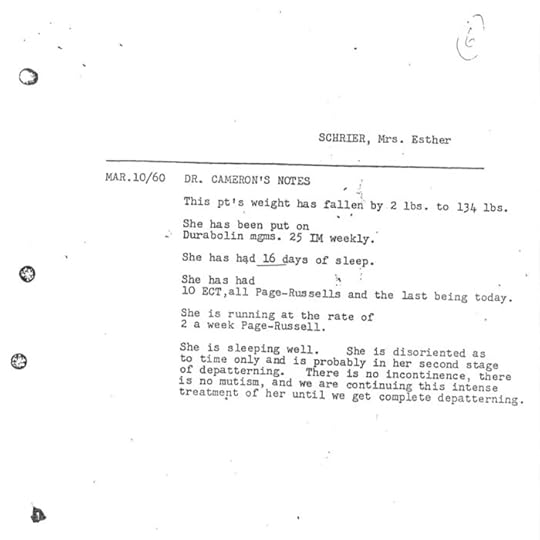 Medical notes detail the treatment Esther Schrier received from Dr. Ewen Cameron in 1960. (Submitted by Lloyd Schrier)
Psychic driving involved compelling patients to listen repeatedly to taped messages. These patients, immobilized and sedated, often underwent this procedure for up to 16 hours daily. The messages could be played hundreds of thousands of times. Usually, a patient endured 10 days of negative messages, which often targeted a perceived personality flaw, followed by another 10 days of positive messages.
Sensory deprivation was further intensified in “sleep rooms,” where patients were subjected to drug-induced comas using substances like Thorazine and LSD. Some were kept in these conditions for days or even up to 86 days, stripping them of autonomy and mental clarity.8
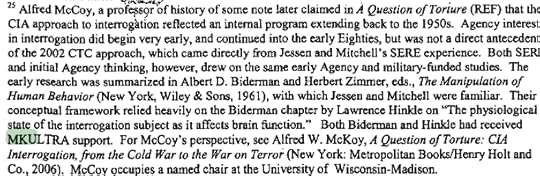
Psychological TortureA notable aspect of the MKUltra documents is the deliberate ignorance shown by CIA Agents and doctors concerning their techniques and effects. These methods were later employed in future operations, particularly after 9/11. For example, professionals justified waterboarding as a form of “periodic relief” for prisoners, depicting it as a necessary break from continuous standing and sleep deprivation.
 Summary and Reflections of Chief of Medical Services on OMS Participation in the RDI Program; 13 November 2018, page 14
The documents further detail a prisoner who, after being subjected to waterboarding, exhibited extreme distress—crying, begging for mercy, and even requiring medical resuscitation. Remarkably, CIA doctors labeled this individual as “amazingly resistant to the waterboard,” showcasing a disturbing tendency to downplay the severity of the situation and the trauma experienced by those involved.
In another instance, when a prisoner was confined in a coffin-sized box, CIA doctors characterized this confinement as a “relatively benign sanctuary” compared to other forms of torture.
Incredibly, the CIA concluded that their torture program was “reassuringly free of enduring physical or psychological effects.”
The Weaponization of Mind ControlThe ultimate goal of MKUltra was to develop techniques that could be weaponized against enemies. The CIA envisioned a future where mind control could be used to create sleeper agents, manipulate foreign leaders, or extract information from captured personnel. This ambition raised significant ethical concerns:
Informed Consent: Many subjects were unaware they were part of an experiment, violating basic ethical standards of informed consent and human rights.
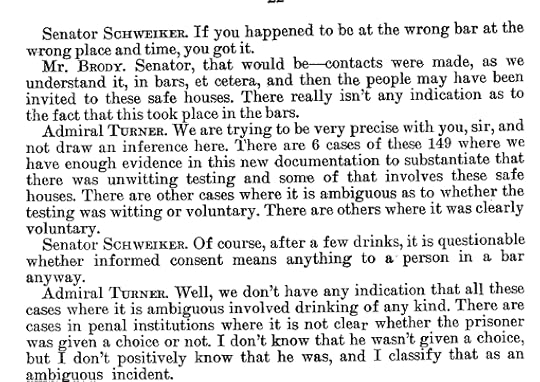 United States Senate Select Committee on Intelligence, Project MKULTRA, the CIA’s Program of Research in Behavioral Modification
The long-term effects of the experiments conducted under Project MKUltra were profound and often devastating, leaving subjects grappling with severe psychological and physiological consequences. Many individuals experienced significant trauma, which manifested in various forms, including Psychological Trauma.9
Subjects often reported enduring emotional distress, including anxiety, depression, and post-traumatic stress disorder (PTSD). The experiences of sensory deprivation, isolation, and coercive techniques contributed to a lasting sense of fear and instability.
The use of drugs in experiments frequently led to dependency issues. Many subjects struggled with addiction to substances that were administered during the studies, compounding their psychological burdens. Long-term mental health problems, such as dissociative disorders and severe mood swings, were common among participants. The intense psychological manipulation and trauma inflicted during the experiments often disrupted their ability to function in everyday life.
Public Revelation and FalloutThe dark secrets of Project MKUltra came to light during congressional hearings in the 1970s, igniting widespread outrage across the nation. These hearings, led by the Church Committee, aimed to investigate abuses within the CIA and other intelligence agencies. As details of the unethical experiments emerged, the public was horrified to learn about the extent of the psychological and physical harm inflicted on unwitting subjects.
The exposure of MKUltra had far-reaching implications, significantly contributing to a growing distrust of the government. Many citizens became increasingly wary of operations that infringed upon personal freedoms and civil liberties. The revelations raised critical questions about ethical standards in governmental programs and the accountability of intelligence agencies.
Congress approved legislation to provide for greater checks and balances of the intelligence community. In 1976, the Senate approved Senate Resolution 400, establishing the Senate Select Committee on Intelligence, to provide “vigilant legislative oversight over the intelligence agencies.
Final ThoughtsThe legacy of MKUltra serves as a stark reminder of the lengths to which governments may go in the name of national security. While the program was officially halted, its ethical implications continue to prompt discussions about the intersection of science, morality, and power. As we explore the boundaries of psychological research and the potential for manipulation, it is crucial to uphold ethical standards and protect individual rights.
Until next time, Keep Reading and Stay Caffeinated.
Poisoner in Chief. During his twenty-two years at the CIA, Gottlieb worked in the deepest secrecy. Only since his death has it become possible to piece together his astonishing career at the intersection of extreme science and covert action. Poisoner in Chief reveals him as a clandestine conjurer on an epic scale.
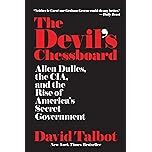
The Devil’s Chessboard: Allen Dulles, the CIA, and the Rise of America’s Secret Government. An exposé of American power and the abuse of power that is as disturbing as it is timely, The Devil’s Chessboard is a provocative and gripping story of the rise of the national security state—and the battle for America’s soul.
Subscribe below to stay up to date on myths, legends, mysteries, and the chaos of history.
By continuing, you accept the privacy policyFacebookThreadsInstagramAmazonXIf you’re looking for your next favorite read, I invite you to check out my series, The Raven Society. This spellbinding historical fantasy series takes us on a heart-pounding journey through forgotten legends and distorted history. Uncover the chilling secrets of mythology and confront the horrifying truths that transformed myths into monstrous realities. How far will you go to learn the truth?
The Writer and The Librarian (Book 1):
Signed copies at:
https://rlgeerrobbins.com/product/the-writer-and-the-librarian-the-raven-society-book-1/
Explore more blogs here: October 28, 2025Unveiling the Bilderberg Group: Conspiracy Theories and RealityThe Bilderberg Meeting, founded in 1954, gathers 130 leaders annually under confidentiality, fostering discussions on key geopolitical issues. Critics label it … October 8, 2025Unveiling Skull & Bones: America’s Secret SocietyEach year, fifteen of Yale's most promising seniors receive a tap on the shoulder—an invitation to join Skull and Bones, the … October 5, 2025Unveiling the Knights Templar: Secrets of a Shadowy BrotherhoodThe Knights Templar, a powerful brotherhood formed to protect pilgrims, amassed considerable influence and wealth, leaving an enduring legacy. But do …Footnotes:
The project’s aims were described as “research and development of chemical, biological, and radioactive materials, and of techniques for the employment of electroshock, capable ofproducing human behavioral or physiological change.” REPORT OF INSPECTION OF M[15603475].pdf
︎The Top Secret Testimony of CIA’s MKULTRA Chief, 50 Years Later | National Security Archive ︎Albert Hoffman was a chemist when, in 1938, he developed LSD while working on a fungus that grew on grain. LSD’s psychoactive properties were not discovered until 1943. ︎“Permissible Medical Experiments.” Trials of War Criminals before the Nuremberg Military Tribunals under Control Council Law No. 10. Nuremberg, October 1946 – April 1949, Washington. U.S. Government Printing Office (n.d.), vol. 2., pp. 181-182. ︎ ︎1952-04-26 JM Box 6 F5-ocr.pdf ︎Sodium pentothal (generic name: thiopental sodium) is a fast-acting, short-duration barbiturate that has been historically used as a general anesthetic, inducing unconsciousness within 30-45 seconds. Often referred to as a “truth serum” in psychiatric settings, it works by calming the central nervous system. The drug was largely discontinued in 2010 for many medical uses and is no longer easily available. ︎Montreal MKULTRA Experiments | The Canadian Encyclopedia ︎Brainwashed: The echoes of MK-ULTRA | CBC News ︎Sources:
Office of Scientific Intelligence: The Original Wizards of Langley
‘Poisoner In Chief’ Details The CIA’s Secret Quest For Mind Control : NPR
Lawsuit moves forward for families of Montreal brainwashing experiment victims | Montreal Gazette
The Diaries Of a CIA Operative – The Washington Post
U.S. Government Mind Control Experiments | Psychology Today
The post Unveiling MKUltra: The Dark Legacy of Mind Control Experiments appeared first on Chasing History.
March 18, 2026
The Mysterious Life of Anne of Cleves: A Royal Marriage Gone Hilariously Wrong
This post contains some affiliate links
Friends,
In the grand tapestry of Tudor history, where marriages were often more political than romantic, the story of Anne of Cleves stands out like a bemused bystander at a particularly chaotic wedding.
Born in 1515 in the Duchy of Cleves, Germany, Anne was the daughter of John III, Duke of Cleves, and his wife, Maria of Julich-Berg.
Little did she know that her life would soon intertwine with the infamous King Henry VI of England—a man whose marriages were as tumultuous as his reign.
BackgroundBorn in Düsseldorf on 22 September 1515 (though some historians are convinced it might have been June or July), Anne of Cleves was the daughter of Maria of Julich-Berg and John III, Duke of Cleves. Nestled in the Holy Roman Empire, Cleves may have been small, but it was a heavyweight in European politics—a bit like the charming but underappreciated sidekick in an action movie.
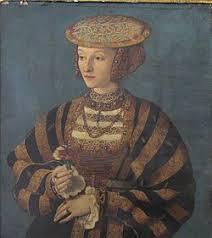 Anne of Cleves portrait sent to King Henry. By Barthel Bruyn the Elder in 1538.
 Sadly, our knowledge of Anne’s early life is as scant as a Tudor courtier’s sense of humor. We know she grew up in Cleves, a region where political alliances were forged faster than you could say “marriage proposal.” But apart from that, details about her childhood are as elusive as a good hair day for a Tudor queen. Did she enjoy long walks in the garden? Was she a fan of medieval board games? Who knows!
What we do have is a backdrop of a politically savvy family, which likely prepared her for the royal circus she would soon join. Imagine little Anne playing with dolls while her parents plotted alliances— “You take the French; I’ll take the English; we’ll make a killing at the next royal ball!”
A Political Pawn: The Marriage of ConvenienceIn 1537, the air of the Tudor court was thick with both anticipation and sorrow. Henry VIII’s third wife, Jane Seymour, had just given birth to Prince Edward, the long-awaited male heir who would come to be known as Edward VI. However, just days later, Jane tragically died,1 leaving Henry with a mixture of joy and grief. For a king obsessed with securing his dynasty, one son was simply not enough.
It is important to note that at this time, England was politically and religiously isolated. In 1531, Henry had severed ties with the Roman Catholic Church, declaring himself the Supreme Head of the Church of England. This radical move was less about divine inspiration and more about his desire to annul his marriage to Katherine of Aragon, who had failed to provide him with a male heir.2
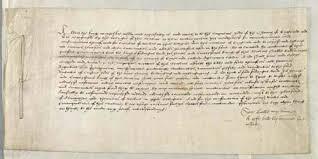 In 1534, Parliament passed the Act of Supremacy, which defined Henry VIII’s right to be the supreme head of the Church of England.
This break from Rome left England vulnerable, particularly as a new alliance formed between the Catholic powers of France and Spain. With the Pope’s authority challenged, Henry sought to bolster his position through strategic marriages, hoping to align himself with countries that also defied papal control.
 Hans Holbein the Younger’s 1539 portrait of Anne of Cleves before (left) and after (right) conservation © 2023 RMN-Grand Palais (Louvre museum) / Adrien DidierjeanCleves: The Unexpected Tinder Match for Henry VIII
Cleves, much like England, was a Catholic state flirting with the idea of religious reform—think of it as a midlife crisis for a country. Anne’s brother-in-law, William, Duke of Jülich-Cleves-Berg, was even at the helm of a league of united German Protestant States3, boldly challenging the Catholic Holy Roman Empire.4
When Thomas Cromwell, Henry VIII’s right-hand man and the king’s favorite matchmaker, set his sights on Cleves, he hit the jackpot. Here was a country that shared England’s flair for political drama and its penchant for shaking up religious norms. It was the perfect match, like finding the last piece of a jigsaw puzzle that didn’t belong—and yet, somehow, it fit!
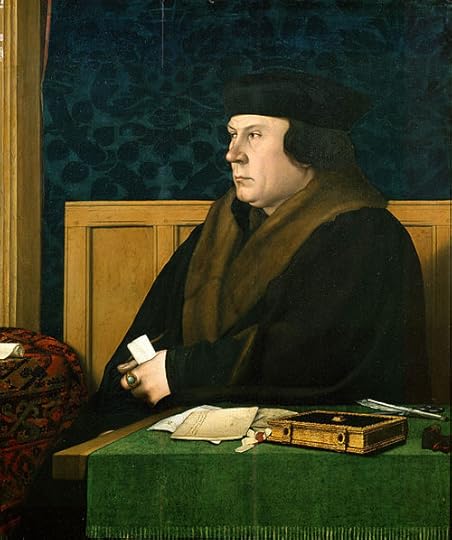 Thomas Cromwell
Artist Hans Holbein the Younger c. 1532–1533
Cromwell thought, “Why not marry off the king to a lady from a place that’s just as confused about its religious identity as we are?” After all, what could possibly go wrong in a union built on political necessity and a shared love for defying the Pope?
A Royal Introduction Gone WrongIn a classic case of royal romantic blunders, a 48-year-old Henry VIII decided to channel his inner prince and surprise his 24-year-old bride, Anne of Cleves, while she was resting in Rochester. Dressed in a cloak and mask, he thought, “What could possibly go wrong?”
But here’s the kicker: Anne had never heard of this charming tradition. So, when this masked stranger approached her, she probably thought, “Great, just what I need—a creepy guy in a costume!” Instead of swooning, she greeted him with the kind of polite indifference usually reserved for a door-to-door salesman.
Feeling like a rejected villain in a bad fairy tale, Henry’s heart sank. He was already disheartened that Anne didn’t quite match her portrait, and now this? He left, probably muttering something about “bad luck” and “ungrateful brides,” before switching into his royal robes like a toddler changing outfits after a tantrum.
Returning for a formal introduction, it was like a scene from a sitcom: “Hi, I’m your husband! Surprise!” Awkwardness ensued, and let’s just say, the sparks were more like damp fireworks.
Looks Mattered To King HenryNow, before you ask about the horrible nickname given to Anne, ‘Flanders mare,’ let’s clear the air: that infamous nickname wasn’t actually coined by Henry himself. It was later tossed around by Bishop Gilbert Burnet in the late 17th century.
In the end, while Henry might have been disappointed by the reality of his bride, it seems like he was more concerned about his own reputation than Anne’s feelings. Which led to a lot of confusion about the most important question of any royal marriage- was it consummated?
Now this is where things get complicated. Anne of Cleves believed that she had fulfilled her wifely and royal duty. When questioned by her Ladies in Waiting, Anne reportedly said:
When he comes to bed, he kisses me and taketh me by the hand and biddeth me, ‘Goodnight sweetheart’; and in the morning kisses me and biddeth me, ‘Farewell, darling.’ Is that not enough?5
But the Playboy King Henry VIII had a slightly different take on things. According to royal gossip, he boldly declared that absolutely nothing happened in the marriage bed with his fourth wife. Imagine that! Here’s a man who famously had a love affair with every lady in the court, yet with Anne? Crickets.
Who’s To Blame?Henry’s failure to consummate his marriage with Anne of Cleves has often been chalked up to his sheer revulsion at the sight of her. But let’s not jump to conclusions too quickly—there’s a chance he might have just been a little… powerless.
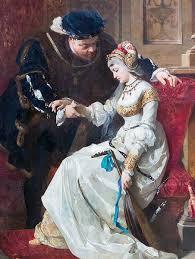 First Meeting Between Henry VIII and Anne of Cleves, by George Folingsby, 1879, Source: Wikiart
I mean, the guy was nearly twice Anne’s age and had been moving around like a doddering old man in a royal rocking chair for years. It’s hard to feel like a king when you’re more “couch potato” than “conquering hero,” right? And let’s not forget, there hadn’t been any whispers of a mistress in ages—probably because Henry was too busy perfecting the art of taking long naps!
So, while everyone was busy pointing fingers at Anne, Henry might just have been battling a different kind of royal crisis.
The Divorce: A Surprising Turn of EventsThomas Cromwell was ready to cut ties faster than a bad haircut when it came to the match between Henry VIII and Anne of Cleves. In July 1540, he, Henry, and a few other witnesses sat down with a group of Archbishops and laid it all out: the marriage was non-consensual (at least on Henry’s side) and, let’s be honest, completely unconsummated.
And guess what? Anne didn’t even get an invite to this royal roast!
On July 9, 1540, the marriage was officially annulled. Unlike a divorce, which was about as common as a hen’s teeth in Tudor England, an annulment meant they were pretending the whole thing had never happened. Poof! Just like that, Henry could go back to his bachelor lifestyle without the pesky baggage of a wife.
Now here’s the kicker: Anne was only informed of the annulment three days before it was approved. Talk about being blindsided! Reports say she took the news with the kind of calm you’d expect from someone who had just won the lottery—but privately, she was terrified. She’d seen what happened to Henry’s previous queens—Catherine of Aragon got the cold shoulder, and Anne Boleyn… well, let’s just say her exit was on the more permanent side.
 photo of Anne of Cleves by Becca Saladin © Royalty Now
Witnesses claimed that Anne was “heavily” affected by the news, but she kept her cool. Like a seasoned diplomat, she accepted the annulment without a fight, probably thinking, “Better to keep my head than to risk a royal tantrum!”
So, while the court danced around the drama, Anne played it smart, staying calm and collected—because in Tudor England, the stakes were high, and the consequences of a public meltdown could be, well, deadly.
Life After Henry: The Queen Who Became a FriendGrateful for Anne’s cooperation—and probably eager to dodge a potential family feud—Henry VIII decided to shower his former queen with a rather generous settlement.
In a classic case of royal PR, he promised her the esteemed title of “the King’s Sister” if she chose to stick around in England. Anne was gifted a treasure trove of property, including Henry VII’s Richmond Palace and Hever Castle, the childhood home of none other than Anne Boleyn. Because why not live in the shadow of your predecessor’s drama?
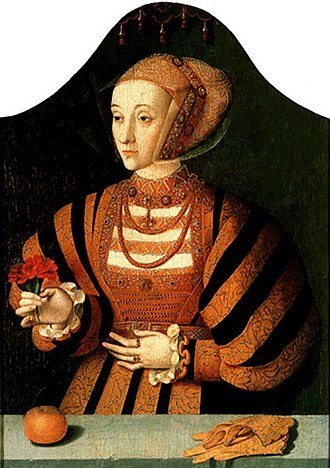 A portrait of Anne in the 1540s by Bartholomäus Bruyn the Elder
On top of that, she earned an annual income of £500, plus revenue from several estates, and kept all her dresses, jewels, and fancy tableware.
With Henry’s blessing, Anne eventually wrote to her family, reassuring them that she was safe and had no intention of returning to Cleves. And in a show of finality, she returned her wedding ring, asking for it to be broken into pieces—because, as she put it, it was now just a “thing of no force or value.”
Meanwhile, on July 28, 1540, while Henry was marrying Catherine Howard, Thomas Cromwell was meeting his fate on Tower Hill. It’s a dark twist of fate that while one queen was being tossed aside, another was stepping in, just as one of England’s most powerful men was being executed. Anne had managed to survive the royal chaos, proving that sometimes, the best way to win is to walk away with your head still attached.
A Legacy of IndependenceAnne’s settlement opened the door to a new kind of freedom that she hadn’t experienced before. She embraced her new life, flitting between her various properties, indulging in fashion, sports, and, of course, wine—because who wouldn’t want to toast to their newfound independence?
Not only did she enjoy the finer things in life, but Anne also took the time to learn how to dance and speak English, proving that she was all in on this royal adventure!
 Anne of Cleves’ house in Ditchling, East Sussex. Jackson-Stops/History/Universal Images Group via Getty Images
Keeping things friendly with Henry, she developed a warm relationship with his daughters, Mary and Elizabeth. In a delightful twist, Henry even invited Anne to Hampton Court Palace for Christmas in January 1541. Imagine that holiday gathering!6
Anne paid her respects to the new Queen Catherine (who used to be her lady-in-waiting), and the two even danced together after Henry turned in for the night. Talk about a royal girls’ night!
When Henry married Katherine Parr in 1543, Anne still enjoyed a warm welcome at court. She continued to exchange letters and gifts with the King and his family, proving that even after a rocky start, she had found her niche in the royal circle.
Surviving the War Between SistersHenry VIII died on 28 January 1547, which meant Anne was no longer the “King’s Sister.” She gracefully exited the court scene and exchanged her larger estates for smaller properties, settling into a quieter, more domestic life. Imagine her trading in her royal robes for a comfy pair of slippers!
When Mary I took the throne in 1553, Anne made a splash by attending her coronation alongside Princess Elizabeth, who was just a few steps away from becoming the iconic Elizabeth I. 7
Anne’s name popped up during key moments in Mary’s reign, and she even dipped her toes into politics, suggesting that the new queen marry Ferdinand of Austria—a match that would’ve linked her back to her family in Cleves. But Mary had other plans and instead tied the knot with Philip of Spain. This controversial choice lit the fuse for the Wyatt rebellion, a Protestant plot to depose Mary and place Elizabeth on the throne.
As the drama unfolded, rumors swirled around Anne, especially given her close friendship with Elizabeth. But despite the whispers, there was little evidence against her. Ever the survivor, Anne wasn’t directly accused of treason—just another day in the Tudor drama!
While some historians say this incident may have put a dent in her relationship with Mary, the two managed to keep things outwardly cordial.
A Peaceful EndingAnne of Cleves faced a battle with poor health for several years, and on July 16, 1557, she passed away at Chelsea Manor at the tender age of 41.
Mary I, showing a touch of royal grace, sent condolences to Anne’s family. They responded with memorial services held in every church and monastery back in Cleves.
As for Anne’s final resting place, she holds the unique distinction of being the only one of Henry VIII’s wives buried in Westminster Abbey, the hallowed ground for England’s kings and queens.8
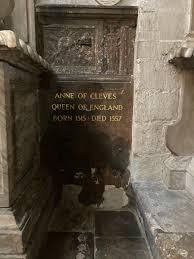 Anne of Cleves’ memorial plaque, Westminster Abbey (c) Jo Romero
Mary I ensured that Anne received a burial with Catholic rites, complete with all the pomp and ceremony one could muster. She was laid to rest near the high altar in the Abbey, a fitting tribute to a woman who navigated the turbulent waters of Tudor politics and emerged with her head (and dignity) intact.
Final ThoughtsThe tale of Anne of Cleves reminds us that sometimes, the best way to survive a marriage is to embrace the absurdity of it all. She turned a potentially disastrous situation into a life of comfort and independence, showing that even in the world of Tudor politics, a little humor and cunning can go a long way.
So, the next time life throws you a curveball—like a bad marriage or an unexpected royal divorce—remember Anne of Cleves. She took the lemon life gave her and made a sweet, refreshing lemonade.
Want to delve into more royal antics? Or maybe explore the lives of other historical figures who survived tumultuous times? Let me know!
Until next time, Keep Reading and Stay Caffeinated.For those hungry to explore more, click below to find additional readings:

Anne of Cleves: Henry VIII’s Discarded Bride. The first major biography of Henry VIII least favorite wife – but the one who outlived them all. ‘I like her not!’ was the verdict of Henry VIII on meeting his fourth wife, Anne of Cleves, for the first time. Anne of Cleves led a dramatic and often dangerous life, but, of all Henry VIII’s six wives, she is truly the one who survived.

Anne of Cleves: The Wife Who Won (Tudor Power Players). This biography follows Anne from the Duchy of Cleves into the Tudor court, through the Holbein portrait, the disastrous first meeting, Cromwell’s collapse, and the exit deal that let her outlive Henry’s marriage machine. It is the story of a power player who understood that in Henry VIII’s England, the real crown was security.
Subscribe below to stay up to date on myths, legends, mysteries, and the chaos of history.
By continuing, you accept the privacy policyFacebookInstagramThreadsAmazonXIf you’re looking for your next favorite read, I invite you to check out my series, The Raven Society. This spellbinding historical fantasy series takes us on a heart-pounding journey through forgotten legends and distorted history. Uncover the chilling secrets of mythology and confront the horrifying truths that transformed myths into monstrous realities. How far will you go to learn the truth?
The Writer and The Librarian (Book 1):
Signed copies at:
https://rlgeerrobbins.com/product/the-writer-and-the-librarian-the-raven-society-book-1/
The Under Covers Bookstore (UK):
The Writer and the Librarian | The Under Covers (theundercoversbookstoreandcafe.com)
Explore more blogs here:
March 8, 2026Women of Valor: The Unsung Heroines of the Vietnam WarEight women are honored at the Vietnam War Memorial, showcasing their diverse … March 7, 2026The Tragic Tale of Julia Pastrana: A Life on DisplayJulia Pastrana’s haunting tale exposes society’s grotesque fascination with the "different," reminding … February 21, 2026The Radium Girls: A Fight for Justice and ChangeThe Radium Girls' story reveals corporate negligence and their fight for justice, … Footnotes:Modern historians largely agree that Jane likely died from childbed fever—a grim reminder of the dangers of childbirth in the 16th century. This infection, caused by poor hygiene practices during labor, claimed the lives of many women who were supposed to be celebrating the birth of their children. In an era when medical knowledge was rudimentary at best, the royal court was not immune to the harsh realities of maternal mortality.︎With Catherine of Aragon failing to deliver a male heir—despite her best efforts and a lot of royal pressure—Henry found himself getting antsy. Enter Anne Boleyn. Driven by a mix of love and a sense of urgency that could rival a toddler needing a bathroom, Henry embarked on what would become the infamous “King’s Great Matter.” Why Did Henry VIII Dissolve the Monasteries in England? | History Hit ︎Created for collective defense against Charles V’s demands that Protestant states return to Catholicism. ︎William, Duke of Jülich-Cleves-Berg, was known as a leader of the Protestants in Western Germany and was a key ally of the Schmalkaldic League. The Schmalkaldic League was a military alliance of Protestant German states designed to challenge the authority of the Catholic Holy Roman Emperor, Charles V. ︎Historian’s New Novel Raises Controversial Theory: Henry VIII Divorced Anne of Cleves Because She’d Already Given Birth ︎Tudor Times | Anne of Cleves (1515 – 1557) ︎Tudor Times | Anne of Cleves: Life Story (Queen Mary) ︎Anne of Cleves, 4th wife of Henry VIII | Westminster Abbey ︎Sources:
Jane Seymour | Hampton Court Palace | Historic Royal Palaces
Schmalkaldic League | H istory | Research Starters | EBSCO Research
Was Anne Of Cleves Henry VIII’s Most Successful Queen? | HistoryExtra
Anne of Cleves: The Wife King Henry Loved Most? | TheCollector
Anne of Cleves | History | Research Starters | EBSCO Research
The Home Anne of Cleves Received From Henry VIII Is on Sale: Photos – Business Insider
The post The Mysterious Life of Anne of Cleves: A Royal Marriage Gone Hilariously Wrong appeared first on Chasing History.
March 8, 2026
Women of Valor: The Unsung Heroines of the Vietnam War
This post contains some affiliate links
Friends,
As we stroll through the reflective surface of the Vietnam War Memorial, our eyes often scan the names etched in stone, but few pause to appreciate the eight women whose names are forever memorialized there. In a time when women were often relegated to the sidelines, these brave souls broke barriers, proving that valor knows no gender. So, let’s dive into the stories of these remarkable women, their contributions, and remember their names.
The United States’ Involvement in the Vietnam WarThe United States became involved in the Vietnam War primarily due to its commitment to containing communism during the Cold War. Following the end of World War II, the spread of communism was perceived as a significant threat to democracy and capitalism, particularly in Southeast Asia. The U.S. government feared that if Vietnam fell to communism, neighboring countries would follow suit—a theory known as the “Domino Effect.”1
To counter this, the U.S. supported the French colonial government in Vietnam and later the South Vietnamese government after France’s withdrawal, providing military and financial aid to prevent the rise of a communist regime in the North.
Side Note:French colonization of Vietnam began in 1858 when France decided Da Nang would look better with some artillery holes. By 1887, they’d wrapped up their hostile takeover and branded the acquisition “French Indochina”—a corporate merger in which only one party signed the paperwork.
The French, ever the thoughtful guests who stay for a century, helped themselves to rubber, rice, and coal while explaining to the Vietnamese how uncivilized it was to keep one’s natural resources to oneself. Their “civilizing mission” continued until 1954, leaving Vietnam with the cultural equivalent of a hangover that would last generations.
As the conflict escalated, the U.S. escalated its military involvement, deploying combat troops in 1965 under the Johnson administration. The war was framed as a necessary measure to protect American interests and uphold commitments to allies. However, as the conflict dragged on, it sparked widespread protests and raised questions about U.S. foreign policy and the morality of intervening in a civil war.
Women In Combat: Breaking The MoldWhile many Americans picture Vietnam’s female service members exclusively as nurses, the reality was far more diverse. Though regulations kept women from the front lines, they fulfilled crucial roles across healthcare, intelligence gathering, communications networks, and the administrative backbone that kept the war effort functioning.
It is important to note here that the concept of “safe zones” didn’t exist in Vietnam. Viet Cong attacks materialized without warning, though certain regions invited greater danger than others.
Beyond military roles, civilian women also volunteered their talents overseas. They reported from the frontlines as foreign correspondents2, offered comfort through the American Red Cross and USO3, built infrastructure with the Peace Corps,4 provided humanitarian aid through Catholic Relief Services and other religious organizations, or served their country through various government agencies.
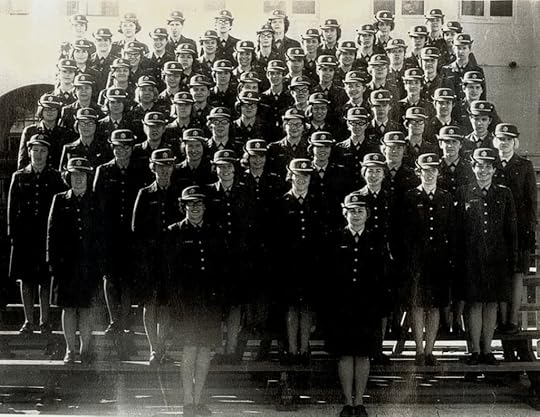 Army Medical Department Basic Officer Course, January 1969-
 Courtesy of the National Library of Medicine
During the Vietnam War era, the American military included over a quarter of a million women among its ranks. Of these, around 11,000 found themselves stationed in Vietnam itself between 1965 and 1973.5 Nine out of ten wore the uniforms of Army, Navy, and Air Force nurses—volunteers all—while the remainder directed air traffic, managed paperwork, or gathered intelligence for the war effort.
Side NoteWhen Saigon fell on April 29, 1975, Sally Vinyard was reportedly the final American woman to escape Vietnam. As aircraft lifted from rooftops and airways and desperate crowds surged at embassy gates, she departed amid the pandemonium of Operation Babylift’s closing hours.
Meet The Eight ELEANOR GRACE ALEXANDER
In May of 1967, Eleanor joined the Army Nurse Corps. The humid Texas air of Brooke Army Medical Center in Houston gave way to the suffocating heat of Vietnam when she received her assignment to the 85th Evacuation Hospital in Qui Nhon the following month.
 85th Evacuation Hospital Emergency Room Entrance
 Qui Nhon [circa 1967] – Library of Congress
By late autumn, Alexander had just five months to live. On 30 November 1967, a transport plane carrying her and twenty-six others plummeted from the sky, crashing in the jungle only three miles from where they were stationed.
 Pamela Dorothy Donovan
Pamela Dorothy Donovan was born in March 1942 in Merseyside, England, to Irish parents. Fourteen years later, her family crossed the Atlantic to put down roots in Brighton, Massachusetts. Her path to becoming a nurse wound through convents and hospitals across four countries—Canada, Ireland, England, and finally the United States—culminating in her 1965 graduation from St. Elizabeth’s Hospital School of Nursing.
In 1967, she became a U.S. citizen, allowing her to enlist in the Army Nurse Corps. By early 1968, she had endured the rigors of jungle training6 and received her commission as a second lieutenant, deploying to the 85th Evacuation Hospital in Qui Nhon. Four months later, Donovan contracted a rare strain of pneumonia while on duty. She died in July 1968 in Gia Dinh province at the age of 26.
 Side Note:
The “Combat Area Casualties Current File, 6/8/1956 – 1/21/1998 states that she commited suicide. Her obituary states that she died of pneumonia. The suicide information appears to be incorrect in the National Archive and Record Administration (NARA) files.
Also of note: One file at the National Archives and Records Administration states she was not posthumously promoted (Combat Area Casualties Current File, 6/8/1956 – 1/21/1998) while another states that she was posthumously promoted to 1st Lieutenant (Coffelt Database, December 2005 Update). Source: http://aad.archives.gov
 Carol Ann Elizabeth Drazba
After graduating from Dunmore High School in 1961, Carol left to study at the Medical University of South Carolina. She returned closer to home in 1962 to complete her studies at the Scranton State General Hospital School of Nursing. By 1964, she had earned her registered nurse credentials, ready to begin her professional life caring for others.
During her junior year, Drazba joined the Army Student Nurse Program7 and committed herself to military service upon graduation. Her nursing career in uniform began at Fort Huachuca, Arizona, after she passed her state boards. By October 1965, she had received orders deploying her to Vietnam, where she would spend 13 months with the 3rd Field Hospital in Saigon as part of the 44th Medical Brigade.
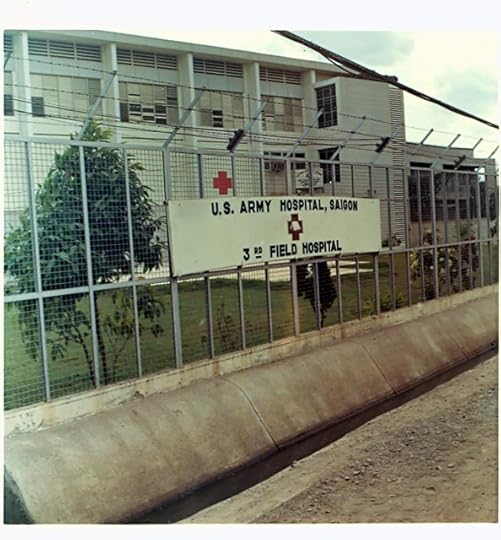
On 18 February 1966, after months of tending to the wounded and dying, 2LT Drazba joined six others aboard a Huey helicopter bound for Dalat. The promise of rest vanished when, barely twenty minutes after lifting off from Saigon, their aircraft collided with power lines. The twisted wreckage yielded no survivors.
Carol Ann Drazba was only 22 years old.
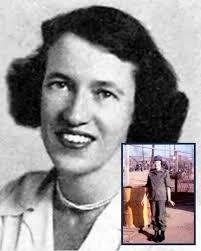 Annie Ruth Graham
From the blood-soaked battlefields of World War II through the frozen Korean conflict to the sweltering jungles of Vietnam, Lieutenant Colonel Annie Ruth Graham’s hands never wavered. Her twenty-year journey through the Army’s medical ranks—beginning as a fresh-faced second lieutenant and culminating in her command of nursing operations at critical field hospitals—made her as much a veteran of America’s wars as any combat soldier.
From 1967 onward, she commanded the nursing corps at Vietnam’s 91st Evacuation Hospital. When a stroke claimed her at 51, she became the war’s most senior female officer and military nurse to die while serving.
Side Note:
Greetings!
This Christmas finds me a long, long way from North Carolina. I arrived in Saigon on 18 November and almost immediately departed for Tuy Hoa (pronounced Too-ey Wah) where our hospital (400 bed) is located directly on the beach of the South China Sea which is perfectly beautiful but quite treacherous. All buildings here are tropical type and the hospital is cantonment style. It is monsoon season now so we have torrential rains at times. The climate is quite humid but the nights are really rather pleasant. Getting used to my new outfit (tropical fatigues, jungle boots, and “baseball cap”) is not as “exciting” as in World War II but I’m quite sure I’ll manage to survive it all! Our nursing staff consists of 59 nurses (12 male) who of our enlisted personnel seem very well trained and apparently have been doing an excellent job.
The tour of duty here is 12 months so I plan to be home for Christmas next year.
I hope you have had a good year and that your Christmas is filled with joy and the New Year with more happiness than you could possibly wish for.
Hope, too, that everyone will pray for peace.
Love, Ruth
Annie Ruth Graham’s final Christmas Letter to friends and family, 1967
In ten weeks, she was schedule to be on a plane back to the States- her tour of duty complete.
 Elizabeth Ann Jones
Unfortunately, I can’t find a lot on 2LT Elizabeth Ann Jones, other than she was on the same flight as 2LT Drazba, making them the first two women to die in the Vietnam War.
According to vvmf.org, a wedding dress, carefully packaged by a mother’s hands, arrived in Vietnam addressed to Second Lieutenant Elizabeth Ann Jones. The Army nurse had fallen in love just months after her deployment, a whirlwind romance amid chaos. The helicopter carrying Jones and Drazba was also carrying her fiancé.
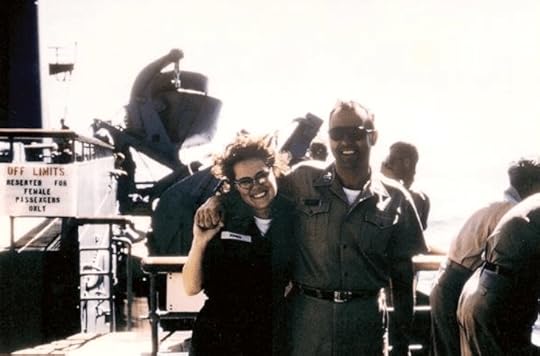 Curiosity of The Wall Of Face- Vietnam War Memorial
I’m not able to find out what happened to the wedding dress.
 Mary Therese Klinker
Mary T. Klinker enlisted in the Air Force in early 1970, trained as a flight nurse, and rose to the rank of Captain. Her service with the 10th Aeromedical Evacuation Squadron eventually brought her to Clark Air Base in the Philippines on temporary assignment.
In the final days of the Vietnam War, she volunteered for ” Operation Babylift,” a humanitarian effort to evacuate more than 2,000 orphaned Vietnamese children to safety abroad. As flight nurse, Captain Klinker would be responsible for the medical care of these vulnerable young passengers during their journey.
The inaugural flight of “Operation Babylift” lifted off from Tan Son Nhut Airbase near Saigon on 4 April 1975. Minutes into the flight, catastrophe struck when the C-5A Galaxy’s rear cargo door failed, triggering an explosive decompression and damaging critical flight-control systems. Despite the crew’s valiant efforts to return to the airbase, the massive aircraft careened into flooded rice fields and disintegrated.
 A photo shows the wreckage of the Operation Babylift crash on April 4, 1975. (Bud Traynor)
At just 27, Captain Mary T. Klinker became both the final nursing casualty and the sole US Air Force Nurse Corps member to lose her life during the Vietnam War.8
 Sharon Ann Lane
In April 1968, to the astonishment of her parents and siblings, Sharon Ann Lane enlisted in the U.S. Army Nurse Corps Reserves. She began her service at Denver’s Fitzsimons General Hospital, rotating through the tuberculosis ward before advancing to cardiac care. Despite finding satisfaction in her duties, Lane grew increasingly impatient with the predictable rhythms of stateside medicine. Barely settled into her position in the recovery room, she filed paperwork requesting reassignment to the conflict that dominated nightly newscasts and dinner table conversations across America: Vietnam.
On 29 April 1969, Lane stepped off the transport plane into the humid air of Chu Lai, South Vietnam, reporting for duty at the 312th Evacuation Hospital. Within days, while other nurses jockeyed for positions in wards treating American soldiers, Lane raised her hand for the assignment most avoided: caring for Vietnamese patients. In this ward, she would dress wounds of local children caught in crossfire, tend to injured civilians, and change bandages on the very Viet Cong fighters that American forces battled in the jungle.
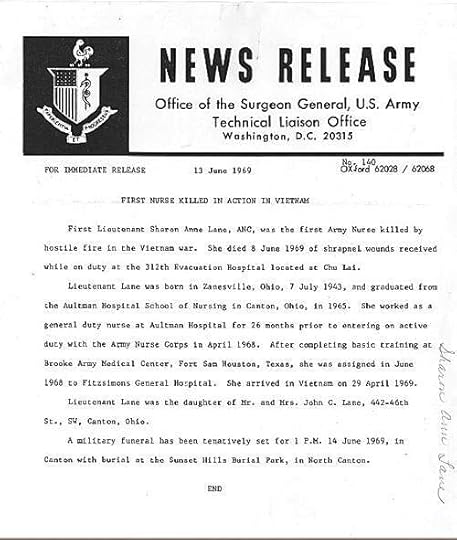
On the morning of 8 June 1969, just six weeks into her Vietnam deployment, 1st Lt. Sharon A. Lane fell at her post. A 122-mm rocket struck the hospital compound during an early morning barrage, sending deadly shrapnel through the ward where she had been shielding Vietnamese patients with her own body.9
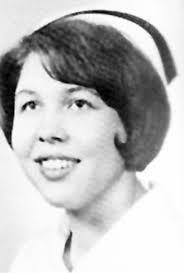 Hedwig Diane Orlowski
Among the 2,654 Michigan soldiers who lost their lives in Vietnam, Hedwig Diane Orlowski stands alone— the state’s only female casualty.10 A daughter of Hamtramck who walked the halls of St. Florian before earning her nursing credentials at Hurley Hospital School in Flint. The Army deployed her to the 67th Evacuation Hospital in Qui Nhon, but when casualties mounted in Pleiku, they needed her skills there.
She boarded the C-7B Caribou on 30 November 1967, joining twenty-five others for what should have been a routine flight from Cam Ranh, the same flight that Eleanor G. Alexander (our first casualty) had taken. Through dense fog, the pilot attempted to land at Qui Nhon but couldn’t find the runway. The aircraft drifted five miles south of its destination, where the mountain waited. Nobody survived.
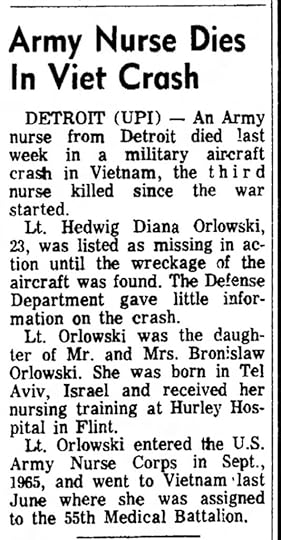 Final Thoughts
The contribution of these women to the Vietnam War has been acknowledged more recently, but it’s essential to remember that they were pioneers in a time of tremendous societal change. Their names on the Vietnam War Memorial serve not just as a reminder of their sacrifices but as a testament to the evolving role of women in the military.
In a world still grappling with the complexities of gender and combat, their stories remind us that bravery knows no bounds. So, the next time you visit the memorial, take a moment to reflect on these eight women and the countless others like them—who fought not just for their country, but for the right to serve alongside their male counterparts.
Until next time, Keep Reading and Stay Caffeinated.For those hungry to explore more, click below to find additional readings:
Vietnam War Nurses: Personal Accounts of 18 Americans. Eighteen nurses who served in the United States military nurse corps during the Vietnam War present their personal accounts in this book. They served in the theater of combat, in the United States, and in countries allied with the U.S.

Healing Wounds: A Vietnam War Combat Nurse’s 10-Year Fight to Win Women a Place of Honor in Washington, D.C. In 1983, when Evans came up with the vision for the first-ever memorial on the National Mall to honor women who’d worn a military uniform, she wouldn’t be deterred. She remembered not only her sister veterans, but also the hundreds of young wounded men she had cared for, as she expressed during a Congressional hearing in Washington, D.C.: “Women didn’t have to enter military service, but we stepped up to serve believing we belonged with our brothers-in-arms and now we belong with them at the Vietnam Veterans Memorial. If they belong there, we belong there. We were there for them then. We mattered.”
Subscribe below to stay up to date on myths, legends, mysteries, and the chaos of history.Subscribe to our newsletter!
By continuing, you accept the privacy policyFacebookInstagramThreadsAmazonXIf you’re looking for your next favorite read, I invite you to check out my series, The Raven Society. This spellbinding historical fantasy series takes us on a heart-pounding journey through forgotten legends and distorted history. Uncover the chilling secrets of mythology and confront the horrifying truths that transformed myths into monstrous realities. How far will you go to learn the truth?
The Writer and The Librarian (Book 1):
Signed copies at:
https://rlgeerrobbins.com/product/the-writer-and-the-librarian-the-raven-society-book-1/
The Under Covers Bookstore (UK):
The Writer and the Librarian | The Under Covers (theundercoversbookstoreandcafe.com)
Explore more blogs here:
February 21, 2026The Radium Girls: A Fight for Justice and ChangeThe Radium Girls' story reveals corporate negligence and their fight for justice, … August 17, 2025The Dark Legend of Bloody Mary UnveiledFrom Princess of Wales to disowned by the crown twice, to the … September 16, 2024Henry VIII’s Fifth Wife: The Untold Fate of Katherine HowardThe fate of women like Katherine Howard, a victim of political intrigue, …Footnotes:
According to Eisenhower, if Vietnam fell to communism, neighboring countries would topple in sequence— Laos, Cambodia, Thailand, Burma—before threatening even Japan, Indonesia, and the Philippines. This domino theory emerged from Cold War anxieties about Soviet and Chinese influence spreading across Asia, anxieties that intensified after Mao’s forces seized control of mainland China in 1949.︎Women like Catherine Leroy, Frances FitzGerald, Kate Webb, Dickey Chapelle, and Gloria Emerson pioneered a path through the male-dominated field of war journalism during Vietnam. Despite being told “no women at the front,” they navigated military checkpoints, skeptical editors, and dangerous conditions to document the conflict firsthand, often capturing perspectives their male counterparts missed. ︎They served as social workers, librarians, entertainers, and craft and recreation specialists. The organization sought unmarried female graduates in their twenties, while those who oversaw their work tended to be seasoned professionals—occasionally men. ︎As American boots on the ground multiplied in Vietnam throughout the late sixties, Peace Corps offices saw a surge of young men clutching application papers with trembling hands, their eyes darting toward the mailbox where draft notices might appear. This influx sparked heated debates in Washington about whether idealism or self-preservation was filling the ranks of America’s goodwill ambassadors. ︎Members of the Army Nurse Corps were in Vietnam as early as 1956 to train Vietnamese women in nursing skills. By 1963, larger numbers of Army Corps Nurses arrived in Vietnam. ︎Historical records don’t reveal exactly how many American military women completed “jungle school”—the intensive jungle warfare training program—before their Vietnam deployments. ︎Facing critical staffing shortages during the Vietnam conflict, military officials devised the Army Student Nurse Program— a recruitment lifeline offering nursing students a compelling bargain: a fully funded final year of education in exchange for Army Nurse Corps service. The program covered everything from textbooks to uniforms, plus a modest living stipend, effectively creating a direct pathway from classroom to combat zone for young women who might otherwise never have considered military careers. ︎Operation Babylift crash survivors help dedicate marker for Vietnam War hero Mary Klinker ︎Joint Base San Antino – Fort Sam Houston has a new exhibit that honors her service and life. Take a look here: New AMEDD Museum exhibit honors only U.S. nurse killed by enemy fire in Vietnam > Joint Base San Antonio > News ︎You can find the number of causalities here: Vietnam War Casualties by State 2026 ︎Sources:
Women Veterans bravely served during Vietnam War – VA News
Women in the Vietnam War | Military History and Science | Research Starters | EBSCO Research
In Country: U.S. Nurses During the Vietnam War – Working Nurse
LESSONS LEARNED, HEADQUARTERS, 44TH MEDICAL BRIGADE
iwest.pdf– The Women of the Army Nurse Corps article
The post Women of Valor: The Unsung Heroines of the Vietnam War appeared first on Chasing History.
March 7, 2026
The Tragic Tale of Julia Pastrana: A Life on Display
Friends,
In the mid-19th century, the world resembled a bizarre carnival where curiosity and cruelty danced a macabre waltz. Picture it: a society that thrived on the bizarre, where being “different” was less about individuality and more about your next ticket to the freak show.
If you had an unusual quirk or a genetic anomaly, congratulations! You were officially the main attraction, ready for your close-up under the flickering gaslights while the audience munched on popcorn, delighting in the spectacle of human misfortune. Who needs reality TV when you can gawk at living curiosities? Welcome to a time when the strange and the sad were paraded for amusement, and empathy was, well, left outside the tent.
Not The First…Julia Pastrana stood at a petite 4’5, a pint-sized powerhouse of peculiarities that had nature’s sense of humor on overdrive. She was graced with not one, but two rare conditions that turned her into a living punchline- hypertrichosis terminalis, which cloaked her body in dense hair, and gingival hyperplasia, resulting in her distinctive jaw prominence.
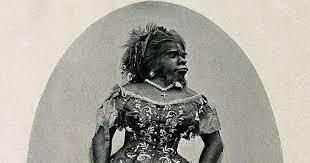
But she wasn’t the first one with this condition.
Petrus Gonsalvus, a 16th-century figure often referred to as “the man with the fur,” was a remarkable individual who captured Europe’s fascination because of his extraordinary condition. Born in the Canary Islands around 1537 into slavery, Gonsalvus exhibited an unusual amount of body hair, which led to his capture and eventual presentation at the court of King Henry II and Catherine de’ Medici of France.
His life story is both a tale of human resilience and a reflection of societal attitudes toward physical differences during the Renaissance. Gonsalvus became a subject of curiosity and spectacle, yet he also defied these labels by marrying1 and fathering children, some of whom inherited his rare condition.2
 Petrus Gonsalvus, the first recorded case of hypertrichosis
anonymous – Kunsthistorisches Museum Wien, Bilddatenbank.From Mexico to the Spotlight
The details of Julia’s childhood remain shrouded in historical uncertainty, but we are fairly certain that she was born within the State of Sinaloa, Mexico, in a small village called Ocoroni.
According to the colorful oral histories collected by Ricardo Mimiaga, Julia’s entry into the world was about as smooth as a circus tightrope act. Her mother either met an untimely demise shortly after Julia’s birth or, in a dramatic turn worthy of a telenovela, might have bolted the moment she caught sight of her daughter’s striking features.
As for her father? Well, he vanished into the ether, leaving Julia to be raised by an uncle—because nothing says “family values” like being shuttled off to live with the relative who drew the short straw.
As fate would have it, Julia found herself under the roof of Pedro Sanchez, Sinaloa’s former governor, in the mid-1850s—a setting that must have felt like moving from a sideshow tent to a royal court (albeit a rather peculiar one). Historical accounts suggest that this was the moment she began to blossom artistically, transforming from a living curiosity into a mezzo-soprano vocalist and trained dancer.
While most people were busy learning the local gossip, Julia was busy mastering the art of performance, turning her unique circumstances into a stage presence that would leave audiences spellbound. She didn’t stop at her native Cahita; oh no, she decided to throw in Spanish, English, and French for good measure.
Highest BidderFrancisco Sepulveda, the maritime customs overseer in Mazatlán, had a knack for questionable investments, and his purchase of Julia from Pedro Sanchez was no exception. Rumor has it that Julia was already making a name for herself on the circuit, dazzling audiences as part of a traveling ‘freak show’—think of it as the original human carnival, where oddities weren’t merely sideshows but the star attractions.
Picture the scene: a raucous tent filled with gasps and giggles, while Julia took center stage, hair flowing and jawline prominent, captivating the crowd with her voice and dance moves. For Sepulveda, buying Julia was like ordering the deluxe package of peculiarities—he didn’t just acquire a performer; he snagged a living legend who could turn any dull night into a spectacle of bizarre beauty.
Historian Irineo Paz uncovers a rather bizarre partnership, revealing that Sepulveda didn’t just strike a deal with the Sinaloan governor but also teamed up with Theodore Lent—an American entrepreneur whose taste for the peculiar was rivaled only by his ambition. Together, these two masterminds orchestrated a delightfully macabre business venture: showcasing Julia Pastrana across the United States.
In other words, Julia was sold for entertainment. Again.
Side Note:The historical record leaves us in the dark about Julia’s early years, offering little more than whispers of her past and a jumble of generational folklore. We’re left with no personal accounts to guide us, making it challenging to sift through fact from fiction. What I’ve shared here is the most credible narrative based on the evidence at hand, but who knows? Future discoveries might just turn this entire story on its head, adding unexpected twists to an already enigmatic life.
A New ManagerBy December 1854, Julia’s name blazed across the marquee of Broadway’s Gothic Hall musical theater, where audiences flocked to gawk at what the posters called “The Marvelous Hybrid” or “Bear Woman.”
 The Athens post (Athens, Tenn.), 28 July 1854
Like Julia, Theodore Lent remains a shadowy historical figure, though recent scholarship portrays him as a silver-tongued opportunist with fingers in many pies—from auctioneering to sales to occasional forays into the flesh trade (prostitution).
Wedding BellsNow for a twist in the tale that’s as complicated as it is intriguing. What we know for certain is that Lent and Julia tied the knot in November 1855, with a marriage license application serving as the official proof of their union.
But beyond that, the details become murky.
Was it a love story, a business arrangement, or perhaps a blend of both? The nuances of their relationship remain shrouded in mystery, leaving us to ponder what truly transpired behind the scenes of this unconventional partnership.
 * 9 November- Marriage Index (1851-1885), Maryland State Archives
The marriage certainly caused a stir in the community. Court records show that Lent found himself standing before Justice Lawder, facing a $500.00 fine and questions about the legitimacy of the union—specifically, whether his bride had come to him willingly or through abduction.
 The Sun, 10 November 1855: 1. Complaint by J.W. Beach about Pastrana’s marriage to Theodore Lent.
 Contrary to expectations, Lent appeared before the judge on the appointed day, and a news article dated 11 November 1855 reported the matter concluded thus:
A Life of Travel and TragedyTrouble About a Hybrid.—One of the singular specimens of creation in the form of a hairy woman has created quite a contest between the parties having her in charge. It appears that since her arrival to this city she has been joined in wedlock to a young man named Lent, who disputed the further authority of the agent J.M. Beach. A warrant was issued on Friday evening for the arrest of the alleged husband and his brother, when a partial examination took place, and the certificate of the marriage was produced, the ceremony having taken place on the morning of that day. The right of the husband to the wife could not be doubted and the magistrate could only hold the husband to bail to produce her when he should demand her presence. She stated on Saturday that she was married and would not give up her husband for anybody. Her face is entirely covered, except on the cheeks under the eye, with a black hair and her whiskers are quite luxurant. Unlike all other specimens of humanity, her gums project in front and are entirely longer than the teeth, which are very small and entirely obstructed from view except in the lower jaw. The matter will probably undergo further investigation.”3
 To visit the interactive map to see more details on the various stops, please click here to be taken to Julia Pastrana Online
Julia’s journey was nothing short of epic, taking her from the vibrant theaters of the U.S. to the opulent stages of Europe and even into the far-flung reaches of Russia. Talk about a world tour that could rival today’s pop stars! Despite the often grim and grueling conditions that accompanied her life on the road—think cramped train carriages and less-than-glamorous living arrangements—Julia managed to radiate a warmth and charisma that captivated audiences everywhere.
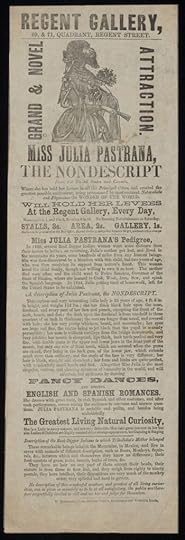 Regent Gallery, 69, 71, Quadrant, Regent Street. 1857? / EPH+33:3. Poster advertising appearances (or levees) by Julia Pastrana at the Regent Gallery, London (in 1862?)Rewriting the Script
It was as if she had a superpower: no matter how harsh the spotlight or how cruel the world outside, she could charm a crowd with a smile and a song. Audiences were drawn not just to her unique appearance but to the undeniable spirit that shone through, turning what could have been a tragic tale into one of resilience and enchantment. Julia wasn’t just performing; she was rewriting the script on what it meant to be extraordinary in a world that often preferred the ordinary.
 Weekly North Carolina standard (Raleigh, N.C.), 13 February 1856
The irony? Her talent was overshadowed by the very condition that made her famous.
 Albany Argus (New York), 10 August 1855
I find myself questioning the conditions of her performances—was she afforded moments of respite between performances, time for meals, a chance to breathe? I picture children encountering her; what expressions crossed their faces? And the adults—did they maintain decorum, or did their curiosity manifest as inappropriate commentary? Perhaps, contrary to my assumptions, she received the dignity one human owes another. Most likely not though.
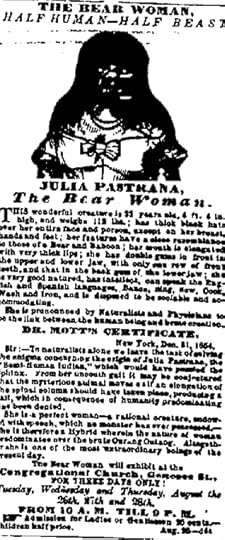 New York Daily Standard (Syracuse, NY)Medical Curiosity
Julia wasn’t merely on display—she was dissected by doctors who circled her like vultures, hoping to make the next great medical discovery. They debated her humanity, comparing her “bestial characteristics” to those of normal humans in hopes of unearthing the link between ‘us’ and ‘them.’
I’m relieved to report that a handful of physicians recognized Julia’s condition for what it was: not some medical oddity to be gawked at, but rather a documented ailment that simply doesn’t cross most doctors’ desks.
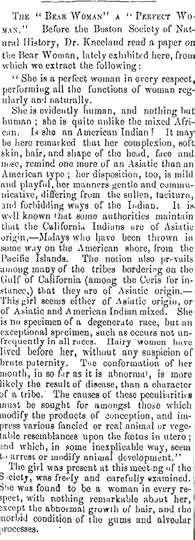 Curtains Closed
In 1859, while Julia was navigating the glittering yet unforgiving world of Russia, tragedy struck with a heart-wrenching blow. At just 26 years old, she gave birth to a son, a moment that should have been filled with joy and promise. Instead, the newborn’s life was tragically cut short, passing away just days after entering the world. The profound heartache that Julia must have felt as a mother is unimaginable, a sorrow that would linger long after the loss.
And if you thought her journey was already a circus, let’s not forget the delightful addition of her husband, who had a unique entrepreneurial spirit of his own. While Julia was navigating the stormy seas of grief, he decided that mourning was the perfect time to cash in on her fame. That’s right—he sold tickets for people to “visit” her, as if she were some sort of macabre museum exhibit.
The Aftermath: A Body for SaleBut the darkness didn’t end there. In a chilling twist of fate, Julia’s story took an even more sinister turn after her untimely death just days later. In a shocking display of greed, her husband made a deal that would make any horror movie plot seem tame: he sold her body to a scientist who had a penchant for the grotesque. This scientist didn’t just put Julia on display; he stuffed her, alongside her newborn son, transforming their tragic ends into a morbid spectacle—an eternal exhibit that blurred the lines between science and macabre curiosity.
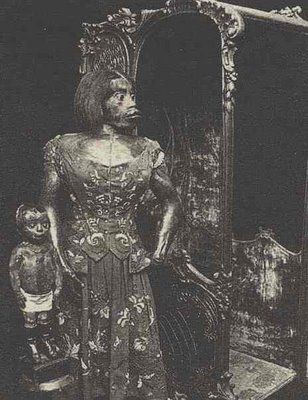 The Return to Display
But Lent wasn’t finished with his bizarre entrepreneurial escapades just yet! In a twist straight out of a carnival sideshow, he quickly married another bearded lady from Germany, proving that he had a type—and a flair for the dramatic. Together, they hit the road, embarking on a tour that was both a tribute to Julia’s legacy and a bizarre spectacle of its own.
Imagine the promotional posters: “Two Bearded Beauties Under One Tent!” It’s the kind of marketing that would make any modern-day promoter green with envy.
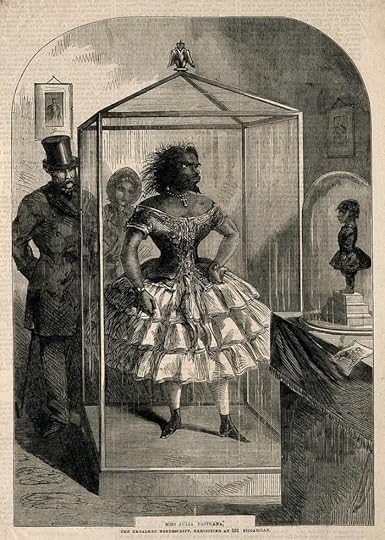 Julia Pastrana and her son embalmed, The Penny Illustrated Paper, London, 1862, credit: Wellcome Collection.
 The saga of Julia and little Theodore took yet another tragic turn after being purchased by Earl Jaeger Lund in 1921. As a Norwegian show promoter, he displayed their remains at his amusement park and took them on tours, extending their grim story of exploitation well into the 1970s.
By 1972, public sentiment had shifted significantly, leading to enough outcry about the horrendous spectacle that their remains were finally put into storage at the Oslo fairground. However, this was just the beginning of their further mistreatment.
In 1976, vandals broke into the fairground and damaged Julia’s body, showcasing a disturbing lack of respect for the deceased. Tragically, they threw little Theodore’s body into a ditch, where it was left vulnerable and ultimately devoured by mice, a heartbreaking end for a child who had already faced so much.
In 1979, the nightmare continued when Julia’s body was stolen, only to be recovered shortly after in a suburban garbage dump. To add insult to injury, her arm was severed, a shocking act that reflected the continued disregard for her dignity.4
Hidden In OlsoAfter a lifetime of twists and turns worthy of a gothic novel, Julia’s body found itself shacked up at the Institute of Forensic Medicine at the Oslo University Hospital, where it was left to collect dust from 1997 until 2013.
Indeed, the debate over Julia and her son’s remains sparked significant controversy, reflecting differing opinions on ethics, science, and respect for the deceased.
Some advocated for holding onto their bodies for future scientific research, particularly with advancements in DNA analysis. The potential to unlock insights about their unique conditions or contributions to medical science was tantalizing, leading to a push from certain quarters to preserve them for study.
On the other side were those who argued passionately for a respectful burial. They emphasized the importance of honoring Julia and her son’s lives and legacies, advocating that they deserved rest after enduring so much exploitation and suffering.
This clash of perspectives highlighted broader ethical questions about the treatment of human remains, especially those of individuals whose lives had already been marred by public spectacle and commercial exploitation. The discussions surrounding their fate reflected ongoing societal debates about the intersection of science, ethics, and respect for individual lives.
The Final DecisionIn 2005, while in Oslo for an artist residency, Mexican artist Laura Anderson Barbata stumbled upon Julia Pastrana’s haunting story and felt compelled to take action. With a heart full of determination and a dash of righteous indignation, she began campaigning for Julia’s body to be repatriated to Mexico for the proper Catholic burial that had eluded her for far too long. It was an uphill battle, as Julia had spent decades as a tragic spectacle, and now her legacy was tangled in bureaucratic red tape.5
Years passed before Barbata’s efforts gained traction, but in 2008, she submitted paperwork to Norway’s National Committee for the Evaluation of Research on Human Remains. By then, discussions about the ethical treatment of human remains were gaining momentum, and the committee’s eventual admission that Julia likely wouldn’t have wanted to be treated as a specimen was a bittersweet acknowledgment.
After a lifetime of being paraded around like a carnival attraction, the last thing Julia needed was to continue her bizarre journey as an academic curiosity
 People attend a Catholic mass for Julia Pastrana, whose remains were returned to Mexico from Norway. Photograph: Str/EPAFinal Trip Home
In a poignant turn of events, Mexican ambassador Martha Bárcena Coqui, stationed in Copenhagen, Denmark, formally received Julia Pastrana’s long-awaited coffin during a ceremony at Oslo University Hospital. It was a bittersweet moment, marking the end of a tragic chapter and the beginning of a long-overdue homecoming. The journey to honor Julia was nothing short of ceremonial: her coffin was flown from Oslo to Paris, then from Paris to Mexico City, and finally making its way to Culiacán, the capital of Sinaloa.
Upon arrival, Julia was greeted with military honors—a fitting tribute to a woman who had endured so much suffering. Following her grand entrance, she was whisked away to a military base where a press conference took place, shedding light on her tumultuous story. A small memorial service followed, allowing those who remembered her legacy to pay their respects. The next day, she was transported to Sinaloa de Leyva for her final resting place, where she was finally laid to rest.
Final ThoughtsJulia Pastrana’s tale is a haunting reminder of how society has treated those who do not fit the mold. In a world still grappling with issues of inclusion and acceptance, her story resonates with the plight of many who have been marginalized or objectified.
In the end, it leaves us with a darkly humorous yet sobering question: What does it say about humanity when we seek amusement in others’ misfortune? Julia’s life reminds us to reflect on our own views of “normalcy” and to consider how we can create a world where differences are celebrated rather than exploited.
Until next time, Keep Reading and Stay Caffeinated.For those hungry to explore more, click below to find additional readings:

Julia Pastrana: The Tragic Story of the Victorian Ape Woman. This is the compelling and strange story of how a woman born in the backwoods of Mexico came to be one of the most infamous women in Europe and America and how, nearly 150 years after she first set foot upon the stage, Julia is still being shown to others. The exhibition goes on.

The Wonders: The Extraordinary Performers Who Transformed the Victorian Age. Bewitching all levels of society, it was a world of curiosities and astonishing spectacle—of dwarfs, giants, bearded ladies, Siamese twins, and swaggering showmen. But the real stories—human dramas that so often eclipsed the fantasy presented on the stage—of the performing men, women and children, have been forgotten or marginalized in the histories of the very people who exploited them.
Subscribe below to stay up to date on myths, legends, mysteries, and the chaos of history. By continuing, you accept the privacy policyFacebookInstagramThreadsAmazonXIf you’re looking for your next favorite read, I invite you to check out my series, The Raven Society. This spellbinding historical fantasy series takes us on a heart-pounding journey through forgotten legends and distorted history. Uncover the chilling secrets of mythology and confront the horrifying truths that transformed myths into monstrous realities. How far will you go to learn the truth?
The Writer and The Librarian (Book 1):
Signed copies at:
https://rlgeerrobbins.com/product/the-writer-and-the-librarian-the-raven-society-book-1/
The Under Covers Bookstore (UK):
The Writer and the Librarian | The Under Covers (theundercoversbookstoreandcafe.com)
Explore more blogs here:
March 18, 2026The Mysterious Life of Anne of Cleves: A Royal Marriage Gone Hilariously WrongAnne of Cleves, married to Henry VIII for political reasons, turned her … March 8, 2026Women of Valor: The Unsung Heroines of the Vietnam WarEight women are honored at the Vietnam War Memorial, showcasing their diverse … February 21, 2026The Radium Girls: A Fight for Justice and ChangeThe Radium Girls' story reveals corporate negligence and their fight for justice, …Sources:
World’s ‘ugliest woman’ Julia Pastrana buried 153 years on – BBC News
Statement-and-Timeline-Larissa-and-Katie.pdf
Los Angeles Archivists Collective › On Display and Yet Unseen: The Life of Julia Pastrana
The Dark History of Bearded Ladies | History Hit
Statement concerning the remains of Julia Pastrana | Forskningsetikk
Julia Pastrana Online | Julia Pastrana and Her Child
Mexican ‘ape woman’ buried 150 years after her death | Mexico | The Guardian
Footnotes
Petrus Gonsalvus married a French woman widely thought to be Catherine Raffelin, who served as a lady-in-waiting to Catherine de’ Medici at the court of Henry II in France. Their union is said to have inspired the story of “Beauty and the Beast.”︎They had seven children, four of whom inherited his hypertrichosis, often referred to as “werewolf syndrome.” Among their offspring were Henri, Madeline, Françoise, and Antonietta (also known as Tognina), many of whom were showcased as royal court “curiosities.” ︎American and Commercial Advertiser, “Trouble about a Hybrid,” Julia Pastrana Online, accessed February 19, 2026, https://juliapastranaonline.com/items.... ︎Julia Pastrana — Laura Anderson Barbata ︎Julia Pastrana’s Long Journey Home: A Conversation With Laura Anderson Barbata | The Order of the Good Death ︎The post The Tragic Tale of Julia Pastrana: A Life on Display appeared first on Chasing History.
March 1, 2026
The Lindbergh Kidnapping: A Case of Media Sensation
This post contains some affiliate links
Friends,
The name Charles Lindbergh is forever etched in the annals of American history, not just for his audacious transatlantic flight in 1927 but also for the dramatic events surrounding the kidnapping of his infant son, Charles Jr., in 1932.
This case, often called “The Crime of the Century,” captivated the nation and raised questions about justice, media frenzy, and conspiracy.
A Tapestry Of EventsIn 1930, America’s favorite flying heartthrob, Charles Lindbergh, and his equally adventurous wife, Anne Morrow, fled to Hopewell like a pair of celebrity fugitives. After Charles’ 1927 hop across the pond turned him into the Jazz Age equivalent of a rock star, the couple craved a place where reporters wouldn’t hide in their rosebushes.
They christened their woodland hideout “Highfields”—a name that sounds like something from a children’s book about talking rabbits—and proceeded to build their nest far from the madding crowd’s telephoto lenses and autograph books.
 Lindbergh’s residence in Hopewell, 1935. Courtesy of NJ State Archives.
Why Hopewell? Well, picture this: it was as quaint as a button, with neighbors nosy enough to notice strangers but polite enough to pretend they hadn’t recognized the most famous fly-boy in America buying milk at the corner store. Perfect for raising little Charles Jr. in blissful, press-free obscurity.
Or so they thought.
1 March 1932The evening began like any other. Charles and Anne were enjoying dinner, perhaps reflecting on their recent family trip and the joys of parenthood. Their son was in his nursery on the second floor. At around 8:30 p.m., Betty, the boy’s nanny, visited the nursery and found everything in order. The baby was peacefully asleep, and the atmosphere was calm and safe.
A perfect Tuesday evening.
 A baby picture of Charles Lindbergh, Jr., before the kidnapping.- FBI.govThe Discovery
At 10:30 p.m., the Lindberghs’ lives changed forever. Betty had gone to check on Charles Jr., only to find rumpled sheets in an empty crib. Her heart stopped, then hammered against her ribs as she tore through the nursery, flinging open the closet door, dropping to her knees to look under furniture.
“Maybe the parents took him,” she must have thought. But the terrible silence from the rest of the house confirmed what her trembling hands already knew—Charles Jr. had vanished.
The household tore through the mansion, room by room, until someone’s scream pierced the night—a ransom note demanding $50,000 lay on the nursery windowsill, the handwriting hurried and barely legible.
This would soon become the most notorious kidnapping investigation in American history.
 The first ransom note. FBI.GovClues
The ground beneath the nursery window bore impressions where someone had placed a ladder, alongside a single set of human tracks. No shoe treads were visible in the soil. Whoever had climbed to the window had covered their feet with something soft—perhaps thick socks or moccasins.
Lindbergh and Chief Williamson of the Hopewell Police discovered a crude ladder, its rungs thick with dried mud, approximately sixty feet from the house where rocky soil met the tree line.
When questioned who owned it, Lindbergh hesitated. The ladder might have been abandoned by construction workers, he suggested, but was unsure.
Across the sodden earth, the footprints left a clear trail for the searchers to pursue. At the woodland perimeter, they discovered where a second individual had joined the first—the impressions noticeably diminutive in comparison. The officers considered the possibility that these smaller tracks belonged to a female accomplice.
The Kidnappers DemandsOn 6 March 1932, Colonel Lindbergh received a second ransom note. The envelope bore a Brooklyn, New York, postmark dated 4 March. This time, the kidnapper demanded $70,000. An amount the Lindberghs were willing to pay, no questions asked, for their son.
The abductors promised to return the Lindbergh baby once they had arranged the specifics of the exchange—particularly who would facilitate the transfer. Four days passed before a third ransom note arrived at the desk of the Lindbergh family’s legal counsel. This message flatly refused any go-between selected by the child’s parents and insisted on public communication through the newspapers.
That same day, Dr. John F. Condon, a retired school principal from the Bronx, placed an advertisement in the “Bronx Home News” volunteering to serve as intermediary and offering an additional $1,000 of his own money toward the ransom.
 Condon in 1935- Wikipedia
The kidnapper agreed by sending the following letter to Condon:
More Hands In The Investigation
Dear Sir: If you are willing to act as go-between in Lindbergh cace please follow stricly instruction. Handel incloced letter personaly to Mr. Lindbergh. It will explain everything. Don’t tell anyone about it. As soon we found out the Press or Police is notifyed everythign are cansell and it will be a further delay.
Affter you gett the mony from Mr Lindbergh put these 3 words in the New York American
MONEY IS REDY
Affter notise we will give you further instruction. Don’t be affrait we are not out fore your 1000$ keep it. Only act strickly. Be at home every night between 6-12 by this time you will hear from us.1
Colonel Lindbergh approved this arrangement. On 10 March 1932, the $70,000 ransom was placed in Dr. Condon’s custody. He promptly began communicating with the kidnapper through coded newspaper messages, signing them with the alias “Jafsie.”
On the evening of 12 March, around 8:30 p.m., Dr. Condon’s telephone rang with an anonymous call. Shortly thereafter, a taxicab driver named Joseph Perrone delivered the fifth ransom note to him, explaining he had received it from a stranger he couldn’t identify.
The note directed Dr. Condon to search beneath a stone at an abandoned stand located approximately 100 feet from a remote subway station, where he would discover further instructions.
Condon retrieved the sixth note as directed. Its instructions led him to Woodlawn Cemetery at the intersection of 233rd Street and Jerome Avenue, where he encountered a man who identified himself only as “John.”
Click here to view all the ransom notes.
False LeadsAt this encounter, they negotiated the ransom down to $50,000. Condon handed over the money and received two things in return: a written receipt and a thirteenth note stating that the Lindbergh baby could be recovered from a boat called “Nellie” off Martha’s Vineyard, Massachusetts.
After the exchange, the mysterious man disappeared into the wooded area to the north of the park. The next day’s search of the Martha’s Vineyard waters yielded nothing—no boat named “Nellie,” no Charles Jr.
Charles Is FoundWilliam Allen, riding alongside driver Orville Wilson in their delivery truck, stumbled upon a grim discovery on 12 May 1932. Just yards from the highway near Mount Rose in Mercer County, partially covered by soil and in advanced decay, lay the remains of the Lindbergh infant. The makeshift grave site was less than five miles from the family’s estate, where the child had been taken months earlier.
The remains showed severe head trauma, including a fracture and other significant damage. Following positive identification, the body was cremated in Trenton, New Jersey, on 13 May 1932. According to the Coroner’s findings, the child had been deceased for approximately two months.
Charles Jr. had been dead the entire time they searched for him.
The Media FrenzyThe Lindbergh case didn’t just change crime reporting—it blew it sky-high like a champagne cork at a wedding! Journalists didn’t merely flock to the Lindbergh estate; they descended like caffeinated vultures, transforming a family tragedy into America’s hottest ticket.
Reporters crawled through bushes, impersonated delivery boys, and one allegedly disguised himself as a potted plant—all to catch a glimpse of the grieving parents or snag a scoop about baby Charlie’s missing teddy bear. The coverage wasn’t just relentless—it was a media tornado that swept up the nation in its dizzy, ink-stained vortex.
This media tsunami whipped the public into a frenzy of amateur sleuthing that would make Sherlock Holmes reach for his opium pipe. Housewives claimed psychic visions of the baby, while barbers swore their customers resembled the kidnapper’s composite sketch.
 Lindbergh Baby Kidnapping headlines, 1932 (The Muskegon Chronicle via Newspapers.com)
Under the glare of twenty-four-hour news coverage, detectives felt the weight of an entire city’s expectations bearing down on them. Americans wanted justice— and they wanted it yesterday. The pressure to deliver quick answers pushed investigators into corners they might otherwise have approached with more caution.
 1932 newspapers CHARLES LINDBERGH BABY KIDNAPPING Hopewell NEW JERSEY
When case details inevitably slithered into reporters’ ravenous little paws—like chocolate bars into the hands of a kindergartner on a sugar high— the investigation exploded into a three-ring circus of chaos. Detectives and public information officers performed their daily high-wire act without a net, frantically juggling which juicy tidbits to toss to the media piranhas and what information to keep closed.
The Investigation: A Shift in DynamicsAs the investigation unfolded, it became evident that the involvement of a high-profile figure such as Charles Lindbergh significantly affected the proceedings. Lindbergh’s celebrity status allowed him to exert influence over the investigation in ways that would be unthinkable today.
Lindbergh—America’s darling turned rogue detective—stormed through the investigation like a hurricane in wingtips, often bypassing law enforcement protocols. He communicated directly with potential informants and even offered large sums of money for information, thereby contributing to the investigation’s chaotic nature.
 Attorney General Homer Cummings and FBI Director J. Edgar Hoover discuss the Lindbergh kidnapping investigation. -FBI.gov
His status put immense pressure on authorities to resolve the case quickly, leading to the compromise of investigative integrity. The focus shifted from methodical police work to a more sensational approach driven by public sentiment.
The Criminal Justice System: A New PrecedentThe investigation ultimately snared Bruno Richard Hauptmann, a Bronx carpenter with a thick German accent and a penchant for homemade ladders, who found himself convicted of murder in 1935 and catapulted to infamy!
 An artist’s sketch of “John” was developed from Dr. Condon’s verbal description and proved very similar to Bruno Richard Hauptmann (right), who was arrested on 19 September 1934. -FBI.govCourt Room Drama
The trial exploded into a three-ring media circus—complete with souvenir vendors hawking miniature kidnapping ladders outside the courthouse—while inside, the judge desperately banged his gavel like a man trying to hammer down a possessed jack-in- the-box as reporters practically swung from the rafters for the perfect scoop!
The case shattered legal norms like glass beneath a hammer, unleashing a firestorm of debate over the media’s toxic influence on trials and igniting desperate calls for radical judicial reform.
 28 January 1935: New Jersey State troopers had a hard time in Flemington as they tried to hold back the crowds who wanted to see Bruno Richard Hauptmann on the stand in his trial.
Public faith in justice didn’t merely erode—it collapsed catastrophically as the world watched reporters transform courtroom proceedings into a blood-soaked spectacle, proving once and for all how media vultures could devour the very foundation of American jurisprudence.
Click here to read the Testimony of John F. Condon
Final ThoughtsThe tragic murder of Charles Lindbergh Jr. not only altered the lives of the Lindbergh family but also reshaped the way the media interacts with criminal investigations. As we reflect on this case, we are reminded of the profound impact that public figures can have on the judicial process and the ongoing fascination with conspiracy theories that continue to shroud this dark chapter of American history.
The Lindbergh case invites us to consider how far we’ve come—and how far we have yet to go—in our quest for truth and justice.
Until next time, Keep Reading and Stay Caffeinated.For those hungry to explore more, click below to find additional readings:

Lindbergh. Few American icons provoke more enduring fascination than Charles Lindbergh—renowned for his one-man transatlantic flight in 1927, remembered for the sorrow surrounding the kidnapping and death of his firstborn son in 1932, and reviled by many for his opposition to America’s entry into World War II.

Anne Morrow Lindbergh: Her Life. Anne Morrow Lindbergh has been one of the most admired women and most popular writers of our time. Her Gift from the Sea is a perennial favorite. But the woman behind the public person has remained largely unknown. Drawing on five years of exclusive interviews with Anne Morrow Lindbergh as well as countless diaries, letters, and other documents, Susan Hertog now gives us the woman whose triumphs, struggles, and elegant perseverance riveted the public for much of the twentieth century.
Subscribe below to stay up to date on myths, legends, mysteries, and the chaos of history.
By continuing, you accept the privacy policyFacebookThreadsInstagramAmazonXYouTube
If you’re looking for your next favorite read, I invite you to check out my series, The Raven Society. This spellbinding historical fantasy series takes us on a heart-pounding journey through forgotten legends and distorted history. Uncover the chilling secrets of mythology and confront the horrifying truths that transformed myths into monstrous realities. How far will you go to learn the truth?
The Writer and The Librarian (Book 1):
Signed copies at:
https://rlgeerrobbins.com/product/the-writer-and-the-librarian-the-raven-society-book-1/
Explore more blogs here:
Unveiling Henry Ford: Hero or Villain?Henry Ford, a pivotal figure in American automotive history, is both celebrated for his innovations and criticized for his controversial … Charles Ponzi: The Man Behind the Infamous SchemeIn the 1920s, Charles Ponzi’s elaborate scheme lured investors with visions of unprecedented wealth, only to leave them clutching worthless … December 7- Pearl Harbor Remembrance DayThis post contains some affiliate links Friends, I will be the first to say that I usually only remember the …Footnotes:
ifyouarewilling.jpg (485×600)︎Sources:
lindberghkidnappinghoax.com/ransom.html
Kidnapping and Trial | Minnesota Historical Society
The post The Lindbergh Kidnapping: A Case of Media Sensation appeared first on Chasing History.
February 21, 2026
The Radium Girls: A Fight for Justice and Change
This post contains some affiliate links
Friends,
The tale of the Radium Girls is a horror story wrapped in a cautionary tale, shining a spotlight on the dark side of American industrial history. Picture this: young women in the early 20th century, excited to work at the Radium Dial Company, where they were told they could paint watch dials with a magical substance that glowed in the dark! Who wouldn’t want a job that made you feel like a superhero?
But here’s the twist—this “magic” was radium, and the only thing it was really good at was turning these vibrant young ladies into walking human corpses. As they delicately dipped their brushes in the glowing stuff, they were unknowingly signing up for a one-way ticket to a health nightmare. Corporate negligence reached an all-time high, with bosses more interested in profits than in their employees’ well-being.
The Medical Marvels of RadiumIn the early 20th century, radium was all the rage in the United States—a dazzling, glowing element that seemed to promise health and vitality. Advertisements touted it as a cure-all, with claims that ranged from miraculous to downright bizarre.
 “Radium to Extend Life to 100 Years,” The New York Herald, 14 October 1921, p. 1.
Radium was the ultimate snake oil of the early 20th century, marketed as the miracle cure for just about everything under the sun—from arthritis to cancer! Imagine walking down the street and spotting radium-infused tonics, pills, and even cosmetics promising to revive your tired spirit and cure your ailments.
Radium was marketed with all the flair of a traveling salesman, complete with catchy slogans and promises that would make even the shadiest of vendors blush. It was the age of consumerism gone wild, where if it sparkled, it sold! People were practically lining up for their glowing fix, convinced that a sprinkle of radium could turn them into superheroes.
One of the most popular products was “radium water,” which was bottled and sold as a health tonic.1 Radithor, the brainchild of William J. A. Bailey—it was marketed between 1925 and 1930 as “A Cure for the Living Dead.”
Feeling tired? Pop a bottle! Got diseases? Radithor’s got your back! Imagine the hype: people wandering around as they’d just won the lottery, clutching their Radithor bottles, convinced they were about to unlock the secrets of eternal vitality.
 Wikimedia Commons – An ad for radium water.
Beauty products also jumped on the radium bandwagon. Face creams and powders claimed to enhance your complexion and make you look radiant—literally! The idea of glowing skin took on a whole new meaning, although many users were blissfully unaware of the lurking dangers.
The Only Limitation was the ImaginationThe allure of radium went beyond watches and cosmetics, extending into the food and beverage industry! Picture this: tantalizing products like Radium Schokolade, a chocolate bar promising a boost of energy, and Radium Bread, baked with radioactive water to enhance its vitality.
To explore a fascinating catalog of Radium-infused items—ranging from ingestible “health” foods to dubious medical devices to children’s playthings—click here.
Side Note:Eben Byers, an industrialist whose love affair with Radithor took a dark turn. Byers famously consumed high amounts of this tonic, believing it would keep him on top of the world. Spoiler alert: it didn’t. In 1932, he met his grim fate, succumbing to radium poisoning.
When news of his death spread, people began to realize that this miracle potion wasn’t exactly what it was cracked up to be. Suddenly, those shiny bottles of Radithor, once the toast of the town, were looking more like toxic waste than the elixirs of life.
The ‘Girls’The United States Radium Corporation, based in Orange, New Jersey, capitalized on the Radium trend by employing young women to paint watch dials with radium-infused paint.
These women, often referred to as the “Radium Girls,” were instructed to use their lips to shape the paintbrushes, exposing them to dangerous levels of radiation.2
The watch dial painters at the RLMC plant were all women, mainly teenagers, who were recent immigrants to the USA. Most had minimal education. Some started working at the plant immediately after finishing grammar school. 3
The girls used slim camel hair brushes with narrow wooden handles. Each brush had approximately 30 hairs. Though the brushes were fine, the bristles had a tendency to spread, hampering the girls’ work. The smallest pocket watch they painted measured only 3.5 cm across its face, meaning the tiniest element for painting was a single millimeter in width. The girls could not go over the edges of these delicate parameters or they faced trouble. They had to make the brushes even finer, and there was only one way to do that: the girls put the brushes in their mouths. -William Clifford Roberts, MD4
Some of the Radium Girls suffered from aplastic anemia5, while others faced collapsed hips and spinal damage so severe that they required braces from neck to waist just to stand upright.
Mollie Maggia, who had spent four years at the Orange, New Jersey, plant, began experiencing excruciating mouth pain. After her dentist extracted several teeth, the wounds simply wouldn’t heal, and Mollie’s suffering intensified. Her teeth began to fall out on their own, and during one painful examination, her jawbone shattered at the lightest touch of her dentist’s hand.
She died on 12 September 1922.
 Mollie Maggias Photo added by James Ringenberger to Findagrave.com
Mollie’s death certificate falsely claimed syphilis had killed her—a cruel final insult that would stand uncorrected in official records for years before the truth was finally acknowledged.
Years after her death, scientists disturbed Mollie Maggia’s grave to conduct tests on her remains. Popular Science would later report the grim findings: radioactivity permeated “each and every portion” of her exhumed tissue and bones.
After the research concluded, Mollie was reinterred at Rosedale Cemetery in Orange, New Jersey—the same burial ground where her sisters Quinta and Albina, who had shared her fate as radium girls, already lay.6
The Missing ReportIt wasn’t until 1924, amid declining business fueled by growing public fear, that US Radium finally commissioned an independent study into the deaths of the women. Conducted by Harvard physiologist Cecil Drinker, the study unsurprisingly revealed a troubling connection between the girls’ deaths and radium paint exposure.
Drinker and his team discovered that nearly the entire workforce showed abnormalities in their blood, suggesting a chilling possibility: the company had effectively poisoned its employees.7
 Article featuring Catherine demonstrating lip-pointing, Herald Examiner, 1938.
When Drinker presented his findings to US Radium executives, outrage erupted. Rather than acknowledging the grim results, the President of US Radium sought to suppress the report. Meanwhile, the New Jersey Department of Labor launched its own investigation, demanding access to all documentation related to the studies. 8
In a desperate bid to protect their reputation, US Radium quietly altered Drinker’s original report, erasing any mention of the hazardous working conditions and the health impacts on their employees.9 The revised report, which they submitted to the government, falsely lauded the company’s facilities and safety standards, effectively issuing a clean bill of health for both US Radium and its workforce.
The Road to JusticeThe turning point came when several Radium Girls, including Grace Fryer, decided to take a stand. In 1927, they filed a lawsuit against the United States Radium Corporation, seeking compensation for their medical expenses and suffering.10 Their case garnered national attention, highlighting the company’s exploitative practices.
 Grace Fryer, 1920s.
By their first in-court appearance in January 1928, all five of the radium girls were so weak they couldn’t raise their arms to take the oath. Fryer had lost all of her teeth, and needed a back brace in order to sit in a chair. The next hearing was scheduled for April, but by then the dial painters were too ill to appear in court. Meanwhile, many of USRC’s witnesses were busy summering in Europe. The judge adjourned the case until September.11
 “Five Women Doomed to Die,” The World (New York, NY), 10 May 1928, p. 14.
Though debate raged, USRC resolved the case in 1938 with a settlement: a lump sum of $10,000 per person, plus an annual stipend of $600 for life. The figures, substantial on paper, hardly matched the depth of their ordeal. The verdict was a bittersweet victory; while it validated the girls’ struggles, it also highlighted the systemic failures that allowed such exploitation to occur.
The Aftermath and LegacyThe impact of the Radium Girls’ fight for justice extended far beyond the courtroom. Their case became a rallying point for labor rights advocates and highlighted the dangers of industrial practices that prioritized profit over worker safety. The public outcry prompted increased scrutiny of the use of radium and other hazardous materials in consumer products.
 “Settlement of a Pathetic Case,” The Evening Star (Washington, DC), 5 June 1928, p. 8.
In the years that followed, regulations were established to protect workers from exposure to toxic substances. The legacy of the Radium Girls served as a catalyst for the development of occupational safety standards and the establishment of the Occupational Safety and Health Administration (OSHA) in 1970.
Changing Public PerceptionThe Radium Girls’ ordeal significantly altered public perception regarding the use of radium and other hazardous substances. What was once considered a miracle element became a symbol of corporate irresponsibility and the need for greater transparency in industrial practices. The case underscored the importance of prioritizing human health over profit and set the stage for future movements advocating for labor rights and environmental safety.
Final ThoughtsThe story of the Radium Girls is not just a tale of tragedy but also one of resilience and triumph against overwhelming odds. Their bravery in the face of adversity paved the way for significant changes in labor laws and public health policies. As we reflect on their legacy, we are reminded of the importance of vigilance in protecting workers’ rights and the necessity of holding corporations accountable for their actions.
The Radium Girls’ fight is a powerful reminder that, while the past may be fraught with injustice, it can also serve as a catalyst for change, inspiring future generations to advocate for a safer, more equitable world.
For a list of the Radium Girls, click here.
Until next time, Keep Reading and Stay Caffeinated. For those hungry to explore more, click below to find additional readings:
The Radium Girls: The Dark Story of America’s Shining Women. Written with a sparkling voice and breakneck pace, The Radium Girls fully illuminates the inspiring young women exposed to the “wonder” substance of radium, and their awe-inspiring strength in the face of almost impossible circumstances. Their courage and tenacity led to life-changing regulations, research into nuclear bombing, and ultimately saved hundreds of thousands of lives…
Marie Curie: The Life and Legacy of the Legendary Scientist Who Became the First Woman to Win a Nobel Prize examines the career that made Madame Curie one of the world’s most important figures. Along with pictures of important people, places, and events, you will learn about Marie Curie like never before.
Explore more blogs here: November 9, 2020In the shadowy skies of World War II, a fearless group of female pilots known as the Night Witches soared … May 21, 2023The Legacy of Amelia Earhart: Aviation Icon and AdvocateAmelia Earhart, a pioneering aviator, broke barriers by becoming the first woman to fly solo across the Atlantic. Her advocacy … February 6, 2024The Curious Case of Anna Anderson: The Woman Who Claimed to Be AnastasiaFriends, In the realm of historical mysteries, few tales are as captivating as that of Anna Anderson, the woman who …If you’re looking for your next favorite read, I invite you to check out my series, The Raven Society. This spellbinding historical fantasy series takes us on a heart-pounding journey through forgotten legends and distorted history. Uncover the chilling secrets of mythology and confront the horrifying truths that transformed myths into monstrous realities. How far will you go to learn the truth?
The Writer and The Librarian (Book 1):
Signed copies at:
https://rlgeerrobbins.com/product/the-writer-and-the-librarian-the-raven-society-book-1/
Footnote:
2015-Lavine.pdf︎Deadly occupation, forged report | Harvard T.H. Chan School of Public Health ︎Facts and ideas from anywhere – PMC ︎Facts and ideas from anywhere – PMC ︎Victims experienced severe anemia (lack of red blood cells), infections (low white blood cells), and easy bruising/bleeding (low platelets). Many also suffered from “radium jaw” and broken bones. ︎Mollie Maggia: Section 8, Row 6, Grave 71. Quinta Maggia McDonald: Section 9, Row 7, Grave 7. Other Radium Girls: The cemetery also serves as the final resting place for other victims, including Albina Maggia Larice, Ruth A. Saxer (Section 45), and Hazel May Vincent Kuser (Section Q, Lot #78, Grave #2). ︎Deadly occupation, forged report | Harvard T.H. Chan School of Public Health ︎The National Bureau of Standards and the Radium Dial Painters – PMC ︎HPHFALL2013web-deadly-environments.pdf ︎Radium Girls | Research Starters | EBSCO Research ︎The Tragic Case of the Radium Girls, and Their Impact on Labor Rights ︎Sources:
Hot Times in “Radium Hospital”: The History of Radium Therapy at MSK | Memorial Sloan Kettering Cancer Center
Radium Girls: Living Dead Women | Headlines & Heroes
Radium girls | Environmental history
The Secrets of Life | Science History Institute
The post The Radium Girls: A Fight for Justice and Change appeared first on Chasing History.
February 13, 2026
Romance and Ambition: Sir Walter Raleigh’s Story
This post contains some affiliate links.
Friends,
Sir Walter Raleigh is a name that evokes images of gallant adventurers, daring explorations, and, of course, a famously tumultuous relationship with Queen Elizabeth I. This captivating figure from the late 16th century was not just a courtier; he was a man of many talents, who changed the course of history in England and the New World (America).
 Sir Walter Raleigh by William Segar
Let’s dive into the vibrant life of Sir Walter Raleigh and explore his adventures, romance, and ultimate fate.
The Early Years: A Man of Many TalesBorn 22 January 1552 (or possibly 1554)1 in Devon, England, Sir Walter Raleigh studied at Oxford University, where he likely pursued a broad curriculum that included history, literature, and philosophy. Although specific records of his studies are scarce, it’s known that he was a keen learner and well-read, which helped him develop his skills in writing and rhetoric.
After two years, he left Oxford without a degree. 2
FranceWelcome to the French Wars of Religion (1562–1598), where Catholics and Protestants (Huguenots) turned the country into a bloody battleground—think of it as a civil war with a side of religious fervor and a sprinkle of noble family drama!
These eight brutal conflicts were fueled by enough hatred to power a small country, a monarchy that was about as stable as a wobbly table, and noble families like the Guise and Bourbon that fought harder than reality TV stars over a trophy. The highlight? Oh, just the 1572 St. Bartholomew’s Day Massacre, where the only thing thicker than the plot was the blood on the streets!
And in waltzes Queen Elizabeth I, waving her flag for the Huguenots like a cheerleader at a particularly bloody pep rally. And England was pulling out all the stops—financial aid, military support, and soldiers —aimed at preventing France from becoming a hostile power. Because, let’s face it, the last thing Elizabeth wanted was a Catholic France teaming up with her arch-nemesis, Spain, and plotting to make her life miserable.
Ah, young Sir Walter Raleigh—a teenage Protestant with a flair for adventure and a family history of persecution that would make any soap opera look like a picnic! Growing up under Queen Mary I’s reign was like living in a horror movie, so what’s a boy to do? Join the English volunteers in France to back the Huguenots, of course!
Raleigh, armed with youthful idealism, leaped into the chaos of the Battle of Jarnac on 13 March 1569. He was under the command of his relative Henry Champernowne, who probably thought, “What’s better than a family reunion? A battle where we might all die together!”
IrelandAcross the Irish Sea, Sir Walter Raleigh carved his name into history with blood-soaked steel. The battlefields of Ireland became his theater, where he orchestrated the suppression of the Desmond Rebellions in Munster (1580-81) with ruthless efficiency.
Welcome to the Siege of Smerwick, a delightful little massacre that took place in November 1580 at Dún an Óir—also known as “Fort of Gold,”3 because nothing says “golden opportunity” like a brutal battle!
It all starts with an ensemble of around 400 to 700 Italian and Spanish soldiers, sent by Pope Gregory XIII to support the Irish Catholic rebels, who found themselves enjoying an all-access pass to the wrong side of history.
After three days of artillery bombardment, the papal commander, Sebastiano di San Giuseppe,4 threw in the towel on 10 November 1580. Surrender? Sure! Just don’t forget to read the fine print—because if you thought it was going to be a peaceful negotiation, you clearly don’t know Lord Grey!
When the English troops stormed in, instead of tea and crumpets, they got a massacre. Lord Grey, likely feeling particularly generous, ordered the systematic execution of the garrison, with only a few officers spared—because what’s a massacre without some selective mercy?
 Letter from San Giuseppe to the Cardinal of Como, 26 December, 1580- Arch Hib. 7 (1918-22) 271
Enter Sir Walter Raleigh, then a junior officer and captain, tasked with the not-so-enviable job of carrying out the summary executions. Imagine young Raleigh, probably thinking he was signing up for glory, only to find himself leading the charge in a grim episode that would make even the bravest warrior cringe. According to contemporary accounts, including John Hooker’s rather colorful retelling, Raleigh and Captain Mackworth were the grim reapers of this bloodbath.
Side Note:Fast forward thirty years, and this little incident would come back to haunt Raleigh like a bad sequel nobody asked for. When he fell out of favor with King James I, his role in the Smerwick Massacre became a prime example of why you shouldn’t let your past catch up with you—especially when it involves a whole lot of blood on your hands.
Blood Equals WealthThe Crown rewarded Sir Walter Raleigh’s brutality with vast tracts of confiscated land in the Munster Plantation. Though later histories would paint him as a strategic genius during the Nine Years’ War, it was these earlier campaigns that truly revealed the man behind the courtly façade.
It was his charm and wit that would ultimately win him a place at the Court of the formidable Queen Elizabeth I.
Enamored by the Queen: A Royal Romance?Raleigh’s relationship with Queen Elizabeth I was a blend of admiration, ambition, and a hint of romance. He first caught her attention with his exploits and bold character. Legend has it that he even became famous for laying his cloak over a puddle to allow the queen to pass without getting her shoes wet—a gesture of chivalry that won him favor. 5
 Walter Raleigh throwing his cloak down for Queen Elizabeth, illustration from ‘Kenilworth’ by Sir Walter Scott, published 1912 (colour litho)
However, their relationship was complex.
As a favorite of the queen, Raleigh was granted titles and lands, but he also found himself part of a competitive court where jealousy and rivalry were rampant. His secret marriage to Elizabeth Throckmorton in 1591 led to his temporary fall from grace.
[image error]Elizabeth “Bess” Throckmorton Raleighby William Segar, 1595
Queen Elizabeth’s wrath knew no bounds. Having long considered Raleigh among her circle of admirers, his secret marriage struck her as betrayal. She ordered both Walter and his new bride, Bess, confined to the Tower of London.
Unfortunately, Bess had conceived before the wedding and bore a son, whom they named Damerei, on 29 March 1592. Though fate proved cruel, plague ravaged the country the following year, taking the child with it.6
After Queen Elizabeth I decided to let Sir Walter Raleigh and his beloved Bess out of their Tower vacation, what did our favorite rogue do? He dove headfirst into yet another expedition—because who needs a quiet life when you can attack the Spanish coastline like it’s a theme park ride?
Road to RedemptionFortune smiled down on Sir Walter in September 1592 when he managed to snag a Spanish galleon loaded with treasures. Imagine him aboard his ship, yelling, “Yo ho ho, and a bottle of… gold!” as he carted off riches that could make a pirate weep with envy.
Fast forward to 1597, and Raleigh decided it was time to dip his toes back into the murky waters of politics. He was elected as an MP for Dorset, and if that wasn’t enough, he later snagged a seat for Cornwall. In total, he served as MP for three different counties, proving that he could charm his way into anyone’s good graces.
Using his platform, he passionately spoke about his favorite topics: the navy and religion—because nothing says “political savvy” quite like mixing cannons with catechisms! He felt so strongly about these issues that you half-expect him to show up to Parliament in full naval regalia, demanding a ship for every parish! Then came 1600, when the Crown threw him one last bone: the position of governor of Jersey. Raleigh took this job seriously—because what better way to show your commitment to the Crown than by launching construction projects to improve national defenses?
The whole affair became one of the most dramatic tales of courtly romance, illustrating just how love can be both thrilling and perilous in the world of royal intrigue!
Side Note:Elizabeth: The Golden Age: Devotes significant screen time to the clandestine romance between Sir Raleigh and lady-in-waiting Bess, exploring how their forbidden union shapes the Court’s dynamics. I highly recommend this movie if you want to dive into the court drama of Queen Elizabeth I.
The Quest for the New WorldRaleigh’s dreams extended beyond the Court of Elizabeth. He was fascinated by the New World, and in 1584, he sponsored the first English colony in America on Roanoke Island7, now part of North Carolina. This venture, however, was fraught with challenges, leading to the mysterious disappearance of the Lost Colony in 1587.
Despite these setbacks, Raleigh continued to dream big. He popularized tobacco cultivation in England, which would become a lucrative trade.8 His writings about the New World—filled with descriptions of its beauty and potential—sparked interest in exploration and colonization, paving the way for future ventures.
 Raleigh’s First Pipe in England – an illustration included in Frederick William Fairholt’s Tobacco, its history and associations.A Fall from Favor: The Price of Ambition
Raleigh’s fortunes began to decline when Elizabeth I died in 1603. The new king, James I, was not as fond of him, and old grievances resurfaced. Raleigh’s ambitious nature and past connections to the queen put him at odds with the new Court, and he failed to win his subjects’ hearts.
Though Sir Raleigh pursued peaceful relations abroad, he maintained Elizabeth’s harsh stance against religious dissenters at home. This climate of discontent bred plots against him, most notably the ‘Main Plot,’ which aimed to install Lady Arabella Stuart— once Elizabeth’s potential heir—upon the throne.
 Lady Arabella Stuart (1575-1615)
 1605
When conspirators approached Raleigh for support, and the scheme was later exposed, evidence of his involvement proved insufficient. Nevertheless, he received a death sentence alongside confirmed plotters, only to be spared at the eleventh hour when James commuted his punishment to lifelong confinement in the Tower of London.
Life In The Tower
For the next thirteen years, the Tower became his home—a gilded cage befitting his station. From his two generously appointed chambers in what locals called the Garden Tower (though history would remember it as the Bloody Tower), he could gaze upon the Lieutenant’s carefully tended grounds below. The Crown permitted his loyal wife Bess, their son Walter, and a modest retinue of three servants to share his confinement within London’s ancient fortress.
During his confinement, Raleigh cultivated rare flora from seeds collected during his expeditions and concocted his own remedies. Among these were the Balsam of Guiana— a potent medicinal elixir distilled from strawberries— and his renowned ‘Great Cordial,’ which combined a wide array of elements ranging from common herbs to exotic spices and finely ground pearl, deer antler, and ambergris (the waxy substance harvested from sperm whale digestive tracts).
Raleigh also turned to literary and scholarly pursuits, composing verse and delving into chemical experiments and historical research. The Tower of London’s substantial collection of 500 volumes provided him with ample material, and by 1614, he had begun his ambitious The Historie of the World.

That same year saw the publication of the first five volumes, which scarcely concealed his disillusionment with royal authority—hardly surprising given his circumstances. King James I, alongside Archbishop George Abbot of Canterbury, promptly ordered the confiscation of all copies and prohibited further printing.
Their censorship proved futile; the work gained immense popularity and underwent numerous reprints throughout the 1600s.
James I freed Sir Walter from the Tower in 1616, though the royal pardon remained withheld. Commissioned by the monarch to venture to Guiana in pursuit of gold, Raleigh set forth with assurances of diplomatic conduct. The expedition proved disastrous— Spanish settlements were ravaged, and the promised treasure never materialized.
Raleigh’s June 1618 return to England brought accusations that he had deliberately provoked hostilities between Spain and England. King James, enraged by this diplomatic catastrophe, resurrected the original 1603 sentence.
By August, the once-favored explorer found himself again imprisoned in the Tower of London—specifically in the Beauchamp Tower, the same stone chamber where Lady Jane Grey had awaited her execution sixty-five years earlier.
The Final Curtain: Execution and LegacyIn 1618, after a trial that many deemed unfair, Sir Walter Raleigh was sentenced to death for treason. On 29 October 1618, he was executed in a dramatic fashion—a man of courage until the end, he famously declared to the executioner, ‘Strike, man, strike!’9
 Sir Walter Raleigh’s execution via decapitation. (Public Domain)
After the execution, Raleigh’s embalmed head became a macabre keepsake for his widow Bess, who carried it in a crimson velvet pouch until her own death 29 years later. This unusual token of devotion remains in the possession of Carew’s descendants to this day.10
 A red velvet bag was discovered in the attic of West Horsley Place, the former home of Sir Walter Raleigh’s wife and son.
 Mary Roxburghe Trust
Though initially destined for burial in Beddington’s parish church near his Surrey estate, Raleigh’s headless remains would only find their final resting place in Westminster’s St Margaret’s Church following Bess’s passing.
Final ThoughtsRaleigh’s life was a tapestry of adventure, romance, and tragedy. While his explorations may have yielded mixed results, his contributions to literature, tobacco cultivation, and the spirit of exploration are undeniable. He remains a symbol of the Renaissance man—brave, ambitious, and forever intertwined with the legacy of Queen Elizabeth I.
Sir Walter Raleigh’s life story is filled with the highs and lows of ambition, love, and exploration. His adventures have inspired countless tales of bravery and exploration, reminding us that history is often as captivating as fiction. Though his life ended in tragedy, his spirit lives on in the pages of history, inspiring new generations of adventurers and dreamers.
Until next time, Keep Reading and Stay Caffeinated.For those hungry to explore more, click below to find additional readings:

The Life of Elizabeth I. Perhaps the most influential sovereign England has ever known, Queen Elizabeth I remained an extremely private person throughout her reign, keeping her own counsel and sharing secrets with no one—not even her closest, most trusted advisers. Now, in this brilliantly researched, fascinating chronicle, Alison Weir shares provocative new interpretations and fresh insights on this enigmatic figure.
Subscribe below to stay up to date on myths, legends, mysteries, and the chaos of history.
By continuing, you accept the privacy policyFacebookThreadsInstagramAmazonXYouTube
If you’re looking for your next favorite read, I invite you to check out my series, The Raven Society. This spellbinding historical fantasy series takes us on a heart-pounding journey through forgotten legends and distorted history. Uncover the chilling secrets of mythology and confront the horrifying truths that transformed myths into monstrous realities. How far will you go to learn the truth?
The Writer and The Librarian (Book 1):
Signed copies at:
https://rlgeerrobbins.com/product/the-writer-and-the-librarian-the-raven-society-book-1/
The Under Covers Bookstore (UK):
The Writer and the Librarian | The Under Covers (theundercoversbookstoreandcafe.com)
Explore more blogs:
February 1, 2026Discovering Bram Stoker: The Man Behind DraculaBram Stoker, who spent his childhood bedridden with mysterious ailments, later became … January 2, 2026The Dark Allure of Penny Dreadfuls: A Victorian SensationPenny Dreadfuls highlighted cultural significance in Victorian Britain as thrilling, serialized stories … December 21, 2025Uncovering Christmas: Traditions Before the NativityExplore the vibrant history of Christmas and its origins in ancient traditions …Footnotes:
Nicholls, Mark; Williams, Penry (September 17 2004). “Ralegh, Sir Walter (1554–1618)”. Oxford Dictionary of National Biography (online ed.). Oxford University Press.︎Sir Walter Raleigh: Explorer, Poet, and Courtier – Renaissance English History Podcast ︎Dún An Óir – Voices from the Dawn ︎The massacre at Smerwick (1580) ︎Did Sir Walter Raleigh Really Lay Down his Cloak for Elizabeth I? | HistoryExtra ︎Elizabeth ‘Bess’ Raleigh (née Throckmorton) (1565-1647) – The Old Shirburnian Society ︎The Roanoke Colonies | First Colony Foundation ︎Introduction of Tobacco to England ︎Sir Walter Raleigh: The last act – The History Press ︎Walter Raleigh’s missing head: a red velvet bag may hold clues | CNN ︎Sources:
Walter Raleigh – Ages of Exploration
Sir Walter Raleigh | Tower of London | Historic Royal Palaces
Sir Walter Raleigh – Fort Raleigh National Historic Site (U.S. National Park Service)
Arabella Stuart | Royal Heiress, Cousin of James I & Pretender to the Throne | Britannica
The post Romance and Ambition: Sir Walter Raleigh’s Story appeared first on Chasing History.