
Josh Alan Friedman's Blog: Black Cracker Presents
May 28, 2025
RICK DERRINGER
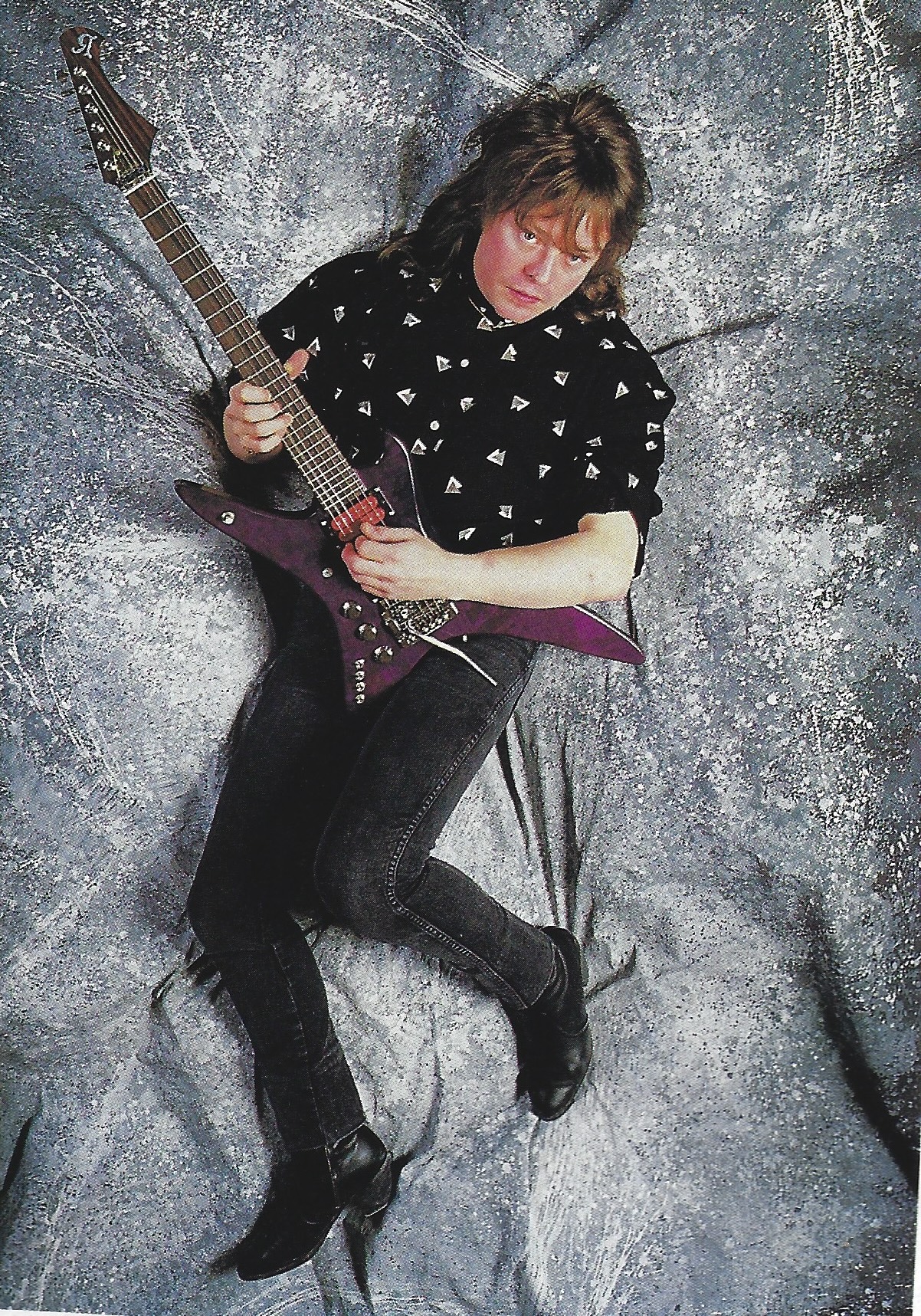
Rick Derringer. Photos by Kip Lott.
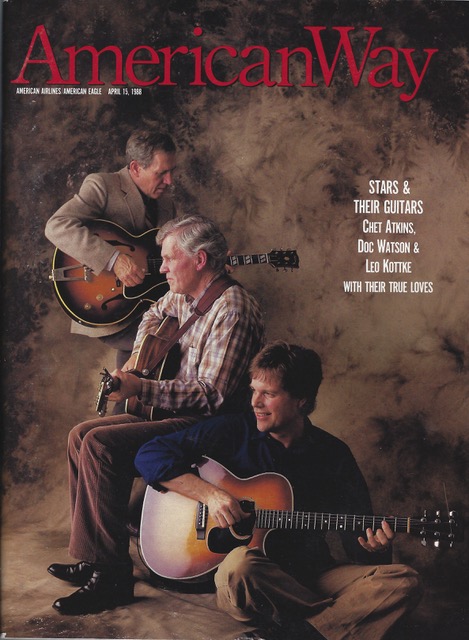
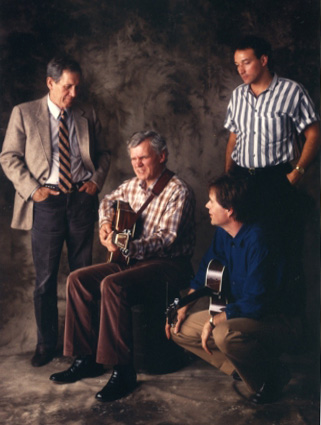
Chet Atkins, Doc Watson, Leo Kottke, and yrs tly, Josh Alan
Rick Derringer, one of my personal top five guitarists, passed away at 77. The greatest one-two-punch guitar duo I ever saw was Rick with Johnny Winter at the Fillmore East in 1970. In 1988, I wrote a cover story for American Way, the American Airlines in-flight magazine, called “Stars & Their Guitars.” A short interview with Rick finished off the piece, reprinted below.
Rick Derringer adapted a funky style toward hard rock years before anyone else. He spawned hits of his own (“Hang On Sloopy,” with the McCoys, “Rock ‘n’ Roll Hoochie Coo,” solo). But he specializes in making others sound good. He has been the leader of the McCoys, Johnny Winter And, Edgar Winter’s White Trash and Derringer. His solos have highlighted Steely Dan tunes and most recently, he toured as Cyndi Lauper’s guitarist. Derringer says:
“I use guitars that are replaceable—not guitars that are irreplaceable. I used to have expensive, old guitars. You could build a shrine to a ’58 Les Paul or Strat. They become personal and close. You develop a style that’s dependent on that special guitar.
“The more I traveled, the more I found that other people like those old guitars, too—people who steal guitars. I’ve had several guitars literally stolen off the stage while I was looking out at the audience! Some guy ran out of the building with it. What this taught me was, if you develop a style based on a special old instrument and that instrument goes, then you are stuck. Until you find another that feels exactly the same.
“So I decided to develop a style based on a new guitar. A guitar that can be replaced. The Steinbergers I use. . . are state of the art, and every one is the same. When you find a model that you like, every guitar of that model is identical—or even better when it comes out of the factory than when it gets old Steinbergers are made of several different plastic composites. If it gets stolen, you go back to the store and say, ‘Gimme another of those,’ and it’s gonna feel the same as the one you loved.
“It’s a sad commentary on society, but not for a musician. Because if you find a beautiful, state-of-the-art instrument than can be replaced, that gives you more freedom.
“I still have my old ’58 Les Paul, and a couple of B.C. Rich’s I like. But once you experience a few stolen instruments, you realize people can steal your guitar, but they can’t steal your music, thank God! They can’t get what’s inside your head, your heart or soul.
“My favorite bands were (Edgar Winter’s) White Trash, when it got really hot with the horns. And one of the Derringer bands, when we used to exchange guitars with a mid-air toss across the stage. I recently recorded a live tape with Les Paul at Fat Tuesdays in New York City. Usually when people jam there, Les leaves the stage and they jam with his little trio. That night he said, ‘You take this guitar,’ and we played ‘Singing Shepherd Blues’ and a few other tunes.
“There was a time with Johnny Winter when we were a hot rock ‘n’ roll band. I travelled extensively with Johnny. We did Royal Albert Hall, all the typical shows of the early 70’s. England has a particular fascination with blues. The blues seem to be such an unstudied American form, and they’re so proper and conservative. It almost seems like something they’re jealous of, since it’s inherent in our roots and not theirs. So they study it, and they make blues artists legendary.
“One night, Duane Allman joined me and Johnny Winter in our hotel room. He told me I was responsible for him taking up slide. He’d always played electric, but thought of slide as some kind of ethnic blues sound that wasn’t his. He said he used to hang out at the Image, in Miami, when he wasn’t playing. The McCoys came through, around 1966. In the middle of the set, I pulled out this old Supro guitar in an open tuning and played slide. Duane told me my using the slide in that kind of rock ’n’ roll context gave him the inspiration to make it work for him.
“I’d like to work with credible jazz musicians. Play things people don’t think I’m qualified to play, like Brazilian music, I’d love to produce a record with Les Paul or Frank Sinatra.
The post RICK DERRINGER appeared first on Black Cracker Presents.


January 8, 2025
NEW (video)
Josh Alan Friedman performs "Thanksgiving at McDonald's in Times Square" at Alias Books as part of the New Texture Nights series in Los Angeles.
The post NEW (video) appeared first on Black Cracker Presents.
November 1, 2023
IT CAN’T HAPPEN HERE?
Nov. 1, 2023
They are fighting for their lives in Israel. All they have to do is lose just once, and it’s all over. The Arabs can lose one war after another. But if Israel loses once, the ship goes down. Activate your moral compass. This is a fight for Western civilization over barbarity. Islamic jihad could hit the United States any moment we let down our own guard.
They don’t teach Israel’s war battles in military academies because its victories were so miraculous as to defy logic. Battles in which one Israeli tank out maneuvered 50 Arab tanks; battles in which retreating enemy armies claimed to see the God of Israel over the skies. But the country survives only because it has fighter planes, bombs, a powerful army. Otherwise, Israel would have been wiped out 75 years ago.
For decades, we said Never Again. But it happened again on Oct. 7th. It’s been reported that half of the terrorists who attacked during the pogram of Oct. 7th were Palestinians who were not even Hamas. They joined up for the blood orgy of torture and death. Mothers in Gaza teach their children to hate and kill Jews. And Hamas violently holds power over their masses, including those who are innocent. Hamas forces sacrifices of their own, as the IDF flushes out a confederacy of poisonous, jihadist roaches from the terror tunnels of Gaza. Meanwhile, qassam rockets continue to reign down on Israel, even as the ground invasion proceeds.
The New York Times pours gasoline on the flames of Jew hatred every day. It’s a sickening feeling. Their Palestinian photo ops emphasize Palestinian misery without regard to the fact that Hamas entirely brought this on. The Times plays into Hamas’s narrative, sourcing Hamas’s health ministry casualties as true. Their columnists pontificate on what Israel should or shouldn’t do, from the safety of their high castles in America.
I have spoken with my dear friend, Ronny in Jerusalem, six nights a week for the last three years. He and his wife practice what they call Lubavitcher Lite. We speak every night but Friday, Shabbat, Jerusalem to Dallas. Like other Jews I know in the music biz, they have applied for their first gun licenses. During a trip to Jerusalem last year to visit them, I saw uniformed members of the Israeli Defense Forces everywhere. Beautiful children, right out of high school. It seemed incredible that these were warriors of the vaunted IDF—these fresh young freckled faces comprise the only entity that stands in the way of the jihadist death cults of Hamas, Hezbollah, the PA and Palestinian Islamic Jihad.
This is not a moment of casual anti-semitism, but of barbaric threats to Jews across the world. Flames of pure hatred have been unmasked in an instant. It is a different world than it was a month ago. Anti-sem has jumped off the charts–not the atmosphere for what I’d hoped would be my relaxed senior years. The winds of war against the Jewish people are swarming. There is existential dread like never before in our lifetime. The anti-semitism that my grandfather alluded to, which seemed so old-fashioned and distant, is now all too real.
Three works of fiction come to mind. The 1935 dystopian novel, It Can’t Happen Here, by Sinclair Lewis, about this country’s first dictator rising to power. Philip Roth’s The Plot Against America, an alternative history in which the anti-semitic Charles Lindbergh defeats FDR for the presidency. And finally, my father, Bruce Jay Friedman’s 1995 play, Have You Spoken to Any Jews Lately? In that play, Jews keep disappearing from Miami Beach and the protagonist finds himself in a cattle car headed toward God knows where. And God knows where we’re headed for now.
The post IT CAN’T HAPPEN HERE? appeared first on Black Cracker Presents.
September 7, 2022
Old Coach Wisdom
The following memoir was published in the Sept. 2022 issue of the British publication, Boxing News:
OLD COACH WISDOM
By Josh Alan Friedman
They don’t make old boxing coaches like they used to. The world knows them as Cus D’Mato, Angelo Dundee, or Burgess Meredith in the first Rocky. They’re an obsolete breed, a soulful American archetype of the 20th century. It’s a role I just stepped into at the age of 66, at the Maple Avenue Boxing club in Dallas. But I’m not nearly as wizened and grizzled as the coaches of yore.
The very definition of “Old School” was my first boxing coach. I was 27 and finally decided to learn how to throw a punch correctly. I had been attacked by the cocaine-crazed art director of High Times, where I was managing editor in 1983. He was an ex-Marine, but didn’t know how to fight. My defense was less than stellar. That was the straw that broke the camel’s back, and I signed up for boxing at the West Side YMCA on 63rd Street in New York. The building is a medieval Italian-styled cathedral of exercise near Central Park. I was both humbled and elevated by its boxing program.
The coach was an 80-year-old sage named Bob Ciocher (pronounced “chocker”). Ciocher had been a boxing coach for the U.S. military during World War II. He said he’d been a cornerman on some Joe Louis fights. At the Y he taught a class of two dozen new recruits, a program covering the very basics of boxing positions. It began with proper stance and footwork. Then we learned one punch at a time.
I was probably the most dedicated in all the group. The coach singled me out to stand up front and demonstrate proper form. I began to train with private lessons from Ciocher. “Boxing is a language,” he would say, “it’s like having a conversation. You’re gonna love it. And you never have to get hit.”
If boxing was a language, then punches were questions that needed to be answered. As long as I followed Coach Ciocher’s orthodox instruction, he insisted, I could enjoy this scientific language without ever having to get hit. But I wasn’t so confident about this. I got hit. Nothing, I found, could be further than the truth. Everybody gets hit.
The old-school boxing coach brought out the punches in me, like an irascible conductor of music. It took many lessons to get the left jab to his satisfaction. No discipline requires the teacher to keep shouting corrections at you like boxing. I learned to appreciate being barked at until I got something right. And was inspired by the rare compliment. “The right cross is going to be your punch,” he rhapsodized, “once you learn to set it up. Just like Joe Louis, it comes right from the heart.” Meaning you physically throw it from the top of your chest.
Fighters tended to have one punch that they specialized in. You always heard, for instance, of Joe Frazier’s left hook. So all the way down at my level, I was told I had a good jab, but didn’t know how to use it. How important was a mere left jab? “It can wreak havoc,” said Ciocher. Most punches were left jabs, and that’s how you racked up points.
Emerging from the introductory class in 1983, I joined an ongoing group at the Y that sparred several times a week. All working class guys. “Friedman, you’re a heavyweight,” said the coach, “get in there against Big John.” I was shocked to hear I was classified as a heavyweight, but a heavyweight I was, nearing 200 pounds.
“Relax,” Ciocher instructed, “no power. Pretend you’re sparring with your kid sister.” He would pantomime a tense fighter. The idea was to perform difficult manuevers with a certain ease. To conserve energy, not tense up and deplete your stamina. Sure enough, you could last a round without being winded by simply relaxing. Concerning distance, the coach would repeat, “If you can hit him, he can hit you. . . Right shoulder down, close the mouth, in motion! Walk your punches in.”
A month into sparring, still a novice, I faced a former pro boxer. I hadn’t yet learned how to defend from body punches. Sparring unsupervised on a day the coach was absent, sure enough, he broke my ribs. I was out for a month. “That wouldn’t have happened if I was there,” said Ciocher. Broken ribs feel like glass is splintered in your side. You can’t breathe without wincing pain. But broken ribs, thanks be to God, do heal completely. I was back in the ring in a month.
“Most kids don’t come back after they’ve been hurt,” said Ciocher. “But you came back.” This garnered me points with the coach, who now thought I had the makings of a boxer.
My dentist made me a mouthpiece. Ciocher sent me to Al Shevlin’s custom boxing shop. I ordered red, 16-oz. boxing gloves and head-gear. But they were too big, like clown mitts. Would heavier sized 16-oz. gloves cushion the blow when getting hit in the face? I don’t think so. I found it was rare in sparring to get hit square in the face. But any time I did get hit with a faceful of leather it was a rude awakening. I’d suddenly question why the hell I had picked this sport. Thankfully, the shock would dissipate after a few moments.
Shevlin’s shop was like that of a shoe cobbler, except he crafted something even more rarefied—old-school boxing gloves and headgear. They were handmade to last, not like assembly line products that peel apart. When I put on my headgear crooked, Shevlin and one of his cronies, a white boxer with a flat nose and cauliflower ears, had a roaring laugh at me.
But you could never judge a man by how he looked. Ciocher used to love having his fighters box body builders. They were easy pray. In the 20th century, weight lifting was anathema to most boxing coaches. They believed it slowed you down. There were muscle-bound men who couldn’t punch hard, and guys skinny as a whip who threw like lightening. You can’t teach a man to hit hard. It has to come from within. A punch doesn’t come from arm strength, it comes from your body weight behind it.
I ended up buying Everlast 12-oz. gloves off the shelf for bag work and sparring. Before sparring, the assistant coach would smear your face with vaseline. In our sparring group, there was a Madison Square Garden usher named Hank, 43, with a bad knee. I learned that you couldn’t judge anyone by watching them move around on the heavy bag. Hank was slow and stiff on the heavy bag, but strong and sure in the ring. I was proud of myself the few times I put Hank on the floor. Maybe he just slipped because of that knee. I could always land jabs, but not yet rights or hooks. The left hook was the trickiest punch to learn. Ciocher didn’t even teach the hook until someone was many months into training.
Amongst dozens of sporting fellows at the Y, sure enough, there was one shithead. They called him Thunderpunch Phil. He hit the heavy bag with the most thunderous thwack I’d ever heard. He would place a chair by the heavy bag, sit down and pantomime a conversation, as if he were at the dinner table. Then he’d lunge out across the imaginary table, belting someone from a sitting position. He enacted this psychodrama every week. The heavy bags were lined up, and he’d verbally threaten anyone who accidentally inched into his circular space. But the shithead refused to join the group and spar. He just wound up and hit the bag with haymakers. We had a few confrontations, the closest I ever came to a streetfight at the YMCA. I’ll admit, I was afraid. But he always refused my invitation to have it out sparring. Thunderpunch Phil didn’t want to get hit back.
Likewise, Ciocher’s best shadow-boxing student was another fellow who never sparred. He executed all of the coach’s moves with textbook perfection, but never put them into practice. One day, a block away from the Y in Central Park, I encountered two teenage thugs harassing women. Standing idle nearby was Ciocher’s best pupil. I got in the thugs’ faces, and proceeded to bully them both out of the park into the subway. I asked Ciocher’s star pupil if he’d help me bounce these guys, but he slithered away. He too didn’t want to get hit.
Ciocher and his assistant coaches never talked of one boxer being better than another. Instead they said one was “more experienced.” Two guys worked out daily, separate from the sparring group, just elbow pushing and body-punching in a huddle. “That’s not boxing,” said Ciocher, with disdain. He also advised his boxers, “Never spar with someone who’s training for a fight.” The presumption being that a pro could not take it easy in those anxious hours leading up to a match.
I was amazed that when someone dropped their hands, they were open to get hit. But nothing could put you in the moment like having someone swinging for your head. You are not worried about making the rent or what’s for dessert on Tuesday. You have to overpower your own fear. Once the rounds were over and you survived, you were walking on air.
The last time I sparred in New York, before moving to Texas, I faced a karate practitioner who joined our boxing group. He had a trick phantom punch that came out of the blue into your blind side. It was a palm-down uppercut. He repeatedly knocked me on the nose. For the life of me, I was utterly confounded. I experienced the rude violation of being hit on the nose–which hurts and discombobulates. I wanted to learn this secret punch. But alas, I moved to Texas, the state of my wife. I never got to discover how he did it. The nose was my weak spot, the place I most disliked to get hit. I figured if I was to be a real boxer I’d have to cauterize the inside of my nose so it wouldn’t bleed. And expect that my nose would eventually be flattened. At my amateur level, this never happened.
When I moved to Dallas in 1987, the preeminent boxing gym was said to be that of former welterweight champion Curtis Cokes. (During his early ’60s fighting days, his trainer was a fellow named Cornbread Smith.) Cokes was the closest to a wise old sage of boxing in Dallas. But somehow I was steered instead to a splendid coach named Charles Brown. Brown crowed, “I train champions,” the first time I called him. An idle boast. But after meeting with him the first time, I loved the guy. Boxing out of the Marine Corps, “Sweet Swingin’” Charlie Brown from Cincinnati captured the Featherweight bronze medal in the 1960 Olympics. The same team as Cassius Clay. He was certain Ali got Parkinson’s from smearing his body with DDT in Miami to avoid mosquitos when he ran.
Coach Brown was stationed in Viet Nam in the late ’60s. Once at a restaurant in Saigon, he and his fellow soldiers were served up round steaks. After dinner, they discovered the steaks were carved from a dead American G.I.’s legs. This incident so traumatized him, he never ate at a restaurant again.
Coach Brown gave his fighters a shot of whiskey before they went into the ring. He recommended having a beer after training, because “you need the malts.” He would also warn that one night of drugs and booze debauchery could ruin months of training. “Just one night,” he would say. Brown was adament about avoiding street fights. You could cut your hand hitting someone in the mouth, it might get all infected. A longtime Marine, he kept a loaded gun near his bed. If anyone broke in through his window, I asked, would he use boxing as a defense? “Hell, no,” said the coach, “anyone comes through the window, I use the gun.”
A coach who was training his own son to turn pro observed Coach Brown working with me. “He’s teaching you to fight like a little man,” warned the fellow, “like himself.” It suddenly dawned on me that Brown indeed was mainly teaching me inside tactics. “Like you’re fighting inside a telephone booth,” he would say. “All the action takes place in there.” He didn’t teach me to take advantage of my long jab, in relation to my 6’ 1” height.
Whenever Coach Brown had me spar with pros, I felt outmatched. Sparring with a heavyweight Golden Gloves champ, Big Jimmy, felt like sparring with a mack truck. Coach Brown told me, “You hit harder than him.” But I didn’t believe it. My confidence was fleeting. I sparred a round or two with Dallas MMA champion Guy Mezger. He was unhittable. When I sparred with someone who was truly good, I felt a gulf of difference. Boxing ability could be graded by increments of a hundred. You can be as good as you want to be if you dedicate your whole life to it. But I felt what separates the men from the boys, the amateurs from the pros. Coach Brown insisted I was better than a pro from Germany he was managing. But the guy broke my ribs with illegal rabbit punches. I was out for a month (for the second time). Boxing is a lot harder than it looks. You could get killed in there. You might see two equally matched opponents in the ring seemingly pacing themselves, but there’s a whole lot more going on than meets the eye.
One rare occasion when my left jab saved me was a late night encounter in Dallas where some lumbering truckdriver got in my face at a bar. I was able to whittle him down with left jabs every time he charged. Until he finally collapsed with cuts to his face. Ciocher was right, the mere left jab could wreak havoc.
The next week I got a call from someone named Robin Hood. It was the truck driver. “I’m the guy you fought last week,” he said. “Are you really Josh Alan? Hey man, can we jam sometime?”
The greatest gift that boxing bestowed upon me was a quiet confidence. Where once I had confrontations with hotheaded New York cab drivers, ruffians who you accidentally bumped into on the subway, and barroom louts, these indicents suddenly ceased to occur. I felt like I could handle myself and this confidence emanated.
Now 66, my back and knees won’t let me box any more. So I’ve just begun as a coach at the Maple Avenue Boxing gym in Dallas. I’ve been appointed trainer of a 26-year-old southpaw veteran of Toughman competitions, with golden grilled teeth. He did time for manslaughter. He intends to turn pro, and they want me to make him more assertive in the ring. I bought my first pair of punch mitts. I’ve been thrust into the role of the old wizened coach.
The first people to call me “coach” were the other trainers. It is an honorific that is brand new to me. The best I can do is to pass on the knowledge from Coaches Ciocher and Brown, with a little of my own cockeyed wisdom to boot.
The post Old Coach Wisdom appeared first on Black Cracker Presents.
October 7, 2021
Stop the Empire Station Complex: Penn Station’s Ghost Still Haunts New York

ReThinkNYC reimagines Penn Station
The following editorial, slightly edited, appeared in the New York Daily News, Oct. 7, 2021
by Josh Alan Friedman
Midtown Manhattan is facing its most important land use decision since the destruction of Penn Station 58 years ago. I’m talking here about the soul of the streets, not just the infrastructure or politics. Cuomo’s Empire Station Complex project grants Vornado Realty Trust the rights to break zoning codes and construct 10 more glass towers, declaring the Penn Station area “blighted.” As a solution, they want to clear cut the neighborhood. This would make generic dead space out of the sidewalks of New York. It would displace hundreds of small businesses, evict residents and demolish midtown’s finite number of historic buildings.
Twentieth century New Yorkers, like myself, who grasp at remnants of the great Land of Oz are in continual mourning. Olde New York has been under siege for two centuries. Unlike in the capitals of Europe, each generation here suffers the bull-dozing of its landmarks. I can no longer enter the beloved stadiums, restaurants or movie theaters of my grandfathers.
The mystique of old Penn Station in the early 1960s was not lost on me as a child. On trips to the city from Long Island, I thought if I ever lost hold of my mother’s hand, I’d be lost forever. A Yogi Berra Yoo-hoo sign in Astoria was the last image commuters saw before the train submerged into total darkness under the East River, careening and squawking like a cart in a Coney Island spook house. The instant the train door slid open at Penn Station, the underground bowels of the city hit you square in the face. The smell of grime and hot dog counters and Con Edison steam vents. No Spitting signs warned of $25 fines. Yet there were stains on the landing where a million violators had rudely ejected chewing gum.
At old Penn Station, I remember the unmistakable face of Morgan Freeman, smiling broadly behind the counter at Nedicks’s serving hot dogs. It was the young actor’s first job fresh from Mississippi. I saw Nedick’s hot dog waitresses make surreptitious appointments with LIRR commuters. Some were hookers. A dozen city newspapers hot off the press were hawked by newsies, while shoeshine boys gave spit shines amidst the steampunk ironworks and choo-choo trains. In the diminished rathole of Penn Station, I long considered Penn Station Magazines the greatest newsstand in the city.
I realize these sentiments don’t translate into today’s real estate dollars. But at stake in Penn Station’s neighborhood are a thousand budget rooms at the Hotel Pennsylvania, beacon to a million tourists who otherwise couldn’t afford the city. (Their phone number is still “PEnnsylvania 6, 5000,” the Glenn Miller hit of 1940, which still plays when you call for a rez. For many years, I received my haircut from a chatty Italian immigrant barber below the lobby.
Among 50 buildings at risk for demolition under eminent domain are three churches that have evaded landmark status: The gothic St. John the Baptist, built in 1872, the storybook St. Francis Roman Catholic Church, built in 1891, and St. Michael’s, built in 1905. Historic structures that would be wiped off the map include The Stewart Hotel, the Penn Station Powerhouse (the last remaining vestige, built from the same granite), the Penn Terminal, Equitable Life Assurance, and Fairmont buildings. During my childhood, there was a secret back-issue magazine warehouse next to the Gimbel’s skybridge (under threat of demolition). They served up old issues of Famous Monsters and Mad to astonished kids like me. Likewise, at Willoughby’s Camera Emporium (founded 1898), I purchased my 8mm Castle films, 200-ft. edits of Universal horror classics.
“We shape our buildings; thereafter they shape us,” said Churchill. He was asking that they rebuild the House of Commons exactly as it had been before the Nazis bombed it. It may be a pipe dream to rebuild the original Penn Station (1910-1963), the lost Beaux-Arts masterwork from architects McKim, Mead, and White. Old world stone masons that created pre-War structures no longer exist. But the Empire Station Complex will grind the remaining funky streets around Penn Station into pablum. It enriches only Vornado Realty, who already refers to the area as “the Vornado campus.” The glut of empty office space would be a curse on the city. Like Hudson Yards, the 10 glass towers they propose are future slums of the sky. I shudder to think how badly they will age, compared to pre-War buildings of stone.
In defense of the streets, I say these grand structures deserve rehabilitation, not annihilation. The demolition of Penn Station is now acknowledged as New York’s greatest architectural crime. Bulldozing the remaining blocks around it would reopen the wound. New Yorkers are oblivious to the mass scale wrecking of midtown in store if ex-governor Cuomo’s plan goes through. The decision rests not in the hands of local citizens, but with Albany legislators.
I pray the entire Empire Station Complex is stopped cold. Private groups like ReThinkNYC and New Yorkers for a Human-Scale City have floated cheaper and better alternatives. Scrap the subsidies to Vornado, scrap the $16-billion in junk bonds. Rebuild Penn Station as the center of a regional unified train network. Hopefully, one that would resemble the picturesque hub of a railroad, not a shopping mall. It is up to Albany to spare the city the insult of another hyper-developed, gentrified glut of glass towers that would dwarf Hudson Yards.
Josh Alan Friedman is the author of Tales of Times Square, and can be found at BlackCracker.fm
The post Stop the Empire Station Complex: Penn Station’s Ghost Still Haunts New York appeared first on Black Cracker Presents.
May 18, 2021
Lonely at the Top
Lonely at the Top
By Josh Alan Friedman
Charles Grodin passed away today on May 18, 2021. This interview was done for The Movies magazine in 1983. Charles went into put-on mode the moment I walked into his trailer on the set of The Lonely Guy.
Charles Grodin is a movie star. He’s been a star for along time now. Since The Heartbreak Kid in 1972. Experience, as always, tells: Grodin thinks like a star, acts like a star, and talks like one. In his latest picture, The Lonely Guy, he co-stars with Steve Martin. Martin plays the title character—an unemployed writer of greeting cards who’s recently been dumped by his girlfriend—and Grodin plays his sidekick, also a kind of professional Lonely Guy.
On The Lonely Guy set recently Grodin is keeping to his mobile van, parked among a dozen other production vehicles on New York’s Upper West Side, where the crew is shooting exteriors. While Arthur Hiller blocks a barroom scene across the street, Grodin lounges inside the most luxurious trailer on the set and talks about the perks of stardom.
“I think they gave this trailer to me out of respect for my position in the industry,” he says. “Even though Steve Martin is considered a bigger star, I’ve done more pictures. Arthur didn’t get that good a trailer and made sure mine really was the best trailer on the picture.”
Steve Martin’s trailer actually resembles a sloppy camper where the star sits tensely after ten weeks of shooting and tepid reviews for The Man With Two Brains. Grodin’s trailer is more like a mobile resort. “This one has a sauna and a swimming pool, not a big pool, but bigger than a hot tub. The only thing is they keep knocking on the door to ask you to come out and film. You have to do it, it’s a contractual thing; they can really bust into your privacy. You can be right in the middle of a hot tub experience, but you have to towel down and go off and film. That’s the tough part of the business.”
Grodin prefers the trailer to his New York apartment because he can invite friends over for things like floating Monopoly games in the pool. It makes him nervous, though, when the trailer is stationed on the West Side location, and he always refuses to leave unless the scene absolutely demands his appearance.
“I don’t generally like to work on the West Side. I pretty much try and do all my films on the East Side. There’s less of a chance that someone will get you; there are more doormen keeping an eye out as you pass. That was one of my big concessions in doing The Lonely Guy. I come to Columbus Avenue for the shot, then they whisk me outta here in the motor home, back to the East Side. A lot of my films are set on the West Side, so I have them fix up the East Side to look like the West Side. It costs more money, but if they want me, that’s the deal. I think of the Apocalypse Now experience a lot of actors went through in the Philippines—that inspired me to come over on the West Side for today’s scene.”
Even on the East Side, Charles Grodin spottings are rare: “Let’s be honest, there are East Side diseases, too. People might see me on Carson, but I’m transported in a vacuum van. I stay pretty clean. Steve Martin and I have that in common—we’re good friends but we don’t touch each other.”
Though Martin plays the title character, Grodin, made-up for his part, is an even lonelier presence with hollow, shell-shocked eyes that stare from wire-rimmed glasses. “They assumed I was lonely, when in fact, I’m not even mildly lonely. Somehow they got the idea that I was the guy to get for the part of an authority on loneliness, a Lonely Maven, probably because nobody ever saw me anywhere. That’s why Redford was the first choice for my part, nobody ever sees him anywhere. Who knows what he’s doing up there on the mountain.”
Grodin’s head is matted down with a thinning hair piece, a lonely makeup appendage Redford would never go for. They very name Redford seems to make him twitch, but Grodin’s sense of values keep him in balance. “Being a movie star is a lot more important than being a person. That’s the important thing, ’cause a lot of people think you have to be a person. It doesn’t matter what anyone tells you. If you have a chance to be a movie star, forget about being a person. A lot of people can be persons. But there’s only a handful of us that can be movie stars. You never see Redford anywhere, do you? When’s the last time anyone ever saw Redford, he’s up on a mountain in Utah, he doesn’t have to know from any of this stuff, East Side, West Side, forget about it with him. He doesn’t even have to do movies anymore, he just has to agree to do them, and then there’s a lot of publicity, and you don’t actually see him in the movie. They just announce it, everybody gets excited, the studio looks good, the director says, ‘I’m doing the new Redford picture.’ The last time he actually appeared was what? President’s Men? Electric Horseman? But even Horseman, that was done way off somewhere, he didn’t have to come and be around people, it was just him and a horse. You don’t see Redford on the West Side at all.
“Most people—myself excluded, of course—can relate to the idea of loneliness,” continues Grodin, folding his hands ever more earnestly. “I feel very well connected to Neil Simon’s script. It was fun for me to read about what lonely people go through, ’cause I never knew anything about it. I haven’t seen Neil around while we’re shooting. He does not come to the West Side. So for actual life experience with loneliness, I get all my information from Steve Martin. But everything in the script comes from the theme of loneliness. It gives people something to relate to other than outer space. When they want something that doesn’t have the word ‘Jedi’ in the title.
“This is a comic treatment of the subject, because serious movies don’t even open in America, they don’t even get onto television. Public TV of France, they’ll show a serious movie about loneliness. A studio in America wouldn’t make a serious movie about loneliness even with Redford. They could lose all their Jedi money. I’ll tell ya, they don’t want to do a serious movie about anything—that’s my experience.”
Grodin stands and stretches, preparing to journey across the street to the set. “I don’t get to do any nude scenes in this picture, and you probably sense I’m a little miffed; they said I’d get to run down Fifth Avenue nude, to really show how lonely a person can get.”
Grodin straightens up when a knock comes, telling him they’re ready to shoot. “Time to get serious,” he says, heading out the door.
The post Lonely at the Top appeared first on Black Cracker Presents.
September 27, 2020
The Day I Didn’t Meet Lennon
In August 1965, at nine years old, I was presented an opportunity to meet John Lennon. This was put forth by Tom Maschler, John’s editor at Jonathan Cape, where A Spaniard in the Works was just coming out. Spaniard was Lennon’s second book, following In His Own Write. Maschler was also the English edition editor of my father’s novel, A Mother’s Kisses. My parents and I stayed at Edna O’Brien’s home that week. She had just written August Is a Wicked Month.
A bigger Beatle obsessive did not exist, as you can see from a photograph of me in August ’65, the hour that I left to meet John. The Beatles dominated my dreams. I was determined to ask if I could join the group.
During summer a year before, when I was 8, I would stare out at the Atlantic Ocean from Fire Island, at the edge of the surf, imagining they lived right across. Them and Gerry and the Pacemakers. We took a sand taxi to Ocean Beach for the opening night of A Hard Day’s Night, during the long hot summer of ’64. I screamed aloud at closeups of the Fab Four onscreen. Now, the next summer, my family rented a villa in Cap D’Antibes, on the French Riviera. I was finally across the ocean, that much closer to them. Still, they were in England, not France.
But toward the end of August, my parents decided to take me, the oldest son, for a week in Paris and London. Drew, Kipp and Piper the cat were left in the care of our own torturous Mrs. Sullivan. I was 9 years old and going to London where the Beatles then lived. Closer.
We stayed at the home of Edna O’Brien, in Putney on the Thames. O’Brien had two sons my age, Sasha and Carlo, who would be my playmates. I was shocked by British food, all of which was unedible to my American palate. The milk was surely not homogenized and tasted rancid on my cornflakes. Fish ’n’ Chips were grungy. Is this what the Beatles ate? I instigated a butter-throwing fight at the dinner table with the two boys, before their nanny. One night, a babysitter came to mind the three of us while our parents went out on the town. One of the boys greeted the mousey Irish babysitter at the door with, “You’re not full of the Jesus crrrap, are you?” Edna O’Brien had to console her as she began to cry.
Sasha and Carlo had a “poor” friend named Bruce. Bruce was a cockney lad, and he was trouble. I was naturally drawn to him, and was allowed to wander off and spend a day with his poor cockney gang.
“Can he do a big kid over?” asked the gang leader.
“Well, he can sure do me,” said Bruce. (We hadn’t fought, he just surmised.)
“Well, then, put ’er there,” said the leader, offering his handshake. The kids barreled down the street singing:
Hitler, has only got one ball
The other is in the Albert Hall
His mother, the dirty bugger
Cut off the other, when he was only small
I told them that America won the War, and was puzzled to hear them say No, they, England, won the war. Back home, we were taught that America won World War II. The gang performed hijinks routines, like nicking candy from the corner store. What I never forgot was how this gang of cockney kids enacted the old slapstick routine where they confounded an old constable guarding a private park. One kid bent down on all fours behind the constable, while another shoved him over. I’m not exaggerating. Then we all ran wild onto the grounds.
One day, at Harrod’s department store with my parents, we saw Mick Jagger tearing through the aisles, being chased by a gaggle of girls. Again, just like in the movies. This summer the Byrds’ “Mr. Tambourine Man” dominated the London airwaves, followed by “You Really Got Me,” and “Satisfaction.” The music was magic. Back in France, I danced every night with Vicki and her sisters from Switzerland, who lived in the villa across from ours. The whole summer was paradise.
But it was getting toward the end of the week, the end of the summer, and still no Beatles. And then, something miraculous happened. My parents liked to dazzle me with big surprises. Tom Maschler, my father, Bruce Jay Friedman’s editor, invited us to the offices of Jonathan Cape to meet John Lennon at an editorial meeting. It would be our last day in London—just my parents, Bruce and Ginger, and me in Maschler’s office. My 9-year-old mindset regarded this as fate—I thought, of course I’ve been invited to meet John, what took so long.
The next day I was Beatled to the bone, with my Beatle boots and a Boy Scout camera around my neck (I was not a Boy Scout). I invited Sasha and Carlo to come with me to meet John. To my astonishment they preferred to go to “the Baths” (pronounced baahths, an indoor London pool). I was sincerely worried that I would faint when John Lennon walked through the door. But brave enough to chance it. I still intended to ask if I could join the band.
And so, there we were in Maschler’s office. He put a stack of John Lennon’s doodles in my lap. I remember dozens, if not a hundred. Among the reprinted sketches were, I’m pretty sure, originals. Maschler said John doodled everywhere during editorial meetings. And though my nerves were on edge as I watched the door, I apparently was babbling.
“Do shut up,” said Maschler. My parents would repeat this line for years, whenever I wouldn’t.
Maschler made a call. There before me Maschler was on the phone with John Lennon, who apologized. He was having a pool put in that day at his new house and said he had to direct the workers. He would not make the meeting.
And so, I left with a stack of drawings, as well as a signed copy of Spaniard.
Apparently, Maschler didn’t deduce that John’s childish doodlings would someday become valuable as Renaissance art. Over the next few years, my brother Drew and I doodled incessently over John’s original art, scattering all to the winds. Pity, because Drew Friedman did his own drewings over them, giving the doodles a double edge.
I don’t remember being heartbroken that John didn’t show—but rather relieved because I probably would have passed out.
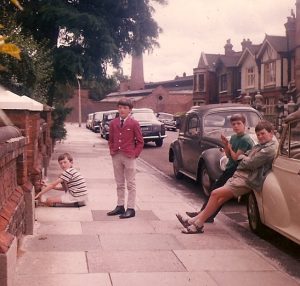 Josh center; cockney lad Bruce in green shirt. Edna's boys, Sasha and Carlo
 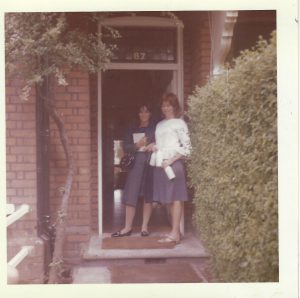 My mother, Ginger (left) and Edna O'Brien
 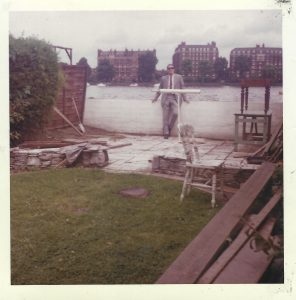 Bruce Jay Friedman, in O'Brien's backyard on the Thames
 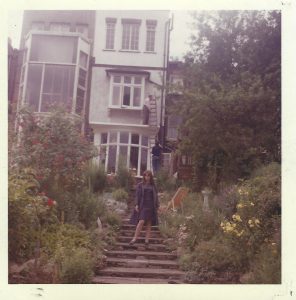 My mother, Ginger Friedman, backyard of the O'Brien household
 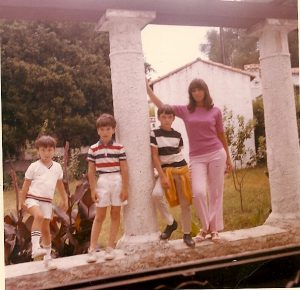 Kipp, Drew, Josh, Ginger in France
 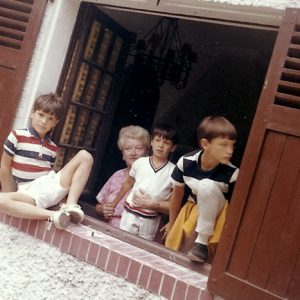 Mrs. Sullivan with Kipp, Cap D'Antibes, summer of '65
 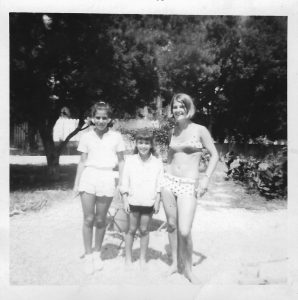 Vickie (left), who I danced with through the summer of '65
 The post The Day I Didn’t Meet Lennon appeared first on Black Cracker Presents.
July 27, 2020
Blacks ‘n’ Jews (Anniversary Edition)
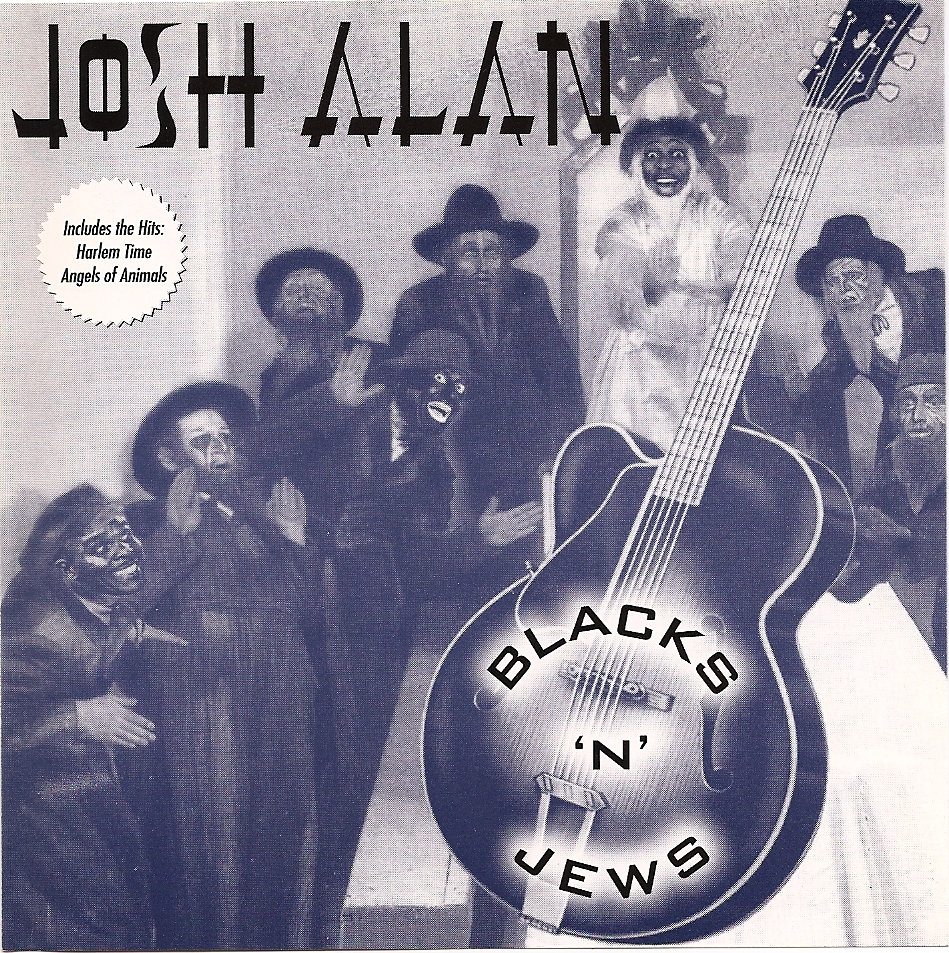 My 1997 album, now available digitally. The original cover art was not allowed on today’s streaming services. The singles, “Black Queen” and “Thanksgiving at McDonald’s in Times Square” are added in this new release.
Buy or stream here, from all services:
https://joshalanguitar.hearnow.com
The post Blacks ‘n’ Jews (Anniversary Edition) appeared first on Black Cracker Presents.
March 18, 2020
January 25, 2020
New music in 2020 from Josh Alan
New music in 2020 from Josh Alan. Songs to provide music bed for next season’s “Tales of. . .” podcast at BlackCracker.fm
The post New music in 2020 from Josh Alan appeared first on Black Cracker Presents.
Black Cracker Presents

- Josh Alan Friedman's profile
- 23 followers

