Kristen Rosener's Blog
November 24, 2025
Come and Behold Him


July 10, 2024
Dust to Dust: Meditations on Death
Sin took from us the sweet breath of life and gave us bitter tears.
For Adam’s race, this is the way it has been for thousands of years.

It was the smell of the dirt.
I dug my hands into the red clay that now covered my dad’s grave and forced myself to breathe. The aroma of the freshly shoveled earth filled my nostrils, and the tears fell.
Again.
My hands pressed into the ground, the red clay covering my palms and packing into my fingernails. The ache of it all was so heavy, I wasn’t sure if I could get back up. My dad was gone from this earth, his body buried beneath the dirt.
It shouldn’t be this way.
Days earlier, when I walked in to the hospital room and saw my dad lying lifeless on a bed… when I threw myself on his cold body and wept… when I watched my mom bury her face in her hands… when I observed my dad’s skin change in the hours after his passing… when I left his silent hospital room and stepped into the bright sunshine…
It shouldn’t be this way, kept spilling from my lips.
Oh, but it is this way. For Adam’s race, this is the way it has been for thousands of years. We are born in blood and water, we live for however long the Lord has ordained, then we die and return to the dust from which Adam was made. That’s the way now. Ever since we decided that a bite of knowledge was better than the word of Life (Genesis 3:6; John 6:48,68), we have gone the way of death and decay; of dust and ashes. It didn’t begin this way. We weren’t created to die, we were created to live. But since Genesis 3, death… this awful, terrible thing… has been the way.
Sin did this, I thought as I plunged my hands into the red dirt. Sin did this. My sin. My dad’s sin. Adam’s sin. Sin did exactly what Jesus said… it steals, kills, and destroys. Sin takes from us the sweet breath of life and gives us bitter tears in return.
The first two questions from the Heidelberg Catechism ask, “What is your only comfort in life and death?” and “What do you need to know in order to live and die in the joy of this comfort?” What hope do we have? In facing the awful experience of death, what comfort could we possibly hold on to? The Heidelberg answers…
Sin is the reason our bodies die and return to dust, why we weep and wail with grief, but thanks be to God for the confidence we have of eternal glory. We can thank God for the comfort we have in Him, while grieving the death of someone we love. We can have inner joy while outwardly weeping, because of His promise to raise all believers in glory one day. One day, there will be no more dust and ashes, no more hospital beds or graveside services. God’s people will have new hearts, new minds, and new resurrected bodies, eternally free from the curse of sin.
Maranatha (Come, Jesus).
Kristen ♥
1 Thessalonians 4:13-18
But we do not want you to be uninformed, brothers, about those who are asleep, so that you will not grieve as do the rest who have no hope. For if we believe that Jesus died and rose again, even so God will bring with Him those who have fallen asleep in Jesus. For this we say to you by the word of the Lord, that we who are alive and remain until the coming of the Lord, will not precede those who have fallen asleep. For the Lord Himself will descend from heaven with a shout, with the voice of the archangel and with the trumpet of God, and the dead in Christ will rise first. Then we who are alive and remain will be caught up together with them in the clouds to meet the Lord in the air, and so we shall always be with the Lord. Therefore comfort one another with these words.
Psalm 116:15
Precious in the sight of Yahweh is the death of His holy ones.
May 3, 2024
Hospital Liturgies
The only sound in the room was the steady beeping from the intimidatingly large machine looming over my nine-year-old daughter. From what would be my bed for the night, I quietly sat across from her, my arms wrapped tightly around my knees, probably looking more like a frightened child instead of a mother. My eyes, encased in shadowy circles at this point, watched her chest go up and down as she slept.
It was our first night in the hospital.
A ruptured appendix had brought us here: to IVs and antibiotics, to hospital food, to meeting new nurses and doctors every hour, and to the “hurry up and wait” that pretty much sums up hospital life. The room was cold and the lights were low. My eyes stared at her, a voiceless prayer in my heart.
Knowing I needed to write this experience down, I unfolded my arms and reached for my journal and my favorite pen. With my mind a collection of scattered thoughts, I listed everything I could remember, like the name of one particularly kind nurse, the visitors we had had and the texts I had received, and my overall feelings about where we were and why we were here. At first glance, the dimly lit, sterilized room was hardly an atmosphere for worship, and yet as my fingers grasped the pen and scribbled on the white piece of paper, words of worship and thanksgiving came easily. I was grateful for the care we had received, for advancements in medical science, for her finally being able to sleep, and for so many other things that had been part of our day. On and on I wrote.
This became my sacred, nightly routine while at the hospital. It was my bedtime liturgy.

When we hear the word "liturgy," your mind may travel to beautiful churches, and it is true that church culture is one of liturgy. We stand to sing, we recite scripture, we sit and we listen to the sermon, we bow our heads to pray, we take communion. A liturgy is, in its simplest definition, a routine. It is a repetitive collection of words or actions. In light of this, it's clear that we practice liturgies in our homes, not only our churches. We brush our teeth, we make a meal, we vacuum the floors, we fold the laundry. Day in and day out, with every sunrise and sunset, we follow our routine, doing the common tasks associated with the day. Our life is lived in liturgy. Yours may be the rhythm of reaching for your smartphone upon waking, then getting up and turning on the coffee pot before stepping into the shower. You don’t need to set reminders for these things each morning, you just do them - probably in that order - and you move almost robotically through your day.
When applied and practiced biblically, a liturgy uses habits to help to bring our minds under the authority of God’s Word. As I would soon see during our days in the hospital, I had a liturgy there. Every morning, I woke to a group of masked strangers in the room giving me the rundown on what to expect for the day. I would take a shower, spoon Jello into my daughter’s mouth, bring her her favorite stuffed animal, answer calls, and wait for the next visit from the nurse or doctor. Every night, I would help my daughter to the bathroom, comfort her when she cried, and watch new nurses write notes on the big white dry erase board after every shift change.
My daughter and I spent five days in the hospital, and for those five days, prayers were tied to every experience — every IV check, every tear I wiped from my daughter’s eyes, every conversation with the doctor, every question from my daughter. Prayer… after prayer… after prayer followed me down the halls of the hospital. The Holy Spirit took the simple yet repetitive moments of each day and created simple yet repetitive meditations in my heart. Thank You, Father, for giving me the grace, through Christ, to get up with her throughout the night. Lord, enable me with Your strength so I can comfort her right now. God, grant me the wisdom from heaven to know what questions I need to ask this doctor.
Simple supplications and exclamations of thankfulness became my liturgy for the five long days we were at the hospital. And it made a profound impact on my life.
You and I are formed through liturgy; through the habits of our days and nights, and experiences - whether those experiences are monotonous or life-changing. Each moment is a opportunity from God’s gracious hand to be formed and shaped further into the image of His Son. My time in the hospital with my daughter helped me to evaluate my routines and take stock of how my routines shape my thoughts, my words, and my actions. If every day and every circumstance is submitted to the sovereignty of God - and it is - then acknowledging and glorifying Him, moment by moment, should come as naturally to us as inhaling and exhaling (Psalm 115:3; Psalm 139:16; 1 Corinthians 10:31; Ephesians 1:11).
May your days and mine be intentionally threaded with prayers and praises to the One who willingly sustains us and upholds us with His hands.

February 27, 2024
Are Your Ebenezers Raised?
In my life, there are many ebenezers.
No I’m not referring to Ebenezer Scrooge (though I do have my share of bah humbug days). What I am referencing goes back to a story in the book of 1 Samuel, chapter 7.
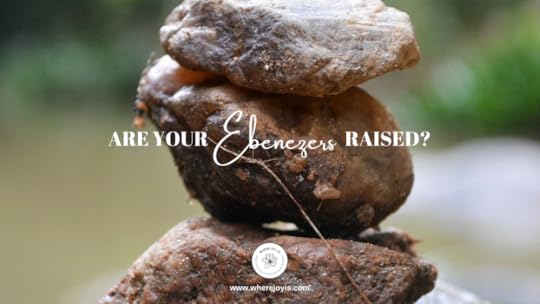
The nation of Israel had been at war (again), and the people were hurt and tired. War brings not only unrest and loss, but weariness and discouragement, and this war was no different. The prophet Samuel, who was a judge over Israel, preached to the people and instructed the Israelites to remove all the foreign gods from the land and to turn their hearts wholeheartedly back to the Lord. So the people of Israel did exactly that. They “removed the Baals and the Ashtaroth (false gods) and served the Lord alone.” (1 Samuel 7:4)
Inevitably, the Philistine army rose up against Israel again, and when they did, the people of Israel were terrified. They ran and cried to Samuel, begging him to intercede to God on their behalf. So Samuel went before the Lord, and as he offered sacrifices the Philistine army came closer and closer. To the natural eye, it looked like Israel was about to take another heavy blow from their enemy, but something unexpected happened. 1 Samuel 7:10 says, “But the Lord thundered with a great thunder on that day against the Philistines and confused them, so that they were routed before Israel.” As He had done many times in Israel's history, the Lord fought for Israel and completely delivered them from their enemy.
After the Philistines were defeated, the prophet Samuel took a great stone and raised it up as a visual reminder of the victory God had given to Israel in their time of trouble. Samuel set the great stone up and called it, Ebenezer, which means, stone of help, and said to the people, “The Lord has helped us this far.”
It’s a great story, and there is a lesson for us in it. That lesson is, remember God’s track record of faithfulness.
It is easy for me to forget what God has done. Too often, I forget His provision in the past, His wisdom when I've needed it, and His comfort when I have been weary. The faithfulness of God has been penned on every page of my life, and yet when my eyes are on myself and the physical world around me, I develop a form of spiritual amnesia. This is why there are numerous instructions to remember the acts of God.
We see a pattern of memorializing God's faithfulness in Scripture. In Genesis 28, Jacob erected a pillar in Bethel to remember the blessing God had given him. In Joshua 4, under the instruction of Joshua, men from the 12 tribes of Israel removed boulders from the riverbed at Gilgal and raised a pillar of stones so future generations would learn about the God of miracles. Memorializing the kindness of the Lord increases our faith and proclaims His righteousness to those around us. We will be a spiritually forgetful people if we do not raise our own ebenezers and build our own pillars, telling others and reminding our own hearts what God has done through Christ.
All of us can look back and recall how the Lord has helped us; how He has provided, how He has comforted, how He has instructed, and ultimately - how He has redeemed. Each of us can call to mind a day that began with an overwhelming sense of defeat, and ended with overwhelming grace.
We have metaphoric stones of remembrance that point to the faithfulness of God, and for the sake of our faith, we need to raise them up.
See also:Deuteronomy 4:9; Deuteronomy 27:1-8; Joshua 24:24-28; Psalm 77: Psalm 103;
December 6, 2023
Between the Two Advents
The Advent season is here, with all its carols and newly published devotional books. There is that usual bustle and stirring in the air, full of excitement and anticipation as we wait for Christmas Day, but something else is also in the air besides the smell of gingerbread and peppermint. There is a tension surrounding Advent, and maybe you feel that tension too. This time of year, there seems to be a suspenseful pause, as if the world is holding its breath in wait. Along with the holiday cheer, my spirit is antsy, as if I'm looking... longing... waiting...

The women at our church have just wrapped up a study of the book of Titus. Verse by verse, we have dug our way down into the belly of the text - asking questions, looking up words we don’t understand, discussing the applications, and journaling our thoughts and prayers. It's been a semester I will cherish for the rest of my life. One section in particular in the book of Titus has settled in my heart and made its home there. In chapter two, Paul writes:
For the grace of God has appeared, bringing salvation for all people, training us to renounce ungodliness and worldly passions, and to live self-controlled, upright, and godly lives in the present age, waiting for our blessed hope, the appearing of the glory of our great God and Savior Jesus Christ, who gave himself for us to redeem us from all lawlessness and to purify for himself a people for his own possession who are zealous for good works.Titus 2:11-14 (emphasis mine)
Christmas is all about the first coming of Christ. The word Advent means "coming," or "arrival." This is the season where we celebrate the grace of God appearing in human flesh: Emmanuel, God with us. He appeared - not with pomp or in blazing glory - but as a helpless infant, born in blood and water, to poor parents in a humble stable that smelled of hay and manure. We observe this beautiful event in history - usually with all the merriment of a child tasting their first Christmas cookie!Yet there is a second Advent; a second coming of Christ; a second appearing that we wait for. This Advent is the one that all creation groans for (Romans 8:18-25). Charles Spurgeon commented on Titus 2:11-14, “See, then, where we are: we are compassed about, behind and before, with the appearings of our Lord. Behind us is our trust; before us is our hope. Behind us is the Son of God in humiliation; before us is the great God our Saviour in his glory. To use an ecclesiastical term, we stand between two Epiphanies: the first is the manifestation of the Son of God in human flesh in dishonour and weakness; the second is the manifestation of the same Son of God in all his power and glory. In what a position, then, do the saints stand! They have an era all to themselves which begins and ends with the Lord’s appearing.”We live between these two Advents. Day in and day out, through every month on the calendar, we live in an era of "then" and "not yet." Grace appeared 2,000 years ago in a dirty manger, and brought salvation for all who would believe. Glory will will soon appear when Christ returns with all the heavenly armies to rule and to reign. We stand between these two appearings, between grace and glory. Our whole lives are spent in the space in the middle of the two comings of Christ Jesus, in a place all our own where we celebrate Christs' humble descent to earth, as we also wait with eager longing for His triumphant return. What joyous ground on which we stand!
In light of this, how then should I live? That was one of the questions we asked ourselves in my mid-week small group. In light of Christ's first appearing and His soon-coming second appearing, how should my life look?
Paul gives us the answer. In Titus he tells us that grace appeared for two reasons:
1) to bring salvation, and
2) to teach us how to live in a way that does not dishonor Christ.
God's grace coming to earth, in the form of a baby, is the reason we celebrate the first Advent, and our lives should echo the songs of joy that began on that holy night. While we wait for the second Advent, we spread the good news of the first while we live a life that adorns the goodness we have received because of Christ's first appearance in Bethlehem. Those who are His are marked by godliness and good works that are fueled by the grace that saved them. By His Spirit, we are able to go from grace to more grace as we are slowly (but surely!) transformed into the glorious image of Jesus - the crescendo of His second appearing for which we wait.
As I sit in our family room gazing at our tree, warmed by the fire and the hot tea in my hand, my heart celebrates the first appearing of Christ. But equally as thrilling is the hope of what awaits; the anticipation and joy that we will have when He appears - not as an infant lowly on a silent night, but as the King of Kings in glorious light.
June 15, 2023
Influencers and the Gospel
That's it, I thought quietly to myself. I can't look at one more Instagram profile like this.
Tapping the screen, I logged off and busied my hands by wiping down and organizing the bathroom counter. Yet while my account was logged off, my mind was still logged on to Instagram world, - and I was playing the comparison game.
She really has it all together. How does she find the time to homeschool, homemake, homestead, and run a social media business? Look at that excellent videography. How is her house so clean and polished? I wonder how she does it all...
It was the aesthetically pleasing kitchens and bedrooms, the perfect camera quality and angles, the effortless housekeeping skills, and the ease with which the Instagram reels captured the gentle parenting, that had me comparing, analyzing, judging, and finally, coveting.
Have you been there?

Why was I comparing and finally, coveting?
I don't live on a homestead. We have herbs and some tomatoes growing in the backyard, but we don't have acres of fruit trees, vegetable gardens, and pastures. We live in a quiet, suburban neighborhood roughly 2 minutes from Starbucks and Chick Fil-A. I don't make our bread, or granola bars, or gummy vitamins. I have homemade bone broth in the fridge, and jams I made last summer stacked in the pantry, but I also have chicken nuggets in our freezer and cheese flavored crackers in the kid's snack cabinet.
I don't homeschool my children. I have shelves of books for my kiddos to read and a regularly rotating stack of library checkouts, but I also have class schedules, a list of upcoming tests and projects, and various prayer needs and heart-seeking questions to ask the kids written down in my planner.
I don't make posts on Instagram 3-4 times a week or record reels often. I share what I have processed and the things I learn from the seasons I am in. My social media page is not trendy, nor is it wildly funny, aesthetic, or popular, but it is wildly personal.
All of these things - these average, home-and-life things - convinced me that I did not meet the desired criteria, and before I was aware of the sin churning in my heart, I heaped pressure upon myself to complete with the running flux of social media influencers. And yet, while I read about marketing and trends that can capture the attention of the world within the screen, I was forgetting about the world inside the walls of my home. My sights were on gaining followers - strangers - when I had three young people who mean the world to me and were looking to me to show them how to live. The truth is, I am already an influencer - just not the kind the world esteems.
Social media is fun and can be inspiring, but social media and all its trends can also be dangerous. Algorithms seem to detect our weaknesses just as much as our interests. On a hard day when I feel insecure or dissatisfied with my life, Instagram will inevitably flood my feed with ads on crash diets, homesteading posts, or the classic 3-steps to entrepreneurial success. What was once a place to post pictures of your life to share with those you love, is now a competitive platform that can ensnare and discourage just as easily as it can build up and inspire. It takes great discernment and wisdom to keep steady amidst the ever-changing social media trends that can pull you into sinful envy and idolatry. If the world on your screen embitters you against God for the life you do not have, then it is time to take a step back and look into the mirror of God's Word.

It was the apostle Paul who said, "Imitate me as I imitate Christ" (1 Corinthians 11:1). That statement does not mean that Paul was concerned with the amount of people who followed him, rather he was only interested in the quality of those who followed Christ. He knew that as a believer in Jesus, his responsibility was to use his gifts to imitate Christ to the world and compel them to do the same. He wasn't in competition with other disciples, nor was he obsessed with following trends in order to make the gospel message more appealing. His only aim was simply to spread the gospel, and he did so while being himself - making tents, sharing meals, preaching to rulers and dignitaries, and encouraging fellow believers through his letters from prison. This is a good reminder for us as we navigate the world of bloggers, vloggers, podcasters, and content creators.
I love watching my fellow sisters in the Lord milk their cows, bake their bread, grow their gardens, and create beautiful truths for me to like and share on my own feed. They are using the life God has given them to share the gospel in a particular and beautiful way. Likewise, I also love my fellow sisters who disciple from their work office, who encourage over frozen pizza and ice cream, who endeavor to imitate Christ to their children in the school line, and who faithfully live for Jesus without ever sharing an Instagram story. They, too, are using the life God has give them to share the gospel in a particular and beautiful way. Both groups of women are influential whether or not they have 600k online followers and the latest iPhone technology at their disposal.
My three most important followers are my children - who have my nose and my proclivity to sin. They are influenced by me whether I make money by creating reels documenting my homesteading journey, or whether the bills get paid because I faithfully show up to work at the office. They are influenced by my response when I sin, by my reactions to their disobedience, by my love for my husband, by the questions I ask them, by the wisdom and attention that I give them, and by my involvement with the local church. They are influenced by my dependance on God's Word and by the things I talk about in our home. My influence with my children will last long after Instagram and TikTok fade from memory. My work as a wife and mother is an eternal work, a work that does not issue a weekly paycheck deposited into the bank down the street, but one that will impact souls who will step into eternity.
Faithfulness to Christ is far more fruitful than any aesthetically-pleasing thing that graces the online world. My friend, keep the main thing the main thing and endeavor to imitate Christ, regardless of your position or social media presence.
April 6, 2023
What the Resurrection Means for Daily Life
It was always the new clothes for me.
From the time I could walk, Easter Sunday meant that I got a brand-new dress, brand new lace socks, new shoes, and sometimes an Easter bonnet to don my light brown head. The night before Easter Sunday, my mom would roll my hair up in sponge curlers, and I would carefully lay out my new clothes for the next morning. Easter always meant a big family picture to look back on, and something special for lunch after church. Undoubtedly, I looked forward to Easter Sunday because, what little girl doesn't love a frilly new dress?
Thankfully, Easter Sunday - the celebration of the resurrection of our Lord - looks different now, and means quite a bit more to me than it did when I was young, but it begs the question:
What do we really think about when we consider the resurrection? What does the resurrection mean for me today? How does this annual springtime celebration affect my day-to-day life?
I'm sure most of us meditate on the cross and rejoice that the tomb is empty, but are we celebrating for the sake of a celebration? Do we decorate our homes in pastel colors and hang banners of faith on our front doors because it is the tradition of springtime? Or do we truly understand the reason for rejoicing on Resurrection Sunday? Are we still celebrating when Monday morning dawns? Are we still thinking about the magnitude of the resurrection when we are paying bills, carpooling to school, or sitting in a meeting? Does this glorious day on the Christian calendar follow us through the weeks and months after the ham has been eaten, and the Easter eggs have disappeared from the stores? We should be, because without the resurrection, we would have nothing worth celebrating.

Paul wrote in 1 Corinthians 15:14, "And if Christ is not risen, then our preaching is empty and your faith is also empty." (New King James Version)
The death of Jesus at the cross was not the climatic end of the story, it was the prelude to the glorious crescendo of our faith. Had Jesus not been raised, death would have won. Sin would still have its hold. The grave would still claim the final victory. We needed the resurrection. We needed the hope of a risen King. And today, 2,000 years later, we need it still.
It would do us all well to consider the resurrection not as merely an event to celebrate, but a lifestyle in which to live.
Because of the resurrection, I am a new creation, ever being sanctified and perfected into the image of Jesus Christ. Had it not been for the death, burial, and resurrection of Jesus, I would still be lost in sin; condemned, and hopeless.
Because of the resurrection, I am confident in my hope of salvation, knowing that Christ has atoned for all of my sin once and for all. Without the atoning work of Jesus and his resurrection from the grave, I would still be striving in my own strength to measure up to a measureless standard.
Because of the resurrection, I am empowered by the Holy Spirit to walk in a manner worthy of Christ. Apart from the resurrection power of God, I would have zero capability to speak gently, act patiently, serve humbly, or love selflessly.
Because of the resurrection, I have the promise that all things will culminate in what is good for me. If it had not been for the resurrection of Jesus, the gospel story would have ended with death, but because of his victory over death, hell, and the grave, no amount of suffering or pain can change the ultimate end for those in Christ. Hallelujah.
The resurrection applies to our everyday lives more than we think. It's the fuel running through our spiritual veins, imparting grace and strength to us as we keep our homes, love our families, serve the body and our community, and work for the glory of God. It is what sustains us when we are weary from the monotonous boredom of laundry load after laundry load. It calms us when we feel anxious by the noise of the culture. It infuses us with boldness to live righteously in an unrighteous world. The resurrection of Christ and the hope we have in our bodily resurrection one day, gives us the lens with which we can view every circumstance, every trial, and every moment of suffering on earth.
The cross gives us cause to soberly look at the devastation that sin brought about. The cross reminds us that our Master died and that we, too, must die to ourselves, but the resurrection of Jesus is the triumphant song we sing as we embrace the hope, the joy, and the life that is ours through Christ.
Hallelujah! What a Savior.
February 10, 2023
Walking With Scars: Redeeming the Reminders of Brokenness
Modified and adapted from ,Where Joy is: Finding Joy in the Midst of Suffering (2023)
My day started out just fine. I had enjoyed coffee in the living room recliner with my Bible just as the sun began to dawn. Soft, worship music was playing through the house as my kids and I got ready for the day, and we even had a short, theological discussion in the car on the way to school. I had walked into work with a contented heart and had whispered prayers all throughout the morning, thankful for a job to go to and relieved that I hadn’t been in the fender bender on I-430.
I don’t know what happened or how it started, but suddenly everything started going dark. My hands began to tremble, my attention span shrunk, my heart rate quickened, and mind began to panic over... something... everything. What began as a wonderful, peaceful day, had suddenly began to spiral into a horrible afternoon of emotional turmoil.

There are days when it is easy to get out of bed, when we remember to eat and take out the garbage. There is a song in our heart and the Lord feels near and extra dear to us. These days are gracious gifts. But there are also days when old memories resurface, when our flesh weakens, and when our hearts break all over again. On those days, it is important to remember that the past does not have to keep us in its clutches. Because of the hope we have in Jesus, we are not in bondage anymore, we are released from its control.
Notice I did not say we are released from sin’s effect on us, but on its hold on us. As long as we are alive on earth, we are going to feel the effects of sin. We will remember, and ache, and even weep. We will carry scars as souvenirs of yesteryear. The past and all its pain may trigger us, hurt us, or even tempt us, but because of Jesus, nothing from our yesterdays have the power to prevail. That is the power of the gospel.
Amy Carmichael, a missionary to India in the early 1900's wrote this stirring and thought-provoking poem:
Hast thou no scar?
No hidden scar on foot, or side, or hand?
I hear thee sung as mighty in the land;
I hear them hail thy bright, ascendant star.
Hast thou no scar?
Hast thou no wound?
Yet I was wounded by the archers; spent,
Leaned Me against a tree to die; and rent
By ravening beasts that compassed Me, I swooned.
Hast thou no wound?
No wound? No scar?
Yet, as the Master shall the servant be,
And piercèd are the feet that follow Me.
But thine are whole; can he have followed far
Who hast no wound or scar?
There is no question that suffering hurts us. That is why it bears the name suffering. It cuts through our flesh and into our heart. It makes us cry. It makes us jerk back, and in the really hard times, it tempts us to question if God is still holding on to us. But Amy's question of "Hast thou no scar?" is one worth pondering. I, for one, do not understand cancer, divorce, infertility, devastating loss, disabilities, abuse, or neglect. I do not know the purposes or the redemptive plans behind the sufferings that we face in this life. However, I do know that we are safe in the hands of God; and the hands that hold us are gentle, compassionate, and life-giving. His hands bear scars that bring healing to broken people. As His workmanship, it is only right that we be like our Master and bear scars too.
Sin will not win, friend. It may look like the darkness has had the final say, but it does not. We may go through life bearing scars, but all is counted as loss in light of Christ and what He has done for us. Because of Jesus, we have the ultimate and final victory. We have Heaven to look forward to where Christ is seated on the throne and every tear, every memory of every tragedy, every regret, and every aching pain of suffering will be no more.
If you are walking with scars, rejoice and keep following the Master who bears scars too.
,CLICK HERE, to order your copy of ,Where Joy Is: Finding Joy in the Midst of Suffering
January 25, 2023
My Heart in 80,000 Words
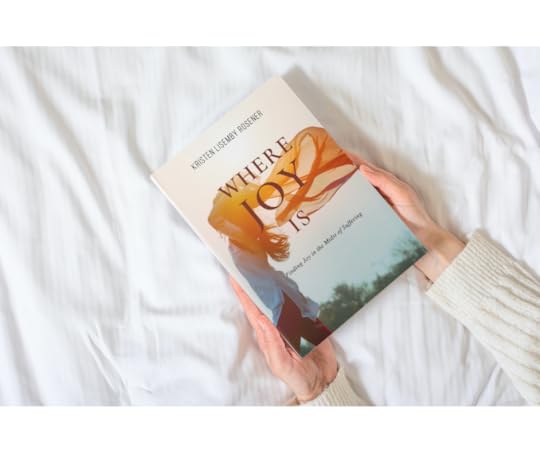
Seven years ago, my world changed forever. And now, some of my most vulnerable moments have been formatted, bound up, put on paper, and are available for anyone to read. That's right, my book, ,Where Joy Is: Finding Joy in the Midst of Suffering, is finally available now!
I grew up in the country surrounded by trees. The family land encompasses 20+ acres of pine, dogwood, cherry and hickory, cedar, willow, and gum trees that decorate the property and fill the air with soothing and earthy smells. In the spring, everything is blossoming and bright. In the autumn, the ground is carpeted with the dead, brown leaves.
Throughout my childhood and teenage years, I spent a lot of time outside with my family burning those leaves. We would rake up pine cones, dead grass, fallen leaves, and miscellaneous trash and set it all ablaze with one match. Then we would step back as the flames devoured the pile, making sure to keep it contained and preventing it from spreading. We would tend to the fire and watch carefully until all of the trash was completely burned away and only ashes remained.
Sometimes I feel as though that is a picture of my life. Maybe you do, too. Maybe you feel as though God has taken His divine rake and dragged it across the ground of your heart, making a pile of your life before setting it all on fire.
The process is intense. It hurts. If that analogy resonates with you, then my book is for you.
Writing this book has been one, long labor of love; love for Christ and love for others who hurt and ache, and wonder why. The words in this book were not written flippantly, they were written with many tears, and with many more prayers that they might be used to point others to the Source of comfort and joy.
In the pages of my book, I will bring you along as I recount my upbringing, my childhood, and the day my life changed forever. I share snippets of my experience with abuse, betrayal, and divorce, and I share many of my struggles, doubts, and sins in my season of single motherhood. Intermingled with it all, I put a spotlight on the darkness of cracked theology and perfectionism. What I pray will be evident to you as you read, is the hand of God in it all.
There is a lot to digest in this book, but if you are walking through a season of suffering, I pray that it will be an encouragement to you, and also set fire to your feet as you press forward.
,,My book:,, ,,Where Joy Is: Finding Joy in the Midst of Suffering
December 5, 2022
An Ebenezer Christmas
For many people, Christmas can be a tremendous difficulty. A death, a divorce, and devastation can make this season a lonely, sad time. While others are enjoying their gingerbread houses and singing along with Mariah Carey’s “All I Want For Christmas Is You,” for others, Christmas can be a time when the most painful memories are acutely felt. For the single parent, there is no use for mistletoe, no one to cozy up next to by the fireplace, and the song “I’ll Be Home For Christmas” is a gut punch in every way. For parents with a sick child, the merriment and “Peace on Earth” sentiments are often replaced with worry and even fear. Money is tight, wounds are raw, fatigue is real, and everything just feels… pointless.