
Moriah Jovan's Blog
May 14, 2015
Rules, broken
“Any halfway decent artist can outline,” she sneered.
You can’t sneer a statement.
She raised her eyes to his.
What’d she do, pick them up off the floor?
Long ago and far away, when I first had this thing called a critique group, a thing that was foreign to me, I was taught these “rules.” I had never heard of these “rules.” I didn’t know what was wrong with raising one’s eyes or sneering one’s reply. I found such phrasings helpful and I read lots of books that had such things in it, lots of books by famed (and good) authors.
They were “rules,” I was told, lectured upon at workshops and conferences at RWA by editors and agents and teachers of writing classes. Ah, well, if it came from editors, it must be true.
(Never mind it was third- or fourth- or twelfth-hand. And never mind I was in my senior year of a creative writing degree and none of my professors had ever said any such thing. But that was LITERARY, and this was ROMANCE. Clearly, they had different rules.)
Then there was the head-hopping. I can’t find the last manuscript I did that in, so I’ll skip the example. I didn’t know what was wrong with that, either, because it was the way many popular books I read when I was a child and teenager were written. Hell, Hemingway did it. I never noticed it much less knew there was a name for it. Furthermore, I’d gotten two literary agents with books whose characters hop-scotched all the way through 300 pages, and I was the only person in my critique group to have gotten that close to getting The Call.
But the more it was pointed out to me, the more it irritated me. I don’t know if it irritated me because it was a “rule” that was being broken, because it was a “rule” I was not allowed to break, because I acquired a taste against the technique, or because it was just pointed out so often I avoided it like a puppy getting its nose smacked with a rolled-up newspaper.
I still don’t do it and now I will notice it but if I see it I chalk it up to artistic choice and go with it.
Lastly.
Oh, lastly.
Lastly, there are the “be” verbs, and the blanket admonition to use them as sparingly as possible because using a “be” verb is weak and is passive voice.
It was this that gave her the upper hand with Fen.
Her outfit was utterly ridiculous.
(Do we see the difference in “be” usage between these two sentences? No? Then this post is for you.)
One of the reasons I decided to revise The Proviso was because I had adhered to all of these admonitions (and at least a dozen more). It’d been a long time since I’d written anything at all, much less tried to find an agent or publisher, and I was a little weak in the knees about doing anything “wrong.” So while I was writing, I was adhering to these rules because they were the only solid thing I had to depend on at that time.
And I would find creative ways to delete any “be” verbs, because by that point I didn’t remember WHY I was supposed to do that. A sign of a bad or unimaginative writer or something. And none of my characters raised their eyes; their attention went to that spot. Many attentions went to many spots. None of my characters sneered any words, but they did say things with a sneer, which added very many words. All those rules-followings, and I told myself I was making good art.
Piffle.
I knew I was wrong while I was writing it. It didn’t flow. It was making me crazy, trying to come up with sentence structure that was simple and effective and rhythmic while avoiding “be” verbs. It wasn’t my voice. The language was overwrought, and I knew it. I didn’t like it. But dammit, I was following the rules!
I didn’t trust myself, you see. I didn’t trust my voice, but my voice was rusty and the rules were a long time ago and the internet was crawling with contradictory advice…
So a while after I released The Proviso and gotten a bit of good feedback, a literary type person whose work I highly respect (koff**DannyNelson**koff) said to me:
“I am enjoying your creative use of verbs.”
I died.
Withered up.
Blew away.
He’d noticed. Since he wasn’t a genre writer, I wasn’t sure if he’d know why I did that, but did it matter? I had followed the rules and I had done the exact wrong thing.
It became a thing with me, The Proviso being not quite right because I had done something deliberately I knew was bad for the story but I was following the rules. It was like putting up sheetrock and getting it all mudded and sanded and painted and trimmed—only to realize that even though you followed the instructions given to you by someone you trusted, you didn’t get the outlets wired correctly. But oh well. Since you weren’t going to use them that much anyway, you could work around it.
But every time you look at those outlets or have to run an extension cord, you know. And your brain picks at it. When are you going to open up that wall and do it right? You need to get that done right. I have so many other things to do though! But you know that’s not wired right and it’s getting more annoying every time you have to move an extension cord. You can still live with it until—
Wait, are you telling me we’re avoiding “be” verbs because you think AAAAALLLLLL “be” verbs make a sentence passive? What the hell?!
Everywhere around the web I was seeing this. I was seeing this from n00b authors telling other n00b authors, the way it was told to me by n00b authors I assumed knew more than I did (they didn’t), who said they got it from some workshop or writing article and who knows where all else they got it, and it’s been spreading like syphilis through a crackwhorehouse for the last 20 years.
THAT IS NOT WHAT PASSIVE VOICE MEANS!!!! DON’T YOU PEOPLE GROK NUANCE?!?!?
I’m still seeing that advice everywhere. I had to tell a n00b a couple of weeks ago that “be” DOES NOT EQUAL passive voice. It just means the sentence is arranged passively.
And so I took the sledgehammer to the wall because I couldn’t stand Nelson’s voice in my head anymore.
I am enjoying your creative use of verbs.


May 6, 2015
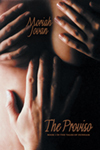
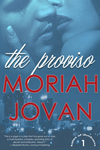
The Proviso rebooted

You know how when you’re in a discussion and it’s really animated and you have things to say but you don’t get to because the discussion’s going by too fast and then you forget until you go home and you’re cracking wise to yourself because you really are that witty, but your timing’s shit and you go to bed annoyed because you didn’t think of it when it really mattered?
And you know how you laugh at a joke you don’t understand because everyone is laughing and you don’t want to look stupid, but you forget about it until, like, seven years later you come across the joke and you’ve lived a little between then and now, and now you get it and it’s hilarious?
And you know how you said something really stupid back in second grade and you can still see and hear that moment like it was yesterday, and your face turns red and your sphincter clenches even though it’s forty years later and you wish you could have a do-over on that moment (or any of the thousands in between, all of which you remember)?
Yeah, me too.
Hence, The Proviso, 2nd Edition.
Hopefully some time in October 2015, to pay homage to the one I published seven years ago.
Seven.
May 5, 2015
The little things that do not show
“All day I did the little things, the little things that do not show; I brought the kindling for the fire, I put the candles in a row, I filled a bowl with marigolds, the shallow bowl you love the best—and made the house a pleasant place where weariness might take its rest.”
—Blanche Bane Kuder
“The Blue Bowl”
May 4, 2015
Decluttering my mind
1. Vomit blue ink all over the agenda book with how cluttered and chaotic the mind is until clarity ensues. It may or may not take 14 pages, front and back.
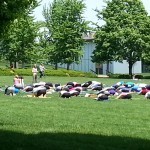
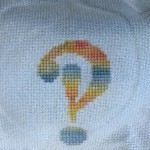
2. Take the Female Tax Deduction to her art class. Walk through the park barefoot in the grass (for the first time in years) to get to the art gallery. Think about taking a yoga class. Finish a cross stitch. When XX TD is finished with her art class, solve a glass labyrinth with her. Walk (in the grass) (barefoot) (this is crucial) up the terraces to the gallery. Talk to tourists and answer questions about the new exhibit (the Green Man-ish sculptures) and good barbecue. Stroll through the art gallery after having responded to nature’s call. Sit and let XX TD sketch a medieval knight on a horse.
3. Share pictures that don’t even come close to capturing the magic that was yesterday.





















Maps were made by people who went first
“…maps were made by people who went first and didn’t die. The maps that survive are the ones that work.”
—God’s Debris
Scott Adams
p 32
The only thing more powerful than fear
“The only thing more powerful than fear is routine.”
—Rot & Ruin
Jonathan Maberry
p 190
October 6, 2014
Cadillacs in our dreams
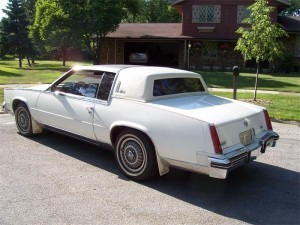 So when I was 16, I had a short-lived stint at Shoney’s as a salad bar attendant. I’ve never worked that hard in my life on a consistent basis. I didn’t do well for several reasons.
My trainer was a woman who was ancient when Christ was born.[1] I felt so sorry for her, working herself to death at this shitty job. Shouldn’t she have moved up and on by now? She was nice, more inclined toward talking than training.
Anyway, I think I might have been gauche/crass enough to ask her why she was doing this job. She told me she was saving up to buy her husband a brand-new Cadillac. In cash. The fact that it was for her husband gave me pause, but I went with it.
She was almost at her savings goal and she could quit the job in six months. She told me this with the excitement of a kid twitching to get out of his room on Christmas morning to see what Santa brought. Now, to me, that was a worthy but totally overwhelming goal (I had yet to get my first paycheck) and I went about my work, stunned and awed and humbled. That she only had six months to go was a feat of astronomical proportions.
I went home with that tale. My dad sneered. “Do you want to spend the rest of your life working at Shoney’s so you can save up to buy a car in cash?”
We lived in the ghetto. It wasn’t like we had a dime to our names. I went to bed chastened. Possibly in tears. Because there was something wrong with what he said, but I didn’t know what, and all I really wanted when I was that age was my dad’s approval.
I approved of her goal but I didn’t know why. I kept my opinion to myself.
Her name was Hazel.
___________
[1] Huh. Seems my mentors are cantankerous old women.
September 10, 2014
A contest!
My good friend Melissa Blue is celebrating her 10th anniversary of writing with a contest. A bunch of us writerly types pitched in to make it an awesome one, so a lot of people have a chance to win some good stuff. The contest started September 7, so I’m a bit slow on the uptake, but! It goes until September 13.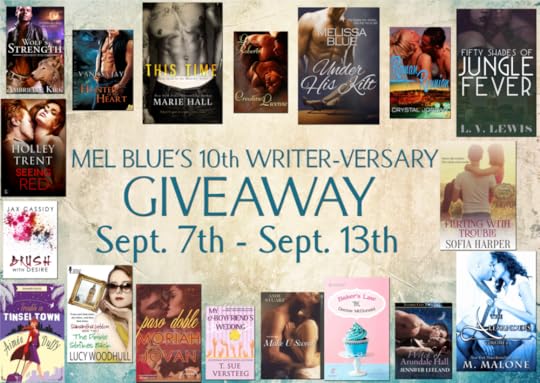
a Rafflecopter giveaway
August 25, 2014
Say You’ll Go

Sometimes love isn’t enough…until it’s the only thing you have left.
Janelle Monáe: Say You’ll Go
“Tess … ” She stopped cold at the breath of a whisper, her heart slamming into her ribs so hard she thought it would fall out right there on the table and flop around. She turned slowly—so slowly.
She opened her mouth to scream at him for ambushing her, but she realized just in time that he was as stunned as she was.
And he was beautiful. More beautiful than he had been when he was nineteen. More beautiful than he was the night he’d left her. Yet nothing about him had changed.
His hair was still a mass of long mahogany-red waves past his shoulders. Bunches of hair at his temples had been braided into tiny plaits fastened behind his head. His earrings were medium-sized gold hoops. His stark art deco sun tattoo still spread its rays down along his neck, chin, and jaw. His shirt was blousy white linen floating untucked over oxblood leathers, the ties at the neck hanging loose. His wrist tattoos were on full display. Then she looked at his hands.
He was wearing his wedding ring.
She blinked and looked down at her own left hand. There they were: the circuit board wrist tattoo that matched his and the diamond he’d presented to her in an elaborate, public proposal. Because why do it privately when you could put on a show?
She looked back up at him, knowing all her heartbreak and joy and sorrow and love for him were written all over her face—and it was reflected in his.
“This is exactly what I wanted to avoid,” Sebastian drawled with great irritation. “If some people had picked up her phone!”
She should’ve picked up the phone.
Tess didn’t move—couldn’t—but Étienne could and did, skirting his chair and striding toward her with that look, the pirate king, the one who wouldn’t be denied.
She sighed when he slid his big hands around her face, tilted it back, and brought her up to him for a kiss that scorched her soul.
It was magical. He was magical.
She closed her eyes and opened her mouth, feeling his tongue, so familiar, so talented. Tasting him as he had always tasted with an undernote of Dr. Pepper. She whimpered into his mouth when the pressure lightened, but he only tilted his head and went after her at a different angle. Sensation shot downward, and she moaned softly, ready to spend the next few hours feeling his bare chest against her naked breast, his legs twined with hers, his body inside hers, stroking her and assuaging this ache for him she’d never been able to contain.
“GET A FUCKING ROOM!” Sebastian roared, standing and pounding the table. “You two drive me fucking insane!”
They parted. Slowly. So slowly.
“I did not sleep with her,” he whispered, dropping his forehead on hers, his chest heaving.
“I know.” That surprised him, and she was strangely gratified.
“Mon cœur,” he breathed.
“I love you, too,” she whispered back, equally out of breath. Then she gulped. “But love isn’t enough.”
He drew away from her, dropped his head back, gripped the back of her chair so hard it creaked. His chest heaved.
But somebody began to clap. A golf clap. Hushed. Mocking.
Someone else joined in. Then someone else.
Her heart was breaking—again—but she couldn’t hide her smile. Nor, it seemed, could he.
“Étienne!” Sebastian snapped. “Get your ass in this seat right now. Tess, siddown. Somebody has to be the adult in the room. As per usual.”
“We need to talk,” Étienne murmured, looking at her with those heartbreaking—heartbroken—ice blue eyes.
She nodded. “I know.”
“To a therapist! I do have other things to do, you know!”
Étienne tossed Sebastian a bland smile over his shoulder. “Keep it up. You know we like to put on a show.”
Sebastian snarled but sat, and somebody began to chuckle.
He turned back to her. “You drew those for me?”
Tess, as in love as she had been at seventeen, could only nod. “I draw everything for you.”
from We Were Gods
August 21, 2014
Virginity as a feminist statement

In which a promiscuous matador is pissy about having been brutally friend-zoned by a feminist college professor he wants to have sex with in the worst way, and she pounds him into the ground.
••• TL;DR •••
EMILIO: “Why is being a virgin when you get married so important to you?”
VICTORIA: “Because it’s not important to anybody else,” she snapped, then huffed. “No. What happened was, I saw girls in high school—and one at church—they’d have sex, almost always pressured. Sometimes it was date rape, but they didn’t have the guts to say so. Or they were confused or conflicted about it. And they’d either get pregnant or the guy would treat them like crap. Regardless of what people like to think, I’m not oblivious. I see and hear, and I remember. But I don’t care.”
Didn’t he know that! Her non-oblivion was a tiger trap.
“Now, I ask you. If you see a bunch of girls running around crying after having had sex, what conclusion are you going to draw?”
He pursed his lips. That had never occurred to him. Then again, he wasn’t a teenage girl.
“I drew the conclusion that it wasn’t fun. Not only that, but they ended up with labels that weren’t true at all. Slut. Whore. Easy. Whatever. I saw how the boys treated them and they were not nice. Why didn’t the boys get labeled? Why was it cool and fun for them? Why was it the girls who got all the bad side and the boys who got the good side?”
Emilio was, at the moment, sinking into a vat of goo whose main ingredient, he suspected, was shame. He’d been one of those boys.
And one of those young men.
And one of those almost-middle-aged men.
“Why did the girl have to leave school if she got pregnant, but the baby’s father didn’t? And why,” she continued, “was the girl always blamed if she had the guts to speak up and say, ‘He raped me’? Her skirt was too short. She was wearing too much makeup. She was where she shouldn’t have been. She had too much to drink. She was too flirty. She wanted it. She’s been asking for it. Oh, and my personal favorite—boys will be boys.”
Silver linings. He’d never raped a woman nor, so far as he knew, had he coerced one into doing something she wasn’t sure she wanted to do, which amounted to the same thing.
“Once ‘boys will be boys’ gets pulled out, the girl’s hounded out of town—by women! The boy’s mother will be leading the pack.”
Emilio had noticed this, in fact, and he was vaguely amazed this behavior crossed an ocean.
“It was the eighties. How many girls are going to ask their mothers to take them to the doctor to get birth control? How many girls are going to walk into a drugstore and buy condoms? None, that’s how many. Why? Because if they go on birth control, it means they expect to have sex in the future. And if they buy condoms, it means they’re planning to have sex right now. As far as I could see, there was nothing in it for the girl. And it wasn’t fun enough to have to deal with the consequences.
“It had nothing to do with church, particularly since the chastity lessons in Young Women also put the onus on the girls to keep the boys in line. Analogies like ‘nobody wants already-chewed gum’ and ‘nobody wants to eat a cupcake that’s got the icing licked off’—”
Emilio grimaced.
“—and another one of my personal favorites—I have so many!—‘Boys can’t control their baser lusts, so you have to cover up so they don’t have to discipline themselves.’ Why is it up to me to shepherd a man’s—any man’s—hormones? But the fact of the matter is, secular society, no matter how much it likes to pretend it’s open and tolerant, is no kinder than religious society.
“If I met a man who was willing to marry me for time and all eternity, I would have to assume he loved me and he thought he could put up with me. The risk is there, but it’s a shared risk, because if he changed his mind after, I’d divorce him and take everything he owned. You take me for a test drive, I’ll take you to the cleaners.”
“Oh,” he moaned, feeling that like a knife in his gut. “That’s cold.”
She granted him a haughty sniff. “And heaven help him when my family gets through with him.”
Emilio took a deep breath and released it in a long whoosh.
“Now refute anything I just said. And before you try, let me remind you of Yvette Mallery. Poor girl. She’s twenty-four. Lonely. Not too bright. Caged by her life. The only marginally admirable trait you have is you don’t string women along.”
Sebastian was right. Again. Victoria was awful when she was thoughtless. She was vicious when she set out to cut a man’s balls off, and Emilio felt like he’d been pummeled, held under water, and stretched out in the desert sun to dry and crack.
“I … can’t.”
“The woman takes all the risk and all the blame, even if she’s brutally raped. She could even end up with a baby she didn’t want if she doesn’t get rid of it somehow. Destroys her shot at making anything out of her life. That’s eighteen years of risk, eighteen years of poverty, eighteen years of her life, gone in forty-five minutes. She ends up alone and on the bottom of Maslow’s scale for the rest of her life.
“I’ve been mocked for being a thirty-two-year-old virgin. Why? Why would any woman over twenty be mocked for being a virgin in a society that also mocks women for choosing unwisely? Or following their bliss just like men do? Or being victims of a horrible crime? The only explanation is that the woman takes all the blame, all the risk just for existing.
“But you know what? I don’t care if people mock me because I may be a lot of things society thinks are horrible—especially in a woman—but I am not delusional and I am not going to screw up my life over something that seems to be about as fun as a drive-in movie, if that, and I refuse to be a victim. You’re upset about ‘Let’s be friends’? Give me one reason to believe you wouldn’t do that to me, too.”
••• TL;DR •••
I am fucking sick and tired of self-described feminists reviling women who choose virginity/celibacy as some backwoods, fundamentalist Christian, hick-r00b, sheltered, naïve victim of an oppressive patriarchal construct. Women who are happy in their sexuality and sex lives are no more empowered than a woman who chooses to remain celibate for whatever reason until whenever. Feminism is supposed to give women credit for knowing their own minds, making their own choices, and respecting those choices. All of them. Not just the ones you agree with.


