G. Wayne Miller's Blog
July 13, 2026
G. Wayne Miller has a gift for words, stories that matter
Interview by Katie Landeck GateHouse Regional Newsletters Editor
Published in The Providence Journal on August 3, 2019.
Loyal Providence Journal readers have known G. Wayne Miller for decades. A Harvard graduate with a gift for words and a deep belief in the common good, Miller has, since 1981, been honored for his work more than 50 times, including as a finalist for the 2004 Pulitzer Prize for Public Service. Here, he talks about how his career evolved from a bag boy at Delta airlines, and how he hopes to connect with readers.
Why did you want to be a journalist?
I wanted to be a journalist because I loved writing, and journalism gave me an opportunity to actually earn a living while writing. My interest in writing goes back — and this is not a recovered memory, this is actually true — to third grade when I wrote, on my own, a short story.
What was it about?
I don’t remember the details, beyond the fact that is was somebody or something that lived under the sea. It was a fantasy. But I distinctly remember writing it, and from there I was interested in writing through grammar school through high school and then when I went to Harvard I majored in English, and graduated wanting to write.
I was interested, actually, more in fiction at that time because that was where my soul was at the time. So I got a job at Delta Airlines in Boston, Logan Airport, smashing bags, to which my mother said, “We sent you to Harvard so you could load bags into an airliner?”
Long story short, I sent out résumés. I had no experience whatsoever, but I was hired at a small newspaper in North Adams called The Transcript. I went from there to the Cape Cod Times, and I came here in 1981, and I’ve been here ever since.
Did it surprise you at all when you liked nonfiction writing?
No, it didn’t ... Writing is writing. The deeper I got into it, the more I liked it, because it gave me an opportunity to get into real-life issues. Things that matter to me personally, and things that I think matter to a society. Mental-health writing, for example, which I’ve done almost since the start here. Social justice, issues of racial disparity. I find it very rewarding personally, and, knock on wood, hopefully, I and we here at The Journal have done something good for the common good. You know, a public service.
Well, that’s the whole goal for so many of you who work here: to perform a public service.
It is. I think it’s what keeps so many of us going. If you look around the room here, I don’t think there is a single writer, reporter or editor here who isn’t committed to that very same purpose — the common good, public service and shedding light in dark corners.
Working here, you’ve been able to do these really in-depth pieces and bring that to the public, which not every paper can do.
That’s the thing that drew me here. It was the commitment to writing, to incredible reporting and investigation, and to devoting the time and resources to do important stuff. We don’t have the staff we did at one time, but we are still able to take time to do important stories. I’ll point to “Redemption” on Mark Gonsalves. He’s now almost 50, but as a young man he used drugs, he shot and nearly killed someone, he messed up relationships with woman who came into his life and his children. He lived with depression and some other diagnoses, and on this particular night five years ago he went to the top of the Newport Bridge and he jumped. On his way down, he was thinking “finally, I’m free,” but he lived. That was a remarkable story and I spent four months doing that. For something that important, we are able and willing to devote the resources.
A few months ago, you started asking readers, as the health-care reporter, what they wanted to know about. You created a form readers could fill out. Why was that so important to you?
We want to hear from our readers. For a long time, this institution, The Providence Journal, was seen — I think correctly, certainly to an extent — as this foreboding building where stuff went on there, and they wrote stories. But there was no back and forth. We weren’t in the community as much as we could have been ... We didn’t have the relationship with our readers that we now want to have. We want to know what people want us to help them with or discover for them or bring knowledge to them. That’s very much the world today, or it should be. We want to be here for people. We want to listen. And then once, you listen, responding intelligently and creatively.
— klandeck@gatehousemedia.com


May 28, 2026
In the works! A novel and a short story collection are in the works...
Check back here (or on my Social media channels) for updates on publication!

In the works! Novels and shorty story collections will be arriving...
Check back here (or on my Social media channels) for updates on publication!
In the works!
Check back here (or on my Social media channels) for updates on publication!
May 26, 2026
Twenty-three years ago. RIP, Dad.


 Author's Note: I wrote this 12 years ago, on the occasion of the tenth anniversary of my father's death. Like his memory, it has withstood the test of time. I have slightly updated it for today, December 11, 2025, the 23nd anniversary of his death. Read the original here.My Dad and Airplanesby G. Wayne MillerI live near an airport. Depending on wind direction and other variables, planes sometimes pass directly over my house as they climb into the sky. If I’m outside, I always look up, marveling at the wonder of flight. I’ve witnessed many amazing developments -- the end of the Cold War, the advent of the digital world, for example -- but except perhaps for space travel, which of course is rooted at Kitty Hawk, none can compare.I also always think of my father, Roger L. Miller, who died 23 years ago today.Dad was a boy on May 20, 1927, when Charles Lindbergh took off in a single-engine plane from a field near New York City. Thirty-three-and-a-half hours later, he landed in Paris. That boy from a small Massachusetts town who became my father was astounded, like people all over the world. Lindbergh’s pioneering Atlantic crossing inspired him to get into aviation, and he wanted to do big things, maybe captain a plane or even head an airline. But the Great Depression, which forced him from college, diminished that dream. He drove a school bus to pay for trade school, where he became an airplane mechanic, which was his job as a wartime Navy enlisted man and during his entire civilian career. On this modest salary, he and my mother raised a family, sacrificing material things they surely desired.My father was a smart and gentle man, not prone to harsh judgment, fond of a joke, a lover of newspapers and gardening and birds, chickadees especially. He was robust until a stroke in his 80s sent him to a nursing home, but I never heard him complain during those final, decrepit years. The last time I saw him conscious, he was reading his beloved Boston Globe, his old reading glasses uneven on his nose, from a hospital bed. The morning sun was shining through the window and for a moment, I held the unrealistic hope that he would make it through this latest distress. He died four days later, quietly, I am told. I was not there.Like others who have lost loved ones, there are conversations I never had with my Dad that I probably should have. But near the end, we did say we loved each other, which was rare (he was, after all, a Yankee). I smoothed his brow and kissed him goodbye.So on this 23nd anniversary, I have no deep regrets. But I do have two impossible wishes.My first is that Dad could have heard my eulogy, which I began writing that morning by his hospital bed. It spoke of quiet wisdom he imparted to his children, and of the respect and affection family and others held for him. In his modest way, he would have liked to hear it, I bet, for such praise was scarce when he was alive. But that is not how the story goes. We die and leave only memories, a strictly one-way experience. My second wish would be to tell Dad how his only son has fared in the last 23 years. I know he would have empathy for some bad times I went through and be proud that I made it. He would be happy that I found a woman I love, Yolanda, my wife now for ten years and my best friend for almost two decades: someone, like him, who loves gardening and birds. He would be pleased that my three wonderful children, Rachel, Katy and Cal, are making their way in the world; and that he now has three great-granddaughters, Bella, Liv and Viv, wonderful girls all. In his humble way, he would be honored to know how frequently I and my children remember and miss him. He would be saddened to learn that my older sister, Mary Lynne, died in September of this year and my other sister, his younger daughter, Lynda, died in 2015. But that is not how the story goes, either. We send thoughts to the dead, but the experience is one-way. We treasure photographs, but they do not speak.Lately, I have been poring through boxes of black-and-white prints handed down from Dad’s side of my family. I am lucky to have them, more so that they were taken in the pre-digital age -- for I can touch them, as the people captured in them surely themselves did so long ago. I can imagine what they might say, if in fact they could speak.Some of the scenes are unfamiliar to me: sailboats on a bay, a stream in winter, a couple posing on a hill, the woman dressed in fur-trimmed coat. But I recognize the house, which my grandfather, after whom I am named (George), built with his farmer’s hands; the coal stove that still heated the kitchen when I visited as a child; the birdhouses and flower gardens, which my sweet grandmother lovingly tended. I recognize my father, my uncle and my aunts, just children then in the 1920s. I peer at Dad in these portraits (he seems always to be smiling!), and the resemblance to photos of me at that age is startling, though I suppose it should not be.A plane will fly over my house today, I am certain. When it does, I will go outside and think of young Dad, amazed that someone had taken the controls of an airplane in America and stepped out in France. A boy with a smile, his life all ahead of him.
May 17, 2026
February 16, 2026
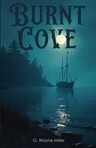
The reviews for Burnt Cove are coming in... and they are highly favorable! Preorders open now!!! https://lnkd.in/eP_uVpb6
 “G. Wayne Miller never disappoints. Burnt Cove is unlike anything I’ve ever read before. A moving exploration of love and loss, regret and redemption, determination in the face of mystery, bravery in the face of monstrosity. It’s a story of family ties, family secrets, and the messy, beautiful question of what makes a family in the first place. It has enough heart and emotion to last from this world to the next, and that’s a good thing, because if you’re like me, you’ll meet these people, fall in love, and never want to say goodbye.”- Paul F. Olson, author of Alexander’s Song and many other critically acclaimed books
“A beautifully written book with so much mysterious atmosphere that asks the question: is it better not to know family secrets? Quite possibly G. Wayne Miller’s best book.”- Mark Slade, Twisted Pulp and other popular publications and podcasts.
Acclaimed writer Barry Cronin, author most recently of The Potty Mouth Kids, "six strange and disturbing tales of the macabre." He writes:"From the creative mind of one of New England’s most talented storytellers, prolific author G. Wayne Miller serves up his latest literary treasure. Burnt Cove is the compelling story of a remarkable family; a riveting tale filled with captivating characters, enchanting dialogue, tragedy and triumph, and a story line overflowing with more unexpected twists and turns than a backwoods, New England country road! But be forewarned! Once you open onto that first page, you are going to find it near impossible to put down. But try not to read it too quickly! Burnt Cove is a tale meant to be savored! An eminently satisfying book from start to finish, Burnt Cove qualifies as a must read!"
Esteemed poet and author of Tales of the Sea, Cynthia Elder, writes: “Find yourself a comfortable chair because you won't want to leave it until you've finished G. Wayne Miller's new novel, Burnt Cove. Miller delivers a story within a story, an unexpected and twisted tale that plumbs the depths of his characters and the chambers where their secrets lie. Set in the iconic coastal towns of Maine, he pulls you in with local knowledge and period references that will make you laugh, cry and remember. Burnt Cove reveals our dark side without being maudlin and upends traditional notions of right and wrong with the flick of a pen. A fast-paced read that resonates long after the last page.”
The fifth blurb for Burnt Cove is in, from groundbreaking horror master P.J Verfall, author of Faceless and Canis Lupus Humanus, who writes: "A soft touch ghost story that asks the question, 'What if you could get more than just a chance to say goodbye'" Thanks so much, P.J!
Sixth review of Burnt Cove, from Angel R. Sánchez, author of The Real Monster and creator of The Mortal Coil series, masterpieces all. Thanks, Angel! “Set against the beautifully rendered backdrop of coastal Maine, G. Wayne Miller’s Burnt Cove is a moving reckoning with grief, identity, and the kind of loss that fractures families. Blending quiet family drama with light spiritual elements, the story carries a ghostly ache without ever turning into horror, and its sincere, deeply human core stays with you.”
Seventh review: "G. Wayne Miller’s newest, Burnt Cove, is one of the most engrossing novels I’ve read in years. A masterfully-crafted tale of family secrets, horrors, discoveries, strength, and love that will not die, filled with lessons we might not have known we were looking for but are honored to have been given. I can’t recommend it enough.” - Elizabeth Massie, author of Sineater, Welcome Back to the Night, Desper Hollow.
Eighth review: "The pages will turn and you will be mesmerized as you accompany the intrepid Jack White on his “project,” a chilling exploration of a distant past that confronts him and his loved ones in the present. Prepare for vivid scenes of romance, heartbreak, and heroism.” - Bryan Gruley, author of the award-winning Bitterfrost and Starvation Lake crime-fiction series.
Ninth review: "Wayne Miller’s Burnt Cove is a compulsively readable story about how the living complete the unfinished business of the dead. It’s a story of ghosts and artists and storytellers; of love and murder; of raging fires and the sparkling coastal waters of Maine. Burnt Cove follows one man, Jack White, as he digs ever-deeper into the past, in an effort to make sense of the world and his place in it. Along the way we witness one literal exhumation and countless other – figurative – exhumations of secrets, love affairs, and artistic masterpieces. In the book, Miller deftly interweaves the stories of memorable characters, and jumps across generations, to deliver a dazzling story of family, fate, and American life." -- Phil Eil, freelance journalist and author of Prescription for Pain: How a Once-Promising Doctor Became the “Pill Mill Killer.”
The reviews for Burnt Cove are coming in... and they are highly favorable! Thanks to everyone. The book will publish on April 24 in hardcover, trade paperback, e- and audio editions. For news of events, bulk orders, etc., email burntcovebook@gmail.com
“G. Wayne Miller never disappoints. Burnt Cove is unlike anything I’ve ever read before. A moving exploration of love and loss, regret and redemption, determination in the face of mystery, bravery in the face of monstrosity. It’s a story of family ties, family secrets, and the messy, beautiful question of what makes a family in the first place. It has enough heart and emotion to last from this world to the next, and that’s a good thing, because if you’re like me, you’ll meet these people, fall in love, and never want to say goodbye.”- Paul F. Olson, author of Alexander’s Song and many other critically acclaimed books“A beautifully written book with so much mysterious atmosphere that asks the question: is it better not to know family secrets? Quite possibly G. Wayne Miller’s best book.”- Mark Slade, Twisted Pulp and other popular publications and podcasts.
Acclaimed writer Barry Cronin, author most recently of The Potty Mouth Kids, "six strange and disturbing tales of the macabre." He writes:"From the creative mind of one of New England’s most talented storytellers, prolific author G. Wayne Miller serves up his latest literary treasure. Burnt Cove is the compelling story of a remarkable family; a riveting tale filled with captivating characters, enchanting dialogue, tragedy and triumph, and a story line overflowing with more unexpected twists and turns than a backwoods, New England country road! But be forewarned! Once you open onto that first page, you are going to find it near impossible to put down. But try not to read it too quickly! Burnt Cove is a tale meant to be savored! An eminently satisfying book from start to finish, Burnt Cove qualifies as a must read!"
Esteemed poet and author of Tales of the Sea, Cynthia Elder, writes: “Find yourself a comfortable chair because you won't want to leave it until you've finished G. Wayne Miller's new novel, Burnt Cove. Miller delivers a story within a story, an unexpected and twisted tale that plumbs the depths of his characters and the chambers where their secrets lie. Set in the iconic coastal towns of Maine, he pulls you in with local knowledge and period references that will make you laugh, cry and remember. Burnt Cove reveals our dark side without being maudlin and upends traditional notions of right and wrong with the flick of a pen. A fast-paced read that resonates long after the last page.”
The fifth blurb for Burnt Cove is in, from groundbreaking horror master P.J Verfall, author of Faceless and Canis Lupus Humanus, who writes: "A soft touch ghost story that asks the question, 'What if you could get more than just a chance to say goodbye'" Thanks so much, P.J!
Sixth review of Burnt Cove, from Angel R. Sánchez, author of The Real Monster and creator of The Mortal Coil series, masterpieces all. Thanks, Angel! “Set against the beautifully rendered backdrop of coastal Maine, G. Wayne Miller’s Burnt Cove is a moving reckoning with grief, identity, and the kind of loss that fractures families. Blending quiet family drama with light spiritual elements, the story carries a ghostly ache without ever turning into horror, and its sincere, deeply human core stays with you.”
Seventh review: "G. Wayne Miller’s newest, Burnt Cove, is one of the most engrossing novels I’ve read in years. A masterfully-crafted tale of family secrets, horrors, discoveries, strength, and love that will not die, filled with lessons we might not have known we were looking for but are honored to have been given. I can’t recommend it enough.” - Elizabeth Massie, author of Sineater, Welcome Back to the Night, Desper Hollow.
Eighth review: "The pages will turn and you will be mesmerized as you accompany the intrepid Jack White on his “project,” a chilling exploration of a distant past that confronts him and his loved ones in the present. Prepare for vivid scenes of romance, heartbreak, and heroism.” - Bryan Gruley, author of the award-winning Bitterfrost and Starvation Lake crime-fiction series.
Ninth review: "Wayne Miller’s Burnt Cove is a compulsively readable story about how the living complete the unfinished business of the dead. It’s a story of ghosts and artists and storytellers; of love and murder; of raging fires and the sparkling coastal waters of Maine. Burnt Cove follows one man, Jack White, as he digs ever-deeper into the past, in an effort to make sense of the world and his place in it. Along the way we witness one literal exhumation and countless other – figurative – exhumations of secrets, love affairs, and artistic masterpieces. In the book, Miller deftly interweaves the stories of memorable characters, and jumps across generations, to deliver a dazzling story of family, fate, and American life." -- Phil Eil, freelance journalist and author of Prescription for Pain: How a Once-Promising Doctor Became the “Pill Mill Killer.”
The reviews for Burnt Cove are coming in... and they are highly favorable! Thanks to everyone. The book will publish on April 24 in hardcover, trade paperback, e- and audio editions.
“G. Wayne Miller never disappoints. Burnt Cove is unlike anything I’ve ever read before. A moving exploration of love and loss, regret and redemption, determination in the face of mystery, bravery in the face of monstrosity. It’s a story of family ties, family secrets, and the messy, beautiful question of what makes a family in the first place. It has enough heart and emotion to last from this world to the next, and that’s a good thing, because if you’re like me, you’ll meet these people, fall in love, and never want to say goodbye.”- Paul F. Olson, author of Alexander’s Song and many other critically acclaimed books“A beautifully written book with so much mysterious atmosphere that asks the question: is it better not to know family secrets? Quite possibly G. Wayne Miller’s best book.”- Mark Slade, Twisted Pulp and other popular publications and podcasts.
Acclaimed writer Barry Cronin, author most recently of The Potty Mouth Kids, "six strange and disturbing tales of the macabre." He writes:"From the creative mind of one of New England’s most talented storytellers, prolific author G. Wayne Miller serves up his latest literary treasure. Burnt Cove is the compelling story of a remarkable family; a riveting tale filled with captivating characters, enchanting dialogue, tragedy and triumph, and a story line overflowing with more unexpected twists and turns than a backwoods, New England country road! But be forewarned! Once you open onto that first page, you are going to find it near impossible to put down. But try not to read it too quickly! Burnt Cove is a tale meant to be savored! An eminently satisfying book from start to finish, Burnt Cove qualifies as a must read!"
Esteemed poet and author of Tales of the Sea, Cynthia Elder, writes: “Find yourself a comfortable chair because you won't want to leave it until you've finished G. Wayne Miller's new novel, Burnt Cove. Miller delivers a story within a story, an unexpected and twisted tale that plumbs the depths of his characters and the chambers where their secrets lie. Set in the iconic coastal towns of Maine, he pulls you in with local knowledge and period references that will make you laugh, cry and remember. Burnt Cove reveals our dark side without being maudlin and upends traditional notions of right and wrong with the flick of a pen. A fast-paced read that resonates long after the last page.”
The fifth blurb for Burnt Cove is in, from groundbreaking horror master P.J Verfall, author of Faceless and Canis Lupus Humanus, who writes: "A soft touch ghost story that asks the question, 'What if you could get more than just a chance to say goodbye'" Thanks so much, P.J!
Sixth review of Burnt Cove, from Angel R. Sánchez, author of The Real Monster and creator of The Mortal Coil series, masterpieces all. Thanks, Angel! “Set against the beautifully rendered backdrop of coastal Maine, G. Wayne Miller’s Burnt Cove is a moving reckoning with grief, identity, and the kind of loss that fractures families. Blending quiet family drama with light spiritual elements, the story carries a ghostly ache without ever turning into horror, and its sincere, deeply human core stays with you.”
Seventh review: "G. Wayne Miller’s newest, Burnt Cove, is one of the most engrossing novels I’ve read in years. A masterfully-crafted tale of family secrets, horrors, discoveries, strength, and love that will not die, filled with lessons we might not have known we were looking for but are honored to have been given. I can’t recommend it enough.” - Elizabeth Massie, author of Sineater, Welcome Back to the Night, Desper Hollow.
Eighth review: "The pages will turn and you will be mesmerized as you accompany the intrepid Jack White on his “project,” a chilling exploration of a distant past that confronts him and his loved ones in the present. Prepare for vivid scenes of romance, heartbreak, and heroism.” - Bryan Gruley, author of the award-winning Bitterfrost and Starvation Lake crime-fiction series.
The reviews for Burnt Cove are coming in... and they are highly favorable! Thanks to everyone. The book will publish on April 24.
“G. Wayne Miller never disappoints. Burnt Cove is unlike anything I’ve ever read before. A moving exploration of love and loss, regret and redemption, determination in the face of mystery, bravery in the face of monstrosity. It’s a story of family ties, family secrets, and the messy, beautiful question of what makes a family in the first place. It has enough heart and emotion to last from this world to the next, and that’s a good thing, because if you’re like me, you’ll meet these people, fall in love, and never want to say goodbye.”- Paul F. Olson, author of Alexander’s Song and many other critically acclaimed books“A beautifully written book with so much mysterious atmosphere that asks the question: is it better not to know family secrets? Quite possibly G. Wayne Miller’s best book.”- Mark Slade, Twisted Pulp and other popular publications and podcasts.