
Aperture's Blog
April 18, 2026
Sophia Wilson Just Wants to Have Fun
At just twenty-five, Sophia Wilson has already been a professional photographer for more than a decade. Inspired by the rise of Instagram, Wilson first started taking pictures on her iPhone when she was thirteen. She also saw photography as a way to make friends. As an adolescent, she attended a private school on Manhattan’s Upper East Side, where she was one of the few Black students—and one of the few who lived downtown and was interested in art. “I took things into my own hands, and I just started taking photos of my sister and my people,” she explains. Her influences were—and remain—Tumblr archives, David LaChapelle, Ellen von Unwerth, Yoko Ono, Andy Warhol, Jean-Michel Basquiat, and Petra Collins, the latter of whom was once her next-door neighbor in Union Square.
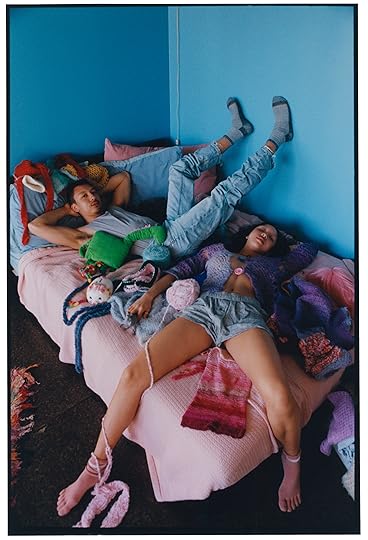 Sophia Wilson, Talya & Tyler, 2023, from the series Lovers & Friends
 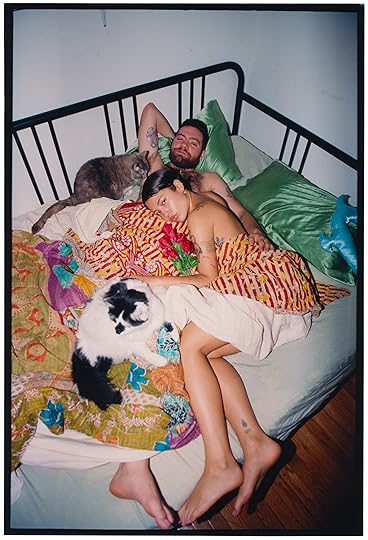 Sophia Wilson, Cam & Pat, 2023, from the series Lovers & Friends
 “I’m just trying to have fun,” Wilson says. Her work, drenched in color, joy, and maximalism, has an approachability and intimacy created in part by her penchant for shooting analog. A film camera often requires its operator to get closer to get the image they want, but in her work, the closeness, the sweetness, is genuine, earned, and doesn’t feel manufactured: It’s the photographic equivalent of agave syrup, not saccharine. Through her lens, friends perch on fire escapes sipping coffee in tiaras, cuddle pink teddy bears in knee-high socks, and share tattoos and kisses, often with New York itself as a backdrop. This style appears in her series Lovers & Friends (2023), completed with her friend Izzy El Nems, which features native New Yorkers photographed in their homes and bedrooms as they face the growing pressures of gentrification. “I’m trying to make people really feel something and celebrate and enjoy it and see themselves in the work,” she says. She takes this intention into her work with her client list, which has included brands like Nike, Google, and Gap, as well as magazines like Vogue and Parade.
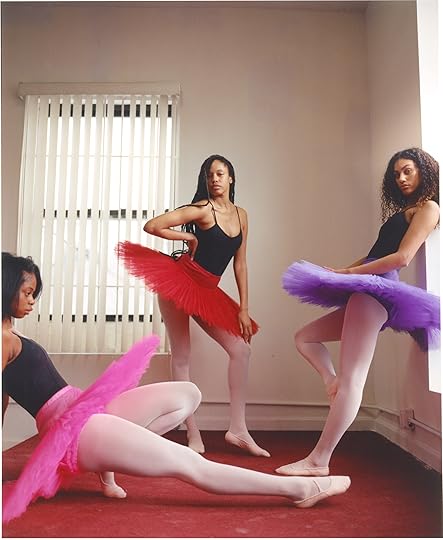 Sophia Wilson, Personal, 2022
 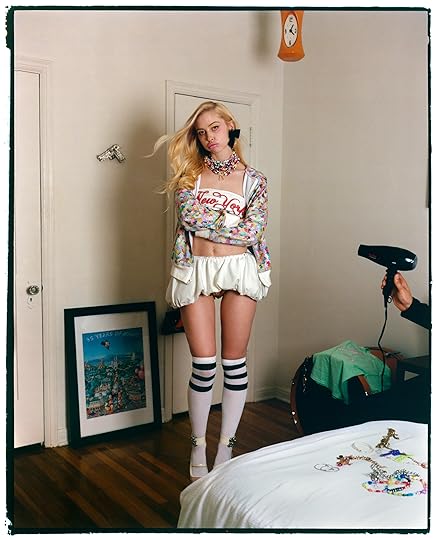 Sophia Wilson, Chloe Cherry, 2025
 Wilson got her start by cold-pitching her images to hundreds of publications. She was still only a teenager, but those cold emails quickly caught the eye of Elizabeth Renstrom, then the photo editor at Vice, and Kim Hastreiter at Paper magazine. VFiles followed while she worked around her school schedule, so she’d get out at noon to photograph people like Rick Ross, Khloé Kardashian, and Teyana Taylor. It just kept snowballing from there, though Wilson’s family wanted her to attend college. Already shooting high-profile Nike campaigns, she went to college anyway but continued to travel for work—much to the university’s chagrin. Wilson eventually dropped out to continue with the career she had built, which included a brief stint as a subject of The Come Up, a reality show about twentysomething New Yorkers building creative lives.
Wilson’s aesthetic, unapologetically girly and vibrant, stems from her youth in New York. It’s in part deeply inspired by her relationship to the city in the early 2000s, when she says downtown felt like a bubbling, colorful neighborhood, filled with local businesses where people knew your name. It wasn’t what it is now, dotted with corporate retailers usually found in suburban malls. “I think that it made me definitely drawn to color and drawn to maximalism, which has seeped its way into my work,” she says. “My photos are so jam packed with everything that’s going on in my brain, and I think that that is because of growing up in Union Square.”
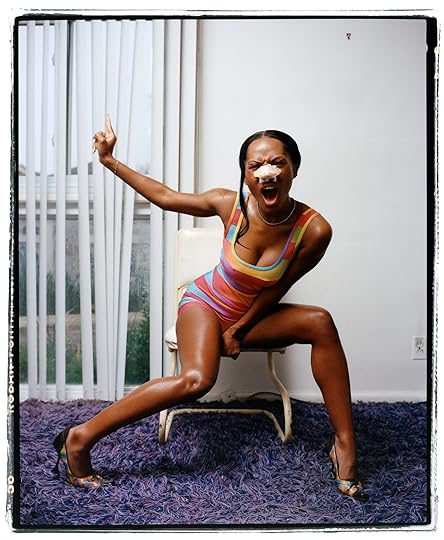 Sophia Wilson, Quen Blackwell, 2024, from the series #GRWM
 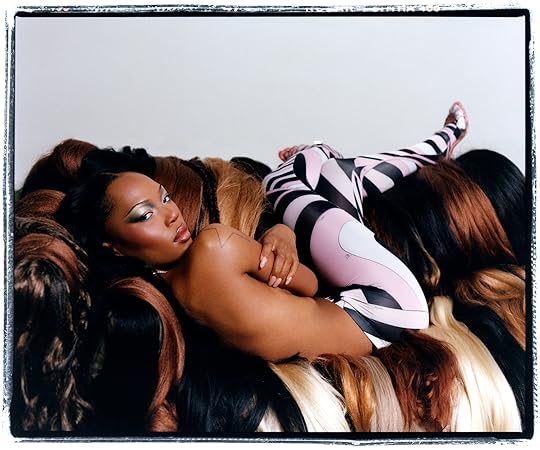 Sophia Wilson, Quen Blackwell, 2024, from the series #GRWM
 Her aesthetic development was also a response to what she thought girlhood had to look like as a young person—the preppiness of the J.Crew attire and boat shoes she saw at school. Raised on the eclecticism of downtown, she pivoted in the opposite direction, becoming an “extreme tomboy,” she says. It’s only now that she feels she’s been able to embrace her femininity, and this appears in her work as well. Wilson’s next major personal project will be a book coming out later this year entitled #GRWM, an acronym for “get ready with me” used on TikTok. It will explore femininity and feature Black women at its core. With Wilson’s signature palette and joyful vision, it will also incorporate the self-awareness, the humor, attached to the beauty processes women put themselves through.
“I feel like I didn’t have the opportunity to enjoy being a girl growing up,” she says. “Now that I’ve found a way to experience it, it’s still me. It feels so powerful to me, and it feels like I’m finally finding myself.” She thinks most of her work is about femininity now, whether it’s in the colors—where purples, pinks, and aquas abound—the styling, or the settings, like bedrooms and bathrooms, the places where girls become.
In this vein, it’s also important to Wilson to center Black women in her work. She didn’t see nearly enough representation as a young person, which harmed her self-esteem, she says, and she hopes to create for young Black women an opportunity to see themselves. “I want to do it with my own lens, photographing girls that look like me or that remind me of myself, photographing people that are eclectic and that don’t necessarily fit in, but they’re not trying to fit in,” she says. “I really don’t take that responsibility lightly.”
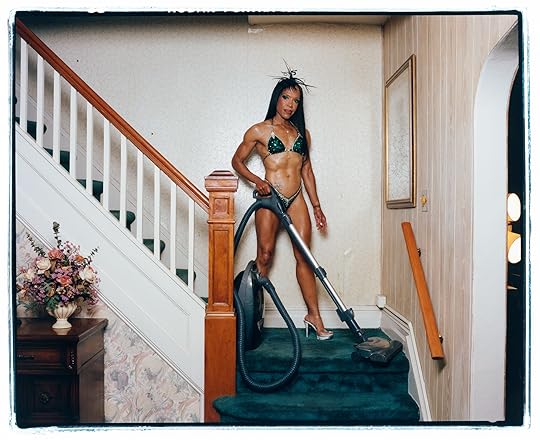 Sophia Wilson, from the series Black Female Bodybuilders, 2024
 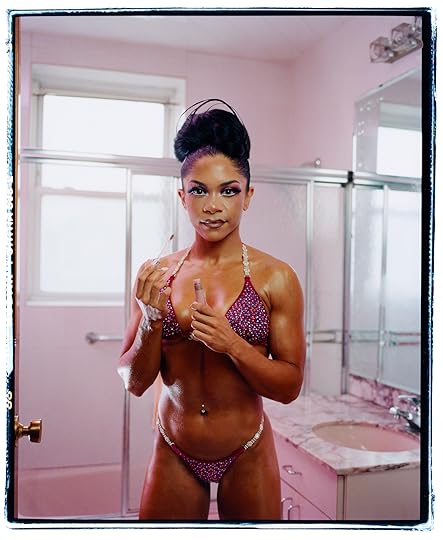 Sophia Wilson, from the series Black Female Bodybuilders, 2024
 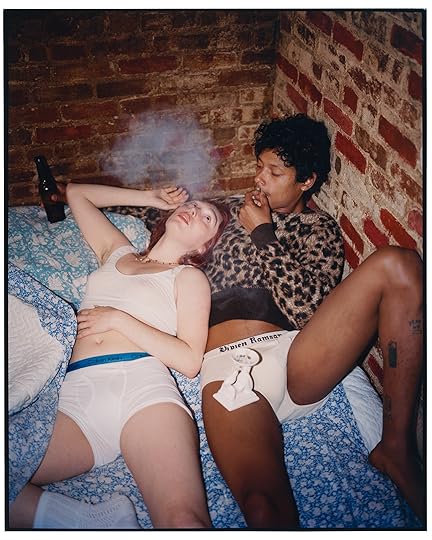 Sophia Wilson, Lula & Michael, from the series Lovers & Friends
 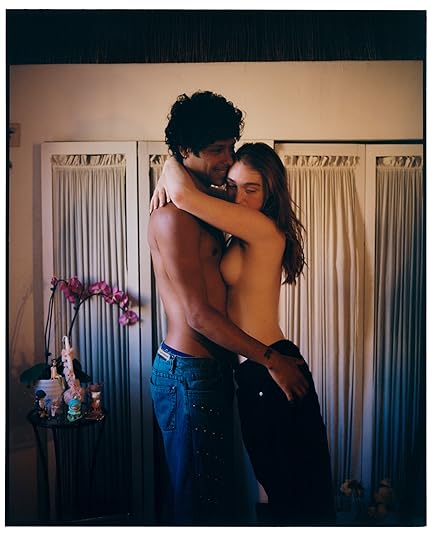 Sophia Wilson, Lula & Michael, from the series Lovers & Friends
 Advertisement
googletag.cmd.push(function () {
googletag.display('div-gpt-ad-1343857479665-0');
});
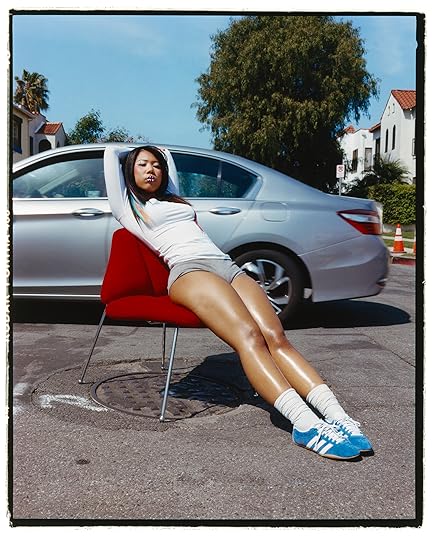 Sophia Wilson, Sukiibaby, 2025
 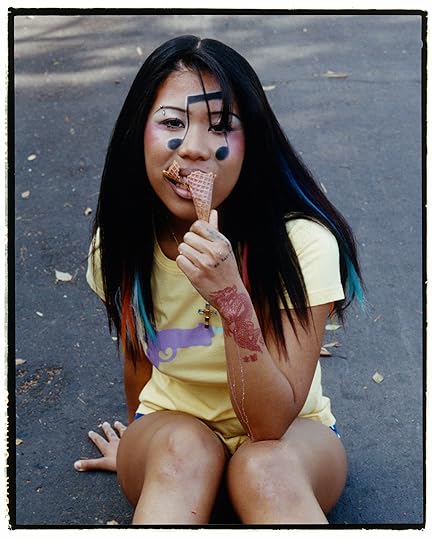 Sophia Wilson, Sukiibaby, 2025
 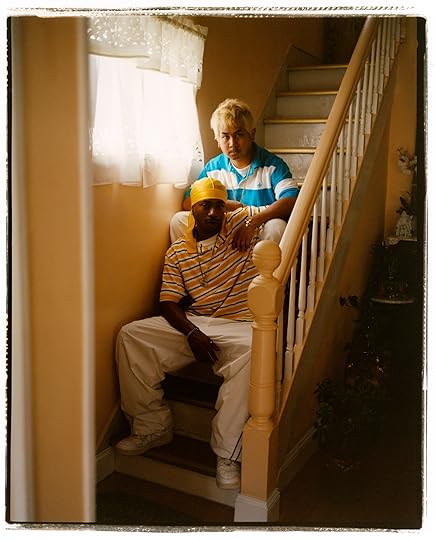 Sophia Wilson, Angel & Armani, 2025
 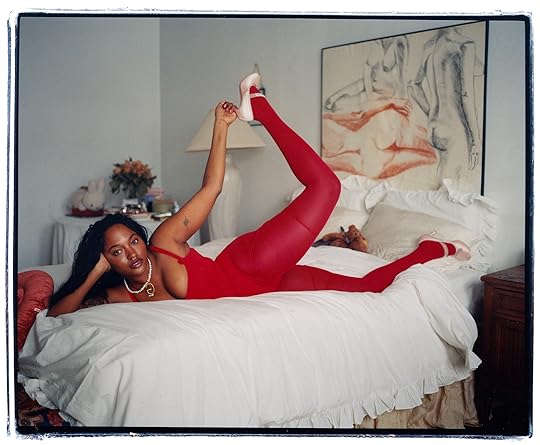 Sophia Wilson, Gabby Richardson at home, 2025
 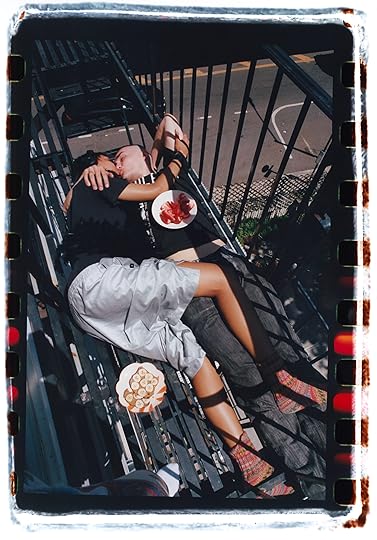 Sophia Wilson, Amy & Jules, 2023, from the series Lovers & Friends
All photographs courtesy the artist
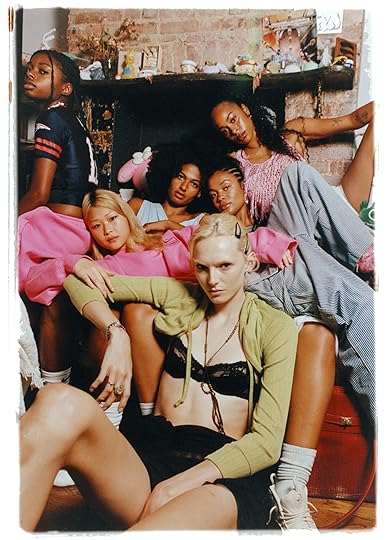 Sophia Wilson, Sasha, Jess, Toshi, Alex, Nya & Faith, 2024, from the series Lovers & Friends
 Read more from our series “Introducing,” which highlights exciting new voices in photography.


An Energetic Festival of Young European Photographers
In 2011, the French photography collective Fetart organized the first festival of emerging European photography with a celebratory do-it-yourself ethos in a park on the outskirts of Paris. Since then, the festival, Circulation(s), has held on to its proud outsider identity as its profile has risen and the organization has grown in size and professionalism. For the past decade, it’s popped up every springtime in the Centquatre multidisciplinary arts center, located in northeast Paris in the historically working-class La Villette district. The sixteenth edition opened in March, occupying over twenty thousand square feet of exhibition space in the glass-ceilinged industrial hall—an open-access dance practice space where salsa duos, breakdancers, and circus performers coexist with the art on view. The festival has a similarly outgoing energy, attracting a wide range of visitors from beyond the photography world.
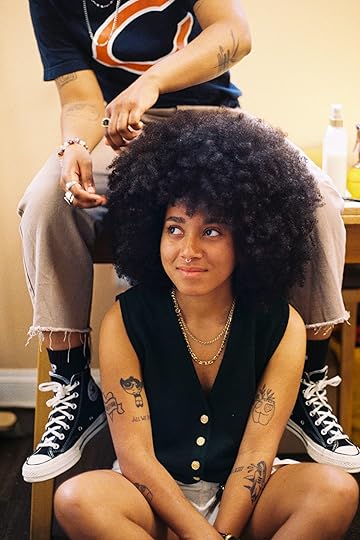 Ellen Blair, Homemade Undercuts, 2024
 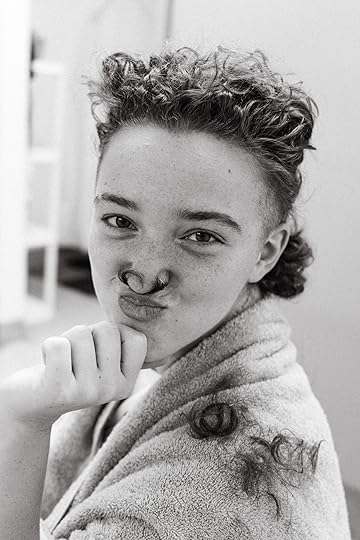 Ellen Blair, Homemade Undercuts, 2024
 This year’s Circulation(s) is directed by Caroline Benichou, Carine Dolek, Laetitia Guillemin, Marie Guillemin, Emmanuelle Halkin, Ioana Mello, and Lucille Vivier-Calicat, an all-women collective of photography curators. They prefer to forgo a unifying theme and instead look out for common threads among the eight hundred or so projects submitted to their open call. Participation is limited to photographers who have roots in Europe—or at least reside in the elastically defined continent—but their subjects can be further afield, such as in Brazil, Argentina, and Iran, which come into sharp focus at this year’s festival. Issues of identity, belonging, political upheaval, and memory arise often, as do experiments in new, hybrid forms of image-making. “When we come across a certain style, or a particular new visual language, it can occasionally feel a bit unsettling,” the curator Emmanuelle Halkin says. “But if several works are exploring it, we often think it’s worth showing.”
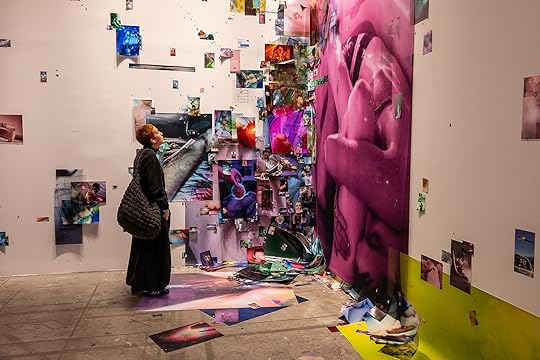 Installation views of Circulation(s), Paris, 2026
Photographs by Marie Froger
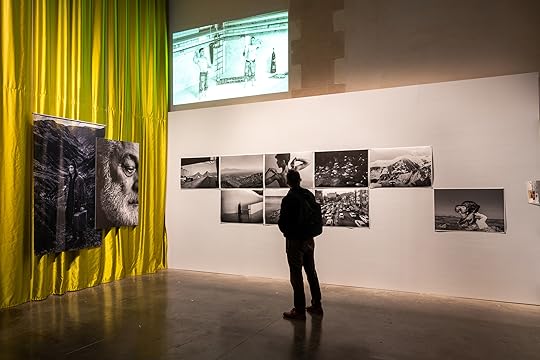
This spring, the festival brings together twenty-four idiosyncratic projects from artists early in their careers. Inside the chartreuse-green exhibition cubes near the entrance, photographs are largely outnumbered. Besides video, the other work on display skews toward craft, including a number of overpainted traditional Polish earthenware dishes and abstract beaded textile hangings that sway and shimmer in the dark. In a room highlighting Ireland, a pop-up hair salon has materialized in front of Ellen Blair’s work—a lyrical series on DIY haircuts in Belfast’s queer community. The ambitious, often eye-catching installations throughout the show reinforce the notion that this is a generation of artists intent on untethering art from the phone screen and yet alert as ever to what looks good on it.
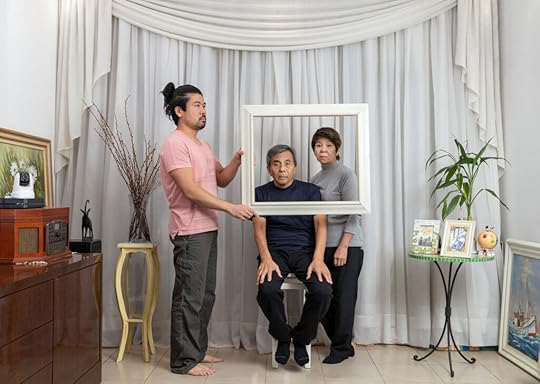 Ricardo Tokugawa, Utaki, 2023
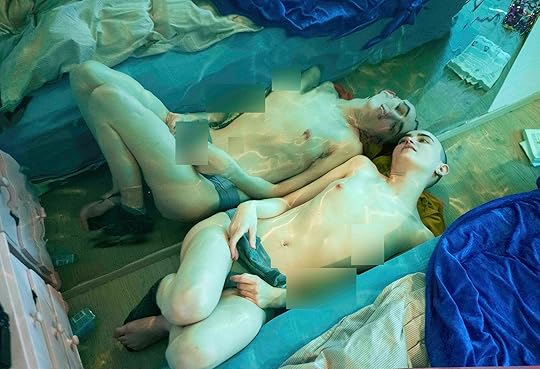 Sadie Cook and Jo Pawlowska, Everything I Want to Tell You, 2024–ongoing
One standout is the Reykjavik-based duo of North Carolina-born artist Sadie Cook and Polish artist Jo Pawlowska’s ongoing project Everything I Want to Tell You. The result of a yearslong weekly practice exploring class, gender, sexuality, and illness, the hypnotic work conceals and fragments as much as it confesses. A dizzying installation of about six thousand images in a space not much larger than a parking spot, it tugs viewers into the rip current of private anxieties and fantasies that overwhelm the artists’ minds just before falling asleep. Entwined limbs and eerie liquids glow with electric colors that give everything a digitally corrupted feel. Poster-scale prints drag on the cement floor beneath self-portraits mixed in with medical records and distorted screenshots stapled roughly to the wall while translucent images hang so high above they can barely be seen. If you don’t watch your step, you might scatter loose confetti-sized photographs of who-knows-what littering the ground.
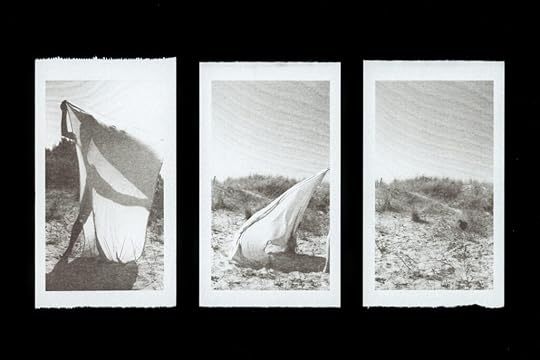 Konstantin Zhukov, Black Carnation Part Three #22–24, 2024–26
In some of the most intriguing works on view, photography is a starting point for connections of another kind. In Black Carnation Part Three (2024–26), Konstantin Zhukov constructs an imagined narrative of Soviet-era queer beaches in his home country of Latvia. “Queer history is a relatively new subject in Latvian academia, being written as we speak,” says Zhukov, who drew inspiration from the mid-century diary entries of a local closeted gay man. He prints his diffuse, gray-toned images of erotic encounters on disposable surfaces like newsprint or receipts. Making art with the kind of thermal printers that generate flimsy restaurant bills, Zhukov points at the contradictions he sees in these moments, at once transactional and infused with the warmth of human touch.
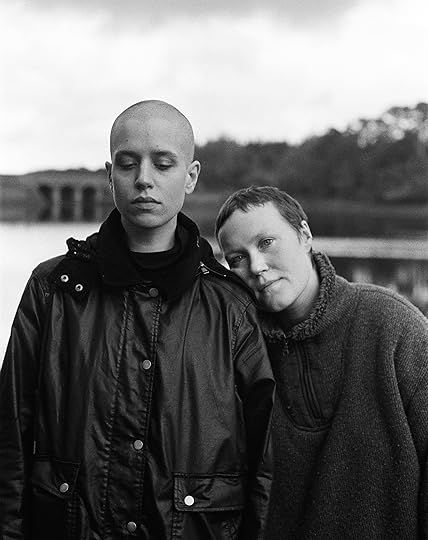 Donal Talbot, Becoming, 2025
 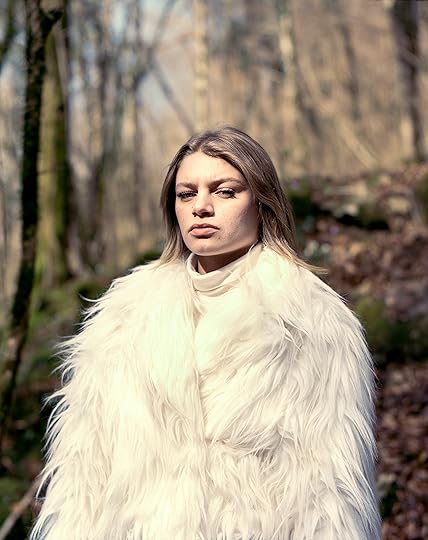 Davide Degano, Do-li-na, 2023–ongoing
 For the Paris-based photographer Marine Billet, the camera functions as a way to get to know a group of girls in their late teens, whose tender, meandering voice notes play through headphones beside her photo and video series Reliées (2025). Billet, who is thirty-four, thinks of the project as being like time traveling. “I wondered what it would have been like to have been born when they were,” she says. In painterly, medium-format tableaux, she captures the teenagers in a stylized mode between fashion choreography and their natural way of being, as they crowd together in a cramped bedroom or gaze into their phones around the dinner table.
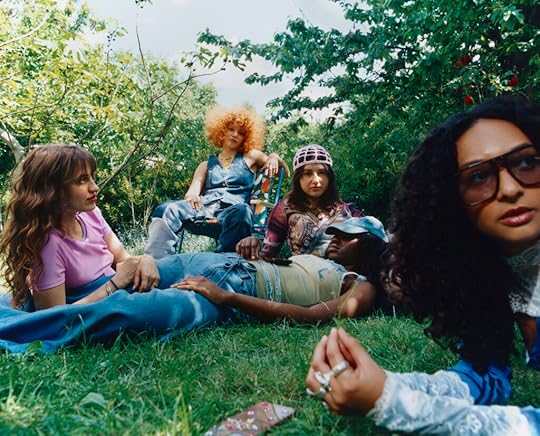 Marine Billet, Reliées, 2025
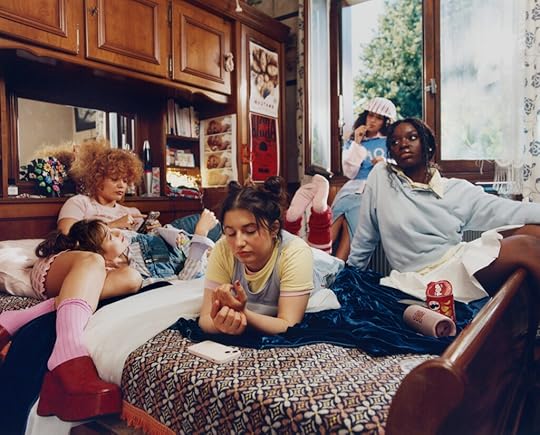 Marine Billet, Reliées, 2025
The stars of Reliées came to the opening weekend of the festival—and took pictures in front of their portraits—as did about three thousand other visitors who attended not only the exhibition but also an array of live performances and readings, all free and open to the public. Throughout the day, people were doing and making, whether in the form of haircuts and temporary tattoos of photographs on view or studio portrait sessions organized by local photographers. The rapper T2i, who had collaborated on a project with artist NouN about a mythical mermaidlike figure from Guyana, gave a lively performance. Visitors followed along on a large screen as the Swiss artist Nathalie Bissig drew in red gouache atop her wry, raw, and sometimes ghoulish images depicting the folk traditions of the Canton of Uri. There were no quiet corners with photobooks for sale. You could only purchase the festival catalogue, which was slimmer this year due to a decline in sponsors. But the curators and the large team of volunteers remain as committed as ever to this communal, militantly inclusive, and often freewheeling endeavor. As one artist told Halkin recently, any other venue might let him “hang photographs in a straight line,” but only Circulation(s) would help him take risks in front of a real audience.
Circulation(s): European Young Photography Festival is on view in Paris through May 17, 2026.
April 9, 2026
11 Exhibitions to See This Spring
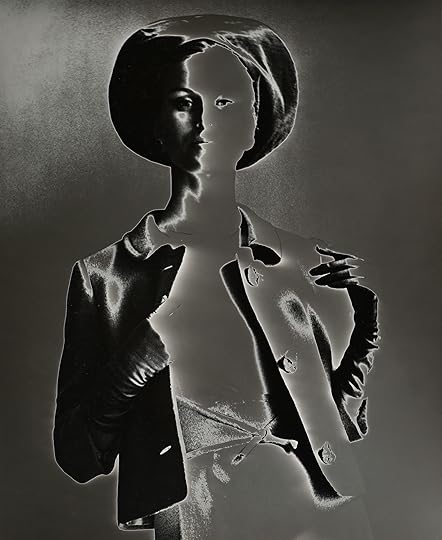 Lillian Bassman, Solarized fashion study, ca. 1960
© Estate of Lillian Bassman
Lillian Bassman — New York
Lillian Bassman: Bazaar and Beyond provides an expansive view of a woman who challenged the status quo in fashion photography between the 1940s and the 1960s. Bassman was an American fashion photographer acclaimed for her illustrious tenure at Harper’s Bazaar, where she promoted the careers of Richard Avedon, Robert Frank, and Paul Himmel. This show traces Bassman’s trajectory from design apprentice to art director turned photographer, featuring her hallmark high-contrast black-and-white images of society women, actresses, and models. Rare vintage prints, layout designs, and darkroom experiments highlight Bassman’s signature abstract aesthetic through gestures and silhouettes that complemented the ultrafeminine style of midcentury glamour. Bassman’s contribution to the genre, she once said, “has been to photograph fashion with a woman’s eye for a woman’s intimate feelings.”
Lillian Bassman: Bazaar and Beyond at the Metropolitan Museum of Art, New York, through July 26, 2026
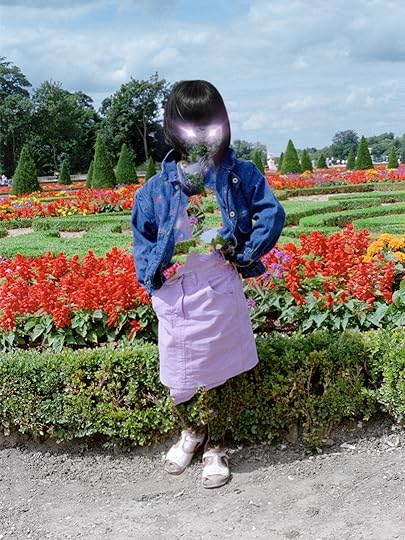 Nhu Xuan Hua, Little Super in Versailles – Archive from the year ’88, 2026. Commissioned by Autograph, London
© the artist
Nhu Xuan Hua — London
Nhu Xuan Hua has presented solo shows of startlingly imaginative, at times surreal portraiture at Huis Marseille in Amsterdam and Les Rencontres d’Arles, the photo festival in Southern France. She has also worked in the fashion industry, for brands such as Dior and Margiela. Hua’s latest project, Of Walking on Fire, takes place at Autograph in London, where she probes the limits of communication and memory. Hua’s parents immigrated to France following the war in Vietnam, and the photographer often seeks to reconcile gaps in family history with the rhythms of her own life in Paris by restaging scenes drawn from archival images. Faces and identities are sometimes obscured by garments, flashes of light, or digital manipulation. The body, Hua’s work implies, seems always to exist between eras and places, and through that mélange, a new personality might arise.
Nhu Xuan Hua: Of Walking on Fire at Autograph, London, April 16–September 19, 2026
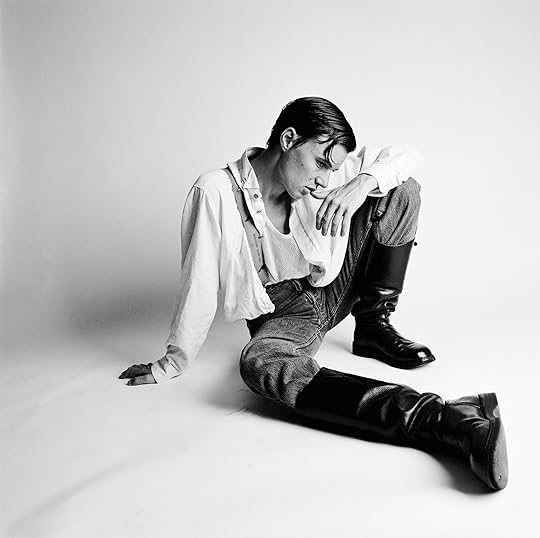 Catherine Opie, Angela (boots), 1992
© the artist
Catherine Opie — London
Catherine Opie rose to eminence in the 1990s as the court portraitist to Los Angeles’s leather-dyke scene during the height of the culture wars. Since then, she has continued to photograph her queer circle of friends and intimates while documenting other subcultures: surfers, protestors, football players, ice fishermen, Boy Scouts. Opie’s first retrospective in the United Kingdom explores this expansive, conceptually charged body of portraiture and how it makes visible the countenance of American democracy itself.
Catherine Opie: To Be Seen at the National Portrait Gallery, London, through May 31, 2026
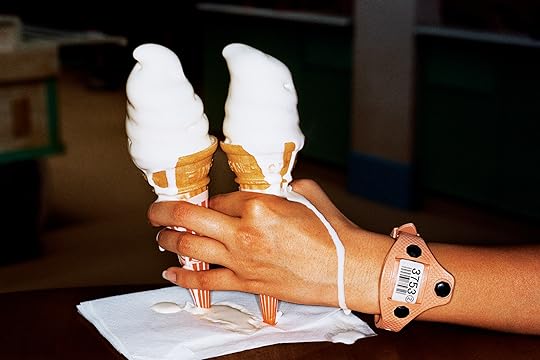 Martin Parr, Tokyo, Japan, 1998
© the artist/Magnum Photos
Martin Parr — Paris
“I respect what you’re doing, but I think you’re from a different planet,” Henri Cartier-Bresson once told Martin Parr. With his lurid flash and ultrasaturated palette, the British photographer might seem like an emissary from outer space, sent to give earthlings a surreal reality check. A current exhibition in Paris frames his work against the backdrop of climate change—a ripe theme for Parr, whose tragicomic pictures, far from shallow satire, have always spoken deeply to how we want to see the world.
Martin Parr: Global Warning at Jeu de Paume, Paris, through May 24, 2026
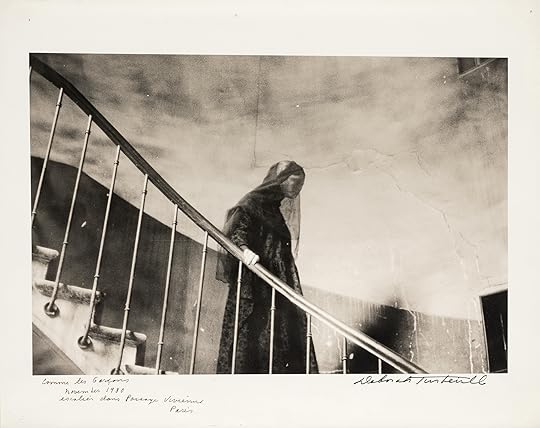 Deborah Turbeville, Comme des Garçons, Escalier dans Passage Vivienne, Paris, France, November 1980, from the series Comme des Garçons
© the artist/MUUS Collection
Deborah Turbeville — Sweden
Alongside Guy Bourdin and Helmut Newton, Deborah Turbeville brought an edgy theatricality to fashion photography beginning in the 1970s. She rejected the glossy sex appeal that motivated commercial photoshoots by xeroxing, cutting, blurring, scratching, and pinning prints together to conjure otherworldly narratives. This exhibition concentrates on Turbeville’s personal experiments with photo collage, a means through which she heightened the distinct air of unreality that distinguishes her work, in which the forces of fashion and fiction coalesce.
Deborah Turbeville: Photocollage at Moderna Museet, Malmö, May 2–September 27, 2026
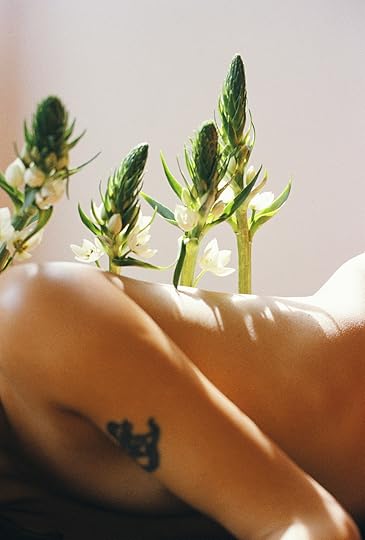 No.223, Skin in Bud, 2023
Courtesy the artist
Lin Zhipeng (No.223) — Shanghai
The photographer Lin Zhipeng, known as No.223, traces the hidden dialogues between desire, physicality, and the everyday. At Fotografiska in Shanghai, a new exhibition, drawn from over one hundred photographs spanning twenty years, portrays No.223’s artistic practice of documenting intimate moments between friends and lovers, sensual still lives of fruits and flowers, or city corners and natural landscapes. No.223’s images pulse with a poetic, almost electric energy: flowers seemingly bloom from the curve of a figure’s back; a knife pierces through a sliced lemon and pomegranate stacked on one another. In photographing these clandestine moments, No.223 questions how desire can become a subversive element of daily life.
Under the Sunlight, There is No True Intimacy at Fotografiska, Shanghai, through June 14, 2026
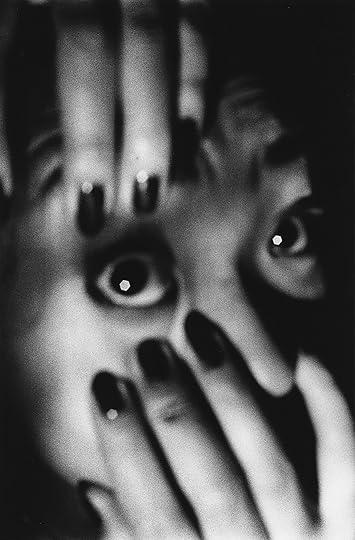
Kyotographie 2026 — Kyoto
“I don’t know if individual photographs contain ideas, worlds, history, humanity, beauty, ugliness or nothing at all,” the Provoke-era legend Daido Moriyama observed in 1973. A large survey of his work at the Kyocera Museum of Art, covering almost sixty years of output, will test this observation while anchoring this year’s edition of Kyotographie, the photography festival in Kyoto. Kyotographie, however, maintains a decidedly international point of view. A spotlight on South Africa will feature three generations of image makers—Ernest Cole, Pieter Hugo, and Lebohang Kganye—revealing the ongoing work of writing a history of place. Exhibitions by resident-artist Thandiwe Muriu, from Kenya, and Fatma Hassona, a Palestinian photographer-activist killed in Gaza in April 2025, echo Moriyama’s notion of photography’s openness and contradictions, simultaneously containing beauty and ugliness.
Kyotographie 2026 at various locations in Kyoto, Japan, April 18–May 17, 2026
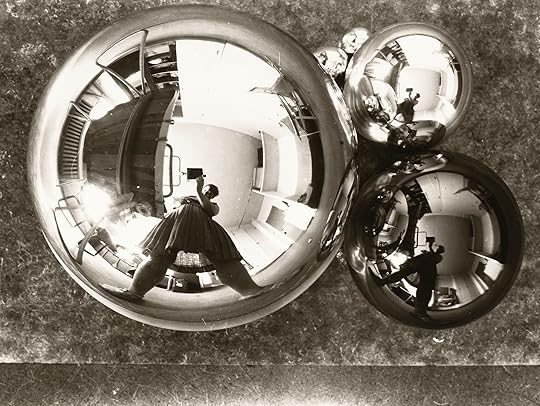 Marianne Brandt, Self-portrait in the studio at the Bauhaus Dessau, reflected in spheres, 1928–29
© VG Bild-Kunst, Bonn
Women Photographers of the Bauhaus — Berlin
The Bauhaus was well schooled in contradiction—it was a place torn between craftsmanship and industry, emotion and function, the collective and the individual. Much recent scholarship has focused on the patriarchal structures of this supposedly utopian haven, which allowed women to study art but often confined them to categories such as weaving and costume. Yet, as this exhibition proposes, photography became an accessible and profound medium for the Bauhaus’s female students, among them Gertrud Arndt, Marianne Brandt, Grit Kallin-Fischer, and Lucia Moholy. These artists were central to shaping the Bauhaus’s New Vision, a movement that sought to reflect Weimar reality with experimental methods.
New Woman, New Vision: Women Photographers of the Bauhaus at Bauhaus Archiv, April 17–October 4, 2026
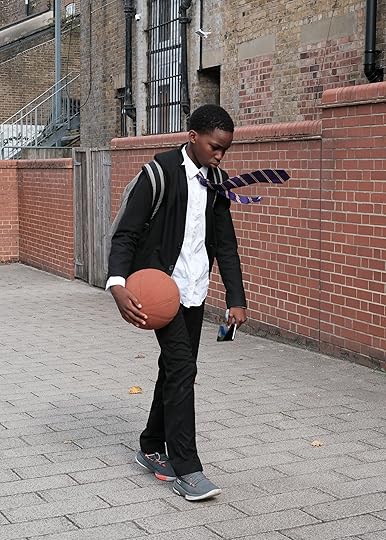 Johny Pitts, Tunmise, 2021
© the artist
Johny Pitts — Paris
For the last twenty years, the writer, filmmaker, and photographer Johny Pitts has embarked on a large-scale body of work centered on the African diaspora in Europe and beyond. Photographing across London, Lisbon, Brussels, and Berlin, he has documented moments of daily life with the idea, as he says, that “being black in Europe didn’t necessarily mean being an immigrant.” (Musically-inclined viewers may recognize his work as having recently graced the cover of the Blood Orange album Essex Honey.) His exhibition Black Bricolage assembles photographic archives, ephemera, and personal testimony to create a layered, constellatory experience: a nuanced representation of what Pitts calls Afropean identity, “whole and unhyphenated.”
Johny Pitts: Black Bricolage at La Maison Européenne de la Photographie, Paris, through May 24, 2026
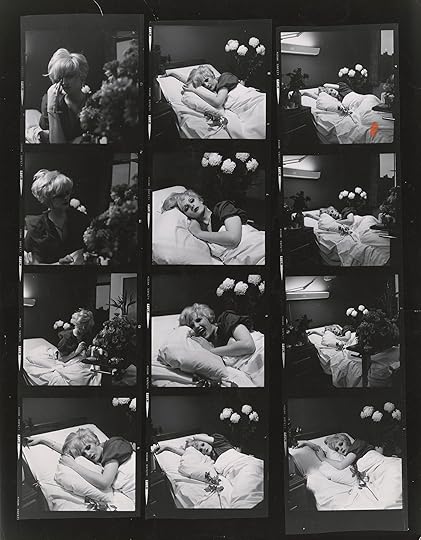 Peter Hujar, Candy Darling in room 1423, Cabrini Health Care Center, 1973
Courtesy Fraenkel Gallery, San Francisco and Ortuzar, New York and © The Peter Hujar Archive/Artists Rights Society (ARS)
Peter Hujar — New York
Whether photographing the fixtures of Manhattan’s queer counterculture or the catacombs of Palermo, Peter Hujar approached his subjects with genuine curiosity and preternatural clarity. Nearly forty years after his death, in 1987, from AIDS-related pneumonia, Hujar is the subject of a biography by frieze editor Andrew Durbin, an Ira Sachs film starring Ben Whishaw, and exhibitions in Venice and London. This season, the Morgan Library in New York presents Hujar:Contact, a follow-up to the museum’s celebrated 2018 Hujar show Speed of Life, which considers the artist’s process through his contact sheets and editing notes. Gifted with an ability to make his subjects pose at ease, Hujar also displayed virtuosic control in the darkroom—burning, dodging, bleaching, and spotting to refine the presence and meaning of an image. Hujar:Contact offers the rare occasion to observe a singular photographic mind at work.
Hujar:Contact at the Morgan Library & Museum, New York, May 22–October 25, 2026
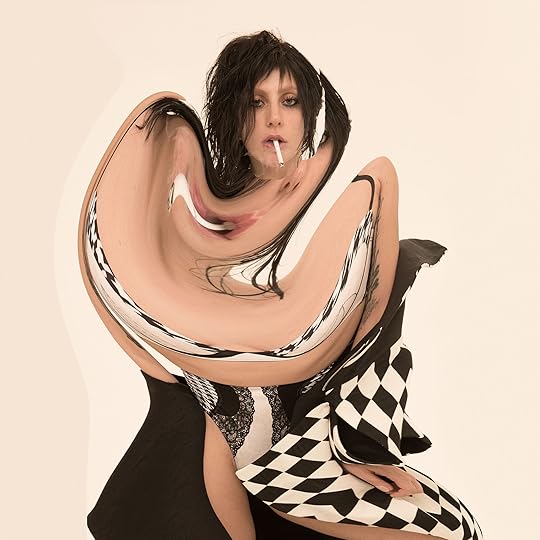 Inez & Vinoodh, Lady Gaga / Mel Ramos, 2015
Courtesy the artists
Inez and Vinoodh — The Hague
In the world of fashion photography, few names are as inescapable—and inseparable—as Inez and Vinoodh. Since emerging in the 1990s with slick, digital images that offered an audacious alternative to the era’s heroin chic, the Dutch-born husband-and-wife team have continued to explore what makes us human, often pairing nuanced gestures with extremes of editing. Celebrating their forty years of collaboration, this survey traces the theme of love across eighteen galleries, offering a sustained look at the intimate dynamics of power coupledom.
Can Love Be a Photograph at Kunstmuseum Den Haag, The Hague, through September 6, 2026
Wolfgang Tillmans on the Freedom of Fire Island
Since the late 1980s, Wolfgang Tillmans has been an influential cultural force. His photography documents subcultures, nature, intimate scenes, and broader sociopolitical themes. He approaches the ordinary and extraordinary with the same observational and matter-of-fact disposition, blending a quiet intensity with a democratic view of his subjects. Midcareer retrospectives of his work have been presented as large-scale, immersive, site-specific installations at Tate Modern (Wolfgang Tillmans: 2017, 2017), the Museum of Modern Art (To Look Without Fear, 2022–23), and Centre Pompidou (Nothing could have prepared us – Everything could have prepared us, 2025).
Tillmans had only visited Fire Island once, in the mid-1990s, until the summer of 2015, when a last-minute trip to the Pines made at a friend’s invitation unexpectedly opened a new chapter in his life and artistic practice. In this interview, conducted at Tillmans’s home on Fire Island for the book Fire Island Art: 100 Years (2026), the artist reflects on how his decade as a member of this community has impacted him, renewing his interest in making music and deepening his engagement with nature.
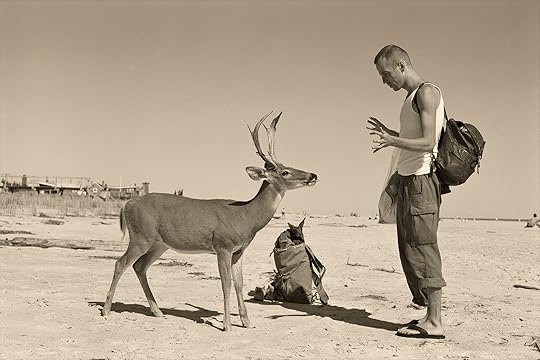 Wolfgang Tillmans, Deer Hirsch, 1995
Michael Bullock: The first image I ever saw of Fire Island, before I knew what it was, and before I knew who you were, was your famous picture of a man and a deer on the beach (Deer Hirsch, 1995). I first saw it in the early 2000s, and it burned into my memory. It looked like another world. If you have never been here, it’s not easy to understand.
Wolfgang Tillmans: The photo has a mysterious yet universal quality because it could be almost anywhere on Earth. There are very few markers. But if you know Cherry Grove, it’s difficult not to say that it is Cherry Grove. There’s no other place I know where deer live on the beach. So the image is a bit fantastical and yet so realistic. That was a special moment in my photographic image-making. In the mid-1990s, there was this quest for a newfound authenticity in photography. The man in the picture, Jochen Klein, was my boyfriend at that time. I was very much inspired by the multitudes that our identities were constructed from. We grew up in the ’80s, and we were the first generation that fully grew up in postmodernism. What we were experiencing in our formative years was the puzzling together of cultural components from different eras and decades, reconfiguring our identities without needing to be pure or original.
Bullock: Authenticity wasn’t the goal in the ’80s?
Tillmans: It wasn’t. And then in the ’90s, I became known for this new authenticity, which people were longing for. There was this desire for singular readings. And so there was this purity bestowed onto me, which I actually rejected. Even though I wanted a new sincerity, a new realism, it didn’t mean that I rejected this idea of multiplicity—that you can, on the one hand, be into drag, and on the other, enjoy going to an S&M club. You’re never read in just one way.
The way we experienced our lives was always as this composite of things that seemed staged but were actually happening, and other things that were staged but looked very real. The well-known photos of Alex and Lutz in the tree were completely staged scenarios that looked real, but they were seen then as documentary. Deer Hirsch looks completely staged—people have asked, “Is it a stuffed deer?”—but it was actually a documentary moment. There was nothing arranged for it at all. It was just Jochen and I taking a walk on the beach. We’d fed all our food to the deer. Jochen was showing his empty hands to the deer. I saw it and said, “Stop, don’t move.” I stopped time for a couple of seconds, took the photograph, and then we carried on with our leisurely afternoon.
I love how the photo looks highly stylized, but it was just a moment from real life that I was able to catch. It serves as a counterpoint to the fantasy naturalness of Lutz & Alex sitting in the trees (1992), which is also an encounter between man and nature. Here is Jochen, a man encountering the animal kingdom, attempting to communicate with its creatures.
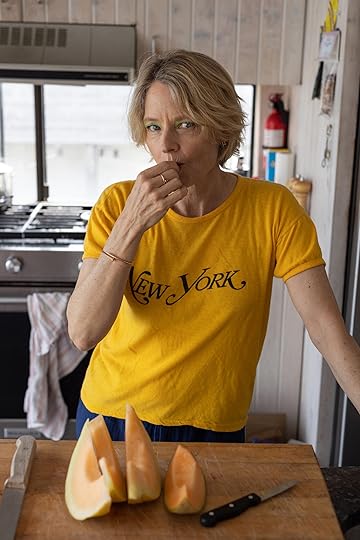 Wolfgang Tillmans, Jodie in my kitchen, 2023
 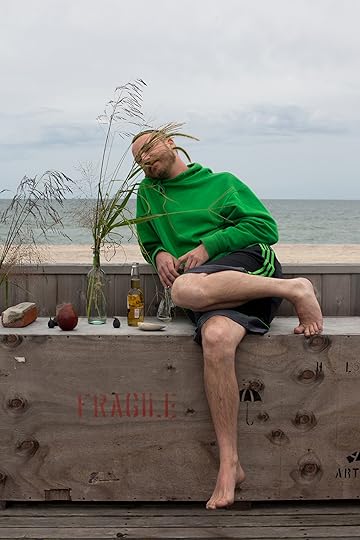 Wolfgang Tillmans, Anders, Ocean Walk, 2017
 Bullock: Was that your first trip to Fire Island?
Tillmans: It was almost my one and only. In that period, Jochen and I both lived in New York. We went for a couple of nights and stayed at the Cherry Grove Hotel. It was nice, but we didn’t feel like it was this magical place, the way I think of it now. We moved back to Europe in ’96, and I didn’t come back for twenty years. Nothing about it had left a deep impact. We didn’t know anybody here. I think that seems to be the thing—you need to have some point of entry, and then it all unfolds in a completely different way.
Bullock: When did you come back again after that first time?
Tillmans: In 2015. I wanted to spend August in New York City, prior to the install of my show at David Zwirner. A couple of days before my arrival, my friend, the curator Stefan Kalmár, texted, “Do you want to come to Fire Island?” My initial reaction was, “Why would I do that?” I thought that I preferred to be in the city, and not in this superficial party community. Then, fortunately, I changed my mind. The month was meant to be a free-spirited moment, without obligation. If a friend invites you, why not accept the invitation? Once I arrived, I got so into sitting around in the evenings with my laptop, editing and writing, experiencing the quiet of Fire Island. I decided I wanted to stay another week, so I asked the estate agent if I could extend, and he said, “No, it’s high season. There’s nothing.” But then he found another house just a few doors down. I loved my extra week there even more. At the end, I spoke to my friend Paul [Bernstein] and told him that I wanted to come for the full season the following year, stay three months by the ocean, and really treat it almost like a sabbatical. We went on a tour of houses that were available for rent the next year. The tenth house was the house I was already staying in, and I ended up buying it.
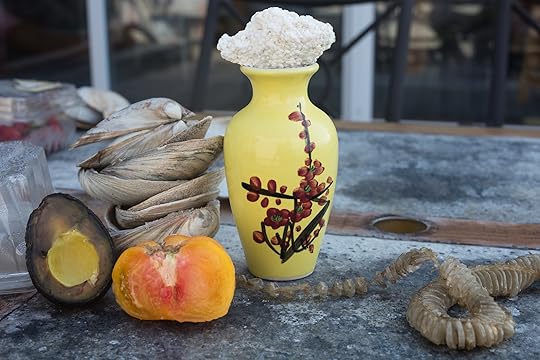 Wolfgang Tillmans, unlikely match, 2017
Bullock: What shifted since the first visit that made you want to make a commitment to this place?
Tillmans: I guess this came exactly at a time when I was ready for something new. But I’ve always been fascinated by the Atlantic, and I’ve just never seen a place where you could be so quietly and peacefully close to it. Plus New York City is just two and a half hours away; there’s the security and the friendliness of the LGBTQ+ community, and one of the best grocery stores within walking distance. Once I met people here, I realized how interesting many of them are. For me, it felt like a retreat where I could be on my own, but not alone. People respected that I was actually working here, and it wasn’t a party spot for me. A lot of my time here I spent thinking about the MoMA show, a lot of it was conceived of and designed here.
Bullock: Your house is located at the far end of the Pines, somewhat isolated, perfect for working, but because there is a constant flow of artists visiting the island, you can be alone without ever being lonely.
Tillmans: Yes. When BOFFO presented the first preview of my film Time Flows All Over (2024) at Whyte Hall [in August 2024], I wrote down a few notes of acknowledgment beforehand, and I realized that I really wouldn’t be here without that organization. Their artist residency program is like a metronome or pacemaker, continuously injecting interesting, unexpected people into this community. It gives me a sense of connectedness to New York and other art scenes. If this were the same beautiful natural setting without any art connections, I don’t think I would be here. And of course, I want to mention FIAR [Fire Island Artist Residency in Cherry Grove], the other residency that brings artists here.
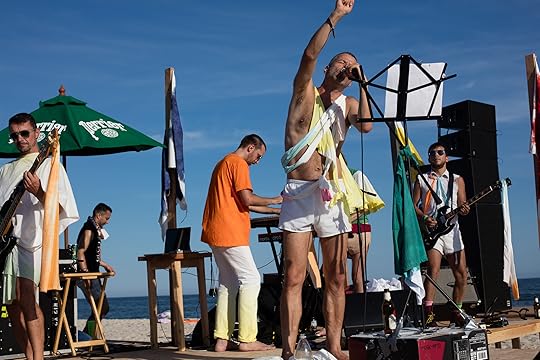 Wolfgang Tillmans/Fragile, performance at BOFFO Performance Festival Fire Island, 2016
Bullock: Over the last decade, these organizations have transformed the island into a place where artists continue to return, there is a lot of casual connection, you can randomly meet people whose work you have always loved from afar. It’s inspiring. Being here has allowed you to explore new forms of experimentation. You even built a music studio.
Tillmans: Yes. It’s one bedroom of the house, which has three bedrooms. I immediately thought when I got it that I wanted to use being physically away from my normal practice, and this could be the place where I develop my recently resurfaced interest in music.
Bullock: Where did your band name, Fragile, come from?
Tillmans: When I made music in the ’80s, as a teenager, my artist name was Fragile. From an early age, I felt that embracing my own fragility was not a weakness, but a prerequisite for a happy life because it protects you from disappointment.
Bullock: A wise concept, unusual for a teenager.
Tillmans: It’s strange, but I have always had this pairing between my obsession with astronomy and science, and on the other hand, a spiritual interest paired with the awareness of AIDS that stuck with me. Sometime in the mid-2010s, I felt ready to embrace music again. And that’s how the protection of this island, the friends here and the environment, led me to reconnect with my performative side—which was always there, but which I’d translated into my photography and installation practice.
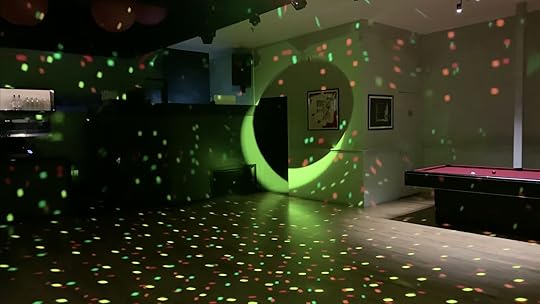 Wolfgang Tillmans, Still from Can’t Escape into Space, 2020. HD video, 5 minutes
Bullock: It makes sense that this could happen for you here. It’s a very Fire Island thing—it happens on different scales for everyone, but in this place, people are able to experiment with who they are. They push themselves further than they would normally go. It can sometimes be talked about in a funny-crude way, but I have witnessed profound personal breakthroughs here. Fragile debuted at the BOFFO performance festival. What was it like to perform for the first time in twenty-something years?
Tillmans: It was a great communal moment for the whole band. Anders Clausen was co-art directing. He, T.M. [Davy], and others built a beautiful stage. It was amazing being on the beach with great acts like Eartheater and SSION, who performed before us. And we wore these tie-dye costumes; it felt amazing. The audience thought that we were a legit entity. They could not tell that it was the first time we had ever performed publicly. We were even invited to play in the city. We did two nights at Union Pool in Brooklyn. And then we took it to Tate Modern in London and performed there as part of this larger sound installation that I made.
Bullock: I’m told Fragile’s 2018 performance was an even bigger success.
Tillmans: Yes, Faris [Al-Shathir, BOFFO’s founder and director] invited us to play another concert. We really prepared well for that one. We played that concert here with the band inside the house, which we filled with dry ice. We played the first few songs behind closed glass doors. The deck was packed with over two hundred people. When we opened the doors, all the dry ice poured out into the crowd. I am proud to say that the set was very tight—so much so that I included one song from it on the album I released this year. That same night, the artist Martine Gutierrez performed on a plank that we placed for her across the pool, and DonChristian and T.M. Davy also performed. It was a fantastic lineup. A magical night. We had Pines-party-sized loudspeakers on the deck. The volume was just so insane—without a license, without permission. It happened one week before I turned fifty, so I sent notes around to my neighbors saying that this was my fiftieth birthday party, which it wasn’t.
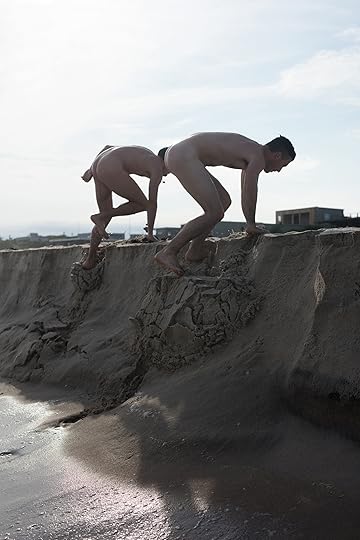 Wolfgang Tillmans, Liam and T.M. jumping up the cliff, 2016
Bullock: I regret that I missed that one. That must have been the biggest event you’ve hosted here?
Tillmans: I mean, it was really a night! It’s interesting though—as fantastic as that was, I still feel the need to almost apologetically explain that this place is not only the hedonistic party place that people think it is. It has this completely different side.
Bullock: Well, let’s not completely erase the hedonistic. I think that energy permeates the atmosphere. It’s an important ingredient for bonding and collaboration. It grounds the place in a sense of openness and experimentation that impacts everything. The first time I read one of your interviews, you said something that stayed with me for years. You said that for you a nightclub is a place where you can really think deeply. Hearing that from you gave me permission to embrace the significance of those types of experiences. Growing up, you’re taught they are frivolous, but they are so essential to gay life and development.
Tillmans: Absolutely. For me, nightlife has always had a depth to it. Those places allow for different types of experiences to coexist. It’s rare to have such metropolitan energy in such a beautiful, natural setting.
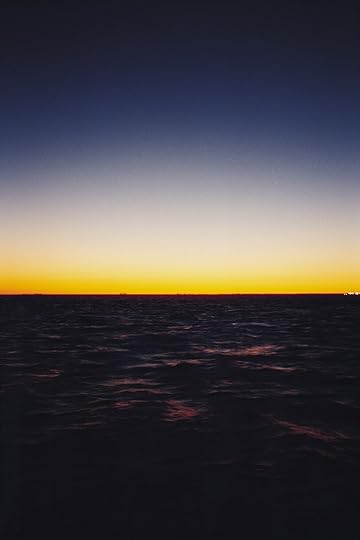 Wolfgang Tillmans, Fire Island, 1995
 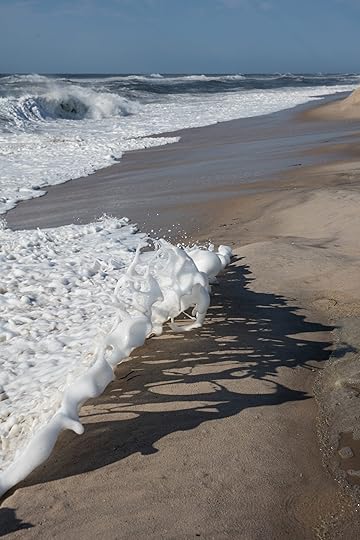 Wolfgang Tillmans, Hermine, a, 2016
 Bullock: You even, surprisingly, made a music video at Sip-N-Twirl [one of the three clubs in the Pines]. Can you tell me more about that song? And the lyrics—“I don’t want you to see me change”?
Tillmans: Yes, “He wants to change, but not be seen changing. You can’t escape into space. You’re in it.” Most songs I write in Berlin, and this one we actually recorded at the height of the pandemic in April 2020. When I was releasing it, I needed a video and realized that in 2019 I had made footage at Sip-N-Twirl on a Sunday night before closing time. I sometimes love being on my own alone on the dance floor, watching the disco balls spin in an empty club. I’m very aware of how to capture a staged reality, which in this case is a slightly tragic nightclub that never really takes off, even in the best of times.
Bullock: For those who haven’t seen it, the video shows the disco ball lights hitting the different spaces of the empty club interior for the entire song.
Tillmans: I didn’t capture that footage with the pandemic in mind, but when I released it, it was obviously highly connected to the closure of nightclubs during the pandemic.
Bullock: I have been focusing on your music, but how has this environment impacted your primary medium?
Tillmans: Most of the works I’ve made here are photographs of nature—of the ocean and the shoreline in particular, where liquid meets solid and air: the vapor, the clouds. These three elements meeting at night, in the day, lit by the moon, lit by the sun—all twenty-four hours of the day. This house is really exposed. It’s almost like living in the ocean. This situation has made me very attuned and allowed me to take pictures that I wouldn’t have been able to otherwise.
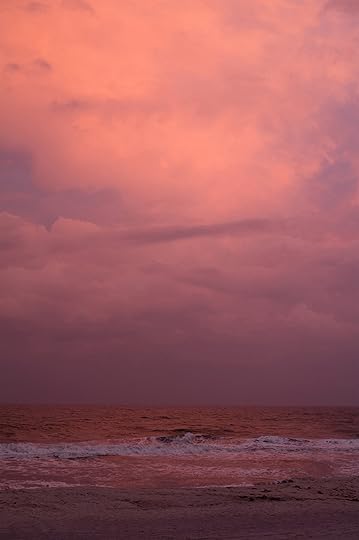 Wolfgang Tillmans, Fire Island, 2015
Bullock: Can we look at some of the ocean images together? I’d like to understand why something resonates with you. Can you define the qualities that move you to choose what images become a part of your body of work?
Tillmans: Yes. For example, this one is called Kleine Welle, “small wave.” I’m not interested in only the grandiose spectacle of the tallest wave. When the incomprehensible nature of liquidity reveals itself—that’s what interests me. What moves me so much is how little we understand of it. It’s entirely different from the world of solids that we obviously navigate and inhabit every day. In the early 2010s, I embraced a new camera technology which allows me to photograph that liquidity at a film speed that shows the waves as these sculptural forms, completely frozen in mid-air. Most film couldn’t record this in the past. These pictures show a degree of detail that the human eye could never see. It’s an amount of information than you could never remember. That’s something I find humbling—that there’s always more going on in the world than one could ever comprehend.
Bullock: And in a way, the more information you have—the clearer it is—the more abstract it becomes.
Tillmans: Some people could roll their eyes and think, “What are they waffling on about?” But it’s super important because it’s very connected to the times we’re in, the information saturation that surrounds us. I think these works have had relevance to people because they were inspired by a sense of hyper-information: this time when we, as cultural citizens, can’t comprehend all the information that is thrown at us. We have to learn to filter it, not to let it wash over us. That’s where I see these pictures connecting to contemporary society.
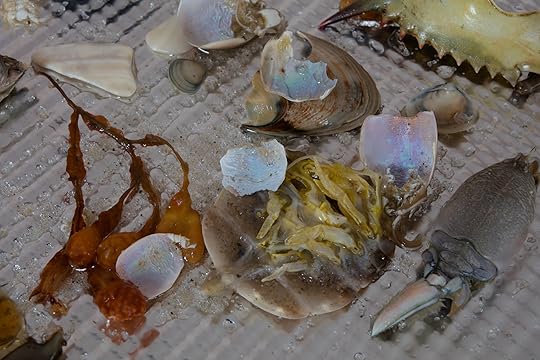 Wolfgang Tillmans, Nee IYaow eow eow III, 2017
Bullock: That’s an interesting perspective, especially given how environments like Fire Island are used to escape from that constant flood of information. Will you think of these years as your Fire Island period?
Tillmans: I’m a bit skeptical of those books that showcase artists who became attached to different places, like how Matisse or Van Gogh became obsessed with certain regions because of a particular type of light. . . . I always take them with a pinch of salt. And now I’m talking about this myself—the particularity of Fire Island with its two water masses, the Atlantic on one side and the very shallow bay on the other, and the sky above. As a visually aware person, I’m constantly noticing what’s going on, for instance how the moon has a strong presence here. Even so, in most of my exhibitions and publications, I don’t explicitly feature Fire Island.
Bullock: Why is that?
Tillmans: For me, being in this book and talking about my house here is a bit of a first. The nature of my work is making ordinary and extraordinary things equally accessible—turning them into something that you feel you could have seen with your own eyes. So, the idea of an exclusive community is the antithesis of how I like my work to operate. Fire Island comes up in titles occasionally, but I don’t identify all the pictures that I took here because I don’t want people to think they have to travel here to see these things. They can see them wherever there is an ocean.
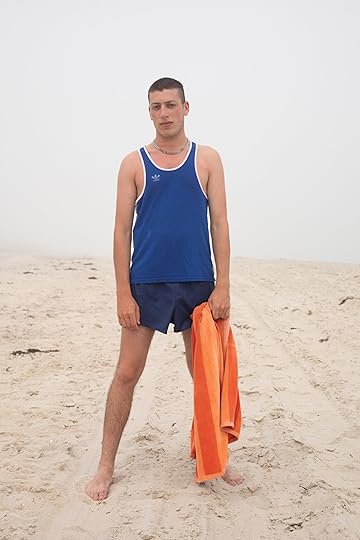 Wolfgang Tillmans, Olly, summer fog, 2019
All photographs courtesy the artist and Galerie Buchholz; Maureen Paley, London; and David Zwirner, New York
Bullock: That makes sense—that’s one reason why your images have a universal quality. Before we finish, I would like to circle back to your start here and your thoughts on how the context of gay life has changed. It’s interesting that you first came here during the height of the AIDS crisis, and you came back after gay marriage was legalized in America and PrEP was approved—completely different circumstances: psychologically, pharmaceutically, politically, spiritually.
Tillmans: And of course, the year that I came back, in 2015, Trump declared he would run in the United States, and there was this populist wave that washed across Europe.
Bullock: It’s a pretty extraordinary set of political circumstances—the most freedom that gay people have ever had in America and the least fear of disease, paired with a far-right takeover of the government.
Tillmans: The way you put it is pretty spot on. It makes you wonder why they are coinciding, and why gender and sexual equality and freedom are so unbearable for some part of society, why it riles them up so much that they are willing to vote for a demagogue. In my work, I always talk about wanting to include. I don’t want to exclude anybody, but at the same time, when we celebrate people realizing themselves and their wishes and their dreams, it seems somebody does feel left out, and we can’t help them. As long as we don’t hurt anybody or hamper anybody else, we can’t all tone down our quest for happiness after years of suppression just due to fear of somebody’s envious gaze.
Bullock: Well, I certainly have packed a lifetime of happiness into the last few days. That seems like a meaningful place to end our conversation. Thank you for this.
Tillmans: Yes, exactly. I think so too.
This interview was originally published by Monacelli in Fire Island Art: 100 Years (2026), edited by John Dempsey.
New York’s Sidewalks Are His Studio
It is the second day of fall, and the steps of the Metropolitan Museum of Art are alive with the layered rhythms of New York. A performance artist slathered in white paint moves slowly across the plaza as a saxophonist bends a bluesy note nearby. Anti-Trump protesters chant along Fifth Avenue. Painters hawk canvases from folding tables, tourists pose for pictures, and fashionistas stage their own impromptu photoshoots on the museum’s iconic steps.
Into this scene steps Louis Mendes, eighty-five years old and impeccably dressed in a beige suit, oxblood turtleneck, and brimmed hat. Around his shoulder, a massive vintage Speed Graphic press camera fitted with old-style flash bulbs, a relic from a bygone era. In one sense, Mendes is just another participant in this street-side economy, offering his wares to passersby. Yet he also stands apart. A New York fixture since 1959, he has mastered what he calls the place “where commerce meets art.” Mendes no longer hawks his services as he once did, when he would call out to strangers, “You could get a picture right away! Take a look at what I could do of you!” Now, his very presence is his sales pitch.
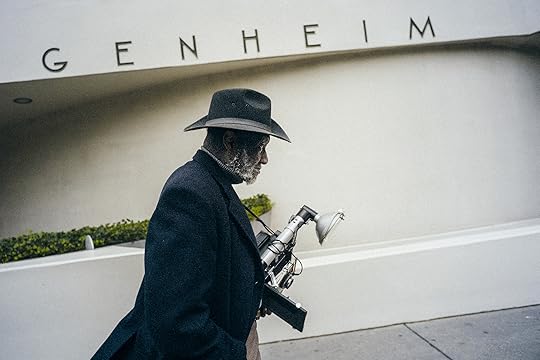 Louis Mendes in New York, October 2025
 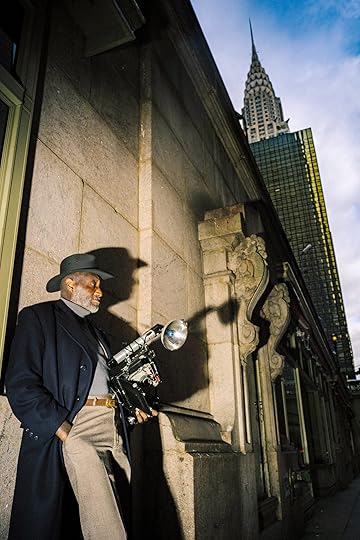 Louis Mendes in New York, October 2025
 Curiosity draws people toward him. Many ask about the old camera. “Google me,” he tells a woman who stops to chat. When she does, she smiles and says, “It’s an honor to meet you.” Others want to photograph him, and he strikes a subtle pose while keeping his eyes peeled on the crowds. “It happens every day,” Mendes said. “And I capitalize on it as much as I can.” He often proposes a trade to the curious person who thinks their quick snap has gone unnoticed: “I let you take a photograph of me, now let me take one of you.”
 Aperture Magazine Subscription 0.00 Get a full year of Aperture—the essential source for photography since 1952. Subscribe today and save 25% off the cover price. Shop Now
[image error]
[image error]
Aperture Magazine Subscription 0.00 Get a full year of Aperture—the essential source for photography since 1952. Subscribe today and save 25% off the cover price. Shop Now
[image error]
[image error] 
In stock
Aperture Magazine Subscription $ 0.00 –1+ Shop Now DescriptionSubscribe now and get the collectible print edition and the digital edition four times a year, plus unlimited access to Aperture’s online archive.
This afternoon, a middle-aged Black man with a camera around his neck approaches to shake Mendes’s hand. He tells him he grew up in New York and remembers seeing him in action decades ago. After a brief exchange, the man disappears into the crowd.
Such encounters point to a long, storied career. Mendes was born in Jamaica, Queens, in 1940. He started taking photographs in 1954, when his older sister, the family photographer, handed him the camera so she could be included in a portrait. “A week later, I got the results back, and I liked what I did,” he recalled. “That’s when the bug hit me.” By 1959, he had begun photographing parties and weddings. That same year, he bought the camera he still uses. One night, he was working a party at the famed Audubon Ballroom, in Harlem. “This camera can make a living for you if you use it that way,” a man told him. Mendes took the advice to heart: “I’ve been using it that way ever since.”
As Mendes learned the trade, he made the street his studio. Those early years taught him the physical and creative demands of the job. “You try to do both day and night, you kill yourself,” he said. “A little day, and a little night, and you got the week done.” The street itself is both teacher and collaborator. “The street is always difficult,” Mendes told me. “There are so many different people, constantly interacting. You learn more, and you do more.”
Advertisement
googletag.cmd.push(function () {
googletag.display('div-gpt-ad-1343857479665-0');
});
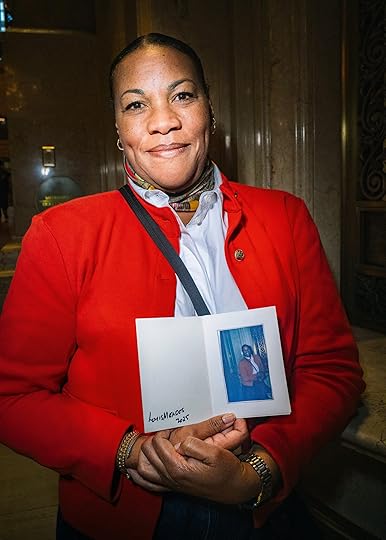 Terri Hyacinth holds her portrait by Louis Mendes in Grand Central Terminal, 2025
All photographs by Sinna Nasseri for Aperture
Mendes once used Polaroid film but now works with Fujifilm Instax Wide. His archive includes decades of test shots and outtakes. But most often, the client leaves with the only copy of the photograph. “I have the memory and the money,” he said. Occasionally, those memories return. A photograph he took of Gordon Parks and gave away resurfaced years later, and others reappear online when clients tag him on Instagram. These moments show what Mendes’s practice is about: a simple commercial transaction that becomes a shared imprint, the material trace of a fleeting connection.
Mendes’s work has evolved in step with the city itself. He photographed through the pandemic, even when Times Square was nearly empty. He has adapted to an increasingly cashless society. Yet the core of his work remains unchanged. His compositions are consistent, and his focus has always been on people, capturing something essential about the humanity of everyday life. “I photograph everywhere I can,” he said. “Every day, nine days a week.”
This article originally appeared in Aperture No. 262, “The End of Nature?”, under the column Studio Visit.
6 Photographers on Lee Friedlander’s Timeless Influence
For over seventy years, Lee Friedlander has been one of photography’s most celebrated and enduring figures. His keen ability to capture the intersections of public and private space, with wit and formal complexity, has taught us to see a vast collective unconscious—revealing the dreams, desires, and delusions hidden in the markers of the everyday world. His disorienting visions of street scenes, storefronts, signage, and, on occasion, himself have inspired generations of photographers and filmmakers alike.
In his latest monograph, Life Still, his first collaboration with Aperture, Friedlander playfully reimagines the presentation of his oeuvre at age ninety-one, bringing together rarely seen and unpublished images from the past sixty years alongside new work to stage a visual dialogue between past and present. Here, six photographers reflect on how Friedlander’s photographs continue to resonate and endure.
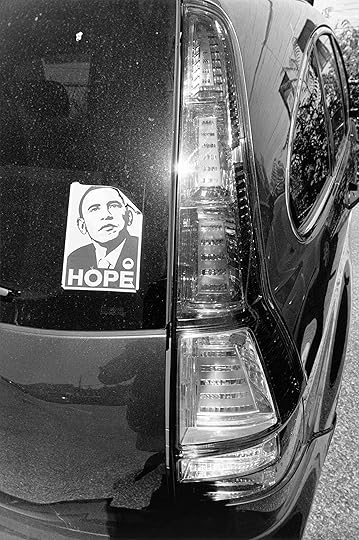 Lee Friedlander, New York, 2010
Daniel Arnold
Obviously, a distillation of eerie harmonic order from chaos is the persistent Lee Friedlander knockout. The calling card. It’s only worth mentioning here to accentuate how rare it is to look at his work and relate to anything beyond the compulsion of looking. He’s just too good at it. In that regard, there’s not much evidence in the hit parade of his vulnerability—even in the self-portraits. At his most unflatteringly double-chinned, his photos are still so inventively executed that the subject feels divorced from, even mocked by, the photographer.
Life Still is the end of all that, and what a pleasure it is to meet Lee there. A book of invitations! Many of them are eloquent and intentional (see an image of a dumpster with fuck spray-painted on its surface next to a tongue-in-cheek auto-store slogan that reads “Time to retire”), but where I find Lee to be so vulnerably present that I could cry is in this simple shot of an Obama sticker on a minivan window. A photo that would be right at home in my mom’s phone gallery. Talk about a self-portrait! To see him in his nineties, still snapping instinctively at shapes and shadows, even with an unparalleled body of work trailing endlessly behind him—it’s beyond moving. It’s relatable. The photographer’s dream.
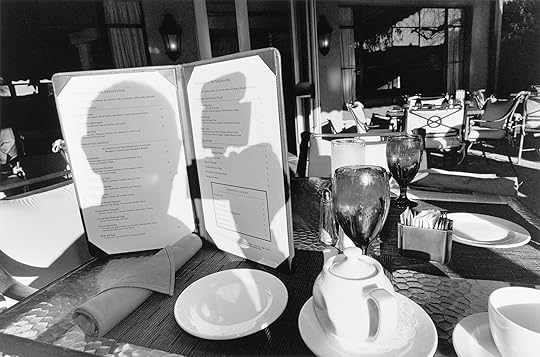 Lee Friedlander, Tucson, 2011
Awol Erizku
My first and only memory of meeting Lee Friedlander was during a class visit with Tod Papageorge to Yale University Press in 2013. We watched Friedlander hover over a set of proofs for Family in the Picture, 1958–2013 the way a pianist listens for the softest note. He studied the tonal range with austere precision. I remember him asking for alternative pulls because one set needed just a touch more contrast, reminding us how much feeling a great black-and-white reproduction can carry.
That same vigilance runs through his whole oeuvre: the cluttered American stage, the ever-present mirror that turns the camera back on its maker. I’ve long dubbed Friedlander the original “selfie king,” not out of vanity but for his unorthodox investigation of self-portraiture (see In the Picture: Self-Portraits, 1958–2011). In his practice, he becomes shadow, reflection, interruption, a figure folded into the world’s signage and glare. He makes the ordinary strange, then honest. He reminds us that the overlooked structure is often the story.
But my favorite turn in the work comes after knee replacements and forced stillness, when he turns to the flowers from his wife’s garden, stripped of their petals, and studies what holds them up. Stems (2003) is my favorite conceptual detour: portraits of endurance, born from necessity, with no patience for sentimentality. And that refusal of sentimentality is the throughline from then to Life Still.
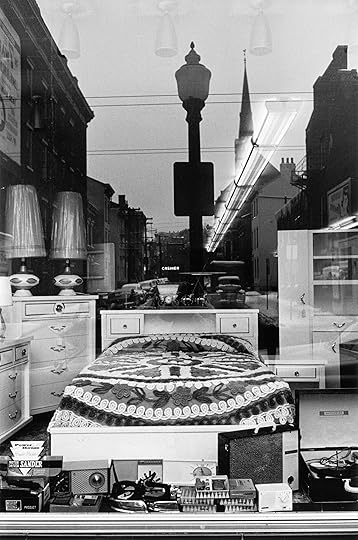 Lee Friedlander, Cincinnati, 1963
Sara Cwynar
In this picture from 1963, a fully furnished bedroom set (bed, side table, two lamps, multiple chests of drawers, and an ornate floral bedspread) sits behind a store window at street level, available to view and purchase. The weight of the photo comes from the reflection of the street seen on the store window and how the sky mashes itself into this view of a bedroom set—these features lend it language more in common with that of a dream sequence from a movie, or a modern nightmare, than a display window. It is an example of Friedlander’s ability to find collages in the real world made out of furniture, asphalt, unloved objects, sky, and light. This picture, taken twelve years before Michel Foucault famously wrote about the panoptic nature of modern life, feels like a harbinger of something to come, foreshadowing the way that sleep is now the only place where technology, surveillance, and commerce can’t get you, the way that all our private thoughts and feelings and spaces are churned out for public view through social media. This bedroom is no longer private, sacred, or safe, displayed as it is to Friedlander, the stranger reflected on the glass overlaid with a row of fluorescent lights shooting straight down Main Street.
Advertisement
googletag.cmd.push(function () {
googletag.display('div-gpt-ad-1343857479665-0');
});
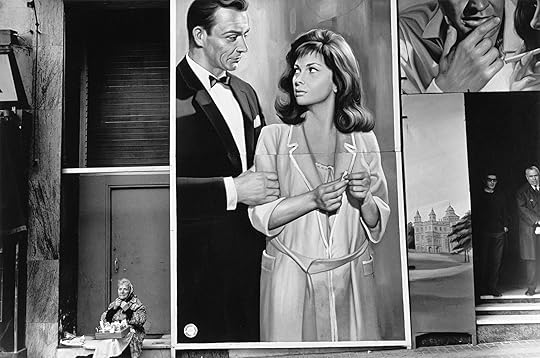 Lee Friedlander, Spain, 1964
 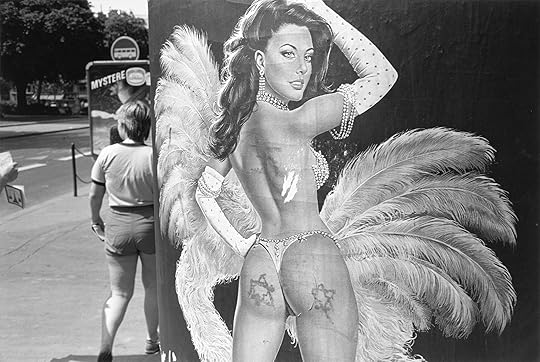 Lee Friedlander, Paris, 1984
 Gillian Laub
Lee Friedlander’s photographs are always brilliantly layered, composed with multiple worlds coexisting inside a single frame. I love how he finds intimate moments inside the public spaces and does it with humor, wit, and a generosity toward his subjects. I was particularly drawn to this pairing: two images, made twenty years apart in Spain and Paris, that feel timeless and universal. The first photograph carries a quiet melancholy, expressed through a solitary figure dwarfed by the towering fantasy of the world around her. The second depicts ordinary life colliding with spectacle in a way that makes you want to laugh and look closer at the same time. Each plays with aspiration and reality, with the gap between the world we are sold and the one we actually inhabit. They form a conversation about fantasy and everyday life and show how effortlessly—almost comically—the two collide. What I admire most about Friedlander is the quality that runs through all his work: an insatiable curiosity without judgment. These two images are a perfect distillation of everything that makes his vision so enduring.
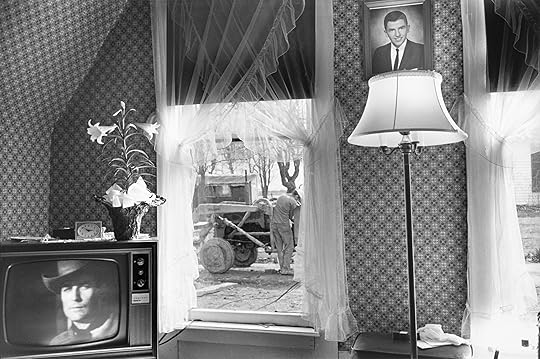 Lee Friedlander, Waddy, Kentucky, 1969
Anastasia Samoylova
In Waddy, Kentucky (1969), Lee Friedlander composes a world that seems to look back at itself. A solitary cowboy flickers on the television, his chiseled profile and sidelong glance set against a smiling young man in a formal portrait above the lamp. Beyond the window, another figure—a rugged mechanic, perhaps an echo of that same man from the portrait—bends over a piece of farm equipment, absorbed in a task we cannot fully see. There is both mystery and quiet humor in this trio of archetypes, as if the image were gently staging its own internal dialogue. These presences do not connect so much as resonate, like variations on a theme, each contained, each distant.
The wallpaper hums across the surface, its dense pattern recalling Friedlander’s chain-link fences—that familiar screen through which the world is both revealed and withheld. Frilly curtains soften the view. A subtle misalignment between expression and setting, image and world, carries a sense of endearment.
Nothing fully resolves. Inside and outside fold into one another. Meaning gathers gently through proximity and repetition.
A small, complete world. A short film, stilled.
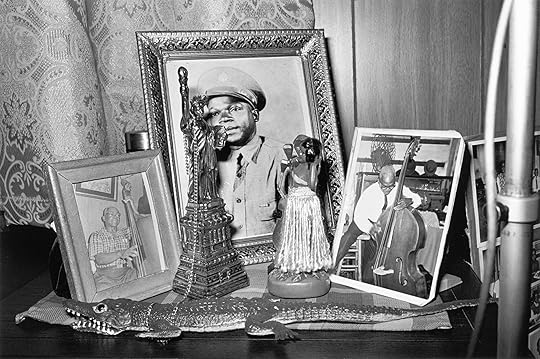 Lee Friedlander, New Orleans, 1973
Stephen Shore
Lee Friedlander’s path and mine crossed at Monet’s House and Garden in Giverny, France, in the early 1980s. Over lunch at the nearby Auberge St. Eustache, Lee told me that he’d been photographing arrangements on tabletops and windowsills. He said that he was so impressed with these arrangements, that he could never have conceived them. I was stunned. Here was the photographer with, perhaps, the most intense formal imagination telling me how impressed he was with the imagination behind these tabletops. Then it occurred to me that there are two kinds of imagination. Some of us can see an empty tabletop, or a blank canvas, and know what to fill it with. Then there are those of us who can stand on a street corner or in a living room or in a forest and know where to stand and where to place the frame and when to take a picture. Those of us who have an instinct for making sense of things—more than envisioning things out of thin air—we’re the ones who are drawn to photography.
See more in Lee Friedlander: Life Still (Aperture, 2026).
April 3, 2026
Sophie Calle’s Art of Games and Chance
This article originally appeared in Aperture, Summer 2022, “Sleepwalking.”
Her artistic career began with a kind of sleepwalking. In 1978, Sophie Calle spent her days strolling Paris. She had just returned to France after seven years of travel. Like so many artists and writers before her, she walked the French capital. On one of her ambles, she noticed a door ajar. It opened into an abandoned hotel connected to the former Orsay train station. It was as if she had drifted into a dream. She wandered the empty building and then left, taking note to come back. That year, Calle started making the work that she would become known for: following people, inviting them to sleep in her bed while she photographed them, taking on personas. A year later, she returned to Orsay. The building had remained abandoned. Calle took pictures, found discarded objects and documents. She even settled into a room on the fifth floor, 501. Nearly forty years later, Calle found herself at a dinner party where she was seated across the table from Donatien Grau, the head of contemporary programs at the Musée d’Orsay. She let slip something that no one at the museum knew: that Calle had squatted in the building, when it was abandoned, before it became the site of a museum. She told Grau that she had also kept a number of items from the old hotel and station.
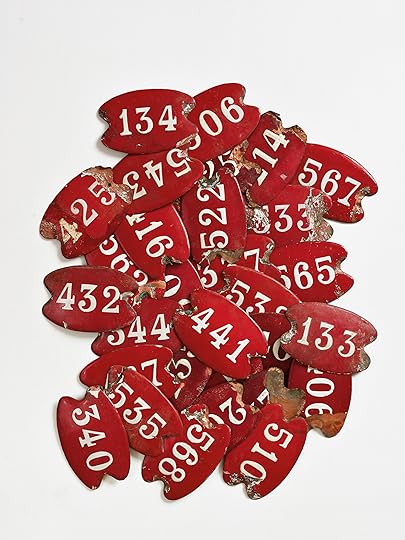 Sophie Calle, photograph from the project Orsay, 2021
© the artist and ADAGP, Paris and courtesy Musée d’Orsay
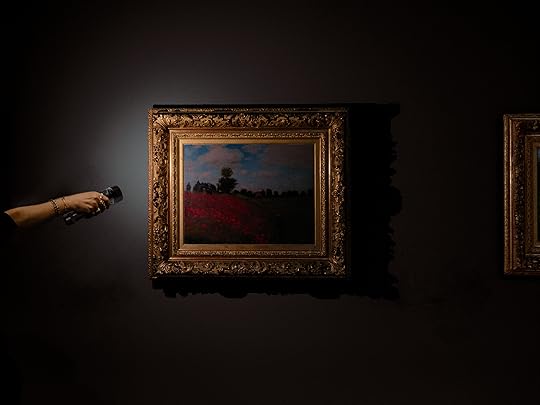 Sophie Calle, photograph from the project Orsay, 2021
© the artist and ADAGP, Paris and courtesy Musée d’Orsay
Calle is the daughter of a well-known art collector and a journalist. A one-time student of the theorist Jean Baudrillard, who helped her get her first book published in 1983, Calle tells stories that question the relationship between self and other, the stories we tell about ourselves, or the traces that others leave. From her early to most recent books, such as The Hotel in 1984 to 2022’s The Elevator Resides in 501, she mixes a variety of formats and mediums simultaneously. More than many other artists of her stature, though, the name Sophie Calle conjures different things to different people. The art historian Yve-Alain Bois claims her “favorite mode of display” is “intertwining text and photo,” while others, such as the writer Heidi Julavits, in a conversation with the artist for Interview magazine, focus on describing the performance elements of her output. The novelist Paul Auster, Calle’s longtime friend and erstwhile collaborator, made the fascinating claim that she is “essentially a writer.” If so, perhaps she is among the first to write in an “expanded field,” to borrow a phrase from the art critic Rosalind Krauss, for the ways in which her stories rely on not only photography but also exhibitions, which many others have since followed. Discussing her significance, Grau remarks: “She has explored at once literature and the visual arts, and assembled them with many other methodologies, while unearthing and inventing new narrative forms that are simultaneously deeply personal and universal.” She herself apparently likes the phrase “narrative artist.”
Calle’s narratives are a precursor to contemporary autofiction, while also fitting in a longer twentieth-century literary tradition that juxtaposes text with image.
After that dinner party, Grau informed Laurence des Cars, then director of the Musée d’Orsay and Musée de l’Orangerie, who set up a meeting with Calle. Now, decades after she squatted in the building, the museum has exhibited The Ghosts of Orsay, an installation consisting of her photographs and detritus collected from the former train station and its hotel. The exhibition also coincides with the book The Elevator Resides in 501, published in both French and English editions by the Arles-based publishing house Actes Sud. For this book, Calle invited the celebrated French archaeologist Jean-Paul Demoule to write fictional ethnographic notes about the material. A short autobiographical text by Calle and the pieces by Demoule thread through her images of dilapidated rooms, exposed pipes, ledgers, empty hallways, abandoned mattresses, former room keys. The material has an oneiric quality, as if the museum were now manifesting a dream of its forgotten past.
Aperture Magazine Subscription 0.00 Get a full year of Aperture—the essential source for photography since 1952. Subscribe today and save 25% off the cover price. Shop Now
[image error]
[image error] In stock
Aperture Magazine Subscription $ 0.00 –1+ Shop Now DescriptionSubscribe now and get the collectible print edition and the digital edition four times a year, plus unlimited access to Aperture’s online archive.
 Sophie Calle, photograph from The Hotel (Siglio, 2021)
Courtesy the artist and Siglio
 Sophie Calle, photograph from The Hotel (Siglio, 2021)
Courtesy the artist and Siglio
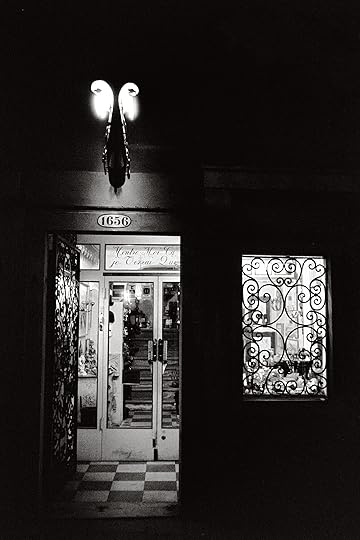
This exhibition and book further add to a wider reconsideration of Calle’s early work, particularly, as seen in her publications, how she blends writing with quasi-documentary photography—that is, a kind of documentary photography that may not quite aspire to truthfulness. Her narratives are, in some senses, a precursor to contemporary autofiction, writers such as Chris Kraus and Sheila Heti, while also fitting in a much longer twentieth-century literary tradition that juxtaposes text with image, from its Surrealistic origins in André Breton’s 1928 Nadja (about, indeed, a man who follows a woman around Paris) to the 1990s books by W. G. Sebald. In the United States, over the past decade, Siglio Press has been reprinting elegant editions of Calle’s early pieces, most recently The Hotel (reprint 2021; first published 1984, work from 1981), but also Venetian Suite (reprint 2015; first published 1983, work from 1980) and Address Book (reprint 2009; first published 1983 in the newspaper Libération, work from 1983).
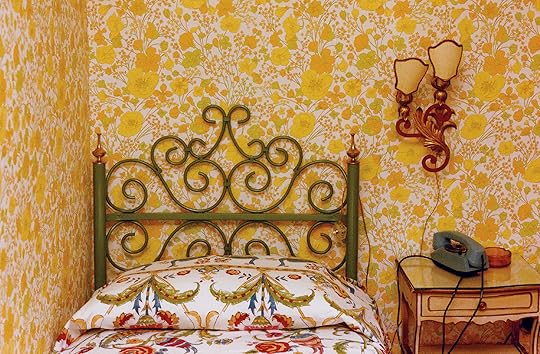
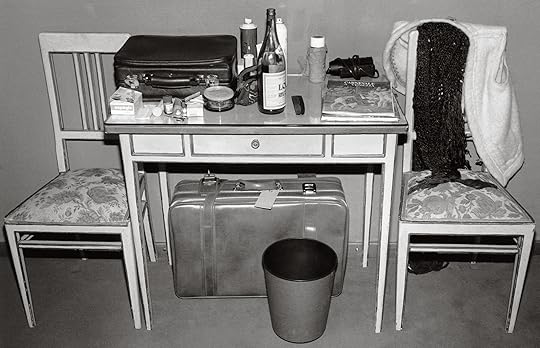
In Address Book, Calle found a misplaced address book. Before returning it, she photocopied its contents and began contacting all of the people listed to render a portrait of its owner; her written notes of the meetings were published in Libération, presented alongside photographs. Venetian Suite chronicles her surveillance of a man in Venice. One afternoon in Paris, Calle had been following a random man only to lose him in a crowd. A few hours later, by chance, she was introduced to him at an art opening. He mentioned to her that he was going to Venice the next day. So, she, too, left for Venice, to continue shadowing him while taking clandestine photographs of his activities, like a private investigator. In 1981, Calle returned to Venice for the project that became The Hotel. Securing a job as a chambermaid, she photographed the sundry belongings of the hotel guests, while she made their beds, in order to attempt to reconstruct who they were. The Hotel, which includes her written observations and photographs, appeared as a book in 1984 after being exhibited the previous year at Galerie Chantal Crousel in Paris. Her seemingly matter-of-fact photographs are uncanny next to the narrative account of cleaning rooms and snapping pictures.
Advertisement
googletag.cmd.push(function () {
googletag.display('div-gpt-ad-1343857479665-0');
});
While photography is central to Calle’s art, there was for decades a long-standing truism that she was not particularly good at it. Her friend the French writer and photographer Hervé Guibert, who wrote an essay on her at her invitation, “Panégyrique d’une faiseuse d’histoire” (1991), claimed that she “can’t even manage to take a proper photograph.” Her New York gallerist, Paula Cooper, once admitted that her photographs are not what people think about when they think of her art. She is not the sort of person who carries a camera with her; she only takes pictures when they are part of the rules of a project. (In a 2010 interview with Michel Guerrin in Foam magazine, the same year she received the Hasselblad Award, Calle stated that only with Take Care of Yourself, in 2007, did she begin to take more interest in the craft of photography.) But the loose compositions of her early work—the “bad” quality of the pictures, the poor or unbalanced framing, the out-of-focus subjects—have powerful effects. They provide the texts with an awkward intimacy, even in The Hotel where there are no human figures. Feeling as if they were taken quickly before a guest may return and interrupt her clandestine project, they also have the effect of disrupting the flow of reading. Her use of photographs is, in this way, less about documentation than it is about editing.
 Sophie Calle, photograph from Suite Vénitienne (Siglio, 2015)
Courtesy the artist and Siglio
Throughout her pieces, inconsistencies in detail further emerge that give them a surreal quality. A number of the photographs of abandoned rooms seen in The Elevator Resides in 501, for example, were also used in Address Book. In 1993, Calle confessed to the art historian Bice Curiger that everything in The Hotel was truthful except the contents of one room, which she staged. In The Hotel, after days of being unable to enter room 45, she gains access, feeling “a certain lack of interest,” she writes. She claimed that she had only ten minutes. “I content myself with taking a few photographs: the carnival masks hung on the sconces, the Pierrot costume, the iron I noticed in the suitcase, two pairs of slippers waiting at the foot of each bed. In the folds of the sheets, I find a lobster claw.”
All of this feels like it comes out of a dream, the waking dream of a young woman who opens the door to an abandoned building, or an occupied hotel room. Over the past forty years, Calle has, in many ways, invented her own genre, somewhere between the traditional photobook and a literary piece. The juxtaposition of autobiographical writing with her particular style of quasi-documentary photography is her major aesthetic contribution, the skeleton key to her practice. Just as her photographs defamiliarize her texts, Calle’s work reflects on the relationship between self and other, how each of us remains a stranger to ourself. From 1980s books such as The Hotel up to her latest (based on material from those early years), she mixes writing and photography in ways that result in disrupting the absorptive experience of reading, as if jarring a sleeper out of a dream, or stepping into an even deeper one. “The dread of doors that won’t close,” states the cultural critic Walter Benjamin, “is something that everyone knows from dreams.” Her pictures are like the unclosed doors of her narratives.
This article originally appeared in Aperture, Summer 2022, “Sleepwalking.”
March 31, 2026
Dean Majd’s Intimate Reckoning with Masculinity
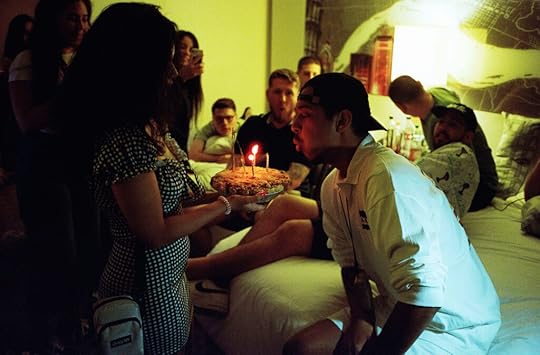
In 2016, after the sudden death of a childhood friend, Dean Majd began photographing the dynamics within an insular circle of young men connected through graffiti, skate culture, and New York’s nightlife. Shot largely at night with point-and-shoot cameras over nearly a decade, the images in what would become the series Hard Feelings move between moments of revelry and rupture—intoxicated camaraderie and quiet grief—charting an intimate record of masculinity shaped by trauma, loyalty, and survival. I recently spoke with Majd, whose exhibition of Hard Feelings, curated by Marley Trigg Stewart, opened in February at Baxter St in New York. In this conversation, Majd reflects on the origins of Hard Feelings and how he drew inspiration from sources ranging from Lorde and Dipset to the films of John Cassavetes and Abel Ferrara. He speaks about the ethical and emotional complexities of photographing one’s closest friends—and how the project evolved from a record of a life lived into a meditation on masculinity, mythmaking, and the possibility of healing.
 Dean Majd, blowout (zeke’s birthday), 2019, from the series Hard Feelings
Noa Lin: I wanted to start by asking you about these past twelve months. Over the past year, you’ve photographed Mahmoud Khalil for Dazed. You photographed Mayor Zohran Mamdani for Vogue. You’ve opened your first solo exhibition at Baxter St at the Camera Club of New York. And you have been included for Greater New York at MoMA PS1. What’s it been like for you to have this meteoric rise?
Dean Majd: I’ve been working professionally for about ten years, but I’ve been making photos since I was seven. I feel like I turned up the dial in the last few years. There’s been a palpable shift for me, but because it’s been such a long grind, it also feels like something that’s actualized and meant to happen at this time. I am really glad it took so long. If I had found any version of this success in my late twenties or early thirties, when I wanted it, I would’ve completely fallen on my face. It also affirmed to me my belief in God’s plan, or the sense that everything happens for a reason, which can be really hard to maintain faith in. You have to believe in what you’re setting out to do, even when no one else does. I’m not hyper-religious, but I’m quite close to my faith, and it feels like things are meant to happen when they’re supposed to happen.
I’ve been recently very emotional too. I’ve actually been crying a lot since the opening of the show because I’ve just released so much emotion that I’ve been carrying for ten years around this extremely difficult body of work, but also the hard work to get here in my career. And there were so many times where an opportunity, like the solo show, almost happened and it didn’t happen, or I would get a major opportunity to make a certain project and it would fall through. At some point, I accepted that it wouldn’t really happen for me, and I just was making work for myself because I loved it, which was the most important thing. So right now, I’m just trying my best to enjoy the moment and get the work done.
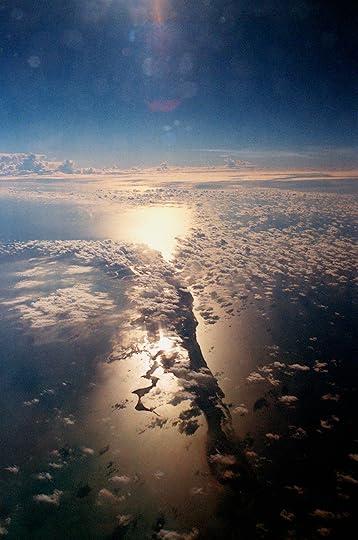 Dean Majd, heaven’s charm (aerial view of the atlantic ocean), 2021, from the series Hard Feelings
 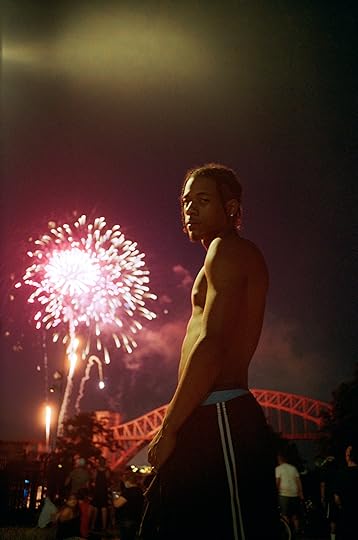 Dean Majd, bryan at astoria park for the yearly fireworks show, 2021, from the series Hard Feelings
 Lin: I’m curious, do you have a sense of why, or why you think this is now—why everything happened all at once in this way? How have your experiences prepared you for it?
Majd: I had a lot of failed opportunities and a lot of rejections in 2024. I was supposed to have a solo show around my work Separation that was made in Palestine, but it fell apart. By the end of the year, I was really down, and I just decided that I am going to give it my all. I was turning thirty-five and I felt like it was now or never. At the same time, I can’t deny that there’s a lot of attention on Palestinian American artists post–October 7, 2023, and during the genocide.
A lot of issues that I face as a Palestinian American artist regarding racism and Zionism are being confronted in the art world. I also feel that not many artists at large, but specifically photographers, were open about their beliefs around the genocide, and not many stood up for Palestine. I felt like being Palestinian American and speaking about the genocide publicly garnered me a lot of support, not just for my work in Palestine but also my work across the board. There was a lot of attention on what I was doing because there was a lot of attention on Palestinian American artists. Because of that attention, because of the projects I was building up to, the skills I had acquired over the years and my being vocal publicly about the kind of state violence that people are experiencing globally at the hands of our administration, I felt all these things were coalescing.
I also was pitching and taking on very serious projects about these subject matters that I don’t think many people were pitching and were willing to explore through their work. So many artists were facing backlash for speaking up for their beliefs. I didn’t have much of a career to lose, and I’m Palestinian, so I already faced these issues prior to October 7. I wasn’t scared to talk about it. It’s my people. I didn’t even think twice about it.
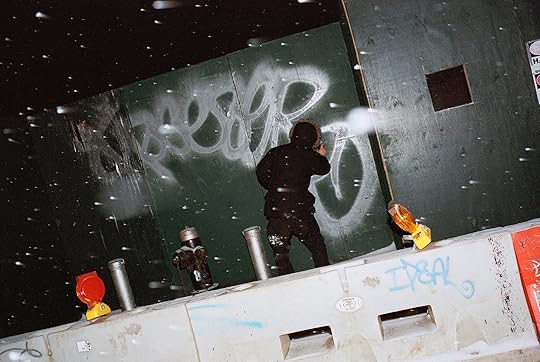 Dean Majd,
freezy bombing
, 2021, from the series Hard Feelings
Dean Majd,
freezy bombing
, 2021, from the series Hard FeelingsLin: Right. This is part of who you are, and you’ve been making work on these subjects for a long time. But, just to back up, can you tell me a little bit more about your background and how you got into photography? How you ended up where you are now?
Majd: My mother gave me a camera when I was seven, and I haven’t stopped taking photos to this day. I grew up very poor, and my mom would develop the film at Genovese, which was like a Duane Reade or a Rite Aid. When she developed the film for me, which we didn’t have much money to even do, she would get mad at me because she would never see photos of me. I was already only taking pictures of my friends. As a kid, I was very quiet, so I used the camera to connect to the people around me. It was also an expression of love and care, even at that young an age.
My parents were immigrants of, refugees of, Palestine. My mother was born in a refugee camp in Jordan after 1948, after my grandparents were expelled in 1948. When they immigrated to this country, they spent all their time working. So, my brother and I were left to our own devices and fell into Queens, New York’s skating and graffiti scene, at a very young age. I have photos from 2002 from this era where we were drinking and doing drugs and staying out all night and partying and sneaking into bars and concerts. I asked my parents when I was eighteen to go to art school, and they laughed at me, so I left that world to pursue a degree in international relations and to work to help my family financially. I mean, I had literally never seen an Arab American, a Palestinian American, a Muslim American, be a successful artist or photographer. Nothing indicated that I could, in magazines or in TV or anything like that, and so I just did it for myself because I wanted to. Around that time, I discovered Nan Goldin’s The Ballad of Sexual Dependency (1986). I didn’t understand what was going on in the photos, but I just saw someone love their friends so much that Nan Goldin made it into an art form. I felt that if she could do it, I could too.
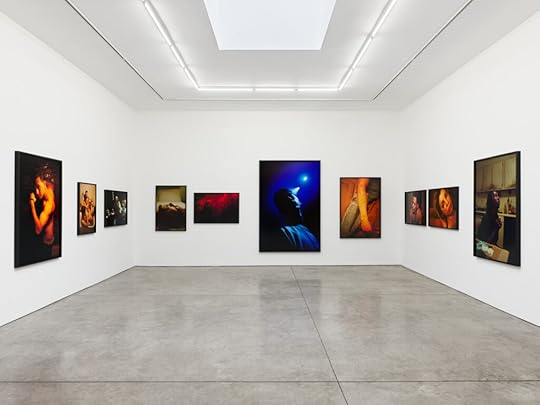 Installation view of Hard Feelings, Baxter St at the Camera Club of New York, 2026
Courtesy Baxter St at the Camera Club of New York
Lin: And you’ve been working on this series, Hard Feelings, for ten years now. How did you go from just being in that skate and graffiti scene, just taking photos of your friends, to making this particular body of work as it stands? Or did it happen naturally?
Majd: In 2015, I had started hanging around the skate park in Astoria and with some friends that would skate and do graffiti. I reconnected with a childhood friend named James at Astoria Skate Park, and I took his portrait. We made a plan to hang out, but then a week later, he tragically died in a subway accident. It was tragic because anyone who knew James knew that he had a really big heart. And I mean, to me, he was the coolest person in the world. To lose him was quite tragic for me and all our friends. And through his passing, I became very close to his best friends, and we bonded over the grief of his loss.
At that point, I was casually shooting about sixty rolls a year, but by the end of 2016, I was shooting over three hundred, and I maintained that for years. I invested all my money and free time into it. And if you know anything about the graffiti and skating world, it can be hypermasculine, drug- and alcohol-fueled. It’s very violent. It can be very toxic and self-destructive, but these people who I felt were outcasts like myself were deeply loving to each other, and I was inducted into a family.
And, by the end of 2016, I proposed to them that I would like to take pictures of everything—the good, the bad, the ugly, everything in between—and I wouldn’t hold anything back. No one refused. Actually, almost all of them encouraged it. My goal was to create a record of truth for us and only us. I was deeply inspired. It felt like having twenty-five muses at the same time, and they gave me everything.
 Dean Majd, bohemian rhapsody, 2017, from the series Hard Feelings
 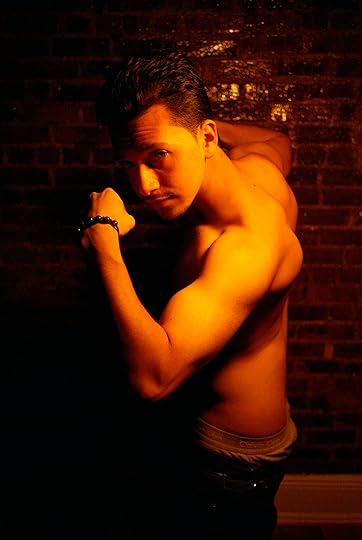 Dean Majd, break bad (freddy flexing against the brick wall in my bedroom), 2021, from the series Hard Feelings
 Lin: I’m curious how you approached shooting such intimate moments with your friends—were there any specific challenges you had to navigate while you were starting to shoot this seriously in a way that you didn’t think of at the time?
Majd: I think we were all making up the rules as we went along. I would take all these photos and I wouldn’t put them anywhere. I would sit with them for a while and reflect on them, and then we would have these open discussions about where they would go and if certain photos should stay archived, if certain photos could circulate between us or if they could go online. There was a trust that we built together, almost like a rule book, and that rule book became the foundation of my practice. But I’m constantly rewriting that book, and it’s constantly evolving.
Photography is inherently voyeuristic, but I try as much as possible to not approach making the work that way. I very much affirm that this is my story, that these are my friends, the people I call my family. I don’t even call them subjects. I very much lay myself completely on the line for the work.
Growing up Palestinian, I understood grief at a very young age. I understood pain and loss. My family has experienced so much racism, Islamophobia, and Zionism. At a young age, I learned that empathy and pain go hand in hand, and it helped me develop a deeply empathetic nature. And that’s how I navigate my life—and photography. When my friends gave me access to their lives, I didn’t realize at the time that that would dissolve all boundaries between me, them, and the camera. For a long time, I navigated the photographic experience without boundaries, which left me with a lot of wounds and then subsequently a lot of scars.
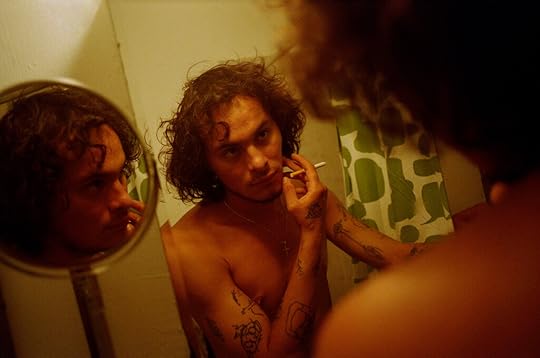 Dean Majd, cj in his bathroom mirror, 2021, from the series Hard Feelings
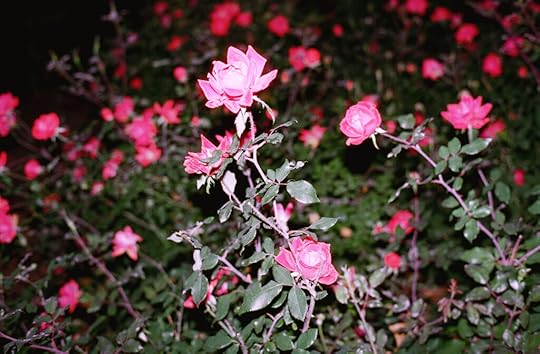 Dean Majd,
rosebush at astoria park the night we lost suba (suba’s glow)
, 2020, from the series Hard Feelings
Dean Majd,
rosebush at astoria park the night we lost suba (suba’s glow)
, 2020, from the series Hard FeelingsLin: In the context of you and your friends, these images are a record of your experiences. But as these photographs circulate, they take on new meanings to different audiences. For outsiders looking in, words like trauma or violence become attached to these portraits of people you know and care about. How do you and your friends continue to think about the work, especially as it gets more exposure in art-world contexts?
Majd: I actually don’t even think many of them care. Originally, it was just a record of truth, and I was quite ambitious about my work and what I was attempting, but I genuinely didn’t think anyone would care. When the work became public and it gained an audience, I didn’t expect the work to change.
After reflecting on it though, I realized the work was about masculinity, brotherhood, and how trauma and cycles of violence manifest. I realized the work functioned as a mirror and as a space for me and my friends to be vulnerable, when in reality, we are so often told as young men of color that we need to be invulnerable to survive.
In 2018, I had a really powerful acid trip in which I saw my friends as Greek gods. I realized us sitting around passing around a bottle of Hennessy or tequila was a ceremony no different than those of mythological beings. I really began to frame Hard Feelings around the idea of an odyssey; these masculine rites of passage. I wanted to elevate these unseen lives to the place of mythology and high art. I wanted to create a legacy for those who are told their lives don’t matter. The work really became this place for these young men to face their own shadows, and it became a mirror for strangers to do the same. I studied Flannery O’Connor’s Southern Gothic style, and her use of allegory in relation to violence and faith really informed the way I think about the work.
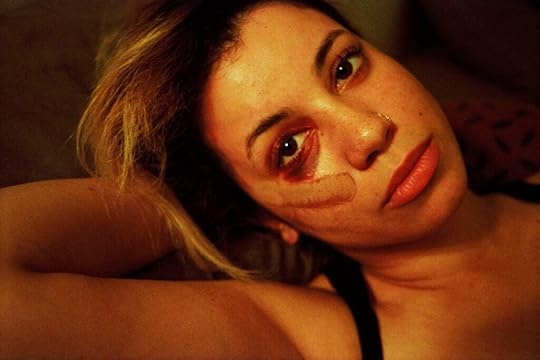 Dean Majd,
rissa
, 2018, from the series Hard Feelings
Dean Majd,
rissa
, 2018, from the series Hard FeelingsLin: In Hard Feelings, women often appear at the margins of the narrative. One of the only images of a woman alone in the Baxter St show is the photograph of a young woman with a black eye, which feels especially devastating. How did you think about women’s presence—or absence—across the work?
Majd: Foundationally, I was just trying to honor the story of someone I love, and someone that’s really important to me, someone I consider family. And I wanted to be honest about the experiences of women in relation to this kind of expression of masculinity. It’s important to note that none of the men that I photographed, and no one I knew personally, perpetuated or were the perpetrator of the violent acts done to her, but that isn’t to say that men in the work do not contribute to systems that perpetuate violence against women.
I never wanted to paint these men as perfect victims of their circumstances. The violence enacted on them is internalized and then transferred to the people around them, to themselves and often towards women. The image itself sits in the show in relation to other images that present internalized violence and the violence against other people. I wanted to put everything out there because the overall mission of the work is to forge a path towards healing. And if this part of the experience is ignored, I don’t think we’ll ever get there.
The woman in the image, Rissa, and I have been in constant communication before and after the show about the image. She gave me her blessing to include it months ago, and it’s been handled with the utmost care and respect. She couldn’t make it to the opening, so she came by a few hours before and we walked through the show together, and we cried together about the overall show, but specifically when looking at that image. There’s an alchemic exchange in my work—I get to make these really intimate images, but I absorb and hold on to the emotions of the people I photograph. I’ve been sitting with the pain of this photo, really of all these photos, for years, and presenting them was cathartic for us, Rissa included. We’ve somehow turned that pain into a love that feels infinite, and hopefully this image of Rissa, and these images of violence, can help other people find healing.
There is a moment in the show of small-scaled images of couples around empty beds. The beds themselves refer to addiction and recovery, but I wanted to open a discussion about healing and how it’s often extracted from women in male-female relationships. It’s a vague notion, but I wanted to speak to how grief and violence affect couples’ relationships. In general, I didn’t want to contribute to the erasure of the experience of women under patriarchy by excluding these images.
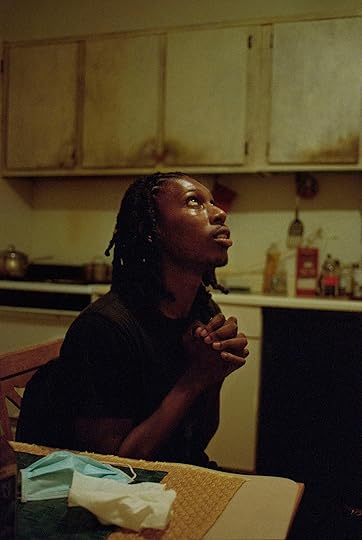 Dean Majd, mohamed (prayer), 2020, from the series Hard Feelings
  Dean Majd, heaven’s gate, 2019, from the series Hard Feelings
 Lin: Yeah. We can’t talk about patriarchy without acknowledging the violent ways it manifests.
Majd: I started going to therapy in 2022, but I really felt like I started healing in 2023. Part of that was realizing that this work could help other people. I started framing the work with a mission that it could help heal those who are willing to engage with it.
I mean, I’m completely self-taught. I never went to school. I never had a mentor. I never interned. I never assisted. I’ve never even taken a class, although I really want to take a class. I worked really hard to acquire skills with which I can understand how to present the work in a way that can probably honor the work itself, the experiences of the people in it, but also create a space for this healing that I really wanted for people who are willing to engage with it.
Lin: Did you have any reservations as you were shooting this work or as you were planning on showing it? Or did you always know that this was important for you to talk about?
Majd: I felt so much of an outlier within my community that it didn’t matter to me. I was always scared, but I always fought through the fear. I feel a certain shame and stigma, and for a long time, that kept me quiet about my experiences with alcoholism and drug use. There’s a lot of grief I’ve been dealing with.
At the end of 2021, I decided to put the camera down because I developed this irrational fear that if I photographed one of my friends, a week later, they would die. Just because it had happened so often in the past. I mean, it paralyzed my day-to-day life, let alone my art practice. At some point, a really good friend of mine insisted that I go to therapy. It completely changed my life.
I went on this healing journey, which completely reshaped everything for me. I was able to pick up the camera properly again and work through these traumas and to be open about these situations. What I realized is that many men in the Arab community, and many men of color in general, rarely even think about going to therapy or work through their mental health issues because it’s so looked down upon. It’s so stigmatized. There’s so much shame around it. I got really lucky that I had a friend who was also Arab who told me, “You should try it.”
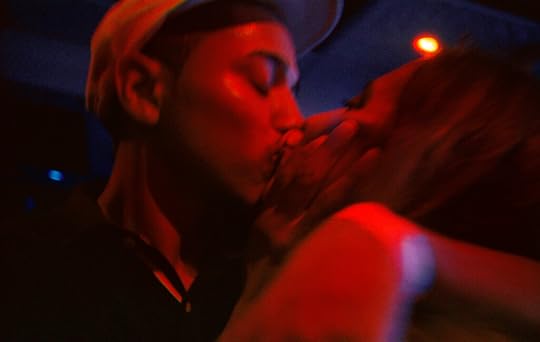 Dean Majd,
crimson kiss (bobby and lex)
, 2017, from the series Hard Feelings
Dean Majd,
crimson kiss (bobby and lex)
, 2017, from the series Hard FeelingsLin: They seem like a good friend. A lighter question—if Hard Feelings had a soundtrack, what would be on it?
Majd: For the last few years, I considered how the thousands of photos that were made for the series could play as a slideshow, and what that soundtrack would be. I made a playlist of that soundtrack for the opening of the show. There’s a lot of Young Thug, Chief Keef, Kid Cudi, Pop Smoke, and Future. On the other side of the spectrum, there was FKA twigs, Blood Orange, Lana Del Rey, Kelela, Jeff Buckley, Fleetwood Mac, Taking Back Sunday, and Paramore, and even something as joyous as Rihanna’s “We Found Love.” The title, which I named on a whim, comes from a Lorde song that was really important to me called “Hard Feelings/Loveless.” There are these really poetic pop, indie, and rock songs with this kind of tough rap, laced with some yearning R&B. There’s this interplay between hardness and softness even within the music we listened to.
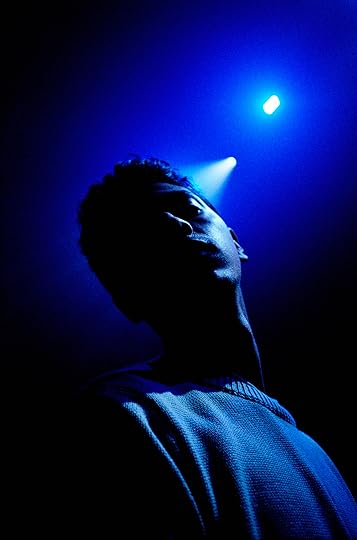 Dean Majd, hyper dark, 2019, from the series Hard Feelings
 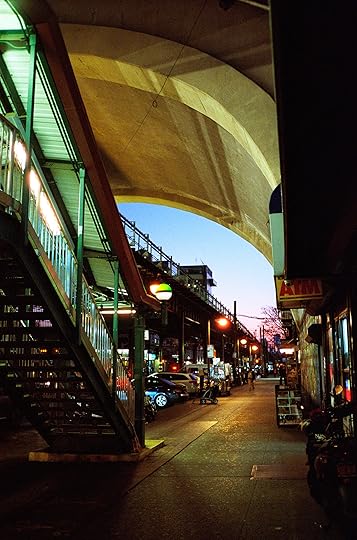 Dean Majd, 31st street, astoria, 2019, from the series Hard Feelings
 Lin: As someone who’s been to one of your openings, I can attest to your incredible community of support. People really show up and show out for you, and your openings always seem to have this incredible, vibrant, downtown energy that feels increasingly rare these days. It makes me curious—what does Dean Majd’s New York look like?
Majd: Yeah. I mean, thank you. I’ve been told that before and I resist any praise around it. I’m sure there are many people who found out about the show from the network of the photo community. But the truth is probably more than 80 percent of the people who came to the opening are people who have seen me grind for across those ten years. There’s a lot of love in the air from people who have encountered me throughout time, who have worked with it together, or who I’ve photographed both casually or seriously.
It’s also indicative of the world I photographed. I stand on the shoulders of these communities that have seen me work this hard because they created the culture in which I photograph. The show very much feels like our show; it feels like a win for all of us, and that we all did this together, every person in every community that has been a part of the work and has supported the work. It felt like a very open and loving space. Because I wouldn’t have gone here without their support, without the kind of culture of New York that I’m a part of. And that culture stems out to graffiti, skateboarding, music, cinema, paint, other forms of art. But also the Muslim community, the political community that really shows up for me, the Palestinian community. I really don’t take credit for this. It’s really because my friends are incredible people.
 Dean Majd, heaven’s inferno, 2017, from the series Hard Feelings
 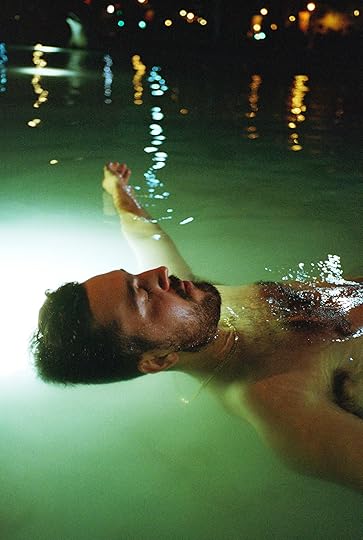 Dean Majd, dylan (baptism), 2019, from the series Hard Feelings
 Lin: Totally. And this is such a New York story in a lot of ways. What other New York stories—photo, film, or otherwise—were inspiring to you as you made this work?
Majd: Like I said earlier, when I was eighteen, I discovered Nan Goldin’s Ballad, and it changed my life. Her work and activism, specifically for Palestine, have remained as my North Star, and meeting and working with her has been a dream. When I was in middle school, my brother and I discovered Larry Clark’s Kids at Blockbuster and essentially hosted screenings at our friends’ houses. It felt like this thing I wasn’t supposed to have seen, and it completely seeped into my subconscious. Other films include John Cassavetes’s Husbands, which felt like a premonition of my future; Abel Ferrara’s King of New York; and Charles Stone III’s Paid in Full. In middle school, I listened to Nas, 50 Cent, and Dipset, but also Taking Back Sunday and all these emo bands from Long Island. I romanticize cold winter nights listening to jazz, and after COVID, I’d stay up all night listening to Miles Davis and imagine my friends were doing graffiti to Kind of Blue.
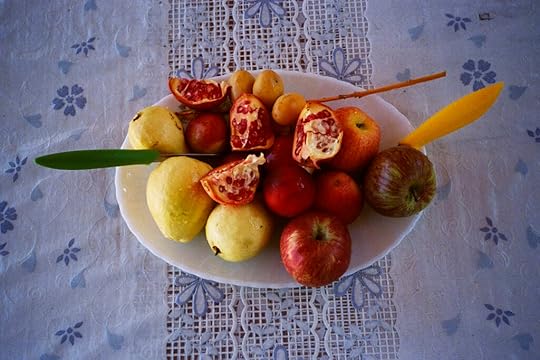 Dean Majd, Fruit Plate, Nablus, Occupied West Bank, Palestine, 2018, from the series Separation
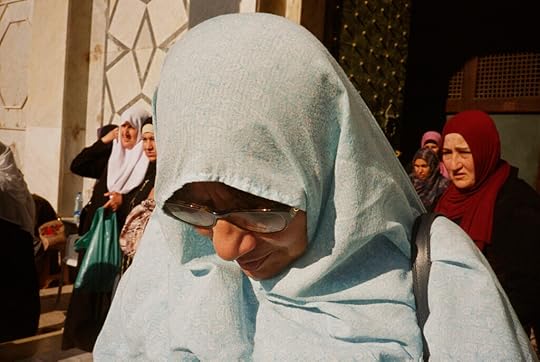 Dean Majd, My Mother (with Women) Leaving Prayer at Al-Aqsa Mosque, Al-Quds (Jerusalem), 2018, from the series Separation
Lin: What work are you showing in Greater New York? What’s it like to be showing at MoMA PS1?
Majd: Well, PS1 is my favorite museum. It’s the museum in my neighborhood. It’s really shaped my existence as an artist. I’m living my dreams, straight up. I never thought that this could happen. The curators at MoMA PS1, Ruba Katrib and Elena Ketelsen González, have been so supportive of my work and my practice. I’m interspersing two bodies of work. One is called Separation, which was made in 2018 of my family in Palestine. And the other is Birthmark, which is a new body of work around Arab American identity.
Essentially, I’m interspersing landscapes and family photos from Palestine with these portrait sessions I’ve been doing with Palestinian Americans in their homes. They are going to be hung in a collage form, almost like a constellation, to speak to the connection and disconnection between Palestinian Americans and Palestine as a result of occupation, expulsion, especially of those of first generation, second generation—or even recent refugees and migrants. It feels like a risk, and I’ve never done anything like it before, but MoMA PS1 is an experimental space after all.
Lin: How are you feeling about the future otherwise? Do you have any feelings, fears, plans, ambitions, for what’s to come?
Majd: Cinema has defined my life, yet somehow I’ve never directed a film. And I’ve always talked about directing a film, and I always thought photography would lead me to do that. But in general, I feel like every artist needs to get away and be quiet for a while and figure it out and let the ideas come. I need to fall in love. And I’m really excited to fuck off and go to the beach.
Hard Feelings is on view at Baxter St at the Camera Club of New York through April 8, 2026. Greater New York 2026 is on view at MoMA PS1 from April 16 to August 17, 2026.
March 27, 2026
Carrie Mae Weems Gets to the Heart of the Matter
Carrie Mae Weems is a touchstone artist, renowned for her work investigating history, identity, and power. Last year, Aperture and Allemandi Editore copublished The Heart of the Matter, a comprehensive monograph that gathers Weems’s landmark bodies of work from Family Pictures and Stories (1978–84) to her most recent series on the Black Church. Transcending medium, chronology, and geography, the volume puts Weems—as well as her spiritual and philosophical journeys—at the center of the discourse, underscoring the singular value of her vision in grappling with the complexities and injustices of the world around us.
Accompanying the book is a related touring exhibition I curated, which first premiered at the Gallerie d’Italia, in Turin, and opened this month at the Fotomuseum Antwerpen. Here, we revisit our conversation (condensed and edited for clarity) from last April in Turin, in which we discuss translating five decades of work into an exhibition, how spirituality and artistic vision are interwoven, and the multifaceted layers of self.
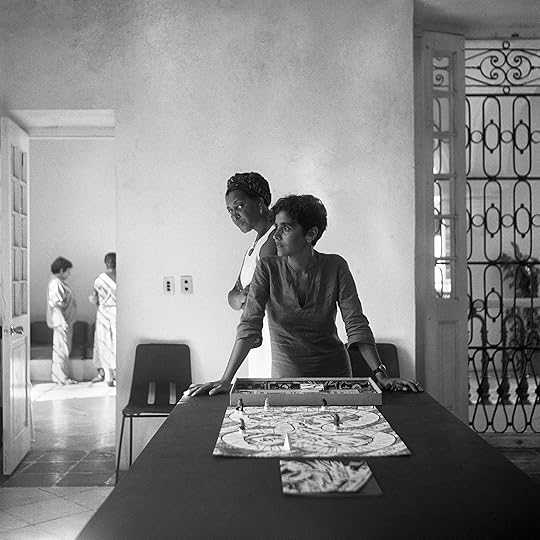 Carrie Mae Weems, Wifredo, Laura, and Me, 2002, from the series Dreaming in Cuba
 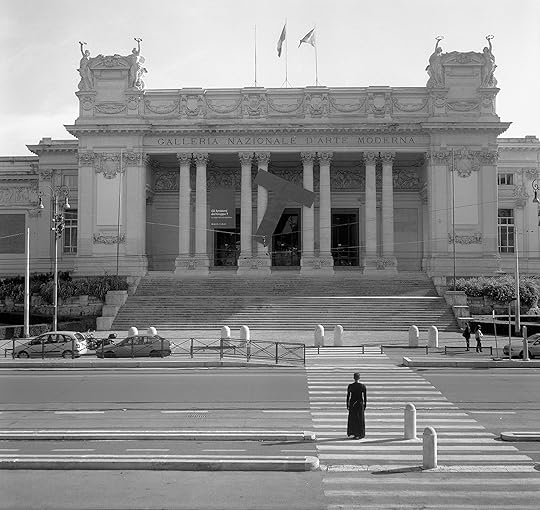 Carrie Mae Weems, Galleria Nazionale d’Arte Moderna—Rome, from the series Museum, 2006–ongoing
 Sarah Meister: So, first, I just want to say thank you, Carrie. Thank you for the joy of working on this show. Thank you for sharing these works. We are going to make this a true conversation, although because I’m a photo nerd, I have questions written down.
The esteemed American scholar Henry Louis Gates Jr. noted in 2012 that there is “little space between Weems and her work.” I think what he meant was that Carrie is someone who lives her life intertwined with her work in ways that bring it particular power and meaning. In some ways, that was the inspiration for the structure of this show, putting that “little space” at the heart of the conversation. With that personal spirit in mind, I want to begin by asking, How are you feeling? This big show just opened last night. Here we are in this amazing room surrounded by your work. How are you doing today?
Carrie Mae Weems: I’m really exhausted. I’m really tired. And I’m also really excited. I think the thing that’s most interesting for me in doing any exhibition, first of all, is that I get a chance to see the work because I don’t have wall space in my home big enough to see most of my work. So it allows me to really see the work, and it allows me to see the ideas. It also really allows me, as I feel as though I’m a part of the audience, that I’m not simply the maker but that I’m the audience experiencing the work along with you. And there’s something interesting about that, right? That sense that you’re right there, that there is very little separation between me and the work. And so, I am always operating in some way as a participant-observer in the work, that I am both in it and outside of it.
And being outside of it allows me to see it. It allows me to see the problems, but it also allows me to see the resolve. And it also allows me to see a kind of persistence of vision that has happened over a long period of time. And so, to that extent, I’m really grateful for the opportunity to be showing the work and sharing the work here at Gallerie d’Italia. It’s really exciting and more than I actually anticipated.
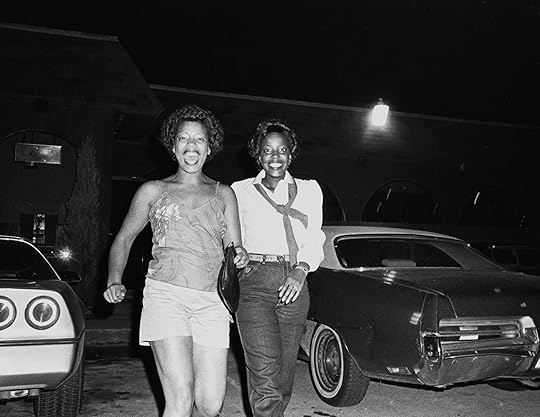 Carrie Mae Weems, Welcome Home, 1978–84, from the series Family Pictures and Stories
  Carrie Mae Weems, Van and Vera with Kids in the Kitchen, 1978–84, from the series Family Pictures and Stories
 Meister: That persistence of vision was actually part of my second question because while this is a retrospective that covers five decades of achievement, there are certain concerns that were central focal points from the start. I’m thinking of Family Pictures and Stories, for instance, which is installed here next to Leave Now!, which was made much more recently. Each of these engages with your family history. And I’m curious when you think about how much time has passed since the person you were in 1978, when you started Family Pictures and Stories, and now. Can you reflect back into where you were when you started this journey and how it feels to see those works now?
Weems: Somehow, I’ve always had this feeling. I wonder how those of you in the audience also feel. I’ve always felt that I was exactly the same person. I remember being eight years old, about seven or eight, sitting on the back porch of my house at sunset, looking out at the sky, wondering who I was and what this universe was, what this world was that I happened to be living in. At eight years old, I already felt like an existentialist. But this sort of feeling that you are who you are, that you are who you are and that the thing that you are changes over time is simply you growing deeper into yourself, and you’re learning to express yourself more specifically, in more complicated ways as you age. But that feeling, the feeling that I’ve always had has been very, very persistent. So the ideas of beginning with something like Family Pictures and Stories and ending with something like Leave! Leave Now! or, for that matter, Preach, they’re all out of the same package. They’re all out of the same suitcase. It’s all out of the same luggage, right?
I am Carrie Mae Weems, the daughter of Myrlie and Carrie Weems. I have six brothers and sisters. I am and we are the children of sharecroppers. And that understanding of where I come from, where my family comes from, how my family evolved, and their relationship to other families is socialization that has simply been a part of my imagination for a long period of time. And so, while Family Pictures and Stories was made forty-five years ago, it looks exactly like Preach, and Preach looks exactly like Leave Now! And all the material is essentially the same because all the material is really coming from someone with a very particular kind of DNA. And I just want to say one other thing about this, this idea that you have this sense that you are who you are, and you are that from the very beginning. And the thing that’s changing all the time is your ability to express who you are now, who you are now, right? So you’re growing deeper into yourself. But the thing that’s amazing and extraordinary to me about who we are as individuals and the power of that is that every single thing that you have touched in the course of your life carries your DNA. That seat that you’re sitting in will carry your DNA. This layer upon layer, upon layer, upon layer, upon layer, upon layer, upon layer will carry your DNA. And that idea of tapping into the possibility of understanding the magnificence of this, that you are leaving behind remnants of yourself everywhere you go is really a fascinating and extraordinary idea.
 Carrie Mae Weems, Untitled (Great Expectations), 2016
  Carrie Mae Weems, Untitled (Man and mirror), 1990, from the Kitchen Table Series
 Meister: Wow. It’s interesting. I’m not sure if I have ever thought of myself as the same person I was as an eight-year-old, but I think there’s a real truth to that. Part of what I’ve loved about this project is that, for all that I can read about you and all that I can study about the work, it feels like there’s always something more to learn. That wasn’t how I thought you were going to answer that question.
Weems: What did you think I was going to say?
Meister: I guess I was approaching it from a more art-historical perspective, in terms of how you were using a documentary-style image and text to approach, to question, the very authenticity of a language of family albums and photographs. And then, I see those same documentary photographs reemerge in Leave Now! in a very different way. But I actually prefer your analysis. That just wasn’t what I was expecting.
Weems: No, you’re not wrong. I think that there was something . . . It’s really interesting to look at, to compare Family Pictures and Stories, for instance, with Kitchen Table Series. At a certain point, one of the things that became important to me as an image maker was that I was not interested in moving through the world and just taking photographs of people indiscriminately, that there was really a method, and that there was a respect for people in the world, and that it was inappropriate really to simply take someone’s photograph and put it on a wall and claim it, right? That there had to be another way. And so, finding that way, finding a way to use the material, to use the tool of photography as a way of inscribing became very important, but also how to bend it using documentary, using that mode, right? Using that kind of expression, but then developing something like the Kitchen Table Series so that it feels as though it’s a documentary, a set of images, but really it’s simply highly constructed.
So that actually became the challenge of how do you make an image now, knowing what you know, having your moral ground where it stands. How do you then interact with both the subject and the object of the photograph? And so, that, of course, then led me into using my own body as a site and as a ground for that kind of exploration, moving from documentary, paying attention to documentary as a wonderful and powerful form, a narrative form that had such ability and expansiveness, but then bending it in a way that allowed me to play with the field and the form in, I think, a rather unique way.
 Carrie Mae Weems: The Heart of the Matter 75.00 Critical insight into the mind and eye of an artist renowned for her work investigating history, identity, and power. Shop Now
[image error]
[image error]
Carrie Mae Weems: The Heart of the Matter 75.00 Critical insight into the mind and eye of an artist renowned for her work investigating history, identity, and power. Shop Now
[image error]
[image error] 
In stock
Carrie Mae Weems: The Heart of the MatterPhotographs by Carrie Mae Weems. Edited by Sarah Hermanson Meister. Text by Jeffrey Hoone, Dawoud Bey, Dr. Erich Kessel, Dr. Tiana Reid, and Dr. Megan Kincaid.
$ 75.00 –1+ Shop Now Description
Critical insight into the mind and eye of an artist renowned for her work investigating history, identity, and power.
The book is copublished by Aperture and Allemandi Editore. Details
Format: Hardback
Number of pages: 264
Number of images: 170
Publication date: 2025-07-15
Measurements: 8.5 x 10 x 1 inches
ISBN: 9781597115841
“Weems is at the heart of everything she does. But these artworks are not ‘about her’: they are for every woman, every Black individual, anyone who knows what it is like to face inequality or have their voice silenced. That is what makes The Heart of the Matter so important.”—Aesthetica
ContributorsCarrie Mae Weems (born in Portland, Oregon, 1953) is a widely influential artist whose work gives a voice to people whose stories have been silenced or ignored. Over the course of forty years, she has built an acclaimed body of work using photographs, text, fabric, audio, digital images, installation, and video. She has received numerous awards, including a MacArthur Foundation Fellowship, the US Department of State’s Medal of Arts, the Joseph H. Hazen Rome Prize Fellowship from the American Academy in Rome, and the Congressional Black Caucus Foundation’s Lifetime Achievement Award. Her work is in collections worldwide, including the Metropolitan Museum of Art, New York; Museum of Fine Arts, Houston; Museum of Modern Art, New York; Museum of Contemporary Art, Los Angeles; and Tate Modern, London.
Sarah Hermanson Meister is executive director at Aperture. She worked in the Department of Photography at the Museum of Modern Art for more than twenty-five years, where she curated acclaimed exhibitions on the work of Josef Albers, Bill Brandt, and Brazilian modernist photographers, as well as Dorothea Lange, Gordon Parks, and many more.
Jeffrey Hoone was director of Light Work, Syracuse, New York, for forty years and is a working artist. He has written extensively on photography and served on peer review panels for the New York State Council on the Arts and the National Endowment for the Arts. He is married to Carrie Mae Weems.
Dawoud Bey makes groundbreaking and evocative work about the histories of Black communities. A major career retrospective of his work, An American Project, was co-organized by the Whitney Museum of American Art, New York, and San Francisco Museum of Modern Art. Bey’s many books include the Aperture titles Class Pictures (2007), Dawoud Bey on Photographing People and Communities (2019), and Elegy (2023).
Dr. Erich Kessel is assistant professor of art history at the Institute of Fine Arts at New York University. A scholar of contemporary art and critical Black studies, Kessel has published essays on Jacob Lawrence and Jacolby Satterwhite. He is coeditor of a collection of sketches entitled An Excess of Quiet: Selected Sketches by Gustavo Ojeda, 1979-1989 (2020), which was a finalist for the 2021 Lambda Literary Award in LBGTQ Nonfiction. Kessel received his PhD in the history of art and African American studies from Yale University in 2023.
Dr. Tiana Reid is assistant professor of English at York University, Toronto. Her research and teaching interests include Black literature, gender, and labor. Her writing has appeared in American Quarterly, Art in America, Bookforum, Frieze, the Nation, the New York Review of Books, the New York Times, and the Paris Review, among other places. She is a former editor at the New Inquiry and Pinko. In 2021, she received her PhD in English and comparative literature from Columbia University.
Dr. Megan Kincaid serves on the faculties of the Cooper Union and New York University. Her scholarship reconstructs the history of Modernism in the Americas through the lens of critical refugee theory and mobility studies. Her writing has been published by the Museum of Modern Art, New York, and Duke University Press and has appeared in Artforum, the Brooklyn Rail, Gagosian Quarterly, among others. She has organized exhibitions of José Antonio Fernández-Muro, Cauleen Smith, Frank Stella, and others. She received her PhD from New York University in 2024.
Meister: Another thing that I learned about you over the course of this project is that you are a deeply spiritual person, that religion plays more of a central role in your life than I had understood. I had an inkling when I first read this quote from an interview you and Deb Willis did for To Make Their Own Way in the World: The Enduring Legacy of the Zealy Daguerreotypes (Aperture and Peabody Museum Press, 2020). You said, “I understood this photographic self to be a muse and a guide into the unknown miraculously.” And I think that word muse has a particular meaning we can get to—“The muse evolved out of my resistance to photographing people without permission. And in the process, I discovered an entirely new way of working and indeed discovered myself. Praise God.” And it’s really only over the course of doing this project that I realized that that wasn’t just about you grappling with questions of consent in photography. That was what suggested to me, like Skip Gates’s quote, that centering your self could be the organizing principle. You weren’t just a leitmotif. You as a muse, you as a guide, also feels like where you’re pulling us into Preach. Would you tell everyone here a little bit about how this new series emerged?
Weems: I’ll try. I’ll try. In one way or another, I’ve been photographing . . . I’ve been stepping in and out of churches for a long time, stepping in and out of churches for a very long . . . I’m actually not a deeply spiritual person.
Meister: Really?
Weems: I’m a big sinner.
Meister: You can be a sinner and be spiritual.
Weems: Right? Yes. No, right? I appear to be that way, right? It’s a wonderful trick.
Meister: You fooled me.
Weems: No, but I’m interested in it. And of course, as I age, as I age, this question of mortality is looming large. I wake up every morning like, I’m really still here. I am still here.
 Carrie Mae Weems, Leave Now!, 2022
  Carrie Mae Weems, Untitled, from the series Preach, 2024
 Meister: Thank goodness.
Weems: Thank goodness. And I have all these questions. And I think in part, I go to church. I have a church that I go to, and I very much like my pastor. It’s a very progressive church. The church in the Black community is unique. I have a couple of things that I’d like to say that I think are important that maybe haven’t become clear. I think of Preach as being a great sign and Family Pictures and Stories and Leave! Leave Now! as being extraordinary sites of resilience, of incredible resiliency.
So, when I started looking at the church, I’d been photographing, as I said, in and out of the church for a very, very long time, thirty-five, forty-five years. The first photographs I made were actually in a Black church. The Black Church is a social organization. It’s a social tool. It’s not just for religion. It was really the fundamental way in which Black people in the United States primarily organized themselves for resistance. It was the one place where you could be safe. Every major civil rights movement in the United States was essentially organized within the Black Church, not the quote, unquote, “Black community,” in a sort of broad way, but rather in a very specific way.
So Martin Luther King Jr. arises out of the Black Church. Rosa Parks arises out of the Black Church. Malcolm X arises out of the Black Church. Muhammad Ali arises out of the Black Church. It’s a very important and, again, safe place. And at the same time, of course, the Black Church was always a church under attack. So they were bombed, they were burned, they were destroyed, they were hunted, and this, of course, continues to be true. The number of bombings that happen around Black churches continuously throughout the South is real. It didn’t happen fifty years ago or twenty years ago. It is an ongoing occurrence, right? Throughout the 2000s, there were Black churches bombed all throughout the South, burned all throughout the South. It doesn’t make a lot of news, but that is the reality.
And so, for me, going to the Black Church was not simply a matter of my spiritual practice, but rather going there as a site of community, as a space where Black people are allowed to be who they are in a society that ultimately does not welcome them and as a place where they are able to organize in a more consistent and persistent way. It’s a really important aspect to how the Black community and how Black people have actually formulated themselves in the United States. And it’s really very, very important. So, this idea about resiliency, about the ability to overcome, is one of the reasons that the church has been so important. And, of course, the great song “We Shall Overcome,” right? It’s anchored in the very root of the church and this idea that we should overcome. And the song is there for us all to know and all to hear. So, yes, I am a big sinner. I drink, I smoke, I curse, I swear, I hang out, and then, I go to church on Sunday and talk about it.
Meister: I suspect a few of us can relate.
Weems: So, this idea that there’s this crooked road, it’s very important. It’s very important. It’s very important to understand.
 Carrie Mae Weems, Untitled, from the series Preach, 2024
  Carrie Mae Weems, Road Sign, 1991–92
All photographs courtesy the artist and Gladstone Gallery, New York; Fraenkel Gallery, San Francisco; and Galerie Barbara Thumm, Berlin
Meister: That crooked road image is a recurring motif, a picture you made in the early ’90s, but that more recently has been integrated into Leave Now! and Preach in different forms.
Weems: One of the things that’s always interesting to me is trying to understand. I realized, for instance, that this work is very much in dialogue with my audience here, that it has the same kinds of questions that I’m asking or being asked here, perhaps in a slightly different way, but the issues and the ideas are fairly consistent.
I was wondering for you and for Antonio [Carloni, deputy director, Gallerie d’Italia, Turin], when did you decide that you really wanted to work with me. What was it about the work that you thought might translate well in a larger exhibition? What were you trying to get at, and why did you think that this work might be important to share with a larger audience?
Meister: Well, I’ll start by saying I think that now is a moment where being willing to ask where you’re coming from with respect to the most critical issues we’re facing as a society is important. The need to be brave and vulnerable, to hold to your convictions, but also, to actually listen. I think these are skills that you don’t have to be young or old, American or from anywhere else, Black or white, to know that these skills need our urgent attention. And to my mind, there is no artist whose work points in directions that all of us can follow to get us there more than yours.
Weems: It’s so interesting.
Advertisement
googletag.cmd.push(function () {
googletag.display('div-gpt-ad-1343857479665-0');
});
Meister: Ultimately, I think that when you put yourself at the heart of the matter that is not only an invitation to each of us, but it’s also an expectation. It’s asking us, “What are you doing?” And I think there’s a bravery in that. There’s a centeredness in that, and I think that, honestly, every human being on this planet would benefit from being in that space, from asking oneself the questions that you’re laying down. We should be picking them up.
Weems: And then, I’ll just say this as well. I’ve tried to very much live my life in a multifaceted way. I enjoy having friends from every conceivable walk of life. And so, my friends are Black, and they’re white, and they’re Jewish, and they’re Italian, and they’re French, and they’re Japanese. And it’s through that mix of having this dynamic life that matters to me. If being engaged with the politics of difference is important, then I really need to live my life in that way, right? That I need to have friends from and be in dialogue with a multiplicity of people in order to evolve. And so, to the extent that we are narrow, to the extent that our lives are built around the thing that makes us most comfortable, which is usually people that look exactly like us, is to the extent that we’ve lost sight of the deeper complexities of our humanity, that everybody looks like me. Everybody looks like me.
So, this, I think, is really important. How do you then live your life? If you want change, then how do you live your life? If you want diversity, then how do you live your life? How do you bring diversity into your life? This is my question. And it’s the question that really then is instilled in all the work. If you are interested in diversity, then how do you bring that in a dynamic way into your life. And diversity among many, many different kinds of things, not simply along the boundaries of race but also along the stratospheres of reality and possibility.
Carrie Mae Weems: The Heart of the Matter is on view at Fotomuseum Antwerpen through August 23, 2026.
A Sacred Forest with a Secret History
For the past several years, Gayatri Ganju, who was born in 1989 and lives in Bengaluru, India, has traveled south into the dense Nilgiri forest in Tamil Nadu to take pictures among the Kurumba people, one of the several Indigenous groups inhabiting the land. Her companions are two Kurumba men: Murthy, who is in his thirties, and Subbu, in his sixties; both serve as her guides and translators. Ganju needs a translator because she makes images only after close listening. During her treks, she asks the Kurumba to share their stories about the forest, this forest that is sacred to them and the site of their ancestral habitation. These meetings enact a ritual, with everyone sitting in a circle, sharing what they remember, and often what they are forgetting.
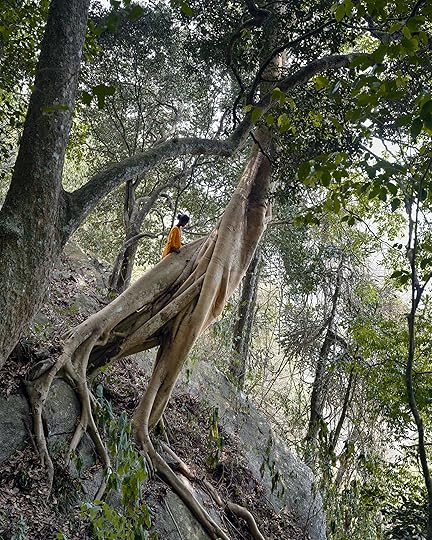
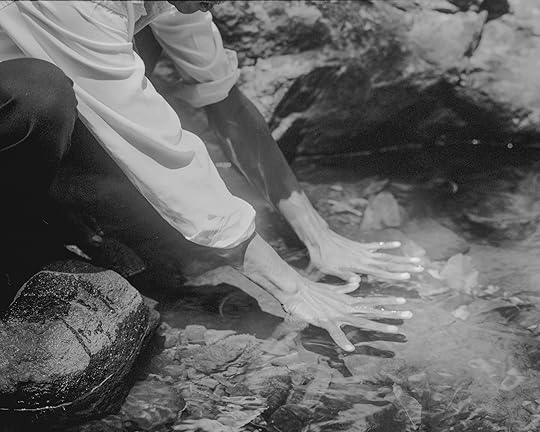
It is not always easy; there has been some suspicion of Ganju as an outsider. Early in her project, Ganju participated in a discussion with Kurumba representatives, and it was decided that the stories she collected would remain behind, among the people. Ganju was given permission to take only one story out into the world. This is the story that she received—a story about how the forests came to be born:
God made the world and then told the birds that there were no trees yet, and he was going to give them seeds to take back and put into the soil. The birds began their journey, but a wicked giant had overheard the conversation, and, as he didn’t want any trees, he took the seeds from the birds. The giant put the seeds in a big, hot pan and began to roast them so that they would die. There was one very clever little bird called the pirikki who understood what the giant was doing. She dived into the pan to save the seeds. In the process, some of her feathers were burned and turned black, and that is how the black-and-white pirikki got the marks on its feathers. The pirikki carried the seeds in her beak and planted them in the earth. These seeds turned into huge thriving forests.
Aperture Magazine Subscription 0.00 Get a full year of Aperture—the essential source for photography since 1952. Subscribe today and save 25% off the cover price. Shop Now
[image error]
[image error] In stock
Aperture Magazine Subscription $ 0.00 –1+ Shop Now DescriptionSubscribe now and get the collectible print edition and the digital edition four times a year, plus unlimited access to Aperture’s online archive.
When I first encountered the pictures in Ganju’s series The Pregnant Tree (2016–ongoing), they appeared mysterious. The story that Ganju had heard among the Kurumba offered an explanation. Even now, these images seem to belong to a play; they are staged, a dramatic moment caught in a long performance. However, as I looked at them more, it began to seem that the real silence that the photographs hold within them is the silence of the forest itself. Ganju told me that official records indicate that over the last two hundred years, there has been an 80 percent loss of the Nilgiri grasslands mosaic. This is an ancient, prolific ecosystem with 3,500 flowering plants and 1,500 endemic species; it is recognized by UNESCO as one of the world’s most biodiverse areas. We do not witness in Ganju’s work the depredations carried out in the name of development, or the lives of the people forced out of the forest and now living in urban slums—displaced people, like seeds being roasted in a pan over a fire. This, too, is a part of the silence and mystery of these photographs. They possess the quiet calm of trees in a forest. There is much for the viewer to learn and find moving in that world that is still there.
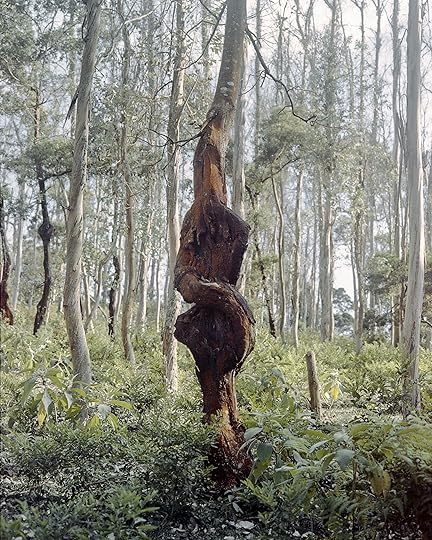
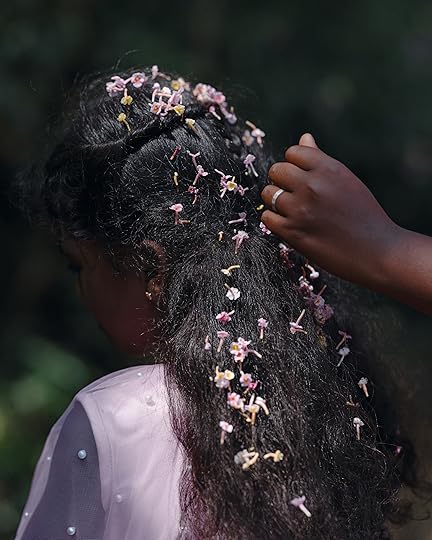
Advertisement
googletag.cmd.push(function () {
googletag.display('div-gpt-ad-1343857479665-0');
});
 All photographs by Gayatri Ganju from the series The Pregnant Tree, Tamil Nadu, India, 2016–ongoing.
Supported by Magnum Foundation and Museé du Quai Branly
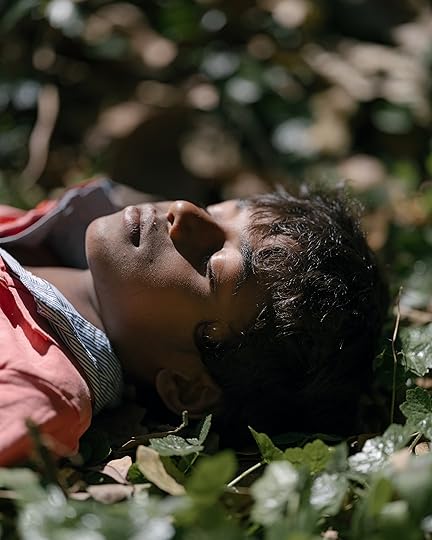
This article originally appeared in Aperture No. 262, “The End of Nature?”
Aperture's Blog

- Aperture's profile
- 20 followers

