
Marcus Clark's Blog: What to read next
July 26, 2014
Man Booker Prize 2014 long list

Australian author Richard Flanagan has made a long list of 13 for the 2014 Man Booker Prize with novel his novel The Narrow Road to the Deep North.
The novel was inspired by Flanagan’s late father, Archie Flanagan, who survived being a POW on the Thai-Burma railway.
“I wish I could have told him [about the nomination]; it mattered to him that people remember what happened in places like the death railway, and he hoped this book might in a small way would help that happen.” Flanagan said.
It is the first year the prestigious literary award has been open to all authors writing in English and published in the United Kingdom.
The change that scrapped the old rule limiting the 46-year-old prize, which carries a 50,000 pound ($90,100) award, to novels written by citizens of Britain, Ireland and the Commonwealth, was criticised on grounds that Americans would come to dominate it, squeezing out other talent.
But in announcing the long list, Booker Prize Foundation chairman Jonathan Taylor said that by making the change, “the Man Booker Prize is reinforcing its standing as the most important literary award in the English-speaking world”.
American writers hold four of the slots on the list – Joshua Ferris, Karen Joy Fowler, Siri Hustvedt, and Richard Powers.
The prize committee said 154 books had been entered for this year’s prize, and that would be further whittled down to a short list of six books to be announced on September 9.
The winner was to be named on October 14.
Man Booker Prize 2014 long list
Joshua Ferris (American) – To Rise Again at a Decent Hour
Richard Flanagan (Australian) – The Narrow Road to the Deep North
Karen Joy Fowler (American) – We Are All Completely Beside Ourselves
Siri Hustvedt (American) – The Blazing World
Howard Jacobson (British) – J
Paul Kingsnorth (British) – The Wake
David Mitchell (British) – The Bone Clocks
Neel Mukherjee (British) – The Lives of Others
David Nicholls (British) – Us
Joseph O’Neill (Irish/American) – The Dog
Richard Powers (American) – Orfeo
Ali Smith (British) – How to be Both
Niall Williams (Irish) – History of the Rain
THE MAN BOOKER INTERNATIONAL PRIZE
The Man Booker International Prize is an international literary award given every two years to a living author of any nationality for a body of work published in English or generally available in English translation.
The Man Booker Prize, is for a single work. Whereas the International Man Booker Prize rewards one author’s “continued creativity, development and overall contribution to fiction on the world stage.” Therefore the award is a recognition of the writer’s body of work, rather than any one title. Also the International Man Booker is open to all countries.
The award is worth £50,000 and an author can only win once.
The judges compile their own lists of authors and submissions are not invited. The award is every two years, whereas the Nobel Prize in Literature is awarded annually.
Here is a list of previous winners.
2005 Ismail Kadare Albania Albanian
2007 Chinua Achebe Nigeria English
2009 Alice Munro Canada English
2011 Philip Roth United States English
2013 Lydia Davis United States English
The post Man Booker Prize 2014 long list appeared first on WHAT 2 READ NEXT.


May 27, 2014
EVIL IN A SMALL TOWN
JASPER JONES by Craig Silvey
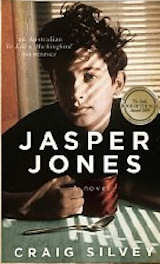 This novel, set in Australia in 1965, tells the story of thirteen-year-old Charlie Bucktin who becomes involved in a terrible crime with the precocious, street-smart, Jasper Jones. The story, while centering around teenagers, and told by a teenager, is suitable–even intended–for adults by its use of language and ideas.
The action takes place in a country town in Western Australia, but it could well be a rural town in any nation. The characters are well-drawn, realistic, and the story is interesting and amusing, expressing the viewpoint of teenagers.
One night Jasper Jones comes knocking on the bedroom window of Charlie Bucktin, asking for help, but in what way Charlie does not understand until they arrive at a bush clearing where Charlie has the biggest shock of his life. From that moment on, 13-year-old Charlie, innocent as a lamb, is drawn into a horrible crime.
Jasper Jones is the town outcast, of mixed race, with an alcoholic father, and a dead mother, who lives by his wits. He is exhibited by the adults as an example of total failure, of what can happen to you if you defy your parents or teachers. Jasper is always the first suspect for any law-breaking, and so is the first person questioned for the crime that the novel revolves around.
Charlie’s friend, is the talkative, amusing, cricket player, Jeffrey Lu who is bullied, bashed, and ridiculed at school and on the oval, because of his Vietnamese ethnicity. During the annual cricket match with the nearby town of Blackburn, Jeffrey performs a miracle for the home team, and for the first time there is grudging acceptance of him. But like Jasper Jones, his family are the target of racist taunts and violence. One nit-picking point is that in 1965 there were practically no Vietnamese living in Australia, apart from the Vietnamese Embassy, let alone in a country town in Western Australia.
The story is excellent, depicting the teenage world, but dealing with adult issues. The language is interesting, with good metaphors, neat little jokes, but the words and concepts are not those of 13-year-olds, but more like 19 or 20. There is a lot of hypocrisy on the part of the teenagers, sneering at adults who drink too much, while they are, at that very moment, getting drunk on stolen scotch and smoking stolen cigarettes. In fact there are constant references to Jasper’s smoking. The coarse language, spread through the book, is not something you would want a 13-year-old to assume was normal.
I found it hard to shake the discrepancy of the characters’ age with their speech and actions. A great pity, because it is an interesting book, dealing with social problems that should be discussed. There is plenty of teenage angst, which although well written might not hold much interest for adults. The story fits together in a satisfactory manner, and builds to a decent climax.
The novel is worthwhile reading, but not suitable for anyone under 16. Many of the little jokes would escape even a 30-year-old unless they were well read. For example, he says of Norman Mailer, “I wonder what Norman Mailer would think of me now. He’d probably smirk and shake his head and call me a fugging pussy. Probably come at me with a pen-knife.”
And this reference: “We’d be like Kerouac and Cassady. We could steal away in boxcars, ride all the way across the country.” Great if you have read The Naked and the Dead, articles on Mailer’s wives, and Kerouac’s On The Road. All worthwhile books, but they were published about 60 years ago, and are not widely read by today’s 20-year-olds, more’s the pity. These asides could be considered small flaws, or thought of as extras for those who have the knowledge, they are just small throwaway lines, but add to the pleasure of an enjoyable novel.
The majority of people who read this book were delighted with it, they either didn’t notice the flaws, or didn’t feel they were important. It won high praise from literary judges; nevertheless almost all reviewers skirt around the cornerstone of this book, because it is unpleasant or else they are afraid to give a spoiler. Before giving this novel to a teenager you should know that the basis of the novel is about the sexual abuse of a teenage girl by her father, resulting in her pregnancy and suicide. The characters search for the truth to these events, initially assumed to be murder; while they are not described graphically, they are the core of the book.
Marcus Clark www.what2readnext.com
For the best Australia books click here
Winner Australian Book Industry Award 2010
Winner The Indie Book Award 2009
Short-listed for many writing awards, including the Miles Franklin Award.
The post EVIL IN A SMALL TOWN appeared first on WHAT 2 READ NEXT.
April 7, 2014
BOOK REVIEW: Rabbit, Run by John Updike
Rabbit, Run by John Updike
 It is more than 30 years since I first read this book, yet I still remember the feelings, the location of where and when I read it. Rabbit Run was quite a revelation to readers in those days. One of the first non-pornographic books to use the F-word, the C-word, and to give detailed descriptions of sex; not just the details, but brought it down to earth, into practical realms. It was not the “swearing” that made Rabbit, Run popula
r, it was the descriptive passages, the conflict, the foolish actions of the characters that caught our attention. It is not a story of people from Wall St, the FBI, or Harvard. It is a story of ordinary people — just like those who live in your street. You might not like them, but they are real people.
It is more than 30 years since I first read this book, yet I still remember the feelings, the location of where and when I read it. Rabbit Run was quite a revelation to readers in those days. One of the first non-pornographic books to use the F-word, the C-word, and to give detailed descriptions of sex; not just the details, but brought it down to earth, into practical realms. It was not the “swearing” that made Rabbit, Run popula
r, it was the descriptive passages, the conflict, the foolish actions of the characters that caught our attention. It is not a story of people from Wall St, the FBI, or Harvard. It is a story of ordinary people — just like those who live in your street. You might not like them, but they are real people.
The story is set in 1959 in Pennsylvania. The protagonist, “Rabbit” Harry Angstrom, is not particularly likeable, nor is his wife Janice. This is not a story about heroes, but about defective humans. In the first few pages we find Janice, pregnant, sitting at home watching The Mickey Mouse Club, drinking, smoking, with the house in a state of disorder.
Their toddler, Nelson, is being minded by Rabbit’s mother, while their car was left outside his mother-in-law’s house. Rabbit, sent to pick up Nelson and the car, decides on the spot that his son is better off living with the boy’s grandmother. He suddenly gets the idea that he should drive a thousand miles south, leaving his problems behind, and sit on a beach instead of going to work. So he sets off driving south, makes a mess of this — confused by maps, road signs, and his own sense of direction, he takes a wrong turn, and discovers he is travelling back the way he had come. Without any plans, he finds he is barely out of the state after driving most of the night. Disappointed that he is not half-way to Florida, he decides to return to his own town, but not to his old life.
He abandons his wife and child, his job as a MagiPeel Peeler demonstrator in department stores, his former life; all of which he was dissatisfied with, and not without reason. Rabbit was a basketball star at high-school, he was well-known, almost famous in his town, but after school he found that his former days of glory were of no consequence in the world of business. He drifts from job to job, while his wife Janice, pregnant with their second child, watches TV, smoking and drinking, while their small apartment falls into chaos.
 The story is told with irony, the characters clashing, arguing, niggling at each other. They are immature, acting impulsively, saying and doing the first thing that enters their minds. Yet for all his foolishness, his absurd ideas, his superficiality, Rabbit Angstrom is likeable, amusing, and interesting — like an exuberant teenager.
He settles in with his ex-prostitute girlfriend, and has meetings with the local Reverend who tries to guide him back to his home and wife. There is discussion about God and what God wants from them, but it is full of playfulness and irony. The Reverend meets another preacher who reprimands him for trying to solve the problems of his parishioners. This causes the Reverend to have a crisis of faith — is he doing God’s will, or trying to be a social worker?
Towards the end of the novel there is a cataclysmic event, which comes as suddenly as an unexpected slap across the face. It changes all their circumstances, and reappears in each of the later Rabbit books.
The novel centres on Rabbit and how he makes a mess of his life by failing to make decisions, pushed this way and that by external forces, rudderless. His parents and in-laws see his failings, along with his pregnant girlfriend who despises his emotional drifting, as well as his lack of commitment to anything. She knows he is not going to change, and he doesn’t. The story probes deep into all the characters; the descriptions are detailed and beautifully written, presenting you with a vivid picture of events.
The novel, while in third person, takes the point of view of various characters — for example the Revered Eccles — so that you see through his eyes, feel what he feels, hear his thoughts. The writing gives you the feeling of being inside the character’s heads, like stream-of-consciousness with punctuation.
Rabbit is not a hero, not someone to emulate, but we can learn what not to do by watching his life fall apart because of his lack of consistency, his juvenile way of looking at the world, marred somewhat by his earlier life as a high-school basketball star.
The reading public were enthusiastic about the Rabbit books, always asking Updike to write more Rabbit novels. He said he did not particularly like Rabbit, but the public did. Updike, wrote a new Rabbit book every ten years, and in each one we find Rabbit trying to mature, but not making huge progress — just getting older.
While Rabbit, Run is an excellent book — and where you should start – there are two more that eclipse it: Rabbit is Rich, and the best of all of them: Rabbit at Rest, a novel that encapsulates America at the end of the 20th Century.
Finally there is a postscript book, Rabbit Remembered, which reminded me of a great sportsman who retired at his peak, only to attempt a come-back ten years later.
John Updike was a prolific writer: he wrote 22 novels, 13 collections of short stories, 8 books of poetry, 10 books of non-fiction (mostly literary criticism), 5 children’s books, and even a play. But for the public, it was always the four Rabbit books that his readers loved best of all.
Rabbit is Rich and Rabbit at Rest both won Pulitzer Prizes for John Updike.
To find more great books, go to www.what2readnext.com
Marcus Clark
The post BOOK REVIEW: Rabbit, Run by John Updike appeared first on WHAT 2 READ NEXT.
February 3, 2014
The Black Prince by Iris Murdoch

I hardly ever get around to re-reading books — maybe only 5% of them. It’s not that I don’t want to, it’s just that there are always new books coming out demanding to be read. And I can’t remember re-reading a longish novel within two months of the first reading. When I finished reading The Black Prince, I turned to page one and began reading all over again. It was even better with a second reading, in fact I put it in the list of the 10 best novels I’ve read. A few years later, I read it again for a third time.
Iris Murdoch lived in the world of academics, writers, and artists. She wrote 25 books, including fiction, philosophy, and drama. The Times rated Iris Murdoch as 12th on a list of the 50 greatest British writers since 1945.
Although this novel is a little more wordy that most, you soon find yourself drawn into the unfolding events. It is a somewhat intellectual novel, but totally fascinating. The novel is about the relationships of a group of friends, relatives, lovers, colleagues — intellectual people. Two of the men are writers, one a successful author who writes to make money, the other totally unsuccessful, who writes with great artfulness, and extreme conscientiousness — if he actually writes anything at all.

The story starts with Bradley Pearson, the unsuccessful writer, who is about to move to the country for his retirement. But just as he is phoning for a taxi, his ex-wife’s delinquent brother turns up in an agitated state, raving that the ex-wife has returned to London. While he is trying to get rid of this nuisance and go to the country, a friend phones to say he has just murdered his own wife. And so it goes on, one event is piled on top of another so you hardly have room to breathe, like being in an out of control vehicle, spinning upside down, rolling over and over.
The story is as one of erotic obsession, a mixture of sordidness and philosophy; seduction, abduction, suicide, romance, and murder. But you can never quite grasp who is involved with who. It is Bradley Pearson telling the story, and although we might not like him, his is the only interpretation of events we have.
Yet it is all a muddle as characters contradict each other, lie to each other, their true motives and thoughts hidden. Bradley’s ex-wife is hoping to reconcile their marriage, his sister is in constant deep depression, and wants to move in with him, and Arnold the successful commercial writer is a constant reminder that Bradley is a failed author.
And then it gets complicated.
Don’t expect any detailed sexual descriptions, it is not that explicit. But it is fascinating and full of surprises, you think you understand the characters, their whims, their foolishness, their aching hearts, their lust, but just as you do, you find the whole thing turned upside down.
It is not without its humour, the ironic failure of Freudian psychiatry, the lies the characters tell each other. The foolish assumptions and mistakes they make. It’s all fascinating, as it tackles truth, love, art, aging, and death.
When the narrator of the story, finishes his telling of the events, the book’s editor then gives some of the other characters a chance to put their view of what happened. Their explanations make you suddenly wonder if the narrator told anything of the truth.
And yet there is another level to this novel. When I first read it is was, naively, unaware that Shakespeare’s Hamlet is referred to as The Black Prince. And as you will discover, the book is saturated with references, hints, metaphors involving Hamlet. Without this device, the book would be excellent, adding these references makes it an exceptional novel. It adds real character, spice, and sparks of recognition to the story. It reminds me of James Joyce’s Ulysses, which similarly refers back to the original by Homer. Oddly enough Murdoch, like James Joyce, was also born in Dublin, Ireland. The Black Prince was first published in 1973 and is set in England.
A little more white space between paragraphs would have made The Black Prince easier to read, but please don’t let that deter you from reading this fascinating book, you will be joyfully rewarded as you read.
Marcus Clark
What 2 Read Next Website
The post The Black Prince by Iris Murdoch appeared first on WHAT 2 READ NEXT.
January 9, 2014
BOOK REVIEW: The Passion of Ayn Rand by Barbara Branden
 Barbara Branden, died on 11 December 2013, at 84 years old. She was an “associate” of Ayn Rand, a former member of Rand’s inner circle, and co-author of Ayn Rand’s first biography. Ayn Rand was one of the most influential women in the United States, influencing the financial and political domain. Barbara Branden’s explosive second biography changed what many people believed about Ayn Rand. It presented a view, warts and all, that revealed her private life in unwholesome detail.
Barbara Branden, died on 11 December 2013, at 84 years old. She was an “associate” of Ayn Rand, a former member of Rand’s inner circle, and co-author of Ayn Rand’s first biography.
Ayn Rand, who died in 1982, was one of the most influential women of the twentieth century. She was a philosopher and novelist; her books and philosophy were unlike anything else before or since. Her novels were full of philosophical discussions, sometimes incredibly long, but often described not in words, but in the actions of the characters. Her two best-known books are The Fountainhead, and Atlas Shrugged. Besides novels she wrote a number of collections of essays. An example of her way of turning established beliefs upside-down, is her book, The Virtue of Selfishness.
Her books attracted many followers, particularly generations in their twenties and thirties, who were probably more flexible in their thinking than older generations. Rand was strongly opposed to religions of all creeds, faith, and anything remotely connected to mysticism. She believed in logical reasoning as the only method of thinking.

Politically she was opposed to all forms of socialism, including government assistance to the poor, support for farmers, or giving aid to the starving. She believed strongly in minimal government and laissez-faire capitalism. She believed that governments should not be involved in taxation, hospitals, regulations for industry, commerce, or infrastructure. Basically, she taught that if there was no government interference, then entrepreneurs would provide what was needed at a realistic price based on market forces, not out of altruism, but to fill a market.
Anyone reading a few sentences about her beliefs, and trying to grasp her teachings is going to be unimpressed. For a start it is a philosophy that has nothing in common with any on the planet today or yesteryear. Her teachings are not always easy to fully understand. They are, she claimed, based on rational, logical ideas, rather than faith, and altruism.
All the same her ideas have influenced many world leaders and governments, often indirectly. For example Alan Greenspan was a devoted member of her small group for many years when he was in his twenties. He was converted to Rand’s philosophy of Objectivism by her associate Nathaniel Branden. At weekly meetings, they read sections of Atlas Shrugged as it was being written by Ayn Rand. Greenspan published articles in her newsletters and contributed essays for Rand’s book, Capitalism: the Unknown Ideal. He went on to become the American economist who served as Chairman of the Federal Reserve of the United States from 1987 to 2006.
After that he worked for many of the largest American companies, and the UK government. President Reagan appointed Greenspan in 1987, he was then reappointed at successive four-year intervals until retiring on January 31, 2006. There can be no doubt that Greenspan influenced American financial direction more than any other person during those 19 years.
Greenspan was only one of many influential people who were affected by her ideas; there was also Ronald Regan, Margaret Thatcher, and recently the Republican Party candidate Paul Ryan. The latest political group, are The Tea Party, who choose the parts of Rand’s philosophy they like, and ignore the parts they don’t like, for example her total advocacy of atheism, while they promote Christianity. The Ayn Rand Institute promote her books and philosophy, so far giving away 1.4 million copies of Ayn Rand novels to 30,000 teachers in 40,000 classrooms in the United States and Canada.

But her teachings, although initially attractive, seem flawed to many people. One of her basic tenets is that we must do what is logical, what is rational, without regard to sentiment or altruism; only then can the downtrodden raise themselves up. Assisting people by taxing the rich and giving to the poor, would breed a nation of greedy, lazy, unambitious people, who would permanently require handouts stolen from those who earn through work, investment, risk, and thought. She called people needing assistance “parasites”, believing that do not want to better themselves, or earn their way in life.
Barbara Branden, along with her husband Nathaniel Branden, were members of her inner circle. Unfortunately, the inner circle was something of a Rand Cult: it had an unquestioned leader, who demanded absolute loyalty from its members. Nathaniel Branden was Rand’s “intellectual heir”, nominated as her protege, until the falling out. Nathaniel and Barbara Branden co-wrote the biography called, Who is Ayn Rand?
In 1954, Ayn became strongly attracted to Nathaniel Branden, 25 years her junior, culminating in a relationship. This sexual involvement was reluctantly approved by Barbara and Frank, knowing that they could not prevent it, nor could they out-argue Ayn Rand. This association was presented as a rational, sensible, understandable relationship between consenting adults, all four of them. Yet neither Frank or Barbara could accept it without also accepting destructive emotional pain. Of course this caused difficulties with Barbara, who he still lived with.

The arrangement was quite a clinical one, almost like prostitution, with Nathaniel visiting her for pre-arranged sex. It continued for three years, faltering when Ayn Rand became depressed after the publication of Atlas Shrugged. She did not give up the idea of the affair continuing, but it fizzled out; Nathaniel was glad to escape.
Eventually, Ayn told him she was ready to restart their relationship. Nathaniel was now full of excuses, delays, and self-confessed psychological problems that rendered him unready to continue. The truth was he was already in a sexual relationship with another woman. His marriage to Barbara had always been problematic until they divorced.
Ayn was determined to get Nathaniel back, she phoned him constantly to work on his “psychological problems”, to encourage him to return to her bedroom. As the pressure increased, Nathaniel decided to tell Ayn some of the truth. He wanted to permanently end the affair. He told her he could not continue their involvement because the age difference was a problem for him, and he was also interested in another — younger — woman. Ayn was furious, she harangued him in front of the others for hours, describing his disloyalty, his lies, his dishonesty, his faulty reasoning, his failed intellect. She was enraged beyond any thing she had ever experienced.
No doubt Ayn, underneath her brash, robust exterior, was a woman who felt vulnerable about her age and looks. She removed all mention of Nathaniel and Barbara from her Objectivist organisation. She published an attack on Nathaniel for “irrational behaviour in his private life”, along with dishonesty. Hell hath no fury like a woman scorned, even a rational one.
In 1986, Barbara Branden published her second biography of Ayn Rand, The Passion of Ayn Rand. This one was quite different from the first book. In this book she gives a fascinating account of Rand’s life, particularly the years in Hollywood, along with her problems with writing and publication. This biography tells everything about the affair Ayn had with Barbara’s husband. She explains her own problems, how she coped, and how Ayn’s husband was demoralized by the affair. The biography is detailed account of Rand’s writing, her relationships, her attitudes, her thoughts. It is an essential book to understand all the dimensions of Rand.
This is one of the most interesting biographies I have ever read: The Passion of Ayn Rand, by Barbara Branden (1986). It reveals, more than anything else written to that date, the flaws in her character, and the flaws in her thinking. Without this book, it would be difficult to see the real Ayn Rand. Suddenly the philosophy she espoused looked twisted and semi-paranoid.
Of course if you have not heard of Ayn Rand, or read any of her books, it might be less fascinating, but you will get a story of immense interest. It could still end up as the most interesting biography you will ever read.
Nathaniel Branden went on to develop his psychology clinics, and in later years apologized publicly for Ayn Rand’s “failure to appreciate adequately the importance of kindness in human relationships.“
He also wrote a fascinating biography of his relationship with Ayn Rand, titled: My Years with Ayn Rand. (1999)
For help in finding the best books to read go to: WHAT 2 READ NEXT
The post BOOK REVIEW: The Passion of Ayn Rand by Barbara Branden appeared first on WHAT 2 READ NEXT.
December 16, 2013
BOOK REVIEW, APPLE TREE YARD
 Apple Tree Yard, LOUISE DOUGHTY
The novel opens with the description of a court case. The woman writing the story is on trial with a man — but we do not know what crime they have committed. Was it murder, espionage, theft? The writer describes the critical moment in the court when everything falls apart. After this, the book goes back to the start, the point at which the events began.
The first person account gives more and more information about the woman’s marriage, her career, her children, and then her sudden uncharacteristic involvement in a dangerous affair with a man she concludes is a “spook”.
The woman, Yvonne, narrating the story is a geneticist, she is in her mid 50s with adult children. She is often called to give evidence at murder trials, or explain science to politicians. Her affair with the nameless man is kinky, in the sense that it usually involves sex in public places. It is rather haphazard as to when she will see him, or how their relationship will continue. Nevertheless she believes that she loves him.
After getting drunk at a work party, she is raped by a colleague who she misjudged. She does not report the rape to the police or her husband, because she thinks the affair she is having will be outed. After a short time, the rapist begins to stalk her. At this point she tells her lover, who says he will deal with the situation.
We do not know by — page 120 — why she is involved in the trial of her lover. What did he do, and how was she involved? Is he really some kind of spook, or just a minor security officer? Where does he disappear to? What of his wife and children? The mystery of it keeps you reading, turning pages, because page by page, you are slowly given more and more pieces of the jigsaw puzzle. The closer you get to the end of the book, the more hungry you get for information. It is easy to sympathise with Yvonne, she seems relatively innocent, respectable, intelligent, loving — even to her husband.
As the book progresses each question is resolved, the answers are all there. The events unfold, fit together, the denouement is completed with satisfaction. The court descriptions are quite detailed, which give it a sense of accuracy, realism. At the same time we hear the voice of the narrator, describing her emotions, her thoughts, her fears, her bewilderment; her pain of being disbelieved. She experiences the court suggestions that she was not raped, but entered into a mutual sexual relationship, with the rapist. She is presented, in court, as a loose woman, promiscuous, cheap and easy.
The novel has a firm feminine base, particularly in the court case, of what it would be like to bring a rape charge to court. Women will identify with the emotional trauma of a court case such as this; the snide remarks, the hints of lose morals; of being up for it.
The novel is well-written, constantly moving forward, keeping us wondering where it is going, what is going to happen next. It is not just the mystery that keeps us interested, it is the emotional journey, supported by the smooth, flowing rhythm of the writing. The story is set right in the heart of London, The House of Lords, Piccadilly, Pall Mall, St James’s Square Gardens, and of course the small side streets where the characters wander.
This is a great book, fascinating, partly because we don’t know what has happened, or why things are going as they are, until event by event they are detailed. And because we eventually get all the facts, which fit together, not just in a physical sense, but in an emotional sense for the characters, all this makes for a satisfying and intelligent novel.
Marcus Clark
What 2 Read Next Website
The post BOOK REVIEW, APPLE TREE YARD appeared first on WHAT 2 READ NEXT.
December 2, 2013
PRESERVATION 115 YEARS AGO
We usually think of the preservation of trees, and looking after the ecology, as something recent; within the last 15 years or so. But reading Uncle Vanya, a stage play, written more than 115 years ago, shows that some people were thinking about the affects of logging even then.
Anton Chekhov was a famous Russian playwright. His play Uncle Vanya was first published in 1897 and received its Moscow première in 1899. It is an interesting play, dealing with real life and academics who wrote endlessly about nonsense. The story is full of unrequited love, and wasted lives, it ends with attempted suicide. Although it is not a happy story, it is interesting.
 Below is an extract from the play. You can download the entire play from my website for free, either in ePub or Kindle: from HERE.
You can also download a free audio version from HERE.
UNCLE VANYA, Anton Chekhov
HELENA. I have always heard that you were very fond of the woods. Of course one can do a great deal of good by helping to preserve them, but does not that work interfere with your real calling?
ASTROFF. God alone knows what a man’s real calling is.
HELENA. And do you find it interesting? ASTROFF. Yes, very.
VOITSKI. [Sarcastically] Oh, extremely!
HELENA. You are still young, not over thirty-six or seven, I should say, and I suspect that the woods do not interest you as much as you say they do. I should think you would find them monotonous.
SONIA. No, the work is thrilling. Dr. Astroff watches over the old woods and sets out new plantations every year, and he has already received a diploma and a bronze medal. If you will listen to what he can tell you, you will agree with him entirely. He says that forests are the ornaments of the earth, that they teach mankind to understand beauty and attune his mind to lofty sentiments. Forests temper a stern climate, and in countries where the climate is milder, less strength is wasted in the battle with nature, and the people are kind and gentle. The inhabitants of such countries are handsome, tractable, sensitive, graceful in speech and gesture. Their philosophy is joyous, art and science blossom among them, their treatment of women is full of exquisite nobility——
VOITSKI. [Laughing] Bravo! Bravo! All that is very pretty, but it is also unconvincing. So, my friend [To ASTROFF] you must let me go on burning firewood in my stoves and building my sheds of planks.
ASTROFF. You can burn peat in your stoves and build your sheds of stone. Oh, I don’t object, of course, to cutting wood from necessity, but why destroy the forests? The woods of Russia are trembling under the blows of the axe. Millions of trees have perished. The homes of the wild animals and birds have been desolated; the rivers are shrinking, and many beautiful landscapes are gone forever. And why? Because men are too lazy and stupid to stoop down and pick up their fuel from the ground.
[To HELENA] Am I not right, Madame? Who but a stupid barbarian could burn so much beauty in his stove and destroy that which he cannot make? Man is endowed with reason and the power to create, so that he may increase that which has been given him, but until now he has not created, but demolished. The forests are disappearing, the rivers are running dry, the game is exterminated, the climate is spoiled, and the earth becomes poorer and uglier every day.
[To VOITSKI] I read irony in your eye; you do not take what I am saying seriously, and—and—after all, it may very well be nonsense. But when I pass peasant-forests that I have preserved from the axe, or hear the rustling of the young plantations set out with my own hands, I feel as if I had had some small share in improving the climate, and that if mankind is happy a thousand years from now I will have been a little bit responsible for their happiness. When I plant a little birch tree and then see it budding into young green and swaying in the wind, my heart swells with pride and however— I must be off. Probably it is all nonsense, anyway. Good-bye
The post PRESERVATION 115 YEARS AGO appeared first on WHAT 2 READ NEXT.
November 26, 2013
Confronting Slavery to Overcome the Past
BELOVED by TONI MORRISON
 In 2006 New York Times critics rated Beloved by Toni Morrison as the best work of American fiction during the previous twenty-five years. Like The Grapes of Wrath, it is fiction that is distilled from factual events.
Initially, this is not a simple book to follow. It uses some mystifying names, such as “the grandmother, Baby Suggs”. But after short time you can follow it all without too much trouble. I’ve read quite a lot of William Faulkner, but not much Toni Morrison — this led me to feel (in the early part) that somehow I was reading Faulkner. This book has the same ambiance as The Sound and the Fury.
It is an anguished novel, set around the time of the American Civil War, the slaves released, but hunted down and lynched; released to no jobs, no food, no equality, but lots of poverty; released to be treated as wandering scavengers, and thieves.
The basis of the story is simple enough: a woman escapes from slavery with her daughters, they start a new life in Ohio, but are tracked down by slave-catchers, who intend to take her and her three daughters back to slavery. The mother, Sethe intends to kill all three children rather than have them returned to the horrors of slavery, she only has time to kill her eldest girl.
The daughter returns as a spirit, Beloved, haunting the house, her mother, and another daughter, named Denver. The mother’s friend, Paul D, finds them after a period of eighteen years. They knew each other from a place of misery called Sweet Home. Sethe escaped from the slave farm, and while walking through the wilds, starving, and near death was saved by a white girl, and then gave birth to Denver.
Paul D moves into the haunted house, and immediately has a confrontation with the presence. He’s victorious, and the house returns to a semblance of normalcy. But before long the spirit materializes as a grown daughter, Beloved. The three females become closer, excluding Paul D.
Paul D discovers Sethe had murdered her daughter, rather than see her returned to slavery. He cannot abide by that, telling her there must have been another way. He leaves the house, to live rough. Sethe becomes inseparable from Beloved, so much so she loses her employment, income, and food. The three women are gradually starving to death. Denver, watches her mother slowly dying because she is trying to recompense the spirit, Beloved, by giving her all of the small amount of food they have. Denver seeks help in the town. The house is exorcised by the locals, and Paul D returns to the family.
The story revolves around freed slaves, and escapees. Memories of their lives in captivity are always simmering in the background, just as are spirits of the dead. It is not surprising the story is rather harrowing, for the life of a black person in the slave years was horrific.
I found this novel mentioned on many lists of best novels. I understand why, it is not always easy to piece the story together, but it has undeniable power and pathos. It stands above most other novels I have read recently. It also delves into the psychological impact of being a slave, being a man, being a woman, being human.
At three-quarters through the book, things start to clarify. The book skips about in the time zones, moving back and forth, adding bits and pieces, somewhat confusingly. But at this point, I found myself suddenly remember reading Bury My Heart at Wounded Knee, because this is a similar book, not in literary style, but in the shameful, humiliating, despicable, inhuman way that a whole race of people were treated.
 Towards the end it gets more difficult, slipping into a stream-of-consciousness monologue for a chapter; there are clues to the meaning, but it is not always straight forward. How I wish I had done crosswords puzzles!
On a second reading, everything was much easier. It was like re-doing a jigsaw puzzle. The second reading gives more comprehension and more time to appreciate the skill with which the story is told.
In 2006 New York Times critics rated Beloved by Toni Morrison as the best work of American fiction during the previous twenty-five years. Like The Grapes of Wrath, it is fiction that is distilled from factual events.
Marcus Clark
There are millions of books to choose from, so make a wise choice, after all it is your precious time. BEST AMERICAN BOOKS
Or visit this blog, for a wider view on life, as seen through the lens of books.
The post Confronting Slavery to Overcome the Past appeared first on WHAT 2 READ NEXT.
November 10, 2013
WAR IS TERROR
 Today is Remembrance Day, November 11 . We are to remember all those who died in war, all those injured, all those who survived. Yet sometimes it seems more like a celebration, a parade. Yes, it’s good that it’s over, but was the war really necessary? Where are the regrets for the war? Wouldn’t it be better to try harder to prevent war? Of course that is no easy task. But war must always be the last choice.
“And if I could, I would send you a bone. Not to call you to war, but away from it. Something you cannot avoid seeing, touching. Something to make the blood on our hands visible, unmistakable. A limb, a shoulder, a hunk of flesh dripping real blood, from the rubble beneath the bulldozer, the doorstep, from the child shot dead in the gunfight or buried under the house, from the bomb shelters of Baghdad and from the bloody busses of Tel Aviv. A bone red with blood to say: This is what colonization requires: blood soaked sand, holy earth defiled with death, human sacrifice.” — STARHAWK
Below are two poems from Wilfred Owen, an English soldier, sent off to die in France, 1918.
ANTHEM FOR DOOMED YOUTHWhat passing-bells for these who die as cattle?
Only the monstrous anger of the guns.
Only the stuttering rifles’ rapid rattle
Can patter out their hasty orisons.
No mockeries for them; no prayers nor bells,
Nor any voice of mourning save the choirs,—
The shrill, demented choirs of wailing shells;
And bugles calling for them from sad shires.
What candles may be held to speed them all?
Not in the hands of boys, but in their eyes
Shall shine the holy glimmers of goodbyes.
The pallor of girls’ brows shall be their pall;
Their flowers the tenderness of patient minds,
And each slow dusk a drawing-down of blinds.

DISABLED
He sat in a wheeled chair, waiting for dark,
And shivered in his ghastly suit of grey,
Legless, sewn short at elbow. Through the park
Voices of boys rang saddening like a hymn,
Voices of play and pleasure after day,
Till gathering sleep had mothered them from him.
About this time Town used to swing so gay
When glow-lamps budded in the light-blue trees
And girls glanced lovelier as the air grew dim,
—In the old times, before he threw away his knees.
Now he will never feel again how slim
Girls’ waists are, or how warm their subtle hands,
All of them touch him like some queer disease.
There was an artist silly for his face,
For it was younger than his youth, last year.
Now he is old; his back will never brace;
He’s lost his colour very far from here,
Poured it down shell-holes till the veins ran dry,
And half his lifetime lapsed in the hot race,
And leap of purple spurted from his thigh.
One time he liked a bloodsmear down his leg,
After the matches carried shoulder-high.
It was after football, when he’d drunk a peg,
He thought he’d better join. He wonders why . . .
Someone had said he’d look a god in kilts.
That’s why; and maybe, too, to please his Meg,
Aye, that was it, to please the giddy jilts,
He asked to join. He didn’t have to beg;
Smiling they wrote his lie; aged nineteen years.
Germans he scarcely thought of; and no fears
Of Fear came yet. He thought of jewelled hilts
For daggers in plaid socks; of smart salutes;
And care of arms; and leave; and pay arrears;
Esprit de corps; and hints for young recruits.
And soon, he was drafted out with drums and cheers.
Some cheered him home, but not as crowds cheer Goal.
Only a solemn man who brought him fruits
Thanked him; and then inquired about his soul.
Now, he will spend a few sick years in Institutes,
And do what things the rules consider wise,
And take whatever pity they may dole.
To-night he noticed how the women’s eyes
Passed from him to the strong men that were whole.
How cold and late it is! Why don’t they come
And put him into bed? Why don’t they come?

Poems by Wilfred Owen
He was awarded the Military Cross for gallantry while taking part in some heavy fighting on 1st October. He was killed on 4th November 1918, while endeavouring to get his men across the Sambre Canal.
NON FICTION BOOKS ON WORLD WAR I:
NON FICTION BOOKS ON WORLD WAR II
The post WAR IS TERROR appeared first on WHAT 2 READ NEXT.
October 24, 2013
TOTAL MEMORY MAKEOVER, Uncover Your Past, Take Charge of Your Future
Marilu Henner with Lorin Henner
13 October, 2013
 A fascinating book, that will easily teach you to remember details of your life that you thought you had forgotten. This is like discovering a video of yourself taken 30 years ago! The purpose, is to learn to see your life from a new perspective. When you examine what happened in your early years, from a more mature viewpoint, you will see what was important, what was trivial, and what was for the best. No therapist needed!
Marilu Henner is one of only twelve documented cases of Highly Superior Autobiographical Memory (HSAM). She does not have a photographic memory, her memories are more personal. A person with HSAM can remember everything, in great detail, that took place on every day of every year of their life (from about 5 years old). Everything means what they wore, what others wore, who said what, what seat they sat in, the number of the seat or table, how much each item bought that day cost, right down to the weather and what was on TV. Each day of their life is recorded as if it were a full-time video. That part is interesting, astounding, but not very useful. The book becomes useful, in that she teaches, ways to vastly improve, and re-consider your own life.
A ROAD MAP TO YOUR FUTURE
This book is unlike any other memory book I’ve read. It does not teach “the peg system”. That’s a relief, I for one never had much luck with that. It might be ideal for remembering shopping lists, but it’s slower and harder than writing things down. And not very practical if you need to learn a subject, like medicine, electronics, or modern history. This book is not about that sort of memory, but about your own personal memories, which are the most interesting memories.
Most people start forgetting their school years when they start working, then they start forgetting the first years of work when they have a family. New memories come in, old ones are forgotten. But they are not forgotten. Marilu shows simple techniques for remembering the most important events in your life. Once you start with them, you will find (as I did) old memories start to come back to you. Your school years, who sat next to you in class, what marks you got for exams, and even what subjects you had on which days.
If you follow the instructions you’ll find yourself building a vast auto-biography. One of the ways she suggests is “tracks”. A track is a particular interest or obsession you might have. For example movies. Assuming that was one of your major passions, by going back over the movies you have seen, you could start assembling and linking to other events. Where did you see One Flew Over The Cuckoo’s Nest ? Which theatre, who were you with, what did you do afterwards? At first these questions seem impossible, but with a little prying, facts start popping into your mind. Things you believed you had forgotten completely.
The techniques she suggests do work, and if you follow them, you will build enough info to take you into the next section, a journal. You then begin to follow different tracks: employment, hobbies, holidays, children, all the major events in your life.
THE PURPOSE
As you reassemble your memories, you will see certain patterns emerging, you will be able to look at the Big Picture of your life history. Life is lived forwards, with little time to see where you are going. But by looking back on your life you can start to see what mistakes you made, particularly the ones you made again and again, forgetting you ever made them.
“But I don’t want to remember the painful episodes!” Nevertheless, they are lurking in your subconscious mind, waiting to express themselves. Maybe not waiting, maybe they are influencing your life without you knowing it. They are part of you, but being suppressed, you are not aware of how they are influencing your life. Suppressing memories is like lying to your therapist.
Following the methods of Marilu Henner will allow you to build a clearer image of who you are. It will probably also enhance your working memory as a side benefit. You will find it quite interesting as old memories are brought into the daylight. Before long, you will find them popping out of their burrows like rabbits! Your rabbits! For these memories are your life.
The construction of your journal is the major goal. But you will need to decide how much time and effort to put into it. How much detail, what is important, and what is not important. This makeover is not an all or nothing affair, it can done partially. It depends on your available time, but like all useful things in life, it does require some time and effort.
Total Memory Makeover results in putting the events of your life into perspective. That’s what her method does best, arranging your whole life in perspective instead of fragments.
If you were to look at a jigsaw— the pieces scattered through your house— it would be difficult to make any sense of the jigsaw: your life! But assemble them into a big picture on the dining room table, and what was obscure is now obvious.
Once you get to this point, you are now able to analyse your life patterns— your strengths and pitfalls. You are able to chart a new path, a clear path forward. You will simultaneously be living and guiding your life. You will see events in a different light to how they looked when they happened. You now have the big picture, so that when you look at your earlier life, you will see it from a more mature perspective.
I’m sure you’ll find this book interesting and useful. How useful depends on how far you follow her method of reconnecting with your past.
Marcus Clark
20 October, 2013
Similar Books here
The post TOTAL MEMORY MAKEOVER, Uncover Your Past, Take Charge of Your Future appeared first on WHAT 2 READ NEXT.
What to read next

http://read-all-night.blogspot.com.au/
Reading enhances life, and life enhances reading!
On this blog you will find plenty of book reviews, plus other interesting articles and comment, pl ...more
- Marcus Clark's profile
- 12 followers

