Amy Julia Becker's Blog
November 27, 2025
Grateful for the Gifts of an “Unperfect” Season
Happy Thanksgiving!
I’ve heard so many people lately say that Thanksgiving is their favorite holiday because it comes with less of the stress and intensity of Christmas and Hanukkah. There’s less materialism, fewer days of feasting, less pressure to be with family at every turn.
I’m sure I will revisit this theme in some way over the course of the next few weeks. I’m already behind when it comes to shopping for gifts and working on holiday cards. But I’m also grateful for the conversations I’ve had with my friend Niro Feliciano—both on the podcast and one-on-one and in conversation with a group of other women about her latest book, All is Calm-ish.

Niro’s words are giving me permission to live in the reality of my life and my family this holiday season. To let presence matter more than perfection. To let taking care of myself be an important part of taking care of others. To ask what it looks like to show up in love (rather than fear or worry or a need to perform).
I hope you too can enter into this holiday season with permission to live within the limits of your real life rather than some idealized version of it. I hope we all can let go of striving and receive the gift of these days with wonder, joy, and gratitude. And lots of grace for ourselves even when that isn’t exactly how it goes!
Thanksgiving Table QuestionsHere are a few questions we will be asking around our table this Thanksgiving:
Who is someone not at this table you’re thankful for?Why are you thankful for people at the table?What is one organization (school, church, non-profit, restaurant, etc.) you’re thankful for?What is one media source (podcast, author, show, album) you’re thankful for?What is one additional moment, person, or thing you’re thankful for right now?SUBSCRIBE to my Substack newsletter: amyjuliabecker.substack.com
JOIN the conversation on Instagram: @amyjuliabecker
LISTEN to my podcasts: amyjuliabecker.com/shows/
CONNECT on YouTube: Amy Julia Becker on YouTube
The post Grateful for the Gifts of an “Unperfect” Season appeared first on Amy Julia Becker.


November 26, 2025
When the Holidays Feel Disappointing {Especially for Disability Families}
As we move into the holiday season, I’m so thankful for this invitation from psychotherapist Niro Feliciano to approach these weeks with gentleness, flexibility, and honesty about the lives we’re actually living, especially for families experiencing disability.
Here are small steps that she gives us for navigating the holidays with more peace, presence, and compassion:
1. Re-examine your expectations every single year.Our lives change. Our kids change. Our needs change. What worked last year might not work now. Take time to ask: What’s true for our family in this season? What needs to be let go? What can stay?
2. Ask what’s actually doable right now.Hold your hopes and dreams loosely. You don’t have to throw them out, but you might need to say, “This is for later, not for now.” Naming what’s realistic frees you to show up with less pressure and more presence
3. Leave room for life to be unpredictable.Plans will change. Kids will need things you didn’t expect. You might need things you didn’t anticipate. Build in margin instead of packing the calendar tight.
4. Choose what’s right for your family.Not what Instagram says. Not what extended family wants. Not what “holiday tradition” demands. Ask yourself, “What honors who my child is right now? What supports our family’s well-being?”
5. Make space for both/and.Life isn’t one emotion at a time. You can have chaos and peace. You can feel disappointment and joy. You can be overwhelmed and grateful. Allowing both makes room for deeper, truer experiences.
If we enter the holidays with grace, toward ourselves and our families, we might discover moments of peace we didn’t expect, right in the midst of the chaos.
There’s more! Take the Next Step podcast From Chaos to Calm-ish: Holiday Survival for Disability Parents with Niro Feliciano, LCSW
SUBSCRIBE to my Substack newsletter: amyjuliabecker.substack.com
JOIN the conversation on Instagram: @amyjuliabecker
LISTEN to my podcasts: amyjuliabecker.com/shows/
CONNECT on YouTube: Amy Julia Becker on YouTube
The post When the Holidays Feel Disappointing {Especially for Disability Families} appeared first on Amy Julia Becker.
From Chaos to Calm-ish: Holiday Survival for Disability Parents
TAKE THE NEXT STEP PODCAST

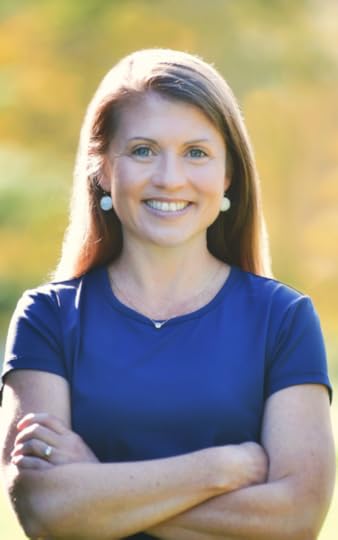 From Chaos to Calm-ish: Holiday Survival for Disability Parents with Niro Feliciano, LCSW
 E11 — Feeling the holiday overwhelm creep in already? Psychotherapist Niro Feliciano, author of All is CALMish, unpacks why disability families carry extra emotional weight this time of year—and how small, doable shifts can bring more peace. We explore:
realistic expectationsmicro-moments of delightasking for helpbuilding a holiday season that fits your family, not InstagramListen on your favorite platform:
Apple YouTube Spotify More! Niro Feliciano, LCSW
 Niro Feliciano is a psychotherapist and an expert on anxiety, stress, and relationships. She holds a master’s degree from Columbia University and is the author of This Book Won’t Make You Happy and All is CALMish. She is a frequent guest on the TODAY show and her column, “Is This Normal?” appears on Today.com. Her work has appeared in publications such as Real Simple, Oprah Daily, the New York Times, HuffPost, and Psychology Today. Niro is a first-generation Sri Lankan American and lives with her family in Connecticut.
Web: nirofeliciano.com Instagram: @niro_feliciano Facebook: /nirotherapy
MENTIONED IN THIS EPISODE All is CALMish: How to Feel Less Frantic and More Festive During the Holidays by Niro FelicianoSubscribe to Amy Julia’s Substack newsletter: amyjuliabecker.com/subscribe__
WATCH this conversation on YouTube: Amy Julia Becker on YouTube
SUBSCRIBE to Amy Julia’s Substack: amyjuliabecker.substack.com
JOIN the conversation on Instagram: @amyjuliabecker
LISTEN to more episodes: amyjuliabecker.com/shows/
TRANSCRIPTNote: This transcript is autogenerated and does contain errors. Please check the corresponding audio before quoting in print.
Amy Julia Becker (00:06)
Hello friends, I’m Amy Julia Becker and this is Take the Next Step. This is a podcast for families experiencing disability. Here we have teamed up with our friends at Hope Heals to bring you weekly conversations with fellow parents, therapists, and disability advocates. We’re talking about practical ways to cultivate a thriving future for the whole family. Here at Take the Next Step, we see your family as a gift to our society and to your local community. Your family matters.
Your child matters. We need you among us. Today, I’m joined by my good friend, author and psychotherapist, Niro Feliciano. If you are a parent who wants to delight in this holiday season, but also feels a little bit daunted by what is ahead, this conversation is for you. We’re going to talk about how to ask questions that lead towards healthy decisions for yourself and your family. We’re also going to talk about what to do in the midst of the
inevitable moments of hardship and overwhelm. Niro Feliciano is a psychotherapist and an expert on anxiety, stress, and relationships. She’s the author of two books, including a very newly released one called All Is Calm-ish. Niro is a frequent guest on The Today Show. She is a first generation Sri Lankan American and lives with her family in Connecticut. She’s also one of my oldest and best friends, and I’m delighted to share her wisdom here with you all today.
Niro Feliciano, is really good to be here with you today.
Niro Feliciano (01:42)
always good to be here with you.
Amy Julia Becker (01:45)
So I’m really excited to introduce the listeners of Take the Next Step to you and your work. This is our final episode for 2025, and you have just released a book called All is Calmish, How to Feel Less Frantic and More Festive During the Holidays. So on the one hand, I love that title. I’m also thinking about parents of kids with disabilities and how they might feel like, okay, that is like a beacon of hope and impossible.
Like there’s no way for us to feel less frantic and more festive during the holidays. So maybe we could start there. Like what does it look like to actually hold on to hope and live within realistic possibilities during a holiday season?
Niro Feliciano (02:22)
Well, the title came from how I feel all the time, calm-ish. People ask me like, how are you? I’m like, good-ish because there’s always two sides of it. And that’s what I’ve realized. You can really have both. You can have this crazy chaotic life and you can have moments of peace within that. You can feel really sorrowful and disappointed and still yet experience some joy. It’s never one thing.
And I do think we can hold them both together even during the holiday. So I think that’s to say, even for most people I know, it’s never just one. Even the people you see on social media or whatever who are living their best life, so to speak, curated, it’s never joyous and glorious and wonderful. There’s always the both and of life situations.
I think you can have some, also acknowledge that the other part is very real and a part of everyday life as well.
Amy Julia Becker (03:25)
So how do like expectations and like realistic possibilities fold in to what you just said? It kind of the experiencing the both and and not just being disappointed all the time that the holiday is not going the way I wanted it to.
Niro Feliciano (03:40)
I mean, this is a big piece of the book for anyone, but especially if you have children going through something, and Amy Julia, you know I had a child going through something pretty serious when I was writing this book. I think we have to look at, what are our expectations that we would love if this could be possible, right? And we can hold on to those thoughts and those dreams and those desires, but then take a real look at our life and…
say, what is right for this season of my life right now? Because maybe some of those things were workable at a different time in life, but we have to re-examine those expectations every single holiday because our life looks different, our kids look different, our needs might be different. And then I always like to say, what is going to actually be doable in this season? What do I think is going to be doable? But I have to leave room for the fact that life can be really unpredictable.
You know, and I don’t have control over all of it. And in those cases, can I give myself grace to say, you know what, it’s okay. This might be for later, but not, not for now. And still look at the things that we can do given our life situation. So expectations are always a piece of whether or not we feel disappointed or not, or whether we can get to a place of contentment. And I think taking a real look at what is right for.
me, what is right for my family, what is right for my child in this moment right now makes a difference in how we’re going to move through it.
Amy Julia Becker (05:12)
I think I’ve found over the years, as you said, there are different seasons for being able to actually accomplish things, both in terms of the age of my kids, the needs that they have, ⁓ and my own hopes and dreams. ⁓ But I need to recognize that I have carried with me from my childhood experiences that I really want to give to my kids. And that’s not a bad thing, but it might not actually be possible right now. And then
I carry with me the images that I get online where I’m like, my gosh, that’s the most beautiful X, Y, or Z. That’s the most fun, you know, holiday game. I have to go purchase it. And trying to actually reel myself back in and say, okay, what really matters about what this season is for our family? And can we, not just I, can we accomplish that ⁓ rather than taking it all on myself and thinking that I just have to make it happen?
Niro Feliciano (06:04)
That’s right. And we are influenced by all those areas that you described, whether it’s social media and we see other families. Maybe even families look a lot like ours, do certain things that we think is possible or things that we’re carrying from childhood. And I think part of what has to happen as well is maybe we can’t have that exactly what it looks like, but can we have a variation of that? So, you know, I know
There are many families whose kids can’t sit through a whole holiday movie. It’s tough for them, right? Yeah. And yet they have this idealistic image of movie night and RPGs and drinking hot chocolate, and that may not be what our family can do. So can we have a part of that? Maybe we sit down for five minutes and watch a movie and then we do something else that may be more peaceful and calming for our family. potentially we can have
aspects of it. It doesn’t have to be the whole thing to still be good. know, good enough is a phrase that I use a lot in the first book and this book. Can it be good and is it enough? It doesn’t have to be exactly the way we envisioned it, but it might be good enough.
Amy Julia Becker (07:13)
You know, I’m thinking back to my own early days as a mom where ⁓ Penny is our oldest child, as you know, and has Down syndrome. And ⁓ she was like incredibly frightened, like really deeply frightened of Santa Claus for a very long time. And I never kind of ⁓ really acknowledged that. I mean, I’m not even kidding. There was one time where my husband was dressed up as Santa Claus.
And Penny was so scared. She was really little. ⁓ And her dad is sitting there being like, Penny, it’s me. It’s your dad. And she’s like, I don’t understand. This is so scary. And I look back on that and I’m like, why did we not just say we can take a break from Santa? We don’t have to go to that part of the party or to that party or, know, they’re just kind of I feel like in those moments that were hard, I wish I had had the wherewithal to pull back a little bit.
ask some other people for help, brainstorm a little bit about like, there another way to do this? And I just kind of plowed ahead ⁓ and really made it happen. And I’m not sure I needed to do it that
Niro Feliciano (08:20)
I think this happens to all of us and part of it is we have this fixed perception of what it should be like and what it’s going to be like. And we’re fixed on that outcome. Yeah. And we’re trying to make the whole process move towards that outcome no matter what. But I think number one, parents, when something happens that is unexpected, I like to say expect the unexpected. So maybe it doesn’t catch us off guard so much, although it still does. ⁓
Just stop and take a deep breath in that moment. Just breathe and calm yourself in that moment. I know it’s hard when kids are flailing and they’re having accidents, but think for a moment, okay, what would be the healthiest thing to do right now? And even that question, the healthiest thing for my child, the healthiest thing for me in that moment, and then take the next step towards that. And I think if we can reframe the question like that, I always say we have to get away from what’s normal.
Because especially as a therapist, I can tell you what’s normal is not healthy a lot of the times. Everybody might be experiencing this, but it doesn’t mean it’s healthy. And healthy is going to vary depending on what your family is going through in that moment. And maybe they haven’t been through in the past. So I think if we can let go of outcome and try and just be as present as we can in that particular moment, we’re going to find the right course of action.
Amy Julia Becker (09:45)
I appreciate that very much and yeah, do wish that I’d had a little more wisdom, but I’m gonna give myself a lot of grace with that as I look back on it all.
Niro Feliciano (09:53)
We all
do it. Like every parent has done that. You know, every parent has done that.
Amy Julia Becker (09:57)
push through rather than what are we doing? And I love your question about healthy instead of normal. I’m thinking also one of the things we talk about a lot on this podcast is starting with delight rather than deficit in disability families. there’s often a sense of like what we can’t do or what’s not happening as opposed to like really embracing a season of delight and the delight that is present in our families. just doesn’t.
always feel that way. So I’m curious, you write a little bit about delight. Do you have any suggestions on what it might look like in this season to delight in our families right now?
Niro Feliciano (10:31)
think they’re in the micro moments, in the small moments, delight. And for me, I even think about it now because as I’m parenting all teenagers, you have to look for delight sometimes because it’s very unpredictable. You know, I see these kids’ mood change. I mean, like the weather in New England, it is so fast. But sometimes I think if we can work on our power of observation.
and just observing the world around us in these moments. The things I now write about in my gratitude journal are, the moment where the kids were on the bed with me, you know, and we were just enjoying just a moment together. And maybe it lasted all of 45 seconds, but they were there. Or the way that one of them laughed in the kitchen, you know, when we were trying to get dinner together after a crazy schedule of whatever we were doing. There are micro moments. And I think
The more we work on just letting go of what it should look like in these situations, especially during the holidays, and look at, where is the beauty right around me right now? What can I delight in right now? And maybe for you, it has nothing to do with the family, but it’s like, hey, I had five minutes to drink a hot cup of coffee. I’m going to delight in that right now in this moment that I did not have to microwave this morning. Those kinds of things can bring delight too. And what I’ve found is
If we are intentional, for me, what that took was writing it down every day, literally starting a practice where I would write a bullet point. It would take me five seconds, but I would look for it. What happens in our brain is we train it to look for those moments. If we have that accountability of writing it down. And now, I mean, am months into this practice. I literally look for it. And if I look for it, I will find it because it’s there. So.
I really believe that’s possible for everyone is to look for those micro moments of delay.
Amy Julia Becker (12:32)
I love that. Thank you. I’m curious about like the overwhelm, which is maybe the opposite of what we were just talking about. I think for families, disability, not delightful, not delightful ever. And I feel like sometimes the holidays feel like all of the hard stuff from the rest of the year is just on steroids. And so it’s only harder. And we’re supposed to be pretending to be delighted, you know, and joyful in the midst of it. So I’m wondering if there are ways we can like resist or reframe the sense of just being perpetually overwhelmed.
Niro Feliciano (13:02)
Mm. So that is so true on so many levels. And I think because we’re seeing all these images of the world being joyful. I mean, we have a freaking song, Joy to the World, right? And we’re putting the reality of our real life up against those images every day constantly that we’re being bombarded with. It makes it so much more evident when we’re not feeling joy or we’re not feeling delight. But I think one, remind yourself like,
this is actually real life. It’s real life. And joy does not have to look like it does in the Hallmark movies. It really does not. And you and I talked about before we got on this podcast, a chapter that I have in the book called Miracle and the Mess, where if we go back and we look at that first Christmas, it was actually far from delightful. mean, with the idea of being nine months pregnant and getting on a donkey for days, I’m just like,
God, was this really the way? Couldn’t you given her a little bit more leeway there, right? If you look at all the things that went wrong, all the expectations that were not met, that was what Christmas was about. That was the lead up to the miracle of Christmas. And even in that, where they found delight were things that were really unexpected, right? It was the appearance of the angels and the song.
and the beauty of the stars that night. And those are things that I think we can find. So looking at the things that can help reduce our overwhelm, one is changing the expectation as we talked about, but two, music. Is there music that can lift our spirits? Is there beauty in nature that we can find in those moments? And all those things we know even neurochemically are designed to calm our nervous systems.
So tapping into those, and there’s so many more suggestions in the book that we can explore right now, but they are there if we look for them.
Amy Julia Becker (15:02)
Well, I love that you kind of have two parts to that answer. And one returns us on like essentially the ⁓ spiritual level of really looking at Mary as a parent of an unexpected child, which many of us in general have. And especially if we are parenting someone with disabilities that we were not expecting, we have this model of someone who knew that hard things were coming.
and also treasured what she’d been given. And that life in the mess and the overwhelm is very much a part of the story of this season. If we let it be, I think that’s heartening. And then there’s some kind of practical steps we can take that are not quite so abstract. And one of the things that came up for me when I was reading your book, I actually I guess this is two. One is the idea of kind of starting with the non-negotiables. Like, what are the things that really matter to me? ⁓ And on the one hand, you know,
I might say something like sending out a holiday card. Like that’s a non-negotiable for me. But really even that it’s like maybe I ask one more question. What is it about doing that that feels non-negotiable? Because, you know, sending it to 500 people might not be the non-negotiable. Feeling connected to some group of people might be what I’m really getting at there. And so starting there and then trying to let go of the other expectations or at least prioritize them was one thing that
was helpful to me in reading your book. And then the other was just saying, OK, what are the non-negotiables and where can I ask for help in achieving those? know, again, maybe it’s like it’s really important to me that my kid who is not afraid of Santa Claus gets a chance to see Santa Claus, but the one who is gets to stay home. That’s right. That might require some help. Like, I can’t literally be at the mall with one kid and at home with the other one at the same time. And that doesn’t mean this is impossible.
but it does mean some other people might need to be involved in making it possible.
Niro Feliciano (16:59)
That’s right. And that also requires letting go of, our whole family needs to do this in order for it to be joyful. When really that doesn’t have to happen that way. And I think that question that you posed after, what is about this? What is it about this that makes us non-negotiable? Helps us let go of the kind of just barreling forward with that outcome in mind and stopping to think about, okay, what is healthy? What’s healthy about this? What do I want out of this? What is the need underneath the action?
in that moment. The other thing I just want to point out too, because we’re talking about reading a book during the holidays to people who already have enough to do. And I just wanted to say it was written to be five minute reads a day. So it’s a 31 chapter that you read over a month. And the goal with that is to give people a little bit of calm, a little bit of reflection for five minutes a day to get through the whole season. So I didn’t want it
to sound like, here, I know you have so much do and you’re overwhelmed and then read a book on top of that. Yes, I know.
Amy Julia Becker (18:03)
Let’s do more. Yes.
Well, is. even like, know, because we are friends outside of this podcast and have been for a real long time. So I also know the story of this book and the fact that it really was because of you recognizing the limitations of a season in your life that this book came out a year later than expected. Will you just talk a little bit about that? Because I just think it might be helpful for some parents who are listening to this and who are like, I just can’t get it all done.
Yeah, and and yeah, could you just tell us that story?
Niro Feliciano (18:33)
Yeah.
And you know, it’s, love telling this story because I know the reality of who I am in my life and so does my family. And that is not someone who just crushes it across the board. And it appears that way when people look at my life. And that year, my youngest daughter, Carolina, who is now 12, got very sick with anxiety and a phobia to the point where I didn’t know if she was going to get out of bed that morning. I didn’t know if she was going to go to school or stay in school the whole day.
I didn’t know if it was going to take me an hour and a half to get her in the building because she didn’t actually go to a class for months. I just tried to get her in the building. And that also meant I didn’t know if I could work that day, let alone write a book. And when we’re constantly in this place of uncertainty and fight or flight, our rational thinking centers, our capacity to think clearly gets greatly diminished, let alone be creative. So at a certain point, I knew that this child one was not going to get better without me.
And she’s a priority because in every other area of my life, I’m replaceable. They can replace me on the Today Show in 2.2 seconds, but this was the place where I am not replaceable. And one thing I’ve always said to myself through my parenting journey is if I make the things that are most important to God, important to me, God will take care of all the important things. And for me, that’s always been my family and my kids over anything else. So I spoke to my editor and I was like, look,
I’m not going to get this book out on time. And you know how this is. We have contracts. ⁓ Many publishing companies would have canceled that book right at that point. And so we can’t do this later. And she was so gracious. She said to me, I think everything happens at the right time and nothing is wasted. And we will push this out of here. And let me tell you, that was one of the worst things, seeing her go through that, seeing your child, a version of themselves that you’ve never seen before.
where they’re losing their joy and they’ve lost their light is one of the most painful things you can witness as a parent. But we also saw some of the qualities in her that actually are going to make up who she is for the rest of her life come out that year. It was that unexpected in that situation. I learned that she has such a compassionate heart and she actually has
a gift for working with other kids with disabilities because that’s what we did when she was not able to go to class. They paired her with kids who had disabilities in the school and that became her motivation to go to school every day. And I do think that is something that is going to be a big part of her future and her identity. We would not have ever discovered that unless we had gone through that time. So even in the midst of it, like I say, look for the unexpected, look for the ways that God is showing up for you.
those moments you feel stressed and overwhelmed. And I held on and I still do to the verse in Romans 8 28 that God will use all things for good, you for those who love him according and are called according to his purpose because I told Carolina at one point, you know, maybe actually the book was supposed to come out this year and maybe you’re the reason that God will bless us in that way, ⁓ ordaining the right time for it.
and using everything that you went through. And she’s in the book and I’ve talked about her story so much. So that is the backstory to why it came out a year later.
Amy Julia Becker (21:59)
Thank you and I know it’s sometimes so much easier to live our lives when we can look back and say look it all worked out but for many of us when we’re in the moment we have there is just a degree of trust and of making some decisions about as you said What I’m gonna do is say she is more important than this book and I don’t know how my editor is gonna respond and I don’t know what that’s gonna mean for my paycheck and I don’t know but I do know that she is Needs me right now and I can’t be replaced. off I go. So
As we come to the end of our time, I’m curious if there’s anything, ⁓ know, two or three small steps. That’s one thing we talk about again here is like small, as you said, five minute things we can do that actually make a meaningful and manageable change. And so I’m curious if there are any, I know you’ve got about 700 in this book that are. So if you want to highlight a few of them as we come to a close to make our holiday season less frantic and more festive.
Niro Feliciano (22:54)
Well, I’ll tell you two things that I do now regularly during the holidays that I’ve made a part of allowing myself to prioritize my joy. And one, that is because when we authentically feel peaceful or joyful, everyone around us will pick up on that and it will affect them too. We are the emotional barometers for our households. I’ve known that. And that’s saying if mama ain’t happy, ain’t no one happy is true.
Amy Julia Becker (23:22)
You
Niro Feliciano (23:22)
It’s true. And it doesn’t take long. I’ve found, again, like I said, these micro moments, right? Micro moments of joy too. I find five to 10 minutes somewhere in my day, maybe when kids are home, when they’re not home, but wherever it’s quiet, it might even be in my closet some days, where I just sit and do my devotional, you know, a reflection. What I try and do during the holidays is I sit by some part of my house that’s decorated.
that has lights because there’s something about that that really warms my spirit. And I just take that five to 10 minutes for me. It may be just ⁓ taking a nap for 15 minutes, a power nap somewhere during the day if I’m tired, recognizing that and say, me care for myself. And the other thing I do is I try to make it intentional that I connect with other people here and there. And that doesn’t take long. I’ve given up the big holiday party. I can’t do it anymore.
Our life is too crazy, nor do I enjoy it like I did. But I try and put a coffee date on the calendar somewhere. Or I say, let me go take a walk with this person. And again, that might require help ⁓ in managing some of the parenting tasks at home. But it’s so important that we give ourselves that ability to prioritize our joy because it is so healthy for us to be able to take on this marathon because it’s not a sprint.
but also everybody around us will begin to feel it more authentically too. So the little thing.
Amy Julia Becker (24:53)
Yeah, I think about ⁓ just and kind of wrapping up even this whole conversation, that idea of like healthy as ⁓ a way to be asking questions. Healthy for me. Is it healthy for our family rather than is this what everybody else is doing? Is this, you know, normal? Is this kind of the ideal, but rather just like, is this healthy? And ⁓ and if it’s not, well, I’m to let it go.
So thank you for so much of this wisdom. And again, I’m really grateful for your book and for all of the things you had to offer here today.
Niro Feliciano (25:29)
Well, thank you for letting me share it with all of your people. And I am praying for a very healthy holiday, and I’m talking spiritually and emotionally, ⁓ obviously physically, but certainly emotionally, because that makes a huge difference in how we experience it.
Amy Julia Becker (25:47)
Thank you.
Thanks so much for joining me here at Take the Next Step. This show is produced in partnership with our friends at Hope Heals. Hope Heals is a nonprofit that creates sacred spaces of belonging and belovedness for families affected by disabilities to experience sustaining hope in the context of inter-ability communities. This is the last episode of this season of Take the Next Step. We will have new episodes coming out beginning on February 4th.
In the meantime, you can always go back and listen. There are some other great conversations over the course of the past couple of months, and I would love for you to benefit from the wisdom of those people that I got to talk with as well. If you want to continue right now to think with me about family and caregiving and disability, you can subscribe to my Substack newsletter. I write each week about disability and family, faith, and culture. We’ll put a link in the show notes, or you can go to amyjuliabecker.com.
Also, as we get to the end of this season, I would love for you to follow the show. If you do that, then it’ll just automatically pop back up in your feed in February. It’s also really helpful if you rate it or review it, and more people will just know that it’s out there and we want this resource to be available to families who need it. You can always send questions or suggestions my way. There’s a link at the end of the show notes. Send us a text. Or you can email me.
at amyjuliabeckerwriter at gmail.com. And finally, I want to thank Jake Hansen for editing this podcast and Amber Beery, my assistant, for doing everything else to make sure it happens. I hope you leave this time with encouragement to start with delight, connect to community, and take the next small step toward a good future for your family.
Take the Next Step is produced in collaboration with Hope Heals. Hope Heals creates sacred spaces of belonging and belovedness for families affected by disabilities to experience sustaining hope in the context of inclusive, intentional, inter-ability communities. Find out more about our resources, gatherings, and inter-ability communities at hopeheals.com. Follow on Instagram: @hopeheals.
Subscribe to Reimagining the Good Lifemy weekly Substack letter
My newsletter delivered to your inbox that challenges assumptions about the good life, proclaims the inherent belovedness of every human being, and envisions a world of belonging where everyone matters
LET’S REIMAGINE THE GOOD LIFE TOGETHER. SUBSCRIBE TODAY!
The post From Chaos to Calm-ish: Holiday Survival for Disability Parents appeared first on Amy Julia Becker.
November 22, 2025
A Friendship “Pile-Up of Goodness” in Our House
Anyone who has read this newsletter or followed me on social media knows that I have been beating a drum of taking one small step1 at a time toward a good future.2 There are days when the small steps seem like insignificant, inefficient, impossibly tiny movements that will never result in anything of substance. I’m here today to report that sometimes all those small steps actually add up.
Anyone who follows my writing might also have noticed that one of the refrains of my parenting journey with Penny has been her desire for friendship.
So I was kind of overwhelmed with gratitude and excitement when last week became a pile-up of goodness in our household when it comes to friendship. First, a young woman from Penny’s dance class texted to tell Pen that she wouldn’t make it to class that night. This might seem inconsequential, but it felt so meaningful to me that another student feels connected enough to Penny in class that she wanted to tell her she wouldn’t be present.
Second, a friend from church reached out to see if Penny would like to go to a show (at church) together. They had dinner beforehand and saw friends perform in Annie and happened to also bump into my friend Niro. It was a great evening.
And third, I reached out to the mother of a girl Penny has mentioned from school, and we got together at Starbucks. I want to hone in on this last one for a minute. I spent most of last year wishing we had a way to connect with other parents from Penny’s program, and I couldn’t get the school to give me anyone’s information. So this year, I took the small step of asking if I could assemble a parent directory. I haven’t done anything grand with the information—no formal gatherings, no group text threads. But I did (finally) have a way to reach out to the mother of the young woman Penny mentions most. And we did find time to get together. I watched Penny and her new friend Lexi just talk—and giggle and enjoy themselves—for over an hour.

Going to Starbucks. Receiving a text. Making a plan for the weekend. None of these are big steps and none of them are noteworthy for most teenagers. But together they signal connection, friendship, community, belonging.
Most days small steps feel like they aren’t enough and they will never be enough. But sometimes we get to see that small steps contribute everything we need to slowly—without a magic wand—move toward a good future.
SUBSCRIBE to my Substack newsletter: amyjuliabecker.substack.com
JOIN the conversation on Instagram: @amyjuliabecker
LISTEN to my podcasts: amyjuliabecker.com/shows/
CONNECT on YouTube: Amy Julia Becker on YouTube
The post A Friendship “Pile-Up of Goodness” in Our House appeared first on Amy Julia Becker.
November 21, 2025
What do we do when we’re preoccupied with ourselves?
If you’ve been around here for awhile, you probably know I think a lot about what makes life good and what gets in the way of that goodness. This week I talked with my friend Sharon Hodde Miller, author of Free of Me and the new devotional Gazing at God, about something many of us ask:
What do we do when we’re preoccupied with ourselves? Here are practical invitations drawn from our conversation…
__
1. Name the False Self and Return to the True SelfOne of my favorite moments in our conversation was Sharon’s simple definition:
When you walk into a room…
• The false self is who you think you need to be to belong.
• The true self is the one who knows you already belong.
The false self performs, protects, hustles, and impresses, while the true self rests in the voice that said to Jesus, before he did anything, “You are my beloved child, in whom I am well pleased.”
 Ask yourself in new situations:
“Who am I trying to be right now?” Am I performing? Or am I showing up as the person God already loves?
__
2. Notice Assumptions.Sometimes the stories we tell ourselves aren’t actually true, and it’s helpful to pay attention to our internal scripts. When there’s a gap in information, we rarely assume the best, and if someone seems rude or distant, we often jump to the conclusion that it’s about us.
Try this…
Notice: I’m assuming this is about me.
Acknowledge: I don’t have all the information.
Maybe it isn’t about you at all. Maybe this person is having a hard day. Naming that possibility can bring surprising relief.
__
3. Receive Your Limits as Invitations, Not Failures.Sharon said, “Your body is a gift to be received.” And your limits? They are invitations to rest, to relationship, to dependence, to belonging.
As I say often: limits are not the same as brokenness. Limits are part of being human. They invite us into connection and interdependence. They invite us into love.
_
There’s more in my conversation with Sharon!
Reimagining the Good Life podcast  S9 E4 How to Break the Self-Improvement Cycle with Sharon Hodde Miller
SUBSCRIBE to my Substack newsletter: amyjuliabecker.substack.com
JOIN the conversation on Instagram: @amyjuliabecker
LISTEN to my podcasts: amyjuliabecker.com/shows/
CONNECT on YouTube: Amy Julia Becker on YouTube
The post What do we do when we’re preoccupied with ourselves? appeared first on Amy Julia Becker.
November 19, 2025
From Frustration to Connection: The Power of Proximity in Disability Parenting
TAKE THE NEXT STEP PODCAST
 From Frustration to Connection: The Power of Proximity in Disability Parenting with Sho Baraka
 E10 — If your home feels tense or chaotic, connection might be a missing piece. Recording artist Sho Baraka joins Amy Julia Becker to share how his family moved from daily breakdowns and aggression to a home marked by peace. Sho reflects on his story of parenting two sons with autism and the surprising power of proximity—how simply being with our kids can open doors to communication, trust, and calm.
Episode 10Listen on your favorite platform:
Apple YouTube Spotify More! Sho Baraka
 Sho Baraka has spent the last 18 years traveling the world as a recording artist, consultant, speaker and writer. He is a co-founder of The And Campaign and founding member of the internationally known hip-hop consortium 116 Clique and record label, Reach Records. Sho served as a visiting professor at Wake Forest University & Warner Pacific University and is currently an editorial director at Christianity Today. Sho is also working with MyBLVD to build a community called “Good Culture”. A space that will galvanize cultivators around story, art & ideas. Sho lives in Atlanta, GA with Patreece, his wife of 22 years, and their three children. Sho and Patreece have two boys on the autism spectrum and find themselves as ambassadors and advocates in the Autism community.
Sho Baraka (@amishobaraka) • Instagram photos and videos
https://substack.com/@goodculture
https://www.youtube.com/shobarakashow
https://www.facebook.com/shobaraka
MENTIONED IN THIS EPISODE00:00 Introduction to Sho Baraka
03:07 Navigating Communication with Nonspeaking Children
11:14 The Power of Proximity
13:25 Moving from Aggression to Peace
18:52 Marriage and Family Life
21:55 Practical Tools for Families
_
WATCH this conversation on YouTube: Amy Julia Becker on YouTube
SUBSCRIBE to Amy Julia’s Substack: amyjuliabecker.substack.com
JOIN the conversation on Instagram: @amyjuliabecker
LISTEN to more episodes: amyjuliabecker.com/shows/
TRANSCRIPTNote: This transcript is autogenerated and does contain errors. Please check the corresponding audio before quoting in print.
Amy Julia Becker (00:06)
Hello friends, I’m Amy Julia Becker and this is Take the Next Step, a podcast for families experiencing disability. We’ve teamed up with our friends at Hope Heals to bring you weekly conversations with fellow parents, therapists, disability advocates about practical ways to cultivate a thriving future for your whole family. Here at Take the Next Step, we see your family as a gift to our society and to your local community. Your family matters, your child matters. We need you among us.
I am talking with Sho Baraka today about how we take the next step to bring peace within our families. Sho Baraka is a recording artist, a writer, and an activist. He is also the editorial director of Big Tent at Christianity Today. He lives in Atlanta with his wife, Patrice, and their three kids. You’re going to hear more about their family today. Together, they advocate for inclusion as parents of two sons on the autism spectrum.
and we will give you all sorts of ways to find out more about Sho and his work in the Sho Notes. Thanks for joining us.
I am sitting here with Sho Baraka and Sho, thank you so much for joining us today.
Sho Baraka (01:18)
It’s a pleasure. Thank you for having me.
Amy Julia Becker (01:21)
So you are, I think, best known as a hip hop artist and a writer, but I asked you to join me here today because you are also a father. And so I wondered if you would just introduce yourself by telling us about your family.
Sho Baraka (01:34)
Yes, I am a father, a father of three. One is 20 years old, that’s our daughter. And then I have two boys who are on the autism spectrum, 19 and 13. And so I’ve been married for 22 years now. And as you may know, the journey has had its highs, its lows, but the one thing that has been consistent is just God’s provision and his love.
for us, which has cultivated in me a heart of compassion and peace over the years. So yeah, it’s just, been an interesting ride, but I thank God for it.
Amy Julia Becker (02:15)
Well, thank you for just that vision of the journey, you know, that you’ve landed in a place of peace and compassion. But at least I have a 19 year old with Down syndrome and ⁓ similarly feel like I’ve landed in a place of unbelievable gratitude for not just for her, but for our family as it is. And ⁓ that was not where ⁓ I started 19 years ago. So.
Sho Baraka (02:40)
Yeah. And sometimes you start at a good place, you divert off course and you come back and then you divert again, you know, and I’m sure you’ll, we’ll dive into that, but I think it’s just about seasons and understanding what tools and resources are needed in that season because you can’t bring old tools into new seasons.
Amy Julia Becker (03:02)
Yeah, I would love to talk more about that. Maybe just to give again listeners a little bit of a context for you. You have a song that came out a long time ago now, Words 2006 is the name of it. And you write about the experience of being a poet and a songwriter. So someone who’s kind of filled with words with who’s given sons who don’t use a lot of words to communicate. So can you just tell us about that experience and what that has meant for you and for your family?
Sho Baraka (03:33)
Yeah, so that song, the impetus for that song was actually catalyzed by another song, which I wrote some years before that, which was the first time I had ever really written about being a father with a child with special needs. And at that time, I only had one boy with special needs. And so there was this lament, if you will, this digital diary about
the answers that I did not have and the song’s called I Ain’t Got the Answers. it’s a song I did in collaboration with a friend named Propaganda who writes about his, like raising his daughter who is neurotypical and just the struggles he had. And so he wanted me to write a song about what does it mean to raise somebody with, you know, on the autism spectrum. And I wrote it and I was kind of amazed, not only by what the Lord
deposited into me to communicate, but also the responses. And so after many years of people just really just sharing their heart and being moved by that offering, I felt like compelled to just write another song that kind of dived a little deeper into, as you said, what does it mean to have a lot of words, but to interact with young boys who don’t.
have a lot of words and they don’t communicate love in the way that I typically expect love to be communicated. And so it taught me a few things is just how ⁓ love is communicated in different ways, how we have to seek love in different ways, how we have to interpret love in different ways, and how sometimes words don’t mean much. And so I think that is a, in a lot of ways, a, title of the film of our lives for
people who have kids or relatives, loved ones who are nonverbal as they label it. And what does it look like to evaluate love differently from what we’ve expected love or how we expected love to be communicated in our previous lives, if you will. And so that song was poignant.
powerful not only for me is oftentimes I’m sure as you write books, you realize you’re not just ministering to the other, you’re ministering to yourself. The Lord gives these words of encouragement are for you first, hopefully, and then for other people. And I intentionally wanted to open the song up with both something that I thought would create great solidarity, but also great dissonance. So the song starts off with this young boy having a
just ⁓ a breakdown. And it sounds like many of our kids when they have breakdowns, it’s just unintelligible sounds because you know, because you can’t really make out the words and it’s just but you know, they’re agonizing. And so in a lot of ways, that’s the that’s kind of like this a pillar of what the song is communicating like, even in our lack of verbal communication, like we
We all share common pain. know when someone’s in pain. We know when someone’s in turmoil. so hopefully the listener can find some solidarity in that as, it shakes them up and disturbs them to the point where they can start to really lean into the song.
Amy Julia Becker (07:04)
So as you’ve learned about communication without at least lots and lots of words, what does that look like for you with your sons? What does communication look like?
Sho Baraka (07:17)
It’s taught me that I can’t love on my conditions alone. think, what is that book called? ⁓ The Five Lung Languages taught us how, not only how we like to receive love, but how the people we love like to receive love. And oftentimes, if you are a person who has words of affirmation, you give words of affirmation.
And you expect everybody should be content because I love the words of affirmation and that’s the way I give it. So you should be excited about the fact that I’m affirming you two words. And so it’s taught me that I have to learn different language, like love languages that I’m probably deficient in. And one of my boys is definitely just quality time. He just wants to be around me. doesn’t want to talk to me. And when he does want to talk to me, he wants to talk to me in what they call like he scripts, he does scripting.
Amy Julia Becker (08:04)
Hmm
Sho Baraka (08:12)
And ⁓ it’s like he wants me to rehearse lines ⁓ as we call, like run lines to movies he likes or cartoons he watches. And so that’s the way I love on him. And he smiles when I do it and he just loves it. And sometimes he just wants to be around me when he’s doing his thing. And I just try to make time to be close to him. ⁓ So I forgot actually what the question was. so yeah.
Amy Julia Becker (08:40)
communicate with them if it’s not through the kind of what you would have expected. Yeah.
Sho Baraka (08:45)
Yeah, I had to also let go of some of the ways in which parents like to live vicariously through their kids. truly, truly learn how to allow them to develop their own interest and sit with them in that. And so one of my boys likes NASCAR and I’m not the NASCAR type, but hey, you know, sometimes I’ll just try to sit there and enjoy it with them or
He loves construction vehicles. loves kind of like all types of, I guess, city vehicles, whether it be ambulances, fire trucks, police cars. so anytime there’s one, we point it out, trains, he loves trains. So there are things like that. You just find a way to enter into their world and investigate. And I do, I try my best, even though they aren’t the best with
I guess you can say reciprocating conversation. I don’t assume that they don’t understand. Cause I do think that is something that we, we devalue in them. We act like they don’t have comprehension and they do. And so that’s why early in our, our marriage, our wife and I told us, realized that we can’t talk about them around them as if they’re not able to comprehend what we’re saying. And so I do talk to them. I have conversations with them as if they’re
young, either young adults or teenagers. And even if they don’t understand immediately, I’ve just kind of continued to talk to them. And the fascinating thing I’ve found out is that they comprehend and they sponge a lot more than we think. And oftentimes I think they know that our expectations for them are low. And so they only perform to those particular levels because they know they can get away with it.
And as they get older, they test that patience. And so ⁓ I’ve found that my son, especially my oldest, he knows way more than he lets on. And so I try to have conversations with him. I try to talk to him. I try to engage with him on that level, find their interests, tell jokes with them. I’ve learned how my oldest son likes to joke. My youngest son likes to play tag and run around the house. So I do that with him.
So it’s things like that.
Amy Julia Becker (11:15)
So how did you, I’m guessing, I mean, there was some movement within you that got you to a place of saying, you know what, I’m gonna sit and watch NASCAR as opposed to I’m gonna change my son so that he wants to watch what I wanna watch or he’s clearly not interested in engaging with me, so I’m gonna go do something productive right now, right? Like how did you get to a place of being able to essentially surrender to like sitting and watching NASCAR?
Sho Baraka (11:46)
can’t say that there was this epiphany moment. just think it was a, there had to be a slow perpetual chipping away at the heartness of my heart and realizing I’m not gonna win this battle through force. just not, I can’t force him to change. And I think this is also something that I probably learned through marriage, and knowing that my wife and I are different types of people and me just,
telling her she should do this because I like it or I enjoy it, that doesn’t win people over. And that’s also not service and love. And so what does it mean to say, you know what, in spite of your affection for a particular thing, I am still going to not only love you, but I’m going to appreciate you. And then also try to listen to you and be sensitive to what.
where there could be negotiation. And I think it was over time, I just found myself saying, you know what, my son’s not gonna like the things I like and that’s fine. But I just wanna be in proximity to them because that’s the first steps I think towards love and understanding and compassion is just putting yourself in proximity. so yeah, and over time, ⁓ we found not only can I tolerate NASCAR, but he can also tolerate certain types of like they’ve watched
So we’ll watch like certain TV shows or movies and then we’ll realize later that our sons are watching it without us. And we’re like, see, they’re paying attention. They’re paying, but they like it on their time, you know?
Amy Julia Becker (13:24)
I really love that. I also, heard you in an interview with our friend, Catherine Wolf a few months ago, and you talked about, I’m not sure which one of your sons, but one of them having just a lot of like breakdowns, like hard violent episodes and now being a kid who’s like super calm. And I wanted to ask, and you talked about a change in you, I think that had to do with that change in him. And I suspect that there are many parents who are in a similar spot where.
They again, might be having trouble communicating with their kids, behavioral challenges, wanting peace in their families. Like, can you just talk about that experience? Which again, I would imagine happened over time ⁓ and not saying here’s exactly what you should do, steps A, B and C. But at the same time, I think it can be so helpful to hear other parents’ stories, especially when a change has gone from a place of like violence and distress to peace.
Sho Baraka (14:19)
Yeah, so this is absolutely true. ⁓ And I, yeah, you’re right. Different people probably need different types of resources and different therapies, et cetera, et cetera. But I think for us, there was a few things that happened that really turned the tide in our son’s behavior. And as you said, a lot of it had to do with me, but I was at a point where I was ready to kill the show.
this boy was, he was a Tasmanian devil in our house. If he didn’t get what he wanted, if he got any kind of dysregulated, it was just so hard to just watch him throw himself up against walls, to bang his head against things, just fling himself even in the car if we passed the McDonald’s. And I was like, look, I want McDonald’s every day too, but I can’t just throw myself around on them. So anyway. ⁓
It got to a point where we went to the barbershop. He threw a fit in the middle of a barbershop and I was just so embarrassed. People were looking at me. I felt like I was the worst parent ever. And I remember that I met this gentleman who was trying his best to try to get me involved in the organization he had. Long story short, I went to this gathering that was in Birmingham. It was an organization called Culture City. He introduced me to a doctor named Marion Blank, Dr. Marion Blank.
And she sat with us for about two hours and coached us through different ways to, to regulate him, to deescalate his behavior. But the one thing she said to me is like, father, you have to understand you can address them in your anger. And I had realized there was a lot of anger in me. And I think some of it wasn’t just anger from having a son on the spectrum, but it was just anger I had growing up. And if somebody addresses me with aggression and violence, I responded with aggression and violence.
And I realized not only as someone who loved Jesus, that probably wasn’t the way that I should respond, but also as someone who’s responding to his child, like I shouldn’t allow my child to lead me towards anger. so she said, you have to learn how to approach him as a calm, confident voice. And so that was the first thing that I did is say, Zakai, like brother, buddy, you got to calm down. You got to chill. How can I help you? But then she taught me how to.
how to restrain him in ways that would protect him and protect me. So after many, many, many days of this, over a period of, I think like six months, he went from somebody who would, oh, and the other thing I realized is that she communicated, he’s like, he’s not just mad for any reason, he’s most likely upset and frustrated because he can’t communicate his desires and his needs right now.
So try to figure out how to investigate what is he upset about? It may not just be he wants McDonald’s, it may be something greater than that. And you have to talk him through this. And so over about a period of six months, we found that his behaviors began to subside. He stopped throwing himself against the wall. He stopped banging his head. He even stopped whining as much. It was just so miraculous. And of course, think prayer and fasting and all that stuff,
I don’t want to say it like as if that was some ancillary stuff. I think all of that helped because it worked on our hearts as well. It worked on our hearts as we were making these requests to the Lord. But I also think it helped him to sleep better. It helped him to be comfortable in his own rooms and his space because for a while he would only want to sleep in our bed. it was a…
It was a transforming thing that not only brought peace to our son, but peace to our household, peace to our marriage. It’s such a beautiful thing. I say, research books by individuals, I recommend Marion Blanket, somebody who’s written a lot about this, I think she’s like a behavioral analysis or behavioral therapist better yet. So yeah, there are different things that-
We tried to regulate his diet better. And so there were different things that we felt like contributed to a holistic behavior change.
Amy Julia Becker (18:43)
That’s amazing and I really appreciate all of those details. ⁓ I want to ask one more question and then try to kind of summarize some of what we’ve said, is just ⁓ quickly, you you’ve also mentioned that you’ve been married for 22 years and that I know it is just challenging.
for any of us to raise children and stay married and kind of in love with each other and and and loving towards each other and I’m just wondering especially for lots of families who perhaps some have had marriages that have not You know made it others who are in marriages and struggling what has helped you and Patrice to love each other well
Sho Baraka (19:22)
Lots of respite, and I know that’s a luxury that everybody can afford, but I think you can afford it when you have friends and family members who care about the things you’re wrestling with. You have to admit when you need rest, you need to admit when you’re struggling, you need to be very clear, not only to your spouse, but to your friends and family members. Just ask for help. Never be ashamed to ask for help.
And one of the things we realized early in our marriage is if we loved each other as best to our abilities, as long as we could, we would provide the best living situation for our kids. so despite what our kids are going through, we always have to realize our marriage is utterly important, not only for our thriving and our flourishing, but for the thriving and flourishing of our kids as well.
And so I think it’s simple. I kind of talked about this at the start of our interview. The other thing is that we have to realize that as our marriage is going through different seasons, our children are going through different seasons. And we have to be, we have to acknowledge that as you have a 19 year old, I have a 19 year old. And the reality is, is that they’re different at 19 than they were maybe at 16 or 15. Hormones are starting to
kind of like get crazy now. And then you have to wrestle with this concept of will they always be alone? ⁓ But you still have this fact that they’re attracted to people. So there’s that now as an adult, I have to raise an adult in my household, which is crazy to think about. so, but then there will be no school system for them pretty soon. And so what does that mean for us?
We won’t be empty nesters. What does that mean for us? And so you have to be thinking, you have to think through all of this with, you can’t be afraid to address it. And that’s the other thing is oftentimes I think fear handicaps us from being proactive and you have to be proactive in sense of like, man, the Lord has not given me a spirit of fear, but a power of love and sound mind. And so how do we address this before there’s chaos?
I don’t want to be the tyranny of the urgent running around when something happens. Let’s be proactive. so there’s trying to just manage ourselves as seasons come, but also what seasons do we expect to come and how can we best prepare for that?
Amy Julia Becker (21:56)
I like to, when I’m interviewing people, just write down some of the things along the way that you have said. And so I’m going to read back a few just as we come to a close that I think are really helpful for any parent. As you said, some of these will be helpful at different seasons, but ⁓ you did mention assuming that they understand more than they can necessarily communicate back. You mentioned the power of proximity.
of just literally coming alongside and being with, which I think for any of us as parents to just slow down and be with our kids is a really just good reminder. It’s something we all can do, but so often we need to, rush ahead to the next thing. ⁓ You mentioned just being calm and confident with our bodies and our voices. And again, that’s not something we always can do, but it’s something we can pray for and work towards, right? ⁓ You also mentioned like the, the desire that they have to communicate even if they can’t, right?
⁓ And then finally just that ⁓ that last idea of just admitting need and asking for help and those just are that whole list of things which again I think will be relevant for some people in different seasons But they are things that we all can do and sure Absolutely, like look up Marion blank. Is that what you said? Her name was like there are other people who can help us in these very particular ways and we need that we also there are these like ⁓
Yeah, ways of being that we can all practice that I think you’ve given us a glimpse into. Is there anything you would want to add just as we come to a close?
Sho Baraka (23:26)
The other thing, the other tool and resource that Marion Blank developed which changed our boys was a site called ASD reading. And basically it’s a site that helps them with like sentence structure, syntax, helps them learn how to type. It’s wonderful. I think it’s, we haven’t used it in many years, but for a while it was a wonderful, I guess, miscellaneous resource alongside the school that they went to.
And I saw it help cultivate them in ways that I think probably would have taken me a year or two years.
Amy Julia Becker (24:03)
Well, again, thank you for both these like very specific practical resources as well as these more almost broad just ways of being that we can all take steps towards. I really appreciate your wisdom and just getting a little glimpse of your family.
Sho Baraka (24:19)
Thank you for having me and peace be unto you and your family and your daughter.
Amy Julia Becker (24:26)
Thanks so much for joining me here at Take the Next Step. This show is produced in partnership with our friends at Hope Heals. Hope Heals is a nonprofit that creates sacred spaces of belonging and belovedness for families affected by disability to experience sustaining hope in the context of inter-ability communities. Before you go, I wonder if you could think of someone else who would benefit from hearing this conversation with Sho Baraka today.
that person comes to mind, would you take a minute and send them a text or an email or whatever other kind of message and just tell them that this episode is for them? Next week, I’ll talk with psychotherapist, Nero Feliciano. She is the author of All Is Calm-ish, and we’re going to be talking about how our families can navigate the holiday season with a sense of both peace and purpose. So we have one more episode before we take a break for the holidays, and I hope you will join me there.
In the meantime, can always follow, rate, and review this show. More people will find out about it that way. And of course, people find out about it when you share it with them. You can always send suggestions or questions my way. We’ve got a link in the show notes that says send us a text. You also can email me at emejuliabeckerwriter at gmail.com. I want to thank Jake Hansen for editing the podcast and Amber Beery, my assistant, for doing everything else to make sure it happens.
I hope you leave this time with encouragement to start with delight, connect to community, and take the next step toward a good future for your family.
HOPE HEALS COLLABORATIONTake the Next Step is produced in collaboration with Hope Heals. Hope Heals creates sacred spaces of belonging and belovedness for families affected by disabilities to experience sustaining hope in the context of inclusive, intentional, inter-ability communities. Find out more about our resources, gatherings, and inter-ability communities at hopeheals.com. Follow on Instagram: @hopeheals.
Subscribe to Reimagining the Good Lifemy weekly Substack letter
My newsletter delivered to your inbox that challenges assumptions about the good life, proclaims the inherent belovedness of every human being, and envisions a world of belonging where everyone matters
LET’S REIMAGINE THE GOOD LIFE TOGETHER. SUBSCRIBE TODAY!
The post From Frustration to Connection: The Power of Proximity in Disability Parenting appeared first on Amy Julia Becker.
November 18, 2025
COGNOSCENTI | What prenatal testing can’t tell you
Having a child with Down syndrome has been an irrational, unprovable good. In a world of increasing mechanization, measurement and merit, we need people like our daughter among us to return us to our humanity.
For anyone who has paid any attention to prenatal screening, abortion and Down syndrome in recent years, it will come as no surprise that increased availability of prenatal screening leads to a reduction in the number of babies born with Down syndrome. A new study published in the American Journal of Medical Genetics offers a comprehensive report about the reduction in live births of babies with Down syndrome in 33 countries over the course of 30 years (1990-2020). They conclude that when women receive a prenatal indication that their fetus has Down syndrome, they are more likely to terminate their pregnancies.
I’m not interested in pressuring women to carry their babies with Down syndrome to term. I am interested in providing a counter-narrative about Down syndrome.
Our daughter Penny is 19 years old. The doctors told us they suspected she had Down syndrome a few hours after she was born. Penny was 2 years old when I heard on NPR that the American College of Obstetricians and Gynecologists (ACOG) decided that offering prenatal screening for Down syndrome should become part of the “evidence-based standard of care” for pregnant women for the first time.
I knew the vulnerable position of women receiving a prenatal diagnosis. I had felt fear and grief and guilt and shock with my own experience of postnatal news. I also knew that prenatal screening results present a sense of urgency — termination is not a decision to be taken lightly, and yet it is a decision that needs to be made quickly.
Keep Reading!SUBSCRIBE to my Substack newsletter: amyjuliabecker.substack.com
JOIN the conversation on Instagram: @amyjuliabecker
LISTEN to my podcasts: amyjuliabecker.com/shows/
CONNECT on YouTube: Amy Julia Becker on YouTube
The post COGNOSCENTI | What prenatal testing can’t tell you appeared first on Amy Julia Becker.
How to Break the Self-Improvement Cycle
REIMAGINING THE GOOD LIFE PODCAST
 How to Break the Self-Improvement Cycle with Sharon Hodde Miller
 E4 — What if real freedom doesn’t come from more self-esteem—but from self-forgetfulness? Amy Julia Becker and author and pastor Sharon Hodde Miller, PhD, explore the difference between the false self and the true self—and how thinking about ourselves less without thinking less of ourselves leads to healing, humility, and purpose.
Season 9 Episode 4Listen to Reimagining the Good Life on your favorite platform:
Apple YouTube Spotify More! SHARON HODDE MILLER, PHD
 Sharon Hodde Miller (PhD, Trinity Evangelical Divinity School) leads Bright City Church in Durham, NC with her husband, Ike. She writes, travels around the country speaking at churches and conferences each year, and holds a PhD on women and calling. Sharon is the author of several books, including Free of Me and Gazing at God. Sharon lives in North Carolina with her husband and 3 young children. To read more of her writing, you can visit her site, SheWorships.com, and you can connect with her on Instagram at @sharonhmiller.
MENTIONED IN THIS EPISODE00:00 Introduction
01:58 Defining Self and Self-Forgetfulness
07:33 Understanding the Self and Healing
09:50 Noticing Ourselves
14:12 False Self vs. True Self
16:31 The Concept of Self-Denial
19:18 The Role of the Body in Self-Understanding
22:08 Embracing Insecurity, Humility, and Limitations
29:33 The Role of Self in Parenting
31:34 Beyond Self: Purpose and Community
38:12 Practicing Humility in Daily Life
MENTIONED IN THIS EPISODE:
Free of Me and Gazing at God • Books by Sharon Hodde Miller The Freedom of Self-Forgetfulness by Tim Keller To Be Made Well and White Picket Fences by Amy Julia BeckerAmy Julia’s new podcast: Take the Next Step amyjuliabecker.com/step/_
WATCH this conversation on YouTube: Amy Julia Becker on YouTube
SUBSCRIBE to Amy Julia’s Substack: amyjuliabecker.substack.com
JOIN the conversation on Instagram: @amyjuliabecker
LISTEN to more episodes: amyjuliabecker.com/shows/
TRANSCRIPTNote: This transcript is autogenerated and does contain errors. Please check the corresponding audio before quoting in print.
Amy Julia Becker (00:05)
I’m Amy Julia Becker and this is Reimagining the Good Life, a podcast about challenging the assumptions about what makes life good, proclaiming the inherent belovedness of every human being, and envisioning a world of belonging where everyone matters. I’m talking today with my friend Sharon Hattie Miller. She leads Bright City Church with her husband Ike and she is the author of three books including Free of Me and Gazing at God.
She also holds a PhD from Trinity Evangelical Divinity School. She is smart and funny and accessible in all that she says. I’m really grateful for Sharon’s wisdom about how we can think about ourselves less without thinking less of ourselves. Sharon, it is really fun to be sitting here with you today. Thank you so much for joining us.
Sharon Hodde Miller (00:54)
I know. I was really looking forward to selfishly just catching up with you. Everybody else gets to listen, but you’re my friend.
Amy Julia Becker (01:03)
I know. know. Yeah. And we used to have a lot more opportunities to see each other ⁓ than we have in recent years. So I’m just glad to be here, even if it is over a screen. And I am thinking back to, I don’t know, maybe 10 years ago, you and I were in a writing group together and you were working on a book called Free of Me. And I was working on a book called White Picket Fences. And recently you published a devotional that is a companion to Free of Me. So going back to some of those themes and the devotional is called Gazing at God.
It’s 40 days. I highly recommend it. Actually, both of those books. And it’s always a sign that other people recommend the initial book if you’re invited to write a devotional about it. So I think that just like kind of speaks for itself in terms of the power, both of Free of Me and also now this this new book. But I thought we could maybe introduce people to what you’re writing about in both of these. The subtitle of the book is.
a 40 day journey to greater freedom from self, which again kind of harkens back to free of me. So let’s define self and self forgetfulness and then we’ll go from there.
Sharon Hodde Miller (02:12)
Man, right out of the gate, I wish I had my-
Amy Julia Becker (02:16)
You want me to tell you what you say?
Sharon Hodde Miller (02:18)
What was the definition I wrote down? I should just read straight from there.
Amy Julia Becker (02:23)
You
said that you needed to define these terms and you said selfhood is a psychological term that refers to your individual identity, your you-ness. This is actually quoting ⁓ Alison Cook. ⁓ Yeah. It’s what makes you a distinct person from everyone around you. And then self-forgetfulness ⁓ is a less familiar concept. And it does not mean ignoring the self or repressing the self.
nor does it mean the self is bad. It refers to a kind of freedom from being distracted by or preoccupied with the self. So can you like maybe just speak especially to that second point, right? Like why would we want to be self-forgetful and what is not self-forgetfulness?
Sharon Hodde Miller (03:07)
Yeah, so those two definitions also thank you for reading those definitions because I could not have I probably should memorize the technical definition that I wrote in my own book. And so thank you for quoting that back to me. But part of the reason why I actually want to start with the self, if that is OK, up to free of me.
Amy Julia Becker (03:27)
Yeah, yeah, yeah, go for
Sharon Hodde Miller (03:31)
That book was about self-preoccupation and the ways that self-preoccupation make us really fragile, make us really insecure, that when we make things about us that are not about us, it turns everything into sort of a referendum on our value and our worth, which creates a lot of weight on our shoulders. Because if things are going well, we feel good about ourselves. But if things are going poorly, then we feel badly about ourselves.
And so Free of Me is very much an exploration of that. And actually, I guess I will start with self-forgetfulness. Self-forgetfulness, I got that term. I first happened upon it through Tim Keller. has a book called The Freedom of Self-Forgetfulness. And it is this idea that…
It’s not about self rejection. It’s not about self neglect, but it is freedom from really being distracted by the self that you’re not constantly running everything through the filter of self that you aren’t making things about you that are not about you and that there is a freedom in that. so free of me is is really exploring that. However, part of the reason why I wrote Gazing at God is that I was noticing
especially in leading my church, that when people are struggling with self-preoccupation, when they are making something about them that isn’t about them, you know, they’re running it through this filter of self that is making them feel really horrible or thinking everyone’s conspiring against them, whatever it is, that usually the reason they’re doing it is because of a wound. There’s some pain there.
And we know this intuitively from like physical pain, that when you’re in physical pain, it draws your attention inward. Like you focus on, if I were to break my ankle, I’m going to become preoccupied with that ankle. It’s gonna draw attention to itself. I’m gonna wanna make sure that I’m taking care of it. I’m propping it up. I have crutches. have, you know, whatever it is I need to protect that thing until it heals. And that…
is healthy to some extent. But to know that the self is that way, like emotional pain functions that way as well. so I realized even though there’s nothing that would change necessarily about Free of Me, I realized that there was more work to do around why we struggle with self preoccupation in the first place, that it’s all well and good to say that if you do it, if you focus on yourself, it is going to
take all the joy out of your life and that there is freedom in living for God and loving God and loving others, you know, that first and second greatest commandment. But if I’m never addressing why are you struggling with this? Because, you sometimes it is pride. Sometimes it is just age old sinful vanity. But very often it’s also like shame or, you know, some unhealed wound.
Yeah. And so that was part of the inspiration for gazing at God. But the second reason gets to this notion of the self, which is that ⁓ a number I’ve heard over the years teachings around self denial that are essentially, I would say, Gnostic, which is to say for anyone not familiar with that term, heretical. it’s it’s.
bad theology. we say, we talk about the self as if it is bad and that it just needs to disappear. You know, and some of this is like biblical language that Paul uses about, you know, becoming less and all of that. But this has strayed into unbiblical bad theology about the self.
And those two things combined, if we’re not addressing wounds and then we’re also combining that with bad theology of the self, then we aren’t setting people up to actually be free. Like we’re just entangling them and ignoring the fact that they aren’t entangled. And so the purpose of gazing at God was to take people on a journey where I am defining the self, even though I
clearly can’t call it to mind, you know, in an interview. But it’s there in the book. But defining the self in a way that is biblical, like Alison Cook, her definition is more psychological, but we also have biblical understandings of identity and how to establish that.
Amy Julia Becker (08:07)
You
Sharon Hodde Miller (08:24)
⁓ noticing the self, understanding the self, healing the self, validating the goodness of the self that we are created in the image of God, that God’s ultimate plan is to redeem all of you, that the story doesn’t end with you just completely disappearing behind Jesus. That’s actually not the story that we’re given, but that you are fully restored. And so starting there,
But then continuing on with this now informs a better understanding of self-denial, of self-forgotfulness, so that we are then able to focus on God again, to love God and love others, which I would say also is a key difference between the arc of this book and maybe some other like secular self-help books, which the end goal is restoration of the self, and that is a worthy goal.
but for the Christian is not the ultimate goal. It’s just a step on the way to something greater than ourselves. And so that is the backstory for how Gazing at God came to be.
Amy Julia Becker (09:33)
I love that. And I think the progression of the movements of the book actually speak to what you’ve just said. And I’d love to talk those through a little bit. ⁓ So there’s this first movement, which kind of seems counterintuitive and builds off of what you just said, which is that the first movement towards self-forgetfulness is noticing ourselves. So can you talk about what does it mean to notice ourselves and why would this actually be?
important on our way towards self-forgetfulness because they sound almost opposing.
Sharon Hodde Miller (10:07)
Right. Yeah. So one thing that was really helpful for me in my own journey was noticing what was going on in my own interior world. Like what was pulling my focus inward. And for me, one of the things that I noticed, for instance, and I have a day that is devoted to this, was noticing a particular kind of script that was very me-centered. And one thing that I
learned in researching for this devotional is that in studies of people with depression, they are more prone to use me-centered language. When you compare someone who’s depressed versus someone who isn’t, the depressed person tends to use more me and I and mine. And so I think that’s really fascinating that when you notice this language,
It can be an indicator that, what’s going on here? And so I look at different versions of this. Another one is noticing your assumptions that when there is a gap of information, we tend to not say, you know what, this person that I ran into at church who was a little bit rude, they were probably just having a bad day. They probably got in a fight with their…
husband at home or maybe something happened that was unexpected or they were running late, whatever it is, there was probably something going on that I don’t know about and this had nothing to do with me. We literally never do that. In the absence of information, we fill in those gaps with typically me-centered narratives. And it’s like the worst possible one.
they must not like me. Like that’s immediately where we jump to. And so it was really helpful for me in my own journey to be able to recognize the moments when I am making something about me that is actually not about me. And more recently, the ways that this has played out as a pastor is in leading our church whenever I feel this weight.
⁓ or an urgency or a franticness that I need to fix this thing that is wrong at our church or I need to figure out what’s going on with this family who is upset or someone brought a problem to me and I need to attend to it immediately. And it creates so much anxiety. And I started to realize in those moments when I feel that weight, when I’m paying attention to like
how my body is actually feeling. That is also for me very often an indicator that I have made, this is actually not about them. This is not about the church. This is about me. And I wanna make sure no one’s upset with me or no one thinks badly of me or no one thinks that I’m leading poorly. And when I do that, when I have made this thing about me,
does create that it is a burden. It is not an easy yoke. It’s a very heavy one. So that’s sort of the interior examination that helps us to realize, hey, this is what is going on. And part of the reason why I feel so insecure, why I feel so fragile is I’ve filled in all the data points with myself.
Amy Julia Becker (13:49)
Yeah, and there’s another like where you move from the noticing is also to this understanding of the false self and the true self. ⁓ And I think that also might be something worth kind of trying to define a little bit. What is the false self? What’s the true self? Because what you’re really also getting at is that practice of noticing is essentially noticing the false self and the true self so that you can actually live more into the true self. ⁓
Sharon Hodde Miller (14:13)
Ultimately. Yeah. So the false self is the self that you put on when you walk into a room and you ask the question, who do I need to be in order to belong? Who do I need to be in order to get approval or to succeed? It is the self that we essentially perform.
I think that’s the easiest way to understand what the false self is versus the true self, which does not have to perform in order to belong. That’s one of the things I really love about that moment in the Gospels where God says to Jesus, you know, this is my son and whom I am well pleased. And that is
prior to Jesus having done anything. That’s at the beginning, the front end of his ministry. And expressing this, that you belong, you are a son, you are chosen, you’re cherished, all of this prior to anything that you do. And the true self can only, we can really only be in touch with that true self in that environment.
Amy Julia Becker (15:33)
I love that so much. And I love thinking about places because I think there’s there’s both obviously some work that we can do on that interior level to notice when and why and how we are showing up in the false self. But I also do a lot of work, obviously, around that concept of like belonging and ⁓ how we can create spaces where people are actually invited to show up as their true selves. And so it seems as though as part of that work.
can actually be this act of hospitality and invitation to other people to show up in their true selves if we are not assuming that we have to show up in that false way. Anyway, that’s what you made me think about. So ⁓ I want to move to self-denial because as you said, I think that is something that can be really easily misunderstood both within the church and then also especially for people who have perhaps left the church because of really kind of toxic and distorted messages around self-denial.
You write about how it’s not self neglect and it’s not self abandonment. So maybe even like, are those things? But then can you for people who aren’t familiar or perhaps are familiar with a distorted view of self denial, ⁓ can you explain that and talk about why we need it? So that’s a lot.
Sharon Hodde Miller (16:49)
Just to circle back to with the true self, to know, I don’t think we can have a healthy understanding of self-denial if we don’t first have a healthy understanding of the true self. That the true self is made in the image of God, is good. But also there is a sense in which there are aspects of yourself that are gifts that you are invited to.
be a good steward of and to cultivate and that we cannot be a good steward of the gifts that God has given us and ourselves if we neglect ourselves, if we abandon ourselves. And so that’s why it was so important for me to start there before we get to self-denial, that we have this common understanding that the self is actually good and brings glory to God. So self-denial,
I actually think self-denial is a couple different things in way that we see it in scripture. One is the invitation to that performative understanding of the self. think that self-denial is the choice to strip that away in some ways. And sometimes it is stripped away for you and to not fight those moments when they come. And so I think that’s part of what
what self-denial is, kind of serving this image of this false self, making the choice not to do that. But more importantly at its core, it is simply acknowledging that the self is a good thing but not a God thing. To quote Tim Keller, that the self is good but it cannot be Lord, it cannot be primary, it must never be an idol.
And so making sure that our relationship with it is in proportion to what it should be, that Jesus is our Lord, not the self, that he is first, not the self. And so self-denial is really this invitation back to a rightly ordered way of living and seeing the world.
Amy Julia Becker (19:10)
So within that you write about the body and you’ve mentioned this a little bit, but I’d love to just spell it out a little bit and that like self denial is not a denial of the body. So what role does the body have in a healthy understanding of the self?
Sharon Hodde Miller (19:24)
Yeah, that’s honestly, I would be so curious to hear how you would answer that question because in some ways, like I wrote a little bit about it, but you have devoted books to this topic. And so, you know, I think it’s this balance of recognizing that your body is given to you as a
gift to be received. that at the same time, your body is also, because of the world we live in, it has limitations. And I think that we are taught that those limitations are always bad, always wrong, that we need to deny them. We need to…
fight them, we need to resist them, we need to minimize them. And because our culture has an idolatry of beauty and youth and health, that it is very easy to get swept up in serving those things and co-opting your body into that instead of receiving those as invitations to discard the false self, but also to remember
that at the end of the day, you exist for God’s glory and not your own. And so that is how I would answer that. I also wanna be really careful to say that that doesn’t mean, like your body is also given to you to enjoy. And so that doesn’t mean, you know, this asceticism, again, this self denial where it’s like, and therefore, you know, don’t ever wear makeup, don’t ever.
you know, wear nice clothes or anything like that. So there’s a tension there that I think we see in scripture.
Amy Julia Becker (21:25)
Yeah, and I think this might even help like that. I thought it was almost hilarious to like when I finished reading the devotional, I went back and was looking at I’m through my books right now. So Movement Three is denying the self. And if you read the list of the different essentially invitations you have in this section, it’s about the most countercultural list I can imagine, because you are inviting us to receive like each one starts with receiving. I’ll just list them in security.
Humiliation, rejection, exclusion, loneliness, hiddenness, failure, insignificance and mediocrity. That’s like, my gosh. I I loved this section. I thought it was fabulous. But I’m like.
Sharon Hodde Miller (22:09)
Very inspiring. That’s what we all need.
Amy Julia Becker (22:13)
We live in a culture that says we need self-esteem. need inclusion and belonging. We need social media platforms. We need body positivity. We need excellence. We need beauty. We need youth, like all these things. And so like how on earth could receiving insecurity, humiliation, rejection, exclusion, hiddenness, failure, insignificance and mediocrity ⁓ be a good thing?
Sharon Hodde Miller (22:37)
Yeah, you know, I find that what I’ve found through this journey, and that’s also partially why I wanted to take people on this journey that I have been on for the last really, I guess, almost 10 years now, is realizing when we think of self-denial, we think of kind of like I just mentioned these ascetic practices, like during Lent, you know, giving up chocolate or, you know, whatever it is.
And that’s all fine and good. And I think there is a way to practice certain aesthetic practices that help you to crucify the flesh, so to speak. But I have found that I don’t have to search very hard to find those things that help me to identify either my false self.
or ways that I have elevated myself to a level that belongs to Jesus. And it really is all of those things that I just named that we, when we feel those things and they hurt us, we tend to think, and this is the toolkit that our culture gives us, is you just need to fight it, that you need to affirm it away, you need to remember.
you how special you are, what is good about you, all these things that the insecurity is only ever bad. And to some extent, I don’t want to negate that entirely because sometimes when we feel insecurity, specifically when we feel shame, lots of times that is because of real wounds, real lies that were spoken to us by our family of origin, whatever it is. And so I don’t want to belittle that.
But what I have found is that very often when I’m feeling insecure, it is because I am standing on something that is not secure. And it is an opportunity for me to ask, what am I standing on to give me security that cannot.
And really all those other things are sort of like a subcategory of that in some way, like the hiddenness, rejection, loneliness, mediocrity. They’re all sort of manifestations of insecurity. But yeah, for me, it usually highlights was I looking for security in something that cannot provide it and to make sure I’m not missing out on the information that this is giving me.
because I’ve just been taught to affirm it away, you know, with self-help or Bible verses, essentially. Yeah. And so that was kind of the inspiration for that section.
Amy Julia Becker (25:35)
Well, I really did appreciate it. And I think ⁓ it does dovetail, as you said, with the body aspect, which is in that section as well, and the idea of actually receiving our limits as good things. And as you know, and many listeners know, for me, one of the pivotal breakthroughs in understanding not just of disability and our daughter Penny, but of myself was, limitations and brokenness are not the same thing.
Like to be limited is actually to be created as God made me and to receive myself in its limitedness is actually a part of trusting the goodness of how God made me, but also that God made me to be in relationship with all these other people ⁓ to need them. Actually, to be a needy, vulnerable human is a good thing. And I think all of those things. ⁓
If you’re right, if we are standing on that foundational love of God for us ⁓ and for others and for the world, then something that prompts us to experience insecurity, humiliation, rejection ⁓ can actually be an invitation to further security from that place of belovedness rather than finding my security, which I did for many years in like striving to be.
independent and to be what everybody else wanted me to be and to prove myself. And I was kind of able to do that for a long time. And it still didn’t really work in terms of like creating a self that both mattered, ⁓ like felt secure and a self that was actually contributing much to the world.
Sharon Hodde Miller (27:16)
Yeah, I still remember honestly the first time I heard you say something to that effect because it was at the Festival of Faith in Writing. I remember hearing, where I was. Like I remember where I was sitting when I heard you say that and it has really shaped my thinking ever since. But I also want to say again why I start with the self. One of the things I say is just being able to notice yourself in a non-judgmental way.
Because I don’t when when we’re talking about self denial and self-focus, think shame is just like crouching at the door You know looking for an opening to come in and so I want to say To the extent that you can notice what’s going on without judgment So that you’re not shaming yourself where you’re like, ⁓ I’m feeling insecure because Trusting in something other than Jesus and I know that we do that to ourselves. Yeah
And that’s not how he wants you to come to him. It’s much more of a like, hey, it doesn’t have to be this way. I came for you to have freedom, but not like a guilt trip. It’s his kindness that leads us to repentance, not his shaming voice. And so I really want to make sure that is clear as well.
Amy Julia Becker (28:39)
Yeah, thank you for underscoring that, because I think there is, again, especially around the idea of self-denial and even I think also ⁓ for women in particular and anyone who’s already in a vulnerable social position, the idea of self-denial can also be kind of weaponized to mean don’t have a voice, don’t try to get a job that pays you well or don’t. There’s a whole set of like
kind of cultural assumptions that really can just end up being like misogynistic and on down the list of problems. And so I think it’s important to just underscore that that’s not what you’re talking about either. Like this is not a denial of your God given gifts. It’s not a denial of your purpose in this world. It’s not a denial of the like really important work that you have been given to do, whoever you are and in whatever way.
Sharon Hodde Miller (29:33)
Yeah, yeah. that’s especially for women. I think we’ve been handed this image of motherhood that is sort of like the martyr mother who just, you know, lays herself down for her family and her kids and sets aside everything. And I think too often that is much more a loss of self or a self abandonment that we’re really talking about or kind of to flip it.
and over identifying with that role, which is to say you’re making this about you when it was never meant to be. That you’re very important to your children and you are still not the center of their story. And one thing that I often tell parents when I speak to them is your kids already have a perfect parent.
and it is not you. And so your job is very simple, which is to direct them to him. And that is so much lighter to live that way. It means you can fail because you can go to your kids and you can apologize and you can say, you know what, I failed in this moment. Like I lost my temper. I spoke to you in a way that I shouldn’t have, whatever it is, but then be able to say, but do know who never fails is
is Jesus, He’ll never do this to you. And that is just an easier way to parent that doesn’t require you being a martyr for your children.
Amy Julia Becker (31:10)
I’m curious just to circle back to one of the things you said is we’ll find lots of kind of self-help books that end with a worthy goal of self restoration. That’s not a bad thing. Much of what we’ve been talking about can be found in many of those books, but you also go farther than that as far as what the real purpose is of the both noticing the self, getting under uncovering the true self, denying the self.
There’s a there’s a purpose on the other side of that. And I wanted to ask you just to talk about the point of it and the ways in which self-forgetfulness actually helps us. You know, the name of the show, Reimagine the Good Life, to actually live with a sense of like purpose and goodness that might not look like it does in our culture or on Instagram. Yeah. Can you talk to that?
Sharon Hodde Miller (31:51)
Yeah.
So some of that goes back to my own story. And when I first was wrestling with my own insecurities, specifically around ministry and writing and speaking, and that used to be really inherently meaningful to me. But when I started to make it about me, then that lost all of its…
joy and I became really fragile, really insecure about everything that I was doing. But initially, I didn’t realize that’s what had happened. I just knew I was feeling insecure about my work, but I didn’t know why. And so I started out by reading books about insecurity that were very much that message of
if you just remember how special you are, that that will set you free, that that will empower you. And that’s essentially the self-esteem culture in a nutshell. That if kids can just, it’s like an alternative gospel, that if kids can just understand how special they are, that that will set them free. And it’s not that that message,
doesn’t matter or doesn’t have any truth to it. But it didn’t produce the generation of confident kids that they thought it would produce. And for me personally, it didn’t yield the confidence that I thought it would yield. I was believing all these things about myself that were biblical, they were true, but also not getting any traction around my own insecurity.
And one way that I recently was thinking about this, I’m curious actually what you, I posted about this. I don’t know if you saw it, but I’m curious because you care about literature, if you would like agree with this or not. But I was thinking about how Disney movies right now are all about identity. They’re all of them. They’re all about identity. And specifically the Frozen franchise.
is very much like, you know, finding yourself. And it made me think about this idea of the hero’s journey, this kind of classic narrative arc where you look at like the Odyssey or like Lord of the Rings or something where the hero goes out on this journey for this purpose that is greater than themselves. But how nowadays
that hero’s journey, what they are going to discover is their self. And it just made me wonder if that is symptomatic of how we have lowered the ceiling of purpose for our lives. And ultimately, I do think that is why the self-esteem movement fails to yield the results that it promises is because you are created for
for wholeness, for healing. You should absolutely love yourself because we should love anything that God loves. But at the end of the day, you were created for something much higher than yourself. And if you lower the ceiling of purpose too much, where it’s just like self-actualization, that I think it creates its own sort of spiritual bankruptcy to some extent. And I think we’re seeing that.
But that’s why it is so important that we don’t just stop at the self is good, but that we have this higher vision of what is the self for in the first place and that it is for the glory of God and the good of others.
Amy Julia Becker (35:37)
Yeah, I love that. And I’m to add a little aside here, which is that if you are on Instagram and you don’t follow Sharon, you should, because I ⁓ think you are one of the you and Rich Fiotis are the two people who I think do the best job of like capturing a spiritual truth in very few words and putting it out there in a way that I’m like, I’ve never thought about it that way before. That’s really helpful. So anyway, just a little plug for your ⁓ I’m sure it’s.
more than Instagram, but I get it on Instagram. Your wisdom that’s really out there on a very regular basis. So thank you for that. did, but I missed the Disney, the Disney wisdom. So I’ll talk about it now. Yeah, I think that’s a really astute observation just that, ⁓ again, probably some of the older heroes journey stuff might actually ⁓ be a little dismissive of the idea of self-actualization. Whereas like this is more dismissive of the idea of like having a purpose.
Sharon Hodde Miller (36:26)
think that’s true.
Yeah.
Amy Julia Becker (36:33)
is not it’s not just beyond the self, but that like all of us are are meant to be kind of ⁓ created for one another. You’re and working, ⁓ doing things in the world, participating in things for one another. There’s a quote in the book about just like it’s too small to just think of yourself as for yourself. And I loved that. I loved that idea. So I do think there’s just a like bigger imagination that we can have.
And it’s weird because it’s like on the one hand, there’s a humility in knowing that I myself is not. The be all end all of creation, right? Like there’s actually we are we really need lots of other people going back to like understanding our own limits. And I also have a particular gift to offer role to play peace in all of that. So there’s kind of a beautiful purpose that can be uncovered there. So I think it’s a bit of a both and and we tend to.
in our own lives and maybe in our Disney movies like swing from one end to the other.
Sharon Hodde Miller (37:31)
Yep, 100%.
Amy Julia Becker (37:34)
Well, just as we come to a close, I’m curious if there are any like ⁓ spiritual practices that you have found that help you forget yourself, like in an ongoing way or that help with any of the things we’ve been talking about here. But is there anything that you might offer to listeners who are like, I mean, obviously, if listeners are curious, they should buy Gazing at God and they should go through it. The course of 40 days, it’s really good. ⁓ But I’m also curious, yeah, if there just are any spiritual practices that have been helpful to you in your own life.
Sharon Hodde Miller (38:03)
So the primary one in this, I guess it would qualify as a spiritual practice, is I have this kind of personal motto of just letting humility come when it’s there. I think we fight humility very often. We combat it. We try to resist it, make ourselves bigger, more impressive, whatever it is.
church planting. So I released Free Me and then we planted a church right around the same time actually. It might’ve been the same fall. And oh no, no, no, no, no. I released Free Me exactly a year prior, exactly a year prior. And then we planted a church a year after. But there are a lot of opportunities for humility when you are planting a church because there’s a lot you can’t control. A lot goes wrong. And it, especially when you first start out, it’s
entirely volunteer led. And so you have to have appropriate expectations for a volunteer, which means there are times when someone that you have given leadership to, you kind of handed this ball to them to hold and they just decide, actually, I’m to go to the beach this weekend. And so they toss the ball back to you and there’s no one else to catch it except you. Yeah. Or it just gets dropped entirely. Yeah.
Amy Julia Becker (39:23)
Those are the options.
Sharon Hodde Miller (39:25)
And, you know, in those moments you can either get really upset with that volunteer or make them feel bad or like pressure them or you can throw them under the bus to other people and say, you know, I was depending on this person and then they let me down. But those are all me trying to protect my own image and my reputation, what people think of me as a leader, because it does look like incompetence. It looks like you’re doing just doing a bad job when really it’s just
can’t control people. And I have learned it is much more freeing to just let humility comes when it comes instead of fighting it and trying to cobble together this image that everyone has of me. That is exhausting. And so whenever God gives me this opportunity to just put down that false self,
essentially and just be who I am because at the end of the day, I didn’t start this church to win people to me. That’s not why we exist. And when I forget that, when I think I am trying to win people to me, it’s crushing. And so that’s as simple for me, just letting humility come has been really important to me.
Amy Julia Becker (40:49)
when I feel like that’s applicable in so many of our experiences, whether that’s the workplace or the home in terms of just like, yeah, I didn’t want it to go this way and this is the way it went. And I’m going to receive that. Well, Sharon, thank you for just these, again, like examples and the the work you’ve done over the course of all your books. ⁓ But it is fun to have you return to free of me with this new ⁓ devotional. I really benefited from
going back to some of those ideas myself and seeing how you’ve developed them and just being reminded of the importance of noticing the importance of actually understanding what it means to deny the self in an accurate way. And then the real ⁓ joy of considering how I get to be a part of how myself gets to be a part of the work that God’s doing in the world and how that like progressively, I think, allows me to be forgetful of myself without ⁓
being kind of neglectful of myself. So thank you very much for all of that.
Thanks as always for listening to this episode of Reimagining the Good Life. I’m excited for the episodes we have ahead. Leo Labresco Sargent is going to be here talking about the dignity of dependents. Justin Hurley is going to be talking about his new book, which is called The Body Teaches the Soul. I had to check on my bookshelf. And Kevin Chandler is going to be here talking about the hospitality of need. These are great conversations and you do not want to miss them.
If you enjoyed this conversation, might also like my other podcast. It’s called Take the Next Step. Over there, I’m having short, practical conversations for families affected by disability. And we’re talking about how to take the next step toward a good future. It is always incredibly helpful for you to follow, rate, and review this show. That way more people know that it’s out there. And it’s always especially helpful if someone comes to mind who would appreciate this conversation or might need this conversation, please share it with them.
As always, you also can send questions and suggestions my way. We have a link at the end of the show notes and that says, us a text. So just click that or email me at amyjuliabeckerwriter at gmail.com. I want to thank Jake Hansen for editing this podcast and Amber Berry, my assistant for doing everything else to make sure it happens. I hope this conversation helps you to challenge assumptions, proclaim belovedness and envision a world of belonging where everyone matters. Let’s reimagine the good life.
together.
Subscribe to Reimagining the Good Lifemy weekly Substack letter
My newsletter delivered to your inbox that challenges assumptions about the good life, proclaims the inherent belovedness of every human being, and envisions a world of belonging where everyone matters
LET’S REIMAGINE THE GOOD LIFE TOGETHER. SUBSCRIBE TODAY!
The post How to Break the Self-Improvement Cycle appeared first on Amy Julia Becker.
November 13, 2025
November 2025 | Things Worth Your Time
Books, essays, podcast episodes, and more that I think are worth your time, plus recent cultural news that I’m paying attention to in the month of November…

Three children with autism, and thousands spent on alternative ‘cures.’ I appreciated the portrayal of one family with three autistic children and the tension between receiving our children as they are and wanting to offer them whatever they might need for wellness and a thriving life. That said, this article also demonstrates how the narrative within our culture that autism (and other developmental disabilities) need “fixing” can prey upon vulnerable families and send parents searching for answers in dangerous places. (I think if you create a free account, you can read this essay.)
Workforce Participation By Those With Disabilities ‘Historically High.’
The good news: more people with disabilities are employed than ever before. This article attributes that uptick to more flexible work situations. People with disabilities who are actively employed or looking for employment has risen by 30% since Covid. I’m going to guess (and hope) that the past few decades of advocacy have also made a difference.
The bad news: The vast majority of people with disabilities still do not have jobs, and the recent withdrawal of government support for this population won’t help that situation.
Still, I am hopeful that those of us who have seen the landscape change for people with disabilities over the course of our lifetimes will refuse to live in a society that regresses into isolation and segregation. Schools, faith communities, neighborhoods, and businesses are better off when people with disabilities bring their whole selves into relationships, contribute their skills in workplaces and through volunteer opportunities, and help create communities of belonging where everyone knows that they matter.
High School Adds Sensory Friendly Section at Football Games. This Alabama high school’s decision to create a sensory-friendly section at their football games offers a beautiful glimpse of what a world of belonging looks like. First, local people notice that some individuals and their families can’t participate in a communal event. Second, they want that communal event to work differently. They feel a sense of loss that kids with sensory issues aren’t present. They feel like “we aren’t us without you.” And so, third, they ask what they could do to create an environment where the whole family can attend the football game. Local vendors rally to contribute goods. Multiple new families attend the game. The school starts looking for ways to create similar experiences at other sporting events and arts performances. The result is good for the whole community. Everyone is lifted up.
A Conservative Rejoinder to the Manosphere. I’m excited to talk with Leah Libresco Sargeant about her new book, The Dignity of Dependence: A Feminist Manifesto. Our conversation will drop on the Reimagining the Good Life podcast on December 2. I’m also grateful other people are taking note of this important book, including Anna Louie Sussman for the Atlantic.
315. Brain Health & DS: Alzheimer’s Disease Prevalence and Treatment (w/Dr. Michael Rafii). I’m loving the whole series on Down syndrome brain health from The Lucky Few, but this episode was so informative and encouraging for anyone concerned about the prevalence (over 90%) of adults with Down syndrome who develop early-onset Alzheimer’s disease.

Brave New World by Aldous Huxley. I just reread Huxley’s 1932 futuristic novel (because Marilee is reading it in school), in which the act of procreation and pregnancy has been supplanted by test-tube babies who are manufactured and no one comes from a family with a mother or father. There’s so much in this book that indicts our present moment, and so much that prompts thought and conversation. I’m struck by the fact that both here and in Ray Bradbury’s Fahrenheit 451 (which I also reread recently because Marilee was reading it in school)—in both books, literature is seen as a threat to a stable society. We are in an era of decreasing literacy and a dramatic reduction in reading. It’s a hard time for writers like me, who write books, because people aren’t reading books any longer. Still, reminders from Huxley and Bradbury of the importance of books and ideas within cultures that eschew them encourages me to keep writing, and to keep reading.
Why You Should Keep an Open Mind on the Divine. I appreciate this invitation to consider forces beyond our material reality.
The Slow Death of Special Education. Pepper Stetler’s essay about the recent funding reductions and lack of support for students with disabilities summarizes why “ending federal oversight of IDEA isn’t about giving control to the states. It is about denying the civil rights of all students with disabilities.” As I’ve written before, we certainly should continue to advocate for federal enforcement of civil rights (for those with disabilities and for other vulnerable populations). We also should do whatever we can on a local level to protect those rights and fund the programs that allow our schools to demonstrate to society at large that kids with disabilities belong among us.
How to Stay Human-Sized: Managing Anxiety, Reactivity, and Faith with Steve Cuss and Clarissa Moll. I think a lot about the limits and possibilities in being human. I really appreciated this conversation about how to notice when we are becoming bigger or smaller than human, and how to return to “human size.”
Get my favorites delivered to your inbox each week.
Subscribe here.
More Favorites and AJB Recommends
If you use a link from here to purchase something I recommend, it sometimes earns me a small commission, which enables me to continue the work I do here. So thank you! (As an Amazon Associate, I earn from qualifying purchases.)
SUBSCRIBE to my Substack newsletter: amyjuliabecker.substack.com
JOIN the conversation on Instagram: @amyjuliabecker
LISTEN to my podcasts: amyjuliabecker.com/shows/
CONNECT on YouTube: Amy Julia Becker on YouTube
The post November 2025 | Things Worth Your Time appeared first on Amy Julia Becker.
What’s Happening to Special Education Right Now Is Alarming
I’ve watched, in my own lifetime, how educational access has increased for kids with Down syndrome and other disabilities. Life expectancy for people with Down syndrome has also doubled. Some of that increased lifespan has to do with medical advances. And yet I suspect that for kids to move from segregated and institutional settings into communities where they are interacting with peers and contributing to classrooms, community, and family life has also increased longevity. Special education makes a difference.
Fifty years ago, many children and teenagers with disabilities lived in institutions. Many had been deemed “ineducable.” Doctors, parents, and teachers assumed that kids with Down syndrome, like our daughter Penny, couldn’t learn to read or do basic math or live outside of an institutional setting. But in 1975, the Individuals with Disabilities Education Act (IDEA) passed, and for the first time, kids with disabilities were guaranteed the right to an education in the “least restrictive environment.”
Our family (and our community) has been the direct beneficiary of this historic legislation. Penny loves reading and writing. She loves school. She’s even a part of a vanguard of kids with intellectual disabilities going to college.
 2012
2012Many Americans have no idea that the current administration is systematically dismantling the Department of Education, with profound consequences for students with disabilities. In light of how much it matters to our whole society that kids with disabilities continue to receive the supports and services they deserve, I wanted to let you know:
1. Historically speaking, and even before this second Trump term, students with disabilities often did not receive the supports they are guaranteed by law.
The most recent annual review of states from the Department of Education concluded that only 19 of the 50 states met the requirements for serving kids with disabilities. Let’s pause on this for just a minute—that’s fewer than half of the states that meet the requirements. In general, when parents recognize that states are not meeting the requirements of the law on behalf of their kids, they can petition the federal government to enforce the law on a local level. Right now, the agency that should be responding to these civil rights’ violation has been decimated of its staff and cannot respond to these needs.
2. Just ten percent (you read that right – just ten percent!) of the original staff remain in the Office of Special Education Programs.
This office is intended, among other things, to create and disseminate federal policy information, fund research and innovation in special education, and promote training for parents, teachers, and professionals in the field.
3. Federal funds provide around ten percent of the funding states use to educate students with disabilities (even though the original IDEA act authorized up to 40% of funding).
Removing that funding further curtails the ways states can support teachers and kids. If we actually cared as a society about including kids with disabilities in the classroom (and, later on, in workplaces and community life), we would call on Congress to increase the funding nationally, not shut it down entirely.
4. In keeping with everything I’ve already noted, the Trump administration has canceled millions of dollars of grants intended to support students with disabilities.
To find out more, here’s one article I found helpful: Disability Advocates Cry Foul Over Dismantling of Special Ed.
I’ve said it before, and I’ll say it again: these laws matter for all of us.They matter for our family personally because we’ve seen the difference it makes for Penny to learn and grow among her peers. They matter for kids with disabilities and their families if we want to live in a just society where we care for the vulnerable ones in our midst. They also matter for all of us who believe that disability is a part of our common humanity and if we can learn to receive vulnerability and look for the gifts within everyone around us, we will all become people who belong and who know that we matter to one another.
SUBSCRIBE to my Substack newsletter: amyjuliabecker.substack.com
JOIN the conversation on Instagram: @amyjuliabecker
LISTEN to my podcasts: amyjuliabecker.com/shows/
CONNECT on YouTube: Amy Julia Becker on YouTube
The post What’s Happening to Special Education Right Now Is Alarming appeared first on Amy Julia Becker.