Sramana Mitra's Blog
November 29, 2025
Colors: Curtains in the Wind IV

I’m publishing this series on LinkedIn called Colors to explore a topic that I care deeply about: the Renaissance Mind. I am just as passionate about entrepreneurship, technology, and business, as I am about art and culture. In this series, I will typically publish a piece of art – one of my paintings – and I request you to spend a minute or two deeply meditating on it. I urge you to watch your feelings, thoughts, reactions to the piece, and write what comes to you, what thoughts it triggers, in the dialog area. Let us see what stimulation this interaction yields. For today – Curtains in the Wind IV
Curtains in the Wind IV | Sramana Mitra, 2023 | Watercolor, Ink, Pastel | 9 x 12, On Paper
The post Colors: Curtains in the Wind IV first appeared on Sramana Mitra.


November 28, 2025
Startup Asia: Why the 1Mby1M Global Virtual Accelerator Is a Game-Changer

Asia’s startup landscape is one of the most dynamic in the world — vast, diverse, and full of promise. Yet it is also fragmented, unevenly supported, and often poorly aligned with accelerator models imported from Silicon Valley. Across the continent, founders face common structural challenges despite wildly different cultural, economic, and regulatory environments.
What Asia needs is not more of the same in terms of traditional cohort-based accelerators. It needs a model built for breadth, inclusivity, and long-term founder success — one that works for bootstrapped entrepreneurs as well as venture-scale startups.
Asia’s Entrepreneurial Reality: Huge Potential, Uneven AccessWhile some parts of Asia boast advanced digital economies, world-class universities, and vibrant capital markets, many others still lack robust physical accelerators, experienced mentors, or consistent funding pathways. The result is an ecosystem where:
Opportunity is abundantTalent is strong
But access to quality support is inconsistent
Many founders — even in developed hubs — struggle with accelerators that push rapid scaling, equity dilution, and fundraising sprints that don’t match their market realities or product timelines.
Asia’s diversity is its strength, but also its challenge. A “one-size-fits-all” accelerator simply doesn’t work.
Where Traditional Accelerators Fall Short in AsiaAcross Asia, founders frequently encounter four main limitations:
1. Equity Dilution Far Too EarlyConventional accelerators often demand equity before product-market fit, revenue, or business model validation — locking founders into unnecessary dilution.
2. Fundraising Pressure Instead of Business BuildingMany Asian markets require a revenue-first approach, but accelerators often push premature VC rounds — even when markets, customers, or products aren’t ready.
3. Geographic & Infrastructure BarriersMany founders lack access to in-person accelerators due to:
Distance from urban hubsWork or family constraints
Underdeveloped local support systems
4. Uneven Mentorship Quality
The availability of senior, experienced mentors varies widely — and often the most promising founders cannot access the guidance they need.
Asia needs a model that removes these constraints entirely.
The Antidote: A World-Class Global Virtual AcceleratorWhat Asia’s entrepreneurs need is a model that is non-equity-taking, fully virtual, and focused on revenue and built on a completely different philosophical framework: Bootstrap First, Raise Money Later. They need a system that democratizes access to world-class strategic guidance and a global network, breaking free from the constraints of geography and outdated business models.
1Mby1M was designed for global inclusivity — making it a natural fit for Asia’s vast and varied entrepreneurial landscape.
? Equity-FreeFounders keep 100% of their equity, allowing them to grow sustainably, validate their products, and raise money later on their terms.
? Virtual & Always AccessibleNo relocation. No travel. No city-based bias.
Any founder, anywhere — major city or remote region — can access world-class mentorship.
Not a 90-day sprint. The program provides support for as long as the founder needs — months or years — matching real-world Asian business timelines.
? Revenue-First ApproachThis resonates strongly across Asia, where bootstrapping, frugality, and careful scaling often align better with market conditions than blitzscaling.
? Global Exposure Without BordersAsia’s ecosystems are growing fast but remain fragmented.
1Mby1M gives founders immediate access to international networks, investor introductions, and cross-border learning.
This model aligns naturally with how Asian founders think, build, and grow.
The future of Asia’s startup ecosystem is not about chasing the “unicorn” dream through dilutive, short-term accelerators. It’s about empowering a new generation of entrepreneurs to build strong, profitable businesses that solve real problems. 1Mby1M provides the strategic roadmap to do just that.
Finally, our latest innovation, Sramana’s Digital Mind AI Mentor is trained on 20 years of my writings, 700+ mentoring sessions, case studies, books and blogs. I’m often asked about the best way to get started, and my AI mentor is designed to be an affordable, 24/7, private, 1-on-1 strategic companion. For the African community, this tool is especially valuable because it offers a French language facility from North African entrepreneurs, and Afrikaans for South Africans and Namibians. Even at the pre-idea, pre-product, pre-revenue stages, you can use the AI Mentor and build on a solid foundation with its help.
In the rest of this series, we will double click down on specific regions in Asia including East Asia, South East Asia, South Asia, Middle East, and Caucasus. We’ll look at their incubation and acceleration infrastructure, compare 1Mby1M to what’s available and educate Asian entrepreneurs on how to work with Silicon Valley from day zero using our platform.
East Asia | Japan | South Korea | Taiwan | Hong Kong
South East Asia | Indonesia | Malaysia | Thailand | Singapore | Vietnam | Philippines | Myanmar | Laos | Cambodia
South Asia | India | Pakistan | Nepal | Bhutan | Sri Lanka | Afghanistan
Middle East | Iran | Iraq | Saudi Arabia | Bahrain | Qatar | Kuwait | Jordan | Lebanon | UAE | Yemen | Syria | Palestine | Israel
Caucasus| Armenia | Georgia | Azerbaijan | Turkey
Photo Credit: Bob from Pixabay
One Million by One Million (1Mby1M) is the first global virtual accelerator in the world, founded in 2010 by Silicon Valley serial Entrepreneur Sramana Mitra. It offers a fully online entrepreneurship incubation, acceleration and education resource for solo entrepreneurs and bootstrapped founders working on tech and tech-enabled services ventures. 1Mby1M does not charge equity , offers an AI Mentor in 57 languages , and offers a distinct advantage over other accelerators including Y Combinator .
The Accelerator Conundrum is a multipart series that challenges the prevailing wisdom of the tech startup ecosystem that entrepreneurs should Blitzscale out of the gate. Written by Sramana Mitra, the Founder and CEO of One Million by One Million (1Mby1M) , the world’s first global virtual accelerator, it emphatically argues that a better strategy is to Bootstrap First, Raise Money Later, focus on customers, revenues and profits. 1Mby1M’s mission is to help a Million entrepreneurs reach a million dollars in annual revenue and beyond. Sramana’s Digital Mind AI Mentor virtually mentors entrepreneurs around the world in 57 languages. Try it out!
The post Startup Asia: Why the 1Mby1M Global Virtual Accelerator Is a Game-Changer first appeared on Sramana Mitra.
Startup Asia: Caucasus Accelerator Ecosystem
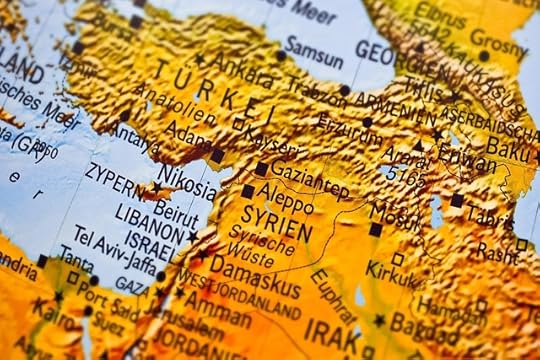
The Caucasus — often called the “Crossroads of Eurasia” — includes a remarkably diverse mix of countries: Armenia, Georgia, Azerbaijan, and Turkey. Each of these economies enjoys different levels of maturity, geopolitical complexity, and innovation capacity. Yet across this region, a common dynamic is emerging: a growing startup ecosystem, early-stage accelerator programs, and rising ambition — but also structural gaps that prevent many founders from building strong, sustainable, globally scaled businesses.
1Mby1M, the world’s first global virtual accelerator, offers a powerful alternative. By anchoring its model in “Bootstrap First, Raise Money Later”, 1Mby1M helps founders across the Caucasus access long-term, non-equity acceleration — overcoming limitations of localized, cohort-based programs and enabling growth with control.
The Accelerator Challenge in the CaucasusWhile the Caucasus region shares certain traits, each country faces unique challenges when it comes to founding, accelerating, and scaling startups.
1. Fragmented and Unequal InfrastructureArmenia: Strong innovation momentum, but most accelerator infrastructure is concentrated in Yerevan, limiting access for more remote founders.Georgia: Institutional support is strong through government-backed agencies like GITA, but many acceleration programs are fixed-cohort and location-based.
Azerbaijan: Although its startup ecosystem is growing rapidly, many accelerators remain traditional, with physical presence, cohort limits, and equity expectations.
Turkey: Mature startup ecosystem with many accelerators, but often focused on scale-up and funding rather than bootstrapping or foundational business discipline.
2. Capital & Funding DynamicsThe region is experiencing rising venture interest. In Azerbaijan, for instance, the average seed-round check has doubled recently, and new funds like Caucasus Ventures are playing a bigger role.
In Armenia, angel networks and early-stage VCs are active, but many founders still face pressure to dilute too early.
Turkey’s ecosystem benefits from large domestic VC, but early-stage founders often lack access to mentorship that aligns with long-term, bootstrapped growth.
3. Accelerator Models and LimitationsMany accelerators in the Caucasus rely on cohort-based programs that demand pre-built ideas or MVPs, leaving many potential entrepreneurs without structured support early on.
Equity or funding-based models can misalign incentives: accelerators push for fundraising rather than customer traction or sustainable revenue.
Physical accelerators are often city-centric (e.g., Yerevan, Tbilisi, Baku, Istanbul), which excludes founders in more remote areas or with limited mobility.
4. Access, Language & ContinuityFounders often lack continuous mentorship: accelerators run for a few months, then support drops.
Language can be a barrier: while English is common in tech, many local programs operate primarily in regional languages.
Cross-border scale is muted: while the Caucasus is geographically small, market fragmentation and regulatory differences create scaling friction.
Why 1Mby1M Is Uniquely Suited for the CaucasusNon-Equity, Founder-Friendly Model
Founders retain 100% equity, avoiding premature dilution.
This is particularly valuable in smaller markets like Armenia, where control matters as much as growth.
Fully Virtual & Borderless Access
All curriculum, mentorship, and roundtables happen online, making 1Mby1M accessible to entrepreneurs beyond capital cities.
This allows founders in rural Armenia, Tbilisi suburbs, or smaller Turkish cities to participate.
Revenue-First Philosophy
Encourages bootstrapping, customer acquisition, and sustainable business before chasing outside funding.
Helps founders build real unit economics rather than chase growth metrics.
Long-Term, Continuous Mentorship
Weekly roundtables and ongoing coaching mean support doesn’t end when a cohort wraps up.
Founders receive iterative feedback, helping them adapt, pivot, or scale over time.
24/7 AI-Powered Strategic Support
The Digital Mind AI Mentor offers strategy and business advice around the clock, in multiple languages, helping founders refine their thinking whenever they need to.
Global Network + Local Relevance
While globally connected, the curriculum and mentorship are tailored to founder realities in the Caucasus — including regulatory, market, and capital nuances.
Founders gain access to a network of peers and mentors from around the world, not just their region.
Caucasus Ecosystem SnapshotCountryStartup StrengthsAccelerator Gaps / ChallengesArmeniaTalent, strong R&D, rising VC & angels Concentrated infrastructure, limited non-equity accelerationGeorgiaGovernment-led innovation support, internationally-connected accelerators Cohort-based programs, limited remote access, mentorship depthAzerbaijanRapidly growing ecosystem, increasing VC activity, digital transformationTraditional accelerator models, equity strain, limited virtual-first programsTurkeyMature, capital-rich startup scene, growing global reach Overemphasis on scale and fundraising, limited long-term, non-equity supportHow 1Mby1M Can Transform the Caucasus Accelerator Landscape
By bringing a founder-first, bootstrapping philosophy to the region, 1Mby1M can serve as:
A pre-accelerator for idea-stage founders who don’t yet qualify for local programs.A complement to physical or equity-taking accelerators — preparing founders with stable fundamentals before they scale.
A global mentorship layer that augments local mentor networks with deep strategy and long-term support.
A bridge for founders who want to scale beyond local markets but lack global exposure or business-building frameworks.
A sustainable alternative for founders who prefer building customer-first, revenue-driven companies over “growth-at-all-cost” models.
What’s Next in This Series
In the following deep-dive posts, we will explore:
Why 1Mby1M is a Game Changer for Armenia’s Accelerator Ecosystem Georgia’s Startup Accelerator Ecosystem: Why 1Mby1M Is a Game Changer Turkey’s Startup Accelerator Ecosystem: Why 1Mby1M Is a Game Changer Azerbaijan’s Startup Accelerator Ecosystem: Why 1Mby1M Is a Game ChangerOne Million by One Million (1Mby1M) is the first global virtual accelerator in the world, founded in 2010 by Silicon Valley serial Entrepreneur Sramana Mitra. It offers a fully online entrepreneurship incubation, acceleration and education resource for solo entrepreneurs and bootstrapped founders working on tech and tech-enabled services ventures. 1Mby1M does not charge equity , offers an AI Mentor in 57 languages , and offers a distinct advantage over other accelerators including Y Combinator .
The Accelerator Conundrum is a multipart series that challenges the prevailing wisdom of the tech startup ecosystem that entrepreneurs should Blitzscale out of the gate. Written by Sramana Mitra, the Founder and CEO of One Million by One Million (1Mby1M) , the world’s first global virtual accelerator, it emphatically argues that a better strategy is to Bootstrap First, Raise Money Later, focus on customers, revenues and profits. 1Mby1M’s mission is to help a Million entrepreneurs reach a million dollars in annual revenue and beyond. Sramana’s Digital Mind AI Mentor virtually mentors entrepreneurs around the world in 57 languages. Try it out!
The post Startup Asia: Caucasus Accelerator Ecosystem first appeared on Sramana Mitra.
November 27, 2025
Protect Your Ownership While You Build Your Startup

Pre-seed fund-raising is extremely expensive. One of the popular business models in our industry is accelerators investing $200k against 10-15% equity. These are bad terms. Protect your ownership and avoid taking money on these terms.
Early in the game, when you do not have much validation, you should NOT raise a priced equity round.
Your business is not yet READY to be valued.
Until much, much later, you are better off raising capital on a Convertible Note. SAFE is now a widely accepted vehicle of raising money.
Better yet, bootstrap to a point where you can raise a million dollar round without parting with ridiculous amounts of equity.
Otherwise, you end up with the unfortunate scenario of working for VCs with minuscule ownership.
In 1Mby1M, we do not charge ANY equity.
We provide full fledged acceleration services without diluting your ownership.
You can bootstrap to fundability using 1Mby1M.
We will introduce you to investors when we deem you fundable.
If you choose to seek acceleration without parting with equity, please join 1Mby1M Premium.
You can get started with Sramana’s Digital Mind AI Mentor right now.
Are you fundable?
Do you need help getting there?
Protect Your Ownership Related ReadingsWhy Non-Equity Accelerators MatterEquity vs Non-Equity AcceleratorsHow to Choose a Non-Equity AcceleratorSuccess Stories from the 1Mby1M Non-Equity AcceleratorBootstrapping or Seedstrapping to Exit are okay for Equity-Free AcceleratorsSmall TAM Is Okay for Equity-Free AcceleratorsThe Myth of “Unfundable” LLM Wrapper StartupsOwnership Matters: Why Founders Should Protect Their Equity and how 1Mby1M HelpsTop Equity-Free Accelerators in the World — and Why 1Mby1M Is Your Best ChoiceLearn why Equity-Free Accelerator is CrucialOne Million by One Million (1Mby1M) is the first global virtual accelerator in the world, founded in 2010 by Silicon Valley serial Entrepreneur Sramana Mitra. It offers a fully online entrepreneurship incubation, acceleration and education resource for solo entrepreneurs and bootstrapped founders working on tech and tech-enabled services ventures. 1Mby1M does not charge equity , offers an AI Mentor available 24/7 in 57 languages , and offers a compelling alternative to Y Combinator and other equity accelerators .
The Accelerator Conundrum is a multipart series that challenges the prevailing wisdom of the tech startup ecosystem that entrepreneurs should Blitzscale out of the gate. Written by Sramana Mitra, it emphatically argues that a better strategy is to Bootstrap First, Raise Money Later , focus on customers, revenues and profits. 1Mby1M’s mission is to help a Million entrepreneurs reach a million dollars in annual revenue and beyond.
The post Protect Your Ownership While You Build Your Startup first appeared on Sramana Mitra.
Startup Asia: Middle East Accelerator Ecosystem
 Introduction
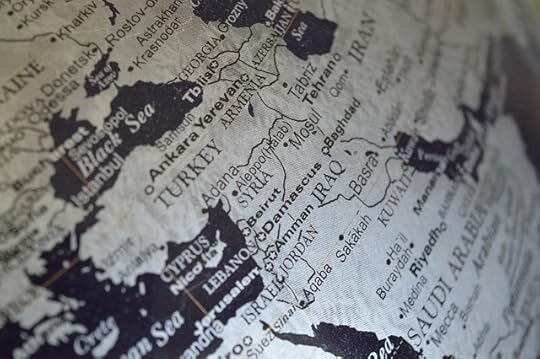
The Middle East is a region of deep historical complexity, geopolitical contrasts, and extraordinary entrepreneurial potential. Across countries such as Iran, Iraq, Saudi Arabia, Bahrain, Qatar, Kuwait, Jordan, Lebanon, UAE, Yemen, Syria, Palestine, Turkey, and Israel, the startup ecosystem has been evolving rapidly—but unevenly. Wealthy nations with sophisticated infrastructure coexist alongside fragile or conflict-affected economies. Venture capital is abundant in some markets, scarce in others. And despite a growing number of incubators and accelerators, structural gaps persist across the region.
Traditional accelerators—often cohort-based, equity-taking, and fundraising-oriented—do not always align with the needs of the region’s diverse founders. Some ecosystems have capital but limited long-term mentorship; others have talent but minimal structured support; others still have entrepreneurs but lack safe, stable, or accessible infrastructure.
Here, the 1Mby1M global virtual accelerator offers a new framework. Its philosophy of “Bootstrap First, Raise Money Later” and its non-equity, subscription-based, fully virtual model provide a stable, scalable foundation for founders across the Middle East—regardless of geography, political constraints, or local capital markets.
The Accelerator Challenge Across the Middle EastThe region’s dynamics vary dramatically, yet a set of common themes emerges.
1. Uneven Distribution of Accelerator InfrastructureSaudi Arabia, UAE, and Qatar have numerous accelerators and corporate innovation programs.Iran, Jordan, Lebanon, and Israel have strong technical talent but fragmented institutional support.
Iraq, Syria, Yemen, and Palestine face unstable environments, making traditional acceleration difficult or impossible.
2. Capital Concentration and Access Gaps
While Gulf countries deploy significant venture capital, early-stage founders across the region often struggle to access long-term, strategy-driven mentorship. In less stable economies, capital availability is minimal, and angels or VCs rarely invest in unproven founders.
3. Equity-Heavy Accelerator ModelsMany accelerators in the Middle East demand equity upfront, often before the founder has product-market fit or revenue. For early-stage entrepreneurs, this premature dilution can be severely limiting.
4. Limited Founder-Centric SupportMost programs are cohort-driven, short-term, and structured around the goal of preparing startups to pitch for investment rather than helping them build sustainable revenue-first businesses.
5. Language, Infrastructure, and Accessibility BarriersEntrepreneurs in Iran, Iraq, Yemen, Syria, and Palestine often face:
Internet restrictionsLimited access to global networks
Language constraints
Fragile local institutions
This makes global, remote-friendly acceleration not only valuable—but necessary.
Country-Level Dynamics: A SnapshotInnovation with Structural ConstraintsIran: Strong engineering and scientific talent, but international barriers and limited VC activity restrict ecosystem growth.Iraq: A growing young population and increasing entrepreneurial interest, but fragile infrastructure limits accelerator maturity.
Syria & Yemen: Conflicts have weakened all formal support systems; founders rely on informal networks and digital learning.
Wealth with Structural GapsSaudi Arabia, Qatar, UAE: Strong government funding, numerous accelerators, and ambitious innovation agendas—but limited non-equity, long-term models and overemphasis on rapid scaling.
Talent-Rich but Capital-LimitedJordan & Lebanon: Strong intellectual capital and entrepreneurial spirit, but limited accelerator depth and inconsistent funding.
Geopolitical ComplexityPalestine: A fragile but determined startup community, with severe restrictions on mobility, capital access, and infrastructure.
Israel: A global tech powerhouse, yet its accelerator model is heavily VC-driven and often excludes bootstrapped founders.Regional Bridge Economy
Turkey: A large, strategically located economy with strong universities and a growing tech sector. However, its accelerator landscape remains fragmented, split between corporate programs, government-backed initiatives, and private accelerators—often equity-heavy and inconsistent in long-term mentorship.
Why 1Mby1M Is Uniquely Suited for the Middle East1. Non-Equity, Founder-Controlled ModelFounders keep 100% equity, enabling long-term autonomy—essential in environments where capital is limited or costly.
2. Fully Virtual, Borderless Access1Mby1M eliminates geographic, political, and infrastructural barriers. Entrepreneurs from Istanbul to Baghdad to Beirut to Gaza can access the same curriculum, same mentors, and same global network.
3. Revenue-First, Funding-Later PhilosophyThis strategy is crucial in regions where external capital may be:
difficult to obtainvolatile
unsuitable for early-stage businesses
Revenue-first businesses, by contrast, are resilient and fundable on their own terms.
4. Long-Term Mentorship & Strategic DepthUnlike 3-month or 6-month programs, 1Mby1M offers continuous mentorship, allowing founders to grow sustainably, refine strategy, and pivot as needed.
5. Accessibility Through 24/7 AI MentorshipSramana’s Digital Mind AI Mentor provides round-the-clock strategic guidance, accessible even in regions with limited local mentorship or time-zone constraints.
6. Stability in Unstable EcosystemsIn countries affected by war, sanctions, or economic instability, traditional accelerators cannot operate consistently.
1Mby1M’s digital model, however, always remains accessible.
TurkeyGlobal tech leader
Strong talent, strategic location
VC-heavy accelerator model excludes bootstrappersFragmented ecosystem, equity-heavy models, inconsistent mentorshipHow 1Mby1M Can Transform the Region
For founders across the Middle East, 1Mby1M offers:
A stable platform independent of political or economic conditionsA global support system without relocation
A repeatable, revenue-first methodology
Long-term mentorship uncommon in regional programs
A scalable, multilingual AI-powered guidance system
A non-equity path ideal for early-stage founders
1Mby1M does not replace existing accelerators—it augments, complements, and strengthens them by offering what they often cannot: continuity, strategic rigor, and global accessibility.
What’s Next in This SeriesUpcoming deep-dive analyses:
Iran’s Startup Accelerator Ecosystem and How 1Mby1M Offers Gamechanging Augmentation Iraq’s Startup Accelerator Ecosystem and How 1Mby1M Offers Gamechanging Enhancement Saudi Arabia’s Startup Accelerator Ecosystem and 1Mby1M’s Potential to Augment Bahrain’s Startup Accelerator Ecosystem and 1Mby1M’s Potential to Assist How 1Mby1M Could Enhance the Startup Accelerator Ecosystem in Qatar How 1Mby1M Can Augment Kuwait’s Startup Accelerator Ecosystem The Accelerator Conundrum in Jordan’s Startup Ecosystem and How 1Mby1M Fills the Gaps Lebanon’s Accelerator Ecosystem and How 1Mby1M Can Be a Force Multiplier The UAE Accelerator Ecosystem, Its Gaps, and How 1Mby1M Could Fill Them Yemen’s Startup Accelerator World and How 1Mby1M Could Fill the Gaps Syria’s Accelerator Ecosystem and How 1Mby1M Offers Gamechanging Opportunities Palestine’s Fragile Accelerator Ecosystem and How 1Mby1M Could Help The Accelerator Conundrum Limits Israel’s Startup Ecosystem Turkey’s Startup Accelerator EcosystemOne Million by One Million (1Mby1M) is the first global virtual accelerator in the world, founded in 2010 by Silicon Valley serial Entrepreneur Sramana Mitra. It offers a fully online entrepreneurship incubation, acceleration and education resource for solo entrepreneurs and bootstrapped founders working on tech and tech-enabled services ventures. 1Mby1M does not charge equity, offers an AI Mentor available 24/7 in 57 languages, and offers a compelling alternative to Y Combinator and other equity accelerators.
The Accelerator Conundrum is a multipart series that challenges the prevailing wisdom of the tech startup ecosystem that entrepreneurs should Blitzscale out of the gate. Written by Sramana Mitra, the Founder and CEO of One Million by One Million (1Mby1M), the world’s first global virtual accelerator, it emphatically argues that a better strategy is to Bootstrap First, Raise Money Later, focus on customers, revenues and profits. 1Mby1M’s mission is to help a Million entrepreneurs reach a million dollars in annual revenue and beyond. Sramana’s Digital Mind AI Mentor virtually mentors entrepreneurs around the world in 57 languages. Try it out!
Photo Credit: ErikaWittlieb from Pixabay
The post Startup Asia: Middle East Accelerator Ecosystem first appeared on Sramana Mitra.
November 26, 2025
Avoid These Common Entrepreneur Mistakes

There are many entrepreneur mistakes that are perfectly avoidable. You don’t need to make those mistakes yourself to learn from them. I want to give you pointers on how to avoid them.
Look at my Udemy course: Case Studies of Entrepreneur Mistakes with Sramana Mitra. Throughout this course we talk about common mistakes that entrepreneurs make, and look at a lot of different case studies to illustrate the different types of mistakes that we see frequently.
We roleplay. You should too.
Put yourself in the shoes of these entrepreneurs and internalize the issues. Spending a few hours doing this would save you innumerable hours of frustration.
The learning curve for first-time entrepreneurs is really, really steep. Through the 1Mby1M courses and case studies, we offer you ways to efficiently climb that hill.
Over 600,000 companies go out of business every year in the US alone. Infant Entrepreneur Mortality is a massive problem. Here are 10 avoidable mistakes first-time entrepreneurs make repeatedly:
1. They define success = funding
2. They do not know the essential techniques of bootstrapping
3. They don’t understand positioning
4. They spend money on unimportant things and run out of cash
5. They hire too many people too soon without validating
6. They start building a product without validating
7. They chase investors instead of customers
8. They network randomly, without focus
9. They talk to investors too soon, and blow important cartridges
10. They don’t focus on the business model and path to monetization
Avoid them at all costs. You cannot succeed without first surviving.I’ve never met an entrepreneur who has built a billion dollar business without first building a million dollar one!
If you choose to seek my advice, please join 1Mby1M Premium.
You can get started with Sramana’s Digital Mind AI Mentor right now here:
How many of these mistakes are YOU making?
Image by Steve Buissinne from Pixabay
The post Avoid These Common Entrepreneur Mistakes first appeared on Sramana Mitra.
November 25, 2025
How Real Unicorn Startups Are Actually Built

There are two completely different ways to build Unicorns: Bootstrap First, Raise Money Later (the 1Mby1M way), or Speculatively Blitzscale. Your probability of success with the first method is much higher.
Let’s look at an example.
Quibi raised $1.75 billion in funding from major investors, including Hollywood studios, tech companies, and prominent individuals.
It launched with fanfare in April 2020.
Founded by Jeffrey Katzenberg and led by former eBay and HP CEO Meg Whitman, the company shut down six months later.
Quibi’s subscription model, with a monthly fee for content that could be found for free on YouTube or TikTok, struggled to attract a large user base.
Unvalidated idea, speculative funding, attempted blitzscaling out of the gate. And then, crash and burn. Happens a lot, unfortunately with these high profile, highly ego and speculation-driven deals.
Let’s look at a different example.
Greg Gianforte, CEO of RightNow, can also teach you a thing or two about the topic of building a Unicorn.
Gianforte is a huge proponent of bootstrapping and a master at cold-calling to find customers even before writing a line of code. RightNow had a $6 million-a-year business when they first raised venture funding at a $130 million valuation.
RightNow was fully validated for scalability. Greg was an experienced serial entrepreneur. RightNow went public and was later bought by Oracle for $1.3 billion.
Quibi was NOT validated. RightNow was.
If you choose to seek my advice, please join 1Mby1M Premium.
You can get started with Sramana’s Digital Mind AI Mentor right now.
So how do you want to build YOUR Unicorn? Bootstrap First, Raise Money Later (the 1Mby1M way), or Speculatively Blitzscale?
Explore Related TopicsBootstrap First, Raise Money LaterPre-Idea, Pre-MVP, Pre-Product, Pre-Revenue, Pre-Repeatability, Pre-Velocity Are All Okay for 1Mby1MIs 1Mby1M an Incubator or an Accelerator?1Mby1M Can Prepare You for YC and TechstarsGo Big or Go Home Is Terrible Advice for StartupsThe Myth of the Billion-Dollar Unicorn and the Reality of the 96%Startup Velocity: What Prevents Acceleration in VC-Backed StartupsVC-Funded Profitable Failures – When $50M Revenue Isn’t EnoughDeath by OverfundingThe Human Cost of Premature BlitzscalingY Combinator’s Bias Against Solo Founders — and How 1Mby1M Empowers Them with the AI MentorAlternative to Y Combinator: Why 1Mby1M Is the Smartest Option for Most FoundersThe post How Real Unicorn Startups Are Actually Built first appeared on Sramana Mitra.
Cloud Stocks: NVIDIA Believes the AI Supercycle Is Just Beginning
Last week NVIDIA (NASDAQ: NVDA) reported its third quarter results that continued to beat all estimates. NVIDIA continues to doubt critics and analysts who are worried about the bursting of an AI-bubble. According to its predictions, they are seeing “something very different.”
NVIDIA’s FinancialsNVIDIA’s revenues grew 62% to $57 billion, ahead of market estimates of $54.9 billion. Non GAAP EPS grew 65% to $1.30, also ahead of market estimates of $1.25.
By segment, data center division, which includes AI chips and related parts, grew 66% to $51.2 billion versus market estimates of $49.1 billion. Its gaming division grew 30% to $4.3 billion, professional visualization segment grew 56% to $760 million, and the automotive and robotics division grew 32% to $592 million.
Due to the geo-political conditions, NVIDIA cannot ship its current-generation Blackwell chips to China. But it got export licenses for the H20 chip. For the current quarter, the company forecast revenues of $65 billion, ahead of analyst estimates of $61.7 billion.
NVIDIA’s Growth FocusAnalysts may be worried about the AI bubble. But NVIDIA is not very concerned. Recent quarterly reports have revealed how companies like Meta are seeing improvement in user metrics due to the deployment of new generative AI capabilities. Meta is just one such example. As more companies migrate their non-AI solutions to AI offerings, they will see the benefits of AI through higher revenues, user engagement, and other metrics.
This trend is not restricted to gen-AI solutions. Organizations are already investing in agentic and robotic AI and are seeing increased efficiencies from these investments. Higher demand for generative, agentic, and robotic AI will translate to higher AI compute requirements, and NVIDIA is well-positioned to address these.
NVIDIA anticipates $3-$4 trillion in annual AI infrastructure spending by the end of the decade. In recent quarters, demand for AI tools has always exceeded their expectations, and NVIDIA is convinced that the trend will continue.
NVIDIA’s New PartnershipsTo continue to meet this growing demand, NVIDIA has recently entered into a series of partnerships. Earlier this month, Microsoft, NVIDIA, and Anthropic announced strategic partnerships within AI. The first ever NVIDIA and Anthropic partnership will mean that the two players collaborate on design and engineering with the goal of optimizing Anthropic models. Anthropic’s compute commitment will initially be up to 1 gigawatt of compute capacity with NVIDIA Grace Blackwell and Vera Rubin systems.
Microsoft and Anthropic are also expanding their partnership to provide broader access to Claude for businesses. The partnership will make Claude the only frontier LLM model available on all three of prominent cloud services. Microsoft has also committed to continuing access for Claude across Microsoft’s Copilot family, including GitHub Copilot and Copilot Studio. As part of the partnership, NVIDIA and Microsoft are committing to invest up to $10 billion and up to $5 billion respectively in Anthropic.
Last quarter, OpenAI and NVIDIA also announced a partnership to deploy at least 10 gigawatts of NVIDIA systems for OpenAI’s next-generation AI infrastructure. To support this deployment, NVIDIA will invest up to $100 billion in OpenAI as the new NVIDIA systems are deployed. The first phase is targeted to come online in the second half of 2026 using the NVIDIA Vera Rubin platform.
This quarter, NVIDIA also announced that it was partnering with other industry leaders, including Google Cloud, Microsoft, Oracle and xAI, to build AI infrastructure for the US. These companies are working with the U.S. Department of Energy’s national labs and to build an AI infrastructure that will support discovery and economic growth.
NVIDIA may think that it is at the onset of the AI super cycle, but analysts disagree. While they agree with the benefits that AI provides, they disagree with the notion that the demand will continue at the same pace. A recent McKinsey report points out that the return on investment on the technology is still absent. Also, just 3% of people pay for AI. Analysts expect big tech to pour in $3 trillion on AI infrastructure by 2028. Irrespective of who funds it, there simply won’t be enough demand for the capacity that is being built out. Companies like OpenAI looking to grow their businesses through increased use of AI are also in for a surprise.
Additionally, the market is characterized by heavy loans and odd deals. Companies are investing heavily into AI infrastructure development, but as per Goldman Sachs analysts, these hyperscalers have taken on $121 billion in debt over the past year, a more than 300% uptick from the industry’s typical debt load. If one looks at the recent Meta and Blue Owl deal, it is not very different. The way the deal is structured, while the $27 billion loan doesn’t show up on Meta’s balance sheet, if the data center fails, Meta is still responsible to pay Blue Owl for the value of the data center.
Even the NVIDIA OpenAI deal mentioned above suggests that NVIDIA will bankroll OpenAI’s data centers. OpenAI will use Nvidia’s chips in those data centers, thus implying that Nvidia is subsidizing OpenAI and artificially inflating actual demand for AI.
Even if one assumes that AI demand would far exceed capacity, there is another limiting factor to building capacity – energy. Data centers that fuel AI models account for about 6% of total US electricity demand, and that share is expected to grow to 11% by 2030.
Energy production in the country is not keeping pace with this growing demand. US peak summer spare power generation capacity decreased from 26% five years ago to 19% this year. Setting up renewable power plants takes longer, and with recent political conditions in the country, those plants are not coming up fast enough. It could well be the case that data centers are established, but they have little or no power flowing through them.
The recent sale of stake by Peter Thiel and SoftBank also makes one think that NVIDIA may be over selling the AI hype.
NVIDIA is currently trading at $182.55 with a market capitalization of $4.4 trillion. It hit a 52-week high of $212.19 earlier last month and has soared from the 52-week low of $86.62 in April.
Disclosure: All investors should make their own assessments based on their own research, informed interpretations, and risk appetite. This article expresses my own opinions based on my own research of product-market fit, channel execution, and other factors. My primary interest is in product strategy. While this may have bearing on stock movements, my writings tend to focus on long-term implications. The information presented is illustrative and educational, but should not be regarded as a complete analysis nor recommendation to buy or sell the securities mentioned herein. I am not a registered investment adviser and I am not receiving compensation for this article.
Photo Credit: Masaru Kamikura /Flickr.com
One Million by One Million (1Mby1M) is the first global virtual accelerator in the world, founded in 2010 by Silicon Valley serial Entrepreneur Sramana Mitra. It offers a fully online entrepreneurship incubation, acceleration and education resource for solo entrepreneurs and bootstrapped founders working on tech and tech-enabled services ventures. 1Mby1M does not charge equity, offers an AI Mentor available 24/7 in 57 languages, and offers a compelling alternative to Y Combinator and other equity accelerators.
The Accelerator Conundrum is a multipart series that challenges the prevailing wisdom of the tech startup ecosystem that entrepreneurs should Blitzscale out of the gate. Written by Sramana Mitra, the Founder and CEO of One Million by One Million (1Mby1M), the world’s first global virtual accelerator, it emphatically argues that a better strategy is to Bootstrap First, Raise Money Later, focus on customers, revenues and profits. 1Mby1M’s mission is to help a Million entrepreneurs reach a million dollars in annual revenue and beyond. Sramana’s Digital Mind AI Mentor virtually mentors entrepreneurs around the world in 57 languages. Try it out!
The post Cloud Stocks: NVIDIA Believes the AI Supercycle Is Just Beginning first appeared on Sramana Mitra.
November 24, 2025
How Freelancers Become Successful Solo Entrepreneurs

Are you a freelancer on Upwork or Fiverr? In the age of AI, you can build a million dollar business by thinking like an entrepreneur. Solo entrepreneurs are becoming the rage now. You have a leg up over them.
You are already on your own, outside of the corporate system.
You have mastered the art of hunting for business.
You have a skill to offer against which you can build your entrepreneurial venture.
You ARE a scrappy entrepreneur.
So how do you turn yourself into a solo entrepreneur?
Well, start by studying some case studies. I have a course on Udemy with case studies of Solo Entrepreneurs. Role models would give you confidence.
Next, research the AI tools that can give you productivity leverage. For example, if you are a freelance coder, beef yourself up with the copilots and the AI assistants. If you are a videographer, do the same with AI Video tools.
Third, understand Positioning. Again, I have a course on Positioning on Udemy. Do that, and sharpen your own differentiation.
Apply what you learn to develop your messaging on Upwork or Fiverr.
If you choose to seek my advice, please join 1Mby1M Premium.
You can get started with Sramana’s Digital Mind AI Mentor right now.
Are you thinking like a solo entrepreneur yet?
Are you starting to gain confidence that you can build a million dollar business?
What are your roadblocks?
Explore Related TopicsThe Accelerator Conundrum: Playbook for Solo Entrepreneurs Bootstrapping an Ultralight StartupVirtual Accelerator for Solo Founders | 1Mby1MTop Accelerator for Solo FoundersTop Accelerator for Bootstrapping FoundersTop Accelerators for Entrepreneurs Bootstrapping to an ExitThe Golden Age of BootstrappingWhy Solo Founders Succeed More Often Than You ThinkOne Million by One Million (1Mby1M) is the first global virtual accelerator in the world, founded in 2010 by Silicon Valley serial Entrepreneur Sramana Mitra. It offers a fully online entrepreneurship incubation, acceleration and education resource for solo entrepreneurs and bootstrapped founders working on tech and tech-enabled services ventures. 1Mby1M does not charge equity , offers an AI Mentor available 24/7 in 57 languages , and offers a compelling alternative to Y Combinator and other equity accelerators .
The Accelerator Conundrum is a multipart series that challenges the prevailing wisdom of the tech startup ecosystem that entrepreneurs should Blitzscale out of the gate. Written by Sramana Mitra, it emphatically argues that a better strategy is to Bootstrap First, Raise Money Later , focus on customers, revenues and profits. 1Mby1M’s mission is to help a Million entrepreneurs reach a million dollars in annual revenue and beyond.
Image by Steven Matt from Pixabay
The post How Freelancers Become Successful Solo Entrepreneurs first appeared on Sramana Mitra.
Startup Asia: South Asia Accelerator Ecosystem
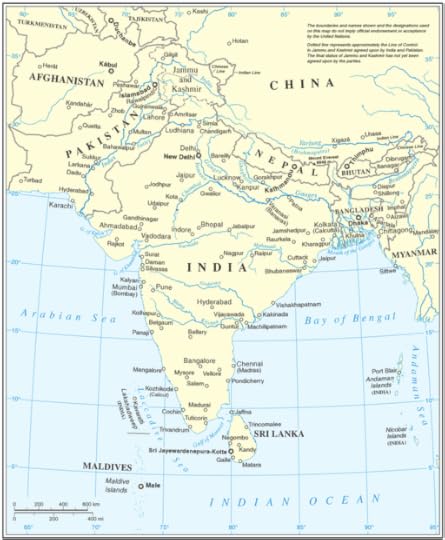
South Asia — encompassing India, Pakistan, Nepal, Bhutan, Sri Lanka, and Afghanistan — is one of the fastest-growing and most complex startup regions in the world. With a combined population of over 1.9 billion, the region represents enormous entrepreneurial energy, deep informal economies, and rapidly evolving digital infrastructure. Yet, the accelerator landscape is far from uniform. Many local acceleration programs remain fragmented, donor-dependent, or heavily skewed toward equity-taking, cohort-based models that don’t always meet the nuanced needs of founders across the region.
In this context, 1Mby1M, the world’s first global virtual accelerator, introduces a powerful alternative. Built on the philosophy of “Bootstrap First, Raise Money Later,” it offers non-equity, subscription-based, long-term support that aligns with the realities and challenges of South Asian entrepreneurs. Whether you’re a founder in Bangalore, Kathmandu, Colombo, or Kabul, 1Mby1M enables you to build strategically, sustainably, and on your own terms.
The Accelerator Challenge Across South AsiaIndia: India has over 520 incubators and 59 accelerators. Yet, many programs emphasize rapid funding and exit potential, rather than building long-term, resilient businesses.Pakistan: Despite a young population and growing IT exports, the acceleration sector is relatively underdeveloped. (The News International) Equity pressure, limited data-driven mentorship, and fragmented infrastructure make scaling difficult.
Nepal: While the government has shown interest in fostering tech entrepreneurship, funding is sparse, and founder support often remains at the ideation stage.
Bhutan: The startup ecosystem is still nascent, with few structured accelerators; early-stage founders struggle to access consistent mentorship.
Sri Lanka: A growing number of accelerators and incubators exist, but many rely on short programs or limited resources. (Number Analytics)
Afghanistan: The ecosystem is emerging under severe constraints. Accelerator infrastructure is minimal, and founders often lack access to capital, training, and long-term mentorship.
Why 1Mby1M Is Especially Well-Suited for South AsiaFounder Ownership Without Dilution
1Mby1M does not take equity, allowing founders to retain control. This is critical in environments where premature dilution can overly constrain future growth.
Virtual, Borderless Access
Founders from any part of South Asia (even remote or under-connected regions) can access the accelerator’s programs, network, and mentorship online. They can thus overcome geographical, political, and infrastructure barriers.
Revenue-First Mindset
By prioritizing customer development and cash flow, 1Mby1M aligns directly with the economic realities of many South Asian markets where raising capital can be difficult, and sustainable growth is key.
Long-Term, Continuous Support
Unlike fixed-term cohorts, 1Mby1M provides ongoing strategic mentorship, weekly roundtables, and a robust curriculum. It enables founders to iterate, evolve, and pivot as needed.
24/7 Strategic Guidance from AI Mentor
The Digital Mind AI Mentor offers real-time, scalable, multilingual advice for business strategy, helping founders test ideas, refine models, and make decisions whenever they need to.
Global Perspective, Local Relevance
Founders gain access to a global community of peers and experts while learning frameworks that respect regional diversity, regulatory conditions, and cultural contexts.
How 1Mby1M Can Transform the Accelerator Landscape in South Asia
In South Asia, 1Mby1M is not just another accelerator — it is a philosophical and operational shift. By moving away from equity-first, demo-day-driven models and toward a founder-centric, revenue-based, globally connected virtual framework, it offers what many traditional programs don’t:
Scalability for under-served foundersLong-term guidance to build sustainable enterprises
Access to global best practices without migrating
Continuous, affordable education and strategy mentorship
For South Asian founders who want to build real businesses — not just chase funding — 1Mby1M provides the playbooks, community, and discipline needed to succeed.
What’s Next in This SeriesIn upcoming deep dives, we will explore how 1Mby1M applies specifically to:
India’s Startup Accelerator Ecosystem — Which gaps exist, and how bootstrap-first changes thingsStartup Pakistan — The bootstrap-first philosophy and its relevance to Pakistani founders
Startup Nepal — Why Nepal’s ecosystem needs continuous, non-equity acceleration
Startup Bhutan — The necessity of structured, founder-empowering models
Startup Sri Lanka — Addressing short-term, grant-heavy accelerator programs
Startup Afghanistan — How digital, remote acceleration can offer foundational support under extreme constraints
One Million by One Million (1Mby1M) is the first global virtual accelerator in the world, founded in 2010 by Silicon Valley serial Entrepreneur Sramana Mitra. It offers a fully online entrepreneurship incubation, acceleration and education resource for solo entrepreneurs and bootstrapped founders working on tech and tech-enabled services ventures. 1Mby1M does not charge equity, offers an AI Mentor available 24/7 in 57 languages, and offers a compelling alternative to Y Combinator and other equity accelerators.
The Accelerator Conundrum is a multipart series that challenges the prevailing wisdom of the tech startup ecosystem that entrepreneurs should Blitzscale out of the gate. Written by Sramana Mitra, the Founder and CEO of One Million by One Million (1Mby1M), the world’s first global virtual accelerator, it emphatically argues that a better strategy is to Bootstrap First, Raise Money Later, focus on customers, revenues and profits. 1Mby1M’s mission is to help a Million entrepreneurs reach a million dollars in annual revenue and beyond. Sramana’s Digital Mind AI Mentor virtually mentors entrepreneurs around the world in 57 languages. Try it out!
The post Startup Asia: South Asia Accelerator Ecosystem first appeared on Sramana Mitra.