Matthew Dicks's Blog
April 26, 2026
The Accursed Clock
Titles are so hard.
Of the ten books I have published, I’ve only titled four myself.
Others have been titled by friends, my agent, and my editor.
When I see a great title, I admire the hell out of it.
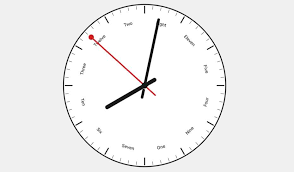
This is known as “The Accursèd Alphabetical Clock” — an analog clock that keeps accurate time but uses words instead of numbers.
It’s both fascinating and infuriating, making “accursed” the perfect word to describe this clock. Elysha and I spent about ten minutes figuring it out, admiring it, and hating it.
Accursed, indeed.


April 25, 2026
Ten years ago and still true
Ten years ago, I published a piece on the Huffington Post about parenting.
I have no recollection of this.
I’m sure I used the money I was paid for the piece to purchase diapers or maybe a round of golf.
But someone found the piece online and asked if I still agree with what I wrote ten years ago, so I checked, expecting to find some disagreement with my former self.
It happens all the time. I’ve been writing and posting online every day without missing a day for more than 20 years.
Opinions change.
I accumulate more information and experience.
I get smarter and wiser.
Not this time.
In my 27th and final year of teaching, I read this piece and thought, “Yup. Still good to go.”
The actual text of the post is here:
12 Things Teachers Think But Can’t Always Say to Parents1. I love your child just a notch below my own children.
Truly. And oddly, that love kicks in almost immediately, just like it did with my own kids.
2. I will miss your child for the rest of my life, even if your child was incredibly difficult and made my days long and exhausting.
3. When it comes to my job performance, you and your child are my primary concern.
If you’re happy with my job performance, then my administrators will be satisfied as well. If they are not, something is seriously wrong with my administrators.
4. You are so very wrong if you view our relationship as adversarial in any way.
I only want to be your partner and friend.
5. When I ask you to call me by my first name, it’s because I want to have the kind of relationship with you that requires first names.
There is no need for artificial barriers. We are both adults who love your child. Why would we not be on a first-name basis?
6. Some of my closest friends (and the godparents of both of my children) are the parents of former students.
These relationships developed because we treated each other as equal partners in their child’s education. If you and I are doing our jobs well, we should be friendly, if not actual friends, by the end of the school year.
7. There is nothing wrong with questioning my decisions.
I only ask that you don’t question my intent or effort. Know that I am always trying to do my best on behalf of your child, and that despite my best intentions, I will undoubtedly make mistakes.
8. If I have done something that disappoints or upsets you, I hope that you will always come to me first.
You can’t imagine how much it hurts to hear about your dissatisfaction secondhand, either from an administrator or (even worse) via the parent, teacher, or student rumor mill.
9. The single greatest lesson that I have learned in my 17 years of teaching is the importance of always following through with what I say every single time without exception.
Never make a threat or a promise that you cannot keep. I have applied this rule to the parenting of my children, too, and in both school and home, it has served me well. This is the one bit of parenting advice I pass on to you.
10. Please know that both legally and ethically, there are times when I want to say something or agree with you but cannot for a multitude of reasons, usually pertaining to the privacy of another student.
It can be frustrating for me, as I’m sure it is for you, but it’s also my professional responsibility.
11. A lower-than-desired grade on a report card is only my honest assessment of your child’s performance and not an indictment of your parenting or your child’s potential.
It merely reflects academic achievement over a very specific period of time.
12. I will wonder (and worry) about your child’s future for the rest of my life.
Tell them to write or visit every now and then. Please.

Huffington 10 years ago
Ten years ago, I published a piece on the Huffington Post about parenting.
I have no recollection of this.
I’m sure I used the money I was paid for the piece to purchase diapers or maybe a round of golf.
But someone found the piece online and asked if I still agree with what I wrote ten years ago, so I checked, expecting to find some disagreement with my former self.
It happens all the time. I’ve been writing and posting online every day without missing a day for more than 20 years.
Opinions change.
I accumulate more information and experience.
I get smarter and wiser.
Not this time.
In my 27th and final year of teaching, I read this piece and thought, “Yup. Still good to go.”
The actual text of the post is here:
12 Things Teachers Think But Can’t Always Say to Parents1. I love your child just a notch below my own children.
Truly. And oddly, that love kicks in almost immediately, just like it did with my own kids.
2. I will miss your child for the rest of my life, even if your child was incredibly difficult and made my days long and exhausting.
3. When it comes to my job performance, you and your child are my primary concern.
If you’re happy with my job performance, then my administrators will be satisfied as well. If they are not, something is seriously wrong with my administrators.
4. You are so very wrong if you view our relationship as adversarial in any way.
I only want to be your partner and friend.
5. When I ask you to call me by my first name, it’s because I want to have the kind of relationship with you that requires first names.
There is no need for artificial barriers. We are both adults who love your child. Why would we not be on a first-name basis?
6. Some of my closest friends (and the godparents of both of my children) are the parents of former students.
These relationships developed because we treated each other as equal partners in their child’s education. If you and I are doing our jobs well, we should be friendly, if not actual friends, by the end of the school year.
7. There is nothing wrong with questioning my decisions.
I only ask that you don’t question my intent or effort. Know that I am always trying to do my best on behalf of your child, and that despite my best intentions, I will undoubtedly make mistakes.
8. If I have done something that disappoints or upsets you, I hope that you will always come to me first.
You can’t imagine how much it hurts to hear about your dissatisfaction secondhand, either from an administrator or (even worse) via the parent, teacher, or student rumor mill.
9. The single greatest lesson that I have learned in my 17 years of teaching is the importance of always following through with what I say every single time without exception.
Never make a threat or a promise that you cannot keep. I have applied this rule to the parenting of my children, too, and in both school and home, it has served me well. This is the one bit of parenting advice I pass on to you.
10. Please know that both legally and ethically, there are times when I want to say something or agree with you but cannot for a multitude of reasons, usually pertaining to the privacy of another student.
It can be frustrating for me, as I’m sure it is for you, but it’s also my professional responsibility.
11. A lower-than-desired grade on a report card is only my honest assessment of your child’s performance and not an indictment of your parenting or your child’s potential.
It merely reflects academic achievement over a very specific period of time.
12. I will wonder (and worry) about your child’s future for the rest of my life.
Tell them to write or visit every now and then. Please.
April 24, 2026
Kids don’t approve of gentle parenting. Me, either.
I first heard about gentle parenting a couple of months ago. A colleague mentioned the phrase, and when I asked what it was, she said, “Oh, you’re going to really hate it.”
She wasn’t wrong.
Gentle parenting, according to several online definitions, is a parenting style that emphasizes empathy, respect, and understanding to guide children’s behavior, focusing on teaching and connection while avoiding punishment, consequences, and outcome-based expectations.
It involves a parent staying calm, communicating in a neutral tone, validating their child’s emotions, and using discipline techniques such as “time-in” and offering choices.
The ultimate goal is to raise a child who is self-regulated, resilient, and emotionally intelligent.
I like some of the ideas in this definition. Empathy, respect, and understanding certainly have a place in parenting, and the goal of raising self-regulated, resilient, and emotionally intelligent kids is great.
But the means by which gentle parenting proposes to achieve this goal is not good.
There is also a place in parenting for discipline, clearly drawn boundaries, sensible punishment, and clear indications when you’re acting like an idiot.
Straight talk.
Honest feedback.
Specific language.
Natural consequences.
Punishment.
When you’re annoyed, your kid should know you’re annoyed.
When you’re angry, it’s okay to be angry.
When administering discipline, offering choices sounds ridiculous.
I have no idea what a “time-in” is, but I know it’s awful.
Not exactly gentle parenting.
Gentle parenting sounds lovely if the world were gentle, but it’s not. I’ve seen too many emotionally fragile kids in my time, and far more today than ever before, to think that gentle parenting is a good idea.
Later, I asked my students if they had heard of this gentle parenting before. Surprisingly, nearly all were familiar with the term and philosophy.
Where the hell have I been?
When I asked if they approved of gentle parenting, not a single student raised their hand.
So I asked, “How many of you think gentle parenting is a bad idea?”
Nearly every hand went up.
“I don’t get it,” I said. “Isn’t gentle parenting good for you? Doesn’t it make your life easier?”
“No,” one student shot back. “It doesn’t teach us anything.”
“It’s stupid,” another said.
“Sometimes you need to be punished when you do something dumb,” another said.
“You can always tell the kids whose parents believe in gentle parenting,” another said. “They are usually the annoying ones.”
I couldn’t believe it. This really happened. I started jotting down their responses lest I forget them.
Many said similar things, too.
The kids get it.
They want boundaries and consequences. They want their parents to act like human beings rather than strange, neutral automotons, unfazed by their children’s occasional or frequent stupidity.
They don’t want to be hit or shamed or yelled at constantly, but in the words of one student, “Sometimes you make your parents mad, so yes, they get to yell at you. It only makes sense.”
Yes, indeed.
I asked my own kids about their opinions on gentle parenting.
Charlie said it’s a good way to mess up your kid.
Clara said it sounds weird and dumb.
Kids get it. Adults should, too.
April 23, 2026
Things that should exist
Six things that we all agree should exist and are within our power to bring into existence, but still don’t.
A three-day vacation after a vacationThe four-day work weekThe elimination of all dress codesCellular jamming technology in every movie theaterRest areas along the Saw Mill and Taconic ParkwayThe elimination of the mulligan from all golf courses in AmericaA national holiday on the Monday following the Super BowlWe all yearn for things that seem within our reach yet are so far away.

April 22, 2026
A money grab with an undoubtedly terrible outcome
A day will come, likely not too far in the future, when Americans will realize that sports betting via an app on their phones is an unmitigated disaster — a highly addictive, financially destructive force in the lives of our citizens, and specifically, in the lives of young men.
We’ve placed a heroin-laced casino in their pockets in a time when affordability is falling out of reach, the economy is working less and less for a huge number of Americans, and young men are feeling more disenfranchised and disillusioned by the day.
A crushing wave of financial ruin is on the horizon. Why we are ignoring it is beyond me.
I’m constantly talking to Charlie about the insidiousness of gambling. I fear for his generation and their financial stability.
It’s unbelievable what is happening.
And when that moment of reckoning comes, many people will be blamed. The owners of the apps and the lawmakers who allowed this to happen will naturally take on most of the responsibility, but so, too. will the people who are cashing in on the advertising of this addictive monster.
They will live to regret it.
They may also be despised for it.
I can’t believe they don’t see it already. I can’t believe how many people are attaching their names to something as clearly destructive as sports betting apps like DraftKings and FanDuel.
People like Jon Hamm, Kevin Hart, Derek Jeter, Wayne Gretzky, Jamie Foxx, and so many others will almost certainly look back on their support of these institutions and wonder if the money they were paid in the service of addicting others and creating greater financial ruin was worth it.
If they are lucky, that regret will be internal and personal and not publicly scathing.
When celebrities and athletes like Larry David, Tom Brady, and Shaq attached their names to Sam Bankman-Fried’s crypto-conspiracy FTX in 2021 and 2022, they were ridiculed when the company collapsed and was revealed to be a massive fraud and a misuse of customer funds.
Many of them were later named in lawsuits over promoting FTX.
But in the case of FTX, investors were ultimately made whole. The average American was unaffected by FTX’s fraud and subsequent collapse.
The damage was contained and ultimately repaired.
In the case of sports betting, things will be very different.
Sports betting apps are used by about 10% of Americans and 25% of young men today, and those numbers continue to grow. Millions of Americans are losing money making bets on the outcomes of sports, and now, with the advent of PolyMarket and Kalshi, everything else.
And losing money is exactly what is happening, because sports betting apps like DraftKings and FanDuel actually restrict or cancel the accounts of successful gamblers.
If you’re winning on these platforms, you will soon be throttled, meaning your bet sizes will be limited, certain wagers will be refused, and accounts will be suspended or even closed, meaning that the 25% of young men who use these apps are losing money in the long run. If they weren’t, their ability to place bets would be hindered or canceled outright, meaning sports betting on these platforms is almost always a losing proposition.
We also know that gambling is addictive. It’s financially ruinous for the addicts and their families. And though I’m not opposed to gambling, I’m deeply opposed to the ease with which sports betting has been made, the design of the apps to make gambling more addictive, and the massive advertising campaigns designed to normalize sports betting as something everyone does as a part of watching sports.
When it comes to acquiring and hooking their customers, these apps are shooting fish in a barrel.
These celebrity endorsements are not helping, and the celebrities should know better. Lending their name to these products only exacerbates the pending financial doom.
If they are less lucky, the public will see their support as a money grab at the expense of those less fortunate.
If they are less lucky, they may find themselves named in massive class action lawsuits in the future as people, and especially young men, find themselves struggling with addiction and financial ruin.
Online gambling via apps like DraftKings and FanDuel is disastrous for America. In a country where our K-shaped economy is rewarding the wealthy and punishing the middle class, sports betting is a siphoning of wages that no American can afford.
I wish these celebrities would open their eyes and close their mouths.

April 21, 2026
Flotsam and jetsam
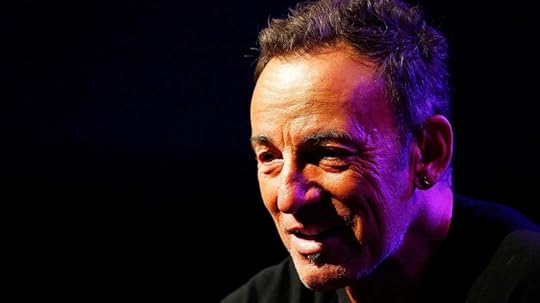
Bruce Springsteen on Fresh Air:
— Bruce Springsteen“Most people’s stage personas are created out of the flotsam and jetsam of their internal geography. They’re trying to create something that solves a series of very complex problems inside of them or in their history.”
Springsteen is an obvious musical genius. A brilliant writer, musician, and performer. My favorite.
It also turns out that he has the clearest of windows into my soul.
Those words are all so true.
I’m writing a book about the value of storytelling for yourself, whether or not you ever tell your story to another human being, and much of it comes down to what Springsteen has said here:
I’ve spent the last 15 years, and truthfully, most of my life, telling stories about myself in an attempt to make sense of things. I’ve told many of these stories on stages all over the world, but I’ve told even more of them to myself.
I tell stories to myself to make better sense of my life. I find understanding and meaning through these stories. I find the sweet inside the sour. I carve out the message from the messiness. I craft the purpose from the
Stories have helped me understand, clarify, frame, shape, contextualize, redefine, and distill the moments of my life, allowing them to serve me better than before.
My life has become a series of chapters rather than an endless string of days, events, or problems. Difficult times are given beginnings, endings, and meaning. Patterns become clear. Light is found within darkness.
Yes, Bruce Springsteen. As a storyteller, I take the flotsam and jetsam of my life and make meaning, art, and sometimes entertainment and connection.
Damn, that man is smart.
April 20, 2026
Internet pals in person
I spent my April vacation in Seattle, Orlando, and San Francisco.
I was away from my family, which was hard. The trip was profitable and worthwhile, but flying from one coast to the other four times is a lot, and seven days on the road can be very lonely.
Happily, I wasn’t as lonely as I feared when first planning this trip.
I spent my first evening in Seattle having dinner with a friend named Craig, whom I’ve gotten to know over the past year on my Storyworthy platform. Craig is, among other things, a storyteller. He just won his first Moth StorySLAM. We talked about our lives, our families, and mostly storytelling.
Before dropping me off at my hotel, Craig handed me a six-pack of Diet Coke and a six-pack of sugar-free Hires root beer,
I felt so seen.
On Wednesday night, I attended a client dinner in Orlando and found myself sitting next to a man from Boston who is married to a woman who grew up in West Hartford.
We had a lot to talk about.
Not exactly a friend, but a small world connection for sure.
On Thursday night, I met a man named John, whom I know via the internet and storytelling. John found out I would be in San Francisco through his niece, who was attending the leadership session I was teaching the next day.
Even smaller world.
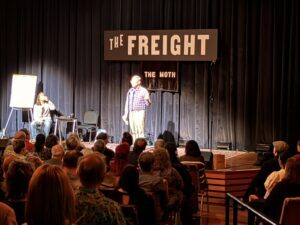
So John invited me to join him at the San Francisco Moth StorySLAM in Berkeley. He goes to The Moth with a large crew of storytelling fans, so I took an Uber over the Bay Bridge, grabbed a taco from the truck outside the theater, and joined his friends for the show.
Great people who love to get together to hang out, listen to, and tell stories.
I have a similar gang of friends who trek with me to Boston and New York regularly for shows. I understood John’s friends immediately.
The theater was fantastic.
I also managed to get onstage, tell a story, and win, too.
Winning is always a bonus.
Then the show’s outstanding host, Corey Rosen, drove me back to my hotel. We talked about storytelling, creative pursuits, and more.
On Friday, I joined my friend Masha for dinner at a restaurant on the bay. I met Masha while working with her at Slack and Salesforce, but I hadn’t seen her since Elysha and I attended her wedding almost two years earlier, so it was great to spend time with her again.
My chicken still had its feet and toenails, but otherwise, it was a fantastic evening spent in the company of a dear friend.
I also rode in my first Waymo self-driving car and my first trolley car on the trip.
I missed Elysha and the kids dearly.
Being away for a week is hard.
But happily, I’ve managed to make and fine friends around the country via the power of the internet.
Had the internet not existed, I would’ve never connected with Craig, John, or Masha. They would be complete strangers to me today.
This connected world has its problems, especially when people use it to remain home, away from people and places, or organize in terrible and destructive ways, but it has also brought so many new people into my life.
Happy to be home with the people I love most, but also happy to have memories of time spent around the country with friends old and new.




April 19, 2026
Adventures on a plane
I was boarding a plane in Orlando on Wednesday, preparing to depart for San Francisco.
I had started the week on Sunday, flying from Connecticut to Seattle to work wth Microsoft. On Tuesday, I flew to Orlando to speak at a finance conference. Now I was boarding a plane on that same day to fly to San Francisco for more work.
As a result, my ears were popping a bit. Fluid was caught in my right ear, and from time to time, my ear would pop.
I’m standing in the aisle of the plane. I’m sitting in 23C, but the overhead bin over that seat is closed, indicating it’s full. But I see that the bin over row 21 is open. So I take my roller bag and lift it to place it in the overhead bin.
Then my ear pops. I lose my balance. I manage to hold onto my roller bag, but I sway and turn, and as I do, my backpack, which is on my back, swings and hits the man seated in 21F.
Clocks him in the head. Really clobbers him.
He shouts in pain.
A flight attendant named Sabrina is standing beside me. She sees the whole thing.
I turn and begin apologizing profusely,
The man looks at me and says, “No.” He’s firm, rude, and angry.
“No, I’m really sorry,” I say. “I lost my balance. My ear popped. I lost my equilibrium.”
“No,” he says again, and wags his finger at me.
So now I’m annoyed. I didn’t mean to hit him, and I wasn’t being careless. It was an accident. I understand that getting clobbered by a backpack isn’t fun, but there’s no reason to be rude. So I lean in a little and say, “It must be hard to be so infallible in a world of imperfection, but some of us are just human. We make mistakes. I’m very sorry.”
I’m admittedly aggressive and ominous. I’m looming over him.
“Fine,” he says, still scowling at me.
“Thank you,” I say and move to my seat.
A couple of minutes later, Sabinra brings the man an ice pack. He places it over his left eye. He’s two rows ahead of my and in the opposite side of the plane, so I can see him clearly.
I guess he’s really hurt.
I take a photo of him and his ice pack and send it to Elysha.
A couple of minutes later, Sabrina checks on me. “Are you okay?”
I tell her I’m fine. “Keep an eye on that guy,” I say, pointing. “He’s the one who got hurt.”
Halfway through the flight, I’m watching a movie and typing on my laptop when the man leaves his seat and approaches me. Now it’s his turn to lean in and loom. “Are you the man who hit me?”
“Yes,” I say. “Again, I’m so sorry. It was an accident.”
“I’m just so goddamn angry,” he says. “You really screwed up my eye. I want you to know that United Airlines said I should press charges against you, but I’m not going to.”
At this moment, two thoughts enter my mind:
I don’t think United Airlines told him to press charges. Maybe they said to file a claim of some kind in case the injury is worse than it appears, but press charges? No. He’s lying.Why tell them about the possibility of pressing charges if you’re not going to actually do it? He’s only here to scare me. He’s attempting to enact some petty revenge.So I go into action. I say:
“You should definitely press charges. I think that would be a great idea.”
“No,” he says, “I don’t want to.”
“No,” I say, “You should. I want you to. I want four cops at the gate ready to take me down when we arrive. Handcuffs and everything. You should do it. You took the time to come over here and talk to me, so definitely press charges. I think that would be amazing.”
“I’m not going to,” he says, looking confused.
“Do it,” I say. “Please. You press those charges.”
He scowls and returns to his seat.
A moment later, Sabrina appears. She says she’d like my email address in the event they need to contact me. She asks again if I’m okay.
“I’m great,” I say. “Worry about him.”
The remainder of the flight is uneventful. After landing, we stand and wait to deplane. I try to get the man’s attention. I want to apologize again because I really do feel bad about hitting him
I also want to encourage him one more time to involve the police before it’s too late.
He won’t look in my direction.
As he leaves, Sabrina, who is standing beside me, says, “Listen, you don’t know the worst part. He has a glass eye. You hit his only good eye. Can you believe it?”
“My name is Matthew Dicks,” I say. “I can definitely believe it. This kind of thing happens to me all the damn time.”
As I am approaching the plane’s exit, I hear the pilot, first officer, and another flight attendant, who are standing in the forward galley, talking about me. I hear one of them say, “So he was in 23C? Two rows behind…”
Then I’m gone. Up the jetway, hoping for police at the gate.
None were there, of course. It was sadly peaceful and empty.
But as I walk away, a United Airlines representative calls out. “Mr. Hanson! Mr. Hanson!”
“I’m not Mr. Hanson,” I say.
“Did you get hit by luggage on the plane?” he asks.
“No,” I say. “I was the guy who did the hitting. I think Mr. Hanson is somewhere ahead of me.”
“Oh,” he says, and laughs. “Have a good night.”
Four days later, and no email from Sabrina or United Airlines yet.
I didn’t think there would be.
I’ve dealt with bullies like Mr. Hanson before:
Former teachers and professors.
Former bosses and coworkers.
Kids on the playground and guys on the basketball court.
A man in line at Disney World.
A woman in line at Trader Joe’s during the pandemic.
Many more.
There are people who use the threat of legal action, violence, or some other form of retribution without any intention of following through.
All talk. No bite.
But these bullies can really frighten people. Ruin their day. Place fear in their hearts for a long time.
I know many people who would’ve been justifiably worried about Mr. Hanson pressing charges against them. They would’ve heard his veiled threat and been anxious for the rest of the flight. Maybe still anxious right now, waiting for the phone to ring or the police to show up on their doorstep.
I hate these bullies with their lies, bluster, and meaningless threats, which is why I did what I did,
I felt very bad about hitting Mr. Hanson, but then I felt less bad when he acted like a bully, which is why I bullied him in return.
The worst thing a bully can ever face is another bully.

April 18, 2026
Writing contest
Most writing contests found online are attempts to extract money from writers.
Pay $25 to enter this contest.
Give us your firstborn.
Carve out a small part of your soul.
Bad idea.
So when I find a legitimate contest with actual cash prizes and no entrance fee, I get excited. This appears to be one:
It reads:
_____________________________________
Dear Aliens
A Writing Contest for Humans
WE NEED YOUR HELP.
The aliens are coming. Or at least they told us they were.
They asked us for just one item: a written document from humanity.
This is the only thing they will read before they arrive.
We have no idea what the document should be, so we’re asking you.
Should we share a history of humanity? An introduction to your family? A science fiction story? A description of a sunset? A narrative from your life? A joke?
We’re not sure (yet), but we’d like your help. We’re giving $2,000 USD to the best submission.
Second- and third-place get $250 each.
We’re going old school here. You’ll have to physically mail in your writing, and it needs to reach us before May 15, 2026.
Up for saving humanity? Enter your email, and we will send you the instructions.
_____________________________________
I’ve done some digging and worked with AI to assess the contest’s veracity.
It looks good.
I won’t be entering because my writing time is better spent elsewhere, but if you, your child, your parent, or your colleague has the dream of writing and making money someday, this might be an opportunity to try to make it happen.
Getting paid to make stuff up in your head is pretty remarkable.
My first paid writing gig was writing term papers for classmates in 1988 and 1989.
I earned enough to buy my first car.
In 1997, I earned $50 for the placement of a poem in the now-defunct “Beginnings” magazine.
I still have copies of that magazine today.
Next, I was paid to write reviews for Epinions.com in 1999. Launched during the dotcom bubble, the site paid $50 for an accepted review. I wrote about a dozen in all and earned more than $500 in profits.
In September 2004, I wrote a piece titled “Two Divorces Too Many” for the Hartford Courant. I was paid $200. It was soon syndicated and ran in about two dozen newspapers around the country.
I made no additional income from the syndication.
Then I earned my first real paycheck when I sold “Something Missing” to Doubleday in 2009. That sale paid off our wedding debt and gave us the down payment on the home where we still live.
My career as an author had begun. I’ve since published six novels, three books of nonfiction, and, in January of 2027, my first middle-grade novel.
But remember, it started with being paid $50 to write term papers for classmates.
Writing reviews for a website.
Winning a poetry contest.
Submitting an essay to a local newspaper.
In between those tiny pay days, writing every day without ever missing a day:
Blogging. Essays. Zines. Letters. School assignments. Poems. Emails. Unpublished manuscripts. Half-written novels. Unpublished memoirs. Newsletters.
Anything where I could connect sentences to make meaning.
So maybe you can, too.
Maybe this contest could be your start.
Maybe this could be your first payday, or your first shot at a payday.
If so, good luck.