
Orrin Grey's Blog: Shovel Murders & Monologues
April 1, 2026
Hope You Have a Strong Heart
This is not an April Fool’s Day post.
It is, instead, one of the hardest posts I’ve ever had to write, and it ultimately won’t say much.
Late last week, my family was struck by one of the most catastrophic and unexpected family emergencies we have ever had to face. I can’t say much more, except that it doesn’t directly impact anyone in my immediate household (though the indirect impacts will be considerable), and everyone here is alive, physically unharmed, fed, clothed, and housed, at least for the time being.
Things are still developing and I can’t really talk about them in any meaningful sense. Just know that this will be a long road for us.
I’m hopeful that this won’t change much, as far as my online presence is concerned. I’m still writing, I’m still watching movies when I can, I’m still reading books about monsters. In fact, one thing that would be helpful was if I could pick up a little more steady work. Over the last few months, I’ve lost two of my regular clients, and our finances are in a precarious position as a result of that and a number of other external factors.
One-off jobs are great, but a client who was looking for recurring monthly writing or editing work would be even better. Also, if anyone has any leads on remote jobs or staff positions that would be a good fit for a “monster guy” who knows how to write pretty well, those would be very much appreciated.
Those who might want to chip in financially can message or email me directly, or you can always become a member of my Patreon, which has the added bonus of giving you access to me rambling about old monster movies every month. If you want a free taste, last month I wrote about the weird silent flick Seven Footprints to Satan and its relationship to the A. Merritt novel from which it was (very loosely) adapted.
I’m also still writing columns various places, including my Dark Seance column on midnight spook shows and gimmick films over at Signal Horizon. In my latest installment, I write about giveaways and how much I want a Witch Deflector of my very own.
And, of course, I do a lot of other stuff. Reviewing movies (both horror and otherwise), writing about board games, hosting movies at the Stray Cat Film Center, and much more. I’m working on a lot of projects, when time allows, and you can always buy some of my recent books via Word Horde – Glowing in the Dark collects some of my best nonfiction writing on horror films, while Notes from Underground is my latest (and most unusual) fiction collection.
I’m hopeful that I will be able to share a little more about what’s going on in the future, but for now, I ask only that you send any positive energy you can spare, and treat my inevitable failings in the coming weeks and months with what forbearance you can muster.


March 17, 2026
That Wicked Witchcraft: Watching Horror’s Longest Running – and Most Inexplicable – Franchise
In 1940, the first of Universal’s five Mummy sequels largely ignored the events of the previous film to kick off a new plotline that would carry on through a raft of follow-ups before ending when a variation of it crossed paths with Abbott and Costello in 1955.
In 1990, Witchcraft 2: The Temptress was the unlikely progenitor of a similar and ultimately far more ambitious scheme – something that would become arguably horror’s longest-running franchise at a whopping seventeen movies and counting.
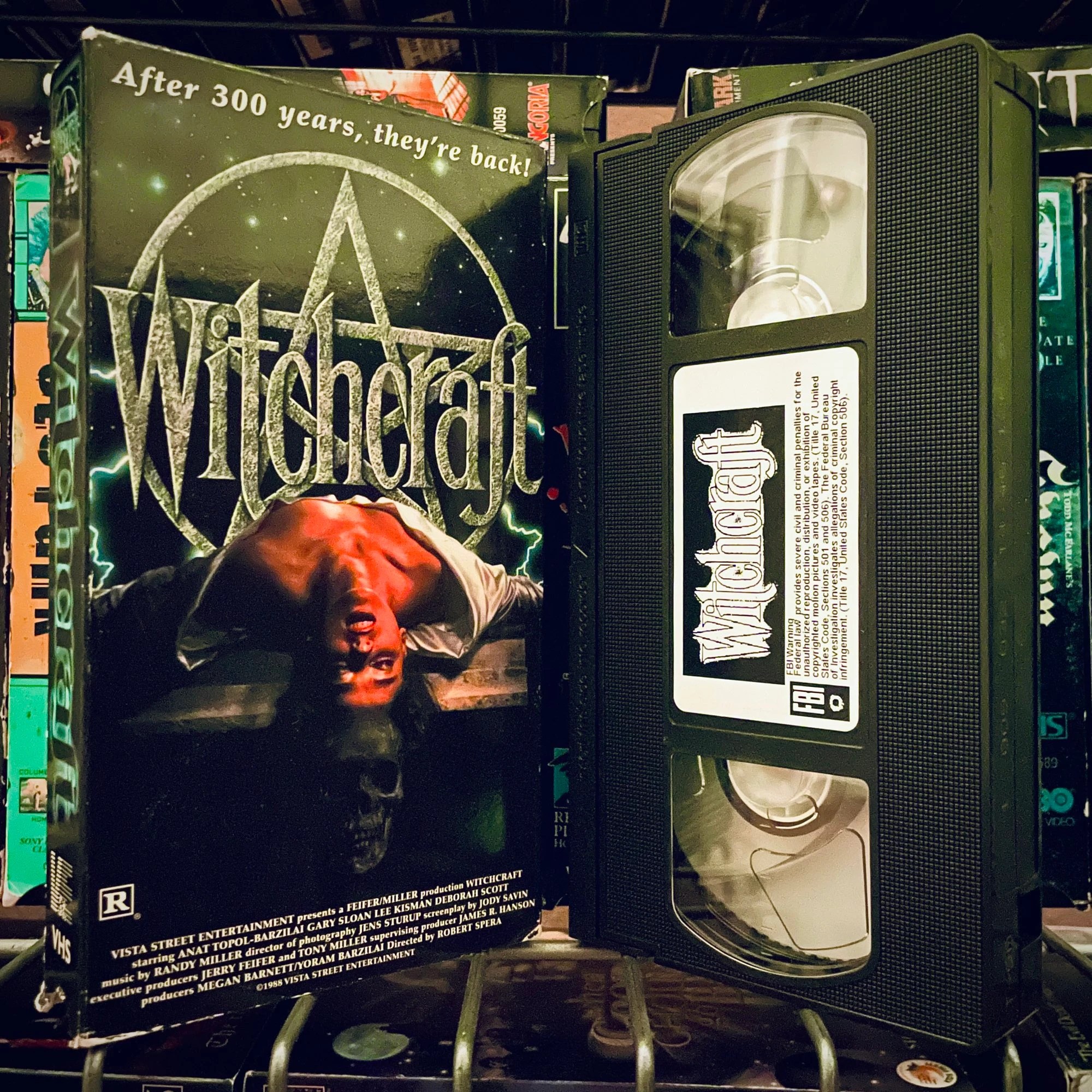
Is Witchcraft in fact the longest-running horror franchise? As always, it depends upon how (and what) you count. Godzilla obviously has it beat in both temporal longevity and total number of installments, with nearly forty films (and counting) between 1954 and the present day.
But those flicks are divided into various eras, which often reboot the franchise from one to the next – and Godzilla movies are at the ragged edge of what most people would consider “horror” anyway.
Full Moon’s Puppet Master series is a closer analogue, with fifteen films between 1989 and today, among them a couple of spin-offs, a crossover, and a reboot. Nothing else really comes close, though, and certainly not without rebooting or restarting the franchise at least once or twice along the way.
So, how did Witchcraft get here? From 1988, the first film in the series is a sedate but mostly adequate riff on the Rosemary’s Baby formula, in which a new mother’s husband turns out to be the reincarnation of a three-hundred-year-old warlock who has designs on their baby.
Starting with the aforementioned Witchcraft 2, however, the franchise decides to pick up with the baby from the first movie, now grown into possibly the oldest-looking teenager in cinematic history. Adopted by more normal parents, he lives a normal life for an old-looking teenager, until his neighbor, a blonde Elvira type, decides to try luring him back to his witchy roots in a flick that is basically a supernatural slasher with more seduction scenes.
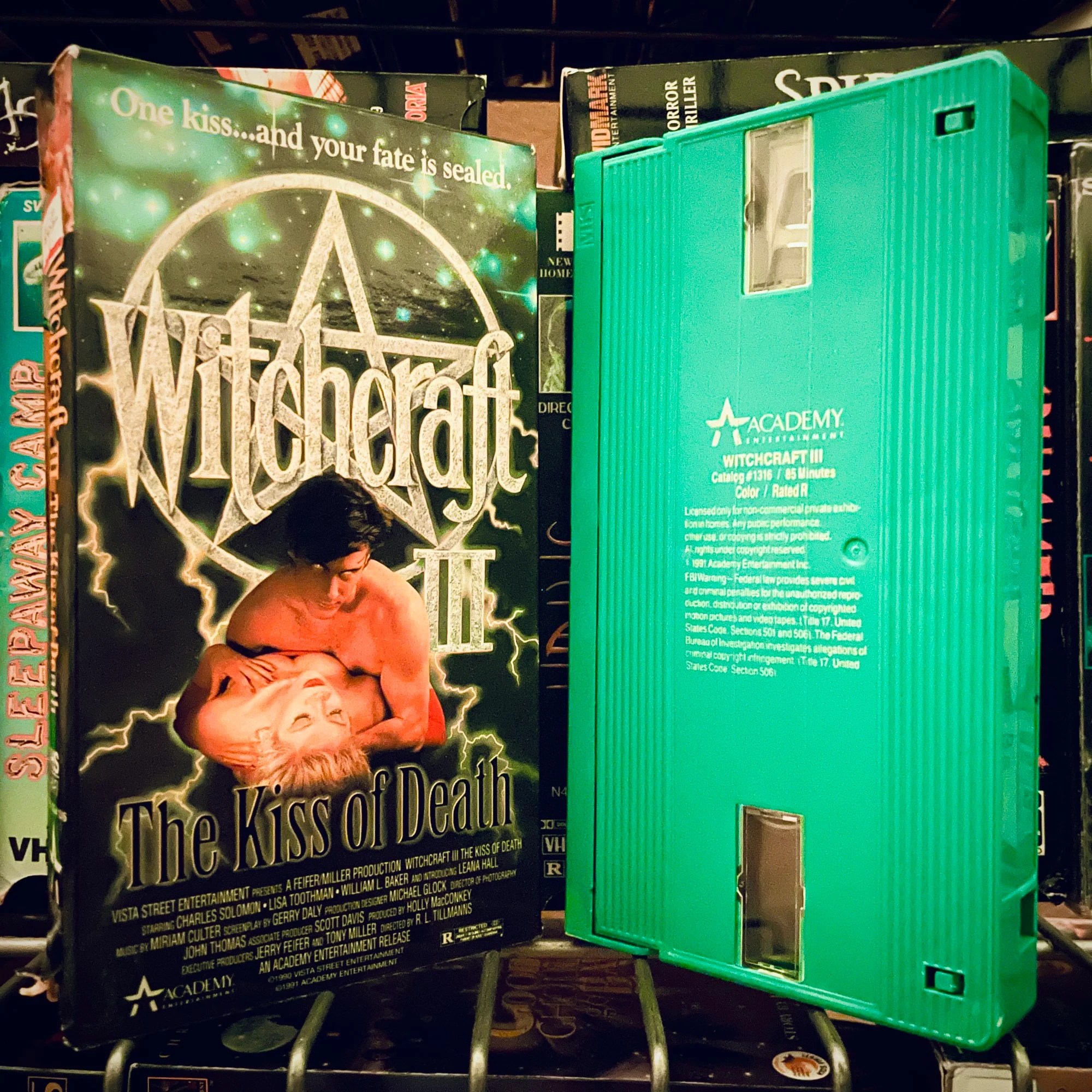
To the extent that this series has a formula, it will be firmly entrenched by 1991’s Witchcraft 3: The Kiss of Death, which continues to follow the adventures of the baby from the first movie, now an adult who has become an absolutely terrible lawyer, an occupation he will continue to hold (though seldom practice) for the remainder of the franchise.
His name has also changed a few times along the way. In the first movie, he is either named William Stocton or William Churchill, depending on who you believe, and in the second he has taken the name William Adams. By part three, he is somewhat inexplicably named Will Spanner – a name he’ll keep from here on out.
Will is ultimately what makes the Witchcraft series such an odd duck. With the exception of a couple of pointless cul-de-sacs, virtually every one of its seventeen installments (as of 2025) follows the adventures of our “white warlock” cum sad sack attorney, played by a revolving host of some of the least charismatic actors you can possibly imagine.
On social media, I explained the franchise as being “kind of like if Skinemax made a series like Forever Knight or Highlander, but all the episodes were feature length, cost a nickel, and were of wildly varying quality (so long as that variation never got all the way to ‘good’).” I think that’s a pretty solid summary.
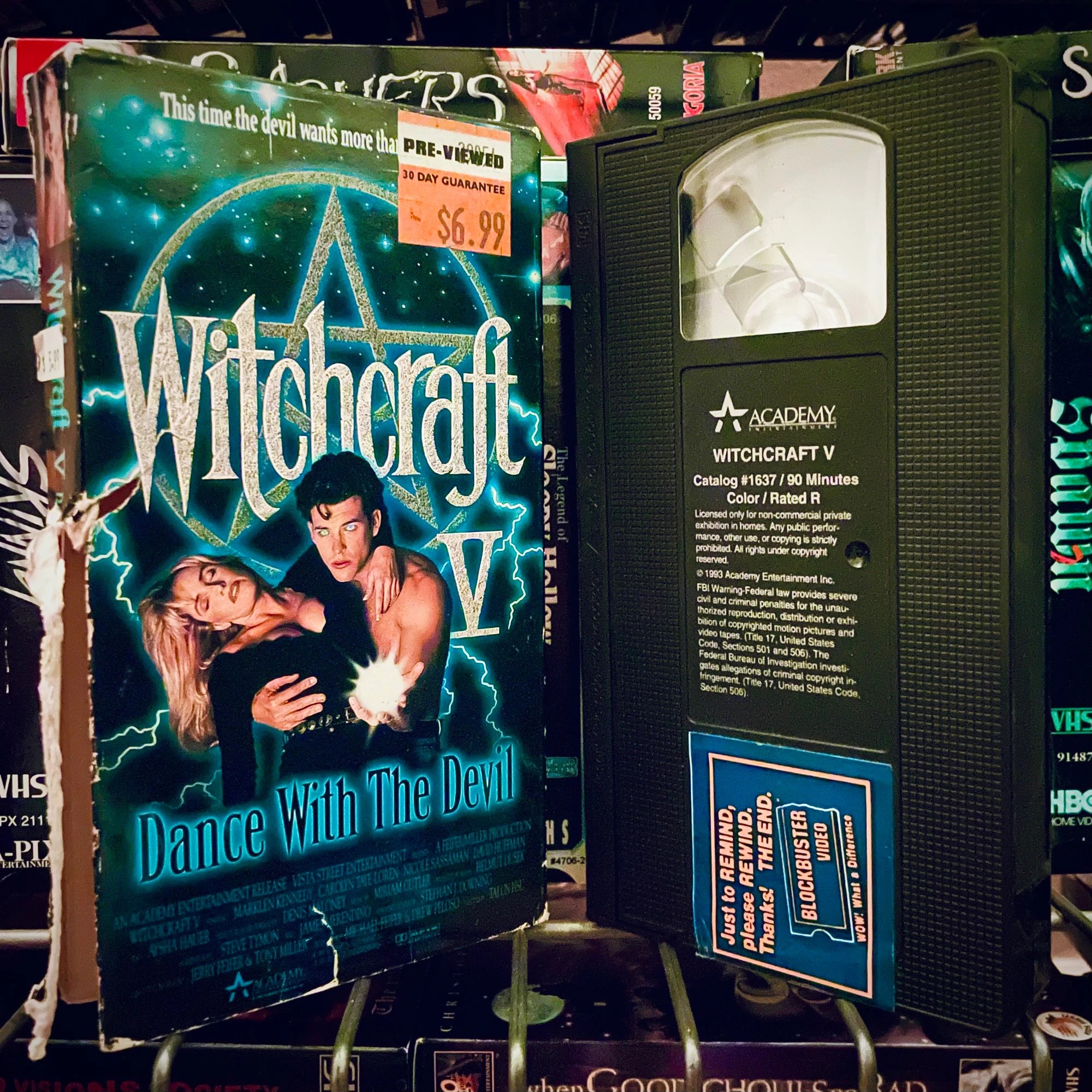
“I have never actually watched any of these because I assumed they were basically soft-core with more plot,” wrote one user on Bluesky when I announced my intention to mainline the first eleven Witchcraft movies in one soul-destroying, fifteen-hour marathon. It’s a common refrain, and one that was largely also true of me, before I undertook this particular fool’s errand.
It’s also not inaccurate, and it becomes more and more true the longer the franchise wears on. The seventh installment features some of the longest, oddest sex scenes I’ve ever witnessed, while the tenth film in the series devotes fully a third of its runtime to sex scenes and pointless nudity.
The “more plot” is sometimes debatable, as well. It would have been easy enough for a franchise whose main selling point seems to be (negligable) sex appeal to simply repurpose a raft of spec scripts into vaguely supernatural erotic thrillers, but the Witchcraft series goes the extra mile of shoehorning Will Spanner into every installment, even though his own supernatural powers and origins rarely play into the plot.
Despite the presence of Will and, later, a couple of other recurring characters, pretty much none of the movies have anything to do with one another, with the exception of occasionally reusing footage from part one. Will is engaged to a seemingly endless stream of women, each one replaced without explanation in the next film. Even when he does settle down with one fiancée for several movies in a row, she is played by a different actress each time.
Witchcraft 7: Judgment Hour (1995), the first one to deal with vampires, was originally intended to bring the series to a close, and kills Will off at the end. Despite this, he’s back by Witchcraft 9 just two years later – only he comes back as a ghost that no one can see and only one person can hear, a state which he maintains for almost the film’s entire running time before being inexplicably resurrected at the end.
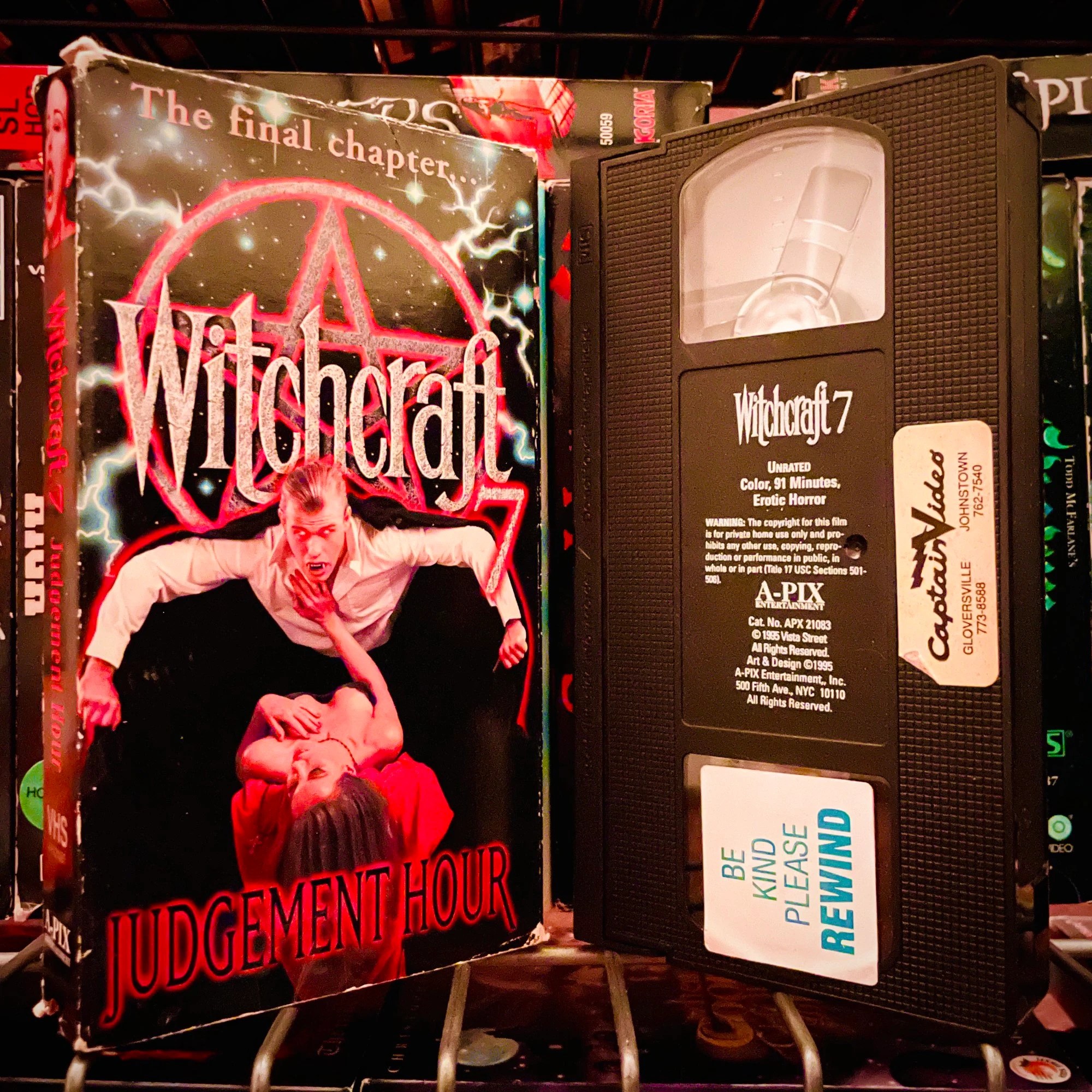
Combined with the franchise’s erotic elements, this insistence on following the adventures of our “good warlock” helps to position Witchcraft at the vanguard of the urban fantasy movement that was growing in popularity around the same time that these flicks were clogging up video store shelves. Which maybe goes some distance toward explaining the series’ longevity, though it doesn’t seem like quite enough.
“Someone must be invested in the series’ mythology,” writes Katie Rife at the A.V. Club but, if that’s the case, it’s not a writer or a director, all of whom change even more frequently than the actors who play Will Spanner. If the Witchcraft saga was a passion project for anyone, it might have been Jerry Feifer, who passed away in 2025, but only after amassing producer or executive producer credits on pretty much all of the films in the series.
Why am I speculating about this now? On Friday the 13th of March, 2026, I, who had never before seen even one of these innumerable flicks, sat down to watch what turned out to be ten of the first eleven all in one fifteen-hour marathon.
My friend Elijah LaFollette, proprietor of Magnetic Magic Rentals and host of Analog Sunday, had been trying for some time to acquire all eleven of the Witchcraft films that were originally released on VHS. Recently, he finally tracked down the last titles that he had been missing, and the only obvious recourse to celebrate such a milestone was to watch them all in one terrible sitting – leaving aside that he had seen hardly more of them than I had.
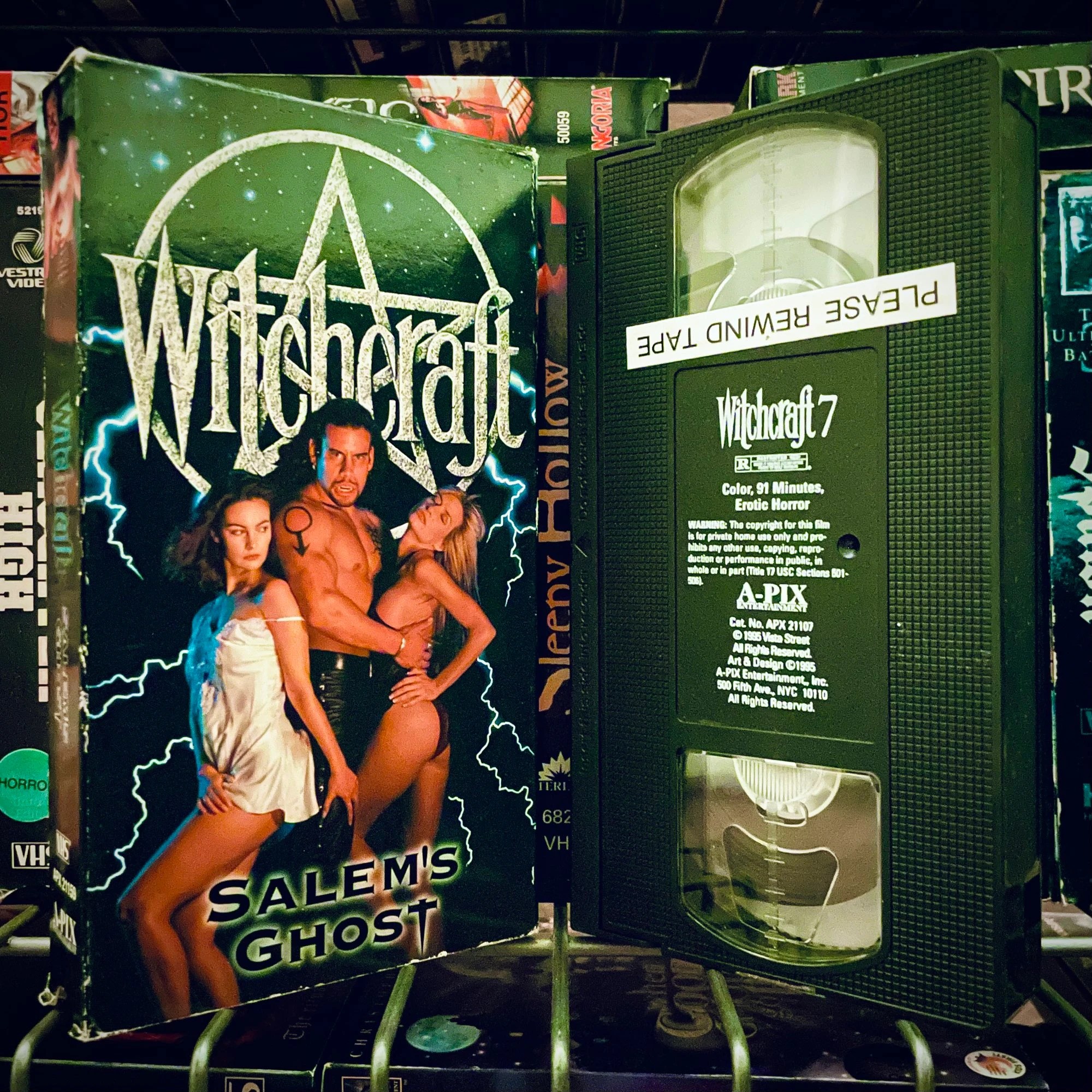
Thus, the stage was set. We stocked up on snacks and sodas, and pressed play at 11am, not stopping until two the following morning. Along the way, we ultimately had to skip Witchcraft 8: Salem’s Ghost due to logistical issues. Fortunately, Witchcraft 8 is also “the Halloween III of the series,” as it is the only one to completely abandon Spanner and his cast of recurring characters in favor of a rebooted story that’s shades of soft-core Amityville – or so I’m told, I still haven’t seen it.
There were times, during that soul-searing marathon, when I considered throwing in the towel. The Witchcraft movies are famously not good, and that’s often true. Oddly enough, however, the series isn’t an example of consistently diminishing returns. The better and worse installments jostle for position next to one another, and while nine and ten were among the worst of the bunch, eleven may actually have been one of my favorites.
And say what you want about this series, it’s not every franchise where the eleventh installment is one of the better ones.
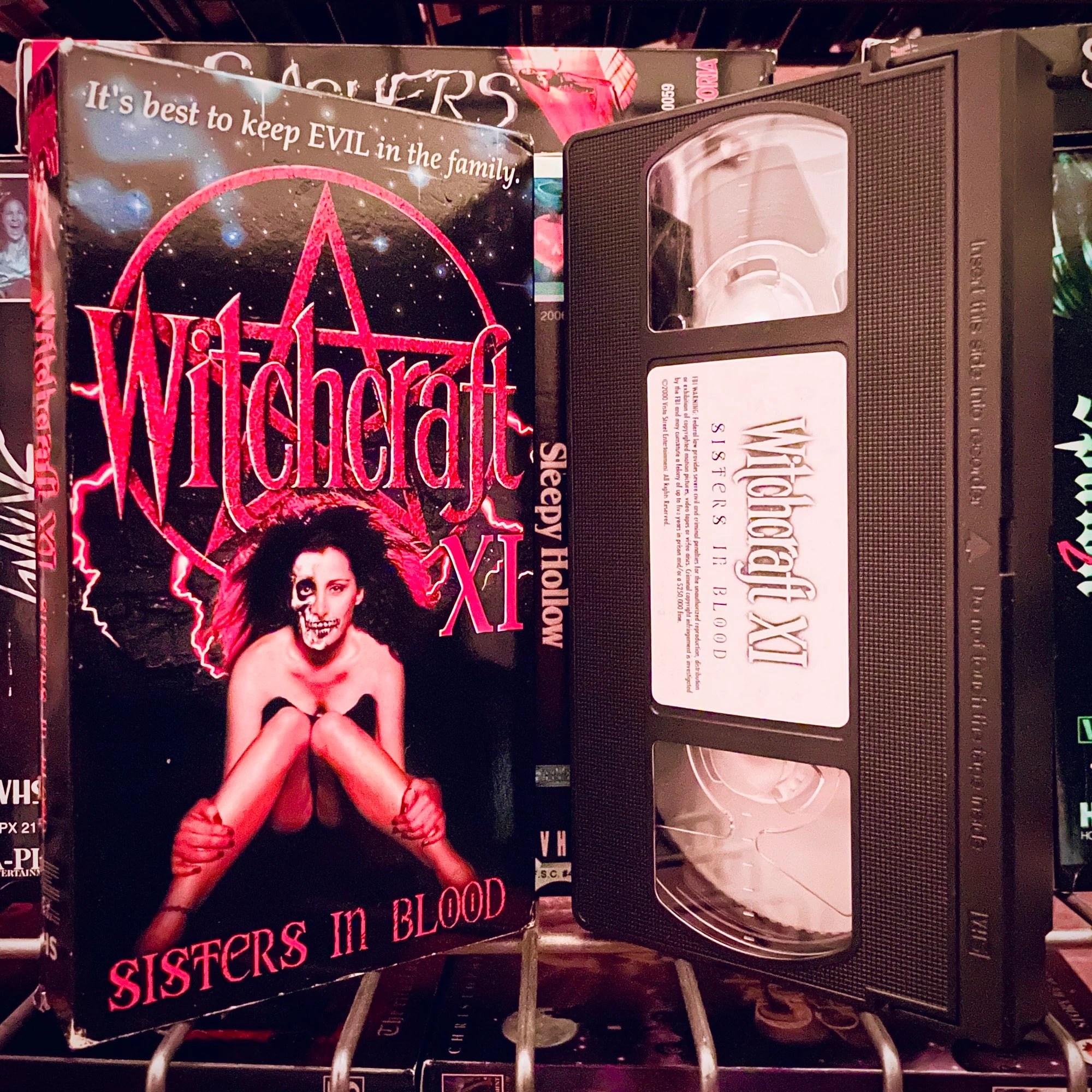
We stopped at eleven because that’s where they initially stopped being released on VHS – but they didn’t stop getting released entirely. 2002’s Witchcraft 12: In the Lair of the Serpent was the first not to get an initial VHS release, but it and several others went direct-to-DVD, sporadically continuing the series through 2016, when a whopping three Witchcraft sequels all came out in the same year.
In 2025, the series saw the release of its seventeenth installment – but maybe not its final one. The cast and crew behind 2025’s Witchcraft 17: The Initiation has announced plans for an eighteenth film, one that they claim will be “the bloodiest, scariest installment the franchise has ever seen.”
It’s also supposed to be found footage.
“It’s hard to fathom why this cheap-looking, uninspired series has run so long,” TV Guide wrote in a review of Witchcraft 6 – and the franchise has obviously run an awfully long time since then. “Perhaps video store buyers and their customers figure that any series with this many installments has to have something going for it. But they’d be wrong.”
[Photos by Elijah LaFollette.]
February 24, 2026
“We have uncovered history, gentlemen.” – Green Hell (1940)
What has to have been more than twenty years ago now, I saw a promotional still of the incredible “sun temple” set from Green Hell, and knew that I had to watch it.
Of course, it was more than just the set. Green Hell is the second-to-last movie directed by the great James Whale, and the fifth film to feature none other than Vincent Price, “before he specialized in spooks,” as costar Douglas Fairbanks Jr. would later put it in his memoir.
Karl Freund (director of The Mummy and Mad Love) is running the camera, and the rest of the cast is a veritable Old Hollywood who’s who, including the aforementioned Fairbanks, Joan Bennett, George Sanders, Alan Hale, George Bancroft, and even a brief appearance by Lupita Tovar, memorable star of the Spanish-language Dracula.
Of course, the real stars are those sets. This was a lavish production on Universal’s part, with a reported budget of over half-a-million dollars. The “sun temple” set was allegedly 125 feet tall by 225 feet wide, and I would say that you’d have to see it to believe it, but you probably actually have, because Universal reused it for The Mummy’s Hand later the same year.
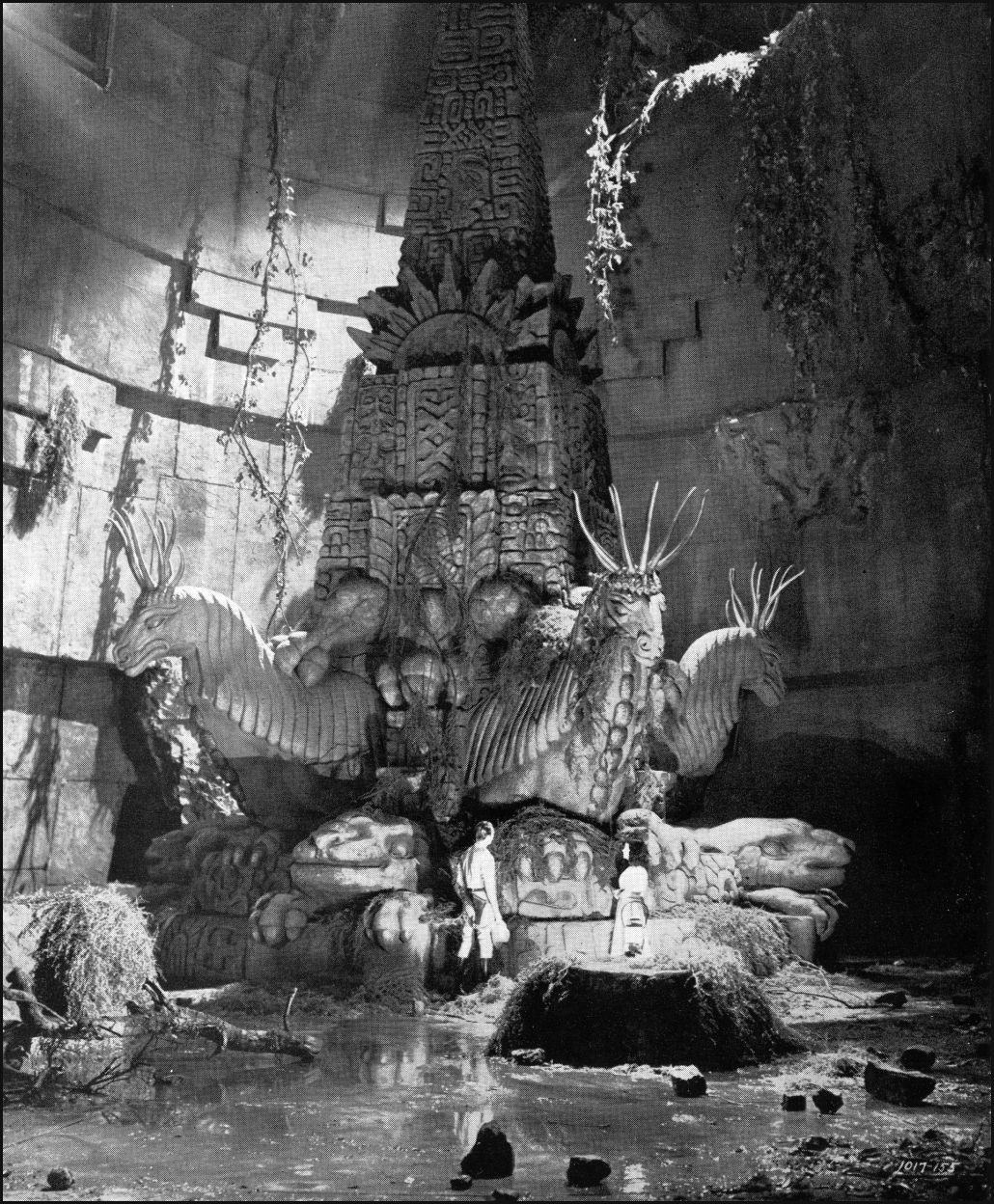
It isn’t just the awe-inspiring “sun temple” set, though. Green Hell, for all its faults, has some truly breathtaking ruin business, every time the ruins manage to make their way onscreen, from the steps leading up the hill outside (also reused in The Mummy’s Hand) to the Incan tombs to a shot of the adventurers descending precarious stone steps by torchlight, their shadows cast long on the wall.
Even the production stills don’t do it justice, and the sequence in which a massive rainstorm begins to flood the “sun temple” set, with water pouring in from above, is genuinely what movies are made of.
Unfortunately, the ruins may be the film’s MacGuffin, but they’re where too little of its focus lies. In the two decades between when I first saw that promotional still and when I finally got a chance to watch Green Hell – thanks to its inclusion in the new Directed by James Whale set from Imprint – I learned that the film was notoriously something of a turkey.
Most of the people involved would later remember it as a low point in their various careers, and Price himself famously said, “About five of the worst pictures ever made were all in that one picture.”
Generally speaking, the film’s problems are attributed mostly to its almost absurdly melodramatic screenplay. Price’s quote continues, “We all adored making it because we realized there wasn’t a single word in it that was real. The sets were terribly opulent, very expensive, but it had the most preposterous story.”
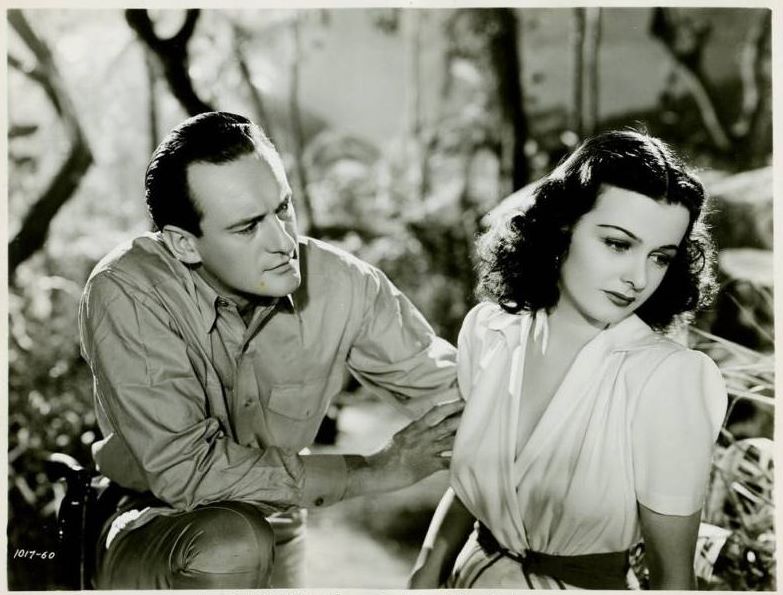
That story comes to us from Frances Marion, the first writer to ever win two Academy Awards. Despite that, no one is wrong to criticize it – the story here is a stinker, bogging our jungle adventure down in a romantic melodrama in which characters are occasionally killed off out of sheer narrative utility.
There are other problems with Green Hell, too. Of course it’s racist. We didn’t really make jungle adventure movies that weren’t. But it is also by no means the worst offender in that regard.
Yet, for all its problems, I wasn’t disappointed, watching it after all these years. I sometimes half-jokingly say that we didn’t how how to make bad movies prior to the 1950s, and while I know that isn’t actually true, seeing a picture like this reminds me of why I say it. Is Green Hell bad, for an Old Hollywood movie? The people involved in making it seemed to think so, and the critics agreed, with The New York Times calling it “the best worst picture of the year.”
Green Hell may indeed be a turkey, but there’s far too much talent – onscreen and off – for it to not still be imminently worth watching. And while the ludicrous melodrama may drag the whole thing down (despite its considerable gay subtext), the absolutely jaw-dropping sets go a long way toward making up for it.
And, ultimately, the fact is that I would take a turkey like this over most genuinely good movies from the last twenty years any day. That’s just who I am.
February 19, 2026
A Nightmare Four Years in the Making
As I mentioned last time, I regularly co-host a live podcast and free screening series at the Stray Cat Film Center here in KC. Next month will mark four years of the Horror Pod Class being at Stray Cat, so I thought it would be fun to crunch a few numbers about what we’ve done in that time.
As of next month’s show, we will have hosted 43 movies at the Stray Cat Film Center as part of the Horror Pod Class. (Why not 48? We usually take July off so Tyler can teach a summer course about monsters, we’ve had two shows that had to be canceled due to inclement weather, and for one Halloween we showed the Sleepy Hollow Mixtape instead of a movie.)
The first of those movies was 976-Evil (1988), which we showed all the way back in March of 2022. While my own personal predilections lie toward vintage films from before I was born, I try to program a wide array at the Horror Pod Class – so I thought it might be fun to do a breakdown to see how I did.
To the surprise of no one, our most-showed decade as of next month will be the 1960s. (I’ve already planned out the rest of this year’s schedule, and several other decades will catch up to the 60s by the time we’re done.)
As of March’s show, we’ll have featured 8 movies from the 1960s. The next highest decade, however, is the 90s, from which we will have shown 7 movies. Then the 80s with 6. From there, the rest of the list is as follows: We’ve shown 5 movies from the 2010s, 5 from the early 2000s, 2 from the 1970s, 2 from the 1950s, 4 from the 1940s, 3 from the 1930s, and only one from the 1920s (it was Maciste in Hell, which we showed around this time last year as part of our Yearbook Series, highlighting a different film from each decade).
Guess I’ll just have to program more silent films in the future.
It’s also worth noting that one of those was a cartoon (Scooby-Doo on Zombie Island, which we showed back in May of 2024), not to mention the two cartoons that made up the bulk of Sleepy Hollow Mixtape.
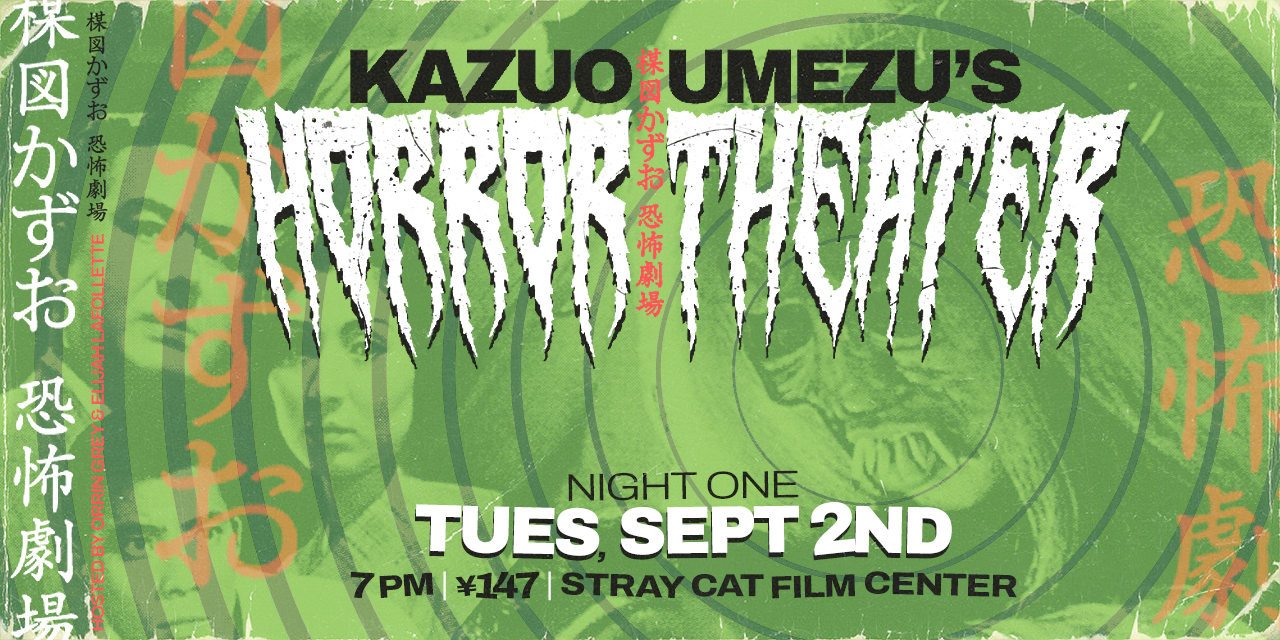
During that time, I’ve also done some other stuff at the Stray Cat, including a book launch party for Glowing in the Dark where I screened Doctor X (1932), and a month-long series of horror movies adapted from the works of manga master Kazuo Umezu, co-hosted by myself and Elijah LaFollette of Magnetic Magic Rentals, who also regularly hosts Analog Sunday every month at Stray Cat.
Next year at this time, assuming we all survive that long, we’ll be heading into 5 years of doing this. Will we do something special to mark the occasion? Only time will tell. But for the rest of this year, you can keep enjoying our Year of Monsters programming. We’ve got some fun stuff coming up for you, including werewolves this month, lab experiments next month, as well as mummies, sea monsters, kaiju, aliens, and more!
And if you’ve ever made it out to the Stray Cat Film Center for the Horror Pod Class, let me know what your favorite experience was!
February 4, 2026
Year of Monsters
Those who aren’t in the Kansas City area may not be aware that I co-host a monthly live podcast at the Stray Cat Film Center. The story of how I came to succumb to the curse of being a middle aged white guy and therefore co-hosting a podcast is a roundabout one, but basically I took over co-hosting duties of the Horror Pod Class a few years ago.
Tyler Unsell, my comrade in arms, started the Horror Pod Class along with a fellow teacher as a way to explore using horror films in the classroom. They invited me on a few times and, when the previous co-host had to take a sabbatical, Tyler asked me to take over – an arrangement that eventually became permanent.
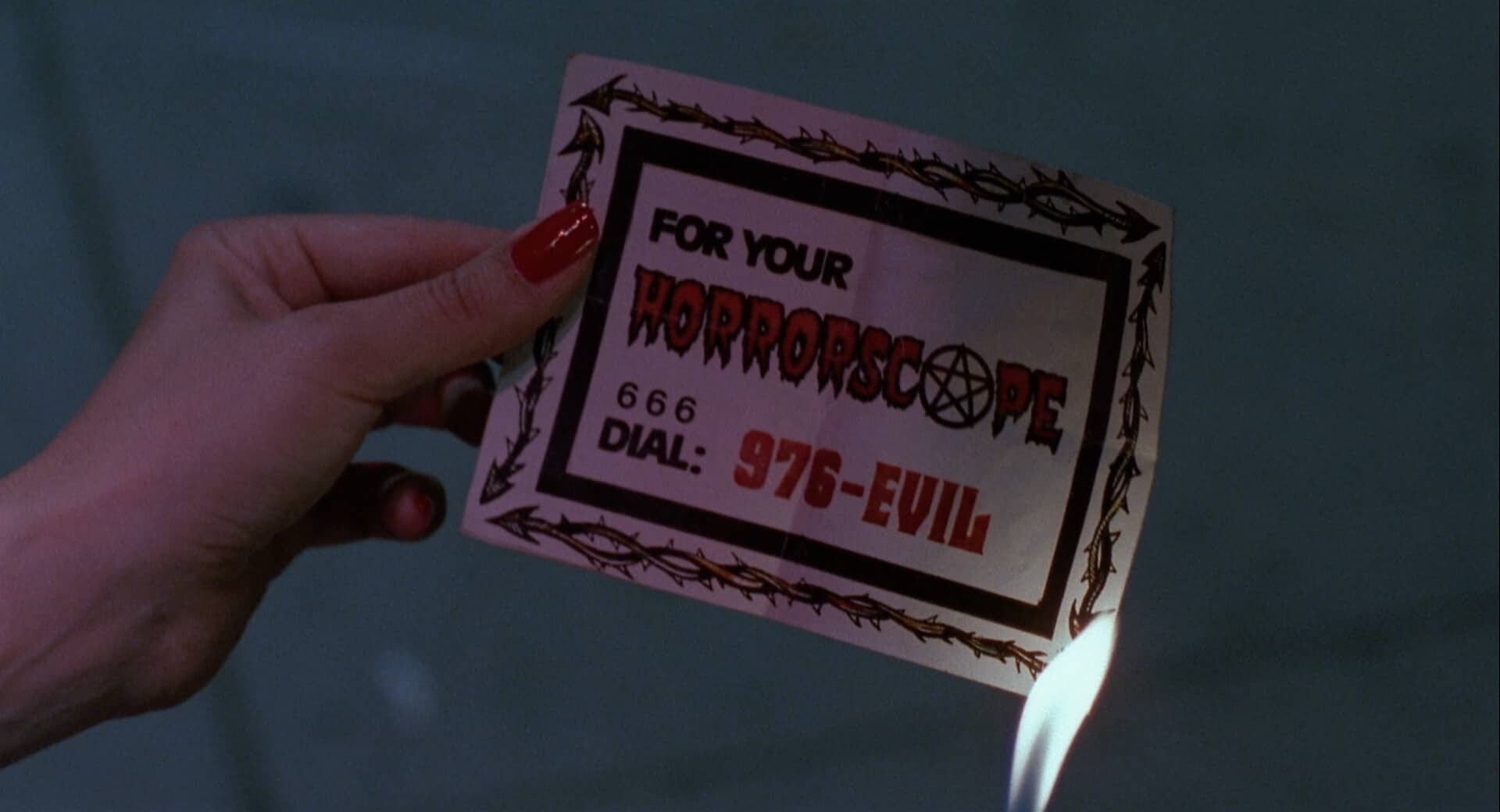
Somewhat unbelievably, we started hosting the podcast live at Stray Cat some four years ago, in March of 2022. The first movie we showed was 976-Evil (1988). The way it works is, we show a free screening of a movie, and then afterward we do the podcast live, discussing the movie and whatever themes and lesson ideas we take from it, and also doing various themed giveaways.
The podcast also goes out online like a normal podcast, but for me, ever since we started hosting in person, the importance of the podcast qua podcast has dropped to almost nothing. I’m grateful for our listeners, and I hope that you all enjoy the show wherever you get your podcasts, but for me, hosting live is really what it’s all about. I love bringing movies to people, and I love interacting with the audience in person.
Last year, we tried out our first themed year. It was Tyler’s idea; something that came to be known as our Yearbook Series – every month, we did a movie from a different decade, starting with 1925 (we showed Maciste in Hell) and working through 2015 (we showed Crimson Peak).
This year, Tyler suggested another theme: the Year of Monsters. Every month, we pick a different iconic monster type and we show a movie featuring that critter, then discuss both the movie and the history and themes of said monster afterward.
Here’s the catch: We don’t tell anyone what movie we’re showing in advance. There are hints on the Stray Cat website and our own social media, but the movie remains under wraps until it’s showtime. All you know is what monster we’re covering that month.
Given that it’s only February, we obviously just started, and we kicked off the series with vampires. Since that screening is already over, I can tell you that we showed Return of the Vampire (1943) to a literally packed house, none of whom had ever seen it before. It was amazing.
For the rest of the year (with our usual break in July, so Tyler can go teach a summer course that also happens to be about monsters) we’ll be covering a different monster each month, from mummies and lab experiments to aliens and kaiju.
The way the breakdown in labor at the Horror Pod Class goes is that usually I pick the movies, with Tyler’s input of course, an arrangement that works for him because he has an actual life and, therefore, has not seen as many horror movies as I have.
That’s what we did this year, too, with one exception. I gave Tyler carte blanche to pick the movie for the month we do zombies (it’ll be in August), because zombies are his favorite subject. So when the zombie month rolls around, you can blame him.
We worked together to assemble the list of monsters, though. A few years ago (in 2012, so quite a few years ago, as it happens) Mike Mignola did a series of covers for his various Hellboy-adjacent titles that was called the Year of Monsters. (Thanks to the generosity of Stu Horvath, I have a big poster of the mummy one framed on my office wall.)
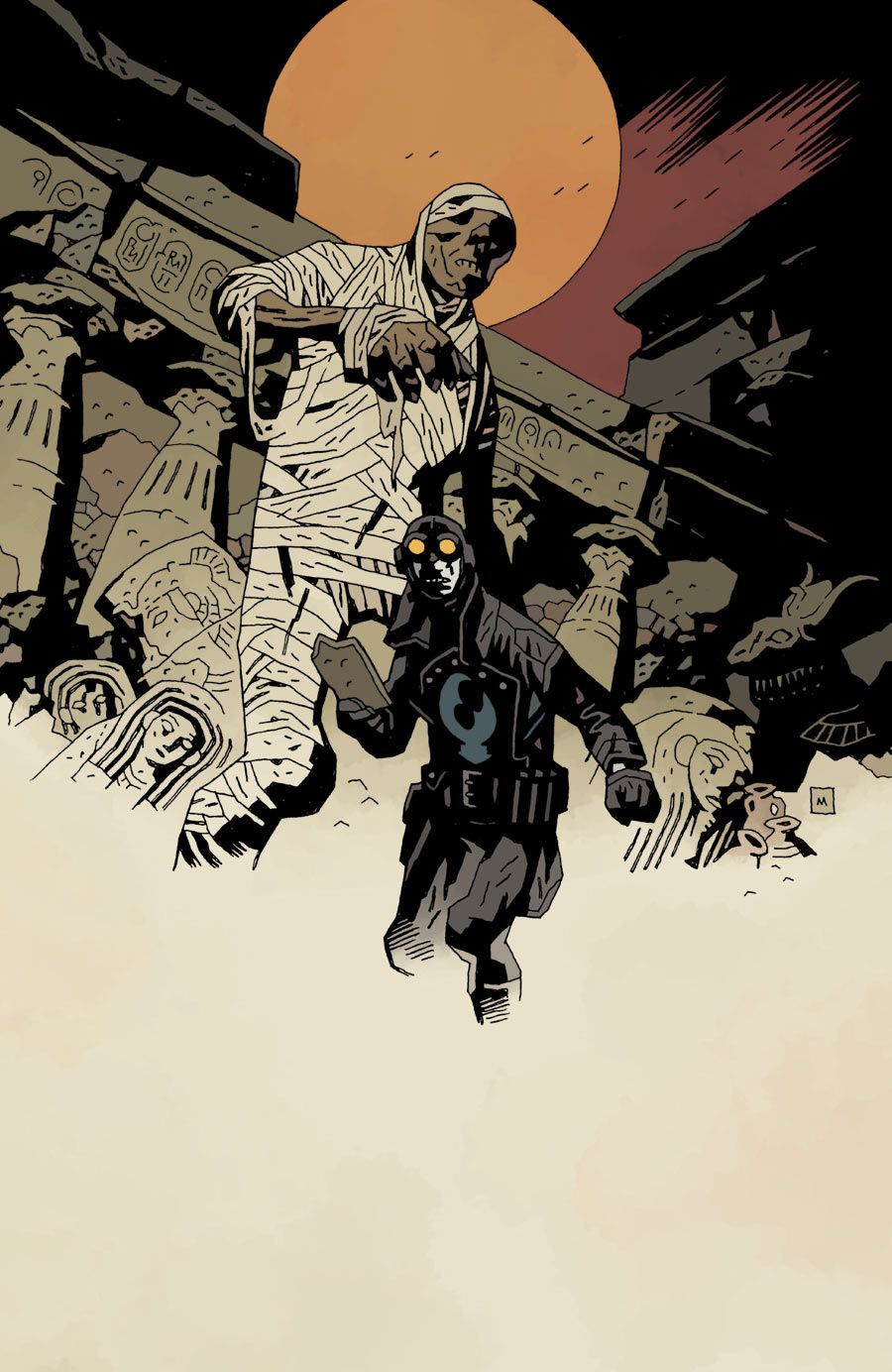
I used that less as a checklist than as a guide to make sure I wasn’t forgetting anything, though there are some he did that we ultimately didn’t do (there aren’t any witches in our lineup, for example), and some we did that he didn’t.
In fact, we had too many monster types to choose from, and had to nix a few that we would have loved to have done. But, we all have to make sacrifices.
This month’s screening is on February 25, and our monster subject is werewolves. What movie are we showing? Well, obviously I can’t tell you, but the hints on the Stray Cat website will absolutely give it away for anyone who knows the movie at all: “It’s part of a long-running franchise; it takes place in Australia; and the werewolves in it are marsupials!”
Those who know how wild this movie is will be unsurprised that I can’t wait to share it with a crowd. For me, that’s what this is all about, like I said. And this one’s going to be quite an experience.
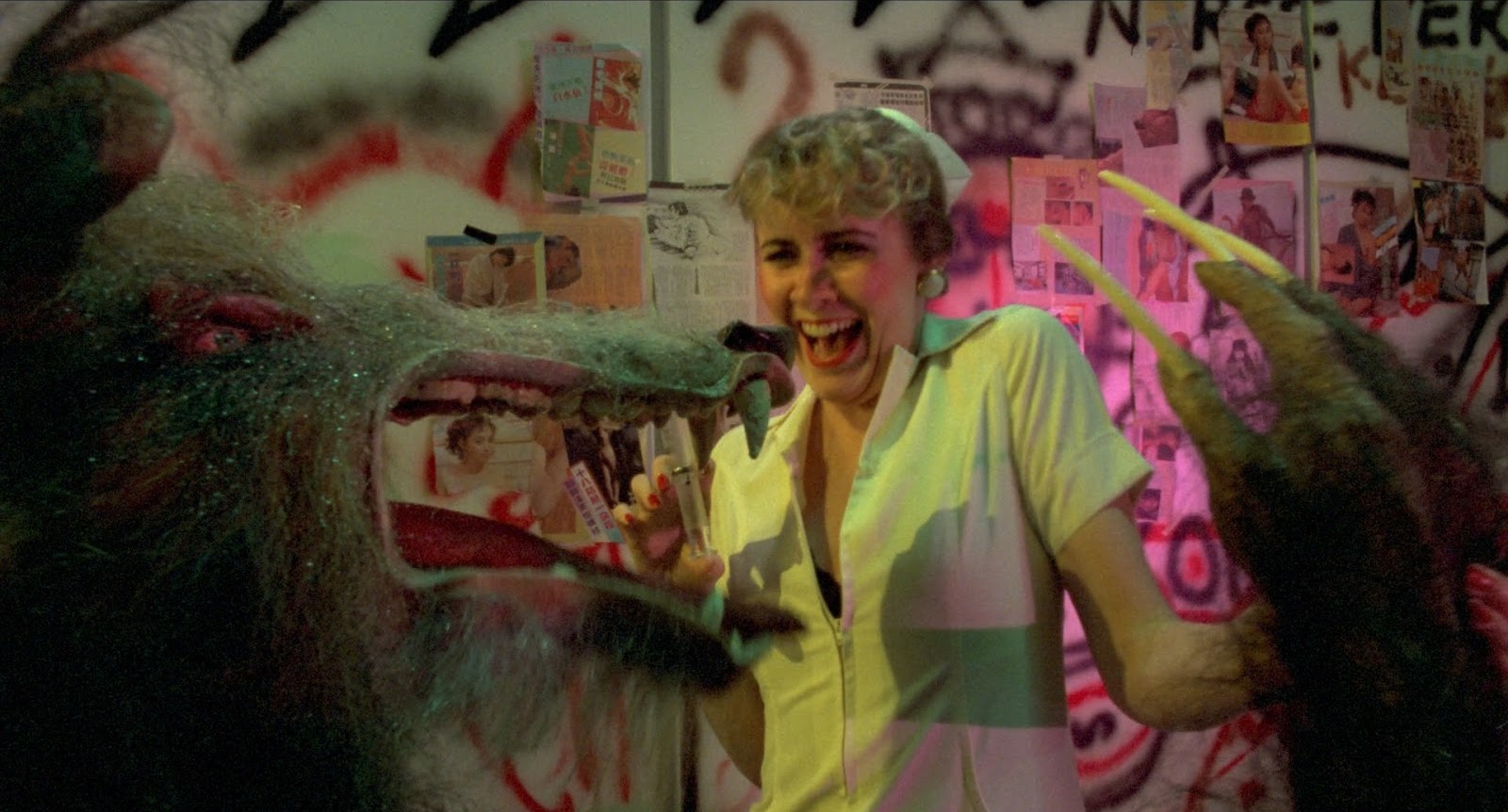
In preparation for this episode of the Horror Pod Class, I also spent way too much time trying to definitively run down when the silver bullet became the way to kill werewolves. The results are more inconclusive than I would like, but the answer may surprise you!
Really, though, I’m looking forward to everything that we’re doing for the Year of Monsters. I love sharing movies with the folks who come out to the Stray Cat Film Center, I love monsters, and I will keep doing this kind of thing forever, if they’ll let me.
If you’re local to the Kansas City area – or happen to be passing through around the last Wednesday of the month, which is when the Horror Pod Class usually happens – come out to the Stray Cat Film Center and let’s watch a monster movie together!
January 13, 2026
“Horrifying things, inconceivable to the human mind.” – Spiritism (1962)
Recently, I stumbled upon a library of K. Gordon Murray releases on the Internet Archive. (Which would have been worth it for this thing alone.)
Given my predilections, I knew what I had found immediately, but for those who have spent their lives in more worthwhile pursuits than I, who is K. Gordon Murray? As Mark David Welsh puts it (in his own review of Spiritism), “Rather than make his own films, Murray made his reputation importing foreign films, many from Mexico, giving them a quick wash and brush up before unleashing them on the American market.”
Which is to say that Murray is probably best known primarily for his role in releasing a passel of Mexican movies stateside, including children’s fairy tale flicks as well as luchador and horror pictures, all dubbed into English by Sound Lab Inc. in Florida. After that, Murray ran afoul of the IRS and died of a heart attack at age 57 while watching an NFL playoff game.
Fellow Mystery Science Theater 3000 fans will no doubt recognize Murray’s name, as it appeared in front of no less than three of their films: The Robot vs. the Aztec Mummy, Santa Claus, and Samson vs. the Vampire Women.
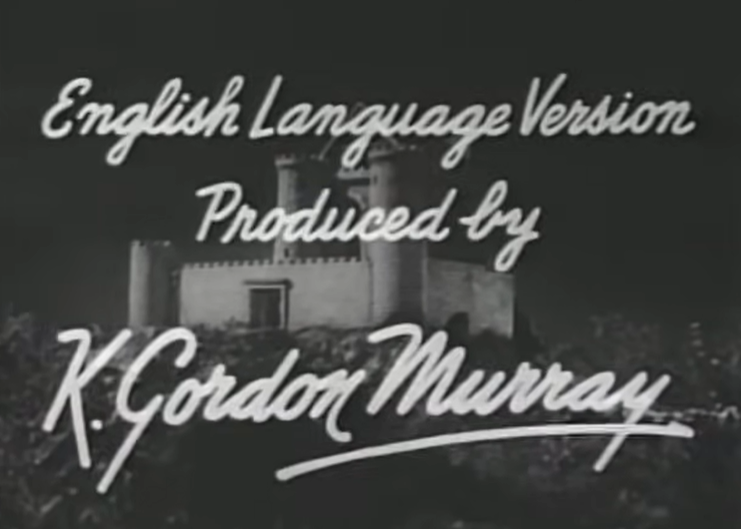
Murray’s releases were not always the most respectful of their source material, but they were also often the only way to see these films, at least until recently. Such is the case with Spiritism, a 1962 shocker from Mexico that was the first thing I watched upon stumbling on this unexpected treasure trove.
Director Benito Alazraki had a prolific 1962. Along with Spiritism, he also released Santo vs. the Zombies and the horror comedy Frankenstein, the Vampire, and Company. His other credits include 1961’s Curse of the Doll People, another K. Gordon Murray joint.
I hadn’t seen any of Alazraki’s other films, and I hadn’t ever heard of Spiritism, but, as I wrote on social media, “There are certain immutable laws of the universe. One of these is that if I find a Mexican horror movie from 1962 called Spiritism, I’m going to watch it, no matter how yellow the print is.” (And, unfortunately, in this case the print is very yellow.)
In many ways, Spiritism is made up of two stories. In one, the wife of a middle-class couple gets into spiritualism and drags her husband along. It starts off with a seance on a dark and stormy night, and we get a few more seances before all is said and done, including some spirit manifestations that are genuinely eerie, even all these years later and on a less-than-ideal print. In particular, the manifestation of a “high being,” a character’s “guardian angel,” is especially haunting – nevermind that it is apparently supposed to be a comforting presence.
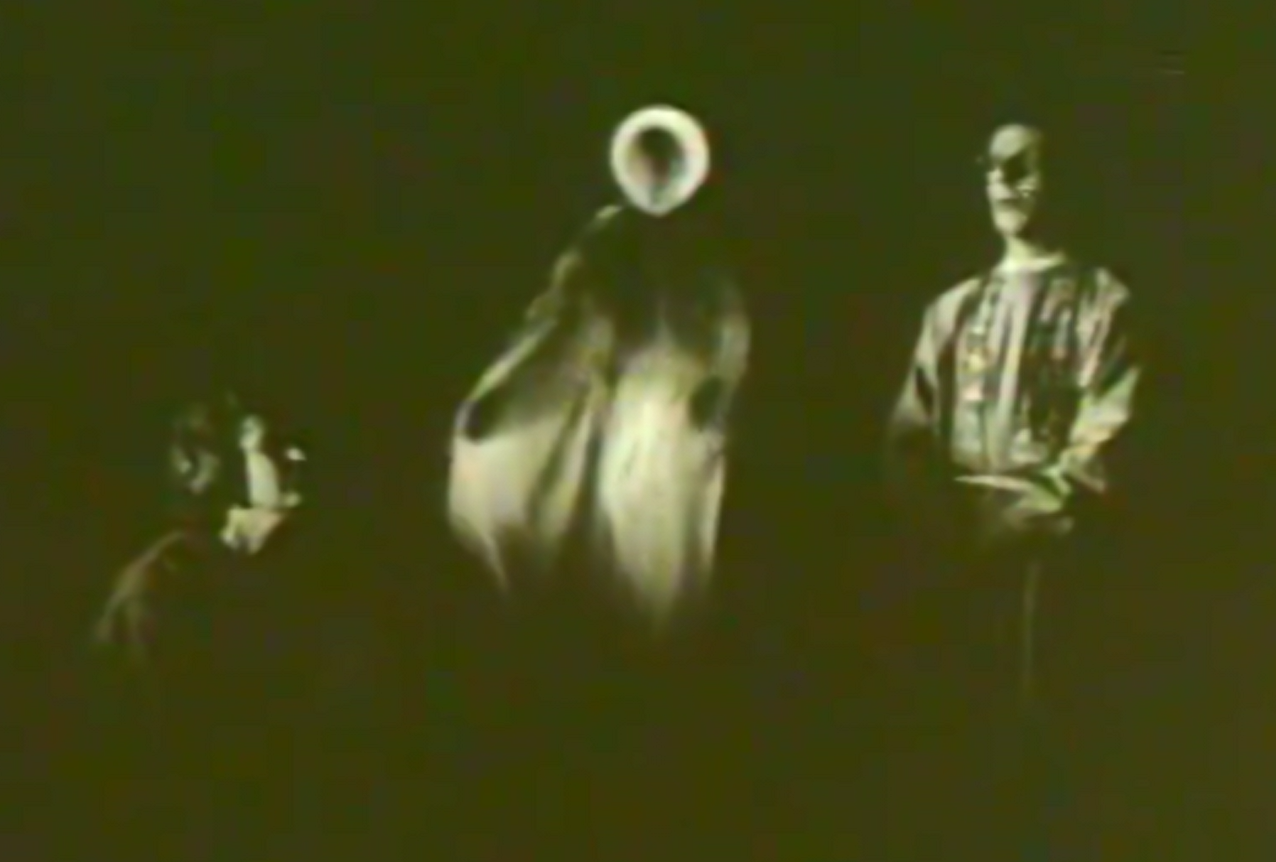
The other story comes in as the wife receives various warnings from the spirit world, even while her son (played by Rene Cardona Jr., the son of a legendary Mexican director with more than 100 films to his credit, who would go on to become a director himself, helming such flicks as The Night of 1000 Cats and Bermuda Triangle) gets into some financial difficulties. Into this comes the Devil (maybe), who offers her “Pandora’s box,” which is capable of granting her wishes. Inside this box is a crawling hand and the film’s other main plot, an uncredited retelling of W. W. Jacobs’ classic 1902 short story “The Monkey’s Paw.”
By any normal metric, there’s not a lot to recommend Spiritism. The spirit manifestations are memorable, but there’s little enough else of atmosphere in this talky picture, and, as Mark David Welsh puts it in his review, “the pace is almost unbearably slow.” Fortunately for me, I love Mexican horror from this era, and I love seance bullshit, so I loved Spiritism, in spite of its many flaws, and in spite of that glacial pace. I’d love to see it get the kind of boutique treatment afforded to some other top-shelf K. Gordon Murray imports in the Mexico Macabre boxed set from Indicator.
Maybe someday we can get a Mexico Macabre 2 with this, Doll People, World of the Vampires, etc.
(I also want a copy of that poster. It would look amazing in my media room.)
December 29, 2025
This Is the End (of the Year)
For a recent freelance assignment, I did some research on why the new year falls when it does (at least, for those of us who mostly use the Gregorian calendar). The answer is complicated and, as with the answer to most questions, boils down to, “There are several compelling theories, but nobody really knows, not for sure.”
Regardless, here we are, with another arbitrarily marked solar cycle drawing to a close and a new one about to begin. And let’s not mince words: 2025 has been fucking rough. Honestly, it feels like every year has been pretty rough since at least 2016 or so. It’s almost like something happened in 2016…
Notwithstanding all the bullshit that has been going on in the world, this has been a hard year in the Grey household. We still love the house we bought a couple of years back, but various shenanigans with property appraisals mean that we’re paying more than we bargained for, for a house that has countless hidden costs that have drained many of our reserves, both fiscal and where morale is concerned.
To make matters worse, I have been sick seemingly continuously since September. Every time I think I’m kicking it, either it comes back, or I get sick again, we’re still not entirely sure which. Consultations with the doctor have thus far proven inconclusive – it’s nothing we can pin down, so I think at this point we’re assuming that I unknowingly defiled the tomb of an evil wizard.
None of these are really the biggest problem, though. The biggest problem is two fucking letters: “AI.” I have written before, at some length, about the many reasons I despise “generative AI,” and I won’t get back into them here, except to say that the prevalence of this snake oil bullshit has been wreaking havoc in the writing industry – an industry that, let’s face it, was never that healthy to begin with.
Of course, it’s not alone. Private equity has been buying up venues and publications and driving them out of business. Contracts are becoming more predatory. Publishers have been doing less and less, offloading more and more of the expectations onto writers. If you want to have a career these days, you pretty much also have to be a YouTube star or social media influencer. The list goes on and on. It’s a grim time to be doing what I do but, for now at least, I’m still doing it, and I’ll keep doing it for as long as we can keep the lights on.
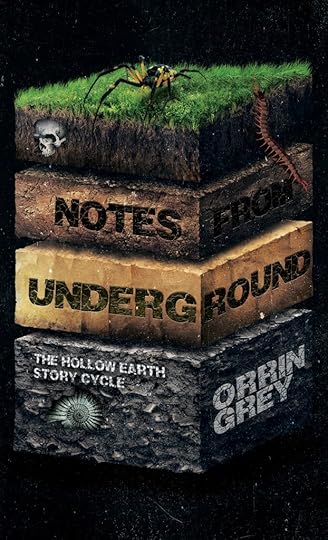
To that end, I had a new book come out this year. Notes from Underground is something different from any of the other short story collections I have published, a “story cycle” of linked short pieces that, when taken together, form something that is, at least I hope, more than the sum of its parts.
Nor do you have to take my word for it. Trevor Henderson called it, “A wonderful collection quite unlike any I’ve read before,” while an insightful review at The Blog Without a Face called it “Grey’s most unified book, a capstone to his museum-of-monsters vibe that threads his obsessions into a single, durable rope.” They also named it one of the Best Horror Books of 2025.
I would, of course, love it if you picked up a copy, of Notes from Underground or any of my other recent books. My latest nonfiction collection, Glowing in the Dark, came out just last year, for example, and I’d still like to sell more copies of How to See Ghosts & Other Figments, which led one reviewer to exclaim, “On the level of Matheson, Grey is one of the best living short fiction writers of our time.” High praise indeed!
As has been the norm in recent years, I didn’t publish a lot of new short stories in 2025, though I’m happy with all the ones that did see print. Most of those were contained in a special zine that I put together with artist Patric Bates and released in limited quantities around Halloween. The first printing sold out immediately, so we made a few more and, at the time of this writing, you can still pick one up, while supplies last.
It was a really special experience, and one I hope I get to repeat sooner rather than later. I think these sorts of zines and collaborations might ultimately be at least one antidote to the “AI” bullshit being shoved down all our throats.
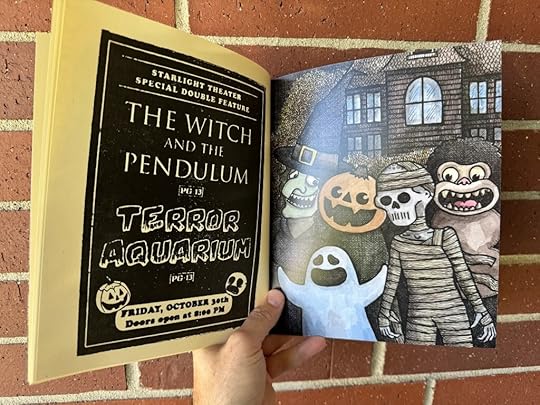
Aside from the two stories (and one framing story) in the Starlight Theater Halloween Double-feature zine and a new novella original to Notes from Underground, my only other new story published in 2025 was “The Phantom of the Wax Museum” in Steve Berman’s Final Curtain, an anthology of stories celebrating the centennial of The Phantom of the Opera. Happily, Publishers Weekly called my story a “standout.”
Not that I haven’t been busy. Besides my usual freelance work and recurring columns, I’ve written a number of nonfiction pieces, including writing about Godzilla and Frankenstein and how “AI” couldn’t have made Lilo & Stitch for Unwinnable, and about a trip I made to visit a monster museum for The Pitch.
I’ve also been writing monthly installments of licensed fiction for the Warmachine app. And speaking of columns, this year kicked off a new one, as I launched The Dark Séance at Signal Horizon, where I’ve been discussing the intersections between midnight spook shows, stage magicians, and gimmick films – particularly those of William Castle. The latest was about Mr. Sardonicus, and there’s still plenty more to come.
I also launched a Patreon around this time last year where I write about classic monster movies. So far it hasn’t exactly taken off, so we’ll see how it goes, but I love writing about old-timey horror movies, so any excuse…
And speaking of monster movies, it’s time to embark upon our usual year in review. There are still a few more days left before we fully kick 2025 in the ass on its way out the door, but I doubt very much that anything is going to happen in those days to change this lineup.
We’ll start with movies that actually came out in 2025. As is customary, I didn’t actually see that many of them (the count currently sits at around twenty). More unusual, however, a lot of the ones I did see were really good, and I had no trouble assembling a top five that I’m quite happy with out of that relatively modest number – and honestly, almost any one of those top five could easily be my number one movie of the year and I wouldn’t feel bad about it.
The extremely diverse list is: Kinki, Trick or Treat with Reed Richmond, Wake Up Dead Man, Harvest Brood, and Sinners. On a related note, until very late in the year, I thought I was going to have trouble picking a Favorite Creature from this year’s media, but fortunately a couple of really stellar options dropped in the last few months.
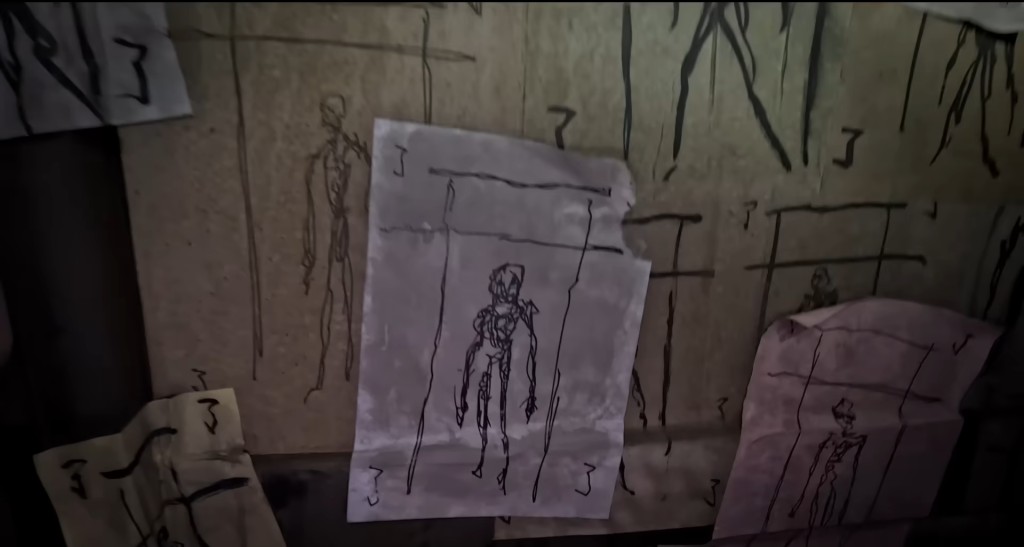
The “Cincide Children” from Joe Meredith’s amazing low-fi release Harvest Brood came awfully close to being my Creature(s) of the Year, but then I got to see Kinki, and Masaru-sama snatched up that spot away from them. I’m going to refrain from including any actual creature shots here, because most people won’t have a chance to see Kinki anytime soon, but rest assured that the reveals are quite special.
I read around 45 books this year, several of which were actually released in 2025. My favorite of those was always going to be Mike Mignola’s Bowling with Corpses, which was one of the most important releases of the year for me, even if it came out all the way back in January.
Other notable 2025 reads include Koga Shinichi’s Mansect, Renzo Adler’s Demon Zine Shinjuku, Trevor Henderson’s new Scarewaves book, Michael Wehunt’s The October Film Haunt, John Langan’s latest collection, Strange Houses by Uketsu, and Moan, the most recent series of Junji Ito reprints from Viz.
This might honestly have been a record year for me, as far as how many books I read in 2025 that actually came out in 2025.
While I read a lot of books in 2025 and saw a lot of movies that came out this year, as always, I watched way more old movies than anything else. At the time of this writing, I’ve watched more than 250 movies in 2025, and of those, around 150 were first-time watches, keeping me within the bounds of my goal of watching more new-to-me movies each year than I do movies I’ve already seen.
As usual, I kept a list of 25 (in this case) of my favorite new discoveries of the year that didn’t come out this year. The top spot almost certainly goes to Near Death from 2004, which I described on Letterboxd as “by far the worst movie I have ever rated five stars.” When it comes to trash cinema, Near Death is top tier garbage.
Other standout first-time viewings include Drive (1997), Gamera: Guardian of the Universe (1995), The Bat Whispers (1930), I Saw What You Did (1965), Glen or Glenda (1953), the extremely unlikely anime adaptation of Tomb of Dracula (1980), In Cold Blood (1967), Ura Horror (2008), Really! Cursed Video: The Movie (1 and 2, both 2003), and Body Double (1984).
I contain multitudes.
December 23, 2025
Best Horror
I didn’t publish a lot of new stories in 2025, but I had fun with the ones I did, including the two (and a half) stories in the Starlight Theater Halloween Double-feature zine that I did with artist Patric Bates, and my story “The Phantom of the Wax Museum” in Final Curtain, an anthology of tales celebrating The Phantom of the Opera, put out by Lethe Press to coincide with the centennial of the Lon Chaney film version.
The biggest thing that I did this year, though, was release Notes from Underground, my latest collection of stories from Word Horde, which includes a new novella, “Leandra’s Story.” Unlike previous collections, Notes from Underground is made up of a linked “story cycle” of connected tales that all deal (either directly or tangentially) with the Hollow Earth.
It’s a very different approach for me, so I’ve been a little nervous, and extremely gratified by the positive word of mouth it has so far received. Trevor Henderson called it, “A wonderful collection quite unlike any I’ve read before.”
Earlier this year, I was pleased to get a very thoughtful review of Notes from Underground at The Blog Without a Face, and today I was even happier to see that The Blog Without a Face had included Notes from Underground on their list of the Best Horror Books of 2025. Here’s what they had to say about it:
Orrin Grey builds a linked-story mythos where the Hollow Earth isn’t an adventure postcard, it’s a crack in the world you can’t stop picking at. You get subterranean weirdness, pulp DNA, and a dream-logic ecology that keeps sliding from physical to metaphysical. There’s also the delicious kicker: humanity’s doom and what comes after, including beetle-civilization vibes that make your skin crawl. Smart, uncanny, and fun as hell.
When it comes to ways to wrap up a year, that one’s not bad at all. If you’d like your very own copy of Notes from Underground to read (or want to give one as a belated holiday gift), you can get it direct from Word Horde (or numerous other retailers) here. Or, if you want to give me a present, you could always ask your local library to pick up a copy.
December 10, 2025
“Thank you for watching.” – Kinki (2025)
I have argued before that, in order to create something truly creepy, you can’t be afraid of it being a little silly. Junji Ito understands this, and so does Koji Shiraishi.
Recently, I had the great pleasure of introducing a packed house at the Stray Cat Film Center to Shiraishi’s 2005 classic Noroi, which is probably my favorite horror film of the 21st century so far. In so doing, I learned that a lot of people who don’t have my very specific predilections are largely unaware of Shiraishi. This makes sense, as a plurality of his more than one hundred films have never received any kind of official English-language distribution.
Noroi (which spent some time on Shudder before being released stateside as part of Arrow’s J-Horror Rising boxed set) was my first introduction to Shiraishi. Back then, though, you couldn’t watch it on Shudder, or anyplace else reputable. You had to track down fan-subbed rips on YouTube or wherever you could manage.
Seeing Noroi under those conditions rewired my brain. Here was not only the best and most convincing found footage (more accurately faux documentary) movie I had ever seen, here was also perhaps the best expression yet mustered of Lovecraft’s “piecing together of dissociated knowledge [to] open up such terrifying vistas of reality, and our frightful position therein…”
From there, I went down a rabbit hole that would have made Noroi protagonist Kobayashi proud, chasing Shiraishi and, in particular, his found footage-adjacent movies. From Noroi to Occult (2009), from Occult to Cult (2013), with a stop-off along the way for Shirome (2010), in which Shiraishi plays himself, taking real-life idol group Momoiro Clover Z through a haunted house.
While Shiraishi may understand the found footage format better than perhaps any filmmaker who has ever experimented with it, however, it makes up only a portion of his filmography. I also followed Shiraishi into more straightforward films: Carved: The Slit-Mouthed Woman from 2007 (also in Arrow’s J-Horror Rising set); Sadako vs. Kayako in 2016; even House of Sayuri from just last year.
Along the way, he has also continued to experiment with different strains of found footage. Among Shiraishi die-hards, one of his most popular undertakings is the long-running Senritsu Kaiki File Kowasugi series, which has something like nine installments. Beginning as found footage horror in the same vein as some of the others I’ve mentioned, Senritsu Kaiki File Kowasugi is ambitious and definitely not afraid to get silly before all is said and done.
To some extent, that is the push and pull of a lot of Shiraishi’s films. While Occult is a classic that can stand shoulder-to-shoulder with Noroi, many of the others cross that line into becoming a little too silly – at least, for what I want them to be. Which is to say that, while I have enjoyed my time with virtually every Shiraishi film I’ve ever watched, there has never been another Noroi or Occult… possibly until now.
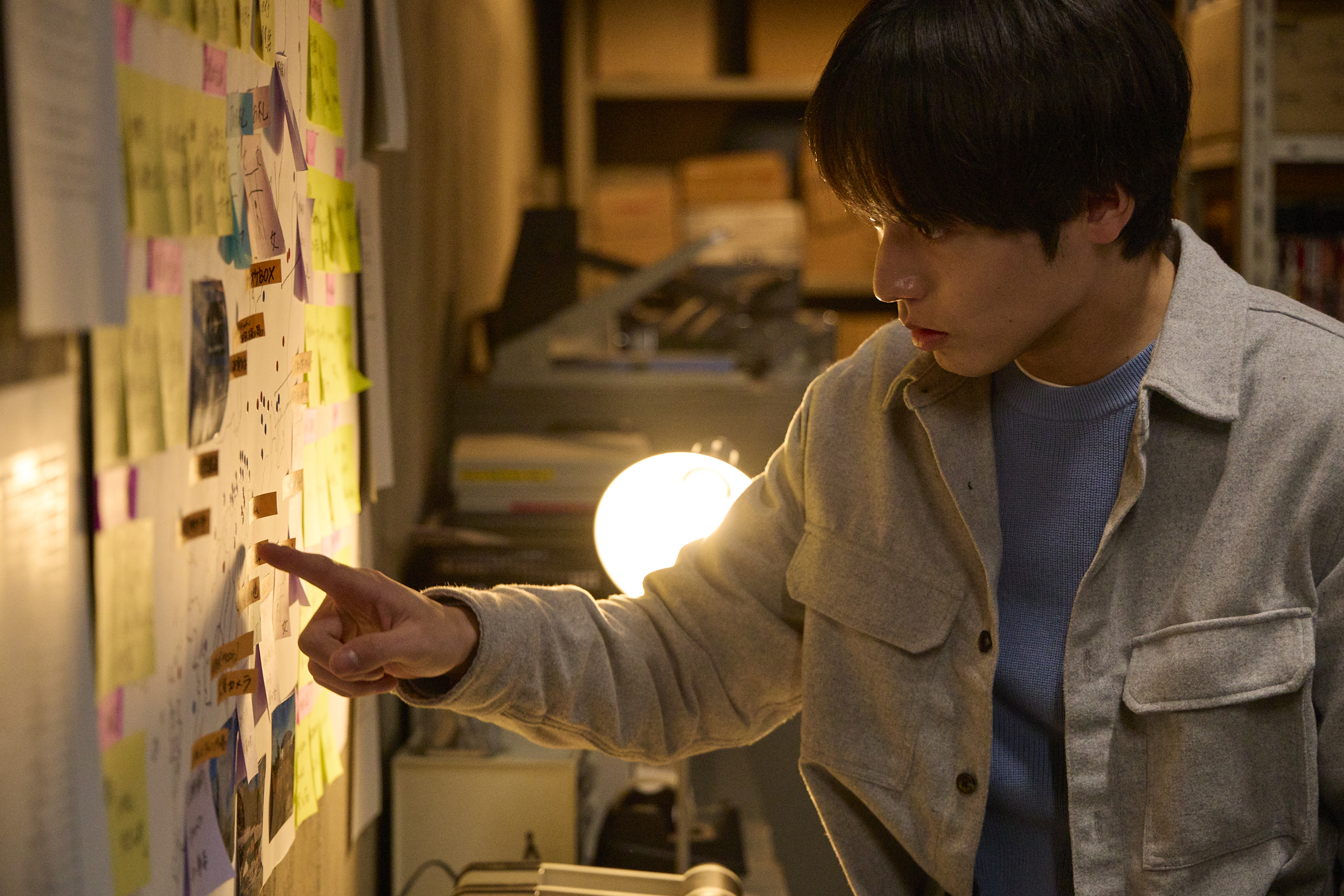
When I first started hearing about Kinki, I got excited, and not just because early buzz was calling it Shiraishi’s most Noroi-like thing since that film. The premise (a writer for a magazine about occult phenomena who goes missing while researching his latest story) sounded almost like a direct lift of Noroi’s premise, and the trailer promised more straightforward creep than much of the found footage work that Shiraishi had been doing in recent years.
Though it lasted only a relatively short time, the wait until I could see a subtitled version of Kinki felt interminable. Finally, though, it arrived. So, was Kinki the next Noroi?
No, of course not. It couldn’t possibly have been, because when I saw Noroi, I had no idea what I was getting into. I had never experienced anything like this. I had no expectations, beyond a movie that I had heard was weird and great. With Kinki, I was hoping for Noroi, so there was no way I could possibly get it.
But it came pretty damn close.
Shortly before showing Noroi at the Stray Cat, I finally tracked down Ura Horror, an anthology of short found footage vignettes Shiraishi released in 2008. At the time, I described Ura Horror as like watching Shiraishi’s sketchbook. If that’s the case, then Kinki is often like watching him playing his greatest hits – some of the elements first deployed in Ura Horror even make comebacks here.
What’s wild about how much Kinki feels like a Shiraishi “best of” compilation is that it isn’t actually a Shiraishi original. It is, instead, adapted from a book, originally published serially online, by an author known as Sesuji who “has recently burst into the Japanese horror scene like a world ending comet.”
That quote is from Baxter Burchill, who knows a lot more about this than I do. I’ll let them take it from here, from their own review of Kinki, which was one of the ones that made me realize I had to see it:
Utilizing a found footage style but supplanted to prose, Sesuji writes much of their work (Kinki included) from the perspective of articles and interviews, transcripts of audio files and TV programs. They take an epistolary form – a through-line narrative emerging through the reoccurring writing of the journalist protagonist – and mutate it into an almost mind-bogglingly expansive vision of the modern world and how we interact with it. It’s a story and a style that revels in the ambiguity of media, in the blurring of reality in the face of how we present it. And then within that addictive push and pull of mystery and answer, they create horrifying eldritch suggestions, whispering in the corners of a broader mythology of spirits and the occult that makes one thing perfectly clear: no matter how much we might see in a video, it’ll never even come close to the truth.
Sesuji feels, in other words, like the world’s most perfect, natural fit collaborator for Shiraishi.
The book, About a Place in the Kinki Region, is getting an English-language release early next year. I’ve already pre-ordered, and I’m looking forward to reading it when it comes in; to seeing how the experience of the book and movie mirror each other, and how they differ. You can expect more about it here, when that happens.
Back to the movie, though: Unlike Noroi, Kinki is not entirely found footage (or faux documentary). It combines clips of found footage, news broadcasts, TV shows, and so on with traditional third-person filmmaking. The result is something that looks more polished than many of Shiraishi’s found footage experiments, and feels less immediate.
Baxter is convinced that the change in approach does something else, too, though, and I don’t know that I disagree. “By partially pulling out of the fake documentary world and grounding itself within a more distanced perspective, Kinki has become the Shiraishi film most directly concerned with physical form of media itself, with video and text as objects beyond their contents.”
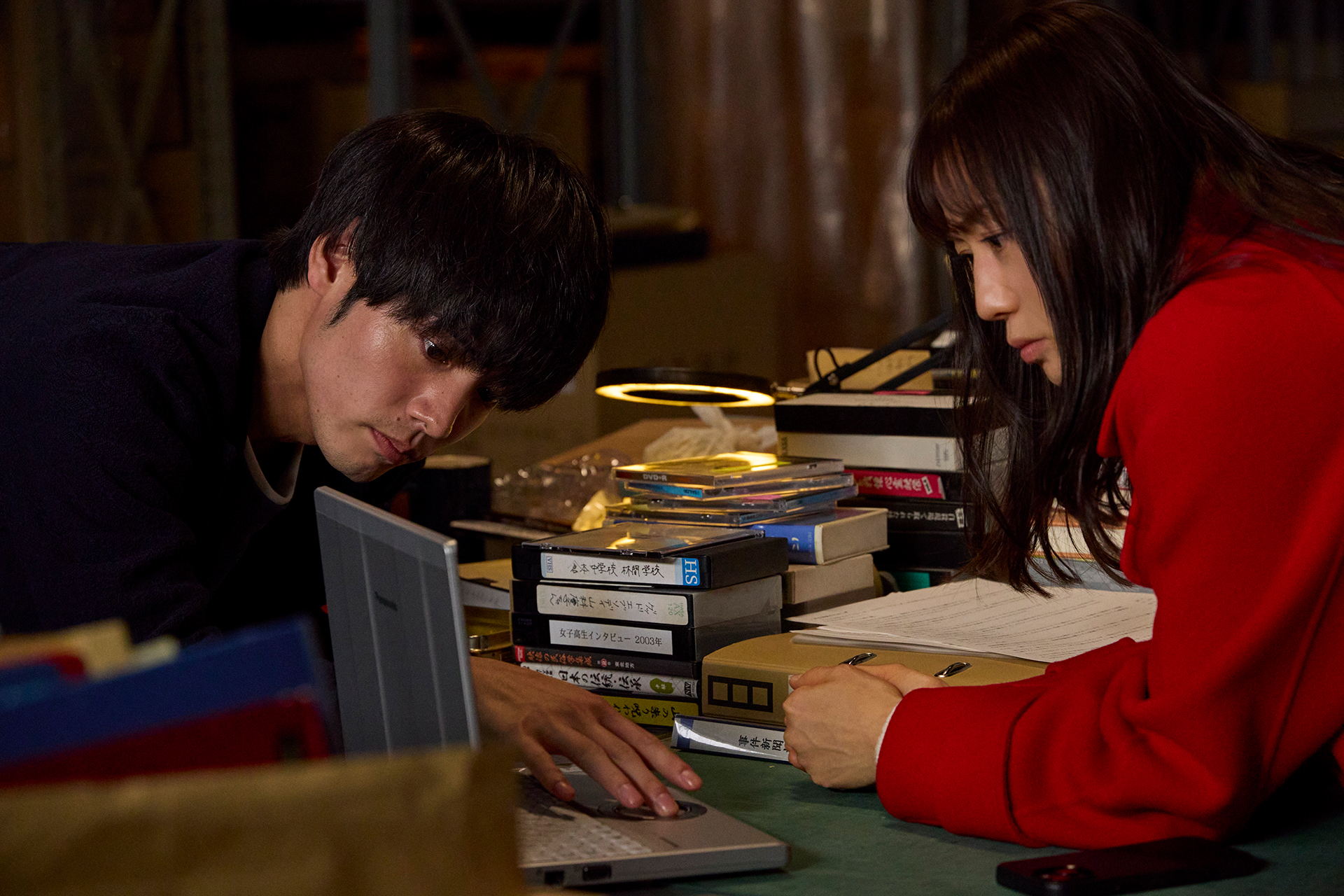
This begins a sea change in the closing legs of the picture, as the two formats start to break down. When our would-be occult investigators leave the archival room where they have spent much of the movie to try to track down the secrets of the unfolding web of connections themselves, they naturally film their attempts, and the cinematic style, which has heretofore kept the two formats distinct, begins to switch effortlessly between “found footage” shots and more “objective” sequences, often in rapid fire.
There are ruminations to be made here. About memory, and our relationship with media, and how we use media to, well, mediate our own experiences. As with the best of Shiraishi’s work, however, these ruminations stay in the background. First and foremost, Kinki is about telling a creepy story. What that story means takes a deserved back seat.
At the time that I write this, I have watched Kinki only once. By comparison, I have lost track of how many times I’ve watched Noroi – at least six, just in the past couple of years. And maybe the best thing I can say about Kinki, for those who are hoping to find in it the next Noroi, is that I already want to watch it again, even though I just watched it last night.
With just this one viewing under my belt, I don’t think it does what Noroi does. There, everything feels real, every puzzle piece fits unerringly into place. The sensation that you are watching a story being revealed by the gradual “piecing together of dissociated knowledge” is absolute, inescapable.
The narrative of Kinki doesn’t fit together quite as perfectly – at least, not at first glance. (It probably doesn’t help that the subtitles I had access to don’t translate text, and there is… a lot of text.)
Take, for example, the stone that shows up near the end of Kinki and suddenly occupies a place of prominence in several of the otherwise disassociated storylines. One could make a comparison between that stone and the story of Kagutaba in Noroi, but when Kagutaba first shows up partway through that film, it fills completely a void that had previously existed in each unrelated narrative. Not so much here.
Nonetheless, while the solution of Kinki may leave more questions than it answers, it is no less satisfying for all that, and it features some imagery that is Shiraishi sampling from some of the wildest of his Senritsu Kaiki File Kowasugi instincts (and maybe a little of Hayao Miyazaki), without ever letting them not be scary. I think there will be a lot to discuss about the ending of this film once more of us have gotten a chance to see it.
And maybe that messier lore is intentional. I’ll go back for a moment to Baxter’s description of Sesuji: “no matter how much we might see in a video, it’ll never even come close to the truth.” Maybe that’s what Kinki is reaching for, with its tangled mythos. Does it get there? I think I’ll need more viewings to say for sure.
But it gets close. And that’s not nothing.
November 17, 2025
Kind Words
“On the level of Matheson, Grey is one of the best living short fiction writers of our time.”
That quote, from a recent Goodreads review of my 2022 collection How to See Ghosts & Other Figments, obviously made me very happy – especially as I think How to See Ghosts is the most underread of my collections so far, probably due in no small part to coming out in the midst of the pandemic, when everything was very… challenging.
I love getting reviews in those few publications that still do book reviews, on big websites, and so on. Of course I do. Who doesn’t? But I think what I love best is seeing a reader really connect with one of my books, whether that’s in the form of a Goodreads or Amazon review, by sending me an email directly, or however I may encounter it.
Lately, a couple of my more recent books have enjoyed some very kind and insightful reviews that I wanted to draw a little attention to here, despite having already linked them on social media.
Dark Intersections, the blog of Lyana Rodriguez, has been a longtime booster of my work, starting off with my nonfiction Monsters from the Vault and Revenge of Monsters from the Vault volumes, so it only makes sense that they would leave a glowing (no pun intended) review of Glowing in the Dark, my latest nonfiction collection.
My most recent book, Notes from Underground: The Hollow Earth Story Cycle just came out last month, so it hasn’t received a whole lot of reviews just yet. The most amusing is probably this one on Goodreads: “I finally read the Dostoevsky classic Notes from Underground. Who knew that Russian scholars were believers in the Hollow Earth theory?”
This relative paucity meant that I was particularly excited to see a review of it pop up in a place I was previously unfamiliar with: The Blog Without a Face. That the review in question was extensive, insightful, and seemed to really understand many of the book’s themes was an absolute bonus.
The reviewer also calls me “the nice ghoul of weird fiction, the guy who loves rubber-suit monsters and midnight movies yet writes with a librarian’s care for lore.” Which I obviously appreciate.
Writing is an inherently lonely vocation. We write to write, but most of us also write to be read. It’s nice when I’m reminded that people occasionally read my books, and nicer still when they seem to really get what I’m trying to do.


