Beth Bruno's Blog
July 31, 2018
GIVEAWAY!
Help me celebrate the 6-month birthday of A VOICE BECOMING with an incredible giveaway. Lots of ways to enter to win this package:
1 signed copy of A VOICE BECOMING
1 handmade, signed sari bag from a woman exiting sex trafficking in India
2 matching copper Becoming necklaces, also made from women exiting sex trafficking in India
2 NOONDAY COLLECTION luggage tags handmade by Guatemalan artisans
2 Turkish key rings
Winner will randomly be chosen on August 14th. Must have a continental U.S. mailing address to win.
6-Month Book Bday Giveaway

June 6, 2018
Launching a Becoming Year for your Tween
It is her 12th birthday and we are meandering through Central Park when we are stopped by a poet.
She is a kind-looking woman standing at a crossroads; one I usually would ignore, but this time, am compelled to give my attention. Hers is a unique request: can I give you a poem? What transpires is so beautiful she and I both end in tears and an embrace. She gifted me with a blessing of motherhood. Then it comes out that today is my daughter's birthday and the poet is also a singer. She belts out the birthday song in a beautiful alto voice that sends shivers down my spine.
As we continue walking, my daughter says, I think she was the face of God. I say, women create when they offer life and beauty to the world.
We came to New York City to launch her Becoming year. In my customary surprise, I whisked her away to the airport with a packed bag in the trunk. For our launch, we would begin to answer the question, where did you come from?, as well as dip our feet in the categories of womanhood we would build a scaffolding around this year.
I have found that if you have eyes to see, there are models and metaphors everywhere, even in the Ramble in Central Park.
As part of the reveal, I gave Sophie a letter to provide some framing for the weekend. Here is a section:
Into what family story were you born? What is the backdrop of the Bruno story that you entered in May of 2006? There are many ways to answer this! Yes, you were born “on vacation” in Charlottesville, Virginia. I’m from there and we stayed with my parents for two months waiting for you! But we returned to Turkey and that is also an important part of our family story and yours! Your first home was in Turkey. Your first babysitter, your first steps, your first words… all there. I cannot wait to show you!
But there is another aspect of your story that starts long before Virginia and long before Turkey.
Dad and I met in Chicago. You know this. Actually, we met on the phone when I was still in high school in Virginia! But, the whole reason I was interested in Northwestern is because I was interested in cities. And I had been for a long time.
Every year growing up, we drove to Pennsylvania to visit my grandparents. I loved them! They lived just a few hours away from New York City and took us there once or twice. I will never forget the first time we drove into the city and I saw the skyscrapers. I was in the front seat in between my grandparents in their massive station wagon. From beneath the rearview mirror, I gazed up toward the sky, snapping pictures with my CD camera! I remember driving through Chinatown and Little Italy and past the Statue of Liberty and at some point, I think I said to my 10-year old self, you are going to live in a big city one day. I fell in love with cities in New York, which led me to only look at colleges in big cities, which led me to Northwestern and your dad and the rest is history.
But long before I gazed up toward the sky, my descendants and dad’s descendants walked the same streets. To New York, came my grandfather’s father from Norway and my grandmother’s mother and father from Scotland and Pop’s grandfather from Italy and Oma’s grandparents from Germany. Through New York, to start a new life in America that would one day birth you.
A gateway city from the old to the new. Where did they come from and where were they going?
Imagine the stories! Imagine the hope and fear and sacrifice and determination!
It all courses through your blood too. They are your stories.
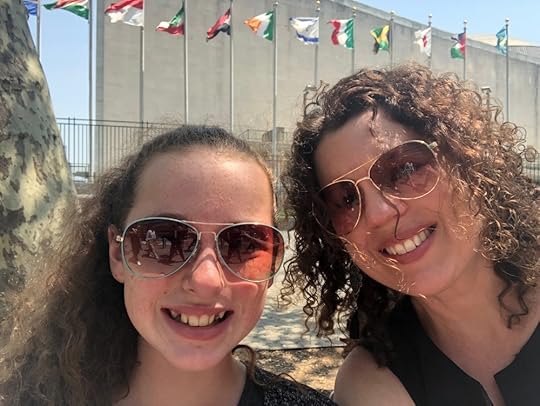
On Day 1, we explored immigration:
At the Statue of Liberty, we lingered over Emma Lazarus' 1883 poem, "The New Colossus":
Not like the brazen giant of Greek fame,
With conquering limbs astride from land to land;
Here at our sea-washed, sunset gates shall stand
A mighty woman with a torch, whose flame
Is the imprisoned lightning, and her name
Mother of Exiles. From her beacon-hand
Glows world-wide welcome; her mild eyes command
The air-bridged harbor that twin cities frame.
“Keep, ancient lands, your storied pomp!” cries she
With silent lips. “Give me your tired, your poor,
Your huddled masses yearning to breathe free,
The wretched refuse of your teeming shore.
Send these, the homeless, tempest-tossed to me,
I lift my lamp beside the golden door!”
Emma was an incredible example of how women create life and beauty through our actions, words, and choices (and funds for the statue pedestal!) Past and present blended as we contemplated those words in light of the current immigration conflict.
At the Ellis Island Museum, we learned about the waves of immigrants from the 1880s to the 1920s, the reasons why they came, and the eerily similar American sentiment that made them stop. Over 20 million in 40 years, many of whom we're related to, built the infrastructure of our country.
We walked through Little Italy for lunch and then took a tour in the Tenement Museum. This incredible story-based immersive museum is in an original tenement building that was vacant for 60+ years. Little has been changed, so the floors are still slanted, the linoleum layers visible, the small 300-square foot apartments furnished and the 2 toilets per floor kept the same. We learned about a Jewish Lithuanian family who ran a sweat shot and a Polish family who began working in a garment factory after electricity changed everything. We learned about the life of the women and the life of these early immigrants, all desperate to make a better future for their children. They were an example of how women sacrifice as they humble themselves to others without losing their voice.
And then we had Dim Sum in Chinatown and talked about the Chinese Exclusion Act.
Her first Becoming year book is Dear World by Bana Alabed, a story of escaping Syria written by an 8-year old. This is not just history anymore. This is one of the most important things for us to do: learn about the themes which propelled our own ancestors to immigrate and understand how we might address the same problems today.
How does this break Jesus' heart and therefore, how must it break ours?
On Day 2, we met my editor at Hachette Book Group's NYC office. Keren is championing the voices of women and offering a platform through the books she acquires. She was an incredible example to Sophie of how women lead by wrestling with an unknown future on behalf of another.
On Day 3, we were given a tour of the United Nations by my Honduran sister-in-law's sister! She is one of 8 Honduran delegates passionately representing her country in the General Assembly. We were able to sit in on a Security Council meeting in which they discussed Sudan and Somalia and hear all about the UN's 2030 Sustainable Goals. Yolanni was a great example of how women fight as warriors fueled by the passions of redemption.
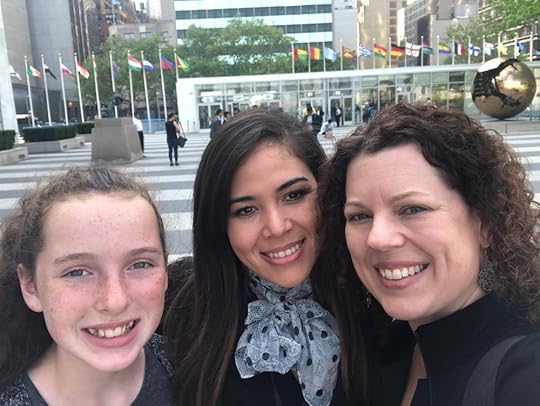
And then we saw Wicked: an incredible storyline of two women who love fiercely, and the capacity for good that is unleashed.
Women lead. Women love. Women fight. Women create. Women sacrifice.
Where have you come from? You've come from a long legacy of women reflecting the image of God in these ways, the very ways in which women are still reflecting the image of God.
What a beautiful launch into a Becoming year. I can't wait to see who God brings us to meet and learn about this year!
Want to do your own Becoming year? Learn about the book that started it all.
April 4, 2018
Every Mom’s Worst Fear: How to Protect Your Children from Sexual Exploitation
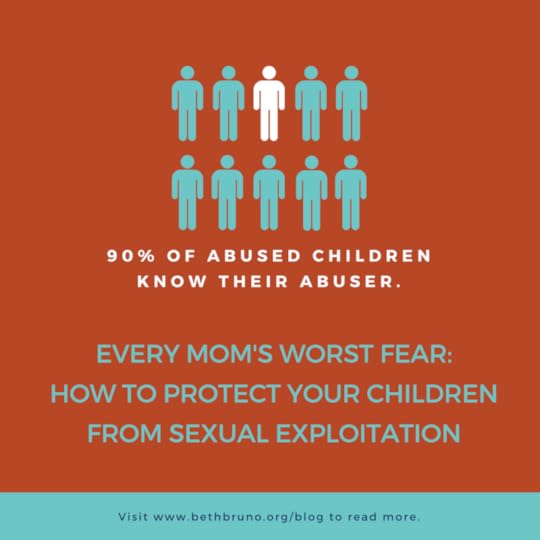
When moms learn of my work to prevent human trafficking, the conversation always turns to fear for their own children. They wonder, how do I protect my kids? They ask, what can I do to prevent this from happening? They assume multiple wrong things because they believe the stereotypes and what they’ve seen on TV. And then they’re shocked when I explain how exploitation usually happens.
Perhaps this short list of ideas to protect kids in the 3 main stages of childhood will help you not only feel better, but make a proactive game plan for your family.
Under age 8:
1. Use real terminology for your child’s private parts. Why? If they are disclosing to a teacher, counselor, coach, etc. and use confusing code (someone touched my ding dong or ate my cookie), how will the adult know what they are really hearing? We do not want their first attempt at seeking help to be dismissed because of misunderstanding.
2. Listen to their hesitation, discomfort, or resistance when going to certain homes or seeing certain people. If they react atypically around someone, you need to notice and respond accordingly. Do not force them to sit on his lap or endure his tickling. Do not leave them alone in this situation until you fully understand what is going on and if you never do, then you never leave them alone in this situation!
3. Help your child listen to their gut. Debrief experiences- good and bad- and give them language to describe feelings. “So, did you like meeting your new teacher? What about your new teacher made you feel good?” or “Oh, you felt funny? What did your teacher do that made you feel that way?” When they express a gut feeling about someone, do not dismiss it!
Ages 8-11:
1. The sleep over stage. Consider implementing some strict boundaries around sleep overs or not allowing them at all. Certainly, consider who is allowed over and who your child is allowed to stay with, making sure this list is narrow. Keep doors open at all times. Turn off wifi and cable when you go to sleep if it is not already restricted. Ask the parents with whom you might allow your child to stay if they have similar boundaries in place. Make sure you know of older siblings, relatives, and other guests in the home. Once you feel comfortable with the plan, communicate clearly to your child and agree on the rules. Then, be prepared to constantly adjust!
2. The stranger danger lie. By this age, most kids will roll their eyes about “not talking to strangers.” They know to not open the door to a stranger or talk to one on the street. Unfortunately, this does little to protect them from the real danger: people they know. 9 out of 10 sexual abuse cases result from familiar perpetrators. It is time to speak frankly about being safe around everyone.
3. The risk of first exposure. The majority of kids are first exposed to porn at age 11. They accidentally see something on the side bar of You Tube or in a Google search and curiosity leads to more. Have you installed security measures on your internet and devices? Talk to your kids about your fear: once you see something you cannot unsee it. Tell them what porn is so they know it is bad for them when a friend shows them. Tell them it is as addictive as drugs and can impact their brain development. Watch this.
Ages 12-18:
1. Love them with everything you have. Kids who know they are deeply loved and seriously protected have a stronger sense of self, even when the drama of teenage years overwhelm them. Communicate openly and frequently about everything. At age 12, they should know what your expectations and/or parameters are around dating. This is not a free for all. Tell them your hopes and rules around relationships and check in repeatedly.
2. Monitor social media age appropriately. Watch this PSA on how normal it is for “cute 15-year olds” to actually be perpetrators. Talk with your kids about safety protocols with apps and create rules for what and with whom they share.
3. Give them something bigger to live for. Get them involved in something meaningful where they can experience healthy relationships, another adult role model or mentor, and activities outside of themselves. Being a part of a positive community keeps them grounded and less likely to be targeted by those looking to exploit.
4. Remind them over and over again that they are more than the relationships they have in their lives. Cast a vision for their future that aligns with who you see them becoming. Start making future plans with them. Dream with them. If they are dating, do not allow the relationship to consume them, isolate them, or change their personality. If this begins to happen, intervene immediately.
5. If you know of past trauma or abuse, get your teen in counseling with someone they enjoy talking to. If you can find a group of other teens who have had similar experiences, do this too. If you can find a support group for parents of abuse survivors, join. Do not overlook or underestimate the power of healing to prevent future exploitation. Too many child sex abuse victims come to believe they are damaged or worse, to regain power they exploit themselves on their own terms.
At some point in this last stage, we need to focus on training rather than protecting. We need to equip our teens to notice suspicious people and train them to know how to act in a compromising situation. If you started early, hopefully they have learned to listen to their gut. Let us raise our kids to be people who notice and upon noticing, act.
Resources:
Arrange for a training - Darkness to Light: Empowering Adults to Prevent Child Sex AbuseAge appropriate online safety tools for parents, kids, and educators – Net SmartzPlug and play youth sex trafficking curriculum - CHOSENAddressing porn – Fight The New DrugMarch 20, 2018
Why I Let my Teens Buy Bikinis
We go in early March when the selection is good, the options plentiful. There are knitted, embroidered, and ruffled varieties. Vivid colors. And even some that aren't all about cleavage.
It is the first year of my almost 12 and 15-year old daughters’ lives that I’m not voicing my opinion about bathing suit selection. I’ve decided they need to choose what they put on their body and feel confident about it. At this age, more confidence comes from fitting in and looking normal than showing less skin. The only non-bikini options look like what we moms wear. I do not blame them.
In past years, they have been more modest, reluctant to show skin. Is this because the selection in the kid’s section was more varied, with cute tankinis and full pieces? Is it because I may or may not have mentioned bikinis look a lot like bras and panties?
This time, I’m silent. No comment, no judgement. It is their body and they will decide. I have named my self-contempt and withheld it from my girls (as a first). Though late in age, I am learning that my judgement is self-righteousness and stems from my own issues of shame. I do not want my story to be their story.
I want them to enjoy their own skin.
Both girls attend a school with a dress code and it has been the topic of many conversations this year. They feel that so much attention is placed on what girls should not wear that they have become objectified. The shoulder is scandalous! Kids can wear sloppy, baggy sweatshirts, but if a dressy top has cold shoulders, they are coded. They are smart, savvy. They know the hypocrisy is linked to the female body. They know it is related to sexual objectification.
There is such a fine line between healthy body talk and over doing it! We’ve had our fair share of body image, modesty, and respecting yourself discussions. I’m running the risk of over doing it. Time to let them decide. If they choose a bikini because it’s the only cool, cute option girls their age are wearing and stores are selling, is that immodesty? If they choose a full piece in this context, will it be any less about the objectification of their body?
As their mother, with my own story, I find myself constantly second guessing. How do I handle the fragility of the female self-image? If I compliment their flat tummies and slender frame, will they always measure themselves to the year they were “slim”? I still remember a comment made to me by a friend’s mom in high school… about my slender waist… 30 years later! If I do not comment at all on how good they look in their new suit, will they wonder? Try to hide? Throw off the wrap and within seconds jump in the pool?
We can talk about inner beauty all we want. I wrote a whole book about casting a vision to our girls of living a bigger story beyond their bodies, boys, and besties! I believe this is true. I also believe there is something to our outward beauty and sense of it that is spiritual. And uniquely feminine. I am learning.
Eve was made as the final crowning glory of creation, only after which God said, it is good. Is she the embodiment of God’s beauty? Is this why Satan goes after her? Lucifer, Angel of Light, the most beautiful angel of all, jealous? Threatened? Could this be why a woman’s beauty is assaulted relentlessly? Why little girls in preschool believe they’re fat? Why fifth graders believe their thighs are gross? Why young women cut, and indulge, and starve, and self-loathe? Why we moms crave compliments and yet secretly fear they’ll never come? Because we are the subjects of an endless, ruthless assault as the bearers of the very thing that most reflects God?
It is merely a shopping trip. Yet it all feels so huge. My girls’ sense of their own beauty and glory hangs in the balance and my fear of being conscripted by evil to play a part in an assault unnerves me. When it comes to the feminine and masculine, it is sacred. It is holy. It is never merely a shopping trip.
February 5, 2018
Teaching Story-Based Family Relationships
There is nothing worse for parents who have written books on parenting to feel the sting of hypocrisy. Or, I suppose for a marriage and family counselor to feel like a fraud if things at home are sloppy. One could morph the season of pain into a laboratory of sorts, just fodder to help others, or embrace the lesson in humility: As it turns out, we are all human.
On my home front, it is the season of birthing a man. One more year and we will have an official voter, registered in the selective service, and headed to college! The youngest two started high school and middle school and overall, as one might imagine, we are swimming in hormones. Our home is riddled with emotion and angst, fueled by ambivalence. No one seems to know if they want independence or coddling, space or embrace, empathy or advice.It is the perfect storm for hurting each other and we are succeeding marvelously.
Parents, what do you do when you feel desperate? Run to Amazon or the Library to gather every resource with titles such as “He’s Not Lazy,” or “The Teenage Brain”? Enter Google search strings such as “my teen hates me”? Text a friend “I’m headed for the cliff. Bring reinforcements”?
I have done all of the above, but in the midst of our deepest sorrow we wanted to forgive and seek forgiveness, seek to understand and be understood. Could we help our family draw closer before it was too late?
An idea came to me after reading a business book. Our family needed a self-assessment in the same way a healthy company solicits employee input. I created a Google form with a mixture of 1-5 scales and short sentence answers to questions such as “Do you feel known by your family”? and “How do you show love to your family”? Each of us filled it out anonymously and we sat around the fire pit one night to discuss the state of things.
What emerged was stunningly beautiful.
The form surfaced feelings and frustrations that were previously unnamed and placed all of us on equal footing. We had to listen. We were all hurt. Using recent, tangible examples, we entered holy ground.
One daughter explained a chronic feeling of being left out using an illustration from earlier that day. Her heart was raw and it was painful to hear. More painful though, was her ability to articulate the deeper story her life tells: a story of chronic exclusion from friends that has left her feeling unwanted. Her siblings learned that their unthoughtful exclusion poured salt into old, still festering wounds. When offered a piece of their sister’s story, what would they do with it?
My husband used the same daytime activity to illustrate a theme in his own story. From the days of childhood, he faithfully played the role of invisible caretaker to a disabled sister and parents who depended upon him. When the kids assume he will diligently serve them without any appreciation, he feels useful, invisible, unknown.
Story is heavy in any relationship, even if the years are short. Our daughter has already been shaped by enough people to have significant wounds, forming in her a story that plays out when her siblings leave her behind. I am unwanted. My husband’s story plays out in our thoughtless assumptions of him, I am unseen.
When we can identify the backstory that our experience triggers, not only does it help us engage in vulnerable and holistic relationships, but it invites others to help us heal. As a family, we get to rewrite my daughter’s wounding, to offer a counter-story, to help her know she is wanted.
Story-based living is deeply challenging, yet redeeming. When we teach our kids to understand how shaped by story we all are, we build bonds of the heart that penetrate the hurtful surface behaviors. As our last year as a family of 5 unfolds, my hope is that we would love well through a storied-lens.
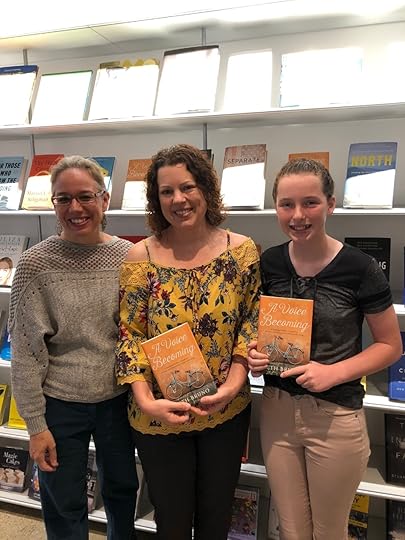
Interested in learning more about story-based parenting? Check out my book, A Voice Becoming.
November 20, 2017
The Inherent Strength of a Global Sisterhood
The Inherent Strength of a Global Sisterhood with Honduran Sisters
In my book, I talk a lot about a global sisterhood. Perhaps this is so important to me because I have a Honduran sister-in-law and her mother and sisters have become dear parts of our family. Perhaps it is because I lived in Turkey for 7 years and came to love so many as family. But without a doubt, it is because I believe that if God created us in his image, then there are inherent qualities we share around the globe, throughout time and culture. It is this global sisterhood that I am calling our girls to join, casting a vision for a story playing itself out among women around the world.
As we wrap up our series on Strong Moms & Daughters, I knew I needed to include an intercultural or international example. With joy I looked to my sister-in-law and her female tribe. These Cerrato-Corrales women are fierce and lovely. They hold multiple degrees, trounce around the world with bravery, and love with a sweet tenacity (and put my side to shame in the fashion and bling department!) I wondered, what would they attribute to their mother and to their culture for their strength? And even more curiously, I asked their mom what she could reflect back on as doing differently, counter-culturally?
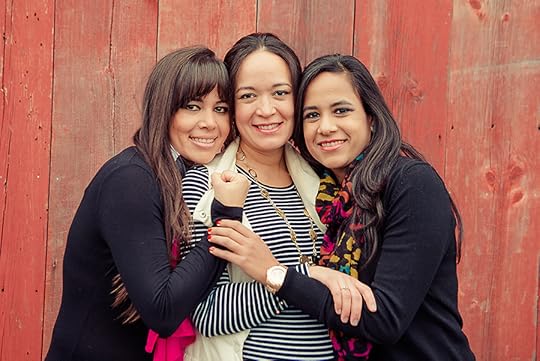
Yolannie, Gissela (9 months pregnant), and Maria
Me - Can you each describe one memory or example of how you remember your mom casting a vision for who you were created to be?
Yolannie - My sisters and I are a reflection of what my mother was both in her personal and professional life. I remember that when we were very young she worked very hard in her career, she had a busy work schedule as a business administrator, but at the same time, she took the best care of us. She taught us to have God as the center of our lives, which allowed us to have in our childhood, adolescence and adulthood a balance in our lives. She transmitted faith since we were little girls; we attended a church group, which greatly influenced our spiritual and personal maturity.
In that sense, she always encouraged us to be independent women, with self-confidence, she supported us in our extracurricular activities, in the achievement of our professional careers, encouraged us to accomplish our goals and to become women leaders in our society. She has always been social, loving and sweet, and instilled these qualities in us, doing good to others despite adversity. Gissela, María and I, have had the opportunity to live abroad (Europe, United States of America and New Zealand) and meet people from different cultures. My mother´s example has helped us to have successful interpersonal relationships wherever we go.
Gissela - I think my mom led by example, she was a kind, loving, caring mother, who would sacrifice everything for her family. She was a working mom, but I always remember her being present. She was always there for us, we knew we could talk to her about anything, and we knew we could always count on her. She would base all her teachings on her faith and the love of God, which she instilled in us. Knowing our parents worked so hard to provide for my siblings and I, gave me purpose to try to be my best.
Maria - I've had the privilege of having a loving and caring mother. Since I was a girl, she fostered my self-esteem by continuously helping me realize my worth. She made me aware of God's unconditional love, taught me and my siblings how to pray and made sure praying was part of our daily lives. Her faith has been an example for me to base my life and dreams in God. I could always feel her love and support through growing up. Even though she was a working mom, she always made time for us and did everything she could to support our aspirations and goals.
Me - Can any of you speak to barriers you faced culturally or on the contrary, ways in which your culture celebrated the strength of women?
Yolannie - I think that one of the most valuable resources of Honduran women is the joy, warmth and passion to make things, allowing many women in the last two decades to be successful and become leaders and entrepreneurs at home and abroad, in spite of the machista culture in Honduran society.
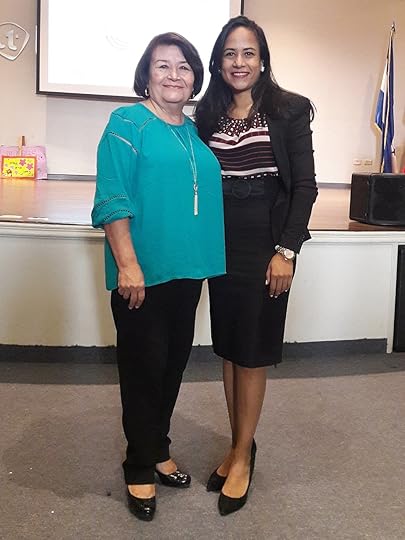
Maria and Maria
Gissela - When we were growing up the culture in Honduras was still somewhat conservative and traditional at home. Especially, the role of men and women at home was somewhat “machista." Women cook and clean, and the men are served by women and the men do more of the manual work at home. However, in terms of education, I think that women in our generation didn’t experience as much inequality. Quite the contrary, we were expected to get an education and encouraged to become career women just as much as men, though this could have been unique to our family.
Maria (MOM) - I believe that machismo has been cultural, because generally speaking men have considered the role of women mainly being for doing housework at the home. However, in this 21st century, Honduran women have taken actions in their preparation and personal development, demonstrating capability, responsibility, and enthusiasm in the performance of their professions. Whether at home or in society, women are moral and intellectual bastions contributing to the change and progress of our country.
Me - So, Maria, what did you do to raise such strong women?
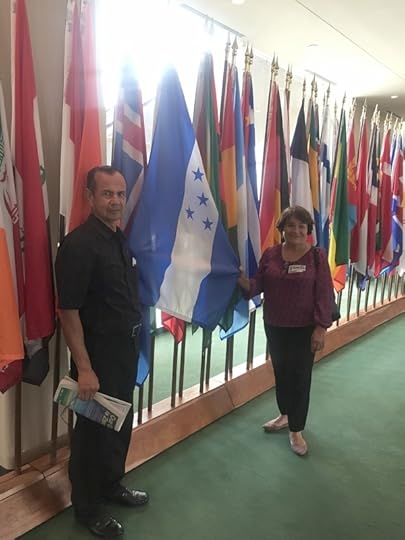
Maria (Mom) - My parents got separated when I was a girl and since then, my mother (who was a teacher) dedicated her life to raise me with all her love and dedication. I always saw in her an example of a woman with faith and a fighter, who kept going until I became a professional. She worked hard for me to receive the best elementary and high school education.
In our first year of marriage, we felt the call to join a charism within the Catholic Church called the Neocathecumenal Way, which we have been part until nowadays in our 39 years of marriage. These enabled us to raise our children conducted by the power of the gospel and in that way guide them under these concepts:
Love: Giving all my love and dedication to my children developed a human sensibility within them, which has enabled them to be kind wherever they go, and in that way integrate and be accepted in the different environments they have been.
Respect: Within my reach, I always respected and supported their ideas, talents, professional vocations, dreams, and decisions. This gave them the confidence for the development of their qualities, talents and knowledge.
Trust: The trust and communication that I deposited in them, gave me the opportunity to be close to them and orient them in different aspects of their lives. This allowed them to be independent since a very young age.
Faith: The transmission of faith in God, enabled them to grow up as people with values.
There you go! Global sisters. Amazing! Women, let us cast our daughters' eyes to the beauty of God's creation, past, present and future, inherent in his design of femininity. It is stunning.
Read more in A Voice Becoming: A Yearlong Mother-Daughter Journey into Passionate, Purposed Living .
Yolannie Cerrato, is a career diplomat of Honduras, currently working as Counsellor in the Permanent Mission of Honduras to the United Nations in New York. Prior to her posting in New York, she served as Director for Educational, Cultural and Scientific Affairs of the Secretariat of Foreign Affairs and International Cooperation of Honduras. She holds a Bachelor degree in Industrial and Business Administration and a Masters in Project Management, Leisure, Tourism, Culture, Sports and Recreation. She has a specialization in integral project management and diplomacy. Besides Spanish and English, she speaks French.
Gissela Pandy currently stays-at-home with 3 kids under 7. She was born and raised in Honduras and moved to the U.S. when she married 11 years ago. She holds a Bachelors degree in Industrial Engineering and a Masters in Business Administration.
Maria Auxiliadora Cerrato-Corrales is 32-years old and the youngest of four siblings. She holds a Bachelor in Business Administration and a Masters in Education. She worked 8 years as an early childhood teacher in Honduras and is currently the Program Official of the non-profit organization REAL LEDGE Honduras.
María Auxiliadora Corrales-Cerrato is 65-years old and holds a Bachelor in Business Administration. She has been married 39 years and has four children and 5 grandchildren. She currently works independently in Sales and Marketing.
November 8, 2017
You're Invited: Join My Launch Team
Friends,
My first book, A Voice Becoming: A Yearlong Mother-Daughter Journey Into Passionate, Purposed Living, releases on January 16, 2018! I wrote this as a fellow sojourner, seeking to cast a vision to my tween of living a big-storied life. It chronicles the intentional "rites of passage" year I designed and invites moms to consider their own stories as they raise daughters to live into their own.
And I need your help!
While words are penned by one author, books are birthed by tribes of allies. Would you consider being an ally?
Joining a launch teamWhat is a launch team? I think of it as a group of sherpas, guiding the curious on an expedition. Through the chatter and advocacy of these sherpas, the book's message reaches more readers. It's also a mutual relationship. You have a role and I have a role.
Launch team responsibilitiesAs a team member, you'll commit to read the book and do a weekly action to help promote it. Actions include posting memes to social media, writing a blog post, submitting a review on Amazon or Goodreads, and promoting pre-order incentives. To make it super easy, once a week you'll receive an email telling you exactly what to do. This team also serves as a prayer team, bathing this book baby in prayer as it enters the world and hopefully blesses many moms and daughters. You'll receive one prayer request each week.
Launch team benefitsAs a team member, you'll receive a hardcover copy of the book, most of the pre-order incentives, and be entered to win a limited edition Becoming necklace. You'll join a private Facebook group where we'll rally as a team of allies and I'll post a live video each week.
Ready?Are you interested? Apply here and we'll let you know on November 16th.
Thank you for considering joining me in this journey. I am honored, humbled, and a little freaked out about the whole thing! Looking forward to a community of sherpas to walk with!
Beth
Apply Now
October 31, 2017
Let Her Strength Grow You Too
Let Her Strength Grow You Too with Shauna Gauthier
“Your story is not my story!”
Her words flattened the argument I had so carefully constructed and was right smack in the midst of delivering when she interrupted with utter exasperation. That single truth bomb she sent flying in my direction took my breath away. So I just sat there, breathless and therefore speechless, while she looked at me eyes ever-widening by the uncertainty of how this act of boldness might play out for her in the end.
I can only vaguely recall the details of the power struggle we were having before that pivotal moment in our mother-daughter narrative. I know that it involved a request for some leeway with regard to specific boundaries we had established around dating and curfews as she entered into her junior year of high school. As the oldest of our four daughters, she is almost always the one leading us into new chapters of our parenting adventure.
It’s an unavoidable reality for all firstborns because there is simply no other way for parents to gain experience. And believe me when I say that I have tried plenty of other pathways to gain insight. I’ve worked with youth since I was still a teen myself, later becoming a trained therapist with a keen understanding of adolescent development and family systems. I am a well-read parent always striving to keep up to date with new research and parenting strategies. But here’s the thing - in all the years of pursuing insight, nothing could have prepared me for the ways in which my daughters would reflect back to me the tender places inside my soul still longing for healing and freedom. Only their faces, only their reactions to my mothering, only their unique voices could have the power to reveal such profound insight.
I heard her loud and clear that day. “Your story is not my story!”
Just two seconds beforehand, I had been convinced that I was offering clear but firm boundaries that were for her good. I was certain that this was one of those times that I needed to be her prefrontal cortex and make decisions that her teenage brain was not yet prepared to make on her own. A mere five words out of her mouth and suddenly I was standing there as naked and vulnerable as Eve. I had the choice to run and hide behind some metaphorical tree, or perhaps I could have pretended that there was nothing to be seen there at all. I certainly could have thrown some shame in her direction and on my lesser days, I’m sure that I have done some combination of all of the above.
How could they ever believe in the strength of their own voices and the power of their own discernment if we can’t make space for their truth in our own hearts and souls?
But I knew she was right. I was caught in that moment and my daughter was the one who pulled back the curtain to expose the truth. The rigid boundaries I was building a case for had more to do with my own past narrative, my own troubled teenage years, and ultimately my own fears than I wasn’t even aware of until that very moment. So there I stood, naked and a bit disoriented.
Like Eve, there are many other women who have gone before us into the terrifying lands of vulnerability and nakedness. The women I am most drawn to, biblical and otherwise, are the ones who sit with the truth of their nakedness. They realize that running from it leads to nowhere good, and neither does denying it or wearing it inauthentically like a badge of honor. And so in that moment, I attempted to sit with it.
“Your story is not my story!”
It took several minutes for a normal breathing rhythm to return to my body. Though I don’t recall the exact words I eventually offered in response to her truth bomb, I know that they went a little something like this…
You’re right. My story is not your story. And sometimes I forget that reality. Our stories are connected though. They are intertwined because we are mother and daughter. They are interconnected because we are a part of the human story. And so that means we will need each other to find our way. Let’s see if we can figure this one out together.
And so we did figure that one out together. She bravely spoke her truth and I listened and ultimately modeled how to engage my own vulnerability with grace - at least on this particular occasion. Raising strong daughters seems to be as much about allowing them to grow us as it is about us guiding and mothering them. How could they ever believe in the strength of their own voices and the power of their own discernment if we can’t make space for their truth in our own hearts and souls? Our increasing strength, our mutual growth, the perpetual process of our own becoming - it’s all interconnected in the grander narrative that binds us all together.
~Shauna
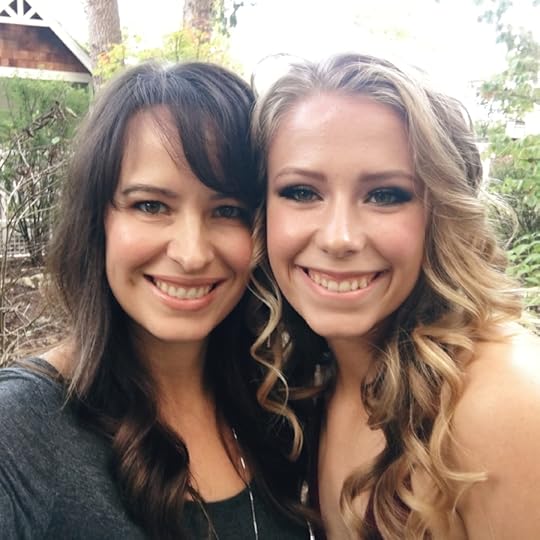
Shauna Gauthier is a self-described psychology buff, a fierce advocate for women all over the globe, an amateur theologian, philosophy lover, existential thinker, perpetual dreamer, mama to 4 little women ever-rising, wife, seeker and warm drink lover. She is a trained therapist from The Seattle School of Theology & Psychology and currently works as their Alumni Outreach Coordinator. Shauna blogs at LittleWomenRising.com about the intersections of motherhood, feminism and faith as she catalogues her own journey raising four fierce daughters. You can also connect with her on Instagram, Twitter and in her Facebook group for Moms of Little Women Rising.
Learn More About A Voice Becoming
October 19, 2017
Start Naming Strength While She's Young
Start Naming Strength While She's Young with Aleah Marsden
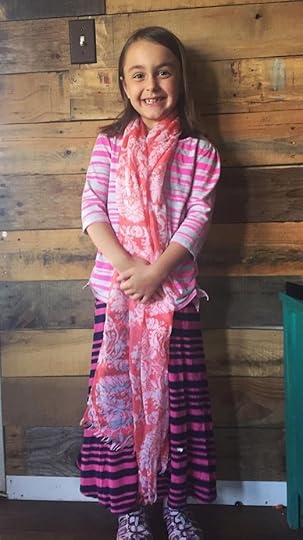
The outfit I have chosen is discarded in the clothes-swamp floor of her room. Jeans and a sensible t-shirt strewn among sparkly dresses, floral skirts, and chunky sequined sweaters. I know this walking down the hallway before I even enter. “We are going to be late,” my voice rises in warning as my footsteps fall heavy on the hardwood floors.
“Done!” She shouts, breathless, as she flings open her door. A whirl of bright mismatched colors, patterns, and textures rush past in a blur. She grabs her red faux leather Minnie Mouse backpack with the giant red bow, then reaches for her hot pink lunch box on the kitchen counter before stuffing it inside her bag. Sighing, I follow her out to the car where her siblings are impatiently waiting for this five year old fashionista. Today I can smirk at the sleeveless sky blue tulle dress she is wearing over denim capris and under a bejeweled pink and yellow long sleeve emblazoned with a unicorn.
Mornings are orchestrated chaos in our home with four kids. The first time she came out wearing a gaudy getup, the second week of kindergarten, I had her march back into her room to change. Without giving much thought to it, this became an almost daily ritual: she ignores what I set out for her, I send her back to her room to change. We will have no divas in this household. While I enjoy an occasional shopping splurge, fashion per se has never been my thing. It seems shallow, vapid. I was the girl with her nose in a book not her closet. What would her teacher think if I sent her out the door in these ostentatious arrays of color and pattern? She would think she didn’t have a mom who cared enough to make her change, that’s what she would think.
My daughter was not going to be seen in public looking like that. Images of parents at the mall with kids in mismatched clothes or outfits that incorporated costume pieces flashed through my mind. No way was I going to be one of those parents who obviously have no control over their children. This was my third child and I had this all sort of figured out now. Better to nip this kind of behavior in the bud early before it’s piercings and crop tops and too much makeup.
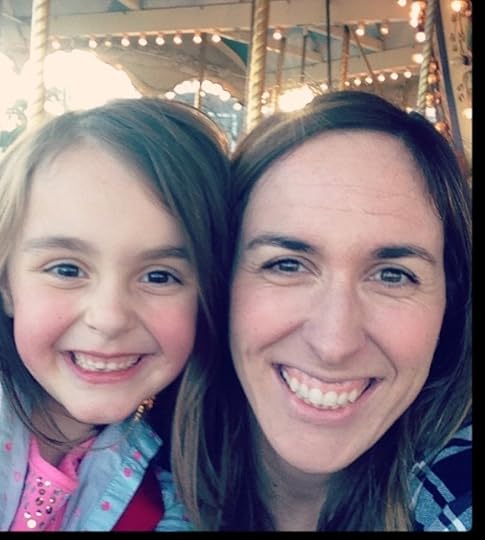
This would likely have been the end of it, except one morning I actually saw her when I told her to go change. I mean, I was aware enough to sense the force that slumped her face and shoulders. She was deflating like the neighbor’s blow up Christmas decorations that look like cartoon corpses out the window on the drive to school. That morning she had paired a festive crimson sweater with a floral applique over a long chocolate shirt with a pink, magenta, periwinkle, and mint floral skirt over dark leggings.
“Kiddo, why do you think this works?!” I’m prodded into questioning by guilt I feel in my gut, while with a sweeping movement of my hand draw attention to her getup.
Her eyes well with tears as she exclaims, “Because dirt! And flowers!” She points to her brown shirt, then the flowers on her skirt and the applique on her sweater. She is frustrated, exasperated, and only five years old.
My heart shatters as it hits bottom in the invisible gulf I hadn’t realized was stretching between us.
There’s no girl too little to hear how important her offering is to God’s kingdom or for her innate passions to be affirmed.
I wrap my arms around her and carry her to the couch. I hold her against my chest as she sits on my lap. And I apologize. I tell her that God has made her to love color and pattern and texture and that is a good thing. It is a beautiful thing. It is a gift. She has been made to know God and make Him known, and maybe one way she gets to do that is through these intricately crafted outfits. I told her that I didn’t get it, but obviously she does and I love the way God made her. I tell her I’m always on her team and I can’t wait to see what she creates next.
Everything about her demeanor changes, becomes radiant with joy. The smile that reaches her tear stained eyes like looking into the sun.
Fear of being judged for my daughter’s fashion decisions almost cost me a much earlier than anticipated opportunity to affirm the God-given creative passion of a kindergartener. We did agree on two ground rules: outfits must be both age and weather appropriate. Three years later and I can’t remember the last time I even attempted to choose clothes for her. I’m forever grateful to the Spirit for giving me eyes to see her in that moment of despair, before a much different memory was made or she internalized the message that her mom thought her passions were silly, unfit to be shared. There’s no girl too little to hear how important her offering is to God’s kingdom or for her innate passions to be affirmed.
~Aleah
Aleah Marsden is a writer, speaker, and storyteller who is passionate about seeing women walk into all the plans God has for them. She finds deep joy in studying scripture and sharing its stories. She strongly believes in encouraging women to choose celebration over comparison; glorifying God and serving others with all their varied gifts.
Aleah's writing can be found in publications like Christianity Today and Books & Culture, an essay in Everbloom (Paraclete Press, 2016) as well as a handful of devotionals in the new NIV Bible for Women: Fresh Insights for Thriving in Today’s World (Zondervan, 2015). She has spoken at numerous women’s events, moms’ groups, and retreats. Connect with her on Facebook, Instagram or Twitter (which is her favorite).
October 11, 2017
Finding True Strength
Finding True Strength with Gina Butz
When I was pregnant with our 2nd child, I prayed for a girl with red, curly hair. I got my wish, apart from the curls. Looking back, I see now I wanted so much more for her than that curly red hair.
I wanted her to live loved, to be confident in who she is, and to find her passion and live it well. I wanted her to love Jesus. I wanted her to be strong.
Even as she came into the world and grew, I was in a process myself of redefining what being a strong woman means.
Strong was a descriptor people had used for me all my life, but not necessarily in a healthy way. They meant, “put together” and “self-sufficient” and “emotionally tough.” Born of years of believing the lie that I am on my own, it was a front I developed to prove my worth.
That kind of strength is impressive, but it isn’t inviting. It made me unapproachable in a way I hated, but the thought of loosening my grip on that image was terrifying. Embracing weakness and mess felt too far in the other direction.
God began to speak to me about finding my identity not in outward strength, but in my position as His child. As I did, I felt my view of strength shift. I believe now that true strength lies in owning our weakness, in being vulnerable enough to let others into our messy places. Weathering trials instead of avoiding them becomes fodder to strengthen us. And true strength is found in being our real selves, and in standing firm in our value as image bearers.
So I have tried to raise my daughter to be strong first by showing her that I am not as strong as she thinks, at least as the world defines it. There’s something heady about presenting an image to our kids of parents who have all the answers, never fail, never doubt. I realized early on that I wanted my daughter to think well of me, but in doing so, she might not see the real me. It would set up a false image she could never attain. Because the truth is, I’m not a perfect mom. I will sin against her. Sometimes (a lot of the time) I don’t know what I’m doing. I don’t have the answers. I fail. I doubt.
I want a daughter who has true strength-not a grit-your-teeth, bear-it-alone strength, but a humble, open, God-dependent strength.
I learned to ask her for forgiveness when I mess up. And when she fails, I remind her that we are both in need of grace. Together, we go to God for what we need. It takes strength to admit where we fail, and to lay ourselves bare for others to receive or not.
Sharing my insecurities with her not only shows her it’s ok to struggle, it gives her permission to share as well. Opening ourselves to others, to show them our tender places, is a great act of strength.
And when my daughter encounters pain, I am learning to let her experience it, rather than shelter her from it. I know how walking through trials has strengthened my character and my faith. I remind her of that when she wants to shy back from trying something out of fear of failure or embarrassment. Strength isn’t found in avoidance but in facing the storms with confidence that God will bring us through.
I’m teaching my daughter that strength is also found in knowing our own voices. It’s been the greatest joy for me to see this girl, who can so easily question the “rightness” of her voice, draw lines in the sand about who she is and what she wants. When she acquiesced to wearing a dress for Easter, but she insisted on pairing it with her mint green Keds, I celebrated. Deciding what is important to her and being true to herself translates to how she responds when the girls her age go in a direction she disagrees with. It takes strength to stand in who you are and what you believe when you feel like you’re swimming against the tide.
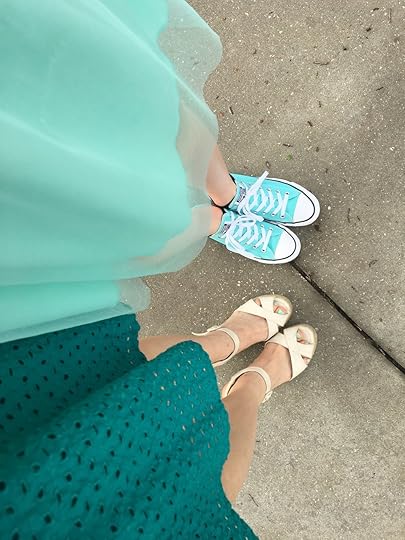
Finally, I hope my daughter knows that strength is not defined by her gender. When she laments that “girls have to do all the hard stuff, like get their periods and have the babies, and we are still viewed as less than boys,” I get the opportunity to tell her again that in God’s eyes, there is no lesser or weaker sex. She is an image bearer. That should cause her to carry her head high.
I want a daughter who has true strength-not a grit-your-teeth, bear-it-alone strength, but a humble, open, God-dependent strength. I want her to find it in owning her weakness, embracing vulnerability, and courageously facing whatever life brings, because she knows the One who carries her. I want her to stand in the strength that comes from knowing who she belongs to, and believing that everything about her is good and divinely inspired. That’s true strength.
~Gina
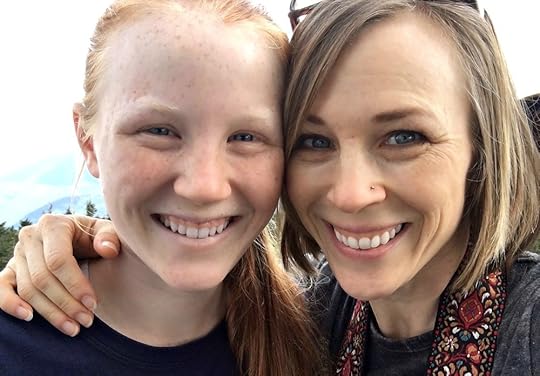
After 13 years overseas, Gina Butz and her husband are currently raising two third culture kids and an imported dog in the exotic land of Orlando, Florida, where they serve in global leadership for Cru. You can connect with Gina on her blog Awakened, and also on Twitter and Facebook.
Learn More about A Voice Becoming