
Bill Loguidice's Blog
November 18, 2026
Replacement mouse pad surfaces for Logitech G POWERPLAY 1 and 2
The original Logitech G POWERPLAY (1), which allowed for seamless wireless charging of a compatible Logitech mouse (example) with the included charging coin, shipped with two mouse pad surfaces. One was a hard surface for speed, and the other was a cloth surface for precision. The only model available now, Logitech G POWERPLAY 2 (my previous review), only ships with a cloth surface. Logitech was never clear about replacement mouse pads, but fortunately, I can provide the final word.
After wearing out my original hard surface on my POWERPLAY 1 on my daily driver desktop PC, which included many sessions of Fortnite, I ordered the Logitech G440 Hard Gaming Mouse Pad, which is a 1:1 replacement. It even works just fine with the POWERPLAY 2, which is what I use for my day job’s mouse pad. The Logitech G240 Cloth Gaming Mouse Pad is the compatible cloth replacement.
Note that while the replacement mouse pads are 1 mm thicker than the original POWERPLAY mouse pads (3 mm versus 2 mm), they don’t affect the charging! The only other difference between the hard mouse pad included with the POWERPLAY 1 is that the G in the lower right corner is grey instead of white, which is the same for the cloth. Oh well.
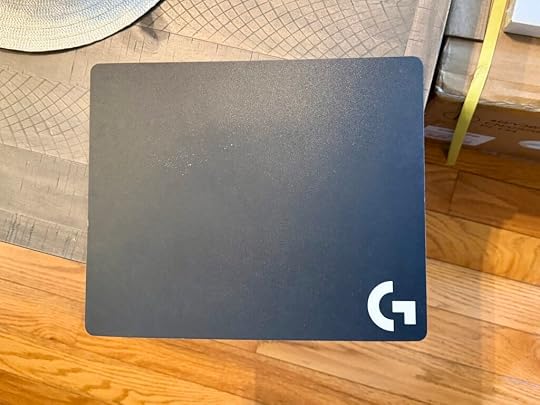 My worn out Logitech G POWERPLAY hard surface.
If only Logitech would do the same for the charging coin. Instead, at this time, they make you buy a whole other POWERPLAY 2 unit to get another charging coin! Finally, if you’re replacing your mouse surface, you’ll probably want to replace the mouse feet skates as well.
The post Replacement mouse pad surfaces for Logitech G POWERPLAY 1 and 2 appeared first on Armchair Arcade.


November 17, 2026
XREAL xbx a01+ review: The lightweight champion in video glasses
For anyone tired of squinting at their phone or lugging around a portable monitor, the new XREAL xbx a01+ AR glasses offer a compelling solution. Designed to transform downtime into a personal cinema experience, these glasses represent a major shift in focus for the AR space. Instead of aiming to replace a primary monitor with high-end spatial computing, XREAL’s new sub-brand prioritizes extreme comfort, portability, and excellent visual fidelity at an aggressive budget-friendly price for the category.
Price and what’s includedThe XREAL xbx a01+ is available from Amazon and the official XREAL store for $299.00.
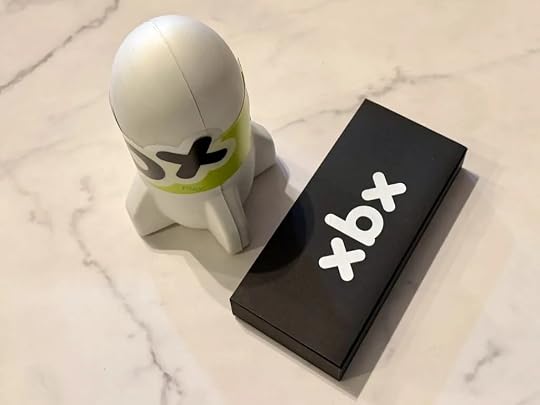 XREAL xbx a01+ packaging.
In the box is:
The xbx a01+ AR glasses unit.A USB-C to USB-C DisplayPort cable.Three sets of nose pads (S/M/L).A protective carrying case.A cleaning cloth and a removable blackout lens shade.A quick start guide and warranty card.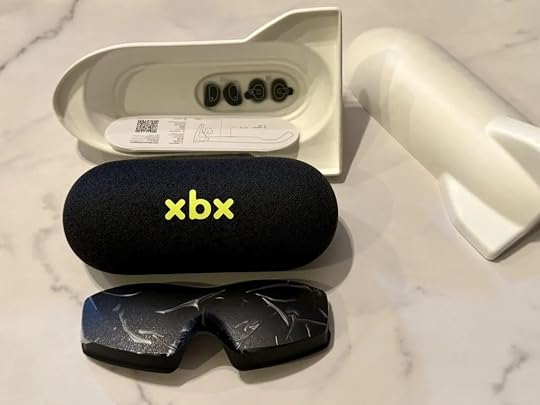 XREAL xbx a01+ packaging.
The fun rocket ship packaging and lime green cable let you know that this is meant more for fun than productivity. As is standard for glasses of this type, there’s no battery, so expect a power draw of 5V/1A from the host device over USB-C, and devices that don’t have DisplayPort over USB-C, like older Lightning iPhones, for example, require a specific adapter. Prescription inserts are available from XREAL at a $149.90 list price, although these are often on sale. IPD range is 54.5–74.5mm, which should fit most eye distances.
 XREAL xbx a01+ package contents.Features and design: Unmatched portability
The XREAL xbx a01+ glasses are a striking departure from typical bulky AR hardware, looking and feeling much more like a regular pair of sporty sunglasses. At a light 2.19 ounces (62 grams)—which drops to just 1.98 ounces (56 grams) if you detach the front frame—XREAL bills them as the lightest AR glasses on the market, offering greater comfort for extended viewing sessions. The design includes flexible temples and adaptive hinges that adjust to your head shape, eliminating the tight squeezing feeling common in heavier headsets.
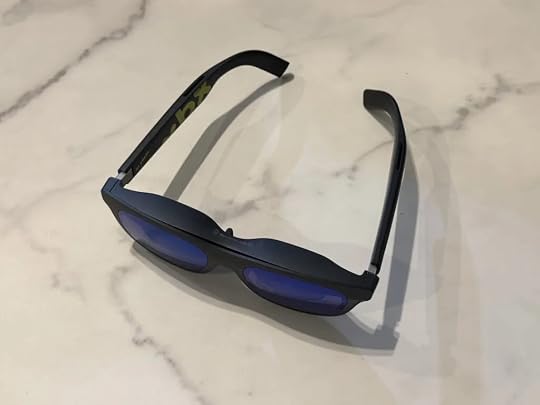 XREAL xbx a01+
One of the defining features of the a01+ is its modular front frame. Unlike more expensive options that use built-in electrochromic dimming, XREAL opted for removable front frames and blackout shades. This not only cuts down on weight but makes the glasses incredibly versatile. Removing the front shade completely provides an unobstructed view of your real-world surroundings, turning the glasses into a fantastic, transparent heads-up display (HUD) for multitasking alongside a physical monitor. If you want total immersion, you simply snap on the included blackout shade. Furthermore, the glasses house an impressive dual Micro-OLED setup that pushes a 147-inch virtual screen at a perceived distance of 4 meters, boasting a wide 50-degree field of view.
Performance: Brightness and stabilization win the dayWhen it comes to visual fidelity, the a01+ punches well above its weight class. The 1080p Micro-OLED displays can reach a class-leading peak brightness of 1,600 nits, ensuring the screen remains vibrant and legible even in bright, sunlit rooms. Coupled with native HDR10 support and an AI-driven real-time SDR-to-HDR upscaling feature, colors pop with incredible saturation and contrast. Whether you’re plugging them directly into a Steam Deck, a smartphone, or a laptop via the USB-C connection, the resulting image is sharp, colorful, and highly immersive.
The most surprising performance addition at this price point is the onboard spatial stabilization algorithm. While the glasses don’t feature native “3DoF” to pin the screen to a fixed point in the room out of the box, they utilize a 1,000Hz head-tracking smooth-follow system. This gently glides the screen into your view when you move your head, greatly reducing the jitter and motion sickness typically associated with basic 0DoF tracking. However, it’s important to note that this stabilization feature requires a 120Hz output source to function correctly. One trade-off worth knowing is that native HDR10 tops out at 90Hz, so stabilization switches off in that mode. AI-HDR is the one that pairs with stabilization at 120Hz.
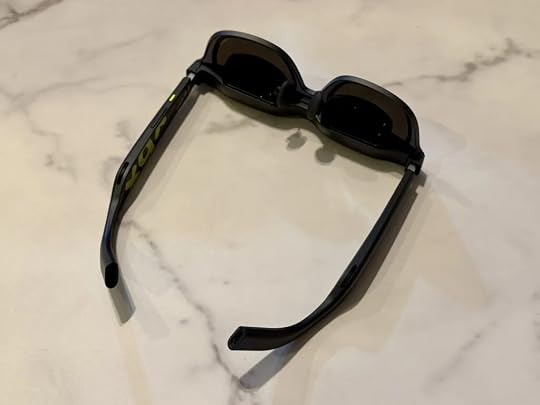 XREAL xbx a01+
Audio is handled by open-ear directional speakers with four listening modes (Spatial, Cinema, Balanced, and Private), providing decent clarity. You’ll still want your favorite Bluetooth earbuds for serious movie-watching, however.
And speaking of movies, I ended up watching the last two Tom Cruise Mission: Impossible films on these glasses (with good AirPods, naturally) and never once felt I was missing out. These glasses make a great alternative to a high-end big screen TV for when one isn’t available or you simply want to lay back and relax.
What about the competition?The AR glasses market around the $300 mark is highly competitive, with the RayNeo Air 4 Pro being the most direct challenger. While both sets of glasses share a 1080p resolution, a 120Hz refresh rate, and a $299 price tag, the XREAL xbx a01+ edges out a victory in a few key areas. The a01+ features a wider 50-degree field of view compared to the Air 4 Pro’s 46 degrees, so the image fills more of your vision, though the two brands quote screen size at different distances (147 inches at 4 meters vs. 201 inches at 6 meters), so the inch figures aren’t directly comparable. Additionally, the XREAL glasses are significantly lighter at 2.19 ounces (62 grams) compared to the RayNeo’s 2.68 ounces (76 grams), greatly improving long-term comfort. The Air 4 Pro may offer slightly deeper bass in its audio profile, but the a01+ counters with higher peak brightness and unparalleled front-frame customization.
Should you buy the XREAL xbx a01+?The XREAL xbx a01+ is an easy recommendation for anyone looking to enter the wearable display market or seeking an exceptional secondary monitor and mobile HUD. By stripping away costly features like electrochromic dimming in favor of lightweight comfort, massive brightness, and a surprisingly capable smooth-follow stabilization system, XREAL has created a standout product. They’re comfortable enough to wear all day, powerful enough to make games and movies look incredible, and priced aggressively for the everyday consumer.
Pros:
The ultra-lightweight 2.19 ounces (62g) design provides class-leading comfort for extended viewing sessions.The 1,600-nit peak brightness and native HDR10 support deliver incredibly vibrant and crisp visuals.The removable front frames and shades allow for high customization and excellent real-world visibility when multitasking.The smooth-follow stabilization greatly reduces screen jitter and motion sickness, provided you have a compatible device.Cons:
The spatial stabilization requires a 120Hz source to activate, which may exclude some older devices.The onboard speakers, while functional, lack deep bass and can’t replace dedicated headphones for cinematic audio.The glasses don’t offer true 3DoF screen anchoring out of the box without purchasing additional accessories like the $199 Beam Pro.Score: 8 (out of 10)[Armchair Arcade and fullSTEAMahead365 review scale]
The post XREAL xbx a01+ review: The lightweight champion in video glasses appeared first on Armchair Arcade.
November 16, 2026
BenQ ScreenBar Max review: Bright light, big light
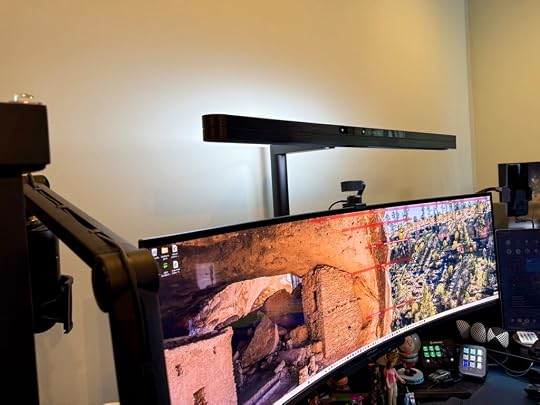
There’s nothing subtle about the BenQ ScreenBar Max. It’s big, bold, and unapologetically massive, built specifically to dominate a serious desktop workstation. When the long, flat carton arrives—measuring 36.2 x 14.2 x 3.8 inches (91.9 x 36.1 x 9.7 cm)—you immediately realize you need to clear some serious space. Assembled, the lamp spans 33.5 inches wide and stands up to 29.7 inches tall (85 x 75.5 cm), demanding that you measure carefully before setup. While it’s marketed primarily for dual-monitor configurations, my Razer Aether Monitor Light Bar recently bit the dust, leaving me in need of a high-end replacement for my main desktop featuring a massive INNOCN 49-inch ultrawide display. Even though I’m not using it strictly as intended, that expansive ultrawide easily equals the footprint of many multi-monitor arrays, making this giant light bar right at home.
Price and what’s includedThe BenQ ScreenBar Max is available from BenQ and major retailers like Amazon for $289.00.
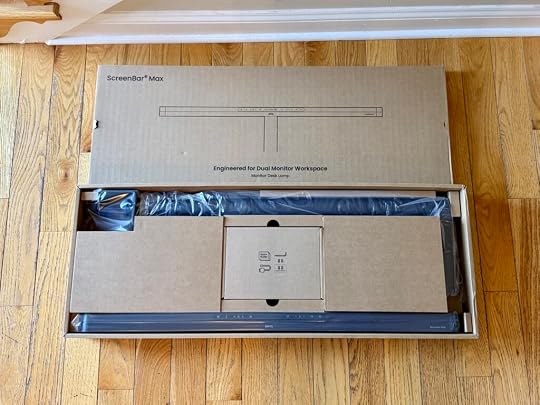 BenQ ScreenBar Max
In the box is the light bar unit, the heavy-duty vertical telescoping arm with an integrated desk clamp, a power supply with a nice fabric-covered cord, an Allen key, and a few small hex screws. Notably, if you prefer not to use the desk clamp, BenQ also sells an optional base separately for $39.
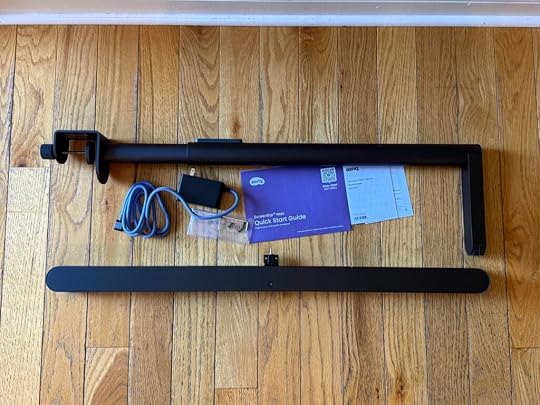 BenQ ScreenBar MaxFeatures and design: All the lighting basics are covered
The overall quality of this light is undeniable, featuring a robust build composed of aluminum alloy, high-grade plastics, and a solid clamping mechanism. Because of the ASYM-TriZone optics and their 36-degree cutoff angle, you never see the light source directly, meaning you’re never blinded even when cranking the brightness up to 100%.
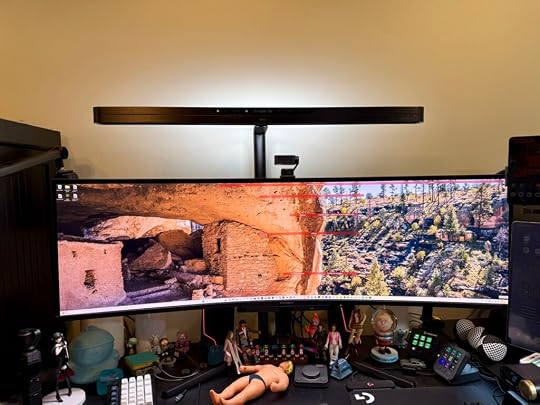 BenQ ScreenBar Max
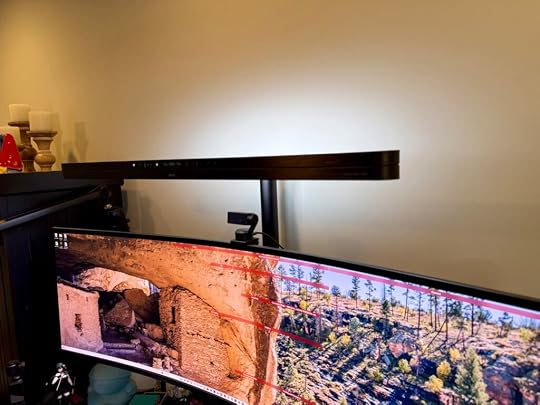
You can slide the light bar forward and backward smoothly to position it where you need it, extending from a retracted mode of 6.8 inches (17.3 cm) out to 11 inches (28 cm) from the back. However, adjusting the height is more rigid as it offers a limited range across BenQ’s three fixed height settings (21.6, 24.8, or 27.9 inches), which requires manually loosening and securing two screws with the included Allen wrench. If you’re like me and don’t have easy access to the back of your desk, this is not something that’s easy to adjust.
 BenQ ScreenBar MaxPerformance: Bright when needed
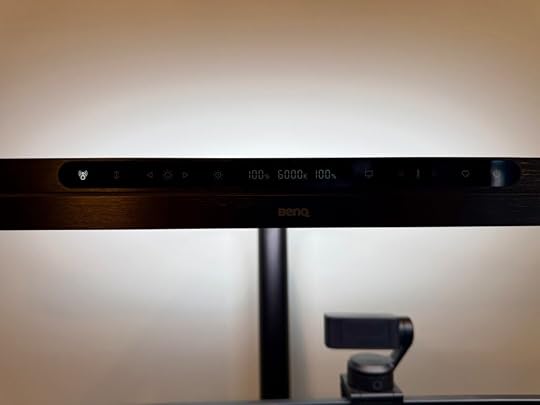
The lighting performance is exceptional, delivering up to 1,400 lux at the center of the desk and covering 53.1 x 22.8 inches (135 x 58 cm) at 500 lux. You can effortlessly manage your settings across three modes, including Auto-Dimming Mode (using the ‘A’ sun icon), Screen-Reading Mode, which shifts to a neutral 4000K, and Favorite Mode to lock in your custom preferences. For me, that favorite mode is permanently locked at 6,000K and 100% brightness.
 BenQ ScreenBar Max
The light is clean, evenly distributed, and prevents eye strain during extended work or gaming sessions. The rear ambient backlight is the other half of the story — a second LED array that washes the wall behind your monitors with light, cutting the contrast between bright screens and a dark room, with its brightness controlled independently of the front light. The presence sensor is just as useful: the lamp turns on when you sit down and shuts itself off three minutes after you leave. That said, given its massive physical footprint and the fact that the desk clamp is required out of the box unless you buy the optional base, you should absolutely make sure it’s a good fit for your space and workstation layout before investing — the clamp fits desks up to 2.4 inches thick and needs about 2.4 inches of clearance underneath.
 BenQ ScreenBar MaxWhat about the competition?
When stacked against smaller monitor-mounted bars or dual independent light bars, like running two separate units, the ScreenBar Max offers a much cleaner, unified aesthetic without cluttering the top of your displays. While options like the ScreenBar Halo series clip directly to individual monitors, the Max takes a completely different, desk-mounted approach designed to blanket massive or multi-monitor workspaces with a single, harmonious wash of illumination.
Should you buy the BenQ ScreenBar Max?The BenQ ScreenBar Max is a premium product requiring a premium investment, but it delivers the build quality and performance to back up its high-end price tag. Otherwise, it’s an easy recommendation if you need a heavy-duty, wonderfully even lighting solution for an expansive desktop setup.
Pros:
Phenomenal, even lighting coverage across massive ultrawide or multi-monitor desks.Premium build quality utilizing durable aluminum and solid construction.The 36-degree cutoff angle completely eliminates direct glare and eye blinding, even at maximum brightness.Convenient sliding rail lets you easily adjust the depth of the light bar forward and backward.Cons:
Sky-high price makes it a big investment.Massive physical footprint requires careful workspace measuring beforehand.Height adjustments are restricted to fixed positions using screws rather than a fluid, on-the-fly mechanism.Desk clamp is required out of the box unless you purchase the optional $39 base separately.Score: 7 (out of 10)[Armchair Arcade and fullSTEAMahead365 review scale]
The post BenQ ScreenBar Max review: Bright light, big light appeared first on Armchair Arcade.
November 14, 2026
Carrera GO!!! Mario Kart Slot Car Racing Set review: Real world racing fun
The Mario Kart universe has provided countless hours of couch-screaming, head-to-head competitive joy, and translating that energy into a physical toy is a smart move. The Carrera GO!!! Mario Kart Slot Car Racing Set takes the iconic rivalry of Mario and Luigi off the screen and puts it right on your living room floor for high-speed action.
Price and what’s includedThe Carrera GO!!! Mario Kart Slot Car Racing Set (item 20062491) lists for $129.99 direct from Carrera, or just under $100 from Amazon.
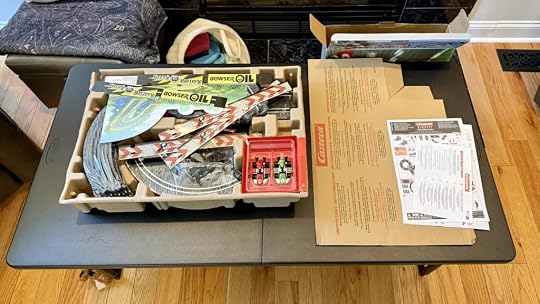
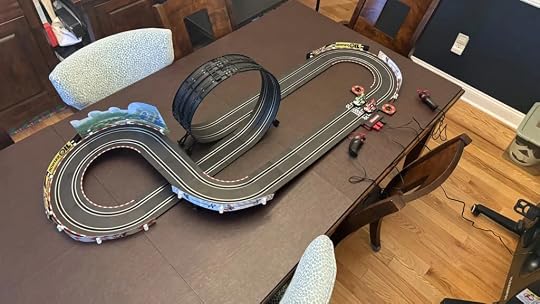
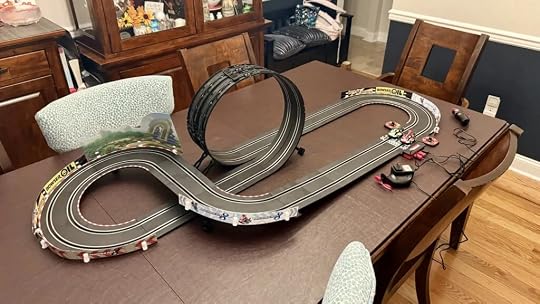
In the box is 16.07 ft (4.9 m) of track — straights, curves, a loop, and an overpass — plus a mechanical lap counter, two 1:43-scale officially licensed cars (Mario and Luigi), two wired speed controllers with turbo buttons, and a plug-in transformer. It includes everything you need for two player races.
 Carrera GO!!! Mario Kart Slot Car Racing Set
 Carrera GO!!! Mario Kart Slot Car Racing Set
Taking all of this stuff out of the box proves a bit intimidating, and the instructions aren’t the best if you’re not an experienced slot car builder, but with lots of patience, I was able to figure it out. The alphabetically-labeled parts certainly helped. As usual for me, an assistant was a must, but this can easily be a solo build. Of the three possible designs, I chose to build the one featured on the box with the loop.
I started out building it on a small four-foot-long table, but I soon realized the actual scale of the thing, so assembly and its ultimate temporary resting place ended up on our far more expansive dining room table. Again, this was a genuinely challenging build for me, and I don’t consider this a beginner’s set in either setup, size, or play, which you can probably tell from the premium price. However, there are far more advanced, and expensive, kits out there, so that’s likely more my beginner perspective than objective reality.
Features and design: Scaled-down Mushroom Kingdom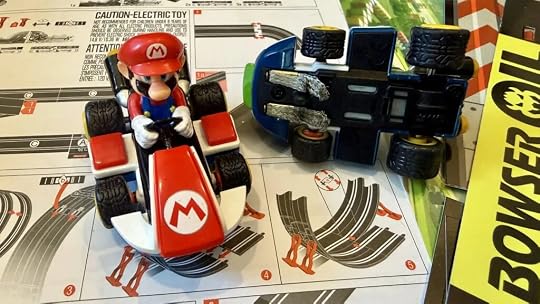 Carrera GO!!! Mario Kart Slot Car Racing Set
The Carrera GO!!! system is the company’s 1:43-scale analog slot car line, aimed at kids ages 6 and up. The cars feature high-quality tampo-printing to capture the authentic look of the characters, and each one is fitted with double contact brushes and down-force magnets that help it hold the track through corners. The magnets help, but they don’t do all the work — clearing the loop still comes down to speed, which is where the skill lives, as does managing the sharp turns. When fully assembled, the layout commands a 5.18 ft (158 cm) by 2.23 ft (68 cm) footprint, and the whole ecosystem is expandable, so you can add track sections, cars, and accessories over time. For me, however, it was plenty big enough as-is. As usual with something of this size, you’ll want to plan where it will live or be stored.
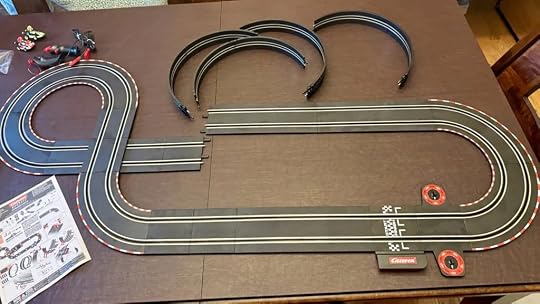 Carrera GO!!! Mario Kart Slot Car Racing Set
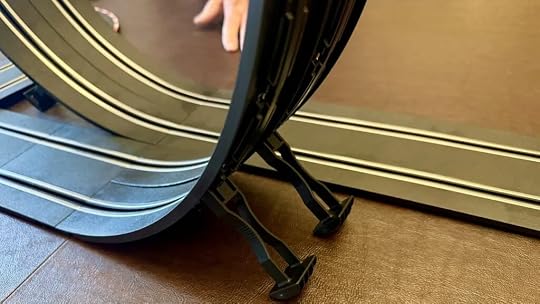 Carrera GO!!! Mario Kart Slot Car Racing Set
 Carrera GO!!! Mario Kart Slot Car Racing Set
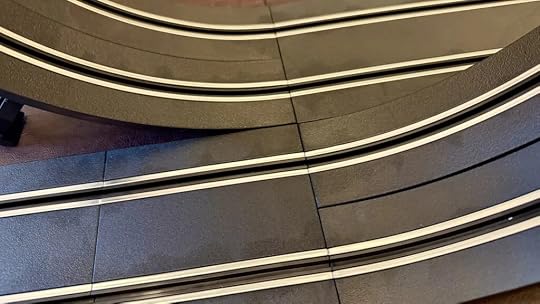 Carrera GO!!! Mario Kart Slot Car Racing SetPerformance: Electric thrills and loop-de-loops
The plug-in electric system delivers smooth, consistent racing without the battery drain that plagues competing toy tracks. Carrera rates the cars at scale speeds of up to 370 mph (595 km/h) down the straightaways.
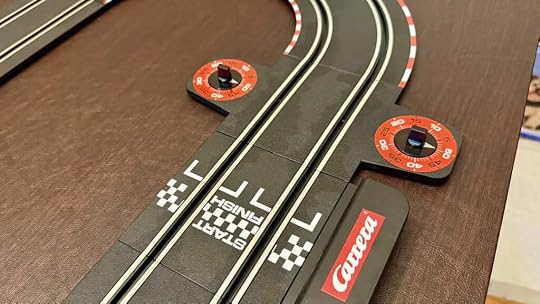 Carrera GO!!! Mario Kart Slot Car Racing Set
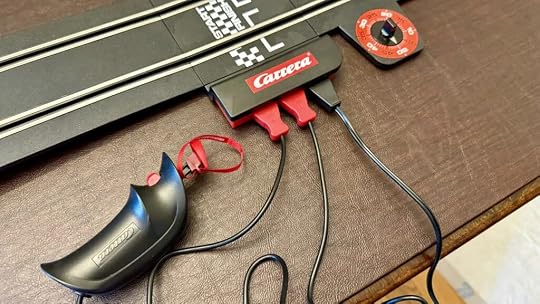 Carrera GO!!! Mario Kart Slot Car Racing Set
Mastering the track takes practice: you’ve got to have enough velocity going in, or hit the turbo boost button on the hand controller with precise timing, to carry enough speed through the loop, then back off quickly enough to hold the next curve. For younger or less experienced racers (like me), each controller ships with a removable governor tab that limits how far the trigger travels, capping top speed while building coordination and learning timing. Pull the tab out once you’ve got the hang of it and the full speed is there, although even with the governor, as seen in the video, it’s still plenty fast.
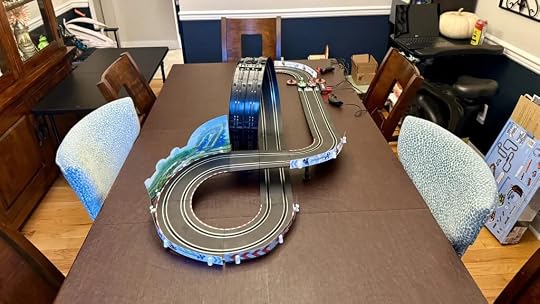 Carrera GO!!! Mario Kart Slot Car Racing SetCarrera GO!!! Mario Kart Slot Car Racing SetShould you buy the Carrera GO!!! Mario Kart Slot Car Racing Set?
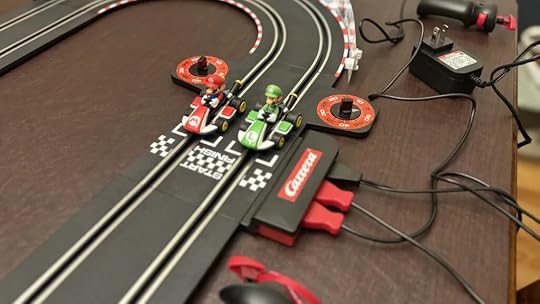 Carrera GO!!! Mario Kart Slot Car Racing Set
The Carrera GO!!! Mario Kart Slot Car Racing Set is an engaging gift for Mario Kart fans and an excellent introduction to a higher performing level of hobbyist slot car racing. It offers tangible, fast-paced competition with high replay value thanks to the analog lap counters, which themselves require a good bit of speed to clear. Just know that kids at the younger end of the 6-and-up range will likely need an older hand at first as the speed control genuinely takes real practice.
 Carrera GO!!! Mario Kart Slot Car Racing Set
 Carrera GO!!! Mario Kart Slot Car Racing Set
Pros:
The plug-in electric power system eliminates constant battery replacements, allowing longer, uninterrupted play sessions.The turbo boost buttons add an active element of skill — nailing the loop takes real timing.The 1:43-scale track is fully expandable, so you can keep upgrading the layout with new sections, characters, and accessories.The mechanical lap counter (up to 50 laps) keeps head-to-head races honest without any app or screen.Cons:
The high scaled speeds mean cars can easily fly off the track, which is a real learning curve for beginners.The layout demands a fair amount of dedicated space, measuring over 5 ft (1.5 m) long when assembled.As with most sets of its type, the loop joints and car contacts need occasional attention to stay reliable.Score: 8 (out of 10)[Armchair Arcade and fullSTEAMahead365 review scale]Carrera GO!!! Mario Kart Slot Car Racing Set
The post Carrera GO!!! Mario Kart Slot Car Racing Set review: Real world racing fun appeared first on Armchair Arcade.
November 11, 2026
AI’s second act in retro gaming: Fixing the games we already have
Third in a series. Part one: Why AI in retro gaming and computing isn’t the end of the world. Part two: AI won the argument: The new reality of retro and modern game development.
The good, the bad, and the games that deserved betterCheckered Flag on the Atari Jaguar was supposed to show off what the hardware could do. Instead it came out in 1994 running at a frame rate you could count on your fingers. The handling felt like steering a shopping cart across an ice rink. It got reviewed accordingly and has been a punchline ever since.
Now there’s a 2026 patch — Checkered Flag GOOD EDITION — that keeps the original game and swaps out the race itself for a brand new engine. Same title screen, menus, options, tournaments, results screens, and all ten tracks. Same tracks, scenery, cars, skies, cockpit, music, voice, and sound effects, all taken from the original cartridge. It just finally runs the way it should have. You get 30 frames per second on real, unmodified Jaguar hardware.
Checkered Flag GOOD EDITION Patch for Atari JaguarI like this type of mod. In my opinion, it takes some of the stigma off the Jaguar. It shows original library games can perform reasonably well with proper optimizations. It still looks pretty bad, of course. The polygonal pop-in is especially noticeable. However, I think optimizing existing games is a good use of AI on any platform.
The objection, taken seriouslyNot everyone agrees. The disagreement is worth taking seriously. In the same AtariAge thread, Gedalya put it plainly. He doesn’t care much for modded commercial releases. He’d rather see that energy invested in a new game. He means both the modder’s energy and the player’s.
He’s not wrong that new games matter. The homebrew scene is the lifeblood of these platforms. A brand new game built from scratch is almost always a bigger creative achievement than a patch. But it’s not an either-or choice. It never has been. The people optimizing old games and building new ones are often the same people. They learn the same hardware and use the same tools. The skills transfer. The audience transfers, too. A player who comes back to the Jaguar because Checkered Flag finally plays properly might try the next homebrew release.
There’s a second point hiding in the objection. I keep coming back to it. A bad original release doesn’t prove the hardware was bad. It proves the developers were rushed, inexperienced, or working with tools that weren’t ready. Checkered Flag was one of Rebellion’s first console games, built by a small startup team under contract. A patched version running at 30 frames per second on the same silicon changes the story. The Jaguar wasn’t the problem. The execution was. Rehabilitation like this adds nuance to the historical record. It’s the difference between a platform remembered as a complete failure and a platform remembered as an opportunity its developers never quite got to use.
That’s the same argument I made in the second essay in this series. It was about Budfolk’s Super Mario 64 port running on the Jaguar. The point wasn’t that Nintendo’s game belongs on Atari’s console. The point was that the Jaguar could do far more than its commercial library ever showed. Optimizing existing games makes that case with the library itself, no port required.
One honest caveat. I haven’t verified whether AI was actually used to build this particular patch. The video and forum posts don’t say that. I would be shocked if it wasn’t. My argument doesn’t depend on it, however. Optimization is a good use of AI whether or not this specific project used it. The patch is the clearest recent example of what optimization can do for a maligned game.
The double standardThe other half of this story comes from the TRS-80/Tandy CoCo AI Learning Center on Facebook. Moderator Alex Redman wrote about the negative signaling around AI in the main CoCo group. His observation is a sharp one. People support plenty of other things with the same environmental profile without a second thought. When it comes to intelligence other than their own thinking, they become militant. At the very least, they’re willing to ask all the hard questions. There’s also an expectation, he wrote, that we’d all stop using AI as soon as possible. Then things can go backwards again to “member-berries.”
He’s right, and it’s not just the CoCo community. As Craig Marshall pointed out in the same thread, Google has had massive data centers for years. Everyone has been quite happily using their Google apps, Amazon, and Azure. It’s a shift in the market, not a new sin. Electricity was already being burned. The outrage arrived only when the thing burning it got a name people could argue with.
That’s the tell. The criticism is selective. People are furious about AI but silent about everything else with the same footprint. This means it’s not really about the footprint. It’s about the unfamiliar. It’s about who gets to decide what’s legitimate. Nostalgia is a fine thing until it becomes a veto. A veto means nothing new, nothing changed, and everything stays exactly the way you remember it. The past was never that good. Going backwards isn’t a plan.
AI as teacher, not just authorThere’s a quieter thread in that same CoCo discussion. It might be the most important one for the future of retro computing. Mike Notarnicola described using AI as a teaching tool. He knew very little about C++ and used AI to build several projects. Now he is getting more familiar with coding. He tells AI what the bug is and gets hints about the problem. This lets him find it himself. They work together to come up with a solution instead of having AI just write a new piece of code to fix it.
That’s the version of AI use that rarely makes it into the arguments. It’s not the machine writing the game for you. It’s the machine sitting next to you while you learn to write it yourself. That’s the difference between a calculator doing your homework and a tutor checking your work. The retro scene runs on people teaching themselves obsolete hardware. They rely on fragmentary documentation and half-remembered tricks. A patient tutor that never gets tired of explaining the same register twice is genuinely useful here. The purists who object to AI-written code should love this version of it. It’s the one that produces more human programmers, not fewer. Will AI eventually replace human programmers entirely? Maybe. But we have a way to go before that happens.
The through-lineI’ve discussed, and written about, this topic a lot. My core point has always been that a technology like this is not going to just go away because people don’t like it. It’s here to stay. As such, we need to work with it responsibly and thoughtfully rather than try and ignore it.
The first essay in this series was about AI creating new retro games and apps — the good and the bad. The second was about AI winning the argument, in new creation and in modern development. This one is about the work after the argument. It’s about fixing what’s already here. It’s about teaching the next person who wants to learn. And it’s about refusing to pretend the past was perfect.
That work isn’t glamorous. It’s a framerate fix on a thirty-two-year-old racing game. It’s a hint about a C++ bug instead of a finished program. It’s a thread full of people arguing about whether any of it counts. But it’s real, it makes old things better, and it makes new people capable. That’s enough. And that’s more than enough until the next challenge we need to dissect.
 Exploring how developers and AI tools collaborate to breathe new life into vintage platforms. (Obligatory AI image.)
The post AI’s second act in retro gaming: Fixing the games we already have appeared first on Armchair Arcade.
November 10, 2026
My Arcade Atari Gamestation Mega – Complete 200+ game list!
The My Arcade Atari Gamestation Mega is a compact tabletop unit with a variety of controls that features over 200 games. It follows hot on the heels of the earlier Atari-licensed Gamestation Go (portable) and Gamestation Pro (console).
Designed as a premium tabletop arcade experience, the Gamestation Mega stands out by packing a 10.1-inch high-resolution display into a classic wood-trimmed cabinet. The real draw, however, is its comprehensive all-in-one control deck—featuring mechanical buttons, a keypad, a paddle, and a trackball—making it uniquely equipped to handle Atari’s diverse arcade and console catalogs authentically. It also includes SmartGlow technology, which dynamically illuminates the specific controls needed for whatever game you’re currently playing. Rounding out the hardware are modern quality-of-life additions, including built-in Wi-Fi for firmware updates, save game support, additional controller support, and HDMI output for taking the action to a larger screen.
Here’s the full game list:
ATARI 26003-D Tic-Tac-ToeAdventureAdventure IIAir-Sea BattleAquaventureAsteroidsAtari Video CubeBasic MathBasketballBerzerkBowlingBreakoutCanyon BomberCentipedeChampionship SoccerCircus AtariCombatCombat TwoCrystal CastlesDark ChambersDemons to DiamondsDesert FalconDodge ’EmDouble DunkFlag CaptureFootballFrog PondGolfGravitarHangmanHaunted HouseHome RunHuman CannonballIndy 500 (spinner!)Maze CrazeMillipedeMiniature GolfMissile CommandMotoRodeoNight DriverOff the WallQuadrunRadar LockRealSports BaseballRealSports BasketballRealSports BoxingRealSports FootballRealSports SoccerRealSports TennisRealSports VolleyballSaboteurSave Mary!Secret QuestSky DiverSlot RacersSolarisSpace WarSprint MasterSteeplechaseStunt CycleSubmarine CommanderSuper BaseballSuper BreakoutSuper FootballSurroundSwordquest: EarthworldSwordquest: FireworldSwordquest: WaterworldVideo CheckersVideo OlympicsVideo PinballWarlordsYars’ RevengeATARI 5200 (keypad!)CentipedeMeebzorkMillipedeMissile CommandRealSports BaseballRealSports BasketballRealSports SoccerRealSports TennisATARI 7800AsteroidsBasketBrawlCentipedeDark ChambersDesert FalconFatal RunFood FightMotorPsychoNinja GolfRealSports BaseballScrapyard DogATARI ARCADEAgent XAsteroidsAsteroids DeluxeAtari BaseballAtari FootballAtari SoccerBasketballBerzerkBlack WidowCanyon BomberCentipedeCloud 9Crystal CastlesDominosDrag RaceFood FightFrenzyGravitarI, RobotLiberatorLunar LanderMajor HavocMillipedeMissile CommandMonte CarloNight DriverPool SharkRed BaronRunawaySkydiverSky RaiderSpace DuelSuper BreakoutSuper BugTempestWarlordsATARI RECHARGED (modern)Asteroids: RechargedBerzerk: RechargedBreakout: RechargedCentipede: RechargedMissile Command: RechargedM-NETWORK (Atari 2600)Air RaidersInternational SoccerSea BattleSpace AttackSuper Challenge BaseballSuper Challenge FootballBALLS OF STEEL (modern)7 Pinball tables (Barbarian, Centipede, Darkside, Devil’s Island, Firestorm, Missile Command, Mutation)PAC-MANPAC-MAN (Atari 2600)PAC-MAN (Classic mode)PAC-MAN (Speed up mode)JALECO 8-BIT (NES)Bases LoadedBases Loaded IIBases Loaded 3Bases Loaded 4Battle Unit ZeothCity ConnectionFortified ZoneGoal!HoopsPinball QuestRacket AttackTotally RadJALECO 16-BIT (SNES/SFC)Brawl BrothersGoal!Hammerlock WrestlingOperation Logic BombRival Turf!The Ignition FactorThe Peace KeepersTuff E NuffJALECO ARCADE (various)AerobotoArgusAvenging SpiritBig StrikerChimera BeastCisco HeatCruisinCybattlerExerionField CombatKick OffNinja KazanP47: The Phantom FighterParallel TurnPlus AlphaRod LandSaint DragonSky FoxSoldamThe AstyanaxPIKO 8-BIT (NES/FC)8 EyesBad Street BrawlerDash GalaxyFree FallMermaids of AtlantisMetal MechMotor City PatrolNightshadePIKO 16-BIT (Sega Genesis/Mega Drive, SNES/SFC)Brave Battle SagaJim PowerThe HumansThunderbolt IITop RacerTop Racer 2Top Racer 3000Water MarginPIKO ARCADE (Unico, Galeco, Playmark)Fancy WorldLucky BoomManiac SquareWorld Rally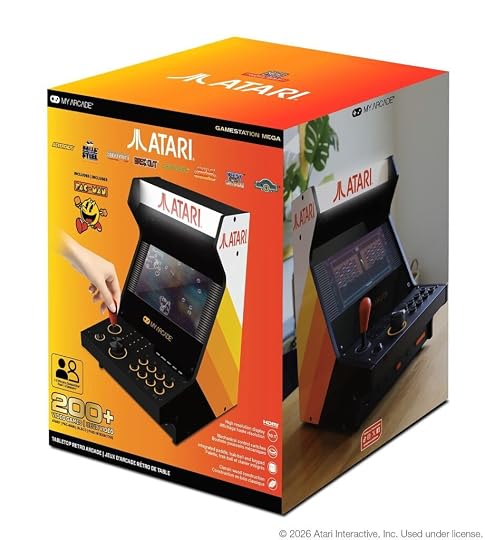 My Arcade Atari Gamestation Mega
The post My Arcade Atari Gamestation Mega – Complete 200+ game list! appeared first on Armchair Arcade.
November 6, 2026
GTA VI release day: Which US states are riding the hype train?
It’s been a massive 13-year wait, but the release of Grand Theft Auto VI is finally hitting our consoles on November 19, 2026. While some of us have been keeping busy preserving classic 6502 assembly games or dialing in our custom PC rigs, the mainstream gaming world has been holding its collective breath for Rockstar’s latest opus.
A new study by the esports magazine Esportnow gives us a fascinating look at where the hype is hitting the hardest here in the US. By analyzing Google Keyword Planner data over the past 12 months for terms like “GTA 6” and “GTA VI release date,” they’ve ranked the states with the highest monthly search volumes per 100,000 residents.
Here in New Jersey, we’re sitting at a respectable 14th place with 825 searches per 100,000 people. But the real hype capital of the country? That’d be New York.
The top three states practically vibrating with anticipation are:
New York: 971 monthly searches per 100,000 people.Nevada: 965 monthly searches per 100,000 people.Illinois: 953 monthly searches per 100,000 people.The rest of the top 10 rounds out with Georgia, Virginia, a tie between Maryland and North Carolina, Texas, Massachusetts, and Washington. On the flip side, states like Idaho and Wyoming couldn’t care less, anchoring the absolute bottom of the list.
Honestly, considering the historical impact of these mega-releases, a spokesperson for Esportnow made a great point: we’re probably going to see a massive spike in “sick days” on November 19, much like we did when Red Dead Redemption II launched. It’s a phenomenon that reminds me of the classic days when people would line up for midnight releases at retail stores, just with a modern digital twist. If you’re a manager, maybe don’t expect a fully staffed office that Tuesday.
Instead of pasting those massive data tables into the post, I’ve generated some infographics below that summarize the data for our readers:
 The top 10 US states riding the GTA VI hype train, ranked by average monthly search volume per 100,000 residents.
 A nationwide heatmap visualizing the concentration of excitement for the upcoming GTA VI release across the United States.
The post GTA VI release day: Which US states are riding the hype train? appeared first on Armchair Arcade.
November 5, 2026
LiberNovo Omni Pro earns United States Ergonomics certification
Following up on our earlier hands-on testing with the LiberNovo Maxis Airflow chair, LiberNovo has announced that its flagship LiberNovo Omni Pro has officially earned Ergonomic Product Certification from United States Ergonomics. As someone with a bad lower back, ergonomics are near and dear to my heart.
Rather than relying purely on marketing claims, the certification process involved independent laboratory evaluations conducted with 18 participants, alongside at least a month of extended real-world home and office use. The testing regimen covered anthropometric fit, pressure mapping across the seat and backrest, electromyography (EMG) muscle activity tracking, and structured two-hour sitting tasks.
According to the testing data provided in the announcement:
Comfort & Adjustability: Participants rated the chair 9.2/10 for comfort during continuous two-hour sitting tasks, 9.1/10 for ease of adjustment, and 9.6/10 specifically for lumbar-support adjustment.Dynamic Support: 89% of study participants noted that dynamic support was mostly or fully maintained through various posture changes.Muscle Effort: Measured EMG activity stayed below 2.2% of maximum voluntary contraction during the evaluated tasks, indicating low muscular effort.Thermal Comfort: 78% of participants highlighted that the chair’s powered seat ventilation noticeably improved thermal comfort during longer sessions.The Omni Pro continues to lean heavily into its “Dynamic Ergonomics” philosophy, featuring a bionic flexfit backrest, a synchronized support framework (SynchroLink), and active lumbar stretching (OmniStretch) as users recline between 105 and 160 degrees.
It’s an interesting step for the brand to back up its hardware specs with independent third-party lab testing, giving potential buyers a clearer quantitative picture of how the chair performs over time and might work with their unique ergonomic needs.
 LiberNovo Omni Pro
The post LiberNovo Omni Pro earns United States Ergonomics certification appeared first on Armchair Arcade.
October 29, 2026
AI won the argument: The new reality of retro and modern game development
Last week I wrote that “AI in retro gaming and computing isn’t the end of the world: the good, the bad, and a lot more of both.” I argued that the tool isn’t going back in the box, that the real cost is volume rather than philosophy, and that the reality of AI in game development requires disclosure, curation, and reasonable guardrails rather than relitigating the tool itself.
Since then, two things happened that sharpened the argument considerably. First, a demonstration of Super Mario 64 running on the Atari Jaguar set off a long, sometimes heated debate on AtariAge about whether AI had a hand in it, and what the flood of AI-assisted work means for people who still write every line by hand. Second, Epic Games confirmed — publicly, and from the top — that they now use AI tools to develop code and features for Unreal Engine 6 and Unreal Editor for Fortnite (UEFN). The debate I described in the abstract is now playing out at the largest scale in the industry, and the retro community’s arguments turned out to be a preview of everyone’s arguments.
I spent a good part of the past few days in that AtariAge thread, and I want to be honest about the strongest objections, because several of them are right.
The human element vs. The AI flood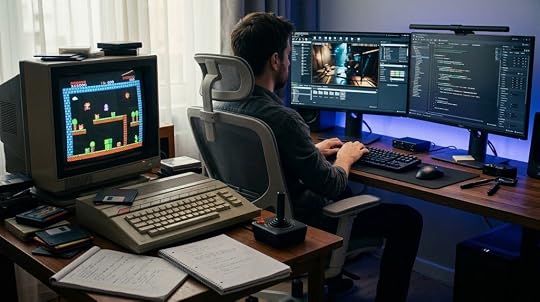 The modern developer’s dilemma: balancing the handcrafted legacy of retro homebrew with the AI-assisted future of modern engine development. (Yes, it’s AI-generated for effect!)
The first is about the people, not the output. Skilled homebrew programmers have spent years — in some cases decades — learning to squeeze the impossible out of obscure hardware mostly for the joy of it. That’s the whole point of the hobby: writing code for old computers because you love writing code for old computers.
When a flood of AI-assisted projects arrives, seemingly overnight, from people with no visible track record, it doesn’t just compete with that work. It changes what the work means. One poster put it well: it’s like a running club being swamped by people on bicycles, telling the runners the wheel is here to stay. I understand the chagrin. The wow factor, the uniqueness, the recognition for doing something genuinely hard — all of it gets diluted when the barrier to entry evaporates.
The second objection is about volume, and it’s the one I keep coming back to, because it’s the one I raised myself. Handcrafted labors of love were already hard to get noticed. Now they’re competing with a massive amount of AI-powered content, a lot of it genuinely good alongside the dreck, and most new releases are met with a shrug, a quick thanks, and an expectation of the next new thing tomorrow. Ports of well-known games have always gotten an outsized share of attention, and porting such games is now easier than ever. The occasional handcrafted original will still break through, but it will be harder than ever, and the mentality is very different from the mid-90s to just a few years ago. We all have to adapt to that, whether we like it or not.
The ethics of AI in retro gamingThe third objection is the one I find least convincing, and it’s the moral one — not because morality doesn’t matter, but because our own house isn’t clean. Let’s be frank: the vintage and classic gaming and computing communities are not exactly the harbingers of ethical behavior. We’ve all played fast and loose with IP and copyright rules since the beginning of all of this. If we hadn’t, we wouldn’t have what we have. Much of the scene is built on a foundation of taking liberties with IP. Most of us try to support legitimate, licensed efforts where we can. However, we often make exceptions when there’s no other way to access a piece of history. I’m not exempting myself. AI companies scanned and used my mass-market books to train their models, which is why I’m receiving some type of settlement from Anthropic, among others — and I’ve also willingly contributed to AI training projects, partly to learn and partly for compensation. Ultimately, the AI question isn’t different in kind from what this community has always done. It’s different in scale. Pretending otherwise is the one argument in that thread I couldn’t take seriously.
So where does that leave us? With the same conclusion I reached last week, but with better evidence for it — and one genuinely new idea that came out of the thread itself.
The new idea is uncomfortable, and it arrived as an answer to a real complaint. One community member who runs a retro gaming site described how AI is eating his time: more Steam releases to sort through, more YouTube videos to check, more AtariAge topics to read, tripling the unpaid work of keeping up. My answer, and I stand by it: use the tool to fight the tool. Give an AI clear instructions, refine those instructions until it does exactly what you want, and let it parse the datasets and filter the flood. The current models are ideal for parsing large amounts of material, since that’s how they learned in the first place. It’s counterintuitive, and it won’t satisfy anyone who refuses to use these systems on principle. But curation at this volume is not a job a human does well anymore, and refusing the filter doesn’t stop the flood. It just leaves you standing in it.
That’s also, as it turns out, exactly what Epic is now doing at industrial scale — which brings me to the confirmation.
Epic Games and the future of AI in game developmentOn October 23, Epic CEO Tim Sweeney replied on social media to a direct question: yes, Epic is now using AI tools to develop code for Unreal Engine. That was a reversal. In November 2025, Sweeney had denied that Epic was using AI to build engine features. Then on October 27, Epic‘s Executive Vice President of Development, Marcus Wassmer, confirmed it in detail to This Week in Videogames. AI is now used to develop code and features for Unreal Engine. Almost all current development is happening in the streams attached to Fortnite (one of my most played games!), UEFN, and UE6. Furthermore, a possible UE 5.9 update would be modest and include AI-developed changes. Wassmer said, plainly, “Yes, we are vibe-coding things” — engineers no longer writing the bulk of the code, but guiding the tools toward the architectural result they want, iterating rather than one-shotting the engine. The tools in use are, in his words, “probably the most obvious ones”: Claude Code and Codex.
Now, here’s the part that matters for the argument I made last week, when I planted a flag on one distinction: code is testable. It runs or it doesn’t. It’s fast enough or it isn’t. Wassmer’s claimed results are, notably, all testable. Wassmer says they achieved the near-elimination of non-deterministic cooking bugs the team had fought for a decade. They also saw faster shader compression and smaller patch sizes. Furthermore, an AI-assisted rewrite of the D3D12 rendering layer was completed in about a week with better CPU time and fewer bugs — a task estimated at three to six weeks for one engineer. Finally, they implemented automatic monitoring of PC stability in Fortnite to detect hardware issues and generate root-cause fixes. These are Epic‘s own self-reported claims, and there’s no independent audit behind them. But they are the kind of claims that can be checked against shipped software in a way that arguments about “soul” or “authenticity” can’t. That’s the standard I think the retro scene should hold AI-assisted work to as well: not “was a human involved,” but “does it run, does it run well, and can you show your work?”
Epic also showed, in the same week, how fast the rules around all of this are moving. Kotaku recently called out the apparent hypocrisy of companies embracing AI coding while shutting down user-made AI recreations. Sweeney responded with a long post containing actual news. Epic currently restricts AI training on outputs of Unreal Engine and MetaHuman. However, in Sweeney’s words, “we are working to remove this restriction from EULA terms.” Moving forward, developers will release games built with these tools under their own terms, allowing them to permit or restrict training as they see fit. Game Developer reported the planned change on October 27. Note the limits: it’s a plan, not a policy. No effective date, no revised terms published yet, and the current restriction stands until they are. And it’s a separate question from copyright in AI-generated output, which I raised last week — training on a tool’s output and owning what the tool generates are different axes of the same IP argument, and conflating them helps nobody.
The same Sweeney post also took a swipe at Valve‘s requirement that Steam developers disclose AI use, calling it a forced political statement. I disagree with him there, and it’s worth saying so plainly, because disclosure is the one guardrail I keep coming back to. The itch.io model I praised last week — disclose what AI did and what you did, label rather than ban, let curators and competitions set their own categories — only works if disclosure is normal and expected. An engine maker arguing against disclosure norms while building its engine with AI is exactly the kind of asymmetry that breeds the distrust we’re seeing.
I want to close with the part of the thread that stayed with me most, because it wasn’t about code at all. It was about time. I have a lot of ideas and not enough capacity to realize them all in the traditional way, and at my day job, using AI cuts my documentation and analysis cycles by as much as 80% (just a back-of-napkin estimate, to be fair). It will likely eventually replace much of what I do, as it will for almost any knowledge worker. In the meantime, not using it only puts me at a disadvantage while the world moves on. That’s the realist’s case, and I’ll own it: the vocal minority against AI will continue to have minimal actual impact, because the average person doesn’t have the buy-in, the understanding, or frankly the interest to mount a collective refusal — and the positives, for now, outweigh the negatives. By the time the negatives might outweigh the positives, we’ll be too far down the rabbit hole to go back.
But “inevitable” isn’t an argument for passivity. It’s an argument for getting the guardrails right while we still can: disclosure as a norm, curation as a craft, security and regulation pushed for seriously, and better tools for parsing AI output and improving on it so it doesn’t drown out original work — hand-coded or AI-assisted. Therefore, the cream should rise regardless of how something was created. A bad game or app is a bad game or app, even if you hand-coded it, and a good one deserves to be found, however it was made.
We’ve been here before, just never this fast. Typewriters were considered cheating. Computers were considered impersonal. The Internet was going to be a fad. This is that same argument on steroids — the only reason AI as we know it is even possible is the Internet that came before it. The people who adapted to each of those shifts weren’t the ones who pretended the shift wasn’t happening. They were the ones who learned the new tool, kept their standards, and did the work of sorting the good ten percent from the ninety. That’s the job now, too. It’s just bigger than it’s ever been. And, while I don’t think those of us on either side will ever agree until perhaps the next monumental AI milestone, it sure is fascinating to watch it unfold.
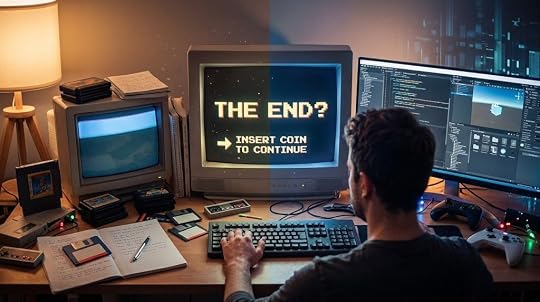 Hand-coded or AI-assisted, the journey of gaming continues—and the next insert-coin era is already upon us. (Yes, another AI image!)
The post AI won the argument: The new reality of retro and modern game development appeared first on Armchair Arcade.
October 28, 2026
XREAL Aura launch: The first wired XR glasses powered by Android XR
XREAL has officially announced the XREAL Aura (XREAL store on Amazon), marking the debut of the first wired augmented reality (AR) glasses powered by Google’s Android XR operating system. Moving beyond simple screen mirroring from a smartphone or PC, the Aura relies on a split-compute design, pairing a lightweight optical see-through headset with a dedicated processing puck to run applications natively. Having liked and reviewed other XREAL products in the past, and being an avid Google Gemini user, I hope to get an Aura review unit at some point, but for now, check out its features below.
Display and Hardware SpecificationsAt the core of the Aura headset are dual Sony Micro-OLED displays offering a resolution of 1920 x 1200 pixels per eye (32 pixels per degree). The glasses feature a 70-degree field of view (FOV), a refresh rate of up to 120Hz, and a peak brightness of 1,050 nits. To accommodate varying lighting environments, the headset includes a 5-level electrochromic dimming system capable of blocking up to 99.9% of external light without relying on camera-based video passthrough.
Despite these display features, the glasses portion weighs in at 95 grams (the puck itself weighs 265g). XREAL has partnered with Bose to integrate spatial audio through a four-microphone array, allowing for clear communication and open-ear sound. Tracking is handled via two cameras providing 6DoF inside-out tracking, alongside a high-resolution AI camera equipped with a privacy LED and native hand-tracking support.
The X1S Spatial CoprocessorTo keep the headset’s weight at a minimal 95 grams without sacrificing AR performance, XREAL integrated its custom, in-house X1S Spatial Coprocessor directly into the frames. This dedicated chip offloads critical tasks from the Compute Puck, handling the always-on AI visual processing and managing the dual tracking cameras. It delivers an ultra-low motion-to-photon latency of just 3 milliseconds (ms), ensuring that your high-resolution digital content remains firmly anchored in your physical space without noticeable drifting or lag as you move your head.
The Compute PuckInstead of housing all processing power in the frames, the Aura tethers via USB-C to a dedicated Compute Puck. This device is powered by the Qualcomm Snapdragon Reality Elite processor, which is capable of up to 48 TOPS of AI processing.
The puck houses a 4,455 mAh (34.84Wh) battery, an active cooling fan, Wi-Fi 6/6E, and Bluetooth 5.3 connectivity. For hardware controls and security, it includes a physical touchpad and a fingerprint sensor for biometric authentication. Two configurations are available for the puck:
12GB of RAM and 256GB of UFS 4.0 storage16GB of RAM and 512GB of UFS 4.0 storageSoftware and Android XR EcosystemBy running Android XR natively, the Aura offers direct access to the Google Play Store, allowing users to install standard mobile and tablet applications alongside XR-specific software. The operating system integrates built-in Gemini AI for contextual assistance and supports multi-window virtual workspaces. Navigation is handled via hand-tracking, voice commands, or the physical touchpad on the puck.
Accessories and SizingTo address visual clarity and reduce eye strain, XREAL is offering the Aura in two sizes based on interpupillary distance (IPD): Medium (supporting 60-66 mm) and Large (supporting 66-72 mm). The headset also supports prescription lens inserts.
Alongside the headset, XREAL is expanding its peripheral ecosystem with upcoming productivity and gaming accessories, including a wireless portable keyboard optimized for multi-window workflows and a dedicated XREAL game controller.
Pricing and AvailabilityThe XREAL Aura is available starting today with a limited-time launch discount running through December 2026.
12GB / 256GB Model: $1,099 (Regularly $1,279)16GB / 512GB Model: $1,299 (Regularly $1,499) XREAL Aura
The post XREAL Aura launch: The first wired XR glasses powered by Android XR appeared first on Armchair Arcade.

