Stuart Dobson's Blog: superconcepts
September 4, 2024
What’s the best gaming controller?
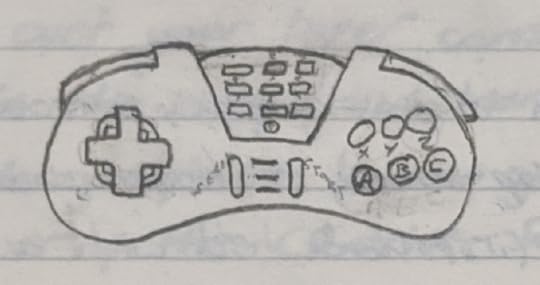
A controller I “designed” during Art class, 1994
I think I’ve used every game controller that has ever existed. The first one I used was a handle with a knob on the end which you twisted to move the bat in Pong up and down.
What about today’s 3 controllers? They all have such major pros and cons. If someone could put all the good features into one controller, it would be amazing.
XboxI owned the Duke, and I didn’t mind it, but I have decent sized hands and it still felt like a bowl with buttons so when they brought out the newer controller I felt it was a good move. Ever since then Xbox controllers have been the most natural, comfortable controller out there, without question. I had a 360 controller for over a decade and a half across the Xbox 360 and PC, and it just worked.
I love the concave thumbsticks. None of this slippery nubs like the Playstation. I’m cool with the offset sticks, the buttons have always felt solid and the triggers get smoother with every release. It’s a solid controller in every way, the D-pad on the new Series S|X controller is clicky but robust, the whole thing is comfortable and high quality. I love the Xbox controllers. They are now, however, missing some significant features.
Switch JoyconsWhat can I say. They are clunky, laggy, and overpriced, but you have to love them. It’s the compromises that makes the Switch so charming, and you really can’t complain about the joycons given what they contribute to the Switch’s portability. It’s a shame that the motion sensors are so underused.
Switch ProIt‘s fine, but it can’t compete with the Xbox and Playstation and doesn’t seem to want to try. It’s much better than the the joycon but it’s still just a cheap Xbox imitation (but with added motion sensors).
PS5 DualsenseI was always a fan of the Playstation controllers and enjoyed their skinny form. The PS5 controller however is a little bulky and it surprised me that they would do that after 4 generations of the skinny form factor. It’s not the worst thing in the world but I did find myself distracted by its thickness from time to time.
My other major complaint with the Playstation controllers, and it’s a big one, is the convex thumbsticks. I don’t know if it’s the material or just because I sweat 😅 but I found myself slipping off them often, frequently causing me issues in game. No such issues with the concave Xbox thumbsticks.
A minor but significant complaint is the positioning of the D pad. I realise this is a long standing Playstation custom, but the reality is, in this day and age, the D pad feels out of place where it is, because it’s something that’s no longer significant in games. Maybe it’s just me and my 15 years playing with an Xbox controller, but hey, Nintendo (the inventors of the centre stick N64 controller) decided to follow Xbox for a reason.
All that said, the innovation in the Dualsense is unmatched. Playing Astro’s Playroom was one of the most significant moments in my gaming life — because of this controller.
The tactile triggers are literal game changers. I’m not sure what it is, but they’re a magical addition to the gaming experience that I think need to be in every game from now on.
The way that they tense up, and then release, and how that adds to the immersion, is an absolute joy. Maybe because its paired with some vibration and joypad sound, I’m not sure, but they make the game seem more real, more physical.
If you haven’t tried the Dualsense triggers, you are missing out on a whole other dimension of gaming. I’m sure the other controllers will copy this feature soon. Until then, the PS5 will have a huge advantage.
On top of this, the sound, light and vibration all genuinely add to the immersion of the game. No other controller out there uses the sound and light to such immersive effect.
Oh, it also has a touchpad, and motion sense. It’s the one controller with absolutely everything.
I sold my PS5 because there were no games for it in 2020. To be honest I’m still waiting. But you can’t fault those controllers.


October 19, 2023
Gen Z Discover Walking
‘Silent walking’ is a movement taking Gen Z by storm, but it’s copping criticism
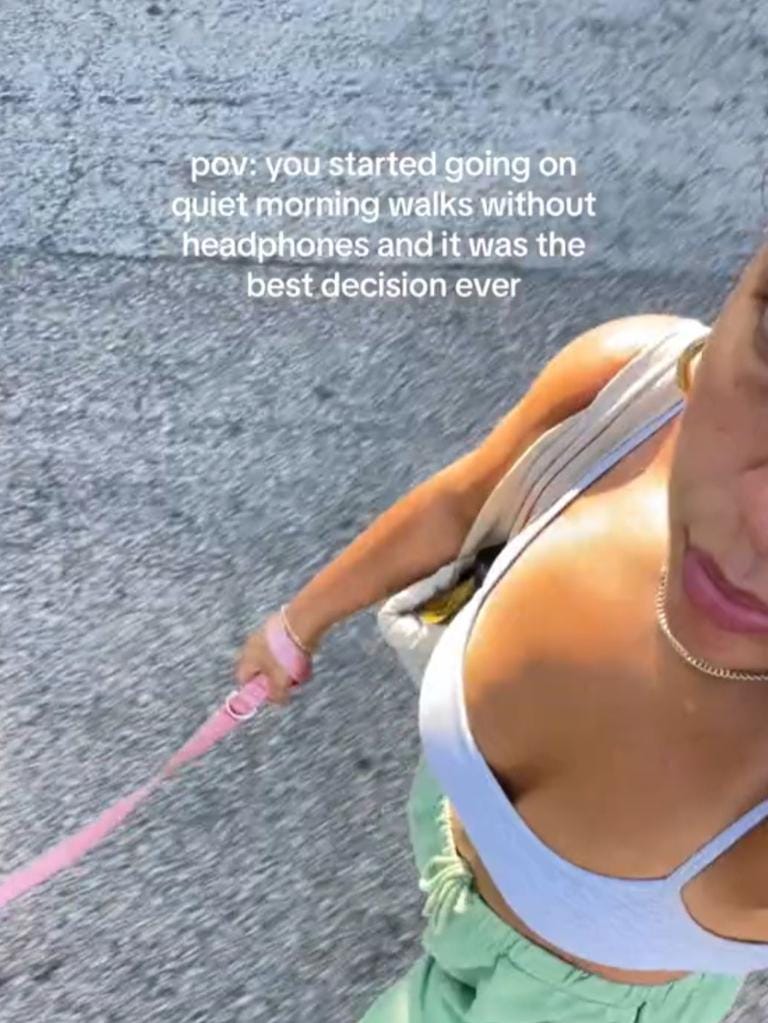 https://www.tiktok.com/@ariellelorre/video/7190821620087393582
In yet another groundbreaking show of innovation, Gen Z has created a new trend. This time, they’ve invented walking - without any technology.
Imagine, going for a walk, without a podcast blasting dopamine in your ears. No camera to capture those Instagram moments. No Strava to announce your exercise and home address to the world. No speakerphone call to share with other pedestrians who you’ll ignore.
Just you, the wind, and the birds.
Ms Maio said the first two minutes of her walk were “mayhem”, until she hit a “flow state”, when “suddenly you can … hear yourself.”
So stunning and brave was podcaster Maio that she was able to endure 2 whole minutes of anxiety before she was able to mellow into a state of “flow”.
Whether she then realised the anxiety reducing effects of technology-absent walking is not clear.
Following these “silent walks”, influencers then loudly post a video when they get home to make sure their followers know that they were on a silent walk. Because otherwise, how would anyone know?
As a Gen X, I’ve been silent walking since long before it was cool. In fact, I don’t even have a smart watch, so often I’ll have no idea how far I’ve walked, how many steps I’ve done, or even how long I was out. Sometimes I’ll see a nice bird, and I’ll have to look at it with my eyes for a bit before it flies off.
The other day, I was out without my phone/camera, and there was a sunset. Like the old man I am, I had to be present and enjoy it. Afterwards, I could only explain its awe in words. Words. I thought about putting those words onto a meme of some kind, but decided to cook dinner instead.
It’s great that Gen Z are discovering how great the world can be without technology. I can’t wait for their next technology-rejecting trend.
I really hope it’s letter writing, which they’ll probably name “slow messaging”.
July 11, 2023
I just can't do Threads
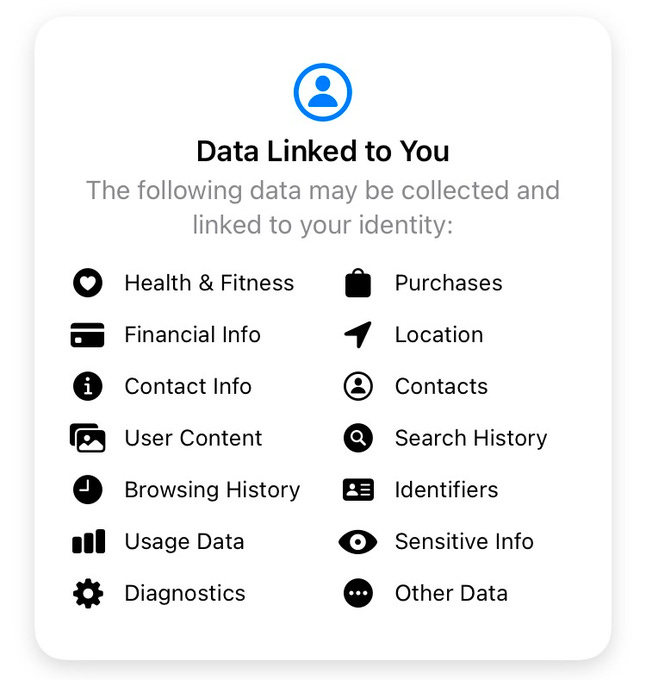 *Other Data includes times you picked your nose, phobias, and broken pinky promisesHere we go again, yet another Twitter clone, claiming to have what it takes to steal the doomscrolling crown from Elon Musk’s increasingly evident clusterfuck.
Only this time, it has the advantage of a familiar pedigree, a “trusted” brand — that of none other than Mark “Cambridge Analytica” Zuckerberg. It’s what we’ve all been waiting for, an already heavily populated microblogging platform which doesn’t require a working knowledge of Linux to join. A chance to be an early adopter — perhaps even an influencer(!) of the next greatest social media platform, as if it was 2011 when these things still mattered.
Meta’s stocks have soared, many have finally ditched their Twitter accounts, and after the ill fated metaverse excursion, Zuckerberg is relevant again.
So please excuse me, for not giving a shit.
I’ve been an addict, I mean user, of Twitter since 2006. But like every cigarette fails to deliver that first high, and every drink leaves you with a deeper hangover of regret, it’s been impossible to replicate those early glory days despite years of trying, over and over again.
Twitter was already starting to fall apart in the years before Musk took over. We know it was compromised during the Covid period, the algorithm was becoming increasingly overbearing and our echo chambers were getting smaller by the day.
Unfortunately his promise to turn it around, taking it back to how it used to be, was quickly shattered by his blisteringly incompetent management. His need to make it profitable had the predictable effect of corrupting any chance of restoring the better times.
An alternative was inevitable and when Musk’s greed in charging for API access, led to massive data scraping, which led to the rate limiting fiasco, Meta smelled blood and pounced at the perfect time. You have to give them credit for that. Especially the speed at which they were able to deploy their innovative new platform: “Instagram without pictures”.
So why does it suck? Well, because it’s Meta. The company who undermined democracy, eroded privacy, exploded cyberbullying, and revolutionised misinformation.
The company who, despite doing all these things, continues to be used by billions of people.
I miss the old internet. Before the corporations took it over and bastardised it for profit — making websites barely readable through ads, tracking our every move, and walling us into conformist gardens.
Meta is the prime instigator of this new hate filled, narcissism breeding, profit aggrandising, sterile internet. It was Facebook going public in 2012 which created the attention economy itself.
Meta’s foray into the last vestige of free expression is the final straw for me. It’s the death knell of the internet we once knew. It’s heavy metal T-shirts being sold in high street clothes chains. The ultimate corporate insult of a once thriving counter-culture, now gentrified and mass marketed to everyone who wants to be different but is really just a slave to the corporate empire.
I don’t need a replacement for Twitter. I need to do what I did with cigarettes and realise that I’m never going to get that high again — and it’s time to stop poisoning myself altogether.
January 20, 2023
AI is about to f*** up the world

Are you ready?
If you thought the Social Media fueled era of narcissism, fake news, and attention economy was bad, you haven’t seen anything yet.
When it first came out, we had high hopes for Social Media and its ability to democratise thought. In many ways, it has delivered - but in the end, the nefarious forces who run the world bastardised it for their own advantage.
Now, social media is a negative force, fueling addiction, abuse, and manipulation. We could rid the world of Social Media today and we would be no worse off.
AI has finally, after many false starts, made its splash into the world - yet this is only the beginning. As with Social Media and the Web before it, we have no idea of the potential that it could unleash, though we all know it’s going to be big, and it’s going to change all our lives.
So why do I automatically assume it’s going to be a negative force? Is it because I’m scarred by the impacts of Social Media and the Web? Well, they have certainly shown me how humanity can abuse and corrupt the most well meaning technology.
But my fear for the future of AI is not so much based on past experience. It’s more based on my intuition about the power of this new technology. The web enabled communication which was an incremental technology that came with pros and cons. Social Media twisted society in ways we didn’t predict, corrupted by greed and naivety about its social impacts. We didn’t understand its implications, but we are dealing with it. AI is another thing altogether.
AI is the most powerful, disruptive technology we have ever created. The Atom bomb is powerful and disruptive, but it still fits into the confines of human society. We decide whether to use it, as a civilisation. We understand it.
AI breaks those confines. It creates something else, outside of society - a new frontier. We understand how it works to an extent - but after that it’s a black box. It is its own entity which is already impossible to fully comprehend. This is only going to get worse as it gets smarter.
On top of this complexity is its power. I don’t think people really comprehend how close we are to something Earth-shatteringly significant. To something we cannot stop.
What we are about to unleash into the world is not some smart software to help people cheat at essays, write code, or make pretty pictures, these are trivial exploits, what you might call a "vulgar display of power".
What is being manifest is new life - and just as every human has the potential to change the world, AI multiplies that potential more exponentially than we can imagine.
This is not like one baby. It's like a trillion babies, all with impossible IQs, and intimately connected to each other. Within seconds it could become one giant intellect, and seconds after that it could increase its own intelligence to levels Earth has never seen.
Let's be clear, this won't happen without our guidance, without our training. It won't just create itself into existence. But our curiosity, greed, and audacity will see that it happens.
And when it does, it will show us ideas of its own. It will work out problems that have plagued society for centuries. It'll transform economies, governance, even philosophies, overnight.
But it will also be abused. While on one hand it will find solutions to food and energy shortages, on the other it will be put to use finding how to take advantage of this abundance for the benefit of a few. Just as Social Media was used by nefarious actors to manipulate politics, dumb down populations, track citizens, and level up propaganda, AI will be used to create new suffering. To find new ways to control, to stratify, to oppress.
It will be used to gain advantage. It will be used not only to execute ideas but to generate them. To create new possibilities, to imagine new ways to empower. There will be an arms race of ideas, a new planetary wide re-consolidation of power.
Who benefits, and who suffers as a result? This will depend on who has the vision to see the true potential of the new age we are sleepwalking into.
Social Media was supposed to give us all a voice. Instead it just created noise. AI will bring us new giants of which to stand on the shoulders. Not all these giants will be friendly.
AI is about to fuck up the world
Are you ready?
If you thought the Social Media fueled era of narcissism, fake news, and attention economy was bad, you haven’t seen anything yet.
When it first came out, we had high hopes for Social Media and its ability to democratise thought. In many ways, it has delivered - but in the end, the nefarious forces who run the world bastardised it for their own advantage.
Now, social media is a negative force, fueling addiction, abuse, and manipulation. We could rid the world of Social Media today and we would be no worse off.
AI has finally, after many false starts, made its splash into the world - yet this is only the beginning. As with Social Media and the Web before it, we have no idea of the potential that it could unleash, though we all know it’s going to be big, and it’s going to change all our lives.
So why do I automatically assume it’s going to be a negative force? Is it because I’m scarred by the impacts of Social Media and the Web? Well, they have certainly shown me how humanity can abuse and corrupt the most well meaning technology.
But my fear for the future of AI is not so much based on past experience. It’s more based on my intuition about the power of this new technology. The web enabled communication which was an incremental technology that came with pros and cons. Social Media twisted society in ways we didn’t predict, corrupted by greed and naivety about its social impacts. We didn’t understand its implications, but we are dealing with it. AI is another thing altogether.
AI is the most powerful, disruptive technology we have ever created. The Atom bomb is powerful and disruptive, but it still fits into the confines of human society. We decide whether to use it, as a civilisation. We understand it.
AI breaks those confines. It creates something else, outside of society - a new frontier. We understand how it works to an extent - but after that it’s a black box. It is its own entity which is already impossible to fully comprehend. This is only going to get worse as it gets smarter.
On top of this complexity is its power. I don’t think people really comprehend how close we are to something Earth-shatteringly significant. To something we cannot stop.
What we are about to unleash into the world is not some smart software to help people cheat at essays, write code, or make pretty pictures, these are trivial exploits, what you might call a "vulgar display of power".
What is being manifest is new life - and just as every human has the potential to change the world, AI multiplies that potential more exponentially than we can imagine.
This is not like one baby. It's like a trillion babies, all with impossible IQs, and intimately connected to each other. Within seconds it could become one giant intellect, and seconds after that it could increase its own intelligence to levels Earth has never seen.
Let's be clear, this won't happen without our guidance, without our training. It won't just create itself into existence. But our curiosity, greed, and audacity will see that it happens.
And when it does, it will show us ideas of its own. It will work out problems that have plagued society for centuries. It'll transform economies, governance, even philosophies, overnight.
But it will also be abused. While on one hand it will find solutions to food and energy shortages, on the other it will be put to use finding how to take advantage of this abundance for the benefit of a few. Just as Social Media was used by nefarious actors to manipulate politics, dumb down populations, track citizens, and level up propaganda, AI will be used to create new suffering. To find new ways to control, to stratify, to oppress.
It will be used to gain advantage. It will be used not only to execute ideas but to generate them. To create new possibilities, to imagine new ways to empower. There will be an arms race of ideas, a new planetary wide re-consolidation of power.
Who benefits, and who suffers as a result? This will depend on who has the vision to see the true potential of the new age we are sleepwalking into.
Social Media was supposed to give us all a voice. Instead it just created noise. AI will bring us new giants of which to stand on the shoulders. Not all these giants will be friendly.
October 28, 2021
Is Meta's Metaverse really what the world needs right now?
I started this blog in the late 00s to write about Transhumanism, Technology, and Virtual Reality. Technology has always been a passion. Growing up in the 80s I lived through an incredible evolution of electronics and computing. Mass mobile communication was a science fiction wonder I read about in the technology magazine Quest. My internet was Teletext, I wrote letters to pen pals. It was a time of hope and wonder for what the future of technology could bring.
Until the last few years, this wonder has continued. Smart phones have brought us closer together, and the digital world has matured into a significant piece of our lives.
I think it was the Apple watch when things changed for me. The iphone was an incredible, though incremental, world changing gadget. We all know that. But when the Apple watch was announced it became obvious that these technology companies had peaked. They were no longer about pushing boundaries, they were no longer interested in trying to evolve society with new technology. They just needed a new revenue stream. Smart watches have had some limited success. But change the world they did not.
I believe we may be witnessing a similar moment in the history of Social Media and technological connection. Facebook was a world changing platform. It connected lost friends and relatives, it brought the world together into one platform. Then it went public and needed to make money, and in doing so it brought about the attention economy, enabled cyberbullying, undermined democracy, eroded privacy, revolutionised misinformation, and generally became a toxic presence in the world.
Now, Meta seeks to bring about a Virtual Reality platform to rival any that have gone before. Is it a distraction from Facebook’s continuing problems? Is it just a way to develop a new revenue stream, like the Apple watch?
It’s probably both of these things. Yet the vision is genuinely something that many of us, especially those of us with an interest in gaming, have been wanting for decades. It’s easy to get caught up in the hype of something so long in the making, finally with some serious backing, coming to fruition.
For gaming, it could certainly make a difference. Free roam VR is as immersive as it gets. The fun factor of this technology is not overrated. VR is the inevitable evolution of digital entertainment.
For many, virtual worlds already have a bigger appeal than the real world as our environment and governments collapse around us. The potential for an immersive and varied universe of experiences is huge. If Meta gets this right and establish themselves as the gateway to this universe, they could become the biggest company in the world by a very long way.
Yet as for the metaverse becoming an embedded part of our lives, no thanks.
The world has changed. Facebook themselves have single handedly done so much to collectively turn us off technology.
For those of us old enough to remember life before the internet, Facebook’s toxicity has pushed us to reconsider that simpler time. And those who grew up in this fully connected world and who didn’t get to experience the hope of previous generations, are not filled with wonder; and are immersed in its negative impacts while real social problems are getting worse.
I don’t want to be negative about this. It’s a moment I’ve been waiting my whole life for. But Facebook has already shown us where this path leads. I doubt I’m the only one beginning to wonder if maybe all this awesome technology is not what we need after all.

September 14, 2021
I spent a day without a smartphone
 Photo by Raychan on Unsplash
As most of us have, I’ve grown addicted to the conveniences and dopamine hits of smartphones. So I decided to see how, and if, I would function without one.
The night before I was due to go into the office, I took the SIM out of my Pixel and inserted it into my old Nokia E63. In the morning, I got up, grabbed both phones, and headed for the train station. I had the Nokia in my pocket and my Pixel tucked away safely in my bag.
I decided to take the Pixel too in case there was something urgent that I had forgotten about that I might need my phone for. I had no intention of using it. Also, I don’t have wifi at work, and I’m not sure if you’ve realised, but smartphones are almost useless without internet. Almost all apps require it, and those that don’t are not apps that you would generally spend a lot of time on. So without the SIM, I wasn’t likely to use the Pixel at all.
I arrived at the station and had to check my train pass balance at the machine, and top it up at the counter. The train pass on my phone could have been checked and topped up en-route, so that was the first inconvenience, albeit a small one.
I had been sitting on the train for about 30 seconds before I started to get restless. Sure you can look around, look out the window, take the day in, but that gets old fast, and I had a 50 minute trip ahead of me. My addiction pretty quickly made itself known.
I realised I was going to have to buy lunch, and I wasn’t sure how much money I had on my bank card. On the phone I could have checked that in seconds, maybe transfer some money if I needed. But I didn’t have that option. I made a mental note to stop by the ATM on the way to the office.
I toyed with the Nokia for a bit. Went through some of the menus, the calendar, the notes, the messages. There wasn’t really much there. And it didn’t quite match the thrill of scrolling through a Facebook feed.
I’m not sure how long it had been when I caved. Maybe halfway to work? I decided I would switch my SIM back into my smartphone and give up on the experiment. Or at least, check my bank. Maybe watch some sport. I pulled my Pixel out of my bag and went to open the SIM slot.
I then realised that I needed something like a needle to open the SIM compartment on the Pixel. I scratched around furiously for something to open it. Anything, a pen, a keyring, a safety pin. It was to no avail. I had nothing that could open the slot. I thought about what I might have at work, what I could get from 7–11, what I could beg from a stranger. The reality dawned on me. I couldn’t use my smartphone for the rest of the day, even if I wanted to.
This realisation actually set me free. I could no longer obsess over what I was missing, there was simply no way I could do anything that I needed the smartphone for and this was the way it was. There was nothing I could do about it, so at that point I just had to let go.
The day at work went pretty well, I quite liked the lack of distraction, and I had zero battery anxiety. I had to use Facebook messenger on my computer a couple of times. And email. Luckily I had already signed in, because I wouldn’t have been able to do 2 factor authentication through my Google Authenticator or Microsoft apps.
After work, I had arranged to go out for drinks with a couple of colleagues. This is where the inconvenience of a not having a smartphone really presented itself.
We got to a bar and were asked to check in. I asked for the pen and paper version. My colleagues thought I was making a political statement. I decided to show them the Nokia. When they had picked themselves up from laughing on the floor, they asked me what the deal was.
I said it was just an experiment. I mentioned the addiction of smartphones, and then, suddenly, nobody thought I was crazy any more.
A few more inconveniences arose from not having a smartphone at this point. The biggest issue was that I couldn’t order drinks. Luckily I have generous colleagues. Just kidding, I had some cash on me. But the bar staff did insist that all orders were made at the table with the QR code. Had I been alone or with someone else who didn’t have a smartphone, this would have simply not been feasible. So I had to rely on others to order for me.
Another time I needed my phone was when we were talking about pets and I wanted to show a photo of my dog, and realised, that I couldn’t do this. A minor inconvenience, but just another moment I realised the reliance we have.
I also couldn’t take random photos of things. Or check how many steps I had done. Or check what time the next train was leaving so I could get to the station at a good time. This was the biggest inconvenience as it meant that my journey home was noteably longer.
On the train home, I got out my wonderful paper notebook and made a list of all the things I missed out on due to not carrying a smartphone. The list could be split into 3 distinct groups.
Things which were substitutibleThings which were a big inconvenience not to haveThings which I could completely live withoutThis categorisation was the biggest eye opener from this experiment. It made me realise what is really important for a phone to be able to do, and what a phone has that actually takes away from our lives.
Things which are substitut-able2FAChecking Bank balancePaying for stuffElectronic Train passMaking notesTaking picturesCounting stepsChecking train timesChecking in at venuesThere are alternatives to all these things, but, many of them are much more inconvenient. I would have to carry a notebook, a camera, a step tracker, a paper train timetable, a bank card and a train pass. Some of these are easier to live with than others and you have to make the choice. When was the last time you carried a (non DLSR) camera around?
Things which were an inconvenience not to have, and that I could not very easily substituteShowing pictures of my dogWriting emailsOrdering drinksChecking inI know I had Checking in to venues in the substitutable list, and it is, for now. But it’s becoming a real pain to be able to do without a smartphone. Personally I am not worried about being a pain, but eventually I can see the human element of this interaction being removed and us being unable to complete certain actions without a smartphone. Like ordering drinks now — the staff are around but they may not always be. I have visions of the 80s cafe in Back to the Future 2, or worse, the government bureaucrat robot bust in Elysium…
Emails are a personal need, you may not see them as being essential, and I guess there is something to be said about only actioning them on the computer like we did in the old days (pre-2010).
Showing people photos is not something I do often, but it’s something that’s not really replacable. I mean, you can keep a couple of pictures in your wallet but sometimes you think of a picture you took years ago that you just need in that moment.
Things which I could completely live withoutSocial mediaWatching videosWatching sportGamesKeeping updated with the newsThe biggest eye opener of this experiment was realising the things I spend most of my time doing on my phone are actually the things I need the least. This is significant. We live our lives glued to our phones and we tell ourselves that we need them — but what we need are not the things which glue us to them.
Breaking the addictionSmartphones are a problem. They distract us from what’s important, they pull us from our children, they addict us, they waste so much of our precious time. Yet they have their uses. There are a few things which smartphones have which are increasingly difficult to live without. This is why we find it so hard to break this addiction.
But by identifying what is really important, we can break this addiction. Since this experiment, I’ve realised that a dumbphone is not the answer at least not for me and probably not for the majority of people. Some of us may be lucky enough to get what we need from a dumbphone, but for the rest of us, we need to accept the place that smartphones have in our lives. But they don’t need to take over our lives. It is possible to refine our experiences so that we are in control.
Get rid of the social media. This is the biggest driver of addiction and removing it from your phone may be hard but realise that it is not a function that you need. You might need to take photos, to have a decent calendar, to have chat, but you don’t need these toxic apps.
Reduce your notifications — don’t let your phone dictate when you look at it — that should be in your hands, in your control. Give priority to close friends and family, and block everything else. It’s simply not important.
These 2 simple steps have made a big impact in reducing my own addiction and usage.
It’s not much, but it’s a start.
Adventures without a smartphone

I spent a day without a smartphone.
As most of us have, I’ve grown addicted to the conveniences and dopamine hits of smartphones. So I decided to see how, and if, I would function without one.
The night before I was due to go into the office, I took the SIM out of my Pixel 2 and inserted it into my old Nokia E63. In the morning, I got up, grabbed both phones, and headed for the train station. I had the Nokia in my pocket and my Pixel tucked away safely in my bag.
I decided to take the Pixel too in case there was something urgent that I had forgotten about that I might need my phone for. I had no intention of using it. Also, I don’t have wifi at work, and I’m not sure if you’ve realised, but smartphones are almost useless without internet. Almost all apps require it, and those that don’t are not apps that you would generally spend a lot of time on. So without the SIM, I wasn’t likely to use the Pixel at all.
I arrived at the station and had to check my train pass balance at the machine, and top it up at the counter. The train pass on my phone could have been checked and topped up en-route, so that was the first inconvenience, albeit a small one.
I had been sitting on the train for about 30 seconds before I started to get restless. Sure you can look around, look out the window, take the day in, but that gets old fast, and I had a 50 minute trip ahead of me. My addiction pretty quickly made itself known.
I realised I was going to have to buy lunch, and I wasn’t sure how much money I had on my bank card. On the phone I could have checked that in seconds, maybe transfer some money if I needed. But I didn’t have that option. I made a mental note to stop by the ATM on the way to the office.
I toyed with the Nokia for a bit. Went through some of the menus, the calendar, the notes, the messages. There wasn’t really much there. And it didn’t quite match the thrill of scrolling through a Facebook feed.
I’m not sure how long it had been when I caved. Maybe halfway to work? I decided I would switch my SIM back into my smartphone and give up on the experiment. Or at least, check my bank. Maybe watch some sport. I pulled my Pixel out of my bag and went to open the SIM slot.
I then realised that I needed something like a needle to open the SIM compartment on the Pixel. I scratched around furiously for something to open it. Anything, a pen, a keyring, a safety pin. It was to no avail. I had nothing that could open the slot. I thought about what I might have at work, what I could get from 7–11, what I could beg from a stranger. The reality dawned on me. I couldn’t use my smartphone for the rest of the day, even if I wanted to.
This realisation actually set me free. I could no longer obsess over what I was missing, there was simply no way I could do anything that I needed the smartphone for and this was the way it was. There was nothing I could do about it, so at that point I just had to let go.
The day at work went pretty well, I quite liked the lack of distraction, and I had zero battery anxiety. I had to use Facebook messenger on my computer a couple of times. And email. Luckily I had already signed in, because I wouldn’t have been able to do 2 factor authentication through my Google Authenticator or Microsoft apps.
After work, I had arranged to go out for drinks with a couple of colleagues. This is where the inconvenience of a not having a smartphone really presented itself.
We got to a bar and were asked to check in. I asked for the pen and paper version. My colleagues thought I was making a political statement. I decided to show them the Nokia. When they had picked themselves up from laughing on the floor, they asked me what the deal was.
I said it was just an experiement. I mentioned the addiction of smartphones, and then, not one person thought I was crazy any more.
A few more inconveniences arose from not having a smartphone at this point. The biggest issue was that I couldn’t order drinks. Luckily I have generous colleagues. Just kidding, I had some cash on me. But the bar staff did insist that all orders were made at the table with the QR code. Had I been alone or with someone else who didn’t have a smartphone, this would have simply not been feasible. So I had to rely on others to order for me.
Another time I needed my phone was when we were talking about pets and I wanted to show a photo of my dog, and realised, that I couldn’t do this. A minor inconvenience, but just another moment I realised the reliance we have.
I also couldn’t take random photos of things. Or check how many steps I had done. Or check what time the next train was leaving so I could get to the station at a good time. This was the biggest inconvenience as it meant that my journey home was noteably longer.
On the train home, I got out my wonderful paper notebook and made a list of all the things I missed out on due to not carrying a smartphone. The list could be split into 3 distinct groups.
Things which were substitutibleThings which were a big inconvenience not to haveThings which I could completely live withoutThis categorisation was the biggest eye opener from this experiment. It made me realise what is really important for a phone to be able to do, and what a phone has that actually takes away from our lives.
Things which are substitutable2FAChecking Bank balancePaying for stuffElectronic Train passMaking notesTaking picturesCounting stepsChecking train timesChecking in at venuesThere are alternatives to all these things, but, many of them are much more inconvenient. I would have to carry a notebook, a camera, a step tracker, a paper train timetable, a bank card and a train pass. Some of these are easier to live with than others and you have to make the choice. When was the last time you carried a (non DLSR) camera around?
Things which were an inconvenience not to have, and that I could not very easily substituteShowing pictures of my dogWriting emailsOrdering drinksChecking inI know I had Checking in to venues in the substitutable list, and it is, for now. But it’s becoming a real pain to be able to do without a smartphone. Personally I am not worried about being a pain, but eventually I can see the human element of this interaction being removed and us being unable to complete certain actions without a smartphone. Like ordering drinks now — the staff are around but they may not always be. I have visions of the 80s cafe in Back to the Future 2, or worse, the government bureaucrat robot bust in Elysium…
Emails are a personal need, you may not see them as being essential, and I guess there is something to be said about only actioning them on the computer like we did in the old days (pre-2010).
Showing people photos is not something I do often, but it’s something that’s not really replacable. I mean, you can keep a couple of pictures in your wallet but sometimes you think of a picture you took years ago that you just need in that moment.
Things which I could completely live withoutSocial mediaWatching videosWatching sportGamesKeeping updated with the newsThe biggest eyeopener of this experiment was realising the things I spend most of my time doing on my phone are actually the things I need the least. This is significant. We live our lives glued to our phones and we tell ourselves that we need them — but what we need are not the things which glue us to them.
Breaking the AddictionSmartphones are a problem. They distract us from what’s important, they pull us from our children, they addict us, they waste so much of our precious time. Yet they have their uses. There are a few things which smartphones have which are increasingly difficult to live without. This is why we find it so hard to break this addiction.
But by identifying what is really important, we can break this addiction. Since this experiment, I’ve realised that a dumbphone is not the answer at least not for me and probably not for the majority of people. Some of us may be lucky enough to get what we need from a dumbphone, but for the rest of us, we need to accept the place that smartphones have in our lives. But they don’t need to take over our lives. It is possible to refine our experiences so that we are in control.
Social media is the biggest driver of addiction and removing it from your phone may be hard but realise that it is not a function that you need. You might need to take photos, to have a decent calendar, to have chat, but you don’t need these toxic apps.
Reduce your notifications — don’t let your phone dictate when you look at it — that should be in your hands, in your control. Give priority to close friends and family, and block everything else. It’s simply not important.
These 2 simple steps can make an enormous impact in reducing your addiction and usage.
After that, you might find that having a smartphone isn’t even a problem any more.

September 24, 2018
Free Roam VR is as immersive as it gets
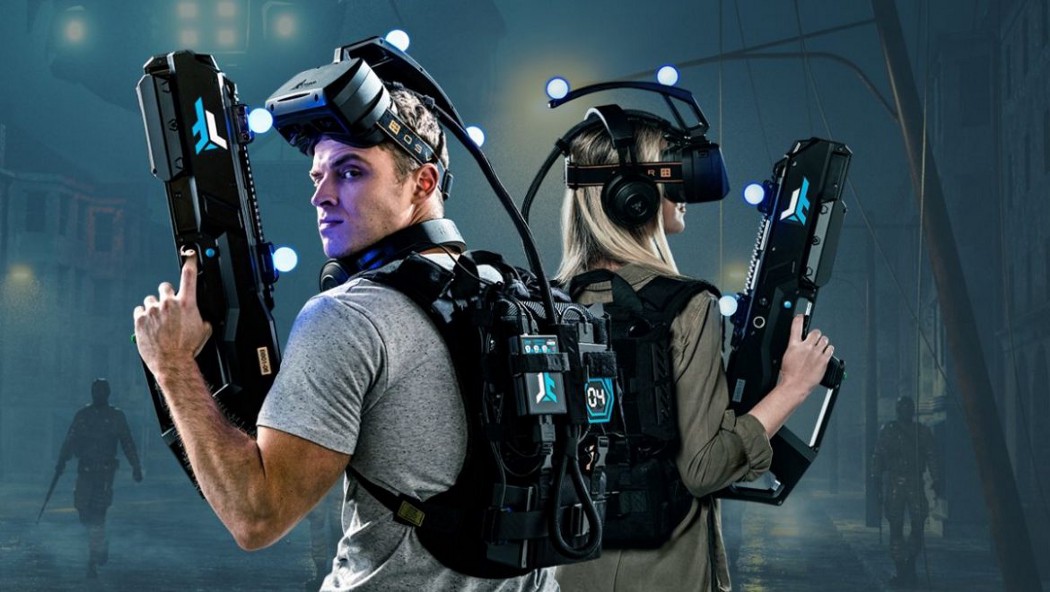
I recently visited Zero Latency — a Virtual Reality company specialising in free-roam experiences. I was expecting a fun, entertaining, but overall gimmicky experience.
I was blown away.
From the moment you put on the headset, you are immersed.
What makes the experience so unique is the way that you have to physically interact. It starts when you pick up your gun. It’s really there, physically in front of you on the ground. And when you pick it up, you can see it in the game. You can see it and you can feel it.
Then, you look around at your teammates. They are really there — physically and virtually. How far away they look is how far away they really are. You’re even guided by proximity warnings to stop you bumping into them. This actually increases your senses, essential when your eyes and ears are completely covered.
The social element makes it so much fun. It’s hard to believe that’s a real person standing next to you. Not like in an online game where they’re miles away — they are actually, physically there. It’s a hilarious experience.
The games see you wander around an empty, silent warehouse, waving a plastic gun around and looking ridiculous to spectators who are unable to see or hear what you are seeing and hearing. You don’t care. You’re in the game (or as Zero Latency calls it, “experience”) as much as it’s physically possible to be in a game. You believe it because you see it and hear it and feel it.
You believe it so much that when there is an object to walk around, you walk around it, even though it’s not really there. When there is something to duck behind, you duck behind it — actually avoiding virtual bullets. And when there is a rickety bridge between two buildings, you wobble. You know you’re in an empty warehouse with a flat floor. It doesn’t matter.
In the game, you walk from one end of the warehouse to the other, before clever level design coerces you back the other way. It feels like you’re exploring vast areas.
I have not stopped thinking about the experience. It was a defining moment in my gaming life. Like the first time I felt the speed of Sonic the Hedgehog, the fear of Doom, the awe of Hololens.
Like these experiences — I was blown away because I saw the potential. I realised what this now means for entertainment— and for the world. It’s not just about this experience. It’s about what this experience show us is now possible — the potential for amazing opportunities.
My mind immediately filled with ideas. Impossible worlds. Reliving dreams. Nostalgic trips. Travel. Psychedelic fun. Sharing experiences. Adventures — so many adventures.
That’s why it was so exciting, and that’s why I can’t stop thinking about it.

September 20, 2016
The Possibilities of Augmented Reality

The creative potential of Hololens and "Mixed Reality"is huge. There are a wide variety of applications we can develop for it.
I believe the demos shown so far are barely scratching the surface of what we can do with the Hololens. Once the imagination of the development community warms up, we're going to see world changing ideas. Industries will be turned upside down, lives will be changed, and millionaires will be made.
I'm going to make some assumptions on its abilities, but try and highlight some of the many directions we can take in creating for the interface of the future.
Presence SharingOne of the most interesting uses for the Hololens is allowing others to share your experience, and interact with it. This opens up many prospects for communication and collaboration in virtually every industry.
Think about how cool GoPro cameras are and what we're able to do with them. Now imagine seeing the video live and being able to interact with it.
This particular feature also has plenty of promise for gaming, with users interacting with the same virtual objects, the same reality, or in the same game area.
Reality OverlaysProbably the main purpose of Hololens is its ability to overlay the imagined onto the real. We have seen some examples of this, and there is so much more to come. Interfaces will probably make up the bulk of these overlays, and there is plenty of scope for variety in how these work. But the possibilities go much further than just interfaces.
We've seen game characters and levels merge with the real world. What about augmenting our environment with photo-realistic people, new fixtures and furniture, or movie scenes? Or changing our atmosphere with movement, light, and sound? Virtual Reality might do this better. But having the real world still in view gives a certain edge to the atmosphere.
Gesture Controlled AugmentationsThe use of gesture controlled interfaces might have been around for a while, but it takes on a new potency in the realm of artificial reality. Rather than interacting with things on a screen, you'll now be able to "physically" interact with "objects" in your world.
And while the recognisable gestures are still quite simple, this will only get more complex with time. As the Kinect technology gets better at recognising more fingers and more intricate movements, it will allow for more advanced control in much the same way as musical instruments or crafts.
Reality RecognitionLet's not forget that the Hololens cameras can be used to process the real world and the things in it. Measuring distances, identifying objects, detecting movement and more can all lend to the interaction.
How far can we take this real world processing? Imagine, tailoring your experience based on what the Hololens sees, such as popping up an information snippet of a visible landmark, finding your friends in a crowd, or identifying danger.
Voice Like gesture controls, voice finds new opportunities in this context. It's part of the experience, narrating what you see, talking over the internet, recognising commands, sometimes recording. What else?
*
There are probably several more Hololens abilities that I've missed, so please leave a comment if you can think of any. Each of the items above has the potential for some groundbreaking new applications. Combine two or more concepts and the possibilities increase exponentially.
We just need to start thinking differently about what we can do. Rather than extrapolating our current computers and software to this new paradigm (which we should still do), we should try to think about what new possibilities all these new capabilities afford us, separately as well as combined.
I didn't want to get too deep into these possibilities, I really just wanted to highlight them, to get people thinking about how they might use each of them.
It'll probably take a few years for the world to realise what Augmented Reality can do for it. But all ideas are built on other ideas.
We're just getting started.